Mains Exhaustive

Anganwadi Services

image 19

Context: Maharashtra’s Anganwadi workers and helpers have been on strike for 46 days now. They have been demanding basic nutrition for children, whose per-day food cost for two meals has been ₹8 a child since 2014 and increase the rent for centres.

About Anganwadi Services:

  • Anganwadi means ‘courtyard shelter’, a type of rural child care centre in India.
  • It was started in 1975 as part of the Integrated Child Development Services program to combat child hunger and malnutrition.
  • The Anganwadi system, launched under the Anganwadi Services Scheme, renamed as Saksham Anganwadi and Poshan 2.0, is a Centrally Sponsored Scheme under the Ministry of women and child development.
  • It is one of the flagship programmes of the Government of India providing early childhood care and development of the beneficiaries i.e., children in the age group of 0-6 years, pregnant women and lactating mothers through a large network of Anganwadi workers (AWW) and Helpers (AWH).
  • Anganwadi workers (AWW) and Helpers (AWH) are the basic functionaries of the ICDS who run the Anganwadi Centres (AWCs), and implement the ICDS scheme.
  • Anganwadi Centres (AWCs): Provide a platform for rendering all services under the scheme.
  • A single Anganwadi worker (AWW), chosen from the community, manages one village or area. These workers undergo training in various areas such as health, nutrition, and childcare.
  • There are a total 14 lakh AWCs sanctioned across the country out of which 13.63 lakh AWCs are operational till 2018(PIB).

Criteria for Recruitment of Anganwadi Workers

  • As per guidelines, Anganwadi Workers under the Anganwadi Services Scheme are selected from the local village by a Committee constituted by the State Government/ UT Administration. 
  • The minimum prescribed qualification is Matriculation and age limit is 18-35 years for engagement of Anganwadi Workers (AWWs) and Anganwadi Helpers (AWHs).

Anganwadi System: How Does It Operate?

  • Primarily established for rural development, the Anganwadi system is managed by Anganwadi workers who cater to individual villages within a specified area. 
  • These workers, who hail from the community itself, undergo approximately four months of training in various domains including health, nutrition, and child care. 
  • Each Anganwadi worker is responsible for approximately 1000 individuals and reports to a supervisor known as the Mukhya Sevika.

Services provided by Anganwadi workers: 

  • It is a part of the Indian public health care system. 
  • Basic health care activities include contraceptive counselling and supply, supplementary nutrition, non-formal pre-school education, nutrition, and health education, immunization, and health check-up  
  • The centres may be also used as depots for oral rehydration salts and basic medicines.

Benefits granted to Anganwadi Workers and Helpers

  • Honorarium: AWWs and AWHs, being honorary workers, are paid monthly honoraria as decided by the Government from time to time, which is uniform in all States/UTs. 
    • AWWs at main Anganwadi Centres (AWCs) are paid an honorarium of ₹ 4,500/- per month and AWHs are paid ₹2,250/- per month.
    • In addition to the honorarium paid by the Government of India, most of the States/UTs are also giving monetary incentives to these workers out of their own resources.
  • Leave: They are allowed paid absence of 180 days of maternity leave and 20 days annual leave.
  • Award: In order to motivate AWWs/and give recognition to good voluntary work, a Scheme of Award for AWWs has been introduced, both at the National and State level.
    • The Award comprises Rs.50,000/- cash and a Citation to AWW and Rs.40,000/- to AWHs.
  • Uniform: Government has made a provision for a set of two Uniform (saree/suit per annum @ Rs.500/- each).
  • Insurance coverage: AWWs and AWHs been covered under, Pradhan Mantri Jeevan Jyoti Bima yojana (PMJJBY), Pradhan Mantri Suraksha Bima yojana (PMSY) and Anganwadi Karyakartri Bima yojana (AKBY).

Importance of Anganwadi programme in India:

  • Accessibility and affordability of healthcare: Providing the right healthcare facilities to the rural population of India especially mother and child remains a significant challenge. Many individuals are unaware of the programs available to them.
  • Establishment of social connections within the community: These centers offer women a sense of involvement in their communities, providing opportunities for participation in activities they might not otherwise have access to.
  • Nutritional support: Every child requires proper nutrition for healthy development, both physically and mentally. Adequate nutrition in early childhood increases the likelihood of developing into a healthy adult.
  • Access to Government programs: Anganwadi workers play a crucial role as the primary source of access to government schemes for rural communities. Through their assistance, mothers and parents become informed about essential health services and benefits.
  • Providing early childhood care and education: Children are heavily impacted by their surroundings and the people around them during their early life and early childhood care and education (ECCE) is more than just school readiness.
    • It attempts to develop a child’s social, emotional, cognitive, and physical needs holistically in order to lay a firm and comprehensive basis for lifetime learning and wellbeing.
  • Awareness and counselling: They provide valuable information to mothers and communities about proper health care practices, nutrition, and hygiene. Additionally, they offer counselling on family planning, immunizations, and the importance of education.
  • Poverty alleviation: By addressing health and nutritional needs, the Anganwadi programme indirectly contributes to poverty alleviation. Healthy and well-nourished individuals are better positioned to participate in education and employment opportunities, breaking the cycle of poverty.
  • Women empowerment: The programme involves a significant number of female workers, contributing to women's empowerment by providing them with employment opportunities. It also promotes the active involvement of women in decision-making processes related to healthcare and nutrition.

Government initiative: 

  • Collaboration with MGNREGA: The government, in collaboration with the Mahatma Gandhi National Rural Employment Guarantee Scheme (MGNREGS), is undertaking the construction of 400,000 Anganwadi Centers (AWCs) nationwide as part of the Integrated Child Development Services (ICDS) Scheme.
  • Digitalization of Anganwadi Services:  AWCs are digitally strengthened with smartphones for POSHAN tracking systems, and monitoring devices.
  • Enhanced training approach: The Ministry has developed a thorough training strategy for Anganwadi Services personnel, ensuring regular training sessions. Anganwadi Workers undergo a 26-day job training program, focusing on improving their knowledge, comprehension, and skills pertaining to various Acts, Policies, Programs related to women and children. The training also covers the establishment of dynamic Anganwadi Centers and the effective execution of Early Childhood Care and Education activities.

Challenges in functioning of Anganwadi services:

According to Niti Aayog:

  • Cramped and poorly ventilated: Many AWCs across all sampled states, especially in urban areas, are cramped and poorly ventilated. They do not have enough space for the children to play and learn properly. Many AWCs do not have equipment like swings, sand/water areas etc. due to lack of space and/or funding.
  • Insufficient AWCs: Discrepancies exist between the approved and functioning AWCs in different states, with disparities ranging from 2% to 8.37% (PIB).
  • Lack of basic facilities: More than 80% Anganwadi centres in the rural areas of the state lack basic toilet facilities and do not have access to safe drinking water.E.g.: In Odisha more than 80% Anganwadi centres in the rural areas lack basic toilet facilities.
  • Lack of awareness: The community lacks awareness about the role of an AWC and the services offered by AWC. Moreover, the AWC has a perception of poor service delivery in terms of Pre-School Education (PSE), especially in rural Gujarat and in Rajasthan.
  • Operational ineffectiveness: Despite the essential requirement of smartphones for ICDS, numerous AWWs have not been provided with these devices, thereby impacting their operational effectiveness.
  • Issues with honorarium: AWWs are not officially recognized as government employee status and receive monthly honorariums well below the minimum wage, ranging from Rs. 5,000 to Rs. 10,000. The inadequacy of compensation presents challenges in fulfilling basic needs, affecting their commitment to their duties. There is also the issue of delays in receiving honorariums contributing to financial insecurity and hardships for AWWs.
  • Issues with budgetary allocation: The scheme experiences inconsistency in the percentage or delays in budget allocations over the years. For example: In Delhi the budget assigned to rent a place for AWCs is insufficient. The rental norms of Rs.6000/- per month do not allow renting a reasonably hygienic room for the functioning of the ICDS, leading to improper planning and implementation, along with non-adherence to financial and physical targets.
  • Unpaid duties: AWWs are frequently assigned various tasks, including Covid-19 duties, Census duties, or implementing government schemes, without receiving additional financial compensation. The resulting heavy workloads contribute to burnout, impacting the quality of services they are able to provide.
  • Inadequate human capital: Several States/UTs, such as Telangana, Bihar, and Karnataka, face a significant number of vacant positions for Supervisors, AWWs, and AWHs.
  • Lack of proper training: The initial training for AWWs lacks sufficient preparation to address the multifaceted challenges they face on a daily basis.
  • Non- availability of instruments for child development: Height and weight measuring instruments in AWCs.

Measures for empowerment of Anganwadi workers: 

  • Need for Community Hub models for AWCs: Anganwadi Hubs can be developed by combining three to four AWCs in areas with high population density.
  • Addressing equipment shortages: Immediate attention required for the availability of height and weight measuring instruments in AWCs.
  • Infrastructure assessment and funding allocation: The Government should set up a committee to identify the AWCs with bad infrastructure that is classroom, kitchen, building and playground and such centres should be allocated more funds to improve their infrastructure.
  • Priority focus on basic amenities: Prioritizing the establishment of drinking water and toilet facilities in AWCs for improved service delivery.
  • Corporate partnership for infrastructure enhancement: The Identified AWCs can be referred to big corporations, so that it can be adopted by them to improve their infrastructure.
  • Promoting awareness and attendance: As the AWs suffer from Low attendance of beneficiaries it becomes a task of the AWCs to promote the services of AW among the needy by rural communities. Pamphlets can be issued to the rural houses about the services rendered by the AWCs.

Thiruvalluvar: Tamil Poet

Context: The Governor of Tamil Nadu paid tributes to a portrait of Tamil poet saint ‘Thiruvalluvar’ in saffron robes and described him as a saint of the ‘Bharatiya Sanatan’ tradition. This has revived a controversy, opposing the attempt to ‘saffronise’ Thiruvalluvar. 

About Thiruvalluvar: 

  • Valluvar was an ancient saint, poet, and prominent philosopher in the Tamil region, and his significant contributions are particularly evident in his work, 'Thirukurral.'
  • Comprising 1330 couplets, this collection holds a special place in every Tamil household. According to traditional accounts, it was the last work of the third Sangam.
image 88

Note: 

The Three Sangam Councils: These councils were held in the Pandyan Kingdom. 

  1. First Sangam, was held in Madurai, and was attended by legendary sages. No book or literary work of this Sangam is available. Sage Agastya is believed to have chaired the first Sangam. 
  2. Second Sangam, was convened in Kapadapuram. The only surviving literary work is Tolkappiyam by Tolkappiyar. 
  3. Third Sangam was held in Madurai. The literary works from this Sangam provide useful sources to reconstruct the history of Sangam period. 
  • Various communities in the Tamil region regard Valluvar as the 64th Nayanmar of the Saivite tradition.
    • The renowned Mylapore temple, constructed in the early 16th century, stands as a testament to the deep reverence for Valluvar.
    • The temple is situated within the Ekambareeswara-Kamakshi (Shiva-Parvati) temple complex in Mylapore, Chennai. 
  • Valluvar influenced and shaped the perspectives of numerous scholars and he presented views on ethical, social, political, philosophical, spiritual and economic domains.  
  • Authentic information about Valluvar's life remains scarce as neither his true name nor the original title can be found in Tirukkural. 
  • The earliest known textual reference to the legend of Valluvar is found in the Shaivite Tamil text Thiruvalluva Malai.

Religious affiliation:

  • It is a subject of debate, with conjectures placing him within either Jainism or Hinduism.
  • Some scholars argue that Valluvar's writings align more closely with Hinduism, as evidenced by the integration of his teachings in Tirukkural with Hindu texts.
  • Also, Valluvar's treatment of the concept of ahimsa (non-violence), which is an important tenet in both Jainism and Hinduism, further supports the claim.

About Tirukkural:

  • It is divided into three parts: aram (virtue), porul (wealth), and inbam (love).
  • Valluvar text predominantly addresses the three aspects directly but it does not explicitly cover vitu (moksha or release).
  • The concept of turavaram (renunciation) is explored, serving as a means to achieve spiritual liberation. Hence, vitu is indirectly discussed within the Kural text.
  • The couplets are organized into 133 sections, each containing 10 couplets.
  1. Book I (Aram): Deals with the moral values of an individual and essentials of yoga philosophy.
  2. Book II (Porul): Explores socio-economic values, polity and statecraft, and administration.
  3. Book III (Inbam): Addresses psychological values and the theme of love.
  • Valluvar presents his theory of the state through six key elements: Army (Patai), Subjects (Kuti), Treasure (Kul), Ministers (Amaiccu), Allies (Natpu), and Forts (Aran).
  • Valluvar recommends the establishment of forts and other infrastructure, along with adequate supplies and food storage, in preparation for potential sieges.
  • While sharing similarities with the teachings found in Arthasastra, Valluvar's perspectives differ in some crucial aspects.
  • Example: Valluvar's theory of the state, the army (patai) emerges as the most vital element, in contrast to Kautilya's emphasis on King.

Philosophy: 

  • Contrary to being a mystic or purely philosophical document, Tirukkural is centred on the comprehensive understanding of human relationships and is renowned for its concept of 'Pragmatic idealism.'
  • Valluvar's philosophy places the 'common man' at its core, emphasizing the need for individuals to lead virtuous lives, uphold human values, promote social harmony and actively engage in political life. 

On Religion and Spirituality: 

  1. He glorifies significant divine attributes without specifying a particular deity by name.
  2. This approach leads people to perceive the teachings in the Kural text as not being attributed to any specific God or religion.
  3. He envisioned a harmonious society where diverse communities from various sects coexist peacefully, thus advocating for a monotheistic divinity.
  4. He intentionally avoided discussing moksha or liberation and emphasized on the importance of living a virtuous and honest life on Earth.
  5. He believes that individuals who exhibit virtue in their domestic, social, political, and moral spheres will experience abundant joy in all aspects of life.

On Administration and Governance:

  1. Democracy: He did not endorse democracy but accepted Royalty with ministers bound by a code of ethics and a system of justice.
  2. At the same time, the Kural text, cautions against tyranny, appeasement, and oppression, suggesting that such behaviour leads to disasters, depletion of state wealth, and the loss of power and prosperity.

Governance:

  1. He asserts that “just as living beings thrive with good rainfall, citizens flourish when a king governs justly”.
  2. He advised rulers to avoid cruelty, as a lack of daily examination of wrongdoings and the absence of justice will lead to the downfall of the kingdom.
  3. He highlighted the ruler's duty to protect the realm from terrorism, warning that a failure to control such threats will result in the loss of peace. 
  4. Role of ministers is crucial, as they are expected to assist in the smooth administration of the kingdom, understanding the nature of undertakings and offering advice when necessary to the King.
  5. He underscored the necessity of maintaining good relationships with neighbouring countries through envoys for peaceful coexistence.

On Business:

  1. He advocated for eternal values and moral principles which will govern the conduct of business leaders.

Read also:

Sangam LiteratureSangam Society
Sangam PolityDynasties of Sangam Age

Israel must be held to accountable for violating Genocide convention

Context: Judges at the International Court of Justice have opened two days of legal arguments in a case filed by South Africa accusing Israel of genocide in its Gaza war. 

image 86

Why did South Africa move to ICJ against Israel?

ICJ Jurisdiction:

  • The ICJ, the principal judicial body of the United Nations for settling legal disputes between states, does not function as a criminal court and does not prosecute individuals; that role is reserved for the International Criminal Court (ICC).
  • Both of these courts are located in the Hague, Netherlands. 
  • The ICJ is not empowered to automatically adjudicate all cases involving breaches of international law.
  • Its jurisdiction is limited to cases brought before it by states that willingly consent to its authority.
  • In the present situation, the consent arises from an article in the Genocide Convention, specifying that disputes related to the interpretation, application, or fulfilment of the Convention must be submitted to the ICJ upon the request of any party involved.

About Genocide Convention Case:

  • Both South Africa and Israel are parties to this Convention.
  • Provisional measures, sought by South Africa, aim to prevent irreparable harm.
  • South Africa's case is rooted in Article II, defining genocide as acts causing harm to a group. The Genocide Convention defines genocide through five acts:
    • killing members of a group,
    • causing serious bodily or mental harm,
    • deliberately inflicting conditions of life to bring about physical destruction,
    • imposing measures to prevent births, and
    • forcibly transferring children to another group with the intent to destroy, in whole or in part, a specific national, ethnic, racial, or religious group.
  • Notably, victims are targeted based on their real or perceived group membership, emphasizing the intentional nature of the acts.

South Africa's argument:

  • South Africa asserts that Israel has committed several of these acts, presenting evidence of specific intent by Israeli state officials since October 2023.
  • Israel is accused of causing hunger, dehydration, and starvation in Gaza.
  • South Africa contends that urgent relief is necessary to prevent further harm to the rights of the Palestinian people. 
  • South Africa seeks measures like the immediate suspension of Israel’s military operations in Gaza.
  • Note:
    • In 2019, the Gambia filed a case against Myanmar concerning the Rohingya people. The Gambia's case marked the first instance of a state invoking the ICJ's jurisdiction to seek redress for genocidal acts committed against the citizens of another state.
    • Similar to the Gambia, South Africa bases its jurisdiction on obligations ‘erga omnes partes’, asserting its standing as a party to the Convention to bring the case due to its community interest in preventing genocide.

Israel's defence:

  • Israel, countering the genocide allegation, claims its actions are based on self-defence and international law norms.
  • It argues its operations target Hamas, not civilians, and questions the use of the term genocide in a conflict it did not initiate.

Provisional ruling:

  • A ruling on provisional measures, expected within weeks, won't determine the genocide claim.
  • The ICJ lacks enforcement power; the UN Security Council, with potential U.S. involvement, may play a role if an adverse ruling occurs.
image 87

Genocide Convention

  • The Convention on the Prevention and Punishment of the Crime of Genocide (CPPCG), commonly known as the Genocide Convention, emerged as an international treaty in the aftermath of World War II.
  • The atrocities witnessed during World War II, notably the Holocaust, highlighted the absence of a comprehensive description or legal definition for acts of genocide.
  • Raphael Lemkin coined the term genocide in 1944 and fervently campaigned for its recognition as a crime under international law.
  • The General Assembly's landmark resolution in 1946, acknowledging genocide as an international crime, set the stage for the creation of a binding treaty to prevent and punish such acts.
  • Adopted unanimously by the United Nations General Assembly on December 9, 1948, it marked the first-ever legal instrument to define and criminalize genocide as an international crime.
  • The Convention came into force on January 12, 1951, and currently has 152 state parties as of 2022.
  • Its definition of genocide has been adopted by various international and hybrid tribunals, including the International Criminal Court (ICC), and has been incorporated into the domestic laws of several countries. 
  • Over 50 years ago, India willingly ratified the Genocide Convention in 1959.

Let’s prepare for a millets decade

Context - The International Year of Millets (2023) is over.

General growing conditions for Millets:

  • Temperature: Generally, the Millets are grown in tropical as well as sub-tropical up to an altitude of 2,100m. It is a heat loving plant and for its germination the minimum temperature required is 8- 10°c. A mean temperature range of 26-29°c during the growth is best for proper development and good crop yield. 
  • Rainfall: Sorghum grows in 450 – 650 mm rainfall. Kodo Millet has a heavy water requirement which grows well in moderate rainfall of 50-60cm. Finger millet grows in 40-45cm rainfall. 
  • Soil : Millet has wide adaptability to different soil from very poor to very fertile and can tolerate a certain degree of alkalinity. The best soils are alluvial, loamy and sandy soil with good drainage. 
  • Topography: Kodo millet can be grown in gravelly and stony soil such as in the hilly region. 

PROPERTIES AND ASSOCIATED BENEFITS

  • Can withstand high Temperature and long period of drought.
  • Poor soils and difficult terrain also support millet. 
  • Can grow in sub topical and tropical areas with low or seasonal rainfall thus can be easily grown in semi-arid areas lacking in irrigation. 
  • Millets are anti acidic; gluten free; Helps to prevent type 2 diabetes; Effective in reducing blood pressure; Reduces risk of gastrointestinal conditions like gastric ulcers or colon cancer; Eliminate problems like constipation, excess gas, bloating and cramping; Millet act as a probiotic feeding micro flora in our inner ecosystem. 
  • It will also be critical for climate change measures in drylands and important for smallholder and marginal farmers. 
  • Bioethanol can be created using sorghum (jowar) and pearl millet (bajra), and that this fuel could bring down carbon emissions by about half.
image 82

Distribution

  • India (41%), Niger (11.5%) and China (7.5%) are the largest millet producers in the world, accounting for about 60% of global production in 2023. 
  • However, in recent years, millet production has increased dramatically in Africa. 
image 83
  • Major producers in India include Rajasthan, Maharashtra, U.P, Karnataka. 
  • India’s export of Millets is 64 million USD in the year 2021-22. There is an increase in export of Millets by 12.5 % during the period April-December 2023 as compared to the same period last year. 
  • Export of millets has witnessed a change in paradigm in the last decade. The major importing countries were USA, Australia, Japan, Belgium etc in 2011-12 which had been shifted to Nepal (USD 6.09 million), UAE (USD 4.84 million) and Saudi Arabia (USD 3.84 million) in 2021-22.
image 84
image 85

YidJqInqGlderuaYL2uEfWTaJ 8LnkdN2UZ8U2rZPG 0qK qIYXnLttrrSOGjgOeLK90Zcj it80rd5jQDsMb1W5mJhYOt678Xfgbq eAoucLh5rYIs46f4MrbIYpue lA5s9XIi6DdwAW2Ym5oooA

Why is India slow in adopting millet-based products?

  • General perception is that the millets are increasingly seen as “poor person’s food”. 
  • Lower or near absence of production support when compared to the support enjoyed by other crops.
  • Competition from other market friendly remunerative crops like rice and wheat. 
  • Changes in preference patterns in consumption moving away from them, mainly due to inclusion of only rice and wheat into the Public Distribution System (PDS)
  • Lack of appropriate post-harvest processing technologies for small millets.
  • Absence of public or private funded promotion of millets as a nutritious food category.

18mRX lrrY4 5nrac F7CY60uYujKLsoMr8y QhHfC6TAwy35 Mm3LwAHd1IAvRrVhUQcanFOeFTQK hHtTdOtu PNf lkvIZvnQgrS559SpRTQALcRU65F20LKtrWaD30AqqVadfaBWan2mTYUGuw

STRATEGIES TO PROMOTE NUTRI-CEREALS

  • Additional areas should be brought under millets which will significantly increase the cropping intensity in dryland agriculture and contribute to higher output and farm revenues. Use post-kharif fallow lands with residual soil moisture in high rainfall regions like central and eastern Indian states.
  • Special Agribusiness Zones (SABZ) for millets: Focus on development of particular millets which is popularly cultivated in the local areas. Examples: sorghum in Telangana, finger millet in Karnataka, pearl millet in Gujarat, and small millets in Madhya Pradesh. These SABZs can develop around FPOs, farm gate level primary processing facilities, ware housing units and value-added food products. 
  • Promoting Organic Millets to cater to increased demand of the consumers.
  • MGNREGA funds can be used to develop common wastelands into cultivable lands, and an integrated and target oriented strategy may be drawn up for this purpose.
  • Explore Trade opportunities: The export of Indian millets has not been up to the mark as compared to other cereal grains due to poor quality; farmers need to be educated about quality concerns at all stages of production and harvesting.
  • Expanding the coverage of small millets under MSP as well as PDS.
  • Promotion of Contract farming for millets.

Multidimensional Poverty

Context: According to Niti Aayog, India’s multidimensional poverty rate has reduced to 11.28% in 2022-23 from 29.17% in 2013-14.

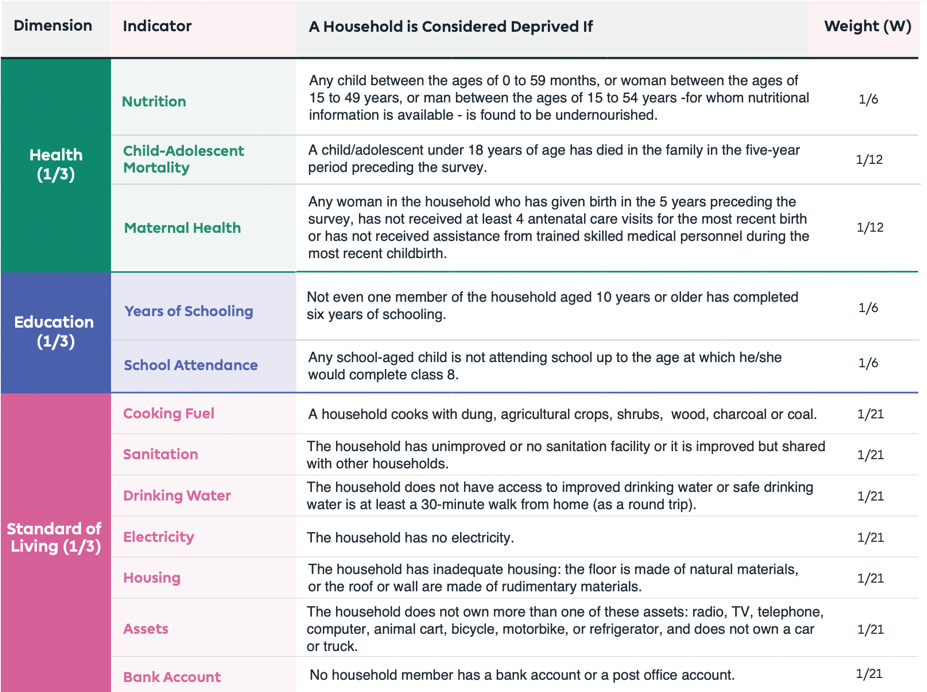
image 75

Findings of NITI Aayog:

  • It estimated that around 24.82 crore people escaped multidimensional poverty in the last nine years.
  • States like Uttar Pradesh, Bihar, Madhya Pradesh, and Rajasthan recorded the sharpest decline in the number of people classified as poor.
  • Indicators in the standard of living dimension showed highest levels of deprivation in 2005-06. For instance, 74.4 per cent of the population was deprived of cooking fuel in 2005-06, which fell to 43.9 per cent between 2019-21. 
  • Similarly, 70.92 per cent of the population was deprived of adequate sanitation facilities in 2005-06, which reduced to 30.93 per cent between 2019-21.
  • Bihar recorded a 53 per cent drop from 56.3 per cent share of MPI poor in 2013-14 to 26.59 per cent in 2022-23.

About Multidimensional Poverty:

  • Multidimensional poverty encompasses the many deprivations that people can experience across different areas of their lives. This could include a lack of education or employment, inadequate housing, poor health and nutrition, low personal security, or social isolation.
  • Applying a narrow definition of poverty and focusing on one dimension alone, such as income, fails to capture the true reality of people’s circumstances. In contrast, multidimensional poverty measurement offers a more holistic approach which better reflects peoples lived experiences.

About Multidimensional Poverty Index (MPI): 

  • Global MPI:  Developed by Oxford Poverty & Human Development Initiative (OPHI) in collaboration with the UN Development Programme (UNDP), in its flagship Human Development Report since 2010 and is the most widely used non-monetary poverty index in the world. It captures overlapping deprivations in health, education and living standards.
  • These dimensions are broken into ten indicators, including child mortality, nutrition, years of schooling, school attendance, cooking fuel, sanitation, drinking water, electricity, housing, and assets.

g3JuZUPK8A vDZ16Jq3Q vxluUIIElwij7AQr5CHZ

  • National MPI: Niti Aayog released its Multidimension Poverty Index in 2021 for the first time.
  • India’s national MPI is a contribution towards measuring progress on target 1.2 of the SDGs which aims at reducing “at least by half the proportion of men, women and children of all ages living in poverty in all its dimensions.

Government initiative to reduce poverty in all dimensions:

  • Poshan Abhiyan: To reduce malnutrition and stunting in children, adolescent girls, and women. It focuses on promoting a healthy diet, proper nutrition, and addressing related health issues.
  • Anemia Mukt Bharat: This initiative is part of the larger Poshan Abhiyan and focuses specifically on preventing and reducing the prevalence of anemia among women, children, and adolescents.
  • Targeted Public Distribution System under the National Food Security Act: Covers 81.35 crore beneficiaries, providing food grains to rural and urban populations. 
  • Pradhan Mantri Garib Kalyan Anna Yojana: Provide additional free food grains to the poor and vulnerable sections of society to alleviate the hardships faced due to the COVID-19 pandemic. 
  • Ujjwala Yojana : To provide free LPG connections to women from below-poverty-line households.
  • Saubhagya:  Providing electricity to rural and urban areas, aiming to enhance the quality of life and economic development.
  • Swachh Bharat Mission: To achieve universal sanitation coverage and make India open-defecation free.
  • Jal Jeevan Mission: To provide piped water supply to all rural households by 2024.
  • Pradhan Mantri Jan Dhan Yojana: To provide access to banking services for all households.
  • PM Awas Yojana: To facilitate access to affordable housing for the low and moderate-income residents of the country.

Significance of multidimensional poverty:

  • It is qualitative measure of poverty and it used non-monetary metrics to measure poverty in the world by measuring overlapping deprivations in access to health, education and living standards. 
  • Monetary measures of poverty based on poverty lines only give headcount ratios i.e., number of people who are poor. However, these measures fail to measure depth of poverty. It is possible that while the overall number of poor individuals reduce, while at the same time the poorest get poorer. Also, gains in quality of life may be completely missed unless the poor cross the poverty line or exit poverty. 
  • Thus, MPI provides insights not just into the distribution of poverty within a country but also indicates contribution of each indicator to multidimensional poverty. 
  • Using MPI, it has been possible to device schemes which target specific deprivations.
  • Helps to create a comprehensive understanding of poverty by identifying who is poor and the manner in which they experience poverty.

Limitations with MPI: 

  • It does not capture intra-household inequality or inequality among the poor.
  • The multitude of indicators can be overwhelming and may result in ineffective implementation.
  • Determining the relevance of dimensions and deciding how many should be considered or prioritized is also challenging.
  • Poverty is a complex issue with numerous factors, making it challenging to address all aspects.
  • Collecting data for multidimensional indicators can be extremely challenging and demanding, requiring additional efforts from the agency to achieve meaningful results.
  • MPI data released by NITI Aayog based on the National Family Health Survey (NFHS), which raises the issues of reliability of poverty assessments and subsequent policy decisions. (no independent assessment by NITI Aayog).

Way forward:

  • Integrating the Multidimensional Poverty Index (MPI) with government policy measures can indeed enhance the effectiveness and precision of schemes like the Public Distribution System (PDS) and the Mahatma Gandhi National Rural Employment Guarantee Act (MGNREGA).
  • Simplify the set of indicators to avoid overwhelming complexity. Prioritize the most relevant and impactful dimensions, taking into account the local context and priorities. This will help focus efforts on the most critical aspects of poverty.
  • Involve local communities in the data collection process to enhance accuracy and inclusivity.
  • Baseline survey should be conducted with the involvement of local communities to enhance accuracy and inclusivity.

Slums in India

Context: The Aam Aadmi Party (AAP) is claiming that the Bharatiya Janata Party (BJP) is carrying out a deliberate dismantling of slum settlements, which could have far-reaching consequences for a significant number of Delhi's residents.

The issue of slum demolition and urban redevelopment is multifaceted, involving a delicate balance between urban planning, housing rights, and political motivations. It tends to be a contentious subject because, while some perceive it as necessary for urban progress and modernization, others view it as a process that displaces impoverished communities, often without providing satisfactory alternatives for their relocation or livelihoods.

What is Slum?

The definition of “Slum” varies from country to country. In India, the central government through the office of the Registrar General of India’s National Sample Survey office have their own definition in the same way as each state has its own definition of slum.

image 62

Definition of Slum as per census 2011

image 63

There are regional differences in the names by which slums are known in India. In Delhi, slums are commonly called ‘Jhuggi-Jhompdi’, whereas in Mumbai they are called Jhopadapatti or Chawls’. Other known names are- ‘Ahatas’ in Kanpur, ‘Bustees’ in Kolkata, ‘Cheris’ in Chennai and ‘Keirs’ in Bangalore.

But physical characteristics in most of these slums are essentially the same. They are usually a cluster of hutments with dilapidated and infirm structure shaving common or no toilet facilities, suffering from lack of basic amenities, inadequate arrangements for drainage and for disposal of solid and wastages and garbage.

These in adequacies make the living conditions in slums extremely suboptimal, unhygienic and results in usually higher incidence of air and water borne diseases for the dwellers.

image 64

Maharashtra had a population of 1.18 crore living in slums in 2011, followed by Andhra Pradesh at nearly 1.02 crore. At 2.20 crore, these two states accounted for more than one-third of India’s 6.55 crore slum population (2011 Census).

image 65

Key Factors Responsible for growth of Slums

1. Rapid Urbanization: The migration of people from rural areas to cities in search of better job opportunities and living conditions leads to rapid urbanization.

This often results in the development of slums as cities struggle to accommodate the influx of people.

image 66

According to the Union Ministry of Housing and Urban Affairs, about 34% of India's population lived in urban areas in 2019, and this is projected to reach 40% by 2030, contributing to the expansion of slums.

Roughly 1.37 crore households, or 17.4% of urban Indian households lived in a slum in 2011, data released by the registrar general and census commissioner. 

2. Lack of Affordable Housing & Poverty:  The deficit of affordable housing in urban areas leaves low-income groups with no choice but to reside in slums. Further High levels of poverty force people to seek affordable housing, which is often found in slum areas.

In India, 21.9% of the population lives below the national poverty line in 2011.

3. Weak Urban Planning: Weak governance and corruption can lead to inadequate implementation of housing policies and urban development plans, contributing to the growth of slums. The absence of effective slum redevelopment policies has led to the proliferation of slums in major cities like Mumbai and Delhi.

4. Migration: Internal migration due to factors like natural disasters or conflicts leads to the formation of slums. Further Environmental issues like land erosion, floods, and droughts in rural areas push people towards cities, often resulting in slum living due to the lack of alternatives. States like Bihar and Uttar Pradesh, which have high rates of out-migration, often see their residents ending up in slums of metropolitan cities.

5. Socio-Political Factors: Discrimination and social inequalities based on caste, religion, or ethnicity can marginalize certain groups, limiting their access to adequate housing and forcing them into slums.

For Eg-Marginalized communities like the Dalits often face housing discrimination, leading to higher slum populations among these groups.

According to 2011 census-Around 40% of slum population of Punjab is SC, Tamil Nadu has 32%, Chandigarh has 30% and Haryana has 30% SC slum population.

image 67

6. Economic Disparities: The widening gap between the rich and the poor in urban areas results in a lack of affordable options for the lower-income groups, pushing them towards slum areas.India's Gini coefficient, a measure of income inequality, has been rising, indicating growing economic disparities.

7. Lack of Legal Recognition: The lack of legal recognition of slum dwellers' rights often leads to a neglect of these areas in urban planning and development.

Many slum dwellers do not have formal property rights, affecting around 65 million people in India according to some estimates.

8. Globalization: It has led to uneven urban development, where certain areas become highly developed while others are neglected, leading to slum formation.

The rapid growth of Global IT hubs in cities like Hyderabad and Bengaluru has not been matched with proportional housing and infrastructure development in all areas.

Issues faced by Slum Dwellers:

1. Overcrowding and Poor Living Conditions: Slums are characterized by high population density, resulting in cramped and inadequate living spaces. This leads to a lack of privacy, increased stress, and difficulty in maintaining hygiene. The houses are often constructed from makeshift materials, lacking durability and safety.

For eg- Dharavi is Asia’s largest slum. It is spread over 2.5 square kilometres and has a population density of 227,136/square kilometre.

2. Lack of Basic Amenities: Many slums have limited access to essential services like clean drinking water, sanitation, and reliable electricity. This leads to health risks due to contaminated water and poor hygiene. The scarcity of toilets forces residents to use open spaces or overcrowded public facilities, exacerbating health and dignity concerns.

3. Health Issues: The conditions in slums, including poor sanitation, inadequate nutrition, and overcrowded living spaces, contribute to the spread of communicable diseases like tuberculosis and cholera. Limited access to healthcare exacerbates these issues.

4. Quality Education: Children in slums face challenges in accessing quality education. Schools in these areas are typically under-resourced, with high student-teacher ratios and inadequate infrastructure. This results in lower literacy rates and educational attainment, perpetuating the cycle of poverty.

5. Unemployment and Underemployment: A significant portion of slum residents are employed in the informal sector, which offers unstable and low-paying jobs. This lack of job security and benefits such as healthcare and pensions contributes to the economic vulnerability of these populations.

6. Environmental Degradation: The lack of proper waste management systems in slums leads to environmental issues like pollution of nearby water bodies and land. This not only harms the environment but also poses health risks to the residents and the broader community.

7. Social Stigma and Discrimination: Slum dwellers often face social stigma, which impacts their ability to access services, find quality employment, and integrate into wider society. This discrimination can lead to social exclusion and perpetuate the cycle of poverty.

8. Legal and Policy Challenges: Many slums are built on land without legal permission, making it difficult for the government to provide basic services or enforce regulations. This uncertain legal status also leaves residents vulnerable to evictions and displacement.

9. Impact on vulnerable section:

  • Women in slums face specific challenges, including limited access to healthcare, especially reproductive health services, and higher vulnerability to violence. Cultural and societal norms often restrict their mobility and access to education and employment opportunities.
  • Economic hardships often compel families to send their children to work, depriving them of education and exposing them to hazardous conditions. Child labor is prevalent in sectors like garment manufacturing, where children work long hours for minimal wages.

Govt Initiatives

  • Pradhan Mantri Awas Yojana – Urban (PMAY-U) - It has In-Situ Slum Redevelopment (ISSR) as one of its four components under which slum rehabilitation can be taken up using land as a resource.
  • The Integrated Housing & Slum Development Programme (IHSDP) merged the National Slum Development Programme (NSDP) and Valmiki Ambedkar Malina Basti Awas Yojana (VAMBAY). It sought to offer adequate shelter and infrastructure to slum dwellers in urban areas.
  • The Interest Subsidy Scheme for Housing the Urban Poor (ISHUP) - The Scheme envisages the provision of interest subsidy to EWS and LIG segments to enable them to buy or construct houses. It will provide home loan with Central Government subsidy to EWS/LIG persons for acquisition of house as also for construction of house.

The problem of slums in developing nations is intricate and multi-dimensional, necessitating a comprehensive strategy to tackle the diverse difficulties encountered by residents of these areas. Initiatives aimed at bettering living standards, offering cost-effective housing, and boosting economic prospects are crucial in making significant progress in easing the struggles of slum inhabitants. Through focused and cooperative approaches, it's feasible to attain the objective of establishing sustainable and inclusive urban settings.

People’s manifesto for a just, equitable, and sustainable India

image 9

Context: In December, 85 people’s movements and civil society organisations released a ‘People’s Manifesto for a Just, Equitable and Sustainable India’.

Note: These suggestions can be articulated as a way forward when addressing topics such as inclusive growth, sustainable development, and government policy reform.

For accountability and transparency: 

  • Provide public support to independent media in various forms, including by making state-sponsored platforms on TV, radio, and others truly independent.
  • Initiate processes that make information access free, or easier (through better connectivity) in places usually neglected, considered ‘remote’ or disconnected.
  • Establish an independent statutory licensing and regulatory authority relating to media, free from government influence.
  • A comprehensive policy and law to ensure accountability and transparency of all institutions of the state, political parties, corporations, financial institutions, and media houses.

For Law, Justice, and Customs: 

  • Ensure the independence and integrity of Central Bureau for Investigation and Enforcement Director.
  • Abolish capital punishment.
  • Repeal the Unlawful Activities Prevention Act, 1967, the National Security Act, the sedition clause under IPC, and other similar laws and legal provisions.
  • Prioritise measures of redressal, rehabilitation, and behavioural change over conventional forms of punishment such as imprisonment.
  • Facilitate a healthy relationship between formal, statutory law and social norms and customs, each enabling or checking the other in the interest of justice, equity, fairness, and sustainability.

For democracy:

  • Full democratic rights to gram sabhas and urban area/mohalla sabhas, including financial and legal powers, and mandatory prior informed consent for any activities affecting them especially related to land use. 
  • Promote internal democracy and transparency within all organisations and institutions, including civil society groups.
  • Enact a law mandating social audits and mechanisms for citizen oversight to ensure that all welfare programmes.
  • Promote the autonomy and transparency of constitutional bodies, statutory bodies, and quasi-judicial bodies by establishing procedures that guarantee impartiality in appointments, ensuring transparency in the selection procedure, composition and deciding terms of service to prevent undue influence.

For society, culture, and peace:

  • Promote forums of inter-community understanding and dialogue, towards resolution of conflicts and promotion of peaceful co-existence, especially in areas prone to tension and conflict.
  • Encourage initiatives aimed at sustaining and promoting harmony and mutual respect among communities of different ethnicities, faiths, cultures, languages, beliefs and ideologies (for instance by encouraging collective inter-community celebrations in various festivals), and take immediate action against those who incite or promote hate, intolerance, misinformation.
  • Ensure women’s safety and dignity, countering sexual violence of various kinds, through inculcation of gender education in pedagogies from childhood.
  • Encourage democratic flourishing of the arts and sports, removing caste, class and gender discriminations embedded in some of them, making them accessible to all, and ensuring independence of public institutions promoting them. 

For Environment, Ecology, and Climate:

  • Facilitate independent studies to establish the ecological limits and carrying capacity of the country, and of regions within it, and publicise the results widely.
  • Set up a National Environment Commission, with independent Constitutional status akin to the Election Commission and the CAG, to lay down standards, monitor compliance by state and other agencies, and provide a redressal forum for citizens.
  • Ensure that at least 5% of the national and state budgets are dedicated to the environment related problems.
  • Revisions of the National and State Action Plans on Climate Change, and Disaster plans, to fully support vulnerable sections cope with and adapt to the climate crisis and other disasters.
  • Framing of national land/water use plan and policy, through widespread consultation, for conservation of ecosystems and the commons, wildlife and biodiversity, ensuring collective rights to communities dependent on them (e.g. laws similar to the Forest Rights Act, for rivers, marine areas, grasslands, etc).
  • Budgeting for a country-wide programme of localised land/soil and water regeneration oriented at creating sustainable natural resource assets for local community economies.
  • Replacement of all chemicals and other substances that are harmful to human or ecosystem/animal health, by ecologically sensitive substances.
  • Mandatory environmental and social impact assessments of projects, programmes, schemes and sectors, through independent agencies, with full participation of affected communities, and ensure at least a full year of ecological assessments. 

For health and hygiene: 

  • Give high priority to preventing ill-health in the first place, by improving social determinants of health such as nutritional food, water, sanitation, mental well-being, a clean environment, safe transport, and a healthy social environment;
  • Ensure at least 3% of the GDP is dedicated to the health.
  • Programmes to ensure conditions for healthy living and health services for all.

For food, water and energy:

  • Ensuring universal access to adequate, safe food and water, and energy, through ecologically sensitive, decentralized, and democratic means. 
  • All food production through organic, biologically diverse methods, giving priority to small farmers, pastoralists and fishers.
  • Decentralized water harvesting and management by communities.
  • Decentralized energy production including rooftop and on-farm methods.
  • Treat all water and waterbodies as public commons, not available for privatisation; add a Constitutional provision and legal measures to this effect.
  • Create awareness about the importance and value of the diversity of cuisines and diets in India, promoting ‘slow food’ and diverse nutritious foods such as millets over junk food.
  • Recognise the rights of waterbodies, including rivers and lakes, as entities in their own standing, following on the recognition of the rights of Rivers Ganga and Yamuna by the Uttarakhand High Court.

For economy and technology: 

  • Enable the re-localisation of production and exchange, in all sectors where it is possible and feasible, and especially in the provisioning of basic needs, with the long-term aim of creating self-reliant.
  • Strongly regulate the private corporate sector to eliminate labour and environmental exploitation.
  • Replace GDP as the measure of economic well-being with multi-dimensional, qualitative-quantitative measures that including material, socio-cultural, ecological well- being aspects.
  • Strengthen fiscal decentralisation and federalism, enabling greater fiscal autonomy for States and local self-governments in revenue generation and economic decision-making.
  • Specific measures to reduce gross economic inequalities, including caps on salary levels, basic minimum income and employment guarantee for the most vulnerable, pension for all workers in the primary sector, high taxation on income, wealth and inheritance of the rich, restraints on luxury and wasteful consumption, and steps to curb the enormous ‘black economy’. 
  • Reservation for micro/small/medium scale, especially handmade, of all products/services that can be made through community-based producer collectives (such as textiles, footwear, household goods).

For livelihoods and employment: 

  • Extend the Employees State Insurance Act (ESI) provisions to all workers, including unorganised workers.
  • Highest priority to agriculture, crafts, and small manufacturing at decentralized levels, and ecological regeneration.
  • Extension of MNREGS and other employment security schemes to urban areas. 

For Learning, Education, and Knowledge:

  • Create greater learning spaces for adults, with a diversity of creative approaches;
  • Facilitate the use of different communication and teaching modes, including arts, crafts, theatre, dance, and others.
  • Re-orient teacher training institutions and processes.
  • Allocate at least 6% of the GDP to learning and education.
  • Amend the Right to Education Act to enable a greater diversity of innovating learning environments to flourish, while ensuring minimum quality standards.
  • Encourage equitable cross-fertilisation and collaboration between modern and traditional, scientific, and non- scientific, formal, and informal, and urban and rural spheres of knowledge.
  • Promote initiatives making knowledge as part of the ‘commons’ rather than a privately owned or controlled commodity, including support to open source, creative commons, and other such systems.
  • Promote respect for various forms of transmitting knowledge, including traditional forms such as oral methods and storytelling.

For global relations:

  • Engage in widespread global dialogue re-examining notions of ‘nation-state’ and emphasising relations amongst ‘peoples’ of the world including through restructuring the United Nations to provide central say to non-state collectives and communities;
  • Re-establish India’s global role as a champion of human rights, peace and demilitarisation, and ecological sustainability. 

For empowerment and facilitation of India’s youth: 

  • Promote and nurture youth led, youth-centric organisations and empowerment centers at various levels.
  • Ensure widespread youth participation particularly from vulnerable communities in formulating, implementing and monitoring all laws, policies, plans and schemes;
  • Significantly increase participation of youth led and youth centric organisations in government schemes like NSS and NYKS to enhance life skills and core capacities of young people along with ongoing volunteering processes;
  • Set up youth empowerment centers for each cluster of settlements, that offer counselling, sports, recreation facilities and career guidance facilities that are focused on alternative livelihoods.
  • Establish a statutory youth commission for guiding and implementing youth related policies.

For Transportation and Mobility:

  • Give highest priority to sustainable, accessible and equitable means of transportation in both urban and rural areas, with highest priority to mass public transport (especially buses) and non-motorized means (cycling, walking); these should ensure last-kilometre connectivity for persons with disabilities and senior citizens;
  • Disincentivise private motorised vehicles, especially the automobile, with heavy taxation, areas/timing that are off-limit to them, and minimal road space;
  • Institute a cap on the speed of road traffic for safety and to optimise energy use.

For urban settlements:

  • Make ecological and social impact assessments, and area/ward/neighbourhood participation, mandatory for all urban planning and budgeting processes.
  • Encourage and incentivise sustainable construction, architecture and housing that is dignified and accessible for all.
  • Initiate measures to maximise local, distributed generation of energy, water harvesting and responsible use, and other basic needs of urban residents, minimising long-distance transmission, and the negative footprint of cities on rural areas.
  • Integrate biodiversity into urban planning, by conserving natural ecosystems, maximising indigenous vegetation including in plantations, and providing migration corridors.

Importance of International Law

Context: The state of international law is a contentious one. Some scholars doubt the relevance of International Law, while others uphold the importance of the same despite the challenges it faces. Israel’s bloody war in Gaza has caused unprecedented death and destruction in the backdrop of Russia’s brazenly illegal invasion of Ukraine. These two wars have led many to pronounce the death of international law, especially the rule prohibiting the use of force in international relations under Article 2 (4) of UN Charter.

Importance of International Law

  • International law matters because, through its argumentative practices, it has the potential to hold those who wield public power accountable for their conduct. For Example South Africa moved the International Court of Justice (ICJ) alleging that Israel’s conduct in Gaza violates the Convention on the Prevention and Punishment of the Crime of Genocide and this pushes countries and actors to explain their conduct. For example, the Israel Defence Forces have tried to explain how their military offensive is consistent with international law.
  • Even if there is no universal compliance with international law, especially international humanitarian law, there is a universal aspiration towards compliance.

UN Charter Article 1 and 2

Articles 1 and 2 of the Charter of the United Nations outline the purposes and principles of the United Nations. 

Article 1 (2) establishes that one of the main purposes of the United Nations, and thus the Security Council, is to develop friendly international relations based on respect for the “principle of equal rights and self-determination of peoples”. 

 Article 2 (4) of the Charter prohibits the threat or use of force and calls on all Members to respect the sovereignty, territorial integrity and political independence of other States.

Defining International Law:

It can be defined as a set of guidelines which regulates the interaction between governments and international entities. These International laws has played a crucial role in advancing global peace, justice, and human rights.

India’s position on International Law:

  • India is actively participating in the International Legal System, it is signatory to various international treaties and conventions along with United Nations plus associated agencies.
  • India’s position in international law is determined by the values of sovereignty, territorial integrity, non-interference in internal affairs, respect for human rights and peaceful conflict resolution. 
  • India has also made changes to its internal legal system to advance human rights by passing laws on labour rights, environmental protection, against violence towards women etc and for its implementation has made the judicial system more robust.

Challenges faced by International Law

  • Inadequate Enforcement Mechanisms: The efficacy of the international legal system is compromised by lax enforcement, as certain governments neglect their duty to uphold international laws without facing consequences. The absence of a robust enforcement mechanism undermines the authority and credibility of the international legal system. Additionally, the limited authority agreements signed by states with the International Court of Justice (ICJ) and the reluctance of powerful states to endorse the Rome Statute, establishing the International Criminal Court (ICC), further weaken the enforcement framework.
  • Lack of a Unified Global Regulatory System: The world grapples with the absence of a comprehensive global regulatory framework, resulting in overlapping and conflicting international regimes. The clash between entities such as the World Trade Organization (WTO) and the United Nations Framework Convention on Climate Change (UNFCCC), each with distinct aims, principles, and goals, contributes to confusion and inefficiency in addressing global challenges.
  • Marginalized Voice of Developing Nations: Developing nations confront challenges in actively participating in international affairs due to limited capacity and resources. This marginalization leads to a disregard for their interests and concerns, fostering a perception of bias in favour of developed Western countries within international institutions and laws.
  • Harmonizing State Sovereignty with Globalization: The concept of state sovereignty, enshrined in the UN Charter, occasionally impedes successful international cooperation. The escalating cross-border activities propelled by globalization underscore the need for periodic updates to international laws to keep pace with evolving global dynamics.
  • Geopolitical Dynamics Among Great Powers: Power politics significantly influences the effectiveness of international law. Dominant global players manipulate international legal frameworks to favour their interests and those of their allies. Criticism has been directed at the United States, for instance, for leveraging its influential position to reshape international trade regulations at the expense of less developed states.

Way Forward:

  • Strengthening International Institutions: International Laws will be as strong as the international institutions and their implementing mechanism. Thus there is a need to enhance the implementing mechanism of the UN, ICJ, ICC and WTO at the earliest.
  • Increased representations: There is a need for increased representation of weaker and smaller states in international institutions in order to overcome power disparities. This can be done by giving these states more chances to participate in decision-making processes.
  • Promoting dialogue and negotiations: There is a need to promote more discussion and negotiation between states and non-state entities in order to enhance international law.
  • Focus on Human Rights: The gravest challenge that the world faces today is Human Rights violations across continents and thus there is need to enhance standards, norms of human rights and its implementation mechanism.
  • Pressing Accountability: International law must be moulded and accentuated to become an instrument that holds the powerful accountable in international relations.

Sheikh Hasina wins election in Bangladesh and India-Bangladesh Relations

Context: Sheikh Hasina was re-elected as the Prime Minister of Bangladesh. This win will ensure stability, continuity and common prosperity for India. Sheikh Hasina’s government has been friendly towards India. 

image 41

Analysing India’s position and concerns in the scenario: 

Ensuring security 

  • India's keen interest in the potential return of Sheikh Hasina stems from her pivotal role in alleviating security concerns along the 4,100-km border.
  • Bangladesh is considered a strategic partner and a crucial ally for India, particularly concerning the security of its north-eastern states.
  • However, concerns loom over the potential return of the Bangladesh Nationalist Party and Jamaat-e-Islami, which could lead to a resurgence of Islamist influence. 
  • Sheikh Hasina's actions against ethnic insurgent groups and her cooperation in regional connectivity play a crucial role in enhancing India's security interests.
  • Indian policymakers emphasize the necessity of a friendly regime in Dhaka to safeguard mutual interests.

Cultural and economic foundations

  • Bangladesh's economic ascendancy, surpassing Pakistan as the second-largest economy in South Asia, enhances India's economic interests. The two nations share deep economic ties, with Bangladesh being a significant export destination for Indian goods.
  • Dhaka relies on Delhi for essential commodities, and India has provided substantial financial support through a $7 billion Line of Credit for infrastructure and development projects.
  • However, challenges arise in India-sponsored projects, such as the Agartala-Akhaura rail link, due to gauge disparities, impacting seamless rail movement and connectivity to Chittagong port.
  • Countering China's influence
  • India's pursuit of road and river transport access through Bangladesh for its north-eastern states aims to reduce vulnerability in the ‘chicken's neck’ corridor. (The Siliguri Corridor, also known as the Chicken's Neck, is a narrow strip of land situated in West Bengal, linking India's northeastern states with the rest of the country. Spanning a mere 17 kilometers at its narrowest point, this corridor shares borders with Nepal, Bangladesh, and the Kingdom of Bhutan). 
image 42
  • Geopolitically, having a friendly government in Dhaka becomes crucial for India to counterbalance China's growing influence in the region.
  • While maintaining relations with China, Bangladesh navigates a delicate balance between India and China, respecting India's security interests.

Regional hub aspirations

  • India envisions Bangladesh as a regional hub for cooperation in the Bay of Bengal, hosting BIMSTEC's secretariat and fostering ties with other countries like Japan.

Impact of US criticism

  • Historical distrust between Bangladesh and the US, rooted in the 1971 conflict, has influenced diplomatic relations.
  • Interactions between Hasina and the Biden Administration suggest a potential shift in US policy, acknowledging India's interests in Bangladesh, which could positively impact India's stance in the region.

Fair and non-violent elections

  • India emphasizes the importance of a fair and non-violent election process in Bangladesh, hoping Sheikh Hasina's leadership will ensure stability and prevent external critics from undermining the nation's positive image.
  • However, the opposition, particularly the Bangladesh Nationalist Party (BNP), expresses distrust in the election process and claims India’s influence and demands a neutral interim government, leading to heightened tensions.

Public sentiment

  • Despite India's clear preference for Sheikh Hasina's leadership aligning with its interests, bridging the gap with the people of Bangladesh remains a challenge.
  • The complex dynamics require a delicate balance between strategic considerations and addressing the concerns and sentiments of the Bangladeshi populace.

A balanced approach that considers historical, religious, and political dimensions while investing in future relationships beyond individual leaders is vital for India's long-term interests in the region.

India – Bangladesh Relations: 

Indian foreign policy towards its neighbours is based on one main imperative: New Delhi wishes its neighbours to keep Indian interests in mind when determining their domestic and external policies.

There is no country integrated more closely with India than Bangladesh in respect of language, ethnicity, and culture. The key difference is Islam, and it is this factor that drives the relationship to an unusual degree.

Security and Border management

  • India and Bangladesh share 4096.7 km. of border, which is the longest land boundary that India shares with any of its neighbours.
  • India-Bangladesh Land Boundary Agreement (LBA) came into force in 2015 under which enclaves of India and Bangladesh in each other’s countries were exchanged and strip maps were signed.
  • Coordinated Border Management Plan (CBMP) signed in 2011 aims to synergize efforts of both Border Guarding Forces for checking cross border illegal activities and crimes as well as for maintenance of peace and tranquility along India-Bangladesh border.
  • Both sides recognize that terrorism remains a threat to global peace and security and have reiterated their strong commitment to eliminating terrorism in all its forms and manifestations.
  • Security in Northeast States: Bangladesh cooperated with India in sorting out security issues in the Northeast. Bangladesh handed over leaders and shut down their training camps.
  • Ranjan Daimary: founder-chief of National Democratic Front of Bodoland (NDFB)
  • Anup Chetia of United Liberation Front of Assam ULFA.

Trade Partnership

  • Bangladesh is India’s largest trading partner in South Asia.
  • The bilateral trade between the two-countries has jumped to USD 18.2 billion in 2021-22 as compared to USD 10.8 billion in 2020-21.
  • Between 2009-10 and 2015-16, the trade deficit grew in India’s favour at a staggering 164.4%. Foreign Direct Investment (FDI) from India to Bangladesh is $3.11 billion.
  • India has extended 3 Lines of Credits to Bangladesh in the last 7 years amounting to US$ 8 billion. This makes Bangladesh the largest recipient of LOC funds from India till date.
  • Duty free and Quota free access has been given to Bangladeshi exports to India under SAFTA since 2011.
  • Both countries are working on a bilateral Comprehensive Economic Partnership Agreement (CEPA).

Read also: Evolution of ties INDIA – BANGLADESH

Connectivity

  • Both jointly inaugurated, newly restored railway links between Haldibari (India) & Chilahati (Bangladesh). This rail link will further strengthen trade and people to people ties between the two sides.
  • To facilitate better connectivity, simplify movement of passengers and goods, both countries agreed to an early operationalization of BBIN (Bangladesh, Bhutan, India and Nepal) Motor Vehicles Agreement through signing of Enabling MoU for Bangladesh, India and Nepal to commence movement of goods and passengers, with provision for Bhutan to join later.
  • Protocol on Inland Water Transit and Trade (PIWTT) was signed (Sonamura-Daudkandi on river Gomti and extension of Dhulia to Godagiri up to Aricha on river Padma) and five new ports of call and two extended ports of call.

Cooperation in Water, Power & Energy

  • Bangladesh wants early signing of an interim agreement for sharing of the Teesta waters, as agreed upon by both the governments in 2011.
  • Need for early conclusion of Framework of Interim Agreement on sharing of waters of six joint rivers, namely, Manu, Muhuri, Khowai, Gumti, Dharla and Dudhkumar.
  • Expedite implementation of projects including India-Bangladesh Friendship Pipeline, Maitree Super Thermal Power Project as well as other projects.

Regional and Global Partnership

  • Both countries agreed to continue working together towards achieving early reforms of the UN Security Council, combating climate change, attainment of the Sustainable Development Goals (SDGs) and protection of the rights of migrants.
  • Both reaffirmed the need for developed countries to fulfil their commitments under the Global Partnership for ensuring the means of implementation of the SDGs as enshrined in the Agenda 2030.
  • Bangladesh appreciated the work of the New Development Bank and thanked India for inviting Bangladesh to join the Institution. 

Challenges in India Bangladesh Relations

  • Although Economic relations are expanding every day, in India’s Consolidated FDI policy 2017, Bangladesh is put in the same category as Pakistan.
  • Under which a citizen of Bangladesh/Pakistan or an entity incorporated in Bangladesh/Pakistan can invest only under the Government route.
  • Despite India-Bangladesh Coordinated Border Management Plan, 294 Bangladeshi Nationals have been killed along the border since 2010.
  • Teesta water agreement which was agreed to in 2011 is yet to be signed because of various contentious issues that remain.
  • The Citizenship (Amendment) Act (CAA) and National Register of Citizens (NRC) have created a negative impression in Bangladesh of India’s intent.
  • Bangladesh is China’s second-largest arms export destination.
  • Chinese firms have been outbidding their Indian counterparts in infrastructure projects.

Way forward: 

  • Efforts should be intensified to reach a timely consensus on delineating the Teesta river water-sharing arrangement, fostering mutual understanding between India and Bangladesh.
  • Strengthening cooperation in coastal connectivity, as well as improving road, rail, and inland waterways, is crucial for fostering closer ties and facilitating smoother movement between the two nations.
  • Fast-tracking the construction of the Friendship Pipeline, which facilitates the efficient transportation of high-speed diesel from India to Northern Bangladesh, is imperative for boosting economic collaboration.
  • Comprehensive Economic Partnership Agreement (CEPA) Negotiations: Redirecting attention to ongoing CEPA negotiations since 2018 is pivotal for reinforcing economic relations between India and Bangladesh, fostering a more robust and mutually beneficial partnership.

Carbon Border Adjustment Mechanism

Context: A concerning development for India is the European Union (EU)’s Carbon Border Adjustment Mechanism (CBAM). The policy, which intends to tax carbon-intensive products coming into the EU from 2026, is divided into two phases, with the first phase (transitional phase) kicking in from October 1, 2023.

What is a carbon border adjustment tax? 

  • A carbon border adjustment tax is a duty on imports based on the amount of carbon emissions resulting from the production of the product in question. 
  • It is aimed putting a fair price on the carbon emitted during the production of carbon intensive goods that are entering the EU, and to encourage cleaner industrial production in non-EU countries.
  • The gradual introduction of the CBAM is aligned with the phase-out of the allocation of free allowances under the EU Emissions Trading System (ETS) to support the decarbonisation of EU industry.

EU Emissions Trading System:·  The EU ETS works on the ‘cap and trade’ principle. A cap is a limit set on the total amount of greenhouse gases that can be emitted by the installations and aircraft operators covered by the system. The cap is reduced annually in line with the EU’s climate target, ensuring that emissions decrease overtime.·  Within the cap, companies primarily buy allowances on the EU carbon market, but they also receive some allowances for free. Companies can also trade allowances with each other as needed. If an installation or operator reduce their emissions, they can either keep the spare allowances to use in the future or sell them.·  Hence it makes polluters pay for their greenhouse gas emissions, helps bring emissions down and generates revenues to finance the EU's green transition, operates in all EU countries plus Iceland, Liechtenstein and Norway (EEA-EFTA states).

xrKrlabdOEbb CMUkAFwefI4iTRnqqhUe72Xs

Note: This EU-ETS works for the companies located within the EU borders. CBAM is for those companies which are located outside the E.U.

How the CBAM will work?

  • The CBAM puts an emissions tariff on imports of goods with a high risk of carbon leakage from countries which are not members of the EU Emissions Trading System (ETS).
  • Companies importing goods into the EU will have to purchase CBAM certificates and then surrender the required amount to cover the corresponding emissions each year.
  • There are no limits on the number of CBAM certificates an importer may purchase so as to avoid imposing restrictions on trade.
  • Unlike ETS allowances, CBAM certificates are not tradeable nor bankable.
image 40

Merits of CBAM (Viewpoint of E.U):

  • Preventing Carbon leakage: It refers to a phenomenon where a EU manufacturer moves carbon ­intensive production to countries outside the region with less stringent climate policies and hence it does not reduces the actually carbon emissions, it just shifts the source to other regions. CBAM will try to bring stringency for those industries also.
  • Protecting Domestic industries: CBAM will charge the carbon intensive products coming from non-EU countries hence it will ensure level playing field to the domestic companies who by virtue of EU-ETS are already following stringent norms.
  • In line with E.U’s green targets: According to the European Commission’s proposal, CBAM would contribute to the achievement of climate neutrality by 2050. This will also help them to reduce GHG emissions by 55% by 2030. It comes under the EU’s Green Deal to.

Issue with CBAM (Viewpoints of India, China & other developing countries):

  • Hurting industrial interests: This might hurt Industrial interests in the developing countries as their exports will be charged by EU. For e.g. In FY22, India exported Steel and aluminum related products to E.U to the tune of $10B.
  • Violative of CBDR: As CBAM is equally applicable to all the countries outside EU, it violates the principle of ‘Common but differentiated responsibilities’ as was agreed under Paris agreement.
  • Green protectionism: This can be misused by EU to unnecessarily levy the import duties on imports. Experts have said that CBAM charge can be around 20-35% but the average levy of EU on the companies within EU is around 2-3%.
  • Valuation of carbon embedded: There are huge differences between how the actual carbon content embedded is calculated and valued in other jurisdictions.
  • Historical contribution by developing world in climate change is also very low therefore they cannot be charged for their developmental activities.
  • FTA agreement and zero duties: It is still not clear that whether CBAM will be applicable in the FTA or not. For e.g If India enters into FTA with EU, then there are chances that EU will impose CBAM making Indian products costly. But India might not reciprocate it leading to zero duties and flooding of Indian markets by EU products.
  • Other factors for Industrial location: Just the stringent environmental norms do not govern the shift of industries from EU to Asia & Africa. There are other factors also like cheap labour, availability of land, huge markets, government policies etc. So, the E.U’s argument that Industries shift to other areas just to avoid stringent policies is not completely acceptable.
  • Compliance with WTO: Developing countries have also criticised this legislation on account of violative of WTO’s special and differential treatment provisions.

What can be done?

  • Funds to developing countries: Experts have suggested that EU could collect the tax and return the funds to such countries to invest in their green technologies.
  • Own legislations: India can also come up with their own legislations in this regard.

What is Carbon Intensive?

  • Carbon intensity is a measure of how clean our production is. For e.g in case of electricity, it refers to how many grams of carbon dioxide (CO2) are released to produce a kilowatt hour (kWh) of electricity.
  • Electricity that’s generated using fossil fuels is more carbon intensive, as the process by which it’s generated creates CO2 emissions.
  • Renewable energy sources, such as wind, hydro or solar power, produce less CO2 emissions, so their carbon intensity value is much lower.

Child Marriage

Context: A recent study on child marriage in India, published in The Lancet, has highlighted a positive trend of decreasing child marriages across the country. However, the study also pointed out that four states, namely Bihar (16.7%), West Bengal (15.2%), Uttar Pradesh (12.5%), and Maharashtra (8.2%), still account for more than half of the total number of child marriages among girls in India.

The study titled ‘Prevalence of girl and boy child marriage across States and Union Territories in India, 1993–2021’ reveals significant findings about the state of child marriage in India.

  • High Prevalence of Child Marriage in Girls: one in five girls in India is still married before reaching the legal age.
  • Regional Variations: While some Indian states have successfully reduced the prevalence and headcount of child marriages among girls, others like West Bengal have struggled significantly.
  • National Figures: Nationally, the percentage of women aged 20-24 years who were married before 18 is 23.3%.

These findings underscore the ongoing challenge of addressing child marriage in India, particularly in regions like West Bengal, and highlight the need for targeted policies and interventions.

What is child Marriage?

Child marriage, a practice found in certain societies, particularly in India, typically involves two distinct forms. The first form is where a young child, often a girl under eighteen, is married off to an adult man. This form is more direct and immediate in its execution. The second form is more of a future arrangement: parents of a young girl and boy agree to marry their children to each other when they both reach a more suitable age. In this latter case, the boy and girl usually do not meet until the time of their wedding ceremony.

This practice, deeply rooted in cultural and social norms, often raises significant concerns regarding the rights and welfare of the children involved.

Laws for minimum age for Marriage

  • Hindu marriage act (1955), Indian Christian marriages act (1872) and Special Marriage Act (1954) prescribed minimum age of marriage as 18 years for bride and 21 years for groom.
  • Prohibition of Child Marriage Act, 2006 prohibits marriage below 18 years for women & 21 years for men.

Despite legal age of marriage for women being set at 18 years, it was found that in almost all States, women continued to get married before they turned 18. For ex.

**Given facts published by UNICEF- Ending child Marriage -A profile of progress in India (2023)

image 23
image 24
image 25
image 26

Reasons for child Marriage:  

Socio-cultural reasons

  1. Traditions and cultural mandates: The concept of "honour" is deeply entrenched in many societies, where a girl’s chastity is closely tied to family honour. Families may marry off girls early to ensure they remain virgins until marriage, thus upholding the family’s reputation.
  2. Demand for dowry : The illegal yet persistent practice of dowry puts pressure on families to marry daughters early, as the dowry amount tends to increase with a girl’s age and education level. As Girl children are sometimes viewed as an economic burden, and marrying them off can be seen as a way to alleviate financial stress through the system of dowry.
  3. Caste, community and ethnic pressure : If the children are married at an early age, they will not exercise deviant behaviour of searching of their partners on their own, which can be out of the caste or community groups.
  4. Economic and Educational backwardness: The prevalence of child marriage is higher among poorer households. Financial constraints often lead to earlier marriages for girls. Because of this Child marriage is more common in rural areas and amongst certain social groups like Scheduled Castes and Scheduled Tribes. Education level greatly affects the likelihood of child marriage, with a higher incidence among women with no or primary education.
  5. Safety and security problems of girls:
    • Where schools are far from home, the journey to and from school can be dangerous for girls. Risks include abduction, trafficking, or assault.
    • marrying a girl at a young age can protect her from sexual violence and harassment.

Economic reasons

  • Poverty in rural areas makes families believe that they do not need to go for family planning as more children will lead to more hands to work. Families think that boy will remain with them and girls will be married off to other families. So, they wish to marry them at an early age.

Historical reasons: There was a belief that girls should get married before the onset of puberty.

Trafficking: Child marriage can intersect with human trafficking, where impoverished families may be coerced into selling their daughters into marriage or prostitution for financial gain, often to support their sons, thereby subjecting the girls to harm and exploitation.

Legal and policy related measures:

  • The current act does not annul such marriages. It only gives the power to the bride to call off the marriage once she is an adult.
  • Ineffective enforcement of legislation and laws
  • Absence of females from the process of law-making.

Awareness and Limitations of Social Protection Programs: Families at risk of child marriage often lack awareness of available social protection programs, which tend to focus on cash transfers without addressing the complex issues surrounding child marriage.

Impact of child Marriage

  1. Low levels of educational attainment: Child brides in India face significant hurdles in continuing their education. Statistics show that fewer than 2 in 10 married girls remain in school, which highlights the disruption of education due to early marriage​.
  2. Violence, Exploitation, and Abuse: Child marriage violates children's rights and places them at high risk of various forms of violence, exploitation, and abuse. While it affects both girls and boys, girls are disproportionately impacted.
  3. Economic Consequences: child marriage can initiate an intergenerational cycle of poverty, where those married as children are more likely to lack the skills and knowledge needed to secure employment that would enable them to lift their families out of poverty.
  4. Early pregnancy results in adverse health outcomes for both mother and child: Incidence of early marriage and childbearing are important causes of undernutrition in India. Children born to teenage mothers are more likely to be undernourished than children of adult mothers. India is home to more stunted children than any other country and is one of the ten countries with the largest burden of teenage pregnancy. ((Example- Recently, 10 infants died at Murshidabad Medical College and Hospital in a span of 24 hours. The hospital authorities said the majority of the children were born with extremely low birth weight. Murshidabad, one of the economically poorer districts of the State, has one of the highest numbers of child marriages in West Bengal. The NFHS ­ 5 points out that 55.4% of women aged 20­24 years are married before the age of 18 years in the district.))
  5. population growth: Child marriage often leads to earlier and more frequent childbearing, contributing to population growth due to limited access to education and family planning resources.
  6. Restricted Mobility: Child marriage can restrict the mobility of young brides and reduce their access to mass media such as TV, newspapers, and the internet compared to their unmarried counterparts. This restriction can further limit their exposure to information, education, and opportunities for personal development.
  7. Limited or even absent peer networks: as their social interactions are often restricted to their spouse's family and household. This can isolate them from their peers and limit their opportunities for social development and support.

Govt Measures:

The Child Marriage Restraint Act, 1929: known as the Sarda Act, was a law enacted to prohibit the solemnization of child marriages in India. It set the minimum age of marriage at 14 years for girls and 18 years for boys. It extends to the whole of India except the State of Jammu and Kashmir and it applies also to all citizens of India within and beyond India.

Prohibition of Child Marriage Act, 2006:

  • It was implemented in India to address the shortcomings of the Child Marriage Restraint Act of 1929.
  • This updated law increased the legal age of marriage to 18 years for girls and 21 years for boys and established harsher punishments for those who perform, permit, or promote child marriages.
  • It envisages preventing child marriage with punishments of rigorous imprisonment for two years and/ or fine of Rs. 1 lakh.
  • The Act also provides for the appointment of Child Marriage Prohibition Officer whose duties are to prevent child marriages and spread awareness regarding the same.
  • In addition, several national flagship programmes, including the Beti Bachao Beti Padhao (BBBP) scheme, the Scheme for Adolescent Girls (SAG) (previously known as SABLA), the Rashtriya Kishor Swasthya Karyakram (RKSK) (adolescent health) programme, various national- and state level conditional cash transfer (CCT) programmes for girls  have been implemented to prevent child marriage like-  Kanyashree Prakalpa(West Bengal) is a conditional cash transfer scheme aimed at incentivising the schooling of all teenage girls between the ages of 13 and 18, and simultaneously discouraging child marriage. 

Steps may eventually reduce the age of marriage

image 27
  • Plugging the legal loopholes & Progressively the minimum age for marriage for girl child should be increased from 18 to 21. (Government had introduced the Prohibition of Child Marriage (Amendment) Bill, 2021 in Parliament in December 2021 for raising the age of marriage of women to 21 years to bring it on par with the men and the Bill has been referred to a Parliamentary Standing Committee.)
  • Enforcement of Right to Education Act, provisions should be made for free education of girl child till the university level.
  • Conditional cash transfer schemes to improve attendance of girls in schools and skill training.
  • Ensuring a safe environment to women free from constant threat of rape and sexual assault which is why girls are married off early.
  • Creating awareness among females, families and communities at large about need to educate females and marriage at an appropriate age.
  • Focused attention at locations where there is more prevalence of child marriages.
  • Civil Society organisations and NGOs should be encouraged to tackle the issue.

Child marriage is now firmly on the global development agenda, most prominently through its inclusion in Sustainable Development Goal (SDG) target 5.3, which aims to eliminate the practice by 2030.

Although indicator 5.3.1 measures child marriage among girls, the practice occurs among boys as well. Regardless of gender, marriage before adulthood is a breach of children’s rights.

Medical Termination of Pregnancy (Amendment) Act, 2021

Context: The Delhi High Court permitted a depressed widow to terminate her 29-week pregnancy, citing the risk of mental harm. Despite the Medical Termination of Pregnancy (Amendment) Act's 24-week limit, special considerations apply to specific groups, including survivors of rape and vulnerable individuals.

image 16

About Medical Termination of Pregnancy (Amendment) Act, 2021:

  • The Medical Termination of Pregnancy (Amendment) Act, 2021 alters the MTPA 1971.
  • The amendments increase the ambit and access of women to safe abortion services and will ensure dignity, autonomy, confidentiality and justice for women who need to terminate pregnancy.

Features of the amendment act:

Medical Termination of Pregnancy features
  • The Amendment raises the upper gestation limit from 20 to 24 weeks for particular groups of women, include rape survivors, incest victims, and other vulnerable women (such as differently-abled women, minors), among others.
  • It replaces the terms “married woman and her husband” with the terms “woman and her partner”. As a result, an unmarried woman can also terminate pregnancies within the time limit prescribed under the Act.
  • Upper gestation limit not to apply in cases of substantial foetal abnormalities diagnosed by Medical Board. 
  • The ground of failure of contraceptive has been extended to women and her partner up to 20 weeks
  • For safeguarding the privacy and confidentiality of women, section 5A of the Act penalise medical practitioners who fail to protect the privacy and confidentiality of women who desire to terminate their pregnancy.

Limitations of the Amendment Act:

  • Time frame for Medical Board’s decision not specified: The amended Act does not stipulate the time limit within which the medical board must make its decision, result in further complications for pregnant women.
  • Since the amended Act exclusively allows for the termination of pregnancies in the case of women, it is unclear if transgenders will be included under the amended Act.
  • Unavailability of qualified medical professionals to terminate pregnancies: The All-India Rural Health Statistics (2018-19) reveal a severe shortage of gynecologists in rural India. With only 1,351 serving at community health clinics, there's a substantial 75% shortfall (4,002 doctors), posing a significant obstacle to ensuring safe abortions.
  • Judicial inconsistency: Lower courts sometimes making flawed decisions that higher courts later correct on appeal. However, pregnant women experiencing physical hardships may not have sufficient financial resources for filing an appeal against an unjustifiable judgement resultantly becoming a victim of the tedious judicial system.
  • There is no provision for ensuring the accountability when death of the mother is caused due to the denial to abort.
  • Section 3 of the MTP Act, which rests the decision of undergoing a medical termination solely on the doctor’s opinion, also points to lack of autonomy for women.
  • Frontline healthcare workers (around 95%), the first points of contact for women—are also unfamiliar with the amendment to the MTP Act, 1971.

Suggested measures:

  • Need law on comprehensive abortion care is essential to ensure access to safe services, health and safety standards, financial accessibility, and protection from harassment (Shantilal Shah committee).
  • Social media emerged as one of the key sources of information for women. This should be used by the respective state health authorities to share messages on different clauses/sub-clauses of the MTP (Amendment) Act, 2021 in simple languages among women.
  • Provide a reasonable time frame within which the medical board must make its decision.
  • Advocate for the establishment of a fast-track appeal process, particularly in cases involving maternal health risks or physical hardships.
  • Propose the inclusion of provisions that hold healthcare providers accountable for maternal deaths resulting from the denial of abortion when it is legally permissible. This can act as a deterrent and ensure that medical decisions prioritize maternal health.
  • Need a mechanism for regular review and updates of the MTP Act to address emerging issues and ensure that the legislation remains relevant and effective.