Prelims Nuggets

Santiniketan finds its place on UNESCO’s World Heritage List

Context: The town of Santiniketan, founded by the renowned Nobel laureate Rabindranath Tagore, has now earned a place on the UNESCO World Heritage List. Located in West Bengal's Birbhum district, Santiniketan, which translates to "abode of peace," began its journey in 1901 and stands as the very place where Tagore laid the foundations of Visva-Bharati University. 

More About the news:

  • The Culture Ministry, in its proposal to UNESCO for Santiniketan's inclusion on the World Heritage List, emphasized that this place represents a significant exchange of human values. 
  • It has played a pivotal role in the development of architecture, technology, monumental arts, town planning, and landscape design within a cultural area of global importance.
  • Efforts to secure Santiniketan's place on the UNESCO World Heritage List have been ongoing since 2010. 
  • The latest proposal for its nomination began in the financial year 2020-21.
  • ASI has been diligently working on the restoration of various structures in the vicinity of Santiniketan in recent years.
image 61

Exploring the Legacy of Santiniketan:

An Abode of Peace and Knowledge

  • Santiniketan was originally called Bhubandanga, after the name of the village where it was located.
  • The town of Santiniketan was founded by Maharshi Devendranath Tagore, the father of Rabindranath Tagore, who was a Bengali philosopher, polymath, and the first non-European to win the Nobel Prize in Literature.
  • Maharshi Devendranath Tagore was a follower of the Brahmo Samaj, a Hindu reform movement that emphasized the worship of one supreme God and the importance of education and social reform.
  • In 1863, Maharshi Devendranath Tagore purchased a large piece of land in Bhubandanga, which he renamed Santiniketan, meaning “abode of peace.” He established an ashram, or spiritual retreat, on the land and started to teach his students about the principles of the Brahmo Samaj, as well as the importance of nature and simplicity.
  • Debendranath built a 60-foot by 30-foot glass structure for Brahmo prayers, inspired by the Crystal Palace in London, under a chhatim tree where he used to meditate.
  • In 1888, Debendranath dedicated the property to establish a Brahmavidyalaya through a trust deed.
  • In 1901, Rabindranath started a Brahmacharyaashrama, which became known as Patha Bhavana in 1925.
  • In 1921, Rabindranath Tagore founded Visva Bharati. Visva-Bharati University was later expanded to include a wide range of disciplines, including arts, sciences, and humanities. It became a Central University and an Institution of National Importance in 1951, and is now one of the most prestigious universities in India.
  • Rabindranath Tagore also established several other cultural institutions in Santiniketan, including the Kala Bhavan, a school of fine arts, and the Sangit Bhavan, a music school.
  • Santiniketan became a hub of cultural and intellectual activity, attracting scholars and artists from around the world. It was also a centre of resistance during India’s struggle for independence, with many of its students and faculty participating in the freedom movement.

Why did Rabindranath Tagore establish Shantiniketan? 

  • Vision: Creating an educational institution that would be in harmony with nature, allowing students to better understand the topics they were learning and to create a place of learning that transcended religious and regional barriers.
  • Principles: Ancient Indian Gurukul system, where education was provided in a natural setting, fostering a strong connection between students and their environment.
  • Santiniketan, derived from the Sanskrit words, “shanti” (meaning peace or tranquility) and “niketan” (meaning abode or residence), translates to “abode of peace.”

Phases of development: 

  • Late 19th Century: 1895 Onwards: 
    • The earliest phase of development at Santiniketan saw the construction of significant structures such as the Ashram, Santiniketan Griha, Upasana Mandir, and the Prayer Hall, which hold great historical value.
    • The site of Chhatimtala, where Maharishi Debendranath Tagore meditated under the chhatim trees, remains critical to the integrity and authenticity of this phase.
    • The structures have retained their originality and authenticity and have been restored recently by the Archaeological Survey of India.
  • Rabindranath Tagore: 1901-1941:
    • In 1901, Rabindranath Tagore established Santiniketan with a vision of promoting unity among people of different cultures worldwide.
    • Visva Bharti: Its multifaceted approach included providing education to children, nurturing a love for nature, using music and arts to foster emotional development, engaging in social work to help neighbouring villages, promoting rural development through Sriniketan, and conducting research on philosophy and cultures. The centre was established with the objective of eradicating not only poverty of the mind but also material poverty in India.
    • Tagore believed that learning could not be achieved by simply locking oneself up in a classroom. As an artist, he believed that freeing one’s mind was crucial to the learning process. Consequently, the concept of open-air classrooms emerged. 
    • Tagore believed in the convergence of two distinct chains of thought, the traditional beliefs of the East and the progressive ideologies of the West. As a result, the university has welcomed many international faculty members who have contributed to fulfilling his vision.
  • Rathindranath Tagore: 1941-1952:
    • After the death of Gurudev Rabindranath Tagore, his son Rathindranath took over the mantle of his father at Santiniketan. 
    • This period ends with the formulation of Visva Bharati as a national level university under an Act of Parliament.
    • Under Rathindranath, Santiniketan continued the four-fold vision of Rabindranath Tagore: 
    • Rabindranath Tagore had envisaged a fourfold plan for the development of Santiniketan- Santiniketan School (1901); Integration of fine art and music to academics (Kala Bhavan and Sangeet Bhavan 1919-1920); Rural reconstruction experiment (1922 Sriniketan); Establish cultural relation between Hindvi cultures with other eastern cultures and relations between eastern and western cultures.
    • This fourfold plan has been adopted and implemented to date even after Santiniketan acquired the status of the University in 1951.

Santiniketan and Sriniketan both form a part of the Visva Bharti campus under the jurisdiction of the University which alone forms it governing body which still keeps intact its originally intended use and function. This authoritative body is responsible for maintenance and management of the site as well as heritage conservation and its related issues.
8TYvuQWtxb

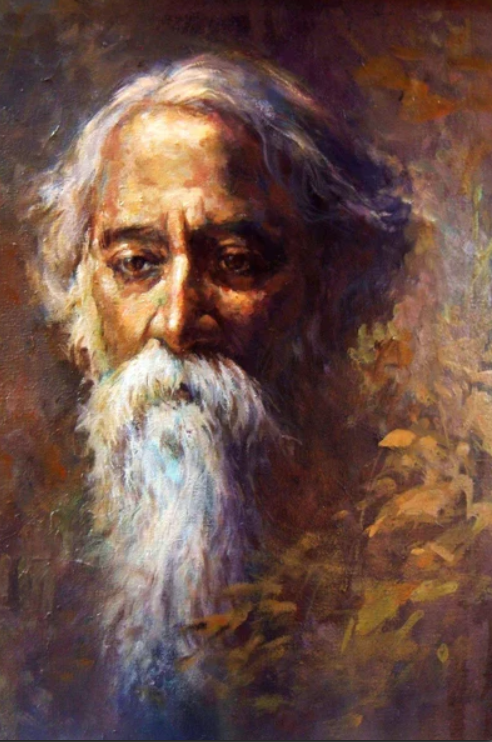
About Rabindranath Tagore: 

  • Rabindranath Tagore’s diverse talents encompassed poetry, prose, music composition, and painting.
  • Within literary circles, he was celebrated under the titles "Bhanu Singha Thakur," while his admirers affectionately referred to him as 'Gurudev,' 'Kabiguru,' and 'Vishwakavi.'

Contributions to Literature and Art

  • Tagore's indelible mark on Bengali literature, music, and Indian art is undeniable. His artistic innovations reshaped these creative domains, breathing new life into them.
  • In a historic achievement, Tagore became the inaugural non-European laureate of the Nobel Prize in Literature in 1913, an accolade bestowed upon him for his literary masterpiece-Gitanjali. 
  • Moreover, his literary prowess extended to composing the national anthems of both India and Bangladesh.

Educational Vision

  • Rejecting the conventional rote pedagogy of his time, Tagore harboured a visionary educational philosophy.
  • His ideals bore fruit in the form of Visva-Bharati University, an institution that stood as a testament to his innovative thinking. Building upon the foundation laid by his father at the Santiniketan Ashram, Tagore expanded this educational complex.
  • What set it apart was its distinct curriculum, designed to keep students well-informed about the evolving political, social, and environmental landscape of the nation.

Social Reform

  • Tagore harnessed the power of literature to galvanize people towards political and social reform.
  • His literary works served as potent instruments of protest against the prevailing Brahmanical social order, the caste system, narrow sectarianism, untouchability, and animal sacrifice.

Economic Endeavours

  • In 1921, Tagore joined forces with agricultural economist Leonard Elmhirst to establish the "Institute for Rural Reconstruction," later renamed. 
  • He advocated vigorously for the expansion of small-scale cottage industries in rural areas, aiming to infuse vitality into the rural economy by leveraging local resources.

Influence on the Freedom Struggle and Partition of Bengal

  • His composition, "Banglar Mati Banglar Jol" (Soil of Bengal, Water of Bengal), served as a unifying anthem for the Bengali population.
  • Moreover, he initiated the Rakhi Utsav, a festival where individuals from Hindu and Muslim communities exchanged colourful threads as a symbol of unity and self-reliance against oppression.

A Powerful Protest: Jallianwala Bagh Massacre

  • In 1915 he was awarded knighthood by the British King George V. In 1919, following the Jallianwalla Bagh massacre, he renounced his Knighthood.

Vision on Nationalism: 

  • He held a sceptical view, asserting that the term "nationalism" was inherently tied to the concept of the nation-state, which, in his eyes, was essentially an embodiment of Western ideals rooted in capitalism and mechanization.
  • According to Tagore, these ideals clashed fundamentally with the rich tapestry of Indian tradition, characterized by values such as self-autonomy, pluralism, and religious tolerance. 
  • Central to his belief system was the notion that true nationalism should not transcend the broader scope of humanity itself.
  • Some historical myths have suggested that he composed the Indian national anthem, "Jan Gan Man," as a tribute to British Prince George V during the 1911 Delhi Durbar, hosted by Lord Hardinge II. These misconceptions have sometimes led to questions about his patriotism and commitment to Indian nationalism.
  • In reality, Tagore was an ardent patriot who cherished India's ancestral culture and philosophy. Although he pursued higher education in Britain, he returned home without completing his studies.
  • In national anthem, he aimed to emphasize that ultimate sovereignty rested with the people of India, as symbolized by "Jan Gana Man." 
  • Tagore, while occasionally critical of Mahatma Gandhi, was the one who referred to him as "Mahatma." He demonstrated his love for Indian soil, particularly Bengal, while also holding a deep affection for its people.
  • He regarded nationalism as a psychological concept wherein all individuals bound by common principles constituted the elements of a nation. Consequently, nationalism had to coexist in harmony with humanism.
  • Like other utilitarian scholars of his time, Tagore denounced international warfare. He openly criticized forms of patriotism and nationalism that compromised human values, especially after the devastating First World War. 
  • In the 20th century, when British policy sought to divide and rule by partitioning Bengal to quell emerging nationalism, Tagore vehemently opposed this move. He recognized that the primary objective of Bengal's partition was to instigate communal violence.
  • During the 1905 unrest, he actively worked to foster Hindu-Muslim unity through patriotic songs like "Banglar Maati Banglar Jol" (Earth of Bengal, Water of Bengal).
  • In a letter to his friend A. M. Bose, Tagore made it clear that patriotism should never be the ultimate goal or spiritual refuge.
  • He vowed not to compromise the priceless value of humanity for the sake of patriotism. Gandhi, who crossed paths with Tagore in 1921 in Calcutta, was cautioned by Tagore about the fine line separating nationalism from xenophobia.
  • Gandhi, in response to Tagore's criticism, acknowledged that the poet inhabited a world of his own creation, a world of ideas.

About UNESCO World Heritage Sites: 

World Heritage Sites are exceptional cultural and/or natural locations recognized for their outstanding universal value, as designated by the World Heritage Committee. They stand as exemplars of the world's most significant cultural and natural heritage.

World Heritage Convention: 

  • Recognizing the importance of certain places, UNESCO's General Conference adopted the World Heritage Convention in 1972. This convention harmoniously combines the preservation of both natural and cultural sites.
  • Nations adhering to this convention form an international community committed to safeguarding these unique sites.
  • In 1994, the World Heritage Committee adopted a Global Strategy to promote a balanced and representative World Heritage List, ensuring underrepresented regions and categories are included.

How Sites are Chosen:

  • Countries that sign the World Heritage Convention pledge to protect their cultural and natural treasures and become state parties.
  • State parties create a list of potential sites from which they nominate candidates for inclusion on the World Heritage List.
  • Nominations, accompanied by comprehensive conservation plans, are submitted to the UNESCO World Heritage Centre.
  • Outstanding Universal Value (OUV): OUV is a fundamental criterion for World Heritage Site status. Exceptional, unparalleled sites with global significance are deemed outstanding properties.

The Roles of UNESCO and Advisory Bodies UNESCO World Heritage Centre

  • The UNESCO World Heritage Centre offers support for the nomination process, including documentation and formatting.
  • After reviewing the submitted documents, it forwards them to advisory bodies.

Advisory Bodies: Technical Expertise: 

Three advisory bodies provide technical input on nominations:

  • International Council on Monuments and Sites (ICOMOS)
  • World Conservation Union (IUCN)
  • International Centre for Study of The Preservation and Restoration of Cultural Property (ICCROM)

The Decision-Making Body: World Heritage Committee:

  • Comprising 21 members elected for six-year terms, the World Heritage Committee is chosen by the General Assembly.
  • The committee annually determines which sites will be inscribed on the World Heritage List. 

Criteria for Outstanding Universal Value (OUV)

  • OUV must reflect a masterpiece of human creativity.
  • It should depict the exchange of cultural values across generations.
  • Testimony to unique traditions, cultures, or civilizations is crucial.
  • Architectural ensembles, landscapes, and other built elements may contribute.
  • Sites can illustrate the interaction between humans and the environment.
  • Areas of extraordinary natural beauty are eligible.
  • Sites can also testify to Earth's geological history.

The World Heritage Fund:

This fund offers financial support to state parties, drawing contributions from both private donors and state parties. It aids in:

  • Preparatory assistance for property nominations and management plans.
  • Training assistance for personnel.
  • Technical cooperation, providing expertise and material support.
  • Emergency assistance for damage caused by natural disasters or human activities.
  • Promotional and educational assistance to raise awareness.

India i.e Bharat: In diverse India, name change demands consensus

Context: An official invitation for the G-20 summit in New Delhi, during India's presidency, referred to the President of India as the 'President of Bharat.' This incident has become emblematic of the current political climate marked by deep-seated mutual distrust, unexplained vindictiveness among those in power, and a heightened sense of reclaiming lost territory.

About the News: 

  • Surprisingly, the government's official representatives have not provided any clarification regarding this abrupt alteration.
  • This unexpected modification in a highly formal communication originating from the country's highest office caught the nation completely off guard.
  • Supporters of the ruling authorities have put forth the argument that the name 'Bharat' is interchangeable with 'India,' as stated in Article 1 of the Constitution.
  • Consequently, they contend that 'Bharat' can be legitimately used.
  • It is important to note that Parliament holds the absolute authority to change the country's name by amending the Constitution, a power enshrined in Article 368. This amendment authority extends to all aspects of the Constitution, including the country's designation, as specified in Article 1.

Potential for Confusion:

image 60

India's official name is the Republic of India, a designation used consistently in all official communications with foreign countries and international organizations. Agreements and treaties signed with foreign nations bear the name of the Republic of India, not the Republic of Bharat.

  • The interchangeability of 'Bharat' with 'India' in official communication can give rise to significant confusion. Foreign governments and international bodies rely on clarity and consistency in official documents. Mixing 'India' and 'Bharat' in agreements can lead to foreign governments encountering discrepancies. In some agreements, India would be referred to as the Republic of India, while in others, it might be mentioned as the Republic of Bharat.
  • A nation can possess only one official name. This means that it must be either 'India' or 'Bharat,' but not both. Clarity in nomenclature is crucial, especially in the realm of international diplomacy and legal commitments.

In 2015, Centre opposed a name change, stating that the issue had been extensively deliberated upon during the Constitution's drafting. The Supreme Court has twice rejected pleas to rename 'India' to 'Bharat', once in 2016 and then in 2020, reaffirming that "Bharat" and "India" both find mention in the Constitution.

'India' and 'Bharat' in Constitutional Discourse: 

The Indian Constitution, in Article 1, recognizes both names as integral to the identity of the nation. 

The Name 'Bharat': 

  • 'Bharat' traces its origins to ancient Indian texts, notably the Puranic literature and the epic Mahabharata. The latter references the legendary king Bharata, celebrated for his role in the epic and as a symbol of unity.
  • 'Bharat' signifies a supra-regional and subcontinental territory united by the Brahmanical societal framework, emphasizing a united cultural and religious identity transcending regional boundaries.
  • Closely linked to the legendary King Bharata, 'Bharat' is associated with the Rig Vedic tribe of the Bharatas. King Bharata's lineage connects to various Indian communities, underscoring a shared ancestry and heritage.
  • In the Hindi language, 'Bharat' serves as the official name of India, as affirmed by Article 1 of the Indian Constitution.

The Name 'India': 

  • India' has its historical roots in the term 'Indus,' originally referring to the Indus River. Over time, linguistic transformations led to the Persianized version 'Hindu.'
  • 'Hindu' evolved into 'Hindustan,' signifying the 'Land of the Hindus' beyond the Indus River, encompassing much of the Indian subcontinent.
  • 'Hindustan' was employed by various ancient civilizations, including Persians, Greeks, and Islamic empires, to describe the vast subcontinental territory, highlighting its geographical expanse and cultural diversity.
  • During the European Age of Exploration, 'India' was adopted as the name for the subcontinent, reinforced during the British colonial era when it became the official name for British-ruled territories.
  • Post-independence, 'India' retained its status as the official name of the newly formed nation, as declared in the Indian Constitution.

The Indian Constitution: 

  • Before India's independence in 1947, the Indian subcontinent was divided into British India and numerous princely states, each ruled by its own monarch. After gaining independence, the challenge was to integrate these diverse regions into a united and sovereign nation.
  • During the Constitution's drafting, there was significant debate over which name to use. Some opposed 'India' due to its colonial connotations and advocated for a name with deeper indigenous roots. 'Bharat' held historical and cultural significance, symbolizing a united identity and indigenous heritage.
  • The framers of the Indian Constitution recognized the cultural and historical diversity of the nation. They sought to bridge linguistic and cultural differences by acknowledging both 'Bharat' and 'India.' This inclusive approach aimed to unify the nation while respecting its rich heritage.
  • A compromise was reached, resulting in Article 1 reading, "India, that is Bharat, shall be a Union of States," accommodating both names to symbolize unity in diversity.
  • This dual nomenclature in the Constitution reflects India's diverse linguistic, cultural, and historical backgrounds, promoting a shared national identity and inclusivity.

Constitutional intricacies of matter: 

1. Article 52: According to Article 52 of the Indian Constitution, there is a provision for a 'President of India.' This official nomenclature is fundamental and legally binding, and any alteration of this title would necessitate a constitutional amendment.

2. Article 1: India, that is Bharat

  • Article 1 of the Indian Constitution holds paramount importance as it deals with the name and territorial jurisdiction of India.
  • It declares India as a federation of states and outlines the territories that constitute India. 
  • Furthermore, it grants the Parliament the authority to admit new states or modify existing ones.
  • Key Provisions: 
    • Admission or Establishment of New States: Article 1 empowers the Parliament to admit new states into the Union or create new states. This provision has been utilized multiple times in India's history for administrative or linguistic reasons, resulting in the formation of states like Telangana and Uttarakhand.
    • Formation of Union Territories: In addition to new states, Article 1 allows for the creation of Union Territories, which are regions directly governed by the central government. This provision has been used to designate areas like Chandigarh and Lakshadweep as Union Territories.
    • Alteration of Boundaries: Article 1 also permits the alteration of state boundaries through constitutional amendments, enabling adjustments to address regional concerns or state reorganizations.
    • Names and Boundaries: Detailed names and boundaries of states and Union Territories are not specified in the Constitution but are determined by laws enacted by Parliament. This flexibility allows for adjustments as needed without requiring constitutional amendments.

3. Article 394A: 

Article 394A (2) stipulates that "the translation of this Constitution…shall be construed to have the same meaning as the original thereof." This clause reinforces a fundamental point: 'Bharat' is a translation of the word 'India' as used in the original Constitution. Until legally altered, 'India' remains the authentic name of the country.

  • Article 394A of the Indian Constitution addresses the authoritative text in the Hindi language. 
  • It outlines the President's responsibility to publish a translation of the Constitution in Hindi. 
  • This translation, signed by the members of the Constituent Assembly, aims to align with the language, style, and terminology used in the authoritative texts of Central Acts in Hindi. 
  • Furthermore, it incorporates all amendments made to the Constitution before publication.
  • Article 394A (2) emphasizes that the translation, along with any amendments, should be construed to have the same meaning as the original Constitution. In cases where interpreting certain parts of the translation poses challenges, the President is tasked with revising it suitably.
  • The translation published under Article 394A carries the authority of being the official text in the Hindi language. This means that it serves as a reference for understanding the Constitution in Hindi-speaking regions.

Let use also understand the, Constitutional Amendment Process in India as per Article 368 mentioned in the News: 

  • Amending the Constitution of India is a meticulous process aimed at making alterations to the nation's fundamental law, the supreme law that governs the country.
  • This process is detailed in Part XX (Article 368) of the Indian Constitution.
  • The primary objective of this procedure is to uphold the sanctity of the Constitution and act as a check on the arbitrary exercise of power by the Parliament of India.
  • The concept of amending the Indian Constitution was borrowed from the South African constitution, reflecting a global perspective on constitutional evolution.
  • In the Keshavananda Bharati Judgment, Supreme Court established that Parliament cannot amend parts of the Constitution that are considered part of the 'Basic Structure' of the constitution. This ruling ensures that certain core principles remain inviolable.

The Amendment Process: Article 368 in Part XX of the Constitution empowers the Parliament to amend the Constitution. However, it comes with significant constraints to safeguard the fundamental principles.

Types of Amendments

  • Simple Majority: This amendment type requires the support of more than 50% of the members present and voting in both houses of Parliament.
  • Special Majority: To pass an amendment under this category, a bill must be supported by a majority of two-thirds of the members present and voting, along with over 50% of the total strength of the House.
  • Special Majority of Parliament and Consent of States: This complex form of amendment is necessary when changes impact federal structures. In addition to special majority approval in both houses of Parliament, it also necessitates the consent of half of the state legislatures by a simple majority.
  • Absolute Majority: For certain amendments, a bill must receive the approval of more than 50% of the total strength of the house.

The Detailed Amendment Procedure

  • Initiation of Amendment: An amendment can be proposed only by introducing a bill in either house of Parliament. This bill can be initiated by a minister or a private member and does not require the President's permission.
  • Special Majority Approval: The bill must be passed in each house by a special majority, which entails approval by the majority of the total membership and by two-thirds of the members present and voting.
  • State Legislature Ratification: If the amendment seeks to modify constitutional provisions, it must be ratified by the legislatures of half of the states through a simple majority.
  • Presidential Assent: After both houses approve the bill, it is presented to the President for assent. The President is obligated to grant assent without the option to withhold approval or send the bill back for reconsideration.
  • Becoming an Act: Once the President grants assent, the bill becomes an act, solidifying the constitutional change.

Read also: Changing the Name of a State

The dual identity of 'India' and 'Bharat' in the Indian Constitution is a testament to the nation's rich cultural and historical heritage. This compromise allows people from diverse linguistic backgrounds to identify with the country using their preferred name, fostering inclusivity and unity. The debate over these names underscores the complexity of India's identity and the importance of embracing its multifaceted historical and cultural roots.

Rubber Board

Context: The Rubber Board, jointly with the Central government and the Automotive Tyre Manufacturers’ Association, is implementing a project to expand the area under natural rubber in the Northeastern States.

About the Rubber Board

  • The Rubber Board is a statutory body constituted by the Government of India, under the Rubber Act 1947, for the overall development of the rubber industry in the country.
  • The Rubber Board functions under the Ministry of Commerce & Industry of the Government of India.
  • Head Office: Kottayam, Kerala
  • Composition: As per Section 4(3) of the Act, The Board shall consist of:
    • A Chairman to be appointed by the Central Government;
    • Two members to represent the State of Tamil Nadu, one of whom shall be a person representing the rubber producing interests;
    • Eight members to represent the State of Kerala, six of whom shall be persons representing the rubber producing interests, three of such six being persons representing the small growers;
    • Ten members to be nominated by the Central Government, of whom two shall represent the manufacturers and four labour; Three members to be nominated by the Central Government, of whom two shall be from the Department of Commerce and one from the Department of Agriculture and Cooperation;
    • Three members of Parliament, of whom two shall be elected by the House of People (Lok Sabha) and one by the Council of States ( Rajya Sabha);
    • The Executive Director, ex-officio; and
    • The Rubber Production Commissioner, ex-officio.

Functions

Rubber Board - Rubber latex

The functions of the Board as defined under the Act are:

  • To promote by such measures as it thinks fit the development of the rubber industry by:
    • undertaking,  assisting  or  encouraging  scientific,  technological  or  economic research.
    • training students  in improved methods  of planting, cultivation,  manuring  and spraying.
    • the supply of technical advice to rubber growers.
    • improving the marketing of rubber.
    • the collection of statistics from owners of estates, dealers and manufacturers.
    • securing  better  working  conditions  and  the  provision  and  improvement  of amenities and incentives to workers.
    • carrying out any other duties which may be vested with the Board as per rules made under this Act.
  • It shall also be the duty of the Board:
    • to advise the Central Government on all matters relating to the development of the rubber industry, including the import and export of rubber.
    • to  advise the Central Government with regard to participation in any international conference or scheme relating to rubber.
    • to submit to the Central  Government  and such other  authorities  as may  be prescribed, half yearly reports on its activities and the working of this Act, and
    • to prepare and furnish such other reports relating to the rubber industry as may be required by the Central Government from time to time.

International Organisation of Legal Metrology

Context: India has become a primary authority responsible for issuing globally recognized OIML certificates, enabling the sale of weights and measures worldwide. The Department of Consumer Affairs is now equipped to issue the essential OIML Pattern Approval certificates required for selling weights and measures in the international market.

image 59

India can now issue OIML certificates

  • India became a member of the OIML in 1956. In the same year, India signed the metric convention.
  • India applied to become an OIML certificate-issuing authority in March 2023.
  • The Legal Metrology Division, Department of Consumer Affairs, is now authorised to issue OIML certificates. 
  • India now joins an exclusive group of nations, including Australia, Switzerland, China, Czech Republic, Germany, Denmark, France, UK, Japan, the Netherlands, Sweden and Slovakia authorised to issue OIML approval certificates.

How will this help the Indian Economy:

The move is poised to bring several benefits to the Indian economy, including:

  • Boosting Exports, Foreign Exchange Earnings, and Employment: This initiative is expected to drive up exports, increase foreign exchange earnings, and generate employment opportunities.
  • Attracting Neighbouring Countries and Manufacturers: Given that only 13 countries are currently authorized, neighbouring nations and manufacturers can now come to India for certification, which will contribute to foreign exchange earnings and job creation.
  • Establishing a Special Ministry Unit: There are plans to establish a dedicated unit within the ministry to facilitate this process, bolster foreign exchange earnings, and enhance India's international presence in this field. This move will also lead to resource savings and reduce redundancy.
  • Expansion of Testing Labs: Additional testing labs are in the pipeline, with one already operational in Ahmedabad. The Consumer Ministry has committed to establishing similar labs in other cities. Additionally, a dedicated cell will be set up for certificate issuance.
  • Cost Savings for Domestic Manufacturers: Domestic manufacturers can export their weighing and measuring instruments worldwide without incurring extra testing fees, resulting in substantial cost savings.
  • Influence on OIML Policies: India may now play a role in shaping OIML policies and contribute to the OIML Strategy. This system allows OIML Certificates issued by OIML Issuing Authorities in OIML Member States to serve as the basis for national or regional type approvals for measuring instruments by other participants.
  • Facilitating Other OIML Members: Other OIML Members can issue national type approval certificates without the need for costly test facilities by relying on these certificates as a foundation.

What is OIML?

  • Founded in 1955, the OIML, known as the International Organization of Legal Metrology, is an intergovernmental organization with global recognition.
  • Its certificates are universally accepted for the sale of weights and measures worldwide. 
  • Headquartered in Paris, this international standard-setting body is responsible for developing model regulations, standards, and associated documents for use by legal metrology authorities and industries.
  • Its pivotal role lies in aligning national laws and regulations concerning the performance of measuring instruments, such as clinical thermometers, alcohol breath analysers, radar speed measuring instruments, ship tanks at ports, and petrol dispensing units.
  • The harmonization ensures that the certification of measuring devices in one country aligns with that in another, thereby facilitating the international trade of these devices and products reliant on them.
  • Throughout its existence, the OIML has developed numerous guidelines to assist its members, particularly those in developing nations, in crafting appropriate legislation related to metrology across various aspects of society.
  • It also offers guidance on certification and calibration requirements for new products, especially in cases where calibration carries legal implications, such as in trade, healthcare, and taxation.
  • The OIML collaborates closely with other international organizations like the International Bureau of Weights and Measures (BIPM) and the International Organization for Standardization (ISO) to ensure compatibility between their respective initiatives.
  • While the OIML lacks legal authority to enforce its recommendations on Member States, its recommendations are frequently incorporated into national legislation by these Member States.
  • Together, OIML Members represent 86% of the world's population and 96% of its economy. 

Structure: 

The OIML operates under a three-tier structure, funded primarily by its approximately 2 million-Euro Annual Budget, contributed through Member subscriptions. 

  • International Conference: The highest authority within the OIML is the International Conference which convenes every four years. Delegations from Member States and non-voting Corresponding Members attend this Conference.
  • International Committee: Responsible for the day-to-day management of the OIML, the International Committee comprises one representative from each Member State. These members typically hold official positions in legal metrology in their respective countries. The Committee elects a President, who serves a non-salaried six-year term and chairs annual meetings.
  • BIML (Bureau International de Métrologie légale): The BIML serves as the OIML's headquarters. It's overseen by a salaried director who also acts as the secretary for both the International Conference and the International Committee.

Participants in the OIML fall into three categories:

  • OIML Issuing Authorities: These participants hail from Member States and are responsible for issuing OIML type evaluation reports and OIML Certificates under the OIML-CS.
  • Utilizers: Participants from OML Member States that accept and utilize OIML Certificates and/or OIML type evaluation reports issued by OIML Issuing Authorities.
  • Associates: Corresponding Members who also accept and utilize OIML Certificates and/or OIML type evaluation reports issued by OIML Issuing Authorities. Associates, however, do not possess voting rights in the Management Committee.
  • OIML Issuing Authorities must prove compliance with ISO/IEC 17065, while Test Laboratories must demonstrate compliance with ISO/IEC 17025.
  • For participation in Scheme B, it is sufficient to show compliance through "self-declaration" with additional supporting evidence.
  • However, for Scheme A participation, compliance must be demonstrated via peer evaluation, relying on either accreditation or peer assessment.

Objectives:

  • Collaborate with stakeholders to formulate standards and associated documents intended for adoption by both legal metrology authorities and industry. These standards, when put into practice, will align with the OIML's mission.
  • Establish systems for mutual recognition that effectively reduce trade barriers and expenses in a global market.
  • Advocate for the interests of the legal metrology community in international organizations and forums dedicated to metrology, standardization, testing, certification, and accreditation. 
  • Foster and facilitate the exchange of knowledge and expertise among the worldwide legal metrology community.
  • In partnership with other metrology organizations, raise awareness about the valuable role a robust legal metrology framework plays in a modern economy.
  • Identify areas where the OIML can enhance its effectiveness and efficiency in fulfilling its objectives.

What is the OIML certificate?

  • The OIML Certification System (OIML-CS) is a structured framework for issuing, recording, and using OIML certificates, along with their associated OIML type evaluation and test reports.
  • These certificates apply to various measuring instruments, including items like digital balances and clinical thermometers.
  • With India now part of this system, there are now 13 countries authorized to issue these globally recognized OIML certificates.
  • These certificates hold universal acceptance.
  • To put it simply, let's imagine a manufacturer in Noida producing digital balances who wants to export them to the United States or any other country. Previously, they would have had to travel to one of the 12 other countries for certification. However, with India's inclusion in the system, these certificates can now be obtained in India, making the equipment exportable and accepted across the world.
  • The primary objectives of the OIML-CS are as follows:
    • Reduce the need for redundant testing when seeking national type evaluations and approvals, while also supporting the recognition of measuring instruments and/or modules subject to legal metrological control.
    • Establish rules and procedures to foster mutual trust among participating OIML Member States and Corresponding Members regarding the results of type evaluations, indicating conformity of measuring instruments and/or modules to the metrological and technical requirements outlined in applicable OIML Recommendations.

Definition of Legal Metrology:

  • The concept of "legal metrology" can vary across different jurisdictions, reflecting the degree to which metrology is integrated into each jurisdiction's legal and regulatory framework.
  • In their publication titled the "International Vocabulary of Terms in Legal Metrology," the OIML has defined "legal metrology" as encompassing regulatory measures related to measurements and measuring instruments.
  • These measures are designed to safeguard aspects such as public health, safety, environmental protection, taxation, consumer protection, and fair trade.
  • The primary goal is to ensure the precision and dependability of measurements, particularly in cases where measured values can impact health, safety, or financial transparency, such as in the context of weights and measures.
  • The linkage between these two statements is established through the terms "regulatory," "accuracy," and "reliability."
  • The term "regulatory" encompasses the "legal" dimensions of the concept, which pertain to the roles played by governments, national metrology institutes, and standards organizations in creating a framework that instils confidence in the accuracy and reliability of measurements.
  • The OIML has identified four primary activities that serve the objectives of legal metrology:
    • Establishing legal requirements.
    • Conducting control and conformity assessments of regulated products and activities.
    • Overseeing regulated products and activities.
    • Providing the essential infrastructure to facilitate accurate measurements.

Odisha’s Konark Wheel at G20

Context: Replica of iconic Wheel of Konark Temple served as the cultural backdrop of meetings of foreign dignitaries in the G20 Summit meeting in the Bharat Mandapam in New Delhi.

Wheels of Konark Temple

  • The Wheels of Konark Temple are also known as Konark Chakra. 
  • Konark temple was designed as a huge chariot drawn by 7 mighty horses in galloping mode on 12 pairs (total 24) of ornamented wheels made from stone and a central hub. 
  • Horses were conceived in such a way that the Sun God (Surya) himself was driving the chariot from inside the garbhagriha.
  • Intricate design of Konark Wheels: 
    • Although each of the 24 Konark wheels are similar, each one of them is decorated differently. 
    • The spokes of the wheels are also sculpted in such a way that they broaden at the centre like that of a diamond and are thinner at the ends. 
    • The spokes are minutely carved with motifs like scrollwork, floral motifs, creepers and foliate, beaded strings and stylised chaitya windows. 
    • The central portion of the spokes which resemble a diamond is also relieved with various deities like Isana, Isani, Surya, Vishnu and his incarnations), erotic and amorous figures, kanyas in various poses, a nobleman with a man standing with folded hands, a princely cavalier, man playing on cymbals, a boar hunting scene, elephant riders, hunting scenes, etc. 
    • The axle of the wheel also contains deities like a god with a goddess, Gajalakshmi, Krishna playing flute, gopis and cows, Narasimha, king on an elephant, etc.

Serves as a sundial: 

  • Konark wheel is composed of 8 outer spokes and 8 inner spokes with a diameter of 3 metres.
  • The twelve pairs of wheels symbolise 12 months of the year while the 8 spokes symbolise the 8 pahars of the day (time divisions of a day). Pahar signifies three hours of a day. 
  •  The wheel at Konark Sun Temple is designed in a way that they can be used to gauge the time of the day by looking at the shadow cast on the spoke of the wheels by the Sun. 

About Konark Sun Temple

image 8
Schematic of Konark Sun Temple
image 9
Plan of Konark Sun Temple
  • Located in coastal town of Konark in Puri district of Odisha. It is dedicated to the Sun God.
  • Konark is an amalgamation of two words - Kona meaning corner and Arka meaning the Sun. Thus, Sun God worshipped in Ark Kshetra means Konark. 
  • Konark Sun Temple is epitome of the Odisha Style of Temple Architecture (Also known as Kalinga Temple Architecture).
  • The temple has been built by carving Khondalite stones. 
  • Built during the 13th century during the reign of Narasimhadeva-I, a distinguished ruler of Ganga dynasty. 
  • European travellers called the Konark temple as 'Black Pagoda' due to the dark colour of the temple when seen from the coast. 
  • The Temple has been included in the list of UNESCO's List of World Heritage Sites in 1984.

Main Temple Complex

  • The temple comprises of a sanctum with a lofty shikara which is no more in existence, a jagmohana and a detached nata-mandira (hall of dance) in the same axis. 
  • According to Odia folklore, great architect Bishu Moharan and his son Dharmapada were responsible for the design and construction of the Konark Temple complex. 
  • Deul (sanctum sanctorum or sanctuary): Deul of Konark temple is built in rekha deul style of Kalingan temple architecture with a curvilinear shikhara. However, it is no more in existence. 
  • Jagmohana (frontal porch or mahamandapa, used as audience hall): It is built in the typical pidha deul style with receding pidhas resembling a pyramidal roof.
  • Natamandir (dance hall of hindu temple): The roof of the natamandir is no more in existence. 
  • Temple Complex at Konark consists of main temple complex and several other shrines such as Mayadevi temple, Vaishnava Temple and intricate carvings. 
image 10
Jagmohan at Konark Temple

No motorised boats in wetlands, NGT tells Madhya Pradesh govt

Context: The National Green Tribunal (NGT) criticized the Madhya Pradesh government for the significant damage to water bodies and issued an order to cease the operation of cruise vessels and other motor-powered boats in the Bhoj wetland. This directive was issued by the Central Zone Bench of the environmental court in response to an application filed last year expressing concern about the deterioration of the wetland, encompassing the Upper Lake and Lower Lake. 

About Bhoj wetland: 

image 54
  • Location in Bhopal, Madhya Pradesh: The Bhoj wetland is a vital ecological site nestled in the heart of Bhopal district in Madhya Pradesh, India.
  • Historical Origins of the Lakes: This remarkable wetland comprises two interconnected man-made lakes: the Upper Lake and the Lower Lake. The Upper Lake, one of the oldest and most expansive man-made lakes in central India, was ingeniously crafted by King Bhoj during the 11th century. The king achieved this feat by constructing an earthen dam across the Kolans River. 
  • International Recognition under the Ramsar Convention: In 2002, the Bhoj wetland garnered international recognition when it was designated a wetland of global importance under the Ramsar Convention of 1971.
  • Conservation Efforts and Financing: In 1995, the Madhya Pradesh government undertook a significant conservation project for the wetland, securing funding of Rs 2.5 billion from the Japanese Bank for International Cooperation (JBIC).

Critical Significance of Bhoj Wetland: 

  • Water Supply: The Bhoj wetland plays a pivotal role in supplying drinking water to approximately 1.2 million people in the region, underscoring its immense significance for the local populace.
  • Biodiversity Haven: The Upper Lake, also known as Bhojtal, is home to a diverse ecosystem, hosting 15 different fish species and various turtle species. Furthermore, it serves as a vital habitat for approximately 2,500 migratory bird species, making it a crucial breeding and nesting ground for these international avian visitors.
  • Accessibility: The Bhoj wetland stands out as one of the most accessible Ramsar sites, boasting a road encircling the twin lakes for ease of exploration.

Current Challenges facing Bhoj Wetland: 

  • According to a study conducted by the Environmental Planning and Coordination organization, the Bhoj wetland confronts a dual challenge of deteriorating water quality and reduced storage capacity.
  • On the urban front, water quality degradation results from the inflow of sewage, nutrients, and toxins originating from the catchment areas. The Upper Lake, in particular, contends with a daily influx of approximately 9.82 million gallons (44 MLD) of sewage.
  • The majority of the catchment area is rural, primarily devoted to agriculture, where intensive chemical farming practices are commonplace. This leads to the utilization of chemical fertilizers and pesticides, which subsequently seep into the lake via streams. 
  • The southwest region bears the brunt of this agricultural runoff, adversely affecting water quality and posing a long-term threat to the wetland's health.
  • Furthermore, a significant volume of silt flows into the lake from the rural catchment area, exacerbating the conservation challenges faced by the Bhoj wetland.

WWF-India reports that among all ecosystems in India, wetlands face some of the most severe threats. These critical habitats are grappling with a range of challenges, including the loss of vegetation, salinization, excessive inundation, water pollution, invasive species, and unchecked development and road construction.

image 55

Wetlands:

Wetland ecosystems hold a unique position as transitional zones, bridging the divide between terrestrial and aquatic environments. They are often referred to as "ecotones," highlighting their role in connecting these two distinct ecological realms.

Understanding Wetlands through Ramsar Convention Definitions:

The Ramsar Convention on Wetlands offers a comprehensive definition of wetlands, encompassing various key characteristics:

  • Marshes, Fens, and Peatlands: Wetlands encompass a diverse range of landscapes, including marshes, fens, and peatlands. These areas may occur naturally or result from artificial interventions.
  • Temporary or Permanent Nature: Wetlands can exhibit either temporary or permanent characteristics, further illustrating their ecological diversity.
  • Natural or Artificial Formation: They can arise through natural processes or as a result of human-made alterations to the landscape.
  • Inclusive of Water Types: Wetlands span a spectrum of water types, embracing freshwater, brackish water, and saltwater environments.
  • Depth Limits: The depth of marine water within wetlands, at low tide, does not surpass a height of six meters, distinguishing them from deeper aquatic ecosystems.

About Ramsar Convention

‘Promoting the Conservation and Wise Use of Wetlands’:

  • The Ramsar Convention, a notable international agreement, stands as a staunch advocate for the conservation and prudent utilization of wetlands worldwide. Remarkably, it is the sole global treaty exclusively dedicated to the preservation of a single ecosystem – wetlands.
  • Inception: This pivotal convention was established on February 2nd, 1971, initiated by UNESCO (the United Nations Educational, Scientific and Cultural Organization).
  • Enactment: It officially came into effect in 1975, with countries around the world recognizing the significance of safeguarding their wetland ecosystems.
  • India's Commitment: India signed the Ramsar Convention on February 1, 1982, solidifying its dedication to this global cause. There are 75 Ramsar sites in India
  • World Wetlands Day: An important date in the calendar is February 2nd, celebrated annually as World Wetlands Day to raise awareness about the importance of wetlands.

Three Pillars of Ramsar Convention:

  • Wise Use: Central to the Ramsar Convention is the concept of "wise use." It advocates for the sustainable utilization of wetlands, balancing human needs with the preservation of ecological integrity.
  • List of Wetlands of International Importance: Governments commit to this list, designating specific wetlands for international recognition and protection. Inclusion signifies a government's pledge to take measures to uphold the ecological character of these sites.
  • International Cooperation: Collaboration between nations is a fundamental aspect, emphasizing the importance of working together to conserve wetlands on a global scale.

The Montreux Record

Monitoring Change in Wetlands:

  • The Montreux Record serves as a register of wetland sites within the List of Wetlands of International Importance.
  • These sites have either undergone, are undergoing, or are anticipated to experience changes in their ecological character due to factors like technological advancements, pollution, or human interference.
  • Adopted in Brisbane during the Conference of the Contracting Parties in 1996, the Montreux Record operates as an adjunct to the Montreux Record Operating Guidelines.
  • This database plays a pivotal role within the Ramsar Convention by continuously monitoring and documenting changes in designated wetland sites, ensuring their protection.
  • Two prominent Montreux Record sites in India include Loktak Lake in Manipur and Keoladeo National Park in Rajasthan.
  • Chilika Lake, another significant Indian wetland, was added to the Montreux Record in 1993 but later removed from the list in 2002, showcasing the dynamic nature of these designations.

Partners in Conservation

  • The Ramsar Convention collaborates closely with six distinguished organizations known as International Organization Partners (IOPs), which are:
  • Birdlife International
  • IUCN (International Union for Conservation of Nature)
  • International Water Management Institute (IWMI)
  • Wetlands International
  • WWF (World Wide Fund for Nature)
  • International Wildfowl & Wetlands Trust (WWT)

Criteria for Identifying Wetlands of International Importance:

One of the nine criteria must be fulfilled to be the Ramsar Site.

image 56
image 57

Introduction to the Wetlands (Conservation and Management) Rules, 2017: 

The Wetlands (Conservation and Management) Rules, 2017, have been officially promulgated by the Ministry of Environment, Forests, and Climate Change (MoEF&CC), in accordance with the provisions of the Environment (Protection) Act, 1986.

Defining the Wetlands (Conservation and Management) Rules, 2017: 

  • Effective Conservation and Management: These rules are designed to ensure the effective conservation and management of wetlands within India. They represent a substantial update, supplanting the earlier Wetlands (Conservation and Management) Rules from 2010.
  • Regulatory Framework: The Wetlands (Conservation and Management) Rules, 2017, serve as the principal regulatory framework governing the conservation and management of wetlands within the country. Notably, they usher in a shift in wetland management, deviating from a centralized approach towards increased involvement of state-level organizations.
  • Key Responsibilities: The rules stipulate the advisory role of the National Wetland Committee in overseeing the integrated management of Ramsar Convention areas and providing guidance to state agencies on the concept of "wise use" concerning wetlands.
  • Guidelines Development: To aid State Governments and Union Territory (UT) Administrations in implementing these rules, comprehensive guidelines have been developed. These guidelines encompass various aspects, including the identification and delineation of wetlands, the creation of lists of regulated and permitted activities, and the structure and operational matters concerning the Wetlands Authority.

Salient Features of the Wetlands (Conservation and Management) Rules, 2017:

  • State Wetland Authority (SWA): These rules mandate the establishment of a State Wetland Authority in each state and union territory, presided over by the state's environment minister. The authority comprises diverse government representatives with expertise in fields such as hydrology, socioeconomics, landscape design, fisheries, and wetland ecology.
  • Principles of Sustainable Use: The rules introduce the concept of "smart use" as the guiding principle for wetland management. This shift towards sustainable use, acceptable to conservation objectives, is termed "wise use," marking a decentralization of powers.
  • Comprehensive List of Activities: SWAs are tasked with creating exhaustive lists of activities to be regulated and permitted within notified wetlands and their zones of influence. They are also authorized to add activities that should be prohibited in specific wetlands and develop plans for more efficient wetland utilization.
  • National Wetland Committee (NWC): Replacing the Central Wetlands Regulatory Authority, the NWC is established, with the MoEFCC secretary leading it.
  • Prohibited Activities: The rules categorically forbid activities such as encroachment, industrial establishment, waste disposal, and untreated effluent discharge in wetlands.
  • Inventory Creation: State authorities are required to compile lists of all wetlands and those that need notification within a stipulated timeframe. These lists serve as the basis for the creation of a comprehensive digital inventory of all wetlands, updated every decade.

Centre for Wetland Conservation and Management (CWCM):

  • Establishment: The CWCM, inaugurated on World Wetland Day in 2021 (February 2, 2021), is an integral component of the National Centre for Sustainable Coastal Management (NCSCM), based in Chennai, under the purview of the Ministry of Environment, Forestry, and Climate Change.
  • Primary Objective: The centre is dedicated to the management, restoration, and conservation of India's wetlands. It aims to address knowledge gaps and specific research needs in this field.
  • Knowledge Sharing: The CWCM facilitates knowledge exchange among State/UT Wetland Authorities, wetland users, managers, academics, policymakers, and practitioners through its knowledge portal.
  • Networking: It fosters alliances and networks with relevant regional, national, and international organizations and promotes integrated approaches for wetland protection, management, and sustainable utilization.
  • Support for Government: The CWCM assists governments at various levels in the development and implementation of legislative and policy frameworks, management planning, monitoring, and focused wetlands conservation research.

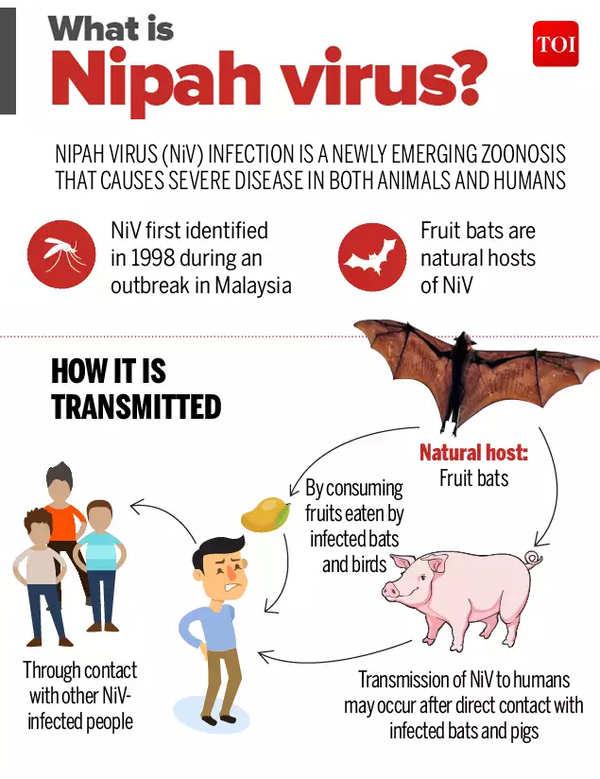
Nipah Virus (NiV)

Context: Instances of Nipah virus have been reported from Kerala recently. The virus is capable of causing different clinical manifestations with potential human to human spread in some cases. With the Nipah virus cases a regular occurrence in Kerala now, there is a need for a thorough genetic study of the virus in humans and fruit bats.

Relevance of the Topic: Prelims: Key facts about Nipah virus

About Nipha Virus (NiV):

  • About: Nipah virus (NiV) is a single-stranded RNA virus. The genetic material of Nipah virus is composed of RNA rather than DNA.
  • Transmission: Nipah virus is a zoonotic disease that can be transmitted to humans through direct contact with infected animals, especially bats and pigs. Nipah virus infection can be transmitted through contaminated food or directly from person to person.
  • Natural Reservoir: Fruit Bats (also known as flying foxes) are believed to be the natural reservoir/primary carriers of the Nipah virus.
  • Symptoms range from: 
    • Mild illness: Fever, headache, muscle pain, and respiratory problems (similar to that of influenza).
    • Asymptomatic infection (no symptoms) 
    • Fatal Encephalitis (Inflammation of the brain)- can lead to coma or death. 
    • Severe acute respiratory symptoms.  
    • The case fatality rate is between 40% and 75%.
  • Treatment: NiV is on the top-10 priority list of pathogens identified by the World Health Organization. Currently, there are no approved vaccines available against NiV.
image 6
Source: Times of India

Malaviya Mission: Teacher Training Programme

Context: The Ministry for Education and Skill Development & Entrepreneurship has launched the Malaviya Mission for the training of teachers in higher educational institutes. 

image 48

About Malaviya Mission

  • It is a teacher training programme that aims to provide tailored training programmes for teachers. This programme will work for the capacity building of faculty members in higher educational institutions.
  • Organised by University Grants Commission, in association with the Ministry of Education.
  • Aims to improve the quality of teachers’ training, build leadership skills in teachers and help realise the goals of the National Education Policy (NEP).
  • The capacity building under this Mission will be mapped to the credit framework to ensure career progression pathways for educators.
  • There are the theme-wise training sessions. 

The 8 themes include 

  1. Holistic and Multidisciplinary Education, 
  2. Indian Knowledge Systems (IKS), 
  3. Academic Leadership, Governance and Management, 
  4. Higher Education and Society, 
  5. Research and Development, 
  6. Skill Development, 
  7. Student Diversity and Inclusive Education and 
  8. Information and Communication Technology. 
  • Human Resource Development Centres to be revamped and known as Madan Mohan Malaviya Teachers Training Centres.
  • Monitoring and quality assurance of the Malaviya Mission Teacher Training Programme would be undertaken by the UGC Committee after conducting one round of training programme.

Objectives of the Scheme: 

Salient objectives of the scheme in alignment with NEP 2020 are:

  1. Improving the quality of Education at all levels by infusing quality and excellence in our teachers and teaching.
  2. To develop innovative teaching method and high-level institutional facilities in all the constituent areas of higher education. 
  3. To impart pedagogy-related training and improve faculties’ soft and practical skills.
  4. To ensure holistic development of the teachers and learners with inculcation of ethics and human values as enshrined in Indian culture.
  5. To develop multidisciplinary and critical thinking ability.
  6. To familiarize the faculty with the Indian Knowledge Systems.
  7. To build respect for the eco-balance and biodiversity existing in the nature. University Grants Commission 7
  8. To undertake quality research in line with the local, national, and global needs.
  9. To make it known that higher education is for social upliftment and inclusiveness.
  10. To develop the know-how to prepare transformative pedagogy with ICT intervention.
  11. To build life skills and global citizenship values.
  12. To ensure the role of faculty as active participants in institution building.
  13. Improve the quality of teaching and empower Faculty members through training, induction, refresher and short term programs and ensure their continuous professional development.

Significance of Malaviya Mission

  • Improve the quality of education at all levels by infusing quality and excellence in teachers and teaching methods. 
  • Ensure continuous professional development and help in building capacities of 15 lakh teachers of the Higher Education Institutions (HEIs) through 111 Malaviya Mission centres across India in a time-bound manner.
  • Theme-wise training sessions will help enthuse “Samagrata” in the participants. 

What are Picoflare jets?

Context: Researchers studying the findings of the Solar Orbiter Aircraft, a joint mission by the European Space Agency and the U.S. space agency NASA, recently announced that they have detected picoflare jets from the sun’s outer atmosphere.

About Picoflare jets:

  • It is a tiny jet (plasma ejections) of charged particles emanating from the Sun's outer atmosphere.
  • According to the researchers, these charged small particle jets, which are ejected intermittently are a source of the solar wind. This flow is not actually uniform, the ubiquity of the jets suggests that the solar wind from coronal holes might originate as a highly intermittent outflow.
  • These widespread yet faint jets, only a few hundred kilometers across, were seen to last between 20 to 100 seconds, achieving speeds of approximately 100 kilometers per second. Their energy appears to be derived from magnetic reconnection. 
At the Sun's Poles - Picoflare Jets

Significance of Picoflare jets:

  • Due to their relatively low kinetic energies, researchers named these structures picoflare jets. Based on their calculations, they suggest that plasma outflows from these numerous, frequent picoflare jets, channeled along the open magnetic field lines of coronal holes, might supply a considerable amount of mass and energy to the solar wind throughout the solar cycle.
  • It has significant effects on the large-scale solar system as well as on Earth's magnetic field and poses risks to satellite electronics. 

Solar Orbiter Aircraft

  • It is a next-generation solar-observing satellite developed by a collaboration between the European Space Agency (ESA) and NASA.
  • It was launched in 2020.
  • It will provide unprecedented details about the solar system and the images of the sun’s poles while investigating the heliosphere.
  • It is equipped with a suite of scientific instruments to observe the Sun up close and provide new insights into its behaviour, including its magnetic fields, solar wind, and how it influences the solar system.

Solar winds

  • The outermost layer of the Sun's atmosphere, known as the corona, is composed of extremely hot plasma. Some of this plasma escapes the Sun's gravitational pull and flows outward into space, creating the solar wind. 
  • The solar wind is a stream of charged particles, primarily electrons and protons, that constantly blows away from the Sun and interacts with objects in the solar system, including the Earth.

Corona

  • It is the outermost layer of the Sun's atmosphere, extending millions of kilometers into space. 
  • It is composed of extremely hot and tenuous plasma (ionized gas). 
  • It is visible during a total solar eclipse as a pearly-white halo of light surrounding the dark disk of the Moon. 
  • It is much hotter than the Sun's surface, with temperatures reaching millions of degrees Celsius. 

Nataraja - Lord of Dance and Imperial Cholas

Context: The Nataraja sculpture now on display at Bharat Mandapam, where the G20 Leaders' Summit took place, depicts Lord Shiva in a manner that originated in the fifth century AD but gained iconic status during the reign of the Great Cholas.

More about the news:

  • The 27-foot Nataraja is the world's tallest statue of Lord Shiva in his dancing form.
  • The remarkable sculpture is crafted from an ashtadhatu, an eight-metal alloy, skillfully fashioned by artisans from Swamimalai in the Thanjavur district of Tamil Nadu.
  • Srikanda Sthapathy collaborated with his brothers to create this masterpiece and the design of the statue draws its inspiration from three esteemed Nataraja idols:
    • Thillai Nataraja Temple in Chidambaram
    • Uma Maheswarar Temple in Konerirajapuram
    • Brihadeeswara Temple, an UNESCO World Heritage Site, located in Thanjavur.

The Cholas and the Nataraja Sculpture

  • The Cholas, a prominent dynasty that thrived during the 9th-11th centuries AD, ruled over a significant portion of peninsular India and are closely associated with the development of Nataraja art.
  • The Cholas, devout followers of Shaivism, constructed elaborate Shiva temples throughout their territories, including the iconic one in Thanjavur.
  • K A Nilakanta Sastri, a pioneering historian of South India, highlighted the prevalence of Shaiva figures in Chola sculpture in his book 'The Colas' (1937), stating that while Vaishnava and Jain images were present, Shaiva figures held the most significance.
  • Although the depiction of Shiva as Nataraja dates back to the fifth century AD, it was under the Cholas that this form achieved its present iconic status.
  • Sastri has also noted that Nataraja images, particularly in bronze, were highly regarded among Chola sculptures, and they continue to hold cultural significance to this day.
Nataraja Sculpture

Shiva as the Lord of Dance

  • The worship of Shiva has evolved from the Vedic deity Rudra. Shiva is a multifaceted deity within the Puranic pantheon, characterized by complexity and depth.
  • A L Basham, a prominent Indologist, described Shiva as ‘death and time (Mahakala),’ a deity who both destroys all things and serves as a patron of ascetics in his work 'The Wonder that was India' (1954).
  • Shiva also embodies the persona of the 'Lord of Dance' or Nataraja, credited with inventing a diverse range of dances, from serene and gentle to fierce, orgiastic, and formidable.
    • In the classic portrayal of Nataraja, he is encircled by a flaming aureole or halo, symbolizing the circle of the world that he both encompasses and transcends.
    • His long dreadlocks flow outward, animated by the energy of his dance, and he strikes a rhythmic pose with his four arms.
    • In his upper right hand, he holds a damru (a hand drum), the sound of which draws all beings into his rhythmic motion.
    • In his upper left arm, he holds agni (fire), which he can wield to bring about the destruction of the universe.
    • Beneath one of Nataraja's feet, a dwarf-like figure lies crushed, symbolizing illusion, which misleads humanity.
    • However, amidst the symbolism of destruction, Nataraja also offers reassurance, depicting Shiva as the Protector.
    • With his front right hand, he makes the 'abhayamudra' (a gesture that allays fear), and with his raised feet, he points to his feet, urging his devotees to seek refuge there.
    • Remarkably, Nataraja is often depicted with a broad smile, signifying his simultaneous embrace of both life and death, joy and pain.

The Lost Wax Method (Cire-Perdue)

The ancient technique can be traced back at least 6,000 years, with evidence of its use found in a copper amulet from a neolithic site in Mehrgarh, Balochistan (present-day Pakistan), dating back to circa 4,000 BC.The famous Dancing Girl of Mohenjo Daro was also created using this method. For millennia, the lost-wax method stood as the foremost technique for producing intricate metallic sculptures, and the Cholas elevated this skill to its zenith.A molten metal is poured into a Mold that has been created by means of a wax model. Once the mold is made, the wax model is melted and drained away. A hollow core can be effected by the introduction of a heat-proof core that prevents the molten metal from totally filling the mold. 

Bronze Sculptures during the Chola Period:

  • During the 10th century, evolving religious beliefs required Hindu deities to participate in various public roles akin to human monarchs.
  • Consequently, large bronze sculptures were crafted to be carried outside temples for daily rituals, processions, and festivals.
  • The iconic dancing depiction of Shiva as Nataraja was conceived and fully refined during the Chola Period, leading to the creation of numerous variations of this intricate bronze image. 
  • The region of Thanjavur (Tanjore) in Tamil Nadu played a pivotal role in the evolution of a diverse range of Shiva iconography.
  • An exceptional example from the ninth century is the depiction of the Kalyanasundara murti, which ingeniously portrays the marriage ceremony through two separate statuettes.
    • Shiva, extending his right hand, symbolically accepts Parvati's right hand in this representation, with Parvati displaying a bashful expression as she takes a step forward.
  • The union of Shiva and Parvati is brilliantly captured in a single image through the Ardhanarisvara Murti, where the two halves merge to form a harmonious whole. 
  • Independent figurines of Parvati have also been sculpted with grace, portraying her in the elegant tribhanga posture.
  • Bronze sculptures during the Chola period were meticulously crafted using the artistic technique known as Cire Perdue or Madhu Uchchishtta Vidhana, also called lost-wax casting.
    • The method involved mixing beeswax, a type of camphor called kungilium, and a small amount of oil, kneading this mixture, and using it to sculpt the figure and its intricate details.
    • The wax model was then coated with clay, dried, and placed in an oven to melt or evaporate the wax.
    • Subsequently, Pancha Loham, a bronze alloy, was melted and poured into the clay mold, filling every crevice and detail.
    • After cooling and solidifying, the clay mold was broken, leaving only the bronze sculpture.
    • The final steps included adding finer details, cleaning, removing any blemishes, and smoothing and polishing the sculpture before it was displayed, typically within a temple.
Brihadishvara Temple
(Brihadishvara Temple)

Monumental Temples and Architectural Wonders

  • Throughout the Chola Dynasty, monumental temples and splendid works of art influenced by Hinduism were constructed across the empire.
  • These structures were not only immense but also carved from hard rock and granite, featuring intricate carvings and architectural designs that seemed to defy the capabilities of their time. 
  • The architects of the Chola Dynasty drew inspiration from the preceding Pallava dynasty's style, refining it and elevating Chola art and architecture.
  • King Rajaraja Chola, during the Chola Dynasty, also constructed the grand Brihadishvara temple in Gangaikonda Cholapuram, renowned as the Tanjore temple, dedicated to Shiva.
    • It stands as one of the largest Hindu temples of its time and continues to astound engineers with its construction and architecture.
  • Chola architecture extended beyond religious temples to encompass hospitals, public utility buildings, and palaces.
  • Prince Aditya Karikala built the golden palace for his father, King Sundara Chola.
  • Many of these buildings, constructed using timber and bricks, have not withstood the test of time. 
Map showing the greatest extent of the Chola empire c.1030 under Rajendra Chola I
(Map showing the greatest extent of the Chola empire c.1030 under Rajendra Chola I)

About Imperial Cholas:

The rich history of the Chola dynasty is illuminated by a plethora of diverse sources, providing insights into their governance, culture, and achievements. These sources can be categorized into inscriptions, literary works, and historical records.

  • Inscriptions:
    • Copper and Stone Engravings: Over 10,000 inscriptions etched on copper and stone surfaces constitute the primary sources for studying Chola history.
    • Temple Endowments: These inscriptions predominantly document the generous endowments and donations made by Chola rulers and individuals to temples.
    • Land Transactions and Taxes: Vital components of these inscriptions include land transactions and details about taxes, both collections and exemptions.
    • Copper Plates: Copper plates contain the official commands and decrees of Chola monarchs, offering a glimpse into their administrative authority. Alongside orders, these plates divulge information about genealogy, wars, conquests, administrative divisions, local governance, land rights, and various taxes imposed. 
    • Uttaramerur Inscription: The ‘Uttaramerur Inscription’ issued by Prantaka Chola offers detailed information about the election processes of local self-governance bodies, shedding light on the political structure of the time.
  • Literary Sources:
    • The era saw a flourishing of Tamil literature, with the rise of bhakti saints and the compilation of hymns that reflect the socio-cultural features of the period. 
    • Literary works like ‘Muvarula’ and ‘Kamba Ramayanam,’ the great epic, belong to this era, providing valuable cultural insights

Political History of the Cholas

  • Emergence under Vijayalaya (850–871 CE):
    • Conquest of Kaveri Delta: Vijayalaya's conquest of the Kaveri delta from the Muttaraiyar marked the re-emergence of the Chola dynasty.
    • Foundation of Thanjavur: He founded the city of Thanjavur and established the Chola kingdom in 850 CE.
  • Parantaka I (907–955 CE):
    • Parantaka Chola initiated territorial expansion and governance reforms, laying the foundation for future Chola glory.
    • Battle of Takkolam: He suffered a defeat at the hands of the Rashtrakutas in the famous Battle of Takkolam.
  • Rajaraja I (985 – 1014 A.D.):
    • Rajaraja I's reign witnessed significant military achievements and cultural contributions.
    • Naval Expeditions: Victorious naval expeditions along the West Coast, Sri Lanka, and the Maldives.
    • Northern Sri Lanka: His conquest led to the Chola authority's control over northern and eastern Sri Lanka.
    • Battle of Kandanur Salai: Defeat of the Cheras in this notable battle.
    • Construction of Rajarajeswara Temple: Completed the iconic Rajarajeswara temple in Tanjore in 1010 A.D.
    • Religious Devotion: A devout follower of Saivism, he earned titles like Mummidi Chola and Sivapadasekara.
    • Abdicated the throne in favor of his son Rajendra Chola I.
  • Rajendra Chola I (1012-1044 A.D.): 
    • Military Exploits: Conducted remarkable military expeditions, including defeating Mahipala I of Bengal.
    • Gangaikondacholapuram: Established the city of Gangaikondacholapuram and constructed the renowned Rajesvaram temple.
    • Naval Expedition to Kadaram: Launched a naval expedition to Kadaram (Sri Vijaya, Indonesia), annexing Sri Lanka in the process.
    • Established educational institutions, earning the title ‘Pandita Chola’.
  • Legacy and Decline:
    • Kulathunga Chola I: Grandson of Rajendra Chola, he upheld the Chola legacy by abolishing taxes, fostering trade with China, and uniting the Vengi kingdom with the Chola Empire.
    • Rajendra III: The last Chola king, defeated by Jatavarman Sundarapandya II, marked the decline of the Chola empire.

With the fall of the Cholas, the Pandya and Hoysala kingdoms emerged on the stage of South Indian history, marking the end of an illustrious era.

Read also: Wheel of Konark Temple

Hybrid Nanoparticles to target Cancer cells

Context: Scientists at the Indian Institute of Science (IISc) have developed a new approach using hybrid nanoparticles to potentially detect and kill cancer cells, especially those which form a solid tumour mass. The researchers have tested the nanoparticles on lung cancer and cervical cancer cell lines in the lab. They now plan to take the results forward for clinical development.

About Hybrid nanoparticles:

  • The IISc team created hybrid nanoparticles by combining gold and copper sulphide nanoparticles. They used a novel reduction method to deposit tiny seeds of gold onto the copper sulphide surface. The resulting hybrid nanoparticles are less than 8 nm in size.
    • Copper sulphide nanoparticles have previously received attention for their application in cancer diagnosis.
    • Gold nanoparticles can be chemically modified to target cancer cells and have shown anticancer effects.
  • These particles have photothermal, oxidative stress, and photoacoustic properties, the properties can be utilised to kill cancer cells using heat and enable their detection using sound waves.
    • Photothermal property: When light is shined on these hybrid nanoparticles, they absorb the light and generate heat, which can kill cancer cells.
    • Oxidative stress: These nanoparticles produce singlet oxygen atoms that are toxic to the cancer cells.
    • Photoacoustic property: The photoacoustic property of the nanoparticles allows them to absorb light and generate ultrasound waves, which can be used to detect cancer cells with high contrast once the particles reach them.
      • Ultrasound waves generated from the particles allow for a more accurate image resolution as sound waves scatter less when they pass through tissues compared to light.
      • Scans created from the generated ultrasound waves can also provide better clarity and can be used to measure the oxygen saturation in the tumour, boosting their detection.
image 41

Advantages:

  • The small hybrid nanoparticles can potentially travel inside tissues easily and reach tumours. Further, it is believed that their small size would also allow them to leave the human body naturally without accumulating.
  • The hybrid nanoparticle system can be integrated with existing systems of detection or treatment. For example, the nanoparticles can be triggered to produce heat by shining a light on them using an endoscope that is typically used for cancer screening.

Legalising Cannabis Cultivation

Context: Himachal Pradesh government has proposed to legalise cannabis (hemp) cultivation in the State.

About Cannabis (Hemp):

  • It is a botanical class of Cannabis Sativa grown specifically for industrial and medicinal use.
  • It is illegal under Narcotic Drugs and Psychotropic Substances (NDPS) Act, 1985.
  • Uttarakhand became the first state in the country to legalise cannabis cultivation in 2017.

Multiple uses of Cannabis:

  • It is known to cause psychotropic symptoms in the users which may be temporary.
  • Amotivational syndrome is known to occur with its use, in which user loses interest as well as strength to do any chores.
  • There are some positive uses: Phytoremediation, fibre cloth manufacturing, pulp and paper industry.