Context: Press and Registration of Books Act amendments to come into force on Sept. 1
About Press and Registration of Periodicals Act 2023
It seeks to simplify the registration process for periodicals and make it mandatory for digital news platforms to do a “one-time registration” in order to operate.
It replaces the existing Press and Registration of Books (PRB) Act, of 1867, which governs the registration of the print and publishing industry in the country.
The aim is to bring transparency and ease of doing business. It will provide for a simple process that will help small and medium publishers.
Provision of Press and Registration of Periodicals Act 2023
Registration of periodicals: The Act allows for registering newspapers, periodicals, and books, and cataloguing books. The act focuses on registering periodicals containing public news or comments on it, excluding books and academic journals.
Declaration of periodicals: In the 1867 Act, only the district magistrate (DM) could cancel the declaration of a periodical, while the Press Registrar General (PRG) did not have suo motu powers to cancel or suspend the Certificate of Registration granted by it. However, the PRP Act empowers the PRG to suspend/cancel registration.
Foreign periodicals: An exact reproduction of a foreign periodical may be printed in India only with the prior approval of the central government. The manner of registration of such periodicals will be prescribed.
Appellate Authority: It also provides for an appellate authority. The Appellate Board (Press and Registration Appellate Board) will comprise the chairperson, Press Council of India (PCI), and two members of PCI to hear an appeal against the refusal of grant of registration, imposition of any penalty or suspension/cancellation of registration by PRG.
Suspension and cancellation of registration: The act allows the Press Registrar General to suspend a periodical’s registration for a minimum period of 30 days which can extend to 180 days.
Reason for suspension and cancellation of registration: The registration may be suspended due to: (i) registration obtained by furnishing false information, (ii) failure to publish periodicals continuously, and (iii) giving false particulars in annual statements. The Press Registrar General may cancel the registration if the publisher does not correct such defects.
Registration may also be cancelled if: (i) a periodical has the same or similar title as any other periodical, (ii) the owner/ publisher has been convicted of a terrorist act or unlawful activity, or for acting against the security of the state.
Offence: A person who has been convicted by any court for an offence involving a terrorist act or unlawful activity, or having done anything against the security of the state shall not be permitted to bring out a periodical.
Penalties: It waters down the penal provisions of the PRB Act, which made improper declaration of information a punishable offence with a prison term of up to six months. Under the new Act, imprisonment for up to six months is only applicable if a periodical is published without registration, and the publisher continues printing it after a six-month notice from PRG to stop.
Appeal: Any person may appeal against the refusal to issue a registration certificate, suspension/ cancellation of registration or imposition of penalty. Such appeals may be filed before the Press and Registration Appellate Board within 60 days.
Exclusion: Books, which were part of the PRB Act, of 1867, have been taken out of the purview of this act as books as a subject are administered by the Ministry of Education.
Press Registrar General
The Office of the Registrar of Newspapers for India, more popularly known as RNI came into being in 1956, on the recommendation of the First Press Commission in 1953 and by amending the Press and Registration of Books Act 1867.
Functions: The office performs both statutory as well as non-statutory functions.
Statutory functions Compilation and maintenance of a Register of Newspapers containing particulars about all the newspapers published.Issue of Certificate of Registration to the newspapers published under valid declaration;Informing the District Magistrates about availability of titles, to intending publishers for filing declaration;
Non-statutory functions:
Formulation of Newsprint Allocation Policy - Guidelines and issue of Eligibility Certificate to the newspapers to enable them to import newsprint and to procure indigenous newsprint.Assessing and certifying the essential need and requirement of newspaper establishments to import printing and composing machinery and allied materials.
Context: The initial stage of restoration efforts for the Alai Darwaza (at Qutub Minar complex) will be undertaken by the Archaeological Survey of India.
Alai Darwaza
Originally, Qutb-ud-din Aibak commissioned the construction of a mosque, later partly expanded by Shamsuddin Altamash (Iltutmish).
Alauddin Khilji had grand plans for the Qutub complex, aiming to enlarge the Quwwat-ul-Islam Mosque and erect four gateways leading to it.
However, his vision was left incomplete as he passed away after the completion of the first gateway, known as the Alai Darwaza, in 1311 AD. This 13th-century structure continues to stand as a remarkable architectural achievement.
According to the Archaeological Survey of India's website, the Alai Darwaza holds historical significance as the first building to incorporate Islamic construction and ornamentation principles.
Notably, it represents a pivotal moment in Indian architecture, being the inaugural instance of red sandstone and white marble used in conjunction.
Additionally, it is considered one of the earliest examples of a true dome constructed according to arcuate (curved or arched) architectural principles.
Its incorporation of local motifs, such as lotus buds adorning its entrances, further adds to its cultural significance.
The plinth on each side is intricately adorned with floral and geometric designs in both white marble and red sandstone, creating a stunning polychromatic effect.
Despite being a single-story structure, its exterior creates the illusion of a double-story building.
The domed gateway is adorned with inscriptions in Naskh script, latticed stone screens, and showcases the exceptional craftsmanship of the Turkish artisans responsible for its construction.
The Qutub Minar Complex:
The Qutb Minar complex comprises a collection of historical monuments and buildings dating back to the Delhi Sultanate era, located in Mehrauli, Delhi, India.
In addition to the prominent Qutb Minar and the Quwwat-ul Islam Mosque, the complex encompasses other notable structures, including the Alai Darwaza gate, the Alai Minar, and the Iron pillar.
Within the complex, one can also find the tombs of Iltutmish, Alauddin Khalji, and Imam Zamin.
Qutub Minar
The Qutb Minar takes inspiration from the Minaret of Jam in Afghanistan and serves as a significant example of early Afghan architecture, eventually influencing the development of Indo-Islamic Architecture.
It holds the distinction of being the tallest minaret worldwide constructed from bricks. Its design encompasses five distinctive storeys, each featuring a projecting balcony.
Recognized as a UNESCO World Heritage Site, along with the surrounding monuments.
Initially constructed as a Victory Tower to commemorate Muhammad Ghori's triumph over the Rajput king, Prithviraj Chauhan, in 1192 AD, the Qutb Minar was initiated by Qutb-ud-din Aibak, who later became the first Sultan of the Mamluk dynasty.
The minaret's construction marked the onset of Muslim rule in India. Fashioned from red sandstone and marble, Aibak could only complete the first storey.
The subsequent three floors were added by his son-in-law and successor, Iltutmish.
In 1368 AD, the Minar was struck by lightning, which caused the removal of its top storey. Firoz Shah Tughlaq, a later Sultan of Delhi (1351 to 1388), replaced the missing section with the current two floors. He adorned it with white marble and sandstone, contributing to its distinctive appearance, as seen in the lower three storeys.
The Minar reflects a progression in time with inscriptions displayed in bold and cursive Thuluth script of calligraphy, distinguished by thicker strokes at the top compared to the earlier Kufic script during the initial construction.
Historical records reveal further repairs conducted by Sultan Sikander Lodi in 1503, following another lightning strike.
In 2004, seismic monitors were installed on the Minar, and subsequent seismic activity, such as the 2005 Delhi earthquake, indicated no substantial damage. This resilience has been attributed to the use of lime mortar and rubble masonry, which absorb tremors.
Quwwat-ul-Islam Mosque
The construction of the Quwwat-ul-Islam Mosque commenced in 1193 CE under the patronage of Qutb-ud-din Aibak, marking his victory over the Rajputs.
This mosque holds the distinction of being the first mosque built in Delhi following the Islamic conquest of India.
Aibak, aiming to establish the prominence of Islam in the newly conquered territory, chose the heart of the captured Rajput citadel of Qila Rai Pithora as the site for this mosque.
The architectural style and design of the Quwwat-ul-Islam Mosque bear similarities to the Adhai-din-ka Jhonpra or Ajmer Mosque in Ajmer, Rajasthan, also constructed by Aibak during the same period.
The side arches are smaller in size, and the screen is adorned with religious texts and floral patterns.
The mosque's construction followed a Corbel style rather than a scientific one, evident in the variations in the arch patterns.
The entrances to the courtyard incorporate ornate mandap domes from temples, with their pillars extensively used throughout the structure, including the sanctuary beyond the tall arched screens.
Iltutmish, Qutbuddin's successor, expanded the original prayer hall screen by adding three more arches.
As the Mamluk empire stabilized during Iltutmish's reign, he could replace most of the conscripted Hindu masons with Muslim artisans, resulting in stylistically more Islamic arches.
Iron pillar in the Qutb Complex
The iron pillar stands as one of the most remarkable metallurgical wonders globally.
Originally, it was erected by Chandragupta II Vikramaditya (375–414 AD) in front of a Vishnu Temple complex at Udayagiri around 402 AD.
Subsequently, during the 10th century CE, it was relocated from Udayagiri to its current location by Anangpal.
Anangpal's intention was to incorporate this pillar into a Vishnu Temple that was constructed at its present site.
The pillar boasts an inscription in Sanskrit, written in the Brahmi script dating back to the 4th century AD. This inscription reveals that the pillar was originally set up as a Vishnudhvaja, on a hill known as Vishnupada.
Alai Minar
Alauddin Khalji initiated the construction of the Alai Minar following his expansion of the Quwwat ul-Islam Mosque, which had been built before 1300 AD.
He envisioned this tower to be twice as tall as the Qutb Minar, proportionate to the enlarged mosque.
However, the construction of the Alai Minar came to an abrupt halt shortly after Alauddin's demise in 1316 and was never resumed by his successors from the Khalji Dynasty.
Today, only the first storey of the Alai Minar remains, a massive rubble masonry core that was evidently intended to be clad with dressed stone at a later stage.
Context: The National Green Tribunal (NGT) has directed the Border Roads Organisation (BRO) to plant at least 10,000 trees within a month in Uttarakhand as part of compensatory tree plantation to make up for hundreds of trees felled during construction of a road from Simli to Gwaldam.
National Green Tribunal:
NGT is a statutory and specialised judicial body that deals with the expeditious disposal of cases related to environmental protection, and the conservation of forestsand other natural resources. It was set up under the National Green Tribunal Act in 2010.
The Tribunal is not bound by procedure under the Code of Civil Procedure, 1908 or the Indian Evidence Act, 1872 and is guided by principles of Natural Justice.
It draws inspiration from Part III of the Constitution of India,Article 21 Protection of life and personal liberty, which assures the citizens of India the right to a healthy environment.
NGT Deals in the following Acts:
The Water (Prevention and Control of Pollution) Act, 1974
The Water (Prevention and Control of Pollution) Cess Act, 1977
The Forest (Conservation) Act, 1980
The Air (Prevention and Control of Pollution) Act, 1981
The Environment (Protection) Act, 1986
The Public Liability Insurance Act, 1991
The Biological Diversity Act, 2002
Power of NGT:
The Tribunal is vested with the powers of a Civil Court under the Code of Civil Procedure for discharging its functions. NGT is mandated to make disposal of applications within 6 months of the filing of the same.
It can enforce any legal right relating to the environment and order relief and compensation for damages to persons and property.
In a decision of Municipal Corporation of Greater Mumbai v Ankita Sinha & Others, the Supreme Court of India held that NGT has the power to take suo motu cognizance of environmental issues.
An appeal against the order/decision/ award of the NGT lies to the Supreme Court, generally within ninety days from the date of communication.
In case of non-compliance with any direction issued by the NGT or any of its judgements, a penalty can be imposed in which the person may be given imprisonment for about three years or a fine which may extend to Rs. 10 crores or even both.
Composition of NGT:
The NGT comprises the Chairman, the Judicial Members, and Expert Members. These members are required to hold the office for five years, and they are not eligible for reappointment.
The Chairperson of NGT is appointed by the Central Government in consultation with the Chief Justice of India (CJI).
Challenges of NGT:
Two important Acts – Wildlife (Protection) Act, 1972 and Scheduled Tribes and Other Traditional Forest Dwellers (Recognition of Forest Rights) Act, 2006 have been kept out of NGT’s jurisdiction.
Decisions of NGT have also been criticized and challenged due to their repercussions on economic growth and development. The absence of a formula-based mechanism in determining the compensation has brought criticism to the tribunal.
Orders of NGT can be challenged in the court of law, limiting the tribunal's role.
Context: The Tribal Minister of India launched a training session for an awareness campaign that’s part of the government’s mission to make India free of Sickle-cell disease (SCD) by 2047.
It is a group of inherited red blood cell disorders that are caused by a mutation in the hemoglobin gene. This mutation leads to the production of abnormal hemoglobin, known as hemoglobin S (HbS), which causes red blood cells to take on a sickle-like (C-shaped) shape instead of their normal round shape.
It is caused by a change in hemoglobin, the protein in red blood cells that carries oxygen to all parts of the body. This type of hemoglobin is called hemoglobin S.
When red blood cells with hemoglobin S go through the smallest blood vessels, called capillaries, some of the cells form into rigid strands and become sticky. These rigid, sticky strands often get stuck, clogging the capillaries. As a result, different parts of the body do not get the oxygen they need.
Types of SCD
There are several types of SCD. The specific type of SCD a person has depends on the genes they inherited from their parents. People with SCD inherit genes that contain instructions, or code, for abnormal hemoglobin.
If the sickle cell is inherited from one parent, it is called sickle cell trait or sickle cell carrier. If inherited from both parents, it is called sickle cell disease or sickle cell anaemia (homozygous sickle cell).
Sickle cell disease exists in two forms within the human body.
One is the Sickle Cell trait, in which the individual does not exhibit any disease or symptoms and lives a normal life.
The second form is characterized by the presence of symptoms related to sickle cell disease.
If two individuals with Sickle Cell trait marry each other, there is a high probability that their child will have Sickle Cell disease.
By screening individuals for Sickle Cell trait before marriage, the spread of the disease can be prevented.
Signs and Symptoms
Early symptoms of SCD may include:
Yellowing of the skin and whites of the eyes.
Fatigue or fussiness from anemia.
Painful swelling of the hands and feet.
Treatment
It is a lifelong illness. It is a genetic disorder, making complete elimination a challenge that requires a major scientific breakthrough.The only cure comes in the form of gene therapy and stem cell transplants — both costly and still in developmental stages.
Case fatality rate
Moreover, sickle cells die early, resulting in a shortage of red blood cells that deprive the body of oxygen. These obstructions and shortages may cause chronic anaemia, pain, fatigue, acute chest syndrome, stroke, and a host of other serious health complications.
SCD in India
India is the second-worst affected country in terms of predicted births with SCA — i.e., chances of being born with the condition.
In India, around 18 million people have sickle cell traits and 1.4 million patients have sickle cell disease.
It is widespread among the tribal population in India where about 1 in 86 births among STs have SCD.
A few states in India have a significantly higher SCD prevalence. These include Chhattisgarh, West Bengal, Uttar Pradesh, Maharashtra, Madhya Pradesh, Jharkhand, Gujarat, Odisha, Kerala and Rajasthan. Collectively, these states are referred to as the sickle cell belt.
Government Initiatives
Ministry of Health under the National Health Mission initiated the work on hemoglobinopathies (Thalassemia & Sickle Cell Disease) in 2016 wherein comprehensive guidelines on prevention and management of heamoglobinopathies were released and provision of funds towards screening and management of Sickle cell disease were made.
The Ministry of Health, in collaboration with the Ministry of Tribal Affairs and the states, has formulated a plan to screen approximately 70 million individuals aged 0-40 years belonging to tribal and other groups residing in nearly 200 districts of 17 states within the next few years.
Sickle Cell Anaemia Elimination Mission 2047: To eradicate the challenge of sickle cell. The government has allocated a sufficient budget, utilised advanced technology, provided training to healthcare workers, ensured necessary infrastructure, and made efforts in social awareness and participation to combat this disease.
Role of Ayushman Bharat in controlling SCDs: Through the Ayushman Bharat scheme, the country has established a network of 1.6 lakh Health and Wellness Centres since 2018 these centres will also play a significant role in eradicating sickle cell disease along with other diseases.
Context: The Indian Space Research Organisation (ISRO) announced that Pragyan, the rover of the Chandrayaan-3 mission, has confirmed the presence of Sulphur on the moon’s surface, near its South pole.
Major Highlights:
Laser-Induced Breakdown Spectroscopy (LIBS) instrument aboard the rover has made the first-ever in-situ measurements on the elemental composition of the lunar surface near the south pole.
These in-situ measurements confirm the presence of Sulphur (S) in the region unambiguously, something that was not feasible by the instruments aboard the orbiters.
Preliminary analyses have unveiled the presence of Aluminum (Al), Sulphur (S), Calcium (Ca), Iron (Fe), Chromium (Cr), and Titanium (Ti) on the lunar surface. Further measurements have revealed the presence of manganese (Mn), silicon (Si), and oxygen (O). A thorough investigation regarding the presence of Hydrogen is underway.
LIBS is a scientific technique that analyses the composition of materials by exposing them to intense laser pulses. A high-energy laser pulse is focused onto the surface of a material, such as a rock or soil, and generates localised plasma.
The collected plasma light is spectrally resolved and detected by charge-coupled devices. Since each element emits a characteristic set of wavelengths of light when in a plasma state, the elemental composition of the material can be determined.
Key Fact:
In the commemoration of the Chandrayaan-3 mission, August 23 will be celebrated as National Space Day.
Context: A combination of global warming and a cyclical event called the Pacific Decadal Oscillation that repeats every 20-30 years, could make cyclones that originate near the Equator more frequent in the coming years.
What the study says?
In recent times, equatorial cyclones originating near the Equator have exhibited an unexpected trend of moderation. The most significant recent occurrence of such a cyclone was the 2017 Cyclone Okchi, which brought widespread destruction to regions including Kerala, Tamil Nadu, and Sri Lanka.
A convergence of factors, namely global warming and the cyclic phenomenon termed the Pacific Decadal Oscillation (PDO), which operates on a 20-30-year cycle, suggests a potential elevation in the frequency of these cyclones in the years ahead.
Between 1981 and 2010, equatorial-origin cyclones occurred at a strikingly lower rate of 43% compared to the period spanning 1951 to 1980. This decline aligns with the PDO's 'warmer' or positive phase.
A warming of the Central Equatorial Pacific, known as El Nino, often corresponds to decreased rainfall over India.
Conversely, cooler-than-normal temperatures, referred to as La Nina, are associated with heightened rainfall.
The interplay of these phenomena, collectively known as the El Nino Southern Oscillation (ENSO), recurs in the Pacific every two to seven years.
In contrast, the PDO follows a non-annual cycle and, over considerably longer timescales, results in warmer conditions in the Western Pacific Ocean and relatively cooler conditions in the Eastern Pacific.
Identifying a 'positive' or 'warmer phase' of PDO necessitates years of observing ocean temperatures and their interaction with the atmosphere.
Notably, in 2019, the PDO transitioned into a cooler, negative phase. If this state persists, it could potentially lead to an increase in the number of equatorial-origin tropical cyclones during the post-monsoon months.
Currently, an emerging El Nino event is evident in the Pacific, with its effects already manifesting in central and southern India, where rainfall deficits of 7% and 17% have been observed.
While a positive PDO combined with ENSO typically yields unfavourable outcomes, a negative PDO coupled with the same phenomenon results in increased rainfall for India.
Important Terms:
Pacific Decadal Oscillation (PDO): A recurring climatic cycle manifesting every 20-30 years in the Pacific Ocean. It results in fluctuations in sea surface temperatures. When in a positive phase, it is associated with warmer waters in the western Pacific and cooler waters in the eastern Pacific. This phenomenon significantly influences global climate dynamics and weather patterns.
El Nino Southern Oscillation (ENSO): A recurrent climate phenomenon observed in the Pacific Ocean, characterized by two primary states—El Nino (warmer-than-normal sea surface temperatures) and La Nina (cooler-than-normal temperatures). ENSO holds considerable sway over worldwide weather patterns, with implications for temperature and precipitation distributions.
Equatorial Cyclones: Cyclones originating in proximity to the Equator. Fuelled by warm waters and abundant moisture, these cyclones typically form at a distance from the Equator due to the Coriolis effect. Although infrequent, they can be exceptionally intense and cause significant damage.
What is Tropical Cyclone?
A tropical cyclone is a weather phenomenon characterized by a region of low atmospheric pressure that originates over warm tropical waters and subsequently advances towards coastal regions, unleashing powerful winds, intense rainfall, and storm surges.
The rotational direction of the winds within a tropical cyclone follows a distinctive pattern: counterclockwise in the northern hemisphere and clockwise in the southern hemisphere. This rotation is a consequence of the Coriolis effect, which influences the motion of air masses in relation to the Earth's rotation.
Critical conditions contribute to the formation of tropical cyclones:
Sea Temperature: The presence of an expansive sea surface with a temperature exceeding 27°C serves as a conducive environment for the genesis of tropical cyclones. Warm ocean waters provide the necessary energy for these systems to gather strength.
Geographical Location: Tropical cyclones tend to develop within specific geographical boundaries, specifically between the Tropic of Cancer and the Tropic of Capricorn. These areas offer optimal temperature conditions for their formation.
Coriolis Force: A crucial requirement for tropical cyclone formation is the presence of the Coriolis force, a result of the Earth's rotation. Consequently, these cyclones do not form near the equator but rather at latitudes where the Coriolis effect is sufficient to induce rotation.
Vertical Wind Speed: The presence of relatively stable vertical wind speeds, with minimal fluctuations, aids in the organization of a tropical cyclone's structure. This consistency facilitates the development and maintenance of the cyclonic circulation.
Upper Divergence: Successful tropical cyclone development necessitates a well-established upper-level divergence within the atmosphere. This divergence ensures the continual removal of rising air currents from within the cyclone, maintaining low pressure at its centre.
High Humidity: Adequate humidity levels, typically ranging between 50 to 60 percent, are essential in the mid-troposphere. This humidity is fundamental for the formation of towering cumulonimbus clouds, a significant component of tropical cyclones.
Influence of Climate Change on Tropical Cyclone Formation
Temperature Shifts: The temperature of both the ocean and the atmosphere plays a crucial role in the creation of tropical cyclones. As the climate warms, these storms gather strength by harnessing the energy released when evaporated ocean water condenses into rainfall within the cyclone.
Warmer Ocean Impact: The escalation in temperature leads to a warmer ocean, elevating evaporation rates. This, in turn, augments the moisture content in the atmosphere, intensifying the availability of water vapor.
Enhanced Rainfall: The rising temperature enables the atmosphere to retain more moisture, thereby increasing rainfall. The amplified rainfall not only releases more heat but also contributes to bolstering wind intensity.
Heightened Rainfall Rates: Recent investigations reveal a 7% surge in hurricane rainfall rates per degree of warming, underscoring the pronounced impact of rising temperatures on precipitation.
Storm Intensification: The warming climate is poised to elevate wind velocities, leading to a higher frequency of powerful Category 4 and 5 storms, with their potential for devastating impact.
Sea Level Rise Influence: Climatic warming elevates sea levels, augmenting the height of ocean water. This elevated water level permits storm surges to penetrate further inland.
Impact of Storm Slowing: The velocity of a storm significantly influences the cumulative rainfall in a given area. Slower-moving storms grant additional time for rainfall accumulation, heightening the potential for flooding.
Complex Storm Speed Changes: While studies indicate a reduction in storm speed, the underlying mechanisms behind this trend remain elusive.
Confluence of Storms: Within an increasingly warmer world, the merging of two significant tropical storms over global oceans could lead to the formation of extremely powerful mega cyclones.
Context: A payload onboard the Pragyaan Rover of Chadrayaan-3 mission has shared groundbreaking data on the temperature profile of the south pole of the moon.
Chandrayaan-3
Chandrayaan-3 is a mission to demonstrate end-to-end capability in safe landing and roving on the lunar surface. It consists of an indigenous Lander module (LM), Propulsion module (PM) and a Rover with an objective of developing and demonstrating new technologies required for Inter planetary missions.
It consists of Lander and Rover configuration.
It will be launched by LVM3.
The propulsion module will carry the lander and rover configuration till 100 km lunar orbit.
The propulsion module has Spectro-polarimetry of Habitable Planet Earth (SHAPE) payload to study the spectral and Polarimetric measurements of Earth from the lunar orbit.
Lander Payloads
Chandra’s Surface Thermophysical Experiment (ChaSTE) to measure the thermal conductivity and temperature.
Instrument for Lunar Seismic Activity (ILSA) for measuring the seismicity around the landing site.
Rambha Langmuir Probe (LP) to estimate the plasma density and its variations.
A passive Laser Retroreflector Array from NASA is accommodated for lunar laser ranging studies.
Rover Payloads
Alpha Particle X-ray Spectrometer (APXS) and Laser Induced Breakdown Spectroscope (LIBS) for deriving the elemental composition in the vicinity of landing site.
ChaSTE is to study the heat conductivity of the Moon’s surface and measure the differences in temperatures at different points on and below the surface, with the overall objective of creating a thermal profile of the Moon.
ChaSTE has a temperature probe equipped with a controlled penetration mechanism capable of reaching a depth of 10 cm beneath the surface.
The temperature probe is fitted with 10 individual thermal sensors.
Data Released
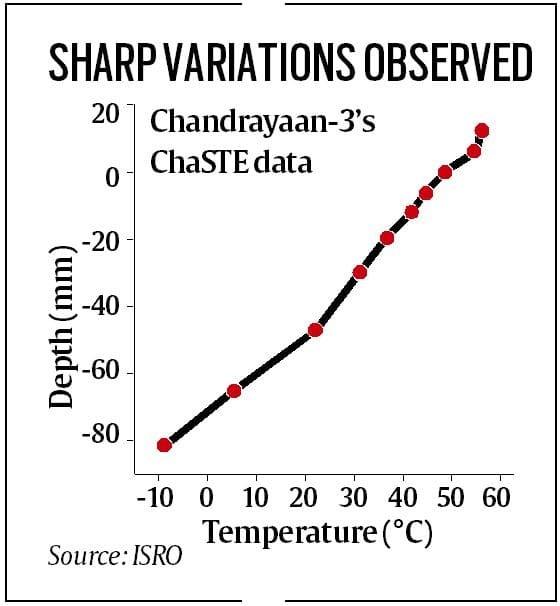
The graph released by ISRO illustrates the temperature variations of the lunar surface/near-surface at various depths, as recorded during the probe's penetration.
The first set of data released by ISRO showed a very sharp difference in temperatures just above and below the surface of the Moon.
A graphical plot put out by ISRO showed that while temperatures on the surface were over 50 degree Celsius, they dropped to nearly -10 degree Celsius just a few millimetres below the surface.
The measurements suggested that the topsoil of the lunar surface did not conduct heat very well, and insulated the sub-surface from heat.
There were many indirect measurements done to know about the thermal profile of the Moon.
It was generally believed that the temperature on the moon’s surface was between 20 degree Celsius to 30 degree Celsius.
ChaSTE is the first direct measurement of temperatures of the topsoil and the subsoil near the South Pole of the Moon.
Known Facts About Moon
High Diurnal Range: The temperature on the moon can vary drastically between lunar days when the temperatures reach 120 degrees Celsius and reach -130 degrees Celsius during nighttime.
Positioning of Sun: At the lunar South Pole, the Sun hovers below or just above the horizon, creating temperatures of 54 degrees Celsius during the sunlit period.
Deep Carter: Even during the day, the entire south pole is not lit by sunlight as the soaring mountains cast dark shadows and deep craters protect perpetual darkness inside the craters.
Lack of Atmosphere: The reason behind the variation of day and night temperatures is the lack of atmosphere which does not block the Sun’s rays and leads to large variation in day and night temperature.
Change in Landforms: The lack of lunar atmosphere also means that craters and other landmarks do not erode like on Earth, leaving perpetual pockets of darkness near the moon’s poles that have the most frigid temperatures.
Benefits of Soil temperature Profiling of Moon’s south pole
Human Habitation: Help in understanding the moon’s composition, surroundings and direct search for water ice on the moon, which could support human habitation on the Moon in future.
Human landing: Give an understanding of what kind of material can be used in varying temperature conditions and pave the way for future human landing.
Selection of Material: Give insight into what material can be used on the lunar surface as the temperature gradient is very high that may lead to appreciable thermal expansion or contraction in materials and affect experimental set-up and other infrastructure.
Material and associated exploration: Help in understanding the elemental composition of the moon, relative abundance of different materials and chemicals, the levels of radiation, and seismic activities.
Identification of Rocky Areas: Reveals information about the lunar rocks as it takes longer to heat up and cool down than lunar soil, which could then allow scientists to identify rocky areas.
Finding of Water Ice: Understanding the nature of the low-lying areas, that remain permanently shrouded in shadow and an ideal spot to maintain water ice.
Habitation in Low Temperature Regions: Some craters remain permanently shadowed and haven’t seen sunlight in billions of years and experience temperatures as low as -203 degrees Celsius. In view of this, the ChaSTE has interesting facts to offer about the unexplored side of the lunar surface.
Terms
Heat Conductivity
Also known as thermal conductivity, is a measure of a material's ability to conduct heat. It indicates how well heat can travel through a substance. Materials with high thermal conductivity transfer heat more effectively.
Thermal Profile
The distribution and variation of temperatures within a specific area or object. In the context of ChaSTE, the goal is to create a detailed understanding of how temperatures change across the Moon's surface and its subsurface.
Lakes in India play a significant role in the country's ecosystem by preserving biodiversity, providing drinking water, irrigation, and supporting livelihoods. From a UPSC Civil Services Exam perspective, understanding the geographical location, characteristics, and significance of these lakes is vital.
Important Lakes of India
Wular Lake
Located in Jammu and Kashmir, Wular Lake is one of the largest freshwater lakes in Asia. It's fed by the Jhelum River and plays a significant role in the valley's hydrography.
Dal Lake
Also in Jammu and Kashmir, Dal Lake is known as the 'Jewel in the crown of Kashmir' or 'Srinagar's Jewel.' The lake is famous for its floating gardens and 'Shikaras' - the wooden boats.
Chilika Lake
Situated in Odisha, Chilika Lake is the largest coastal lagoon in India and the second largest in the world. It's recognized as a 'Ramsar Site' due to its rich biodiversity, hosting numerous species of birds, especially during the winter migratory season.
Loktak Lake
Located in Manipur, Loktak Lake is the largest freshwater lake in Northeast India. It's notable for the floating 'phumdis' (mass of vegetation, soil, and organic matter) and is home to the Keibul Lamjao, the world's only floating national park.
Sambhar Lake
Sambhar Lake, situated in Rajasthan, is India's largest inland saltwater lake. It's a key source of salt production in India.
Vembanad Lake
Vembanad Lake, located in Kerala, is the longest lake in India. It's known for hosting the famous Nehru Trophy Boat Race and is a part of the Vembanad-Kol wetland system, recognized as a Ramsar site.
Pulicat Lake
Straddling the border of Andhra Pradesh and Tamil Nadu, Pulicat Lake is the second-largest brackish water lake in India. It hosts the Pulicat Lake Bird Sanctuary, home to many migratory birds.
Hussain Sagar
Located in Hyderabad, Hussain Sagar is a man-made lake built by Hazrat Hussain Shah Wali in 1562. It's known for the monolithic statue of Buddha installed in the center of the lake.
No.
Lake
State/UT
Type
Area (Sq km)
1
Vembanad
Kerala
Natural – Half Brackish, Half Freshwater
2,033
2
Chilika
Odisha
Natural Brackish
1,165
3
Loktak
Manipur
Natural Freshwater
287
4
Shivsagar
Maharashtra
Artificial Freshwater
891.7
5
Sardar Sarovar
Gujarat
Artificial Freshwater
375
6
Pulicat
Andhra Pradesh
Natural Brackish
450
7
Indira Sagar
Madhya Pradesh
Artificial Freshwater
627
8
Pangong Tso
Ladakh
Natural Saline
700
9
Nagarjuna Sagar
AP, Telangana
Artificial Freshwater
285
10
Kolleru
Andhra Pradesh
Natural Freshwater
245
11
Wular
Jammu & Kashmir
Natural Freshwater
259
12
Sambhar Salt
Rajasthan
Natural Saline
230
13
Gobind Sagar
Himachal Pradesh
Artificial Freshwater
168
14
Dal
Jammu & Kashmir
Natural Freshwater
22
15
Ashtamudi
Kerala
Natural Freshwater
61.4
16
Dhebar
Rajasthan
Artificial Freshwater
87
17
Pushkar
Rajasthan
Artificial Freshwater
22
18
Deepor Beel
Assam
Natural Freshwater
40.1
19
Bhojtal
Madhya Pradesh
Artificial Freshwater
31
20
Veeranam
Tamil Nadu
Artificial Freshwater
25
Conclusion
A thorough understanding of the important lakes in India is crucial for aspirants preparing for the Civil Services Examination. These lakes are not only geographically significant but are also linked with the culture, economy, and biodiversity of the regions, making them an integral part of the UPSC syllabus. Aspirants should keep themselves updated on any recent developments concerning these lakes for a well-rounded preparation.
Context: The ‘Somatic Mosaicism across Human Tissues’ (SMaHT) Network is exploring somatic mutation's significance, promoting insights into human biology and disease management through research.
Biological Terms
Term
Meaning
Genome
The entire set of genetic material in an organism. It includes both the coding sequences (genes) and non-coding regions of DNA.
Human Genome
The complete set of genetic material (DNA) present in a human cell. It contains all the instructions necessary for the growth, development, functioning, and maintenance of a human being.
Deoxyribonucleic Acid (DNA)
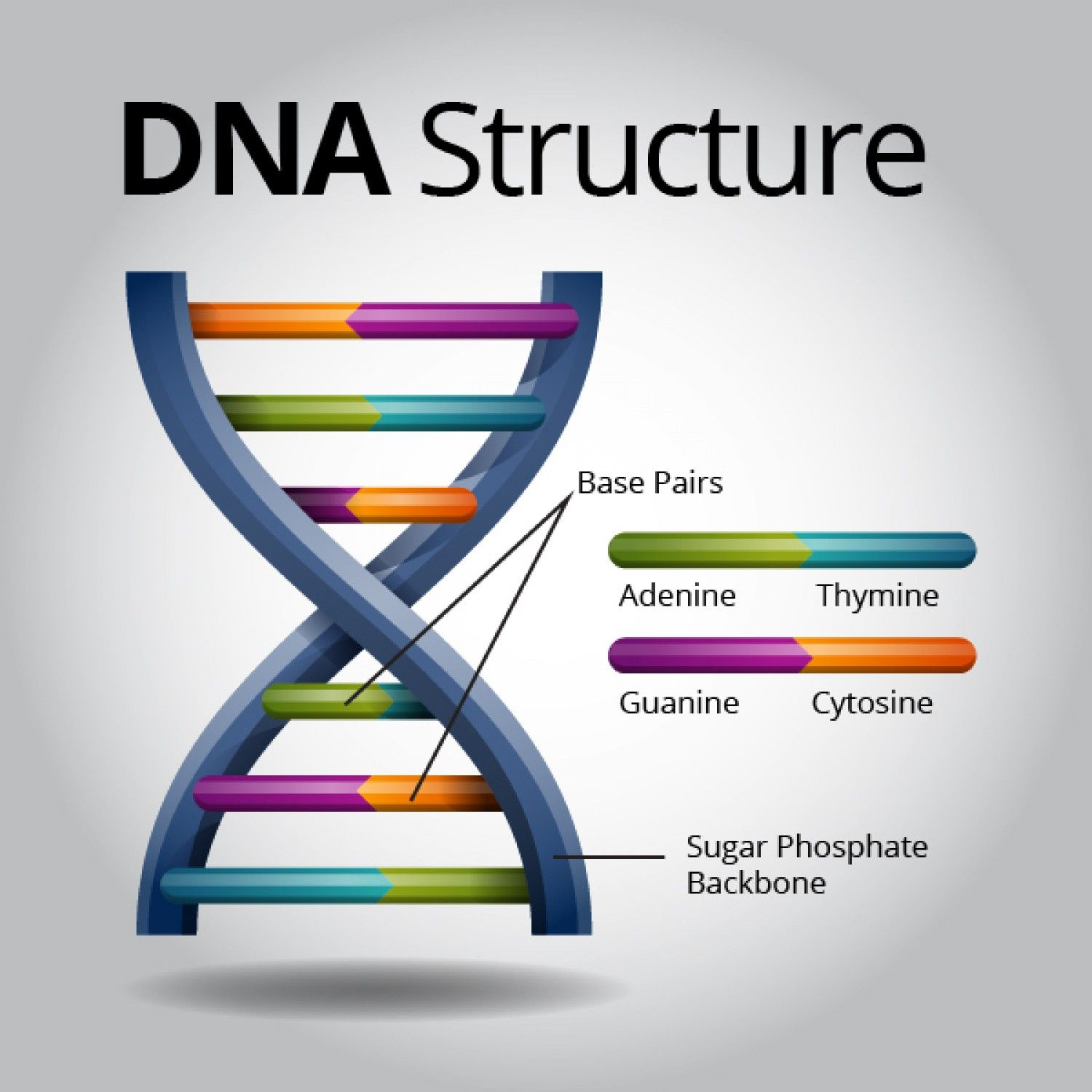
The molecule that carries genetic information in cells. It consists of a double-stranded helical structure made up of nucleotide units.
Chromosomes
Thread-like structures made of DNA and proteins found in the nucleus of cells. They carry genetic information in the form of genes. In humans, there are 23 pairs of chromosomes (46 individual chromosomes), with one chromosome from each pair inherited from each parent.
Somatic Cells
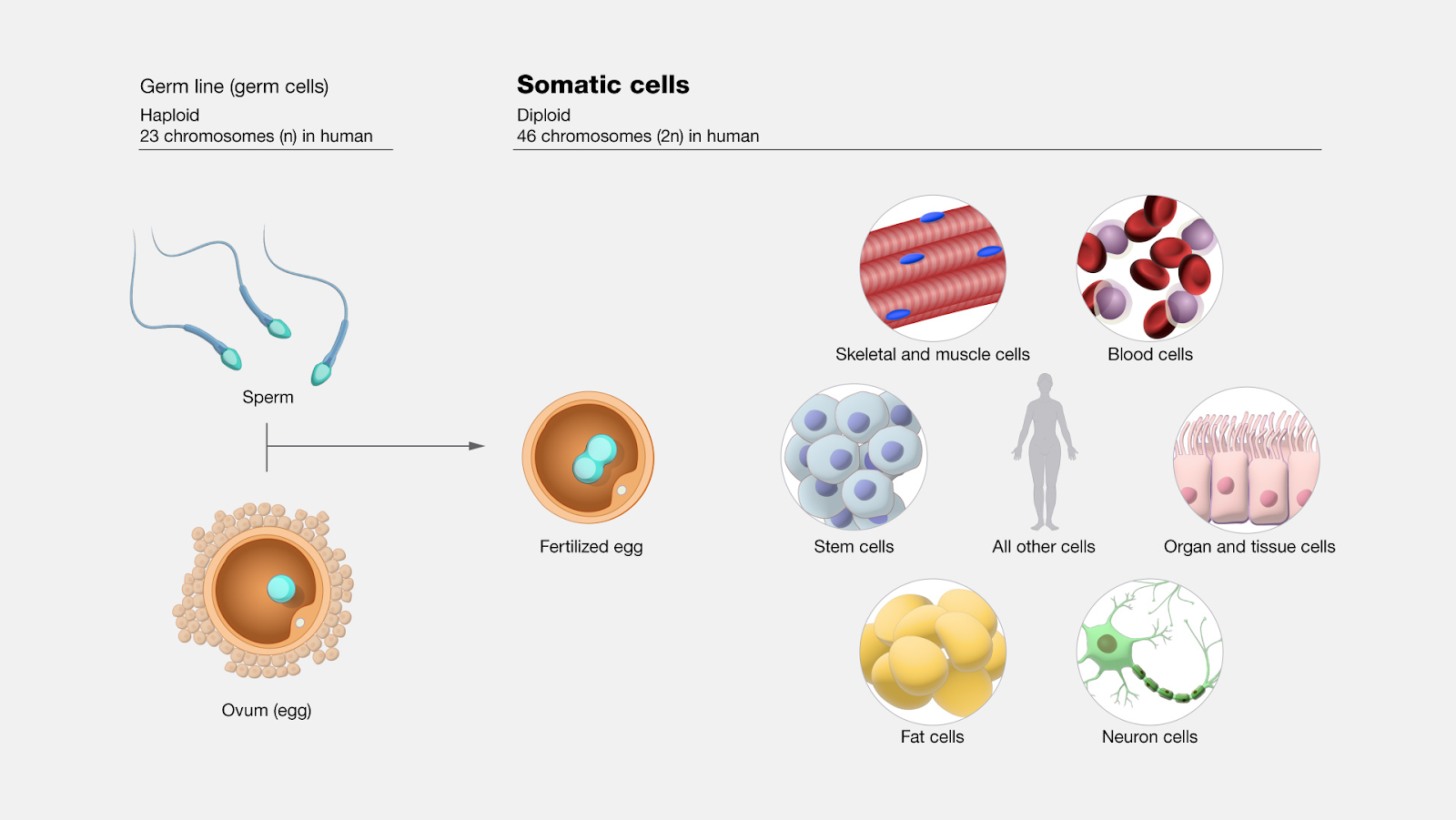
Cells in the body other than sperm and egg cells (which are called germ cells). In humans, somatic cells are diploid, meaning they contain two sets of chromosomes, one inherited from each parent. DNA mutations in somatic cells can affect an individual, but they cannot be passed on to their offspring.
Germ Cells
Cells that give rise to the reproductive cells of sexually reproducing organisms – known as gametes – through a process called gametogenesis. In animals, the reproductive male gametes are sperm cells and the female gametes the oocytes.
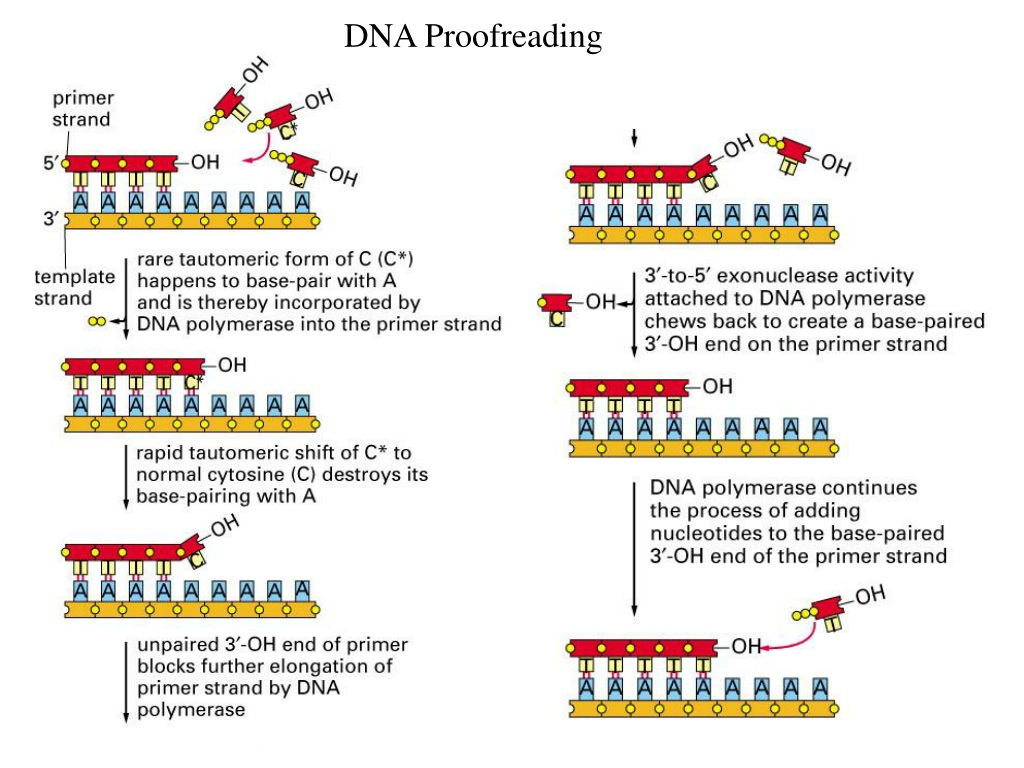
Proofreading
The process by which enzymes detect and correct errors (mutations) that occur during DNA replication, ensuring the accuracy of DNA copying.
Turnover
Turnover is the replacement of old cells with new ones.
Mutation
A change in the DNA sequence of a gene or chromosome. Example: Single nucleotide changes (point mutations), deletions, insertions.
Somatic Genetic Mutation
A mutation that occurs in the DNA of somatic cells (body cells) after birth. These mutations are not passed on to offspring. Example: Skin cells acquiring mutations due to UV radiation exposure.
Driver Mutation
A mutation that provides a growth advantage to a cell, often contributing to the development of diseases like cancer.
Genetic Variants
Differences in the DNA sequence among individuals of the same species. These can include single nucleotide polymorphisms (SNPs) or larger structural variations.
Immune Cells
Cells of the immune system that defend the body against pathogens. Examples include B cells and T cells.
Genetic diseases
Disorders caused by mutations in an individual's DNA. Example: Cystic fibrosis caused by mutations in the CFTR gene.
Mutation Signatures
Distinctive patterns of genetic variations associated with specific types of cancer or genetic diseases.
Microfluidics
A technology that manipulates small amounts of fluids at a microscopic scale.
Cancer
A group of diseases characterized by uncontrolled cell growth and division.
Somatic Mosaicism
The presence of different genetic variants in different cells of the same individual.
Somatic Genetic Mutations
When cells divide, the DNA is copied with extremely high accuracy because of the proteins that proofread and correct errors in the DNA.
But despite this mechanism, various studies have estimated that there is still an error rate of 0.64-0.78 mutations per billion base pairs per division.
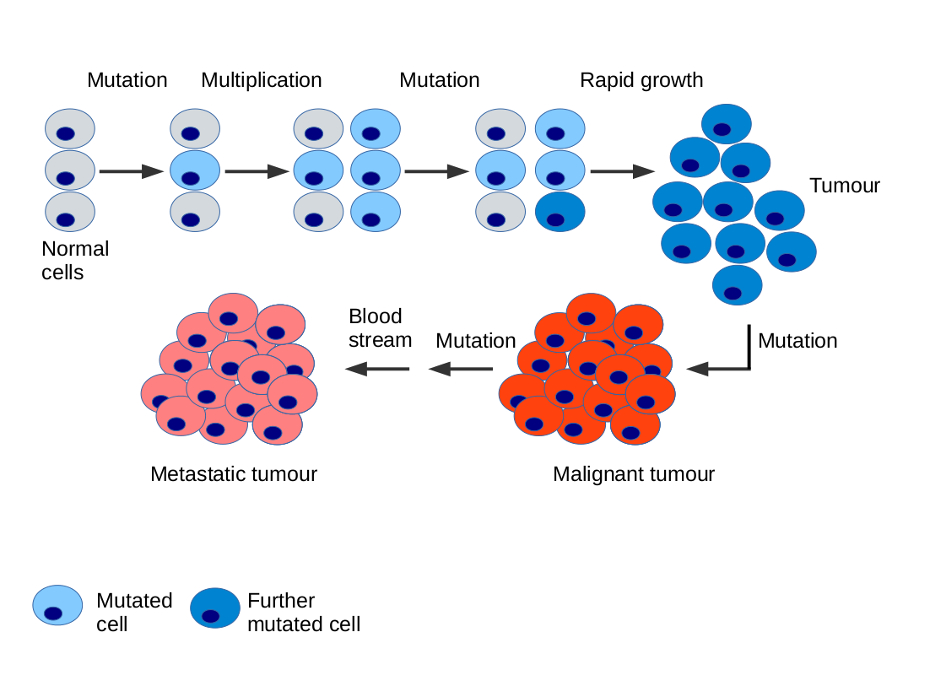
Repeated copy-pasting of these cells results in more somatic genetic mutations, the older an individual is and the higher the turnover of the tissue.
These conditions are not inherited from parents but are a result of new genetic variations in somatic cells.
Cause of Concern
Genetic Diseases:
Many genetic diseases arise from somatic genetic variants that occur during development, leading to various genetic diseases.
Severity and distribution of the disease depends on how early or late during development the corresponding mutation occurred.
Cancer Development:
Somatic genetic mutations can lead to the development of cancers and can also be accelerated by cancer.
These mutations are often responsible for the formation of tumors through driver mutations.
Need of Understanding these Mutations
Early Diagnosis:
The relationship between somatic changes and cancer underscores the importance of understanding these mutations for early detection, diagnosis, and prognosis.
Understanding the timing and impact of these mutations during development is crucial for comprehending the severity and distribution of genetic disorders.
A Positive Change: Somatic changes can be beneficial in a genetic disease by changing a deleterious change to a normal one, a phenomenon known as revertant mosaicism. For example, around 10% of cases of Wiskott-Aldrich syndrome, a rare genetic immunodeficiency, have been found to have revertant mosaicism, as a result alleviating the severity of the disease in many individuals.
Immunity Building:
Somatic genetic variants play a vital role in the immune system's ability to generate diverse antibodies.
Immune cells like B and T cells undergo significant somatic changes to produce a wide array of proteins that recognize and bind to pathogens.
This diversity is critical for effective immune responses, and studying these variants can provide insights into immune-related disorders.
Global Example
Somatic Mosaicism across Human Tissues’ (SMaHT) Network
The U.S. National Institutes of Health has launched a programme focused on understanding the breadth of somatic mosaicism and the biological and clinical significance of such somatic events in humans.
This network aims to catalyse study in the field by discovering somatic variants, developing tools and resources with which to study them, and improving ability to analyse, interpret, and organise them in different biological and clinical contexts.
Context: During the visit of Prime Minister Narendra Modi to USA there was landmark deal between General Electric of USA and Hindustan Aeronautics Limited of India to co-manufacture fighter jet engines in India. The manufacturing of jet engines will start with technology sharing of over 50% which will further increase over the production cycle.
About the GE-HAL fighter jet engine deal
Under the deal, GE will transfer technology and manufacturing capabilities for F414 jet engine which has been used by US Navy aircraft for more than 30 years.
More than 1400 such engines have been deployed and have clocked more than 5 million flight hours.
The F414 jet engine currently or in future will power fighter jets in US, Sweden, Australia, Kuwait, Brazil, South Korea, India & Indonesia.
Current Engines Used in Tejas
Currently, HAL's Tejas uses GE's F404 engine which is predecessor of F414.
Tejas Mark 2 which is a more powerful fighter aircraft needs a bigger engine for which HAL plans to use F414 engine of GE.
F414 will also be used for India's next generation Advanced Medium Combat Aircraft.
India's efforts to develop jet engines
India has made great leaps in indigenous development of defence systems and platforms in developing a world class missiles, aircrafts, submarines and aircraft carriers.
However, India has failed to develop a viable and functional jet engines for its fleet of fighter aircrafts.
Kaveri aero engine was developed by the Gas Turbine Research Establishment (GTRE), under the DRDO, after a 30-year developmental period. This, however, was not found suitable for the indigenous Light Combat Aircraft (LCA), as it was underpowered and overweight to meet the aircraft’s performance requirements.
Challenges in developing
Development of indigenous jet engines is complex, costly and time consuming process requiring
Managing extreme engine temperatures
Composites & Alloys: Jet engines use superalloys and composite materials which can withstand temperatures beyond 1800oC. Thus, there is a need to develop high-resistance materials like silicon carbide or ceramic matrix composites
Significance of Jet Engine deal for India
Significant step forward in India-USA relations:
This is the first instance when US will be sharing a cutting edge technology in its defence capabilities with a non-ally.
This deal also marks the first time when there will be a co-production of jet engines of US with a country with which US does not have a treaty.
Under the deal, US will be sharing a substantial share of sensitive jet engine technology with a provision of technology transfer ratio to increase. This is the most technology transfer the US has ever authorised.
The deal would reduce India's reliance of defence aircrafts offered by Russia to India and will expand the growing interoperability between US and Indian military.
Entry into exclusive club: India will become the fifth country in the world to produce jet engines. Currently, only Russia, USA, France & UK have the capability to produce jet engines.
Boost to defence capabilities: This deal is expected to boost and modernise India's fighter jet capabilities as it will allow India to indigenously produce jet engines for its Tejas fleet with one of the most powerful and reliable engines. It will help India's to replace its reliance on ageing Russian fleet which currently power its air force and naval aircrafts.
Domestic manufacturing of jet engines will reduce cost of fighter jets in India.
Reduce dependence on foreign suppliers for engines for India's fighter aircrafts.
Boost to defence manufacturing:
Edge over China: The jet engines offered by US have more power and efficiency, longer life and need lower maintenance compared to jet engines currently manufactured by China. Thus, giving India an edge over China in terms of defence capabilities.
Concerns over the deal
Not complete transfer of technology: Though the deal has a significant transfer of technology component. However, transfer of technology is not complete.
Better jet engines are available as compared to F414 jet engines which is being offered to India. For ex. US has been developing advanced F136 jet engine for its F35 fighter aircrafts.
Importance of Russia: US demands India to shun military ties with Russia to further boost its defence collaboration with Russia for the fear of its defence technology falling in Russian hands. However, India and Russia enjoy unparallel trust and collaboration in defence relations like Brahmos cruise missiles. Thus, India would not want to compromise its defence relations with Russia.
Way forward for Indigenous Jet Engine Development
Focus on indigenous development of jet engines: Despite GE-HAL jet engine deal, India should try and develop its own engines for both civilian and fighter jets. India has a lot of engineering talent which could be harnessed for this. Government and Private sector should collaborate on this. This will result:
Increasing India's strategic autonomy.
Reduce reliance on other countries.
Reduce cost of manufacturing of fighter aircrafts.
Increase India's potential as a global supplier and exports of defence aircraft systems.
HAL-BHEL Joint Venture for Jet Engines: The technology for development of jet engines and industrial gas turbines is similar with difference in weights and compression ratios, dealing with different levels of heat and oxygen availability. A joint venture can be explored between these to develop indigenous jet engines in India.
According to author the dynamics of the emerging fiscal federalism of India entails significant rethinking especially in the context of the 16th Finance Commission. One Fundamental aspect of our Governance is the fiscal federalism which provides the autonomy of the states to raise revenue and undertake expenditure according to their priorities and needs. Such form of fiscal federalism has been formulated keeping in mind the diverse needs and aspirations of the states across India and hence considered critical for balanced and holistic development of the entire country.
Before going into details of the report which shall be extremely important from the perspective of Mains examination, Let us first understand the need for any such body at the first place? Specially given that states and centre both have been enabled to levy and collect taxes in their domains.
Now finance commission is body to facilitate fiscal balance in the Indian federal structure and hence enabling Fiscal federalism.
What is a Fiscal imbalance?
Fiscal imbalance occurs when the revenues of a are not appropriate to carry out the responsibilities allocated to it.
Now there are two kinds of imbalances that can occur in Indian Federalism:
vertical imbalance (between state and centre)
horizontal imbalance (among the states)
Finance Commissions – A Historical Perspective
Vertical and horizontal imbalances are common features of most federations and India is no exception to this.
So why does vertical imbalance (between state and centre) occur?
Because there is a mismatch of responsibilities and revenue sources between the Union and the States?
Now why is that?: mainly because of two reasons
Constitution assigned taxes with a nation-wide base to the Union (which earn higher revenues)
Why was this done?
This was done to make the country one common economic space unhindered by internal barriers to the extent possible.
Constitution assigned functional responsibilities involving high expenditure disproportionate to their assigned sources of revenue
Since the expenditures are incurred mainly in the executive branch, let us see the constitutional scheme for the same:
Legislative responsibility
Executive responsibility
LIST I
Union
Union
LIST II
State
State
LIST III
Both
State
So you can see that states take care of both List 1 and List II
Why was this done?
States being closer to people and more sensitive to the local needs have been assigned
These two factors have resulted in vertical imbalances.
So why does horizontal imbalance (among the states) occur?
Unlike in most other federations, differences in the developmental levels in Indian States are very sharp.
Horizontal imbalances across States are on account of factors, which include historical backgrounds, differential endowment of resources, and capacity to raise resources.
So you can say that the creation of Finance commission is the recognition of the imbalance which exists in the federalism and hence mechanisms under article 280 and 281 have been created to ensure that these imbalances are minimized.
Hence let us have a look at the constitutional provisions related to the finance commission as far as constitution of India is concerned:
So as you read in article 280, the report of the Finance Commission has to be submitted for every five years and you also know that the report of the last FC (14th) was applicable for 2015-2020 period, then why did FC 15 not submit the final report for the period 2020-2025?
At the formation of the 15th FC, It was required to submit the report by October 30, 2019 for five years for the period 2020-21 to 2024-25.
However, due to various political and fiscal developments, its term was extended.
So what are the reasons behind the extensions?
Speak: the basic reason is that the reports of the FC are based on the projections of various parameters related to taxation, GDP and deficits. the current state of Indian economy makes it difficult for any panel to successfully do a projection.
So why making medium-term projections in the current scenario would mean serious risks?
Changes in the federal units
the abolition of Statehood to Jammu and Kashmir required the Commission to make an estimation excluding the Union Territory.
Historically low Nominal growth rate
the deceleration in growth and low inflation has substantially slowed down the nominal GDP growth which is the main tax base proxy; making projections of tax revenues and expenditures based on this for the medium term could have posed serious risks.
Also the compensation agreement to the loss of revenue to the States is applicable only till 2022(which means it will cover only two years of the period covered by the Commission’s recommendations hence posing uncertainties)
So these are the factors which have compelled the extension of the term of 15th FC as well as its submission of interim report.
Let us now discuss the highlighting features of the report:
14th FC
15 FC
Remarks
Vertical distribution
42
41
the Fifteenth Finance Commission continued with the recommendation of the previous Commission relating to vertical division of taxes, and adjusted the States’ share to 41% to exclude the share of Jammu and Kashmir.
it has used two additional factors — demographic performance and tax effort.
Demographic Performance
NA
12.5%
the inverse of fertility rate hence showing sensitivity to the concerns of these States.
Tax Efforts
NA
2.5%
However, in recent years, the fiscal federalism has become skewed towards the Centre in certain aspects and the same has been opposed by number of states. In this regard, let us understand some important issues which have arisen in the Centre State Fiscal Relations.
Higher Share of Cess and surcharge: Cess and surcharge imposed and collected by the Centre do not form part of Central Divisible pool of taxes. They are not distributable among the States and hence continue to remain with the centre. Over a period, the Centre has been imposing large number of surcharge and Cess to mobilise revenue. A Case in point is the recent introduction of the Agri Infrastructure Cess in the Union Budget 2021-22.
The share of Cess and Surcharge as a percentage of Gross Tax Revenue (GTR) of the centre has increased sharply from 2.3% in 1980-81 to 15% in 2019-20. The States see this as an illegitimate way of depriving resources that are rightfully due to them.
GST compensation: States agreed to give up the power to impose indirect taxes and adopt GST based on a guaranteed 14 per cent growth in GST revenues per annum. The Centre committed to pay the states for the shortfall in their GST revenue through the imposition of GST Compensation Cess for a period of 5 years.
However, on account of CoVID-19 pandemic, there was GST shortfall of almost around Rs 3 lakh crores. However, money collected under GST compensation Fund was hardly around Rs 65,000 crores. Hence, there was an obligation on the Centre to pay compensation amount of almost Rs 2.35 lakh crores. Initially, the Centre asked the States to borrow this amount from the market. Later on, due to strong opposition, the Centre decided to borrow on behalf of the states and compensate them. This recent issue over GST compensation has led to erosion of trust in the fiscal federalism.
Centrally Sponsored Schemes (CSS): The Centrally Sponsored schemes are the schemes which are financed by both Centre and States in a defined proportion (70:30 or 60:40 or 50:50 etc), but implemented by the respective State Governments. Some of these schemes include MGNREGA, Ayushman Bharat, National Education Mission etc.
The Centre lays down elaborate rules and guidelines with respect to implementation of these schemes. It also lays down purposes for which the funds can be utilised for. The State governments claim that such rules and guidelines do not provide them with enough financial and operational autonomy in executing the schemes.
These Centrally sponsored schemes have also faced political controversy. For instance, some of the States such as West Bengal, Telangana etc. have decided not to implement Ayushman Bharat Scheme. These states claim that their own health insurance schemes are better than centre's Ayushman Bharat Scheme.
Borrowing powers of the States: Under Article 293, the States are allowed to raise loans from the Centre or market. However, a State cannot raise a public loan without the consent of the Centre if there is still outstanding any part of a loan. Since all the State Governments have been and continue to be indebted to the Centre, the Centre effectively controls the amount of public debt raised by State Governments.
In recent times, particularly in the aftermath of CoVID-19 pandemic, frictions have risen over the Centre’s attempt to perpetually control borrowings by the States. The recent 50-year interest free loan announced by the Centre for the states is a case in point. Any State which avails this facility will need to take Centre’s permission for all future borrowing at least for the next 50 years.
Policies: Several other policies initiated by the Union government in the recent past have also led to the weakening of States’ autonomy. These include the farm laws; the Government of National Capital Territory Amendment Act, 2021; the Dam Safety Bill, 2019; the National Education Policy of 2020 etc.
Context: Prime Minister Narendra Modi and Chinese President Xi Jinping agreed to intensify efforts for expeditious disengagement and de-escalation along the Line of Actual Control (LAC) in eastern Ladakh, the spotlight is now on the exact contours of plans being drawn up by military commanders on the ground to pull back troops.
About the Depsang Plains issue
The Depsang Plains issue began in 2013 when China carried out an 18-km incursion in the area.
The Depsang Plains are located close to the strategically important Daulat Beg Oldie.
At the Depsang Plains, Chinese troops have been blocking Indian access to PPs 10 to 13 from a bottleneck known as the Y-junction as well as the 972 sq km tract of land there.
In Demchok, which is in the southern part of eastern Ladakh, the problem is mainly at the Charding Ninglung Nullah (CNN) junction.
Despite the two countries agreeing to go back from their positions, the PLA troops did not vacate the area completely.
In multiple instances, the PLA also stopped Indian graziers at the Saddle Pass at the CNN junction, well within India’s perception of the LAC.
India has since deployed a separate brigade to look after the area.
Efforts for disengagement
Since 2020, Corps Commanders of India and China have been discussing the resolution of the flashpoints along the LAC, including those that emerged after the standoff began.
Sources said while clear orders are awaited, various modalities have been prepared for possible limited disengagement in phases.
Commanders on the ground have been discussing possible scenarios for limited disengagement at certain mutually-accepted points along the boundary after the 19th round of India-China military talks earlier in the month of August 2023.
The talks led to some forward movement with both sides deciding to pull back troops – and dismantle temporary structures – from the Galwan Valley, the north and south banks of Pangong Tso and Patrolling Points in the Gogra and Hot Springs area.
The last such movement was in September 2023 when both armies disengaged from PP-15 in the Gogra-Hot Springs area after multiple rounds of talks.
Disengagement in most of these areas led to the creation of buffer zones – this stops troops of both sides from accessing areas that they patrolled earlier.
Following the 19th round of talks this month, Major General-level talks were held to decide the finer details of resolving the existing issues, including the legacy issues along the LAC, as well as gaining access to all pre-2020 patrolling points along the LAC.
The commanders discussed several issues such as mutually ensuring that no new posts are constructed in close proximity to the LAC, and identifying specific limits of patrolling.