Prelims Nuggets

India-China LAC | Buffer zones to Depsang to Demchok: Spotlight on pullback plan, the extent

Context: Prime Minister Narendra Modi and Chinese President Xi Jinping agreed to intensify efforts for expeditious disengagement and de-escalation along the Line of Actual Control (LAC) in eastern Ladakh, the spotlight is now on the exact contours of plans being drawn up by military commanders on the ground to pull back troops. 

About the Depsang Plains issue

  • The Depsang Plains issue began in 2013 when China carried out an 18-km incursion in the area. 
  • The Depsang Plains are located close to the strategically important Daulat Beg Oldie. 
  • At the Depsang Plains, Chinese troops have been blocking Indian access to PPs 10 to 13 from a bottleneck known as the Y-junction as well as the 972 sq km tract of land there. 
  • In Demchok, which is in the southern part of eastern Ladakh, the problem is mainly at the Charding Ninglung Nullah (CNN) junction. 
  • Despite the two countries agreeing to go back from their positions, the PLA troops did not vacate the area completely.
  • In multiple instances, the PLA also stopped Indian graziers at the Saddle Pass at the CNN junction, well within India’s perception of the LAC.
  • India has since deployed a separate brigade to look after the area. 
image 116

Efforts for disengagement

  • Since 2020, Corps Commanders of India and China have been discussing the resolution of the flashpoints along the LAC, including those that emerged after the standoff began.
  • Sources said while clear orders are awaited, various modalities have been prepared for possible limited disengagement in phases.
  • Commanders on the ground have been discussing possible scenarios for limited disengagement at certain mutually-accepted points along the boundary after the 19th round of India-China military talks earlier in the month of August 2023.
  • The talks led to some forward movement with both sides deciding to pull back troops – and dismantle temporary structures – from the Galwan Valley, the north and south banks of Pangong Tso and Patrolling Points in the Gogra and Hot Springs area. 
  • The last such movement was in September 2023 when both armies disengaged from PP-15 in the Gogra-Hot Springs area after multiple rounds of talks. 
  • Disengagement in most of these areas led to the creation of buffer zones – this stops troops of both sides from accessing areas that they patrolled earlier.
  • Following the 19th round of talks this month, Major General-level talks were held to decide the finer details of resolving the existing issues, including the legacy issues along the LAC, as well as gaining access to all pre-2020 patrolling points along the LAC.
  • The commanders discussed several issues such as mutually ensuring that no new posts are constructed in close proximity to the LAC, and identifying specific limits of patrolling.

BRICS Grouping

Context: Increasing its membership from five to eleven, the BRICS alliance has significantly bolstered its status as a noteworthy global coalition.

More about the news:

  • The selection of countries to join the BRICS coalition has notable significance, as it introduces four major Western Asian players—Egypt, Iran, Saudi Arabia, and the UAE—alongside Ethiopia and Argentina from Africa and South America.
  • This marks a shift in the foundational principles of this non-Western economic alliance, aiming to transform it into a more politically pertinent bloc.
  • The fact that the summit and the expansion of BRICS proceeded despite efforts by the U.S. and Europe to isolate Russia due to its Ukraine invasion, holds substantial implications for the Western bloc.
  • Although India might not have been enthusiastic about such swift expansion, the inclusion of Iran in BRICS conveys a clear message against U.S. sanctions, mirroring Iran's recent entry into the SCO.
  • The admission of both Iran and Saudi Arabia, as well as the UAE, into the same grouping has primarily been facilitated by Beijing's mediation in a peace agreement.
  • India's endeavours for UN reform, increased representation from the Global South, and the expansion of the UN Security Council continue to remain important factors.
image 114

What is 'BRICS'? 

  • Initially termed BRIC in 2001, the acronym BRICS was coined by Jim O’Neill, a Goldman Sachs economist, to encompass Brazil, China, India, and Russia.
  • The BRIC grouping's first formal summit was held in Yekaterinburg, Russia, commenced in 2009. During this summit, BRIC Leaders issued a Joint Statement elucidating the objectives of the BRIC collaboration. This comprehensive document also provided a detailed framework for addressing the global financial and economic crisis.
  • South Africa officially became a member nation in 2010. The group was renamed BRICSwith the "S" standing for South Africa – to reflect the group's expanded membership. 
  • It was anticipated by Goldman Sachs that the four BRIC economies—China, India, Brazil, Russia—alongside South Africa, would dominate the global economy by 2050. 
  • The foundation for this assertion lay in the sustained presence of China, India, Brazil, Russia, and South Africa among the world's swiftest expanding and emerging market economies. 
  • These nations possessed a notable competitive advantage owing to their economical labor costs, advantageous demographics, and copious natural resources, particularly during the era of the global commodities upswing.
  • By the year 2013, the BRICS collective accounted for approximately 27% of the global GDP in terms of purchasing power parity.
  • These five nations constituted around 42% of the global populace. In geographical terms, the BRICS countries spanned 26% of the Earth's total land area.
Objective of BRICS

Role of the BRICS

  • From 2009 to 2014, the BRICS member countries reached a consensus on matters concerning economics and finance, which encompassed reforms within institutions such as the World Bank and IMF.
  • A collective commitment was made to implement strategies aimed at mobilizing adequate resources to enhance the IMF's capacity to effectively manage various forms of crises. 
  • Additionally, during this period, they established the BRICS Interbank Cooperation Mechanism, facilitating the provision of credit facilities denominated in local currencies, along with the formation of the BRICS Exchanges Alliance.
  • Furthermore, their attention extended to regional challenges, encompassing issues related to countries like Libya, Syria, Afghanistan, and Iran.  
  • BRICS also coordinated together in resolving:
    • Conflicts
    • IMF reform
    • The struggle against illicit drug trafficking
    • The need, use, and development of technologies in information and communication
    • The BRICS countries also sought to create favourable conditions for barrier-free trade.

Operation of BRICS:

  • On the basis of UN Charter, BRICS partners’ relations are built.
  • They follow the recognized principles as well as international law’s norms.
  • All the member countries agreed to the following principles during 2011 Summit.
  • Principles
    • Solidarity
    • Openness
    • Pragmatism
    • Neutrality (regarding third parties)
    • Non-bloc nature

New Development Bank:

  • A multilateral development institution formerly known as the BRICS Development Bank, was founded by the collaborative efforts of the BRICS member nations: Brazil, Russia, India, China, and South Africa.
  • The bank's inception involved an initial authorized capital of $100 billion. 
  • The distribution of this subscribed capital was executed equitably among the founding members—Brazil, Russia, India, China, and South Africa.
  • The NDB Agreement assures uniform voting rights for all member countries and excludes the presence of veto powers.
  • Shanghai, China, is the bank's headquarters and it stands as principal operational hub.
  • To supplement this, regional offices were set up, commencing with Johannesburg, South Africa, and subsequently expanded to São Paulo, Brazil, GIFT City, India, and Moscow, Russia.
  • The origin of this bank traces back to a proposal by India during the 4th BRICS summit held in Delhi in 2012, where the focus revolved around conceptualizing a new development bank. 
  • A formal consensus on this initiative was solidified at the 5th BRICS summit in Durban, South Africa, in 2013.
  • The pivotal Agreement establishing the New Development Bank was officially signed in 2014, during the 6th BRICS summit in Fortaleza, Brazil.

Key Agendas of recently held 15th BRICS summit in Johannesburg: 

1.Active Engagement in Dialogues:

  • BRICS-Africa Outreach Conversations
  • BRICS Plus Dialogue Interactions

2.Cultivating Partnerships:

  • Enabling an equitable and just transition, which addresses the risks posed by climate change.
  • Facilitating the transformation of education and skill development for the evolving future.
  • Strengthening post-pandemic socioeconomic recovery measures.
  • Achieving the goals outlined in the 2030 Agenda for Sustainable Development.

3.Addressing Political Issues:

  • Deliberation on the Russia-Ukraine conflict.
  • Examination of the post-coup situation in Niger.
  • Assessment of heightened tensions between the Western bloc and Russia.

4.Advancing Economic Reforms:

  • Fostering increased participation and influence of Emerging Markets and Developing Countries (EMDCs) within international economic decision-making.
  • Advocating for reforms within Multilateral Development Banks (MDBs) and measures to alleviate debt-related stress.
  • Exploring potential opportunities through the African Continental Free Trade Area.

5.Enlarging the Scope of BRICS:

  • Emerging as an appealing alternative to the developed countries' "club" of the G-7 nations.
  • Witnessing interest from over 40 countries in joining BRICS, with at least 19 countries formally applying for membership.

6.Broadened Participation:

  • South Africa has extended invitations to leaders representing the Global South and the African Union (AU) for parallel sessions on the sidelines of the summit.

Significance of 15th BRICS summit for India:

  • Multi-dimensional Alignment: Entails a strategy of alignment based on specific issues, wherein India simultaneously participates in and pursues its interests within various strategic and economic coalitions, such as the Quad and BRICS.
  • Poly directional Foreign Policy: Bolsters economic growth, technological advancements, research and innovation, norm-setting influence, and security enhancement.
  • Diplomatic Advantages: Enables a diplomacy centred around developmental engagement, with a goal of expanding BRICS membership.
  • Comprehensive Agenda:
    • Ensuring Energy Security
    • Combating Terrorism
    • Financing Efforts for Climate Change Mitigation
  • Geopolitical Influence: Within the BRICS framework, emphasis is placed on addressing non-traditional security threats and enhancing economic security.
  • Political Assertion: Serves as a political countermeasure against unjust coercive practices, including instances such as the European Union's Carbon Border Tax, unilateral sanctions, and biased economic transactions.
  • Strategic Consideration: Marks a significant milestone as it is the first in-person meeting following the military standoff with China along the Line of Actual Control in 2020.
  • Positive Developments: Ahead of the summit, the 19th round of the India-China Corps Commander Level Meeting resulted in a joint statement, signifying a favourable step forward.

North Sea 

Context: U.K. Prime Minister recently backed plans for new fossil fuel drilling off Britain’s coast.

image 105

About North Sea 

  • North Sea, shallow, northeastern arm of the Atlantic Ocean, located between the British Isles and the mainland of northwestern Europe. 
  • The sea is bordered by the island of Great Britain to the southwest and west, the Orkney and Shetland islands to the northwest, Norway to the northeast, Denmark to the east, Germany and the Netherlands to the southeast, and Belgium and France to the south. 
  • It is connected to the Atlantic by the Strait of Dover and the English Channel and opens directly onto the ocean between the Orkney and Shetland islands and between the Shetland Islands and Norway. 
  • The Skagerrak, an eastward extension of the North Sea between Norway and Denmark, connects the North and Baltic seas via the Kattegat and the Danish straits.
  • The North Sea waters are affected by the warm North Atlantic Current, which moves northward along the western side of the British Isles and enters the Norwegian Sea.
  • The North Sea has long been important as one of Europe’s most productive fisheries
  • It also serves as a prominent shipping zone among European countries and between Europe and the Middle East. 
  • The extensive reserves of petroleum and natural gas have been discovered beneath the seafloor.

Arrow 3

Context: Israel said the United States approved the landmark sale of the Arrow 3 hypersonic missile defense system to Germany, in the country's biggest military deal worth $3.5 billion.

Arrow 3

About Arrow 3

  • It is also known as Hetz 3 is an exoatmospheric interception method that includes a two-stage interceptor, like the Arrow 2, but purely based on hit-to-kill technology.
  • It is jointly funded, developed, and produced by Israel and the United States.
  • It is part of the Arrow Weapon System (AWS) which is the world's first operational, national, stand-alone ATBM (Anti Tactical Ballistic Missiles) defense system.
  • Based on the uniquely effective Arrow 2 and Arrow 3 interceptors, the Arrow modular air defense systems detect, track, intercept, and destroy incoming TBMs carrying a range of warheads and over a large footprint, thereby protecting strategic assets and population centers.
  • It provides exo-atmospheric interception of ballistic missiles (during the space-flight portion of their trajectory), including intercontinental ballistic missiles (ICBMs) carrying nuclear, chemical, biological, or conventional warheads. 
  • With divert motor capability, its kill vehicle can switch directions dramatically, allowing it to pivot to see approaching satellites. The missile's reported flight range is up to 2,400 km.
  • Unlike most kill vehicles, which use liquid or gas propulsion, the new Israeli kill vehicle will be propelled by an ordinary rocket motor equipped with a thrust-vectoring nozzle.
  • It will also be fitted with a gimbaled seeker for hemispheric coverage. By measuring the seeker's line-of-sight propagation relative to the vehicle's motion, the kill vehicle will use proportional navigation to divert its course and line up exactly with the target's flight path.
  • The system was first deployed in an Israeli air force base in 2017 and has been used to protect Israel against attacks from Iran and Syria.

Yelagiri Hut Shelters

Context: More than two centuries ago, over 200 Malaiyali tribes built traditional clay huts on the flat peak of the picturesque Yelagiri hill in northern Tamil Nadu establishing an all-encompassing system for shelter, storage, farming, and cattle. 

image 4

About Yelagiri Hut Shelters:

  • Tribespeople settled in upper Nillavur, Yelagiri, and became foragers turned farmers who began cultivating its tabletop peak for food. They used local red loam clay to build 16x22 feet one-room homes, replacing huts.
  • The hut was meant for people to live in but eventually turned into a storage space for the seeds we collected before the sowing period began. Once the land was harvested, that space was occupied by grains till we sold or consumed them.
  • A unique feature of the munn veedu (mud house) or andara kotai (storage facility) is that it stands on a stilt-like structure also made of teak wood. This holds the house two feet above the ground to keep rodents at bay and to prevent the house from flooding during torrential rains. 
  • These shelters are made of dry bamboo leaves the thatched roof is waxed with cow dung to prevent it from leaking during the monsoon season.
  • After the crops were harvested, the area was filled with grains until they were either sold or consumed. This outer layer sometimes gives the impression of the house being smaller than it actually is from the external view. Nonetheless, the interior has ample room to accommodate eight individuals, along with a paran (attic) utilised for storing utensils and various domestic belongings.
  • They employed science to build these houses that remained unaffected come rain, sun, or storm. At the same time, the stilts provided extra storage space under the house that could be used for grains or even poultry.
  • Today, all that remains in the hut is a three-foot-long munn paanai (clay pot) and the remnants of a straw attic that once held an entire year’s worth of grains and seeds. 

About Malaiyali Tribe

  • The Malaiyali tribe – malai meaning “hill” and Yali meaning “people” is strewn across the Eastern Ghats in North Tamil Nadu.
  • They are usually hill farmers and they cultivate different types of millet.
  • They are believed to have ancestral connections to the Vellala caste of cultivators. According to historical accounts, around ten generations ago, there was a migration from the sacred city of Kanchi to the hills of their present-day region. This period coincided with the dominance of Muslim rulers in Southern India.

Metagenome sequencing technology is transforming pathogen surveillance

Context: Genome surveillance offers essential insights for devising early response strategies, identifying emerging strains, and monitoring animal species. As a result, advanced genomic technologies like Metagenome sequencing are becoming a fundamental tool against future pathogens, enabling countries to be better prepared and respond effectively. 

What is Genome sequencing?

  • Genome sequencing is the process of determining the complete DNA sequence of an organism's genome.
    • The genome is the entire set of genetic material or DNA (deoxyribonucleic acid) that carries the instructions necessary for the growth, development, functioning, and reproduction of an organism. It contains the information required to build and maintain an organism, including all its traits and characteristics.
  • Genome sequencing involves deciphering the order of nucleotide bases (Adenine, Thymine, Cytosine, and Guanine) along a DNA strand.
    • The DNA sequence is composed of a long string of these four bases, and the order in which they appear encodes the genetic information. 
  • Genome sequencing provides insights into an organism's genetic makeup, helping scientists understand the genes, regulatory regions, and other functional elements that contribute to its biology. 
Genome sequencing provides insights into an organism's genetic makeup, helping scientists understand the genes, regulatory regions, and other functional elements that contribute to its biology. 

Metagenomics vs Microbiology:

  • Metagenomics is a field of molecular biology that involves studying genetic material (DNA or RNA) collected from environmental samples containing a mixture of microorganisms, such as bacteria, viruses, archaea, and other microbes.
    • Unlike traditional genomics which focuses on the DNA of a single organism, metagenomics aims to analyse the genetic diversity and functional potential of entire microbial communities present in a given environment.
Metagenomics is a field of molecular biology that involves studying genetic material (DNA or RNA) collected from environmental samples containing a mixture of microorganisms, such as bacteria, viruses, archaea, and other microbes.
  • Microbiology is the broader field that studies individual microorganisms, such as bacteria, viruses, fungi, and archaea. It relies on techniques to isolate and grow these microorganisms in controlled conditions in a laboratory for study in detail. 

Metagenomics is revolutionising pathogen surveillance:

  • Metagenome sequencing technology (metagenomics) has revolutionised pathogen surveillance
  • During the COVID-19 pandemic, this method rapidly identified the virus by directly analysing genetic material from patient samples, without the need for traditional microbiology techniques.
  • This approach, which can be used without prior knowledge of the infectious agent, led to a surge in genome sequencing, making SARS-CoV-2 one of the most sequenced organisms in history.
  • Metagenomics changed how pathogens are identified, giving rise to technologies like the CovidSeq assay and global genome surveillance efforts like GISAID. This approach has also influenced public health policies based on genomic data.
    • Countries like India established genome-sequencing programs for SARS-CoV-2, setting a model for using advanced genomic techniques in pathogen surveillance.
    • The global deployment of genome sequencing infrastructure due to the COVID-19 pandemic has enabled rapid genomic surveillance of pathogens, aiding in early detection and response.
  • Applications: Metagenomics has applications in environmental science (studying microbial communities in various ecosystems), bioremediation (using microbes to clean up pollutants), understanding the human microbiome (the collection of microbes in and on the human body), and discovering novel genes and enzymes with potential applications in medicine and industry.

14 States are yet to join Centre’s flagship education scheme

Context: Kerala, Tamil Nadu and West Bengal are among 14 States and Union Territories which are yet to sign a crucial Memorandum of Understanding (MoU) with the Union Education Ministry, which mandates the implementation of the National Education Policy in order to avail funds worth almost ₹13,000 crore for the next three years, under the Centre’s flagship scheme Pradhan Mantri- Uchchatar Shiksha Abhiyan (PM-USHA) for State-run higher education.

About Pradhan Mantri- Uchchatar Shiksha Abhiyan (PM-USHA) 

Rashtriya Uchchatar Shiksha Abhiyan (RUSA) was a Centrally Sponsored Scheme to fund State/UTs institutions, with the vision to attain higher levels of access, equity, and excellence in the State higher education system with greater efficiency, transparency, accountability, and responsiveness.

The scheme's first phase was launched in 2013 and the second phase was established in 2018. Now, in the light of the National Education Policy, the RUSA scheme has been launched as Pradhan Mantri Uchchatar Shiksha Abhiyan (PM-USHA).

  • It covers government and government-aided institutions of the States and UTs.

Objectives of PM-USHA

  • To improve the overall quality of existing state higher educational institutions by ensuring their conformity to prescribed norms and standards and adoption of accreditation as a quality assurance framework; 
  • Usher transformative reforms in the State higher education system by creating a facilitating institutional structure for planning and monitoring at the state level, promoting autonomy in State Universities, and improving governance in institutions; 
  • Implementation of recommendations of the NEP 2020 through funding support provided to State HEIs;
  • Ensure governance, academic, and examination (and evaluation) reforms in the State higher educational institutions and establish backwards and forward linkages with school education on one hand and employment market, on the other hand, to facilitate self-reliance and thus create an Atma-Nirbhar Bharat; 
  • Create an enabling atmosphere in the higher educational institutions to devote themselves to research and innovations; 
  • Correct regional imbalances in access to higher education by facilitating access to high-quality institutions in urban & semi‐urban areas, creating opportunities for students from rural areas to get access to better quality institutions, and setting up institutions in unserved & underserved areas;
  • Developing infrastructure for ODL/Online/Digital mode of education in such States/UTs;
  • Improve equity in higher education by providing adequate opportunities for higher education to socially deprived communities; promote inclusion of women, minorities, SC/ST/OBCs, and special-abled persons; 
  • To identify and fill up the existing gaps in higher education, by augmenting and supporting the State Governments’ efforts; 
  • Enhancing employability through skilling and vocationalization; 
  • Improving the accreditation status of accredited institutions and getting accreditation of non-accredited institutions; 
  • Providing better hostel facilities in remote areas; 
  • Establishing New Model Degree Colleges in the districts where there are no Government and Government-aided institutions; 
  • Focusing on low GER, Left Wing Extremism (LWE), border area districts, aspirational districts and districts with higher SC/ ST populations; and 
  • Focus on multidisciplinary education, including STEM, commerce and humanities fields of education.

Ukraine says its drones damaged a Russian warship, showing Kyiv’s growing naval capability

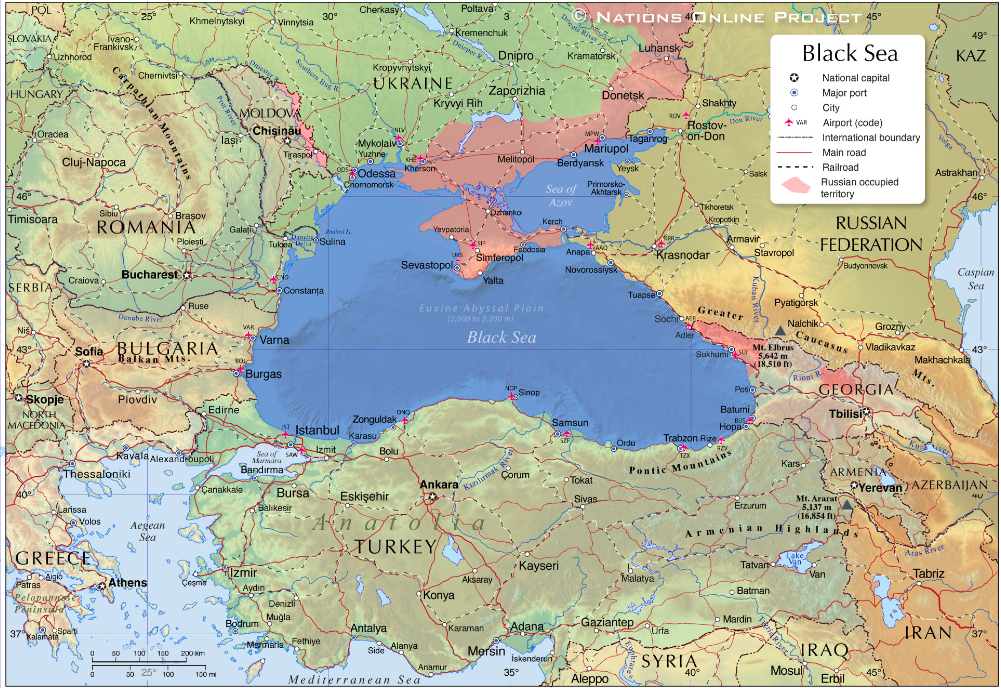
Context: Ukraine said its sea drones struck a major Russian port Friday and damaged a warship in an attack that underlined Kyiv’s growing capabilities as the Black Sea becomes an increasingly important battleground in the war.

Where is Black Sea Located?

Black Sea Located
  • It is a large inland sea situated at the south-eastern extremity of Europe. 
  • It is bordered by Ukraine to the north, Russia to the northeast, Georgia to the east, Turkey to the south, and Bulgaria and Romania to the west.
  • It is connected to the distant waters of the Atlantic Ocean by the Bosporus (which emerges from the sea’s southwestern corner), the Sea of Marmara, the Dardanelles, the Aegean Sea, and the Mediterranean Sea. 
  • The Crimean Peninsula thrusts into the Black Sea from the north, and just to its east the narrow Kerch Strait links the sea to the smaller Sea of Azov. 
  • Several large rivers flow into the Black Sea, such as the Danube, the Dnieper, the Dniester, the Southern Bug, the Russian Don and the Kuban rivers, Western Georgia's Rioni river, and the Turkish Kızılırmak and Sakarya rivers.
  • The Black Sea is connected to the North Sea via the Danube and the Rhine-Main-Danube Canal.

How Black Sea was formed?

  • Large-scale movements of the Earth's crust uplifted the mountain ranges that divided the ancient Tethys Ocean into several water basins, such as the Paratethys Ocean. The megalake of the late Miocene was probably the largest lake in Earth's history and extended from the region east of the Alps across Central Europe to Central Asia. Its remnants include the Black Sea, the Sea of Azov, the Caspian Sea and the Aral Sea.
  • During the last great ice age, which ended about 25,000 years ago, the Black Sea was a large freshwater lake. The Bosphorus, the connection to the Mediterranean Sea - and to saline water - was presumably formed about 6,500 to 7,500 years ago.

The Black Sea has experienced the worst environmental degradation of all of the world's oceans. The situation has become so severe that it has affected the health, well-being, and standard of living of the people in the immediate area

Legionella bacteria

Context: Britain is taking a group of asylum seekers off a barge just days after moving them onto the vessel because Legionella bacteria was found in the water supply.

About Legionella bacteria:

Legionella bacteria
  • Legionella is a type of bacteria that can cause a severe and potentially fatal respiratory illness known as Legionnaires' disease. 
  • It commonly found in freshwater environments, such as lakes, rivers, and ponds. 
  • They can also survive and thrive in man-made water systems, including cooling towers, hot water tanks, and plumbing systems. 
  • The bacteria multiply in warm water and are transmitted to humans through the inhalation of aerosolized water droplets containing the bacteria. 
  • Legionnaires' disease is not transmitted through person-to-person contact.

Necessary intervention: On India’s conservation ethos

Context - The Wildlife Institute of India and the National Tiger Conservation Authority, who are responsible for the quadrennial ‘tiger census’ reports, recently updated their estimates for the animal’s numbers. Madhya Pradesh, for the second time in eight years, reported 785 tigers, or about a fifth of the national count. The State reported a 50% rise in tigers since the last census.

image 80

A Case Study : How Madhya Pradesh over the years has perfected the Tiger conservation approach:

It has focussed on balancing the predator – prey relationship: M.P. has reintroduced species such as barasingha (swamp deer) to new habitats such as Satpuda and Bandhavgarh, and the gaur to the Bandhavgarh and Sanjay-Dubri tiger reserves. Prey species such as chital (spotted deer) have been successfully supplemented in the Satpuda and Sanjay tiger reserves, Nauradehi, Kuno, and Gandhisagar wildlife sanctuaries through translocation from high-density Pench and Bandhavgarh.

These often involve tracking, darting and capturing animals, keeping them in temporary enclosures until they reach sufficient numbers and then releasing them into their new habitat. 
zfLSdHqmbNS0rkxogW9rn vmQdsnVWy8R2PaQPXQt1rHDJ1t5AVqOTig68i4WM53bpB6TJh8g9Wd7lpRS7yM wTcT ZTXGvb 4y8LGlNw VJxI7hJI3yXTUZ1KIUenP5auonaGV3jfNb EbJ2ylIg

Key facts:

  • The number of tigers in India has increased from 2,967 in 2018 to 3,682 in 2022, an annual rise of 6 per cent.
  • India has become home to approximately 75 per cent of the world’s tiger population.
  • Tiger census is held every four years in the country.
  • With a 50 per cent increase in the last four years, Madhya Pradesh has the maximum number (785) of tigers in the country, followed by Karnataka (563), Uttarakhand (560), and Maharashtra (444), according to the data.
  • The number of tigers “within the tiger reserve” is highest in Corbett (260), followed by Bandipur (150), Nagarhole (141), Bandhavgarh (135), Dudhwa (135), Mudumalai(114), Kanha (105), Kaziranga (104), Sundarbans (100), Tadoba (97), Sathyamangalam (85), and Pench-MP (77).
  • Arunachal Pradesh, Odisha, Telangana, Chhattisgarh and Jharkhand have recorded a dip in the number of majestic cats in the last few years.
  • The Western Ghats witnessed a decrease in tiger occupancy, except for a few areas like Kali (Anshi Dandeli), where the number of unique tigers remains stable. The report pointed to “increasing human footprint and development” as the primary reasons behind the declining tiger population in the Western Ghats

India Takes First Step To Remove Animals From Drug-Testing Process

Context- The Government of India recently approved the New Drugs and Clinical Trial Rules (2023), with the objective of substituting animal experimentation, particularly in the field of pharmaceutical testing.

Key-highlights of the Amendment:

  • The amendment grants researchers the authority to use alternative techniques that do not include animals and are more applicable to humans. 
  • These methods encompass technology such as 3D organoids, organs-on-chip, and sophisticated computational approaches, which are utilized to assess the safety and effectiveness of novel pharmaceuticals.
  • The aforementioned regulations provide that any Contract Research Organization (CRO) doing a clinical trial or bioavailability/bioequivalence research involving novel or experimental medications in human participants must get registration from the Central Licensing Authority prior to commencing such investigations.

Clinical Trials module in India:

  • Each pharmaceutical undergoes a comprehensive series of evaluations aimed at assessing its efficacy in treating the specific ailment it was developed for, as well as its potential adverse effects.
  • The first stage of the drug testing procedure is evaluating the candidate molecule in a minimum of two animal species, namely rodents (mice or rats) and non-rodents, such as dogs and primates.
  • Nevertheless, it is important to acknowledge the intricacies of human physiology, as biological mechanisms and their reactions frequently exhibit individual variations. 
  • These variations can be attributed to various factors including age, gender, existing medical conditions, genetic makeup, and dietary patterns. Consequently, relying solely on laboratory-bred animal species raised under controlled environments may not provide a comprehensive understanding of the human response to a particular drug.

Need for new regulations:

  • In spite of the escalating allocation of resources in the pharmaceutical industry, a substantial proportion of medications that successfully pass the animal-testing phase encounter failure throughout the subsequent stage of human clinical trials.
  • The constraints associated with the traditional testing procedure, which starts with animal experimentation, have prompted a growing cohort of academics to prioritize the development of alternative systems that more effectively emulate the complexities of human biology and enhance the ability to forecast human reactions.

Status of regulations worldwide

  • In the year 2021, the European Union enacted a resolution outlining an action plan aimed at expediting the shift towards non-animal-based technology in the domains of research, regulatory testing, and teaching.
  • In the year 2022, the United States enacted the FDA Modernization Act 2.0, which granted researchers the authorization to use these systems for the purpose of assessing the safety and effectiveness of novel pharmaceuticals.
  • The Republic of Korea implemented a legislative proposal known as the 'Vitalization of Development, Dissemination, and Use of Alternatives to Animal Testing Methods Bill'.
  • In the year 2023, the Environmental Protection Act of Canada underwent an amendment with the objective of substituting, decreasing, or improving the use of vertebrate animals in toxicity testing.
  • In March 2023, the Indian government made modifications to the New Drugs and Clinical Trials Rules 2019, including these systems into the drug-development pipeline.

New Drugs and Clinical Trial Rules (2019)

  • The aim of this study is to modify the existing regulatory framework pertaining to the authorization process for novel pharmaceuticals and the implementation of clinical trials inside the nation.
  • This set of regulations will be applicable to a wide range of pharmaceutical products, including newly developed medications, experimental pharmaceuticals intended for human use, clinical trials, bioequivalence studies, and the activities of Ethics Committees.
  • The period required for approving applications has been decreased to 30 days for pharmaceuticals produced in India and 90 days for drugs generated outside the nation. 
  • If there is a lack of contact from the Drugs Controller General of India (DCGI), it might be assumed that the application has been granted.
  • The need of conducting a clinical trial at a local level might be exempted in the process of approving a novel pharmaceutical product, provided that it has already received authorisation and is being sold in certain countries designated by the Drugs Controller General, subject to government consent.
  • Safety in clinical trials is of paramount importance, since it guarantees the well-being and protection of patients who voluntarily participate in these studies after providing informed permission. 
  • The oversight committee responsible for ethical considerations will oversee the clinical trials and determine the appropriate level of compensation in instances of adverse occurrences.

Technologies suggested as alternatives:

In order to circumvent the use of animals in clinical studies, the implementation of various technologies might prove to be very successful.

  • Technologies using human cells or stem cells include the creation of three-dimensional cellular constructs, referred to as "organoids" or "mini-organs," which replicate distinct bodily organs on a millimeter scale.
  • The 'organ-on-a-chip' technology refers to the use of AA-battery-sized chips that are coated with human cells and interconnected with microchannels. This configuration is designed to replicate the circulation of blood inside the human body.
  • These systems include several facets of human physiology, including interactions between different tissues as well as the analysis of physical and chemical signals occurring inside the body.
  • The use of 3D bioprinters involves the fabrication of biological tissues by the deposition of human cells and fluids, which serve as the bio-ink.
  • Given their ability to be constructed using cells that are distinct to individual patients, these structures may also be used to customize drug testing procedures.

There are several obstacles associated with clinical trials that have been alleviated by the use of technology.

  • The aforementioned factors include expedited recruiting and enhanced retention, enhancement of the patient experience, optimization of patient data collection, availability of non-conventional data sources, and remote monitoring of patients.
  • Moreover, the decentralization of trials and the implementation of a patient-centric strategy might be considered.
  • Furthermore, the obstacles encountered by trials in the current paradigm shift resulting from the COVID-19 pandemic may be effectively addressed by the use of innovative technology.
  • The use of mobile devices, smartphone-based applications, and wearable medical technology has considerable promise in enhancing the process of patient data collection. The use of patient data plays a vital role in clinical trials as it serves to shape the trajectory of research and ultimately influences the final therapeutic results.
  • The COVID-19 pandemic and the need of social separation to mitigate disease transmission have led to a heightened emphasis on remote monitoring in clinical trials. Researchers are increasingly using remote site access and monitoring capabilities.
  • Clinical trials face various barriers, including challenges related to decentralized trials such as patient compliance and participants' technological proficiency. Nevertheless, this form of clinical trial effectively addresses obstacles like logistical constraints, transportation limitations, and the difficulty of reaching remote populations, which otherwise impede the global expansion of trials.

Conclusion

  • India's drug development law change reduces animal experimentation and promotes ethical principles for safer and more effective pharmaceuticals.
  • India establishes a foundation for responsible drug development by promoting alternative approaches, animal welfare, and international criteria.
  • This innovative technique is intended to progress science, helping the pharmaceutical industry and people worldwide.

Controller of Certifying Authorities (CCA) & Security Sockets Layer (SSL)

Context: The government has announced a pool of ₹3.4 crore in prizes for developers who create an indigenous browser for the world which trusts the Controller of Certifying Authorities, which verifies digital signatures in the country.

image 2

An important caveat is that browser ideas entered into this competition will have to trust the Controller of Certifying Authorities (CCA), the Indian government’s authority for digital signatures, including SSL (Security Sockets Layer) certificates.

About Controller of Certifying Authorities (CCA):

  • It is an organisation that administers and monitors the functioning of Certification Authorities that issue encrypted (a technique for secure communication) digital certificates. This type of encryption allows relying parties to have an authenticated transfer of data under a secure connection, and the Authority has well-defined methods of assuring the identity of parties to whom it issues certificates.
  • It also confirms the attribution of a public key to an identified physical person by means of a public key certificate.
  • As per Section 18 of The Information Technology Act, 2000 provides the required legal sanctity to the digital signatures based on asymmetric cryptosystems. The digital signatures are now accepted at par with handwritten signatures and the electronic documents that have been digitally signed are treated at par with paper documents.
  • The IT Act provides for the Controller of Certifying Authorities(CCA) to license and regulate the working of Certifying Authorities.
  • The Controller of Certifying Authorities has been appointed by the Central Government under section 17 of the Act for purposes of the IT Act.
  • It aims to promote the growth of E-Commerce and E- Governance through the wide use of digital signatures.
  • It has established the Root Certifying Authority (RCAI) of India under section 18(b) of the IT Act to digitally sign the public keys of Certifying Authorities (CA) in the country. The RCAI is operated as per the standards laid down under the Act.
  • It certifies the public keys of CAs using its own private key, which enables users in cyberspace to verify that a given certificate is issued by a licensed CA. For this purpose, it operates, the Root Certifying Authority of India(RCAI). 
  • The CCA also maintains the Repository of Digital Certificates, which contains all the certificates issued to the CAs in the country.

About Security Sockets Layer (SSL): 

  • It is an encryption-based Internet security protocol.
  • It was first developed by Netscape in 1995 for the purpose of ensuring privacy, authentication, and data integrity in Internet communications.
  • It is the predecessor to the modern Transport Layer Security (TLS) encryption used today.
  • A website that implements SSL/TLS has "HTTPS" in its URL instead of "HTTP."
  • In order to provide a high degree of privacy, SSL encrypts data that is transmitted across the web. This means that anyone who tries to intercept this data will only see a garbled mix of characters that is nearly impossible to decrypt.
  • It initiates an authentication process called a handshake between two communicating devices to ensure that both devices are really whom they claim to be.
  • It also digitally signs data in order to provide data integrity, verifying that the data is not tampered with before reaching its intended recipient.