Mains Exhaustive

Fukushima N-wastewater controversy

Context: On April 13, 2021, Japan’s government announced plans to release over one million tonnes of contaminated water from the Fukushima nuclear plant into the sea over the next 30 years.

The wastewater is a by-product of the catastrophic 2011 earthquake and tsunami, which disabled the Fukushima Daiichi nuclear power plant, leading to the release of radioactive materials. After more than a decade of storing this wastewater, Japan says they are running out of storage space, and allege that the, now treated water is safe for release.

How is the water being treated and what is the controversy?  

  • The water is being treated by the Tokyo Electric Power Company (TEPCO).
  •  The water has been treated with multiple techniques, notably the Advanced Liquid Processing System (ALPS), which removes 62 types of radioactive materials.
  • However, it doesn’t remove tritium. 
  • TEPCO and the Japanese government argue that the concentration of tritium does not exceed international standards, in particular, those of the International Atomic Energy Agency (IAEA), the United Nations’ nuclear watchdog. According to TEPCO’s website, the radiation emitted by tritium is “extremely weak, and can be blocked with a single sheet of paper.” The concentration is also six times less than the limit for tritium in drinking water, set by the World Health Organization.
  • You can’t remove tritium because it is identical to hydrogen. So removing it, chemically extracting it from wastewater becomes quite impossible. 
  • Fears persist within the majority. A poll conducted by Japan’s Jiji Press in September shows that 16.3% of respondents are opposed to the discharge of the treated water, and 30.8% were neither opposed nor in favour. Several protests have been held in Seoul against the release, and many hoarded seafood ahead of the discharge. Some surveys show that 8085% of South Koreans oppose the water’s release. The Chinese government, which has been against Japan’s decision since the announcement was made, has already banned seafood from Japan. 

ANALYSING NUCLEAR ENRGY AS A WHOLE:

Points in favour of nuclear energy:

  • Nuclear is a zero-emission clean energy source: It generates power through fission, which is the process of splitting uranium atoms to produce energy. The heat released by fission is used to create steam that spins a turbine to generate electricity without the harmful by-products as emitted by fossil fuels.   
    Chart, bar chart

Description automatically generated
    Fig: A comparison of direct GHG emission (red bars) and full life cycle emissions (blue bars)

  • Nuclear energy’s land footprint is small: Despite producing massive amounts of carbon-free power, nuclear energy produces more electricity on less land than any other clean-air source. A typical 1,000-megawatt nuclear facility needs a little more than 1 square mile to operate which is 360 times less than wind plant and 75 times less than solar plant.
  • Nuclear energy produces minimal waste: Nuclear fuel is extremely dense. It’s about 1 million times greater than that of other traditional energy sources and because of this, the amount of used as nuclear fuel is not as big as you might think. 
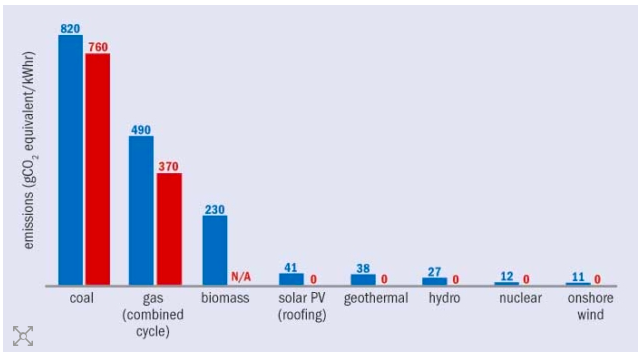
image 12

Nuclear power is not without significant disadvantages and risks that warrant consideration:

  • Safety concerns: Nuclear accidents like Chernobyl and Fukushima have demonstrated the catastrophic dangers of nuclear power when safety systems fail. In Indian context high population density, limited water resources and seismic instability in some regions amplify the risks and potential impacts of an accident should one occur..
  • Weapons proliferation: Nuclear technologies and by-products like plutonium can potentially enable weapons proliferation if misused or mishandled. India must ensure its ambitious nuclear plans strengthen oversight, safeguards and the civilian orientation of its programs to avoid enabling weapons ambitions in unstable regions. 
  • Costs: Although nuclear energy is inexpensive once operational, nuclear power plants are highly capital intensive to construct. Project cost overruns are common. Ex: Flamanville reactor in France is 10 years behind schedule and costs have tripled to $12.7 billion. High costs could deter investment into nuclear and benefit cheaper renewable sources. 
  • Waste disposal: Nuclear plants generate radioactive waste that remains dangerous for thousands of years and there are unresolved issues around waste storage and disposal. Any country pursuing nuclear must develop safe, long-term waste solutions to avoid contamination. 
  • Opportunity costs: Large investments into nuclear energy could divert funds and focus away from renewable sources like solar and wind which are quickly achieving cost parity, often better matched to grid needs, and do not have the same economic, safety or waste risks as nuclear. A balanced approach is needed.
  • Domestic capacity: India's nuclear ambitions depend heavily on foreign reactor designs, fuel sources and technical cooperation, especially from Russia and France. This dependence could compromise India's aim for energy self-sufficiency and technology leadership. Investing in education and R&D is needed. 

Recent technological developments have addressed some nuclear concerns, but not eliminated them entirely:

  • Safety: New reactor designs like advanced light water reactors and fast breeder reactors incorporate more passive safety features, lower meltdown risks and higher tolerance for human error or natural disasters. Ex: AP1000 reactors can withstand earthquakes, tsunamis and have a 72-hour backup system. However, severe accidents remain possible and the "fail-safe" nature of reactors is still debated. Strict regulatory oversight is still needed.
  • Proliferation: Technologies like laser enrichment reduce proliferation risks by making the enrichment process more difficult to replicate, while new fuel types like mixed oxide (MOX) fuel make plutonium more difficult to extract for weapons. However, determined groups could potentially overcome these barriers, indicating safeguards must still be actively pursued. 
  • Costs: Standardized reactor designs, modular components, and improved construction techniques aim to reduce costs through replication and learning curve impacts. Ex: Modular reactors could cost 50-70% less. However, nuclear remains capital intensive, projects often run over-budget, and reliable cost reductions remain uncertain - especially where subsidies or public funds are used.
  • Waste: New reprocessing techniques can recycle used nuclear fuel and recover usable uranium and plutonium. The recycled fuel can power advanced reactors, minimizing waste. India uses a plutonium-uranium extraction process. However, reprocessing still results in radioactive byproducts that require storage. And it can increase proliferation risks which must be addressed.
  • Renewable integration: Nuclear technology startups are developing smaller, more flexible reactors to complement intermittent renewable sources, providing low-carbon baseload when needed. Ex: NuScale's small modular reactors can balance loads. However, variable renewable costs are rapidly declining as technologies and coupled with storage, could potentially reduce need for large baseload capacity from nuclear. 
  • Domestic capacity: India has established domestic manufacturing capabilities for nuclear components like coolant pipes, centrifuges, and control mechanisms through partnerships between the NPCIL and private industry. India also has a well-developed nuclear fuel cycle, including facilities for mining, milling, conversion, enrichment, and fuel fabrication, as well as facilities for reprocessing spent nuclear fuel. India is also developing advanced nuclear technologies, such as fast breeder reactors and thorium-based reactors. However, India still imports key reactor components from Russia and France due to limited technical experience. Developing a robust domestic supply chain will take time.
CONCERNS OF NUCLEAR ENERGYTECHNOLOGICAL ADDRESS OF THE CONCERNS
Safety concernsNew reactor designs like advanced light water reactors and fast breeder reactors incorporate more passive safety features, lower meltdown risks and higher tolerance for human error or natural disasters
Weapons proliferationTechnologies like laser enrichment reduce proliferation risks by making the enrichment process more difficult to replicate, while new fuel types like mixed oxide (MOX) fuel make plutonium more difficult to extract for weapons
High CostsModular reactors could cost 50-70% less.
Waste disposalNew reprocessing techniques can recycle used nuclear fuel and minimize waste. Ex: Fast breeder reactors can generate more fuel than they consume.
Opportunity costsRenewable integration: Nuclear technology startups are developing smaller, more flexible reactors to complement intermittent renewable sources, providing low-carbon baseload when needed. Ex: NuScale's small modular reactors can balance loads.
Domestic capacityIndia also has a well-developed nuclear fuel cycle, including facilities for mining, milling, conversion, enrichment, and fuel fabrication, as well as facilities for reprocessing spent nuclear fuel. India is also developing advanced nuclear technologies, such as fast breeder reactors and thorium-based reactors.

So nuclear technology offers promise but no panacea. Its viability, costs and necessity in any country's energy mix depends on a comparison to all available options - and selection of the optimal diverse, balanced and sustainable supply with fair consideration of risks and benefits. An open and honest appraisal is still most prudent with any pursuit of nuclear power.

  • Energy security: India has a severe energy deficit and high dependence on coal, with over 70% of electricity generated from coal. Nuclear power provides energy security by diversifying fuel sources for electricity and reducing overreliance on any single source. Ex: France derives over 70% of its electricity from nuclear, ensuring stable supply.
  • Energy poverty: Energy poverty is a major challenge in India, with millions of people lacking access to basic energy services. Nuclear power can help address this challenge by providing a reliable and affordable source of energy to remote and underserved areas.
  • Low-carbon source: Unlike coal, nuclear power does not emit greenhouse gases and particulate pollution. It can help India meet its climate change mitigation goals under the Paris Agreement as a low-carbon source for base load power. Ex: Sweden aims to phase out fossil fuels in favor of nuclear and renewable energy for a carbon-neutral grid. 
  • Economic benefits: The nuclear power industry creates many jobs in research, reactors construction, and supporting sectors. Kudankulam nuclear plant in Tamil Nadu employs over 2000 people. Nuclear also reduces the need to import expensive fossil fuels. Operation of nuclear plants over 60-100 year lifetimes provide long-term economic value.
  • Energy independence: Domestically produced nuclear fuel reduces dependence on imported energy sources like coal, oil and natural gas - providing greater energy security and independence. India aims to develop its domestic uranium resources and thorium-based reactors. Ex: Canada's uranium mining industry employs over 60,000 people and sustains remote communities. 
  • Reliable: Nuclear power plants operate at over 90% capacity for most of their lifetimes, providing a constant and stable source of baseload power to grids regardless of weather conditions or time of day. Ex: South Korea generates about 30% of its power from nuclear, operating at over 95% capacity.     
  • Existing investments: India has invested heavily in nuclear energy, with 22 commercial reactors operating and 7 under construction. Kudankulam plant alone cost $6.7 billion. Scrapping nuclear prematurely would lead to loss of this investment and wasted capital that could have gained from the plants' operation over 60+ years. 
  • Advanced technologies: New nuclear technologies can strengthen the case for nuclear in India, including more advanced light water reactors, fast breeder reactors, and thorium-based reactors which use domestically available fuel sources.
  • Technological penetration: Development of nuclear reactors can drive technological progress in India through several mechanisms:
    • Materials science: Nuclear reactors require advanced materials that can withstand high temperatures, pressures and radiation over long periods. Progress in materials like zirconium alloys, graphite, and new ceramics has applications in other industries like aerospace, defense, and electronics. India aims to develop silicon carbide composites for future reactors.
    • Manufacturing: High-precision manufacturing techniques are needed to produce nuclear reactor components. Electron beam welding, 3D printing processes etc require technical skills that translate to other sectors. India's Make in India initiative aims to localize nuclear supply chains to support manufacturing growth.
    • Robotics: Nuclear reactors utilize robotics for inspection, maintenance and handling of radioactive materials. Developments in robotics, sensors and remote tooling have spin-off benefits for fields like space exploration, mining, and hazardous waste management. 
    • Sensors and monitoring: Nuclear reactors employ advanced sensors, detectors and real-time monitoring technologies to control processes, detect anomalies and prevent accidents. Technologies like optical spectroscopy, radiation mapping and ultrasonic transducers have medical, security and industrial applications. 
  • Fusion: Research in nuclear fusion aims to develop clean, abundant energy by replicating the processes of the sun on earth. Fusion programs push boundaries in areas like advanced electromagnets, plasma physics and high-heat materials that ultimately benefit sectors like space travel, computing, and accelerator science. India operates an experimental tokamak fusion device.

Asset Monetisation in Railways? [Benefits & Challenges]

Context: Indian Railways' is making efforts to enhance the use of its valuable lands near railway stations, the decision has been made to replace ageing, sparsely distributed buildings with multi-story structures. This initiative is a crucial component of their mission to transform major railway stations and their surrounding areas into vibrant urban centres.

About Asset Monetisation

  • This approach, often referred to as asset or capital recycling, involves unlocking the untapped potential of public assets that have been previously underutilised or unused. 
  • With a projected investment of ₹111 lakh crores from FY20 to FY25 as part of the National Infrastructure Pipeline (NIP), approximately 15-17% of this funding is expected to come from innovative strategies like asset monetization.
  • It's important to note that asset monetization is distinct from privatisation and asset slump sales. Instead, it represents a structured partnership with the private sector, governed by defined contractual frameworks.

Benefits

The benefits of asset monetization are manifold.

  • It allows for diversified resource mobilisation, providing long-term capital for substantial infrastructure development, which is especially critical in the post-Covid-19 economic recovery. 
  • Furthermore, it enhances financial leverage and overall value for both companies and governments with significant stakes in these assets. For instance, Indian Railways possesses 0.51 lakh hectares of vacant land assets that could be put to more productive use.
  • Efficiency gains are another advantage, with the private sector often delivering superior operational efficiencies for underutilised infrastructure assets. This is exemplified by non-core assets like residential buildings and office spaces with BSNL and MTNL.
  • Other benefits include sustained economic growth through improved infrastructure, generating employment opportunities, and enhancing overall quality of life through investments in core assets and social infrastructure such as schools and hospitals.

Challenges

  • Financial challenges include the need for a sustained and robust asset pipeline to attract investors, as well as identifying revenue streams and revenue transfer mechanisms for different infrastructure assets. There is also the concern that leasing public utilities to private investors could lead to higher prices for consumers.
  • Regulatory challenges encompass the absence of independent sectoral regulators with domain expertise, structural issues like legal uncertainty, and the absence of a robust bond market hindering private investment in infrastructure. Inefficient dispute resolution mechanisms are also a hindrance.
  • Other challenges involve the reluctance of states to participate despite holding substantial assets, uncertainties posed by factors like Covid-19, climate-related disasters, and economic transformation during Industrial Revolution 4.0, as well as concerns about political influence and corruption.

Way Forward

  • The National Monetization Pipeline (NMP) with sector-specific plans has been introduced to assist the private sector in planning their fundraising for brownfield asset inventory with potential financing opportunities. 
  • Additional steps include building the capacity and expertise of public authorities, ensuring systematic and transparent asset allocation, working closely with states to leverage assets for resource mobilisation, and developing robust brownfield models and frameworks. 
  • Flexibility in contracts, strong dispute resolution mechanisms, and innovative regulatory frameworks such as InvITs and REITs are recommended to encourage participation from various investor classes, including global pension funds, sovereign wealth funds, and retail investors, similar to the successful model of POWERGRID Infrastructure Investment Trust (PGInvIT).

Ensembles of Hoysalas inscribed on UNESCO world heritage list

Context: During the 45th session of the World Heritage Committee in Riyadh, Saudi Arabia, ‘the Sacred Ensembles of the Hoysalas,’ encompassing three temples located in Karnataka, have been added to UNESCO's World Heritage List.

More about the news:

  • The Hoysala Temples, now mark India's 42nd UNESCO World Heritage Site.
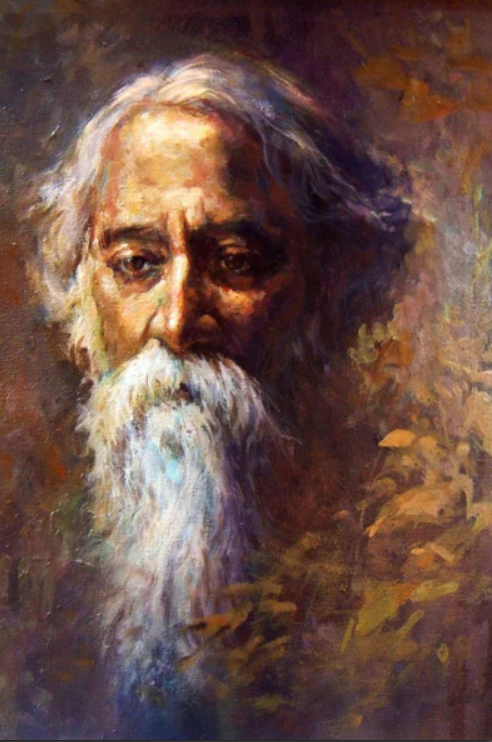
  • In addition to this, Rabindranath Tagore's Santiniketan, a university town in West Bengal, was also granted world heritage status.
  • The Archaeological Survey of India (ASI) revealed that India had submitted the nomination dossier for, ‘the Sacred Ensembles of the Hoysalas to the World Heritage Centre in January 2022,’ and the site had been on UNESCO's tentative list since 2014.

Hoysala Temples

Hoysala Temples
  • The Hoysala Temples, constructed during the 12th and 13th centuries by the Hoysala kings, are dedicated to deities Shiva and Vishnu.
  • Chennakeshava temple, situated at the heart of Belur (Hassan district) within a traditional settlement surrounded by the remnants of a mud fort and a moat.
  • Hoysaleswara Temple is located on the banks of Dwarasamudra tank in Halebidu (Hassan district), a town featuring numerous protected and unprotected temples, archaeological ruins, and mounds.
  • Keshava Temple stands at the centre of Somanathapura village (Mysore district).

About Belur Chennakeshava Temple Complex: 

Belur Chennakeshava Temple
  • Chennakeshava Temple Complex, is situated along the banks of the Yagachi River. 
  • This remarkable complex is ingeniously designed within a rectangular layout. Encircled by four straight streets, this layout facilitates the traditional ritual circumambulation of the deity, offering devotees an immersive religious experience.
  • In a remarkable display of dedication and craftsmanship, construction of the Chennakeshava Temple commenced in the year 1117 AD.
  • The temple is dedicated to Lord Vishnu, a central deity in Hinduism. It serves as a sacred haven for devotees seeking solace and spiritual connection with the divine.
  • One of the most captivating features of the Chennakeshava Temple is its richly sculptured exterior. These intricate carvings narrate compelling stories from the life of Lord Vishnu, his divine incarnations, and the epic narratives of the Ramayana and Mahabharata.
  • Interestingly, among these depictions, there are also representations of Lord Shiva, showcasing a harmonious coexistence of deities within the Hindu pantheon.
  • Chennakeshava Temple has been a centre of uninterrupted worship since its establishment. It continues to thrive as a vibrant hub of devotion and remains a pilgrimage site for Vaishnavite devotes seeking spiritual fulfillment.

About Hoysaleshwar Temple of Halebid: 

  • Halebid, formerly known as Dorasamudhra, emerged as the capital of the Hoysala empire at the zenith of its power. This transition marked a pivotal moment in the region's history, and at the heart of Halebid stands the Hoysaleshwara Temple. 
  • Constructed in the year 1121 CE during the reign of King Vishnuvardhana Hoysaleshwara, this temple stands as a testament to the artistic prowess and devotion of the Hoysala dynasty.
  • The Hoysaleshwara Temple is dedicated to Lord Shiva, a principal deity in Hinduism. It serves as a place of worship and reverence for both locals and pilgrims, drawing them into its sacred embrace.
  • This architectural marvel was made possible through the collective efforts of the affluent citizens and merchants of Dorasamudra. Their patronage and financial support enabled the temple's construction, exemplifying the community's deep-rooted faith and commitment to their religious beliefs.
  • What truly sets the Hoysaleshwara Temple apart are the more than 240 exquisite wall sculptures that adorn its outer walls. These intricate carvings narrate captivating stories from Hindu mythology and historical events. 
  • Halebid extends its cultural heritage beyond the Hoysaleshwara Temple. Within the walled complex, one can discover three Jaina basadi (temples) dating back to the Hoysala period. These temples serve as a testament to the religious diversity and harmonious coexistence of different faiths in the region. Additionally, a stepped well adds to the historical significance of the site, reflecting the ingenious engineering achievements of the time.
About Hoysaleshwar Temple of Halebid

About Kesava Temple of Somnathpur: 

  • The Kesava Temple is a veritable masterpiece, boasting a mesmerizing Trikuta architecture. It is dedicated to Lord Krishna in three distinct forms: Janardhana, Keshava, and Venugopala. This trifecta of deities embodies various facets of the divine and provides a multifaceted spiritual experience for visitors.
  • Each intricately carved figure and ornament is a testament to the devotion and craftsmanship of the artisans of that era.

The Hoysala Empire: A Comprehensive Overview: 

The Hoysala Empire, a prominent Kannadiga dynasty originating from the Indian subcontinent, held dominion over a significant part of present-day Karnataka during the span of the 10th to the 14th centuries. This period was marked by remarkable achievements in art, architecture, and religion. In this elaboration, we delve into the various facets of the Hoysala Empire, from its geographic expansion to its cultural contributions.

1. Geographic Expansion

  • The Hoysala Empire was initially established in the landscapes of Malenadu, a region nestled within the Western Ghats.
  • However, the 12th century saw the Hoysalas capitalizing on the internal strife between the Western Chalukya Empire and the Kalachuris of Kalyani.
  • This opportunistic maneuver allowed them to annex territories in present-day Karnataka and the fertile regions north of the Kaveri delta, now part of Tamil Nadu
  • By the 13th century, their dominion extended to encompass most of Karnataka, substantial portions of northwestern Tamil Nadu, and segments of western Andhra Pradesh within the Deccan Plateau.

2. Political History:

  • Initially, the Hoysalas were vassals or feudatories of the Chalukyas of Kalyani.
  • Their capital was situated in Dwarasamudra (Halebeedu). The dynasty's inception was credited to Sala, and his successors included Vinayaditya and Balalla I.
  • However, the zenith of Hoysala power came under the reign of Vishnuvardhana, also known as Bittideva.
  • Vishnuvardhana's remarkable military acumen was highlighted by his decisive victory over the Cholas in the Battle of Talakadu, earning him the title "Talkadugonda."
  • In commemoration of this triumph, he commissioned the construction of the Kirtinarayana Temple in Talakadu and the Chennakesava Temple in Beluru.

3. Religious Patronage:

  • The Hoysalas were renowned patrons of Shaivism, Vaishnavism, and Jainism. 
  • Vishnuvardhana himself converted to Srivaishnavism under the influence of Sri Ramanujacharya, who settled in Melukote, Karnataka.

4. Literary Contributions:

  • The Hoysala era witnessed a flourishing of literature in both Kannada and Sanskrit.
  • Notable literary works from this period include "Harihara" and "Raghavanka's Harishchandracharite" in Kannada, as well as "Nemichandra's Leelavati Prabhanda" in Sanskrit.

Evolution of Hoysala Architecture: From Inception to Flourishing Style: 

  • The Vesara style, from its nascent stage under the patronage of the Badami Chalukyas in the 7th century, it matured during the Western Chalukya era in the 11th century.
  • However, it reached its zenith as an independent and distinct style during the reign of the Hoysalas in the 13th century.

1. The Temple-Centric Hoysalas

  • The Hoysala rulers were renowned for their prolific temple construction. Their architectural style is often described as "temple-centric," reflecting their deep devotion to Hindu deities such as Lord Shiva, Lord Vishnu, and various manifestations of the Goddess.

2. Star-Shaped Ground Plans

  • One of the hallmark features of Hoysala architecture is the star-shaped ground plan (known as Stellate plan) employed in many of their temples, although staggered square plans are sometimes observed. 
  • The temples were erected on a raised platform called Jagati, which stood at approximately 1 meter in height.
  • These temples exhibit a symmetrical arrangement of multiple shrines and the walls and staircases of the temple followed a zigzag pattern.

3. Soapstone as the Primary Building Material

  • The Hoysalas favoured soapstone (chloritic schist) as their primary construction material. 
  • This soft stone allowed for exquisite carving and intricate detailing, enabling the creation of the elaborate sculptures and motifs that adorn the temples.

4. Intricate Carvings

  • These intricate sculptures grace nearly every surface of the temples, depicting scenes from Hindu mythology, celestial beings, deities, animals, and intricate geometric patterns. 
  • Prominently featured are various forms of Lord Vishnu, especially Chennakesava, and Lord Shiva.

Let us look at some of the distinctive architectural elements: 

  • Makartorana: This feature leads to the mantapa of the temples, adorned with sculpted images of Makara in lintel form overhead.
  • Mantapa: Hoysala temples incorporate both open (outer mantapa) and closed mantapa (inner mantapa), with highly ornate ceilings bearing mythological figures and floral designs.
  • Pillars: Circular pillars in the mantapas of Hoysala temples are a common sight, each featuring four brackets at the top adorned with sculpted figures.
  • Cella (Vimana): Vimanas in Hoysala temples are plain on the inside but profusely elaborated on the outside.
  • Shrine: Hoysala temples are classified based on the number of shrines, such as ekakuta (one shrine) or dvikuta (two shrines).
  • Development of Kalasa: A characteristic feature of Hoysala temple towers is the vase-shaped water pot placed atop.
  • Salabhanjika: These mythical female figures, with stylized feminine attributes, are found in four brackets on top of the pillars and on each side of the makartorana.
  • Kirtimukh: The figure of kirtimukh often embellishes the vimana of certain Hoysala temples.
  • Mythical Presentation: Hoysala art excels in presenting Hindu mythology through sculpted and architectural forms. Scenes from the Ramayana, Mahabharata, and Puranas intricately adorn temple walls.
  • Erotica: Some temples feature erotic sculptures, influenced by the prevailing Sakta tradition.
  • Influence of Chola and Chalukya Art:
    • For instance, the "Sthambha buttalikas" pillar image in Hoysala art exhibits influences from Chola and Chalukya artistic traditions.
    • A notable example of Chola influence can be seen in the image of Mohini on one of the pillars in the Chennakeshava temple, seamlessly integrated into Hoysala artistry.

Also: Information about UNESCO World Heritage Sites

Hoysala architecture represents a captivating chapter in the history of Indian art and temple construction. Its evolution, from its nascent stages to the mature and distinctive style that emerged under Hoysala rule, showcases a profound commitment to temple-centric design, intricate carvings, and a fusion of artistic influences.


Santiniketan finds its place on UNESCO’s World Heritage List

Context: The town of Santiniketan, founded by the renowned Nobel laureate Rabindranath Tagore, has now earned a place on the UNESCO World Heritage List. Located in West Bengal's Birbhum district, Santiniketan, which translates to "abode of peace," began its journey in 1901 and stands as the very place where Tagore laid the foundations of Visva-Bharati University. 

More About the news:

  • The Culture Ministry, in its proposal to UNESCO for Santiniketan's inclusion on the World Heritage List, emphasized that this place represents a significant exchange of human values. 
  • It has played a pivotal role in the development of architecture, technology, monumental arts, town planning, and landscape design within a cultural area of global importance.
  • Efforts to secure Santiniketan's place on the UNESCO World Heritage List have been ongoing since 2010. 
  • The latest proposal for its nomination began in the financial year 2020-21.
  • ASI has been diligently working on the restoration of various structures in the vicinity of Santiniketan in recent years.
image 61

Exploring the Legacy of Santiniketan:

An Abode of Peace and Knowledge

  • Santiniketan was originally called Bhubandanga, after the name of the village where it was located.
  • The town of Santiniketan was founded by Maharshi Devendranath Tagore, the father of Rabindranath Tagore, who was a Bengali philosopher, polymath, and the first non-European to win the Nobel Prize in Literature.
  • Maharshi Devendranath Tagore was a follower of the Brahmo Samaj, a Hindu reform movement that emphasized the worship of one supreme God and the importance of education and social reform.
  • In 1863, Maharshi Devendranath Tagore purchased a large piece of land in Bhubandanga, which he renamed Santiniketan, meaning “abode of peace.” He established an ashram, or spiritual retreat, on the land and started to teach his students about the principles of the Brahmo Samaj, as well as the importance of nature and simplicity.
  • Debendranath built a 60-foot by 30-foot glass structure for Brahmo prayers, inspired by the Crystal Palace in London, under a chhatim tree where he used to meditate.
  • In 1888, Debendranath dedicated the property to establish a Brahmavidyalaya through a trust deed.
  • In 1901, Rabindranath started a Brahmacharyaashrama, which became known as Patha Bhavana in 1925.
  • In 1921, Rabindranath Tagore founded Visva Bharati. Visva-Bharati University was later expanded to include a wide range of disciplines, including arts, sciences, and humanities. It became a Central University and an Institution of National Importance in 1951, and is now one of the most prestigious universities in India.
  • Rabindranath Tagore also established several other cultural institutions in Santiniketan, including the Kala Bhavan, a school of fine arts, and the Sangit Bhavan, a music school.
  • Santiniketan became a hub of cultural and intellectual activity, attracting scholars and artists from around the world. It was also a centre of resistance during India’s struggle for independence, with many of its students and faculty participating in the freedom movement.

Why did Rabindranath Tagore establish Shantiniketan? 

  • Vision: Creating an educational institution that would be in harmony with nature, allowing students to better understand the topics they were learning and to create a place of learning that transcended religious and regional barriers.
  • Principles: Ancient Indian Gurukul system, where education was provided in a natural setting, fostering a strong connection between students and their environment.
  • Santiniketan, derived from the Sanskrit words, “shanti” (meaning peace or tranquility) and “niketan” (meaning abode or residence), translates to “abode of peace.”

Phases of development: 

  • Late 19th Century: 1895 Onwards: 
    • The earliest phase of development at Santiniketan saw the construction of significant structures such as the Ashram, Santiniketan Griha, Upasana Mandir, and the Prayer Hall, which hold great historical value.
    • The site of Chhatimtala, where Maharishi Debendranath Tagore meditated under the chhatim trees, remains critical to the integrity and authenticity of this phase.
    • The structures have retained their originality and authenticity and have been restored recently by the Archaeological Survey of India.
  • Rabindranath Tagore: 1901-1941:
    • In 1901, Rabindranath Tagore established Santiniketan with a vision of promoting unity among people of different cultures worldwide.
    • Visva Bharti: Its multifaceted approach included providing education to children, nurturing a love for nature, using music and arts to foster emotional development, engaging in social work to help neighbouring villages, promoting rural development through Sriniketan, and conducting research on philosophy and cultures. The centre was established with the objective of eradicating not only poverty of the mind but also material poverty in India.
    • Tagore believed that learning could not be achieved by simply locking oneself up in a classroom. As an artist, he believed that freeing one’s mind was crucial to the learning process. Consequently, the concept of open-air classrooms emerged. 
    • Tagore believed in the convergence of two distinct chains of thought, the traditional beliefs of the East and the progressive ideologies of the West. As a result, the university has welcomed many international faculty members who have contributed to fulfilling his vision.
  • Rathindranath Tagore: 1941-1952:
    • After the death of Gurudev Rabindranath Tagore, his son Rathindranath took over the mantle of his father at Santiniketan. 
    • This period ends with the formulation of Visva Bharati as a national level university under an Act of Parliament.
    • Under Rathindranath, Santiniketan continued the four-fold vision of Rabindranath Tagore: 
    • Rabindranath Tagore had envisaged a fourfold plan for the development of Santiniketan- Santiniketan School (1901); Integration of fine art and music to academics (Kala Bhavan and Sangeet Bhavan 1919-1920); Rural reconstruction experiment (1922 Sriniketan); Establish cultural relation between Hindvi cultures with other eastern cultures and relations between eastern and western cultures.
    • This fourfold plan has been adopted and implemented to date even after Santiniketan acquired the status of the University in 1951.

Santiniketan and Sriniketan both form a part of the Visva Bharti campus under the jurisdiction of the University which alone forms it governing body which still keeps intact its originally intended use and function. This authoritative body is responsible for maintenance and management of the site as well as heritage conservation and its related issues.

8TYvuQWtxb

About Rabindranath Tagore: 

  • Rabindranath Tagore’s diverse talents encompassed poetry, prose, music composition, and painting.
  • Within literary circles, he was celebrated under the titles "Bhanu Singha Thakur," while his admirers affectionately referred to him as 'Gurudev,' 'Kabiguru,' and 'Vishwakavi.'

Contributions to Literature and Art

  • Tagore's indelible mark on Bengali literature, music, and Indian art is undeniable. His artistic innovations reshaped these creative domains, breathing new life into them.
  • In a historic achievement, Tagore became the inaugural non-European laureate of the Nobel Prize in Literature in 1913, an accolade bestowed upon him for his literary masterpiece-Gitanjali. 
  • Moreover, his literary prowess extended to composing the national anthems of both India and Bangladesh.

Educational Vision

  • Rejecting the conventional rote pedagogy of his time, Tagore harboured a visionary educational philosophy.
  • His ideals bore fruit in the form of Visva-Bharati University, an institution that stood as a testament to his innovative thinking. Building upon the foundation laid by his father at the Santiniketan Ashram, Tagore expanded this educational complex.
  • What set it apart was its distinct curriculum, designed to keep students well-informed about the evolving political, social, and environmental landscape of the nation.

Social Reform

  • Tagore harnessed the power of literature to galvanize people towards political and social reform.
  • His literary works served as potent instruments of protest against the prevailing Brahmanical social order, the caste system, narrow sectarianism, untouchability, and animal sacrifice.

Economic Endeavours

  • In 1921, Tagore joined forces with agricultural economist Leonard Elmhirst to establish the "Institute for Rural Reconstruction," later renamed. 
  • He advocated vigorously for the expansion of small-scale cottage industries in rural areas, aiming to infuse vitality into the rural economy by leveraging local resources.

Influence on the Freedom Struggle and Partition of Bengal

  • His composition, "Banglar Mati Banglar Jol" (Soil of Bengal, Water of Bengal), served as a unifying anthem for the Bengali population.
  • Moreover, he initiated the Rakhi Utsav, a festival where individuals from Hindu and Muslim communities exchanged colourful threads as a symbol of unity and self-reliance against oppression.

A Powerful Protest: Jallianwala Bagh Massacre

  • In 1915 he was awarded knighthood by the British King George V. In 1919, following the Jallianwalla Bagh massacre, he renounced his Knighthood.

Vision on Nationalism: 

  • He held a sceptical view, asserting that the term "nationalism" was inherently tied to the concept of the nation-state, which, in his eyes, was essentially an embodiment of Western ideals rooted in capitalism and mechanization.
  • According to Tagore, these ideals clashed fundamentally with the rich tapestry of Indian tradition, characterized by values such as self-autonomy, pluralism, and religious tolerance. 
  • Central to his belief system was the notion that true nationalism should not transcend the broader scope of humanity itself.
  • Some historical myths have suggested that he composed the Indian national anthem, "Jan Gan Man," as a tribute to British Prince George V during the 1911 Delhi Durbar, hosted by Lord Hardinge II. These misconceptions have sometimes led to questions about his patriotism and commitment to Indian nationalism.
  • In reality, Tagore was an ardent patriot who cherished India's ancestral culture and philosophy. Although he pursued higher education in Britain, he returned home without completing his studies.
  • In national anthem, he aimed to emphasize that ultimate sovereignty rested with the people of India, as symbolized by "Jan Gana Man." 
  • Tagore, while occasionally critical of Mahatma Gandhi, was the one who referred to him as "Mahatma." He demonstrated his love for Indian soil, particularly Bengal, while also holding a deep affection for its people.
  • He regarded nationalism as a psychological concept wherein all individuals bound by common principles constituted the elements of a nation. Consequently, nationalism had to coexist in harmony with humanism.
  • Like other utilitarian scholars of his time, Tagore denounced international warfare. He openly criticized forms of patriotism and nationalism that compromised human values, especially after the devastating First World War. 
  • In the 20th century, when British policy sought to divide and rule by partitioning Bengal to quell emerging nationalism, Tagore vehemently opposed this move. He recognized that the primary objective of Bengal's partition was to instigate communal violence.
  • During the 1905 unrest, he actively worked to foster Hindu-Muslim unity through patriotic songs like "Banglar Maati Banglar Jol" (Earth of Bengal, Water of Bengal).
  • In a letter to his friend A. M. Bose, Tagore made it clear that patriotism should never be the ultimate goal or spiritual refuge.
  • He vowed not to compromise the priceless value of humanity for the sake of patriotism. Gandhi, who crossed paths with Tagore in 1921 in Calcutta, was cautioned by Tagore about the fine line separating nationalism from xenophobia.
  • Gandhi, in response to Tagore's criticism, acknowledged that the poet inhabited a world of his own creation, a world of ideas.

About UNESCO World Heritage Sites: 

World Heritage Sites are exceptional cultural and/or natural locations recognized for their outstanding universal value, as designated by the World Heritage Committee. They stand as exemplars of the world's most significant cultural and natural heritage.

World Heritage Convention: 

  • Recognizing the importance of certain places, UNESCO's General Conference adopted the World Heritage Convention in 1972. This convention harmoniously combines the preservation of both natural and cultural sites.
  • Nations adhering to this convention form an international community committed to safeguarding these unique sites.
  • In 1994, the World Heritage Committee adopted a Global Strategy to promote a balanced and representative World Heritage List, ensuring underrepresented regions and categories are included.

How Sites are Chosen:

  • Countries that sign the World Heritage Convention pledge to protect their cultural and natural treasures and become state parties.
  • State parties create a list of potential sites from which they nominate candidates for inclusion on the World Heritage List.
  • Nominations, accompanied by comprehensive conservation plans, are submitted to the UNESCO World Heritage Centre.
  • Outstanding Universal Value (OUV): OUV is a fundamental criterion for World Heritage Site status. Exceptional, unparalleled sites with global significance are deemed outstanding properties.

The Roles of UNESCO and Advisory Bodies UNESCO World Heritage Centre

  • The UNESCO World Heritage Centre offers support for the nomination process, including documentation and formatting.
  • After reviewing the submitted documents, it forwards them to advisory bodies.

Advisory Bodies: Technical Expertise: 

Three advisory bodies provide technical input on nominations:

  • International Council on Monuments and Sites (ICOMOS)
  • World Conservation Union (IUCN)
  • International Centre for Study of The Preservation and Restoration of Cultural Property (ICCROM)

The Decision-Making Body: World Heritage Committee:

  • Comprising 21 members elected for six-year terms, the World Heritage Committee is chosen by the General Assembly.
  • The committee annually determines which sites will be inscribed on the World Heritage List. 

Criteria for Outstanding Universal Value (OUV)

  • OUV must reflect a masterpiece of human creativity.
  • It should depict the exchange of cultural values across generations.
  • Testimony to unique traditions, cultures, or civilizations is crucial.
  • Architectural ensembles, landscapes, and other built elements may contribute.
  • Sites can illustrate the interaction between humans and the environment.
  • Areas of extraordinary natural beauty are eligible.
  • Sites can also testify to Earth's geological history.

The World Heritage Fund:

This fund offers financial support to state parties, drawing contributions from both private donors and state parties. It aids in:

  • Preparatory assistance for property nominations and management plans.
  • Training assistance for personnel.
  • Technical cooperation, providing expertise and material support.
  • Emergency assistance for damage caused by natural disasters or human activities.
  • Promotional and educational assistance to raise awareness.

India i.e Bharat: In diverse India, name change demands consensus

Context: An official invitation for the G-20 summit in New Delhi, during India's presidency, referred to the President of India as the 'President of Bharat.' This incident has become emblematic of the current political climate marked by deep-seated mutual distrust, unexplained vindictiveness among those in power, and a heightened sense of reclaiming lost territory.

About the News: 

  • Surprisingly, the government's official representatives have not provided any clarification regarding this abrupt alteration.
  • This unexpected modification in a highly formal communication originating from the country's highest office caught the nation completely off guard.
  • Supporters of the ruling authorities have put forth the argument that the name 'Bharat' is interchangeable with 'India,' as stated in Article 1 of the Constitution.
  • Consequently, they contend that 'Bharat' can be legitimately used.
  • It is important to note that Parliament holds the absolute authority to change the country's name by amending the Constitution, a power enshrined in Article 368. This amendment authority extends to all aspects of the Constitution, including the country's designation, as specified in Article 1.

Potential for Confusion:

image 60

India's official name is the Republic of India, a designation used consistently in all official communications with foreign countries and international organizations. Agreements and treaties signed with foreign nations bear the name of the Republic of India, not the Republic of Bharat.

  • The interchangeability of 'Bharat' with 'India' in official communication can give rise to significant confusion. Foreign governments and international bodies rely on clarity and consistency in official documents. Mixing 'India' and 'Bharat' in agreements can lead to foreign governments encountering discrepancies. In some agreements, India would be referred to as the Republic of India, while in others, it might be mentioned as the Republic of Bharat.
  • A nation can possess only one official name. This means that it must be either 'India' or 'Bharat,' but not both. Clarity in nomenclature is crucial, especially in the realm of international diplomacy and legal commitments.

In 2015, Centre opposed a name change, stating that the issue had been extensively deliberated upon during the Constitution's drafting. The Supreme Court has twice rejected pleas to rename 'India' to 'Bharat', once in 2016 and then in 2020, reaffirming that "Bharat" and "India" both find mention in the Constitution.

'India' and 'Bharat' in Constitutional Discourse: 

The Indian Constitution, in Article 1, recognizes both names as integral to the identity of the nation. 

The Name 'Bharat': 

  • 'Bharat' traces its origins to ancient Indian texts, notably the Puranic literature and the epic Mahabharata. The latter references the legendary king Bharata, celebrated for his role in the epic and as a symbol of unity.
  • 'Bharat' signifies a supra-regional and subcontinental territory united by the Brahmanical societal framework, emphasizing a united cultural and religious identity transcending regional boundaries.
  • Closely linked to the legendary King Bharata, 'Bharat' is associated with the Rig Vedic tribe of the Bharatas. King Bharata's lineage connects to various Indian communities, underscoring a shared ancestry and heritage.
  • In the Hindi language, 'Bharat' serves as the official name of India, as affirmed by Article 1 of the Indian Constitution.

The Name 'India': 

  • India' has its historical roots in the term 'Indus,' originally referring to the Indus River. Over time, linguistic transformations led to the Persianized version 'Hindu.'
  • 'Hindu' evolved into 'Hindustan,' signifying the 'Land of the Hindus' beyond the Indus River, encompassing much of the Indian subcontinent.
  • 'Hindustan' was employed by various ancient civilizations, including Persians, Greeks, and Islamic empires, to describe the vast subcontinental territory, highlighting its geographical expanse and cultural diversity.
  • During the European Age of Exploration, 'India' was adopted as the name for the subcontinent, reinforced during the British colonial era when it became the official name for British-ruled territories.
  • Post-independence, 'India' retained its status as the official name of the newly formed nation, as declared in the Indian Constitution.

The Indian Constitution: 

  • Before India's independence in 1947, the Indian subcontinent was divided into British India and numerous princely states, each ruled by its own monarch. After gaining independence, the challenge was to integrate these diverse regions into a united and sovereign nation.
  • During the Constitution's drafting, there was significant debate over which name to use. Some opposed 'India' due to its colonial connotations and advocated for a name with deeper indigenous roots. 'Bharat' held historical and cultural significance, symbolizing a united identity and indigenous heritage.
  • The framers of the Indian Constitution recognized the cultural and historical diversity of the nation. They sought to bridge linguistic and cultural differences by acknowledging both 'Bharat' and 'India.' This inclusive approach aimed to unify the nation while respecting its rich heritage.
  • A compromise was reached, resulting in Article 1 reading, "India, that is Bharat, shall be a Union of States," accommodating both names to symbolize unity in diversity.
  • This dual nomenclature in the Constitution reflects India's diverse linguistic, cultural, and historical backgrounds, promoting a shared national identity and inclusivity.

Constitutional intricacies of matter: 

1. Article 52: According to Article 52 of the Indian Constitution, there is a provision for a 'President of India.' This official nomenclature is fundamental and legally binding, and any alteration of this title would necessitate a constitutional amendment.

2. Article 1: India, that is Bharat

  • Article 1 of the Indian Constitution holds paramount importance as it deals with the name and territorial jurisdiction of India.
  • It declares India as a federation of states and outlines the territories that constitute India. 
  • Furthermore, it grants the Parliament the authority to admit new states or modify existing ones.
  • Key Provisions: 
    • Admission or Establishment of New States: Article 1 empowers the Parliament to admit new states into the Union or create new states. This provision has been utilized multiple times in India's history for administrative or linguistic reasons, resulting in the formation of states like Telangana and Uttarakhand.
    • Formation of Union Territories: In addition to new states, Article 1 allows for the creation of Union Territories, which are regions directly governed by the central government. This provision has been used to designate areas like Chandigarh and Lakshadweep as Union Territories.
    • Alteration of Boundaries: Article 1 also permits the alteration of state boundaries through constitutional amendments, enabling adjustments to address regional concerns or state reorganizations.
    • Names and Boundaries: Detailed names and boundaries of states and Union Territories are not specified in the Constitution but are determined by laws enacted by Parliament. This flexibility allows for adjustments as needed without requiring constitutional amendments.

3. Article 394A: 

Article 394A (2) stipulates that "the translation of this Constitution…shall be construed to have the same meaning as the original thereof." This clause reinforces a fundamental point: 'Bharat' is a translation of the word 'India' as used in the original Constitution. Until legally altered, 'India' remains the authentic name of the country.

  • Article 394A of the Indian Constitution addresses the authoritative text in the Hindi language. 
  • It outlines the President's responsibility to publish a translation of the Constitution in Hindi. 
  • This translation, signed by the members of the Constituent Assembly, aims to align with the language, style, and terminology used in the authoritative texts of Central Acts in Hindi. 
  • Furthermore, it incorporates all amendments made to the Constitution before publication.
  • Article 394A (2) emphasizes that the translation, along with any amendments, should be construed to have the same meaning as the original Constitution. In cases where interpreting certain parts of the translation poses challenges, the President is tasked with revising it suitably.
  • The translation published under Article 394A carries the authority of being the official text in the Hindi language. This means that it serves as a reference for understanding the Constitution in Hindi-speaking regions.

Let use also understand the, Constitutional Amendment Process in India as per Article 368 mentioned in the News: 

  • Amending the Constitution of India is a meticulous process aimed at making alterations to the nation's fundamental law, the supreme law that governs the country.
  • This process is detailed in Part XX (Article 368) of the Indian Constitution.
  • The primary objective of this procedure is to uphold the sanctity of the Constitution and act as a check on the arbitrary exercise of power by the Parliament of India.
  • The concept of amending the Indian Constitution was borrowed from the South African constitution, reflecting a global perspective on constitutional evolution.
  • In the Keshavananda Bharati Judgment, Supreme Court established that Parliament cannot amend parts of the Constitution that are considered part of the 'Basic Structure' of the constitution. This ruling ensures that certain core principles remain inviolable.

The Amendment Process: Article 368 in Part XX of the Constitution empowers the Parliament to amend the Constitution. However, it comes with significant constraints to safeguard the fundamental principles.

Types of Amendments

  • Simple Majority: This amendment type requires the support of more than 50% of the members present and voting in both houses of Parliament.
  • Special Majority: To pass an amendment under this category, a bill must be supported by a majority of two-thirds of the members present and voting, along with over 50% of the total strength of the House.
  • Special Majority of Parliament and Consent of States: This complex form of amendment is necessary when changes impact federal structures. In addition to special majority approval in both houses of Parliament, it also necessitates the consent of half of the state legislatures by a simple majority.
  • Absolute Majority: For certain amendments, a bill must receive the approval of more than 50% of the total strength of the house.

The Detailed Amendment Procedure

  • Initiation of Amendment: An amendment can be proposed only by introducing a bill in either house of Parliament. This bill can be initiated by a minister or a private member and does not require the President's permission.
  • Special Majority Approval: The bill must be passed in each house by a special majority, which entails approval by the majority of the total membership and by two-thirds of the members present and voting.
  • State Legislature Ratification: If the amendment seeks to modify constitutional provisions, it must be ratified by the legislatures of half of the states through a simple majority.
  • Presidential Assent: After both houses approve the bill, it is presented to the President for assent. The President is obligated to grant assent without the option to withhold approval or send the bill back for reconsideration.
  • Becoming an Act: Once the President grants assent, the bill becomes an act, solidifying the constitutional change.

Read also: Changing the Name of a State

The dual identity of 'India' and 'Bharat' in the Indian Constitution is a testament to the nation's rich cultural and historical heritage. This compromise allows people from diverse linguistic backgrounds to identify with the country using their preferred name, fostering inclusivity and unity. The debate over these names underscores the complexity of India's identity and the importance of embracing its multifaceted historical and cultural roots.

The Registration of Births and Deaths (Amendment) Act, 2023

Context: The Registration of Births and Deaths (Amendment) Act, 2023 Birth certificate Act to come into force from October 1. An Act amend the Registration of Births and Deaths Act, 1969.

About the Registration of Births and Deaths (Amendment) Act, 2023

  • Birth Certificates will be considered as single document for availing several crucial services including admission to an educational institution, issuance of a driving licence, preparation of voter list, Aadhaar number, registration of marriage, appointment to a government job etc.
  • Create a database of registered births and deaths, which would eventually ensure the efficient and transparent delivery of public services, social benefits, and digital registration.

Features of this act

  • The Act grants the Registrar General of India authority to oversee a national registry of births and deaths. Chief Registrars (appointed by states) and Registrars(appointed by states for local areas) will be obligated to contribute data to this national database, while Chief Registrars maintain similar databases at the state level.
  • Earlier, there was a requirement for certain persons to report births and deaths to the Registrar.
  • Earlier, the medical officer in charge of a hospital where a baby is born must report the birth. Moreover, the Aadhaar number of the parents and the informant needs to be provided. The rule also applies to births in a jail, a hotel or a lodge. Under this act, the jailor and the hotel manager need to provide all the relevant information. 
  • The list has been further expanded and will now include adoptive parents for non-institutional adoption, biological parents for births through surrogacy, and the parent in case of birth of a child to a single parent or unwed mother.
  • Allows sharing of the national database with authorized authorities like population registers, electoral rolls, and others, subject to central government approval. Similarly, state databases can be shared with state-approved authorities.
  • Any person aggrieved by any action or order of the Registrar or District Registrar may appeal to the District Registrar or Chief Registrar respectively. Such an appeal must be made within 30 days of such action or order receipt. The District Registrar or Chief Registrar must give their decision within 90 days from the date of appeal.
  • The centralized database will also update the National Population Register (NPR), population registers, electoral rolls, ration card records, and other national databases as notified. The central government must approve any use of the national database.
  • It will be compulsory for States to register births and deaths on the Centre’s Civil Registration System (CRS) portal and share data with the RGI.
  • It makes it mandatory for all medical institutions to provide a certificate as to the cause of death to the registrar and a copy of the same to the nearest relative.

Significance of this act

  • Improve public services' efficiency and transparency and delivery of social benefits through digital registration.
  • Curb duplication and errors in the nation’s present databases.
  • It will also give a clear picture of population figures in real-time.

Concerns associated with this act

  • The national database for births and deaths will be shared with authorities maintaining other databases, but such sharing without a person's consent violates one's Right to Privacy (KS Puttaswamy case).
  • Without a birth certificate, people may face difficulties voting, getting an education, getting married, or applying for government jobs. There may be instances where a child’s birth was registered but they ran away from home, or lost their parents in a natural disaster.If such a child wants to enrol in school, determining their age may be difficult.
  • Can be misused to target and label diverse or non-conforming populations, raising concerns about the emergence of a surveillance state.
  • Although all states are mandated to utilize the Civil Registration System (CRS) overseen by the Registrar General of India (RGI) for issuing birth and death certificates, some states have developed their own applications for this purpose.

Civil Registration System (CRS):

Popularly known as birth and death registration system, is the recording of vital events i.e., Birth, Death & Still Birth under the statutory provisions on continuous and permanent basis.

CRS falls under the Concurrent list of the Constitution of India. Vital statistics generated from civil registration significantly contribute to the formulation of effective and efficient evidence-based policy across multiple sectors.

The Registrar General of India: Founded in 1961 by the Government of India under the Ministry of Home Affairs. It organises, carries out, and analyzes the outcomes of demographic surveys in India, which encompass the Census of India and the Linguistic Survey of India. The position of Registrar is usually held by a civil servant holding the rank of Joint Secretary.

PMMSY: bridging gaps in the fisheries sector

Context: In 2020, Government of India came up with Pradhan Mantri Matsya Sampada Yojana (PMMSY) to bring about ecologically healthy, economically viable, and socially inclusive development of the Fisheries sector of India.

Status of India’s Fisheries Sector

(Data from Economic Survey 2022-23)

  • The fishing sector in the country continues to be among the most important and fastest growing agriculture allied sector in this country. 
  • The sector provides livelihood to more than 2.8 crores fishers and fish farmers at the primary level and several more along the fisheries value chain. 
  • The annual average growth rate of the fisheries sector has been about 7 per cent since 2016-17 and has a share of about 6.7 per cent in total agriculture GVA
  • About 17% of agricultural exports of our country are fish and fish products.
  • India is now among top three countries in fish and aquaculture production.
  • India has become the one of the biggest shrimp exporter in world.

About Pradhan Mantri Matsya Sampada Yojana (PMMSY) 

  • The Department of Fisheries, Ministry of Fisheries, Animal Husbandry and Dairying, is implementing Pradhan Mantri Matsya Sampada Yojana.
  • PMMSY is designed to address critical gaps in the fisheries value chain from fish production, productivity and quality to technology, post-harvest infrastructure and marketing. 
  • It aims to modernize and strengthen the value chain, enhance traceability and establish a robust fisheries management framework while simultaneously ensuring the socio-economic welfare of fishers and fish farmers. 
  • The scheme focuses on the doubling of fishers’ income through a variety of interventions like by generating meaningful employment.
  • It also focusses on enhancing the contribution of the fisheries sector to Agricultural GVA and exports.
  • Build a robust fisheries management and regulatory framework for better management of the sector. 

Benefits of PMMSY

  • The scheme provides financial assistance to develop fishing infrastructure like fishing harbors, fish landing centers, fish markets, fish feed plants, fish seed farms, and fish processing units. 
  • Assistance for marketing and export of fish products: It provides assistance for the development of cold chains, fish processing units, and packaging facilities to promote the export of fish products. It will enhance India's competitiveness in the global seafood market. E.g., Aquapreneurs in Nellore have become successful exporters with the help of biofloc cultivated shrimps.
  • Employment Generation: It aims to generate employment opportunities, particularly in rural and coastal areas. It provides livelihoods to fishermen and fisherwomen, as well as opportunities in related sectors such as processing, marketing, and transportation. 
  • It promotes the use of modern technology and equipment in fishing and aquaculture. This includes providing support for the adoption of advanced fishing vessels, fish-finding technology, and fish processing machinery.
  • Diversification in Fisheries by promoting activities such as ornamental fish farming, seaweed cultivation, and mariculture, expanding the scope of the sector. 
  • Empowerment of women: The scheme emphasizes the participation of women in the fisheries sector, providing them with training and financial support for their active involvement in various activities. E.g., Women entrepreneurs from Kashmir Valley are efficiently rearing cold water rainbow trout using a recirculatory aquaculture system.

PMMSY has indeed opened a world of opportunities, and its successful implementation will play a pivotal role in shaping the destiny of India's fisheries and aquaculture industry for generations to come.

No motorised boats in wetlands, NGT tells Madhya Pradesh govt

Context: The National Green Tribunal (NGT) criticized the Madhya Pradesh government for the significant damage to water bodies and issued an order to cease the operation of cruise vessels and other motor-powered boats in the Bhoj wetland. This directive was issued by the Central Zone Bench of the environmental court in response to an application filed last year expressing concern about the deterioration of the wetland, encompassing the Upper Lake and Lower Lake. 

About Bhoj wetland: 

image 54
  • Location in Bhopal, Madhya Pradesh: The Bhoj wetland is a vital ecological site nestled in the heart of Bhopal district in Madhya Pradesh, India.
  • Historical Origins of the Lakes: This remarkable wetland comprises two interconnected man-made lakes: the Upper Lake and the Lower Lake. The Upper Lake, one of the oldest and most expansive man-made lakes in central India, was ingeniously crafted by King Bhoj during the 11th century. The king achieved this feat by constructing an earthen dam across the Kolans River. 
  • International Recognition under the Ramsar Convention: In 2002, the Bhoj wetland garnered international recognition when it was designated a wetland of global importance under the Ramsar Convention of 1971.
  • Conservation Efforts and Financing: In 1995, the Madhya Pradesh government undertook a significant conservation project for the wetland, securing funding of Rs 2.5 billion from the Japanese Bank for International Cooperation (JBIC).

Critical Significance of Bhoj Wetland: 

  • Water Supply: The Bhoj wetland plays a pivotal role in supplying drinking water to approximately 1.2 million people in the region, underscoring its immense significance for the local populace.
  • Biodiversity Haven: The Upper Lake, also known as Bhojtal, is home to a diverse ecosystem, hosting 15 different fish species and various turtle species. Furthermore, it serves as a vital habitat for approximately 2,500 migratory bird species, making it a crucial breeding and nesting ground for these international avian visitors.
  • Accessibility: The Bhoj wetland stands out as one of the most accessible Ramsar sites, boasting a road encircling the twin lakes for ease of exploration.

Current Challenges facing Bhoj Wetland: 

  • According to a study conducted by the Environmental Planning and Coordination organization, the Bhoj wetland confronts a dual challenge of deteriorating water quality and reduced storage capacity.
  • On the urban front, water quality degradation results from the inflow of sewage, nutrients, and toxins originating from the catchment areas. The Upper Lake, in particular, contends with a daily influx of approximately 9.82 million gallons (44 MLD) of sewage.
  • The majority of the catchment area is rural, primarily devoted to agriculture, where intensive chemical farming practices are commonplace. This leads to the utilization of chemical fertilizers and pesticides, which subsequently seep into the lake via streams. 
  • The southwest region bears the brunt of this agricultural runoff, adversely affecting water quality and posing a long-term threat to the wetland's health.
  • Furthermore, a significant volume of silt flows into the lake from the rural catchment area, exacerbating the conservation challenges faced by the Bhoj wetland.

WWF-India reports that among all ecosystems in India, wetlands face some of the most severe threats. These critical habitats are grappling with a range of challenges, including the loss of vegetation, salinization, excessive inundation, water pollution, invasive species, and unchecked development and road construction.

image 55

Wetlands:

Wetland ecosystems hold a unique position as transitional zones, bridging the divide between terrestrial and aquatic environments. They are often referred to as "ecotones," highlighting their role in connecting these two distinct ecological realms.

Understanding Wetlands through Ramsar Convention Definitions:

The Ramsar Convention on Wetlands offers a comprehensive definition of wetlands, encompassing various key characteristics:

  • Marshes, Fens, and Peatlands: Wetlands encompass a diverse range of landscapes, including marshes, fens, and peatlands. These areas may occur naturally or result from artificial interventions.
  • Temporary or Permanent Nature: Wetlands can exhibit either temporary or permanent characteristics, further illustrating their ecological diversity.
  • Natural or Artificial Formation: They can arise through natural processes or as a result of human-made alterations to the landscape.
  • Inclusive of Water Types: Wetlands span a spectrum of water types, embracing freshwater, brackish water, and saltwater environments.
  • Depth Limits: The depth of marine water within wetlands, at low tide, does not surpass a height of six meters, distinguishing them from deeper aquatic ecosystems.

About Ramsar Convention

‘Promoting the Conservation and Wise Use of Wetlands’:

  • The Ramsar Convention, a notable international agreement, stands as a staunch advocate for the conservation and prudent utilization of wetlands worldwide. Remarkably, it is the sole global treaty exclusively dedicated to the preservation of a single ecosystem – wetlands.
  • Inception: This pivotal convention was established on February 2nd, 1971, initiated by UNESCO (the United Nations Educational, Scientific and Cultural Organization).
  • Enactment: It officially came into effect in 1975, with countries around the world recognizing the significance of safeguarding their wetland ecosystems.
  • India's Commitment: India signed the Ramsar Convention on February 1, 1982, solidifying its dedication to this global cause. There are 75 Ramsar sites in India
  • World Wetlands Day: An important date in the calendar is February 2nd, celebrated annually as World Wetlands Day to raise awareness about the importance of wetlands.

Three Pillars of Ramsar Convention:

  • Wise Use: Central to the Ramsar Convention is the concept of "wise use." It advocates for the sustainable utilization of wetlands, balancing human needs with the preservation of ecological integrity.
  • List of Wetlands of International Importance: Governments commit to this list, designating specific wetlands for international recognition and protection. Inclusion signifies a government's pledge to take measures to uphold the ecological character of these sites.
  • International Cooperation: Collaboration between nations is a fundamental aspect, emphasizing the importance of working together to conserve wetlands on a global scale.

The Montreux Record

Monitoring Change in Wetlands:

  • The Montreux Record serves as a register of wetland sites within the List of Wetlands of International Importance.
  • These sites have either undergone, are undergoing, or are anticipated to experience changes in their ecological character due to factors like technological advancements, pollution, or human interference.
  • Adopted in Brisbane during the Conference of the Contracting Parties in 1996, the Montreux Record operates as an adjunct to the Montreux Record Operating Guidelines.
  • This database plays a pivotal role within the Ramsar Convention by continuously monitoring and documenting changes in designated wetland sites, ensuring their protection.
  • Two prominent Montreux Record sites in India include Loktak Lake in Manipur and Keoladeo National Park in Rajasthan.
  • Chilika Lake, another significant Indian wetland, was added to the Montreux Record in 1993 but later removed from the list in 2002, showcasing the dynamic nature of these designations.

Partners in Conservation

  • The Ramsar Convention collaborates closely with six distinguished organizations known as International Organization Partners (IOPs), which are:
  • Birdlife International
  • IUCN (International Union for Conservation of Nature)
  • International Water Management Institute (IWMI)
  • Wetlands International
  • WWF (World Wide Fund for Nature)
  • International Wildfowl & Wetlands Trust (WWT)

Criteria for Identifying Wetlands of International Importance:

One of the nine criteria must be fulfilled to be the Ramsar Site.

image 56
image 57

Introduction to the Wetlands (Conservation and Management) Rules, 2017: 

The Wetlands (Conservation and Management) Rules, 2017, have been officially promulgated by the Ministry of Environment, Forests, and Climate Change (MoEF&CC), in accordance with the provisions of the Environment (Protection) Act, 1986.

Defining the Wetlands (Conservation and Management) Rules, 2017: 

  • Effective Conservation and Management: These rules are designed to ensure the effective conservation and management of wetlands within India. They represent a substantial update, supplanting the earlier Wetlands (Conservation and Management) Rules from 2010.
  • Regulatory Framework: The Wetlands (Conservation and Management) Rules, 2017, serve as the principal regulatory framework governing the conservation and management of wetlands within the country. Notably, they usher in a shift in wetland management, deviating from a centralized approach towards increased involvement of state-level organizations.
  • Key Responsibilities: The rules stipulate the advisory role of the National Wetland Committee in overseeing the integrated management of Ramsar Convention areas and providing guidance to state agencies on the concept of "wise use" concerning wetlands.
  • Guidelines Development: To aid State Governments and Union Territory (UT) Administrations in implementing these rules, comprehensive guidelines have been developed. These guidelines encompass various aspects, including the identification and delineation of wetlands, the creation of lists of regulated and permitted activities, and the structure and operational matters concerning the Wetlands Authority.

Salient Features of the Wetlands (Conservation and Management) Rules, 2017:

  • State Wetland Authority (SWA): These rules mandate the establishment of a State Wetland Authority in each state and union territory, presided over by the state's environment minister. The authority comprises diverse government representatives with expertise in fields such as hydrology, socioeconomics, landscape design, fisheries, and wetland ecology.
  • Principles of Sustainable Use: The rules introduce the concept of "smart use" as the guiding principle for wetland management. This shift towards sustainable use, acceptable to conservation objectives, is termed "wise use," marking a decentralization of powers.
  • Comprehensive List of Activities: SWAs are tasked with creating exhaustive lists of activities to be regulated and permitted within notified wetlands and their zones of influence. They are also authorized to add activities that should be prohibited in specific wetlands and develop plans for more efficient wetland utilization.
  • National Wetland Committee (NWC): Replacing the Central Wetlands Regulatory Authority, the NWC is established, with the MoEFCC secretary leading it.
  • Prohibited Activities: The rules categorically forbid activities such as encroachment, industrial establishment, waste disposal, and untreated effluent discharge in wetlands.
  • Inventory Creation: State authorities are required to compile lists of all wetlands and those that need notification within a stipulated timeframe. These lists serve as the basis for the creation of a comprehensive digital inventory of all wetlands, updated every decade.

Centre for Wetland Conservation and Management (CWCM):

  • Establishment: The CWCM, inaugurated on World Wetland Day in 2021 (February 2, 2021), is an integral component of the National Centre for Sustainable Coastal Management (NCSCM), based in Chennai, under the purview of the Ministry of Environment, Forestry, and Climate Change.
  • Primary Objective: The centre is dedicated to the management, restoration, and conservation of India's wetlands. It aims to address knowledge gaps and specific research needs in this field.
  • Knowledge Sharing: The CWCM facilitates knowledge exchange among State/UT Wetland Authorities, wetland users, managers, academics, policymakers, and practitioners through its knowledge portal.
  • Networking: It fosters alliances and networks with relevant regional, national, and international organizations and promotes integrated approaches for wetland protection, management, and sustainable utilization.
  • Support for Government: The CWCM assists governments at various levels in the development and implementation of legislative and policy frameworks, management planning, monitoring, and focused wetlands conservation research.

ASEAN-India Summit

Context: Prime Minister Narendra Modi's recent visit to Jakarta, the capital of Indonesia, had a primary focus on strengthening India's engagement with the significant group of ten Southeast Asian nations. This visit occurred just before India was set to host the G-20 summit in New Delhi, where India held the presidency.

More about the news:

  • Mr. Modi's presence at the annual ASEAN-India summit aimed to solidify traditional ties with neighbouring Asian economies, especially during a period marked by increased uncertainty in global trade.
  • The United Nations Conference on Trade and Development (UNCTAD) pointed out in its June 21 'Global Trade Update' that the outlook for global trade in the second half of 2023 was pessimistic due to various negative factors, including downgraded global economic forecasts, persistent inflation, financial vulnerabilities, and geopolitical tensions.
  • Against this backdrop, the joint leaders' statement at the ASEAN-India summit on 'Strengthening Food Security and Nutrition in Response to Crises' highlighted the shared concerns in the region regarding heightened global food insecurity.
    • This insecurity had been exacerbated by factors such as the conflict in Ukraine, climate change, and national policies responding to inflationary pressures.
    • India's recent restrictions on rice exports had raised concerns, as the prices of this regional staple were reportedly nearing a 15-year high.
    • Additionally, the looming threat of El Nino, historically associated with disruptive weather events, added to the region's worries, making ASEAN leaders understandably cautious.
  • Mr. Modi's emphasis on the necessity for a rules-based post-COVID-19 world order and a free and open Indo-Pacific was clearly targeted at certain members within the Asian bloc who had been increasingly uneasy about China's recent assertiveness and territorial claims in the South China Sea.
  • The Prime Minister's implicit message to ASEAN members was that India was a more reliable, long-term strategic and economic partner, with no territorial ambitions that might cause discomfort.
  • India also aimed to position itself as a voice to amplify the concerns of the Global South, emphasizing that such cooperation would be mutually beneficial.
  • For India, dealing with an underwhelming free trade agreement (FTA) with the 10-nation ASEAN grouping posed challenges.
    • While trade volume with Eastern economies had increased, it was largely skewed, with imports far exceeding India's exports.
    • The widening trade deficit, coupled with concerns that Chinese products were taking advantage of lower tariffs under the FTA to enter the Indian market, led to a review of the agreement, expected to be completed in 2025.
  • In the interim, India needed to maintain close engagement with ASEAN members, both as a trade hedge against the slowdown in its primary Western markets and to underscore its significance as a steadfast ally.
image 36

About ASEAN: 

  • ASEAN, short for the Association of Southeast Asian Nations, is a regional alliance with the primary goal of fostering economic and security collaboration among its ten member states: Brunei, Cambodia, Indonesia, Laos, Malaysia, Myanmar, the Philippines, Singapore, Thailand, and Vietnam.
  • ASEAN came into existence in 1967, in Bangkok, Thailand, following the signing of the ASEAN Declaration (also known as the Bangkok Declaration) by the founding nations of ASEAN, including Indonesia, Malaysia, the Philippines, Singapore, and Thailand.
  • ASEAN's motto is "One Vision, One Identity, One Community."
  • The ASEAN Secretariat is headquartered in Jakarta, Indonesia.
  • The institutional mechanisms: 
    • ASEAN Summit: The member states convene annually to discuss regional issues and set policy directions.
    • ASEAN Coordinating Council (ACC): The ACC oversees the implementation of ASEAN agreements and decisions.
    • ASEAN Secretariat: Based in Jakarta, Indonesia, this body supports and facilitates ASEAN's activities and initiatives.
    • ASEAN Regional Forum (ARF): ARF serves as a platform for dialogue and cooperation on political and security matters among ASEAN member countries and their partners.
    • Decision Making: Decision-making within ASEAN is achieved through consultation and consensus among member states.

The fundamental principles of ASEAN are as follows:

  • Mutual Respect: Member states must mutually respect the independence, sovereignty, equality, territorial integrity, and national identity of all nations.
  • Non-Interference: ASEAN adheres to the principle of non-interference in the internal affairs of its member states.
  • Peaceful Dispute Resolution: Differences or disputes are to be settled in a peaceful manner.
  • Renunciation of Force: Member states renounce the threat or use of force.
  • Cooperation: Effective cooperation among member states is a fundamental principle to achieve ASEAN's objectives.

The origin and evolution of ASEAN can be summarized as follows:

  • Association of Southeast Asia (ASA), 1961: ASA was established by Indonesia, Malaysia, the Philippines, Singapore, and Thailand to promote economic, cultural, and social cooperation.
  • Bangkok Declaration, 1967: The formal establishment of ASEAN occurred through the signing of the Bangkok Declaration.
  • First ASEAN Summit, 1976: Member countries pledged to work toward regional peace and stability.
  • Treaty of Amity and Cooperation (TAC), 1976: TAC laid the groundwork for peaceful relations and cooperation among member states.
  • ASEAN Free Trade Area (AFTA), 1992: AFTA aimed to create a free trade area among member countries.
  • ASEAN Charter, 2008: The ASEAN Charter provided a legal framework for the organization and strengthened its institutional structure.
  • ASEAN Economic Community (AEC), 2015: AEC sought to integrate the economies of member countries and promote regional economic growth.
  • ASEAN joins Regional Comprehensive Economic Partnership (RCEP), 2020: ASEAN member states became part of RCEP, a free trade agreement.

ASEAN possesses several notable strengths as a collective of nations:

  • Regional Stability: ASEAN has played a pivotal role in advancing peace and stability in its region, exemplified by the signing of the Treaty of Amity and Cooperation (TAC) and the ASEAN Regional Forum (ARF).
  • Economic Growth: With a combined population exceeding 630 million people in 2021, ASEAN represents a dynamic and rapidly expanding market for trade and investment. It has also emerged as a major centre for manufacturing and trade, ranking as the world's fourth-largest exporter.
  • Cultural Diversity: ASEAN's rich diversity in terms of cultures, languages, and religions fosters opportunities for cross-cultural exchange and cooperation.
  • Strategic Location: ASEAN's strategic position at the intersection of major trade routes, particularly the vital Strait of Malacca, underscores its significance as a hub for trade and commerce.

India and ASEAN share cooperation in various domains: 

  • Annual Summits: India and ASEAN hold annual summits to strengthen their partnership.
  • Trade and Investment: A free trade agreement (FTA) between India and ASEAN has boosted trade and investment. ASEAN is India's fourth-largest trading partner.
  • Regional Connectivity: India is actively involved in enhancing connectivity with ASEAN through projects like the India-Myanmar-Thailand Trilateral Highway and the Kaladan Multimodal Transit Transport Project.
  • Defence and Security: Both sides have increased defence cooperation through joint military exercises and forums like the ASEAN Defence Ministers' Meeting Plus (ADMM+).
  • Education and Research: The ASEAN-India Centre at the Research and Information System for Developing Countries (RIS) facilitates research and studies on ASEAN-India relations.
  • Delhi Dialogue: An annual forum for discussing politico-security, economic, and socio-cultural issues between ASEAN and India.
  • Funding: Financial assistance is provided through the ASEAN-India Cooperation Fund, ASEAN-India S&T Development Fund, and ASEAN-India Green Fund.

Despite progress, several issues and challenges persist in India-ASEAN relations:

  • Trade Imbalances: India faces a growing trade deficit with ASEAN, raising concerns about the benefits of the ASEAN-India Free Trade Agreement.
  • Bilateral Focus: India tends to engage with ASEAN countries more on a bilateral basis, missing opportunities for multilateral cooperation.
  • Competing Agreements: Participation in other regional agreements, like RCEP and CPTPP, diverts attention and resources from ASEAN-India relations.
  • Chinese Presence: The presence of China in the region limits ASEAN's ability to fully harness India's potential for regional stability.
  • Limited Connectivity: Despite efforts, physical and digital connectivity between India and ASEAN countries remains constrained, affecting trade, investment, and people-to-people ties.

Way forward: 

Strengthening India's role in maritime security in the Indo-Pacific can address regional concerns and contribute to stability. Also, expanding the QUAD (Quadrilateral Security Dialogue) concept to include ASEAN countries as part of a QUAD+ arrangement can bolster regional security and cooperation. There is also need of measures to address the trade deficit to ensure mutual benefit from trade agreements.

Carrying capacity and Himalayan vulnerability

Context: Last month, a Bench headed by Chief Justice of India D.Y. Chandrachud had suggested that an expert committee conduct a “complete and comprehensive” study on the carrying capacity of the Himalayan region.

What is the concept of “carrying capacity”?

  • Carrying capacity of a biological species in a particular habitat refers to the maximum number of individuals (of that species) that the environment can carry and sustain, considering its geography or physical features.
  • The physical features present in the environment act as limiting factors (e.g. food, water, competition, etc.). Thus, the population limit can be expected to depend on these factors. 
  • In essence, food availability is an important variable as it affects the population size of the species. 
  • It does so in such a way that if food demand is not met over a given period of time the population size will eventually decrease until the resources become adequate. 
  • By contrast, when food supply exceeds demand then the population size will soon increase and will stop increasing when the source is consequently depleted.
image 16
  • A population may grow at a faster rate and follow a J-shaped curve. When the birth rate surpasses the death rate of the species, this results in exponential growth. However, this trend soon changes as resources become limited. The growth rate slows down.
  • Soon, it reaches a stable equilibrium where biomass in the given area seems unchanged over a certain period of time. At this point, the death rate appears to be compensated by the birth rate within a population. This means the per capita birth rate equals the per capita death rate. 
  • By contrast, when deaths appear to outgrow births, this indicates that the carrying capacity has been exceeded. This is a case of overshoot. The population may go below the carrying capacity. This can occur, for instance, during disease and parasitic outbreaks.

Factors affecting the carrying capacity of an ecosystem:

  • Food and water supply
  • Habitat space, 
  • Competition (intraspecific and interspecific), 
  • Physical factors (e.g. extreme heat, drought, etc.), 
  • Chemical factors (e.g. pH, mineral deficiency, etc.)
  • Anthropogenic factors. 
  • Note - The sum of these factors that end up restricting the biotic potential of a species is referred to as environmental resistance.

Why Himalayan ecosystem is unique?

  • These systems, with their steep slopes and sharp gradients, are heterogeneous and exhibit sharp and most often systemic changes in climatic variables over very short distances. 
  • These features consequently result into enhanced changes in hydrological processes, with accelerated direct runoff and erosion. 
  • Major rivers of the region have their origin from these mountains and are the source of water for a large proportion of the human population within and outside the mountain region. 
  • Many of the world’s crops originate in mountains, a crucial resource that should be conserved for sustaining modern agriculture. 
  • Natural wealth in the region, including geological assets, forms an important part of the Himalayan eco-system. 
  • All this has contributed to a whole range of diversity in indigenous human habitations, cultures and knowledge systems. The region is largely inhabited by indigenous societies. 

Therefore, sustaining biodiversity in the region also means protecting the interests of the people. The region serves as a rich repository of plant and animal wealth in diverse ecological systems. These ecosystems reflect a mosaic of biotic communities at various spatial and organizational levels.

Recognition of the Himalaya as one among 34 global biodiversity hotspots aptly reflects its’ wide ranging ecological significance.

The vulnerability of the biological and physical features of the Himalayan Ecosystem towards natural and human induced disturbances is well recognized. Immediate actions are required to ensure sustenance of the ecosystem.

Infrastructure effect on Himalayan region:

Infrastructure like dams, roads, hotels, industries etc are increasing the vulnerability of the Himalayan ecosystem in multiple ways. Joshimath crisis is one such example.

Following are the various impacts: 

Slope destabilization - Large scale construction of roads, hotels, powerhouses etc. involves blasting, quarrying, deforestation and muck disposal which loosens slopes and destabilizes them.

Floods - Altered river flows reduce flood absorption, risks flash floods downstream (Uttarakhand disaster, 2013). 

Landslides - By disrupting underground streams and aquifers, tunnels can weaken slope stability leading to landslides (Kinnaur, Himachal Pradesh 2022)

Earthquakes – Huge pressure is exerted by the large structures of the dams which in turn create fractures and faults in the rocks below generating earthquakes. For e.g – Koyna dam.

Erosion and desertification - Siltation in dams devoid the rivers of natural sediments. Soil downstream does not get enough nutrients and thus issues of soil erosion, desertification etc rises. Forced displacement - This destroys livelihood sources of indigenous communities further increasing their vulnerabilities. 

How Climate Change is impacting Himalayas?

  • Variability in the volumetric flow of water in the rivers
  • Loss in biodiversity
  • Unsustainable changes in ecology
  • Glacier recession
  • Deforestation and degradation
  • Conditions for impending natural disasters 
  • Dislocation of traditional societies dependent on the Himalayan ecosystem.

Proposed actions under National Mission for Sustaining Himalayan Ecosystem:

  • Continuous Monitoring of the Eco-system and Data Generation 
  • Promoting research especially in Glacial areas
  • Ecological modelling and predicting climate change scenarios
  • Vulnerability assessment
  • Promoting sustainable forestry, sustainable agriculture and food security
  • Promoting regional cooperation involving domestic states as well as neighbouring countries.
  • Sustainable urbanization by waste management, traffic control, town planning and regulating tourism. 
  • Building environmental awareness among the citizens

Analysis of Right To Information Act

Context: Right to Information activists are complaining about the dilution of the RTI act.

Right To Information (RTI)

Fundamental Right: RTI is a part of the fundamental right to freedom of speech and expression under Article 19(1) of the Indian Constitution.

In the case of Bennett Coleman vs. Union of India, the Supreme Court stated that “Right to information is our fundamental right falls within the purview of article 19(1)(a) of the Constitution of India”.

Statutory Right: The RTI has been made a statutory right through the Right to Information Act, 2005, allowing any citizen to request government information.

Key feature of RTI 

Objective: 

The primary objective of the RTI Act is 

  • To empower citizens.
  • To promote transparency and accountability in government functioning.
  • To combat corruption.
  • To enhance democracy by making government activities and related information accessible to the public.
  • To help citizens obtain information from the Government and State institutions that are not readily available in public domain.
  • To identify delays in public works, shortfalls and leaks in welfare schemes, and provide crucial insights into government’s decision making.
  • To allow any citizen to make requests for access to data, documents, and other information in the government’s possession.

Definition of Right to Information: As per Section 2(j) of the RTI Act, the "right to information" means the right to access information held by or under the control of any public authority.

Public Authority: A public authority, as defined in Section 2(h), includes government bodies established by or under the Constitution or any law, as well as organizations substantially financed by the government.

Private Bodies: Only private bodies substantially funded, controlled, or owned by the government come under the purview of the RTI Act. Other private organizations can be accessed through government departments if allowed by other laws.

Public Information Officer (PIO): Each public authority must appoint a PIO responsible for handling RTI requests and providing information to citizens.

Information Covered: Information includes records, documents, memos, emails, opinions, advice, press releases, circulars, orders, and more. However, personal opinions cannot be sought under the RTI Act.

Rights Under the RTI Act:

  • Request any information held by a public authority.
  • Obtain copies of government documents.
  • Inspect government works, documents, and records.
  • Take notes, extracts, or certified copies of government documents or records.
  • Take certified samples of government work.
  • Obtain information in electronic formats.
  • Seek information without the need to provide reasons for the request.

Applicability: While Section 3 of the RTI Act gives the right to all citizens to access information, Section 6 provides a broader framework for any person to seek information, making it even more inclusive.

Suo-moto furnishing of information: Section 4(2) provides for the obligation of the public authority to make efforts for providing information suomoto to the public at regular intervals using various modes of communication.

Information Request Process:

  • Submit a written RTI application to the PIO.
  • The PIO must respond within 30 days, providing the requested information.
  • An additional period of five days is allowed in computing the period for response in the following cases:
    • When the application is received through the Assistant Public Information Officer. 
    • When the application is received by way of transfer.
  • In cases concerning life or liberty, information must be provided within 48 hours.
  • No reasons need to be given for seeking information.

Grounds for Refusal: The PIO can refuse information only on specific grounds mentioned in Section 8, such as national security, privacy, or breach of privilege.

Personal Data: Under section 8(1)(j) it prohibits personal data disclosure of citizens by the government, unless there is an overriding public interest in doing so.

Exempted Organizations: Certain organizations related to defense and intelligence, as specified in Section 24, are exempted from the RTI Act.

Appeals: If information is not provided or if the applicant is unsatisfied, they can file an appeal with Appellate Authority within 30 days. Further appeals can be made to the Information Commission.

Filing RTI Online: Both the central and some state governments have online portals for filing RTI requests, simplifying the process.

Amendments by RTI (Amendment) Bill, 2019

ProvisionRTI Act, 2005RTI (Amendment) Bill, 2019
TermThe Chief Information Commissioner (CIC) and Information Commissioners (ICs) (at the central and state level) will hold office for a term of five yearsThe Bill removes this provision and states that the central government will notify the term of office for the CIC and the ICs.
Quantum of SalaryThe salary of the CIC and ICs (at the central level) will be equivalent to the salary paid to the Chief Election Commissioner and Election Commissioners, respectively. Similarly, the salary of the CIC and ICs (at the state level) will be equivalent to the salary paid to the Election Commissioners and the Chief Secretary to the state government, respectively. The Bill removes these provisions and states that the salaries, allowances, and other terms and conditions of service of the central and state CIC and ICs will be determined by the central government. 
Deductions in SalaryThe Act states that at the time of the appointment of the CIC and ICs (at the central and state level), if they are receiving pension or any other retirement benefits for previous government service, their salaries will be reduced by an amount equal to the pension. Previous government service includes service under: (i) the central government, (ii) state government, (iii) corporation established under a central or state law, and (iv) company owned or controlled by the central or state government.The Bill removes these provisions.

Key Issues with the implementation of the RTI Act

  • DPDP Bill: The bill proposes amendments to Section 8(1)(j) of the RTI act to expand its purview and exempt all personal information from disclosure and threatens transparency and accountability regime in the country as public officials would evade accountability by invoking blanket ban on disclosing personal information.
  • Rules for Implementation of the Act: The RTI Act’s implementation is dependent on subordinate Rules made by the Union Government and State Governments, for instance, the simple matter of what payment method a public authority can accept is left to the States to decide. which made effective implementation depend on the will of the government.
  • Delays in Appointments: Appointments to information commissions, such as the Central Information Commission (CIC) and State Information Commissions (SICs) like in Jharkhand, can result in significant delays in hearing appeals. This undermines citizens' trust in the RTI framework.
  • Dysfunctional Digital Space: While online RTI applications can simplify the process, not all states have functional online portals, and some government bodies may not be registered on these platforms. This creates disparities in access to information.
  • Growing Dissatisfaction: Repetitive first appeals are filed suggesting growing dissatisfaction with the information provided by public officials. This dissatisfaction may stem from perceived barriers, delays, and unresponsiveness in the RTI process.
  • Broader Accountability Concerns: Practices adopted by various government institutions such as
    • regulation made for payment e.g., States like Tamil Nadu do not accept Indian Postal Orders (IPOs) and 
    • Difficulty in digital filing of RTI e.g., RTIOnline portal, forces all users to enter their particulars afresh each time they file an application.
  • Exemptions and Limited Applicability: The RTI Act's limited applicability to certain entities like political parties, the judiciary, and intelligence agencies made critics argue that these exemptions limit the Act's scope and effectiveness.
  • Ambiguity in the Definition of 'Public Authority': The Act lacks a comprehensive and exclusive definition of 'public authorities,' words like substantially financed are leading to confusion.
    • Some non-governmental organizations (NGOs) funded by the public instead of the government create uncertainty about their inclusion under this category. 
    • The same ambiguity applies to entities like temples funded by trusts.
  • Absence of Contempt Provisions: The RTI Act lacks provisions for contempt making it challenging to enforce the orders issued by the information commission. The absence of such provisions weakens the ability to ensure compliance with the Act.
  • Lack of Penalties for Appellate Authorities: While the Act specifies timeframes for providing information, there are no penalties for appellate authorities or public officers who fail to meet these deadlines. 
  • Qualification of Central Public Information Officers (CPIOs): The Act does not provide clear qualifications for CPIOs, including those appointed with additional duties. Proper qualifications and training are crucial for effectively handling RTI applications and providing relevant information.
  • Misuse of Information: There is concern about the misuse of information obtained through RTI requests, where individuals with malicious intentions use the Act to harass others or engage in blackmail.
  • Whistleblower Protection: The RTI Act does not provide adequate protection for whistleblowers who use the Act to expose corruption and malpractices. Whistleblowers often face risks, including violence and threats, which can deter individuals from reporting wrongdoing.

Way Forward 

Recommendations Proposed by 2nd ARC to RTI Act 

  • Simplification of Procedure to File RTI Application: 
    • Availability of the officer: PIOs, because of the other responsibilities, might not be available at times increasing the waiting time of applicant leading thus process of filing requests for information needs to be made prompt and simplified.
    • Management of Record: The records should be maintained such that it is easily accessible to the authority and public, technology like blockchain can be used for this purpose.
    • Postal Application: A mechanism should be devised by which requests for information can be made possible through the post.
    • Payment Methods: 
      • The insistence by some departments to receive fees only through demand drafts and not in cash needs to be dispensed with. 
      • In addition to the existing modes of payment, appropriate governments should amend the Rules to include payment through postal orders.
      • States may be required to frame Rules regarding application fee which are in harmony with the Central Rules. It needs to be ensured that the fee itself does not become a disincentive.
  • Clarity in Definition of Public Authority:
    • The lowest office in any organization which has decision-making power or is a custodian of records should be recognized as a public authority.
    • Organisations which perform functions of a public nature that are ordinarily performed by government or its agencies, and those which enjoy natural monopoly may be brought within the purview of the Act.
  • Training of Officer: All government functionaries should be given at least one day's training on the Right to Information within a year. These training programmes must be organized in a decentralized manner in every block.
  • Oversight Mechanism: Through an appropriate provision made under section 30 the CIC and the SICs may be entrusted with the task of monitoring effective implementation of the Right to Information Act in all public authorities.
  • Appointment of CIC and SIC: Section 12 of the Act may be amended to constitute the Selection Committee of CIC with the Prime Minister, Leader of the Opposition and the Chief Justice of India similarly Section 15 may be amended.
  • Qualification: At least half of the members of the Information Commissions should be drawn from non-civil services background. Such a provision may be made in the Rules under the Act, by the Union Government, applicable to both CIC and SICs.
  • Regional Offices: The CIC should establish 4 regional offices of CIC with a Commissioner heading each. Similarly regional offices of SICs should be established in larger States
  • Constitution of Appellate Authority: All public authorities may be advised by the Government of India that along with the Public Information Officers they should also designate the appellate authority either under Rules or by invoking Section 30 of the Act and publish both, together.
  • National Coordination Committee (NCC): NCC may be set up under the chairpersonship of the Chief Information Commissioner to serve as a national platform for effective implementation of the Act, to review the Rules and Executive orders issued by the appropriate governments under the Act.

Court Cases Related to RTI

CBSE v. Aditya Bandopadhyay & Ors. (2011)

This case was about the right of examinee to information of his evaluated copies from the CBSE. In this case the Supreme court held that the provisions of the RTI Act will continue to prevail over the provisions of the byelaws/rules of the examining bodies regarding all exams.

Girish Ramchandra Deshpande v. Central Information Commission & Ors.

In this case court was asked whether the information like movable/immovable property, assets liabilities and information with reference to the career of a public servant can be denied.

Court held that the details disclosed by a person in his income tax returns are “personal information” which stand exempted from disclosure under clause (j) of Section 8(1) of the RTI Act, unless involves a larger public interest and the Central Public Information Officer or the State Public Information Officer or the Appellate Authority is satisfied that the larger public interest justifies the disclosure of such information.

The Right to Information Act, 2005 is a significant statutory measure for realisation of the citizen’s right to access information which promotes transparency, accountability in function discharge by public authorities. Though, right to information is considered as advancement in India it suffers from several drawbacks like impractical rules and regulations, hindrance in filing RTI etc. Which can be addressed by backing Information commission’s order by contempt provision, making RTI filing procedure user friendly, improving rules and regulation formed by the governments through debate and deliberation in respective legislative bodies.  

Aditya L1 Mission

Context: ISRO's Aditya L1 mission was successfully launched from Satish Dhawan Space Centre on 2 September 2023. 

About Aditya L1:

  • Aditya L1 is the first space-based observatory class to study the Sun.
  • It was launched to the low earth orbit using ISRO's reliable Polar Satellite Launch Vehicle (PSLV).
    • Aditya-L1 will undergo multiple apogee-raising orbital manoeuvres and is expected to exit the Earth’s orbit on the fifth day after launch.
    • After leaving Earth’s gravity, it will get into a heliocentric path. Later, getting into the orbit around L1 is the most crucial aspect. L1 is not an object, just a location in space, which also co-moves with Earth around the Sun.
  • Once launched, it will take 125 days to travel to its destination at L1. 
image 1

Objectives:

  • Study of Solar upper atmospheric (chromosphere and corona) dynamics.
  • Study of chromospheric and coronal heating, physics of the partially ionized plasma, initiation of the coronal mass ejections, and flares
  • Observe the in-situ particle and plasma environment providing data for the study of particle dynamics from the Sun.
  • Physics of solar corona and its heating mechanism.
  • Diagnostics of the coronal and coronal loops plasma: Temperature, velocity and density.
  • Development, dynamics and origin of CMEs.
  • Identify the sequence of processes that occur at multiple layers (chromosphere, base and extended corona) which eventually leads to solar eruptive events.
  • Magnetic field topology and magnetic field measurements in the solar corona.
  • Drivers for space weather (origin, composition and dynamics of solar wind.

Payloads: 

  • Weighing 1,475 kg, it will carry seven payloads. The payloads include-
    • Solar Ultraviolet Imaging Telescope (SUIT) is designed to image the Sun in the 200-400 nanometre (nm) of the ultraviolet band. SUIT’s imager will continuously record the entire disk of the Sun through 11 filters. The images of these layers could help improve our understanding of the Sun’s immediate atmosphere.
  • Visible Line Emission Coronagraph (VELC) is the Corona/Imaging and Spectroscopy payload that Aditya-L1 will use to focus on the Sun's Corona. 
  • Solar Low Energy X-ray Spectrometer (SoLEXS) and High Energy L1 Orbiting X-ray Spectrometer (HEL1OS) payloads will study the X-ray flares emitted by the Sun over a wide range of X-ray energy range.
  • Aditya Solar wind Particle Experiment (ASPEX), during the cruise phase, will turn on and start performing in situ measurements of solar particles and ions. 
  • Plasma Analyser Package for Aditya (PAPA) will study the solar wind and energetic ions. 
  • Magnetometer (MAG) payload is meant to measure the low-intensity interplanetary magnetic field in space.
image 4

Significance of the mission:

  • Aditya-L1 would help in understanding the effect of the Sun on the Earth and its surroundings. The mission hopes to generate user-friendly informationto issue space weather alerts that can help safeguard a range of satellite-dependent operations such as telecommunications, mobile-based Internet services, navigation, power grids, etc.
    • Disturbances in the form of solar flares, Coronal Mass Ejection, or solar winds directed towards Earth, can adversely impact space weather; studying the Sun is, therefore, of paramount importance.
  • It would study solar upper atmospheric (chromosphere and corona) dynamics and understand the physics of the solar corona and its heating mechanism.
    • The difference between the Sun's upper atmosphere's temperature of 1-3 million degrees Celsius and its lower temperature of 5500 degree Celsius is one of the most significant unresolved problems in the study of solar physics.
    • To understand this issue, it will capture near-simultaneous photos of the many layers of the Sun's atmosphere, revealing how energy is routed and transported from one layer to the next.
  • Aditya-L1 can potentially pave the way for future Indian astronomy missions. After the launch, India entered into an elite group of nations that have sent probes to study the Sun.
    • Aditya-L1 is ISRO’s second astronomy observatory-class mission after AstroSat.
    • AstroSat, weighing 1,515 kg, lifted off with five in situ instruments, is India’s first dedicated astronomy mission aimed at studying celestial sources in X-ray, optical, and UV spectral bands simultaneously, and remains operational almost eight years after its launch in 2015. 

Lagrange points:

  • Lagrange points, named after mathematician Josephy-Louis Lagrange who discovered them, are positions in a moving two-body system where forces acting on a third body of smaller mass cancel each other out. 
  • At these special locations in space, the combined gravitational forces of two large bodies (such as the Sun and Earth or Earth and the Moon) equal the centrifugal force felt by a much smaller third body. The interaction of the forces creates a point of equilibrium (net of all forces is zero) where a spacecraft may be "parked" to make observations.
  • There are five Lagrangian points, denoted L1 to L5, which are located along the line connecting the two larger celestial bodies. Of these, three are unstable and two are stable.
    • Unstable Lagrange points are labelled L1, L2 and L3. Unstable means that if an object/satellite located at these points is nudged, it will break out from the orbit and drift off into interplanetary space.
    • Stable Lagrange points are labelled as L4 and L5. This means that if a small object at L4 or L5 is nudged, there would be an effective restoring force to bring a satellite back to the stable point.
image 5
  1. L1 point: L1 is located roughly 1.5 million kilometres from Earth, where the Sun and Earth's combined gravitational pull permits a spacecraft to remain nearly stationary to the Sun. The L1 point provides an uninterrupted view of the Sun as the satellite can continuously view solar activities without eclipses. 
  2. L2 point: L2 point is used as a location for space-based observatories, as it provides an unobstructed view of the Universe and is stable enough to allow long-duration observations. James Webb Space Telescope is placed at the L2 Lagrange point. 
  3. L3 point: L3 point lies behind the Sun, opposite to Earth. Objects in L3 cannot be seen from Earth and offers the potential to observe the far side of the Sun. There is no known natural object at the L3 point, but it is sometimes discussed as a possible location for a future space-based observatory.
  4. L4 and L5 point:  L4 and L5 are good and stable locations, but are much farther from Earth compared to L1, which is directly between the Sun and the Earth.