Mains Exhaustive

WIPO Treaty on Intellectual Property, Genetic Resources & Associated Traditional Knowledge (GRATK)

Context: The Treaty on Intellectual Property, Genetic Resources and Associated Traditional Knowledge was agreed upon by Diplomatic Conference hosted by World Intellectual Property Organisation (WIPO). The treaty was first proposed in 1999 by Colombia, calling for recognition of intellectual property of indigenous peoples and local communities. The negotiations started in 2001.

Objectives of WIPO Treaty on Genetic Resources & Traditional Knowledge (GRATK)

  • Promotion of efficacy, transparency and quality of patent system in relation to genetic resources and traditional knowledge.
  • Protection of genetic resources and traditional knowledge associated with genetic resources.
  • Prevention of patents being granted erroneously for inventions that are not novel or inventive with regard to genetic resources and traditional knowledge related to genetic resources.
  • International disclosure related to genetic resources and associated traditional knowledge in patent applications contributes to legal certainty and consistency

Salient Features of GRATK

  • Mandatory Patent Disclosure Requirement: The treaty establishes a mandatory patent disclosure requirement requiring patent applicants to disclose the country of origin of genetic resources and/or the Indigenous people or local community providing the associated traditional knowledge.
  • Sanctions and Remedies:
    • Failure to disclose required information would be subject to appropriate, effective and proportionate measures.
    • Patent applicants would have the opportunity to rectify a failure to disclose the requirement information unless
  • Information Systems:
    • Voluntary establishment of information systems (ex databases) of genetic resources and associated traditional knowledge, in consultation with indigenous people and local communities, wherever applicable.
    • Genetic resources databases can compile and reference a wide range of information. Ex. Information about genetic resources, associated traditional knowledge, known uses of genetic resources and relevant scientific compilations.
    • Information systems should be accessible to patent offices for search and examination of patent applications.
  • Non-retroactivity: No obligations of the Treaty would be imposed in relation to patent applications filed prior to entry into force of this treaty.
  • Review Mechanism: The treaty provides an in-built review mechanism to allow certain issues to be reviewed like extension of disclosure requirement to other areas of intellectual property and other issues like new and emerging technologies four years after the entry into force of the treaty.

Significance of the GRATK

  • Significant win for countries of Global South and India which are host bulk of global biodiversity and traditional knowledge. India being a megadiverse country holds 7-8% of global biodiversity and a rich repertoire of knowledge based on genetic resources.
  • First WIPO treaty to address the interface between intellectual property, genetic resources and traditional knowledge. Also, first WIPO treaty to include provisions specifically for indigenous people and local communities.
  • Multilateralism: Given the opposition of advanced countries like USA, EU and Japan for this treaty and the divided world we live in, the fact that a consensus treaty could emerge is a win and provides hope of the spirit of multilateralism.

Concerns with the Treaty

  • Fails to address biopiracy due to weak sanctions regime: The WIPO Treaty suffers from a weak sanctions regime which is not adequate address the issues of bio-piracy. Some issues with the sanctions regime of the treaty are:
    • No provision for penalties for non-disclosure.
    • Countries to provide opportunity for rectification of failure to disclose information before implementing sanctions.
    • No obligation on patent offices to verify the authenticity of disclosure.
    • No country can revoke, invalidate or render unenforceable conferred patent rights solely on the basis of applicant's failure to provide mandatory patent disclosure.
    • No provision for revocation of patent except when the information is withheld due to fraudulent intentions. Even in such cases, the treaty leaves it to the State to decide on the sanctions to be imposed.
  • Silent on positive protection of traditional knowledge for indigenous people and local communities (IPLC):
    • No recognition of traditional knowledge as intellectual property of IPLC which would have provided indigenous people with exclusive collective rights to control their traditional knowledge.
    • No fair & equitable sharing of benefits in favour of IPLC in return of use of their traditional knowledge.
    • Silence on right of attribution and right to use of their own traditional knowledge for IPLC.
    • Fails to protect traditional cultural expressions i.e., the forms in which IPLC express their traditional cultural practices and knowledge like music, dance, art & handicrafts.
  • Dilution of India's patent laws: India would need to align its domestic laws like Patents Act & Biological Diversity Act with the WIPO Treaty on Genetic Resources and Associated Traditional Knowledge. These amendments could potentially dilute existing protections aiming to safeguard traditional knowledge and genetic resources. For example, India's Patent Law already provides for pre-grant opposition against non-disclosure of source of origin and also for a revocation of granted patent for non-disclosure of information.

Dilemma for India

Context:  India's continued silence on the escalating tensions between Iran and Israel, following the assassination of Hamas leader Ismail Haniyeh, underscores its diplomatic ‘dilemma’ in maintaining balanced relationships with both nations. Mr. Haniyeh was accused of orchestrating the October 7 terror attacks on Israel and served as Hamas' political chief. 

Dilemma

image 1
  • The Ministry of External Affairs has issued a travel advisory for Indians in Israel and Lebanon and plans to update advisories for other regions. 
  • No statement has been made regarding the assassination of Ismail Haniyeh. The assassination is significant for India due to its proximity to the country's neighbourhood.
  • The Indian government faces a dilemma in responding, given its strong ties with both Iran and Israel.
  • India condemned the October 7 attacks in Israel as acts of terrorism but has not classified Hamas as a terrorist organization despite Israeli requests.
  • Additionally, India has facilitated the transfer of 5,000 construction workers and plans to send 5,000 caregivers to Israel following the termination of Palestinian workers after the October 7 attacks. 
  • India will carefully consider the implications for its relations with Israel, crucial for security and military cooperation, and with Iran, where India has significant economic interests.

Israel-Iran conflict:

  • In 2024, the Iran–Israel proxy conflict escalated to a brief period of direct confrontation.
  • On April 1, Israel bombed an Iranian consulate complex in Damascus, Syria, killing multiple senior Iranian officials.
  • In retaliation, Iran and its proxies seized the Israeli-linked ship MSC Aries and launched strikes inside Israel on April 13. Israel responded with retaliatory strikes in Iran and Syria. 
  • The Israeli strikes were limited, signalling a desire to de-escalate, and Iran did not respond further, leading to a reduction in tensions back to the proxy conflict level.
  • Other actors, including the United States, United Kingdom, France, and Jordan, intercepted Iranian drones to defend Israel.

Concerns about a wider regional conflict in the Middle East have been raised since the Hamas attack in Israel on October 7, 2023, and subsequent attacks in the Red Sea by Yemen’s Houthis, placing Iran and Israel at the centre of these tensions.

However, the Iran-Israel relationship was not always as fraught. Iran was one of the first countries in the region to recognize Israel after its formation in 1948, with diplomatic ties ending only after 1979.

Pre-1979 Iran-Israel ties:

  • In 1948, the Arab states' opposition to the newly established State of Israel culminated in the first Arab-Israeli war.
  • Iran, which did not participate in this conflict, recognized Israel following its victory, making it the second Muslim-majority country to do so after Turkey.
  • According to the Brookings Institute's analysis, Israel's first Prime Minister, David Ben Gurion, developed the ‘periphery doctrine’ to counter Arab hostility.
  • This strategy involved forming alliances with non-Arab, predominantly Muslim countries in the Middle East, notably Turkey and pre-revolution Iran, both of which had Western orientations and felt isolated in the region.
  • During this period, Iran was under the rule of the Pahlavi dynasty, led by Shah Mohammad Reza Pahlavi, and enjoyed strong US support. Similarly, Israel was a US ally.
  • The two nations maintained amicable relations, with Iran supplying oil to Israel despite the economic boycott imposed by the Arab states.
image 6

The 1979 Revolution: 

  • The 1979 Islamic Revolution in Iran, which overthrew the Shah, led to the establishment of a religious state with a fundamentally different stance towards Israel.
  • The new regime viewed Israel as an occupier of Palestinian land.
  • Ayatollah Khomeini, the Iranian Supreme Leader, labelled Israel the ‘Little Satan’ and the United States the ‘Great Satan,’ accusing both of regional interference.
  • Post-revolution Iran sought to expand its regional influence, directly challenging US allies Saudi Arabia and Israel.
  • Egypt's leader, Gamal Abdel Nasser, had promoted ‘pan-Arabism,’ advocating for Arab unity based on cultural commonalities, which placed non-Arab Iran at odds with this ideology. 
  • However, following Nasser’s death in 1970, Iran’s relations with Arab countries like Egypt improved. 
  • The 1975 Iran-Iraq accord, where Iran agreed to cease arming Kurdish separatists, temporarily ceased hostilities between the two countries, reducing Israel's strategic value to Iran.

Shadow War-post 1979: 

  • Following the revolution, Iran-Israel relations deteriorated significantly, leading to a shadow war characterized by proxy conflicts and strategic attacks rather than direct military confrontation.
  • Israel has periodically targeted Iranian nuclear facilities, including a series of attacks in the early 2010s aimed at halting Iran’s nuclear weapons development.
  • The 2010 Stuxnet cyberattack on Iran’s Natanz nuclear site, believed to be a joint US-Israel operation, was the first known cyberattack on industrial machinery.
  • Conversely, Iran has funded and supported anti-Israel and anti-US militant groups in the region, such as Hezbollah in Lebanon and Hamas in the Gaza Strip. These actions have fuelled concerns about escalating conflicts.
  • US President Joe Biden has largely backed Israel's right to self-defence, despite facing criticism over the high civilian casualties in Gaza. This delicate balance of support, especially in an election year, contributes to the ongoing regional uncertainty.
image 7

India’s stakes in Iran-Israel conflict

India’s adeptness at maintaining balanced relationships with both Israel and Iran has been a notable aspect of its foreign policy.

However, the recent escalation of conflict in the Middle East poses significant challenges that could impact India in multiple ways.

1. Impact on Indian citizens:

  • India’s large expatriate community in the region is at risk if the conflict intensifies.
  • With approximately 18,000 Indians residing in Israel and 5,000-10,000 in Iran, and around 9 million Indians living across the Gulf and West Asia, any escalation would endanger these individuals.

2. Economic interests; 

  • India’s energy security is intricately linked to the West Asian region, which supplies about 80% of its oil. 
  • The potential disruption of oil supplies due to conflict could lead to increased energy prices, impacting India’s economy.
  • Although India has mitigated some of the effects of global oil price volatility through discounted Russian oil, a new conflict could negate these efforts and exacerbate economic challenges.
  • New Delhi is also concerned about the impact of these tensions on recent initiatives like the 10-year India-Iran MoU for the development of Chabahar port.
  • Any conflict or US sanctions could affect India's plans for Chabahar port and connectivity projects with Afghanistan and Central Asia.

3. Strategic needs: 

  • India’s strategic interests in the region are substantial.
  • The country has cultivated significant ties with major Arab nations, Iran, and Israel, and is invested in initiatives like the India-Middle East-Europe Economic Corridor (IMEEC). This corridor is crucial for economic integration and strategic positioning.
  • The ongoing West Asian tensions have hindered meetings of the IMEEC steering committee. 
  • Additionally, the India-Israel-UAE-US I2U2 initiative and the International North-South Transport Corridor (INSTC) linking Indian cargo routes to Russia could be jeopardized.
  • An expanded conflict could unravel the regional consensus necessary for stability and cooperation.

4. Diplomatic dilemma and challenges of maintaining balance: 

  • India’s strategic relationship with Israel, particularly in defence and security, has been robust, highlighted by support during critical moments such as the October 7, 2023 attacks by Hamas.
  • Conversely, India’s ties with Iran are also significant, especially considering Tehran’s role as a major crude supplier and its alignment with India’s counter-terrorism objectives.
  • Balancing relations with both Israel and Iran have historically been challenging for India. Notable incidents include diplomatic confrontations between Israeli and Iranian representatives in New Delhi, underscoring the delicate nature of India’s position.

India’s stance on de-escalation and return to diplomacy is crucial for preserving its national interests amidst the volatile regional dynamics.

As the situation evolves, India’s diplomatic manoeuvres will be essential in safeguarding its people, economic interests, and strategic objectives while navigating the complex web of Middle Eastern geopolitics.

Heightened tensions in West Asia

Context: The targeted killings of top Hamas and Hezbollah leaders have increased the possibility of all-out war in West Asia to perhaps its highest level since the October 7 attacks on Israel. 

Overview: 

  • Hamas killed around 1,200 Israelis and took 250 hostage on October 7, 2023, and Israel’s response with air strikes and ground operations is estimated to have killed more than 40,000 people in Gaza so far.
  • Yet, the recent deaths of three key figures may have more profound implications.
Heightened tensions in West Asia

Key figures and assassinations:

  • Fuad Shukr: A senior Hezbollah commander, was killed in an Israeli airstrike. Israel claimed Shukr was responsible for a rocket attack on Israeli-controlled Golan Heights. 
  • Ismail Haniyeh: The head of Hamas' political bureau, was killed in Tehran. This act was particularly provocative, occurring on Iranian soil.
  • Mohammed Deif: He was reportedly killed in Gaza

Objectives of Israel

1. Demonstration of intent:

  • These targeted killings are seen as a huge victory for Israel, which had vowed revenge for the October 7 attacks, a catastrophic failure of its intelligence, operations, and response mechanisms.
  • Its Swords of Iron military offensive in Gaza had the twin objectives of destroying Hamas and freeing the hostages.
  • By killing key figures, Israel can claim to have substantially achieved the target of neutralising Hamas. 
  • Israel seeks to restore its strategic credibility and reputational damage of Mossad. 

2. Message to Iran:

  • By targeting the leaders of Hezbollah and Hamas, both groups are part of the ‘Axis of Resistance’ sponsored by Iran, Israel has redrawn the red lines of the conflict in West Asia. 
  • The possibility of all-out war in the region is perhaps the highest now since the October 7 attacks.
  • In April, Israel had previously targeted Iranian military officials in Syria, leading to a retaliatory aerial attack from Tehran. The latest strikes against Iranian-affiliated leaders further illustrate Israel’s readiness to confront Iranian interests directly, even within Iranian territory.
  • Israel aims to expose the vulnerabilities of Iran’s intelligence and security establishment in much the same way as the Hamas attack had exposed and embarrassed the Israelis.
  • Israel has sent the message that Iran’s security umbrella cannot protect the leaders of Hamas.

Potential Iranian responses

While the three targeted assassinations and Israel’s military response in Gaza is intended to re-establish its deterrence against Iran and its proxies, Tehran cannot be expected to take it lying down.

Supreme Leader Ayatollah Ali Khamenei and President Pezeshkian have vowed revenge. There are three scenarios on the possible Iranian response.

1. Direct retaliation:

  • Iran may opt to strike Israeli targets within Israeli territory, similar to the aerial attacks of April. Such a response would heighten regional tensions and could escalate the conflict further.

2. Coordinated attacks:

  • Tehran might collaborate with its allies, Hamas, Hezbollah, and the Houthis, to launch coordinated assaults on Israeli targets. This strategy could increase the scope and scale of the conflict, potentially drawing in more regional actors.

3. Indirect targeting:

  • Another possibility is for Iran to target Israeli officials in third countries, similar to the 2012 attack on an Israeli diplomat’s wife in New Delhi. This approach could complicate diplomatic relations and pose security challenges internationally.

Implications for India

1. Impact on regional stability:

  • About 9 million Indian nationals live and work in the region. They are the largest source of remittances to India. The first two scenarios could trigger a broader conflict, affecting the safety of Indians in West Asia.
  • The potential disruption of energy supplies, given that two-thirds of India’s crude oil and natural gas imports come from this region, would also have significant economic implications.

2. Diplomatic and security challenges:

  • India faces a difficult diplomatic balancing act. India has so far made no statements on the volatile situation. New Delhi, which has friends across the region, does not want to get drawn into regional rivalries.
  • The country has issued travel advisories for Israel and Lebanon, and airlines have adjusted their routes to avoid the region.
  • Other countries in the region have launched efforts to de-escalate the situation. Efforts of these regional players, such as Saudi Arabia, Qatar, and Oman, to mediate could influence India’s strategy. 

India to roll out new treatment regimen for drug-resistant TB

Context: Tuberculosis (TB) is a silent crisis that impacts the physical as well as mental health of millions of people in India. India needs to scale up investment and formulate new strategies to meet its goal of Tuberculosis eradication by 2025.

Tuberculosis (TB)

  • TB is an airborne communicable disease caused by the bacteria Mycobacterium tuberculosis.
    • Typically, the bacteria grow in the body where oxygen and blood are in high amounts. 
    • As a result, 80% of TB cases are pulmonary which infect the lungs and 20% of cases are extra-pulmonary which infect the brain, uterus, stomach, mouth, kidneys and bones.
  • Mode of transmission: Airborne- through coughing, sneezing or spitting.
  • High-risk groups: People with weak immunity like those infected with HIV, Under-nutrition, Diabetes, Smoking and Alcohol consumption.
Tuberculosis (TB)

Drug-resistant Tuberculosis (DR-TB):

  • DR-TB refers to various forms of TB where the bacteria have developed resistance to at least one of the anti-TB drugs, which makes the infection harder to treat.   

Types of Drug-Resistant TB: There are two main categories:

1. Multidrug-Resistant Tuberculosis (MDR-TB):

  • Resistant to at least isoniazid and rifampicin (the two most powerful first-line drugs).   
  • Treatment is longer, more expensive, and has more side effects.   

2. Extensively Drug-Resistant Tuberculosis (XDR-TB):

  • A severe form of MDR-TB.   
  • Resistant to isoniazid, rifampicin, at least one fluoroquinolone, and at least one of three injectable second-line drugs.
  • Extremely difficult to treat and has a high mortality rate.   

Causes of Drug Resistance:

  • Improper or incomplete treatment: Not taking all prescribed medication or stopping treatment prematurely.    
  • Poor-quality medicines: Counterfeit or substandard drugs.  
  • Overuse of antibiotics: Contributing to the development of drug resistant bacteria. 

​​Present Status of TB:

  • India tops the list of 20 TB high-burden countries in the world. India accounts for 27% of the total TB patients in the world. In 2022, 2.42 million Indians were diagnosed with tuberculosis. 
  • Target for TB elimination:
    • The United Nations’ Sustainable Development Goals has a target to ending the TB epidemic by 2030. 
    • India aims to eliminate TB in the country by 2025.
  • WHO has acknowledged India’s success on two major fronts:
    • In reducing TB incidence by 16% from 2015 to 2022 (close to double the pace at which global TB incidence is declining).
    • In reducing TB mortality by 18% during the same period, keeping in line with the global trend.

Read also: Global Tuberculosis Report 2023

Prevention and Treatment:

  • Prevention:
    • BCG vaccine for children. 
    • Currently no effective vaccine for adults.
  • Diagnosis:
    • Early diagnosis is extremely important in fighting TB. 
    • Widely followed diagnosis methods include- Sputum smear microscopy which studies the phenotype of the pathogen from the sputum sample of infected patients.
  • Treatment: 
    • Strategy: DOTS strategy (Directly Observed Treatment Short Course) is a WHO-recommended cost-effective strategy to reduce the disease burden of TB. 
    • Antibiotics: Administering commonly used antibiotics like rifampin.
  • Challenge: Mycobacterium tuberculosis has developed drug resistance.

Existing challenges associated with TB: 

  • High-prevalence of TB: The reasons include-
    • ​​Lack of widespread awareness about the disease, lack of access to quality care, under-reportion of cases.
      • The National TB Prevalence Survey (in India) found that 64% of people with infectious TB did not seek care. This results in under-reporting of TB incidences and hence, widespread TB prevalence. 
    • Excessive focus on affected patients only, while ignoring the ‘potential’ patient who might be in contact with the patients. 
  • Non-compliance to Follow-up period: Premature treatment cessation fosters the development of drug-resistant strains like multi-drug resistant TB (MDR-TB) and extensively drug resistant TB (XDR-TB). 
  • Mental Health crisis: TB is associated with a deep stigma, and those affected are still ostracised and mistreated by families, communities, and even the health system. All of this has a significant impact on their mental health. 
  • Gendered issue: There is a significant difference in how males, females and transgenders receive such health care services. Females and transgenders have greater risk of discontinuing treatments, facing greater stigma from society and apathy of healthcare systems. 
  • Re-lapse of TB: The healthcare crisis during the COVID-19 pandemic has reversed the previous gains and increased the TB burden. 

Efforts towards eradicating TB: 

Global initiatives:

  • End TB Strategy: Global strategy developed by WHO that aims to reduce TB deaths by 90% and to cut new cases by 80% by 2030..
  • Global Fund to Fight AIDS, TB and Malaria (2003): Single largest channel of additional money for global TB control.
  • Stop TB Partnership: Global partnership of organisations, governments, and individuals working to eliminate TB advocating political commitment & technical assistance. 

India’s Initiatives:

  • National TB Elimination Programme (NTEP):
    • Adopted in 1997 after WHO declared TB as a global epidemic in 1993. 
    • Previously known as the Revised National Tuberculosis Control Programme or RNTCP.
    • RNTCP focuses on Early Diagnosis and Treatment in accordance with DOTS strategy. 
    • Under RNTCP about 4 lakh DOTS centres have been established so far. Patients are supported with free diagnostics and medicines.

NTEP implements key activities as under:

-State and District Specific Strategic plan for targeted interventions in high-burden areas.
-Provision of free drugs and diagnostics to TB patients including for drug-resistant TB.
-Active TB case-finding campaign in key vulnerable and co-morbid populations.
-Integration with Ayushman Bharat - Health & Wellness Centres to decentralise screening and treatment services closer to the community.
-Private sector engagement including incentives for notification and management of TB cases.
-Scale-up of molecular diagnostic laboratories to sub-district levels.
-Intensified IEC campaigns to reduce stigma, raise community awareness and improve health-seeking behaviour.
-Multi-sectoral response with involvement of line ministries.
-Scale up TB preventive therapy to contacts of pulmonary TB.
-Tracking of notified TB cases through a case-based web-based portal namely Ni-kshay. Nikshay Portal [Ni-Kshay-(Ni=End, Kshay=TB)] is the web enabled patient management system for TB control under the National Tuberculosis Elimination Programme (NTEP).
-Ni-kshay Poshan Yojana for nutritional support to TB patients. It has been implemented from April 2018, wherein 500 rupees per month is being provided to All TB patients towards nutritional support for the duration of their treatment.

  • National Strategic Plan for TB Elimination 2017-2025:
    • Adopted in 2018 in line with the TB Elimination Strategy of the WHO and SDG of the UN. (India has set ambitious targets for reducing TB incidence, prevalence and mortality rates by 2025).
    • Includes 4 strategic pillars: "Detect – Treat – Prevent – Build".
    • Specific targets include:
      • 80% reduction in TB incidence 
      • 90% reduction in TB mortality 
      • 0% patients having catastrophic expenditure due to TB. 
  • Pradhan Mantri TB Mukt Bharat Abhiyan:
    • Launched in September 2022 where the community is encouraged to adopt TB patients and support them.
    • Support can be provided in the form of nutritional support, nutritional supplements, additional investigations, and vocational support for a minimum period of six months or maximum period of up to three years. 
  • Establishment of Centres of Excellence:
    • Facilitates collaboration between Indian Council of Medical Research laboratories and the private sector to strengthen and expand research and development efforts for TB.

 Way Forward:

  • Prioritise TB vaccine trials: Bacille Calmette-Guérin (BCG) vaccine for TB does not adequately protect adolescents and adults who are at the highest risk for developing and spreading TB. Streamline clinical trials for over 15 TB vaccine candidates in the pipeline.
  • Leveraging technology and innovation:
    • Diagnosing TB needs to become more accessible and affordable: E.g.,
      • New innovations such as nasal and tongue swab-based tests for TB can reduce diagnostic delays. E.g., Scaling up Nucleic Acid Amplification Test (NAAT) coverage. 
      • Handheld digital X-ray machines (with artificial intelligence-based software) can offer mobility to test risk-risk individuals in villages.
    • Develop new therapeutic models: Invest more in drug discovery, introduction and development of new therapeutic molecules which have short time-periods.
    • Adoption of AI and digital health solutions for TB diagnosis, adherence and surveillance.  
  • Regulatory frameworks: Need to create regulatory and policy frameworks for strict enforcement of drug control and non-compliance with treatment regimens to tackle antibiotic resistance.
  • Address socio-economic determinants of TB: Multi-sectoral approach is needed like poverty alleviation, improvement in nutritional status, well-ventilated housing and better air quality.
Nucleic Acid Amplification Test (NAAT):Nucleic Acid Amplification Tests (NAATs) are molecular diagnostic tests that detect the presence of specific genetic material (DNA or RNA) from pathogens such as bacteria and viruses. It is a powerful tool for diagnosing a wide range of infections, including, COVID-19, influenza, HIV, hepatitis, tuberculosis etc.

In case of TB, NAAT is used to detect the DNA of Mycobacterium tuberculosis complex (MTBC) in a sputum or other respiratory sample.

AD 4nXdRPqTRZx7RP6ZssfqgcqTE2 BDQ6CinY vq2kRPhIzPlxAjJZqoKdXT51VwwX85cNHHBUIj wKcwxlMGbb7tac3zYbhwYnTH 3F8QicxABc3qE9hYM0tgC0k87 x my4DzCLCYNjkOGbqit6RNBsZmc2fsyECJTqhaRVehziQvEt8SPncWupI?key=kDEVFSpufp5JeAE8Q2Igog

How does NAAT work?

Sample Collection: A sample is collected from the patient, such as a swab from the nose or throat, blood, or urine.

Extraction: The nucleic acid (DNA or RNA) is extracted from the sample.

Amplification: The target nucleic acid sequence is multiplied (amplified) millions of times using specific techniques like Polymerase Chain Reaction (PCR).

Detection: The amplified nucleic acid is detected and identified, confirming the presence of the target organism.

As in Kerala, local climate processes can worsen climate extremes

Context – Wayanad landslides

Post-facto analyses of deadly disasters — like the landslides in Wayanad, Kerala,  reminds us of the fact that broad warnings of risks can hardly be translated to specific actions.

For example, declaring whole of the western ghats to be landslide vulnerable  won’t get rid of extreme events induced by climate change anytime soon.

Some landslides will occur anyway even if the Ghats enjoy the fullest protections from human perturbations because the risk is never zero.

Therefore predictions of disaster management and mitigation becomes important. 

  1. Need for long-term climate risk outlooks: extending up to a decade or more.
  2. Improving accuracy of predictive models by understanding local factors that exacerbate climate effects. The relationship between local events and global warming complicates predictions. Local amplifiers often intensify the effects of distant climate drivers.
    • Case Study - Coastal Influence on heavy rain in Wayanad: Coastal sea surface temperatures significantly influence heavy rain along India’s west coast. As monsoon winds approach the Western Ghats, coastal waters warm up, leading to increased rainfall.
  3. Importance of Location-Specific Measures: such as preserving biodiversity, can help mitigate disaster risks.
  4. Role of Governments and Monitoring: National and local governments must collaborate to monitor, report, and verify risks, and these efforts must be reflected in budgetary provisions.
  5. Weather-Proofing the Country: Disaster mitigation is essential to making the country more resilient to climate change. Establishing a robust data network to map local extreme event amplifiers is urgently needed.

Why Himalayan towns need a different kind of development

Context: The Indian Himalayan Range (IHR), comprising 11 States and two Union Territories, had a decadal urban growth rate of more than 40% from 2011 to 2021. Towns have expanded, and more urban settlements are developing. However, Himalayan towns require a different definition of urbanisation.

Why Himalayan ecosystem is unique?

  • These systems, with their steep slopes and sharp gradients, are heterogeneous and exhibit sharp and most often systemic changes in climatic variables over very short distances. 
  • These features consequently result into enhanced changes in hydrological processes, with accelerated direct runoff and erosion. 
  • Major rivers of the region have their origin from these mountains and are the source of water for a large proportion of the human population within and outside the mountain region. 
  • Many of the world’s crops originate in mountains, a crucial resource that should be conserved for sustaining modern agriculture. 
  • Natural wealth in the region, including geological assets, forms an important part of the Himalayan eco-system. 
  • All this has contributed to a whole range of diversity in indigenous human habitations, cultures and knowledge systems. The region is largely inhabited by indigenous societies. 

What is happening to the Himalayan towns?

Himalayan towns
  • Huge civic issues - For example, cities like Srinagar, Guwahati, Shillong, and Shimla, as well as smaller towns, face significant challenges in managing sanitation, solid and liquid waste, and water. 
  • Lack of institutional strength - Planning institutions in these States often fail because they use models copied from the plains and have only limited capacities to implement these plans. City governments are short of human resources by almost 75%. 
  • Unchecked expansion and consequent land use change - Cities continue to expand into the peripheries, encroaching on the commons of villages. Srinagar and Guwahati are examples of such expansion, leading to the plundering of open spaces, forest land, and watersheds. In Srinagar, land use changes between 2000 and 2020 showed a 75.58% increase. Water bodies have eroded by almost 25%. 
  • Complex mix of other factors - The IHR faces increasing pressure from urbanization and development, compounded by high-intensity tourism, unsustainable infrastructure, and resource use (land and water), further aggravated by climatic variations like changing precipitation patterns and rising temperatures. This has led to water scarcity, deforestation, land degradation, biodiversity loss, and increased pollution, including plastics. These pressures have the potential to disrupt lives and livelihoods, impacting the socio-ecological fabric of the Himalayas.

How Infrastructure is affecting the Himalayan region?

Infrastructure like dams, roads, hotels, industries etc are increasing the vulnerability of the Himalayan ecosystem in multiple ways. Joshimath crisis is one such example.

Following are the various impacts: 

  • Slope destabilization - Large scale construction of roads, hotels, powerhouses etc. involves blasting, quarrying, deforestation and muck disposal which loosens slopes and destabilizes them.
  • Floods - Altered river flows reduce flood absorption, risks flash floods downstream (Uttarakhand disaster, 2013). 
  • Landslides - By disrupting underground streams and aquifers, tunnels can weaken slope stability leading to landslides (Kinnaur, Himachal Pradesh 2022)
  • Earthquakes – Huge pressure is exerted by the large structures of the dams which in turn create fractures and faults in the rocks below generating earthquakes. For e.g – Koyna dam.
  • Erosion and desertification - Siltation in dams devoid the rivers of natural sediments. Soil downstream does not get enough nutrients and thus issues of soil erosion, desertification etc rises. 
  • Forced displacement - This destroys livelihood sources of indigenous communities further increasing their vulnerabilities. 

What needs to be done?

  • Continuous Monitoring of the Eco-system and Data Generation - Every town needs to be mapped, with layers identifying vulnerabilities from geological and hydrological perspectives.
  • Ecological modelling and predicting climate change scenarios - Climate-induced disasters annually erode infrastructures built without such mapping and hence requires vulnerability assessment.
  • Financial strengthening - none of the cities in the IHR can generate capital for their infrastructure needs. The Finance Commission must include a separate chapter on urban financing for the IHR.
  • Promoting sustainable forestry, sustainable agriculture and food security.
  • Promoting regional cooperation involving domestic states as well as neighbouring countries.
  • Sustainable urbanization by waste management, traffic control, town planning and regulating tourism. 
  • Building environmental awareness among the citizens.

GST on health insurance

Context: Opposition leaders demanding the withdrawal of 18% Goods and Services Tax (GST) on life insurance and health insurance premiums.

GST on health and life insurance premiums

  • GST replaced all indirect taxes like service tax and cess and is currently set at 18% for health and life insurance policies.
  • Prior to GST, life insurance premiums were subject to a 15% service tax, including Basic Service Tax, Swachh Bharat cess, and Krishi Kalyan cess. The increase to 18% has raised premium costs for policyholders.

Markets for life and health insurance in India:

  • General insurance industry: Collected Rs 1,09,000 crore in premiums under the health portfolio for fiscal 2023-24.
  • Life Insurance Companies: Mobilized Rs 3,77,960 crore in premiums in FY2024, with LIC accounting for a significant portion.
  • Regional contributions: Five states (Maharashtra, Karnataka, Tamil Nadu, Gujarat, and Delhi) contributed 64% of the total health insurance premiums.
  • Insurance penetration: Life insurance penetration decreased from 3.2% in 2021-22 to 3% in 2022-23, with non-life insurance remaining at 1%. Overall insurance penetration dropped to 4% from 4.2% during the same period.

Arguments for GST on health insurance:

  • Revenue generation: GST applies to all insurance policies as a service tax, generating significant revenue for the government, which can be used for public welfare and infrastructure development.
    • As government collected around Rs 21,000 crore in GST over the last 3 FYs, with an additional around Rs 3,000 crore from the reissuance of health policies.
  • Tax exemption: Insurance policies allow certain deductions while computing income tax under Sections 80C and 80D of the Income Tax Act, 1961.
    • Section 80C allows deductions of up to Rs 1.5 lakh on the total premium, including GST, while Section 80D provides additional deductions for medical riders with life insurance policies.
  • Simplification and uniformity: GST replaces multiple indirect taxes, simplifying the tax structure and providing uniformity across states, making it easier for insurers to comply with tax regulations.
  • Transparency: GST compliance often encourages digital record-keeping and transactions, lead to more transparency and efficiency in the insurance industry.
  • Constitutional framework: GST rates and exemptions are determined by the GST Council, which includes both central and state representatives. This ensures that decisions are made based on comprehensive inputs from various stakeholders.

Arguments against GST on health insurance: 

  • Increasing out-of-pocket expenses for healthcare: High GST rates on insurance, acts as a deterrent to buying policies, making it less affordable for individuals and families, especially for those already facing high medical costs and increasing out-of-pocket expenses for healthcare.
  • Premium increases: Significant increases in health insurance premiums have led to a decline in policy renewals and unable to achieve the goal of "Insurance for All by 2047."
  • Impact on vulnerable populations: Low-income groups and senior citizens may find it particularly challenging to afford insurance with the added GST, potentially leaving them without financial protection in medical emergencies.
  • Contradiction to public health goals: May contradict government efforts such as Swasth Bharat Viksit Bharat to promote healthcare access and financial protection for all citizens.
  • Potential for reduced coverage: Individuals may opt for lower coverage or higher deductibles to offset the increased costs due to GST, may undermine the effectiveness of their insurance in covering medical expenses.

Way forward: 

  • Parliamentary Standing Committee Recommendations: 
    • GST rates applicable to health insurance products, particularly retail policies for senior citizens and microinsurance policies (up to limits prescribed under PMJAY, presently Rs 5 lakh), and term policies may be reduced. 
    • It recommended that the Ayushman Bharat scheme can be expanded by allowing people who are not covered by the scheme to opt for it on a  paid basis to achieve public health goal.
  •  Sector-specific adjustments: Consideration of lower GST rates for specific categories such as retail policies for senior citizens, microinsurance policies, and health insurance could help in addressing affordability concerns.

Global scenario

  • In countries like Singapore and Hong Kong, there is no GST or VAT on insurance, making it more accessible to consumers.

Early warning system

Context: In response to a calling attention motion on Wayanad landslides in Parliament, Home Minister makes several claims on early warning systems in India and how they are utilized to alert the Kerala government ahead of the tragedy.

What is Early Warning system?

  • An early warning system is a set of tools and processes designed to provide advance notice of potential hazards or threats, allowing individuals, communities, and governments to take proactive measures to mitigate damage and ensure safety. 
  • These systems are crucial for managing and responding to a variety of risks, including natural disasters, technological accidents, and public health emergencies.
image

What are components of Early warning system?

  • Early warning system need four components: 
    • Disaster risk knowledge based on the systematic collection of data and disaster risk assessments. 
    • Detection, monitoring, analysis and forecasting of the hazards and possible consequences. 
    • Dissemination and communication, by an official source, of authoritative, timely, accurate and actionable warnings and associated information on likelihood and impact. 
    • Preparedness at all levels to respond to the warnings received.AD 4nXcLi0MwGKw nBMBl6L89fPG13j1onrG3cA65wJEAsygNHbZiYaw iaCIOmKI2wB5TRfO9NJ3jhWVKXrftSZsgBdDOfu1pfFsp3e3Oe8sd PlD92JqxrO8pZeEAp8NP24gug7y7wkyDtsf8bQEV 3zmU3q8btd9FNXrR44lfbzLNdq EQYzGiY?key=3NWXGp5zd UkypWtnCiykA

What is the status of Early warning system (EWS) In India?

  • According to Council on energy, environment and water (CEEW), the status of early warning system are as follows:
    • Approximately 66 per cent of individuals in India are exposed to extreme flood events; however, only 33 per cent of the exposed individuals are covered by flood EWS. Meanwhile, 25 per cent of individuals in India are exposed to cyclones and their impacts, but cyclone warnings are available to 100 per cent of the exposed population.
    • More than 88 per cent of Indian states exposed to floods and 100 per cent of the states exposed to extreme cyclone events have a high teledensity ratio (means to access early warnings through telecommunications).
    • 9 states with high exposure to extreme flood events have highly effective flood EWS. 10 states with high exposure to extreme cyclone events also have high to moderately effective cyclone EWS.
    • 14 out of 32 flood-exposed states, and 9 out of 17 cyclone-exposed states, are highly resilient owing to the availability, accessibility, and effectiveness of EWS.

What are the different types of Early warning systems?

  • Weather and Climate:
    • Examples: Flood warnings, hurricane alerts, heatwave advisories.
    • Purpose: To inform people of severe weather conditions that could lead to dangerous situations.
  • Seismic:
    • Examples: Earthquake early warning systems.
    • Purpose: To provide immediate alerts before the shaking from an earthquake reaches a location.
  • Tsunami:
    • Examples: Tsunami warning systems.
    • Purpose: To detect underwater earthquakes and send alerts about potential tsunami waves.
  • Public Health:
    • Examples: Epidemic or pandemic alerts.
    • Purpose: To notify the public of emerging health threats or disease outbreaks.
  • Technological:
    • Examples: Industrial accident warnings, chemical spill alerts.
    • Purpose: To provide advance notice of potential technological hazards.

    What are the benefits of having early warning system?

    • Saving Lives: By providing advanced notice of potential hazards, early warning systems enable timely evacuations and other protective measures, significantly reducing the risk of injury and death.
    • Economic Protection: These systems help minimize economic losses by allowing businesses and individuals to take preventive actions, such as securing property and assets.
    • Enhanced Preparedness: Early warning systems improve community preparedness by increasing awareness and understanding of potential risks, leading to better response strategies.
    • Resilience Building: They contribute to building more resilient communities by promoting proactive risk management and fostering a culture of preparedness.

    Environmental Protection: By predicting and mitigating the impacts of natural hazards, early warning systems help protect ecosystems and biodiversity.

    Case study Of Kerala Early warning system

    In Kerala, early warning systems are crucial for managing natural hazards such as floods and landslides. 

    Early Warning System Framework

    • Monitoring and Data Collection:
      • IMD Forecasts: The IMD provides forecasts and warnings based on weather models and real-time data from meteorological instruments.
      • Regional Forecasts: Regional centers, such as the IMD’s Meteorological Centre in Thiruvananthapuram, issue localized forecasts.
    • Alerts and Warnings:
      • Types of Alerts: IMD issues alerts categorized as yellow (watch), orange (warning), and red (alert) based on the severity of weather conditions.
      • Communication Channels: Alerts are disseminated through media, official websites, and direct messages to local authorities.
    • Response and Action:
      • Preparedness Plans: Local authorities and emergency services develop and implement preparedness plans based on forecasts and alerts.
      • Public Awareness: Education and drills are conducted to ensure the public knows how to respond to warnings.

    In July 2024, Kerala faced significant landslides in Wayanad. The India Meteorological Department (IMD) issued several warnings: an initial flash flood risk alert on July 18, updates on July 23 and 25 forecasting heavy to very heavy rainfall, and an orange alert for July 29. However, the landslides occurred early on July 30. IMD’s forecasts for July 26 predicted light to moderate rainfall, and an experimental landslide forecast from July 29 indicated a low chance of landslides.

    Home Minister claimed an early warning for 20 cm of rainfall and landslides was issued on July 26, but no such warning appeared in official IMD releases. Kerala Chief Minister criticized the accuracy of these forecasts and highlighted funding cuts to early warning systems. This case underscores the need for accurate forecasting, timely alerts, and adequate resources for effective disaster management.

      Pumped Storage Hydropower Projects

      Context: As India moves ahead with increasing shift towards renewable energy sources like solar and wind. There has been a greater focus on developing battery storage systems, which can store electricity. In this respect, there has been an increased focus on developing Pumped Storage Hydropower projects, which are giant batteries.

      Pumped Storage Project

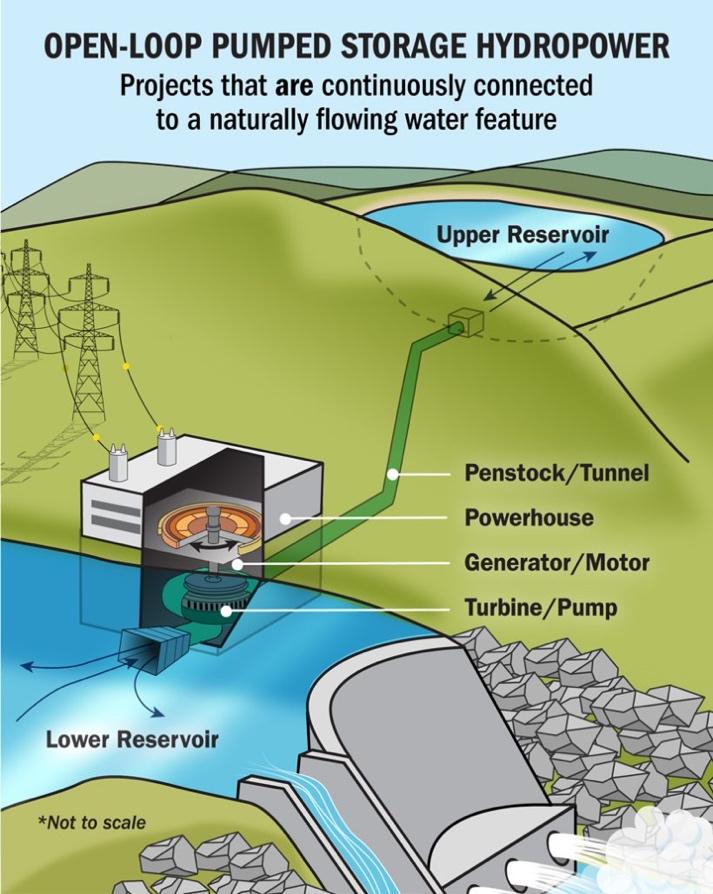
      • Pumped storage plants use the principle of gravity to generate electricity using water that has been previously pumped from a lower source to an upper reservoir. 
      • Operation of pumped storage power plants requires two reservoirs viz. upper and lower reservoir. Water in upper reservoir is used for generating power during peak demand hours. The water in the lower reservoir is pumped back to the upper reservoir during the off-peak hours and the cycle continues. 
      • Pumped storage plants are of two types: ‘open loop’, which has an associated natural-water source (like a river) for one or both the reservoirs; and ‘closed loop’ (or off-river PSH), which does not have a connected natural-water source and the same water is cycled between the two reservoirs for pumping and generation.
      • Energy storage capacity of a pumped hydro facility depends on size of its two reservoirs and the head between reservoirs, while the amount of power generated is linked to the size of turbine.
      A chart showing a open-loop pumped storage hydropower system. From top, water sits in an upper reservoir, then travels through a penstock or tunnel into a powerhouse. It passes through a generator/motor, then through a turbine/pump into a lower reservoirA chart showing a closed-loop pumped storage hydropower system. From top, water sits in an upper reservoir, then travels through a penstock or tunnel into a powerhouse. It passes through a generator or motor, then through a turbine or pump into a lower reservoir.

      Need for Pumped Storage Hydropower Project

      • Renewable energy sources like solar & wind energy are intermittent and variable in nature. This leads to challenges of grid-stability and temporal considerations in power availability. This requires immediate ramp-up & back down of generation for grid balancing & stability of grid frequency.
      • Pump Storage Technology is the only long term technically proven, cost-effective, highly efficient & operationally flexible way of energy storage on a large scale & available at short notice.
      • Currently, it is the largest energy storage system making it most effective for Renewable Energy Integration. 
      • It offers following benefits:
        • Peak shaving: PSPs absorb off peak energy in the system.
        • Load balancing (Peak/off-peak balancing support): Provides peaking power. 
        • Helps in system stability.
        • Increases capacity utilisation of thermal plants.
        • Spinning reserve at almost no cost to the system
        • Black start capability
        • Fast ramp up & ramp down of generation
        • Large energy storage capacity
        • Long life
        • Energy conversion rates for pump-storage projects often exceeds 80%
        • Only PSP can meet most of the grid scale energy storage needs and no other storage system can and therefore almost 95% of the storage projects are Pump hydro

      Status of Pumped Storage Hydropower:

      • Current potential of 'on-river pumped storage' in India is 103 GW. Out of 4.76 GW of installed capacity, 3.36 GW capacity is working in pumping mode. About 44.5 GW including 34 GW off-river pumped storage hydro plants are under various stages of development. 
      • Currently, operational Pumped Storage Plants: 
      Pumped Storage ProjectLocationStatesCapacity
      Nagarjunasagar  On Krishna RiverTelangana705 MW
      SrisailamOn Krishna River on a deep gorge on Nallamala hills.Telangana900 MW
      Kadamparai Tamil Nadu400 MW
      BhiraNear Mulshi Dam on Mula River.Maharashtra150 MW
      GhatgharOn Pravara River, a tributary of Godavari River in Ahmedanagar districtMaharashtra250 MW
      Purulia (Panchet) West Bengal900 MW
      Total  3300 MW
      • Other Pumped Storage Projects
        • Kadana, Sardar Sarovar Project (
        • Tehri, Kundah, Koyna (Under Construction)
        • Turga, Upper Sileru
      • Pumped storage projects being planned:
        • Upper Indravati PSP (600 MW) in Odisha
        • Sharavathy PSP (2000 MW) in Karnataka
        • Around 60 GW of pumped storage power projects are under survey and investigation.

      Advantages of Pumped Storage Projects

      • Ecologically friendly: PSPs would have minimal impact on environment in their vicinity as they are envisaged on existing hydroelectric projects, or as off the river projects. All components of PSPs would be connected, operated and maintained in an environmentally friendly manner with no residual environmental impacts.
      • Atmanirbhar Bharat: PSPs employ indigenous technologies and domestically produced materials. Most electrical & mechanical parts of PSPs are also made in India. Other alternate solutions to storage such as batteries are heavily import dependent.
      • Tested technology: PSPs operate on time-tested technology thereby infusing confidence in lending institutions for a longer duration of loans. Cost of technologies involved in construction has reduced rendering PSPs a viable proposition. Technological surety associated with PSPs has opened possibility for developers to claim a higher debt-equity ratio in projects.
      • Local development: Development of PSPs is highly capital intensive and involves development of local transport infrastructure for mobilisation of men and materials. Local industries such as cement & steel get impetus and drive domestic creation in the economy giving salutary effect on local area development, regional development, infrastructure upgradation and employment generation.
      • Longer and reliable duration of discharge: PSPs are designed for a longer duration of discharge of more than 6 hours to meet peak demand or for compensating variability in the grid due to VREs. However, Battery Energy Storage Systems are designed for up to 4 hours of discharge generally. Firm capacity of PSPs during peak hours is guaranteed and relatively immune to grid conditions.

      Challenges in the development of Pumped Storage Projects

      • Environmental clearances: Currently, environmental and forest clearance process of PSPs is very cumbersome, since these projects are treated at par with conventional hydro projects for granting EC and FC. However, environment impact of PSPs constructed on existing reservoirs is generally less and does not lead to displacement of people. 
      • Free power: PSPs are energy storage projects designed to cater to the need for grid stability during peak hours. PSPs do not produce any electricity and are net consumers of electricity. 
      • Cost of pumping power: Cost of power from PSPs has three components - cost of storage, cost of conversion losses and cost of input power. For the commercial viability of a PSP unit input power should be available at affordable tariff. However, availability of solar power at relatively cheaper rates allows affordable input power for PSP units. 
      • Value of peak power: Importance of PSP lies in its capability to offer peaking power. Other services offered by PSPs like spinning reserves, reactive support, black start ability etc. which are essential for grid stability are not adequately monetized.
      • Taxation:

      Measures taken by Government of India for promoting PSPs

      • Utilisation of financial & project execution capabilities of CPSUs: Government of India has identified probable PSP sites with CPSUs to facilitate their development.
      • Energy Storage Obligation: Government has notified Energy Storage Obligation for distribution companies to ensure capacities regarding storage as a grid element.  
      • Waiver of Inter-state transmission and other transmission charges for PSPs.
      • Budgetary support by Central Government for enabling infrastructure of hydropower & PSP projects as infrastructure create for hydropower/PSP enables further development of the area and the same is available for reuse for other purposes.
      • Ease of doing business and simplification of process: For ex. Central Electricity Authority has issued revised guidelines for the preparation and approval of DPRs for Pumped Storage Hydropower projects.

      Guidelines for promotion of PSPs

      Allotment of project sites: State Governments may allot project sites to developers in following manner.

      • On-nomination basis to CPSUs and State PSUs: States may award projects directly to hydro CPSUs or State PSUs or to JVs between Central & State PSUs on a nomination basis. CPSU/State PSUs shall ensure that award of contracts for supply of equipment and construction is done through competitive bidding.
      • Allotment through competitive bidding: PSP project may be awarded to private developers by following a two-stage competitive bidding process. PSUs can also participate in the bidding process. Home State shall have right of first refusal up to 80% of the project capacity and tariff shall be fixed by State Government. The developer will be free to sell the balance storage space under short/medium/long-term PPA, on in power markets or through bilateral contract.
      • Allotment through Tariff Based Competitive Bidding (TBCB): PSPs may be awarded on a TBCB basis to developers based on competitive bidding based on:
        • Composite tariff (including cost of input power) in case input power is arranged by developer.
        • Tariff for storage on a per megawatt hour basis if input power is arranged by procurer of the storage capacity.
      • Self-identified off-stream PSPs: Developers may also self-identify potential off-stream sites where PSPs can be constructed. This will help in harnessing off-stream potential in the country at a faster pace. Since, these sites are away from riverine system and do not utilise natural resources like river streams, allotment from State Governments would not be required for PSP projects on such sites. However, all statutory clearances need to be obtained from State & Central agencies before starting construction. 

      Incentives for Pump Storage Projects

      • States shall not charge any upfront premium for PSP project allocation.
      • Exemption from free power obligation as PSPs are energy storage schemes i.e., net consumers of energy and do not produce any energy.
      • No requirement for creation of a Local Area Development Fund as these projects have minimal environmental impact and have no R&R issues.
      • Utilisation of discarded mines including coal mines to develop PSPs. 
      • Developers should start construction work within a period of 2 years from project allotment, otherwise the project allocation will be cancelled. 
      • Market reforms for PSPs by Appropriate Commission
        • shall ensure that services which help in supporting grid stability are suitable monetized.
        • Notify Peak and Off-Peak tariffs for generation to provide appropriate pricing signal to Peak and Base Load Generating plants.
        • PSPs and other storage projects shall be allowed to participate in all market segments of power exchange.
        • 80% power generated when PSPs operate as conventional hydropower stations during monsoon period would be offered to Home State at the rate of secondary energy fixed by CERC.
        • If capacity contracted for energy storage in PSP is not fully utilised by contracting agency, the developer would be free to transfer the usage of the capacity to other interested entities so that resources do not remain idle.
      • Financial Viability: 
        • Central Government may notify a benchmark tariff of storage for investment decisions of developers considering 6-8 hours of operation of PSP based on prevailing and anticipated difference between peaking and non-peaking rates.
        • Financial institutions like PFC, REC and IREDA shall treat PSPs at par with other renewable energy projects while extending long-term loans of 20-25 years tenure. 
        • The debt-to-equity ratio of PSP projects can be up to 80:20, in consultation with financial institutions.
      • Taxes & Duties:
        • State Government shall consider reimbursement of SGST on PSP project components. States may exempt land to be acquired by off-the-river PSPs from payment towards stamp duty and registration fees.
        • Government land may be provided at a concessional rate to the developers on annual lease rent basis.
        • Electricity Duty and Cross Subsidy Surcharge not applicable on pumping power for charging of PSPs as PSPs are merely facilitating conversion of energy.
        • No water cess will be leviable on PSPs (like conventional hydro) as there is no consumptive use of water.
      • Rationalisation of Environmental Clearances for PSPs: According to draft notification issued by MOEFCC would evaluate under B2 for grant of Environmental Clearance irrespective of power generation.
        • Projects which do not attract Forest Clearance (FC) and Wildlife Clearance (WC).
        • Projects where no new reservoir is/are created.
        • Projects where existing reservoir is not expanded or structurally modified.
      • Green Finance: Since PSPs will be utilised for avoiding greenhouse gas emissions. Hence, PSPs will be supported through concessional climate finance. Sovereign green bonds issued for mobilizing resources for green infrastructure as a part of Government’s overall market borrowings for development of PSPs which utilise renewable energy for charging.

      Upward Shift in India’s Natural Rate of Interest

      Context: Recently, a study was published in RBI’s July Bulletin which showed that India’s natural rate of interest has seen an upward shift, driven by growth in potential output. The estimate of natural rate of interest for India for Q4 FY24 is at 1.4-1.9 percent as compared to 0.8-1.0 percent for Q3 FY 22.

      Natural Rate of Interest

      • Natural Rate of Interest is associated with an economy operating at full capacity without generating inflationary pressures.
      • It is also referred to as r-star or r*.

      Significance of Natural Rate of Interest

      • Rate of interest at which savings equals to investment, consistent with stable prices.
      • Gauging stance of monetary policy: Difference between real policy interest rate and natural rate measures the monetary policy stance. When the policy rate is set below the natural rate, the stance is regarded as accommodative, and the converse signifies a restrictive stance. The policy stance in neutral when the real policy rate is at the level of the natural rate.

      Factors determining natural rate of interest

      Natural rate of interest is determined by factors that impact long run saving investment behaviour.

      • Long run saving investment behaviour: Factors that reduce saving or increase investment raise the natural rate of interest.
        • Longer life expectancy raises savings to support a longer retirement.
        • Lower dependency ratio reflects a higher share of working age people in the population and increases savings as those in the workforce typically save more than the elderly and young dependents.
        • Higher inequality raises savings as richer households save a larger share of income relative to less affluent families.
        • Higher productivity growth associated with new investment opportunities raises demand for capital which increases real interest rates and therefore, the natural rate of interest.
      • Risk Aversion: Higher risk aversion induces higher savings in safe assets as a buffer against future economic downturns and lowers investment. Investment in risky assets is found to increase with advancement in digital technologies.
      • Fiscal deficits: Persistent fiscal deficits reduce gross saving and crowd out private investment.
      • Economic stagnation: An economy can experience rise in saving and fall in investment due to lack of demand for new investment and this could keep interest rates low for longer.
      • Monetary policy: Prolonged monetary expansion could fuel debt accumulation and financial imbalances by impacting debt and asset price dynamics, leading to lowering of natural rate of interest over long horizons.

      Reasons for India’s rising natural rate of interest

      • Demographic factors:
        • India’s demographic structure is characterized by large proportion of youth population and a growing working age cohort which tends increase the natural rate of interest.
        • Falling dependency ratio which enhances savings and investment potential. However, the COVID-19 pandemic has resulted in decline in life expectancy.
      • Other factors propelling rising investment demand:
        • Higher Investments for supply chain resilience for diversifying sourcing strategies due to increasing protectionism and geopolitical tensions.
        • India’s export thrust through initiatives such as PLI schemes, District as Export Hubs, and promoting export potential of MSMEs could further increase investment demand.
        • AI & Digitalisation: Rapid advances in AI & digitalisation will require large public and private sector investments in physical and human capital for acquiring and implementing new technologies and reshaping business processes.
        • Enhanced defence spending: The growing geopolitical conflict across the world necessitates significantly stepping up defence spending.
        • Investments to address climate change and resilience against extreme weather events: Extensive public and private investments will be needed for both rebuilding and adaptation.

      Legalisation of MSP

      Context: The committee constituted by the Government on minimum support price (MSP) to examine the feasibility of granting greater autonomy to the Commission for Agricultural Costs and Prices (CACP), and to explore ways to make it more scientific, as well as to provide suggestions for offering a legal guarantee to MSP, held six meetings in the two years since July 2022.

      Minimum Support Price (MSP)

      • It is a form of market intervention by the Government of India to ensure agricultural producers against any sharp fall in farm prices.
      • Announced by Cabinet Committee on Economic Affairs at the beginning of the sowing season for 22 mandated crops and fair and remunerative price (FRP) for sugarcane based on the recommendations of the Commission for Agricultural Costs and Prices (CACP).
      • Price fixed by Government of India to protect the producer farmers against excessive fall in price during bumper production years. They are a guaranteed price for farmer’s produce from the Government.

      Coverage of Commodities:

      • 7 Cereals: Paddy, Wheat, Maize, Jowar (Sorghum),
      • Bajra (Pearl Millet), Barley and Ragi.
      • 5 Pulses: Gram, Tur, Moong, Urad and Lentil
      • 7 Oilseeds: Groundnut, Rapeseed/ Mustard, Soybean, Sesamum, Safflower, Niger seed.
      • 3 Commercial Crops: Copra, Cotton, Raw Jute (Sugarcane covered under FRP)

      Present Status of MSP: 

      Presently, MSP does not enjoy statutory recognition. This means that, 

      • No obligation on the Government to purchase all the commodities for which MSP is declared. 
      • No obligation on the Government to pay MSP to the farmers. 
      • No obligation on the private sector to purchase commodities at MSP. Private sector can purchase below MSP. 

      Need For Legalisation of MSP

      • Promote crop diversification: Only three to four crops (mainly wheat, paddy and cotton and at times some pulses), were being procured at MSP while the remaining crops were being procured at much below the MSP. Hence, absence of any dependable or assured market mechanism of procurement-purchase for crops on the MSP in most parts of the country discourages efforts towards crop diversification. 
      • Income security for farmers: Legalising MSP would guarantee farmers a minimum income, helping them cover costs and reduce financial distress that reduces the farmer suicides.
      • Stability in agriculture: A legal MSP can provide stability and predictability in agricultural income, encouraging farmers to invest more in agriculture.
      • Modernise agriculture: It aligns with the national interest by formalizing and digitizing commodity transactions, supporting the government's goal to modernize agriculture.

      Challenges and concerns:

      • Adverse impact on economy: Higher costs of procurement due to a statutory MSP will increase the food prices, leading to inflation in the economy. Higher prices of commodities would adversely affect exports of agricultural commodities.
      • Financing needs: According to some estimates, if the Government were to procure all the 23 crops at MSP, it would amount to half of the Government's Budget.
      • Unsustainable food grain management policy: The Food subsidy bill has already become quite unsustainable at around Rs 2 lakh crores. The excess procurement of food grains by the FCI has led to surplus buffer stocks leading to higher storage costs and wastages. Legalisation of MSP would further worsen the scenario.
      • Administrative challenge: Lack of government machinery to procure all crops that are under the MSP system.
      • Violation of WTO Agreement on Agriculture (AoA): Legalisation of MSP would further violate the limit on the subsidies under AoA and it can be challenged by other countries. India's quest for Permanent solution on public stockholding could be in jeopardy.
      • Promote inequality: Only 6 percent of farmers are able to benefit from the MSP. Similarly, most of the Rice and Wheat are sourced from states such as Punjab, Haryana, MP etc. Hence, legalisation of MSP could worsen socio-economic inequality and promote regional disparity.
      • Environmental cost: Encourage farmers to grow more rice and wheat leading to further environmental problems.
      • Adverse impact of Government's intervention: In any free-market economy, the price of any goods and services produced in the country must be decided by market forces and not by the state. As highlighted by Eco Survey 2019-20, Government's intervention, sometimes though well intended, often ends up adversely affecting the market. For example, the regulation of prices of drugs through the DPCO 2013, has led to an increase in the price of a regulated pharmaceutical drug vis-à-vis that of a similar drug whose price is not regulated.

      Conclusion:

      • Better marketing infrastructure: Improving agricultural marketing infrastructure, including e-NAM, to ensure better prices for farmers.
      • Insurance schemes: Strengthening crop insurance schemes to protect farmers against price volatility and natural calamities.
      • Progressively increase the number of crops eligible for MSP:  To encourage crop diversification and lessen the dominance of rice and wheat. This will offer farmers more choices and promote the cultivation of crops that align with market demand.
      • Price deficiency payment schemes: Government compensates farmers for the difference between average prices in major mandis and the MSPs. (NITI Aayog).

      Case study: Haryana's Bhavantar Bharapai Yojana government pays a fixed compensation against the produce sold below minimum support price (MSP)

      INDIA’S COAL SECTOR – PROSPECTS AND CHALLENGES

      Context - On July 13, three workers died of asphyxiation inside an illegal coal mine in Gujarat’s Surendranagar district.

      What is the present status?

      • The installed generation capacity of coal and other fossil based resources is as follow:
      A screenshot of a graph

Description automatically generated
      • India is 5th when it comes to total coal reserves in the world. 
      • In the last 10 years, domestic coal production has increased over 55 per cent and much of it has come over the last 5 years.
      • Annual coal production almost doubled from 565.77 million tonnes (mt) in FY14 to 997.4 mt in FY24,production surpassing a billion tonnes (bt) being the key achievement. 
      • India aims to achieve a production of 1.5 bt by FY30 as the country’s power demand is likely to double by the end of the current decade.

      Why is coal relevant for India?

      • Around 50% of the installed generation capacity comes from coal.
      • Huge demand - Due to the rising population, coal consumption has nearly doubled in the last decade.
      • Employment - Coal industry employs as many as four million people.
      • Sectors like steel, aluminium and cement are highly dependent on coal.  
      • Large-scale sourcing of non-fossil fuels is quite challenging.
        • Coal is cheaper than all other sources of energy.
        • High cost of manufacturing & installation of solar energy.
        • Unstable nature of Tidal, Solar energy.
        • Lack of renewable energy infrastructure in rural areas.

      What are the challenges associated with India’s coal sector?

      • Poor quality - High ash content, lack of high grade anthracite and bituminous coal. 
      • Virtual monopoly: Coal India ltd commands the maximum share of coal production discouraging private investment and competition.
      • Environmental concern - India's coal-based power sector accounts for approximately 2.4% of global greenhouse gas (GHG) emissions, 33% of India's GHG emissions, and around 50% of the country's fuel related emissions.
      • Quality of captive mines: Poor quality of captive mines being awarded to private players decreases their presence as well as production.
      • Illegal mining which not only is detrimental for the environment but also causes death of workers due to inhalation of toxic gasses and lack of protective gears. Also because it is considered as law and order issue, centre generally leaves it for the state government. 
      • Other issues like issues land acquisition, green movements, strict rules & regulations.
      • International pressure by developed countries to phase out the coal based plants. 

      What steps can India take?

      • Attract private players by promoting transparency and ease of doing business.
      • Promote alternate uses of coal in sectors like coal gasification to use the surplus production of coal which is expected by 2026. 
      • Upgrading existing coal based plants by retrofitting of thermal plants to ensure minimal Sulphur emissions, investing in supercritical technology and adopting CCUS methods.
      • Coal trading exchange can be set up by an exchange operator so that the g government only provides a platform to the sellers and the buyers of the fuel. The coal trading exchange could be similar to such platforms in the power and natural gas.
      • Leveraging technology to curb illegal mining especially in North East. 
      • Investing in renewable energy by creating solar, wind parks, providing financial incentives and grid integration for renewable energy projects.
      • Enhancing energy efficiency by Enforcing energy-efficient building codes and promoting standards and labelling programs.
      • Policy reforms like carbon pricing can create economic incentives to reduce emissions and Renewable Purchase Obligations (RPOs) can mandate utilities to purchase a certain percentage of power from renewable sources.
      • International cooperation for climate finance to support renewable energy projects and technology transfer to bring advanced clean energy technologies to India, accelerating the transition to a low-carbon economy.