Context: Leaders and scholars from the global Buddhist community will convene in New Delhi to discuss contemporary global concerns from a Buddhist approach. The maiden conference is being organised by the Union Cultural Ministry and the International Buddhist Confederation, an umbrella organisation that acts as a forum for Buddhists worldwide. The conference is considered as a big step forward in India's aspirations to interact with Buddhism, which has millions of adherents worldwide. Recently, India, as chair of the Shanghai Cooperation Organization (SCO), hosted a meeting on Buddhist heritage that included all countries.
Theme of the Summit: ‘Responses to Contemporary Challenges from Philosophy to Praxis’.
Image source: narendramodi.in
Objectives of the Summit
The gathering's major objective is to explore methods of disseminating and internalising universal principles while encouraging collaboration among Dharma practitioners across philosophical, cultural, and national boundaries.
The ultimate objective is to solve acute global concerns while also developing a long-term plan for a peaceful and harmonious future.
The summit intends to explore Buddhist teachings and practices in order to identify answers to challenges like- climate change, poverty and war, among others.
About Buddhism
Buddhism belongs to the Shramana school of religious movements. The word Shramana means one who performs acts of austerity and ascetic.
Basic details of Buddha
Buddha was born at Lumbini village of Kapilavastu Nepal in 563 BC in the Shakya Kshatriya clan.
His clan considered themselves to be descendants of Ikshvaku dynasty.
He died in 483 BC near Kushinara (Kushinagar, UP) and the event is known as Mahaparinirvana.
After leaving his home in search of enlightenment Buddha visited Vaishali and learnt Sankhya darshan. He then went to Rajgriha and learnt yoga.
He later went to Uruvela where he attained enlightenment. This event is known as Sambodhi.
He then went on to Sarnath where he delivered his first sermon also called Dharmachakrapravartana. Buddha delivered his maximum sermons from Shravasti and made Magadha his promotional centre.
Ashta-mahasthana refers to the eight significant places associated with the life of Buddha. These include: Lumbini, Bodh Gaya, Sarnath, Kushinagar, Shravasti, Sankissa, Rajgriha and Vaishali.
Religious Teachings
Buddhism is based upon triratnas i.e., Buddha, Dhamma and Sangha.
Buddha propagated Ashtangik marga also called Madhya marga. He was always silent on the discussion of the existence of God but believed in rebirth.
Buddha was against caste system and opened the gates of Buddhism for all castes. He allowed women to be admitted in sangha.
Buddha suggested that when desires are conquered, nirvana will be attained which means that a man will become free from the cycle of birth and rebirth.
Buddha’s chief disciple was Upali, and his most favourite disciple was Ananda. Buddha regarded the social world as creation of humans rather than of divine origin. Therefore, he advised kings and gahapatis to be humane and ethical.
Accomplishment: Buddha’s teachings were compiled into Sutta Pitaka (Ananda) and Vinaya Pitaka (Upali)
2nd Buddhist Council
Place: Vaishali
Ruler: Kalashoka (Shishunaga dynasty)
Accomplishment: Buddhist sangha was divided into schools i.e., Theravada or Sthavira and Mahasanghik or Sarvastivadin.
Theravadi is the oldest Buddhist school with its main center in Kashmir. Mahasanghik’ s main center was in Magadha.
3rd Buddhist Council
Place: Pataliputra
Ruler: Ashoka
Accomplishment: Compilation of the third pitaka i.e., Abhidhamma Pitaka which explains the tenets of Dhamma.
4th Buddhist Council
Place: Kashmir
Ruler: Kanishka
Accomplishment: Compilation of Vibhashashastra by Vasumitra, a commentary in Sanskrit on the difficult aspects of Buddhist texts.
Buddhists again broke into 2 schools i.e., Theravadi or Sthavira became Hinayana and Sarvastivadin or Mahasanghik became Mahayana schools.
Sects in Buddhism
Buddhist texts mention about 64 sects or schools of Buddhism. Teachers travelled from place to place, trying to convince one another and laypersons about the validity of their philosophy.
Debates took place in the Kutagarashala – literally, a hut with a pointed roof or in groves where travelling mendicants halted.
If a philosopher succeeded in convincing one of his rivals, the followers of the latter also became his disciples. So, support for any sect could grow and shrink over time.
Prominent sects of Buddhism
1. Hinayana School
Hinayana is also known as Shravakayana. They saw Buddha as a great soul but not God. They were orthodox in nature.
Hinayana followers believed in helping themselves over others to attain salvation. They did not believe in Bhakti and idol worship. Their scriptures are written in Pali.
Later divided into 2 sects i.e., Vaibhashika and Sautrantika.
Sub-schools of Hinayana:
Staviravadin or Thervadins: Earliest school from which all other schools of Buddhism originated. They follow the original doctrines of Buddha closely. They believe only in the three Pitakas.
Sarvastivada: This is one of the early Buddhist schools which originated during the time of Ashoka (Separated from Sthaviravadins). This school is popular in Kashmir and Central Asia. This school has been broadly divided into- Vaibhasika and Sautantrika.
Mahasanghika: It is a school which came into existence after the 2nd Buddhist Council. It separated from the Staviravadis over the differences in following monastic practices. Sub-sects of Mahasanghika school are- Lokottarvada, Kukkutika and Caitika.
Sammitiya: A subsect of Hinayana tradition which believes that though an individual does not exist independently from the five skandhas, or components that make up his personality, he is at the same time something greater than the mere sum of his parts. It popular in Gujarat and Sindh during 7th Century. Their important centre of learning was at Valabhi, Gujarat.
2. Mahayana School
Its prime centre was in Andhra Pradesh. Its scriptures are written in Sanskrit.
They see Buddha as incarnation of God and started his idol worship.
Mahayana attaches importance to role of Bodhisattvas who delay their own salvation to help others to its path.
They believed in the concept of transmigration of soul and rebirth. Later divided into 2 sects i.e., Shunyavaad (Founder: Nagarjuna) and Vigyanvaad.
In 8th century AD, Vajrayana School developed as an offshoot of Mahayana school in which Tara is considered as wife of Buddha.
In early medieval period a new form of Mahayana called Mantrayana came up in which Bodhisattva Avalokiteshwar began to be worshipped.
Sub-Schools of Mahayana
Yogachara School: Important scholars of this school were: Asanga and Vasubandhu. It attaches foremost importance to meditation as a means of attaining the highest goal. Hence, the name Yogachara.
Madhyamaka School: Founder of this school was Nagarjuna. Idea of Shunyata is important feature of this school. It means that appearances are misleading, and that permanent selves and substances do not exist. Important scholars of this school were Buddhapalita, Bhavaviveka and Chandrakirti.
Boddhisatvas in Mahayana Buddhism
BODDHISATTVA
RELEVANCE
Avalokitesvara
Bodhisattva of compassion. Most universally acknowledged Bodhisattva in Mahayana Buddhism.Has many avatars, most famous being Padmapani (Holding Lotus).
Maitreya
Boddisattva to be reborn. Future Boddhisattva.
Manjushri
Boddisattva of awareness and wisdom.
Padmasambhava
Most famous in Tibetan and Bhutanese Buddhism. Regarded as a second buddha there.
Vajrapani
An early bodhisattva in Mahayana. Vajra means weapon.
Tara
Female bodhisattva in Tibetan Buddhism. A manifestation of Avalokitesvara.She represents the virtues of success in work and achievements. A manifestation of Avalokitesvara.
Buddhist Literature
Tripitakas are the oldest source of studying Buddhism.
Sutta Pitaka: Encyclopedia of Buddhist thought and Buddhas religious ideas. It is divided into five groups or Nikayas. They contain popular works such as Theragatha and Therigatha and Jataka tales.
Vinaya Pitaka: Rules of Buddhist Sangha. It contains two main sections (i) Sutta Vibhanga (ii) Khandaka and an appendix known as Parivara. Sutta Vibhanga contains Patimokka, a set of monastic rules, 227 for monks and 311 for nuns. Patimokka was recited by congregations of monks in the fortnightly uposatha ceremony held on the full moon and new moon days.
Abhidhamma Pitaka: Buddhist principles and concept of dhamma
Vishuddhimarga written by Ashvaghosha serves as a key composition to tripitakas.
Mahavastu (by Hinayana sect) and Lalitvistara (by Mahayana sect) are biographies of Buddha.
Pragyaparimita Sutra serves as the most important text for Mahayana sect. It was written by Nagarjuna who is known as the Einstein of India.
Buddhist Sangha
Eight personal possessions allowed to a monk comprised three robes, an alms bowl, razor, needle, belt and water strainer.
Senior monks held authority within a monastic community.
Four most serious offences (known as parajika) involving expulsion from sangha were: (i) Sexual intercourse, (ii) killing someone (iii) Stealing (iv) Making false claims of spiritual attainment.
Buddhist Laity
According to tradition, first lay followers of Buddha were two merchants, Tapassu and Bhallika.
The laity was a person who had taken refuge in Buddha, dhamma and sangha but had not taken monastic vows. The laity included male followers (upasakas) and female followers (upasikas).
There was a growing differentiation (social-stratification) amongst people engaged in agriculture – Buddhist literature refers to landless agricultural labourers, small peasants and large landholders.
The term Gahapati was used in Pali texts to refer to small peasants and large landholders.
Buddhism and Women
Initially, only men were allowed into the sangha, but later women also came to be admitted. (In Buddha’s lifetime only).
This was made possible through the mediation of Ananda (Buddha’s dearest disciple).
Buddha’s foster mother, Mahapajapati Gotami was the first woman to be ordained as a bhikkhuni.
Therigatha is a collection of verses composed by bhikkhunis (part of Sutta Pitaka). It provides an insight into women’s social and spiritual experiences.
Reasons for decline of Buddhism
Decline of Buddhist Sanghas: Sanghas became centres of corruption. Discipline of Vinay Pitaka was violated.
Revival of Brahmanical Hinduism: Rites and rituals of Hinduism were simplified. It also incorporated Buddhist principle of non-violence and accepted Buddha as a Hindu incarnation.
Buddhism lost royal patronage, which it received during the period of Asoka, Kaniska, and Harshavardhana. The Gupta rulers were great patrons of the Brahmanical religion.
Buddhism was divided into several groups like "Hinayana,” "Mahayana” "Vajrayana” "Tantrayana" and "Sahajayana," and ultimately, it lost its originality.
Buddhist monks gave up Pali and took up Sanskrit, the language of intellectuals which was rarely understood by the common people. So, people rejected it.
Mahayana Buddhists started worshipping Buddha as a God. Image worship was a clear violation of the Buddhist doctrines, which opposed the critical rites and rituals of Brahmanical Hinduism.
Northern India was mostly ruled by the Rajputs from the eight to twelfth century who found great pleasure in fighting. They discarded the Buddhist principle of non-violence.
Context:After the National Bank for Agriculture and Rural Development's recommendation (NABARD), the renowned Basohli painting from the Kathua district of Jammu and Kashmir has received the Geographical Indication (GI) Tag.An item’s GI tag provides the original manufacturers with legal protection and prevents unauthorised use of the item by third parties.Basohli painting of Kathua is the first independent GI tagged product from Jammu region.
About Basohli painting
Pahari paintings originated in Basohli, a small town in Jammu region.
It gave rise to a distinctive genre of miniature paintings where mythology and conventional folk art were combined.
Basohli paintings reached their height during the reigns of Sangram Pal (1635–1673) and later Kirpal Pal (1678–1693).
The Ramayana, Gita Govinda and Rasamanjari illustrations by Bhanudatta were ordered by Raja Kirpal Singh.
The most well-known painter of this school was Devi Das, who is most known for his paintings of Radha Krishna and rulers dressed in white clothing.
Features
The use of vivid and strong colours in the borders, such as red, yellow, and blue, was one of the distinguishing characteristics.
A prominent nose and lotus-shaped eyes were two further distinctive characteristics of the face.
Both men and women are dressed in a style like that found in Rajput or Mughal courts.
In Basohli art, flora was frequently shown. The vibrant red rhododendron blossoms were the artists' favourite.
The portrayal of jewellery, which was done with embossed white paint to represent pearls and beetle wings to represent emerald green, was what made these paintings stand out.
The vibrant contrast of colours that characterises this school is inspired by the Malwa paintings.
Pahari painting
A form of miniature painting and book illustration that evolved in the autonomous Indian republics at the foothills of the Himalayas.
The term ‘Pahari Paintings’ applied to a variety of schools that thrived in these smaller kingdoms.
The Pahari paintings can be divided into two series- the Northern Series from the Jammu or Dogra School, and the Southern Series from the Basholi and Kangra Schools.
The paintings' topics, which covered everything from mythology to literature, highlighted fresh methods.
Each figure has a unique composition, colour scheme, and pigmentation.
Nainsukh and Manaku were two of this school's best artists.
Geographical Indication (GI)
The Geographical Indications of Goods (Registration and Protection) Act, 1999 intends to make provisions for the registration and improved protection of geographical indications relating to goods in India.
The WTO Agreement on Trade Related Aspects of Intellectual Property Rights (TRIPS) governs related aspects of Intellectual Property Rights governs and directs it.
The protection of industrial property and geographic indications was determined and is also indicated in Articles 1(2) and 10 of the Paris Convention as components of intellectual property.
It is primarily a manufactured, natural, or agricultural product (handicrafts and industrial goods).
This tag is valid for ten years, after which it may be renewed.
However, a protected geographical indication does not enable the holder to prevent someone from making a product using the same techniques as those set out in the standards for that indication.
Darjeeling Tea from West Bengal received the first GI Tag in India.
The Department of Industry Promotion and Internal Trade, Ministry of Commerce and Industry, is responsible for issuing these tags.
Approaches to safeguard Geographical Indications
Specific regimes of protection (sui generis systems)
Collective/certification marks
Methods for concentrating on business operations, such as the administrative product and approval schemes.
Significance
After a product receives this designation, no one or business may sell a similar product under that name.
A product's GI registration gives it legal protection and safeguards against unauthorised use by others.
The GI tag aids in marketing the product's exports and gives customers confidence in the product's legitimacy.
Context: The Jain community celebrates Mahavir Jayanti, one of their most important festivals, throughout India. The celebration honours the birth of Lord Mahavira, the 24th Tirthankara of Jainism.
History Of Mahavir Jayanti
Lord Mahavira was born in Kundalgrama, Bihar, in the Chaitra month, according to Jain traditions and religious writings.
The cleansing of the Mahavir effigy with fragrant oil by the people symbolises the purity of the Lord.
People go to pilgrimage locations that are associated with the Jain community.
Gomateshwara is a well-known place to visit during the festival.
Emergence of Heterodox Thinkers
In the sixth and fifth centuries BCE, North India had a remarkable awakening as a result of a number of heterodox philosophies challenging the pre-existing philosophy.
In order to reflect on the social and cultural climate of their times, philosophers like Gosala, Gautama Buddha, Mahavira, Ajita Kesakambalin, and others renounced the world and wandered across the Gangetic plains.
Causes of Intellectual Awakening
The rigidity of the Vedic religion and state creation limited people's freedom of thinking and behaviour.
In heterodox sects, a revolt against the practise of accepting dogmas as truthwas articulated.
The process of socio-political and economic change was expedited by the creation of territorial identities.
Disenchanted with the existing order, the wealthy class (thriving in Magadha or the mid-gangetic plains) started to act in opposition to the Orthodox faiths.
Since the Vedic religion was not yet fully organised, its influence on society was limited, making it easy for individuals to adhere to the newly forming religious sects.
New classes of merchants and bankers like sethis sought higher social status in line with their economic standing as a result of urbanisation and the rise of trade.
Kshatriyas were upset because the Vedic writings only allowed Brahmins to live a staged life in ashramas.
Jainism
Vardhamana Mahavira's sect, which Buddhist writings refer to as Nigantha Nataputta
grew into the religion known as Jainism.
Before, it was known as Nirgranthas (free from bonds).
Risabha is credited as the sect's founder in Jaina mythology.
He is regarded as the original Tirthankara.
Three of the Tirthankaras: Risabha, Ajitanatha, and Aristanemi, are mentioned in the Yajur veda.
Mahavira, also known as Jina, the conqueror of the soul, organised his followers into secular and monastic groups.
Life of Mahavira
About 540 BCE, Mahavir was born in Vajji, a democratic kingdom (Ganarajya)
where the ruler was chosen through popular vote.
He was son of the King Siddharth of Kundagrama and Queen Trishala belonging to the Ikshvaku dynasty.
Mahavir was given the name Vardhaman, which means "One who grows."
His mother was a princess of the Lichchavi and Chetaka's (chief of Lichchavi) sister.
Mahavira was closely related to the rulers of Magadha, Anga, and Videha through his mother.
At the age of 30, he left his home and spent 12 years wandering as a mendicant in search of the truth.
He abandoned his clothes and engaged in strict penance.
He met Gosala while wandering, but they later parted ways because of their differences.
Vardhamana gained Nirvana, or enlightenment, in the thirteenth year of his wandering, when he was 42 years old. He attained Tirthankara status and came to be known as Jina or Mahavira (the Great Conqueror).
He passed away at the age of 72 in Pavapuri, close to Rajgriha, around 468 BCE. He fasted unto death (Sallekhana) according to Jaina ideals.
Sects of Jainism
A split in Jainism happened roughly 500 years after Mahavira's departure, in or around 79 or 82 CE.
Because of the severe famine in Magadha.
some of Jaina monks under Bhadrabahu left for south to maintain their rigorous discipline.
They remained without garments and were known as ‘Digambaras’ (space-clad or naked).
Others who remained behind under Sthulabhadra's leadership, chose a white clothing, and came to be known as ‘Svetambaras’ (white-clad).
Jainism was weakened in Magadha as a result of the schism, but it flourished in Gujarat, Rajasthan, Madhya Pradesh, Orissa, and Karnataka.
Jaina Councils
Jaina Council
Year
Venue
Chairman
Patron
Result
First
300 BC
Patliputra
Sthulabhadra
Chandragupta Maurya
Compilation of 12 Angas
Second
512 AD
Vallabhi
Devardhi-Kshmasramana
---
Final Compilation of 12 Angas and 12 Upangas
Tenets of Jainism
Jainism places a strong emphasis on nonviolence.
Jainism rejects the idea of a creator. Jainism did not initially worship any deities.
Mahavira disapproved of Vedic rule.
It holds that there is no beginning or end to the world.
Jainism promoted dualism:
According to which the universe is composed of everlasting souls (jivas) and substance (ajivas).
When jiva and ajiva combine, karma (action) is produced, which causes a never-ending cycle of birth and reincarnation.
Severe penance and austerity must be practised in order to release oneself from karma.
As a result, only monks in Jainism were able to break free from the cycle of rebirth and birth.
It does not support any form of inequality based on birth.
Birth does not determine one's social standing; rather, one's actions do.
Birth-based status is regarded as a sin.
The monastic order accepted women.
Nevertheless, a woman to find salvation need to be reborn as a man and then pursue redemption by accruing merit through good deeds.
Three Gems
Jains are required to follow three principles called Triratnas
(1) Right faith (samyag-darshana/samyak-shadha);
(2) Right knowledge (samyag-jnana);
(3) Right conduct (samyag-mahavrata/ samyak-karma/samyak-acharana)
Five Great Vows/Pancha Mahavratas
The monks have to undertake the five great vows
(1) Not to kill or injure (ahimsa);
(2) Not to steal (asteya);
(3) Not to lie (satya);
(4) Celibacy (brahmacharya);
(5) Not to possess property (aparigraha)
The first four vows were laid down by Parshwanath and the fifth one was added by Mahavira.
Types of Knowledge
There are five types of Knowledge:
(1) Mati jnana: Perception through activity of sense organs, including mind
(2) Shruta jnana: Knowledge revealed by scriptures
(3) Avadhi jnana: Clairvoyant perception
(4) Manahparyaya jnana: Telepathic knowledge
(5) Keval jnana: Temporal knowledge
Syadvada theory in Jainism
The "theory of perhaps" holds that all of our judgements must necessarily be conditional and relative.
Seven different types of prediction are conceivable, according to Syadvada (Saptabhangi Nayavad).
Both absolute affirmation and negation are incorrect.
Anekantvada, or the philosophy of plurality, is another name for Syadvada.
Jaina Literature
The sacred literature of the Svetambaras is written in a type of Prakrit called Ardhamagadhi Prakrit (language of the common people) and can be classified as follows: 12 Angas, 12 upangas, 10 parikarnas, Chhedasutras, Mulasutras and Sutra-Granthas.
14 purvas/parvas- It is the part of 12 Angas and the oldest text of Mahavira’s preachings.
Besides this, the important Jain texts are:
Kalpasutra (Sanskrit)- Bhadrabahu
Parishishta Parvan (an appendix of Trishashthishalaka Purusha)- Hemachandra.
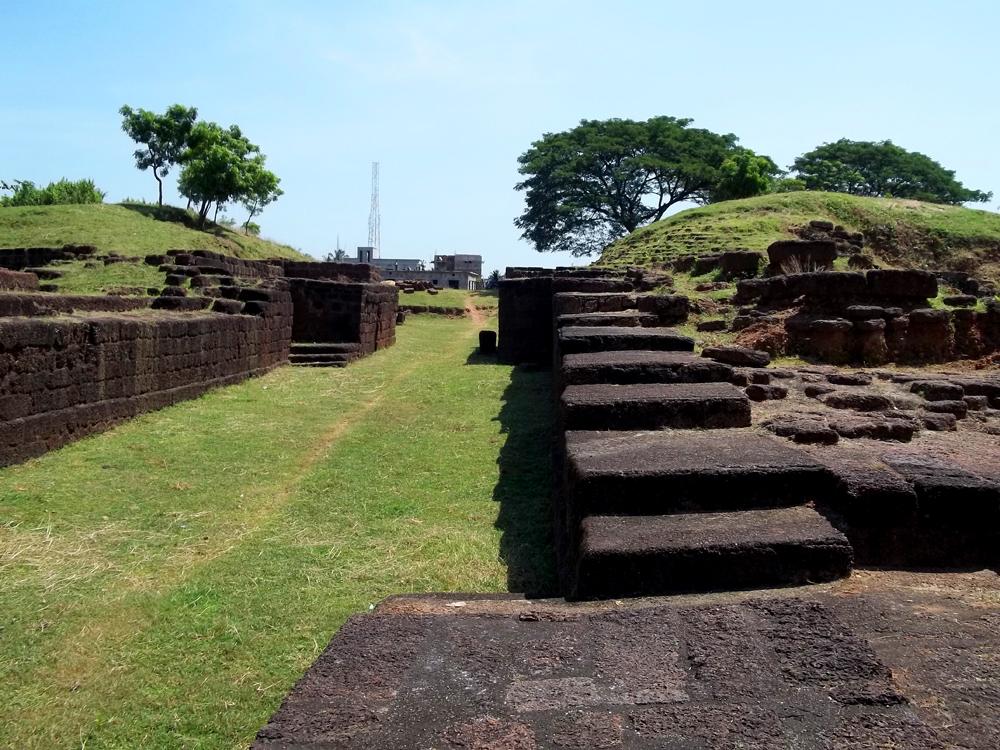
Context: The nationally protected 2,700-year-old Sisupalgarh, a fort city on the outskirts of Bhubaneswar, is being bulldozed by the land mafia, even as official notifications are ignored, and the State government and ASI point a lazy finger at each other. Odisha high court has already ordered to remove the encroachment in the vicinity of the fort.
About Sisupalgarh and its fort:
Location: Sisupalgarh or Sisupalagada is situated in Khurda District in Odisha on the banks of Mahanadi Delta.
Duration: 7th Century BC.
It was excavated in 1948 by Braj Basi Lal under Archaeological Survey of India orders.
Currently only, Shola Khamba, a constellation of 16 monolithic (now 13) pillars, and the western gateway has survived which proves the presence of ancient city and fort.
Stone used for the construction were laterite stones.
Excavations in the 1950s revealed the settlement was well planned, with a drainage system and roads crossing each other at 90-degree angles.
About Kalinga and various Empires
Kalinga is known to be a powerful kingdom as early as the time of the Kurukshetra battle. Srutayudha, the king of the Kalinga joined the camp of the Kaurava in the battle and was killed in the battle by Bhimasena with his two heroic sons: Bhanumana and Ketumana.
After the Mahabharata War a new Kshetriya dynasty ruled over Kalinga and it is known from the Buddhist work ‘Mahagovinda Suttanta’ that the glory and power of Kalinga was restored within a short period.
According to the Puranas 32 Kshetriya kings ruled over Kalinga after the Mahabharata War up to the time of Mahapadmananda who ascended the throne of Magadha in 362 BC.
Nanda rule: Mahapadmananda undertook irrigation projects to eradicate famine condition in Kalinga. The pre-Mauryan black polished potteries and punch-marked coins having four symbols found in plenty from Asurgarh in Kalahandi district and Sonapur in Bolangir district indicate the flourishing economic condition during the time of the Nanda rule. Last Nanda king was overthrown by Chandragupta Maurya.
Mauryan rule: Asoka, the son of Bindusara who invaded Kalinga in 261 B.C. and succeeded in occupying Kalinga (Massive Kalinga War). Seeing the massive loss of life, Ashoka converted to Buddhism. Kalinga became one of the administrative provisions in the empire of Magadha with headquarters of a Kumara (Viceroy) located at Tosali. It was also the headquarter of highest judiciary of Mauryan rule. Edicts were engraved on the Dhauli and Jaugada rocks to inculcate his administration and religious principles to the people.
Kharvela rule: In the early part of the 1st century BC Kalinga became independent under the Chedi Chief Mahameghavana. The third ruler of this dynasty was Kahravela who flourished during the second half of the 1st century B.C. The Hatigumpha inscription in Udayagiri near Bhubaneswar furnishes detailed accounts about the life and activities of Kharavela from his boyhood to his 13th regnal year. He repaired the fort at Sisupalgarh (Kalinganagari). Kharavela excavated a number of cave-dwellings in the Kumari hills for the Jain monks and bestowed endowments for them. Jainism greatly flourished in Kalinga under the sincere patronage of Kharavala. Inscriptions of Guntupalli, Velpuru in Andhra Pradesh and Velpuru inscription also talks about this Mahamegahavahana dynasty.
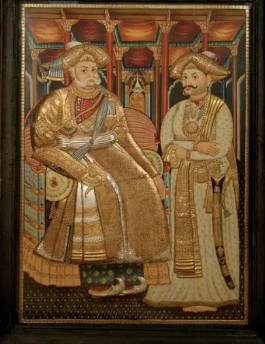
Context: Seema Sethi, an artist from Delhi, decorates her canvases using a variety of mixed media, including gold foil, watercolour, and semiprecious stones. Deities are portrayed in the Thanjavur style, which is distinguished by use of vibrant, rich colours and shiny golden foil.
Thanjavur/Tanjore paintings
Thanjavur painting is a traditional South Indian painting style that originated in the Tamil Nadu town of Thanjavur.
The Nayakas of Thanjavur, who were under the control of the Vijayanagara Rayas, encouraged art—primarily, classical dance and music—as well as literature, both in Telugu and Tamil, and painting of predominantly Hindu religious subjects in temples. The art form draws its immediate resources and inspiration from this time period, which dates back to around 1600 AD.
However, Thanjavur art as we know it today originated in the Thanjavur Maratha court (1676–1855). Under the support of the famous art patron Sarfoji II Maharaj, these works achieved their pinnacle.
The Saraswathi Mahal Library in Tanjore, which was established by Sarfoji II, contains some specimens of this artwork.
According to Charles Gold, a British narrator, the Tanjore paintings were created by "Moochys or Painters of India. The Nayudu community of Madurai and the Raju group of Thanjavur and Tiruchi, also known as Jinigara or Chitragara, were the communities that produced the paintings in the Thanjavur style.
The Government of India recognised it as a Geographic Indication in 2007–2008.
Style and technique
The pieces were framed and intended to be hung on the walls of domestic puja rooms or bhajan halls. They were constructed on canvas glued on a wooden structure, marking a considerable departure from the pan-Indian tradition, which requires that paintings be modest.
The vibrant reds, rich greens, chalk white, turquoise blues, and generous use of gold (foil) and inset glass beads made up the majority of their stunning colour palette. The paintings occasionally included precious stones.
During Sarfoji II's reign, Thanjavur glass paintings that used Chinese reverse glass painting techniques became popular as a quicker and less expensive art.
Dark brown or red was typically utilised for outlining. The background was primarily red, though it may also be blue or green.
Influences
Paintings from Thanjavur exhibit influences from Deccani, Vijayanagara, Maratha, and possibly European or Company styles.
The paintings from Tirupati and Kalamkari may have had the most influence.
During the Anglo-Mysore Wars of 1767–1799, when a British garrison was stationed in Thanjavur, the direct European influence on Tanjore paintings began.
The majority of artworks depict Hindu gods, goddesses, and saints, essentially acting as devotional icons. Jain, Sikh, Muslim, and other religious as well as secular subjects have also appeared in Tanjore paintings.
About Miniature Paintings
Miniature paintings are bright, individually created, small works of art. These paintings' complex brushwork, which contributes to their distinct individuality, is one of their best qualities.
The colours utilised in the paintings come from a variety of organic materials, including fruits, indigo, precious stones, gold, and silver.
When the Palas ruled over India's eastern region around 750 A.D., miniature paintings first appeared there.
The religious teachings of the Buddha, which included his images, were inscribed on palm leaves, which is how these paintings came to be well-known.
Similar paintings were imported to western India by the Chalukya Dynasty kings around 960 A.D. Religious topics were frequently depicted in miniature artworks at this time.
The popularity of miniature paintings began to soar with the expansion of the Mughal Empire. Indian miniature paintings merged elements of the Persian style of painting during Akbar's reign.
With the influence of European paintings at the Mughal court, these miniature paintings underwent further development.
The Rajput kings of Rajasthan continued to support miniature paintings and artists even after the Mughal Empire had collapsed. The miniature paintings of Rajasthan had unique characteristics and frequently portrayed the royal lifestyle and mythological tales of Lord Krishna and Radha, despite being influenced by the Mughal style of painting.
Context: The statues of two legendary figures from Karnataka, Basavanna and Kempegowda, have been unveiled. The messages of social justice, democracy, sound governance, and progress shall be promoted.
Life History of Basaveshwara [ 1105-1167]
Born in Bijapur district, Karnataka in 1105 CE.
He was an Indian statesman, poet in the Kannada language, and social reformer who lived in Karnataka during the time of King Bijjala I of the Kalachuri dynasty.
As the Kalachuri kingdom's chief minister, he established new public institutions including the Anubhava Mantapa, also known as the "hall of spiritual experience," which attracted people from all socio-economic classes.
He launched social reforms and a religious movement centred on resurrecting Shaivism using the public treasury, recognising and promoting ascetics known as Jangamas.
The Basavarajadevara Ragale, written by the Kannada poet Harihara (about 1180), is the earliest account of the social reformer's life. It is significant since the author was a near contemporary of the Basavanna.
The Vachana Sahitya in Kannada is one of the literary works of the Basavanna.
Basava is credited as the founder of Lingayats' tradition in hagiographic writings. However, modern scholars, based on Kalachuri inscriptions assert that Basava revived and improved a previously existent tradition.
Philosophy
He developed a new devotional movement named Veerashaivism.
In his poetry, Basava discussed about gender equality, community spirit and refraining from wars for any cause.
He said that the true god is "one with himself, self-born," challenging rituals, dualism, and externalisation of god.
Basava opposed rituals, but he supported icons and symbols such as wearing an Istalinga (necklace with a personal linga) and applying Vibhuti (sacred ash on the forehead) as a constant reminder of one's devotion and religious principles.
In order to eliminate the need for elite translation and interpretation of spiritual concepts and to ensure that everyone can grasp them, he advocated for the use of the vernacular language, Kannada, in all spiritual conversations.
His holy trinity included a guru (teacher), a linga (a lingam that belonged to Shiva), and jangama (constantly moving and learning).
In the 12th century, Basava built the Anubhava Mantapa, a place where anyone from either gender might assemble and debate spiritual concepts. Here, ardent followers of Shiva would share their accomplishments and spiritual poems written in the vernacular language.
Social Reforms
Basava believed that all people were created equal, regardless of caste, and that all manual effort had an equal value. According to the Basava, a true saint and Shaiva bhakta was determined by behaviour rather than by birth.
Anti-caste movement: In the 12th century A.D. Basaveshwara started one of the earliest known anti-caste campaigns in Karnataka.
In order to replace patriarchy, caste, and the brahmanic religion with an equitable system, they were carefully scrutinised, painstakingly rejected, and replaced.
Saints from the untouchable caste like Channiah and Kakkaih, as well as famous figures like Akkamahadevi and Allama Prabhu, participated in the collaborative effort known as the Anubhava Mantapa.
He organised an inter-caste marriage between an untouchable groom and a Brahmin bride as one of his extreme actions. The inter-caste marriage arranged by Basavanna is still regarded as a notable accomplishment in the history of the social reform movement.
He stayed away from wearing the sacred thread, which is a sign of caste superiority, in order to distance himself from his caste.
As compared to other Bhakti movements, the social reform movement by Basava stands out as unique. The movement had a political as well as a social impact on society. He promoted the idea of political representation for the voiceless. The followers of Basavanna currently identify as Lingayats and are one of the most powerful castes in Karnataka.
Lingayatism
Lingayatism emphasizes qualified monism (Vishishtadvaita), with philosophical foundations similar to those of the 11th–12th-century South Indian philosopher Ramanuja.
Lingayatism rejects any form of social discrimination including the caste system and authority of Vedas and Puranas.
According to a tradition which developed after Basava’s time, Lingayatism was transmitted by five Panchacharyas, namely Renukacharya, Darukacharya, Ekorama, Panditharadhya, and Vishweswara.
The scripture of Lingayatism Basava Purana was completed in 1369 during the reign of Vijayanagara ruler Bukka Raya I.
About Nadaprabhu Kempegowda (Also mentioned in news)
He was 16th century chieftain of Vijayanagar Empire.He is credited to have built around 1000 lakes throughout the city. He belonged to the dominant agriculture Vokkaliga community. ContributionFoundation of Bengaluru city: In 1526, Kempe Gowda conquered the Sivaganga principality and later Domlur.With imperial permission of the Vijayanagar Emperor Achyutharaya (an inscription at Dasarahalli records the decree date as 1532), he built Bangalore Fort and the town in 1537, and moved his capital from Yelahanka to the new Bengaluru Pete, the foundation of present-day Bangalore city.
Context: In line with the Kartarpur Corridor, the government intends to establish a corridor to Sharda Peeth in Pakistan-occupied Kashmir (POK).
About Sharda Peeth
Location: Mount Harmukh, Neelum Valley in Jammu and Kashmir's Kupwara District.
As a centre of education
It was one of the most prestigious temple-educational institutions on the India-n subcontinent between the sixth and the twelfth century CE.
Scholars travelled great distances for the texts since it was well renowned for its library.
It was crucial to the growth of the Sharada script in North India.
As a pilgrimage site
It is one of the Maha Shakti Peethas.
Together with the Martand Sun Temple and the Amarnath Temple, it is one of the three holiest locations for Hindu pilgrims.
It is also known for rise of Shaktism.
Lalitaditya Muktapida (724 CE–760 CE) of the Karkota dynasty most likely commissioned it.
Historical traces of the temple
Al-Biruni first described the location as a venerated shrine with a wooden picture of Sharda, but this description is based only on hearsay as he had never visited Kashmir.
Both the intellectual and spiritual components of Sharada Peeth are described by the Kashmiri poet Bilhana, who lived in the 11th century. He says that Sharada Peeth is the place that gave Kashmir its status as a centre of education.
Sharada Peeth is also mentioned in Kalhana's epic Rajatarangini (12th century).
Abu'l-Fazl has also described Sharada Peeth as a stone temple in the 16th century.
Architecture
The red sandstone temple was constructed in the Kashmiri architectural style. The compound is perched on a hill and is accessed from the west by a grand stone stairway. The temple is erected upon a plinth.
The temple is covered with a low single roof, even though Kashmiri architecture is most often characterised by a pyramidal stone roof.
Two Ancient Linga could be observed in a tiny opening on the north side of the wall.
Sharda Script
Almost 1200 years ago, it developed from the Western branch of Brahmi.
Between the 8th and 12th centuries, the script was widely used to write Kashmiri and Sanskrit in Kashmir and the surrounding territories of the Indian Subcontinent.
Its name comes from the goddess Sarada or Saraswati, the patron goddess of learning. It is a native script of Kashmir.
An early version of the Sharada script is used in the Bakhshali manuscript.
Regional variations in the Sharada script emerged in 10th century in Kashmir, the Hill States (which included parts of Himachal Pradesh), and Punjab.
Context: Ex-chairman of the National Monument Authority claims that the declaration of the monument of national importance should be based on more rational and logical parameters.
What is a Monuments of National Importance?
A "Monument of National Importance" is designated by the Archaeological Survey of India and includes the following:
The remains of an ancient monument
The site of an ancient monument
The land on which there are fences or protective covering structures for preserving the monument
Land by means of which people can freely access the monument
The largest number of such sites are in Uttar Pradesh, followed by Karnataka and Tamil Nadu.
National Monuments Authority (NMA) is a statutory body under the Ministry of Culture, Govt. of India has been setup as per provisions of The Ancient Monuments and Archaeological Sites and Remains or AMASR Act, 1958 (amended in 2010).
Functions of NMA:
Protection and preservation of monuments and sites through management of the prohibited and regulated area around the centrally protected monuments.
To consider grant of permissions to applicants for construction-related activity in the prohibited and regulated area.
To categorize all the protected monuments and protected areas declared as of National importance as per AMASR act 1958.
To balance the needs of individuals and growth and development on the one hand and the requirements of preservation and protection of these monuments on the other.
Make recommendations to the Central Government for grading and classifying protected monuments and protected areas.
The Movie Elephant Whisperers tells the story of a couple (Bomman & Bellie) who adopts two orphan elephant babies and rears them. The mother of the elephant babies died after being electrocuted.
The couple live in the Tamil Nadu's Mudumalai Tiger Reserve and National Park.
Theppakadu Elephant Camp in Mudumalai Tiger Reserve is the oldest elephant camp in Asia and was established 105 years back.
Situated on the banks of river Moyar, it presently has 28 elephants. A dedicated bunch of Mahouts is providing training and care to these elephants.
Both Bomman and Bellie come from Kattunayakan tribe, the traditional forest dwellers of Mudumalai forests.
About Kattunayakan Tribe
Kattunayakan tribe also known as Jennu Kurumbas are scheduled tribes found in south Indian states of Tamil Nadu, Karnataka, Kerala & Andhra Pradesh.
Kattunayakan means king of jungles in Tamil and Malayalam.
They are considered to be one of the earliest inhabitants of Western Ghats and are engaged in the collection and gathering of forest produce, mainly wild honey and wax.
They are classified as Particularly Vulnerable Tribal Groups in Tamil Nadu & Kerala.
About Mudumalai Tiger Reserve
Mudumalai National Park is a national park and tiger reserve located in Nilgiri Mountains in Tamil Nadu. This national park is part of Nilgiri Biosphere Reserve.
Moyar river passes through this national park.
The Reserve has tall grasses, commonly referred to as “Elephant Grass”, Bamboo of the giant variety, valuable timber species like Teak, Rosewood, etc,.
There are several species of endemic flora. Such a varied habitat is inhabited by a variety of animals which include Tiger, Elephant, Indian Gaur, Panther, Sambar, Spotted Deer, Barking Deer, Mouse Deer, Common Langur, Malabar Giant Squirrel, Wild Dog, Mangoose, Jungle Cat, Hyena, among others.
Recent investigation by the Indian Express and the International Consortium of Investigative Journalists highlights that the Archaeological Survey of India needs to be equipped with resources to protect objects within its mandate.
The Government is trying to bring the lost heritage and artefacts of the country back and therefore, has also signed agreements with the Museums in the UK, US and Australia to repatriate Indian Antiquities.
Challenges faced to bring back historical artefacts:
The major challenge is to find out the background detail of the objects that have been moved out of India.
There are also large gaps between what have been reported as missing and the number of objects and artefacts that are being found in the foreign museums.
The Law enforcement agencies involved in the process lack the resources. For example: CAG report has brought to the light that the Archaeological Survey of India (ASI) has no vigilance or the monitoring cell that would deter the crimes of theft relating to antiquities.
To attract the best talent/domain experts the ASI will need more autonomy from the Union Ministry of Culture.
Parliamentary Standing Committee Reports on Transport, Tourism and Culture:
2005: Access to the latest technology: Archaeologists in the ASI are dependent on laboratories in the developed/first world countries for the analysis of pottery.
2021: Lack of resources in the Museums in India.
Way forward:
Mirdha Committee, 1984: It recommended that the ASI needs to be given the status of a ‘scientific and technical institution’ and to be made more autonomous for better functioning.
The Agencies need to be equipped with latest technologies and adequate resources. For example: Goa’s Advanced Antiquities Management System (AAMS) launched by the state’s Directorate of Archives and Archaeology.
Also, there is a need to bring expertise so as to preserve the antiquities and heritage of India in an ambitious manner.
Archaeological survey of India is looking towards bringing back artefacts belonging to the medieval History of Jammu and Kashmir that were lost or stolen previously. Among these includes the objects stolen from Martand Temple.
ABOUT MARTAND TEMPLE
It is a Hindu temple dedicated to Sun God located near Anantnag in Kashmir Valley of Jammu and Kashmir (Union Territory), India.
According to Kalhana in Rajatarangini, Martand Sun Temple was commissioned by Lalitaditya Muktapida in the eighth century AD. Lalitaditya belonged to the Karkota dynasty.
Dedicated to Surya, the chief solar deity in Hinduism. Surya is also known by the Sanskrit language synonym Martand.
The temple was destroyed by Sikandar Shah Miri in a zeal to Islamise the society under the advice of Sufi preacher Mir Muhammad Hamadani.
Other Sun Temples in India: Sun Temple at Konark (Odisha), Sun Temple at Modhera (Gujarat).
Temple architecture:
It blended the Gandharan, Gupta and Chinese forms of architecture.
Primary shrine in its centre and surrounded by 84 smaller shrines.
Temple walls are depicted with the images of lord Vishnu and river goddess such as Ganga and Yamuna.
Material: Lime mortar was used with huge blocks of grey limestones.
ABOUT KARKOTA DYNASTY
Duration: 625 − 855 CE
Region: Kashmir Valley
Founder: Durlabhavardhana
Succeeded by: Utpala dynasty (Avanti Varman was the founder)
Patronised the both Hinduism (Vaishnavite) and Buddhism (ruins of Stupa, Chaitya and Vihara could be found).
Sources for the dynasty: Kalhana’s Rajatarangini, Nilamata Purana, Vishnudharmottara Purana, Chronicles of Xuanzang.
Coins: based on the Kushan style (image of king standing or Gods on obverse) with Sharada script. Coins were always inscribed in the name of Kidara I on the reverse. They were made using the mixed metals.
Lalitaditya commissioned numerous gold and silver images for temples and monasteries across faiths, and his span is considered to be the zenith of Kashmiri sculpture.
There has been high profile official move to ensure the return of lost heritage from abroad. In October 2021, India successfully got back as many as 307 antiquities to India valued at nearly $4 million.
Definition of an antiquity:
The Antiquities and Art Treasures Act, 1972, define an antiquity" as "any coin, sculpture, painting, epigraph or other work of art or craftsmanship, any article, object or thing detached from a building or cave; any article object or thing illustrative of science, art, crafts, literature, religion, customs, morals or politics in bygone ages; any article, object or thing of historical interest that "has been in existence for not less than one hundred years"
For manuscript, record or other document which is of scientific, historical literary or aesthetic value, the duration is not less than seventy-five years."
Related laws in India:
In India Item-67 of the Union List, Item- 12 of the State List, and Item-40 of the Concurrent List of the Constitution deal with the country's heritage.
Before Independence, an Antiquities (Export Control) Act was passed in 1947 to ensure that "no antiquity could be exported without license."
In 1958, The Ancient Monuments and Archaeological Sites and Remains Act was enacted (AMASR Act).
The government enacted The Antiquities and Art Treasures Act, 1972, which was implemented from April 1, 1976.
About the Antiquities and Art Treasures Act:
The Antiquities And Art Treasures ACT, 1972: This Act is enacted to regulate the export trade in antiquities and art treasures, to prevent smuggling of and fraudulent dealings in antiquities.
Important Sections:
Section.3: The Act states, "it shall not be lawful for any person, other than the Central Government or any authority or agency authorised by the Central Government in this behalf, to export any antiquity or art treasure.
Section.5: Antiquities to be sold only under a licence.
The Act also states ‘No person shall, himself or by any other person on his behalf, carry on the business of selling or offering to sell any antiquity except under and in accordance with the terms and conditions of a licence. The licence is granted by the Archaeological Survey of India (ASI).
Section.14: Any person who owns controls or is in possession of any antiquity shall register the same before the registering officer and should obtain a certificate.
Section.25: If any person exports or attempts to export any antiquity or art treasure is liable for punishment for a term not less than 3 months which may extend to 3 years and with fine.
Archaeological Survey of India:
The first systematic research into the subcontinent's history was conducted by the Asiatic Society, which was founded by the British Indologist William Jones on January 1784. The most important of the society's achievements was the decipherment of the Brahmi script by James Prinsep in 1837. The Archaeological Survey of India was eventually formed in 1861 by a statute passed into law by Lord Canning with Alexander Cunningham as the first Archaeological Surveyor.
Present Status: The Archaeological Survey of India is an attached office of the Ministry of Culture. Under the provisions of the AMASR Act of 1958, the ASI administers more than 3650 ancient monuments, archaeological sites and remains of national importance. These can include everything from temples, mosques, churches, tombs, and cemeteries to palaces, forts, step-wells, and rock-cut caves. The Survey also maintains ancient mounds and other similar sites which represent the remains of ancient habitation.The ASI is headed by a Director General who is assisted by an Additional Director General, two Joint Directors General, and 17 Directors.
International Convention:
The UNESCO 1970 Convention on the- Means of Prohibiting and Preventing the Illicit Import, Export and Transfer of Ownership of Cultural Property defined "cultural property as the property designated by countries having "importance for archaeology, prehistory history, literature, art or science."
Following the UNESCO convention in 1970, guidelines have been issued globally for museums, which states that; ‘When acquiring an object, collected whether by purchase or donation or any other way, museums should exercise due diligence in verifying the object's history. If a museum is acquiring - an object, the museum must verify whether the object was lawfully obtained, lawfully exported and/ or imported’.
The UNESCO 1970 declaration stated that, requesting Party shall furnish, at its expense, the documentation and other evidence necessary to establish its claim for recovery and return. The first thing in order to prove the ownership is the complaint (FIR) filed with the police.
Provenance of an antiquity: Provenance is the history of ownership and documentation of either purchased or acquired pieces. An antique's provenance can add substantial value, as it can attribute ownership in the past to a famous or important historical figure.