Current Affairs

New India Literacy Program

About the New India Literacy Program

  • A scheme of the Ministry of Education that aims to promote literacy among non-literates in the age group of 15 and above across the country. It aims to cover 5 crore non-literates during the period from 2022-23 to 2026-27. 
  • Centrally Sponsored Scheme with contributions from both Centre and State governments. It will replace the SAKSHAR Bharat scheme for adult education. 

Components of the New India Literacy Program

  • Foundational Literacy and Numeracy 
  • Critical Life Skills: These will include financial literacy, digital literacy, commercial skills, health awareness, childcare and family welfare education. 
  • Vocational Skills Development: For increasing employment potential. 
  • Basic Education: Includes preparatory, middle and secondary stage equivalency. 
  • Continuing Education: Includes engaging holistic adult education courses in arts, sciences, technology, culture, sports and recreation and other topics of interest or use to local learners. 

Salient Features of the New India Literacy Program

  • Volunteerism: The scheme is mainly based on volunteerism for teaching and learning. Volunteers can also register through a mobile app for this purpose. Involvement of school students, pre-service students of Higher Education Institutions, school teachers, Anganwadi and ASHA workers, NYKS, NSS and NCC volunteers. To implement volunteerism through online mode. However, training, orientation, and workshops for volunteers, may be organized through face-to-face mode. 
  • Priority to saturation in literacy: The age cohort of 15- 35 will be saturated first followed by ages 35 and above. Priority is to be given to girls and women, SC/ST/OBC/Minorities, Persons with special needs/Nomadic/Construction workers etc. who can substantially and immediately benefit from adult education. 
  • School to be a unit for implementation of the scheme. Schools are to be used for conducting surveys of beneficiaries and voluntary teachers (VTs). 
  • Use of ICT and online implementation of the scheme through Online Teaching Learning and Assessment System (OTLAS) 
  • All Material and resources through digital modes – TV, Radio, Cell phone-based free/open-source apps, portals etc. 
  • Assessment tests to be conducted in schools by State/UTs and evaluation of learners by NIOS/SIOS. Assessment on demand through OTLAS and generation of e-certificates. 
  • Sample achievement survey 
  • Performance Grading Index (PGI) for States/UTs and district level to show achievement in the implementation of the scheme giving weight to both physical and financial progress through the UDISE portal. 
  • The phrase ‘Education for All’ will be used in place of ‘Adult Education’ by the Ministry of Education as ‘Adult Education’ does not appropriately capture all non-literates more than 15 years of age.
  • The teaching-learning material and resources have been made available on the DIKSHA platform of NCERT and can be accessed through mobile apps.  
  • Further, other modes like TV, Radio, Samajik Chetna Kendra etc. are also to be used for the dissemination of Foundational Literacy and Numeracy.

Beneficiary identification method

  • The beneficiaries under the scheme are identified through a door-to-door survey on Mobile App by the surveyors in the States/UTs. 
  • The non-literate can also avail of the benefit of the scheme through direct registration from any place through the mobile app. 
  • All non-literate above 15 years of age can avail the benefits of the scheme.

PAHCHAN card to Handicraft artisans and Handloom Weavers

Context: Recently the Union Minister of State for Textiles, Smt. Darshana Jardosh in a written reply to a question in Lok Sabha today informed that the Ministry of Textiles has issued PAHCHAN cards to 30.53 lakhs handicrafts artisans and 30.90 lakhs handloom weavers across the country under the PAHCHAN initiative since its inception.

About PAHCHAN card

  • Pehchan’ cards scheme is a part of the initiative of the Union Textile Ministry to register and provide identity cards to handicraft artisans and link them to a national database. 
  • It is a newly upgraded ID card for artisans that will be linked with their Aadhaar numbers and bank accounts so that they can receive direct cash-transfer benefits.

Benefits of PAHCHAN card

  • All Insured Persons will be issued with two magnetic cards, one for Insured persons & the other for family members 
  • The central database will be created with demographic and biometric details of Insured persons and their families. 
  • Insured Persons and their family members can avail of treatment in any ESI Hospital or dispensary across India. 
  • Besides the ID card will enable the artisans to avail of easy loans at a four per cent interest rate and they get the benefit of life insurance and `1200 per year for their children studying between Class IX and Class XII. 
  • Biometric details (fingerprints) to verify and authenticate Insured Persons and their families through card swipes. 
  • Employers can submit their Return of Contribution online Employers can collect information on employees’ benefits availed by respective employees online. 
  • One-time registration. Employees will carry forward with the same set of cards every time they change employment to prevent duplication of enrolment can be avoided.

Coastal Vulnerability Index

Context: Indian National Centre for Ocean Information Services (INCOIS) has carried out coastal vulnerability assessment for entire Indian coast at states level to prepare a Coastal Vulnerability Index (CVI).

Coastal Ecosystem

  • The highly productive coastal zone, intermediate between land and sea, is very vulnerable to coastal hazards because of its dynamic nature.
  • The coastal ecosystem provides various ecosystem goods and services for human well-being and the livelihood of coastal communities. 
  • Due to their productivity, coastal zones are also crucial for long-term global sustainability and economic development. 

What is coastal vulnerability?

  • It is the identification of coastal resources at risk due to coastal hazards.
  • A coastal hazard is defined as the occurrence of a phenomenon (e.g., a tropical storm/Sea level rise/Tsunami etc.), which has the potential for causing damage to, or loss of, natural ecosystems, buildings, and infrastructures.
  • Climate change poses a serious threat to the physical, economic, and social systems of the coastal environment.
  • Unprecedented pressure from population growth and development activities has had a negative impact on natural coastal phenomena.
  • In tropical countries, the coastal zone is constantly affected by cyclonic activities and storm surges, resulting in coastal erosion, inundation, and seawater intrusion, which has greatly increased the vulnerability of the coastal environments.
  • Environmental degradation, loss of mangroves, land conversion for shrimp farming, and other developmental activities have also increased coastal vulnerability to natural and anthropogenic hazards. 
  • Short term vulnerability: Due to Cyclone / Storm surge/ Tsunami / Flash rain Flooding / Earthquake in the coastal area etc. 
  • Long term vulnerability: Due to Sea level rise (SLR) / Ocean acidification / Coastal land subsidence etc.

Vulnerability of the Indian coastline

  • India has a 7500-km-long coastline with nine states and four union territories are highly susceptible to climate change. 
  • About 35% of the Indian Population live within 100 km from the shoreline.
  • Most of the coastal areas are low lying and vulnerable to Oceanogenic disasters such as Tsunamis, Storm Surges, Sea-level rise.
  • Dec 26, 2004, Tsunami resulted in a loss of 18,045 deaths and 6,47,599 persons displaced.
  • Increased frequency and intensity of the disasters (Uttarakhand flood 2013, Phailin Cyclone 2013.

About Coastal Vulnerability Index

  • It is a quantitative tool that combines physical and socioeconomic indicators to evaluate how vulnerable coastal areas are to the effects of climate change, including but not limited to sea level rise, storm surges, and erosion. 
  • INCOIS has prepared the Coastal Vulnerability Index (CVI) maps for the entire coastline of India to assess the probable implications of sea-level rise along the Indian coast.
  • Parameters: shoreline change rate, sea-level change rate, coastal elevation, coastal slope, coastal geomorphology, significant wave height and tidal range. 

INCOIS

  • It was established as an autonomous body in 1999 under the Ministry of Earth Sciences (MoES) and is a unit of the Earth System Science Organisation (ESSO).
  • It is mandated to provide the best possible ocean information and advisory services to society, industry, government agencies and the scientific community through sustained ocean observations.
  • Its mission it to provide ocean data, information and advisory services to society, industry, the government and the scientific community through systematic and focused research in information management and ocean modelling.
  • Its headquarters is situated at Hyderabad.

Customs duty exemption for Rare Diseases

Context: Central government has given full exemption from basic customs duty on all drugs and food for special medical purposes imported for personal use for treatment of all Rare Diseases listed under National Policy for Rare Diseases, 2021. 

Customs Duty Exemption for Rare Diseases

  • To avail this exemption, individual importer must produce a certificate from Central or State Director Health Services or District Medical Officer/Civil Surgeon of districts.
  • Government has also fully exempted Pembrolizumab (Keytruda) used in treatment of various cancers from basic customs duty. 
  • Drugs/Medicines generally attract basic customs duty of 10%, while some categories attract concessional rate of 5% or nil.
  • This exemption will result in substantial cost savings and provide much needed relief to patients as it is estimated that for a child weighing 10 kg, annual cost of treatment for some rare diseases may vary from Rs 10 lakh to more than Rs 1 crore per year with treatment being lifelong and drug dose and cost, increasing with age & weight.

Salient Features of National Policy for Rare Diseases, 2021

Ministry of Health & Family Welfare has launched National Policy for Rare Diseases, 2021 for treatment of rare disease patients. 

Rare diseases have been identified & categorised into three groups:

  • Group 1: Disorders amenable to one-time curative treatment.
    • Disorders amenable to treatment with Hematopoietic Stem Cell Transplantation. Ex. Lysosomal Storage Disorders, Osteoporosis etc. 
    • Disorders amendable to organ transplantation. Ex. Glycogen storage disorders. 
  • Group 2: Diseases requiring long term/lifelong treatment having relatively lower cost of treatment & benefit has been documented in literature and annual or more frequent surveillance is required.
    • Disorders managed with special dietary formulae or food for special medical purposes. Ex. Phenylketonuria (PKU) etc. 
    • Disorders that are amenable to other forms of therapy (hormone/specific drugs). 
  • Group 3: Diseases for which definitive treatment is available but challenges are to make optimal patient selection for benefit, very high cost and lifelong history.
    • Sufficient evidence for good long-term outcomes exists. Ex. Gaucher Disease etc. 
    • Disorders for which cost of treatment is very high and follow literature is not available. Ex. Cystic Fibrosis, Spinal Muscular Atrophy etc. 
  • Centres of Excellence: Eight (08) Centres of Excellence (CoEs) have been identified for diagnosis, prevention & treatment of rare diseases. These are premier Government tertiary hospitals with facilities for diagnosis, prevention & treatment of rare diseases. For ex. AIIMS, New Delhi etc. These CoEs will be provided one time grant of upto Rs 5 crore each for infrastructure development for screening, tests, treatment etc. 
  • NIDAN Kendras: Department of Biotechnology under Unique Methods of Management of Inherited Disorders (UMMID) initiative has supported the establishment of Genetic Diagnostic Units i.e., National Inherited Disorders Administration Kendras (NIDAN Kendras) to provide comprehensive clinical care including diagnosis, management, multidisciplinary care, counselling, prenatal testing of rare diseases. 
  • Financial Support for patients of Rare Diseases:
    • Provision of financial support up to Rs 50 lakhs shall be provided to patients suffering from any category of Rare Diseases. Financial support will be provided to patients for treatment in any of the Centre of Excellence (CoE) under National Policy of Rare Diseases-2021, outside the Umbrella Scheme of Rashtriya Arogya Nidhi. 
    • State Governments can consider supporting patients of rare diseases that can be managed with special diets or hormonal supplements or relatively low-cost interventions (Group 2 diseases).
    • Digital Portal for Crowd Funding and Voluntary Donations for Patients of Rare Diseases. 
  • Prevention of Rare Diseases: Due to advancement in technologies, understanding of pathophysiological mechanism of rare genetic disorders has improved. This can done by:
    • Primary Prevention: Focusing on preventing birth of an affected child by avoidance of pregnancy in advanced age, or any other monogenic disorder by not marrying a carrier, carrier couples not reproducing etc.
    • Secondary prevention: Avoiding birth of affected fetus by prenatal screening and prenatal diagnosis, early detection of disorders and appropriate medical intervention to ameliorate or minimize manifestations of rare diseases by newborn screening.
    • Tertiary prevention: Provision of better care and medical rehabilitation to those rare disease patients who present at advanced stage of disease. 
  • Manpower: States to create department of medical genetics in at least one medical college in the State for imparting education and increasing awareness.
  • Affordability of drug related to rare diseases: 
    • ICMR, CSIR etc to focus on promoting R&D in the field of rare diseases for diagnostics and treatment of rare diseases. 
    • Focus will be on development of new drugs, repurposing of drugs and use of biosimilars. 
    • Finance Ministry to reduce customs duties on import of medicines for rare diseases.

Definition of Rare Diseases

  • WHO defines rare disease as often debilitating lifelong disease or disorder with a prevalence of 1 or less, per 1000 population. 
  • However, India lacks epidemiological data to be able to define rare diseases in terms of prevalence. To overcome this, a hospital based National Registry for Rare Diseases has been initiated by ICMR by involving centres across India that are involved in diagnosis and management of Rare Disease. This will yield much needed epidemiological data for rare diseases. 

Challenges with Rare Diseases

  • Rare diseases are very complex and heterogenous with new rare diseases and conditions being identified and reported regularly. 
  • Issues of Diagnosis of rare diseases: 
    • Early diagnosis of rare diseases is complex due to lack of awareness among primary care physicians, lack of adequate screening and diagnostic facilities. Traditional genetic testing includes tests that can only address a few diseases.
    • Lack of awareness about rare diseases in general public and medical fraternity leading to delay in diagnosis or wrong diagnosis. 
  • Issues of R&D about rare diseases:
    • R&D of most of rare diseases is difficult as little is known about pathophysiology or natural history of these diseases particularly in the Indian context.
    • Very small patient pool with rare diseases results in inadequate clinical experience and less research focus.
  • Challenges in treatment: 
    • Effective or safe treatment is not available for most rare diseases. Of the 7000-8000 rare diseases, less than 5% have therapies to treat them. 
    • Cost of treatment of rare diseases is prohibitively expensive.
  • Lack of epidemiological data: Data regarding rare diseases are not collected effectively in India which impedes understanding the extent of burden of rare diseases and development of a definition. 
  • Economic burden: Rare diseases place a major economic burden on resources of country. 

Suggestions for Rare Diseases

  • Definition of Rare Diseases: Currently, the definition of rare diseases is mostly prevalence based. There is a need to move beyond which focuses on regional specificity, rarity, severity and study ability of the disease.
  • Expanding genetic testing: Expanding genetic testing based on next generation sequencing or chromosomal microarray which are expensive and time-consuming process with interpretation and counselling issues at times.
  • Increasing awareness: There is an immediate need to create awareness amongst public, patients and medical fraternity for early and accurate diagnosis, standardisation of diagnostic modalities and newer diagnostic and therapeutic tools.
  • International & regional collaborations for research, collaborations with physicians working of rare diseases and with patient groups and their families. This will lead to better understanding about pathophysiology of rare diseases and access to wider patient pool. 
  • Incentives for Orphan drugs: On the lines of Orphan Drug Act in USA & Canada, India’s drug makers should incentivise drug makers to manufacture drugs for rare diseases. 
  • Prevention: Focusing on developing infrastructure by newborn screening, prenatal diagnosis and prenatal screening especially in children whose families have a history of rare diseases.
  • Epidemiological data: Epidemiological data should be collected at Centre of Excellence and share with ICMR. 

About Rashtriya Arogya Nidhi (RAN)

  • This scheme is being implemented by Ministry of Health and Family Welfare to provide financial assistance to patients, living below poverty line and who are suffering from major life-threatening diseases, to receive medical treatment at any super speciality hospitals/institutes or other government hospitals. 
  • Financial assistance is released to such patients in the form of ‘one-time grant’, which is released to the Medical Superintendent of Hospital in which the treatment has been/is being received. 
  • Under RAN Revolving Funds have been set up in 13 Central Government Hospitals/Institutions, located all over India for providing financial assistance for treatment up to Rs 2 lakh. In addition financial assistance is provided for individual cases referred by Government hospitals/institutions, which do not have a Revolving Fund and for cases referred by 13 Government hospitals/institutions with Revolving Funds for assistance exceeding Rs. 2 lakh.     

In city, an exhibition celebrating India’s monuments in Thanjavur style

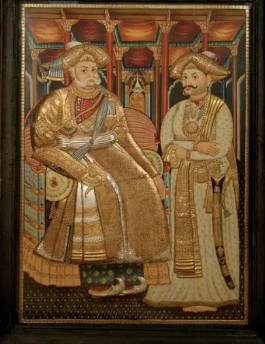
Context: Seema Sethi, an artist from Delhi, decorates her canvases using a variety of mixed media, including gold foil, watercolour, and semiprecious stones. Deities are portrayed in the Thanjavur style, which is distinguished by use of vibrant, rich colours and shiny golden foil.

HLO4OH6lj16UycQzPFDswX8StABHsSvU1bR Y2NqyNTBwPHz6c3CGKJkldE4opL8FuSF19RQspV 88VWqd0qTesN6d5Afzdu7JEKBdo 93JSJLCurTqBtPzD5diFgrgku322mwbGSzn1Mlv4in6mdA

Thanjavur/Tanjore paintings

  • Thanjavur painting is a traditional South Indian painting style that originated in the Tamil Nadu town of Thanjavur.
  • The Nayakas of Thanjavur, who were under the control of the Vijayanagara Rayas, encouraged art—primarily, classical dance and music—as well as literature, both in Telugu and Tamil, and painting of predominantly Hindu religious subjects in temples. The art form draws its immediate resources and inspiration from this time period, which dates back to around 1600 AD.
  • However, Thanjavur art as we know it today originated in the Thanjavur Maratha court (1676–1855). Under the support of the famous art patron Sarfoji II Maharaj, these works achieved their pinnacle.
  • The Saraswathi Mahal Library in Tanjore, which was established by Sarfoji II, contains some specimens of this artwork. 
  • According to Charles Gold, a British narrator, the Tanjore paintings were created by "Moochys or Painters of India. The Nayudu community of Madurai and the Raju group of Thanjavur and Tiruchi, also known as Jinigara or Chitragara, were the communities that produced the paintings in the Thanjavur style.
  • The Government of India recognised it as a Geographic Indication in 2007–2008.

Style and technique

  • The pieces were framed and intended to be hung on the walls of domestic puja rooms or bhajan halls. They were constructed on canvas glued on a wooden structure, marking a considerable departure from the pan-Indian tradition, which requires that paintings be modest.
  • The vibrant reds, rich greens, chalk white, turquoise blues, and generous use of gold (foil) and inset glass beads made up the majority of their stunning colour palette. The paintings occasionally included precious stones.
  • During Sarfoji II's reign, Thanjavur glass paintings that used Chinese reverse glass painting techniques became popular as a quicker and less expensive art.
  • Dark brown or red was typically utilised for outlining. The background was primarily red, though it may also be blue or green.

Influences

  • Paintings from Thanjavur exhibit influences from Deccani, Vijayanagara, Maratha, and possibly European or Company styles.
  • The paintings from Tirupati and Kalamkari may have had the most influence.
  • During the Anglo-Mysore Wars of 1767–1799, when a British garrison was stationed in Thanjavur, the direct European influence on Tanjore paintings began. 
  • The majority of artworks depict Hindu gods, goddesses, and saints, essentially acting as devotional icons. Jain, Sikh, Muslim, and other religious as well as secular subjects have also appeared in Tanjore paintings.

About Miniature Paintings

  • Miniature paintings are bright, individually created, small works of art. These paintings' complex brushwork, which contributes to their distinct individuality, is one of their best qualities. 
  • The colours utilised in the paintings come from a variety of organic materials, including fruits, indigo, precious stones, gold, and silver.
  • Miniature painting in India is credited to the Palas of Bengal as its forerunners, but it was under the Mughals that it attained its zenith. 

History of Miniature Paintings

  • When the Palas ruled over India's eastern region around 750 A.D., miniature paintings first appeared there. 
  • The religious teachings of the Buddha, which included his images, were inscribed on palm leaves, which is how these paintings came to be well-known.
  • Similar paintings were imported to western India by the Chalukya Dynasty kings around 960 A.D. Religious topics were frequently depicted in miniature artworks at this time.
  • The popularity of miniature paintings began to soar with the expansion of the Mughal Empire. Indian miniature paintings merged elements of the Persian style of painting during Akbar's reign. 
  • With the influence of European paintings at the Mughal court, these miniature paintings underwent further development.
  • The Rajput kings of Rajasthan continued to support miniature paintings and artists even after the Mughal Empire had collapsed. The miniature paintings of Rajasthan had unique characteristics and frequently portrayed the royal lifestyle and mythological tales of Lord Krishna and Radha, despite being influenced by the Mughal style of painting.

ABHA-based Scan and Share service

Context: The National Health Authority (NHA) under its Ayushman Bharat Digital Mission (ABDM) scheme is enabling digital interventions for bringing efficiency to the delivery of healthcare services. One such initiative is Scan and Share service. 

Scan and Share service

  • Scan and Share service enables instant registrations for patients at OPD (Out-patient Department) blocks of participating hospitals via direct sharing of their ABHA profile. 
  • The service works on a simple modality of QR-code based direct information sharing.
    • The participating hospitals display their unique QR codes at their patient registration counters.
    • The patients use their smartphones to scan the QR codes using the supported mobile Apps for the service (ABHA app, Aarogya Setu etc.)
    • The patient then creates their ABHA (Ayushman Bharat Health Account) or logs in to their existing account. Then, the patients can directly share their ABHA profile with the hospital to complete their registration without having to fill the form physically.
  • This paperless registration results in instant token generation thereby helping the patients skip the long queue by simply using their ABHA.

Ayushman Bharat Digital Mission

Ayushman Bharat Digital Mission (ANDM) aims to develop the necessary backbone to support integrated digital health infrastructure in India. However, the participation of citizens and healthcare facility is voluntary in ABDM. 

Components of ABDM:

  • ABHA Number: An individual/citizen/patient will be provided with a randomly generated 14-digit number known as ABHA for uniquely identifying a person in the digital health ecosystem, authenticating himself and linking his health records with consent across multiple systems and stakeholders.
  • Healthcare Professionals Registry (HPR): Comprehensive registry of all healthcare professionals involved in healthcare services across both modern and traditional systems of medicine.
  • Health Facility Registry (HFR): Comprehensive registry of health facilities (Hospitals, clinics, diagnostic labs, imaging centres, pharmacies etc.) across different systems of medicines including both public and private health facilities.
  • Unified Health Interface (UHI): An open protocol for various digital health services focusing on End User Applications and participating Health Service Provider applications such as appointment booking, teleconsultation, service discovery etc.

MoD signs three contracts worth ₹5,400 crore

Context: Ministry of Defence (MoD) has signed three contracts worth ₹5,400 crores recently. All these projects are under Buy {Indian – IDMM (Indigenously Designed Developed and Manufactured)} category.

Major Highlights

  • Two contracts were signed with Bharat Electronics Limited (BEL) worth ₹2,400 crores for the procurement of:
    • Automated Air Defence Control and Reporting System ‘Project Akashteer’ for the Army
    • Sarang Electronic Support Measure (ESM) systems for the Navy.
  • Another ₹2,963 crore contract was signed with NewSpace India Limited (NSIL) for an advanced communication satellite, GSAT 7B, for the Army. 

Project Akashteer

  • ‘Project Akashteer’ worth ₹1,982 crores is an automated air defence control and reporting system that will allow the army’s air defence units to operate in an integrated manner.
  • It will enable monitoring of low-level airspace over the battle areas of the Indian Army and effectively control the ground-based air defence weapon systems.

Sarang Electronic Support Measure (ESM) systems

  • The second contract worth ₹412 crores with BEL is for Sarang Electronic Support Measure systems for Indian Navy helicopters. ‘Sarang’ is designed and developed indigenously by the Defence Electronics Research Laboratory, Hyderabad under the programme, Samudrika.
  • It will generate employment of approximately two lakh man-days over a period of three years.

GSAT 7B

  • The five-tonne geostationary satellite will be developed indigenously by Indian Space Research Organisation (ISRO).
  • The satellite will considerably enhance the communication capability of the Indian Army by providing mission-critical beyond-line-of-sight communication to troops and formations as well as weapon and airborne platforms.
  • The Army is likely to get the satellite in 2026. Unlike the Indian Air Force and the Navy, the Army currently does not have a dedicated satellite.

Many parts and sub-assemblies and systems of the satellite will be sourced from indigenous manufacturers, including micro, small and medium enterprises (MSMEs) and start-ups. The project will generate employment of around 300,000 man-days over the next three-and-a-half years.

Saudi Arabia agrees to join SCO as a dialogue partner

Context: Saudi Arabia has agreed to join the Shanghai Cooperation Organisation (SCO) as a “dialogue partner”, the latest indication of closer political ties with China.

This is also seen as the step in the direction where Saudi Arabia can later become a full time member of the organization.

The Saudi-Iran Bonhomie

  • By joining the SCO, Saudi Arabia's security relationship with China is currently blossoming. But this relationship is nothing new and stems back decades before. 
  • The ballistic missile sales from China to Saudi Arabia as far back as the 1980s, with reported sales in 1992, 2007 and 2014. In 2021, the kingdom imported sensitive missile technology from the Chinese military to manufacture its own ballistic missiles
  • Saudi Arabia, the world’s largest crude supplier, and China, the biggest energy consumer, met to discuss their ambitions for an initial agreement of $29.26 billion. 
  • The United States was Riyadh’s largest trading partner at $76 billion in 2012, but now China, India and Japan have surpassed the United States, with which trade was only $29 billion in 2021
  • Saudi Aramco signed two deals to build a major refining and petrochemical complex in China valued in the billions of dollars. 

It can be concluded that Saudi Arabia is seemingly looking to diversify its global partnerships in the same way that it has been diversifying its economy into non-oil sectors and reducing its dependence on one single source. 

Reasons behind blossoming ties

  • The US is distancing itself from the region as it is no longer dependent on energy imports from the region. It has itself emerged as a significant exporter of both oil and gas.
  • The relationship between the U.S. and Saudi Arabia entered a fraught timeline since President Joe Biden came into office
  • Joe Biden announced the end of combat assistance to Riyadh as it led a military campaign in Yemen against the Iran-aligned Ansar Allah, or Houthi, movement.
  • With the Russia-Ukraine war and the energy prices soared over the conflict and ensuing Western sanctions against Moscow, Washington called on Riyadh to increase production, only for the Kingdom to join with Russia and other members of the extended Organization of Petroleum Exporting Countries (OPEC+) in cutting output.
  • America knows that its survival in the region is very costly, because it will remain under the strikes of the Axis of Resistance, which has grown and gained great influence in last decade, meaning that the American presence is no longer without cost, but rather the price will rise if US stays. 
  • Now reports have emerged that Saudi Arabia has begun talks to restore ties with Syria, which has been suspended from the Arab League since civil war broke out in 2011
  • Iran the long-time rival has joined SCO and has showed interest to join BRICS as well and this has prompted Saudi also, which has been aspiring for the same.

About Shanghai Cooperation Organization

It is a permanent intergovernmental international organisation and was formed in 2001. It is a successor of Shanghai five.

Shanghai Five

Shanghai Five, a political association based on the Agreement on Confidence-Building in the Military Field in the Border Area and the Agreement on the Mutual

Reduction of Armed Forces Members: (SCO - UZBEKISTAN)

Members

NINE countries are currently SCO full members: Kazakhstan, China, Kyrgyzstan, Russia, Tajikistan, Uzbekistan, India, and Pakistan became full members in 2017 and IRAN in 2023.

SCO decided to admit India & Pakistan at the Ufa summit of 2015.

India participated for the first time as a full member at the recently held 18th Qingdao Summit of SCO in China that was held in 2018.

Working

  • The Heads of State Council (HSC) is the highest decision-making body in the SCO.
  • The secretary general and executive director of RATS is appointed by HSC for 3 Year term.
  • The Heads of Government Council (HGC) meets once per year to discuss a strategy for multilateral cooperation and priority directions within the Organisation's framework.
  • Organisation has two permanent bodies — the Secretariat in Beijing (China) and the Regional Anti- Terrorist Structure (RATS) in Tashkent.
  • SCO RATS: Regional Anti-Terrorist Structure (RATS) of SCO is a permanent body based in Tashkent, Uzbekistan. 
  • The objective of RATS is based upon the Shanghai Convention on Combating Terrorism, Separatism and Extremism. RATS possess information on terrorist organisations and terrorists.

By polls to one Lok Sabha, 4 Assembly seats on May 10

Context: The Election Commission of India has announced by polls for one Lok Sabha seat and four Assembly constituencies, to be held on May 10, with results on May 13.

What is By poll or bye election?

  • In India, a by-election (also known as a by poll or bye-election) is an election held to fill a vacancy in the Lok Sabha (the lower house of the Indian Parliament) or a state legislative assembly. 
  • These vacancies can occur due to various reasons such as the death, resignation or disqualification of a sitting member of parliament or the state assembly. 
  • By-elections are conducted by the Election Commission of India, which is an independent body responsible for organizing and overseeing elections at various levels of government in India. 
  • By-elections are usually held within six months of the vacancy occurring, although this can vary depending on the specific circumstances. 
  • Candidates from various political parties can contest the by-election, and the winner is elected to fill the vacant seat until the next general election. 
  • By-elections are important as they provide an opportunity for citizens to exercise their right to vote and elect a representative to fill a vacant seat in the legislative assembly or parliament. 
  • They also have the potential to impact the balance of power in parliament or the state assembly, as a single seat can sometimes make a significant difference in the overall composition of the house.

About Representation of the People Act, 1951

The provisions for the actual conduct of elections to the Houses of Parliament and to the House or Houses of the Legislature of each State, the qualifications and disqualifications for the membership of these Houses, the corrupt practices and other election offences, and the decision of election disputes were all left to be made in a subsequent measure. In order to provide for these provisions, the Representation of the People Act, 1951 was enacted. 

Broadly speaking, this Act contains provisions relating to the following electoral matters:

  1. Qualifications and disqualifications for membership of Parliament and State Legislatures. 
  2. Administrative machinery for the conduct of elections
  3. Registration of political parties 
  4. Conduct of elections 
  5. Corrupt practices and electoral offences
  6. Bye-elections and time limit for filling vacancies
  7. Barring the jurisdiction of civil courts

Massive coronal hole found on sun, it's 20 times larger than Earth: Experts

Context: The sun has developed a massive “hole” 20 times larger than Earth, marking the second such occurrence in a week. The coronal hole is unleashing solar winds of 2.9 million km/h toward Earth. 

More on the news: Scientists are carefully monitoring the situation to assess if the winds will impact our planet’s magnetic field and satellites – with the potential for knock-on effects on the internet, mobile phone networks, and GPS. It is also noteworthy to scientists as it has appeared near the sun’s equator. NASA’s Solar Dynamics Observatory captured holes.

Coronal holes

  • Coronal holes are areas of the Sun's corona where the magnetic field is open and allows for the escape of high-speed solar wind particles. 
  • Coronal holes are usually harmless, experts say and are usually found near the sun’s poles.
  • These areas appear as dark regions in images of the Sun's corona taken in ultraviolet and X-ray wavelengths. 
  • Coronal holes are characterized by low magnetic field strength and low temperatures compared to the surrounding areas.
  • Coronal holes are thought to be related to the Sun's magnetic field and the Sun's 11-year solar cycle, with more coronal holes appearing during times of high solar activity.
  • They are cooler, less dense areas of the star and appear during the less active stage of the sun’s 11-year cycle.
  • Coronal holes are magnetically open areas that are one source of the high-speed solar wind.
  • At times, the solar wind can generate aurora at higher latitudes on Earth. That coronal hole produced auroras far further south than usual, with the skies over Arizona turning an electric purple and green.
  • The solar wind particles that escape from coronal holes can impact Earth's magnetic field, causing auroras and other geomagnetic disturbances. Scientists study coronal holes to better understand the Sun's magnetic field and its effects on the space environment around Earth.

SOLAR ENERGETIC PARTICLES (SEP), SOLAR WINDS AND FLARES, AND CORONAL MASS EJECTIONS (CMES)

Solar flares and Coronal Mass Ejections (CMEs)

  • CMEs and Solar flares are both explosions that occur on the sun. Sometimes they occur together, but they are not the same thing - they emit different things, they look and travel differently, and they have different effects near planets.
  • Both eruptions are created when the motion of the sun’s interior contorts its own magnetic fields. Both originate from corona. 
  • Solar flares are giant burst of X-rays and energy which travel at the speed of light in all directions. 
  • CME are giant cloud of particles (mostly protons and electrons and powerful magnetic fields) hurled into the space, in particular direction. CMEs take one to three days to reach the earth. Flares only takes eight minutes. 
  • Flares and CMEs have different effects at Earth as well. The energy from a flare can disrupt the area of the atmosphere through which radio waves travel. This can lead to degradation and, at worst, temporary blackouts in navigation and communications signals. On the other hand, CMEs can funnel particles into near-Earth space. A CME can jostle Earth’s magnetic fields creating currents that drive particles down toward Earth's poles. When these react with oxygen and nitrogen, they help create the aurora, also known as the Northern and Southern Lights.
  • A solar flare is a sudden flash of increased brightness on the Sun, usually observed near its surface and in close proximity to a sunspot group. Powerful flares are often, but not always, accompanied by a coronal mass ejection. 
  • Solar flares affect all layers of the solar atmosphere (photosphere, chromosphere, and corona).
  • Flares occur in active regions around sunspots, where intense magnetic fields penetrate the photosphere to link the corona to the solar interior.
  • Flares are powered by the sudden release of magnetic energy stored in the corona.

Solar winds constantly occur due to the corona of the sun continually expanding. The solar wind is a stream of charged particles consisting of electrons, protons and alpha particles with kinetic energy between 0.5 and 10 keV. The composition of the solar wind plasma also includes a mixture of materials found in the solar plasma: trace amounts of heavy ions and atomic nuclei C, N, O, Ne, Mg, Si, S, and Fe.

Solar energetic particles (SEP) 

  • They are high-energy particles coming from the Sun. 
  • They were first observed in the early 1940s. 
  • They consist of protons, electrons and high-energy nuclei with energy ranging from a few tens of keV to many GeV. 
  • They are of particular interest and importance because they can endanger life in outer space (especially particles above 40 MeV). But their onset is extraordinarily hard to predict, in part because we still don’t know exactly where on the Sun they come from.
  • The greatest mystery about gradual SEPs is not what speeds them up, but where they come from in the first place. For reasons still not fully understood, SEPs contain a different mix of particles than the other solar material streaming off the Sun in the solar wind – fewer carbon, sulfur, and phosphorous ions, for instance. 
  • Many scientists thought Solar Energetic Particles would be found at the edges of the active region where the magnetic field is already open and material can escape directly. But the fingerprint matched only in regions where the magnetic field is still closed.
  • The SEPs had somehow broken free from strong magnetic loops connected to the Sun at both ends. These loops trap material near the top of the chromosphere, one layer below where solar flares and coronal mass ejections erupt.

SEBI pushes norms to ensure better disclosures, boost transparency

Context: Security and Exchange Board of India has ordered the top 100 listed companies to improve disclosure norms and transparency by mandating that they confirm or deny price-sensitive market rumours, and in the case of material board decisions disclose them to exchanges within 30 minutes.. It also allowed Private Equity firms to own stakes in Asset Management Companies that operate mutual funds. 

About SEBI

  • The Securities and Exchange Board of India was constituted as a non-statutory body on April 12, 1988 through a resolution of the Government of India. The Securities and Exchange Board of India was established as a statutory body in the year 1992 and the provisions of the Securities and Exchange Board of India Act, 1992 (15 of 1992) came into force on January 30, 1992.
  • Basic function: to protect the interests of investors in securities and to promote the development of, and to regulate the securities market. 
  • It consists of one chairman, four whole time members and four part-time members. They together make up the board of SEBI.
  • Securities Appellate Tribunal is a statutory body established under the provisions of Section 15K of the Securities and Exchange Board of India Act, 1992 to hear and dispose of appeals against orders passed by the Securities and Exchange Board of India

Broad functions of SEBI

Development functions

  • Training of intermediaries
  • To promote trading in the security market. For example in permitted internet trading, made underwriting optional etc. 

Regulatory functions

  • Mandatory registration of brokers , sub brokers , share transfer agents , trustees, merchant bankers and others
  • Developed a code of conduct for intermediaries
  • Registration and regulating the working of mutual funds
  • Regulating takeover of companies
  • Audit of stock exchanges

For the discharge of its functions SEBI is given various powers.

Some of these powers are as follows:

1. To approve by- laws of stock exchanges

2. To ask stock exchanges to amend their by- laws

3. Inspect the books of accounts and call for periodical returns from recognised stock

4. Inspect books of accounts of financial intermediaries

5. Compel certain companies to list their shares in one or more stock exchanges

6. Registration of brokers

PROBLEMS AND EMERGING CHALLENGES

SEBI regulations are laws but the process through which regulations are drafted leaves a lot to be desired. Neither regulation making nor post-mortem analysis of regulations is shaped by evidence. 

Following are the problems and challenges ahead of SEBI:

Enforcement process

SEBI has made various regulations and issued orders as a civil court but only making regulations and giving orders is not enough if it is not able to enforce the same. SEBI need to strengthen its surveillance and enforcement functions.it needs to ensure that violations do not go unnoticed whether small or large.

Talent pool and market intelligence

In 2012 SEBI had 643 employees whereas the US security and exchange commission alone had 1000 people. As we all know, human resource is the most important resource for an organisation. SEBI needs to increase its human resource in both quality and quantity. It needs to significantly improve its market intelligence, technology and talent pool in order to improve its performance.

Deepening capital market

The number of participants in the capital market has not risen much. Still a large section of society does not deal in the security market. SEBI has done a lot to encourage people to participate in the capital market such as abolishing entry load on mutual funds, simplifying KYC norms but it needs to take some stronger steps to deepen participation in the capital market.

It should work deeper participation in equity by pension, superannuation and gratuity funds, developing a vibrant retail debt segment and reducing the cost of transaction.

Corporate debt and securitization market

Despite numerous attempts the debt market volume has increased but it has failed to attract sufficient liquidity. The regulator needs to develop a vibrant corporate debt market and securitization market but these largely remain part of the over the counter market.

Matching up to global standard

Capital markets are growing and the size of SEBI as compared to the security market is not sufficient to properly regulate the capital market. Like its peers (regulators of US and UK) it needs to establish self-regulatory organisations. They can focus on routine decisions and SEBI can work on more important issues.

Negatively charged

SEBI’s appointment process has always been criticized. Allegations of corruption by SEBI staff are frequently heard. The accountability mechanisms that envelope SEBI are quite poor. It is very important to make the recruitment process fair and transparent.

Reference: World wide journals

Committees constituted for the improvement of capital market regulations and development of corporate governance:

  1. Narayan Murthy Committee, 2002
  2. Uday Kotak Committee 2017
  3. Dr. D B Pathak Committee 2021
  4. Mahalingam Committee 2022

Various suggestions given by these committees have been incorporated to improve SEBI’s role in the capital market and investors’ protection. 

NCLAT upholds ₹1,338-crore penalty imposed on Google

Context:  The National Company Law Appellate Tribunal (NCLAT) upheld the ₹1,337-crore penalty imposed on Google by the Competition Commission of India (CCI) saying that the order did not violate the principles of natural justice.

Background: CCI imposed this fine on the charge that Google has misused its dominant position in the Android ecosystem showing the anti-competitive tendencies.

About the order:

However, NCLAT has restricted some directives of CCI where it called for allowing third party app stores on google play store. Google is also allowed by NCLAT to restrict uninstallation of its pre-installed apps.

About the NCLAT:

  • National Company Law Appellate Tribunal (NCLAT) was constituted under Section 410 of the Companies Act, 2013 for hearing appeals against the orders of National Company Law Tribunal(s) (NCLT), with effect from 1st June, 2016.
  • NCLAT is also the Appellate Tribunal for hearing appeals against the orders passed by NCLT(s) under Insolvency and Bankruptcy Code, 2016 (IBC), Competition Commission of India (CCI), and National Financial Reporting Authority.
  • Former judge of the Supreme Court, is the current chairperson of the tribunal.
  • Judgement given by the tribunal can be challenged in the supreme court on a point of law. For example, in the ArcelorMittal case, SC set aside the judgement of the tribunal.

About Competition Commission of India:

  • It is a statutory body created under the Competition Commission Act 2002 and its amendment in 2007. The Act prohibits anti-competitive agreements, abuse of dominant position by enterprises and regulates combinations (acquisition, acquiring of control and M&A), which causes or likely to cause an appreciable adverse effect on competition within India.
  • CCI consists of a Chairperson and 6 Members appointed by the Central Government.
  • It is the duty of the Commission to eliminate practices having adverse effects on competition, promote and sustain competition, protect the interests of consumers and ensure freedom of trade in the markets of India.
  • It ensures that two merging entities do not overtake the market. The Act prohibits abuse of dominant position by enterprises and regulates combinations (acquisition, acquiring of control and Merger and acquisition).
  • The Commission is also required to give opinion on competition issues on a reference received from a statutory authority established under any law and to undertake competition advocacy, create public awareness and impart training on competition issues.
  • It functions under the Ministry of Corporate Affairs.
  • It replaced the Monopolies and Restrictive Trade Practices Commission which was created under the Monopolies and Restrictive Trade Practices Act.