Context: The Union Enviornment Ministry and National Tiger Conservation Authority(NTCA) have recently decided to re-examine the entire aspect of translocation of Asiatic lions from Gir to Kuno from an expert’s perspective”.
About Asiatic Lion
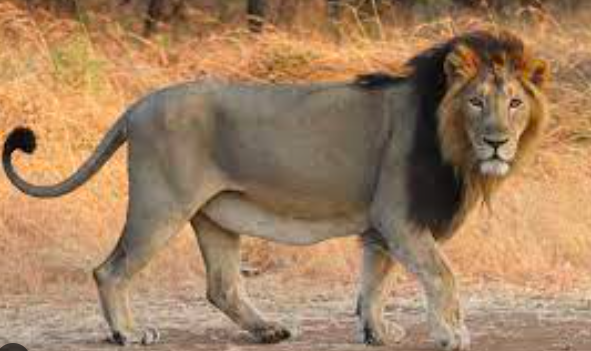
The Asiatic lion, also known as the Indian lion or Persian lion, is a population of Panthera leo leo that currently survives in the wild only in India.
Habitat: They live in a compact tract of dry deciduous forest and open grassy scrublands.
Distribution (subheading)
Historically, it inhabited much of the Middle East to northern India.
Since the turn of the 20th century, its range has been restricted to Gir National Park and the surrounding areas in the Indian state of Gujarat.
Characteristics
They are slightly smaller than African lions.
The most striking morphological character is a longitudinal fold of skin running along the belly.
The colour of their fur varies from buffish-grey with occasional silvery tones, to ruddy-tawny, covered with black spots.
Conservation Status
IUCN Red List: Endangered
CITES: Appendix I
Wildlife (Protection) Act 1972: Schedule I
State Animal of Gujarat
About Gir National Park
Location: Gir is a dry deciduous forest ecosystem in the Saurashtra region of Gujarat. It is the abode of the last surviving population of the free ranging Asiatic Lion
Flora: It consists of teak with an admixture of deciduous trees, including sal, dhak, and thorn forests.
Context: National Aluminium Company Limited (NALCO) has successfully developed a Bauxite Certified Reference Material (CRM) naming as BARC B1201 in joint collaboration with Bhabha Atomic Research Centre (BARC).
About BARC B1201
It is a bauxite-certified reference material (CRM).
It is the first-of-its-kind CRM in India and the fifth in the world.
What is a Certified Reference Material (CRM)?
CRMs are blocks of metal that come with certificates indicating the concentration of their various constituent elements along with their uncertainty levels.
Testing laboratories use CRMs to calibrate measuring instruments, evaluate test procedures and for quality control purposes.
About National Aluminium Company Limited (NALCO)
It is a Navratna Central Public Sector Enterprises CPSE, under Ministry of Mines, Govt. of India.
It is country’s leading manufacturer and exporter of alumina and aluminium.
What is Bauxite?
It is a sedimentary rock with a relatively high aluminium content.
Almost all of the aluminum that has ever been produced has been extracted from bauxite.
It does not have a specific composition. It is a mixture of hydrous aluminium oxides, aluminium hydroxides, clay minerals, and insoluble materials such as quartz, hematite, magnetite, siderite, and goethite.
How bauxite is formed?
Bauxite is formed by the thorough weathering of many different rocks. Bauxite may grade into laterite or clay, laterally or vertically.
Bauxite Used for Aluminum Production
The first step is to crush the bauxite and purify it using the Bayer Process.
Bayer Process:
In this the bauxite is washed in a hot solution of sodium hydroxide, which leaches aluminum from the bauxite.
The aluminum is precipitated out of solution in the form of aluminum hydroxide, Al(OH)3.
The aluminum hydroxide is then calcined to form alumina, Al2O3.
Aluminum is smelted from the alumina using the Hall-Heroult Process
In the Hall-Heroult Process, the alumina is dissolved in a molten bath of cryolite (Na3AlF6).
Molten aluminum is removed from the solution by electrolysis. This process uses an enormous amount of electricity.
Production and reserves
In India, Odisha alone accounts for 53% of the country’s resources of bauxite, and it is also found in the states of Andhra Pradesh, Jharkhand, Madhya Pradesh and Maharashtra.
Australia is the largest producer of bauxite, followed by Guinea and China.
Context: The government has completed its budgetary exercise for 202324 (Like every year), with both Houses of Parliament approving the Finance Bill, 2023, along with a fresh amendment introduced by Union Finance Minister Nirmala Sitharaman to rectify an error in the Securities Transaction Tax rates on option contracts in the earlier version of the Bill.
Money bills and Finance bills are interrelated. A financial bill (I) is a bill that contains not only any or all the matters mentioned in Article 110, but also other matters of general legislation.
So if we understand the Money Bill, we can understand the Finance Bill. Hence, Article 110 and Article 111 (Which contain the provisions related to Money Bill) is of utmost importance for comprehending the provisions related to Budget.
What is a Money Bills?
Article 110 of the Constitution deals with the definition of money bills. It states that a bill is deemed to be a money bill if it contains ‘only’ provisions dealing with all or any of the following matters:
The imposition, abolition, remission, alteration or regulation of any tax;
The regulation of the borrowing of money by the Union government;
The custody of the Consolidated Fund of India or the contingency fund of India, the payment of money into or the withdrawal of money from any such fund;
The appropriation of money out of the Consolidated Fund of India;
Declaration of any expenditure charged on the Consolidated Fund of India or increasing the amount of any such expenditure;
The receipt of money on account of the Consolidated Fund of India or the public account of India or the custody or issue of such money, or the audit of the accounts of the Union or of a state; or
Any matter incidental to any of the matters specified above.
However, a bill is not to be deemed to be a money bill by reason only that it provides for:
the imposition of fines or other pecuniary penalties, or
the demand or payment of fees for licenses or fees for services rendered; or
The imposition, abolition, remission, alteration or regulation of any tax by any local authority or body for local purposes.
If any question arises whether a bill is a money bill or not, the decision of the Speaker of the Lok Sabha is final. His decision in this regard cannot be questioned in any court of law or in the either House of Parliament or even the president. When a money bill is transmitted to the Rajya Sabha for recommendation and presented to the president for assent, the Speaker endorses it as a money bill.
What is the procedure for passing of money bill in parliament?
The Constitution lays down a special procedure for the passing of money bills in the Parliament. A money bill can only be introduced in the Lok Sabha and that too on the recommendation of the president. Every such bill is considered to be a government bill and can be introduced only by a minister.
It cannot reject or amend a money bill. It can only make the recommendations. It must return the bill to the Lok Sabha within 14 days, whether with or without recommendations. The Lok Sabha can either accept or reject all or any of the recommendations of the Rajya Sabha.
If the Lok Sabha accepts any recommendation, the bill is then deemed to have been passed by both the Houses in the modified form. If the Lok Sabha does not accept any recommendation, the bill is then deemed to have passed by both the Houses in the form originally passed by the Lok Sabha without any change.
If the Rajya Sabha does not return the bill to the Lok Sabha within 14 days, the bill is deemed to have been passed by both the Houses in the form originally passed by the Lok Sabha. Thus, the Lok Sabha has more powers than Rajya Sabha with regard to a money bill. On the other hand, both the Houses have equal powers with regard to an ordinary bill.
Finally, when a money bill is presented to the president, he may either give his assent to the bill or withhold his assent to the bill but cannot return the bill for reconsideration of the Houses. Normally, the president gives his assent to a money bill as it is introduced in the Parliament with his prior permission.
Difference between Money Bill and Ordinary Bill
S.N.
Money Bill
Ordinary Bill
1.
It can be introduced in the Lok Sabha only not in the Rajya Sabha
It can be introduced in either house of parliament.
2.
It can be intruded in the Lok Sabha only by a minister.
It can be introduced either by a minister or by a private member
3.
It can be introduced only of the recommendation of the president.
Recommendation of president is not required.
4.
It can’t be amended or rejected by the Rajya Sabha. The Rajya Sabha should return the bill with or without recommendations, which may be rejected or accepted by the Lok Sabha.
It can be amended or rejected by the Rajya Sabha.
5.
It can be detained by the Rajya Sabha for a maximum of 14 days only.
Rajya Sabha can detain it for a maximum of 6 months.
6.
It requires the certification of Lok Sabha speaker when transmitted to Rajya Sabha.
If it is originated in the Lok Sabha, it does not require approval of speaker when transmitted to Rajya Sabha.
7.
It is sent for approval of president even if it approved by the Lok Sabha only. There is no provision of joint sitting of both houses in this regard.
It is sent to the president only when it is passed by the both houses of parliament. In case of deadlock between two houses, a joint sitting of both the houses can be called by the president.
8.
If this bill is defeated in the Lok Sabha, then the entire council of ministers has to resign.
Its defeat in the Lok Sabha may lead to the resignation of the government if it is introduced by a member.
9.
It can be rejected or accepted but can’t be returned for reconsideration by the president (because earlier permission is taken from him).
It can be rejected, accepted or returned for reconsideration by the president.
What are Finance Bills and How are they different or similar from Money Bills?
Financial Bills (I)
A financial bill (I) is a bill that contains not only any or all the matters mentioned in Article 110, but also other matters of general legislation.
For instance, a bill that contains a borrowing clause, but does not exclusively deal with borrowing.
Similarities:In two respects, a financial bill (I) is similar to a money bill–
Both of them can be introduced only in the Lok Sabha and not in the Rajya Sabha, and
Both of them can be introduced only on the recommendation of the president. In all other respects, a financial bill (I) is governed by the same legislative procedure applicable to an ordinary bill.
Hence, it can be either rejected or amended by the Rajya Sabha (except that an amendment other than for reduction or abolition of a tax cannot be moved in either House without the recommendation of the president i.e., the recommendation of the president is not required for moving an amendment making provision for the reduction or abolition of a tax).
In case of a disagreement between the two Houses over such a bill, the president can summon a joint sitting of the two Houses to resolve the deadlock. When the bill is presented to the President, he can either give his assent to the bill or withhold his assent to the bill or return the bill for reconsideration of the Houses.
Financial Bills (II)
A financial bill (II) contains provisions involving expenditure from the Consolidated Fund of India, but does not include any of the matters mentioned in Article 110.
It is treated as an ordinary bill and in all respects, it is governed by the same legislative procedure which is applicable to an ordinary bill.
The only special feature of this bill is that it cannot be passed by either House of Parliament unless the President has recommended to that House the consideration of the bill. Hence, financial bill (II) can be introduced in either House of Parliament and recommendation of the President is not necessary for its introduction. In other words, the recommendation of the President is not required at the introduction stage but is required at the consideration stage.
It can be either rejected or amended by either House of Parliament. In case of a disagreement between the two Houses over such a bill, the President can summon a joint sitting of the two Houses to resolve the deadlock. When the bill is presented to the President, he can either give his assent to the bill or withhold his assent to the bill or return the bill for reconsideration of the Houses.
Context: The statues of two legendary figures from Karnataka, Basavanna and Kempegowda, have been unveiled. The messages of social justice, democracy, sound governance, and progress shall be promoted.
Life History of Basaveshwara [ 1105-1167]
Born in Bijapur district, Karnataka in 1105 CE.
He was an Indian statesman, poet in the Kannada language, and social reformer who lived in Karnataka during the time of King Bijjala I of the Kalachuri dynasty.
As the Kalachuri kingdom's chief minister, he established new public institutions including the Anubhava Mantapa, also known as the "hall of spiritual experience," which attracted people from all socio-economic classes.
He launched social reforms and a religious movement centred on resurrecting Shaivism using the public treasury, recognising and promoting ascetics known as Jangamas.
The Basavarajadevara Ragale, written by the Kannada poet Harihara (about 1180), is the earliest account of the social reformer's life. It is significant since the author was a near contemporary of the Basavanna.
The Vachana Sahitya in Kannada is one of the literary works of the Basavanna.
Basava is credited as the founder of Lingayats' tradition in hagiographic writings. However, modern scholars, based on Kalachuri inscriptions assert that Basava revived and improved a previously existent tradition.
Philosophy
He developed a new devotional movement named Veerashaivism.
In his poetry, Basava discussed about gender equality, community spirit and refraining from wars for any cause.
He said that the true god is "one with himself, self-born," challenging rituals, dualism, and externalisation of god.
Basava opposed rituals, but he supported icons and symbols such as wearing an Istalinga (necklace with a personal linga) and applying Vibhuti (sacred ash on the forehead) as a constant reminder of one's devotion and religious principles.
In order to eliminate the need for elite translation and interpretation of spiritual concepts and to ensure that everyone can grasp them, he advocated for the use of the vernacular language, Kannada, in all spiritual conversations.
His holy trinity included a guru (teacher), a linga (a lingam that belonged to Shiva), and jangama (constantly moving and learning).
In the 12th century, Basava built the Anubhava Mantapa, a place where anyone from either gender might assemble and debate spiritual concepts. Here, ardent followers of Shiva would share their accomplishments and spiritual poems written in the vernacular language.
Social Reforms
Basava believed that all people were created equal, regardless of caste, and that all manual effort had an equal value. According to the Basava, a true saint and Shaiva bhakta was determined by behaviour rather than by birth.
Anti-caste movement: In the 12th century A.D. Basaveshwara started one of the earliest known anti-caste campaigns in Karnataka.
In order to replace patriarchy, caste, and the brahmanic religion with an equitable system, they were carefully scrutinised, painstakingly rejected, and replaced.
Saints from the untouchable caste like Channiah and Kakkaih, as well as famous figures like Akkamahadevi and Allama Prabhu, participated in the collaborative effort known as the Anubhava Mantapa.
He organised an inter-caste marriage between an untouchable groom and a Brahmin bride as one of his extreme actions. The inter-caste marriage arranged by Basavanna is still regarded as a notable accomplishment in the history of the social reform movement.
He stayed away from wearing the sacred thread, which is a sign of caste superiority, in order to distance himself from his caste.
As compared to other Bhakti movements, the social reform movement by Basava stands out as unique. The movement had a political as well as a social impact on society. He promoted the idea of political representation for the voiceless. The followers of Basavanna currently identify as Lingayats and are one of the most powerful castes in Karnataka.
Lingayatism
Lingayatism emphasizes qualified monism (Vishishtadvaita), with philosophical foundations similar to those of the 11th–12th-century South Indian philosopher Ramanuja.
Lingayatism rejects any form of social discrimination including the caste system and authority of Vedas and Puranas.
According to a tradition which developed after Basava’s time, Lingayatism was transmitted by five Panchacharyas, namely Renukacharya, Darukacharya, Ekorama, Panditharadhya, and Vishweswara.
The scripture of Lingayatism Basava Purana was completed in 1369 during the reign of Vijayanagara ruler Bukka Raya I.
About Nadaprabhu Kempegowda (Also mentioned in news)
He was 16th century chieftain of Vijayanagar Empire.He is credited to have built around 1000 lakes throughout the city. He belonged to the dominant agriculture Vokkaliga community. ContributionFoundation of Bengaluru city: In 1526, Kempe Gowda conquered the Sivaganga principality and later Domlur.With imperial permission of the Vijayanagar Emperor Achyutharaya (an inscription at Dasarahalli records the decree date as 1532), he built Bangalore Fort and the town in 1537, and moved his capital from Yelahanka to the new Bengaluru Pete, the foundation of present-day Bangalore city.
Context: The centre government has received around 9000 applications for upgrade of schools from several states eligible to be consider under the PM Schools for Rising India or PM SHRI scheme.
About PM SHRI
It is a Centrally Sponsored Scheme with a total project cost of Rs. 27360 crores for five years from 2022-23 to 2026-27.
Aim: To develop more than 14500 schools across India as PM SHRI Schools by strengthening select existing schools being managed by Central Government/ State/ UT Government/ local bodies.
Key Features
PM SHRI Schools will showcase all components of the National Education Policy 2020, act as exemplar schools and will offer mentorship to other schools in their vicinity.
Pedagogy: More experiential, holistic, integrated, play/toy-based, inquiry-driven, discovery-oriented, learner-centred, discussion-based, flexible and enjoyable.
Focus: On achieving proficiency in learning outcomes for every child in every grade.
Assessment: At all levels based on conceptual understanding and application of knowledge to real- life situations and competency based.
Equipped with modern infrastructure including labs, smart classrooms, libraries, sports equipment, art room etc. which is inclusive and accessible.
Source: The Indian Express & Ministry of Education website
Context: The chequered history of India’s indigenous Advanced Light Helicopter (ALH-Dhruv) touched a low when a Dhruv (IN-709) in the Indian Navy’s newly-acquired flee was on a routine flight, reportedly experienced a “sudden loss of power and rapid loss of height” close to the coast of Mumbai.
About ALH Dhruv:
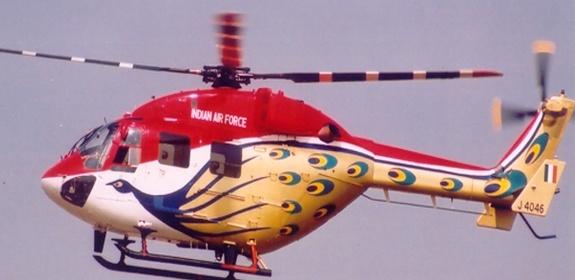
It is a twin engine, multi-role, multi-mission new generation helicopter in the 5.5 ton weight class.
The basic Helicopter is produced in skid version and wheeled version.
Dhruv is “type –Certified” for Military operations by the Centre for Military Airworthiness Certification (CEMILAC) and civil operations by the Directorate General of Civil Aviation (DGCA).
Certification of the utility military variant was completed in 2002 and that of the civil variant was completed in 2004.
The major variants of Dhruv are classified as Dhruv Mk-I, Mk-II, Mk-III & Mk-IV.
Dhruv has also been supplied to Nepal Army & Mauritius Police, Maldives.
Context: Investors in the popular small saving schemes Public Provident Fund (PPF) and Sukanya Samriddhi Account (SSA), whose rates have not been hiked since January 2019, are unlikely to get higher returns anytime soon.
Why:
This is because the government is no longer in complete agreement with the Shyamala Gopinath Committee formula adopted in April 2016 to reset small savings interest rates every quarter in line with the prevailing yields on government bonds of comparable tenures.
Sukanya Samriddhi Account Scheme
What: It is a small saving scheme for the girl child launched under Beti Bachao Beti Padao.
When: launched on 22 January 2015 in Panipat, Haryana by Prime Minister Narendra Modi.
Administered under: Ministry of Finance
Objective: aimed at the betterment of the girl child in the country by abolishing sex determination, gender discrimination, protection of girls, and higher participation of girls in education and other fields.
Basic provisions of the scheme:
Minimum deposit ₹ 250/- Maximum deposit ₹ 1.5 Lakh in a financial year.
Account can be opened in the name of a girl child till she attains the age of 10 years.
Only one account can be opened in the name of a girl child.
Account can be opened in Post offices and in authorised banks.
Withdrawal shall be allowed for the purpose of higher education of the Account holder to meet education expenses.
The account can be prematurely closed in case of marriage of girl child after her attaining the age of 18 years.
The account can be transferred anywhere in India from one Post office/Bank to another.
The account shall mature on completion of a period of 21 years from the date of opening of account.
The rate of interest is decided by the government and is determined on a quarterly basis.
Peripheral benefits of the scheme:
Deposit qualifies for deduction under Sec.80-C of Income Tax Act.
Interest earned in the account is free from Income Tax under Section -10 of Income Tax Act.
Suggestions of Shyamala Gopinath Committee
The committee had suggested that the interest rates of different schemes should be 25bps-100bps higher than the yields of the government bonds of similar maturity.
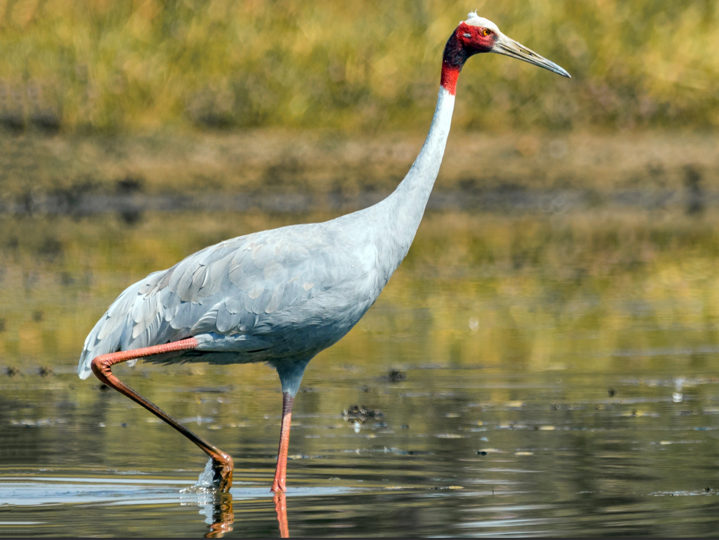
It is the tallest flying bird in the world standing 152-156 cm tall with a wingspan of 240cm. It is a large nonmigratory crane.
Scientific name: Grus Antigone
It is a social creature, found mostly in pairs or small groups of three or four.
Known to mate for life with a single partner, its breeding season coincides with heavy rainfall in monsoon.
It has three disjunct populations in the Indian sub-continent, south-east Asia, and northern Australia with an estimated global population of 25,000-37,000 individuals.
In the Indian subcontinent, it is found in northern and central India, Terai Nepal, and Pakistan.
It was once a common site in the paddy fields of Uttar Pradesh, Bihar, Rajasthan, West Bengal, Gujarat, Madhya Pradesh, and Assam.
The Sarus crane is known for its ability to live in association with humans, inhabiting open, cultivated, well-watered plains, marshlands and jheels.
IUCN status: Vulnerable
It is listed under schedule IV of Wildlife Protection Act, 1972.
Major Threats
Loss and degradation of wetlands, as a result of drainage and conversion to agriculture.
Ingestion of pesticides.
The hunting of adults and collection of eggs and chicks for trade, food, medicinal purposes and, in certain areas, to help prevent damage to crops.
Collision with power lines poses a significant threat in parts of its range.
Context: A U.K.-based startup, based at Imperial College in London, claims to have developed a technology that could alter the state of plastics and make them biodegradable. The company calls the process “biotransformation”.
About Biotransformation technology:
Biotransformation technology is a novel approach to ensure plastics that escape refuse streams are processed efficiently and broken down.
Plastics made using this technology are given a pre-programmed time during which the manufactured material looks and feels like conventional plastics without compromising on quality.
Once the product expires and is exposed to the external environment, it self-destructs and biotransforms into bioavailable wax. This wax is then consumed by microorganisms, converting waste into water, CO2, and biomass.
The technology is the world’s first that ensures polyolefins fully biodegrade in an open environment causing no microplastics.
Need for the technology:
As per the latest estimates, India is generating 3.5 billion kgs of plastic waste annually and the per capita plastic waste generation has doubled in the past five years. Of this, a third comes from packaging waste.
In 2019, plastic packaging waste from e-commerce firms was estimated at over a billion kilograms worldwide.
E-commerce giant Amazon generated an estimated 321 million kgs of plastic from packaging waste in 2021 alone.
Up to 10 million kgs of Amazon’s plastic packaging ended up in the world’s freshwater and marine ecosystems as pollution in 2019 alone.
Uses of the technology:
Food packaging and healthcare industries could greatly benefit from such an innovation.
Within healthcare and pharma industries, this technology provides biodegradable solutions for non-woven hygiene products like diapers, sanitary napkins, facial pads, etc.
The increase in the cost of integrating this technology is relatively small compared to conventional plastic which does not contain this technology.
Government Initiatives in this regard:
The Indian government has launched multiple initiatives to move the country towards sustainability, including-
In 2022, the Central government imposed a ban on single-use plastics to bring a stop to their use in the country.
Introduction of a plastic waste management gazette to help tackle the ever-growing plastic pollution caused by single-use plastics.
National Dashboard on Elimination of Single-Use Plastic and Plastic Waste Management brings all stakeholders together to track the progress made in eliminating single-use plastic and effectively managing such waste.
Extended Producer Responsibility (EPR) portal helps in improving accountability traceability and facilitating ease of compliance reporting concerning EPR obligations of the producers, importers and brand-owners.
India has also developed a mobile app to report single-use plastics grievances to check the sale, usage or manufacturing of single-use plastics in their area.
Alternatives to reducing plastic waste:
The alternatives to single-use plastics could be made using jute, coir, bagasse, rice and wheat bran, plant and agricultural residue, banana and areca leaves, jute and cloth.
Context: Indian Space Research Organisation's Launch Vehicle Mark-3 (LVM3) placed 36 OneWeb satellites in a low earth orbit (LEO) following a successful launch from the Satish Dhawan Space Centre at Sriharikota.
OneWeb satellites:
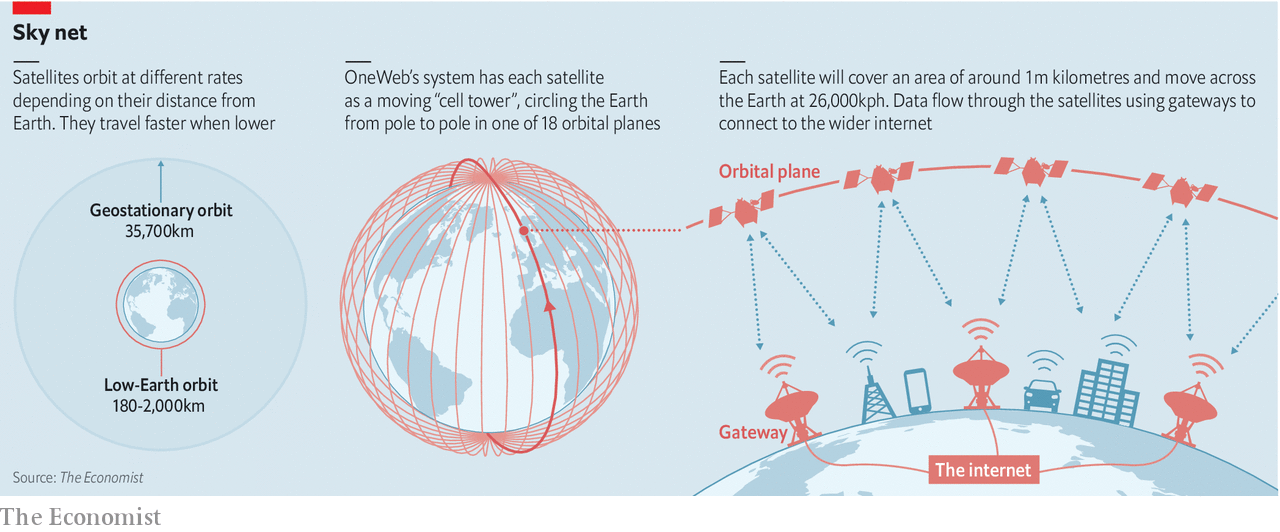
OneWeb is a United Kingdom-based company, backed by the UK government and India’s Bharti Enterprises, which is implementing a constellation ofLEO satellites.
The global communication network powered from space plans to enable connectivity for governments, businesses, and communities.
This is OneWeb’s 18th launch (second launch from India) which completed OneWeb’s constellation of 618 low earth orbit satellites that would allow it to offer high-speed, low-latency broadband internet services from space in every corner of the world.
The first set of 36 satellites was launched by the LVM3/OneWeb India-1 mission by ISRO on October 23, 2022.
Significance:
OneWeb uses a constellation of LEO satellites to provide broadband internet access instead of the traditional method of using satellites placed in geostationary orbits (GEO) 36,000 km above the equator.
LEO satellites placed in orbits ranging from 200 km to 1,500 km from earth – compared to 36,000km for GEO satellites – significantly increase bandwidth and reduce latency in space to around 50-70 milliseconds (ms).
Latency refers to the time taken by a data packet to be transmitted from a user to the internet service provider through the satellite network.
The latency for GEO satellite networks is in the range of 500-700 ms, which limits their use to 2G and 3G communications.
Context: The Centre has identified more than 30 cities with good ratings in the Municipal (Muni) bond market. Surat and Visakhapatnam are likely to issue Muni bonds soon and Chennai could be the first of the megacities to do so this year.
Previously: Indore Municipal Corporation has become the first in India to issue the Green Bonds on the National Stock Exchange.
Also, recently (February 2023), NSE’s Index services subsidiary, NSE Indices limited has launched India’s first ever Municipal Bond Index, Nifty India Municipal Bond Index. It would tracks the performance of municipal bonds issued by Indian municipal corporations across maturities and having investment grade credit rating.
Background
In 2023 Union Budget, Finance Minister announced steps for cities to issue Muni bonds.
Centre has been holding workshops with states on side-lines of G20 infra groups meetings. The selected cities are rationalising property tax rates, cleaning up their books, and planning revenue-generating projects.
Government is also conducting regular workshops with states and municipal authorities on the side-lines of the G20 Infrastructure working group meetings.
The annual Muni bond market size in India is not even $1 billion against $386 billion in USA.
These 30-plus cities rated ‘A’ are the ones that have done the most work, in rationalising property tax rates, cleaning up their books, planning revenue-generating projects, etc.
About Muni Bonds
Municipal bonds (also known as Muni Bonds) are the bonds issued by Urban Local Bodies (ULB) to raise money for the development of various capital-intensive infrastructure projects. In India, the Bengaluru Municipal Corporation issued municipal bonds for the first time in 1997.
Types
General obligation bonds: Can be used for creation and upgradation of any infrastructure. The money raised through such Bonds is repaid from the overall revenues earned by the ULBs.
Revenue Bonds: The money raised through these Bonds can be used for a specific infrastructure project such as Construction of new Road. The money raised through such Bonds is repaid only through the revenue earned from such as specific infrastructure project.
G20 Infrastructure Working Group meeting
First such meeting was organised in Pune this year in January where 18 nations participated.
Theme of the meeting was “Financing Cities of Tomorrow- Inclusive, Resilient and Sustainable”.
The meeting included discussions on various facets of making cities economic centres of growth, financing urban infrastructure, building future-ready urban infrastructure, the role of cities in meeting sustainability targets, directing fiscal investments for unlocking private financing for energy-efficient and environmentally sustainable infrastructure and mitigating social imbalances.
The second meeting of the Infrastructure Working Group is scheduled to be held in Vishakhapatnam, Andhra Pradesh, on 28th and 29th of March, 2023.
Context: The International Monetary Fund (IMF) last week confirmed a $3 billion bailout plan for Sri Lanka’s struggling economy. IMF officials are also in negotiations with Pakistan for a $1.1 billion bailout plan as the country faces a severe economic crisis marked by a falling currency and price rise.
Why do nations seek an IMF bailout?
Countries seek help from the IMF usually when their economies face a major macroeconomic risk, mostly in the form of a currency crisis. For instance in the case of Sri Lanka and Pakistan, both countries have witnessed domestic prices rise rapidly and the exchange value of their currencies drop steeply against the U.S. dollar.
Such currency crises are generally the result of gross mismanagement of the nation’s currency by its central bank, often under the covert influence of the ruling government.
Central banks may be forced by governmentsto create fresh money out of thin air to fund populist spending.
Such spending eventually results in a rapid rise of the overall money supply, which in turn causes prices to rise across the economy and the exchange value of the currency to drop.
A rapid, unpredictable fall in the value of a currency can destroy confidence in said currency and affect economic activity as people may turn hesitant to accept the currency in exchange for goods and services.
Foreigners may also be unwilling to invest in an economy where the value of its currency gyrates in an unpredictable manner.
In such a scenario, many countries are forced to seek help from the IMF to meet their external debt and other obligations, to purchase essential imports, and also to prop up the exchange value of their currencies.
Bad luck can also contribute to a crisis. In the case of Sri Lanka, a decrease in foreign tourists visiting the country led to a steep fall in the flow of U.S. dollars into the nation.
How does the IMF help countries?
The IMF basically lends money, often in the form of special drawing rights (SDRs), to troubled economies that seek the lender’s assistance.
SDRs simply represent a basket of five currencies, namely the U.S. dollar, the euro, the Chinese yuan, the Japanese yen, and the British pound. The IMF carries out its lending to troubled economies through a number of lending programs such as the extended credit facility, the flexible credit line, the stand-by agreement, etc.
Countries receiving the bailout can use the SDRs for various purposes depending on their individual circumstances.
Currently, both Sri Lanka and Pakistan are in urgent need for U.S. dollars to import essential items and also to pay their foreign debt. So any money that they receive from the IMF is likely to go towards addressing these urgent issues.
Are there any strings attached to an IMF bailout?
On giving loans to countries, the IMF makes the loan conditional on the implementation of certain economic policies. These policies tend to involve:
Reducing government borrowing – Higher taxes and lower spending
Higher interest rates to stabilise the currency.
Allow failing firms to go bankrupt.
Structural adjustment. Privatisation, deregulation, reducing corruption and bureaucracy.
The problem is that these policies of structural adjustment and macroeconomic intervention can make difficult economic situations worse.
For example, in the Asian crisis of 1997, many countries such as Indonesia, Malaysia and Thailand were required by the IMF to pursue tight monetary policy (higher interest rates) and tight fiscal policy to reduce the budget deficit and strengthen exchange rates. However, these policies caused a minor slowdown to turn into a serious recession with very high levels of unemployment.
What is the International Monetary Fund?
Its headquarters is in Washington DC.
Membership: 190 countries
The International Monetary Fund (IMF) is an international organization that:
Promotes global economic growth and
Promotes global financial stability,
Encourages international trade, and
Reduces poverty.
Origin: The IMF was originally created in 1945 as part of the Bretton Woods agreement, which attempted to encourage international financial cooperation by introducing a system of convertible currencies at fixed exchange rates.
Change in its role: Since the Bretton Woods system collapsed in the 1970s, the IMF has promoted the system of floating exchange rates, meaning that market forces determine the value of currencies relative to one another. This system remains in place today.
Functions of IMF:
The IMF collects massive amounts of data on national economies, international trade, and the global economy in aggregate and provides economic forecasts.
One of the IMF's most important functions is to make loans to countries that are experiencing economic distress to prevent or mitigate financial crises.
The IMF provides technical assistance, training, and policy advice to member countries through its capacity-building programs. These programs include training in data collection and analysis, which feed into the IMF's project of monitoring national and global economies.
The IMF gets its money through quotas and subscriptions from its member countries. These contributions are based on the size of the country's economy, making the U.S., with the world's largest economy, the largest contributor.
Quotas are a key determinant of the voting power in IMF decisions. Votes comprise one vote per SDR 100,000 of quota plus basic votes (same for all members).
IMF Grants: These are given to charities in Washington D.C. and member countries. The grants are meant to foster economic independence through education and economic development." The average grant size is $15,000.
Note: Membership of the IMF is compulsory to be part of the International Bank for Reconstruction and Development (IBRD or World Bank).