History

Government will attempt to open corridor to Sharda Peeth in PoK for devotees: Shah

Context: In line with the Kartarpur Corridor, the government intends to establish a corridor to Sharda Peeth in Pakistan-occupied Kashmir (POK).

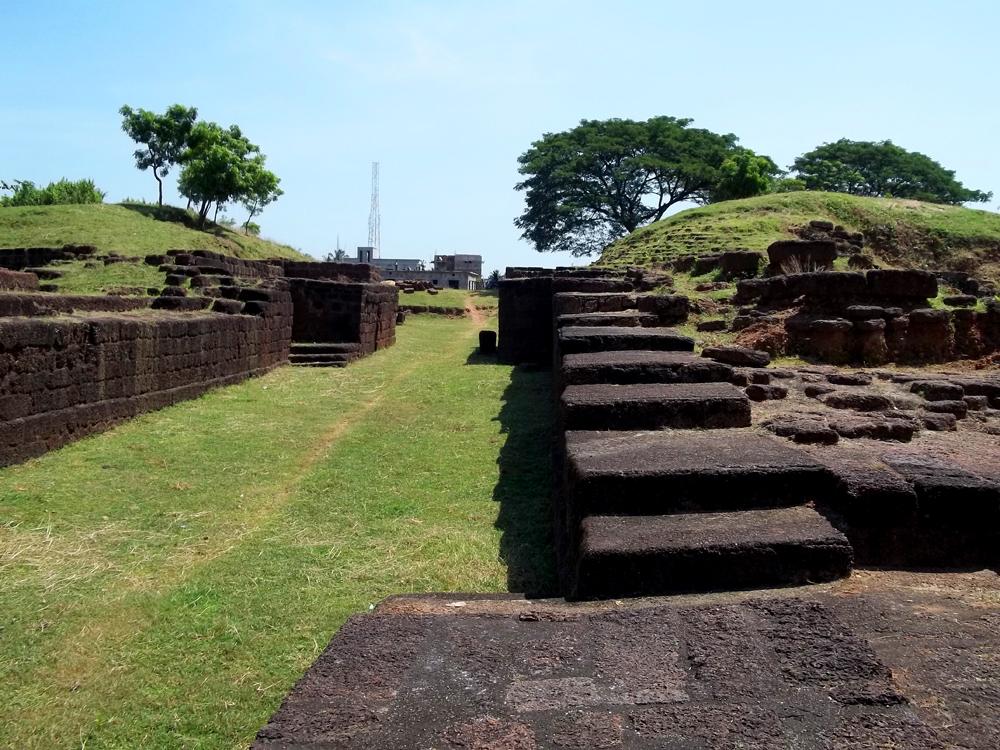
About Sharda Peeth

  • Location: Mount Harmukh, Neelum Valley in Jammu and Kashmir's Kupwara District.
  • As a centre of education
    • It was one of the most prestigious temple-educational institutions on the India-n subcontinent between the sixth and the twelfth century CE.  
    • Scholars travelled great distances for the texts since it was well renowned for its library.
    • It was crucial to the growth of the Sharada script in North India.
  • As a pilgrimage site
    • It is one of the Maha Shakti Peethas. 
    • Together with the Martand Sun Temple and the Amarnath Temple, it is one of the three holiest locations for Hindu pilgrims. 
    • It is also known for rise of Shaktism. 
  • Lalitaditya Muktapida (724 CE–760 CE) of the Karkota dynasty most likely commissioned it.
  • Historical traces of the temple
    • Al-Biruni first described the location as a venerated shrine with a wooden picture of Sharda, but this description is based only on hearsay as he had never visited Kashmir. 
    • Both the intellectual and spiritual components of Sharada Peeth are described by the Kashmiri poet Bilhana, who lived in the 11th century. He says that Sharada Peeth is the place that gave Kashmir its status as a centre of education.
    • Sharada Peeth is also mentioned in Kalhana's epic Rajatarangini (12th century).
    • Abu'l-Fazl has also described Sharada Peeth as a stone temple in the 16th century.
  • Architecture
    • The red sandstone temple was constructed in the Kashmiri architectural style. The compound is perched on a hill and is accessed from the west by a grand stone stairway. The temple is erected upon a plinth.
    • The temple is covered with a low single roof, even though Kashmiri architecture is most often characterised by a pyramidal stone roof.
    • Two Ancient Linga could be observed in a tiny opening on the north side of the wall.

Sharda Script

  • Almost 1200 years ago, it developed from the Western branch of Brahmi.
  • Between the 8th and 12th centuries, the script was widely used to write Kashmiri and Sanskrit in Kashmir and the surrounding territories of the Indian Subcontinent.
  • Its name comes from the goddess Sarada or Saraswati, the patron goddess of learning. It is a native script of Kashmir.
  • An early version of the Sharada script is used in the Bakhshali manuscript.
  • Regional variations in the Sharada script emerged in 10th century in Kashmir, the Hill States (which included parts of Himachal Pradesh), and Punjab.

No slander please, they are our freedom fighters first

Context: Writer has called for the due respect that should be given to all the unsung freedom fighters of modern Indian History.

Here is the list of four important freedom fighters that were mentioned in the editorial. 

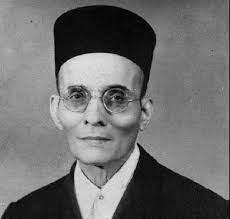
1. V D SAVARKAR

x80NBdbbAqqZobIYfMBfBhYB1RSoffrSSupFNsxATcKvtxtoj1VUTgQOrTIZdGgVg9o DPWaDWarKp61zOvYHisrsGQhtZybhyXrRIT6 6F9UGE2Mui 9CZf7ORISQHiZVJLEFPacAi34M0o6RpDBw
  • Born in 1883 at Nashik in Maharashtra.
  • Founded Abhinav Bharat Society (initially as Mitra Mela, 1899) along with brother G D Damodar in 1904. It was a secret society which also had connections with London.  
  • He was involved with India House (founded by Shyamji Krishna Varma in London to promote nationalist ideas among youth).
  • Savarkar went to London in 1906. He soon founded the Free India Society, along with Madam Bhikaji Cama based on the thoughts of the Italian nationalist Giuseppe Mazzini 
  • Functioned as president of Hindu Mahasabha from 1937 to 1943. He called against Quit India Movement.
  • Savarkar was convicted and sentenced to 50-years imprisonment also known as Kala Pani and transported in 1911 to the Cellular Jail in the Andaman and Nicobar Islands. Released in 1924.
  • He later joined Tilak’s Swaraj Party.
  • He advocated for the use of Hindi as a national language. He also fought against untouchability and caste-based discrimination.

Literary works of Savarkar

  • The History of the War of Indian Independence (on revolt of 1857)
  • ‘Hindutva: who is Hindu?’

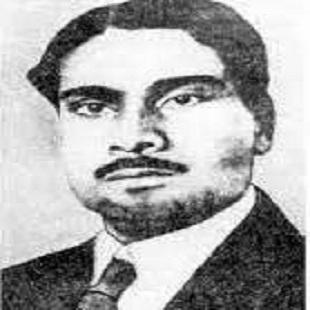
2. Dr. Chembakaraman Pillai

q0sFakTvJRFZJp6iaqEgnJQiPE vM7gEAiZX7n4
  • Born in Thiruvananthapuram in 15 September 1891. 
  • He started his struggle for freedom by protesting the Partition of Bengal in 1905. 
  • He joined with Bala Gangadhara Tilak in his resistance against the Partition of Bengal. When the British police tried to arrest him because of his revolutionary speeches against the Travancore State government, he escaped to Germany in 1908 with the help of his friend Sir Walter Williams Strickland.
  • At Berlin University, he formed International Pro-Indian Committee to gather the support of the German people for India’s freedom struggle.
  • He came in touch with many revolutionary Indian leaders in Germany like Hardayal, Raja Mahendra Pratap, Dr. Prabhakar, and A. C. Nambiar. 
  • He started a newspaper called Pro-India to spread the message of the Indian freedom movement. 
  • He participated in the First World War on the German side to defeat the British.
  • Armed with an engineering degree he joined the German navy as an officer in the cruiser Emden which attacked British ships and shelled several places in India.
  • Madras was shelled on 22 September 1914 after a fierce sea battle with British ships.
  • He met Mahatma Gandhi in South Africa. He was the Foreign Minister when a temporary Free Government of India was established in Afghanistan on 1 December 1915.
  • He met Subhash Chandra Bose in Vienna in 1919. Though he joined in the German army, he criticized even Adolf Hitler, when he humiliated India in his speech. 
  • Dr. Chidambaram Pillai died on 26 May 1934 in Germany under mysterious circumstances.

3. Vanchinathan Iyer

  • Vanchinatha Iyer or Vanchinathan was born in Shenkottai. Vanchinathan alias Sankara Iyer was the son of Shri Raghupathy Iyer. 
  • He had studied upto primary standard and joined the Forest Department thereafter. 
  • He participated in revolutionary activities against the Britsh.
  • On 17 June 1911, Vanchi who was 25, assassinated Robert Ashe, the district collector of Tirunelveli, who was also known as Collector Dorai.
  • He shot Ashe at point-blank range when Ashe's train had stopped at the Maniyachi Station, enroute to Madras. He committed suicide thereafter. The railway station has since been renamed Vanchi Maniyachi.
  • The mastermind behind the assassination was Nilakanta Brahmachari who went around the Madras presidency in 1910 recruiting cadres and hatching plots against the British. In this venture, he was accompanied by Shankar Krishna Iyer, Vanchinathan's brother-in-law, who introduced the men to each other. 
  • Along with a few other men, Nilakanta Bramhachari, Vaanchinathan, and Shankar Krishna Aiyar found an organisation called Bharatha Matha Sangam which plots the assassination of influential British men.

4. Thillaiaadi Valliammai

akjSf6brESvjSPd Gp KDQ6Oqr1cpIF YAkS1VaBUFKJk0rw0ygTwQQrjoiCoPcTitHLfynKZN fnqhpWw bg80DN89HSyD 0qpk0b P3Q9Px74x0ougN02K
  • She was a South African Tamil girl who worked with Mahatma Gandhi in her early years when she developed her nonviolent methods in South Africa fighting its apartheid regime.
  • She joined her mother in the march by women from Transvaal to Natal – which was not legally permitted without passes.
  • They were protesting against the judgement given by Justice Searle which made all marriages invalid if not registered under the registrar office or not performed according to the Christian rituals. 
  • She was imprisoned for the protest against the South African government. She was imprisoned for three months, but due to severe illness she died at the age of 16 soon after the release. 

Getting it right: a historian’s effort to document the life of Bhagat Singh

Context: The 23rd of March is commemorated as Martyrs Day in honour of Bhagat Singh and his comrades Rajguru and Sukhdev. The day is also known as Shaheed diwas.

Early life of Bhagat Singh

  • Born on September 27, 1907, in the Lyallpur area of the Punjab, now in Pakistan.
  • Bhagat Singh's uncle Ajit Singh was prominent in politics. Ajit Singh led the establishment of the radical Anjuman-i-Mohisban-i-Watan in Lahore and oversaw the publication of its newspaper, Bharat Mata
  • Ajit Singh also participated in the protests against the Canal Colonization Bill in 1907 and the Ghadar Movement in 1914–1915. His uncle Ajit Singh had an impact on Bhagat Singh.

Participation in the Indian Independence Struggle

  • He enrolled in the Lahore National College in 1923, which Lala Lajpat Rai established in reaction to Mahatma Gandhi's non-cooperation movement.
  • He also contributed to pamphlets issued by the Naujawan Bharat Sabha and wrote for publications in Punjabi and Urdu. He also contributed to Kirti, the publication of the Kirti Kisan Party.
  • Affiliation with Hindustan Republican Association Army or HRA/ Hindustan Socialist Republican Association (HSRA):
    • The organisation operated throughout the Bihar, Punjab, and United Provinces region.
    • It was founded in October 1924 in Kanpur.
    • Founded by: Ramprasad Bismil, Jogesh Chandra Chatterjee, and Sachin Sanyal.
    • Objective: Plan an armed uprising to depose the colonial administration and install a federal government based on the basis of adult franchise in India.
    • During a meeting held in Delhi's Ferozshah Kotla ruins in September 1928, the younger revolutionaries reorganised the group under the new name Hindustan Socialist Republican Association (HSRA), with socialism as its stated objective.
    • Reorganised by: Chandra Shekhar Azad, Bhagat Singh, Sukhdev, Bhagwaticharan Vohra, Bejoy Kumar Sinha, Shiv Verma, and Jaidev Kapur.
  • The killing of Saunders (Lahore, December 1928)
    • Cause: The death of Sher-i-Punjab Lala Lajpat Rai as a result of blows from a lathi charge during a procession against the Simon Commission.
    • Saunders, the police officer in command of the lathi charge in Lahore, was shot dead by Bhagat Singh, Azad, and Rajguru.
    • Defended the murder by stating that it was "an dishonour to the country" that a leader who was revered by millions of people was killed by an unqualified police officer.
  • Bomb in the Central Legislative Assembly (April 1929)
    • On April 8, 1929, Bhagat Singh and Batukeshwar Dutt threw a bomb in the Central Legislative Assembly to protest against the adoption of the Public Safety Bill and the Trade Disputes Bill.
    • Objective: To get arrested using the trial court as a platform for propaganda.
  • The Lahore Conspiracy Trial, which took place in 1929, saw the trial of Bhagat Singh, Sukhdev, and Rajguru.
  • Gandhi-Irwin Pact: On February 14, 1931, Viceroy Irwin and Gandhi agreed to a pact in Delhi. Gandhi's requests for a public investigation into police abuses and a life sentence instead of the death penalty for Bhagat Singh and his companions were both rejected by the viceroy.
  • The Congress's Karachi session: Bhagat Singh, Sukhdev, and Rajguru were executed six days prior to the session on March 23 (the session actually took place on March 29).
    • The Punjab Naujawan Bharat Sabha demonstrated with black flag protests throughout Gandhi’s trip to Karachi in retaliation for his failure to achieve the commuted death sentence for Bhagat and his companions.

Rethinking in Bhagat Singh's ideologies

  • Bhagat Singh transitioned his belief from violence and individual heroic action to Marxism and a popular broad-based movement.
  • This is why Bhagat Singh helped found the Punjab Naujawan Bharat Sabha (1926) as an open wing of revolutionaries to conduct political work among the youth, peasants, and workers. 
  • For students to engage in open, legal work, Bhagat and Sukhdev jointly established the Lahore Students' Union. 
  • He also understood that organising a mass movement of the exploited was necessary for a revolution to be successful.
  • The aim of the revolution was not just to end imperialism but also to stop "exploitation of man by man," and to establish a new socialist system.
  • He was a secular. The members of Punjab Naujawan Bharat Sabha were not allowed to be associated with sectarian organisations and were to promote tolerance in society.
  • Books by Bhagat Singh: Why I am an Atheist and Ideas of a Nation.

Protection of Indian Heritage & Artefacts

Recent investigation by the Indian Express and the International Consortium of Investigative Journalists highlights that the Archaeological Survey of India needs to be equipped with resources to protect objects within its mandate.

The Government is trying to bring the lost heritage and artefacts of the country back and therefore, has also signed agreements with the Museums in the UK, US and Australia to repatriate Indian Antiquities.

Challenges faced to bring back historical artefacts:

  1. The major challenge is to find out the background detail of the objects that have been moved out of India.
  2. There are also large gaps between what have been reported as missing and the number of objects and artefacts that are being found in the foreign museums.
  3. The Law enforcement agencies involved in the process lack the resources. For example: CAG report has brought to the light that the Archaeological Survey of India (ASI) has no vigilance or the monitoring cell that would deter the crimes of theft relating to antiquities.
  4. To attract the best talent/domain experts the ASI will need more autonomy from the Union Ministry of Culture.
  5. Parliamentary Standing Committee Reports on Transport, Tourism and Culture:
  6. 2005: Access to the latest technology: Archaeologists in the ASI are dependent on laboratories in the developed/first world countries for the analysis of pottery.
  7. 2021: Lack of resources in the Museums in India.

Way forward:

  1. Mirdha Committee, 1984: It recommended that the ASI needs to be given the status of a ‘scientific and technical institution’ and to be made more autonomous for better functioning.
  2. The Agencies need to be equipped with latest technologies and adequate resources. For example: Goa’s Advanced Antiquities Management System (AAMS) launched by the state’s Directorate of Archives and Archaeology.
  3. Also, there is a need to bring expertise so as to preserve the antiquities and heritage of India in an ambitious manner.

Martand Temple

Archaeological survey of India is looking towards bringing back artefacts belonging to the medieval History of Jammu and Kashmir that were lost or stolen previously. Among these includes the objects stolen from Martand Temple.

ABOUT MARTAND TEMPLE

  • It is a Hindu temple dedicated to Sun God located near Anantnag in Kashmir Valley of Jammu and Kashmir (Union Territory), India.
  • According to Kalhana in Rajatarangini, Martand Sun Temple was commissioned by Lalitaditya Muktapida in the eighth century AD. Lalitaditya belonged to the Karkota dynasty.
  • Dedicated to Surya, the chief solar deity in Hinduism. Surya is also known by the Sanskrit language synonym Martand.
  • The temple was destroyed by Sikandar Shah Miri in a zeal to Islamise the society under the advice of Sufi preacher Mir Muhammad Hamadani.
  • Other Sun Temples in India: Sun Temple at Konark (Odisha), Sun Temple at Modhera (Gujarat).

Temple architecture:

  • It blended the Gandharan, Gupta and Chinese forms of architecture.
  • Primary shrine in its centre and surrounded by 84 smaller shrines.
  • Temple walls are depicted with the images of lord Vishnu and river goddess such as Ganga and Yamuna.
  • Material: Lime mortar was used with huge blocks of grey limestones.
image 13

ABOUT KARKOTA DYNASTY

  • Duration: 625 − 855 CE
  • Region: Kashmir Valley
  • Founder: Durlabhavardhana
  • Succeeded by: Utpala dynasty (Avanti Varman was the founder)
  • Patronised the both Hinduism (Vaishnavite) and Buddhism (ruins of Stupa, Chaitya and Vihara could be found).
  • Sources for the dynasty: Kalhana’s Rajatarangini, Nilamata Purana, Vishnudharmottara Purana, Chronicles of Xuanzang.
  • Coins: based on the Kushan style (image of king standing or Gods on obverse) with Sharada script. Coins were always inscribed in the name of Kidara I on the reverse. They were made using the mixed metals.
  • Lalitaditya commissioned numerous gold and silver images for temples and monasteries across faiths, and his span is considered to be the zenith of Kashmiri sculpture.

India treasure trove and Antiquities Abroad

There has been high profile official move to ensure the return of lost heritage from abroad. In October 2021, India successfully got back as many as 307 antiquities to India valued at nearly $4 million.

Definition of an antiquity:  

  • The Antiquities and Art Treasures Act, 1972, define an antiquity" as "any coin, sculpture, painting, epigraph or other work of art or craftsmanship, any article, object or thing detached from a building or cave; any article object or thing illustrative of science, art, crafts, literature, religion, customs, morals or politics in bygone ages; any article, object or thing of historical interest that "has been in existence for not less than one hundred years"
  • For manuscript, record or other document which is of scientific, historical literary or aesthetic value, the duration is not less than seventy-five years."

Related laws in India:

  • In India Item-67 of the Union List, Item- 12 of the State List, and Item-40 of the Concurrent List of the Constitution deal with the country's heritage.
  • Before Independence, an Antiquities (Export Control) Act was passed in 1947 to ensure that "no antiquity could be exported without license."
  • In 1958, The Ancient Monuments and Archaeological Sites and Remains Act was enacted (AMASR Act).
  • The government enacted The Antiquities and Art Treasures Act, 1972, which was implemented from April 1, 1976.

About the Antiquities and Art Treasures Act:

  • The Antiquities And Art Treasures ACT, 1972: This Act is enacted to regulate the export trade in antiquities and art treasures, to prevent smuggling of and fraudulent dealings in antiquities.
  • Important Sections:
  • Section.3: The Act states, "it shall not be lawful for any person, other than the Central Government or any authority or agency authorised by the Central Government in this behalf, to export any antiquity or art treasure.
  • Section.5: Antiquities to be sold only under a licence.
  • The Act also states ‘No person shall, himself or by any other person on his behalf, carry on the business of selling or offering to sell any antiquity except under and in accordance with the terms and conditions of a licence. The licence is granted by the Archaeological Survey of India (ASI).
  • Section.14: Any person who owns controls or is in possession of any antiquity shall register the same before the registering officer and should obtain a certificate.

Section.25: If any person exports or attempts to export any antiquity or art treasure is liable for punishment for a term not less than 3 months which may extend to 3 years and with fine.

Archaeological Survey of India:

The first systematic research into the subcontinent's history was conducted by the Asiatic Society, which was founded by the British Indologist William Jones on January 1784. The most important of the society's achievements was the decipherment of the Brahmi script by James Prinsep in 1837. The Archaeological Survey of India was eventually formed in 1861 by a statute passed into law by Lord Canning with Alexander Cunningham as the first Archaeological Surveyor.

Present Status: The Archaeological Survey of India is an attached office of the Ministry of Culture. Under the provisions of the AMASR Act of 1958, the ASI administers more than 3650 ancient monuments, archaeological sites and remains of national importance. These can include everything from temples, mosques, churches, tombs, and cemeteries to palaces, forts, step-wells, and rock-cut caves. The Survey also maintains ancient mounds and other similar sites which represent the remains of ancient habitation.The ASI is headed by a Director General who is assisted by an Additional Director General, two Joint Directors General, and 17 Directors.  

International Convention:

  • The UNESCO 1970 Convention on the- Means of Prohibiting and Preventing the Illicit Import, Export and Transfer of Ownership of Cultural Property defined "cultural property as the property designated by countries having "importance for archaeology, prehistory history, literature, art or science."
  • Following the UNESCO convention in 1970, guidelines have been issued globally for museums, which states that; ‘When acquiring an object, collected whether by purchase or donation or any other way, museums should exercise due diligence in verifying the object's history. If a museum is acquiring - an object, the museum must verify whether the object was lawfully obtained, lawfully exported and/ or imported’.
  • The UNESCO 1970 declaration stated that, requesting Party shall furnish, at its expense, the documentation and other evidence necessary to establish its claim for recovery and return. The first thing in order to prove the ownership is the complaint (FIR) filed with the police.

Provenance of an antiquity: Provenance is the history of ownership and documentation of either purchased or acquired pieces.  An antique's provenance can add substantial value, as it can attribute ownership in the past to a famous or important historical figure.

Angkor wat Temple

India is currently working on the restoration project of 12th Century sites at the Angkor Temple in Cambodia.

About the Angkor Temple

image 4
  • Angkor Wat in Siem Reap, Cambodia is the largest religious monument in the world.
  • Literally means ‘City Temple’.
  • Dedicated to Lord Vishnu (protector in Cambodia). However previous kings of Khmer dynasty were Shaivite.
  • Patron of Angkor Wat was King Suryavarman II (Khmer empire), whose name translates as the “protector of the sun.
  • Duration: 1116-1150 C.E.
  • It is designed to represent Mount Meru, home of the devas in Hindu mythology: within a moat more than 5 kilometres (3 mi) long and an outer wall 3.6 kilometres (2.2 mi) long are three rectangular galleries, each raised above the next.
  • Carvings in the temple shows eight different stories of Hindu mythology (e.g. Amrit Manthan).
  • Material used: Grey sandstone.
  • Since the fifteenth century, Buddhists have used the temple and visitors today will see, among the thousands of visitors, Buddhist monks and nuns who worship at the site.

About the Khmer Dynasty:

image 5
  • Also known as Angkorian Empire or Khambuja.
  • Duration: 802-1431 CE
  • Founder: King Jayavarman II
  • Angkor was their capital city.
  • Important contribution: Angkor Wat, Angkor City and Bayon Buddhist temples.