Environment

Central Pollution Control Board (CPCB) and Vapour Recovery system

Context: As much as 80% of the environment protection charge and environmental compensation collected by the Central Pollution Control board remains unspent, a report the board submitted before the National Green Tribunal.

Central Pollution Control Board

  • The Central Pollution Control Board (CPCB) is a statutory organization which was constituted in 1974 under the Water (Prevention and Control of Pollution) Act, 1974.
  • Further, CPCB was entrusted with the powers and functions under the Air (Prevention and Control of Pollution) Act, 1981.

Functions

  • Advise the Central Government on any matter concerning prevention and control of water and air pollution and improvement of the quality of air.
  • Plan and cause to be executed a nation-wide programme for the prevention, control or abatement of water and air pollution.
  • Co-ordinate the activities of the State Board and resolve disputes among them.
  • Provide technical assistance and guidance to the State Boards, carry out and sponsor investigation and research relating to problems of water and air pollution, and for their prevention, control, or abatement.
  • Plan and organise training of persons engaged in programme on the prevention, control or abatement of water and air pollution.
  • Organise through mass media, a comprehensive mass awareness programme on the prevention, control or abatement of water and air pollution.
  • Collect, compile, and publish technical and statistical data relating to water and air pollution and the measures devised for their effective prevention, control or abatement.
  • Prepare manuals, codes and guidelines relating to treatment and disposal of sewage and trade effluents as well as for stack gas cleaning devices, stacks and ducts.
  • Disseminate information in respect of matters relating to water and air pollution and their prevention and control.
  • Lay down, modify, or annul, in consultation with the State Governments concerned, the standards for stream or well, and lay down standards for the quality of air; and Perform such other function as may be prescribed by the Government of India.

Powers of Central Pollution Control Board

The following are the powers of the Central Pollution Control Board:

  • Section 18 of the Water (Prevention & Control of Pollution) Act gives the CPCB the authority to order the SPCB.
  • If one of its directives is not followed, the Central Pollution Control Board does have the authority to carry out all the duties of a State Pollution Control Board.
  • According to section 33A of the Water (Prevention & Control of Pollution) Act, the CPCB has the authority to issue directives that may restrict, close, or regulate any activity, business, or procedure or that may regulate the provision of power, fresh water, or other services.

Environmental Compensation

  • Environmental compensation is a policy instrument for the protection of the environment which works on the Polluter Pay Principal. 
  • The Hon’ble National Green Tribunal through its various judgments has empowered the Central Pollution Control Board to lay down the methodology to assess and recover compensation for damage to the environment and utilize such amount in terms of an action plan for protection of the environment.

Vapor recovery system

  • Vapor recovery is the process of removing harmful vapor and fluid contaminants from crude products to improve the purity and prevent the release of toxic pollutants into the environment. 
  • Vapor removal is also done in chemical processing industries to recover unwanted vapors from storage units to keep the chemicals pure and safe for use and transport.

The typical VRU (Vapor recovery unit) consists of four principal components:

  • Gas Compressor
  • Scrubber
  • Variable Frequency Drives (VFDs)
  • Switching device

Working of VRU

The primary function of a VRU system is to remove the vapors that collect inside sealed hydrocarbon tanks. The machine does this by gas compression and suction.

  • The vapor recovery procedure involves the following steps:
    • The rotary screw gas compressor sucks liquid molecules into the scrubber.
    • The scrubber removes the water vapor, debris, and unwanted fluids from the tank.
    • The recovered vapor is pumped into gas lines while the trapped liquids are channelled to the pipelines.
image 16

Ecomark Certification Rule, 2023

Context: Ministry of Environment, Forest & Climate Change (MOEFCC) has notified an updation of Scheme on labelling of environment friendly products - 'Ecomark' aiming nudge individual choices and behaviors towards sustainability, in line with the philosophy of LiFE (Lifestyle of Environment). This will make consumers able to make choices among products and opt for products that are eco-friendly in their design, process etc.

About Ecomark Certification

ecomark Logo
  • Ecomark Certification Rules is for labelling of products which will have lesser adverse impacts on environment to encourage consumers to adopt such products and manufacturers for transitioning to production of Ecomark certified products for promoting sustainability. 
  • Ecomark certification rules have been notified under Environment (Protection) Act, 1986.

Benefits of Ecomark Certification

  • Provide accreditation and labelling for household and other consumer products which meet certain environmental criteria.
  • Promote environmentally friendly products.
  • Promote resource efficiency & circular economy.
  • Preventing misleading information on environmental aspects of products
  • Enables industry to implement environment-friendly processes or production methods.

Application of Ecomark certification

  • Apply to any product which is produced or supplied for distribution or use in the market.

Criteria for Ecomark labelling:

  • Environmental criteria for each product/product category under Ecomark Rules shall be notified by Central Government.
  • Certification of Standards Body (national or international) for quality and safety or mandate of Quality Control Orders is a pre-requisite for Ecomark. 
  • Products will be examined in terms of environmental impacts will include:
    • Have substantially less potential for pollution, environmental impact, minimise or eliminate generation of waste and environmental emissions, than other comparable products.
    • Recyclable and/or made from recycled products where comparable products are not.
    • Make significant contribution to saving.
    • Build consumer awareness on environmental issues and implication of their choices.
    • Encourage manufacturers for transitioning to production of Ecomark certified products.
    • Prevent misleading and deceptive information with respect to fraudulent use of Ecomark label.
  • Product primary criteria will include:
    • Production or process including source of raw material.
    • Use of natural resources
    • Likely impact on environment
    • Effect & extent of emissions/waste arising from production process.
    • Disposal of product and its packaging
    • Compliance to Extended Producer Responsibility regulations
    • Utilisation of waste and recycled materials
    • Suitability of recycling.
    • Substitution of hazardous substances with safer ones.

Implementation mechanism of Ecomark rules

Governance of Ecomark Rules is vested with a Steering Committee which comprises representatives from concerned ministries/departments, domain experts, representatives from industry associations, consumer groups and other relevant stakeholders. Functions of Steering Committee are:

  1. Grant approvals for:
    • Framework for institutionalising Ecomark Rules.
    • Initiatives to incentivise Ecomark certified business operators.
    • Notify product/product categories to be included in Ecomark Rules on recommendations of Ecomark Administrator.
    • Recognition of domestic and international voluntary ecolabelling programs.
    • Activities related creation of mass awareness for promotion of Ecomark Rules.
    • Strategies for promotion and future development of Ecomark Rules.
  1. Make recommendations to Central Government
    • Determine product/product category to be included in Ecomark Rules.
    • Inclusion of Ecomark products in public procurement under GeM portal.
    • Allocation of resources for implementation of Ecomark Rules.
    • Measures for adoption of Ecomark
  1. Review and monitoring of implementation of Eco

Ecomark Administrator: 

Central Pollution Control Board (CPCB) is responsible for implementation of the Ecomark Rules. Responsibilities of Ecomark Administrator are:

  1. Develop guidelines for:
    • Framework for institutionalising Ecomark Rules.
    • Development of Ecomark Web portal and Knowledge/Database platform
    • Designation of Ecomark Verifiers
    • Appointing third parties for carrying out market surveillance activities.
    • For appointing third parties for carrying out market surveillance activities.
    • For fixing fees to be charged by Designated Ecomark Verifiers.
  1. Identify products to be covered under Ecomark Rules
  2. Constitute technical committees for different products under Ecomark Rules, develop specific criteria that a product shall comply to certified under Ecomark Rules.
  3. Review existing state of knowledge and environmental criteria being followed domestically/in other countries.
  4. Develop initiatives to incentivize Ecomark certified entities for adoption of Ecomark.
  5. Register and empanel Designated Ecomark Verifiers, third party for market surveillance, audit and third party on Ecomark web portal.
  6. Issue Ecomark certificate based on verification authorizing a person or a body of persons to mark its product with Ecomark or recognised eco label.
  7. Review, suspend, or cancel a Ecomark certificate.
  8. Review Ecomark criteria as per technology development and market evolution.
  9. Compile annual reports submitted by all the Ecomark or other recognised eco label entities.
  10. Assess domestic or international voluntary ecolabelling program, for recognition under Ecomark rules.
  11. Assess international ecolabelling programs, for mutual recognition.
  12. Direct Ecomark Certificate holders to pay compensation in case of non-compliance.

Designated Ecomark Verifiers

  • Administrator (CPCB) or Designated Ecomark verifiers will verify compliance with ecolabelling criteria for the award/renewal of certificate to products under Ecomark Rules. 
  • Designated Ecomark Verifiers shall be accredited entities. 
  • Undertake conformity assessment including visiting factory, drawing samples, audit of factory, recommending for award/renewal of certification.

E-commerce site by Energy Efficiency Services Limited (EESL)

Context: Energy Efficiency Services Limited (EESL) is planning to set up a new e-commerce site to showcase ‘energy efficient’ appliances.

Energy Efficiency Services Limited (EESL)

  • Founded in 2009, EESL is promoted by the Ministry of Power, Government of India as a Joint Venture of four reputed public-sector undertakings NTPC Limited, Power Finance Corporation Limited, REC Limited and POWERGRID Corporation of India Limited.
image 47
  • Energy Efficiency Services Limited (EESL) is a Super Energy Service Company (ESCO), which enables consumers, industries and governments to effectively manage their energy needs through energy-efficient technologies.

Bureau of Energy Efficiency (BEE)

  • The Government of India set up the Bureau of Energy Efficiency (BEE) in 2002 under the provisions of the Energy Conservation Act, 2001.
image 46
  • BEE co-ordinates with designated consumers, designated agencies and other organizations; recognizes, identifies and utilizes the existing resources and infrastructure, in performing the functions assigned to it under the Energy Conservation Act.

Standards & Labelling

  • Standards and Labelling (S&L) scheme is a flagship initiative of Ministry of Power that was launched with the key objective of providing consumers an informed choice regarding the energy savings and thereby the cost-saving potential of various energy consuming appliances.
  • This scheme prescribes minimum energy performance levels for appliances/ equipment, rated on a scale of 1 to 5 with 5 being the most energy efficient.
  • Presently, S&L scheme covers the star labelling program for 35 appliances, out of which 15 appliances are under mandatory regime and remaining 20 appliances are under voluntary regime. 

GI tag for the Cashew industry in Goa

Context: Recently, GOAN Cashew (Kernel) got the GI tag.

diagram of cashew kernel 652e1c6182fd3
Diagram of Cashew Kernel

About Cashew in India

  • Cashew tree is a tropical evergreen variety which was native to northeast Brazil and was introduced to Goa and Mozambique by the Portuguese as a crop.
  • Initially, they were introduced for combating soil erosion in coastal areas, since they are fast-growing, tolerate salinity and thrive on sandy soils. 
  • The story was that the edible value of cashew was discovered by Goan prisoners exiled to Portuguese territory of Africa (Mozambique) during Goa’s freedom movement in the mid-18th century.
  • The true fruit of the cashew tree is the cashew nut, which is attached to the bottom of a swollen stalk, known as the cashew apple. The part commonly known as a cashew nut is the kernel, which is protected by a thin skin (testa) and a thicker outer shell. The latter contains an acidic oil, cashew nut shell liquid (CNSL), which is a key by-product of cashew nut production, with a variety of uses
  • India is one of largest cashew exporter, with more than 15% of the world's export share.
  • Top three cashew consuming countries: India, USA and Germany.
  • Cashews account for 17% of world tree nut production in 2019/20, making it the third most popular tree nut after almonds and walnuts.
  • Cashew nuts are consumed in a variety of forms, including as salty or sweet snacks and as ingredients in desserts and savoury dishes, or are further processed into cashew butter or as ingredients in a variety of spreads, sauces, bars and drinks.

Global Production, exports of Cashew Nut

image 43
image 44
image 45

Key climatic factors that affect cashew cultivation

  • Temperature: High temperatures (20-35oC, most suitable temperature is between 30-38oC) can promote rapid growth and flowering, but they can also lead to heat stress and decreased yields. Low temperatures can delay flowering and fruit set and can even damage the trees.
  • Rainfall: Cashew trees require adequate rainfall for optimal growth and production. However, too much rain can lead to waterlogging and diseases. (100-200 cm annually)
  • Relative humidity: High relative humidity (60-90%) can promote the growth of fungal diseases. However, cashew trees also require some humidity to prevent the flowers and fruits from drying out.
  • Soil: Cashew trees can be grown in a variety of soil types, but they prefer well-drained sandy or loamy soils. Heavy clay soils are not suitable for cashew cultivation.
  • Cashew trees are sensitive to cold and frost, so they should not be grown in areas where the temperature drops below 10°C (50°F) for prolonged periods of time. Cashew trees also require a dry season of at least 4-5 months for flowering and fruit set.

About GI tag

  • A geographical indication (GI) tag is a sign used on products that have a specific geographical origin and qualities or reputation that are due to that origin.
  • In India, the GI tag is regulated by the Geographical Indications of Goods (Registration and Protection) Act, 1999.
  • GI tags are important for protecting the reputation and quality of Indian products.
  • They also help to promote the economic development of the regions where the products are produced.

Estivation or Aestivation

Context: Animals often tend to show some physiological adaptation to survive in challenging environments. This adaptation varies depending on factors like when and why they are occurring and what kind of animals are adopting it.

Physiological adaptations are mainly of three types:

  1. Hibernation
  2. Brumation
  3. Estivation or Aestivation

Further Migration can also be considered as an adaptation technique where species relocate themselves to avoid harsh weather.

Hibernation 

  • Hibernation is a physiological adaptation practised by some animals. It is a state of inactivity and dormancy that enables some animals to survive in cold environments with reduced food availability during the winter months.
image 42
  • Hibernation is mostly done by the endotherms or warm-blooded animals
  • A variety of animals can hibernate, including bats, bears, rodents, and some species of birds and reptiles.

Brumation

  • Brumation is known as the hibernation for cold-blooded animals. In a nutshell, brumation is to reptiles what hibernation is to mammals.
image 41

Hibernating animals need to eat in order to have enough food storage to last them through their hibernation period as their metabolism while decreased is still active.

Brumating animals stop eating before entering inactivity as their metabolic rate drops so low that they are unable to fully digest their meal until outside temperatures increase.

Estivation or Aestivation

  • It is a physiological adaptation whereby the animal enters a long period of dormancy or inactivity in response to high temperatures or maybe even drought-like conditions. 
image 40

Similarities Between Hibernation, Brumation and Aestivation:

  1. Metabolic Slowdown: In all strategies, animals experience a significant reduction in their metabolic rate while in a dormant state.
  2. Reduced Activity: Processes involve a decrease in activity levels, which serves to conserve energy.
  3. Water Conservation Adaptations: Animals have developed specific adaptations to minimize water loss, such as creating protective mucus layers or sealing themselves within cocoons.
  4. Prolonged Dormancy: Processes can endure for extended periods, enabling animals to survive challenging environmental conditions until more favourable circumstances return.

Does the bio decomposer help? It’s all in the timing, say farmer in Capital

Context: The exercise of spraying the bio-decomposer began in the capital to curb the issue of stubble burning.

What is stubble burning?

  • Intentionally setting fire to the straw stubble that remains after grains, such as rice and wheat, have been harvested.

Why stubble burning is a big challenge?

  • It releases huge amount of pollutants and gases like no2, n20, co2, so2, ch4 and thus amounts to environmental pollution.
  • It impacts soil fertility because excessive heat kills the soil microbes, reduces soil moisture as well as destroys the nutrients.
  • It reduces visibility and thus affects free vehicular movement.
  • During the winter season its effects are more severe, The stable atmospheric conditions and northwesterly winds carry the pollutants towards Delhi.
  • It severely affects the health also, Various respiratory and cardiovascular diseases owe their origin to environmental pollution.

Why does stubble burning continue?

  • It is easy and cheap practice. It makes the field free from remains withing few days. Moreover, employing labor to clear the fields creates an unnecessary financial burden on the farmers.
  • Vote bank politics make the laws that ban stubble burning un-enforceable.
  • Farmers do not have many alternatives on ground level. Though many projects are going on but still they are far from accessible to farmers.
  • Lack of policy initiatives further aggravates the challenges.

About Bio decomposer

  • A bio decomposer is a living organism that breaks down organic matter into simpler substances, such as carbon dioxide, water, and minerals.
  • Bio decomposers can be bacteria, fungi, insects, or other animals. They play an essential role in the ecosystem by helping to recycle nutrients and keeping the environment clean.
  • There are many different types of bio decomposers, each with its own specialized role. For example, some bacteria break down dead plants and animals, while others break down waste products.
  • Fungi plays an important role in decomposing wood and other plant matter.
  • Insects and other animals help to break down organic matter by eating it and then excreting it as waste.

How to apply Bio decomposer in the field to curb Stubble Burning?

It is sprayed on the field post harvest, ploughed to mix the straw into the soil and lightly irrigated.

It can take 20-25 days for stubble to decompose.

Bio decomposers are used in a variety of ways, including:

Composting: They are essential for the composting process, which breaks down organic waste into nutrient-rich soil enrichment.

Bioremediation They can be used to clean up contaminated soil and water by breaking down harmful pollutants.

Here are some examples of bio decomposers:

Bacteria: Escherichia coli (E. coli), Bacillus subtilis, Pseudomonas aeruginosa

Fungi: Aspergillus Niger, Trichoderma Reese, Penicillium chrysogenum

Insects: Earthworms, termites, maggots

Other animals: Crabs, lobsters, snails

Current development and need of Bio-decomposer

As stubble burning in Punjab causing air pollution in Delhi and parts of the Indo-Gangetic Plains, an innovative intervention developed by the Indian Agricultural Research Institute (IARI) holds promise.

About Pusa Bio-decomposer

pWYlbJedlVMTXR7mnanD1 zAL74rVuemkB5ctr0 SdQnJdBlAixzpjOyFF OK8sgx dfFlHNdxplWXpMBb2gLs7dNdg 0hoLqS6naEG6g9PCo

Benefits of Pusa Decomposer​

  • Easy to use.
  • Environmentally friendly.
  • Helps in maintaining soil health.
  • Replenishes organic content in the soil.
  • Can be sprayed easily.
  • Effective and proven results.
  • Helps in reducing pollution by solving stubble burning problem.

Bio decomposers are important for maintaining a healthy and balanced ecosystem. They help to recycle nutrients, break down organic matter, and clean up the environment.

Dhole: Asiatic wild dog tiger coexistence

Context: A new study has found that overlapping prey availability or habitat suitability could dictate a positive association between dholes and tigers, facilitating coexistence or even cooperative behaviours between the two species of carnivores.

Dhole (Cuon alpinus)

Dholes, also called Asiatic wild dogs, whistling dogs, red dogs etc. are social carnivores of the dog family (Canidae). 

image 16
  • Natural Habitat: They inhabit forests of central, south and southeast Asia. Habitat typically includes Tropical dry forests, Tropical wet forests, Temperate Forests and Production agroforests.
image 17
  • They are naturally found in India and are mostly found in areas ranging from the foothills of Shivaliks, Northeastern India, Eastern parts of the Deccan plateau, and the Eastern Ghats along with the Western Ghats.
image 18
  • Social behaviour - They live in clans rather than packs, as the pack refers to a group of animals that always hunt together. In contrast, dhole clans frequently break into small packs of three to five animals, particularly during the spring season.
  • IUCN Status - Endangered 

Madras HC dismisses PIL petition against Kudankulam project

Context: The Madras High Court has dismissed a public interest litigation (PIL) petition filed in 2017 against the first pour of concrete for units 3 and 4 of the Kudankulam Nuclear Power Project (KKNPP) without complying with norms on restricting the population growth in the sterilized zone — the area within a 5­km radius of the plant.

Kudankulam Project 

  • Location - Kudankulam, Tirunelveli District, Tamil Nadu.
image 4

Capacity 

  • 2000 Megawatt (2 GW) of current Installed capacity out of the total planned capacity of 6000 Megawatt (6 GW).
  • It will be achieved through Six VVER-1000 Pressurised water reactors (PWR) reactors built in collaboration with Atomstroyexport, the Russian state company and Nuclear Power Corporation of India Limited (NPCIL).
  • It is India’s largest Nuclear Power Plant (in terms of Installed capacity).
image 5

Background 

  • Indo-Russian Agreement -1988 - Initially planned to build two reactor units. The project got stuck due to dissolution of the USSR but revived under a new agreement between India and Russia in 1997.
  • Construction works started in 2002 but the project suffered delays due to persistent protests by local inhabitants and activist groups over safety concerns.
  • Fukushima nuclear disaster in Japan (2011) fuelled the opposition thus construction works were suspended for several months.
  • The construction was resumed after the Supreme Court of India rejected petitions to block the project and permitted the commissioning of both the units in May 2013.

Nuclear Power Corporation of India Limited (NPCIL)

It is a Public Sector Enterprise under the administrative control of the Department of Atomic Energy (DAE), Government of India. The Company was registered as a Public Limited Company under the Companies Act, 1956 in 1987.

Its objective is to operate atomic power plants and implement atomic power projects for the generation of electricity in pursuance of the schemes and programmes of the Government of India under the Atomic Energy Act, of 1962.NPCIL is responsible for design, construction, commissioning and operation of nuclear power reactors

Nuclear Power Corporation of India Limited (NPCIL)

It is a Public Sector Enterprise under the administrative control of the Department of Atomic Energy (DAE), Government of India. The Company was registered as a Public Limited Company under the Companies Act, 1956 in 1987.Its objective is to operate atomic power plants and implement atomic power projects for the generation of electricity in pursuance of the schemes and programmes of the Government of India under the Atomic Energy Act, of 1962.NPCIL is responsible for design, construction, commissioning and operation of nuclear power reactors. 

Bihar’s second tiger reserve to come up in Kaimur sanctuary

Context: Bihar is all set to get its second tiger reserve in Kaimur district by the end of the year or early 2024. The NTCA had, in principle, approved our proposal in July for the tiger reserve. The department has now started preparing for the final submission to be sent to the NTCA for its formal approval.

About Kaimur Wildlife Sanctuary 

  • Kaimur Wildlife Sanctuary of Rohtas Forest Division is situated in the great Kaimur Range hills in the Rohtas District of Bihar.
  • KWLS came into existence in 1979 (the later area was increased in 2010) with an area of over 1784.73 sq km.
  • It is the largest and first wildlife sanctuary to be declared in the State of Bihar.
  • The KWLS is spread in Bhabhua and Rohtas District of the State of Bihar. 
  • Habitats offered by deep valleys (locally known as khoras) and high hills (locally known as Ballas), daunted with rivers and nallahs having water all year round in the ‘doh’. 
  • Rohtasgarh Fort and Shergarh Fort are also located in these forests. 
  • It also has numerous Megaliths, Rock paintings of prehistoric age and stone inscriptions from a bygone era. 
  • The Government of Bihar has planned to develop it into a Tiger Reserve.
  • This Wildlife Sanctuary is located in the Rohtas Plateau and Kaimur plateau of Kaimur Range in the south-western part of Bihar. 
  • This forms the watershed or divide for two of the major rivers of peninsular India, the Son on the south and Tamsa or Tons on the north.
  • The sanctuary forms an essential corridor between forest areas of Bihar, Jharkhand Chhattisgarh and Uttar Pradesh ensuring the contiguity of forests in Vindhya. 
  • In the valley portions, there are several waterfalls of which the finest are Karkat Waterfall, Manjhar Kund, Dhua Kund, Tutla Bhawani Waterfall, Geeta Ghat Waterfall, Kashish Waterfall, and Telhar. 
  • There are several Dams and lakes, including Anupam Lake, Karamchat Dam and Kohira Dam.
  • Anupam Lake and Kalidah near Rameshwar Kund are located in the lake.
  • The major forest types are Tropical Dry Mixed Deciduous, Dry Sal Forests, Boswellia Forests and Dry Bamboo Brakes. 

Important Fauna of Sanctuary

  • It harbours several other faunal species some of which figure in the IUCN Red Data List. These are Leopard, Indian Pangolin, Porcupine, Wild dogs, Jackal, Sloth bear. 
  • The Crested eagle and Hawk eagle’s presence in Rohtas forests indicates the ecological sustenance of the area.
  • It is home to many migratory birds, such as the lesser white-fronted goose, ferruginous duck, Baer's pochard duck and lesser adjutant, greater adjutant, black-necked stork, and Asian openbill stork migrate from Central Asia to the park during winter.
  • Among snakes, cobras and kraits are of common occurrence while pythons are occasionally seen.

Fukushima N-wastewater controversy

Context: On April 13, 2021, Japan’s government announced plans to release over one million tonnes of contaminated water from the Fukushima nuclear plant into the sea over the next 30 years.

The wastewater is a by-product of the catastrophic 2011 earthquake and tsunami, which disabled the Fukushima Daiichi nuclear power plant, leading to the release of radioactive materials. After more than a decade of storing this wastewater, Japan says they are running out of storage space, and allege that the, now treated water is safe for release.

How is the water being treated and what is the controversy?  

  • The water is being treated by the Tokyo Electric Power Company (TEPCO).
  •  The water has been treated with multiple techniques, notably the Advanced Liquid Processing System (ALPS), which removes 62 types of radioactive materials.
  • However, it doesn’t remove tritium. 
  • TEPCO and the Japanese government argue that the concentration of tritium does not exceed international standards, in particular, those of the International Atomic Energy Agency (IAEA), the United Nations’ nuclear watchdog. According to TEPCO’s website, the radiation emitted by tritium is “extremely weak, and can be blocked with a single sheet of paper.” The concentration is also six times less than the limit for tritium in drinking water, set by the World Health Organization.
  • You can’t remove tritium because it is identical to hydrogen. So removing it, chemically extracting it from wastewater becomes quite impossible. 
  • Fears persist within the majority. A poll conducted by Japan’s Jiji Press in September shows that 16.3% of respondents are opposed to the discharge of the treated water, and 30.8% were neither opposed nor in favour. Several protests have been held in Seoul against the release, and many hoarded seafood ahead of the discharge. Some surveys show that 8085% of South Koreans oppose the water’s release. The Chinese government, which has been against Japan’s decision since the announcement was made, has already banned seafood from Japan. 

ANALYSING NUCLEAR ENRGY AS A WHOLE:

Points in favour of nuclear energy:

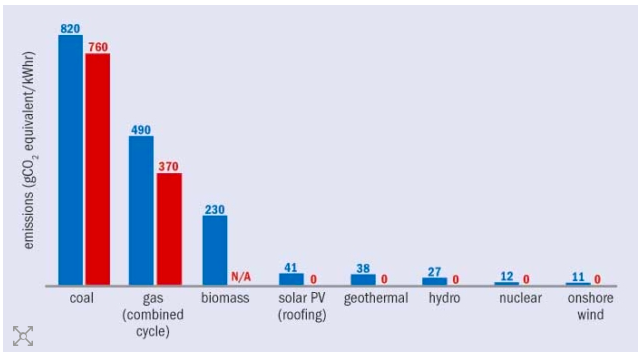
  • Nuclear is a zero-emission clean energy source: It generates power through fission, which is the process of splitting uranium atoms to produce energy. The heat released by fission is used to create steam that spins a turbine to generate electricity without the harmful by-products as emitted by fossil fuels.   
    Chart, bar chart

Description automatically generated
    Fig: A comparison of direct GHG emission (red bars) and full life cycle emissions (blue bars)

  • Nuclear energy’s land footprint is small: Despite producing massive amounts of carbon-free power, nuclear energy produces more electricity on less land than any other clean-air source. A typical 1,000-megawatt nuclear facility needs a little more than 1 square mile to operate which is 360 times less than wind plant and 75 times less than solar plant.
  • Nuclear energy produces minimal waste: Nuclear fuel is extremely dense. It’s about 1 million times greater than that of other traditional energy sources and because of this, the amount of used as nuclear fuel is not as big as you might think. 
image 12

Nuclear power is not without significant disadvantages and risks that warrant consideration:

  • Safety concerns: Nuclear accidents like Chernobyl and Fukushima have demonstrated the catastrophic dangers of nuclear power when safety systems fail. In Indian context high population density, limited water resources and seismic instability in some regions amplify the risks and potential impacts of an accident should one occur..
  • Weapons proliferation: Nuclear technologies and by-products like plutonium can potentially enable weapons proliferation if misused or mishandled. India must ensure its ambitious nuclear plans strengthen oversight, safeguards and the civilian orientation of its programs to avoid enabling weapons ambitions in unstable regions. 
  • Costs: Although nuclear energy is inexpensive once operational, nuclear power plants are highly capital intensive to construct. Project cost overruns are common. Ex: Flamanville reactor in France is 10 years behind schedule and costs have tripled to $12.7 billion. High costs could deter investment into nuclear and benefit cheaper renewable sources. 
  • Waste disposal: Nuclear plants generate radioactive waste that remains dangerous for thousands of years and there are unresolved issues around waste storage and disposal. Any country pursuing nuclear must develop safe, long-term waste solutions to avoid contamination. 
  • Opportunity costs: Large investments into nuclear energy could divert funds and focus away from renewable sources like solar and wind which are quickly achieving cost parity, often better matched to grid needs, and do not have the same economic, safety or waste risks as nuclear. A balanced approach is needed.
  • Domestic capacity: India's nuclear ambitions depend heavily on foreign reactor designs, fuel sources and technical cooperation, especially from Russia and France. This dependence could compromise India's aim for energy self-sufficiency and technology leadership. Investing in education and R&D is needed. 

Recent technological developments have addressed some nuclear concerns, but not eliminated them entirely:

  • Safety: New reactor designs like advanced light water reactors and fast breeder reactors incorporate more passive safety features, lower meltdown risks and higher tolerance for human error or natural disasters. Ex: AP1000 reactors can withstand earthquakes, tsunamis and have a 72-hour backup system. However, severe accidents remain possible and the "fail-safe" nature of reactors is still debated. Strict regulatory oversight is still needed.
  • Proliferation: Technologies like laser enrichment reduce proliferation risks by making the enrichment process more difficult to replicate, while new fuel types like mixed oxide (MOX) fuel make plutonium more difficult to extract for weapons. However, determined groups could potentially overcome these barriers, indicating safeguards must still be actively pursued. 
  • Costs: Standardized reactor designs, modular components, and improved construction techniques aim to reduce costs through replication and learning curve impacts. Ex: Modular reactors could cost 50-70% less. However, nuclear remains capital intensive, projects often run over-budget, and reliable cost reductions remain uncertain - especially where subsidies or public funds are used.
  • Waste: New reprocessing techniques can recycle used nuclear fuel and recover usable uranium and plutonium. The recycled fuel can power advanced reactors, minimizing waste. India uses a plutonium-uranium extraction process. However, reprocessing still results in radioactive byproducts that require storage. And it can increase proliferation risks which must be addressed.
  • Renewable integration: Nuclear technology startups are developing smaller, more flexible reactors to complement intermittent renewable sources, providing low-carbon baseload when needed. Ex: NuScale's small modular reactors can balance loads. However, variable renewable costs are rapidly declining as technologies and coupled with storage, could potentially reduce need for large baseload capacity from nuclear. 
  • Domestic capacity: India has established domestic manufacturing capabilities for nuclear components like coolant pipes, centrifuges, and control mechanisms through partnerships between the NPCIL and private industry. India also has a well-developed nuclear fuel cycle, including facilities for mining, milling, conversion, enrichment, and fuel fabrication, as well as facilities for reprocessing spent nuclear fuel. India is also developing advanced nuclear technologies, such as fast breeder reactors and thorium-based reactors. However, India still imports key reactor components from Russia and France due to limited technical experience. Developing a robust domestic supply chain will take time.
CONCERNS OF NUCLEAR ENERGYTECHNOLOGICAL ADDRESS OF THE CONCERNS
Safety concernsNew reactor designs like advanced light water reactors and fast breeder reactors incorporate more passive safety features, lower meltdown risks and higher tolerance for human error or natural disasters
Weapons proliferationTechnologies like laser enrichment reduce proliferation risks by making the enrichment process more difficult to replicate, while new fuel types like mixed oxide (MOX) fuel make plutonium more difficult to extract for weapons
High CostsModular reactors could cost 50-70% less.
Waste disposalNew reprocessing techniques can recycle used nuclear fuel and minimize waste. Ex: Fast breeder reactors can generate more fuel than they consume.
Opportunity costsRenewable integration: Nuclear technology startups are developing smaller, more flexible reactors to complement intermittent renewable sources, providing low-carbon baseload when needed. Ex: NuScale's small modular reactors can balance loads.
Domestic capacityIndia also has a well-developed nuclear fuel cycle, including facilities for mining, milling, conversion, enrichment, and fuel fabrication, as well as facilities for reprocessing spent nuclear fuel. India is also developing advanced nuclear technologies, such as fast breeder reactors and thorium-based reactors.

So nuclear technology offers promise but no panacea. Its viability, costs and necessity in any country's energy mix depends on a comparison to all available options - and selection of the optimal diverse, balanced and sustainable supply with fair consideration of risks and benefits. An open and honest appraisal is still most prudent with any pursuit of nuclear power.

  • Energy security: India has a severe energy deficit and high dependence on coal, with over 70% of electricity generated from coal. Nuclear power provides energy security by diversifying fuel sources for electricity and reducing overreliance on any single source. Ex: France derives over 70% of its electricity from nuclear, ensuring stable supply.
  • Energy poverty: Energy poverty is a major challenge in India, with millions of people lacking access to basic energy services. Nuclear power can help address this challenge by providing a reliable and affordable source of energy to remote and underserved areas.
  • Low-carbon source: Unlike coal, nuclear power does not emit greenhouse gases and particulate pollution. It can help India meet its climate change mitigation goals under the Paris Agreement as a low-carbon source for base load power. Ex: Sweden aims to phase out fossil fuels in favor of nuclear and renewable energy for a carbon-neutral grid. 
  • Economic benefits: The nuclear power industry creates many jobs in research, reactors construction, and supporting sectors. Kudankulam nuclear plant in Tamil Nadu employs over 2000 people. Nuclear also reduces the need to import expensive fossil fuels. Operation of nuclear plants over 60-100 year lifetimes provide long-term economic value.
  • Energy independence: Domestically produced nuclear fuel reduces dependence on imported energy sources like coal, oil and natural gas - providing greater energy security and independence. India aims to develop its domestic uranium resources and thorium-based reactors. Ex: Canada's uranium mining industry employs over 60,000 people and sustains remote communities. 
  • Reliable: Nuclear power plants operate at over 90% capacity for most of their lifetimes, providing a constant and stable source of baseload power to grids regardless of weather conditions or time of day. Ex: South Korea generates about 30% of its power from nuclear, operating at over 95% capacity.     
  • Existing investments: India has invested heavily in nuclear energy, with 22 commercial reactors operating and 7 under construction. Kudankulam plant alone cost $6.7 billion. Scrapping nuclear prematurely would lead to loss of this investment and wasted capital that could have gained from the plants' operation over 60+ years. 
  • Advanced technologies: New nuclear technologies can strengthen the case for nuclear in India, including more advanced light water reactors, fast breeder reactors, and thorium-based reactors which use domestically available fuel sources.
  • Technological penetration: Development of nuclear reactors can drive technological progress in India through several mechanisms:
    • Materials science: Nuclear reactors require advanced materials that can withstand high temperatures, pressures and radiation over long periods. Progress in materials like zirconium alloys, graphite, and new ceramics has applications in other industries like aerospace, defense, and electronics. India aims to develop silicon carbide composites for future reactors.
    • Manufacturing: High-precision manufacturing techniques are needed to produce nuclear reactor components. Electron beam welding, 3D printing processes etc require technical skills that translate to other sectors. India's Make in India initiative aims to localize nuclear supply chains to support manufacturing growth.
    • Robotics: Nuclear reactors utilize robotics for inspection, maintenance and handling of radioactive materials. Developments in robotics, sensors and remote tooling have spin-off benefits for fields like space exploration, mining, and hazardous waste management. 
    • Sensors and monitoring: Nuclear reactors employ advanced sensors, detectors and real-time monitoring technologies to control processes, detect anomalies and prevent accidents. Technologies like optical spectroscopy, radiation mapping and ultrasonic transducers have medical, security and industrial applications. 
  • Fusion: Research in nuclear fusion aims to develop clean, abundant energy by replicating the processes of the sun on earth. Fusion programs push boundaries in areas like advanced electromagnets, plasma physics and high-heat materials that ultimately benefit sectors like space travel, computing, and accelerator science. India operates an experimental tokamak fusion device.

China, U.S. and India absent at U.N.’s Climate Ambition Summit

Context : The Climate Ambition Summit (CAS) in New York, as part of the United Nations General Assembly, that concluded on September 21, was marked by the absence of major economies whose actions significantly influence the future of global emissions. China, United States and India — who collectively account for about 42% of global greenhouse gas emissions and are the top three emitters in that order — were all absent from the CAS.

What is Climate Ambition summit?

  • To accelerate action by governments, business, finance, local authorities and civil society, and hear from “first movers and doers,” the United Nations Secretary-General convened a Climate Ambition Summit at United Nations Headquarters in New York on 20 September 2023.
  • The Summit represents a critical political milestone for demonstrating that there is collective global will to accelerate the pace and scale of a just transition to a more equitable renewable-energy based, climate-resilient global economy.
  • The main goal is to keep the 1.5°C degree goal of the Paris Agreement alive and deliver climate justice to those on the front lines of the climate crisis.
  • In the run-up to the summit, about 100 heads of State had written to ramp up action to address the climate crisis. However, only representatives from 34 states and 7 institutions were given the floor on the day of the summit. 
  • The criteria for countries to be considered for a speaking slot at the summit were:
    • That they would be expected to present updated pre-2030 Nationally Determined Contributions (as agreed in Glasgow); 
    • Updated net-zero targets; 
    • Energy transition plans with commitments to no new coal, oil and gas; 
    • Fossil fuel phase-out plans; 
    • More ambitious renewable energy targets; 
    • Green Climate Fund pledges; 
    • Economy-wide plans on adaptation and resilience. 

India’s climate commitments:
India last updated its climate pledges in 2022 of reducing emissions intensity — or the volume of emissions per unit of gross domestic product (GDP) — by 45% from 2005 levels by 2030, a 10% increase from what it agreed to in 2015.

The government committed to meet 50% of its electric power needs from renewable, non-fossil fuel energy sources — up from 40% committed at the Paris agreement. It assured to create an additional carbon sink of 2.5 to 3bn tonnes of CO2-equivalent [GtCO2e] through additional forest and tree cover by 2030. In 2021, Prime Minister Narendra Modi committed to India achieving net zero by 2070. 

The scientific assessment is that India’s commitment, alongside similar commitment by G-20 economies are insufficient to keep temperatures from keeping below 2C by the end of the century. However, India’s low per capita emissions and contribution to the carbon already in the atmosphere has led other analysts to suggest that India has committed to “more than its fair share” to keeping to the Paris-agreed limits. 

Tharosaurus indicus

Context: Fossils of a plant-eating dinosaur Tharosaurus indicus from the Middle Jurassic period, found in the Thar desert near the Jaisalmer Basin by the Geological Survey of India.

image 64

About Tharosaurus indicus

  • The name “Tharosaurus indicus” reflects its origin, with “Thar” referring to the Thar Desert and “indicus” indicating its origin in India.
  • It is a long-necked, plant-eating dinosaur species.
  • It is characterised by vertebrae with deep, long depressions on the sides and under surface, and split neural spines (top-most parts of the backbone) resembling spikes.
  • Members of the Dicraeosauridae family of sauropods to which Tharasaurus belongs were not nearly as large. This family was unique: its members were smaller and had shorter necks and tails compared to the other long-necked sauropods.
  • The fossils of Tharosaurus indicus were found to be around 167 million years old, making them one of the oldest known dicraeosaurids and diplodocoids globally.
  • The dicraeosaurid dinosaur had previously been found in the North and South Americas, Africa, and China. This is the first instance of such fossils being discovered in India.