Science & Technology

New method of visual detection of SARS-CoV-2 can identify the infection at early stage

Context: New method of visual detection of SARS-CoV-2 can identify the infection at an early stage. A new sandwich-based lateral flow immunoassay (LFIA) for the detection of the Receptor Binding Domain (RBD) of severe acute respiratory syndrome-coronavirus-2(SARS-CoV-2) could provide an efficient substitute for RT-PCR tests.

Need for Rapid and Affordable Covid-19 Testing

  • RT-PCR tests are time-consuming and require skilled labour and equipment. Not feasible for large-scale on-site testing.
  • New test kits are needed that are rapid, robust, affordable and can be used for mass testing without skilled personnel. Helps reduce spread by early detection.

Development of Lateral Flow Immunoassay (LFIA) test

  • Scientists from DBT-NIAB and Gandhi Medical College developed an LFIA test for early on-field detection of SARS-CoV-2. Based on antigen-antibody interaction, doesn't need skilled staff.
  • With DST-SERB support, scientists cloned a gene for SARS-CoV-2 RBD protein, purified and generated antibodies (Ab) against it. AuNPs-Ab is used as a capture probe for colorimetric detection.
  • LFIA test works on sandwich format - RBD antigen in sample interacts with AuNPs-Ab to form complex, moves along the membrane and reacts with RBD Ab coated as test line, giving red colour. The control line verifies test functionality.
  • Different parameters like blocking buffer, and antibody concentration optimized for maximum efficiency. Band intensity was analyzed using a smartphone app for image acquisition/analysis, giving RGB data and intensity trends.

Utility and Cost-Effectiveness

  • LFIA strips are useful as a portable, point-of-care device for on-site SARS-CoV-2 testing at home or in rural areas. Much cheaper than RT-PCR, benefits the economically disadvantaged.
  • Mass production of kits can enable large-scale testing. But quality checks and safeguards are needed to ensure accuracy before policy implementation.
  • If proven highly accurate, LFIA and similar cheap, rapid test kits can revolutionize Covid-19 control strategies in resource-poor settings through early detection and isolation. Can aid in return to normalcy in some activities.

Limitations and Future Prospects

  • Smartphone image analysis provides qualitative, not quantitative results. So not replace RT-PCR's high accuracy in diagnosis, prognosis and treatment monitoring.
  • As mutations emerge, new generations of test kits may be needed to detect them. Continuous R&D is required to keep up with an evolving virus.
  • Sample size and real-world data on test performance are needed to determine suitability. Regulatory approvals are required before mass uptake.
  • Future prospects: Integrating multiplex detection in one assay; developing rapid confirmatory tests; commercial partnerships for scaling up production at low cost while ensuring quality.

The development of a cheap, rapid lateral flow immunoassay test for SARS-CoV-2 detection is promising for controlling the Covid-19 pandemic through affordable mass testing. However, the test may have limitations in the accuracy and detection of new variants that emerge. Continuous research and policy interventions are needed to enable early, widespread use of fast, low-cost but reliable diagnostics, especially in resource-poor regions bearing high caseloads. New tests that balance speed, cost, accuracy and adaptability will be key to managing coronavirus disease into the future.   
PhonePe forays into local commerce with Pincode app on ONDC network

Context: The Walmart-owned fintech company, PhonePe, has declared the launch of an e-commerce consumer application called 'Pincode,' which will be incorporated into India's Open Network for Digital Commerce (ONDC) framework. The Pincode app will initially be accessible in six major categories in Bengaluru (Karnataka), such as groceries, food, pharmaceuticals, electronics, home decor, and fashion. Once the app attains a transaction volume of roughly 10,000 per day, it will be made available in other cities.

Importance of ONDC and E-commerce 

  • ONDC aims to democratize e-commerce by connecting buyers and sellers across platforms. Discuss how it can boost competition, empower small sellers and expand the e-commerce market.
  • E-commerce has grown rapidly in India due to connectivity, consumer preferences and affordable offerings. Analyze policies and reforms needed to boost e-commerce potential.

Role of Digital Payments and UPI

  • UPI enables seamless interbank money transfers, boosting e-commerce and financial inclusion. Discuss how UPI formalizes the economy and aids the government's push for a less-cash society.
  • Transactions on PhonePe app grew from $5 billion in FY19 to $67 billion in FY21, highlighting popularity of UPI.

Importance for India's Economy

  • A thriving e-commerce market aided by UPI and ONDC can strengthen the economy by enabling small businesses, increasing jobs and improving tax compliance.
  • Fair e-commerce industry and robust digital infrastructure can boost manufacturing, services and self-reliance. India's e-commerce market is projected to reach $200 billion by 2026.

Opportunities and Challenges

  • Opportunities: Improving logistics, skilling workforce, protecting consumers, generating employment.
  • Challenges: Data privacy, security and consumer protection concerns that ONDC must address. Lack of internet connectivity and digital literacy in rural areas.

Data Security and Individual Privacy

  • While UPI and ONDC facilitate e-commerce, they raise concerns over data misuse. Regulations like data protection laws are important to build trust in digital platforms and protect people's information.
  • Issues around data localization, privacy rights, and corporate responsibilities India must consider.

Technologies like UPI and ONDC enabling accessibility and inclusion will drive India's progress. Policy and regulatory support around data security, competition and skilling can help realize e-commerce potential. With digital adoption, balancing innovation with consumer rights and privacy is key.

Open Network for Digital Commerce (ONDC)

Open Network for Digital Commerce or ONDC is an Indian government initiative to promote interoperability between e-commerce platforms. It aims to democratize e-commerce by enabling buyers and sellers on any platform to connect and transact.
Key highlights of ONDC:

  • ONDC is a private sector-led non-profit network based on an open protocol. It is not an e-commerce platform but a network of e-commerce platforms.
  • It was incorporated in 2021 by the Department for Promotion of Industry and Internal Trade (DPIIT) under the Ministry of Commerce.
  • ONDC will enable e-commerce transactions to happen across platforms through a standardized protocol. This means buyers on one app will be able to purchase from sellers on another app.
  • It seeks to create a low-barrier network for small retailers and merchants to participate in e-commerce. This can boost competition and market access.
  • ONDC will cover categories like groceries, food delivery, hotel booking, travel, mobility, etc. It aims to eventually cover all domains.
  • ONDC is likely to reduce the dominance of major e-commerce players like Amazon and Flipkart in the Indian market. It can create a more competitive and fair e-commerce ecosystem.
  • For consumers, ONDC may enable lower prices, more options and convenience of transacting across platforms using a single app. However, there are concerns around data privacy, consumer protection, grievance redressal, etc. that ONDC will need to address.ONDC can boost the digitization of small businesses, broaden India's tax base and create new opportunities for entrepreneurs, startups as well as employment in e-commerce.

ONDC aims to promote interoperability and competition in India's e-commerce market. If implemented effectively, it has the potential to empower small businesses, benefit consumers and boost the e-commerce industry.

However, regulatory oversight and safeguards will be critical to address key concerns around its functioning. ONDC signifies India's efforts to build a self-reliant digital economy with homegrown technology solutions.

Dialup Internet is now history in India: TRAI

Context: Telecom Regulatory Authority of India (TRAI) is to repeal ‘Regulation on Quality of Service of Dial-up and Leased Line Internet Access Service, 2001’. This is because the last dial-up Internet connection was switched off in India in March 2021 and India has no dial-up users now. 

Dial-up Internet

  • Dial-up Internet access uses the facilities of the Public Switched Telephone Network (PSTN) to establish a connection to an Internet service provider (ISP) by dialling a telephone number on a conventional telephone line.
    • Dial-up Internet access operates through a standard telephone line
    • By running the telephone line to a modem device in the computer and configuring it to dial a specific phone number, the computer can connect to the Internet. 
  • Dial-up Internet speeds are theoretically capable of reaching a maximum speed of 56 kilobits per second.
  • This connection type is usually inexpensive, but slow and has less available bandwidth. They may not be adequate for users who use the web for multimedia and other high-bandwidth applications.

Arctic scientists race to preserve ‘ice memory’

Context: Arctic scientists are set to start drilling to save samples of ancient ice for analysis before the frozen layers melt away due to climate change.

Major Highlights

  • Italian, French and Norwegian researchers have set up camp in Norway’s Svalbard archipelago to preserve crucial ice records for analysing past environmental conditions.
  • They will extract ice in a series of tubes from 125 metres below the surface, containing frozen geochemical traces dating back three centuries.

Key Facts

  • Human-caused carbon emissions have warmed the planet by 1.1 degrees Celsius since the 19th century.
  • The Arctic is warming between two and four times faster than the global average.

Global Report on Sodium Intake Reduction

Context: World Health Organization (WHO) has recently published the ‘Global Report on Sodium Intake Reduction,’ which sheds light on the progress of its 194 member states towards reducing population sodium intake by 30% by 2025. Excessive sodium intake contributes to the rise of hypertension, heart disease, and stroke.

Major Highlights

  • The WHO devised a sodium score, ranging from 1 (least implementation) to 4 (highest implementation), for each member state based on factors such as the extent of implementation of sodium reduction and other related measures. 
  • India has got a score of 2 which signifies the presence of at least one voluntary policy, emphasising the need for more rigorous efforts to address this health concern.
    • An average Indian’s sodium consumption is more than double the physiological need and dramatically exceeds WHO’s recommended daily intake of <5 g of salt for adults. 

Government Initiatives

India has enacted voluntary measures to decrease sodium in the food supply and promote healthier food choices. 

  • Food Safety and Standards Authority of India (FSSAI) has implemented the ‘Eat Right India’ movement, which strives to transform the nation’s food system to ensure secure, healthy, and sustainable nutrition for all citizens. 
  • FSSAI launched a social media campaign called ‘Aaj Se Thoda Kam.’ However, the average Indian’s sodium intake remains alarmingly high (approximately 11 grams).

Lithium find in J&K: Chile, with most reserves, ready to share know-how

Context: Chile, the country endowed with most lithium reserves and home to SQM, the second largest global lithium producer, is keen to partner with India on tapping into the lithium value chain. This includes potentially extending technical expertise in exploiting the newly established “inferred” lithium resources of 5.9 million tonnes in Salal-Haimana area of Reasi district in Jammu and Kashmir.

More on news: 

  • Currently we have an agreement on trade of goods. And of course, we want to improve our exchange by adding services and investment in a Comprehensive Economic Partnership Agreement.  
  • There is a possibility of tapping the expertise of Chilean lithium mining specialists being on the cards, and that companies such as SQM (a private company with the experience in lithium extraction) are likely to be open to transfer of technology to help in the exploitation of the white alkali metal, a vital ingredient of the lithium-ion rechargeable batteries that power electric vehicles (EVs), laptops and mobile phones.
  • Even though the lithium found in India is of mineral type unlike salt pans in Chile, the Chilean company would have no problem in transferring technology to do other kinds of exploitations given that Australia, the country where it already has a joint venture, also holds lithium in mineral form.

Lithium reserve in the world

Lithium is a highly valuable and sought-after metal that is used in a variety of applications, including batteries, ceramics, and pharmaceuticals.

The majority of the world's lithium reserves are located in a few countries, with the top three accounting for the vast majority of the world's supply. Here is an overview of the distribution of lithium reserves in the world:

CountryPercentage of World Lithium Reserves
Chile53.8%
Australia16.9%
Argentina13.8%
China9.4%
United States5.0%
Others7.5%
  • Chile: Chile is by far the largest producer of lithium in the world, with approximately 8.6 million metric tons of lithium reserves. Most of Chile's lithium is found in the Atacama Desert, which is one of the driest regions on Earth. 
  • Australia: Australia is the second-largest producer of lithium in the world, with approximately 2.7 million metric tons of lithium reserves. Most of Australia's lithium is found in Western Australia, where companies such as Pilbara Minerals and Galaxy Resources have large mining operations.
  • Argentina: Argentina is the third-largest producer of lithium in the world, with approximately 2.2 million metric tons of lithium reserves. Most of Argentina's lithium is found in the Salinas Grandes salt flats, which are located in the northwest of the country.
  • Other countries: While the top three countries account for the vast majority of the world's lithium reserves, there are several other countries that also have significant reserves. These include China, which has approximately 1.5 million metric tons of lithium reserves, and the United States, which has approximately 800,000 metric tons of lithium reserves.

Lithium reserves in India

  • The ancient igneous rock deposits in the Karnataka’s Mandya district holds the first traces of Lithium ever to be discovered in India. But it is merely 1,600 tonnes.
  • But in a big development, recently 5.9 million tonnes of lithium reserves found for the 1st time in Jammu and Kashmir.
  • India currently imports all of its lithium batteries.  

India's steps

  • In March 2019, India signed a MoU with Bolivia to explore and extract Lithium. 
  • India has also signed bilateral agreement with Argentina for securing strategic minerals, which will be operationalized via KABIL’s contract with three state-owned organizations in Argentina. 
  • India and the US are also looking at setting up an alternative supply chain for lithium.
  • Lithium plant: India’s first Lithium plant has been set up at Gujarat in 2021, where a private company has planned investment of Rs 1000 crore to set up a refinery. The refinery will use Lithium ore to produce base battery material. 
  • KABIL is also exploring the direct purchase of cobalt and lithium.
    • A PSU to ensure a consistent supply of critical and strategic minerals to Indian domestic market. 
    • It would carry out identification, acquisition, exploration, development, mining and processing of strategic minerals overseas. 
    • India has also signed Critical Mineral Investment Partnership with Australia primarily for supply of lithium and cobalt.

China's dominance 

  • China contributes to 60% of global production of rare earth elements.
  • China’s share of refining is around 35% for nickel, 50-70% for lithium and cobalt, and nearly 90% for rare earth elements.
  • China has a huge head start on India in terms of securing lithium deposits.
  • Around 3/4th of battery cell manufacturing capacity is in China.
  • China has heavily invested in mines of both Australia and Latin America to ensure an overall command of lithium supply chain.
  • It also controls cobalt mines in the Democratic Republic of Congo, from where 70% of this mineral is sourced.

LITHIUM-ION BATTERY

PRINCIPLE

  • Lithium, as you can see in the table above, has the highest electrochemical potential. 
  • It wants to lose electrons readily which makes it very reactive. That’s why you don’t get lithium in free form.
  • However, when mixed with metal oxide lithium sits very stably.
  • Thus, if we use this ability of lithium to be very unstable by itself to becoming very stable in metal oxide, we can derive electricity. This is what happens in a Li-ion battery. 

WORKING OF A LI-ION BATTERY

  • Lithium is mixed in metal oxide (typically cobalt, nickel, or manganese)) is used as cathode.
  • Graphite is use as a place to hold Li-ions which becomes an anode. 
  • As we have seen Lithium in metal oxide is very stable. 
  • In Li-ion battery we separate Lithium from metal oxide by pulling out its constituent electrons and ion forcefully by applying energy. 
  • The electrons and ions of Lithium are then given separate paths namely a metallic wire and an electrolyte. 
  • This is called charging as it required external energy to separate electrons and Li-ions from Lithium metal oxide.
  • The li-ions moving through electrolyte and electrons moving through the wire then recombine at anode which is graphite. 
  • Once all the electrons and ions are pulled out the battery is completely charged.
  • The lithium ions and electrons that is sitting between graphite sheets are unstable and wants to go back to metal oxide. If we again give separate paths to electrons and ions we can derive electricity.
  • Thus Li-ion battery is used to store energy by shuttling lithium ions back and forth between the anode(Li-ion in graphite) and cathode(Lithium in metal oxide).

Advantage Of Li-Ion Batteries

  • Light weight: Lithium being lightest metal.
  • High Energy Density
    • Lithium having highest electrochemical potential has very high energy density.
    • A typical automobile lead-acid battery weighs 6 kilograms more to store the same amount of energy than a lithium-ion battery.
    • In consumer electronics like mobile, laptops, camera etc I kilogram of Nickle cadmium batteries stores typically 60 to 70 watt-hours.
    • A typical lithium-ion battery can store 150 watt-hours of electricity in 1 kilogram of battery.
  • Minimum losses: A lithium-ion battery pack loses only about 5 percent of its charge per month, compared to a 20 percent loss per month for Ni-Cd batteries.
  • Low Maintenance: Lithium-ion batteries can handle hundreds of charge/discharge cycles.

disadvantages of li-ion batteries

  • Faster discharge: While quick discharge is an advantage in electric vehicle and consumer electronics applications, it is not suitable to store energy for longer than 4 hours.
  • Thus, it is not suitable for grid-level storage which is necessary for renewable energy like solar which suffer from intermittency problem.
  • Ageing: Li-ion batteries suffer from ageing at room temperature. Therefore, in a consumer electronic, batteries need to be partially charged for longer life.
  • Transportation: Another disadvantage of li-ion batteries is that there can be certain restrictions placed on their transportation, especially by air to protect against short circuits.
  • Cost: Lithium-ion batteries are around 40% more costly to manufacture than Nickel cadmium cells owing to high cost of lithium refining, cobalt and nickel.

Why Bedaquiline patent decision could hold key to 2025 TB goal

Context: The Indian Patent Office has recently denied Johnson & Johnson's (J&J) request to extend their patent on Bedaquiline, a tablet-form drug used for treating drug-resistant tuberculosis (TB), beyond July 2023. This decision paves the way for other drug manufacturers to produce generic versions of Bedaquiline, which is anticipated to be more economical and aid India in achieving its target of eradicating TB by 2025.

What is drug-resistant TB?

  • Drug-resistant tuberculosis (TB) occurs when the bacteria causing TB become resistant to the medications used to treat it. There are different types of drug-resistant TB, including multi-drug-resistant (MDR) TB and extensively-drug-resistant (XDR) TB, which are much harder to treat than regular TB.
  • MDR TB is resistant to at least two of the most commonly used drugs for TB treatment, while XDR TB is resistant to even more medications, making it much harder to treat. The incidence of drug-resistant TB is a major obstacle to eliminating TB in India and globally, and efforts are needed to strengthen TB prevention and control measures, increase awareness, and improve access to effective treatments.
  • Drug-resistant tuberculosis (TB) is a serious global health challenge that occurs when the bacteria causing TB become resistant to the medications used to treat it. 
  • India has a high burden of drug-resistant TB, including MDR TB and XDR TB. According to the World Health Organization (WHO), India accounted for around a quarter of the world's cases of MDR TB and XDR TB in 2019.

How is drug-resistant TB treated?

  • Drug-resistant TB is a form of TB caused by bacteria that have become resistant to the medications used to treat it. Treatment for drug-resistant TB is more complex and longer than for regular TB.
  • TB is typically treated by following a strict schedule of drug doses and frequencies prescribed by a physician. Failure to adhere to this schedule can lead to drug-resistant TB. However, deviations from the schedule can occur due to drug side effects that decrease quality of life or inadequate access to necessary drugs.
  • One of the primary drugs used to treat pulmonary MDR TB is Bedaquiline. In 2018, the World Health Organization recommended an oral regimen that included Bedaquiline, replacing two injectable drugs for MDR TB.
  • Although Bedaquiline had not completed phase III trials, the recommendation was based on smaller trials, outcomes in TB elimination programs, and the difficulty of treating MDR TB. Patients receiving the drug were closely monitored.

How effective is Bedaquiline in treating drug-resistant TB?

  • Bedaquiline is typically prescribed for a period of six months, with a higher dose in the first two weeks followed by a lower dosage for 22 weeks. This is shorter than the treatment routines for pulmonary MDR TB, which can last between 9 to 24 months.
  • Results from a phase II clinical trial showed that Bedaquiline was effective in converting a patient's sputum culture from positive to negative, with durable results observed at 24 weeks and a high likelihood of response at 120 weeks.
  • Compared to other second-line treatment options that are injected and can have severe side effects like permanent hearing loss, Bedaquiline is available in tablet form and is less harmful. However, it has potential side effects of its own, such as toxicity to the heart and liver. As such, it is recommended only when other treatment options for MDR TB have failed.
  • In India, Bedaquiline use is governed by guidelines under the Programmatic Management of MDR TB as part of the National TB Elimination Program.
  • However, the WHO's decision to recommend Bedaquiline before it completed its phase III trials raised ethical questions about the safety threshold for pharmaceutical companies producing drugs for desperate patients and the use of insufficiently tested drugs on compassionate grounds.

Why was the patent application for Bedaquiline production rejected?

  • Johnson & Johnson (J&J) filed a patent application for the production of a fumarate salt compound to create Bedaquiline tablets, but it was opposed by two groups:
    • 1) Network of Maharashtra people living with HIV and 
    • 2) TB survivors Nandita Venkatesan and Phumeza Tisile, supported by Médecins Sans Frontières.
  • The groups argued that J&J's method to produce a "solid pharmaceutical composition" of Bedaquiline was obvious and didn't require an inventive step. The Indian Patent Act 1970 requires an invention to be "not obvious to a person skilled in the art" to be granted a patent.
  • In addition, they claimed that J&J's application lacked information about foreign patent applications, their specifications, and priority dates, among other details required under Section 8 of the Act.
  • They also argued that the current application drew heavily from a previous patent, WO 2004/011436, which discussed a similar compound on which Bedaquiline is based, and whose priority date (2002) preceded the new application.
  • The Patent Office rejected the application on several grounds, including Sections 3d and 3e of the Act, which state that a "new form of a known substance which does not result in the enhancement of the known efficacy of that substance" and "a substance obtained by a mere admixture resulting only in the aggregation of the properties of the components thereof" are not patentable."

Why is the rejection notable?

The rejection of J&J’s patent application for the production of the fumarate salt of Bedaquiline tablets is notable for several reasons. India has the world's largest population of people living with drug-resistant TB, and J&J's patent enabled them to charge $400 (Rs 33,000) for the six-month treatment, in addition to the cost of other drugs. With the rejection of the patent, the cost of Bedaquiline is expected to drop by up to 80%.

The Indian government has directly procured and distributed the drug through state-level TB programs, and since 2016, India has also received free donations of Bedaquiline from J&J and the US Agency for International Development.

The rejection of the patent application is also significant as it addresses the issue of 'evergreening,' where patent owners continuously extend their rights and apply multiple patents for the same product.

The rejection of the patent application was due to various grounds, including the fact that J&J's method for producing the solid pharmaceutical composition of Bedaquiline was deemed "obvious" and did not require an "inventive step."

In addition, the application did not provide the necessary information about foreign patent applications and their specifications, and it was found to be significantly based on a previous patent, WO 2004/011436. Furthermore, the application violated Indian law, which disallows "evergreening." J&J's current patent is set to expire in July 2023.

ISRO’s Reusable Launch Vehicle landing test successful

Context: Indian Space Research Organisation (ISRO) has successfully conducted landing experiment of Reusable Launch Vehicle – Technology Demonstration (RLV - TD) programme.

More on news

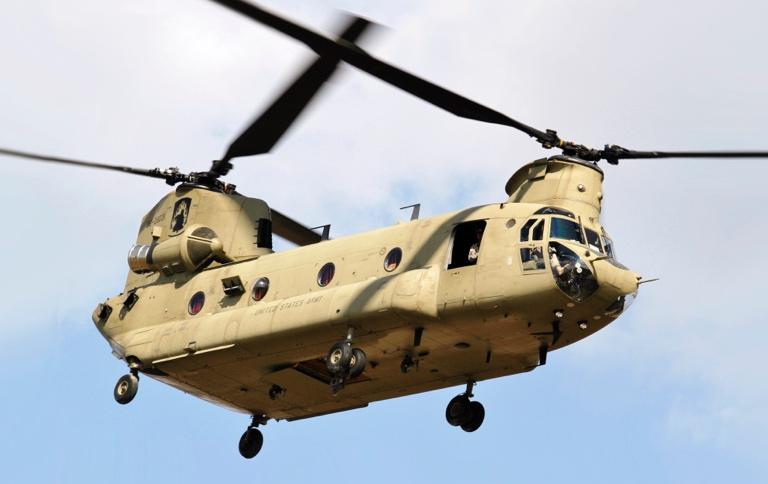
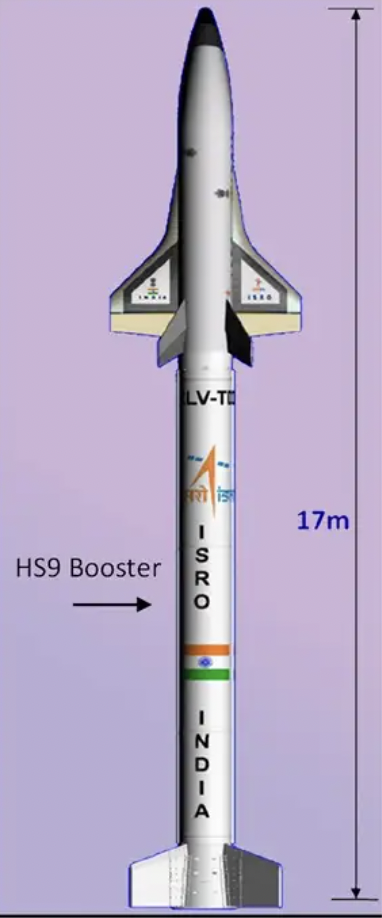
For the first time in the world, a winged body has been carried to an altitude of 4.5 km by a helicopter (Chinook) and released for carrying out an autonomous landing on a runway. The release of the RLV was autonomous, as it performed approach and landing manoeuvres using Integrated Navigation, Guidance and Control System and completed the landing on the airstrip.

sECXYAaPu27MBN SjAX oh5sptkXAyQaMLwTs0sXLU97WkoQQb k1Y7TcnMoxUz7hUdKznpGAi mii9kjTK5Pu UWQlP

RLV – TD

ISRO's RLV-TD is a technology demonstrator for a fully reusable launch vehicle, featuring hypersonic flight, autonomous landing, and powered cruise flight technologies. It has a winged aircraft-like configuration with a fuselage, double delta wings, twin vertical tails, and active control surfaces. It was boosted to Mach no: 5 by a solid booster and will be scaled up to become India's first stage of a reusable two-stage orbital launch vehicle. 

Objectives of RLV – TD

  1. Hypersonic aero thermodynamic characterisation of wing body
  2. Evaluation of autonomous Navigation, Guidance and Control (NGC) schemes 
  3. Integrated flight management 
  4. Thermal Protection System Evaluation

Indian Space Research Organisation (ISRO)

  • It is the space agency of India which is involved in science, engineering and technology to harvest the benefits of outer space for India and the mankind. 
  • ISRO was previously the Indian National Committee for Space Research (INCOSPAR), set up by the Government of India in 1962, as envisioned by Dr. Vikram Ambalal Sarabhai
  • ISRO was formed on August 15, 1969 and superseded INCOSPAR with an expanded role to harness space technology. 
  • Department of Space (DOS) was set up and ISRO was brought under DOS in 1972. 
  • ISRO has its headquarters in Bengaluru
  • The activities of ISRO are guided by its Chairman, who would also be the secretary of DOS and Chairman of Space commission – the apex body that formulates the policies and overseas the implementation of the Indian Space Programme.
Centres & Units of ISROActivities
Vikram Sarabhai Space Centre (VSSC), ThiruvananthapuramBuilding of Launch Vehicles
U R Rao Satellite Centre (URSC), BengaluruDevelopment and designing of Satellites
Satish Dhawan Space Centre (SDSC), SriharikotaIntegration and launching of satellites and launch vehicles
Liquid Propulsion Systems Centre (LPSC), Valiamala & BengaluruDevelopment of liquid stages including cryogenic stage
Space Applications Centre (SAC), AhmedabadSensors for Communication and Remote Sensing satellites and application aspects of the space technology
National Remote Sensing Centre (NRSC), Hyderabad. Remote Sensing satellite data reception processing and dissemination

Chinook Helicopter

XTtOMPllLzk4a2MBk1loPA 38D8OiVCJ1 2PbnW hFV
  • The Boeing CH-47 Chinook is a tandem rotor helicopter developed by American rotorcraft company Vertol and manufactured by Boeing Vertol. 
  • The Chinook is a heavy-lift helicopter that is among the heaviest lifting Western helicopters.
  • It has a top speed of 310 km per hour and is one of the fastest helicopters in the world.
  • It is also very effective in rescue and relief missions during national disasters, due to capability to carry heavy loads.
  • The Indian Air Force operates a fleet of 15 Boeing made Chinook helicopters, which were acquired from the US in 2015 and were inducted into service in 2019.

India needs a national programme on autism

Context: World Autism Awareness Day was celebrated on 2nd April Which highlights the fact that more than one crore Indians are affected with autism which requires the intervention of the government.

What is autism? 

Autism is a developmental disorder with symptoms that appear within the first three years of life. Its formal diagnostic name is autism spectrum disorder (ASD). The word “spectrum” indicates that autism appears in different forms with varying levels of severity. That means that each individual with autism experiences their own unique strengths, symptoms, and challenges.

How autism spectrum disorders are described?

Psychiatrists and other clinicians rely on the fifth edition of the Diagnostic and Statistical Manual of Mental Disorders (DSM-5) to define autism and its symptoms. The DSM-5 definition recognizes two main symptom areas: 

  • Deficits in social communication and interaction Restricted, 
  • Repetitive behaviours, interests, or activities.

These symptoms appear early in a child’s development—although diagnosis may occur later. Autism is diagnosed when symptoms cause developmental challenges that are not better explained by other conditions. 

Autism symptoms and behaviours 

Individuals with autism may present a range of symptoms, such as: 

  • Reduced eye contact 
  • Differences in body language 
  • Lack of facial expressions 
  • Not engaging in imaginative play 
  • Repeating gestures or sounds 
  • Closely focused interests 
  • Indifference to temperature extremes 

These are just a few examples of the symptoms an individual with autism may experience. Any individual could have some, all, or none of these symptoms. 

Keep in mind that having these symptoms does not necessarily mean a person has autism. Only a qualified medical professional can diagnose autism spectrum disorder. 

Each person with autism has their own strengths, likes, dislikes, interests, challenges, and skills, just like you do. 

How autism is diagnosed? 

There is no known biological marker for autism. That means that no blood or genetic test can diagnose the disorder. Instead, clinicians rely on observation, medical histories, and questionnaires to determine whether an individual has autism. Physicians and specialists may use one or several of the following screening tools: 

  • Modified Checklist for Autism in Toddlers, Revised (M-CHAT), a 20-question test designed for toddlers between 16 and 30 months old. 
  • The Ages and Stages Questionnaire (ASQ), a general developmental screening tool with sections targeting specific ages used to identify any developmental challenges a child may have. 
  • Screening Tool for Autism in Toddlers and Young Children (STAT), an interactive screening tool, comprising 12 activities that assess play, communication, and imitation. 
  • Parents’ Evaluation of Developmental Status (PEDS) is a general developmental parent interview form that identifies areas of concern by asking parents questions. 

In rare cases, individuals with autism reach adulthood before receiving a diagnosis. However, most individuals receive an autism diagnosis before the age of 8. 

Autism Prognosis 

Autism is a lifelong condition, and a wide variety of treatments can help support people with ASD. The symptoms and comorbidities—conditions occurring in the same individual—are treatable. 

  • Early intervention delivers the best results. Parents and caregivers should seek out the advice of a qualified medical professional before starting any autism treatment. 
  • Advances in understanding autism, its symptoms, and comorbidities have improved outcomes for individuals with autism. 

Co-occurring conditions 

When a person has more than two or more disorders, these conditions are known as comorbidities. Several comorbidities are common in people with autism. These include: 

  • Anxiety 
  • Depression 
  • Epilepsy 
  • Gastrointestinal and immune function disorders 
  • Metabolic disorders 
  • Sleep disorders 

Identifying co-occurring conditions can sometimes be a challenge because their symptoms may be mimicked or masked by autism symptoms. However, diagnosing and identifying these conditions can help avoid complications and improve the quality of life for individuals with autism. 

Why India needs a national programme on autism?

  • Cultural differences and diagnosis: The majority of children with an autism spectrum diagnosis within the United States and the United Kingdom are likely to be verbal, with average or higher than average IQ, and attend mainstream schools. In contrast, a significant majority of children in India who get a clinical diagnosis of autism often also have an intellectual disability and limited verbal ability. 

Autism is assessed behaviourally, and behavioural assessment tools (i.e., questionnaires or interviews with professionals) are the starting point for all research and clinical work on autism. Yet, most of the widely used autism assessment tools have limited availability in Indian languages.

  • Poor supply of specialists in India: According to the latest estimates, India has less than 10,000 psychiatrists, a majority of whom are concentrated in big cities. 

While the number of mental health professionals continues to grow, the current gap between demand and supply cannot be met directly by the specialists alone. 

This gap is not relevant for behavioural assessments alone but also for providing psychological interventions. Parallel efforts to widen the reach of diagnostic and intervention services by involving non-specialists (e.g., Accredited Social Health Activist (ASHA)/Anganwadi workers, parents/caregivers) and the appropriate digital technology (e.g., apps, smartphones) that can capture both self/caregiver report as well as observational data.

What should be the components of the all-India programme on autism?

A national programme on autism should aim at:

  • linking researchers, clinicians, and service providers to the end-users in the autism community in India. 
  • Assessment, 
  • Intervention, and 
  • Awareness. 
  • Promoting R&D in the Autism
  • Expansion of clinical and support service workforce by training non-specialists such that a stepped-care model can be rolled out effectively across the nation. 
  • Consultation with different stakeholders

Lynx U2 fire control systems

Context: Ministry of Defence signed a contract with Bharat Electronics Limited for the procurement of 13 Lynx-U2 fire control systems for the Navy at a cost of over Rs 1,700 crore, under the Buy Indian – IDMM (Indigenously Designed Developed and Manufactured) category.

Lynx-U2 fire control system:

  • The Lynx-U2 system is a naval gun fire control system capable of accurately tracking and engaging targets amid sea as well as air or surface targets.
  • The fourth generation, completely indigenous systems, will be installed on New Generation Offshore Patrol Vessels to be built indigenously at Garden Reach Shipbuilders and Engineers and Goa Shipyard Limited. 

Next-generation Offshore Patrol Vessels

Context: Ministry of Defence has signed a deal to buy eleven Next Generation Offshore Patrol Vessels and six Next Generation Missile Vessels at Rs 19,600 crore. 

Next Generation Offshore Patrol Vessels (NGOPV):

  • The contract for 11 NGOPVs worth Rs 9,781 crore was signed between Goa Shipyard Limited and Garden Reach Shipyard Limited under Buy (Indian-IDDM) category. 
  • NGOPVs will increase the Navy’s various operational capabilities such as Anti-Piracy, Counter-Infiltration, Anti-Poaching, Anti-Trafficking, Non-Combatant Evacuation Operations, Search and Rescue (SAR), Protection of Offshore Assets etc.
    • An offshore patrol vessel (OPV) is a small surface ship designed for coastal defence.
    • They can carry a crew of up to 80-90 sailors, but are much more lightly armed — and therefore much cheaper — than capital warships like corvettes, frigates, or destroyers.
    • For performing tasks that do not require heavy fighting, OPVs offer a far more economical option than using heavily armed capital warships.
    • These warships are well equipped to tackle a range of roles such as maritime security, border control, anti-smuggling, counter-terrorism, disaster relief etc.

Next Generation Missile Vessels (NGMV):

  • The contract for constructing six Next Generation Missile Vessels (NGMVs) was signed with Cochin Shipyard (CSL) at Rs 9,805 crore.
  • NGMVs would be heavily armed war vessels incorporating stealth, high speed and offensive capability.
  • The primary role of the ships would be to provide offensive capability against enemy warships, merchantmen and land targets.
    • These warships will be capable of conducting maritime strike operations, Anti-Surface Warfare Operations and would be a potent instrument of sea denial for enemy ships, especially at choke points. 
    • In the defensive role, these ships would be employed for Local Naval Defence operations and seaward defence of the Offshore Development Area. 

Next-generation mobile maritime coastal batteries and BrahMos missile

Context: Ministry of Defence has signed a deal with BrahMos Aerospace Private Limited (BAPL) for the procurement of Next Generation Maritime Mobile Coastal Batteries (Long Range) and BrahMos missiles, valued at over Rs 1,700 crore, under Buy (Indian) category. 

Aim: To enhance the Indian Navy's maritime strike capabilities along the coast. 

Next-Generation Maritime Mobile Coastal Batteries (Long Range)

  • Next-Generation Maritime Mobile Coastal Batteries come equipped with new missiles like the BrahMos surface-to-surface cruise missiles. 
  • This system will allow the Indian Navy to target enemy platforms operating close to the Indian coast. 

Supersonic BrahMos missiles

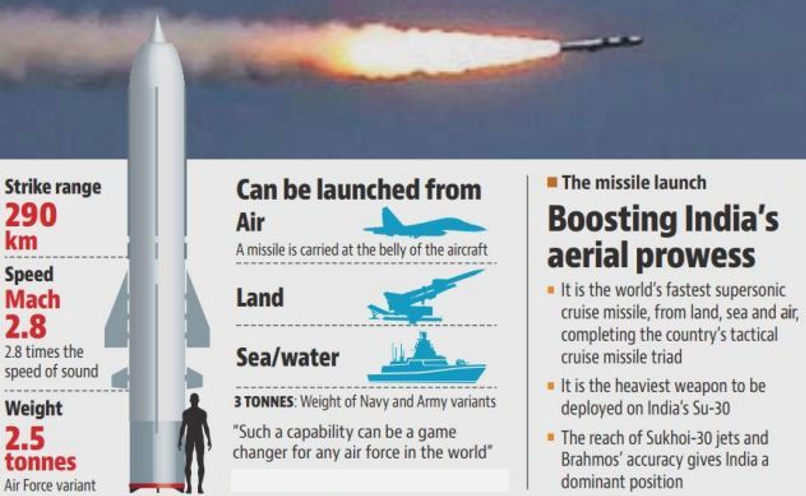
  • BrahMos is the fastest cruise missile in the world with a top speed of Mach 2.8 or almost three times the speed of sound.
  • It is a two-stage missile (solid propellant engine in the first stage and liquid ramjet in the second stage) with a range of 290 km.
  • The multiplatform missile can be launched from land, air, and sea with pinpoint accuracy during day and night irrespective of weather conditions.

Special features of BrahMos

  • Universal for multiple platforms
  • Stealth technology and guidance system
  • “Fire and Forget” principle of operation
  • Pinpoint accuracy with high lethal power 
  • Quicker engagement time and non-interception by any known weapon system
E5nmsj4rgImhlJnCyMWaJRED9NC ZcjyRiCEPykw87hiC8ED9II4J7S8hnd3tFPtPLJ0uOXpM8LgWtMp56RCT9WI8 f7mMAkXiVqfDWeE 5pVYW4bK6QweWAkg7 vEtqRLUFF0Hh9WKisOIccrZRew

Significance

  • Enhance the multi-directional maritime strike capability of the Indian Navy. 
  • Boost indigenous production of the critical weapon system and ammunition with the active participation of indigenous industries.
  • Generate employment of more than 90,000 man-days over a period of four years.

BrahMos Aerospace Pvt Ltd (BAPL)

  • BrahMos Aerospace Pvt Ltd is a joint venture between India and Russia that produces supersonic cruise missiles that can be launched from submarines, ships, aircraft, or land platforms.
  • BrahMos was established through an inter-governmental agreement in 1998 as a joint venture between India's state-run Defence Research and Development Organisation and NPO Mashinostroyenia of Russia.
  • Although BrahMos missiles still depend on Russian parts and raw materials, the percentage of local input had gone up to over 70% from around 15% at the start of the venture.