Science & Technology

Jupiter Icy Moons Explorer Mission (JUICE)

Context: The JUpiter ICy Moons Explorer (Juice) mission is scheduled to lift off on Europe's most powerful rocket - the Ariane-5.

Juice Mission:

  • Juice is on an eight-year-long voyage to make detailed observations on Jupiter and three of its ocean-bearing moons — Ganymede, Callisto and Europa. 
  • The objective is to explore the moons in search of signs of life and to explore if it is possible to live around giants or for habitability. 
  • During its voyage, the spacecraft will complete fly-bys of Venus, Earth, and the Earth-Moon system to arrive at its destination in 2031.
  • The mission has instruments including a remote sensing package with spectral imaging capabilities, a laser altimeter (GALA), a radar sounder (RIME) for exploring the moon’s surface and subsurface, instruments to study the particle environment (PEP), a magnetometer (J-MAG), and a radio and plasma wave instrument (RPWI).
  • JUICE Mission will orbit Ganymede and end its life there. 
  • Operations of JUICE Mission will overlap with NASA’s Europa Clipper Mission.

About Jupiter:

  • Jupiter is the fifth planet from the Sun and the largest in the Solar System.
  • It is a gas giant primarily composed of hydrogen, followed by helium. 
  • It is the third brightest natural object in the Earth's night sky after the Moon and Venus. 
  • Jupiter is surrounded by a faint planetary ring system and has a powerful magnetosphere. The Great Red Spot is a gigantic storm (anticyclone) that is about twice as wide as Earth, circling the planet in its southern hemisphere.
  • Jupiter has the highest number of moons in our Solar System (95 known moons till date) including Ganymede which is the largest (larger than the planet Mercury).

About Ganymede

  • Largest moon in our solar system. It is even bigger than planet Mercury.
  • There is strong evidence that Ganymede has underground saltwater ocean that may hold more water than all the water on Earth’s surface.
  • It is the only moon known have its own magnetic field – typically only found on planets like Earth. 
  • Ganymede has a faint oxygen atmosphere; however, it is far too thin to breathe.

About Callisto

  • Jupiter’s second largest moon and third largest moon in our solar system.
  • Surface of Callisto is heavily cratered created of ice and rock.
  • Scientists believe that Callisto may have an underground salty ocean making it a potential habitat for life. 

About Europa

  • Europa is slightly smaller than Earth’s moon and barely one-quarter the diameter of Earth itself. 
  • Surface of Europa is composed of solid water ice and it has extremely thin oxygen atmosphere. 
  • Europa is believed to be most promising place in our solar system to have environment suitable for life.
  • Beneath the icy surface of Europa is a salty-water ocean thought to contain twice as much water as Earth’s oceans combined. 

Militarization of space

Context: Chief of Defence Staff (CDS) General Anil Chauhan has recently remarked that the very nature of warfare is on the cusp of major transformation and what is being witnessed is the militarisation of space and steady progress towards weaponisation. He also stated that space is being used to enhance combat capabilities in land, sea and cyber domains.

The militarization of space involves developing military technologies and conducting military operations in space and from space towards Earth. This includes developing space-based weapons as well as using space to support military forces on Earth like surveillance, communication, navigation, etc.

Space militarization began soon after the first artificial satellites were launched. Early efforts focused on space-based surveillance, intelligence gathering and ICBM detection using satellites. The Cold War spurred the growth of military space programs.

Space Surveillance

  • Early missile warning satellites: The US and USSR developed missile warning satellites during the Cold War to detect intercontinental ballistic missile (ICBM) launches. The US Vela and Defense Support Program satellites monitored the Soviet Union, while Soviet satellites monitored the US. These provide limited warning of an attack to initiate countermeasures.
  • Synthetic aperture radar satellites: SAR satellites provide all-weather, day-night imaging using radar signals. They penetrate clouds and darkness to generate high-resolution images useful for reconnaissance. Military space programs operate SAR satellites to monitor adversaries, assess damage from strikes and track space objects. Civilian programs also use them for applications like disaster relief.
  • High-resolution imaging satellites: Electro-optical imaging satellites provide visible light images for military surveillance and intelligence gathering. They monitor military installations, bases, ports, nuclear/missile sites, etc. Risks of misuse and overuse of data without oversight or regulation pose challenges. As technology improves, increasing resolution expands threats to privacy and security.
  • Space tracking and surveillance capabilities of major powers: The US, China and Russia have advanced space surveillance networks to detect, track and identify space objects and space-based threats. The US Space Surveillance Network uses telescopes/radars while Russia's Program for Space Observation warns of space attacks. China's space program remains opaque but focuses on counter-space capabilities like ASATs, surveillance and monitoring US space assets. 

Satellite Communications

  • Military communication satellite programs: Major space powers operate dedicated military communication satellite constellations like the US Wideband Global SATCOM system and the Russian Raduga satellites. These provide jam-resistant, global communications to connect military commanders, aircraft, ships, land vehicles, and forward-deployed forces anywhere on the planet using radio frequency links and increasingly laser connections.
  • Laser and radio frequency communications: RF communications via satellites using microwave or radio bands support broadband data exchange for mobile users. Laser links beam tight narrow signals between satellites to relay data at high speeds with minimal interference/detection risk. Both expand available bandwidth for military use but lasers provide advantages like compact equipment, narrow beams and higher data rates for secure networking with a "low probability of intercept".     
  • Importance for coordinating forces and expanding battlefield: Military satellite communications enable expeditionary operations in remote regions by providing links between manoeuvre forces, weapons systems, drones/robots and command centers. They expand the battlefield by connecting all war fighters and assets across land, air, space and sea to gain battlefield awareness and coordinate troop movements, targeting, logistics, search & rescue, etc. This connectivity and networking give strategic advantages to space powers that develop advanced high-bandwidth secure communications for war.

Space Weaponization 

  • ASAT programs and ASAT weapons testing by various nations: The US, USSR/Russia, China, India and other nations have developed ASAT programs to demonstrate anti-satellite capabilities. The first successful intercepts were by the US (1960s) and USSR (1970s), followed by China (2007) and India (2019). While these programs claim defensive intentions, testing creates orbital debris and signal worries of offensives space weaponization. Notably, India's latest test created over 400 pieces of trackable debris threatening space objects.
  • Space-based weapons like lasers, railguns, interceptors, etc.: Concepts of space-based weapons include lasers to damage satellites, railguns to launch projectiles and space-based missile interceptors. While technologically challenging, weapons deployed in space undermine stability, threatening peaceful space access and fuelling arms races. US "Star Wars" programs explored these concepts during the Cold War but were abandoned due to feasibility issues; focus returned recently with growing counterspace threats but remains controversial.
  • Dangers of space weaponization including space debris: Space weaponization refers to placing weapons in space with the capability of damaging space systems and/or inflicting damage on Earth. Dangers include intensifying geopolitical conflicts by expanding the battlefield to space; creating clouds of long-lived debris from explosions that threaten all spacecraft; enabling preemptive strikes from space that compress response and escalation times; undermining cooperation in space by fueling distrust in programs' intentions; and costing resources that could fund peaceful space discovery.  

Space Policy and Governance 

  • Existing laws and treaties governing space like the Outer Space Treaty: The OST prohibits placing nuclear weapons in space but not other space weapons. It limits militarization but not weaponization of space. Amending or replacing the OST is controversial but may strengthen governance. 
  • Proposals for space arms control, protecting space infrastructure, limiting space debris, etc.: Proposals include banning ASAT tests, limiting debris-producing weapons, adopting rules of responsible behavior in space, etc. But differences over definitions and verification pose challenges to multilateral agreements. 
  • Challenges of attributing responsibility for irresponsible behavior in space like ASAT tests: ASAT tests destroying satellites at 800+ km altitudes create persistent debris fields, but lacking verifiable sensors in space, irresponsible tests may continue unpunished, signaling acceptability of dangerous actions.    
  • Transparency and confidence-building measures for responsible militarization of space: Data sharing on space programs and notifications of unusual activities build trust. Reciprocal site visits and joint simulations enhance understanding and cooperation. Best practices codes and norms of behavior provide guidance should conflict arise in space.   

Geopolitical dynamics and future trend

  • US-China space relations: China's space program is advancing quickly, fueling perceptions of a space race for tech/power dominance. But cooperation continues on some issues like space science or debris mitigation based on shared interests. Managing this mix of competition/cooperation is key to global space stability.
  • US-Russia space relations: Tensions have strained cooperation, but interests in space discovery and ISS operations persist. Renewing cooperation would benefit scientific progress and geopolitical stability. But realpolitik factors shape the potential here.
  • Europe's place: Europe allies with the US but also cooperates independently with other space powers like Japan or India to advance shared interests affordably. As a bloc, the EU shapes space geopolitics but national programs within also compete/cooperate.
  • India as a rising space power: India operates independently but also partners with space agencies worldwide to gain technical experience, cost-efficiencies and global legitimacy. How India balances national ambitions and shared interests with other space powers impacts geopolitical dynamics.
  • Japan and geopolitical balancing: Japan allies strongly with the US but also forges partnerships with Europe and other space powers to advance national interests and hedge geopolitical influence. Japan's space relations reflect its balancing on Earth. 
  • Commercial space and geopolitics: Corporations form global alliances and supply chains, cooperating across borders, but also compete for government contracts and resources. Their influence on space policy is growing but complex as public and private sectors shape each other.
  • Globalization in space: Space tech upgrades and supply chains are increasingly globalized. While facilitating innovation, overreliance on other nations' tech poses risks if geopolitical tensions disrupt access or cooperation. Balancing globalization and national security is key. 
  • The role of space in global power dynamics: Space access and technology provide strategic advantages and prestige to leading space powers. Losing relative gains to adversaries in space fuels geopolitical competition; cooperation provides opportunity to balance/hedge these dynamics constructively. But incentives differ between state actors.
  • Policy choices today determine trajectory: Investing in cooperative programs and partnerships versus competitive posture and weapons programs. Deterring/attributing irresponsible acts versus signalling acceptability. Integrating versus antagonizing commercial space. Prioritizing sustainability or national dominance. Choices now shape scenarios decades ahead; opportunity or peril emerge based on building shared purpose despite differences or stoking zero-sum competitions for power and control over this domain. The space future is within our grasp to build together or weaponize against one another.

In summary, space geopolitics emerge at the nexus of policy, technology, globalization and complex relationships between public and private actors across the world. While competitive dynamics drive militarization, the cooperative opportunity also exists to forge stability and shared benefit. The trajectories ahead depend on choices today - we navigate this new frontier for humanity's benefit or wage new battlegrounds of confrontation and distrust.

Overall, enlightened self-interest calls for cooperation regulation space without weaponizing, yet global politics often fuels default competition skyward. Forging purposes together remains challenging but necessary for sustainability as space becomes increasingly complex and intertwined geopolitically in the 21st century.

Over half of the heavy industry eyeing Low Carbon hydrogen

Context: As many as 62% of heavy industrial organisations across sectors are considering using low-carbon hydrogen to replace carbon-intensive systems, according to a recent report from the Capgemini Research Institute titled "Low Carbon Hydrogen - A Path to a Greener Future." According to the report, Energy and Utilities (E&U) companies anticipate Low-Carbon hydrogen to account for 18% of all energy use by 2050, and demand from more than half of organisations has increased by more than 10% in France, India, the United Kingdom, Japan, the United States, Germany, and Sweden.

Hydrogen as a fuel for the future

  • According to the International Energy Agency (IEA), hydrogen has the potential to be a key component of our transition to a clean energy future. 
  • However, for hydrogen to truly contribute to the energy transition, it must be used in industries where it is currently almost non-existent, such as transportation, construction, and power generation.
  • To identify ways to accelerate its adoption, the World Economic Forum developed the Accelerated Clean Hydrogen Initiative as part of its Climate Action Platform, Shaping the Future of Energy, Materials, and Infrastructure. 
  • Generating electricity from hydrogen does not produce pollution because the by-product is only heat and water.

Types of Hydrogen

When burned, hydrogen emits only water, although its production can be carbon intensive. As a result, several methods for reducing this impact have been devised, and depending on production methods, hydrogen can be grey, blue, or green, and sometimes pink, yellow, or turquoise, however naming practises vary across countries and over time.

iffrZk4QXZ9cizRJw2LI0Zgm x0rIuvAxDJ ZpgoQpR9rDOC4Wbp6BAJF0 QnNjPNe ijnvvcv44FHlZLYJB9DB2p83Sk6QIq hlRyNY65ixWnjwI6XsvBvtaxZGoldrKutYrxIDxfKR3 uT03oLjw

Green Hydrogen: 

  • The only variety that is created in a climate-neutral manner. It could be vital in the worldwide effort to achieve net-zero emissions by 2050. 
  • Also referred to as 'Clean hydrogen' is produced by splitting water into two hydrogen atoms and one oxygen (electrolysis process) atom using clean energy from surplus renewable energy sources such as solar or wind power. 
  • It presently accounts for roughly 0.1% of total hydrogen production, but this figure is likely to climb as renewable energy costs continue to fall. 
  • Ideal method to balance the Intermittency of Renewables: Storing excess energy during periods of low demand to be fed back into the grid when need increases, while de-carbonizing the chemical, industrial, and transportation sectors.

Grey hydrogen

  • It is the most prevalent type and is produced from natural gas, or methane, by a process known as "steam reforming". This technology emits far fewer emissions than black or brown hydrogen, which employ black (bituminous) or brown (lignite) coal in the hydrogen-production process. It produces carbon dioxide as a by-product.

Black/Brown Hydrogen

  • The main issue with black/ brown hydrogen is that they still produce a significant amount of greenhouse gases, and there is no Carbon Capture and Storage (CCS) as part of the process to mitigate this. Black and brown hydrogen are produced using fossil fuels. The process involves converting coal into gas.

Blue hydrogen

  • It is produced from hydrocarbons where the emissions generated from the process can be captured and stored. They are stored underground by industrial carbon capture storage (CSS). Therefore, sometimes referred to as being carbon neutral.
  • It is a better alternative compared to grey hydrogen.
  • There are arguments that it should be labelled as “low carbon”, as a more accurate description since 10 to 20% of the generated carbon cannot be captured.

Pink hydrogen

  • Nuclear produced hydrogen, often referred to as pink (or sometimes purple or red) is generated through electrolysis. The very high temperatures from nuclear reactors could also be used in other hydrogen productions by producing steam for more efficient electrolysis or fossil gas-based steam methane reforming.

Yellow hydrogen

  • It is the term used for hydrogen made through electrolysis of water using solar power, although some use it to mean hydrogen generated through electrolysis of water using mixed sources depending on what is available. 

Turquoise hydrogen

  • Its production is still in the experimental phase. It sits between blue and green hydrogen and uses methane pyrolysis as a production method. The outputs of this process are the hydrogen and carbon, however unlike steam reformation the carbon is solid.  This means there’s no requirement for CCS, the solid carbon can be used in other applications such as a soil improver or the manufacturing of goods like tyres.

Challenges

  • Economic Sustainability: One of the major obstacles that the industry faces in commercialising hydrogen is the economic sustainability of harvesting green or blue hydrogen. 
  • The electrolysis process, which is used to make green hydrogen, takes a considerable quantity of electricity, and renewable electricity is quite expensive. 
  • Nascent stage technology: Carbon capture and storage (CCS) and hydrogen fuel cell technologies are in their early stages and are expensive, which raises the cost of hydrogen production.
  • In India, there is currently a scarcity of infrastructure for the generation, storage, and transport of green hydrogen. This includes a scarcity of hydrogen refuelling stations and pipes for hydrogen transport.
  • Limited Adoption: Despite the potential benefits of green hydrogen, adoption of this technology in currently restricted. 
  • This is owing to a lack of public awareness and comprehension of green hydrogen, as well as a lack of incentives for businesses to use this technology.
  • Cost competitiveness: One of the main issues facing the industry in commercialising hydrogen, is the extraction of green hydrogen. 
  • On a per-mile basis, hydrogen must be cost-competitive with conventional fuels and technology for transportation fuel cells.

Way Forward

  • Increasing the use of renewable energy sources, so as to minimise the cost of green hydrogen generation.
  • Improve in infrastructure for its production, storage, and delivery: Construction of hydrogen refuelling stations as well as pipes, for transporting hydrogen and make green hydrogen more accessible. 
  • Role of Governments: By implementing regulatory incentives such as tax credits and subsidies to encourage the production and use of green hydrogen, the government can play a critical role in boosting its acceptance.

Cyber Surakshit Bharat Initiative

Context: National e-Governance Division, under its Capacity Building scheme of MeitY, recently organised the 35th Chief Information Security Officers (CISO) Deep-Dive training programme under the Cyber Surakshit Bharat Initiative. 

About Cyber Surakshit Bharat Initiative

  • Cyber Surakshit Bharat was launched in 2018 with the mission to spread awareness about cybercrime.
  • Initiative of: Ministry of Electronics and Information Technology
  • It envisions building capacities of Chief Information Security Officers (CISOs) and frontline IT officials, across all government departments to ensure adequate safety measures to combat cyber-security threats. 
  • The CISO training is the first-of-its-kind partnership between the Government and industry consortium under Public Private Partnership (PPP) model.
  • The training specifically aims at educating and enabling CISOs to understand cyber-attacks comprehensively and get necessary exposure to the latest technologies for safeguarding against attacks.  

Indian-American C.R. Rao wins Nobel Prize equivalent in statistics at the age of 102

Context: The Indian-American statistician Calyampudi Radhakrishna Rao has been awarded the 2023 International Prize in Statistics — the equivalent of the Nobel Prize for statistics. It is awarded once every two years to an individual or team “for major achievements using statistics to advance science, technology and human welfare”.

More on news: The work of Professor Rao, 102, has influenced, in the words of the American Statistical Association, “not just statistics” but also “economics, genetics, anthropology, geology, national planning, demography, biometry and medicine”.

C. R. Rao, the eminent Indian statistician

  • C. R. Rao was born on September 10, 1920 in Andhra Pradesh, India. He is considered the 'Father of Statistics' in India for his pioneering work in statistical theory and applications.
  • He studied mathematics at Andhra University and then at King's College in Cambridge, UK. He began his career as a lecturer in mathematics at Andhra University in 1941. He later served as Head of the Department of Statistics at the Indian Statistical Institute (ISI), Kolkata.
  • His research focused on statistical inference, multivariate analysis, design of experiments, statistical pattern recognition, entropy, and theoretical statistics. He developed concepts like Rao-Blackwell theorem, Fisher-Rao metric, Rao distance, and Rao-Cramer inequality which shaped modern statistics.
  • He advocated the use of statistics in fields like anthropology, economics, education, genetics, geology, medicine, psychology, etc. He pioneered applications of statistics in various branches of knowledge. Under his leadership, the ISI made significant contributions to research and training in statistics.
  • He has published over 400 papers and 20 books including Linear Statistical Inference and Its Applications. He has guided over 50 PhD students, many of whom became leading statisticians. He worked to put Indian statistics on the global map.
  • He was awarded India's highest civilian honor, the Bharat Ratna, in 2002 for his contributions to Indian statistics. He received many other prestigious awards like the Padma Vibhushan, Srinivasa Ramanujan Medal and the National Medal of Science.
  • He advocated for high standards of teaching and research in theoretical and applied statistics. He believed statistics as a discipline deserved to be studied separately rather than as a subordinate field of mathematics. This led him to establish the first Department of Statistics as an independent discipline in India at ISI Kolkata.
  • He was instrumental in the establishment of the Indian Society for Probability and Statistics to promote interaction and collaboration among statisticians. He worked to strengthen statistics education and research across India.
  • He continued his association with ISI Kolkata well into his 90s, devoting over 60 years of his life to building it into a world renowned center of excellence. His commitment to institution-building, promotion of statistics and passion for nurturing talent remain unparalleled.

Related: India gets elected to UN Statistical Commission

C. R. Rao made seminal contributions to statistics through his research, teaching and leadership. His vision and dedication built a strong foundation for statistics in post-independence India. He continues to inspire generations of students and serves as a role model for statisticians worldwide.

Awaiting lift-off into the Second Space Age

Context: The Space Age began in 1957 with the launch of satellite Sputnik 1, and in 1961, cosmonaut Yuri Gagarin became the world’s first person in space. Neil Armstrong made history by walking on the moon in 1969. The First Space Age became reality.. 

Some of the key highlights of space exploration include

  • The first artificial satellite Sputnik 1 launched by Soviet Union in 1957. This marked the beginning of the space age and the space race between the Soviet Union and the United States.
  • The first human spaceflight by Soviet cosmonaut Yuri Gagarin in 1961. This demonstrated the possibility of safe space travel and return to Earth.
  • The Apollo 11 mission in 1969 which landed the first humans on the Moon. Neil Armstrong and Buzz Aldrin became the first men to walk on the lunar surface. This remains one of the greatest technological and scientific achievements in human history.
  • The launch of space stations like Salyut 1, Skylab and Mir that allowed long-duration human habitation in space. This paved the way for today's International Space Station.
  • The exploration of the solar system using robotic spacecraft like the Voyager probes which revealed mysteries of the outer planets. Spacecraft have explored Mars, Venus, Jupiter, Saturn, Uranus and Neptune.
  • Major space-based observatories like the Hubble Space Telescope that have expanded our understanding of the universe. Astronomers have discovered new exoplanets, black holes, dark matter and distant galaxies with these observatories.
  • Commercial spaceflight has now become a reality with companies like SpaceX and Blue Origin developing reusable rockets and spaceships. Space tourism may soon become available to more people.

Today, the Second Space Age is here. Though there is no precise date for its beginning, the contrast in today’s space domain is stark. Between the 1950s to 1991, a period dominated by the Cold War, 60 to 120 space launches took place annually and 93% of these were by the United States and the erstwhile Union of Soviet Socialist Republic (USSR) governments.

Three decades later, there are not only many more actors in the space scene, but a majority are also private companies. Last year, there were 180 rocket/space launches, 61 by Elon Musk’s Space X; 90% of global space launches since 2020 are by and for the private sector.

The 'Second Space Age' refers to the period from the 1990s onwards which saw increased private sector involvement in space exploration. Some key aspects of the Second Space Age:

  • Commercialization of space: Private space companies like SpaceX, Blue Origin, Virgin Galactic, etc. have emerged that offer launch services and space tourism. They are developing reusable rocket technology to lower the cost of access to space. SpaceX's Falcon 9 rocket and Dragon spacecraft have transformed space transportation.
  • Space mining: Companies like Planetary Resources and Deep Space Industries aim to mine asteroids for resources like water and precious metals. Space mining could revolutionize space-based industries if it becomes economically viable.
  • Space tourism: Companies like Virgin Galactic and Blue Origin are developing spacecraft for suborbital space tourism. SpaceX has also announced plans to send tourists on a flight around the Moon aboard its Starship spaceship. Space tourism can make space accessible to more people.
  • Advancements in robotics: Robotic spacecraft have explored much of the solar system. Robotic probes like New Horizons explored Pluto, Dawn explored Ceres and Hayabusa2 explored asteroid Ryugu. Robotic spacecraft can reach distant and harsh environments where humans cannot easily go.
  • Private space stations: Companies like Axiom Space and Bigelow Aerospace are developing private space stations. Axiom Space aims to build a commercial module for the ISS and eventually a free-flying space station. Private space stations can provide more opportunities for tourism, research and manufacturing in space.
  • Space-based solar power: Concepts like space solar power satellites that can harness solar energy in space and transmit it to Earth have been proposed. They could provide a constant source of renewable energy but face major technical and economic hurdles.
  • Space mining and space-based economy: If space mining and space-based solar power become viable, it could lead to a space-based economy with space resources and space-based products. However, we are still far from developing a strong space-based economy.
  • Deep space exploration: Robotic and manned missions are envisioned to destinations like Mars, Venus, asteroids, etc. SpaceX's Starship aims to send humans to Mars. Robotic probes could explore ice giants like Neptune and Uranus. Future space telescopes could study exoplanets and distant galaxies.

India’s space journey begins

India's space program began in the 1960s and has made tremendous progress in the decades since. Some key highlights of India's space journey:

  • The Indian Space Research Organisation (ISRO) was established in 1969 to develop space technology and its application to national development. It replaced the erstwhile Indian National Committee for Space Research (INCOSPAR) set up in 1962.
  • India's first satellite Aryabhata was launched by the Soviet Union in 1975. This marked the beginning of India's space program.
  • The Satellite Launch Vehicle (SLV) program in the 1980s aimed to develop indigenous satellite launch capability. The first SLV rocket successfully launched the Rohini RS-1 satellite in 1980.
  • The Polar Satellite Launch Vehicle (PSLV) program began in the 1990s. PSLV rocket is capable of launching payloads into the Earth’s polar orbit. It has had over 50 successful missions.
  • The Geosynchronous Satellite Launch Vehicle (GSLV) program aims to launch payloads into geostationary orbit. GSLV Mk III, India's most powerful rocket, successfully launched Chandrayaan-2 in 2019.
  • The Indian Remote Sensing (IRS) program has launched several remote sensing satellites used in fields like agriculture, water resources, forestry and disaster management.
  • Chandrayaan-1, launched in 2008, was India's first lunar mission. It provided evidence for water molecules on the Moon's surface.
  • The Mars Orbiter Mission (MOM) or Mangalyaan, launched in 2013, made India the first Asian nation to reach Mars orbit. It is studying the Martian surface and atmosphere.
  • Chandrayaan-2 and Gaganyaan are upcoming missions. Chandrayaan-2 will land a rover on the lunar surface. Gaganyaan aims to send Indian astronauts to space by 2021.
  • Applications of space technology have led to advances in fields like telemedicine, teleeducation, weather forecasting, GIS and navigation. Space technology has become deeply linked with serving societal needs.

India has one of the world's most successful space programs despite its limited resources. Ambitious future goals include human spaceflight, space station, crewed missions to the Moon and Mars, and developing reusable rocket technology. The increasing commercialization of space may provide new opportunities for international collaboration. India's progress in space has established it as a leader in space science and technology across the globe.

Space potential

The origins of the Second Space Age can be traced to the Internet. In India, the process began accelerating as the 1990s saw the emergence of private TV channels, together with cable TV followed by direct-to-home transmissions.

The demand for satellite transponders and ground-based services exploded. Today, more than half the transponders beaming into Indian homes are on foreign satellites.

The last 15 years witnessed another transformation, and this time India was in lockstep with the developed world. The age of mobile telephony, followed by smartphones has shown the world what a data-hungry and data-rich society India is.

Broadband, OTT and now 5G promise a double-digit annual growth in demand for satellite-based services.

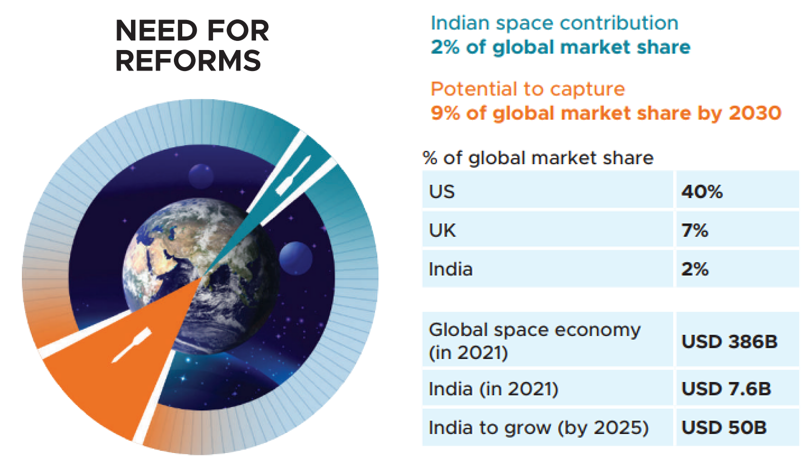
In 2020, the global space economy was estimated at $450 billion, growing to $600 billion by 2025. The Indian space economy, estimated at $9.6 billion in 2020, is expected to be $13 billion by 2025. However, the potential is much greater with an enabling policy and regulatory environment. The Indian space industry could easily exceed $60 billion by 2030, directly creating more than two lakh jobs.

Potential of space exploration and space-based technologies

  • Space mining: Asteroids contain precious metals like gold, platinum, cobalt, etc. and water in the form of ice. Space mining could provide resources for space-based industries and space exploration. However, it remains technologically and economically challenging.
  • Space-based solar power: Giant solar panels in geostationary orbit could collect solar energy and beam it to Earth as microwaves. This could provide a constant source of renewable energy. But it requires major technological capabilities and high costs.
  • Space tourism: Suborbital and orbital space tourism could make space accessible to more people. SpaceX, Virgin Galactic, Blue Origin, etc. are developing spacecraft for space tourism. While suborbital tourism is emerging, orbital space tourism remains expensive.
  • Private space stations: Companies are developing private space stations, either modules attached to ISS or independent space stations. They aim to host tourists, researchers, manufacturers, etc. But space stations require huge investments and the demand for their services is still not proven.
  • Space colonization: Establishing long-term human habitation beyond Earth, on the Moon, Mars, space colonies, etc. This could hedge against threats to humanity on Earth and eventually "backup" our species. But space colonization faces daunting technological, economic and physiological challenges.
  • Asteroid mining robots: Robotic spacecraft could explore and mine asteroids to extract resources useful for space-based or Earth-based applications. Robots can reach harsh space environments, but robotic manipulation of resources and transportation back to Earth requires major advancements.
  • Space-based solar power satellites: Satellites in geosynchronous orbit could capture and transmit solar energy as microwaves to receiver stations on Earth. They could provide a constant renewable energy source. But technology for efficient energy conversion, transmission and receival does not yet exist.
  • Space manufacturing: Microgravity environment enables production of materials, composites and biological tissues difficult or impossible to create on Earth. ZBLAN fibers for telescopes and organs grown from stem cells are examples. But space manufacturing and transportation back to Earth needs to become more economically viable. 
  • Space resources for deep space exploration: Access to space resources like water, oxygen, hydrogen, etc. on the Moon and asteroids could make deep space exploration more feasible by reducing the amount of supplies launched from Earth. But we have a long way to go to utilize space resources for human missions into deep space.

In summary, while space offers exciting possibilities, most space-based technologies and concepts remain at an early stage and require major advancements before providing tangible and economically sustainable services. Government and private sector support for space technology development and space exploration will be crucial to harnessing these opportunities. Overall, the potential of space is promising but much work lies ahead to unlock the promise.

Creating an enabling environment

  • The Indian space start-up industry is growing rapidly with increasing investment and number of start-ups. It has the potential to boost the space sector like the IT industry did for the economy.
  • ISRO currently manages limited launches and satellites compared to other space agencies like China. While ISRO has worked with private companies, they were mainly vendors. Space start-ups need a different relationship as their business depends on space.
  • ISRO plays multiple roles as an operator, user, service provider, licensor, regulator and incubator. It needs to now focus on research based on its expertise and resources. The government has taken some steps to promote private participation like draft space laws, NSIL, IN-SPACe, etc.
  • Specific policies for satcom, earth observation and FDI have been proposed but legislation like a space act is needed to provide a legal framework, set up a regulator and enable venture funding for space start-ups.
  • India has an opportunity to be part of the Second Space Age with increased private sector involvement but it needs to act fast before the opportunity is lost.
  • A space act should provide guidelines for licensing of space activities, a regulatory body to oversee compliance, and set the overall framework for public-private partnership in space sector. It can boost investment in space start-ups by providing clarity.
  • The existing and proposed government initiatives show there is willingness to bring private companies into space sector. But a comprehensive space act is vital to give shape to these efforts and transition ISRO's role to open up the space sector.
  • Space start-ups in India want to do more than just build to ISRO's specs. They need freedom and incentives to innovate which can be enabled by a progressive space policy and regulatory environment. Partnership with ISRO remains key but needs to evolve.
  • There is significant interest and talent within the private sector to take up new opportunities in space. An enabling policy and regulatory environment can unleash the potential of space start-ups to support the growth of India's space sector. But the window to do so may be limited.
  • India's space sector is poised for major transformation with increased private participation. ISRO and government's role in providing an enabling environment through policy, regulation and partnership will influence the pace and scope of this transformation. Overall support for innovation and risk-taking can power India's journey to the forefront of the global space race.

India's LIGO Project to be built by 2030

Context: The Union Cabinet has approved a gravitational-wave detector project in Maharashtra costing Rs 2,600 crores, estimated to be built by 2030.

Laser Interferometer Gravitational-wave Observatory

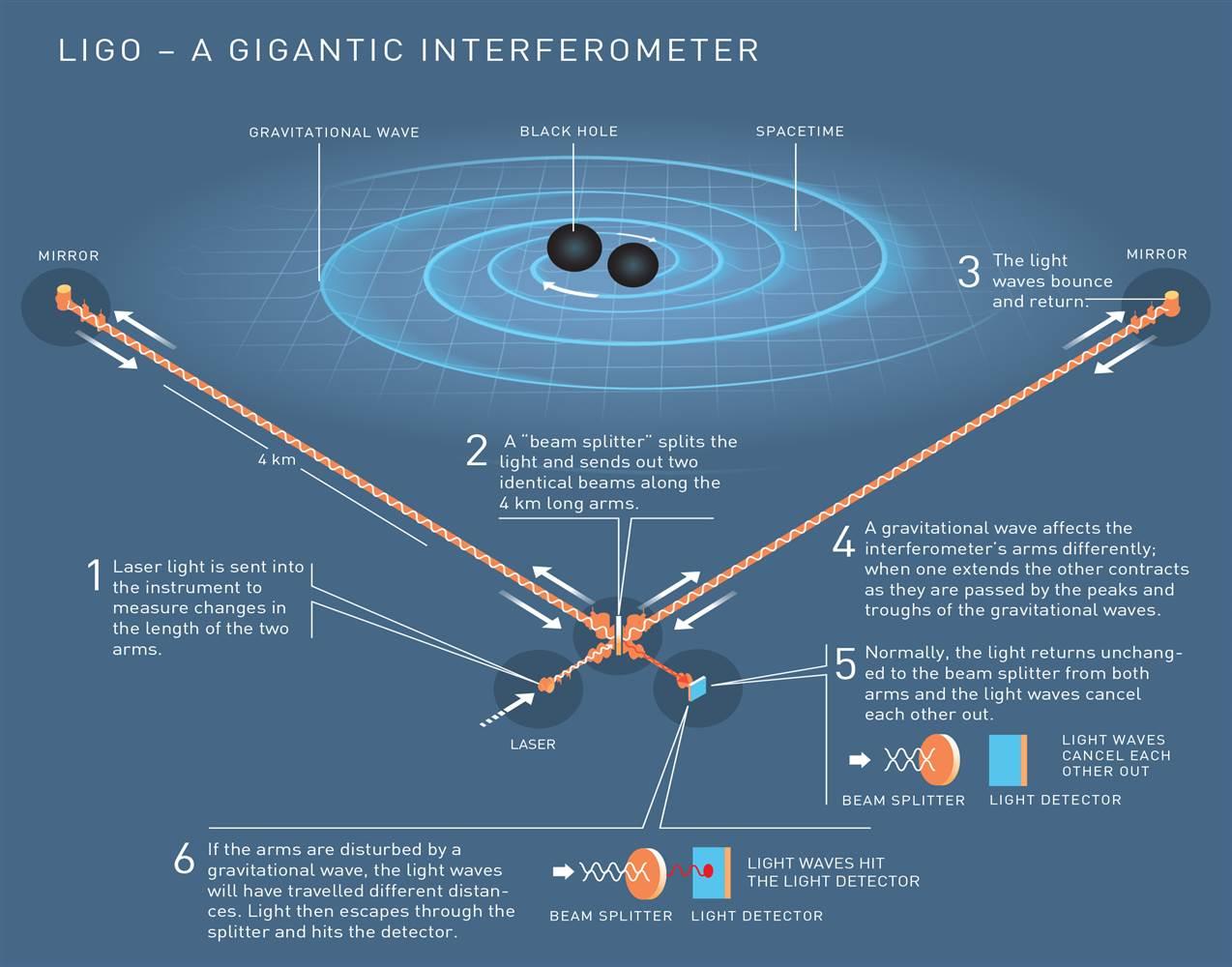
  • LIGO, or Laser Interferometer Gravitational-Wave Observatory, is an international network of laboratories meant to detect gravitational waves — ripples in space-time produced by the movement of large celestial bodies such as stars and planets.
  • LIGO comprises two enormous laser interferometers located 3000 kilometres apart in Hanford, Washington and Livingston, Louisiana, the United States.
    • The gravitational waves were first discovered in 2015 by two LIGOs based in the United States. 

LIGO India Project

  • A third gravitational-wave detection facility is being built in India as part of the LIGO-India collaboration to:
    • increase the chances of detecting gravitational waves from anywhere in the observable universe.
    • improve the detectors’ collective ability to pinpoint sources of gravitational waves in the sky. 
  • To be located in the Hingoli district of Maharashtra, LIGO-India is scheduled to begin its scientific runs in 2030. 
  • The Department of Atomic Energy and the Department of Science and Technology are building LIGO-India in partnership with the U.S. National Science Foundation and various national and international research institutions.

Mechanism

  • The L-shaped LIGO instrument has two arms, each measuring 4 km long that constitute the most sensitive interferometers in the world. Laser pulses are fired simultaneously through both arms, bouncing off the mirrors at the ends to return to the vertex. A detector analyses whether the pulses coincide upon return. Detecting gravitational waves involves recording and analysing the slightly out-of-time pulses in the detector produced by their passage.
LIGO

Need for the project

  • While two LIGOs can detect gravitational waves, a third observatory is required for better triangulation of the location of a source of gravitational waves in the sky. A more ideal setup requires four observatories to record the same wave. To this end, researchers are setting up and upgrading detectors in Italy and Japan.
    • Triangulation refers to analysing the results of the same study using different methods of data collection to enhance the validity, reliability, and comprehensiveness of research findings.

Significance

  • The observatory will help in better understanding astronomical objects like neutron stars and black holes and for the in-depth study of gravitational waves.
  • The project would have several spin-off benefits to Indian science, apart from making India an integral part of one of the most prestigious international scientific experiments.
  • India could become a global site of gravitational physics research, aiding training and the handling of precision technologies and sophisticated control systems, ultimately, cementing a reputation for successfully running an experimental Big Science project.
    • The starting requirement here is the timely release of funds for construction, followed by issuing the allocated resources without delay.

Gravitational Waves

  • Gravitational waves are ripples in space-time caused when massive objects move with extreme accelerations (similar to ripples in a water pond). 
  • The waves are invisible, travel at the speed of light and squeeze and stretch anything in their path as they pass by. 
  • Gravitational radiation is exceedingly difficult to detect because gravity by nature is much weaker than electromagnetic radiation.
    • Gravity is the weakest of the four fundamental forces of nature i.e., electromagnetic force, strong nuclear force and weak nuclear force. 
    • Due to the extremely low strength of gravitational waves, a high-precision instrument like LIGO is required for their detection. 
  • The most powerful gravitational waves are created when objects move at very high speeds. Some examples of events that could cause a gravitational wave are:
    • when a star explodes asymmetrically (called a supernova)
    • when two big stars orbit each other
    • when two black holes orbit each other and merge. 

Inside the cult of Biohacking

Context: Experts have noted that the pandemic has led to an unusual spike in interest in health and fitness among Indians, and nowhere is this more noticeable than the early-adopting tech circles, always in search of the next great hack for not just getting their health in order but staying sharp and focused at work, increasing productivity, beating stress and anxiety, and even aspiring to live longer. 

Biohacking

Biohacking refers to the practice of manipulating biological systems through nutrition, supplements, technology and lifestyle changes to optimize health, well-being and performance. Biohackers self-experiment to find what works best for their body and mind.

Some common goals of biohacking 

  • Improving cognitive performance, memory and focus. E.g. using nootropic supplements, meditation, exercise.
  • Increasing health and longevity. E.g. tracking biomarkers, using supplementation and stem cell therapies.
  • Boosting productivity and optimizing sleep. E.g. monitoring sleep cycles, limiting blue light exposure, power naps. 
  • Improving mood and mental well-being. E.g. sunlight exposure, diet changes, transcranial magnetic stimulation.

Common biohacking methods and tools

  • Wearable technology like fitness trackers to monitor metrics like steps, sleep, heart rate, etc. Some trackers also measure temperature, UV exposure and other data.
  • Genetic testing to understand risks and customize diet or supplements based on DNA. 
  • Nutrigenomics - Choosing foods and supplements based on individual genetic profile for optimal health. Nutrigenetic testing can provide diet recommendations based on DNA.
  • Transcranial direct current stimulation (tDCS) - Using mild electric currents to stimulate specific parts of the brain. Aims to improve cognition, mood and performance. Also called brain stimulation or neurostimulation.
  • Nootropics or 'smart drugs' - Taking natural or synthetic substances to boost brain functions like memory, motivation, creativity, alertness, etc. Nootropics include supplements like piracetam or modafinil.
  • DIY Biology - Amateur biohackers conduct experiments in makeshift biology labs to modify biological systems or engineer new lifeforms. Raises ethical issues but some aim to open-source scientific tools.  
  • Fasting and calorie restriction - Cycling between fasting and eating periods to maximize health benefits. Believed to increase longevity, improve insulin sensitivity and cognition. Methods include intermittent fasting, bone broth fasts, etc.

The biohacking movement aims to take control of human biology and optimize it using scientific techniques.

However, critics argue that it raises safety, ethical and regulatory concerns especially around DIY Biology and brain stimulation. An unregulated community poses risks. Biohacking as a practice is still in infancy with limited evidence behind some methods. But interest in it continues to grow worldwide.

Govt. nod for Indian Space Policy 2023

Context: Central Government approved the Indian Space Policy 2023 that seeks to institutionalise the private sector participation in the space sector, with Indian Space Research Organisation (ISRO) focusing on research and development of advanced space technologies.

Major Highlights

  • Indian Space Policy-2023 delineated the roles and responsibilities of ISRO, space sector PSU NewSpace India Limited (NSIL) and Indian National Space Promotion and Authorization Center (IN-SPACe).
    • ISRO will not do any operational and production work for the space sector and focus its energies on developing new technologies, new systems and research and development. 
    • NSIL, a public sector undertaking under the Department of Space, will work in a demand-driven mode and carry out the strategic activities related to the space sector. 
    • IN-SPACe will be the interface between Indian Space Research Organisation and non-governmental entities. 
  • The focus of the policy would be to increase the participation of the private players in the space sector.
    • It will allow the private sector to take part in end-to-end space activities that include building satellites, rockets, and launch vehicles and data collection and dissemination.
    • It creates the framework for the private sector to use ISRO facilities for a small charge and encourage them to invest in creating new infrastructure for the sector. 

Significance

  • Entry of the private sector in the space sector would enable the ISRO to channelise its focus on research and development of advanced space technologies.
  • It offers much-required clarity in space reforms and augment private industry participation to drive the space economy opportunity for the country. 
  • It will enable larger participation between the research academia, startups, and industry. 
  • Increase investments from private companies in the space sector, with players such as OneWeb and more planning to offer commercial services in near future.
mI SpzmMPMHnvT CWXg8wQNOISeB4TT52lpo8IVjODyNUBELt41 7jh62OfAW2YcChYINu0lLJmUeAf7H6SxxaxHhkhSSVwDRoxR9dwxLfoPcpB7lSlcmCeg4Im 1u0omL88s31j N23ozV9V7bPYg

Indian Space Sector

  • In June 2020, the government opened the space sector to allow participation of private firms in the entire gamut of space activities.
    • As part of these reforms, the government set up New Space India Limited (NSIL), the country's first public sector undertaking in the space sector, and Indian National Space Promotion and Authorization Centre (IN-SPACe), as the promoter and regulator of space activities in India by non-government and private entities.
    • As a result, within 3 years, the number of startups has reached about 150 in ISRO. 
  • Presently, Foreign Direct Investment (FDI) in space sector is allowed up to 100% in Satellites-Establishment and Operations through Government route only.

RISC-V

Context: Indian startups that utilize RISC-V, an open-source instruction set architecture (ISA), have immense potential for creating innovative products, devices, and AI solutions in collaboration with global companies.

About RISC-V

  • RISC-V is an open standard Instruction Set Architecture (ISA) based on established RISC principles. Each computer hardware will support a particular ISA.
  • Unlike most other ISA designs, RISC-V is provided under open-source licenses that do not require fees to use. RISC-V can be extended or customised for a variety of hardware or application requirements.
  • ARM and x-86 are two such instruction set architectures- one of which is licensed and the other is sold, where the industry consolidated in the earlier decades. However, RISC-V has emerged as a strong alternative to them in the last decade, having no licensing encumbrances, enabling its adoption by one and all in the semiconductor industry, at different complexity levels for various design purposes. India has developed two series of microprocessors:
    • SHAKTI series of microprocessors by IIT Madras.
    • VEGA microprocessors by C-DAC.

Lumpy skin disease led to stagnation in milk production

Context: Central Government is foreseeing a “stagnation” in milk production and a possible scarcity of ghee and butter as an impact of the lumpy skin disease (LSD) that took the lives of about 1.89 lakh cattle recently.

Major Highlights

  • Normally, milk production in India is growing at 6% per year. This year, it is either stagnant or has grown at 1% or 2%. The demand for milk, however, has grown by 8% to 10%, which has led to “price inflation” in milk and its products. 
  • Besides LSD, another reason for the “price inflation” is the increase in the prices of fodder and its scarcity.
    • The fodder cultivation area is around 4% for the past five decades. However, the Indian dairy sector is growing at a rate of 6%. 

Lumpy Skin disease

  • Lumpy skin disease is caused by the lumpy skin disease virus (LSDV), which belongs to the genus capripoxvirus, a part of the poxviridae family (smallpox and monkeypox viruses are also a part of the same family).
  • It is a contagious disease that usually affects host animals like cows and buffaloes. 
  • The disease can either spread through:
    • direct contact with the vectors (like mosquitoes, some biting flies, and ticks)
    • contaminated fodder and water (infected animals shed the virus through oral and nasal secretions which may contaminate common feeding and water troughs)
    • animal semen during artificial insemination.
  •  It is not a zoonotic virus i.e., the disease cannot spread to humans.
  • Symptoms: LSD affects the lymph nodes of the infected animal, causing the nodes to enlarge and appear like lumps on the skin, which is where it derives its name from.
    • The cutaneous nodules, 2–5 cm in diameter, appear on the infected cattle’s head, neck, limbs, udder, genitalia, and perineum. The nodules may later turn into ulcers and eventually develop scabs over the skin. 
    • Other symptoms include high fever, sharp drop in milk yield, discharge from the eyes and nose, salivation, loss of appetite, depression, damaged hides, emaciation (thinness or weakness) of animals, infertility and abortions. 
  • The morbidity of the disease varies between two to 45% and mortality or rate of death is less than 10%.
  • It is safe to consume milk from cattle infected by Lumpy Skin Disease, as it is a non-zoonotic disease.

Spread

  • LSD disease is currently endemic in several countries across Africa, parts of West Asia (Iraq, Saudi Arabia, Syrian Arab Republic), and Turkey. 
  • The disease reached India in August 2019, with initial cases being detected in Odisha and West Bengal. 

Implications

  • The disease leads to reduced milk production as the animal becomes weak and also loses appetite due to mouth ulceration, abortion in pregnant animals and sterility in bulls. 
  • It threatens the livelihoods of smaller farmers significantly which incur losses due to cattle deaths. 

Key Facts

  • India is the world’s largest milk producer at about 210 million tonnes annually. India also has the largest headcount of cattle and buffalo worldwide.

Malware-as-a-Service

Context: Raccoon Stealer, an information-stealing malware, was used to target eight Central government entities, including Central Paramilitary Forces and the Income Tax Department.

  • National Technical Research Organisation (NTRO) has been tracking and reporting the activities of Raccoon Stealer malware, which is available as Malware-as-a-service (MaaS).
  • It is an information stealer malware which is usually delivered through email that retrieves sensitive data from infected machines. 

Malware-as-a-Service (MaaS)

  • Malware as a Service (MaaS) is a type of cybercrime model where malware is offered for sale or rent by cyber criminals as a service.
    • Malware is malicious software specifically designed to exploit vulnerabilities in computer systems or networks. 
  • These services typically are available on the dark web. They are purchased to carry out various malicious activities, such as stealing sensitive information, disrupting computer systems, or encrypting data and demanding a ransom to unlock it.
  • In this model, individuals or groups with little or no technical expertise can gain access to sophisticated and powerful malware tools and services, enabling them to launch cyber attacks without needing to develop or maintain their own malware. Thus, making it easier for cybercriminals to launch attacks and evade detection.
  • MaaS operates similarly to legitimate Software as a Service (SaaS) models, where software is provided on a subscription or pay-per-use basis. 

Some of the most common types of malware include

  • Viruses: Programs that can replicate themselves and spread to other computers which can cause various problems, such as disrupting computer operations, stealing information, or damaging files.
  • Trojan horses: These programs masquerade themselves as legitimate software but can carry out malicious activities, such as stealing data or giving attackers unauthorized access to a computer.
  • Worms: A self-replicating program that can spread across networks, disrupting computer operations and consuming network resources.
  • Adware: Software that displays unwanted advertisements on a computer. It can be intrusive and sometimes can track a user's online activities.
  • Ransomware: Encryption of a victim's data with the demand for a ransom payment to unlock it. It can result in losing important data and files.
  • Spyware: Software designed to collect information about a user's online activities without their knowledge or consent to steal sensitive information (like financial statements and passwords).
  • Bots: A bot, short for "robot", is a type of software application or script that performs automated tasks on command like malicious activities. 

National Technical Research Organisation

  • National Technical Research Organisation (NTRO) is a highly specialised technical intelligence gathering agency under the National Security Advisor. 
  • The agency specializes in multiple disciplines, which include remote sensing, Signals Intelligence, data gathering and processing, cyber security, geospatial information gathering, cryptology, strategic hardware and software development and strategic monitoring.