Current Affairs

Salt intake in India

Context: Indians are consuming more than the WHO-recommended amount of salt every day, 8 gm instead of 5 grams across all categories of people, according to a recent survey by the Indian Council of Medical Research (ICMR). The study is based on a sample survey carried out as part of the National NCD Monitoring Survey (NNMS) in India

About salt intake in India

  • Salt intake was higher in men (8.9 gm), employed people (8.6 gm), and current tobacco users (8.3 gm). 
  • The consumption was also higher than the mean among obese persons (9.2 gms) and those with high blood pressure (8.5 gms). 

Need for limiting salt intake

  • Salt reduction is a cost-effective and practical approach to preventing cardiovascular disease (the foremost cause of mortality worldwide).
  • Cardiovascular diseases account for an estimated 28.1 % of total deaths in India. In 2016, 1.63 million deaths were attributable to hypertension compared to 0.78 million deaths in 1990. Reducing salt intake to 5 grams can reduce high blood pressure by 25 percent. 
  • The Indian economy faces losses surpassing $2 trillion between 2012 and 2030 due to cardiovascular diseases according to the World Economic Forum.
  • India has got a score of 2 which signifies the presence of at least one voluntary policy, emphasising the need for more rigorous efforts to address this health concern.

WHO Guidelines on Sodium Intake recommends

  • A reduction in sodium intake to reduce blood pressure and risk of cardiovascular disease, stroke and coronary heart disease in adults. WHO recommends a maximum intake of <2000 mg/day sodium (<5g/day salt) in adults.
  • Implementing front-of-pack labelling to help consumers select food products with lower sodium content.
  • All 194 Member States of WHO have committed to reducing population sodium intake by 30% by 2025 in 2013. However, as no country in the world is on track to attain this target. WHO has proposed 30% reduction target for 2030.
  • WHO has documented progress to date on policies through Sodium Country Score Card. It assesses country implementation of sodium reduction policies and other measures, allocating a score from 1 (for lowest level of implementation) to 4 (for highest level of implementation).

Suggestions for reducing Sodium Intake

  • Maximum sodium content limits in foods: Setting of global sodium benchmarks is critical to facilitate reformulation of food products, which contributes to driving progress in sodium reduction.
  • Healthy public food procurement & service policies: Government should lead by example through the implementation of mandatory policies of sodium reduction that cover food and beverages purchased, subsidised, prepared, served in public agencies.
  • Marketing restrictions: Implementing mandatory marketing restrictions is needed to limit exposure to unhealthy foods and beverages, to decrease demand for these products and to provide industry incentive to reformulate and market healthier products.
  • Fiscal policies: Fiscal policies to reduce population sodium intake include taxes on unhealthy foods and beverages or removing tax benefits for development and marketing of foods high in sodium. They can be strengthened by earmarking revenue for subsidies for fresh fruits and vegetables, or for implementation of other sodium reduction strategies.
  • Use natural salt substitutes: Like lemon and its zest, which give a tangy effect and also help bring down blood pressure. Crushed garlic, oregano, black pepper and seasoning make for good coverage in salads. 
  • Reducing salt cravings: Drinking water infused with lime, orange and mint to reduce craving. Salt cravings make you thirsty and indicate magnesium and calcium deficiencies, which need to be corrected.

Government Initiatives

  • The Food Safety and Standards Authority of India (FSSAI) has implemented the ‘Eat Right India’ movement to transform the nation’s food system to ensure secure, healthy, and sustainable nutrition for all citizens. 
  • FSSAI launched a social media campaign called ‘Aaj Se Thoda Kam.’ However, the average Indian’s sodium intake remains alarmingly high (approximately 11 grams).

About National NCD Monitoring Survey (NNMS)

  • It is the largest comprehensive national Survey on risk factors and health systems preparedness of non-communicable disease (NCD) conducted by the Indian Council of Medical Research (ICMR) - National Centre for Disease Informatics & Research (NCDIR), Bengaluru, Government of India with the support of Ministry of Health and Family Welfare.
  • It also provides framework on the use of telemedicine for cancer, heart diseases, diabetes, and stroke. 
  • The survey was conducted with the purpose of collecting the reliable baseline data on key indicators such as select NCDs, risk factors, and health systems response related to the National NCD monitoring framework and its Action Plan.
  • The year 2010 will serve as a baseline for assessing the progress made for achieving the NCD targets in 2015, 2020 and 2025. 

National Research Foundation: Mission & Vision

Context: The National Research Foundation (NRF), a new research funding agency, was approved by the Union Cabinet recently.

National Research Foundation  

Mission and Vision

  • The NRF is entrusted with the mission of catalysing the transformation of Indian institutions into world-class Centers of Excellence (CoEs).
  • Its vision is to provide high-level strategic direction for research, innovation, and entrepreneurship across a wide spectrum of fields, including natural sciences, engineering and technology, environmental and earth sciences, health and agriculture, and the interfaces of humanities and social sciences with science and technology.

Functions and Responsibilities

  • Formulating Comprehensive Roadmaps: The NRF is responsible for developing comprehensive research and development roadmaps that guide India's scientific and technological progress.
  • Fostering R&D Infrastructure: It actively works towards facilitating and financing the growth of research and development infrastructure in universities, colleges, and research institutions.
  • Grant Provision:
    • The NRF plays a crucial role in providing grants for research proposals, enabling scientists and researchers to undertake innovative projects.
    • Funding competitive peer-reviewed grant proposals to eligible persons.
  • International Collaboration:
    • Evolving participation in international collaborative projects and fostering exchange of scientific information.
    • Encouraging collaboration with scientists from within and outside India, including scientists of Indian origin, with a view to enrich the Indian scientific ecosystem.
  • Coordination at National Level: Evolving nationally coordinated programmes to identify scientific and practical solutions for societal, developmental, financial and techno-economic challenges.  
  • Public and Private Investment: The NRF aims to foster investments from both the public and private sectors, further boosting the growth of India's research ecosystem.
  • Translation of Research: Supporting translation of research undertaken into capital intensive technologies.
  • Global Participation: Increasing India's role and participation in key areas of national and global importance.

Debate: Funding Priorities and Innovation Models

This debate revolves around the question of whether research funding should be driven primarily by curiosity-driven scientific exploration or whether it should be directed toward solving practical problems and addressing societal challenges.

Vannevar Bush’s Argument about Research Funding 

  • One perspective, as articulated by Vannevar Bush in his 1945 paper, suggests that scientific research should be driven by the "free play of free intellects" guided by curiosity rather than immediate practical utility. 
  • This perspective argues that many significant discoveries and innovations have arisen unexpectedly from such unfettered exploration. 
  • In this view, the government's role is to invest in scientific research, trusting that these discoveries will eventually find their way into practical applications, often through private sector innovation.
  • Many important technologies have benefited from discoveries driven by curiosity, including genome-sequencing, medical diagnostics, and several materials used in construction and various goods.

Daniel Sarewitz’s Counterargument about Research Funding

  • Contrary to the "free play of intellects" argument, Daniel Sarewitz's essay "Saving Science" argues that many important innovations, especially in the postwar United States, were driven more by the practical needs of entities like the Department of Defense (DOD) than by curiosity. 
  • The DOD provided critical investment and direction for fundamental research in various fields, leading to innovations such as computers and, indirectly, the World Wide Web. 
  • This view suggests that government involvement and direction can be essential for driving innovation in specific directions.

National Innovation System

  • The National Innovation System focuses on promoting connections and collaboration between universities, research institutes, companies, and governments to promote innovation.
  • This model is based on the idea that innovation to flourish a country need fostering connections, promoting learning within systems, and empowering entrepreneurship.
  • Countries like Japan and South Korea owe their innovation-led economic growth to the successful implementation of an interconnected innovation system, e.g., between automobiles companies and part suppliers, even though their basic science was not particularly strong in the 1970s-80s.

Emerging Sustainability Model

  • This model emphasizes transformative change toward sustainability. 
  • This model acknowledges that science, technology, and innovation (STI) should not only drive economic growth but also work toward environmental and social sustainability. 
  • It advocates for citizen science and stakeholder participation to guide research priorities and solutions.
  • In the face of the energy crises of the 1970s, Denmark’s grassroots environmental movement created local cooperatives and small firms that experimented with wind turbines, with support from national technological institutes and policies (feed-in tariffs).
  • This coalition eventually led Denmark to become one of the leading exporters of wind-turbines, contributing to its transition to green energy.  

Need of NRF for India

Global Innovation Index by World Intellectual Property Organization (WIPO) India's progress in research and innovation is underscored by its improved ranking on the Global Innovation Index, moving from 76th in 2014 to 40th in 2022, showcasing the impact of increased government funding and emphasis on science, research, and innovation.

Read also: State of Science research

Importance of NRF for India

  • Comprehensive Scope: 
    • The NRF has a comprehensive mandate that covers a wide range of research and innovation areas. 
    • This broad scope allows it to address diverse challenges and opportunities that Indian is facing in research and innovation.
  • Strategic Direction:
    • The NRF provides high-level strategic direction for research, innovation, and entrepreneurship in India.
    • It doesn't just fund research projects but also sets the agenda for the country's research priorities, ensuring alignment with national goals and global trends.
  • Transformative Impact: 
    • The NRF is designed to catalyze transformative change within Indian institutions, aiming to turn them into world-class Centers of Excellence (CoEs). 
    • This signifies a commitment to raising the quality and global competitiveness of Indian research and education institutions.
    • It can attract talent from around the world and reduce the brain drain of Indian students seeking education abroad.
  • Interdisciplinary Approach: 
    • The NRF recognizes the importance of interdisciplinary research and encourages collaboration across various disciplines. 
    • This approach promotes innovative thinking and problem-solving, which is vital for addressing complex real-world challenges.
  • Focus on Innovation and Entrepreneurship: 
    • Beyond academic research, the NRF places a strong emphasis on innovation and entrepreneurship.
    • It supports the translation of research into practical applications, which can drive economic growth and job creation.
  • International Collaboration: Collaborations, that is promoted by NRF, with foreign institutions enhance India's research capabilities, facilitate knowledge sharing, and foster a global perspective among Indian researchers.
  • Self-sustaining Orientation: 
    • The NRF's focus on transformative change towards sustainability aligns with global priorities. 
    • It acknowledges the importance of research that not only drives economic growth but also contributes to environmental and social sustainability.
  • Investment Catalyst: 
    • By promoting investments from both the public and private sectors, the NRF serves as a catalyst for the growth of India's research ecosystem. 
    • This can have a multiplier effect on research and innovation activities in the country.
  • Strategic Vision: 
    • The NRF is part of India's strategic vision to position itself as a global leader in research and innovation. 
    • It represents a commitment to harnessing the power of science and technology for the nation's development.

Concern With the NRF in India

  • Allocation of Funds:
    • Ensuring that funds are distributed fairly and transparently among various research projects and institutions can be a challenge. 
    • There might also be concerns about favoritism or bias in the selection of projects or institutions.
  • Bureaucratic Red Tape: The administrative hurdles can slow down the disbursement of funds and hinder the progress of research projects.
  • Risk of Political Influence: 
    • There is a risk that political considerations could influence the NRF's decision-making processes. 
    • Political interference in research funding decisions can compromise the independence and integrity of scientific research.
  • Research Prioritization: 
    • Deciding which research projects to fund and which areas to prioritize can be challenging. 
    • There may be concerns that certain fields or topics receive more attention and funding at the expense of others, leading to imbalances in the research ecosystem.
  • Accountability and Transparency: 
    • Ensuring transparency in the NRF's operations and decision-making processes is crucial. 
    • Concerns may arise if there is insufficient transparency regarding how funds are allocated, how research proposals are evaluated, and how results are disseminated.
  • Equity in Access: 
    • It is essential to ensure that research funding is accessible to researchers and institutions across the country, including those in remote or less-developed regions.
    • Concerns about equity in access to funding and research opportunities may arise.
  • International Collaboration:
    • While international collaboration can be beneficial, concerns might emerge about the extent to which the NRF prioritizes collaborations with foreign institutions over domestic research partnerships. 
    • Striking the right balance between international and domestic collaborations can be challenging.
  • Evaluation and Impact Assessment: Ensuring that funded projects lead to tangible outcomes and societal benefits can be challenging, and concerns may arise if the impact assessment process is not rigorous.
  • Long-Term Sustainability: 
    • The long-term sustainability of the NRF's funding and operations may be a concern. 
    • It is essential to ensure that the NRF continues to receive adequate funding and support over the years to fulfill its mission effectively.
  • Stakeholder Engagement: 
    • Engaging with diverse stakeholders, including researchers, industry, and civil society, is crucial for effective research policy. 
    • Concerns may arise if there is insufficient consultation with stakeholders in shaping the NRF's priorities and strategies.
  • Research Ethics and Integrity: 
    • Ensuring that research funded by the NRF adheres to ethical standards and maintains research integrity is vital. 
    • Concerns about ethical violations or research misconduct could undermine the credibility of funded projects.

The establishment of NRF is a step in the right direction to improve research funding, stopping brain-drain and making India a global research hub. But it also faces certain practical concerns in its implementation, addressing these concerns requires a commitment to transparency, accountability, and a rigorous evaluation process. It is essential for the NRF to operate independently, free from political influence, and with a focus on promoting high-quality research that benefits society and advances knowledge. Regular reviews and adjustments to policies and procedures can help mitigate these concerns and ensure the NRF's effectiveness in fostering research and innovation in India.

A sinking town in Uttarakhand: Joshimath

Context: Eight renowned institutions in India conducted independent investigations to uncover the factors contributing to land subsidence in Joshimath, Uttarakhand. Their findings suggest that seismic activities, construction deficiencies, population density, inadequate drainage systems, and various other factors are 'potential' contributors to the sinking of this Himalayan town.

image 65

About Joshimath

  • The town of Joshimath is also nicknamed as Jyotirmath and is the winter seat of Lord Badri, whose idol is brought down from Badrinath temple to Vasudeva temple at Joshimath. 
  • It is situated on Vaikrita groups of rocks overlain by morainic deposits which are composed of irregular boulders and clay of varying thickness.
  • This holy town is revered by the Hindus for being an important pilgrimage center of the country. Alaknanda and Dhauliganga meet at the confluence of  Vishnuprayag overlooking the town of Joshimath.

Land Subsidence

According to the National Oceanic and Atmospheric Administration (NOAA), subsidence is the “sinking of the ground because of underground material movement”. It can happen for a host of reasons, man-made or natural, such as the removal of water, oil, or natural resources, along with mining activities. Earthquakes, soil erosion, and soil compaction are also some of the well-known causes of subsidence.

Reasons for sinking of Joshimath town

A variety of factors both anthropogenic and natural have led to the subsidence of Joshimath: 

  • Joshimath's vulnerable foundations:  it was developed on the debris of a landslide triggered by an earthquake more than a century ago.
  • High intensity seismic zone: more prone to earthquakes besides gradual weathering and water percolation which reduce the cohesive strength of the rocks over time.
  • Vulnerability to disasters: Himalayan rivers, heavy rainfall, toe cutting phenomenon, flash floods and cloudbursts further worsen the situation.
  • Demographic load: High population pressure and Haphazard construction activities have led to cracks appearing in the houses there.
  • Blocking of natural flow of water: Moreover, the lack of a proper drainage system might have also contributed to the sinking of the area. Experts say that unplanned and unauthorised construction has led to the blocking of the natural flow of water, which eventually results in frequent landslides.
  • Infrastructure build-up: NTPC’s Tapovan Vishnugad Hydropower Plant is a 520 MW run-of-river hydroelectric project being constructed on Dhauliganga River in Chamoli District of Uttarakhand. Run-of-river hydro projects use the natural downward flow of rivers and micro turbine generators to capture the kinetic energy carried by water. Typically water is taken from the river at a high point and diverted to a channel, pipeline, or pressurised pipeline (or penstock).
  • Internal erosion caused by the subsurface drainage, which may be due to infiltration of rainwater/ melting of ice/ wastewater discharge from household and hotels, plays crucial role in the subsidence of Joshimath town. #As per IIT Roorkee Report.

Warnings in past

The first warning signs were sounded about 46 years ago in the M C Mishra committee report that had highlighted the dangers of unplanned development in this area, and identified the natural vulnerabilities. D P Dobhal, a glaciologist, said the area was once under glaciers. The soil is, therefore, not ideal for large constructions.

Measures suggested

  • Control the infiltration of water into construction sites, buildings, or other sensitive areas. It can include techniques such as proper drainage systems, waterproofing, and the use of barriers to prevent groundwater or rainwater from seeping into unwanted areas. 
  • Stop Blasting activities in the vicinity of disaster prone zones like Himalayas. As blasting can lead to potential hazards like ground vibrations, which can damage nearby structures or ecosystems. #recommended by the State Disaster Management Department. 
  • Adherence to National Building Code of India, 2016 ensures that construction projects meet safety, structural, and environmental standards. It covers various aspects of construction, including design, materials, construction methods, and occupancy requirements. 
  • Conducting a thorough Environmental Impact Assessment (EIA) before any construction project to assess its potential environmental impacts and implementing measures to mitigate or minimize these impacts. 
  • Involving local communities and stakeholders in the planning and decision-making process for construction projects to address their concerns and ensure social responsibility. 

The sinking of Joshimath serves as a stark reminder of the delicate equilibrium that must be maintained in ecologically sensitive regions, where human activities interact intimately with the forces of nature. Through careful planning, sustainable practices, and collective responsibility we can protect and rejuvenate this sacred town and other vulnerable areas like it across the Himalayan landscape.

What are the findings of the Parliament panel on the New Education Policy?

Context: Recently the Parliament Standing Committee on Education, headed by Vivek Thakur, tabled a report during the special session of Parliament on the “Implementation of the National Education Policy (NEP), 2020 in Higher Education.”

Issues discussed by the panel? 

  • Rigid separation of disciplines
  • Limited access to higher education in socio-economically disadvantaged areas 
  • Lack of higher education institutes (HEIs) that teach in local languages
  • The limited number of faculty
  • Lack of institutional autonomy
  • Less emphasis on research
  • Ineffective regulatory system and
  • Low standards of undergraduate education

Findings of the report? 

  • Minimal role of Central HEIs: The report noted that of the 1,043 universities functioning in the country, 70% are under the State Act and that 94% of students are in State or private institutions with just 6% of students in Central higher educational institutions, stressing the importance of States in providing higher education. 
  • Better Implementation by J&K: The Committee appreciated how the NEP was implemented in Jammu and Kashmir. It said that the Union Territory was among the first in the country to implement NEP from the academic session 2022 in all its higher educational institutions. 
  • A paradigm shift in the methods of teaching: The panel said it witnessed a paradigm shift in the methods of teaching, leading to lifelong learning opportunities for students. 
  • Implementing the multiple entry and multiple exit (MEME) system is a challenging task: The panel said that Indian institutions were likely to face several issues in implementing the multiple entry and multiple exit (MEME) system.
    • The panel said while the MEME looked like a flexible system, which was being operated by Western educational institutions effectively, it might not work well in the country. 
    • “If institutions allow MEME, it would be very difficult for the institutions to predict how many students would exit and how many would join midway. Since institutions would not know the in- and out-traffic, it will certainly disturb the pupil-teacher ratio,”.

Recommendations of the panel? 

  • Comprehensive awareness campaigns and infrastructural development: The panel has called for comprehensive awareness campaigns and infrastructural development in remote areas and urban slums to improve access to education in marginalized communities. 
  • Assessment of technological infrastructure: The panel has recommended an assessment of the technological infrastructure in higher education institutions, besides “proper involvement” of the student community, for a smoother implementation of the NEP. 
  • Training of teachers: The panel has recommended training of teachers who work in marginalized communities. 
  • Scholarship and financial support: The panel has recommended providing more financial assistance and scholarships to socially and economically disadvantaged groups (SEDGs) in both public and private higher education institutions (HEIs). 
  • Community engagement: The panel has recommended community engagement, besides collaboration and partnership with NGOs and civil society organizations, to ensure that the benefits of the NEP reach marginalized communities. Ensure proper involvement of the student community for the successful implementation of the NEP.
  • Inclusive admission processes and curriculum: The panel has recommended making admission processes and curricula more inclusive. 
  • Increasing employability potential: The panel has recommended increasing the employability potential of higher education programs. 
  • Developing more degree courses taught in regional languages: The panel has recommended developing more degree courses taught in regional languages and bilingually
  • At least one multidisciplinary HEI  in every District: The report also highlights the need for every district in India to have at least one multidisciplinary HEI by 2030 and 
  • Increase GER up to 50%: The panel recommended increasing the gross enrollment ratio in higher education, including vocational education, from 26.3% in 2018 to 50% by 2035 by Setting clear targets for higher Gross enrollment ratios for SEDGs.
  • Well-defined framework to execute the MEME system:  develop “comprehensive guidelines and a well-defined framework” including specific eligibility criteria and credit transfer mechanisms, besides wider consultation with the educational institutions and other stakeholders to execute the MEME system.
  • Improving the effectiveness and impact of the Higher Education Financing Agency (HEFA): HEFA should diversify its funding sources beyond government allocations and explore partnerships with private sector organisations, philanthropic foundations, and international financial institutions. HEFA should review and adjust interest rates on loans “to make them more competitive and affordable” for HEIs.
  • Improve Technological infrastructure: Assess the technological infrastructure in higher education institutions, besides “proper involvement” of the student community, for a smoother implementation of the NEP. Adopt modern cloud-based technologies to create a more efficient, transparent, and student-centric ecosystem in higher education institutions. Take specific infrastructural steps to help physically challenged students.
  • Improve Gender equality: The panel has emphasized Enhancing gender balance in admissions to HEIs.
  • Stop ragging: the panel has asked to strictly enforce all no-discrimination and anti-harassment rules to reduce the cases of ragging in HEIs.

NASA’s first asteroid samples land on Earth

Context: The OSIRIS-REX mission has ended with the return of regolith (space sample) from the primordial asteroid Bennu.

image 13

OSIRIS-REx Mission:

  • Origins, Spectral Interpretation, Resources Identification and Security-Regolith Explorer (OSIRIS REx) is an asteroid study and sample return mission by NASA. 
  • The spacecraft set out in 2016 to study asteroid Bennu (a carbon-rich near-Earth asteroid) and return to Earth with a sample for detailed analysis in 2023.

Asteroid Bennu:

  • Bennu is a small asteroid, a little less than 500 metres in depth and is more than 4.5 billion years old.
  • It is classified as a “near-Earth object” because it passes relatively close to our planet every six years.
  • Over time, the asteroid has drifted closer to Earth, closely approaching it every six years, owing to which it has a small chance of impacting the Earth in future (2182 CE). 

Why was Bennu chosen?

  • Bennu fits in three criteria: accessibility, size and composition.
  • For a mission like OSIRIS-REx, the most accessible asteroids are somewhere between 0.08 – 1.6 AU. Scientists needed an asteroid that could be easily travelled to, retrieve a sample from and return to Earth all within a few years. Further, Bennu had an orbit similar to Earth.
  • One theory is that small worlds like Bennu seeded Earth with the prebiotic ingredients for life

Significance:

  • Researchers believe that this pristine space dirt will reveal clues about the birth of our solar system (4.5 billion years ago) and the genesis of life on Earth.

Key Fact:

  • One AU (Astronomical Unit) is approximately equal to 93 million miles - the distance between the Sun and the Earth. The closest asteroids which travel within 1.3 AU of the sun are called near-Earth objects

National Education Policy 2020, Multiple entry, exit option in higher studies may not suit India: House panel

Context: The Parliamentary Standing Committee on Education, headed by Vivek Thakur, has advised the Centre to discuss it with all stakeholders. In a report titled ‘Implementation of the National Education Policy, 2020 in Higher Education’, the panel said Indian institutions were likely to face several issues in implementing this system.

What is  Multiple Entry and Multiple Exit?

  • It allows a student to drop their course and resume it when convenient. A student unable to continue his/her studies due to financial difficulties can exit to find a job and make money so that the studies can be resumed. 
  • In other words, the MEES is an opportunity for financially challenged students to complete their studies on their own. 
  • Probably the economic factor is only one among many that causes dropouts in higher education.
  • Other reasons like social, familial, religious, etc., are also prevalent in India. For example, girls who get married early or are pregnant while pursuing a degree and those who are experiencing physical hardship due to accidents or diseases will see the MEES as a blessing. 
  • A more in-depth analysis of the concept shows practical complications and the attempt to turn education from a social responsibility to a personal responsibility.
  • The Multiple Entry and Multiple Exit (MEME) option in the New Education Policy 2020 is a provision that allows students to enter and exit academic programs at different stages while earning credits for the completed courses. 
  • It provides flexibility to learners by enabling them to choose their academic pathway and pursue a combination of disciplines. 
  • The MEME system aims to curtail the dropout rate, improve the Gross Enrollment Ratio (GER), and offer creative combinations of study disciplines1. Undergraduate degrees are designed to be either 3 or 4 years long, with multiple entry and exit options within this period. 
  • Students can receive certifications such as a certificate after completing 1 year in a discipline, including vocational and professional areas; a diploma after 2 years of study; or a Bachelor’s degree after a 3-year program.

Concerns associated with MEME

  • If institutions allow MEME, it would be very difficult for the institutions to predict how many students would exit and how many would join midway. Since institutions would not know the in- and out-traffic, it will certainly disturb the pupil-teacher ratio.
  • The members of the panel also expressed concern that uneven geographical distribution of higher educational institutions would create hurdles in managing MEME in several areas, mostly the countryside.
  • The institutions have not thought very clearly about this problem and how they will resolve it when it is at their doorstep.
  • Though enrolment in higher education in India is only about 26%, the dropout rate is low compared to the school level. According to figures released by the Minister of Education in Parliament in February 2020, the dropout rate in IITs is just 1% in 2020. But with the implementation of MEES, this is likely to rise sharply. The concept of multiple exits legitimises student dropouts.
  • The MEES does not have the provision to ensure that the students who exited will join back.
  • The vast majority is likely to fall into the trap of deciding to go as far as possible with the work they are currently doing and the pay they are getting out of it. Fatalism is a major driving force for a majority of Indians.
  • Institutes may impose restrictions on the number of students likely to resume their studies each year. So, MEES would not ensure entry according to the will of the students, but on the conditions of the institutions. 
  • At the same time, multiple-entry admission in government colleges and universities can be given only by following the reservation policy. Private institutions, on the other hand, would deem this a good opportunity to charge exorbitant fees to those students who seek entry back to resume their studies.
  • MEES may appear to be a student-friendly policy, but it implies that education is a private responsibility. While no child in a financially secure home will drop out of college due to the want of money, MEES, if implemented, will result in a distorted educational experience for financially disadvantaged students.
  • However, with the general consensus that students can study on their own, it will be a good justification to withdraw all such scholarships.

Suggestions

  • The panel recommended the Union Education Ministry have wider consultations with various universities/institutions, their regulatory bodies and other stakeholders to devise ways given the difficulties being faced in implementing the MEME options.

Govt aims to implement Reservation for Women in next LS elections

Context: The central government is planning to roll out reservation of seats for women, which is linked to the delimitation exercise, in the 2029 Lok Sabha elections

The Nari Shakti Vandan Adhiniyam, 2023 reserves one-third of seats for women in the Lok Sabha, State Assemblies, and the Legislative Assembly of the NCT Delhi. This will also apply to the seats reserved for SCs and STs in Lok Sabha and state legislatures.

This article explores the 106th amendment to the constitution, reason for its introduction and provisions of the amendment act. It also explores the concerns associated with the amendment and suggests some way forward.

Reason for Introduction of the Bill

  • The representation of women in the Indian Parliament and state assemblies is significantly lower than their share of the population.  
  • According to the Inter-Parliamentary Union, India ranks 148th out of 193 countries in terms of women’s representation while the global average is 26.5%. 
  • Women’s representation in state assemblies is also dismal, ranging from 3.1% in Nagaland to 23.1% in Bihar. 
  • In the Lok Sabha, women make up less than 15% of the total strength.  
  • In the Rajya Sabha, women's representation is around 14%.

Women Reservation Act, 2023  

The Constitution (One Hundred and Sixth Amendment) Act, 2023 also known as Women Reservation Act, 2023 aims to provide 33 percent reservation to women in both the Lok Sabha (House of the People) and state Legislative Assemblies.  

This Act is similar to the previous attempt in 2010, The Constitution (One Hundred and Eighth Amendment) Bill, 2008, which was passed by the Rajya Sabha but not taken up by the Lok Sabha. 

Highlight of the Act

The Act seeks to introduce three new articles and one new clause in the Constitution and has a sunset clause. 

  • New Clause in 239AA: This clause mandates the reservation of seats for women in the Delhi Legislative Assembly. 
  • Additionally, one-third of the seats reserved for Scheduled Castes (SCs) shall also be reserved for women, as well as one-third of the total number of seats to be filled by direct elections. 
  • New Article - 330A: This article focuses on the reservation of seats for women in the Lok Sabha.  
  • It specifies that one-third of the seats reserved for SCs and STs shall be reserved for women.  
  • Furthermore, one-third of the total seats to be filled by direct elections to the Lok Sabha shall also be reserved for women. 
  • New Article - 332A: This article pertains to the reservation of seats for women in every state Legislative Assembly. 
  • It follows a similar pattern, reserving one-third of the seats for SCs and STs for women, as well as one-third of the total seats to be filled by direct elections to the Legislative Assembly. 
  • New Article - 334A: This article deals with the implementation of the reservation.  
  • It specifies that the reservation shall come into effect after the delimitation is undertaken following the publication of relevant census figures.  
  • There will also be a rotation of seats for women after each subsequent exercise of delimitation. 
  • Sunset Clause: The Act has a sunset clause, which means that the reservation for women will be in effect for a period of 15 years from the commencement of the Act. 

Advantages of the Act  

  • Gender Equality, representation and Empowerment: by ensuring that women have equal access to decision-making positions in the government.  
  • Accommodative Decision Making: by Increased representation of women in politics bringing diverse perspectives and experiences to the table. Women's unique insights into issues such as healthcare, education, gender-based violence, and family welfare can result in better-informed legislation. 
  • Role Models: When women hold prominent political positions, it sends a powerful message to the entire nation, inspiring women and girls to pursue leadership roles in various fields. 
  • Social Development:  Research indicates that countries with higher levels of women's political representation tend to have better outcomes in areas such as healthcare, education, and poverty reduction. 
  • Fostering Inclusivity:  By encouraging political parties to field more women candidates it can lead to a broader spectrum of women from different backgrounds, including those from marginalised communities, entering politics. 
  • Enhanced Accountability:  With increased women's representation, Women lawmakers may prioritise issues such as women's rights, healthcare, and education, leading to greater accountability in governance.  
  • Legal Protections: Women in politics can protect women's rights, such as laws against gender-based violence, workplace harassment, and discrimination. 
  • Global Recognition: Passage of the Act would enhance India's global image as a nation committed to gender equality and aligns with international goals, such as those outlined in the Goal 5 of Sustainable Development Goals (SDGs). 
  • Long-Term Impact: The act by reshaping traditional gender norms and expectations can contribute to a more equitable and inclusive society where women have greater opportunities for leadership and decision-making. 

Case Studies on Present Reservation for Women in Local Governments  2004 paper by Esther Duflo and Raghabendra Chattopadhyay on panchayats in West Bengal and Rajasthan   

It found that women leaders invest more in public goods and ensure increased women’s participation in panchayat meetings.    

2008 paper by Vijayendra Rao and Radu Ban   

It found that women leaders perform no differently than their male counterparts in south India and instead institutional factors such as the maturity of the State’s panchayat system were more relevant.  

2010 paper by Pranab Bardhan and others   

It found that women’s reservations worsened the targeting of welfare programmes for SC/ST households and provided no improvement for female-headed households.  

Study in 2011 across 11 States by Ms. Duflo and others   

It reaffirmed that women-led panchayats made higher investments in public services like drinking water, education, and roads.  

2020 paper by Alexander Lee and Varun Karekurve-Ramachandra   

It examined reservations in Delhi and found that constituencies reserved for women are less likely to elect OBC women and more likely to elect upper-caste women.  

Case Study 

Women Reservation: Not Just a Number Game  

  • Different Approach: Male Members of Parliament (MPs) mostly focus on finance, defence, external affairs, the PMOs, etc. as found in different studies whereas women representatives particularly focus on critical matters such as healthcare, education, roads, and micro, small, and medium enterprises (MSMEs). 
  • Political Affiliation and Government Accountability: Female MPs from the ruling party, as found in different studies, have demonstrated a significantly higher level of scrutiny towards their own government, holding their own ministries accountable in comparison to male MPs. 
  • Reinforcement of other Rights: According to a report of United Nations 2011, The political empowerment of women plays a vital role in reinforcing civil and human rights through direct engagement of women in public decision-making. 
  • Policy Formulation and Implementation Gaps: As majority of the beneficiaries of some government initiatives such as Pradhan Mantri Jan Dhan Yojana are women, their participation in formulation of policies and implementation ensure effective implementation of such schemes.

Concern with the Act  

Legal and Constitutional Concerns: 

  • Contingent on Delimitation: The reservation will take effect post-delimitation following the publication of the Act and post delimitation census figures. 
    • If the reallocation of seats between States is purely based on population, the southern States’ share in the Parliament will drastically reduce which is likely to open the fault lines of India’s delicate federal relations. 
    • This could also delay the implementation of women's reservation, possibly until 2029. 
  • Identification of reserved seats: The Act does not specify the method regarding identification of the reserved seats for women. 

Political Concerns: 

  • Opposition from Political Parties: They argue that women from marginalised communities like Other Backward Classes (OBCs) should also have reserved seats within the women's quota. 
  • Lack of Consensus: Despite support in principle by political parties, disagreements on the implementation details and sub-reservations have hindered the Act's passage. 
  • Impact on Existing Power Structures: Increasing the representation of women may necessitate a shift in political dynamics and party hierarchies which could affect existing power structures. 
  • Lack of Deliberation and Analysis: The introduction and passing of act surreptitiously through a “supplementary list” in a hastily organised Parliament session shows the lack of deliberation and analysis. 

Social Concerns: 

  • Representation of Diverse Groups:  The concerns have been raised about the need for diversity within the women's quota from diverse backgrounds, including different castes, religions, regions, and economic strata. 
  • Empowerment vs. Tokenism: Some critics argue that merely reserving seats may not necessarily empower women unless they have a meaningful role and voice in decision-making processes. 
  • Social Norms and Stereotypes: Deep-rooted social norms and stereotypes about women's roles in society and politics can be a barrier to the effective implementation of the Act e.g., issue of Sarpanch Pati. 
  • Changing perceptions about women's capabilities and roles in leadership positions is a long-term challenge. 
  • Inclusivity of Marginalised Groups: The Act's implementation left out the marginalised groups of women, such as those with disabilities, LGBTQ+ individuals, and women from indigenous communities.

Way Forward: 

  • The Act’s aim of providing women representation is a way to promote social justice in India. This can be supplemented by providing special quotas to marginalised women to make it more representative and inclusive.  
  • The Act is an important step in the direction of promoting an enabling environment for the participation of women from all backgrounds in public life which can have profound, positive implications for society as a whole.   
  • The Act is an important step towards implementation of the Sustainable Development Goals as well as India’s obligations under the UN Convention on the Elimination of All Forms of Discrimination Against Women. 

Fukushima N-wastewater controversy

Context: On April 13, 2021, Japan’s government announced plans to release over one million tonnes of contaminated water from the Fukushima nuclear plant into the sea over the next 30 years.

The wastewater is a by-product of the catastrophic 2011 earthquake and tsunami, which disabled the Fukushima Daiichi nuclear power plant, leading to the release of radioactive materials. After more than a decade of storing this wastewater, Japan says they are running out of storage space, and allege that the, now treated water is safe for release.

How is the water being treated and what is the controversy?  

  • The water is being treated by the Tokyo Electric Power Company (TEPCO).
  •  The water has been treated with multiple techniques, notably the Advanced Liquid Processing System (ALPS), which removes 62 types of radioactive materials.
  • However, it doesn’t remove tritium. 
  • TEPCO and the Japanese government argue that the concentration of tritium does not exceed international standards, in particular, those of the International Atomic Energy Agency (IAEA), the United Nations’ nuclear watchdog. According to TEPCO’s website, the radiation emitted by tritium is “extremely weak, and can be blocked with a single sheet of paper.” The concentration is also six times less than the limit for tritium in drinking water, set by the World Health Organization.
  • You can’t remove tritium because it is identical to hydrogen. So removing it, chemically extracting it from wastewater becomes quite impossible. 
  • Fears persist within the majority. A poll conducted by Japan’s Jiji Press in September shows that 16.3% of respondents are opposed to the discharge of the treated water, and 30.8% were neither opposed nor in favour. Several protests have been held in Seoul against the release, and many hoarded seafood ahead of the discharge. Some surveys show that 8085% of South Koreans oppose the water’s release. The Chinese government, which has been against Japan’s decision since the announcement was made, has already banned seafood from Japan. 

ANALYSING NUCLEAR ENRGY AS A WHOLE:

Points in favour of nuclear energy:

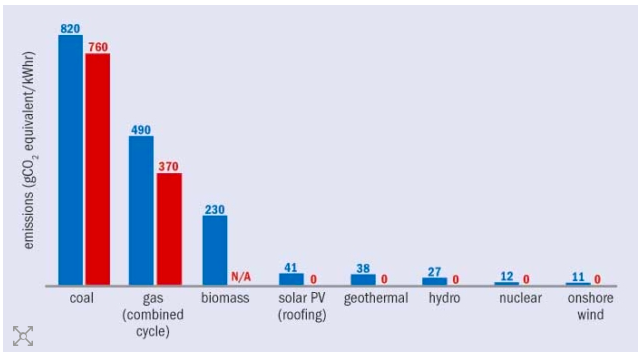
  • Nuclear is a zero-emission clean energy source: It generates power through fission, which is the process of splitting uranium atoms to produce energy. The heat released by fission is used to create steam that spins a turbine to generate electricity without the harmful by-products as emitted by fossil fuels.   
    Chart, bar chart

Description automatically generated
    Fig: A comparison of direct GHG emission (red bars) and full life cycle emissions (blue bars)

  • Nuclear energy’s land footprint is small: Despite producing massive amounts of carbon-free power, nuclear energy produces more electricity on less land than any other clean-air source. A typical 1,000-megawatt nuclear facility needs a little more than 1 square mile to operate which is 360 times less than wind plant and 75 times less than solar plant.
  • Nuclear energy produces minimal waste: Nuclear fuel is extremely dense. It’s about 1 million times greater than that of other traditional energy sources and because of this, the amount of used as nuclear fuel is not as big as you might think. 
image 12

Nuclear power is not without significant disadvantages and risks that warrant consideration:

  • Safety concerns: Nuclear accidents like Chernobyl and Fukushima have demonstrated the catastrophic dangers of nuclear power when safety systems fail. In Indian context high population density, limited water resources and seismic instability in some regions amplify the risks and potential impacts of an accident should one occur..
  • Weapons proliferation: Nuclear technologies and by-products like plutonium can potentially enable weapons proliferation if misused or mishandled. India must ensure its ambitious nuclear plans strengthen oversight, safeguards and the civilian orientation of its programs to avoid enabling weapons ambitions in unstable regions. 
  • Costs: Although nuclear energy is inexpensive once operational, nuclear power plants are highly capital intensive to construct. Project cost overruns are common. Ex: Flamanville reactor in France is 10 years behind schedule and costs have tripled to $12.7 billion. High costs could deter investment into nuclear and benefit cheaper renewable sources. 
  • Waste disposal: Nuclear plants generate radioactive waste that remains dangerous for thousands of years and there are unresolved issues around waste storage and disposal. Any country pursuing nuclear must develop safe, long-term waste solutions to avoid contamination. 
  • Opportunity costs: Large investments into nuclear energy could divert funds and focus away from renewable sources like solar and wind which are quickly achieving cost parity, often better matched to grid needs, and do not have the same economic, safety or waste risks as nuclear. A balanced approach is needed.
  • Domestic capacity: India's nuclear ambitions depend heavily on foreign reactor designs, fuel sources and technical cooperation, especially from Russia and France. This dependence could compromise India's aim for energy self-sufficiency and technology leadership. Investing in education and R&D is needed. 

Recent technological developments have addressed some nuclear concerns, but not eliminated them entirely:

  • Safety: New reactor designs like advanced light water reactors and fast breeder reactors incorporate more passive safety features, lower meltdown risks and higher tolerance for human error or natural disasters. Ex: AP1000 reactors can withstand earthquakes, tsunamis and have a 72-hour backup system. However, severe accidents remain possible and the "fail-safe" nature of reactors is still debated. Strict regulatory oversight is still needed.
  • Proliferation: Technologies like laser enrichment reduce proliferation risks by making the enrichment process more difficult to replicate, while new fuel types like mixed oxide (MOX) fuel make plutonium more difficult to extract for weapons. However, determined groups could potentially overcome these barriers, indicating safeguards must still be actively pursued. 
  • Costs: Standardized reactor designs, modular components, and improved construction techniques aim to reduce costs through replication and learning curve impacts. Ex: Modular reactors could cost 50-70% less. However, nuclear remains capital intensive, projects often run over-budget, and reliable cost reductions remain uncertain - especially where subsidies or public funds are used.
  • Waste: New reprocessing techniques can recycle used nuclear fuel and recover usable uranium and plutonium. The recycled fuel can power advanced reactors, minimizing waste. India uses a plutonium-uranium extraction process. However, reprocessing still results in radioactive byproducts that require storage. And it can increase proliferation risks which must be addressed.
  • Renewable integration: Nuclear technology startups are developing smaller, more flexible reactors to complement intermittent renewable sources, providing low-carbon baseload when needed. Ex: NuScale's small modular reactors can balance loads. However, variable renewable costs are rapidly declining as technologies and coupled with storage, could potentially reduce need for large baseload capacity from nuclear. 
  • Domestic capacity: India has established domestic manufacturing capabilities for nuclear components like coolant pipes, centrifuges, and control mechanisms through partnerships between the NPCIL and private industry. India also has a well-developed nuclear fuel cycle, including facilities for mining, milling, conversion, enrichment, and fuel fabrication, as well as facilities for reprocessing spent nuclear fuel. India is also developing advanced nuclear technologies, such as fast breeder reactors and thorium-based reactors. However, India still imports key reactor components from Russia and France due to limited technical experience. Developing a robust domestic supply chain will take time.
CONCERNS OF NUCLEAR ENERGYTECHNOLOGICAL ADDRESS OF THE CONCERNS
Safety concernsNew reactor designs like advanced light water reactors and fast breeder reactors incorporate more passive safety features, lower meltdown risks and higher tolerance for human error or natural disasters
Weapons proliferationTechnologies like laser enrichment reduce proliferation risks by making the enrichment process more difficult to replicate, while new fuel types like mixed oxide (MOX) fuel make plutonium more difficult to extract for weapons
High CostsModular reactors could cost 50-70% less.
Waste disposalNew reprocessing techniques can recycle used nuclear fuel and minimize waste. Ex: Fast breeder reactors can generate more fuel than they consume.
Opportunity costsRenewable integration: Nuclear technology startups are developing smaller, more flexible reactors to complement intermittent renewable sources, providing low-carbon baseload when needed. Ex: NuScale's small modular reactors can balance loads.
Domestic capacityIndia also has a well-developed nuclear fuel cycle, including facilities for mining, milling, conversion, enrichment, and fuel fabrication, as well as facilities for reprocessing spent nuclear fuel. India is also developing advanced nuclear technologies, such as fast breeder reactors and thorium-based reactors.

So nuclear technology offers promise but no panacea. Its viability, costs and necessity in any country's energy mix depends on a comparison to all available options - and selection of the optimal diverse, balanced and sustainable supply with fair consideration of risks and benefits. An open and honest appraisal is still most prudent with any pursuit of nuclear power.

  • Energy security: India has a severe energy deficit and high dependence on coal, with over 70% of electricity generated from coal. Nuclear power provides energy security by diversifying fuel sources for electricity and reducing overreliance on any single source. Ex: France derives over 70% of its electricity from nuclear, ensuring stable supply.
  • Energy poverty: Energy poverty is a major challenge in India, with millions of people lacking access to basic energy services. Nuclear power can help address this challenge by providing a reliable and affordable source of energy to remote and underserved areas.
  • Low-carbon source: Unlike coal, nuclear power does not emit greenhouse gases and particulate pollution. It can help India meet its climate change mitigation goals under the Paris Agreement as a low-carbon source for base load power. Ex: Sweden aims to phase out fossil fuels in favor of nuclear and renewable energy for a carbon-neutral grid. 
  • Economic benefits: The nuclear power industry creates many jobs in research, reactors construction, and supporting sectors. Kudankulam nuclear plant in Tamil Nadu employs over 2000 people. Nuclear also reduces the need to import expensive fossil fuels. Operation of nuclear plants over 60-100 year lifetimes provide long-term economic value.
  • Energy independence: Domestically produced nuclear fuel reduces dependence on imported energy sources like coal, oil and natural gas - providing greater energy security and independence. India aims to develop its domestic uranium resources and thorium-based reactors. Ex: Canada's uranium mining industry employs over 60,000 people and sustains remote communities. 
  • Reliable: Nuclear power plants operate at over 90% capacity for most of their lifetimes, providing a constant and stable source of baseload power to grids regardless of weather conditions or time of day. Ex: South Korea generates about 30% of its power from nuclear, operating at over 95% capacity.     
  • Existing investments: India has invested heavily in nuclear energy, with 22 commercial reactors operating and 7 under construction. Kudankulam plant alone cost $6.7 billion. Scrapping nuclear prematurely would lead to loss of this investment and wasted capital that could have gained from the plants' operation over 60+ years. 
  • Advanced technologies: New nuclear technologies can strengthen the case for nuclear in India, including more advanced light water reactors, fast breeder reactors, and thorium-based reactors which use domestically available fuel sources.
  • Technological penetration: Development of nuclear reactors can drive technological progress in India through several mechanisms:
    • Materials science: Nuclear reactors require advanced materials that can withstand high temperatures, pressures and radiation over long periods. Progress in materials like zirconium alloys, graphite, and new ceramics has applications in other industries like aerospace, defense, and electronics. India aims to develop silicon carbide composites for future reactors.
    • Manufacturing: High-precision manufacturing techniques are needed to produce nuclear reactor components. Electron beam welding, 3D printing processes etc require technical skills that translate to other sectors. India's Make in India initiative aims to localize nuclear supply chains to support manufacturing growth.
    • Robotics: Nuclear reactors utilize robotics for inspection, maintenance and handling of radioactive materials. Developments in robotics, sensors and remote tooling have spin-off benefits for fields like space exploration, mining, and hazardous waste management. 
    • Sensors and monitoring: Nuclear reactors employ advanced sensors, detectors and real-time monitoring technologies to control processes, detect anomalies and prevent accidents. Technologies like optical spectroscopy, radiation mapping and ultrasonic transducers have medical, security and industrial applications. 
  • Fusion: Research in nuclear fusion aims to develop clean, abundant energy by replicating the processes of the sun on earth. Fusion programs push boundaries in areas like advanced electromagnets, plasma physics and high-heat materials that ultimately benefit sectors like space travel, computing, and accelerator science. India operates an experimental tokamak fusion device.

Restrictions on Free Speech

Context: The INDIA bloc recently announced that it would boycott 14 television news anchors as it did not did not want to legitimise a “hate-filled narrative.” 

About:

  • Censorship, a term referring to the official prohibition or restriction of various forms of expression, such as films, books, and television, has remained a contentious issue in democracies worldwide. Its purpose is to safeguard the political, social, and moral order, and it can be enforced by both local and national governmental authorities.
  • In liberal democracies, censorship often clashes with the cherished principles of freedom of speech, expression, and access to information. While denying these freedoms, censorship is also justified on grounds ranging from political concerns, like sedition and national security, to religious matters, such as blasphemy, and moral issues, like obscenity. Additionally, it can play a role in maintaining social order.

Legal Provisions for Restrictions on Free Speech

  • The current framework for censorship includes constitutional provisions, such as Article 19(2) allowing for reasonable restrictions and Article 359 allowing the suspension of Article 19 during emergencies. 
  • Institutional and legislative frameworks like the IT Act 2000 and IT Rules, along with bodies like the Central Board of Film Certifications (CBFC) and the Press Council of India, also play a role in regulating censorship. 
  • Various legal provisions, such as Section 95 of CrPC, Section 124A for sedition, and Sec 292 for obscenity, contribute to the overall regulatory landscape.

Reasons supporting the need for censorship in society and the nation as a whole

  • Safeguarding Sovereignty and Security: Censorship can act as a preventive measure against terrorism and other potential threats.
  • Guaranteeing Personal Liberty: It restricts harmful activities like cyberbullying, trolling, and defamation, thereby protecting individuals' rights.
  • Limiting the Spread of Misinformation: By controlling the dissemination of fake news, censorship can help uphold the truth and protect the public from deception.
  • Preventing Religious and Ethnic Violence: Hate speech, which is often politically sensitive, can be controlled through censorship to prevent the incitement of violence or social unrest.
  • Protecting Children from Harmful Content: Censorship can shield young minds from exposure to psychologically damaging material.
  • Fostering Social Solidarity: By avoiding insults to shared values, censorship aims to promote a cohesive society.

However, censorship brings forth several prevalent issues

  • Threat to Democracy: Censorship may discourage dissent and curtail open discourse, posing risks to democratic principles.
  • Curtailment of Freedom of Information: Citizens may be deprived of access to essential information due to excessive censorship.
  • Self-Censorship: The fear of censorship may lead to individuals and media outlets restraining their expressions, leading to a chilling effect on free speech.
  • Limiting Creativity and Autonomy: Stricter censorship can hinder artistic freedom and personal autonomy.
  • Intolerance towards New Ideas: An environment of censorship can foster intolerance towards innovative and unconventional thoughts.
  • Suppression of Marginalised Voices: Censorship might silence the voices of marginalised groups, further exacerbating societal inequalities.
  • Implementation Challenges: There are several implementation challenges associated with censorship, including the lack of objective boundaries, potential for misuse, over-regulation, and abuse.

To move forward

some constructive steps can be taken

  • Encouraging Self-Regulation: Involving civil society representation can aid in fostering responsible self-regulation.
  • Empowering Citizens' Choices: Allowing citizens to decide and consume content, possibly through content warnings, can strike a balance between freedom and responsibility.
  • Promoting Media Education: Providing professional media education and codifying media laws can enhance media responsibility.
  • Limiting State Censorship Power: Ensuring that censorship measures are proportionate and restrained can prevent excessive interference.
  • Objective Standards for Harm Prevention: Censorship should primarily address instances of actual harm based on clear and objective criteria.
  • Non-Punitive Approaches: Adopting proactive steps, such as public education and encouraging diversity, can be more effective than punitive measures in addressing hate speech.

In conclusion, censorship presents a multifaceted dilemma, as it seeks to maintain order and security while also safeguarding fundamental freedoms. Striking the right balance between these objectives requires thoughtful deliberation and measures that uphold democratic principles without compromising societal well-being.

Adi Shankara status unveiled in Madhya Pradesh

Context: A 108-foot statue of 8th century spiritual leader Adi Shankara was unveiled recently in Madhya Pradesh’s Omkareshwar. The statue of Openness depicts Shankaracharya as a 12-year old child when he is known to visit the Omkareshwar in Khandwa District.

Adi Shankara

  • He was also known as Shankaracharya.
  • Born in Kaladi, Kerala in 788 CE.
  • Propounded the Doctrine of Advaita (Monism) and wrote many commentaries on the Vedic canon (Upanishads, Brahma Sutras and Bhagavad Gita) in Sanskrit.
  • His major works included Brahmasutrabhasya (Bhashya or commentary on the Brahma Sutra), Bhajagovinda Stotra and Nirvana Shatakam.
  • He was responsible to revive Hindu philosophy at a time when Buddhism was gaining momentum in India.
  • He is said to have established four Mathas (Hindu Monastaries) at Shingeri, Puri, Dwaraka and
  • Badrinath– for propagation of Sanathana Dharma in four corners of India.
  • Adi Shankaracharya was opposed to Buddhist philosophers.
  • Philosophy of Adi Shankara is part of Vedanta (One of the six schools of Aastik Hindu Philosophy).

Advaita Philosophy

  • Advaita Vedanta refers to the non-dualistic school of Hindu philosophy, which is derived mostly from the Upanishads and elaborated in detail by eminent scholars like Gaudapada and Sri Adi Shankaracharya.
  • Dvaita means duality, and Advaita means nonduality. In simple terms, Advaita means absence of the duality between subject and object.

About Omkareshwar Temple:

  • Omkareshwar is a Hindu temple dedicated to Shiva. It is on an island called Mandhata, near Khandwa city in the Narmada river at Khandwa district in Madhya Pradesh, India. It is one of the 12 revered Jyotirlinga shrines of Shiva; the shape of the island is said to be like the Devanagari ॐ symbol.
  • There are two main temples of Shiva here, one to Omkareshwar (whose name means "Lord of Omkara or the Lord of the Om sound") located in the island and one to Mamleshwar (Amaleshwar) (whose name means "Immortal Lord" or "lord of the Immortals or Devas") located on the southern bank of the Narmada River on the mainland.
  • Madhya Pradesh has two Jyotirlingas, the second one, Mahakaleshwar Jyotirlinga, is situated about 140 km north of Omkareshwar Jyotirlinga.
  • Other Ten Jyotirlinga: are Somnath in Gujarat, Mallikarjuna at Srisailam in Andhra Pradesh, Kedarnath in Himalayas, in Uttrakhand state, Bhimashankar in Maharashtra, Viswanath at Varanasi in Uttar Pradesh, Triambakeshwar near Nashik in Maharashtra, Vaidyanath Temple, Vaidyanath in Jharkhand, Nageshwar at Dwarika in Gujarat, Rameshwar at Rameswaram in Tamil Nadu and Grishneshwar near Aurangabad, Maharashtra in Maharashtra. 

China, U.S. and India absent at U.N.’s Climate Ambition Summit

Context : The Climate Ambition Summit (CAS) in New York, as part of the United Nations General Assembly, that concluded on September 21, was marked by the absence of major economies whose actions significantly influence the future of global emissions. China, United States and India — who collectively account for about 42% of global greenhouse gas emissions and are the top three emitters in that order — were all absent from the CAS.

What is Climate Ambition summit?

  • To accelerate action by governments, business, finance, local authorities and civil society, and hear from “first movers and doers,” the United Nations Secretary-General convened a Climate Ambition Summit at United Nations Headquarters in New York on 20 September 2023.
  • The Summit represents a critical political milestone for demonstrating that there is collective global will to accelerate the pace and scale of a just transition to a more equitable renewable-energy based, climate-resilient global economy.
  • The main goal is to keep the 1.5°C degree goal of the Paris Agreement alive and deliver climate justice to those on the front lines of the climate crisis.
  • In the run-up to the summit, about 100 heads of State had written to ramp up action to address the climate crisis. However, only representatives from 34 states and 7 institutions were given the floor on the day of the summit. 
  • The criteria for countries to be considered for a speaking slot at the summit were:
    • That they would be expected to present updated pre-2030 Nationally Determined Contributions (as agreed in Glasgow); 
    • Updated net-zero targets; 
    • Energy transition plans with commitments to no new coal, oil and gas; 
    • Fossil fuel phase-out plans; 
    • More ambitious renewable energy targets; 
    • Green Climate Fund pledges; 
    • Economy-wide plans on adaptation and resilience. 

India’s climate commitments:
India last updated its climate pledges in 2022 of reducing emissions intensity — or the volume of emissions per unit of gross domestic product (GDP) — by 45% from 2005 levels by 2030, a 10% increase from what it agreed to in 2015.

The government committed to meet 50% of its electric power needs from renewable, non-fossil fuel energy sources — up from 40% committed at the Paris agreement. It assured to create an additional carbon sink of 2.5 to 3bn tonnes of CO2-equivalent [GtCO2e] through additional forest and tree cover by 2030. In 2021, Prime Minister Narendra Modi committed to India achieving net zero by 2070. 

The scientific assessment is that India’s commitment, alongside similar commitment by G-20 economies are insufficient to keep temperatures from keeping below 2C by the end of the century. However, India’s low per capita emissions and contribution to the carbon already in the atmosphere has led other analysts to suggest that India has committed to “more than its fair share” to keeping to the Paris-agreed limits. 

PM Vishwakarma Scheme

Context: PM Vishwakarma Scheme is a central sector scheme under Ministry of Micro, Small and Micro Enterprises to provide end-to-end support to artisans and craftspeople who work with their hands and tools.

What is PM Vishwakarma Scheme?

Coverage of the scheme: PM Vishwakarma scheme covers artisans and craftspeople engaged in 18 trades:

  1. Carpenter
  2. Boat Maker
  3. Armourer
  4. Blacksmith
  5. Hammer and tool kit maker
  6. Locksmith
  7. Goldsmith
  8. Potter
  9. Sculpture and stone maker
  10. Cobbler/Shoe smith/Footwear artisan
  11. Mason
  12. Basket/Mat/Broom maker/Coir Weaver
  13. Doll & Toy Maker
  14. Barber
  15. Garland maker
  16. Washerman
  17. Tailor
  18. Fishing net maker
PM Vishwakarma Scheme 1

Benefits under PM Vishwakarma Scheme to artisans and craftspeople

  • Recognition: Recognition of artisans and craftspeople through PM Vishwakarma certificate and ID card.
  • Skill upgradation: Basic training of 5-7 days and advanced training of 15 days with a stiped of Rs 500 per day.
  • Toolkit incentive: A toolkit incentive of up to Rs 15,000 in the form of e-vouchers at the beginning of Basic Skill Training. 
  • Credit support: Collateral free ‘Enterprise Development Loans’ of up to Rs 3 lakh in two tranches of Rs 1 Lakh and Rs 2 lakh with tenures of 18 months and 30 months, respectively, at a concessional rate of interest fixed at 5%, with interest subvention of up to 8% provided by Government of India. Beneficiaries who have completed Basic Training will be eligible to avail the first tranche of credit support of up to Rs. 1 lakh. The second loan tranche will be available to beneficiaries who have availed the 1st tranche and maintained a standard loan account and have adopted digital transactions in their business or have undergone Advanced Training.
  • Incentive for Digital Transaction: An amount of Re. 1 per digital transaction, up to maximum 100 transactions monthly will be credited to the beneficiary’s account for each digital pay-out or receipt. 
  • Marketing Support: Marketing support will be provided to artisans and craftspeople in the form of quality certification, branding, onboarding on e-commerce platforms such as GeMs, advertising, publicity and other marketing activities to improve linkage to value chain.
  • Beneficiaries under the scheme will be onboarded on Udyam Assist Platform as entrepreneurs in the formal MSME ecosystem.
  • Enrolment process: Enrolment of beneficiaries shall be done through Common Service Centres with Aadhar based biometric authentication on PM Vishwakarma portal. The enrolment of beneficiaries will be followed by a three-step verification which will include (i) Verification at Gram Panchayat/ ULB level, (ii) Vetting and Recommendation by the District Implementation Committee (iii) Approval by the Screening Committee.