Geography & Environment & Disaster management

List of Major Important Dams in India [Map]

Dams play a vital role in a country's water management system, including irrigation, flood control, hydroelectric power generation, and water supply. A clear understanding of the important dams in India, their geographical location, and associated rivers is essential for the UPSC Civil Services Examination.

Important Dams in India

Important largest Dams in India on Map

Bhakra Nangal Dam

Located in Himachal Pradesh on the Sutlej River, Bhakra Nangal Dam is one of the highest gravity dams in the world. The dam's primary purposes include electricity generation and irrigation in Himachal Pradesh, Punjab, Haryana, and Rajasthan.

Hirakud Dam

Constructed across the Mahanadi River in Odisha, Hirakud Dam is one of the world's longest man-made dams. It is primarily used for irrigation, flood control, and power generation.

Tehri Dam

Tehri Dam, located on the Bhagirathi River in Uttarakhand, is the highest dam in India. It serves the dual purpose of hydroelectric power production and water supply for irrigation.

Sardar Sarovar Dam

Built on the Narmada River in Gujarat, Sardar Sarovar Dam is a part of the Narmada Valley Project. It provides irrigation facilities to Gujarat and Rajasthan, and electricity generation for four Indian states.

Nagarjuna Sagar Dam

Nagarjuna Sagar Dam, constructed on the Krishna River, lies between Telangana and Andhra Pradesh. The dam provides irrigation water to the Nalgonda, Prakasam, Khammam, and Guntur districts.

Indira Gandhi Canal

Although not a dam, it's crucial to mention the Indira Gandhi Canal, which originates from the Harike Barrage at the confluence of the Beas and Sutlej rivers in Punjab. This canal system is one of the largest in India and primarily provides irrigation in the Thar Desert region of Rajasthan.

Tungabhadra Dam

Tungabhadra Dam is built on the Tungabhadra River, a tributary of the Krishna River. Located in Karnataka, the dam provides irrigation and hydroelectricity to parts of Karnataka and Telangana.

DamLocation
Bhakra Nangal DamHimachal Pradesh
Hirakud DamOdisha
Tehri DamUttarakhand
Sardar Sarovar DamGujarat
Nagarjuna Sagar DamAndhra Pradesh & Telangana
Indira Gandhi CanalRajasthan
Tungabhadra DamKarnataka

What is the largest dam in India, and what are its key features?

The Tehri Dam, located in Uttarakhand, is the tallest dam in India. It serves multiple purposes, including electricity generation, irrigation, and flood control, with a significant capacity for hydroelectric power production.

How do dams contribute to India's electricity supply?

Dams contribute significantly to India's electricity supply by harnessing the potential of hydroelectric power, a renewable energy source that plays a crucial role in the nation's energy mix.

What role do dams play in flood control and irrigation in India?

Dams are instrumental in controlling floods by regulating river flow and providing a reliable water supply for irrigation, supporting agriculture in various regions.

Conclusion

Understanding the importance and geographical location of key dams in India forms a crucial part of the UPSC Civil Services Examination syllabus, primarily under Indian Geography. Aspirants should keep themselves updated with recent developments related to these dams, their significance, and the challenges associated with them.

This knowledge will enrich their answers and perspectives in both the Preliminary and Mains stages of the examination.

The Mines and Minerals (Development and Regulation) Amendment Bill, 2023

Context: India’s Parliament passed a law allowing the government to auction and mine its newly  discovered reserves of lithium, among other minerals, increasing the mining of the critical input for EV batteries. 

The Mines and Minerals (Development and Regulation) Amendment Bill, 2023 amends the Mines and Minerals (Development and Regulation) Act, 1957.  

  • The Act regulates the mining sector.  For regulation, the Act classifies mining-related activities into: 
  1. reconnaissance, which involves a preliminary survey to determine mineral resources.
  2. prospecting, which includes exploring, locating, or proving mineral deposits.
  3. mining, the commercial activity of extraction of minerals.

Key features of the amendment bill:

  1. Private sector involvement - It seeks grant of exploration licence to private sector players for deep-seated and critical minerals. 
  2. Reconnaissance to include sub-surface activities:  The Act defines reconnaissance operations as operations undertaken for preliminary prospecting and includes: (i) aerial surveys, (ii) geophysical, and (iii) geochemical surveys.  It also includes geological mapping.  The Act prohibits pitting, trenching, drilling, and sub-surface excavation as part of reconnaissance.  The Bill allows these prohibited activities.
  3. Exploration licence for specified minerals:  The Act provides for following types of concessions:

(i) a reconnaissance permit for reconnaissance, 

(ii) a prospecting licence for prospecting, 

(iii) mining lease for undertaking mining, and 

(iv) a composite licence, for prospecting and mining.  

The Bill introduces an exploration licence, which will be issued for 29 minerals specified in the Seventh Schedule.  

These include gold, silver, copper, cobalt, nickel, lead, potash, and rock phosphate.  

These also include six minerals classified as atomic minerals under the Act:

(i) beryl and beryllium, (ii) lithium, (iii) niobium, (iv) titanium, (v) tantallium, and (vi) zirconium.  

The Bill declassifies them as atomic minerals.  Unlike other minerals, the prospecting and mining of atomic minerals is reserved for government entities under the Act.

  1. Exclusive auction mining lease to centre - It empowers the central government to exclusively auction mining lease and composite licence for certain critical minerals.
  2. Time limits - Blocks explored by the exploration licence holder would be auctioned for mining lease within a prescribed timeline.

Merits:

  • Rationalization of minerals - Many of the minerals listed as atomic minerals have numerous non-atomic applications in space industry, electronics, technology and communications, energy sector, electric batteries etc. In most cases, the non-atomic uses of these minerals far outweigh their atomic use. Many such minerals are not fissile or radioactive in nature. 
  • Reduced financial burden on government - Deep-seated minerals such as gold, silver, copper, zinc, lead, nickel, cobalt, platinum group of minerals, and diamonds are difficult and expensive to explore and mine hence involving them may reduce the financial burden on government.
  • Geopolitical advantage – It may reduce the dependence of India over the imports of such minerals thereby reducing the relative geopolitical vulnerabilities.
  • Increase in efficiency - Only 19 blocks of minerals have been auctioned so far by the State Government viz. graphite, nickel and phosphate out of 107 blocks handed over to the various State Governments. As these critical minerals are vital for the growth of our economy, authorizing the Central Government to auction concession for these critical minerals would increase the pace of auction and early production of the minerals.
  • Innovation in mining - Private participation will improve the scope of mining and innovation in this sector. 
  • Improving revenue to states - Timebound auctioning will help state to have better revenues.
  • Boost to manufacturing- Reducing the government monopoly will eventually bring competition in this sector boosting the mining of such minerals which are very critical when it comes to E.V manufacturing, chip industries etc. 

Issues involved :

  1. Private participation may lead to misuse, irresponsible and excessive mining. This can have several detrimental socio-environmental implications.
  2. Already stressed Public sector undertakings may further take the backseat. 
  3. Issue of federalism because of exclusive right to centre to auction mining lease.
  4. The Bill also dispenses with cumbersome forest clearances for mine reconnaissance and prospecting operations. This may affect the ecology of the concerned region. 

List of Major important ports in India

India, with its vast coastline stretching over 7,500 kilometers, is dotted with several important ports that play a crucial role in the country's trade and economy. An understanding of the key ports in India, their geographical location, and operational significance is fundamental for aspirants of the UPSC Civil Services Examination.

Important Major Ports in India

Major Ports in India:

  • India has a total of 13 major ports, of which 12 ports are Government-owned and 1 is private. (Kamarajar Major Port in Ennore is privately owned).
  • The country has 7517 kilometres of coastline and its major ports handled 795 million tonnes of cargo in FY23.
List of Major important ports in India
(Current Major Ports in India)

About Vadhavan Port

  • Vadhavan Transhipment Port when developed will be a deep-sea port  in Palghar district of Maharashtra.
  • The port will be built on coast of the Arabian Sea.
  • Vadhavan port will form a major part of the proposed ‘India Middle-East Europe Economic Corridor (IMEC’).
  • It’s a key project within the Indian government’s Sagarmala initiative to enhance the performance of the country’s logistics sector.
image 38

Major Ports of India on Eastern Coast: 

1. Kolkata Port

  • Kolkata Port, now called Syama Prasad Mookerjee Port, is India’s oldest major river port situated in Kolkata, West Bengal.
  • It was built by the British East India Company.
  • Unlike most ports, Kolkata is a freshwater port with no salt content.
  • It has two main sections: Kolkata Dock in the city and a Deep-water dock at Haldia Dock Complex. 

2. Paradip Port

  • Paradip Port is a natural, deep-water harbour on the East coast of India in Paradip, in Odisha, 
  • It is where the Mahanadi River meets the Bay of Bengal.
  • The port is managed by the Paradip Port Authority (PPA), which is an independent corporation fully owned by the Government of India.

3. Visakhapatnam Port

  • Visakhapatnam Port is one of India’s twelve big ports and the main port of Andhra Pradesh. 
  • It’s the third largest state-owned port in India in terms of cargo volume, and the biggest on the Eastern Coast.
  • Positioned about halfway between Kolkata Port and Chennai Port, it is situated at a strategic location along the Bay of Bengal coast.

4. Kamarajar Port

  • Kamarajar Port Limited, previously known as Ennore Port, sits on the Coromandel coast in Tamil Nadu. 
  • It is India’s 12th major port and the first to be a public company and the only major port organized as a company.
  • Chennai Port Trust took over major ownership (90%) of Kamarajar Port Limited from the government 

5. Chennai Port

  • Chennai Port, previously called Madras Port, is India’s second-largest container port, after Mumbai’s Jawaharlal Nehru Port. 
  • It’s the biggest port in the Bay of Bengal. 
  • Maritime trade through the port began much earlier in 1639 on the undeveloped coast.

6. Tuticorin Port

  • The V.O. Chidambaranar Port is located in Tamil Nadu, and is one of India’s 13 major ports.
  • It was designated as a major port in 1974.
  • It ranks as the second-largest port in Tamil Nadu and the third-largest container terminal in India.
  • The V.O. Chidambaranar Port is man-made.

Major Ports of India on Western Coast

  • The Western Coast of India is dotted with several major ports that are instrumental in handling a significant portion of the country’s maritime trade.
  • The Western coastal plains of India extend from Gujarat in the North to Kerala in the South, passing through the states of Maharashtra, Karnataka, and Goa.
  • It lies between the Western Ghats and the Arabian Sea. 

7. Kandla Port

  • Kandla Port, officially renamed as Deendayal Port Trust in 2017, is a vital maritime facility located on the northwestern coast of India, in the Kutch District of Gujarat.
  • Established in 1952, the port was constructed to serve as a major trading hub, especially after the partition of India, which led to the loss of the Karachi port to Pakistan.

8. Jawaharlal Nehru Port

  • Jawaharlal Nehru Port, also known as Nhava Sheva, is the largest container port in India. 
  • Located in Maharashtra, close to Mumbai, it was commissioned in 1989 to augment the port capacity of Mumbai.
  • Managed by the Jawaharlal Nehru Port Trust, it plays a pivotal role in India’s international trade, handling a significant portion of the country’s containerized cargo.
  • It is the busiest port in India in terms of container traffic. It handles the largest volume of containerized cargo among all the ports in India.
  • The port’s strategic location near Mumbai, India’s financial capital, and its state-of-the-art facilities contribute to its status as the busiest port in the nation.

9. Mumbai Port

  • Mumbai Port, one of India’s oldest major ports, is located on the west coast in Mumbai, Maharashtra.
  • Established in 1873, it has played a vital role in the maritime trade of India.
  • Primarily handling bulk cargo, it is known for its deep natural harbour and strategic location, serving both as a key facility for imports and exports and as a hub for passenger traffic.

10. Mormugao Port

  • Mormugao Port, located in Goa, is one of the country’s premier iron ore export ports. 
  • Established in 1888, it’s a natural harbour that has played a significant role in the maritime trade, particularly in the export of iron ore from India.
  • Over the years, Mormugao has diversified its cargo handling capabilities to include other bulk and general cargoes.

11. New Mangalore Port

  • New Mangalore Port, situated in Karnataka. 
  • Established in 1974, it is known for handling a diverse range of cargoes including crude oil, LPG, coffee, and cashew.
  • It plays a vital role in the economic development of the region, serving the hinterland of Karnataka as well as parts of Kerala.

12. Cochin Port

  • Established in 1928, it plays a crucial role in the maritime trade of the region.
  • The port is strategically positioned along major international sea routes and has a natural harbour.
  • Cochin Port facilitates the export and import of goods and is known for its container transhipment facility.

13. Port Blair

The 13th major port is Port Blair Port which is a seaport in South Andaman district of Andaman and Nicobar in India. 

  • Located on the Andaman Sea, it is one of major ports in India.
  • All major provisions of the Major Port Trusts Act, 1963, have become applicable to the port of Port Blair. 
  • It is the only major port in Andaman and Nicobar.

Read: Ports Infrastructure of India

See also:

Geography NotesGeography Prelims PYQ

Climate finance adds another layer of inequity to climate change

Context: In the last few years, climate Justice activists have been campaigning for the world’s economically developed countries to raise their investments in climate adaptation and mitigation, including paying for other countries’ abilities to deal with the effects of climate change

Background:

According to the United Nations Framework Convention on Climate Change (UNFCCC) Standing Committee on Finance, climate finance is "finance that aims at reducing emissions and improving greenhouse gas sinks, as well as reducing vulnerability of, and maintaining and increasing the resilience of, human and ecological systems to negative climate change impacts."

The term has been used in a narrow sense to refer to transfers of public resources from developed to developing countries, considering their UN Climate Convention obligations to provide "new and additional financial resources", and in a wider sense to refer to all financial flows relating to climate change mitigation and adaptation.

UNFCCC, Kyoto Protocol and Paris Agreement call for financial assistance. In accordance with the principle of “common but differentiated responsibility and respective capabilities” set out in the Convention, developed country Parties are to provide financial resources to assist developing country Parties in implementing the objectives of the UNFCCC. The Convention has created Financial Mechanisms to offer cash to developing nation Parties to help with this. 

  • Since the Convention's entrance into force in 1994, the Global Environment Facility (GEF) has acted as the financial mechanism's operating institution. 
  • Copenhagen Accord: Parties agreed for a "goal" for the world to raise $100 billion per year by 2020, from "a wide variety of sources", to help developing countries cut carbon emissions (mitigation). 
  • COP 16 (2010): Parties established the Green Climate Fund (GCF) and in 2011 (COP 17) also designated it as an operating entity of the financial mechanism. 
  • Establishment of special funds: Special Climate Change Fund (SCCF), the Least Developed Countries Fund (LDCF), both managed by the GEF; and the Adaptation Fund (AF) under the Kyoto Protocol in 2001. 

Performance till Date:

  • According to UNFCCC standing committee report, the $100b targets have not been met yet. 
  • Even the effort to move finances through private players have also met with comprehensive failure. 
  • There is a huge variation in estimates. For eg- OECD reports that around $83b have been moved but Oxfam claims it to be just around $21 b - $24b
A graph showing the global economy

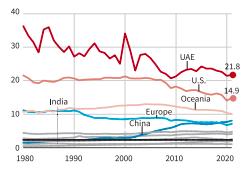
Description automatically generated with medium confidenceChart shows the carbon dioxide emissions per capita emitted in 1980­2021 by various geographical Regions. It also shows (as a fixed black line) a baseline target of carbon dioxide emissions (2.3 tonnes per capita) needed to limit global warming to 1.5° Celsius. The global average emissions per capita is currently double this target, and has stayed above 4.7 tonnes per capita since 2010, whereas Africa and India have both been consistently under. China crossed the global average in 2004.
A graph of different colored bars

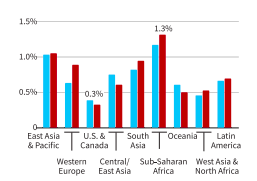
Description automatically generated with medium confidenceIt shows the total investment in climate ­related activities as a fraction of that region’s total GDP in 2019 and 2020. This includespublic and private investment. In both years, Sub ­ Saharan Africa had the highest investment fraction in climate finance (1.3% ofits GDP), followed by East Asia and the Pacific (1%) and South Asia (0.9%). The U.S. and Canada had the lowest proportionate investment, at only 0.3% of their GDP.
A graph of different colored bars

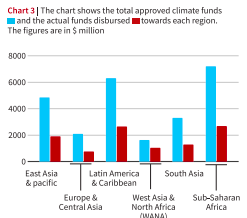
Description automatically generated with medium confidenceIt shows the total approved funds and theactual funds disbursed towards each region. Since 2003, for example, $3.3 billion was approved to be disbursed to South Asia, but only $1.3 billion was actually disbursed. Most regions received only 40% of the approved funding for that region, on average.

CHALLENGES IN CLIMATE FINANCE 

  • Definitions & reporting of climate finance: Even 10 years after COP 15, there is no general agreement on what form of funding can be counted as climate finance under the GCF in support of the Copenhagen pledge. Even 7 years after the Paris Climate Deal, there is no agreement regarding definition of climate finance. 
  • Insufficient Amounts: For instance, global annual fossil fuel subsidies together with their externalities cost about $5.3 trillion. Experts have suggested that even $100b/year pledge is not sufficient to tackle the issue. 
  • Climate Finance Governance: Equally challenging is how international climate change funding should be effectively governed and delivered to developing countries. 
  • Reporting and Verification: Currently there is a lack of mandatory verification mechanism in reporting. Reporting requirements around the projected financing provisions remain weak. 

Conclusion

Countries in Sub ­ Saharan Africa, Latin America, and South Asia have historically contributed the least to global warming; yet, they are bearing the bigger brunt of climate disasters – both in the form of extreme natural phenomena and debt distress. On the other hand, countries in North America and Europe have contributed and continue to contribute the most, and are also the creditors of the debt crisis.

Forest Conservation Amendment Bill 2023

Context: Lok Sabha has passed the Forest Conservation (Amendment) Bill without any changes from the first version introduced on March 29. The contentious Bill was introduced to amend the Forest Conservation Act, 1980.

What is Forest conservation amendment bill 2023?

  • The Bill amends the Forest (Conservation) Act, 1980 to make it applicable to certain types of land. These include land notified as a forest under the Indian Forest Act, 1927 or in government records after 
  • the 1980 Act came into effect.  The Act will not be applicable for land converted to non-forest use before December 12, 1996.

Forest Conservation Act 1980 is a unique piece of legislation and regulatory mechanism that reflects the collective will of the nation to protect its rich forests, biodiversity and natural heritage and resources. The act permits only unavoidable use of forest land for various development purposes. It embodies the firm commitment of the Government and the Department to balance the conservation of forests with the sustainable developmental need of the society contributing to better environment, health and economy. This act is regulatory in nature and not prohibitory.

Key features of the bill:

  • Exemptions - It exempts certain types of land, for e.g. land within 100 km of India’s border needed for national security projects, small roadside amenities, and public roads leading to a habitation.
  • Approval from centre - The state government requires prior approval of the central
    government to assign any forest land to a private entity.  The Bill extends this to all entities, and allows the assignment to be made on terms and conditions specified by the central government.
  • Activities in forests - The Act specifies some activities that can be carried out in forests, such as establishing check posts, fencing, and bridges.  The Bill also allows running zoos, safaris and eco-tourism facilities.
  • Power to issue directions:  The Bill adds that the central government may issue directions for the implementation of the Act to any authority/organisation under or recognised by the centre, state, or union territory (UT).

Key Issues and Analysis:

  • The Bill excludes two categories of land from the purview of the Act: land recorded as forest before October 25, 1980 but not notified as a forest, and land which changed from forest-use to non-forest-use before December 12, 1996.  This provision may go against a 1996 Supreme Court judgement on preventing deforestation.
  • Exempting land near border areas for national security projects may adversely impact the forest cover and wildlife in north-eastern states. 
  • A blanket exemption for projects like zoos may adversely affect forest land and wildlife. The Supreme Court (2023) has remarked that they do not appreciate the necessity of having a zoo inside tiger reserves or national parks.
  • Activities like silvicultural operations, safaris, and eco-tourism facilities may help in economic development, and may even contribute to national priorities such as energy security and industrial growth.  However, there may be a need to balance economic benefits of such activities with that of conserving forests.  It is not clear why the requirement of a case-by-case examination by the central government to determine such balance is being replaced by a blanket exemption.

Rain triggers flash floods, landslips in J&K; 1 killed

Context: Recently several regions of India including J&K have been marred by cascading effect of natural disasters. This makes it important to understand the relevance of Early Warning System.

image 83

Early warning systems (EWS) can improve resilience against climate-related hazards by providing information for early action. However, to be effective, EWS must incorporate aspects of resilient systems.
Components:

  • Disaster risk knowledge based on the systematic collection of data and disaster risk assessments.
  • Detection, monitoring, analysis and forecasting of the hazards and possible consequences.
  • Dissemination and communication, by an official source, of authoritative, timely, accurate and actionable warnings and associated information on likelihood and impact.
  • Preparedness at all levels to respond to the warnings received.

Multi Hazard Early Warning System

Multi-hazard early warning systems address several hazards and/or impacts of similar or different type in contexts where hazardous events may occur alone, simultaneously, cascadingly or cumulatively over time, and taking into account the potential interrelated effects. A multi-hazard early warning system with the ability to warn of one or more hazards increases the efficiency and consistency of warnings through coordinated and compatible mechanisms and capacities, involving multiple disciplines for updated and accurate hazards identification and monitoring for multiple hazards. 

The United Nations Office for Disaster Risk Reduction (UNISDR) and the World Meteorological Organization (WMO) Secretariat, along with other international and national agencies, established the International Network for Multi-Hazard Early Warning Systems (IN-MHEWS). 

This multi-stakeholder partnership will facilitate the sharing of expertise and good practice on strengthening multi-hazard early warning systems as an integral component of national strategies for disaster risk reduction, climate change adaptation, and building resilience. In doing so, it will support the implementation of the Sendai Framework for Disaster Risk Reduction 2015-2030, especially the achievement of its global target G on multi-hazard early warning systems, and the United Nations Plan of Action on Disaster Risk Reduction for Resilience.

The Sendai Framework for Disaster Risk Reduction 2015–2030 – the successor instrument to the Hyogo Framework for Action 2005–2015: Building the Resilience of Nations and Communities to Disasters – recognizes the benefits of multi-hazard early warnings systems and enshrines them in one of its seven global targets:

substantial reductions

Read also:

Urban FloodingForest fire in India
Floods - Causes & ImpactDisaster management Notes

Genetically Modified Mustard at the Supreme Court

Context: A long drawn PIL has prevented Centre from permitting Genetically Modified mustard to be cultivated commercially.

image 55

GM Mustard

It is an Herbicide Tolerant (HT) mustard variety that has undergone genetic modification. It has two alien genes —"barnase" and "barstar"; isolated from a soil bacterium called Bacillus, amyloliquefaciens. It enables the breeding of high-yielding commercial mustard hybrids.

  • The first gene (‘barnase’) codes for a protein that impairs pollen production and renders the plant into which it is incorporated male-sterile. 
  • This plant is then crossed with a fertile parental line containing, in turn, the second ‘barstar’ gene that blocks the action of the barnase gene. 
  • The resultant F1 progeny is both high-yielding and also capable of producing seed/ grain, due to the barstar gene in the second fertile line.
Science behind DMH-11

Genetically Modified Crops

GM is a technology that involves inserting DNA into the genome of an organism. To produce a GM plant, new DNA is transferred into plant cells. Usually, the cells are then grown in tissue culture where they develop into plants. The seeds produced by these plants will inherit the new DNA.

  • Biotechnologists insert select genes at a location in the DNA of a plant to develop a GM crop. 
  • The insertion makes a GM crop express traits that it ordinarily would not. 
  • For instance, GM mustard has been altered to withstand the broad-spectrum plant-killer or herbicide Glufosinate. 
LnKlg2gYPmQUWHH9aL MKKYojnVut4k2W SDVOP5Lb9TS9KjEegtx62ekDp9RSqW4vGGNuplQMRUMkY10vgxFl1iBgT7ocEITfsVv

Some methods used in Genetic Modification

pcBW9WkDF7pKy8AZQ5BSe7T FmHPC ajTkxp6fa5bqw22dDPRw77ffS6 WOJr HgtED9q0WUR44jDPtd FSPCOxV5Tx9p

Conventional Breeding Vs Genetic Modification 

Conventional Breeding Vs Genetic Modification 

Benefits of GM Crops 

  • GM crops have reduced chemical pesticide use by 37%, increased crop yields by 22%, and increased farmer profits by 68% (As per Klumper and Qaim, 2014). 
  • GM crops have also reduced Carbon dioxide emissions (mostly through no-till farming practices) by 24.5 million kg per annum (As per the study by Graham Brookes and Peter Barfoot, 2020).
  • As per FAO study done in 2022, The long and safe track record of GM crop cultivation and consumption of foods derived from them over the past 28 years (1994 to 2022) attest the safety of GM foods to Humankind. 
  • Global cultivation of GM Crops which shows the benefit of the GM crops
    • GM crops are cultivated in 29 countries in an area of 190 million hectares. 
    • Forty-three countries import foods, oils and feed derived from GM crops. 
    • Nine non-food GM crops and twenty-two GM food and feed crops are cultivated and consumed globally.
  • India commercialized insect pest-resistant Bt-cotton in 2002 that brought about a significantly positive change in cotton production, export and textile industry.
    • It has greatly reduced the use of toxic pesticides. 
    • As a result of the adoption of Bt cotton, India is now the largest cotton producer in the world.
  • Food and nutritional security can be ensured in growing population of India.

Concerns over GM crops in India

  • Long-term research suggests that Bt cotton has provided only fleeting benefits to farmers, while enormously increasing their costs of cultivation and risk.
  • Use of Termination technology which shuts off the reproductive abilities of seeds, making second generation seeds sterile. 
  • Due to the royalty charges to multinational corporations, genetically modified seeds are expensive.
  • Technical Expert Committee (TEC) appointed by Supreme Court found HT crops completely unsuitable in the Indian context and warned of serious harm to the environment, rural livelihoods and sustainable agriculture if they were released.
  • A Parliamentary standing committee report exposes gaps in which government ignores several things like biosafety, biodiversity and food and seed sovereignty and farmers livelihoods.
  • According to activists and farmers, GM mustard is an herbicide-tolerant crop and toxic chemicals sprayed on the plant would impact the health of the people consuming it.  
  • According to critics GM Crops are environmentally unsustainable and does not suit Indian agricultural conditions.  
  • There are no separate regulatory guidelines and protocols for HT crops.  
  • The parliamentary standing committees unanimously highlighted major weaknesses in the regulatory system.
    • The committee found that GM crops have an impact on health and environment and these aspects were overlooked while approving Bt Brinjal trials in India. 
  • Excessive production of genetically engineered crops will eventually render them useless as the pest will generate immunity to the toxin.

Mechanism to get approval for Genetically Modified Crops in India

  • There is a well-established regulatory framework for approval of Genetically Modified (GM) crops as per “Rules for the Manufacture/Use/Import/Export and Storage of Hazardous Microorganisms, Genetically Engineered Organisms or Cells, 1989” under the Environment (Protection) Act, 1986 in the Country.
  • Evaluation of each application of GM crop is done mandatorily on a case-to-case basis after a thorough examination of health, environment, food and feed safety assessment studies undertaken in a systematic and scientific manner as per prescribed guidelines, manuals and standard operating procedures stipulated by various regulatory agencies under the Rules, 1989 from time to time. 
  • The data generated by the applicants is reviewed at every step in the development process of GM crops by various Statutory Committees under the Rules, 1989 such as Institutional Biosafety Committee, Review Committee on Genetic Manipulation and Genetic Engineering Appraisal Committee.
  • Ministry of Environment, Forests and Climate Change is the final authority to pass the GM crop for cultivation and use.

Way Forward 

  • A rapidly developing country like India with a burgeoning population cannot afford to ignore sustainable technologies like GM crops for drought tolerance, nutrient use efficiency, especially that of nitrogen, and thermotolerance.
  • The concerns about the development of antibiotic resistance, horizontal gene transfer, “terminator gene”, adverse effects on health etc., should be dispelled convincingly by various global scientific committees and experts and accordingly the crops should be introduced.  
  • The GMO regulatory System in India formulated well-defined protocols and procedures to subject a GM organism to a plethora of tests that often takes several years. The procedure should be made more effective using technological improvements with separate regulations for HT crops.

There is an urgent need of GM labelling laws in India as mentioned by the parliamentary standing committee.

Coral bleaching

Context: Across the globe, unprecedented heatwaves have plunged both animals and humans into challenging circumstances. Among the affected creatures, corals stand out as exceptionally vulnerable.

image 49

Corals Reefs:

  • They are most biologically diverse ecosystems of the planet. They are formed when Coral Polyps, the animals primarily responsible for building reefs, develop a symbiotic relationship with photosynthetic algae called zooxanthellae, which live in its tissues.
  • Coral reefs are critically important ecosystems that underpin ocean sustainability and the economic, social and cultural security of hundreds of millions of people around the world. Despite their immense value, they are uniquely vulnerable to the increasing global threat of climate change, as well as other anthropogenic impacts.

Symbiotic Relationship:

It is defined as a close, prolonged association between two or more different biological species, where both parties involved benefit from the interaction.

Favourable Conditions for the formation of Corals:

  • Optimal Sunlight Exposure: Corals thrive in shallow water where ample sunlight penetrates to support their symbiotic relationship with zooxanthellae (algae). These microscopic algae residing within the coral provide vital oxygen and other essential nutrients, relying on sunlight for their survival. Consequently, corals, too, depend on sunlight to flourish. 
  • Translucent Water Conditions: Clear and unpolluted water is crucial for corals as it allows sunlight to permeate through the depths. The clarity of water determines the amount of sunlight that reaches the corals, thereby ensuring their sustenance and vitality. 
  • Optimal Water Temperature: Corals exhibit a remarkable adaptability to a narrow temperature range, typically thriving in water temperatures between 20–32°C. The temperature within this specific range is essential for their growth and survival. 
  • Salinity Requirements: Corals necessitate a specific balance in the salt-to-water ratio to thrive. As a consequence, they cannot survive in areas where freshwater from rivers flows into the ocean, as the altered salinity in these estuaries is unsuitable for coral growth. Instead, corals are restricted to habitats with the appropriate saltwater conditions.

Distribution of Corals in the world:

Ecosystem services provided by Corals:

  • Human health and wellbeing: 70% of the protein in the diets of Pacific Islanders comes from reef-associated fisheries (SDGs 2, 3, 6, 9 & 14; Aichi Biodiversity Targets 13, 14, 16).
  • Shoreline protection: A healthy coral reef can reduce coastal wave energy by up to 97%. Globally, USD6 billions of built capital is protected from flooding by coral reefs (SDGs 1, 8, 11, 13, 14).
  • Food security and livelihoods: Coral reef fisheries support as many as six million people and are worth USD6.8 billion per year, providing an average annual seafood yield of 1.42 million tonnes (SDGs 2, 4, 5, 8, 12, 13, 14, 16).
  • Tourism: Coral reef tourism contributes USD36 billion to the global tourism industry annually (SDGs 2, 4, 5, 6, 8, 9, 12, 14).
  • Biodiversity: Coral reefs support approximately 4,000 species of fish and 800 species of hard corals, Globally, about 830,000 species of multicellular plants and animals are estimated to occur on coral reefs, of which an estimated 13% are unnamed and 74% are yet to be discovered. Most of these species are cryptic, small and relatively rare.
  • Medicines: Coral reefs are the medicine chests of the 21st century, with more than half of all new cancer drug research focusing on marine organisms.

What is Coral Bleaching?

When corals are stressed by changes in conditions such as temperature, light, or nutrients, they expel the symbiotic algae living in their tissues, causing them to turn completely white.

Ocean acidification which is caused by CO2 absorption in oceans, lowers pH levels of ocean water and affects calcium carbonate minerals. The combination of acidification and ocean warming poses a significant threat to coral reefs’ ability to form skeletons. 

Status of Corals in the world at present:

The 2019 global assessment report on biodiversity and ecosystem services of the Intergovernmental Science-Policy Platform on Biodiversity and Ecosystem Service (IPBES), and the Intergovernmental Panel on Climate Change (IPCC) Special Report on the Ocean and Cryosphere in a Changing Climate, warn that:

  • Over half of the world’s coral reefs have been lost;
  • At warming of 1.5oC, 70-90% of the world’s coral reefs are expected to be lost. At 2oC degrees, this increases to >99% loss of coral reefs.

Global Initiatives for protection of Coral reefs:

The International Coral Reef Initiative (ICRI) is the only international partnership, between nations and organizations, focussing solely on the protection of coral reefs and related ecosystems worldwide.

The Initiative was founded in 1994 by Australia, France, Japan, Jamaica, the Philippines, Sweden, the United Kingdom, and the United States of America. It was announced at the First Conference of the Parties of the Convention on Biological Diversity (CBD) in December 1994.

India’s efforts for Coral Restoration:

The Zoological Survey of India (ZSI), with help from Gujarat’s forest department, is attempting for the first time a process to restore coral reefs using biorock or mineral accretion technology. Biorock is the name given to the substance formed by electro accumulation of minerals dissolved in seawater on steel structures that are lowered onto the sea bed and are connected to a power source, in this case solar panels that float on the surface. The technology works by passing a small amount of electrical current through electrodes in the water.

When a positively charged anode and negatively charged cathode are placed on the sea floor, with an electric current flowing between them, calcium ions combine with carbonate ions and adhere to the structure (cathode). This results in calcium carbonate formation. Coral larvae adhere to the CaCO3 and grow quickly.

Steps need to be taken for protection of corals:

  • Safeguarding Coral Reefs: Government should regulate nearshore fishing to ensure sustainable practices that do not harm the reef. This involves managing fishing activities around coral reefs and prohibiting harmful practices such as dynamite and cyanide fishing, as well as the harvesting of live coral. 
  • Marine Protected Areas(MPAs): MPAs define specific rules and guidelines to protect reef life while also allowing sustainable human use. By designating specific zones for protection and regulated use, MPAs offer a practical approach to safeguarding coral reefs and their invaluable ecosystems. 
  • Combating Land-based pollution: To protect coral reefs from land-based pollution and runoff, it is imperative to implement measures that reduce pollution sources and preserve critical coastal ecosystems. This includes sustainable land-use practices, responsible waste management, and protecting and restoring vital coastal habitats. 
  • Effective Monitoring and Enforcement: Engaging stakeholders in monitoring and enforcing regulations empowers communities to take ownership of their coral reef resources, fostering a sense of responsibility and stewardship. However, in areas with limited resources, community-based management efforts can play a crucial role.
  • Education and Outreach: It should target stakeholders, community members, and even school children, enlightening them about the importance of coral reefs and their interconnectedness with human well-being. By empowering people with knowledge, communities can foster a deeper sense of appreciation and encourage positive actions to safeguard coral reefs. Education can also prompt individuals to adopt sustainable practices in their daily lives, further contributing to the conservation efforts for these invaluable ecosystems.

China event raises concern over India’s only ape

Context: The conservation status of India’s only ape (hoolock gibbon) was a cause for concern at a global event on gibbons held a week ago in China.

More about the news:

  • Gibbons, the smallest and fastest of all apes, live in tropical and subtropical forests in the south eastern part of Asia. 
  • The hoolock gibbon, unique to India’s northeast, is one of 20 species of gibbons on Earth.
  • Over the decades, zoologists thought the northeast housed two species of the ape — the eastern hoolock gibbon (Hoolock leuconedys) found in a specific region of Arunachal Pradesh and the western hoolock gibbon (Hoolock hoolock) distributed elsewhere in the northeast. 
  • A study led by Hyderabad-based Centre for Cellular and Molecular Biology (CCMB) in 2021 proved through genetic analysis that there is only one species of ape in India. It debunked earlier research that the eastern hoolock gibbon was a separate species based on the colour of its coat. 
  • The CCMB study concluded that two populations of the western hoolock gibbon and the assumed eastern hoolock gibbon split 1.48 million years ago. It also estimated that the gibbon divergence from a common ancestor occurred 8.38 million years ago.

The Western Hoolock Gibbon 

RNPXyrwvE1i7P3gdYAJTtzxQc319A v9KfpCRubscSSjLITvJhFJokizD7ZGkdfYs9v4V ZGMuibkt2ikPq6Ha gsO1NzHnxi0B8nTKMtljsD1202MCWETvpnkHhJw2T08eyXS4sOb1B 2 HG3 WQ

Description

  • It is an ape found in the tropical forest canopy in India, Bangladesh and Myanmar.
  • Tailless like other apes, they are nonetheless set apart by their long arms and dense hair.
  • The loud and musical calls of Western Hoolock Gibbons can be heard from far away in the forest. Males and females often sing in unison, a series of duet calls that helps the pair to mark their territory.
  • Behaviour
    • These gibbons are arboreal and only come to the ground in exceptional circumstances.
    • They are omnivorous, consuming over 100 species of plants and some invertebrates and birds’ eggs, with a diet that can greatly vary based on location.
    • Western Hoolock Gibbons form small, monogamous family groups and usually give birth to a single offspring. Babies typically spend their first months of life tightly clung around the mother’s waist, followed by gradual weaning over two years. The young gibbon will then stay with his parents until sexual maturity.
  • Threats and Conservation
    • They are one of Asia’s most endangered primates(ER), with populations expected by the IUCN to at least halve over three generations (2001-2015, 2016-2030 and 2031-2045). 
    • Threats such as hunting for food and medicine and habitat loss have put this species at risk, and habitat protection is critical for their survival.

The Eastern Hoolock Gibbon

  • It is one of two species of Hoolock Gibbon.  
  • This species is found particularly east of the Chindwin River in Myanmar and in southwest Yunnan (China).  
  • Indian records of the species likely to actually represent the Western Hoolock.
HL6yyoOmeyG4MP6jvI5AJ9o5SWVzoPsQAlDYC DDhYvpAAJygoegjBPCtN1xeHTuketrOpA ofIYVDyjrtKihrWvdhzvo3dZdu84iFEpaomAbNFr08S8V5sfR9JbYebf629MSZKNFQ8ek1ZeofU0 w

Difference between Eastern and Western Hoolock

  • Both Hoolock Gibbon species are separated by the Chindwin River in western Myanmar, which flows into the Irrawaddy
  • The two species differ in their fur coloration and DNA sequences, and may have diverged about 1.42 million years ago.
  • The Red List maintained by the International Union for Conservation of Nature categorises the eastern hoolock gibbon as vulnerable.

Anthropocene

Context: A group of scientists have identified a small lake in Canada as the ground zero for ‘Anthropocene’.

image 40

What is Anthropocene?

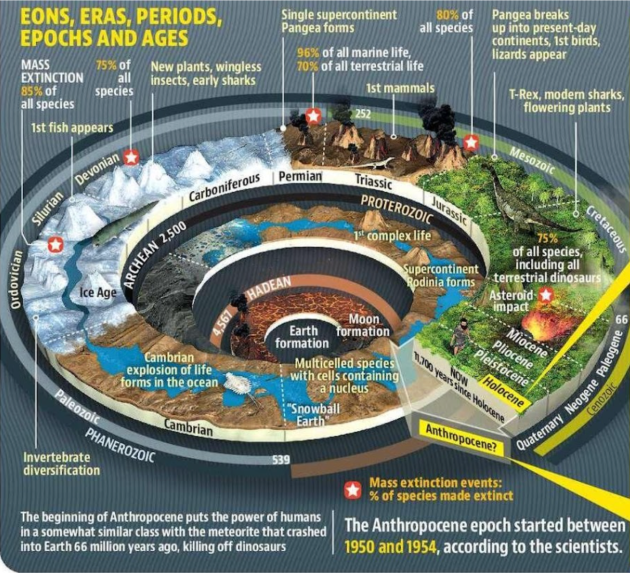
  • It is an unofficial unit of geologic time which is used to denote the most recent period in Earth’s history when human activity started to have a significant impact on the planet’s climate and ecosystems, especially since the onset of the Industrial Revolution. 
  • Neither the International Commission on Stratigraphy (ICS) nor the International Union of Geological Sciences (IUGS) has officially approved the term as a recognised subdivision of geologic time.
  • This term was first coined by Nobel Prize – winning chemist Paul Crutzen and biology professor Eugene Stoermer.
  • The phenomena’s which are associated with this geological time are global warming, sea-level rise, ocean acidification, mass-scale soil erosion, heat waves, deterioration of the biosphere and other detrimental changes in the environment.

Demographic transition and change in women’s lives

Context: India's population has skyrocketed from 340 million at Independence to 1.4 billion, thanks to improved public health and medical advancements. This unexpected decline in mortality has transformed the lives of Indians, especially women, as they navigate longer lifespans and the consequences of fewer children.

Demographic transition

Demographic transition refers to the process of changes in population characteristics that occur as societies develop over time. 

image 33

India’s Demographic transition

  • The growth of population was fuelled by receding starvation, improved public health and medical interventions.
  • In 1941, male life expectancy was about 56 years and only 50% of boys survived to age 28. Today, life expectancy for men is 69 years and nearly 50% of them live up to 75 years of age. 
  • Due to rapid decline in mortality rates, the Total Fertility Rate (TFR) fell from 5.7 in 1950 to 2.1 in 2019. #As per National Family Health Survey 5

Dynamics of Male Child in India

  • Social norms and patrilocal kinship patterns combined with lack of financial security reinforce a preference for sons.
  • According to India Human Development Survey (IHDS), 85% of women respondents expected to rely on their sons for old age support, while only 11% expected support from their daughters. #Report
  • Nowadays, Parents who want to ensure at least one son among their one or two child family, often resort to sex selective abortion.

Impact of declining fertility on Women’s life

  • Increased opportunities for Education: With declining fertility, women may choose to delay starting a family in order to pursue education, career goals, or personal aspirations. This can provide women with greater opportunities for personal and professional growth. In India, there has been significant progress in women's educational attainment, with over 70% of girls enrolling in secondary education.
  • Focus on family planning: Declining fertility rates often coincide with increased availability and acceptance of family planning methods. This empowers women to have greater control over their reproductive choices, allowing them to plan the timing and number of children they want to have. 
  • Reduce gender disparities in society: When women have fewer children, they can allocate more time and energy towards their own pursuits, including education, careers, and personal interests. This can help break traditional gender roles and promote gender equality by challenging societal expectations placed on women as primary caregivers.
  • Improved employment opportunities: With fewer children to care for, women can participate more actively in the labour force, contributing to household income and economic growth. Women's financial independence can lead to greater decision-making power within families and promote their overall well-being.
  • Reduced maternal and infant mortality: When women have fewer pregnancies, the overall risk of complications and health issues associated with childbirth is reduced. Improved access to healthcare services, prenatal care, and skilled birth attendants further enhances maternal and infant health outcomes.

How early marriage and aging impacts Women’s empowerment?

  • Early motherhood may not lead to increased participation in the labour force for women. By the time their childcare responsibilities decrease, they may have missed out on opportunities in occupations that require specialized skills, leaving them with limited options for employment, mostly in unskilled work.
  • For widowed women, the lack of access to savings and property results in dependence on children, mainly sons, bringing the vicious cycle of son preference to full circle.

Practical strategies to harness Gender Dividend:

  • Enhancing women’s access to employment and assets will reduce their reliance on sons and could break the vicious cycle of disadvantage, stretching from childhood to old age.
  • Expansion of anganwadis to include a creche can result into increased participation of mothers in the work. E.g., Randomised control trial in Madhya Pradesh showed positive results as per World Bank.
  • State support should be provided for childcare, as it creates space for education and employment for Women. #CaseStudy: State support for childcare declined, employment rates for mothers fell from 88% to 66% in urban China.
  • Government can make staffing creche an acceptable form of work under National rural employment guarantee scheme (NREGS).
  • Self-help group movement can be harnessed to setup neighbourhood childcare centres in urban and rural areas.

Fully harnessing the gender dividend is crucial for realizing the long-awaited demographic dividend, and a significant aspect of accomplishing this is by ensuring optimal access to childcare.

Global tropical primary forest cover continued to decline unabated in 2022

Context: Tropical areas lost 4.1 million hectares of forest cover – equivalent to losing an area of 11 football fields per minute – in 2022, new research quoted by the World Resources Institute’s (WRI) Global Forest Watch has said.  

Importance of Forest 

Forests are critical ecosystems for fighting climate change, supporting livelihoods and protecting biodiversity.

  • Climate:
    • As the world faces a “final warning” on the climate crisis, reducing deforestation is one of the most cost-effective land-based measures to mitigate climate change. 
    • Forests are both a source and a sink for carbon.
  • Human well-being: 
    • Some 1.6 billion people, including nearly 70 million Indigenous Peoples, rely on forest resources for their livelihoods. 
    • Deforestation, especially in the tropics, also impacts local temperatures and rainfall which compounds the local effects of global climate change, with consequences for human health and agricultural productivity.
  • Biodiversity:
    • Forests harbor the most biodiversity of any ecosystem on Earth. 

Primary Forests

Primary forests are forests that are: 

  1. Largely undisturbed by industrial-scale land uses and infrastructure such as logging, mining and dams and roads.
  2. The result of ecological and evolutionary processes including the full range of successional stages over time and with natural disturbance processes operating within historic bounds.
  3. More likely to possess the full complement of their evolved, characteristic plant and animal species with few if any exotics.
  4. Dominated by a largely continuous tree canopy cover and have unpolluted soil and water.

Primary forests are some of the densest, wildest and most ecologically significant forests on Earth. They span the globe, from the snow-locked boreal region to the steamy tropics, though 75% of them can be found in just seven countries (Brazil, Bolivia, DRC, Ghana etc.).  According to the University of Maryland, primary forest cover loss in tropical areas in 2022 was 10% more than in 2021.

image

Benefits of Primary Forests 

  • These forests are major strongholds for biodiversity and include the planet's most biodiverse terrestrial ecosystems.
  • They provide essential climate change mitigation and adaptation, freshwater, and other ecosystem service benefits. 
  • They are also critically important for livelihoods and for cultural and spiritual reasons and are home for many Indigenous Peoples and local communities. 

Tropic Primary Forest vs intact forest landscapes (IFLs)

Both terms indicate a forest with no significant disturbances in recent record due to human activity.But while primary forests refer to areas of forest having reached the final stage of succession, IFLs encompass a broader patchwork of undisturbed areas. Within the boundary of an IFL you might find younger forests, clearings and areas of rock or ice in addition to primary forests. However, these younger patches must have been caused by natural disturbance patterns like floods or wildfire, Human-caused clearings fragment and degrade IFLs.

image 21

Need to protect Primary Forest 

  • Primary forests are incredibly carbon rich. It is estimated that tropical primary forests alone store over 141 billion tonnes of carbon.
    • Once a forest reaches primary status it can continue to sequester carbon for centuries. 
    • Clearing these forests releases the stored carbon and also reduces the capacity of them to sequester more carbon in the future.
  • The later successional stages also tend to have higher levels of biodiversity.
    • The lack of human interference allows for ecological niches to flourish naturally, creating endemic species forming complex species interactions. 
  • Preserving these forests also preserves cultural diversity, ensuring that traditional, indigenous ways of life are not disrupted.
  • Primary forest loss is almost irreversible in nature: even if the green cover regrows, a secondary forest is unlikely to match the extent of biodiversity and carbon sequestering capabilities of a primary forest.
  • Primary forests can take decades and even centuries to return to their undisturbed state, whatever we lose now, we may not see again in this century. 
  • Loss of primary forest will have an adverse impact on the global climate e.g.,
    • Forest loss in the Amazon basin not only affects carbon cycle but also regional rainfall. If tipping point is crossed, the variation can convert most of the ecosystem into a savanna.
    • Deforestation in the Amazon region can disrupt rainfall patterns downwind and may be linked to the drought and fire in Bolivia. Deforestation also affects the climate in ways other than through the global carbon cycle.
  • Areas of mature rainforest are important for biodiversity, carbon storage and regulating regional and local climate effects.
image 22

Gobal Efforts

Global Pledge at COP-26

  • During the COP26 climate summit in Glasgow in 2021, heads of 145 countries pledged to increase the efforts to combat deforestation with a goal to halt and reverse forest loss by 2030.
  • A $500 million agreement was signed at the United Nations Climate Change Conference in 2021, in Glasgow, to protect the Democratic Republic of Congo’s forests, but it is yet to have an impact on the deforestation rate in the country.

Global Forest Watch 

WRI measures progress on two goals – 

  • Ending deforestation by 2030
  • Restoring 350 million hectares (Mha) of lost and degraded forests by 2030 – that represents multiple global forest pledges.

REED and REED+

REDD+ is a climate change mitigation solution developed by Parties to the United Nations Framework Convention on Climate Change (UNFCCC). 

  • REDD+ goes beyond simply deforestation and forest degradation and includes the role of conservation, sustainable management of forests and enhancement of forest carbon stocks. 
  • The framework is commonly referred to as the Warsaw Framework for REDD+ (WFR) adopted at COP 19 in Warsaw and provides the complete methodological and financing guidance for the implementation of REDD+ activities. 
  • REDD+ is also recognized in Article 5 of the Paris Agreement.

Current Status of Primary Forest 

image 23

Global Forest Watch, which is backed by the nonprofit World Resources Institute (WRI) and draws on forest data collected by the University of Maryland, revealed that about 41,000 sq km (16,000 sq miles) of tropical rainforest was lost in 2022.

  • Brazil and the Democratic Republic of Congo are the two countries with the most tropical forest cover, and both registered losses of this resource in 2022.
    • The Democratic Republic of Congo lost more than half a million hectares of primary forest cover in 2022.
  • Ghana and Bolivia also rapidly lost their primary forest cover. 
  • Indonesia and Malaysia managed to keep their primary forest cover loss to record-low levels in 2022.
  • In 2022, the global deforestation rate was 3.1% lower than the baseline from 2018-2020, it was still over one million hectares above the level needed. This puts the world off track to meet the 2030 goal.

Despite registering some gains, the overall change in tree cover in the last 20 years was a net loss of 100 Mha. This means that we are still losing forests and not restoring them at the required rate.

Current status in India 

  • According to Global Forest Watch, India lost 43.9 thousand hectares of humid primary forest between 2021 and 2022, which accounts of 17% of the country’s total tree cover loss in the period. The total tree cover loss in India between 2021 and 2022 was 255 thousand hectares.
image 24

Reasons for loss of Primary Forest 

  • As the population of the country grows, there is more demand for food, which in turn is leading to an expansion of area under agriculture and encroachment of land hosting primary forests
  • Primary forests are burned for short-term cultivation and then left fallow for regeneration of soil nutrients. However, increased demand for food has shortened the fallow periods, destroying more forests.

Global Initiatives 

  • To curb deforestation in Malaysia and Indonesia a logging moratorium, efforts to restore peatlands, and corporate commitments to exclude palm oil suppliers linked to deforestation appear to be effective.
  • The European Union this year delivered a push in the right direction, adopting a law that bans the import of a series of products that contribute to deforestation in tropical countries. 
  • China, the world’s largest importer of many agricultural commodities, has recently committed to cracking down on illegal deforestation linked to its trade with Brazil.

Steps taken by India 

  • Forest Rights Act of 2006, for instance, enables recognition of Community Forest Resource rights for conserving, protecting, regenerating and sustainably utilizing forest resources.
  • Estimates by WRI India show that between 2011 and 2016, India allocated more than 16 billion USD to improving forest and tree cover through public financing.
  • As a measure to balance environment and development demands on forest lands, Indian law requires a compensatory afforestation payment when forest lands are diverted to development projects.

What can be done 

  • To meet the target of restoring 350 Mha of forests globally by 2030, the world needs to increase tree cover by 22 Mha per year, between 2021 and 2030. 
  • To achieve zero deforestation by 2030, global deforestation had to be reduced by 10% each year.
  • Protected areas, indigenous, and community conservation are effective mechanisms for maintaining primary forests. National and international forest policies should prioritize the conservation of our planet's remaining primary forests.