Social Justice

Turning the spotlight on the urban poor

Context: The article analyses the paradoxical increase of both unemployment and wages in urban India, revealing that despite higher incomes, the urban poor face persistent poverty and inequality, with slum dwellers particularly affected.

It points out that higher wages in casual and self-employment in urban areas do not necessarily lead to economic mobility, calling for more public support to address these disparities.

Key takeaways:

  • The India Employment Report (IER) 2024, produced by the Institute for Human Development and the International Labour Organization.
    • It highlights the higher unemployment rates in urban settings (4.8%) compared to rural areas (1.5%) in 2000. 
    • It also notes higher average monthly earnings in urban locales across various employment types in 2022, thus presenting an intriguing case of higher unemployment coexisting with higher wages, necessitating further exploration into its implications for the urban poor.
  • Rural-Urban Migration Trends- The report signals a decline in the allure of urban migration for economic reasons, with male migration showing a downturn by 1.2% during 2000-08 and further marginally in 2021. The trend underlines the importance of analysing income and employment trends among slum dwellers to understand urban economic mobility and work quality.
  • Kolkata Slum Survey Insights -A study conducted over ten years in Kolkata's slums saw a decline in skilled and semi-skilled labour employment, contrasting with an increase in petty business and small shop employment. Thus, highlighting a shift towards self-employment and casual work amidst varying income dynamics.
  • Income Trends in Slums- Income Changes in Slums Income for most slum dwellers has fallen, with notable drops among government employees and shop owners. However, unskilled workers saw their income rise, pointing to a complex situation of earning and employment in slums. These findings suggest a broader economic transformation reflected in the slums.
  • Gender Dynamics and Workforce Participation -While the survey noted a decline in women's workforce participation in slums, the IER 2024 reports a modest increase in female workforce participation across urban areas.
  • Casual Work and Economic Mobility-There's an increase in casual, insecure jobs, which don't offer good pay or job security. This trend shows that while more people might be working, they're not necessarily in good jobs, impacting the economic stability of the urban poor

Urban poverty

  • Urban poverty is a form of poverty quite visible in mega cities characterized by substandard living conditions and income along with deficient provisions of basic amenities and low quality of life. As per NSSO survey reports, there are over 80 million urban poor. It is different from Rural poverty in its characteristics and causes.

The situation of Urban Poverty

  • Urban poverty in India is unique. Although the proportion of urban poor has declined over the last decades, there is a steady increase in the number which has a direct impact on the slum areas of the metros.
  • In India, “Gareebi Hatao” was made a major objective of the Fifth Five Year Plan (1974-79) when the urban poor got an identity. According to the report of the Ministry of Housing and Urban Poverty Alleviation (2001), about 23.5% of urban households live in slums.
  • Although the percentage of slum dwellers had declined to 17% by 2011, the total number of slum households had increased from 10 million in 2001 to 13 million in 2011. The majority of urban poverty occurs in megacities.
  • The 2011 Census found that around 12 per cent of the urban population in “Class I” cities lived in slums, with higher rates in the larger cities.

Causes of urban poverty

1) Increasing migration: due to the decrease in opportunities in the rural sector and the continuously decreasing benefits of agriculture.

2) Lack of investment: Lack of investment in basic requirements like skills, education, and health in rural areas of India

3) Loss of income: A person migrating from a rural area does not get a proper salary in cities. Due to this they are forced to work in the unorganized economy and are exploited by the capitalists.

4) Affordable Housing Shortage: The congestion in slum areas increases continuously due to a reduction in affordable housing. This further leads to a lack of facilities like light, water, and sanitation.

5) Informalisation of Labour: urban jobs are often informal, meaning they're not officially recognized, regulated, or protected by the government. These jobs tend to be insecure, without benefits like healthcare or pensions, and contribute to the persistence of poverty.

6) Disproportionate Impact of Inflation: Inflation affects everyone, but the impact on the poor is much greater. As prices go up, those with lower incomes find it harder to afford basic necessities, deepening their poverty.

7) Deprivation of government benefits to Migrants: When people move from rural areas to cities, they often struggle to access government programs and benefits they're entitled to, such as subsidized food or healthcare, exacerbating their poverty in the urban setting.

8) Lack of Access to Community Assets: The difficulty that urban poor have in accessing shared resources that can help improve their lives, like clean water, education, or safe spaces for children to play. Without access to these community assets, it's harder for them to break out of poverty.

image 8

State Response to Urban Poor

  • One Nation One Ration Card- Department of Food and Public Distribution has launched the ‘Integrated Management of Public Distribution System (IM-PDS)’ for implementation in all States/UT.

Objective

  • Introduce nationwide portability of ration card holders under NFSA, 2013 enabling them to lift their entitlement to food grains from any Fair Price Shop of their choice in India with their same ration card.
  • The remaining family members who migrate to another location can claim their share of the PDS ration.
  • Deendayal Antyodaya Yojana – National Urban Livelihood Mission (DAY-NULM)-launched by the Government in 2013 by restructuring the Swarna Jayanti Shahari Rozgar Yojana (SJSRY).
    • Coverage: All district’s headquarter towns (irrespective of population) and all other towns with a population of 1 lakh or more as per Census 2011.
    • Target Population: The primary target of NULM is the urban poor, including the urban homeless.
    • Funding: Funding will be shared between the Centre and the States in the ratio of 75:25. For North-eastern and Special Category States, this ratio will be 90:10.
    • Aim: Reducing the poverty and vulnerability of urban poor households.

PM SVANidhi

  • It is a Central Sector Scheme (100% funded by MoHUA). The scheme will be implemented by MoHUA. SIDBI will be the implementation partner of the scheme.

Objectives

The scheme will help formalise the street vendors and will open new opportunities to this sector to move up the economic ladder.

  • Facilitate working capital loans up to Rs 10,000
  • Incentivise regular payment
  • Reward digital transactions

Measures to be Taken to Tackle Urban Poverty

  • Formalizing Informal Employment: A substantial step towards integrating urban poor into the economy is the formalization of informal jobs. This includes legal recognition, which would enable access to social security benefits.
  • Government Scheme Inclusivity: Expanding the reach of government programs, such as the One Nation One Ration Card Scheme, to cover the migrant urban population ensures no individual is left out due to geographic mobility.
  • Urban Job Guarantee Scheme: Implementing a job guarantee program similar to the rural-focused MGNREGA can provide the urban poor with stable employment and income.
  • Financial Empowerment: Recognizing the urban poor as a priority group for sector lending would facilitate their access to necessary financial services, empowering them to start businesses and improve their housing and living conditions.
  • Skill-Based Data Mapping: Aligning the urban poor's database with their skills can open pathways for suitable employment opportunities. The national migrant database is a crucial initiative to enable this alignment.
  • Urban Development- Improved infrastructure is a prerequisite for increased economic growth in India. Poverty can be reduced quickly with rapid urban development.
  • Urban Employment Guarantee Programme - It can generate a new set of ‘green jobs’ that can strengthen the capacity of ULBs as well as promote sustainable urban development.

Drugs and Magic Remedies (Objectionable Advertisement) Act, 1954

Context: Supreme Court has come down heavily on Patanjali for promoting misleading advertisements about its Covid-19 medicine i.e. ‘Coronil’, which is a violation of the provisions of The Drugs and Magic Remedies (Objectionable Advertisement) Act, 1954.

About Drugs and Magic Remedies (Objectionable Advertisement) Act, 1954:

  • 'Advertisement' includes any notice, circular, label, wrapper or other document, and any announcement made orally or by any means of producing or transmitting light, sound or smoke.
  • 'drug' includes—
    • i)a medicine for the internal or external use of human beings or animals.
    • ii)any substance intended to be used for or in the diagnosis, cure, mitigation, treatment, or prevention of disease in human beings or animals.
    • iii)any article, other than food, intended to affect or influence in any way the structure or any organic function of the body of human beings or animals.
  • 'Magic remedy' includes a talisman, mantra, kavacha and any other charm of any kind which is alleged to possess miraculous powers for or in the diagnosis, cure, mitigation, treatment, or prevention of any disease in human beings or animals or for affecting or influencing in any way the structure or any organic function of the body of human beings or animals.
  • Prohibition of advertisement of certain drugs for treatment of certain diseases and disorders: No person shall take any part in the publication of any advertisement referring to any drug which suggest or are calculated to lead to the use of that drug for—
    • (a) procurement of miscarriage in women or prevention of conception in women; or
    • (b) maintenance or improvement of the capacity of human beings for sexual pleasure; 
    • (c) correction of menstrual disorder in women.
  • Prohibition of misleading advertisements relating to drugs: No person shall take any part in the publication of any advertisement relating to a drug if advertisement contains any matters which--
    • (a) directly or indirectly gives a false impression regarding the true character of the drug; or
    • (b) makes a false claim for the drug; or
    • (c) is otherwise false or misleading in any material particular.
  • No person carrying on or purporting to carry on the profession of administering magic remedies shall take any part in the publication of any advertisement referring to any magic remedy which directly or indirectly claims to be efficacious for any of the below purposes 
    • (a) procurement of miscarriage in women or prevention of conception in women; or
    • (b) maintenance or improvement of the capacity of human beings for sexual pleasure; 
    • (c) the correction of menstrual disorder in women
  • Penalty: Whoever contravenes any of the provisions of this Act 1[or the rules made thereunder] shall, on conviction, be punishable—
    • (a) in the case of the first conviction, with imprisonment which may extend to six months, or with fine, or with both.
    • (b) in the case of a subsequent conviction, with imprisonment which may extend to one year, or with fine, or with both an offence punishable under this Act shall be cognizable. 
  • Powers of entry, search, etc: Subject to the provisions of any rules made in this behalf, any Gazetted Officer authorised by State Government may, within the local limits of the area for which he is so authorised,
    • (a) enter and search at all reasonable times, with such assistants, if any, as he considers necessary, any place in which he has reason to believe that an offence under this Act has been or is being committed;
    • (b) seize any advertisement which he has reason to believe contravenes any of the provisions of this Act:
  • Offences by Companies: If the person contravening any of the provisions of this Act is a company, every person who, at the time the offence was committed, was in charge of, and was responsible to, the company for the conduct of the business of the company as well as the company shall be deemed to be guilty of the contravention and shall be liable to be proceeded against, and punished accordingly.

Provided that nothing contained in this subsection shall render any such person liable to any punishment provided in this act if he proves that the offence was committed without his knowledge or that he exercised all due diligence to prevent the commission of such offence.

Power to exempt from application of Act:

If, in the opinion of the Central Government, public interest requires that the advertisement of any specified drug or class of drugs [or any specified class of advertisements relating to drugs] should be permitted, it may, direct that the provisions of sections 3,4,5 and 6 or any one of such provisions shall not apply' or shall apply subject to such conditions as may be specified in the notification to or in relation to the advertisement of any such drugs or class of drugs [or any such class of advertisements relating to drugs].

Power to make rules: Central Government makes rules for carrying out the purposes of this Act.

1.29 by 2050: Impact of India’s falling fertility rate

Context: A new study by The Lancet has found that India’s total fertility rate will fall to 1.29 by 2050.

Total fertility rate (TFR)

  • The Total Fertility Rate (TFR) of a population is the average number of children that are born to a woman over her lifetime if:
    • They were to experience the exact current age-specific fertility rates (ASFRs) through their lifetime
    • And they were to live from birth until the end of their reproductive life.

Replacement level of fertility

  • Replacement level fertility is the level of fertility at which a population exactly replaces itself from one generation to the next. it is considered to be 2.1 children per woman.
  • The replacement fertility rate for India exhibits wide variations within the country -- between 1.6 for Punjab and West Bengal, and 3 for Bihar among the large states, according to Indian government data.

How TFR and Replacement level of fertility are connected

  • If TFR goes down below 2.1 it indicates that a generation is not producing enough children to replace itself. Thus, indicative of reduction in population in general and depletion of working age population in particular.

Trends in India

  • India has witnessed a steadily declining TFR from 6.18 in 1950 to 4.60 in 1980 and 1.91 in 2021.

Reasons

  • Experts attribute this to three major reasons, which are as follows:
    • India’s consistent push towards population control after its independence.
    • Rise in female literacy and gradual rise in their participation in work force.
    • Economically parents do not receive much benefit from the children as they used to get, inversely cost to bring them up has substantially gone up.

Long term consequence of lower TFR

  • For India, it means we are going to witness a huge depletion in working age population, with one in five Indian would be a senior citizen by 2050.
  • Thus, shortage of labour force and resultant social imbalances due to gender preferences.
  • Steep rise in elderly population would demand a huge intervention in social security apparatus and mechanism.

A global phenomenon

  • Experts believe that by 2050, 76% of countries will witness a TFR below replacement level of fertility. Further this number is predicted to rise by 97% by 2100.

Households across the world waste 1 billion meals a day, says UN report

Context: As per the Food Waste Index Report 2024, Households across the globe wasted over one billion meals a day in 2022, even as 783 million people struggled with hunger and 33% of humanity faced food insecurity.

This study is jointly authored by the United Nations Environment Programme (UNEP) and WRAP (Waste and Resources Action Programme), a U.K.-based non-profit organisation.

Key Findings

  • Household level wastage (60%) is more than the food services  (28%) and retail level (12%) .
  • Contrary to popular perception, food waste was not a “rich country problem”, the observed average levels of household food waste for high-income, upper-middle, and lower middle-income countries differed by just 7 kg per capita.
  • The report found that food loss and waste generated “8%-10% of annual global greenhouse gas (GHG) emissions — almost five times that of the aviation sector. Thus acted as a contributor to Climate change.
  • Apart from four G-20 countries (Australia, Japan, U.K., U.S.) and the European Union, the majority of countries do not have a mechanism for food waste estimates suitable for tracking progress to SDG 12.3 (halving food waste ) by 2030.
  • It estimated the toll of both food loss and waste on the global economy at $1 trillion

The ART of India’s HIV/AIDS response

Context: Twenty years ago, on April 1, 2004, India embarked on a groundbreaking journey to combat HIV/AIDS by introducing Free Antiretroviral Therapy (ART) for people living with HIV (PLHIV). This landmark decision marked a significant shift in the country's approach to tackling the epidemic and has since been a cornerstone in the fight against HIV/AIDS in India.

The Beginning of HIV/AIDS and Antiretroviral Therapy

  • In the early 1980s, the emergence of HIV/AIDS was met with fear, stigma, and discrimination. Despite the approval of the first antiretroviral drug, AZT, by the US FDA in March 1987 and subsequent drug developments, access to these life-saving medications remained limited, especially in low- and middle-income countries.

Treatment for HIV? 

  • The treatment for HIV is called antiretroviral therapy (ART). ART involves taking a combination of HIV medicines (called an HIV treatment regimen) every day.· 
  • ART cannot cure HIV, but HIV medicines help people with HIV live longer, healthier lives. ART also reduces the risk of HIV transmission. 
  • How does HIV medicines work?· 
    • HIV attacks and destroys the infection-fighting CD4 cells (CD4 T lymphocyte) of the immune system. Loss of CD4 cells makes it hard for the body to fight off infections and certain HIV-related cancers.
    • HIV medicines prevent HIV from multiplying (making copies of itself), which reduces the amount of HIV in the body (called the viral load). Having less HIV in the body gives the immune system a chance to recover and produce more CD4 cells. 
    • Even though there is still some HIV in the body, the immune system is strong enough to fight off infections and certain HIV-related cancers. 
    • By reducing the amount of HIV in the body, HIV medicines also reduce the risk of HIV transmission. A main goal of HIV treatment is to reduce a person’s viral load to an undetectable level. An undetectable viral load means that the level of HIV in the blood is too low to be detected by a viral load test. People with HIV who maintain an undetectable viral load have effectively no risk of transmitting HIV to their HIV-negative partners through sex.

The Journey to Free ART in India

  • With an estimated 5.1 million PLHIV in 2004, India faced a daunting challenge. Only a handful of patients had access to ART due to the prohibitive costs and geographical barriers.
  • Recognizing the urgent need for intervention, the Indian government decided to provide ART free of charge, not only changing the course for adults but extending the program to children by November 2006.

Significance of free ART in India

The impact has been nothing short of remarkable:

  • ART is not merely about starting a person living with HIV on treatment. It is equally important to keep the viral load down and suppressed to ensure that the transmission of diseases is also halted.
  • The impact has been that in 2023, the prevalence of HIV in 15-49 years has come down to 0.20 (confidence interval 0.17%-0.25%) and the burden of disease in terms of estimated PLHIV has been coming down to 2.4 million.
  • India’s share in PLHIV globally had come down to 6.3% (from around 10% two decades ago).
  • As of the end of 2023, of all PLHIV, an estimated 82% knew their HIV status, 72% were on ART and 68% were virally suppressed.
  • The annual new HIV infections in India have declined by 48% against the global average of 31% (the baseline year of 2010).
  • The annual AIDS-related mortalities have declined by 82% against the global average of 47% (the baseline year of 2010). These are significant achievements considering that many of the other government-run public health programmes in India have failed to achieve or sustain good coverage.

Role of complementary programmes

  • The success in combating HIV in India is not solely due to the provision of free Antiretroviral Therapy (ART). It's a combination of initiatives including free diagnostic services, prevention of mother-to-child transmission, management of opportunistic infections and tuberculosis co-infections, and a policy evolution towards early ART initiation.
  • India's National AIDS Control Programme (NACP) Phase 5 aims to dramatically reduce new HIV infections and AIDS-related deaths by 2025, and eliminate vertical transmission of HIV and syphilis. It seeks to achieve the ambitious '95-95-95' targets set by UNAIDS, ensuring widespread knowledge of HIV status, ART receipt, and viral suppression among those on treatment.


Key Challenges and Suggestions in HIV/AIDS Treatment in India

  • Delayed ART Enrolment: A significant issue is the late presentation of patients at ART centres, with nearly a third having a CD4 count below 200, delaying effective treatment.
  • Non-Adherence to Treatment: Patients often discontinue or inconsistently follow their ART regimen once they start feeling better, risking their health and fostering drug resistance. Addressing this 'loss to follow-up' is essential for the success of the treatment program.
  • ART Supply and Accessibility: Ensuring a steady and accessible supply of ART medications across all regions, especially in remote and challenging terrains, is essential.
  • Private Sector Engagement: There's a need to enhance the involvement of the private sector in the care and treatment of HIV/AIDS patients to broaden access and support.
  • Continuous Training for Healthcare Staff: Ongoing, hands-on training for medical personnel is crucial to keep up with the evolving science and improve treatment outcomes.
  • Integration with Other Health Programs: Integrating HIV/AIDS programs with other health initiatives targeting hepatitis, non-communicable diseases, and mental health is critical for comprehensive care.
  • Reducing Preventable Mortality: Focused efforts on reducing preventable deaths through systematic reviews and advanced diagnostics are vital for improving patient survival rates.

Conclusion:

  • The free ART initiative in India demonstrates how government support, adequate funding, and community involvement can effectively combat public health challenges, notably turning the tide against HIV/AIDS. This success story provides a blueprint for launching similar initiatives, such as a nationwide free hepatitis C treatment program, leveraging two decades of experience to advance towards eliminating hepatitis C in India.

World Inequality Report and Inequality in India

Context: The World Inequality Report has highlighted the paradox of India's development journey since independence, especially in the context of the Post-LPG era.

About: World Inequality Report

  • Launched by the Paris based World Inequality Lab.
  • Co-authored by economists like Nitin Kumar Bharti, Lucas Chancel, Thomas Piketty, and Anmol Somanchi.
  • The report in the context of India is titled as, Income and Wealth Inequality in India, 1922-2023: The Rise of the Billionaire Raj.

Findings at the India Level: 

image 95
  • Inequality in India was at a lower level at the time of independence, like the top 1% got 11% of national income. 
  • This inequality went through a phase of decline till the 1980s on account of the socialistic policies of the then government, like the share of top 1% declined to 6%.
  • But the 1980s marked a phase of transition from socialistic towards an open market economy model. This transition was completed with the launch of LPG reforms in 1991, thereby leading to skyrocketing inequality in India. Ex: The share of the top 1% in national income increased to 22%. 

Income inequality in India

image 96

Wealth Inequality

image 97

Other dimensions of inequality in India:

The income and wealth inequality in India also has intersections with other socio-economic markers of deprivation which are imminent in Indian society. For example, Gender, Caste, Tribe, Region etc. For example, Often gender roles prevent women from actively participating in the economy, leading to lower incomes and lower wealth.

  • Gender: Women in India have remained under-developed in comparison to their male counterparts. Economically, women face hurdles like glass ceiling in jobs and promotions. For ex: According to the Opportunity Index Report, 85% working women in India believe that they have missed out on a raise, promotion or work offer because of their gender. Politically, women account for just around 14% of MPs in India and even when women are elected there are issues like Sarpanch Patis which hampers real women political empowerment of women. Socially, women face several health and educational issues such as eight abortion related deaths/day in India.
  • Caste: The IHDS findings state that untouchability is still practiced by around 27% of the households surveyed. According to IHDS (2011-12), 51% of Schedule Caste households have adult women with zero years of education and 27% for illiterate male members. For upper caste, it is 24% in case of women and 11% in case of men. Around 20% of upper caste households have access to internet and 10% in case of schedule caste households. 
  • Age, particularly old age: LASI survey has highlighted that 70% of elderly population is below the poverty line and face several forms of daily life activity limitations. This has put them on an unequal footing vis-a-vis their younger counterparts. 
  • Religion: Sachar committee has highlighted the backwardness among the Muslim communities in India in comparison to other religions in India.
  • Region: Development divide between North-South states in India reflects the regional development deficit in India. For example, during covid pandemic, only 10% of the students in Bihar got access to digital education but in Kerala, this accessibility was around 90%.
  • Ethnicity: Backwardness among the tribal communities in India vis-a-vis the mainstream population highlights the ethnic divide in development parameters. For ex: the tribals are over-represented in terms of population below poverty line, higher prevalence of malnutrition among them and then higher level of illiteracy too.  

Reasons for persistence of inequality in India:

  • LPG reforms: Capital intensive model of development has led to jobless growth in India, thereby intensifying the divide between the rich and poor. For ex: Before the LPG reforms, only one billionaire in India. But, in the Post-LPG era, there were more than 160 billionaires in India. 
  • Gaps in India’s Taxation: Abolition of Wealth Tax, loopholes in income tax regime etc allow the rich to effectively pay lower taxes than their fair share. This reduces the progressive nature of taxation and wealth distribution.
  • Lower expenditure on social services: Expenditure on health and education has remained way below the recommended value. For ex: Around 3% of GDP on education as compared to the recommended value of 6%.
  • Persistence of ascriptive identities: Gender, caste and religious discrimination have led to inequalities like 97% of manual scavengers are Dalits, lower female labor force participation rate and issues of religious communities such as Muslims as highlighted by Sachar committee.
  • Criminalization of politics: With increasing criminalization of politics (43% of MPs have criminal records), potential of political schemes and decisions for upliftment of downtrodden sections has drastically reduced, thereby reducing the poor and downtrodden sections as a mere vote bank group.

Steps taken by the government.

  • Housing- PM Awas yojana for housing to all.
  • Water- Jal Jeevan Mission for clean drinking water facilities for all.
  • Sanitation- Swachh Bharat Abhiyan to promote sanitation and minimum hygienic level among all.
  • Electricity- Saubhagya Yojana for access to electricity to all.
  • Financial- PM Jan Dhan Yojana for financial inclusion, particularly of women through opening zero balance bank acounts.
  • Educational- KIRAN scheme, CURIE scheme, Eklavya schools, National Educational Policy
  • Health- PM Matru Vandana Yojana, Janani Suraksha Yojana for better reproductive health of women.
  • Nari Shakti Vandana Adhiniyam (106th Constitutional Amendment) for increasing the women representation by providing 33% reservation to women in Lok Sabha and State Legislative Assembly.

Way Forward

  • Restructuring of the tax code to include both income and wealth. Note: wealth tax was abolished in India in 2016.
  • Increasing public investment in sectors of health, education, and nutrition.
  • Super tax of 2% on wealthiest 167 families of India which can yield 0.5% of national income of revenue.
  • Efficient implementation of existing schemes and programs through saturation drives and awareness creation, social audit of schemes, etc.
  • Decriminalization of Politics to promote participation of common citizens in election process such as contesting elections.
  • Addressing social disabilities and empowerment of vulnerable communities like tribals, women, old age, dalits by building robust social security framework.

Conclusion

  • Going Forward, it is important for India to proceed with inclusive development lens so as to achieve SDGs along with the goal of Viksit Bharat Sankalp.

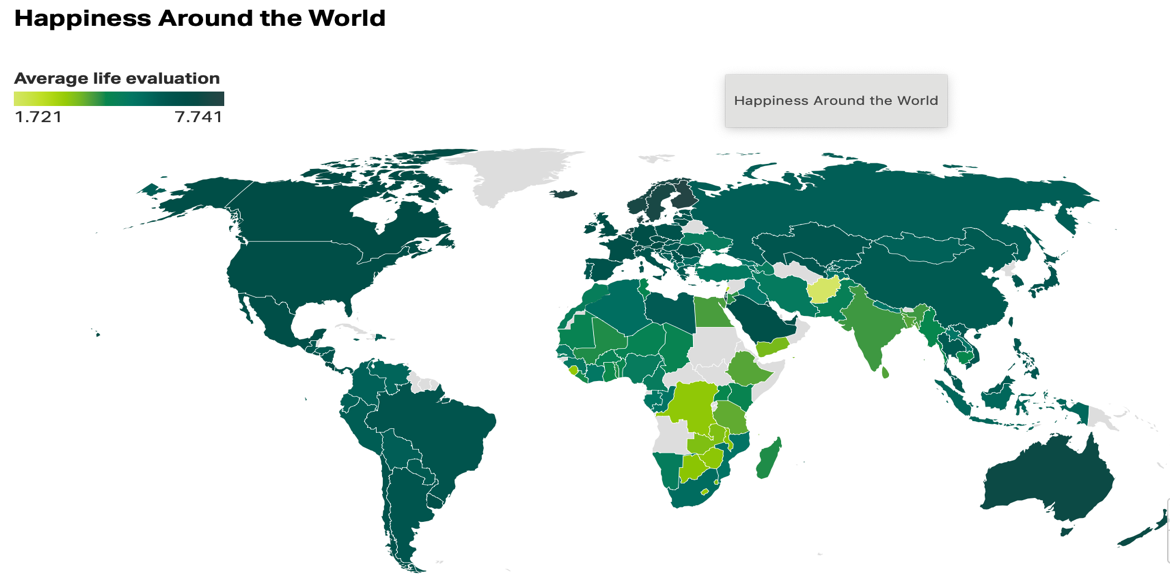
World Happiness Report 2024

Context: World Happiness Report 2024 was released recently. 

About World Happiness Report 2024

  • Published by: From 2024, World Happiness Report is a publication of the Wellbeing Research Centre at the University of Oxford, UK. Earlier, it was the publication of the UN Sustainable Development Solutions Network. 
  • Agencies involved: Gallup, Oxford Wellbeing Research Centre, UN Sustainable Development Solutions Network, and the WHR’s Editorial Board.
  • Methodology: Based on self-evaluation of variables like GDP per capita, social support, healthy life expectancy, freedom, generosity, and corruption.
    • GDP per capita gives information about the size of the economy and how the economy is performing.
    • Social support or having someone to count on in times of trouble.
    • Healthy life expectancy in terms of physical and mental health.
    • Freedom to choose what you do with your life.
    • Generosity shows positive engagement in society such acts of charity donation.
    • Level of absence of corruption.
  • Ranked on a scale of 0 (Worst) to 10 (Best).
  • Bhutan sponsored a Resolution 65/309, “Happiness: Towards a holistic approach to development,” adopted by the General Assembly of the United Nations in 2011 and first edition launched in 2012.
  • India ranked at 126 out of 146.

qRhpC6OIAdqW5oeMNAsBauy4ghGx8NKupGV04hJfwZKiN9SnlW8rPNzOQNbcF8zbX Kp01e7 qDVXPbUqfuv6XXgC1ZS6v9qRXKo Jea5GytXWtYd8YoSJR97DEZphDvhVNOA3TGe5nVj8 ItSQ0A

odTuDzw5p 9BIpTxUIrcPhgmsa0lx Xs hVBH9upuoLHgWuEF56D16MyekXPQOjcKi6tPK7EShTkQrD6U 0qQi YhVF6RUDJcDQ5XsuQkPXV88AJOo97AS1OAdGKTgVbfVWum7hbOanij1AC5tgHQw

GDP per capita gives information about the size of the economy and how the economy is performing

Zero Food Children

Context: India, faces a deeply concerning issue highlighted in recent studies: the prevalence of "zero-food children."  This term refers to children experiencing extreme food deprivation, an alarming situation that demands urgent attention.

Findings of recent studies

  • A recent study published in the JAMA Network Open journal has shed light on the distressing prevalence of zero-food children in India, estimating it at 19.3%.  This places India as the third highest globally, trailing behind Guinea (21.8%) and Mali (20.5%).
  • In absolute numbers, India tops the list with over six million children suffering from severe food deprivation.
  • A subsequent study in eClinical Medicine part of the noted Lancet Discovery Science, highlighted Uttar Pradesh (U.P.) as the epicenter of this crisis within the country, accounting for 28.4% of India's zero-food children.
  • State-wise Breakdown: The distribution of zero-food children across India is uneven, with five states—Uttar Pradesh, Bihar, Maharashtra, Rajasthan, and Madhya Pradesh—hosting nearly two-thirds of the total affected population. This geographic concentration underscores the need for targeted interventions.

The Crucial Role of Diet Diversification

  • The Food and Agricultural Organization (FAO) emphasizes the importance of introducing solid or semi-solid foods to children's diets after six months of age.
  • This is critical for meeting their nutritional requirements and ensuring proper growth and development.
  • The FAO recommends that for children aged nine to eleven months, half of their calorific intake should come from foods other than breastmilk.

Systemic Issues and Solutions

  • Combination of poverty, marginalization, rapid urbanization, and the prevalence of nuclear families as key factors contributing to the crisis.
  • The lack of awareness about children's nutritional needs and social misconceptions exacerbates the problem.
  • Despite government initiatives like Poshan Abhiyan, aimed at ensuring holistic development and adequate nutrition for children, pregnant women, and mothers, many remain unaware of these resources. The program's focus on children in the 0-6 years age group highlights the critical window for intervention.

Conclusion

The plight of zero-food children in India is a glaring indication of the broader challenges the country faces in ensuring the well-being of its youngest citizens. Addressing this issue requires a multifaceted approach that includes improving economic conditions, expanding educational efforts on nutrition, and enhancing access to government programs designed to combat malnutrition.

Government’s Standpoint 

  • The Ministry of Women and Child Development has said that the article published JAMA Network on the so-called zero food children in India is a deliberate and malicious attempt by interested lobbies to sensationalize fake news.
  • Rebutting the article , the Ministry has said that no primary research has been conducted by authors in the study to arrive at such broad and incorrect generalizations on the nutritional status of children in India.
  • Further, Ministry stated that, there is no scientific definition of “zero food children”. The methodology followed is opaque and has attempted to interpret single day recalls by those who were supposedly contacted. No state government or any private organization in India has ever reported about starving children.

Profits and Poverty: The economics of forced labour

Context: Profits and Poverty: The economics of forced labour study by the International Labour Organization (ILO), released, has found that forced labour generates illegal profits worth $36 billion per year.

Key findings of the report: 

  • The total amount of illegal profits from forced labour has risen by US$64 billion (37 per cent) since 2014.
  • Increase that has been fuelled by both a growth in the number of people forced into labour, as well as higher profits generated from the exploitation of victims.
  • It estimates that traffickers and criminals are generating close to $10,000 per victim, up from $8,269(adjusted for inflation) a decade ago.

OMPj43jswBiTsUUhOF4nD0rFDzrRBqEDV5DPLVRs3vhr14XfEmxrukd8tUFd N0uqMHokkXA7 DYdPVWbueTK8NqgmDqMc5 lHikvXmNI8yjAsYlrbKMXLlJHJuFaVXOKyQPuLNL1VujC2YyOeR3Lg

  • Total annual illegal profits from forced labour are highest in Europe and Central Asia ($84 billion), followed by Asia and the Pacific ($62 billion), the Americas ($52 billion), Africa ($20 billion), and the Arab States (US$18 billion).

A colorful circle with numbers and text

Description automatically generated

  • Forced commercial sexual exploitation accounts for more than two-thirds (73%) of the total illegal profits, despite accounting for only 27% of the total number of victims in privately imposed labour.
  • After forced commercial sexual exploitation, followed by services (US$20.8 billion), agriculture (US$5.0 billion), and domestic work (US$2.6 billion).
  • There were 27.6 million people engaged in forced labour on any given day in 2021, meaning 3.5 people for every 1,000 people in the world.

Recommendations given by this report: 

  • Urgent need for investment in enforcement measures to stem illegal profit flows and hold perpetrators accountable.
  • It has recommended for strengthening legal frameworks, providing training for enforcement officials extending labour inspection into high-risk sectors, and better coordination between labour and criminal law enforcement.
  • Enforcement actions must be part of a comprehensive approach that prioritises addressing root causes and safeguarding victims

Wage Rates for MGNREGS Workers

Context: The Election Commission of India has given the nod to the government, after the Model Code of Conduct came, to notify revised wages under the Mahatma Gandhi National Rural Employment Guarantee Act for the next financial year, effective April 1.

About wage rates for MGNREGS workers: 

image 72
  • The Ministry of Rural Development fixes state-wise wage rates for MGNREGS workers under sub-section (1) of section 6 of the MGNREGA, 2005. 
  • The wage rates are fixed according to changes in the CPI-AL (Consumer Price Index-Agriculture Labourer) which reflects the increase in inflation in rural areas.
  • The CPI-(AL) is published by Labour Bureau, with 2010-11 as the base year.  
  • These rates are revised every year.
  • MGNREGA wages are determined according to the amount of work completed, following a piece-rate system.
    • The actual payment is based on the productivity of the worker, which is measured against each state's specific Schedule of Rates. 
    • These rates vary from state to state and serve as the basis for calculating wages for MGNREGA participants.

About Mahatma Gandhi National Rural Employment Guarantee Act: 

  • Introduced in: 2005.
  • Nodal ministry: Ministry of Rural Development (MRD).
  • Aim: For improving the purchasing power of the people living in rural areas. Primarily semi or unskilled work was given to people living below the poverty line in rural India. Also aims to guarantee the 'right to work' (Article 41).
  • Mandate: To provide at least 100 days of guaranteed employment in a financial year to every rural household whose adult members volunteer to do unskilled manual work at the statutory minimum wage.
  • Key features of the act: 
    • It is a demand-driven wage employment programme and resource transfer from the Centre to the states is based on the demand for employment in each state.
    • Adult members of rural households submit their name, age and address with a photo to the Gram Panchayat, for job card.
    • The registered person can submit an application for work in writing (for at least fourteen days of continuous work) either to Panchayat or to Programme Officer.
    • If work is not provided within 15 days of applying, applicants are entitled to an unemployment allowance. 
    • The employment will be provided within a radius of 5-km. And if it is beyond 5-km, extra wage will be paid.
    • Women are guaranteed one third of the jobs made available under the MGNREGA.
    • The people in coordination with local administration conduct the social audits, whose objective is to ensure public accountability.

Uttar Poorva Transformative Industrialization Scheme (UNNATI)

Context: The Union Cabinet approved the proposal of the Ministry of Commerce andIndustry, Department for Promotion of Industry and Internal Trade for Uttar Poorva Transformative Industrialization Scheme, 2024 (UNNATI – 2024) for a period of 10 years.

About UNNATI SCHEME: 

Image
  • Launched in: 2024
  • Till: 2034
  • Corpus: 10,037 crore
  • Type of scheme: Central sector scheme
  • Aim: To generate gainful employment and development of Industries in the states of Northeast Region, will lead to the area’s overall socio-economic development.  
  • Implementing agency: Department for Promotion of Industry and Internal Trade.
  • Target: Direct employment opportunities of about 83,000 and significant number of indirect employments.
  • Key features:  All eligible Industrial Units to commence their production or operation within 4 years from the grant of registration.
    • Districts are categorized in two zones: Zone A (Industrially Advanced Districts) & Zone B (Industrially Backward Districts)
    • 60% of the outlay of Part A has been earmarked to 8 NE states and 40% on a First-In-First-Out (FIFO) basis.
    • All new Industrial units and Expanding units would be eligible for the respective incentives.

Lakhpati Didi Scheme

Context: The interim budget for 2024-25 has introduced an expansion of the ‘Lakhpati Didi’ scheme, increasing the target from 2 crore Lakhpati Didi’s to 3 crore. Additionally, the Prime Minister refers to 'Lakhpati Didi’s in Mann Ki Baat to catalyse women empowerment.

Lakhpati Didi Scheme

image 8
  • Launched in: 2023
  • Nodal ministry: Ministry of Rural Development
  • Aim: To catalyze economic empowerment and financial independence among women in rural areas.
  • Criteria for identifying potential lakhpati Didi: 
    • A Self Help Group member who has completed a minimum of two years and has availed of the Community Investment Fund (CIF).
    • A beneficiary of livelihood intervention through DAY-NRLM and practising at least two livelihood activities. 
  • Key features: A Lakhpati Didi is a Self-Help Group Member.
    • The government aims to train 3 crore women to become influencers both at home and in their communities. The objective is to shift the focus from social and financial inclusion to entrepreneurial success.
    • The programme is aimed at training women in self-help groups (SHGs) to earn a sustainable income of at least Rs 1 lakh per annum per household. 
    • Women will be trained in various skills and after completing the training, women will be provided with opportunities to earn income using their skills.
    • It facilitates diversified livelihood activities, by ensuring convergence across all Government departments/ Ministries, Private sector and Market players.
  • Subset of the programme:  
    • Drone Didi: Under this scheme, drones will be provided to approximately 15,000 women SHGs for agricultural activities. Drones have the potential to revolutionize agriculture by enabling precision farming, crop monitoring, and pest control.
    • Skill training: Women under this scheme receive training in diverse skills such as LED bulb making, plumbing, and more.