Context: In a major breakthrough, India has successfully set up a “Global Alliance for Global Good- Gender Equity and Equality” to push women’s empowerment and gender equality during the 54th Annual Meeting of World Economic Forum in Davos.
More information:
The aim of the alliance is to bring together global good practices, knowledge sharing, investments in the field of women’s health, education, and enterprise.
The project is a follow up of the activities of the Engagement Group and initiatives drafted under the G20 framework, inter alia, the Business 20, Women 20 and G20 EMPOWER, among others.
This alliance also aims at taking forward the commitments of G20 leaders for the benefit of the larger global community.
This initiative marks a significant stride toward achieving multiple SDGs, including SDG 3 – Good Health and Well-Being, 4- Quality Education, 5 – Gender Equality and Empowerment, 17- Global Partnership for Development and more, underscoring India’s commitment to gender equality and equity as a critical component of global development.
This alliance is Supported by the Bill and Melinda Gates Foundation, the alliance will be housed and anchored by the CII Centre for Women Leadership. The World Economic Forum has come on board as a ‘Network Partner’ and Invest India as an ‘Institutional Partner’.
Given India’s abiding commitment to ‘Vasudhaiva Kutumbakam’ – One Earth, One Family, One Future– and its continued efforts towards ‘Sabka Saath, Sabka Prayaas’, the ‘Alliance for Global Good- Gender Equity and Equality’ is on the verge of being a force to reckon with on all gender-related issues of G20 nations.
About World Economic Forum (WEF):·
Professor Klaus Schwab founded WEF in 1971, originally called the European Management Forum, as a non-profit foundation based in Geneva, Switzerland.
It is the International Organization for Public-Private Cooperation.
In 2015, the Forum was formally recognised as an international organization.
Context: Maharashtra’s Anganwadi workers and helpers have been on strike for 46 days now. They have been demanding basic nutrition for children, whose per-day food cost for two meals has been ₹8 a child since 2014 and increase the rent for centres.
About Anganwadi Services:
Anganwadi means ‘courtyard shelter’, a type of rural child care centre in India.
It was started in 1975 as part of the Integrated Child Development Services program to combat child hunger and malnutrition.
The Anganwadi system, launched under the Anganwadi Services Scheme, renamed as Saksham Anganwadi and Poshan 2.0, is a Centrally Sponsored Scheme under the Ministry of women and child development.
It is one of the flagship programmes of the Government of India providing early childhood care and development of the beneficiaries i.e., children in the age group of 0-6 years, pregnant women and lactating mothers through a large network of Anganwadi workers (AWW) and Helpers (AWH).
Anganwadi workers (AWW) and Helpers (AWH) are the basic functionaries of the ICDS who run the Anganwadi Centres (AWCs), and implement the ICDS scheme.
Anganwadi Centres (AWCs): Provide a platform for rendering all services under the scheme.
A single Anganwadi worker (AWW), chosen from the community, manages one village or area. These workers undergo training in various areas such as health, nutrition, and childcare.
There are a total 14 lakh AWCs sanctioned across the country out of which 13.63 lakh AWCs are operational till 2018(PIB).
Criteria for Recruitment of Anganwadi Workers
As per guidelines, Anganwadi Workers under the Anganwadi Services Scheme are selected from the local village by a Committee constituted by the State Government/ UT Administration.
The minimum prescribed qualification is Matriculation and age limit is 18-35 years for engagement of Anganwadi Workers (AWWs) and Anganwadi Helpers (AWHs).
Anganwadi System: How Does It Operate?
Primarily established for rural development, the Anganwadi system is managed by Anganwadi workers who cater to individual villages within a specified area.
These workers, who hail from the community itself, undergo approximately four months of training in various domains including health, nutrition, and child care.
Each Anganwadi worker is responsible for approximately 1000 individuals and reports to a supervisor known as the Mukhya Sevika.
Services provided by Anganwadi workers:
It is a part of the Indian public health care system.
Basic health care activities include contraceptive counselling and supply, supplementary nutrition, non-formal pre-school education, nutrition, and health education, immunization, and health check-up
The centres may be also used as depots for oral rehydration salts and basic medicines.
Benefits granted to Anganwadi Workers and Helpers
Honorarium: AWWs and AWHs, being honorary workers, are paid monthly honoraria as decided by the Government from time to time, which is uniform in all States/UTs.
AWWs at main Anganwadi Centres (AWCs) are paid an honorarium of ₹ 4,500/- per month and AWHs are paid ₹2,250/- per month.
In addition to the honorarium paid by the Government of India, most of the States/UTs are also giving monetary incentives to these workers out of their own resources.
Leave: They are allowed paid absence of 180 days of maternity leave and 20 days annual leave.
Award: In order to motivate AWWs/and give recognition to good voluntary work, a Scheme of Award for AWWs has been introduced, both at the National and State level.
The Award comprises Rs.50,000/- cash and a Citation to AWW and Rs.40,000/- to AWHs.
Uniform: Government has made a provision for a set of two Uniform (saree/suit per annum @ Rs.500/- each).
Insurance coverage: AWWs and AWHs been covered under, Pradhan Mantri Jeevan Jyoti Bima yojana (PMJJBY), Pradhan Mantri Suraksha Bima yojana (PMSY) and Anganwadi Karyakartri Bima yojana (AKBY).
Importance of Anganwadi programme in India:
Accessibility and affordability of healthcare: Providing the right healthcare facilities to the rural population of India especially mother and child remains a significant challenge. Many individuals are unaware of the programs available to them.
Establishment of social connections within the community: These centers offer women a sense of involvement in their communities, providing opportunities for participation in activities they might not otherwise have access to.
Nutritional support: Every child requires proper nutrition for healthy development, both physically and mentally. Adequate nutrition in early childhood increases the likelihood of developing into a healthy adult.
Access to Government programs: Anganwadi workers play a crucial role as the primary source of access to government schemes for rural communities. Through their assistance, mothers and parents become informed about essential health services and benefits.
Providing early childhood care and education: Children are heavily impacted by their surroundings and the people around them during their early life and early childhood care and education (ECCE) is more than just school readiness.
It attempts to develop a child’s social, emotional, cognitive, and physical needs holistically in order to lay a firm and comprehensive basis for lifetime learning and wellbeing.
Awareness and counselling: They provide valuable information to mothers and communities about proper health care practices, nutrition, and hygiene. Additionally, they offer counselling on family planning, immunizations, and the importance of education.
Poverty alleviation: By addressing health and nutritional needs, the Anganwadi programme indirectly contributes to poverty alleviation. Healthy and well-nourished individuals are better positioned to participate in education and employment opportunities, breaking the cycle of poverty.
Women empowerment: The programme involves a significant number of female workers, contributing to women's empowerment by providing them with employment opportunities. It also promotes the active involvement of women in decision-making processes related to healthcare and nutrition.
Government initiative:
Collaboration with MGNREGA: The government, in collaboration with the Mahatma Gandhi National Rural Employment Guarantee Scheme (MGNREGS), is undertaking the construction of 400,000 Anganwadi Centers (AWCs) nationwide as part of the Integrated Child Development Services (ICDS) Scheme.
Digitalization of Anganwadi Services: AWCs are digitally strengthened with smartphones for POSHAN tracking systems, and monitoring devices.
Enhanced training approach: The Ministry has developed a thorough training strategy for Anganwadi Services personnel, ensuring regular training sessions. Anganwadi Workers undergo a 26-day job training program, focusing on improving their knowledge, comprehension, and skills pertaining to various Acts, Policies, Programs related to women and children. The training also covers the establishment of dynamic Anganwadi Centers and the effective execution of Early Childhood Care and Education activities.
Challenges in functioning of Anganwadi services:
According to Niti Aayog:
Cramped and poorly ventilated: Many AWCs across all sampled states, especially in urban areas, are cramped and poorly ventilated. They do not have enough space for the children to play and learn properly. Many AWCs do not have equipment like swings, sand/water areas etc. due to lack of space and/or funding.
Insufficient AWCs: Discrepancies exist between the approved and functioning AWCs in different states, with disparities ranging from 2% to 8.37% (PIB).
Lack of basic facilities: More than 80% Anganwadi centres in the rural areas of the state lack basic toilet facilities and do not have access to safe drinking water.E.g.: In Odisha more than 80% Anganwadi centres in the rural areas lack basic toilet facilities.
Lack of awareness: The community lacks awareness about the role of an AWC and the services offered by AWC. Moreover, the AWC has a perception of poor service delivery in terms of Pre-School Education (PSE), especially in rural Gujarat and in Rajasthan.
Operational ineffectiveness: Despite the essential requirement of smartphones for ICDS, numerous AWWs have not been provided with these devices, thereby impacting their operational effectiveness.
Issues with honorarium: AWWs are not officially recognized as government employee status and receive monthly honorariums well below the minimum wage, ranging from Rs. 5,000 to Rs. 10,000. The inadequacy of compensation presents challenges in fulfilling basic needs, affecting their commitment to their duties. There is also the issue of delays in receiving honorariums contributing to financial insecurity and hardships for AWWs.
Issues with budgetary allocation: The scheme experiences inconsistency in the percentage or delays in budget allocations over the years. For example: In Delhi the budget assigned to rent a place for AWCs is insufficient. The rental norms of Rs.6000/- per month do not allow renting a reasonably hygienic room for the functioning of the ICDS, leading to improper planning and implementation, along with non-adherence to financial and physical targets.
Unpaid duties: AWWs are frequently assigned various tasks, including Covid-19 duties, Census duties, or implementing government schemes, without receiving additional financial compensation. The resulting heavy workloads contribute to burnout, impacting the quality of services they are able to provide.
Inadequate human capital: Several States/UTs, such as Telangana, Bihar, and Karnataka, face a significant number of vacant positions for Supervisors, AWWs, and AWHs.
Lack of proper training: The initial training for AWWs lacks sufficient preparation to address the multifaceted challenges they face on a daily basis.
Non- availability of instruments for child development: Height and weight measuring instruments in AWCs.
Measures for empowerment of Anganwadi workers:
Need for Community Hub models for AWCs: Anganwadi Hubs can be developed by combining three to four AWCs in areas with high population density.
Addressing equipment shortages: Immediate attention required for the availability of height and weight measuring instruments in AWCs.
Infrastructure assessment and funding allocation: The Government should set up a committee to identify the AWCs with bad infrastructure that is classroom, kitchen, building and playground and such centres should be allocated more funds to improve their infrastructure.
Priority focus on basic amenities: Prioritizing the establishment of drinking water and toilet facilities in AWCs for improved service delivery.
Corporate partnership for infrastructure enhancement: The Identified AWCs can be referred to big corporations, so that it can be adopted by them to improve their infrastructure.
Promoting awareness and attendance: As the AWs suffer from Low attendance of beneficiaries it becomes a task of the AWCs to promote the services of AW among the needy by rural communities. Pamphlets can be issued to the rural houses about the services rendered by the AWCs.
Context: Indore and Surat were named the joint winners of the cleanest city in the Swachh Survekshan Awards 2023.
About Swachh Survekshan Awards (SSAs) : Urban
Launched in: 2016
Launched as: Part of the Swachh Bharat Abhiyan, to assess urban areas for their levels of cleanliness and active implementation of Swachhata mission initiatives in a timely and innovative manner.
Launched by: Ministry of Housing and Urban Affairs with Quality Council of India as its implementation partner.
Methodology for measuring cleanliness: Citizen feedback and field assessment.
Objective: To encourage large scale citizen participation and create awareness amongst all sections of society about the importance of working together towards making towns and cities a better place to live in.
Theme of the cleanliness survey 2023:“Waste to Wealth”, while for 2024 it is “Reduce, Reuse and Recycle”.
Key findings of Swachh Survekshan Awards 2023 :
Cleanest city (over 10 lakh population):Indore has been named the cleanest city in the Swachh Survekshan Awards for the seventh consecutive year.
Surat, which has been in second place, won the top award for the first time.
Both cities had 100% door-to-door collection of waste, 98% segregation at source and 100%Navi Mumbai was named the third cleanest city.
Cleanest state: Maharashtra was awarded the cleanest state, followed by Madhya Pradesh.
Arunachal Pradesh, Mizoram, Rajasthan, Nagaland and Tripura were ranked the bottom five states.
About Swachh Bharat Mission (Clean India Mission):
Background: It is a restructured version of the Nirmal Bharat Abhiyan launched in 2009.
Launched in: 2nd October 2014
Type of scheme: Centrally sponsored scheme
Objective: To eliminate open defecation and improve solid waste management and to create Open Defecation Free (ODF) villages. Also aims to increase awareness of menstrual health management.
Phases of SBA:
Phase 1 of SBM: Lasted till 2 October 2019. To eradicate manual scavenging, generating awareness and bringing about a behaviour change regarding sanitation practices, and augmentation of capacity at the local level.
Phase 2of SBM: Being implemented between 2020–21 and 2024–25 to help cement the work of Phase 1. Aims to sustain the open defecation free status and improve the management of solid and liquid waste, while also working to improve the lives of sanitation workers.
The mission was split into two: Rural and Urban.
SBA - Rural: Financed and monitored through the Ministry of Drinking Water and Sanitation (since converted to the Department of Drinking Water and Sanitation under the Ministry of Jal Shakti).
SBA- Urban: Overseen by the Ministry of Housing and Urban Affairs.
Salient Features of Swachh Bharat Mission - Urban 2.0
Launched in: 2021
Tenure: Till 2026.
Objective: For creating a “Garbage Free” Urban India.
Focus areas of mission: All households and premises segregate their waste into “wet waste” and “dry waste”.
100% door to door collection of segregated waste from each household/ premise;
100% scientific management of all fractions of waste, including safe disposal in scientific landfills;
all legacy dumpsites remediated and converted into green zones;
all used water including fecal sludge, especially in smaller cities are safely contained, transported, processed and disposed so that no untreated fecal sludge and used water pollutes the ground or water bodies.
Intervention of the mission:
Garbage Free Cities: All statutory towns are certified at least 3-star garbage Free, or higher. Follows a SMART framework – Single metric, Measurable, Achievable, Rigorous verification mechanism and Targeted towards outcomes.
ODF Norms: No faeces should be seen around, and everyone at home and public places should use safe methods to get rid of it.
ODF+ Norms: Nobody should defecating and/or urinating in open areas. All public and community toilets should be kept clean and well-maintained.
ODF++ Norms: Emphasis on mechanized cleaning of septic tanks and sewers. Safe collection & treatment of used water as well as safe management of faecal sludge.
Water+ Norms : The focus is on collection, transportation, treatment, and reuse of both used water and faecal sludge to prevent environmental pollution.
For towns having population more than 20,000, a minimum of 25% households to be connected to sewerage network.
Striving to achieve sustainability.
No untreated used water is let out in the environment.
Context: According to Niti Aayog, India’s multidimensional poverty rate has reduced to 11.28% in 2022-23 from 29.17% in 2013-14.
Findings of NITI Aayog:
It estimated that around 24.82 crore people escaped multidimensional poverty in the last nine years.
States like Uttar Pradesh, Bihar, Madhya Pradesh, and Rajasthan recorded the sharpest decline in the number of people classified as poor.
Indicators in the standard of living dimension showed highest levels of deprivation in 2005-06. For instance, 74.4 per cent of the population was deprived of cooking fuel in 2005-06, which fell to 43.9 per cent between 2019-21.
Similarly, 70.92 per cent of the population was deprived of adequate sanitation facilities in 2005-06, which reduced to 30.93 per cent between 2019-21.
Bihar recorded a 53 per cent drop from 56.3 per cent share of MPI poor in 2013-14 to 26.59 per cent in 2022-23.
About Multidimensional Poverty:
Multidimensional poverty encompasses the many deprivations that people can experience across different areas of their lives. This could include a lack of education or employment, inadequate housing, poor health and nutrition, low personal security, or social isolation.
Applying a narrow definition of poverty and focusing on one dimension alone, such as income, fails to capture the true reality of people’s circumstances. In contrast, multidimensional poverty measurement offers a more holistic approach which better reflects peoples lived experiences.
About Multidimensional Poverty Index (MPI):
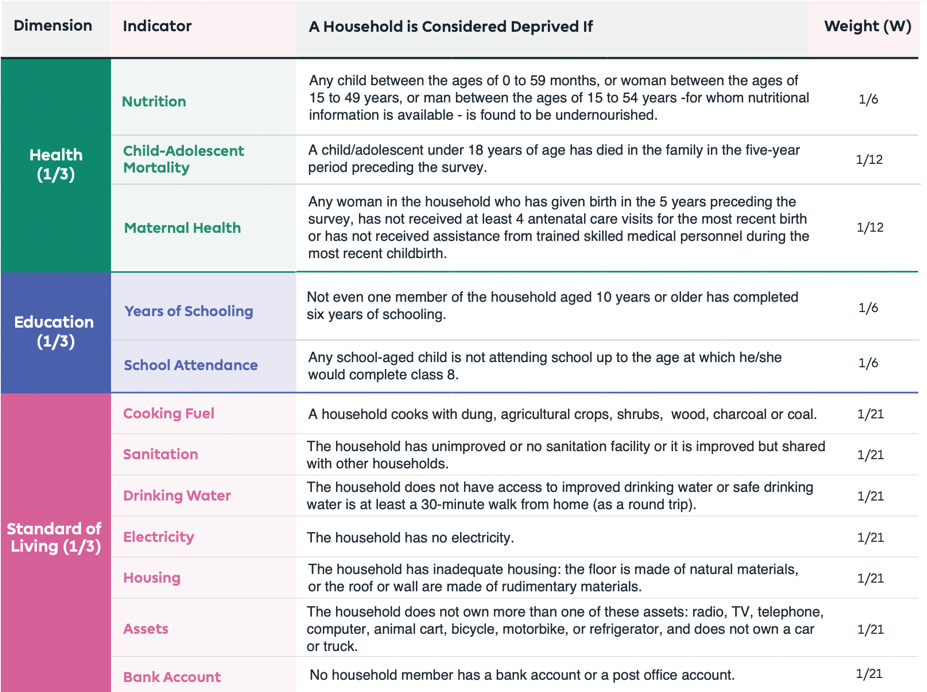
Global MPI: Developed by Oxford Poverty & Human Development Initiative (OPHI) in collaboration with the UN Development Programme (UNDP), in its flagship Human Development Report since 2010 and is the most widely used non-monetary poverty index in the world. It captures overlapping deprivations in health, education and living standards.
These dimensions are broken into ten indicators, including child mortality, nutrition, years of schooling, school attendance, cooking fuel, sanitation, drinking water, electricity, housing, and assets.
National MPI: Niti Aayog released its Multidimension Poverty Index in 2021 for the first time.
India’s national MPI is a contribution towards measuring progress on target 1.2 of the SDGs which aims at reducing “at least by half the proportion of men, women and children of all ages living in poverty in all its dimensions.
Government initiative to reduce poverty in all dimensions:
Poshan Abhiyan: To reduce malnutrition and stunting in children, adolescent girls, and women. It focuses on promoting a healthy diet, proper nutrition, and addressing related health issues.
Anemia Mukt Bharat: This initiative is part of the larger Poshan Abhiyan and focuses specifically on preventing and reducing the prevalence of anemia among women, children, and adolescents.
Targeted Public Distribution System under the National Food Security Act: Covers 81.35 crore beneficiaries, providing food grains to rural and urban populations.
Pradhan Mantri Garib Kalyan Anna Yojana: Provide additional free food grains to the poor and vulnerable sections of society to alleviate the hardships faced due to the COVID-19 pandemic.
Ujjwala Yojana : To provide free LPG connections to women from below-poverty-line households.
Saubhagya: Providing electricity to rural and urban areas, aiming to enhance the quality of life and economic development.
Swachh Bharat Mission: To achieve universal sanitation coverage and make India open-defecation free.
Jal Jeevan Mission: To provide piped water supply to all rural households by 2024.
Pradhan Mantri Jan Dhan Yojana: To provide access to banking services for all households.
PM Awas Yojana: To facilitate access to affordable housing for the low and moderate-income residents of the country.
Significance of multidimensional poverty:
It is qualitative measure of poverty and it used non-monetary metrics to measure poverty in the world by measuring overlapping deprivations in access to health, education and living standards.
Monetary measures of poverty based on poverty lines only give headcount ratios i.e., number of people who are poor. However, these measures fail to measure depth of poverty. It is possible that while the overall number of poor individuals reduce, while at the same time the poorest get poorer. Also, gains in quality of life may be completely missed unless the poor cross the poverty line or exit poverty.
Thus, MPI provides insights not just into the distribution of poverty within a country but also indicates contribution of each indicator to multidimensional poverty.
Using MPI, it has been possible to device schemes which target specific deprivations.
Helps to create a comprehensive understanding of poverty by identifying who is poor and the manner in which they experience poverty.
Limitations with MPI:
It does not capture intra-household inequality or inequality among the poor.
The multitude of indicators can be overwhelming and may result in ineffective implementation.
Determining the relevance of dimensions and deciding how many should be considered or prioritized is also challenging.
Poverty is a complex issue with numerous factors, making it challenging to address all aspects.
Collecting data for multidimensional indicators can be extremely challenging and demanding, requiring additional efforts from the agency to achieve meaningful results.
MPI data released by NITI Aayog based on the National Family Health Survey (NFHS), which raises the issues of reliability of poverty assessments and subsequent policy decisions. (no independent assessment by NITI Aayog).
Way forward:
Integrating the Multidimensional Poverty Index (MPI) with government policy measures can indeed enhance the effectiveness and precision of schemes like the Public Distribution System (PDS) and the Mahatma Gandhi National Rural Employment Guarantee Act (MGNREGA).
Simplify the set of indicators to avoid overwhelming complexity. Prioritize the most relevant and impactful dimensions, taking into account the local context and priorities. This will help focus efforts on the most critical aspects of poverty.
Involve local communities in the data collection process to enhance accuracy and inclusivity.
Baseline survey should be conducted with the involvement of local communities to enhance accuracy and inclusivity.
Context: Ministry of Social Justice and empowerment has merged 03 Centrally Sponsored Scheme namely: (a) Pradhan Mantri Adarsh Gram Yojana (PMAGY) (b) Special Central Assistance to Scheduled Castes Sub Plan (SCA to SCSP) & (c) Babu Jagjivan Ram Chhatrawas Yojana (BJRCY) into Pradhan Mantri Anusuchit Jaati Abhyuday Yojana.
Aim of PM-AJAY Scheme
PM-AJAY scheme has been implemented since 2021-22 with an aim to:
Aim to reduce poverty among the SC communities.
Emphasizes on generation of additional employment opportunities through Skill development,
Income generating schemes to improve socio-economic developmental indicators
Ensuring adequate infrastructure and services in the SC dominated villages.
Components of Scheme:
Development of SC dominated villages into an “AdarshGram”.
‘Grants-in-aid’ for District/State-level Projects for socio-economic betterment of SCs for:
Creation of infrastructure in SC dominated villages including those elected under Adarsh Gram component.
Construction of Hostels/Residential schools, Comprehensive Livelihood Projects including components like Skill development, related infrastructure development, financial assistance towards loans taken by beneficiaries for asset creation needed for livelihood generation etc.
Which are top-ranked as per the National Institutional Ranking Framework (NIRF) and are funded by the Centre/State/UT Governments either fully or partially.
Construction of hostels in schools which are either fully or partially funded by the Centre/State/UT Governments and recommended by the Ministry of Education
Details about the Components:
Development of SC dominated villages in to an “AdarshGram” (previously Pradhan Mantri AdarshGram Yojana): Objective of Adarsh Gram Component is to ensure integrated development of SC majority villages so that there is:
Adequate infrastructure
All requisite infrastructures necessary for socio-economic development needs are to be provided under the Scheme.
Improvement in Socio-Economic Indicators.
The identified socio-economic indicators, called as Monitorable indicators, are to be improved so that the disparity between SC and non-SC population is eliminated and the level of indicators is raised to at least that of the National average. Specifically:
all BPL SC families should have food and livelihood security.
all SC children should complete education at least up to the secondary level.
all factors leading to maternal and infant mortality are addressed.
incidence of malnutrition, especially among children and women, is eliminated.
Grants-in-aid’ for District/State-level Projects component (previously scheme of Special Central Assistance to Scheduled Caste Sub Plan): It aims at socio-economic development of SCs through grants for following types of projects:
Comprehensive Livelihood Projects: To create an eco-system for producing sustainable income, or social advancement to the Scheduled Castes only shall be taken up. The projects should preferably be a combination of two or more of following:
Skill Development: Skilling courses as per norms of MSDE. Related facilities and infrastructure for conducting Skill Development Activities conducted by the Government. Skill Development Institutions can also be funded.
Grants for creation/acquisition of assets for beneficiaries/households: Standalone individual asset distribution under the scheme. However, if project has provision for acquisition/creation of assets for beneficiaries/households needed for livelihood generation, financial assistance towards loans taken by the beneficiary for such acquisition/creation assets, would be up to Rs.50,000 or 50% of the asset cost, whichever is less, per beneficiary/household.
Infrastructure development: Development of infrastructure related to the project and Hostels and residential schools. Other infrastructure- Various other infrastructure development projects in SC majority villages.
Special Provisions:
Upto15%of the total Grants exclusively on viable income generating economic development schemes/programme for SC Women.
Up to 30% of the total Grants utilized for infrastructure development, at least 10% of the total funds for skill development.
Promote SC Women Cooperatives engaged in production and marketing of consumer goods and services.
Objectives: Scheme for construction of hostels to enable and encourage Scheduled Caste students to attain quality education and reduce their dropout rate
Central assistance for construction:
Northeastern Region:
Rs. 3.50 lakh per inmate
Northern Himalayan Regions:
Rs 3.25 lakh per inmate
Gangetic Plains & Lower Himalayan Region:
Rs3.00 lakh per inmate
Additionally, one time Grant of Rs. 5000/- per student for making provisions of cot, table etc.
Repair and maintenance cost uptoRs.5.00lakh for a hostel of 50 inmates constructed under the scheme, once in 5 years.
Recent changes (Since2021-22): 100% Central assistance for hostels for boys’ hostels, earlier it was on cost sharing basis with State Implementing agencies.
Achievements during the current Financial Year2023-24
A total of 1834 villages have been Declared as Adarsh Gram during the current FY2023-24 under Adarsh Gram Component.
15 new hostels have been sanctioned under Hostel component of the scheme.
Perspective plan for 17 States have been approved under Grant-in-aid component during the current financial year.
Context: The Aam Aadmi Party (AAP) is claiming that the Bharatiya Janata Party (BJP) is carrying out a deliberate dismantling of slum settlements, which could have far-reaching consequences for a significant number of Delhi's residents.
The issue of slum demolition and urban redevelopment is multifaceted, involving a delicate balance between urban planning, housing rights, and political motivations. It tends to be a contentious subject because, while some perceive it as necessary for urban progress and modernization, others view it as a process that displaces impoverished communities, often without providing satisfactory alternatives for their relocation or livelihoods.
What is Slum?
The definition of “Slum” varies from country to country. In India, the central government through the office of the Registrar General of India’s National Sample Survey office have their own definition in the same way as each state has its own definition of slum.
Definition of Slum as per census 2011
There are regional differences in the names by which slums are known in India. In Delhi, slums are commonly called ‘Jhuggi-Jhompdi’, whereas in Mumbai they are called Jhopadapatti or Chawls’. Other known names are- ‘Ahatas’ in Kanpur, ‘Bustees’ in Kolkata, ‘Cheris’ in Chennai and ‘Keirs’ in Bangalore.
But physical characteristics in most of these slums are essentially the same. They are usually a cluster of hutments with dilapidated and infirm structure shaving common or no toilet facilities, suffering from lack of basic amenities, inadequate arrangements for drainage and for disposal of solid and wastages and garbage.
These in adequacies make the living conditions in slums extremely suboptimal, unhygienic and results in usually higher incidence of air and water borne diseases for the dwellers.
Maharashtra had a population of 1.18 crore living in slums in 2011, followed by Andhra Pradesh at nearly 1.02 crore. At 2.20 crore, these two states accounted for more than one-third of India’s 6.55 crore slum population (2011 Census).
Key Factors Responsible for growth of Slums
1. Rapid Urbanization: The migration of people from rural areas to cities in search of better job opportunities and living conditions leads to rapid urbanization.
This often results in the development of slums as cities struggle to accommodate the influx of people.
According to the Union Ministry of Housing and Urban Affairs, about 34% of India's population lived in urban areas in 2019, and this is projected to reach 40% by 2030, contributing to the expansion of slums.
Roughly 1.37 crore households, or 17.4% of urban Indian households lived in a slum in 2011, data released by the registrar general and census commissioner.
2. Lack of Affordable Housing & Poverty: The deficit of affordable housing in urban areas leaves low-income groups with no choice but to reside in slums. Further High levels of poverty force people to seek affordable housing, which is often found in slum areas.
In India, 21.9% of the population lives below the national poverty line in 2011.
3. Weak Urban Planning: Weak governance and corruption can lead to inadequate implementation of housing policies and urban development plans, contributing to the growth of slums. The absence of effective slum redevelopment policies has led to the proliferation of slums in major cities like Mumbai and Delhi.
4. Migration: Internal migration due to factors like natural disasters or conflicts leads to the formation of slums. Further Environmental issues like land erosion, floods, and droughts in rural areas push people towards cities, often resulting in slum living due to the lack of alternatives.States like Bihar and Uttar Pradesh, which have high rates of out-migration, often see their residents ending up in slums of metropolitan cities.
5. Socio-Political Factors: Discrimination and social inequalities based on caste, religion, or ethnicity can marginalize certain groups, limiting their access to adequate housing and forcing them into slums.
For Eg-Marginalized communities like the Dalits often face housing discrimination, leading to higher slum populations among these groups.
According to 2011 census-Around 40% of slum population of Punjab is SC, Tamil Nadu has 32%, Chandigarh has 30% and Haryana has 30% SC slum population.
6. Economic Disparities: The widening gap between the rich and the poor in urban areas results in a lack of affordable options for the lower-income groups, pushing them towards slum areas.India's Gini coefficient, a measure of income inequality, has been rising, indicating growing economic disparities.
7. Lack of Legal Recognition: The lack of legal recognition of slum dwellers' rights often leads to a neglect of these areas in urban planning and development.
Many slum dwellers do not have formal property rights, affecting around 65 million people in India according to some estimates.
8. Globalization: It has led to uneven urban development, where certain areas become highly developed while others are neglected, leading to slum formation.
The rapid growth of Global IT hubs in cities like Hyderabad and Bengaluru has not been matched with proportional housing and infrastructure development in all areas.
Issues faced by Slum Dwellers:
1. Overcrowding and Poor Living Conditions: Slums are characterized by high population density, resulting in cramped and inadequate living spaces. This leads to a lack of privacy, increased stress, and difficulty in maintaining hygiene. The houses are often constructed from makeshift materials, lacking durability and safety.
For eg- Dharavi is Asia’s largest slum. It is spread over 2.5 square kilometres and has a population density of 227,136/square kilometre.
2. Lack of Basic Amenities: Many slums have limited access to essential services like clean drinking water, sanitation, and reliable electricity. This leads to health risks due to contaminated water and poor hygiene. The scarcity of toilets forces residents to use open spaces or overcrowded public facilities, exacerbating health and dignity concerns.
3. Health Issues: The conditions in slums, including poor sanitation, inadequate nutrition, and overcrowded living spaces, contribute to the spread of communicable diseases like tuberculosis and cholera. Limited access to healthcare exacerbates these issues.
4. Quality Education: Children in slums face challenges in accessing quality education. Schools in these areas are typically under-resourced, with high student-teacher ratios and inadequate infrastructure. This results in lower literacy rates and educational attainment, perpetuating the cycle of poverty.
5. Unemployment and Underemployment: A significant portion of slum residents are employed in the informal sector, which offers unstable and low-paying jobs. This lack of job security and benefits such as healthcare and pensions contributes to the economic vulnerability of these populations.
6. Environmental Degradation: The lack of proper waste management systems in slums leads to environmental issues like pollution of nearby water bodies and land. This not only harms the environment but also poses health risks to the residents and the broader community.
7. Social Stigma and Discrimination: Slum dwellers often face social stigma, which impacts their ability to access services, find quality employment, and integrate into wider society. This discrimination can lead to social exclusion and perpetuate the cycle of poverty.
8. Legal and Policy Challenges: Many slums are built on land without legal permission, making it difficult for the government to provide basic services or enforce regulations. This uncertain legal status also leaves residents vulnerable to evictions and displacement.
9. Impact on vulnerable section:
Women in slums face specific challenges, including limited access to healthcare, especially reproductive health services, and higher vulnerability to violence. Cultural and societal norms often restrict their mobility and access to education and employment opportunities.
Economic hardships often compel families to send their children to work, depriving them of education and exposing them to hazardous conditions. Child labor is prevalent in sectors like garment manufacturing, where children work long hours for minimal wages.
Govt Initiatives
Pradhan Mantri Awas Yojana – Urban (PMAY-U) - It has In-Situ Slum Redevelopment (ISSR) as one of its four components under which slum rehabilitation can be taken up using land as a resource.
The Integrated Housing & Slum Development Programme (IHSDP) merged the National Slum Development Programme (NSDP) and Valmiki Ambedkar Malina Basti Awas Yojana (VAMBAY). It sought to offer adequate shelter and infrastructure to slum dwellers in urban areas.
The Interest Subsidy Scheme for Housing the Urban Poor (ISHUP) - The Scheme envisages the provision of interest subsidy to EWS and LIG segments to enable them to buy or construct houses. It will provide home loan with Central Government subsidy to EWS/LIG persons for acquisition of house as also for construction of house.
The problem of slums in developing nations is intricate and multi-dimensional, necessitating a comprehensive strategy to tackle the diverse difficulties encountered by residents of these areas. Initiatives aimed at bettering living standards, offering cost-effective housing, and boosting economic prospects are crucial in making significant progress in easing the struggles of slum inhabitants. Through focused and cooperative approaches, it's feasible to attain the objective of establishing sustainable and inclusive urban settings.
Context: In December, 85 people’s movements and civil society organisations released a ‘People’s Manifesto for a Just, Equitable and Sustainable India’.
Note: These suggestions can be articulated as a way forward when addressing topics such as inclusive growth, sustainable development, and government policy reform.
For accountability and transparency:
Provide public support to independent media in various forms, including by making state-sponsored platforms on TV, radio, and others truly independent.
Initiate processes that make information access free, or easier (through better connectivity) in places usually neglected, considered ‘remote’ or disconnected.
Establish an independent statutory licensing and regulatory authority relating to media, free from government influence.
A comprehensive policy and law to ensure accountability and transparency of all institutions of the state, political parties, corporations, financial institutions, and media houses.
For Law, Justice, and Customs:
Ensure the independence and integrity of Central Bureau for Investigation and Enforcement Director.
Abolish capital punishment.
Repeal the Unlawful Activities Prevention Act, 1967, the National Security Act, the sedition clause under IPC, and other similar laws and legal provisions.
Prioritise measures of redressal, rehabilitation, and behavioural change over conventional forms of punishment such as imprisonment.
Facilitate a healthy relationship between formal, statutory law and social norms and customs, each enabling or checking the other in the interest of justice, equity, fairness, and sustainability.
For democracy:
Full democratic rights to gram sabhas and urban area/mohalla sabhas, including financial and legal powers, and mandatory prior informed consent for any activities affecting them especially related to land use.
Promote internal democracy and transparency within all organisations and institutions, including civil society groups.
Enact a law mandating social audits and mechanisms for citizen oversight to ensure that all welfare programmes.
Promote the autonomy and transparency of constitutional bodies, statutory bodies, and quasi-judicial bodies by establishing procedures that guarantee impartiality in appointments, ensuring transparency in the selection procedure, composition and deciding terms of service to prevent undue influence.
For society, culture, and peace:
Promote forums of inter-community understanding and dialogue, towards resolution of conflicts and promotion of peaceful co-existence, especially in areas prone to tension and conflict.
Encourage initiatives aimed at sustaining and promoting harmony and mutual respect among communities of different ethnicities, faiths, cultures, languages, beliefs and ideologies (for instance by encouraging collective inter-community celebrations in various festivals), and take immediate action against those who incite or promote hate, intolerance, misinformation.
Ensure women’s safety and dignity, countering sexual violence of various kinds, through inculcation of gender education in pedagogies from childhood.
Encourage democratic flourishing of the arts and sports, removing caste, class and gender discriminations embedded in some of them, making them accessible to all, and ensuring independence of public institutions promoting them.
For Environment, Ecology, and Climate:
Facilitate independent studies to establish the ecological limits and carrying capacity of the country, and of regions within it, and publicise the results widely.
Set up a National Environment Commission, with independent Constitutional status akin to the Election Commission and the CAG, to lay down standards, monitor compliance by state and other agencies, and provide a redressal forum for citizens.
Ensure that at least 5% of the national and state budgets are dedicated to the environment related problems.
Revisions of the National and State Action Plans on Climate Change, and Disaster plans, to fully support vulnerable sections cope with and adapt to the climate crisis and other disasters.
Framing of national land/water use plan and policy, through widespread consultation, for conservation of ecosystems and the commons, wildlife and biodiversity, ensuring collective rights to communities dependent on them (e.g. laws similar to the Forest Rights Act, for rivers, marine areas, grasslands, etc).
Budgeting for a country-wide programme of localised land/soil and water regeneration oriented at creating sustainable natural resource assets for local community economies.
Replacement of all chemicals and other substances that are harmful to human or ecosystem/animal health, by ecologically sensitive substances.
Mandatory environmental and social impact assessmentsof projects, programmes, schemes and sectors, through independent agencies, with full participation of affected communities, and ensure at least a full year of ecological assessments.
For health and hygiene:
Give high priority to preventing ill-health in the first place, by improving social determinants of health such as nutritional food, water, sanitation, mental well-being, a clean environment, safe transport, and a healthy social environment;
Ensure at least 3% of the GDP is dedicated to the health.
Programmes to ensure conditions for healthy living and health services for all.
For food, water and energy:
Ensuring universal access to adequate, safe food and water, and energy, through ecologically sensitive, decentralized, and democratic means.
All food production through organic, biologically diverse methods, giving priority to small farmers, pastoralists and fishers.
Decentralized water harvesting and management by communities.
Decentralized energy production including rooftop and on-farm methods.
Treat all water and waterbodies as public commons, not available for privatisation; add a Constitutional provision and legal measures to this effect.
Create awareness about the importance and value of the diversity of cuisines and diets in India, promoting ‘slow food’ and diverse nutritious foods such as millets over junk food.
Recognise the rights of waterbodies, including rivers and lakes, as entities in their own standing, following on the recognition of the rights of Rivers Ganga and Yamuna by the Uttarakhand High Court.
For economy and technology:
Enable the re-localisation of production and exchange, in all sectors where it is possible and feasible, and especially in the provisioning of basic needs, with the long-term aim of creating self-reliant.
Strongly regulate the private corporate sector to eliminate labour and environmental exploitation.
Replace GDP as the measure of economic well-being with multi-dimensional, qualitative-quantitative measures that including material, socio-cultural, ecological well- being aspects.
Strengthen fiscal decentralisation and federalism, enabling greater fiscal autonomy for States and local self-governments in revenue generation and economic decision-making.
Specific measures to reduce gross economic inequalities, including caps on salary levels, basic minimum income and employment guarantee for the most vulnerable, pension for all workers in the primary sector, high taxation on income, wealth and inheritance of the rich, restraints on luxury and wasteful consumption, and steps to curb the enormous ‘black economy’.
Reservation for micro/small/medium scale, especially handmade, of all products/services that can be made through community-based producer collectives (such as textiles, footwear, household goods).
For livelihoods and employment:
Extend the Employees State Insurance Act (ESI) provisions to all workers, including unorganised workers.
Highest priority to agriculture, crafts, and small manufacturing at decentralized levels, and ecological regeneration.
Extension of MNREGS and other employment security schemes to urban areas.
For Learning, Education, and Knowledge:
Create greater learning spaces for adults, with a diversity of creative approaches;
Facilitate the use of different communication and teaching modes, including arts, crafts, theatre, dance, and others.
Re-orient teacher training institutions and processes.
Allocate at least 6% of the GDP to learning and education.
Amend the Right to Education Act to enable a greater diversity of innovating learning environments to flourish, while ensuring minimum quality standards.
Encourage equitable cross-fertilisation and collaboration between modern and traditional, scientific, and non- scientific, formal, and informal, and urban and rural spheres of knowledge.
Promote initiatives making knowledge as part of the ‘commons’ rather than a privately owned or controlled commodity, including support to open source, creative commons, and other such systems.
Promote respect for various forms of transmitting knowledge, including traditional forms such as oral methods and storytelling.
For global relations:
Engage in widespread global dialogue re-examining notions of ‘nation-state’ and emphasising relations amongst ‘peoples’ of the world including through restructuring the United Nations to provide central say to non-state collectives and communities;
Re-establish India’s global role as a champion of human rights, peace and demilitarisation, and ecological sustainability.
Forempowerment and facilitation of India’s youth:
Promote and nurture youth led, youth-centric organisations and empowerment centers at various levels.
Ensure widespread youth participation particularly from vulnerable communities in formulating, implementing and monitoring all laws, policies, plans and schemes;
Significantly increase participation of youth led and youth centric organisations in government schemes like NSS and NYKS to enhance life skills and core capacities of young people along with ongoing volunteering processes;
Set up youth empowerment centers for each cluster of settlements, that offer counselling, sports, recreation facilities and career guidance facilities that are focused on alternative livelihoods.
Establish a statutory youth commission for guiding and implementing youth related policies.
For Transportation and Mobility:
Give highest priority to sustainable, accessible and equitable means of transportation in both urban and rural areas, with highest priority to mass public transport (especially buses) and non-motorized means (cycling, walking); these should ensure last-kilometre connectivity for persons with disabilities and senior citizens;
Disincentivise private motorised vehicles, especially the automobile, with heavy taxation, areas/timing that are off-limit to them, and minimal road space;
Institute a cap on the speed of road traffic for safety and to optimise energy use.
For urban settlements:
Make ecological and social impact assessments, and area/ward/neighbourhood participation, mandatory for all urban planning and budgeting processes.
Encourage and incentivise sustainable construction, architecture and housing that is dignified and accessible for all.
Initiate measures to maximise local, distributed generation of energy, water harvesting and responsible use, and other basic needs of urban residents, minimising long-distance transmission, and the negative footprint of cities on rural areas.
Integrate biodiversity into urban planning, by conserving natural ecosystems, maximising indigenous vegetation including in plantations, and providing migration corridors.
Context: The University Grants Commission (UGC) has been issuing many regulations, guidelines and directives. One such guideline is Mulya Pravah 2.0, a modified version of Mulya Pravah, which was notified in 2019. It seeks to inculcate human values and professional ethics in higher education institutions. The stated intention is to build value-based institutions by orienting individuals and institutions towards developing a deep respect for fundamental duties and constitutional values and bonding with the country.
Problems Associated with Higher Education System:
Unethical Practices: The prevalence of unethical practices in organizations, including favoritism in hiring, sexual harassment, gender discrimination, inconsistent disciplinary views, confidentiality breaches, compensation inequality, overlooking non-performance in appraisals, and corrupt vendor arrangements.
Lack of Accountability: There is a need for higher education institutions to ensure that operations are free from corruption and malpractices, especially in admissions, examinations, and hiring processes.
Bias in Decision-Making: Decisions in higher education often suffer from biases and may not always be made in the best institutional or public interest.
Discriminatory Privileges: Certain officials may enjoy discriminatory privileges that need to be abolished.
Culture of Silence: There is a silence on the role of teachers' associations and how they should operate within the education system.
Transparency Issues: The article highlights a contradiction where confidentiality is emphasised, yet it may counter the right to information which is crucial for accountability.
Stakeholder Engagement: There is concern about the active participation and influence of staff and student unions in protecting their rights and interests versus their relationship with the administration.
How Mulya Pravah 2.0 Will Solve Them:
Inculcating Values and Ethics: Mulya Pravah 2.0 aims to build value-based institutions by promoting fundamental duties, constitutional values, and a deep respect for the country, aiming to curb unethical practices.
Enforcing Accountability and Transparency: The guidelines call for utmost transparency in administration and decision-making processes and stress the importance of making decisions that are not vitiated by biases.
Promoting Fair Practices: It seeks to abolish discriminatory privileges and emphasizes punishing corrupt practices to promote fairness.
Encouraging Free Thought and Integrity: Higher education institutions are encouraged to allow individuals at all levels to think and give advice freely, ensuring integrity and trusteeship.
Mandating Information Disclosure: The guideline suggests that institutions should voluntarily disclose critical information and subject themselves to public scrutiny to deter malpractices.
Role Modeling by Teachers: Teachers are asked to act as role models in conduct, dress, speech, and behaviour, setting standards for students to emulate.
Dignified Union Participation: Staff and student unions are expected to support administration in a dignified manner, raising issues constructively rather than being adversarial.
Mulya Pravah 2.0's success will depend on its sincere implementation and the commitment of all stakeholders to adhere to its principles in letter and spirit.
Mulya Pravah 2.0· As part of its Quality Mandate initiative in 2019, the UGC developed guidelines on “Mulya Pravah — Inculcation of Human Values and Professionals Ethics in Higher Educational Institutions”.·
These guidelines have now been revised to include the key recommendations of the National Education Policy, 2020 (NEP-2020).
Revised guidelines, Mulya Pravah 2.0 - Inculcation of Human Values and Professional Ethics in Higher Education Institutions proposes the curriculum and pedagogy of Higher Education Institutions (HEIs) to develop o Deep respect towards Fundamental Duties and Constitutional Values among the students o Bonding with one’s country, and conscious awareness of the roles and responsibilities in a changing world o Including universal human values of - Truth (satya) - Righteous conduct (dharma) - Peace (shanti) - love (prema) - Non-violence (ahimsa) - Scientific temper - Citizenship values - Life-skills.
Context: A recent study on child marriage in India, published in The Lancet, has highlighted a positive trend of decreasing child marriages across the country. However, the study also pointed out that four states, namely Bihar (16.7%), West Bengal (15.2%), Uttar Pradesh (12.5%), and Maharashtra (8.2%), still account for more than half of the total number of child marriages among girls in India.
The study titled ‘Prevalence of girl and boy child marriage across States and Union Territories in India, 1993–2021’ reveals significant findings about the state of child marriage in India.
High Prevalence of Child Marriage in Girls: one in five girls in India is still married before reaching the legal age.
Regional Variations: While some Indian states have successfully reduced the prevalence and headcount of child marriages among girls, others like West Bengal have struggled significantly.
National Figures: Nationally, the percentage of women aged 20-24 years who were married before 18 is 23.3%.
These findings underscore the ongoing challenge of addressing child marriage in India, particularly in regions like West Bengal, and highlight the need for targeted policies and interventions.
What is child Marriage?
Child marriage, a practice found in certain societies, particularly in India, typically involves two distinct forms. The first form is where a young child, often a girl under eighteen, is married off to an adult man. This form is more direct and immediate in its execution. The second form is more of a future arrangement: parents of a young girl and boy agree to marry their children to each other when they both reach a more suitable age. In this latter case, the boy and girl usually do not meet until the time of their wedding ceremony.
This practice, deeply rooted in cultural and social norms, often raises significant concerns regarding the rights and welfare of the children involved.
Laws for minimum age for Marriage
Hindu marriage act (1955), Indian Christian marriages act (1872) and Special Marriage Act (1954) prescribed minimum age of marriage as 18 years for bride and 21 years for groom.
Prohibition of Child Marriage Act, 2006 prohibits marriage below 18 years for women & 21 years for men.
Despite legal age of marriage for women being set at 18 years, it was found that in almost all States, women continued to get married before they turned 18. For ex.
**Given facts published by UNICEF- Ending child Marriage -A profile of progress in India (2023)
Reasons for child Marriage:
Socio-cultural reasons
Traditions and cultural mandates: The concept of "honour" is deeply entrenched in many societies, where a girl’s chastity is closely tied to family honour. Families may marry off girls early to ensure they remain virgins until marriage, thus upholding the family’s reputation.
Demand for dowry : The illegal yet persistent practice of dowry puts pressure on families to marry daughters early, as the dowry amount tends to increase with a girl’s age and education level. As Girl children are sometimes viewed as an economic burden, and marrying them off can be seen as a way to alleviate financial stress through the system of dowry.
Caste, community and ethnic pressure : If the children are married at an early age, they will not exercise deviant behaviour of searching of their partners on their own, which can be out of the caste or community groups.
Economic and Educational backwardness: The prevalence of child marriage is higher among poorer households. Financial constraints often lead to earlier marriages for girls. Because of this Child marriage is more common in rural areas and amongst certain social groups like Scheduled Castes and Scheduled Tribes. Education level greatly affects the likelihood of child marriage, with a higher incidence among women with no or primary education.
Safety and security problems of girls:
Where schools are far from home, the journey to and from school can be dangerous for girls. Risks include abduction, trafficking, or assault.
Poverty in rural areas makes families believe that they do not need to go for family planning as more children will lead to more hands to work. Families think that boy will remain with them and girls will be married off to other families. So, they wish to marry them at an early age.
Historical reasons: There was a belief that girls should get married before the onset of puberty.
Trafficking: Child marriage can intersect with human trafficking, where impoverished families may be coerced into selling their daughters into marriage or prostitution for financial gain, often to support their sons, thereby subjecting the girls to harm and exploitation.
Legal and policy related measures:
The current act does not annul such marriages. It only gives the power to the bride to call off the marriage once she is an adult.
Ineffective enforcement of legislation and laws
Absence of females from the process of law-making.
Awareness and Limitations of Social Protection Programs: Families at risk of child marriage often lack awareness of available social protection programs, which tend to focus on cash transfers without addressing the complex issues surrounding child marriage.
Impact of child Marriage
Low levels of educational attainment: Child brides in India face significant hurdles in continuing their education. Statistics show that fewer than 2 in 10 married girls remain in school, which highlights the disruption of education due to early marriage.
Violence, Exploitation, and Abuse: Child marriage violates children's rights and places them at high risk of various forms of violence, exploitation, and abuse. While it affects both girls and boys, girls are disproportionately impacted.
Economic Consequences: child marriage can initiate an intergenerational cycle of poverty, where those married as children are more likely to lack the skills and knowledge needed to secure employment that would enable them to lift their families out of poverty.
Early pregnancy results in adverse health outcomes for both mother and child: Incidence of early marriage and childbearing are important causes of undernutrition in India. Children born to teenage mothers are more likely to be undernourished than children of adult mothers. India is home to more stunted children than any other country and is one of the ten countries with the largest burden of teenage pregnancy. ((Example- Recently, 10 infants died at Murshidabad Medical College and Hospital in a span of 24 hours. The hospital authorities said the majority of the children were born with extremely low birth weight. Murshidabad, one of the economically poorer districts of the State, has one of the highest numbers of child marriages in West Bengal. The NFHS 5 points out that 55.4% of women aged 2024 years are married before the age of 18 years in the district.))
population growth: Child marriage often leads to earlier and more frequent childbearing, contributing to population growth due to limited access to education and family planning resources.
Restricted Mobility: Child marriage can restrict the mobility of young brides and reduce their access to mass media such as TV, newspapers, and the internet compared to their unmarried counterparts. This restriction can further limit their exposure to information, education, and opportunities for personal development.
Limited or even absent peer networks: as their social interactions are often restricted to their spouse's family and household. This can isolate them from their peers and limit their opportunities for social development and support.
Govt Measures:
The Child Marriage Restraint Act, 1929: known as the Sarda Act, was a law enacted to prohibit the solemnization of child marriages in India. It set the minimum age of marriage at 14 years for girls and 18 years for boys. It extends to the whole of India except the State of Jammu and Kashmir and it applies also to all citizens of India within and beyond India.
Prohibition of Child Marriage Act, 2006:
It was implemented in India to address the shortcomings of the Child Marriage Restraint Act of 1929.
This updated law increased the legal age of marriage to 18 years for girls and 21 years for boys and established harsher punishments for those who perform, permit, or promote child marriages.
It envisages preventing child marriage with punishments of rigorous imprisonment for two years and/ or fine of Rs. 1 lakh.
The Act also provides for the appointment of Child Marriage Prohibition Officer whose duties are to prevent child marriages and spread awareness regarding the same.
In addition, several national flagship programmes, including the Beti Bachao Beti Padhao (BBBP) scheme, the Scheme for Adolescent Girls (SAG) (previously known as SABLA), the Rashtriya Kishor Swasthya Karyakram (RKSK) (adolescent health) programme, various national- and state level conditional cash transfer (CCT) programmes for girls have been implemented to prevent child marriage like- Kanyashree Prakalpa(West Bengal) is a conditional cash transfer scheme aimed at incentivising the schooling of all teenage girls between the ages of 13 and 18, and simultaneously discouraging child marriage.
Steps may eventually reduce the age of marriage
Plugging the legal loopholes & Progressively the minimum age for marriage for girl child should be increased from 18 to 21. (Government had introduced the Prohibition of Child Marriage (Amendment) Bill, 2021 in Parliament in December 2021 for raising the age of marriage of women to 21 years to bring it on par with the men and the Bill has been referred to a Parliamentary Standing Committee.)
Enforcement of Right to Education Act, provisions should be made for free education of girl child till the university level.
Conditional cash transfer schemes to improve attendance of girls in schools and skill training.
Ensuring a safe environment to women free from constant threat of rape and sexual assault which is why girls are married off early.
Creating awareness among females, families and communities at large about need to educate females and marriage at an appropriate age.
Focused attention at locations where there is more prevalence of child marriages.
Civil Society organisations and NGOs should be encouraged to tackle the issue.
Child marriage is now firmly on the global development agenda, most prominently through its inclusion in Sustainable Development Goal (SDG) target 5.3, which aims to eliminate the practice by 2030.
Although indicator 5.3.1 measures child marriage among girls, the practice occurs among boys as well. Regardless of gender, marriage before adulthood is a breach of children’s rights.
Context: The Delhi High Court permitted a depressed widow to terminate her 29-week pregnancy, citing the risk of mental harm. Despite the Medical Termination of Pregnancy (Amendment)Act's 24-week limit, special considerations apply to specific groups, including survivors of rape and vulnerable individuals.
About Medical Termination of Pregnancy (Amendment)Act, 2021:
The Medical Termination of Pregnancy (Amendment) Act, 2021 alters the MTPA 1971.
The amendments increase the ambit and access of women to safe abortion services and will ensure dignity, autonomy, confidentiality and justice for women who need to terminate pregnancy.
Features of the amendment act:
The Amendment raises the upper gestation limit from 20 to 24 weeks for particular groups of women, include rape survivors, incest victims, and other vulnerable women (such as differently-abled women, minors), among others.
It replaces the terms “married woman and her husband” with the terms “woman and her partner”. As a result, an unmarried woman can also terminate pregnancies within the time limit prescribed under the Act.
Upper gestation limit not to apply in cases of substantial foetal abnormalities diagnosed by Medical Board.
The ground of failure of contraceptive has been extended to women and her partner up to 20 weeks
For safeguarding the privacy and confidentiality of women, section 5A of the Act penalise medical practitioners who fail to protect the privacy and confidentiality of women who desire to terminate their pregnancy.
Limitations of the Amendment Act:
Time frame for Medical Board’s decision not specified: The amended Act does not stipulate the time limit within which the medical board must make its decision, result in further complications for pregnant women.
Since the amended Act exclusively allows for the termination of pregnancies in the case of women, it is unclear if transgenders will be included under the amended Act.
Unavailability of qualified medical professionals to terminate pregnancies:The All-India Rural Health Statistics (2018-19) reveal a severe shortage of gynecologists in rural India. With only 1,351 serving at community health clinics, there's a substantial 75% shortfall (4,002 doctors), posing a significant obstacle to ensuring safe abortions.
Judicial inconsistency: Lower courts sometimes making flawed decisions that higher courts later correct on appeal. However, pregnant women experiencing physical hardships may not have sufficient financial resources for filing an appeal against an unjustifiable judgement resultantly becoming a victim of the tedious judicial system.
There is no provision for ensuring the accountability when death of the mother is caused due to the denial to abort.
Section 3 of the MTP Act, which rests the decision of undergoing a medical termination solely on the doctor’s opinion, also points to lack of autonomy for women.
Frontline healthcare workers (around 95%), the first points of contact for women—are also unfamiliar with the amendment to the MTP Act, 1971.
Suggested measures:
Need law on comprehensive abortion care is essential to ensure access to safe services, health and safety standards, financial accessibility, and protection from harassment (Shantilal Shah committee).
Social media emerged as one of the key sources of information for women. This should be used by the respective state health authorities to share messages on different clauses/sub-clauses of the MTP (Amendment) Act, 2021 in simple languages among women.
Provide a reasonable time frame within which the medical board must make its decision.
Advocate for the establishment of a fast-track appeal process, particularly in cases involving maternal health risks or physical hardships.
Propose the inclusion of provisions that hold healthcare providers accountable for maternal deaths resulting from the denial of abortion when it is legally permissible. This can act as a deterrent and ensure that medical decisions prioritize maternal health.
Need a mechanism for regular review and updates of the MTP Act to address emerging issues and ensure that the legislation remains relevant and effective.
Context: According to the Periodic Labour Force Survey, the unemployment rate among graduates is higher than in many other developing countries due to higher education out of touch with the skill requirements in the job market.
Unemployment rate in India:
According to PLFS:
It has reduced to 3.2% in 2022-23, from 6.1% in 2017-18.
Graduate degree unemployment rates has reduced to 13% in 2022-23 from 17% in 2017-18.
Unemployment rate for young workers aged 18 to 29 with graduate degrees, has reduced to 27% in 2022-23 from 36% in 2017-18.
The share of graduates in the labour force has risen to around 15% by 2022-23 from 5% in 1993-94.
Reason for mismatch between higher education and skill requirements in the job market:
Slow curriculum updates:Higher education institutions (HEIs) often have slow processes for updating curricula. This results in a lag between the emergence of new skills in the job market and their incorporation into academic programs.
Governance issues: As HEIs are affiliated with UGC or AICTE etc. they face challenges of over-centralisation, lack of autonomy and transparency.
Limited industry collaboration: Some higher education institutions may lack effective collaboration with industries. This can lead to a disconnect between academic content and the practical skills required in the workplace.
The degree-oriented education system: Focus on rote memorization and exams, which may not foster critical thinking, creativity, and skills.
Faculty skill gap: Faculty members may themselves lack up-to-date knowledge and skills relevant to rapidly changing industries, result in the transmission of outdated information and a lack of emphasis on cutting-edge technologies and practices.
Inadequate focus on research and innovation: Due to scarcity of funds, ill-equipped labs and weak linkage of Research, higher education and Industry. India’s research and development (R&D) expenditure as a proportion of GDP is only 0.7% and in Korea is 4%.
Government Initiative to address mismatch between higher education and skill requirements in the job market:
Scheme for Promotion of Academic and Research Collaboration (SPARC), 2018: For improving the research ecosystem of India’s Higher Educational Institutions.
Education Quality Upgradation and Inclusion Program (EQUIP) : To enhance access, inclusion, quality, excellence, and employability.
Technical Education Quality Improvement Programme of Government of India (TEQIP): To upscale and support ongoing efforts in improving the quality of technical education.
Institute of Eminence (IoE): To empower Higher Educational Institutions and to help them become world-class teaching and research institutions.
National Education Alliance for Technology (NEAT): To provide technology solutions using Artificial Intelligence for customized learning or e-content in niche areas having highly employable skills.
Measures to address mismatch between higher education and skill requirements in the job market:
Establish mechanisms to ensure that university curricula are regularly updated to reflect industry trends and emerging technologies.
Establish advisory boards with industry representation, promote joint research projects, and encourage industry professionals to participate in curriculum development to strengthen industry-academia linkage.
Incorporate modern technologies and tools into teaching methods to enhances the learning experience and also ensures that students are familiar with the technologies used in their future workplaces.
Establish channels for continuous feedback from employers about the performance of graduates in the workplace. Use this feedback to make necessary adjustments to educational programs.
Emphasize the development of soft skills, including communication, teamwork, problem-solving, and critical thinking, to enhance graduates' overall employability.
Context: A case study about trafficked women of Sundarban, West Bengal. As children, these women were trafficked. Their panicked parents went to the police for help, but once they were rescued, they were no longer accepted into the communities they left.
Human Trafficking
As per the United Nations Office on Drugs and Crime (UNODC)
Human Trafficking is the recruitment, transportation, transfer, harbouring or receipt of people through force, fraud or deception, with the aim of exploiting them for profit.
Men, women and children of all ages and from all backgrounds can become victims of this crime, which occurs in every region of the world.
The traffickers often use violence or fraudulent employment agencies and fake promises of education and job opportunities to trick and coerce their victims.
Status (World and India)
As per the A Global Report on Trafficking in Persons (UNODC)
The most common form of human trafficking (79%) is sexual exploitation. The victims of sexual exploitation are predominantly women and girls.
The second most common form of human trafficking is forced labour (18%)
Worldwide, almost 20% of all trafficking victims are children. However, in some parts of Africa and the Mekong region, children are the majority (up to 100% in parts of West Africa).
As per NCRB (2022)
As many as 6,036 victims were trafficked. This involved 2,878 children and 3,158 adults.
Challenges pertaining to curbing the Human trafficking
Poverty and Unemployment: Economic hardships and lack of employment opportunities contribute to vulnerability. Lack of opportunity and better life prospect make them susceptible to fall for lure of money.
Lack of Awareness: Limited awareness among the general public, especially in rural areas, about the issue of human trafficking results in many people (including potential victims) failing in recognizing the signs or understand the risks, thus falling prey.
Poor Implementation of Provisions and laws: While India has laws in place to combat human trafficking, there are challenges in the effective implementation and enforcement of these laws. Legal loopholes and delays in the judicial process can hinder the prosecution of traffickers which leads to traffickers evading justice. Thus these provisions fail to act as deterrents.
Cross-Border Trafficking: India shares borders with several countries, and cross-border trafficking is a significant challenge. Lack of Coordination and cooperation between neighbouring countries affect the efforts of combating trafficking networks that operate across borders.
Cyber Trafficking: The increasing use of technology has led to the emergence of cyber trafficking, where traffickers exploit online platforms to lure and exploit victims.
Gender disparity: Gender-based discrimination and inequality contribute to the vulnerability of women and girls to trafficking.
Victim Stigmatization: Victims of human trafficking often face social stigma and discrimination, making it difficult for them to reintegrate into society. This can result in underreporting of cases and a lack of cooperation from victims in legal proceedings.
Data Collection and Reporting: Incomplete or unreliable data on human trafficking makes it challenging to assess the full extent of the problem and implement targeted interventions.
Demand for cheap labour and Services: Persistent demand from various sections of society for cheap and exploitative services acts a fuel for sustenance of such practices.
Relation between Human Trafficking and organised crime
Human trafficking and organized crime share a symbiotic relationship, as criminal networks frequently exploit individuals for profit. These networks engage in diverse criminal activities, such as drug trafficking, arms smuggling, and money laundering, leveraging human trafficking as a lucrative enterprise.
Traffickers often operate within sophisticated, transnational structures that facilitate the recruitment, transportation, and exploitation of victims.
The organized nature of these operations enables traffickers to evade law enforcement, navigate international borders, and adapt to changing circumstances.
The profitability and relatively low risk associated with human trafficking make it an attractive component of organized crime portfolios, perpetuating a cycle of criminality and exploitation.
Constitutional & Legislative Provisions Related to Trafficking in India
Trafficking in Human Beings or Persons is prohibited under the Constitution of India under Article 23 (1)
The Immoral Traffic (Prevention) Act, 1956 (ITPA) is the premier legislation for prevention of trafficking for commercial sexual exploitation.
Criminal Law (amendment) Act 2013 provide for comprehensive measures to counter the menace of human trafficking including trafficking of children for exploitation in any form including physical exploitation or any form of sexual exploitation, slavery, servitude, or the forced removal of organs.
Protection of Children from Sexual offences (POCSO) Act, 2012, is a special law to protect children from sexual abuse and exploitation.
There are other specific legislations enacted relating to trafficking in women and children like Prohibition of Child Marriage Act, 2006, Bonded Labour System (Abolition) Act, 1976, Child Labour (Prohibition and Regulation) Act, 1986, Transplantation of Human Organs Act, 1994, apart from specific Sections in the IPC, e.g. Sections 372 and 373 deal with selling and buying of girls for the purpose of prostitution.
Administrative measures and interventions
Anti-Trafficking Cell (ATC): Anti-Trafficking Nodal Cell was set up in the Ministry of Home Affairs (MHA), to act as a focal point for communicating various decisions and follow up on action taken by the State Governments to combat the crime of Human Trafficking. MHA conducts coordination meetings with the Nodal Officers of Anti Human Trafficking Units nominated in all States/UTs periodically.
International Conventions on Trafficking
UN Convention: India has ratified the United Nations Convention on Transnational Organized Crime (UNCTOC) which has as one of its Protocols Prevention, Suppression and Punishment of Trafficking in Persons, particularly Women and Children.
Various actions have been taken to implement the convention and as per Protocol, The Criminal Law Amendment Act, 2013 has been enacted wherein human trafficking has specifically been defined.
SAARC Convention: India has ratified the SAARC Convention on Preventing and Combating Trafficking in Women and Children for Prostitution.
Bilateral mechanism: For dealing with cross border trafficking and to address the various issues relating to prevention of Trafficking, a Task Force of India and Bangladesh was constituted.
Way forward
Roles of State
There should be a mandatory high-quality schooling, income generation and job opportunities.
Members of law enforcement agencies must be sensitized to ensure effective and efficient implementations of laws and regulations.
The judiciary must act proactively to expedite the decisions on cases so that prosecution can act as a deterrent.
A prevention mechanism should be implemented between various nations to help the two countries deter trafficking.
Inclusion of civil society and NGOs
The community ought to track the movement of children victims in the trafficker region with vigilance. They should take active step in educating parents to ensure that they are aware about the safe migration practice.
Role of Media
Media has a very important role in transmitting the appropriate message to the victim to ensure that they have a backup and are not alone.
They should release programmes to enable citizens to take help of places and institutions to seek help in case if they are victimized.
Media should take responsibility for spreading education and awareness that human trafficking is unlawful and inappropriate and that it has serious consequences