Science & Technology

What are Nanoparticles?

Context: A recent study shows that in urban environments, ultrafine particles of 1 to 100 nanometers, can contribute up to 90% to the total particle number concentration. Largely originating from vehicle emissions, the nanoparticles can move from the respiratory system to other parts of the human body which has the potential to cause more chronic and acute illnesses. 

Origin of nanoparticles

  • Nanoparticles occur naturally in the environment but the major nanoparticle pollutants arise due to Anthropogenic emissions.
    • Natural pollutants: 
      • Sea emits aerosol of salt that ends up floating around in the atmosphere.
      • Smoke from volcanoes and fires contains a huge variety of nanoparticles.
      • Dust from deserts.
      • Trees emit nanoparticles of hydrocarbon compounds such as terpenes (which produce blue haze seen in forests).
    • Anthropogenic pollutants: 
      • Majorly emitted by large industrial processes, power stations, jet aircraft, vehicles (powered by internal combustion engines) and household fuels. 
      • Types of nanoparticles emitted include- partially burned hydrocarbons (in soot), ceria (cerium oxide; from vehicle exhaust catalysts), metallic dust (from brake linings), calcium carbonate (in engine lubricating oils), and silica (from car tires). 
  • Concentration of NPs can be influenced by Meteorology and other factors.
    • With the rise in relative humidity, coagulation of these particles results in their concentration becoming high.
    • Higher wind speed can result in the dispersion of these particles.
image 3

General facts about Nanoparticles:

  • Nanoparticles are extremely small particles that are sized between 1 and 100 nanometers.
  • Size: A nanometer is one billionth of a metre. The small size allows nanoparticles to have unique properties compared to larger particles.
  • Properties: Nanoparticles have unique optical, electrical, magnetic, chemical, mechanical, thermal, and quantum properties compared to bulk materials. Their high surface area-to-volume ratio also results in enhanced reactivity, solubility, and heat transfer. 

Key examples include:

  • Iron oxide nanoparticles are superparamagnetic for data storage, while cobalt has high coercivity.
  • Nanoparticles make good catalysts due to their high surface reactivity.
  • Mechanical strength increases for nanoparticles of metals like Aluminium.
  • Ceramic nanoparticles strengthen composites.
  • Quantum effects dominate at the nanoscale.
  • Metal nanoparticles like gold and silver have vivid colours due to localised surface plasmon resonance.
  • Semiconductor quantum dots have tunable conductivity and fluorescence.

Application of Nanoparticles:

  • Medicine & Healthcare - Drug delivery, bioimaging, diagnostics, dental care, sunscreens, antimicrobial coatings.
  • Electronics - Nanoelectronics, sensors, data storage devices, quantum dot displays.
  • Energy - Solar cells, lithium-ion batteries, fuel additives, hydrogen generation and storage.
  • Environment - Pollutant degradation, water treatment, nano-filtration, catalytic converters.
  • Agriculture - Pesticides, fertilizers, pathogen detection, encapsulated agrochemicals.
  • Food & Packaging - Antimicrobial films, improved barrier properties, moisture control, and thermal stability.
  • Cosmetics - UV protection in sunscreens, long-lasting colour pigments, anti-ageing creams.
  • Textiles - Stain and wrinkle-resistant fabrics, lightweight protective clothing, moisture wicking.
  • Paints & Coatings - Anti-corrosive coatings, thermal barrier coatings, anti-fouling paints.
  • Automotive - Fuel cells, lighter and stronger materials, advanced lubricants.
  • Aerospace - Lighter and stronger composites, structural health monitoring.
  • Defence - Lightweight soldier armour, surveillance, sensors, nanocoatings for equipment.

Concerns are associated with Nanoparticles:

  • Respiratory effects - Inhaled nanoparticles can deposit in lungs, causing inflammation, fibrosis, asthma, and lesions. Links to lung cancer have also been reported.
  • Cardiovascular toxicity - Nanoparticles like PM2.5 can enter bloodstream and damage blood vessels and heart tissue, leading to thrombosis, arrhythmia and myo-cardiac cell death.
  • Skin penetration - Nanoparticles in cosmetics and sunscreens may be absorbed through skin, entering bloodstream. Titanium dioxide nanoparticles caused DNA damage in mice's skin.
  • Bioaccumulation up food chain - Nanoparticles concentrate in algae/plankton, get absorbed by fish/animals which are later consumed by humans, leading to biomagnification.
  • Water contamination - Release of nanoparticles into rivers, lakes and groundwater from product waste. Can be toxic to aquatic life. Difficult to filter out nanoparticles.
  • Soil pollution - Accumulation in sewage sludge applied as fertilizer. Runoff from landfills. Alters microbial communities in soil.
  • Air pollution - Nanoparticle emissions into the air, leading to reduced air quality.

Nobel Prize for Chemistry 2023

Context: The 2023 Nobel Prize in Chemistry has been awarded to Alexei Ekimov, Louis Brus, and Moungi Bawendi for their work on quantum dots.

Basic background:

  • Fundamental facts of Chemistry:
    • Every element exhibits specific properties determined by the number of electrons in its atoms and the distribution of these electrons around the nucleus.
    • So, every piece of a pure element exhibits the same properties regardless of its size. 

E.g., Pure gold has properties different from silver or any other element. Also, a large 100-gram piece of Gold will have exact properties like a small 10-milligram piece. 

  • Peculiar behaviour at Nanoscale:
    • Particles in the nanoscale range behave slightly differently from larger particles of the same element. E.g., A nanoparticle of gold (sizes in the range of 1 to 100 billionth of a metre) displays properties different in some respects from larger particles of gold. 
    • Reasons for deviation: This is because when the size of the particles is reduced to the nanoscale, electrons in the atoms find themselves squeezed or constrained in a small space giving rise to quantum effects. 

The Nobel-winning research:

  • The scientists were independently successful in developing efficient methods to produce nano-sized particles that behaved slightly differently than larger particles of the same element. These nanoparticles with special properties were called quantum dots.

Quantum dots:

  • Quantum dots are tiny particles or nanocrystals of semiconducting material with a diameter in the range of 2–10 nm (10–50 atoms).
  • QDs are nanosized in all three dimensions and are made from a semiconductor such as Silicon.
  • They behave like artificial atoms, as they can have a fixed number of electrons in a confined space, leading to unique properties that are size-dependent.
  • QDs exhibit special properties when they interact with light.
    • In general, the colour of any material depends on the wavelengths of the light spectrum absorbed or reflected by the material.
    • However, quantum dots made from the same material will re-emit/give out different colours of light depending on their size. The biggest quantum dots produce the longest wavelengths (and lowest frequencies), while the smallest dots make shorter wavelengths (and higher frequencies). 
image 2

Applications:

  • Bioimaging: QDs are considered to be superior to traditional organic dyes and can be used in bioimaging.
    • QDs are 20 times brighter and 100 times more stable than traditional fluorescent dyes. 
    • Unlike organic dyes, which operate over a limited range of colours and degrade relatively quickly, quantum dyes are very bright, can be made to produce any colour of visible light, and last indefinitely as they are photostable.
  • Bio-sensors: QD sensors can detect the presence of pathogens in food or water, or monitor the levels of pollutants in the environment.
  • Targeted Cancer treatment:
    • QDs exhibit specific optoelectronic properties. They can be used for fluorescence imaging where quantum dots are injected into the body, which when encounters a cancer cell, attaches to it. When a light of a certain frequency is shined, QD lights up and doctors can exactly target these cells.
    • QDs can be targeted at single organs much more precisely than conventional drugs, reducing the side effects characteristic of untargeted, traditional chemotherapy.
    • Because of their nano size; they possess a large surface area ensuring higher drug loading capacity and can tag the nanocarriers in biological systems.
  • Optical applications:
    • Due to their unique optical properties, QDs could be used to make smaller and more efficient image sensors like CMOS sensors. 
    • QDs can be used in computer screens and displays due to their important advantages: 
      • QLEDs are capable of emitting all colours depending on their size. Thus, they provide high-definition, brighter and more colourful displays. Quantum dots are brighter than organic LEDs (OLEDs).
      • QDs produce light themselves and need no backlight which makes them energy efficient.
  • Photovoltaic devices: QDs have the potential to boost the efficiency of silicon photovoltaic cells. 
  • Photonics: QDs are best suited for photonics-based computing capable of achieving high speeds.

Nobel Prize in Physics for Attosecond Physics

Context: The Members of the Royal Swedish Academy of Sciences announced the Nobel Prize winners in Physics for 2023 for experimental methods that generate attosecond pulses of light for the study of electron dynamics in matter.

Fiat lux Novel prize

Nobel Prize in Physics:

  • France’s Pierre Agostini, Hungarian-Austrian Ferenc Krausz and French-Swedish Anne L’Huillier won the Nobel Prize in physics for experimental methods that generate pulses of light measured in the attosecond (10-18 seconds) that enable the study of electrons inside atoms and molecules using attosecond spectroscopy.
  • Electron movements in atoms and molecules are so rapid that they are measured in attoseconds. An attosecond is to one second as one second is to the age of the universe.
Attosecond

Basic background:

  • Analogy: In our everyday lives, we are unable to observe the processes completely that happen fast. For example, when a bullet is fired at an apple, we see the outcome — a smashed apple — but are unable to capture the entire process which takes barely a few milliseconds. However, a camera having a very high shutter speed makes it possible to see every step of the bullet piercing the apple and coming out of it, destroying the apple in the process.
  • Dynamics at Atomic scale: At atomic and subatomic levels, processes (movement of electrons, or energy dynamics) happen at an incredibly fast rate, i.e., they take just a few picoseconds (a trillionth of a second, or 10-12 seconds) or femtoseconds (10-15 seconds). To observe these processes, scientists use unimaginably short pulses of light, like using extremely high shutter-speed cameras. But then they hit a barrier.

Existing challenges at sub-atomic scale: 

  • To observe any process, measurement must be made at a pace quicker than the rate of change.
    • Light pulses which are the only plausible tool to capture processes at the atomic level cannot be made indefinitely shorter.
    • Light consists of waves or vibrations in an electromagnetic field. The shortest possible pulse would have to be at least one cycle long, equivalent to its wavelength.
  • Attoseconds science: 
    • Femtosecond pulses have enabled scientists to observe the processes happening at the atomic or molecular level. 
    • But at the sub-atomic level, dynamics of sub-atomic particles happen even faster, at the level of attoseconds. Ex. Dynamics of electrons are 100 to 1,000 times faster than that of an atom. (Lower the inertia, faster the dynamics).
    • These femtosecond pulses were longer than the sub-atomic motion that was happening in a matter of attoseconds and the production of shorter pulses of light, in the attosecond range, did not seem possible. 
    • So, Scientists were unable to glimpse the motion of electrons with existing technologies, as for a long time, femtosecond ‘photography’ was considered the limit. 

Nobel-winning research: 

  • The works of Pierre Agostini, Ferenc Krausz and Anne L’Huillier made it possible to observe phenomena happening at the timescale of Attoseconds as they demonstrated a way to create extremely short pulses of light that can be used to measure the rapid processes at which electrons operate.
  • Working independently, the scientists devised experimental methods by mixing lights of different wavelengths to produce attosecond pulses of light which can enable the exploration of electron-dynamics in matter.
    • The observation of every step of a process is necessary to fully understand it.
    • It has made it possible to examine the rapid moves or changes in sub-atomic scales and allows scientists to control the process by tweaking the intermediate steps and obtaining desired results.

Potential Applications:

Attosecond science has potential applications in a variety of areas, from electronics to medicine, across disciplines in physics, chemistry and biology.

  • In Electronics:
    • Help to measure the time it takes for an electron to be tugged away from an atom and to examine how the time this takes depends on how tightly the electron is bound to the atom’s nucleus.
    • Reconstruct how the distribution of electrons oscillates from side to side in molecules and materials, earlier the distribution of electrons could only be measured as an average.
    • Test internal processes of matter and identify different events.
    • Attosecond physics can enable us to understand and control how electrons behave in a material.
    • Help in designing more efficient electronic gadgets.
  • In Medicine:
    • Attosecond pulses can be used to identify different molecules, such as in medical diagnostics. Study molecular-level changes in blood to identify diseases.
    • Krausz group has developed a new in vitro diagnostic analytical technique to detect characteristic molecular traces of diseases in blood samples. This technique allows monitoring of many molecules at the same time and the radiation is non-ionising and therefore not harmful.

Pest outbreak threatens Cotton Crop

Context: The Pink Bollworm pest has infected the Cotton Crop in the states of Haryana and Rajasthan.

Pink Bollworm

  • Pink Bollworm is considered possibly the most destructive pest on cotton worldwide. 
  • It is native to India but is now found in nearly all the cotton-growing countries of the globe.
  • Description: The larvae have distinctive pink bands, and the larval stage, is the most destructive and identifiable stage. The adults are small moths about 3/8 inch long. 
  • Threat:
    • Adults lay eggs on cotton bolls; once hatched, the larvae burrow into the developing fruits (bolls) of cotton plants, eat the seeds and damage the fibres of the cotton. 
    • The damage affects both the weight and quality of the harvested bolls containing the lint fibre and seeds inside, thus, reducing both the yield and quality.
    • When the larvae mature, they cut out the boll and drop to the ground and cocoon near the soil surface. 
    • The larvae can also survive in the seed after the ginning process and if the seed is not fumigated, they will emerge from the stored seed the next spring.
    • Apart from cotton, they can also attack hibiscus and okra.
image 75
image 16

What’s the issue?

  • The Pink Bollworm (PBW) infestation has been common in the cotton belt of northern Rajasthan, Haryana and Southwestern Punjab since 2021. However, the damage reported is much more widespread and serious in 2023. 
  • The Bt cotton – which incorporates genes from a soil bacterium that codes for proteins toxic to the American bollworm – has lost its efficacy against the Pink Bollworm.
  • The pink bollworm infestation is higher this year because of early rains making it conducive for the worms to grow and fester. 
image 76

Bt Cotton:

  • Bt cotton is a genetically modified pest-resistant plant cotton variety modified by the insertion of one or more genes (Cry1 Ac) from the soil bacterium, Bacillus thuringiensis.
  • Strains of the bacterium Bacillus thuringiensis produce toxins that are harmful to a variety of insects and it has been found to combat American bollworm – moth larvae that commonly attack cotton crops.
  • Bt cotton is India's first transgenic crop formally approved for commercial cultivation in 2002.
  • Aim of introducing Bt cotton to India was to reduce the amount of insecticide needed in farming cotton.
  • Benefits: Reduction in production cost, increase in profit, reduced farming risk and improved economic outlook for cotton, does not harm non-target beneficial insects, helpful in improving wildlife population, reduced run-off of insecticides and air pollution.

Nipah virus outbreak: What are monoclonal antibodies?

Context: Recently, India reached out to Australia to procure monoclonal antibody doses to combat the Nipah virus outbreak in Kerala. The dosage has to be administered at an early stage of infection.

What is an antibody?

  • They are proteins produced by the immune system that neutralize any foreign substance (bacteria, virus) entering the human body.
  • An antibody attaches itself to an antigen – a foreign substance, usually a disease-causing molecule – and helps the immune system eliminate it from the body.
image 72

What is a monoclonal antibody?

  • Monoclonal antibodies are laboratory-made proteins that mimic the behaviour of antibodies produced by the immune system to protect against diseases and foreign substances.
  • Monoclonal antibodies are specifically designed to target certain antigens.

How do monoclonal antibodies work?

  • Monoclonal antibodies are specifically engineered and generated to target a disease. They are meant to attach themselves to the specific disease-causing antigen. An antigen is most likely to be a protein.
  • For example, most successful monoclonal antibodies during the pandemic were engineered to bind to the spike protein of the SARS-CoV-2 virus. The binding prevented the protein from exercising its regular functions, including its ability to infect other cells.
image 73

What is m102.4?

  • m102.4 is a monoclonal antibody that binds itself to the immunodominant receptor-binding glycoprotein of the Nipah virus, potentially neutralising it. m102.4 neutralises Hendra and Nipah viruses both outside and inside of living organisms.
    • Both Hendra and Nipah viruses are a family of viruses that contain a single-strand RNA of the negative-sense genome, similar to the ones that cause diseases like measles, influenza etc., and replicate within infected cells. 
  • Manufactured by: Australian Institute for Bioengineering and Nanotechnology (AIBN), University of Queensland.
  • The antibody has passed phase-one clinical trials — which means that researchers tested it with a relatively small number of people to estimate the right dose of treatment that also does not cause side effects.
  • As of now, the drug is used on a ‘compassionate use’ basis — a treatment option that allows the use of an unauthorised medicine under strict conditions among people where no other alternative and/or satisfactory authorised treatment is known to be possible and where patients cannot enter clinical trials for various reasons. 
image 15

About Nipha Virus (NiV):

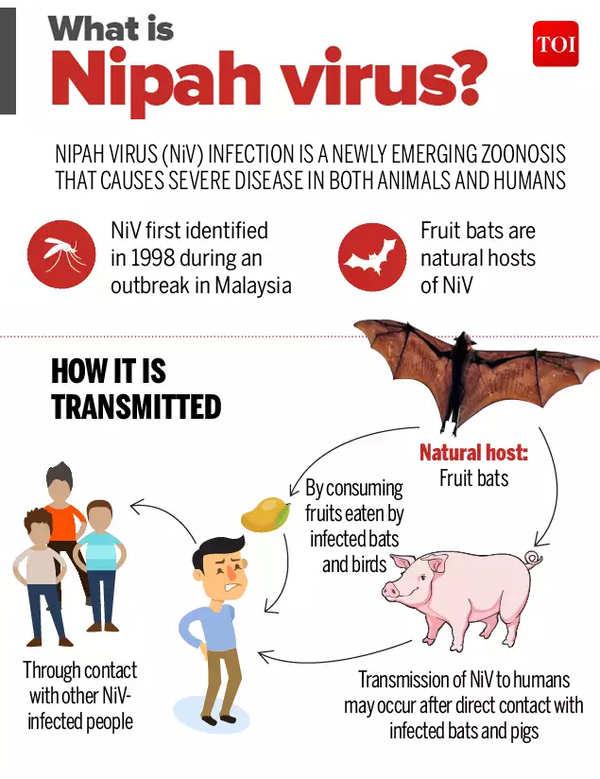
  • Transmission: Nipah virus is a zoonotic disease that can be transmitted to humans through direct contact with infected animals, especially bats and pigs. Nipah virus infection can be transmitted through contaminated food or directly from person to person.
  • Natural Reservoir: Fruit Bats (also known as flying foxes) are believed to be the natural reservoir/primary carriers of the Nipah virus.
  • Symptoms:
    • Fever, muscle pain, and respiratory problems (similar to that of influenza).
    • Inflammation of the brain as well as late onset of Encephalitis can also occur.
    • The case fatality rate is between 65 percent and 100 percent.
  • Treatment: NiV is on the top-10 priority list of pathogens identified by the World Health Organization. Currently, there are no approved vaccines available against NiV.

Quantum Supremacy: Explained

Context: In a paper in Nature Physics, a researcher at Google Quantum AI reportedly demonstrated a problem that is difficult for classical computers. If a quantum computer solves this problem, it can achieve quantum supremacy.

Quantum Supremacy (QS)

When a quantum computer outperforms a classical supercomputer on a well-defined computer science problem, this achievement is known as quantum supremacy.

  • Superposition states allow qubits to carry more information. 
  • Because of quantum superposition, a quantum computer can mimic several classical computers working in parallel.
  • This capacity of doing several computations in parallel gives quantum computers an advantage over classical computers, allowing them to perform a disproportionately greater number of operations.
  • Google’s quantum computer, named Sycamore, claimed ‘supremacy’ because it reportedly did the task in 200 seconds that would have apparently taken a supercomputer 10,000 years to complete.

Supercomputer 

Supercomputer is a class of extremely powerful computers. The term is commonly applied to the fastest high-performance systems available at any given time. 

  • The performance of a supercomputer is commonly measured in floating-point operations per second (FLOPS) instead of million instructions per second (MIPS).
  • Since 2017, there have existed supercomputers which can perform over 1017 FLOPS (a hundred quadrillion FLOPS, 100 petaFLOPS or 100 PFLOPS.
  • These are very large classical computers, often with thousands of classical CPU and GPU cores capable of running very large calculations and advanced artificial intelligence.

Need of Quantum Computers

  • Even supercomputers are binary code-based machines reliant on 20th-century transistor technology. They struggle to solve certain kinds of problems.  
  • When classical computers fail, it's often due to complex problems which are problems with lots of variables interacting in complicated ways. 
  • There are some complex problems that we do not know how to solve with classical computers on any scale. 
  • The real world runs on quantum physics. Computers that make calculations using the quantum states of quantum bits should in many situations be our best tools for understanding it.

Quantum Computing

A quantum computer is a computer that takes advantage of quantum mechanical phenomena.

  • Quantum computers are machines that use the properties of quantum physics to store data and perform computations. 
  • This can be extremely advantageous for certain tasks where they could vastly outperform even our best supercomputers.  
  • Classical computers, which include smartphones and laptops, encode information in binary “bits” that can either be 0s or 1s. 
  • In a quantum computer, the basic unit of memory is a quantum bit or qubit.
  • Quantum computing is driving new discoveries in healthcare, energy, environmental systems, smart materials, and beyond.

Qubit 

Just like a binary bit is the basic unit of information in classical computing, a qubit is the basic unit of information in quantum computing.

image 14

Qubits vs Bits

Qubits are represented by a superposition of multiple possible states.

  • A qubit uses the quantum mechanical phenomena of superposition to achieve a linear combination of two states. 
  • A classical binary bit can only represent a single binary value, such as 0 or 1, meaning that it can only be in one of two possible states. 
  • A qubit, however, can represent a 0, a 1, or any proportion of 0 and 1 in superposition of both states, with a certain probability of being a 0 and a certain probability of being a 1.

There are many physical implementations of qubits

  • Where classical computers use familiar silicon-based chips, qubits (sometimes called "quantum computer qubits") can be made from trapped ions, photons, artificial or real atoms, or quasiparticles.
  • Depending on the architecture and qubit systems, some implementations need their qubits to be kept at temperatures close to absolute zero.

Qubits are fragile

  • One of the most significant hurdles in quantum computing is the fragile nature of qubits. 
  • Entanglement of the qubit system with its environment, including the measurement setup, could easily perturb the system and cause decoherence. 

Entanglement

Multiple qubits can exhibit quantum entanglement. 

  • Entangled qubits always correlate with each other to form a single system. 
  • Even when they're infinitely far apart, measuring the state of one of the qubits allows us to know the state of the other, without needing to measure it directly.
  • Entanglement is required for any quantum computation, and it cannot be efficiently performed on a classical computer. 
  • Applications include factoring large numbers (Shor's algorithm) and solving search problems (Grover's algorithm).

Superposition 

  • Superposition is a phenomenon in quantum computing that allows quantum objects to simultaneously exist in more than one state or location. 
  • This means that an object can be in two states at one time while remaining a single object. 
  • Quantum computers use the entanglement of qubits and superposition probabilities to perform operations. 
  • Superposition enables the qubits of the quantum computer to perform multiple operations simultaneously, making them faster than conventional computers.

Superposition gives quantum computers superior computing power

  • Superposition allows quantum algorithms to process information in a fraction of the time it would take even the fastest classical systems to solve certain problems.
  • The amount of information a qubit system can represent grows exponentially for example Information that 500 qubits can easily represent would not be possible with even more than 2^500 classical bits.
  • It would take a classical computer millions of years to find the prime factors of a 2,048-bit number, Qubits could perform the calculation in just minutes.

Initiative taken by Indian Government towards Quantum Computing

Quantum Computer Simulator (QSim)

The launch of Quantum Computer Simulator (QSim) Toolkit by the Ministry of Electronics and Information Technology (MeitY) with an objective to 

  • Carry out research in Quantum Computing in a cost-effective manner.
  • Address the common challenge of advancing the Quantum Computing research frontiers in India.
  • Allowing researchers and students to write and debug Quantum Code that is essential for developing Quantum Algorithms.
  • Allowing researchers to explore Quantum Algorithms under idealised conditions and help prepare experiments to run on actual Quantum Hardware.
  • Feature Highlights of QSim include
    • Intuitive UI: QSim offers a robust QC Simulator integrated with a graphical user interface (GUI) based Workbench allowing students/researchers to create Quantum programs, visualise the instant circuit generation and simulated outputs.
    • Simulate noisy Quantum logic circuits: Helps simulate Quantum circuits with and without noise and test how well various algorithms work with imperfect quantum components. This is essential to simulate real-life conditions.
    • Pre-loaded Quantum algorithms and examples: QSim comes loaded with Quantum programs and algorithms providing a head start to the users. E.g., QFT, Deutsch Jozsa, Grovers, and so on.
    • Integrated with HPC: The quantum simulations are performed on powerful HPC resources allowing multiple users to submit jobs simultaneously with different qubit configurations.

National Mission for Quantum Technology and Applications (NM-QTA) 

  • To solve challenges of national importance, the mission plans to focus on fundamental science, translation, technology development, human and infrastructural resource generation, innovation, and start-ups.

Quantum communication lab (QCL) by Centre for Development of Telematics (C-DOT)

  • QCL by C-DOT indigenously developed Quantum Key Distribution (QKD) solution which can support a distance of more than 100 kilometers on standard optical fiber.

Indian Army's establishment of quantum laboratory

  • Army, with support from the National Security Council Secretariat (NSCS) has established the Quantum Lab to spearhead research and training in this key developing field. 
  • Research undertaken by the Indian Army in the field of quantum technology will help leapfrog into next-generation communication and transform the current system of cryptography in the Indian Armed Forces to Post Quantum Cryptography (PQC). 
  • Key thrust areas are quantum key distribution, quantum communication, post-quantum cryptography and quantum computing.

Quantum Information Science and Technology (QuST)

  • Department of Science and Technology (DST), Government of India has initiated a new directed research programme on “Quantum Information Science and Technology (QuST)”. 
  • QuST promises to revolutionize the future computation and communication systems which will ultimately have a huge impact on the Nation and our society.
  • Broad Objectives of QuST:
    • Development and demonstration of quantum computers.
    • Development and demonstration of quantum communication & cryptography.
    • Development of quantum-enhanced and inspired technology.
    • Development of advanced mathematical quantum techniques, algorithms and theory of quantum information systems.

Challenges with Initiatives taken by government 

  • Policy gaps: India has loosely built quantum ecosystem where metrics to assess outcomes of its quantum efforts are not clearly defined. E.g., lack of target-oriented policies. 
  • Raising funds: Indian quantum computing startups struggle with funds for product development and scaling due to low venture capital investment. E.g., the budgeted R&D outlay is less than 1%.
  • Insufficient talent pool: India has small pool of researchers, industry professionals, academicians, and entrepreneurs as compared to China or the US. E.g., problem of brain-drain, inadequate infrastructure and research facilities.
  • Poor-infrastructure: India lacks in hardware manufacturing and still imports critical quantum components. India also lacks sufficient superconducting materials, semiconductor chips, processors, and fabrication labs.
  • R&D in silos: India lacks common platform for all quantum research and development. At present, research is carried out in silos and knowledge exchange is not structured. E.g., no common platform to transmit real-time data of research in quantum computing.
  • Lack of industry connection: Most quantum-related R&D is carried out in universities. While academia can provide well-researched prototypes; industry connection is essential for developing scalable applications.

Way Forward:

  • Rework Indian technology policy objectives, frameworks, and deliverables to move from importer of quantum technology to exporter.
  • Developing knowledge ecosystem by inculcating entrepreneurship, innovation, university courses, training programmes in quantum technology.
  • Develop metrics to assess success of strategy and short & long-term action plan.
  • Periodic feedback system to map progress of Quantum-Enabled Science and Technology initiatives.
  • Boost to investor ecosystem to amplify production of hardware components of quantum computer plus simultaneous push to semiconductor industry.

What is the Human microbiome?

Context: The microbiome research has gone from a ‘niche subject area’ to ‘one of the hottest topics in all of science’. Researchers have thrown light into the human microbiome — the community of microbes living in the human body.

Human Microbiome:

  • Human Microbiome is the aggregate of all microbiota that reside on or within human tissues and biofluids along with the corresponding anatomical sites in which they reside, including the skin, mammary glands, seminal fluid, uterus, ovarian follicles, lung, saliva, oral mucosa, conjunctiva, biliary tract, and gastrointestinal tract.
  • Types of human microbiota include bacteria, archaea, fungi, protists, and viruses. 
  • In the context of genomics, the term human microbiome is sometimes used to refer to the collective genomes of resident microorganisms; however, the term human metagenome has the same meaning too.

Benefits of Microbiome:

image 68

Facts about Human Microbiome:

  • Every adult ends up with a unique microbiota configuration, even identical twins that are raised in the same household.
  • Mothers do not pass their microbiomes to their children at birth. Some microorganisms are directly transferred during birth but they constitute a small fraction of the human microbiota; and only an even smaller fraction of these microbes survive and persist throughout the child’s life.
  • Diseases are caused by undesirable interactions between microbial communities and our cells. Whether a microbe and its metabolite are ‘good’ or ‘bad’ depends on the context. For example, most humans carry a species of bacteria called Clostridium difficile without any disease for life. It causes problems only in the elderly or in people with compromised immune systems.
  • The absolute microbial cells in one gram of human faeces are around 10^10 to 10^12. The human microbiota weighs about half a kg or less.

Probiotics:

  • Probiotics are foods or supplements that contain live microorganisms (live beneficial bacteria and/or yeasts) intended to maintain or improve the "good" bacteria (normal microflora) in the body.

See also: Gut Microbiome

National Research Foundation: Mission & Vision

Context: The National Research Foundation (NRF), a new research funding agency, was approved by the Union Cabinet recently.

National Research Foundation  

Mission and Vision

  • The NRF is entrusted with the mission of catalysing the transformation of Indian institutions into world-class Centers of Excellence (CoEs).
  • Its vision is to provide high-level strategic direction for research, innovation, and entrepreneurship across a wide spectrum of fields, including natural sciences, engineering and technology, environmental and earth sciences, health and agriculture, and the interfaces of humanities and social sciences with science and technology.

Functions and Responsibilities

  • Formulating Comprehensive Roadmaps: The NRF is responsible for developing comprehensive research and development roadmaps that guide India's scientific and technological progress.
  • Fostering R&D Infrastructure: It actively works towards facilitating and financing the growth of research and development infrastructure in universities, colleges, and research institutions.
  • Grant Provision:
    • The NRF plays a crucial role in providing grants for research proposals, enabling scientists and researchers to undertake innovative projects.
    • Funding competitive peer-reviewed grant proposals to eligible persons.
  • International Collaboration:
    • Evolving participation in international collaborative projects and fostering exchange of scientific information.
    • Encouraging collaboration with scientists from within and outside India, including scientists of Indian origin, with a view to enrich the Indian scientific ecosystem.
  • Coordination at National Level: Evolving nationally coordinated programmes to identify scientific and practical solutions for societal, developmental, financial and techno-economic challenges.  
  • Public and Private Investment: The NRF aims to foster investments from both the public and private sectors, further boosting the growth of India's research ecosystem.
  • Translation of Research: Supporting translation of research undertaken into capital intensive technologies.
  • Global Participation: Increasing India's role and participation in key areas of national and global importance.

Debate: Funding Priorities and Innovation Models

This debate revolves around the question of whether research funding should be driven primarily by curiosity-driven scientific exploration or whether it should be directed toward solving practical problems and addressing societal challenges.

Vannevar Bush’s Argument about Research Funding 

  • One perspective, as articulated by Vannevar Bush in his 1945 paper, suggests that scientific research should be driven by the "free play of free intellects" guided by curiosity rather than immediate practical utility. 
  • This perspective argues that many significant discoveries and innovations have arisen unexpectedly from such unfettered exploration. 
  • In this view, the government's role is to invest in scientific research, trusting that these discoveries will eventually find their way into practical applications, often through private sector innovation.
  • Many important technologies have benefited from discoveries driven by curiosity, including genome-sequencing, medical diagnostics, and several materials used in construction and various goods.

Daniel Sarewitz’s Counterargument about Research Funding

  • Contrary to the "free play of intellects" argument, Daniel Sarewitz's essay "Saving Science" argues that many important innovations, especially in the postwar United States, were driven more by the practical needs of entities like the Department of Defense (DOD) than by curiosity. 
  • The DOD provided critical investment and direction for fundamental research in various fields, leading to innovations such as computers and, indirectly, the World Wide Web. 
  • This view suggests that government involvement and direction can be essential for driving innovation in specific directions.

National Innovation System

  • The National Innovation System focuses on promoting connections and collaboration between universities, research institutes, companies, and governments to promote innovation.
  • This model is based on the idea that innovation to flourish a country need fostering connections, promoting learning within systems, and empowering entrepreneurship.
  • Countries like Japan and South Korea owe their innovation-led economic growth to the successful implementation of an interconnected innovation system, e.g., between automobiles companies and part suppliers, even though their basic science was not particularly strong in the 1970s-80s.

Emerging Sustainability Model

  • This model emphasizes transformative change toward sustainability. 
  • This model acknowledges that science, technology, and innovation (STI) should not only drive economic growth but also work toward environmental and social sustainability. 
  • It advocates for citizen science and stakeholder participation to guide research priorities and solutions.
  • In the face of the energy crises of the 1970s, Denmark’s grassroots environmental movement created local cooperatives and small firms that experimented with wind turbines, with support from national technological institutes and policies (feed-in tariffs).
  • This coalition eventually led Denmark to become one of the leading exporters of wind-turbines, contributing to its transition to green energy.  

Need of NRF for India

Global Innovation Index by World Intellectual Property Organization (WIPO) India's progress in research and innovation is underscored by its improved ranking on the Global Innovation Index, moving from 76th in 2014 to 40th in 2022, showcasing the impact of increased government funding and emphasis on science, research, and innovation.

Read also: State of Science research

Importance of NRF for India

  • Comprehensive Scope: 
    • The NRF has a comprehensive mandate that covers a wide range of research and innovation areas. 
    • This broad scope allows it to address diverse challenges and opportunities that Indian is facing in research and innovation.
  • Strategic Direction:
    • The NRF provides high-level strategic direction for research, innovation, and entrepreneurship in India.
    • It doesn't just fund research projects but also sets the agenda for the country's research priorities, ensuring alignment with national goals and global trends.
  • Transformative Impact: 
    • The NRF is designed to catalyze transformative change within Indian institutions, aiming to turn them into world-class Centers of Excellence (CoEs). 
    • This signifies a commitment to raising the quality and global competitiveness of Indian research and education institutions.
    • It can attract talent from around the world and reduce the brain drain of Indian students seeking education abroad.
  • Interdisciplinary Approach: 
    • The NRF recognizes the importance of interdisciplinary research and encourages collaboration across various disciplines. 
    • This approach promotes innovative thinking and problem-solving, which is vital for addressing complex real-world challenges.
  • Focus on Innovation and Entrepreneurship: 
    • Beyond academic research, the NRF places a strong emphasis on innovation and entrepreneurship.
    • It supports the translation of research into practical applications, which can drive economic growth and job creation.
  • International Collaboration: Collaborations, that is promoted by NRF, with foreign institutions enhance India's research capabilities, facilitate knowledge sharing, and foster a global perspective among Indian researchers.
  • Self-sustaining Orientation: 
    • The NRF's focus on transformative change towards sustainability aligns with global priorities. 
    • It acknowledges the importance of research that not only drives economic growth but also contributes to environmental and social sustainability.
  • Investment Catalyst: 
    • By promoting investments from both the public and private sectors, the NRF serves as a catalyst for the growth of India's research ecosystem. 
    • This can have a multiplier effect on research and innovation activities in the country.
  • Strategic Vision: 
    • The NRF is part of India's strategic vision to position itself as a global leader in research and innovation. 
    • It represents a commitment to harnessing the power of science and technology for the nation's development.

Concern With the NRF in India

  • Allocation of Funds:
    • Ensuring that funds are distributed fairly and transparently among various research projects and institutions can be a challenge. 
    • There might also be concerns about favoritism or bias in the selection of projects or institutions.
  • Bureaucratic Red Tape: The administrative hurdles can slow down the disbursement of funds and hinder the progress of research projects.
  • Risk of Political Influence: 
    • There is a risk that political considerations could influence the NRF's decision-making processes. 
    • Political interference in research funding decisions can compromise the independence and integrity of scientific research.
  • Research Prioritization: 
    • Deciding which research projects to fund and which areas to prioritize can be challenging. 
    • There may be concerns that certain fields or topics receive more attention and funding at the expense of others, leading to imbalances in the research ecosystem.
  • Accountability and Transparency: 
    • Ensuring transparency in the NRF's operations and decision-making processes is crucial. 
    • Concerns may arise if there is insufficient transparency regarding how funds are allocated, how research proposals are evaluated, and how results are disseminated.
  • Equity in Access: 
    • It is essential to ensure that research funding is accessible to researchers and institutions across the country, including those in remote or less-developed regions.
    • Concerns about equity in access to funding and research opportunities may arise.
  • International Collaboration:
    • While international collaboration can be beneficial, concerns might emerge about the extent to which the NRF prioritizes collaborations with foreign institutions over domestic research partnerships. 
    • Striking the right balance between international and domestic collaborations can be challenging.
  • Evaluation and Impact Assessment: Ensuring that funded projects lead to tangible outcomes and societal benefits can be challenging, and concerns may arise if the impact assessment process is not rigorous.
  • Long-Term Sustainability: 
    • The long-term sustainability of the NRF's funding and operations may be a concern. 
    • It is essential to ensure that the NRF continues to receive adequate funding and support over the years to fulfill its mission effectively.
  • Stakeholder Engagement: 
    • Engaging with diverse stakeholders, including researchers, industry, and civil society, is crucial for effective research policy. 
    • Concerns may arise if there is insufficient consultation with stakeholders in shaping the NRF's priorities and strategies.
  • Research Ethics and Integrity: 
    • Ensuring that research funded by the NRF adheres to ethical standards and maintains research integrity is vital. 
    • Concerns about ethical violations or research misconduct could undermine the credibility of funded projects.

The establishment of NRF is a step in the right direction to improve research funding, stopping brain-drain and making India a global research hub. But it also faces certain practical concerns in its implementation, addressing these concerns requires a commitment to transparency, accountability, and a rigorous evaluation process. It is essential for the NRF to operate independently, free from political influence, and with a focus on promoting high-quality research that benefits society and advances knowledge. Regular reviews and adjustments to policies and procedures can help mitigate these concerns and ensure the NRF's effectiveness in fostering research and innovation in India.

NASA’s first asteroid samples land on Earth

Context: The OSIRIS-REX mission has ended with the return of regolith (space sample) from the primordial asteroid Bennu.

image 13

OSIRIS-REx Mission:

  • Origins, Spectral Interpretation, Resources Identification and Security-Regolith Explorer (OSIRIS REx) is an asteroid study and sample return mission by NASA. 
  • The spacecraft set out in 2016 to study asteroid Bennu (a carbon-rich near-Earth asteroid) and return to Earth with a sample for detailed analysis in 2023.

Asteroid Bennu:

  • Bennu is a small asteroid, a little less than 500 metres in depth and is more than 4.5 billion years old.
  • It is classified as a “near-Earth object” because it passes relatively close to our planet every six years.
  • Over time, the asteroid has drifted closer to Earth, closely approaching it every six years, owing to which it has a small chance of impacting the Earth in future (2182 CE). 

Why was Bennu chosen?

  • Bennu fits in three criteria: accessibility, size and composition.
  • For a mission like OSIRIS-REx, the most accessible asteroids are somewhere between 0.08 – 1.6 AU. Scientists needed an asteroid that could be easily travelled to, retrieve a sample from and return to Earth all within a few years. Further, Bennu had an orbit similar to Earth.
  • One theory is that small worlds like Bennu seeded Earth with the prebiotic ingredients for life

Significance:

  • Researchers believe that this pristine space dirt will reveal clues about the birth of our solar system (4.5 billion years ago) and the genesis of life on Earth.

Key Fact:

  • One AU (Astronomical Unit) is approximately equal to 93 million miles - the distance between the Sun and the Earth. The closest asteroids which travel within 1.3 AU of the sun are called near-Earth objects. 

What are Moonquakes?

Context: An earthquake is caused when tectonic plates shift. But quakes themselves aren’t restricted to the earth. For example, small tremors have also been detected on the moon.

About moonquakes

  • It seismic tremors or vibrations that occur on the Moon's surface. 
  • It is less intense than earthquakes on Earth. The strongest moonquakes can reach magnitudes of up to 5.5 on the Richter scale, but most are much weaker.
  • It is measured using seismometers placed on the Moon's surface by Apollo missions. These instruments recorded data from 1969 to 1977.
  • Between 1972 and 1977, 28 shallow moonquakes were observed.
  • It has helped scientists learn about the Moon's internal structure, composition, and history. 
image 11

Causes and types of moonquakes:

  • Tidal forces: Gravitational interactions between the Moon and Earth can cause stress and strain on the Moon's surface, leading to moonquakes, known as deep moonquakes (~700 km below the surface).
  • Meteorite impacts: Craters on the moon can also form when meteors hit its surface, and since the moon doesn't have an atmosphere, even small impacts can make big craters. There are thousands of these craters on the moon's surface.
  • Thermal stress: The moon gets very hot and very cold, with temperatures ranging from 121 degrees Celsius to -133 degrees Celsius, a difference of 250 degrees Celsius,the expansion and contraction of the lunar surface can induce moonquakes. 
  • Volcanic activity: Movement of magma or the collapse of lunar lava tubes.

The first three kinds of moonquakes mentioned above tend to be mild; however, shallow moonquakes caused by volcanic activity can register up to mB=5.5 on the body-wave magnitude scale.

Bio-Fuel: Explained

Context: The use of food crops to generate bio-fuels can put burden on the resources of India, which demands for change in the definition of bio-fuels.

Biofuels are alternative fuels produced from biomass and used for transportation. 

There are two major biofuel sectors: 

  • Bio-gasoline from sugar-based bioethanol.
  • Biodiesel from vegetable oils or fatty acid methyl esters (FAME).  
Biomass to liquified

Need for Alternative Fuel Options 

Global transportation sector is facing three major challenges, namely 

  • Depletion of fossil fuels.
  • Volatility in crude oil prices.
  • Stringent environmental regulations. 

Alternative fuels specific to geographies can address these issues. Ethanol is considered to be one of most suitable alternative blending, transportation fuel due to its better fuel quality (ethanol has a higher octane number) and environmental benefits.

Defnition of Biofule and Global Regulation 

Since 2008, European regulations (such as the RED II directive) while differntiating provide for two kinds of biofuels:

  • Conventional biofuels: First generation biofuels from agricultural raw materials that can threaten food security or have a negative impact on land use changes
  • Advanced biofuels:
    • Second Generartion: These fuels are derived from non-edible vegetal resources.
    • Third Generartion: These fuels are derived from micro-organisms such as algae or yeasts.
Biofuel Feedstocks

Biofuel consumption mainly depends on legal constraints on blending and on the fuel demand trends. They were mainly used in road transport in 2020, but new applications in the maritime and air sector are being developed. 

Data 

According to the International Energy Agency, to achieve net-zero emissions by 2050 globally, sustainable biofuel production needs to triple by 2030 to fuel modes that have few other mitigation options.

Biofuels vs. Electric Vehicles (EVs)

Transitioning to EVs requires replacing existing internal combustion engine (ICE) vehicles and infrastructure, which is capital-intensive and can have environmental concerns related to the mining of critical minerals for batteries.

Case of India  

  • High Import Dependence: India’s import dependence on crude oil and products stood at an all-time high of 87.3% in FY2023, and 25.8% of the country’s import bill was spent on it. 
  • High Demand of Crude and its Product: India has the third-largest crude and product demand in the world with significant room for consumption growth. 
  • Demand of Transportation Sector for Petrol  
    • Nearly 60 per cent of our petrol demand comes from two-wheelers, which cater to the mobility needs of citizens across the economic spectrum.  
    • The remaining 40 per cent demand is from four-wheelers and this share is likely to increase. 
  • Government Programme: India launched its ethanol blending programme in 2003 and in 2022, India’s blending programme achieved the significant milestone of 10 per cent ethanol blending in petrol. 
  • Ethanol Supply:  
    • Ethanol producers supplied nearly 430 crore liters of ethanol in 2022. 
    • Much of India’s supply of ethanol for the blending programme comes from first-generation production using food crops, mostly sugarcane (84 per cent) and grain (16 per cent). 
  • Prospect of Second-generation (2G) technologies 
    • Investments in second-generation (2G) technologies for ethanol production have been slow. 
    • Indian Oil’s state-of-the-art facility will only produce 3 crore liters of 2G ethanol.  
    • There are 12 such facilities in various stages of planning and construction. 
  • International Energy Agency suggested that in the last decade, up to 20% of our total primary energy supply was met by biomass, and a large portion of it was used by households. 

Biofuel Targets of India 

  • The government aims to achieve a 20% ethanol blending with petrol (E20) by 2025-26.
  • In India, biofuels are primarily associated with first-generation (1G) ethanol, which is sourced from food crops like sugarcane and foodgrains. 
What is Ethanol-blanded Gasoline

Factors that Derive production of ethanol in India 

  • Demand Enrichment: Governments’ mandate for blending a minimum percentage (%) of ethanol with gasoline fuel & production of ethanol compatible vehicles.
  • Supply Enrichment: Schemes for ethanol production from different feedstocks and encouragement to augment bio-refineries and their capacities.
  • Incentives: Promoting the use of higher ethanol blends through price incentives (tax relief at the retail level) and tax incentives for vehicles compatible with E20 and E85.

Prospects of Biofuel in India 

  • The demand for 20 per cent blending is set to increase India’s ethanol demand to nearly 1,100 crore liters by 2025. 
  • Achieving the 2025 target will require investments, and the ability to provide and divert the necessary feedstock for the domestic production of ethanol. 
  • A NITI Aayog report also indicated a growth in petrol demand by over 45 per cent by 2030, compared to 2021. 
  • The share of four-wheeler is going to increase Nearly 55 per cent of respondents in a 2021 study focused on urban India by the Council on Energy, Environment and Water. 

Challenges to Bio-fuels in India

  • 1G Ethanol Dominance: India primarily relies on first-generation (1G) ethanol, sourced from food crops, particularly sugar cane and foodgrains, to meet its ethanol blending targets.
  • Resource Depletion and Food Security:
    • Growing sugar cane and using foodgrains for ethanol production have significant implications for groundwater depletion and food security.
    • These practices may not be sustainable, given stagnant crop yields, climate change impacts, and limited resources.
  • Groundwater Issue: 
    • Groundwater depletion from sugarcane cultivation and diverting food crops for ethanol production can have negative consequences, especially given stagnant crop yields and the need to feed a growing population.
    • According to the study by University of Michigan rates of groundwater depletion could triple during 2040-81 compared with the current rate.
  • Agriculture's GHG Emissions: Diverting crops towards fuel production increases greenhouse gas (GHG) emissions from the agriculture sector, counteracting the goal of reducing emissions in the transport sector.
  • Greenhouse Gas Emissions: The agriculture sector is noted for its direct greenhouse gas (GHG) emissions, and using it to produce motor fuel may lead to a net increase in emissions, counteracting efforts to reduce emissions from the transport sector.
  • Challenge of Scaling up: Balancing economies of scale with energy needs and costs for biomass collection and transport remains a challenge.

Way Forward

  • Clarity in Definition: The term 'biofuel' encompasses both sustainable and unsustainable fuels. Distinguishing between them is crucial for effective decarbonization efforts.
  • Sustainable Biofuels:
    • Sustainable biofuels, produced from crop residues and other low-impact sources, have a lower water and GHG footprint. 
    • Global Biofuels Alliance initiative aim to develop these sustainable alternatives and promote ethanol use.
  • Biomass Use: The Energy Transitions Commission recommends prioritizing biomass use in sectors where low-carbon alternatives are limited, such as long-haul aviation and road freight, where electrification is challenging.
  • Alternative Strategies: Alternative strategies can be formulated to reduce negative consequences, such as reducing surplus sugarcane cultivation, could be explored to address the issue of surplus sugar production and prioritize food production.
  • Diversification of Fuel Base: Diversifying our fuel base, the primary focus of policy must be to slow down the overall consumption of petrol in the economy and address the private demand for fuel. 

Achieving true sustainability in biofuels is a complex task. Any strategy must be carefully assessed within the larger ecosystem to avoid unintended negative consequences.

Nipah Virus (NiV)

Context: Instances of Nipah virus have been reported from Kerala recently. The virus is capable of causing different clinical manifestations with potential human to human spread in some cases. With the Nipah virus cases a regular occurrence in Kerala now, there is a need for a thorough genetic study of the virus in humans and fruit bats.

Relevance of the Topic: Prelims: Key facts about Nipah virus

About Nipha Virus (NiV):

  • About: Nipah virus (NiV) is a single-stranded RNA virus. The genetic material of Nipah virus is composed of RNA rather than DNA.
  • Transmission: Nipah virus is a zoonotic disease that can be transmitted to humans through direct contact with infected animals, especially bats and pigs. Nipah virus infection can be transmitted through contaminated food or directly from person to person.
  • Natural Reservoir: Fruit Bats (also known as flying foxes) are believed to be the natural reservoir/primary carriers of the Nipah virus.
  • Symptoms range from: 
    • Mild illness: Fever, headache, muscle pain, and respiratory problems (similar to that of influenza).
    • Asymptomatic infection (no symptoms) 
    • Fatal Encephalitis (Inflammation of the brain)- can lead to coma or death. 
    • Severe acute respiratory symptoms.  
    • The case fatality rate is between 40% and 75%.
  • Treatment: NiV is on the top-10 priority list of pathogens identified by the World Health Organization. Currently, there are no approved vaccines available against NiV.
image 6
Source: Times of India