Prelims Nuggets

Telcos oppose international SMS traffic redefinition

Context: In response to a consultation paper by the Telecom Regulatory Authority of India (TRAI), telcos argued that there was no need to change the definition of ‘international traffic,’ a key term that determines what an international SMS is, and by extension, what it should cost.

Telcos oppose international SMS traffic redefinition

Unified License Agreement

A Unified License implies that a customer can get all types of telecom services, from a Unified License Operator. The operator can use wireline or wireless media.

National Telecom Policy - 2012 recognizes that the evolution from analog to digital technology has facilitated the conversion of voice, data and video to digital form. Increasingly, these are now being rendered through single networks bringing about a convergence in networks, services and also devices. 

Hence, it is now imperative to move towards convergence between various services, networks, platforms, technologies and overcome the existing segregation of licensing, registration and regulatory mechanisms in these areas to enhance affordability, increase access, delivery of multiple services and reduce cost.

Current, Unified Licensing Agreement Framework in India only regulates domestic traffic and not international traffic, a key term that determines what an international SMS is, and by extension, what it should cost.

Definition of Traffic

The load carried on a telecommunication network is called traffic, or more specifically ‘telecommunication traffic’. Telecommunication traffic comprises many things such as voice call, SMS, etc.

Types of Traffics

Looking from the standpoint of a country, telecommunication traffic comprises 

  • Domestic traffic (i.e., traffic within the country)
  • International traffic

Further, in the Indian context, where the country has been divided into 22 telecom circles/ Metro areas for the purpose of granting licenses/ authorization for access services, domestic traffic comprises intra-circle traffic, and inter-circle traffic.

INTER – CIRCLE TRAFFIC means Long-Distance traffic originating in one Telecom Circle/Metro Area and terminating in another Telecom Circle/Metro Area. E.g., Delhi Circle to Mumbai Circle.

INTRA- CIRCLE TRAFFIC means the traffic originating and terminating within boundaries of the same Telecom Circle/Metro Area. E.g., within Delhi Circle.

Definition of International Traffic

There is no definition of international traffic in the unified license of the TRAI. 

  • As ‘international SMS’ is a type of ‘international traffic’, the Authority is of the view that instead of defining international SMS in the Unified License Agreement, it would be appropriate to define the term ‘international traffic’. 
  • In case the term ‘international traffic’ is also defined in the Unified License, all types of telecommunication traffic, domestic as well as international, would have been defined in the Unified License Agreement.

This definition bears importance because, under the current regulation system, termination charges on domestic SMS are regulated whereas telecom operators are free to decide the termination charges on international SMS which is highly profitable.

International termination charge is the rate payable by an Indian International Long-Distance Operator (ILDO), who carries the call from outside the country to access provider in the country in whose network the call terminates.

Telecom Regulatory Authority of India (TRAI)

Telecom Regulatory Authority of India (TRAI), a statutory body, was established under Telecom Regulatory Authority of India Act, 1997. 

One of the main objectives of TRAI is to provide a fair and transparent policy environment which promotes a level playing field and facilitates fair competition.

Function of TRAI

  • To regulate telecom services, including fixation/revision of tariffs for telecom services which were earlier vested in the Central Government.
  • TRAI has issued from time to time a large number of regulations, orders and directives to deal with issues coming before it and 
  • The directions, orders and regulations issued cover a wide range of subjects including tariff, interconnection and quality of service as well as governance of the Authority.

GROWING ASTRONOMICAL INTEREST TOWARDS MOON

Context: India’s ISRO is launching Chandrayaan-3 mission to moon. However, along with ISRO other space faring nations are also planning mission towards moon. This article explores the reasons behind the same.

image 44

Moon

  • Moon is the only satellite of Earth. 
  • It is devoid of atmosphere and rotates. 
  • Moon revolves around the Earth in around the same time as Earth rotates on its axis.  
  • Tidal locking is a phenomenon by which a body has the same rotational period as its orbital period around a partner. Since, moon rotates the Earth at the same time as it takes to orbit Earth. Thus, we can see only one side of the moon.

Recent missions planned or executed for Moon

  • Chandrayaan-3 by India's ISRO which is equipped with lander and rover. 
  • Luna 25: Russia's moon lander mission scheduled in 2023.
  • Artemis Program of NASA (USA): Aims to send a manned mission to Moon by 2025.
  • China plans to send a manned mission to Moon by 2030.
  • SLIM Mission: It is small scale exploration mission by JAXA (Japan) designed for pinpoint landings on the Moon's surface, reduction in size and weight of equipment used in Moon landings and investigation into Moon's origins.
  • Ispace: It is a Japanese startup aiming to have a lander on Moon in 2023.
  • Private American aerospace companies Intuitive Machines and Astrobotic Technology each aim to place a lander on moon.
  • India has ratified the Artemis Accords which establishes a framework for cooperation in civil exploration and peaceful use of Moon, Mars and other astronomical objects. 

Reasons behind increased focus on Moon

  • Moon is being seen as a vital stepping-stone for interplanetary exploration.
  • Moon has presence of rare minerals and elements including titanium and helium-3 that could be used to build nuclear fusion plants.
  • Moon has presence of frozen water which can be harnessed for sustaining a population and agriculture. 
  • There is a race among nations to figure out how to get these precious resources and transport them to Earth.

Recent findings about Moon

Characteristics of far side of moon: 

  • Far side of the moon has a dramatically different landscape as compared to the face of moon visible from Earth. Far side has a thicker crust by almost 20 km. 
  • The far side of the moon is also more densely pockmarked, with millions of more asteroids and comets having crashed into this half. 
  • Far side of moon has almost no characteristic dark spots which are less reflective volcanic basalt plains. 

Water on Moon

  • Chandrayan-1 (India's first lunar mission) carried two instruments provided by NASA for surveying the poles of moon for possible traces of water ice. 
  • The instruments were (i) Moon Mineralogical Mapper - An infrared spectrometer & (ii) MiniSAR - Miniature Synthetic Aperture Radar.
  • These instruments gave a definitive proof of presence of water ice in more than 40 craters on the poles of moon indicating potential for life, for research stations or settlements, perhaps even crops.
  • Scientists believe that water is concentrated in the craters at the poles of moon because they don't receive any sunlight. On other parts of moon, a combination of low pressure and daytime temperatures of 120 degree celsius vaporises water.
  • However, in 2020 NASA's SOFIA Observatory found the first evidence of water on moon in a sunlit spot, indicating presence of water on the Moon was widely distributed. 

Moon's soil

  • Lunar soil, also known as regolith, contains a number of familiar elements such as iron, silicon, potassium, manganese and magnesium. However, it does not contain organic matter such as microbes and insects. 
  • Lunar soil is hydrophobic i.e., it repels rather than absorbs water. 
  • Lunar soil has been exposed to extremely unhealthy amounts of solar radiation. 
  • Last year, scientists on Earth succesfully grew plants in lunar soil brought back to Earth by NASA's Apollo missions in the 1970s. However, scientists found that plants in lunar soil were growing slower, had stunted roots and leaves and developed red spots. This was due to much higher exposure to salt or heavy metals. However, drought tolerant plants fared better in lunar soil.

Indo-Japanese researchers develop a treatment for Duchenne’s Muscular Dystrophy

Context: A team of doctors from Tamil Nadu along with scientists from Japan have developed a disease-modifying treatment for Duchenne Muscular Dystrophy (DMD), a rare genetic disease, using a food additive - a beta-glucan produced by the N-163 strain of a yeast Aureobasidium pullulans.

image 42

About Duchenne Muscular Dystrophy (DMD)

  • DMD is a rare genetic disease that affects only male children.
  • There are approximately 5,000 patients in Japan and 80,000 in India.
  • Muscles need lubricant. Dystrophin, an enzyme secreted in the muscles, helps in wear and tear and regeneration of muscles.
  • Because of the genetic disorder, muscles cannot produce dystrophin.
  • This damages and weakens the muscles, and patients become wheelchair-bound in their early teens and die prematurely.
  • Boys born before 1970 had a median lifespan of around 18 years.
  • After anti-inflammatory medications and steroids, longevity increased.
  • Disease-modifying treatments have prolonged the lifespan but despite that, patients die when they are aged 28 to 30 years.
  • Currently, available treatments are gene therapy, Exon-skipping and disease-modifying agents (anti-inflammatory medicines such as steroids).
  • There was no adverse reaction in the participants and it potentially delayed the progress of the disease without side effects to the liver and kidneys.

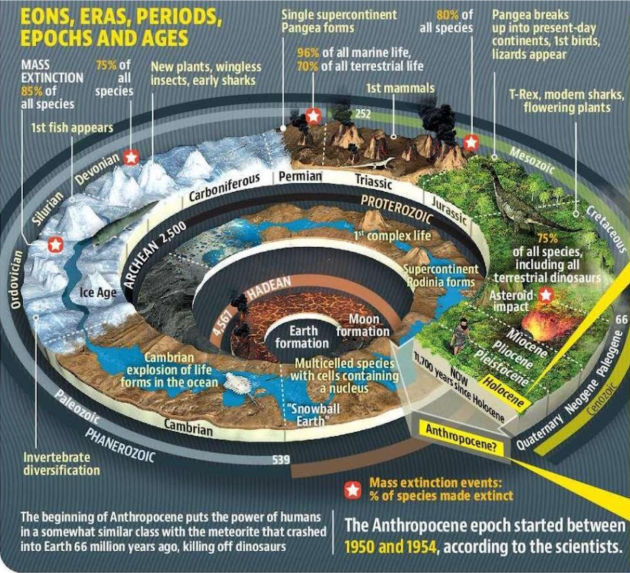
Anthropocene

Context: A group of scientists have identified a small lake in Canada as the ground zero for ‘Anthropocene’.

image 40

What is Anthropocene?

  • It is an unofficial unit of geologic time which is used to denote the most recent period in Earth’s history when human activity started to have a significant impact on the planet’s climate and ecosystems, especially since the onset of the Industrial Revolution. 
  • Neither the International Commission on Stratigraphy (ICS) nor the International Union of Geological Sciences (IUGS) has officially approved the term as a recognised subdivision of geologic time.
  • This term was first coined by Nobel Prize – winning chemist Paul Crutzen and biology professor Eugene Stoermer.
  • The phenomena’s which are associated with this geological time are global warming, sea-level rise, ocean acidification, mass-scale soil erosion, heat waves, deterioration of the biosphere and other detrimental changes in the environment.

First French long-range missiles already in Ukraine

Context: France has already made a delivery of a number of SCALP long-range cruise missiles to Ukraine, a military source told after President Emmanuel Macron announced the supplies.

image 36

Types of Missiles 

Ballistic Missiles 

Ballistic missiles are powered initially by a rocket or series of rockets in stages, but then follow an unpowered trajectory that arches upwards before descending to reach its intended target. Ballistic missiles can carry either nuclear or conventional warheads. 

There are four general classifications of ballistic missiles based on their range, or the maximum distance the missile can travel: 

  • Short-range: less than 1,000 kilometers (approximately 620 miles), also known as “tactical” ballistic missiles.
  • Medium-range: between 1,000 and 3,000 kilometers (approximately 620-1,860 miles), also known as “theater” ballistic missiles. 
  • Intermediate-range: between 3,000 and 5,500 kilometers (approximately 1,860-3,410 miles) 
  • Long-range: more than 5,500 kilometers (approximately 3,410 miles), also known as intercontinental or strategic ballistic missiles.
    • Intercontinental ballistic missiles (ICBMs) can fly much further than the minimum range; for example, Russia could hit Chicago with an ICBM launched from the Krasnoyarsk ICBM base, which is located 9,156 kilometers (5,689miles) away.

Cruise Missiles

Cruise missiles are unmanned vehicles that are propelled by jet engines, much like an airplane. They can be launched from ground, air, or sea platforms. 

  • Cruise missiles remain within the atmosphere for the duration of their flight and can fly as low as a few meters off the ground. Flying low to the surface of the earth expends more fuel but makes a cruise missile very difficult to detect. 
  • Cruise missiles are self-guided and use multiple methods to accurately deliver their payload, including terrain mapping, global positioning systems (GPS) and inertial guidance, which uses motion sensors and gyroscopes to keep the missile on a pre-programmed flight path. 
  • As advanced cruise missiles approach their target, remote operators can use a camera in the nose of the missile to see what the missile sees. This gives them the option to manually guide the missile to its target or to abort the strike.

Storm Shadow Cruise missile aka SCALP long-range cruise missiles  

Storm Shadow is a long-ranged, air-launched, conventionally armed, deep-strike supersonic missile, which is manufactured by the France-based MBDA Missile Systems. 

  • Range: More than 250 km.
  • It is capable of being operated day and night in all weathers and is designed to destroy high-valued stationary targets such as airbases, radar installations, communications hubs and port facilities
  • It is equipped with fire-and-forget technology and offers high-precision deep strike capability as it features a sophisticated navigation system that includes inertial navigation (INS), a global positioning system (GPS) and terrain reference navigation for better control over the path. 

The missile features the BROACH (Bomb Royal Ordnance Augmented Charge) warhead — a high-technology warhead, which first cuts the surface of the target, penetrates into it and then explodes.

The Majorana Fermions that holds the key to ‘quantum supercomputers’

Context: In a paper published on June 21, researchers at Microsoft announced that they had figured out a way to create an elusive kind of particle that could potentially revolutionise quantum computing.

image 35

Supercomputing 

Supercomputing technology comprises supercomputers, the fastest computers in the world. Supercomputers are made up of interconnects, I/O (input/output) systems, memory and processor cores.

  • Unlike traditional computers, supercomputers use more than one central processing unit (CPU). 
  • These CPUs are grouped into compute nodes, comprising a processor or a group of processors—symmetric multiprocessing (SMP)—and a memory block. 
  • A supercomputer can contain tens of thousands of nodes. With interconnect communication capabilities, these nodes can collaborate on solving a specific problem. 
  • Nodes also use interconnects to communicate with I/O systems, like data storage and networking.

Supercomputing is measured in floating-point operations per second (FLOPS). Petaflops are a measure of a computer's processing speed equal to a thousand trillion flops. And a 1-petaflop computer system can perform one quadrillion (1015) flops. From a different perspective, supercomputers can be one million times more processing power than the fastest laptop.

Quantum Computing 

Quantum computing is a rapidly emerging technology that harnesses the laws of quantum mechanics to solve problems too complex for classical computers.  

Qubit 

A qubit (or quantum bit) is the quantum mechanical analogue of a classical bit. In classical computing the information is encoded in bits, where each bit can have the value zero or one. In quantum computing the information is encoded in qubits. A qubit can hold a one, a zero or crucially a superposition of these.

  • A quantum computer can use individual electrons as qubits – its fundamental units of information. Information can be encoded in some property of each electron, like its spin.

Quantum Superposition 

A quantum state in superposition can be seen as a linear combination of other distinct quantum states. This quantum state in superposition forms a new valid quantum state.

Quantum Entanglement

A pair or group of particles is entangled when the quantum state of each particle cannot be described independently of the quantum state of the other particle(s). The quantum state of the system as a whole can be described; it is in a definite state, although the parts of the system are not

Concepts associated with Quantum computing 

Spin 

Qantum particles exhibit an intrinsic angular momentum component which is known as spin. 

Anti-Particle

Dirac’s equation predicted the existence of an antiparticle for each particle, such that if the two meet, they annihilate each other. Based on his prediction, scientists found the first antiparticle, the positron (or the anti-electron), in 1932.  

Bound state 

The Bound state of a particle is that particular state in which two particles are energetically forbidden to be separated at large distances or potentially bound in that state.

Ground state 

It is the state of a particle with lowest possible energy. Usually, particles do not show any degeneracy at ground state.

Degeneracy 

Degeneracy in quantum mechanics means that a system can have multiple states at the same energy.

Topological System 

Topology systems are concerned with the properties of a geometric object that are preserved under continuous deformations, such as stretching, twisting, crumpling, and bending; that is, without closing holes, opening holes, tearing, gluing, or passing through itself.

Topological Degeneracy 

In topological systems, the system has multiple states at the lowest or ground state energy, i.e., the quantum system can exist in two (or more) possible states at its lowest energy.  

Fermions 

These particles have half integer quantum spin like 1/2, 3/2, 5/2, etc. This is why any particle, even something as large as an entire atom, can be a fermion, just its total quantum spin needs to have a half-integer value.

Non-Abelian Statistics

Under these rules, changing the order of steps in which you perform a task changes the task’s outcomes.

For example, say you have an algorithm that performs a series of steps in the order A-B-C-D. If the algorithm played according to the rules of non-Abelian statistics, A-C-B-D would give a different result from A-D-B-C. 

Majorana Fermions and Majorana Zero Modes (MZM)

The quantum rules that apply to a single fermion also apply to pairs, or bound states. When the bound states are their own antiparticles – i.e., if they meet, they annihilate each other – they are Majorana fermions. Physicists call such bound states Majorana zero modes.

To be a Majorana zero mode, any bound state should satisfy two conditions

  • It should obey the Dirac equation.
  • It should be its own antiparticle.  

Majorana Zero Modes helping in Computing 

Quantum computers have a big problem, they’re very fragile and slight disturbances in the surrounding my result in the change of the quantum state of the particle and can result in change of the information.

  • Majorana zero modes are a mathematical construction that allows electrons to be described theoretically as being composed of two halves. 
  • From a quantum computing perspective, if an electron can be split into two parts, then the information it encodes as a qubit will be protected from local perturbations.

Which makes Majorana Zero modes much more stable than most other qubits.

Also, MZM follows non-Abelian statistics which makes the outcome also dependent on the path taken in computation. So, the calculation done by MZM will have one more degree of freedom.

Current status of MZM 

Indian Institute of Science associate professor Anindya Das said, “While topological quantum computing remains the ultimate goal, the existence of Majorana fermions hasn’t been settled yet. The result will need to be independently confirmed.”

Chandrayaan-3

Context: Indian Space Research Organisation (ISRO) plans to launch the Chandrayaan-3 mission, India’s third lunar mission, to the moon on July 14. 

Chandrayaan-3: 

  • Chandrayaan-3 is a follow-on mission to Chandrayaan-2 to demonstrate end-to-end capability in safe landing and roving on the lunar surface. 
  • It will be launched onboard a Launch Vehicle Mark 3 from Sriharikota, Andhra Pradesh. 
  • Cost of the mission: Rs 615 crore
  • Duration: The mission is only meant to last for a half lunar day, which is roughly equal to 14 Earth days. 
image 30

Objectives: 

  • To demonstrate a Safe and Soft Landing on Lunar Surface (near the lunar South Pole).
  • To demonstrate Rover roving on the moon (which will carry out in-situ chemical analysis of the lunar surface during the course of its mobility)
  • To conduct in-situ scientific experiments.
image 1

Soft-landing on Moon:

  • This will be India’s second attempt to soft-land a lander and rover on the lunar surface.
    • Chandrayaan-2 was launched in July 2019 in the form of an orbiter and a lander (‘Vikram’) bearing a rover (‘Pragyan’).
    • While the orbiter entered into orbit around the moon, the surface mission failed in September 2019 when the lander crashed instead of executing a slow descent.
  • Chandrayaan-3 consists of a Lander and a Rover similar to Chandrayaan-2, but would not have an orbiter.
    • The rocket (LVM-3) will place the payload in an elliptical orbit around the earth, where a propulsion module will take over and pilot the lander to a circular orbit around the moon.
    • Finally, the lander will detach and begin a series of manoeuvres culminating in a gradual landing (on August 23-24, 2023) over the surface of the moon.
  • To improve the chances of success at this stage, ISRO made changes to the software and hardware of the Chandrayaan-3 mission, especially for the lander thrusters. Additionally, ISRO has developed improved soft-landing sequences and the lander has four thruster engines instead of five, sturdier legs and larger solar panels, and will carry more fuel.

Several advanced technologies in Chandrayaan-3:

  • Propulsion module has a Spectro-polarimetry of Habitable Planet Earth (SHAPE) payload to gather data on the polarisation of light reflected by Earth so that researchers can look for other planets with similar signatures. Hence, it will assist with exoplanet searches. 
  • Lander payloads:
    • Chandra's Surface Thermophysical Experiment (ChaSTE) to measure thermal conductivity and temperature on the surface;
    • Instrument for Lunar Seismic Activity (ILSA) to detect moonquakes;
    • Langmuir Probe to estimate the density and variation of plasma, or superheated gas, in the moon's environment; 
    • A Laser Retroreflector Array (from NASA) to measure distances using laser ranging to understand the dynamics of the Moon system. 
  • Rover payloads:
    • Alpha Particle X-ray Spectrometer (APXS) to look for elements in the lunar soil and rocks;
    • Laser Induced Breakdown Spectroscope (LIBS) to examine the chemical and elemental composition of the lunar surface.

Significance of Chandrayaan-3:

  • Chandrayaan-3 offers opportunities for India to lead the world’s response to the moon’s growing importance in the scientific and political milieus.
    • Chandrayaan-3 is India’s second attempt to achieve a soft landing on the Moon’s surface. Only three countries – the United States, Russia and China – have successfully landed spacecraft on the airless lunar surface.
    • Chandrayaan-3 will be the first to land on the South Pole of the Moon. All other spacecraft which have landed on the moon have landed in the equatorial region, a few degree latitude north or south of the lunar equator. 

Why moon’s South Pole? 

  • Experts note that there is a possibility of the presence of water at the South Pole. Water ice has been detected at both poles of the Moon, but the South Pole has more area in permanent shadow and colder temperatures, so it is thought to have more water ice.
  • Moreover, the South Pole witnesses extremely cold temperatures; this means that anything trapped here would remain frozen in time, without undergoing much change. The rocks and soil in this region could therefore provide clues to the early solar system.

Further, South Pole is located in the South Pole-Aitken basin, which is a huge crater. There may be material from the deep crust and upper mantle of the Moon on or near the surface.

The Global South: origins and significance

Context: The unwillingness of many leading countries in Africa, Asia and Latin America to stand with NATO over the war in Ukraine has brought to the fore once again the term “Global South.”

image 27
Image Source: Tariene Gaum (ResearchGate)
  • The term Global South appears to have been first used in 1969 by political activist Carl Oglesby. Writing in the liberal Catholic magazine Commonweal, Oglesby argued that the war in Vietnam was the culmination of a history of northern “dominance over the global south.”
  • The term ‘First World’ referred to the advanced capitalist nations; the ‘Second World’, to the socialist nations led by the Soviet Union; and the ‘Third World’, to developing nations, many at the time still under the colonial yoke.
  • The term ‘Global South’ is not geographical. In fact, the Global South’s two largest countries - China and India - lie entirely in the Northern Hemisphere.
  • Countries in the Global South were mostly at the receiving end of imperialism and colonial rule, with African countries as perhaps the most visible example of this.
  • However there is an increase in economic might of the countries in global south as it is estimated by 2030 it is projected that three of the four largest economies will be from the Global South — with the order being China, India, the U.S. and Indonesia. Already the GDP in terms of purchasing power of the Global South-dominated BRICS nations — Brazil, Russia, India, China and South Africa — surpasses that of the Global North’s G-7 club.
  • The economic transformation has brought greater political prominence, as Global South nations assert themselves globally. For example, China brokering deals between Iran and Saudi Arabia, and Brazil's peace plan for Ukraine. This shift has sparked discussions of an "Asian Century" and a "post-Western world."

Importance of South-South Cooperation:

  1. Driving Economic Growth: Countries in the Global South have been major contributors to more than half of the world's economic growth in recent years. This collaboration fuels economic progress and fosters sustainable development.
  2. Increasing Trade: Intra-South trade has reached unprecedented levels, accounting for over a quarter of global trade. This trend strengthens regional economies, enhances market access, and promotes economic integration.
  3. Foreign Direct Investment: Outflows of foreign direct investment from the Global South represent a significant portion of global flows. This investment promotes infrastructure development, creates jobs, and encourages technological advancements.
  4. Poverty Alleviation: Remittances from migrant workers to low- and middle-income countries have played a crucial role in lifting millions of families out of poverty. South-South cooperation enables financial support and sustainable development initiatives for vulnerable communities.
  5. Achieving Sustainable Development Goals: The ambitious 2030 Agenda for Sustainable Development necessitates the ideas, energy, and ingenuity of countries in the Global South. Their active participation and cooperation are indispensable for achieving these goals.

ISSUES IN SOUTH-SOUTH COOPERATION

  1. Power Imbalances and Exploitation: Stronger countries in the Global South sometimes take advantage of weaker partners, undermining the principles of fairness and equitable collaboration. China, in particular, has been criticized for such practices.
  2. Environmental Concerns and Public Health: Certain international oil companies have been accused of disregarding environmental impacts and public health concerns while extracting natural resources. Addressing these issues is crucial for sustainable cooperation.
  3. Misuse of Financial Assistance: Some countries exploit the principle of lack of conditionality by diverting financial assistance intended for socially impactful projects to other purposes. This undermines trust and hampers genuine development efforts.
  4. Non-Interference Limitations: The principle of non-interference can hinder the resolution of local conflicts, as countries like India and China prioritize economic interests over intervention. Balancing economic cooperation and addressing internal conflicts is crucial.
  5. Lacks institutional and Financial Capacity: Global South is not a coherent group and does not have a single shared agenda and the collective institutions created to voice concerns of Global South such as Non-Aligned Movement and New International Economic Order have been largely rendered dysfunctional, this has led to strong regional competition and opposition among countries of global south. Further there is also lack of financial capacity among countries of Global South.
  6. North Dominated Mindset: North-oriented mindset and traditional vertical links with metropoles and the world still dominated by US hegemony.

    High Seas Treaty

    Context: Context: On June 19, the UN adopted the Marine Biodiversity of Areas Beyond National Jurisdiction (BBNJ) or the High Seas Treaty.

    image 25

    The United Nations has recently adopted the Marine Biodiversity of Areas Beyond National Jurisdiction (BBNJ) or the High Seas Treaty. This historic agreement, the third to be approved under UNCLOS, aims to protect and preserve the marine environment through international cooperation. The process to develop this treaty began in 2002, and after several years of negotiations, it was finally adopted in 2023.

    Key Points of the high sea treaty:

    1. Protecting Marine Biodiversity: The treaty addresses pressing issues such as rising sea surface temperatures, overexploitation of marine biodiversity, overfishing, coastal pollution, and unsustainable practices beyond national jurisdictions.
    2. Establishment of Marine Protected Areas: The treaty introduces the establishment of marine protected areas through a "three-quarterly majority vote," ensuring that decisions cannot be blocked by a small number of parties.
    3. Fair Sharing of Benefits: The treaty mandates the fair sharing of benefits from marine genetic resources. It includes a "clear house mechanism" to facilitate the sharing of scientific information and monetary benefits among all parties.
    4. Open Access to Information: Parties to the treaty are required to share and exchange information on marine protected areas, scientific and technical tools, and area-based management tools. This promotes open access to knowledge and collaboration.
    5. Scientific and Technical Body: A Scientific and Technical Body will play a crucial role in conducting environmental impact assessments, creating standards and guidelines, and assisting countries with limited capacity.

    Contentious Issues:

    1. Marine Genetic Resources: The issue of sharing marine genetic resources was a major point of contention during the treaty negotiations.
    2. Information Sharing: The absence of a provision to monitor information sharing was debated. Some parties proposed a licensing scheme for monitoring, while others argued against it, citing potential hindrance to bioprospecting research.
    3. Language Used in the Treaty: The use of phrases like "promote" or "ensure," particularly regarding the sharing of benefits from marine genetic resources, led to disagreements among the parties.

    Opposition to the Treaty:

    1. Opposition from Developed Countries: Several developed countries opposed the treaty, as they support private entities that are involved in advanced marine technology research and development. These entities hold patents related to marine genetic resources.
    2. Russia and China's Position: Russia and China are not in favour of the treaty. Russia withdrew from the final stage of reaching a consensus, arguing that the treaty does not strike a balance between conservation and sustainability.

    State of Science research

    Context: The Union Cabinet, chaired by the Prime Minister Shri Narendra Modi, approved the introduction of the National Research Foundation (NRF) Bill, 2023 in the Parliament.

    image 16

    Status of research in India

    • In response to a Parliament question in March, the government said India’s total expenditure on R&D in purchasing power parity (PPP) terms in 2018 — about US$ 68 billion — was the sixth highest in the world, after the US, China, Japan, Germany and South Korea. 
    • According to the Department of Science and Technology (DST), there were 7,888 R&D institutions in the country in 2021, including more than 5,200 units in the private sector and industries, which engage mainly in industry-specific research. 
    • According to DST data, about 94 per cent of the Indians (34,241 out of 36,565) who obtained a doctorate at a US university between 2001 and 2020 did so in science and engineering disciplines, second only to China.
    • India produced 25,550 doctorates in 2020-21, of which 14,983 were in science and engineering disciplines. This 59 per cent proportion in the overall doctorates compares well with other countries, putting India in the seventh rank overall. 
    • Even in absolute terms, India’s annual output of science and engineering doctorates is right at the top, with only the US, China and the United Kingdom producing more.

    Source Indian Express

    Problem of research in India

    Problem of funding 

    • The expenditure on research as a proportion of GDP has gone down, from about 0.8 per cent at the start of this millennium to about 0.65 per cent now. For the last decade or so, this share has remained stagnant.
    • The spending on research has more than tripled in the last 15 years, from Rs 39,437 crore in 2007-08 to over 1.27 lakh crore in 2020-21. But India’s GDP has grown faster, and so the share of research has gone down. Unlike India, at the global level, growth in Research & Development (R&D) expenditure has outpaced GDP growth.
    • At least 37 countries spent more than 1 per cent of their GDP on R&D in 2018, the last year for which data from all countries is available, according to the 2021 UNESCO Science Report.
    • India spent only 42 US dollars (in PPP terms) per researcher in 2020, compared with nearly 2,150 by Israel, 2,180 by South Korea and 2,183 by the United States.

    Problem of research in universities 

    • Only one per cent of universities engage in active research, according to the detailed project report on NRF.
    • Aside from basic research, due to minimal interaction between departments, there is a lack of interdisciplinary education and research in the universities.
    • Lack of collaborative research between academia and industries resulting in products with no commercial utility and public utility.

    Problem in outcome of research 

    • The number of researchers per million population in India, 262, is extremely low compared with even developing countries like Brazil (888), South Africa (484) or Mexico (349).
    • Data from DST showed that Indian researchers published 149,213 articles in science and engineering journals across the world in 2020, almost two and a half times more than a decade earlier. However, it still constituted only 5 per cent of all the articles. Chinese researchers contributed 23 per cent, while US researchers accounted for 15.5 per cent.
    • In 2021, a total of 61,573 patents were filed in India, making it the sixth largest in the world. But this was nowhere close to the nearly 16 lakh patents filed in China, and about six lakhs in the United States that year.

    Suggestions:

    • Research & Development spending in specific domains like biopharmaceuticals, vaccines, biosecurity, One Health, digital health, and data science should be increase significantly both in the public and private sectors. 
    • Investments should be made in areas where there are gaps in research capabilities and capacities e.g., technology development and commercialization of innovation.
    • A lot more emphasis should be on developing manufacturing capabilities of priority sectors across the value chain. 

    National Research Foundation Bill, 2023

    The approved Bill aims to establish National Research Foundation (NRF) that will seed, grow and promote Research and Development (R&D) and foster a culture of research and innovation throughout India’s universities, colleges, research institutions, and R&D laboratories.

    Key Provisions of the bill

    • The bill, after approval in the Parliament, will establish NRF, an apex body to provide high-level strategic direction of scientific research in the country as per recommendations of the National Education Policy (NEP), at a total estimated cost of Rs. 50,000 crores during five years (2023-28).
    • Since the scope of the NRF is wide-ranging – impacting all ministries - the Prime Minister will be the ex-officio President of the Board and the Union Minister of Science & Technology & Union Minister of Education will be the ex-officio Vice-Presidents.
    • The Department of Science and Technology (DST) will be the administrative Department of NRF which will be governed by a Governing Board consisting of eminent researchers and professionals across disciplines.
    • NRF’s functioning will be governed by an Executive Council chaired by the Principal Scientific Adviser to the Government of India.
    • The bill will also repeal the Science and Engineering Research Board (SERB) established by an act of Parliament in 2008 and subsume it into NRF which has an expanded mandate and covers activities over and above the activities of SERB.

    Role of NRF

    • NRF will forge collaborations among the industry, academia, and government departments and research institutions, and create an interface mechanism for participation and contribution of industries and State governments in addition to the scientific and line ministries. 
    • It will focus on creating a policy framework and putting in place regulatory processes that can encourage collaboration and increased spending by the industry on R&D.
    • In order to bring non-science disciplines of research in its ambit, NRF will fund research projects across four major disciplines –Sciences; Technology; Social Sciences; and Arts and Humanities.

    Science and Engineering Research Board (SERB)

    • SERB is a statutory body established through SERB Act 2008 of Parliament. 
    • To Support basic research in emerging areas of Science & Engineering is the primary and distinctive mandate of the Board. 
    • As per the provisions of the SERB Act 2008, the Board has an Oversight Committee. The members of the Oversight committee advise and assist the board.

    Delimitation

    Context: The recent announcement made by the Prime Minister of India during the inauguration of the new Parliament building highlighted a plan to expand the representation in Lok Sabha by increasing the number of seats and Members of Parliament (MPs). 

    image 14

    What is Delimitation?

    • Delimitation refers to the process of redrawing the boundaries of constituencies or electoral areas. This process is carried out periodically to ensure that each constituency has a roughly equal number of voters, based on the principle of "one vote, one value." 
    • After each census, a readjustment is to made in (a) allocation of seats in the Lok Sabha to the States, and (b) division of each state into territorial constituencies.
    • Parliament is empowered to determine the authority and the manner in which it is to be made.
    • Delimitation is necessary because population distribution changes over time, with some areas experiencing significant growth while others may decline. This can result in a situation where certain constituencies have a much larger or smaller number of voters compared to others, leading to an imbalance in representation.

    About Delimitation Commission:

    • Delimitation Commission is appointed by the President of India.
    • Composition: Chief Election Commissioner, Retired Judge of Supreme Court and Election Commissioner of the concerned State.
    • Orders of Delimitation Commission cannot be called in question before any court of law.
    • The copies of its orders are laid before the House of People and State Legislative Assembly concerned, but no modifications are permissible therein by them.

    8z8jetWUNu5KR brEYp3yFSdutqKlLHRNVAkJ0kHBn3JsiJTG2gzBaiZ4eCqdXY1KHy9tWtFayQTJmDLtZcf72htXoJso4e7JJmCX4oawVul1I43FNUsl UKsLEnC YfDEbf79J Pdg510fn8w MqQ

    Impact of Delimitation:

    • Balancing the Political Power: Delimitation can alter the distribution of political power among different regions and communities. The Redrawal of the constituencies can impact the electoral prospects of political parties and candidates, potentially impacting the political dynamics and power balance within a particular region or state. E.g., During 2008 delimitation exercise, Jharkhand witnessed a significant realignment of political power when the boundaries of constituencies were redrawn.
    • Addressing Demographic Shifts: In 2002, constituencies in states like Maharashtra and Tamil Nadu were redefined to address the substantial population growth in urban areas. It paved the way for better reflection of population changes and ensured that urban centers had adequate representation in the legislative bodies. 
    • Minority Representation: Delimitation exercises have been instrumental in ensuring better representation for minority communities. In the 2008 delimitation exercise, constituencies in regions with a significant concentration of minority communities, such as Malappuram in Kerala, were adjusted to ensure their political interests were adequately represented. 
    • Enhanced Gender Representation: Delimitation exercises have also contributed to improving gender representation in politics. E.g., during the 2008 delimitation exercise, the constituencies in certain states were redrawn to facilitate reservation of seats for women in local bodies, thereby promoting greater participation of women in the political process. 
    • Fair Representation: Delimitation aims to ensure fair representation by readjusting the boundaries of constituencies based on population changes. It helps in balancing the number of voters per representative, ensuring that each vote holds relatively equal weight and upholding the democratic principle of "one person, one vote."

    Issues associated with Delimitation:

    • The delimitation exercise, aimed at rearranging and standardizing the number of people per constituency, may result in decreased representation for States that have achieved population stabilization. E.g., Kerala, Tamil Nadu. It may lead to increased representation for States that are still experiencing population growth and have not yet achieved stability.
    • Delimitation exercises often face challenges in implementation due to logistical and administrative issues. For instance, the delimitation exercise planned for the state of Jammu and Kashmir faced delays and obstacles due to the unique circumstances and complexities of the region.

    Roadmap for Future

    • The Commission can choose to implement freezing of seats, until all States have achieved population stabilization. 
    • Alternatively, Commission can develop a customized mathematical model inspired by the 'Cambridge Compromise'. This model would aim to provide a mathematically equitable formula for the allocation of seats, similar to the apportionment of seats in the European Parliament. #Best Practice
    • It is essential to ensure that the delimitation process is carried out fairly, transparently, and with adequate consideration for the interests of all communities and regions.

    Bharat 6G Alliance

    Context: Department of Telecommunications under Ministry of Communications has launched Bharat 6G Alliance to drive innovation and collaboration in next-generation wireless technology.

    Bharat 6G Alliance (B6GA)

    • It is a collaborative platform consisting of public & private companies, academia, research institutions and standards development organisations to drive the design, development and deployment of 6G technologies in India. 
    • This body is expected to promote universal and affordable connectivity, technology ownership and indigenous manufacturing, creating a culture of technology innovation, reducing imports, boost exports and augment creation of IPR around 6G technology and systems. 

    Objectives of Bharat 6G Alliance

    • Understand the business and societal needs of 6G beyond technology requirements, foster consensus on these needs and promote high impact open R&D initiatives.
    • Positioning India at forefront of 6G innovation: Accelerate 6G standards related patent creation in India and actively contribute to international standardisation organisations such as 3GPP & ITU. 
    • Forge coalitions and synergies with other 6G Global Alliances, fostering international collaboration and knowledge exchange. 
    • Facilitate market access for Indian telecom technology products and services.

    Grants from Telecom Technology Development Fund (TTDF)

    • 6G Terrahertz testbed with Orbital Angular Momentum (OAM) & Multiplexing through consortium of SAMEER, IIT Madras, IIT Guwahati & IIT Patna. 

    About Telecom Technology Development Fund (TTDF)

    • TTDF scheme was launched by Department of Telecommunications in 2022. 
    • Under the scheme, 5% of annual collections from Universal Service Obligation Fund (USOF) will be available for TTDF scheme for funding R&D of technologies, products and services. 
    • Grants are given out of TTDF to Indian entities to encourage and induct indigenous technologies tailor made to meet domestic needs. Funds will also be used to develop standards to meet countrywide requirements and create ecosystem for research, design, prototyping, use cases, pilots and proof of concept testing etc. 
    • The scheme is envisaged to bridge digital divide by developing and manufacturing state of art technologies to form synergies among academia, start-ups, research institutions and industry to build and develop telecom ecosystem.