Government Schemes & Policies

Social Audit Units

Context: As per the statistics with the Union Rural Development Ministry in the ongoing financial year, less than 14% of the amount flagged by the social audit units has been recovered so far.

Rule 4 of Audit of Schemes Rules, 2011 stipulates that each State Government shall identify or establish an independent organization, “Social Audit Unit” (SAU) to facilitate conduct of the Social Audit of MGNREGS works. 

  • This Social Audit Unit may be either a Society or a Directorate, independent of the implementing departments/agencies. 
  • The work may also be outsourced to an outside agency, preferably an NGO which is not involved in the planning and implementation of the Scheme but possesses adequate experience of having worked in rights and entitlement-based programmes.

Effectiveness of Social Audit Units under MGNREGA

  • Poor Recovery: As per the statistics available with the Union Rural Development Ministry in the ongoing financial year, less than 14% of the amount flagged by the auditors has been recovered so far.
    • In 2022-23, the recoverable amount was ₹86.2 crore, but only ₹18 crore (20.8%) was recovered.
    • In 2021-22, ₹171 crore was flagged, but only ₹26 crore (15%) was recovered.
  • Financially Satrved Units: Social audit units which does not have adequate funds and are working without training or adequate personnel.
  • Ineffective role of SAU: The social audit unit’s sole responsibility is to flag cases of malpractice. Recovering the money, and reprimanding the officials responsible, is up to the State governments.
  • Weaponisation by Union: The Union government has weaponised the lack of social audits and low recovery rate to withhold funds for MGNREGS for the States. For example, units in Karnataka and Bihar have not got funds for nearly two years now.
  • Credibility Concerns: The consistent low recovery rates and challenges in the audit process raise credibility concerns about the entire MGNREGS program.
  • Imbalance in Monitoring: Certain states consistently report "zero number of cases" and "zero recoveries” e.g., Gujarat, Goa etc. While there are other States such as Telangana, where an active social audit unit has flagged several cases, but the recovery rate remains low. 

Social Audit

‘Social Audits’ are a means of continuous public vigilance and to ensure public accountability in the implementation of projects, laws and policies. 

  • Social Audit examines the impact of specific governmental activities on certain sections of society. 
  • The objective of Social Audit is to ensure public accountability in the implementation of projects, laws and policies.
  • It is a continuous process of public vigilance and serves as a forum for ensuring transparency in the process of administration and decision making, accountability of PRI representatives and officials and serves the purpose of grievance redressal.
  • Social Audit has the following dimensions:
    • As a continuous and ongoing process, involving public vigilance and verification of quantity and quality of works at different stages of implementation; and
    • A process is to be conducted in every Gram Panchayat (GP) at least once in six months, involving a mandatory review of all aspects.

MGNREGA and Social Audit 

The Mahatma Gandhi National Rural Employment Guarantee Act provides for a central role to ‘Social Audits’ as a means of continuous public vigilance. 

An innovative feature of the Mahatma Gandhi NREGA is that it has institutionalized ‘Social Audit’ as a means of continuous public vigilance (Mahatma Gandhi NREGA, Section 17). 

Social Audits are periodic assemblies convened through Gram Sabhas where

  • All the details of a project are scrutinized.
  • Are a continuous process of public vigilance.
  • Serve as a forum for ensuring transparency in the process of administration and decision making.
  • Ensure accountability of PRI representatives and officials.
  • And Serve the purpose of grievance redressal.

Provisions 

  • The Government of India (GOI) notified new provisions of social audit in Schedule - I of the Act.
  • The GOI through its order instructed the States for enforcement of provisions of social audit under the act.
  • The order required the States to direct the District Programme Coordinators to complete the social audits of all the works undertaken in the Gram Panchayats of the districts as per the new provisions of social audit as notified in Schedule - I of the act and enter the information related to the social audits in the prescribed formats in NREGA MIS. 
  • The GOI also instructed the States to ensure that the districts prepare for conducting social audits in advance and put up their social audit calendar on the NREGA website.

Strengthening the independence and capacity of social audit units, addressing political pressures, and ensuring adequate funding are crucial steps to enhance the program's effectiveness through social audit units and credibility. Additionally, greater transparency and accountability measures should be put in place to mitigate corruption within the scheme.

National Research Foundation: Mission & Vision

Context: The National Research Foundation (NRF), a new research funding agency, was approved by the Union Cabinet recently.

National Research Foundation  

Mission and Vision

  • The NRF is entrusted with the mission of catalysing the transformation of Indian institutions into world-class Centers of Excellence (CoEs).
  • Its vision is to provide high-level strategic direction for research, innovation, and entrepreneurship across a wide spectrum of fields, including natural sciences, engineering and technology, environmental and earth sciences, health and agriculture, and the interfaces of humanities and social sciences with science and technology.

Functions and Responsibilities

  • Formulating Comprehensive Roadmaps: The NRF is responsible for developing comprehensive research and development roadmaps that guide India's scientific and technological progress.
  • Fostering R&D Infrastructure: It actively works towards facilitating and financing the growth of research and development infrastructure in universities, colleges, and research institutions.
  • Grant Provision:
    • The NRF plays a crucial role in providing grants for research proposals, enabling scientists and researchers to undertake innovative projects.
    • Funding competitive peer-reviewed grant proposals to eligible persons.
  • International Collaboration:
    • Evolving participation in international collaborative projects and fostering exchange of scientific information.
    • Encouraging collaboration with scientists from within and outside India, including scientists of Indian origin, with a view to enrich the Indian scientific ecosystem.
  • Coordination at National Level: Evolving nationally coordinated programmes to identify scientific and practical solutions for societal, developmental, financial and techno-economic challenges.  
  • Public and Private Investment: The NRF aims to foster investments from both the public and private sectors, further boosting the growth of India's research ecosystem.
  • Translation of Research: Supporting translation of research undertaken into capital intensive technologies.
  • Global Participation: Increasing India's role and participation in key areas of national and global importance.

Debate: Funding Priorities and Innovation Models

This debate revolves around the question of whether research funding should be driven primarily by curiosity-driven scientific exploration or whether it should be directed toward solving practical problems and addressing societal challenges.

Vannevar Bush’s Argument about Research Funding 

  • One perspective, as articulated by Vannevar Bush in his 1945 paper, suggests that scientific research should be driven by the "free play of free intellects" guided by curiosity rather than immediate practical utility. 
  • This perspective argues that many significant discoveries and innovations have arisen unexpectedly from such unfettered exploration. 
  • In this view, the government's role is to invest in scientific research, trusting that these discoveries will eventually find their way into practical applications, often through private sector innovation.
  • Many important technologies have benefited from discoveries driven by curiosity, including genome-sequencing, medical diagnostics, and several materials used in construction and various goods.

Daniel Sarewitz’s Counterargument about Research Funding

  • Contrary to the "free play of intellects" argument, Daniel Sarewitz's essay "Saving Science" argues that many important innovations, especially in the postwar United States, were driven more by the practical needs of entities like the Department of Defense (DOD) than by curiosity. 
  • The DOD provided critical investment and direction for fundamental research in various fields, leading to innovations such as computers and, indirectly, the World Wide Web. 
  • This view suggests that government involvement and direction can be essential for driving innovation in specific directions.

National Innovation System

  • The National Innovation System focuses on promoting connections and collaboration between universities, research institutes, companies, and governments to promote innovation.
  • This model is based on the idea that innovation to flourish a country need fostering connections, promoting learning within systems, and empowering entrepreneurship.
  • Countries like Japan and South Korea owe their innovation-led economic growth to the successful implementation of an interconnected innovation system, e.g., between automobiles companies and part suppliers, even though their basic science was not particularly strong in the 1970s-80s.

Emerging Sustainability Model

  • This model emphasizes transformative change toward sustainability. 
  • This model acknowledges that science, technology, and innovation (STI) should not only drive economic growth but also work toward environmental and social sustainability. 
  • It advocates for citizen science and stakeholder participation to guide research priorities and solutions.
  • In the face of the energy crises of the 1970s, Denmark’s grassroots environmental movement created local cooperatives and small firms that experimented with wind turbines, with support from national technological institutes and policies (feed-in tariffs).
  • This coalition eventually led Denmark to become one of the leading exporters of wind-turbines, contributing to its transition to green energy.  

Need of NRF for India

Global Innovation Index by World Intellectual Property Organization (WIPO) India's progress in research and innovation is underscored by its improved ranking on the Global Innovation Index, moving from 76th in 2014 to 40th in 2022, showcasing the impact of increased government funding and emphasis on science, research, and innovation.

Read also: State of Science research

Importance of NRF for India

  • Comprehensive Scope: 
    • The NRF has a comprehensive mandate that covers a wide range of research and innovation areas. 
    • This broad scope allows it to address diverse challenges and opportunities that Indian is facing in research and innovation.
  • Strategic Direction:
    • The NRF provides high-level strategic direction for research, innovation, and entrepreneurship in India.
    • It doesn't just fund research projects but also sets the agenda for the country's research priorities, ensuring alignment with national goals and global trends.
  • Transformative Impact: 
    • The NRF is designed to catalyze transformative change within Indian institutions, aiming to turn them into world-class Centers of Excellence (CoEs). 
    • This signifies a commitment to raising the quality and global competitiveness of Indian research and education institutions.
    • It can attract talent from around the world and reduce the brain drain of Indian students seeking education abroad.
  • Interdisciplinary Approach: 
    • The NRF recognizes the importance of interdisciplinary research and encourages collaboration across various disciplines. 
    • This approach promotes innovative thinking and problem-solving, which is vital for addressing complex real-world challenges.
  • Focus on Innovation and Entrepreneurship: 
    • Beyond academic research, the NRF places a strong emphasis on innovation and entrepreneurship.
    • It supports the translation of research into practical applications, which can drive economic growth and job creation.
  • International Collaboration: Collaborations, that is promoted by NRF, with foreign institutions enhance India's research capabilities, facilitate knowledge sharing, and foster a global perspective among Indian researchers.
  • Self-sustaining Orientation: 
    • The NRF's focus on transformative change towards sustainability aligns with global priorities. 
    • It acknowledges the importance of research that not only drives economic growth but also contributes to environmental and social sustainability.
  • Investment Catalyst: 
    • By promoting investments from both the public and private sectors, the NRF serves as a catalyst for the growth of India's research ecosystem. 
    • This can have a multiplier effect on research and innovation activities in the country.
  • Strategic Vision: 
    • The NRF is part of India's strategic vision to position itself as a global leader in research and innovation. 
    • It represents a commitment to harnessing the power of science and technology for the nation's development.

Concern With the NRF in India

  • Allocation of Funds:
    • Ensuring that funds are distributed fairly and transparently among various research projects and institutions can be a challenge. 
    • There might also be concerns about favoritism or bias in the selection of projects or institutions.
  • Bureaucratic Red Tape: The administrative hurdles can slow down the disbursement of funds and hinder the progress of research projects.
  • Risk of Political Influence: 
    • There is a risk that political considerations could influence the NRF's decision-making processes. 
    • Political interference in research funding decisions can compromise the independence and integrity of scientific research.
  • Research Prioritization: 
    • Deciding which research projects to fund and which areas to prioritize can be challenging. 
    • There may be concerns that certain fields or topics receive more attention and funding at the expense of others, leading to imbalances in the research ecosystem.
  • Accountability and Transparency: 
    • Ensuring transparency in the NRF's operations and decision-making processes is crucial. 
    • Concerns may arise if there is insufficient transparency regarding how funds are allocated, how research proposals are evaluated, and how results are disseminated.
  • Equity in Access: 
    • It is essential to ensure that research funding is accessible to researchers and institutions across the country, including those in remote or less-developed regions.
    • Concerns about equity in access to funding and research opportunities may arise.
  • International Collaboration:
    • While international collaboration can be beneficial, concerns might emerge about the extent to which the NRF prioritizes collaborations with foreign institutions over domestic research partnerships. 
    • Striking the right balance between international and domestic collaborations can be challenging.
  • Evaluation and Impact Assessment: Ensuring that funded projects lead to tangible outcomes and societal benefits can be challenging, and concerns may arise if the impact assessment process is not rigorous.
  • Long-Term Sustainability: 
    • The long-term sustainability of the NRF's funding and operations may be a concern. 
    • It is essential to ensure that the NRF continues to receive adequate funding and support over the years to fulfill its mission effectively.
  • Stakeholder Engagement: 
    • Engaging with diverse stakeholders, including researchers, industry, and civil society, is crucial for effective research policy. 
    • Concerns may arise if there is insufficient consultation with stakeholders in shaping the NRF's priorities and strategies.
  • Research Ethics and Integrity: 
    • Ensuring that research funded by the NRF adheres to ethical standards and maintains research integrity is vital. 
    • Concerns about ethical violations or research misconduct could undermine the credibility of funded projects.

The establishment of NRF is a step in the right direction to improve research funding, stopping brain-drain and making India a global research hub. But it also faces certain practical concerns in its implementation, addressing these concerns requires a commitment to transparency, accountability, and a rigorous evaluation process. It is essential for the NRF to operate independently, free from political influence, and with a focus on promoting high-quality research that benefits society and advances knowledge. Regular reviews and adjustments to policies and procedures can help mitigate these concerns and ensure the NRF's effectiveness in fostering research and innovation in India.

PM Vishwakarma Scheme

Context: PM Vishwakarma Scheme is a central sector scheme under Ministry of Micro, Small and Micro Enterprises to provide end-to-end support to artisans and craftspeople who work with their hands and tools.

What is PM Vishwakarma Scheme?

Coverage of the scheme: PM Vishwakarma scheme covers artisans and craftspeople engaged in 18 trades:

  1. Carpenter
  2. Boat Maker
  3. Armourer
  4. Blacksmith
  5. Hammer and tool kit maker
  6. Locksmith
  7. Goldsmith
  8. Potter
  9. Sculpture and stone maker
  10. Cobbler/Shoe smith/Footwear artisan
  11. Mason
  12. Basket/Mat/Broom maker/Coir Weaver
  13. Doll & Toy Maker
  14. Barber
  15. Garland maker
  16. Washerman
  17. Tailor
  18. Fishing net maker
PM Vishwakarma Scheme 1

Benefits under PM Vishwakarma Scheme to artisans and craftspeople

  • Recognition: Recognition of artisans and craftspeople through PM Vishwakarma certificate and ID card.
  • Skill upgradation: Basic training of 5-7 days and advanced training of 15 days with a stiped of Rs 500 per day.
  • Toolkit incentive: A toolkit incentive of up to Rs 15,000 in the form of e-vouchers at the beginning of Basic Skill Training. 
  • Credit support: Collateral free ‘Enterprise Development Loans’ of up to Rs 3 lakh in two tranches of Rs 1 Lakh and Rs 2 lakh with tenures of 18 months and 30 months, respectively, at a concessional rate of interest fixed at 5%, with interest subvention of up to 8% provided by Government of India. Beneficiaries who have completed Basic Training will be eligible to avail the first tranche of credit support of up to Rs. 1 lakh. The second loan tranche will be available to beneficiaries who have availed the 1st tranche and maintained a standard loan account and have adopted digital transactions in their business or have undergone Advanced Training.
  • Incentive for Digital Transaction: An amount of Re. 1 per digital transaction, up to maximum 100 transactions monthly will be credited to the beneficiary’s account for each digital pay-out or receipt. 
  • Marketing Support: Marketing support will be provided to artisans and craftspeople in the form of quality certification, branding, onboarding on e-commerce platforms such as GeMs, advertising, publicity and other marketing activities to improve linkage to value chain.
  • Beneficiaries under the scheme will be onboarded on Udyam Assist Platform as entrepreneurs in the formal MSME ecosystem.
  • Enrolment process: Enrolment of beneficiaries shall be done through Common Service Centres with Aadhar based biometric authentication on PM Vishwakarma portal. The enrolment of beneficiaries will be followed by a three-step verification which will include (i) Verification at Gram Panchayat/ ULB level, (ii) Vetting and Recommendation by the District Implementation Committee (iii) Approval by the Screening Committee.

Pradhan Mantri Ujjwala Yojana (PMUY)

Context: The government has raised the subsidy amount for Pradhan Mantri Ujjwala Yojana beneficiaries from ₹200 to ₹300 per LPG cylinder.

About Pradhan Mantri Ujjwala Yojana

  • Launched in: 2016
  • Nodal Ministry: Ministry of Petroleum and Natural Gas
  • Objective: To make clean cooking fuel such as LPG available to the rural and deprived households (BPL) that were otherwise using traditional cooking fuels such as firewood, coal, cow-dung cakes, etc. Also, providing a healthy cooking fuel and prevents hazards health-related issues among the millions of rural populations due to the use of fossil fuel.
  • Target: 8 Crore LPG Connections to the deprived households by March 2020.

PMUY 2.0

  • Launched in:  PMUY was replaced by PMUY 2.0 in 2021
  • Objective: To simplify procedures and reduce paperwork. Migrants are no longer required to submit ration cards or address proof; a self-declaration is now sufficient.
  • Target: Additional 75 lakh LPG connections over three years from the financial year 2023-24 to 2025-26. 
  • Eligibility: An adult woman belonging to a poor household and not having an LPG connection in her household will be eligible under it. Eligible as per SECC 2011 list:
    • Belongs to SC/ST households, be a beneficiary of Pradhan Mantri Awas Yojana (PMAY), Antyodaya Anna Yojana (AAY), Forest dwellers, Most Backward Classes (MBC), Tea and Ex-Tea Garden Tribes, People residing in river islands.
  • Benefits: Beneficiaries receive cash assistance of Rs.1600, which covers the security deposit for the gas cylinder, pressure regulator, LPG hose, domestic gas consumer card, inspection, installation, and demonstration charges. 
    • Additionally, they are provided with their first LPG refill and a stove free of charge, along with their deposit-free connection by the Oil Marketing Companies (OMCs). 
    • Consumers have the option to purchase gas stoves and refills on EMI with zero interest, which is recovered through LPG subsidies.
  • Exclusions: Male members from a household cannot apply for the scheme.
  • Achievements: As of 1st March 2023, there are 9.59 crore PMUY beneficiaries. 

Scheme Performance 

The Comptroller and Auditor General (CAG) of India conducted a performance audit of PMUY in December 2019, revealing the following key findings:

  • Affordability Challenge: Between January 2018 and March 2023, the cost of subsidised LPG cylinders saw an 82% increase. This price hike has made LPG less affordable for PMUY households, and alternative solid fuels have become more cost-effective in many regions.
image 14
  • Leakage: The identification of BPL households is based on the Socio-Economic Caste Census (SECC) data, but there were discrepancies in beneficiary names between the PMUY consumer database and the SECC data. Moreover, some connections were issued to men, contrary to the program's objective.
  • Lack of Sustained Usage: Many PMUY beneficiaries did not purchase refill cylinders. Approximately 1.18 crore households did not buy any refill cylinders, and 1.51 crore beneficiaries bought only one refill cylinder in the previous year. The average annual refill consumption for PMUY beneficiaries remained low compared to non-PMUY consumers.
image 15
  • Reliable Access Challenge: Distributors face financial disincentives in areas with low demand and sporadic refills, leading to poor service quality in rural areas with significant PMUY beneficiaries. Additionally, India's bottling capacity is insufficient to cater to the sustained use of new PMUY consumers.
  • Behavior Change Challenge: Various factors, including traditional cooking preferences, gender roles, low valuation of women's labour, intra-household decision-making practices, and current cooking habits, hinder the adoption of LPG. 
  • Other factors, such as using solid fuels for tasks like cattle feed preparation and water heating, also deter LPG use. Community-level factors also influence LPG uptake in different parts of the country.

Way Forward

To address these challenges and promote sustained LPG usage, several recommendations are proposed:

  • Phase out the loan scheme and provide double bottle connections with an increased subsidy to cover stove and first refill costs.
  • The government can clear pending dues against existing loans of PMUY consumers to encourage refill purchases.
  • Provide free double bottle connections at a subsidised price to PMUY consumers to ensure continued usage.
  • Implement a subsidy structure that starts at high levels to promote LPG adoption and gradually tapers off over time, as demonstrated successfully in Maharashtra.
  • Improve the efficiency of LPG stoves by introducing mandatory standards and labelling, which can reduce subsidy costs and benefit the environment.
  • Leverage digital technology to address cash flow challenges by making advance subsidy payments to Oil Marketing Companies based on sales estimates, enabling immediate transfer of subsidies to consumer accounts.
  • Encourage distributors with performance-based incentives for selling refills to poor and PMUY consumers in rural areas.
  • Define clear performance standards for distributors and oil marketing companies, with public access to data on their performance, penalties, and escalation mechanisms.
  • Refine subsidy targeting to reduce costs and redirect savings to support poor beneficiaries.
  • Conduct further research to understand behavioural barriers and develop context-specific strategies for promoting sustained LPG use.

Conclusion

While PMUY has made LPG accessible to poor households, there is a need to focus on sustaining its usage. This can be achieved by addressing affordability, leakage, sustained usage, reliable access, behaviour change, and other challenges through a combination of policy measures and targeted interventions.

See: Targeted subsidy to Pradhan Mantri Ujjwala Yojana Consumers

PM e-Bus Sewa Scheme

Context: Union Cabinet has approved scheme known as PM e-Bus Sewa Scheme for augmenting city bus operation by 10,000 e-buses on PPP model.

About PM e-Bus Sewa Scheme

pm e-bus sewa scheme

Components of the scheme: The scheme has two broad components:

  • Component I: Augmenting City bus services (169 cities): This component will augment city bus operations with 10,000 e-buses on PPP basis. Associated infrastructure will provide support for development/upgradation of depot infrastructure and creation of behind-the-meter power infrastructure (substation etc) for e-buses.
  • Component II: Green Urban Mobility Initiatives (GUMI) (181 cities): Focuses on green initiatives like bus priority, infrastructure, multimodal interchange facilities, NCMC based Automated Fare Collection Systems, charging etc. Promote e-mobility and full support will be provided for behind-the-meter power infrastructure. Cities will be supported for development of charging infrastructure under Green Urban Mobility Initiatives.

Coverage: The scheme will cover cities with population of 3 lakhs and above as per census 2011 including all capital cities of UTs, North-Eastern & Hill States. Priority will be given to cities having no organised bus service.

Operation of e-buses: States/Cities shall be responsible for running the bus services and making payments to bus operators. 

Timeline: Bus operation will be supported for a period of 10 years. 

Financing of the scheme: The scheme would have an estimated cost of Rs 57613 crore. Of this Rs 20,000 crores will be provided by Central Government as subsidy to the State Governments.

Significance of the scheme

  • Support to bus priority infrastructure will accelerate the proliferation of state of the art energy efficient electric buses
  • Foster innovation in e-mobility sector
  • Lead to development of resilient supply chains for electric vehicles.
  • Bring economies of scale for procurement of electric buses through aggregation for e-buses.
  • E-mobility will reduce noise and air pollution and curb carbon emissions.
  • Modal shift due to increased share of bus-based public transportation will lead to GHG reduction.
  • Buses lead to democratisation of roads as more people particularly from poorer sections of society use them more.
  • Women are particularly more inclined to use buses and helps increase their employment opportunities.
  • Buses are essential for last mile connectivity.

Jan Vishwas Bill passed in Rajya Sabha

Jan Vishwas Bill

The bill seeks to amend 183 provisions across 42 Acts administered by 19 Ministries to reduce the compliance burden on individuals and businesses with the twin objectives of ease of doing business and ease of living for the citizens.

Jan Vishwas Bill

Provisions 

  • Decriminalise certain offences: It aims to decriminalize certain offenses by replacing imprisonment with monetary penalties. 
    • Under Cinematograph Act, failure to notify film details could result in a fine of five lakh rupees instead of imprisonment.
    • Under Agricultural Produce Act, counterfeiting grade marks could lead to a penalty of eight lakh rupees instead of imprisonment and a fine
  • Fine and Penalty differentiated: In some Acts, offenses are now decriminalized, and fines are replaced with penalties.
    • For example, under the Patents Act, selling a falsely represented patented article may lead to a penalty of up to ten lakh rupees, with an additional one thousand rupees per day for continuing contravention.
  • Revision of fines and penalties: It suggests raising fines and penalties for certain offenses mentioned in the Schedule. Additionally, it proposes a ten percent increase in fines and penalties every three years from the commencement of the proposed Act.
  • Appointing Adjudicating Officers: Under the Bill Indian government can appoint adjudicating officers to determine penalties. These officers have the authority to summon individuals for evidence and conduct inquiries into violations of the relevant Acts.
  • Appellate Mechanism: The Bill also outlines the appellate mechanisms for individuals aggrieved by an order from an adjudicating officer/authority.
  • The Bill introduces an Environmental Protection Fund under the EP Act. The Fund will support environmental education, awareness, research, and the expenses of implementing these Acts.
Jan Vishwas Bill details

Benefits of the Bill

  • The Bill aims to boost businesses by removing criminal provisions for minor, technical, and procedural defaults. This fosters ease of doing business, ease of living, and supports an 'Atmanirbhar Bharat'.
  • Effective, understandable rules are crucial for entrepreneurs, particularly those starting small and medium enterprises. 
  • Eliminating unnecessary red tape will promote financial gains, reduce corruption, and encourage the growth of these businesses.
  • Criminalizing small procedural lapses and minor defaults burden the judiciary and may delay major offense adjudication. Proposed amendments introduce suitable adjudication mechanisms for minor offenses, reducing the burden on courts and ensuring efficient justice dispensation.
  • Criminalizing minor acts can wrongly be used by the executive for a show of strength rather than punishing wrongful conduct.
  • Several of these Acts originated during the British era, indicating a historical lack of trust in citizens. Addressing this issue of "overcriminalization" necessitates justifying penalties in the law and introducing more flexibility.
  • Regulatory burden deters investors due to discrepancies and contradictions in existing laws. Proposed amendments aim to attract more investment by streamlining processes and speeding up decisions.

Issues with the bill

  • Certain offenses committed by post office officers, such as theft, dishonest misappropriation, and fraud with postal marks, are being removed. The reason for their removal is unclear since they may not be relevant to the Bill's objective of decriminalizing offenses to promote ease of living and doing business.
  • The Bill removes provisions from Post Office Act penalizes post office officers for illegal opening of postal articles, and others for opening a mail bag, raising privacy questions.
  • The Bill provides for Adjudicating Officers to decide penalties and to file complaints in court the concern is whether government officers would be impartial enough to serve as adjudicating authorities.
  • With the broad range of penalties and discretion involved, adjudicating cases becomes a quasi-judicial function. The competence of the Adjudicating Officer is questionable in deciding these penalties.
  • The Bill empowers the Adjudicating Officer to file complaints in court for certain offenses. This parallel process potentially conflates the roles of an adjudicatory body and prosecution.
  • As per a 2017 report of the Comptroller and Auditor General, the CPCB and SPCBs have sufficient funds, but lack the personnel and infrastructure to utilise them fully. Similar issues may persist with the new Fund.
  • The Bill amends the Drugs and Cosmetics Act, 1940 providing the manufacturing of substandard drug a compoundable offence, by which companies can get away with a fine for production of substandard drugs.

Way forward

Pursuing the spirit of ‘Minimum Government Maximum Governance’, India needs to get rid of the vintage laws that were adversely affecting the development of the country. But doing so government should stick to the objective it wants to achieve by this bill, should make the adjudication process independent and impartial, and balance the reducing compliance burden with deterrence effect of the law. 

See also: Indian Polity Notes by Rau's IAS

Draft National Deep Tech Startup Policy (NDTSP)

Context: The draft National Deep Tech Startup Policy released by the office of the principal scientific advisor to the government, has sought comments from the public.

Draft National Deep Tech Startup Policy (NDTSP) 

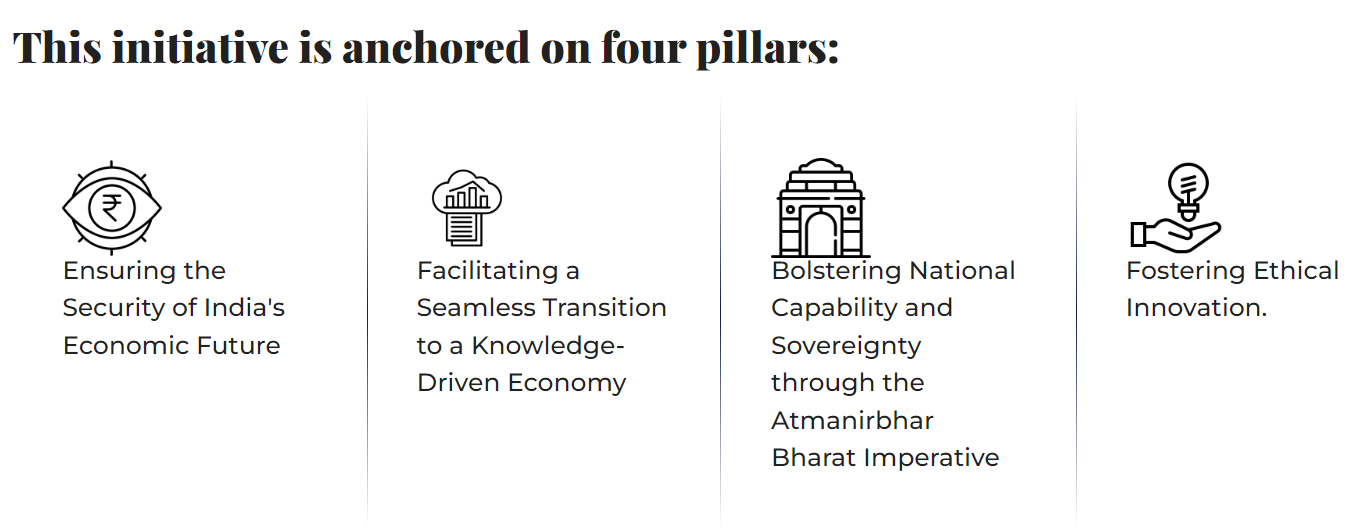
four pillars of Draft National Deep Tech Startup Policy

Objective 

  • To “ensure India’s position in the global deep tech value chain,” in areas such as semiconductors, Artificial Intelligence (AI) and space technology.
  • To bolster R&D in deep tech start-ups working on fundamental and technical problems.
  • To find approaches to provide financing to deep tech start-ups at critical moments.
  • To significantly strengthen India's capabilities and enhance global competitiveness.
  • To stimulate innovation, spur economic growth, and promote societal development through the effective utilization of deep tech research-driven innovations.
  • To solidify India's financial stability and stimulating the transition towards a knowledge-centric economy, consequently augmenting India’s overall productivity.
  • To stimulate ripple effects throughout the economy and lay the groundwork for deep tech industry creation.
  • To address the challenges confronting deep tech startups through definitive policy interventions to create a conducive ecosystem.
  • To simplify the intellectual property regime for deep tech start-ups, ease regulatory requirements, and propose measures to promote these firms. 

Provisions of Draft NDTSP 

  • It proposes an organisation “The Centre for Deep Tech Translation” to assess Indian research (publications, patents, etc.) for potential commercialisation.
  • It suggests creation of Export Promotion Board to ease barriers of entry for Indian deep tech start-ups into foreign markets.
  • It promotes setting up an Open Science and Data Sharing Platform for encouraging collaboration and knowledge sharing among the stakeholders to promote deep tech innovations.
  • It suggests establishing a Single Window Platform that enables a Unified IP Framework, customised for deep tech startups.
  • It suggests creating a thematically focused Fund of Funds (FoF) dedicated to deep tech investments; 
  • It suggests the use of Technology Impact Bonds to invite investment from the public and philanthropic entities.
  • The policy insists on expanding skill enhancement grants, and incentivising venture capitalists to invest in female-led deep tech startups.

Priorities Under The Policy 

Priority- 01 R&D innovation Strengthen the Research and Innovation ecosystem leading to scientific breakthroughs and technological advancements, boosting India’s knowledge-driven economy.
Priority- 02Intellectual property Bolster the Indian Intellectual Property regime and make it competitive for international deep tech startups to establish and operate their entities in India.
Priority- 03Funding Facilitate access to diverse sources of capital via specialized funding programs, increased venture capital investments and tailored government financial support avenues.
Priority- 04Infrastructure Enable Infrastructure and resource sharing with academic institutions, R&D laboratories, and large manufacturing corporations for faster product development.
Priority- 05Standards and certification Create a conducive regulatory environment for innovation to thrive by using streamlined frameworks, laying out clear regulatory requirements and introducing exemptions and incentives.
Priority- 06Diversity and capacity building Attract and retain the finest human capital for sustained superior deep tech innovations keeping equity, diversity and inclusion as the core tenets.
Priority- 07Adoption Promote public and private adoption of indigenous deep technologies through favourable procurement rules and innovative adoption mechanisms and tap into global markets for Indian deep tech products.
Priority- 08Policy interlinkages Interlink with the priorities of existing national policies and missions to ensure India’s position in the global deep tech value chain.
Priority- 09Sustenance Facilitate the sustenance of deep tech startups by helping them overcome the Valley of Death (VoD) phase through targeted solutions addressing funding limitations, resource constraints, limited business knowledge, and risk management.

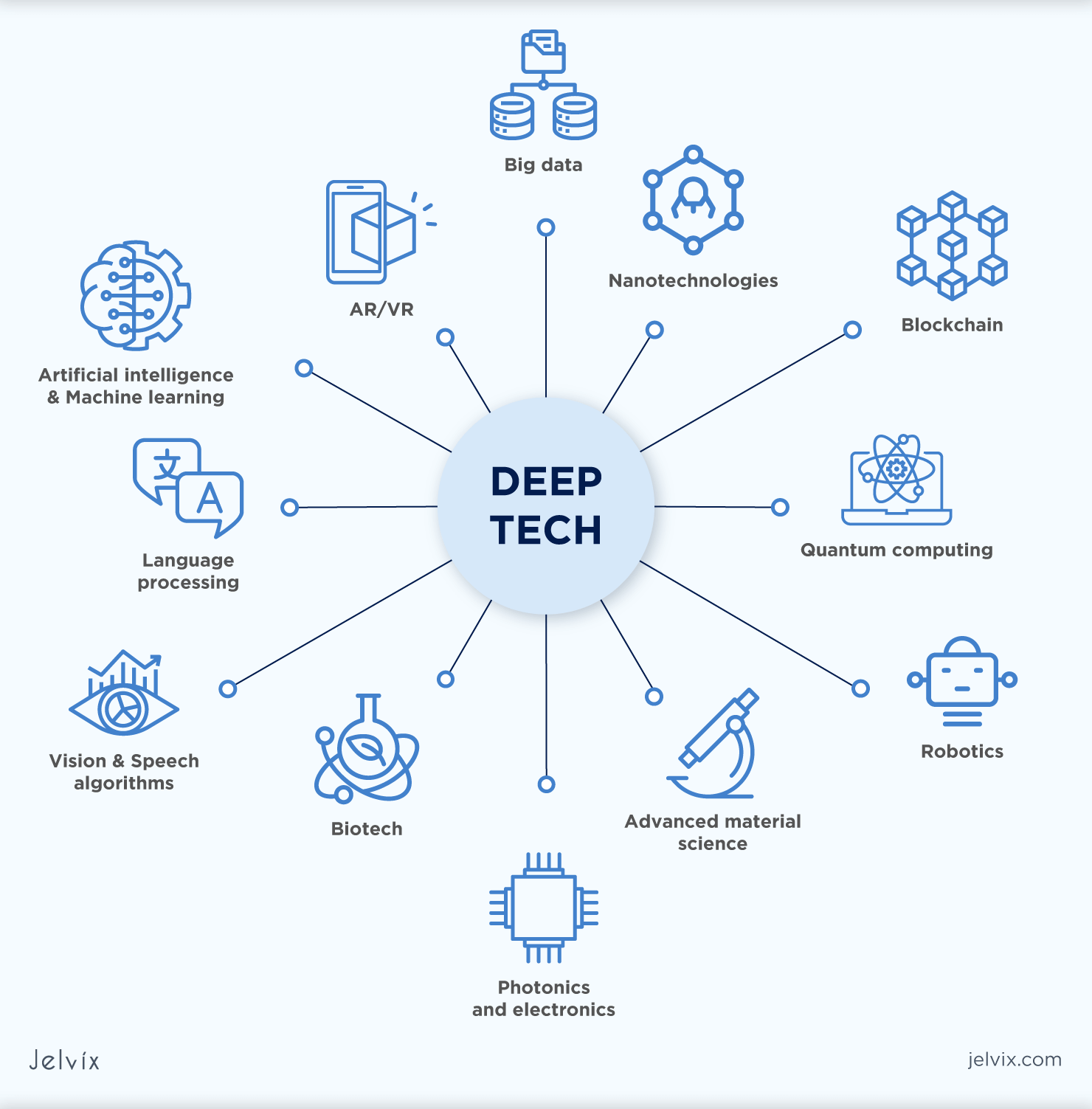
Deep Technology 

Deep Technology refers to innovations founded on advanced scientific and technological breakthroughs. It is a classification of organization, or more typically startup company, with the expressed objective of providing technology solutions based on substantial scientific or engineering challenges. 

Due to their disruptive nature, they have the potential to solve India’s most pressing societal issues.  

According to the BCG research, the overall investment in deep tech starting from 2015 increased by 300% to more than $60 million in 2020.  

Components of Deep Tech

Characteristics

  • Deep tech typically needs large investments over a longer term and profound research of a certain problem.
  • The commercial success of this type of project will also take more time to achieve due to the disruptive technologies it creates, unlike in general-tech and high-tech scopes.  

Some Examples Of Deep Tech  

BorderPass (Malaysia)An intelligent management project that leverages biometric data to enable automated and secure solutions for airports (check-in, boarding, etc.). 
ViSenze (Singapore)Smart product discovery platform that empowers visual search and image processing tools for online retailers across diverse fields.   
Beit (EU)  It is developing and implementing novel quantum algorithms to create versatile and powerful software solutions for quantum computers.  
Helix (US)It enables healthcare organizations to accelerate the integration of genomic data into patient care and public health decision-making.  
Fundbox (US)An AI-powered financial platform for small and mid-sized businesses that offer fast and intuitive access to business credit up to $150,000.  

Prime Minister's Science, Technology and Innovation Advisory Council (PM-STIAC)

The PM-STIAC is an overarching Council that facilitates the Office of the Principal Scientific Adviser to the Government of India (O/o PSA) to assess the status in specific science and technology domains, comprehend challenges in hand, formulate specific interventions, develop a futuristic roadmap and advise the Prime Minister accordingly. 

O/o PSA also oversees the implementation of such interventions by concerned S&T Departments, agencies and other government Ministries.

Missions under PM-STIAC

  • Natural Language Translation Mission
  • Quantum Frontier Mission
  • Artificial Intelligence Mission 
  • National Biodiversity Mission
  • Electric Vehicles Mission 
  • Bioscience for Human Health Mission
  • Waste To Wealth Mission
  • Deep Ocean Exploration Mission 
  • AGNIi (Accelerating Growth of New India's Innovations) Mission

Jal Jeevan Mission

Context: As per a report only 75% of households are likely to have a water connection by March 2024. The delay is due to several factors, including the pandemic, which slowed operations, and the Russia-Ukraine war, which caused a shortage in raw materials for manufacturing metal pipes.

image 10

About Jal Jeevan Mission(JJM)

  • It is envisioned to provide safe and adequate drinking water through individual household functional tap connections by 2024 to all households in rural India. 
  • The programme will also implement source sustainability measures as mandatory elements, such as recharge and reuse through greywater management, water conservation, rainwater harvesting. 
  • It will be based on a community approach to water and will include extensive Information, Education, and communication as a key component of the mission.
  • It looks to create a Jan Andolan for water, thereby making it everyone’s priority.
  • Launched in 2019 and comes under the Department of Drinking Water & Sanitation, Ministry of Jalshakti.
  • It adopted the principle of 'equity and inclusion', i.e., ensuring ‘no one is le out’ from getting tap water connection and regular water supply in the village, especially weaker and marginalized sections.
  • The fund-sharing pattern between the Centre and states is 90:10 for Himalayan and North-Eastern States, 50:50 for other states, and 100% for Union Territories.

Reforms taken under JJM

  • Shift of focus for water supply from 'habitations to households': So far,drinking water supply was provided at a habitation level and Under JJM, provision of tap water is being made in every rural home.
  • Focus on 'service delivery' & 'functionality' – public utility: Under JJM, the focus has shifted to the assured supply of potable water to every home rather than the mere creation of water supply infrastructure.
  • Community ownership to ensure 'long-term sustainability of water supply schemes: To ensure transparency and give back power to people, water supply work is taken up as per the demand and need of the local community. A water supply scheme is planned and implemented by following a decentralised, demand-driven, community-managed approach.
  • Central role of women and weaker sections in managing water supply: Minimum 50% members of Village Water & Sanitation Committee (VWSC)/ Pani Samtis are to be women and proportionate representation of weaker sections of society.
  • Special focus on children – piped water supply in schools, Anganwadi centres and ashram shalas.
  • Potable drinking water in quality-affected habitations: Infants and children are more susceptible to water-borne diseases: Under JJM, the provision of piped water supply in schools, Anganwadi centers and ashram shalas (residential tribal schools) is to be made on priority.
  • Surveillance of water quality by the local community involving women: Enlightened citizenry is necessary for assured service delivery. Keeping this in view, at least five persons in every village, preferably women, are to be trained in using Field Test Kits (FTKs) for testing water quality at the village level.
  • Convergence for long-term drinking water security: Every village is to prepare a Village Action Plan (VAP) focusing on drinking water sources, water supply systems, grey water reuse, and operation & maintenance of these systems for long-term and regular tap water supply in every home
  • Making water everyone’s business: JJM is implemented in a participatory manner and Self-Help Groups (SHGs), NGOs, community-based organisations, voluntary organisations, etc. are to play a major role in raising awareness, community mobilisation and handholding.
  • Technological interventions for transparency and accountability: To ensure transparency, accountability, and proper utilisation of funds and service delivery, the following steps are undertaken:
  • A robust JJM–IMIS to capture physical and financial progress under JJM, in real-time and a dedicated 'Dashboard' in the public domain;
  • A dedicated 'Mobile App' developed for the use of all stakeholders,
  • Sensor-based IoT solution for measurement and monitoring of water supply for quantity, quality, and regularity in villages on a real-time basis;
  • Provision of geo-tagging every asset created under JJM;
  • Linkage of tap connection with Aadhar number of the 'head of household';
  • All transactions through Public Finance Management System (PFMS); 
  • A comprehensive JJM - Water Quality Management Information System (JJM - WQMIS) was developed.

Performance of JJM

  • Despite several disruptions in recent years due to the Pandemic and the Russia-Ukraine conflict etc., States/ UTs have made persistent efforts to implement the Jal Jeevan Mission. The country crossed with over 11.66 Crore (60%) rural households provided with tap water supply in their homes. 
  • 5 states of Gujarat, Telangana, Goa, Haryana, and Punjab and 3 Union Territories of Andaman & Nicobar Islands, Daman Diu & Dadra Nagar Haveli and Puducherry have reported 100% coverage. The country is steadily progressing towards covering all the rural households will have safe drinking water through taps.
  • More than 1.55 lakh villages, (25% of the total number of villages), in India have so far reported ‘Har Ghar Jal’, i.e., every household in these villages has access to clean drinking water through taps at their household premises
  • In just about 3 years, more than 8.42 crore rural households with more than 40 crore people (@4.95 persons per rural household, source IMIS) have benefitted under the programme. 

National Sickle Cell Anaemia Elimination Mission

Context: Prime Minister will attend a public programme in Shahdol on 5th July, where he will launch the National Sickle Cell Anaemia Elimination Mission. He will also distribute sickle cell genetic status cards to the beneficiaries.

National Sickle Cell Anaemia Elimination Mission

What is Sickle Cell Disease (SCD)?

Sickle cell disease is a group of inherited red blood cell disorders that affect hemoglobin, the protein that carries oxygen through the body

  • Normally, red blood cells are disc-shaped and flexible enough to move easily through the blood vessels.
  • If you have sickle cell disease, your red blood cells are crescent- or “sickle”-shaped. These cells do not bend or move easily and can block blood flow to the rest of your body.

The blocked blood flow through the body can lead to serious problems, including stroke, eye problems, infections, and episodes of pain called pain crises. which significantly impacts their quality of life.

What is Sickle Cell Anemia Disease

About SCDs:

  • Sickle cell disease is a lifelong illness.
  • There are several types of SCD. The specific type of SCD a person has depends on the genes they inherited from their parents. People with SCD inherit genes that contain instructions, or code, for abnormal hemoglobin.
  • If the sickle cell is inherited from one parent, it is called sickle cell trait or sickle cell carrier. If inherited from both the parents, it is called sickle cell disease or sickle cell anemia (homozygous sickle cell).
  • Sickle cell disease exists in two forms within the human body.
    • One is the Sickle Cell trait, in which the individual does not exhibit any disease or symptoms and lives a normal life. 
    • The second form is characterized by the presence of symptoms related to sickle cell disease.
  • If two individuals with Sickle Cell trait marry each other, there is a high probability that their child will have Sickle Cell disease.
    • By screening individuals for Sickle Cell trait before marriage, the spread of the disease can be prevented.

Do You Know 💡

The United Nations recognises June 19 as World Sickle Cell Day to promote awareness on sickle cell anemia and other sickle cell disorders, which are rare diseases affecting people across the world.

SCDs in Tribal: A serious health challenge for India

As per Census 2011, India has an 8.6% tribal population which is 67.8 million across the Indian states. The MoHFW tribal health expert committee report has listed sickle cell disease as one of the 10 special problems in tribal heath that affect the tribal people disproportionately.  

  • In 13 states of the country, namely Rajasthan, Gujarat, Madhya Pradesh, Chhattisgarh, Jharkhand, West Bengal, Odisha, Telangana, Andhra Pradesh, Tamil Nadu, Kerala, Karnataka, and Maharashtra, there is a high prevalence of this disease, and in four states of the country, namely Bihar, Assam, Uttarakhand, and Uttar Pradesh, there is a partial prevalence of sickle cell disease.
  • The prevalence of sickle cell carriers among different tribal groups varies from 1 to 40 per cent. Madhya Pradesh has the highest load.
  • In Maharashtra, the sickle gene is widespread in all the eastern districts, also known as the Vidarbha region, in the Satpura ranges in the north and in some parts of Marathawada. The prevalence of sickle cell carriers in different tribes varies from 0 to 35 per cent. The tribal groups with a high prevalence include the Bhils, Madias, Pawaras, Pardhans and Otkars.
  • In Gujarat, the Dhodia, Dubla, Gamit, and Naika tribes have a high prevalence of SCDs.
  • Tribal population in the Wayanad district of Kerala was screened, followed by genetic counselling where carriers were advised not to marry carriers.

Approaches to Tackle SCDs

Efforts are being made to eliminate Sickle Cell Anaemia through two approaches:  

  • The first approach focuses on prevention, ensuring that new cases are not born.
  • The second approach involves managing the treatment and providing adequate healthcare facilities for individuals already affected by the disease. 

Government efforts to tackle the problem of SCDs

  • Ministry of health under NHM initiated the work on hemoglobinopathies (Thalassemia & Sickle Cell Disease) in 2016 wherein comprehensive guidelines on prevention and management of heamoglobinopathies were released and provision of funds towards screening and management of Sickle cell disease were made.
  • The Ministry of Health, in collaboration with the Ministry of Tribal Affairs and the states, has formulated a plan to screen approximately 70 million individuals aged 0-40 years belonging to tribal and other groups residing in nearly 200 districts of 17 states within the next few years.

Sickle Cell Anaemia Elimination Mission 2047

  • Prime Minister, in the central Budget for the financial year 2023-24, announced the launch of the national campaign “Sickle Cell Anaemia Elimination Mission 2047” to eradicate the challenge of sickle cell.
  • The government has allocated a sufficient budget, utilised advanced technology, provided training to healthcare workers, ensured necessary infrastructure, and made efforts in social awareness and participation to combat this disease.
  • To implement this entire programme, monitoring mechanisms will be established at various levels to ensure participation and bring awareness on a large scale. Individuals identified with the disease through screening will undergo regular testing, receive treatment and medication, vaccinations for other diseases, get dietary support, and have access to timely counselling services.
  • A comprehensive ecosystem is being developed to ensure access to proper healthcare and management for Sickle Cell Anaemia patients.
  • A web portal has been created using digital technology to track and maintain a complete record of sickle cell patients.

Role of Ayushman Bharat in controlling SCDs

Through the Ayushman Bharat scheme, the country has established a network of 1.6 lakh Health and Wellness Centres since 2018, which has played a crucial role in combating epidemics like Covid19.

These centres will also play a significant role in eradicating sickle cell disease along with other diseases. Trained healthcare workers in these centers will provide better treatment for sickle cell patients.

The challenge of SCDs can also be addressed by:

  • Increasing awareness about the disease in the community.
  • Implementation of mass screening activities for early identification.
  • Building a strong network of diagnosis and linkages.
  • Implementing robust monitoring system.
  • Strengthening the existing primary health care mechanism to incorporate SCD related strategies.
  • Capacity building of primary, secondary and tertiary health care teams.
  • Building cost-effective intensive interventions at higher care facilities.

Conclusion 

SCDs are commonly found among tribal communities in India. Indigenous Peoples help protect our environment, fight climate change, and build resilience to natural disasters, yet their rights aren’t always protected. SCDs pose a significant threat to the future and existence of our indigenous populations, and it is imperative to prevent the spread of this disease in a timely manner.

PM-PRANAM

About PM-PRANAM Scheme

image 145

PM Programme for Restoration, Awareness, Generation, Nourishment and Amelioration of Mother Earth

  • It would promote use of nutrient-based, biofertilizers for sustainable agriculture.
  • It would have a total outlay of ₹3,70,128.7 crore.
  • Under this Centre would incentivise  States which would adopt alternative fertilizers with the subsidy that was saved by reducing the use of chemical fertilizers.

How it works:  

  • If a State was using 10 lakh tonnes of conventional fertilizers and reduced its consumption by three lakh tonnes, then the subsidy saving would be ‚Çπ3,000 crore.
  • Out of that subsidy savings, the Centre will give 50% of it - ‚Çπ1,500 crore to the State for promoting the use of alternative fertilizer and other development works. 
  • It will incentivize states to promote alternative fertilizers and reduce the use of chemical fertilizers.

Other Important Decisions taken by Cabinet:

Urea subsidy scheme

  • It approved continuation of the urea subsidy scheme for three years to ensure constant availability of urea to the farmers.
  • This is apart from recently approved nutrient-based subsidy of ₹38,000 crore for the Kharif season for 2023-24.
  • By 2025-26, eight nano urea plants with production capacity of 44 crore bottles, equalling to 195 lakh tonnes of conventional urea, will be commissioned.

Promoting organic fertiliser

  • It approved  ₹1,451.84 crore has been approved for Market Development Assistance (MDA) for promoting organic fertilizers from Gobardhan plants. 
  • Fermented Organic Manures (FOM)/Liquid FOM/Phosphate Rich Organic Manures (PROM) produced as by-product from bio-gas plants/Compressed Biogas (CBG) plants set up under umbrella Gobardhan initiative will be promoted. 
  • Such organic fertilizers would be branded in the names of Bharat Brand FOM, LFOM and PROM. 
  • This on one hand will facilitate in addressing the challenge of management of crop residue and problems of stubble burning, and will also help in keeping the environment clean and safe and at the same time provide an additional source of income for farmers. 

Increased the Fair and Remunerative Price (FRP)

  • It  hiked the Fair and Remunerative Price (FRP) of sugarcane by ₹10 per quintal. The FRP for the sugar season 2023-24 (October-September) will be ₹315 per quintal for a basic recovery rate of 10.25%. Last year, the amount was ₹305.
  • Fair and Remunerative Price (FRP): the minimum price that mills have to pay to sugarcane growers. It is determined by the Government based on the recommendations of the Commission for Agricultural Costs and Prices (CACP).

Registration of birth, death by Aadhaar authentication allowed

Context: According to the notification of the Ministry of Home Affairs’, the Ministry of Electronics and Information Technology (MeitY) has allowed the office of Registrar General and Census Commissioner established under the Registration of Births and Deaths Act, 1969 to perform Aadhaar authentication for such registration. Authentication process however is not mandatory.

image 137

About Birth and Death Registration in India

  • History of Civil Registration System (CRS) in India dates to the middle of 19th century. 
  • In 1886, a Central Births, Deaths and Marriages Registration Act was promulgated to provide for voluntary registration throughout British India
  • Post-independence, Registration of Births and Death Act was enacted in 1969 to promote uniformity and comparability in registration of Births & Deaths across India and compilation of vital statistics.    
  • Registration of birth, death & still birth is mandatory.
  • Registrar General, India at Union Government coordinates and unifies activities of registrations.    
  • Implementation of RBD Act is vested with State Governments. 
  • Registration of births and deaths is done by functionaries appointed by State Governments. 
  • Directorate of Census Operations are sub-ordinate offices of Office of Registrar General, India and these offices are responsible of monitoring of the Act in their concerned State/UT.         
  • Under Section 3(3) of the Registration of Births and Deaths Act, 1969, the Registrar-General may issue general directions regarding registration of births and deaths in the territories to which this Act extends, and shall take steps to co-ordinate and unify the activities of Chief Registrars in the matter of registration of births and deaths and submit to the Central Government an annual report on the working of this Act in the said territories.
  • Under Section 7(1) of the Registration of Births and Deaths Act, 1969, State Government may appoint a Registrar for each local area comprising the area within the jurisdiction of a municipality, panchayat or other local authority or any other area or a combination of any two or more of them. The State Government may also appoint in the case of a municipality, panchayat, or other local authority, any officer or other employee thereof as a Registrar.  

 What changes has been allowed to facilitate Aadhaar Authentication?

  • According to the gazette notification, the Registrar appointed under Section 7(1) of the Registration of Births and Deaths Act, 1969 shall be allowed to perform Yes or No Aadhaar authentication, on voluntary basis, for verification of Aadhaar number being collected along with other details as sought in the reporting forms of births or deaths. 
  • The purpose of the authentication is to establish the identity of child, parent and the informant in case of births, and of the parent, spouse and the informant in case of deaths during registration of births or deaths.      
  • The State government and Union territory administration shall adhere to the guidelines with respect to the use of Aadhaar authentication as laid down by MeitY.
  • Authentication process though not mandatory, aims to promote ease of living and better access to services based as per the Aadhaar Authentication for Good Governance (Social Welfare, Innovation, Knowledge) Rules 2020.             

The Aadhaar Authentication for Good Governance (Social Welfare, Innovation, Knowledge) Rules 2020

  • The Rules has been made by the Central Government, in consultation with Unique Identification Authority of India under the Aadhaar (Targeted Delivery of Financial and Other Subsidies, Benefits and Services) Act, 2016.   
  • As per the Rules, Central Government may allow Aadhaar authentication by requesting entities in the interest of good governance, preventing leakage of public funds, promoting ease of living of residents and enabling better access to services for them, for the following purposes, namely:– 
  1. usage of digital platforms to ensure good governance; 
  2. prevention of dissipation of social welfare benefits; and 
  3. enablement of innovation and the spread of knowledge. 
  • The rules however provided that Aadhaar authentication shall be on a voluntary basis. 
  • The Ministry or States desirous of utilising Aadhaar authentication shall prepare a proposal to justify such authentication and submit it to the Centre for making a reference to the Unique Identification Authority of India (UIDAI).   

Changes Proposed in Aadhaar Authentication for Good Governance Rules in April 2023

Based on the amendment, any entity other than a Government Ministry or Department that desires to use Aadhaar authentication for the purpose of 

  • promoting ease of living and enabling better access to services, or 
  • usage of digital platforms to ensure good governance, or 
  • preventing dissipation of social welfare benefits, or 
  • enabling innovation and spread of knowledge, 
  • it shall prepare a proposal giving justification as to how the authentication sought is for one of the said purposes and in the interest of State and submit the same to the concerned Ministry or Department of the Central Government in respect of Central subjects and of the State Government in respect of State subjects. 
  • If the Ministry/Department is of the opinion that the proposal submitted fulfils such a purpose and is in the interest of the State, it will forward the proposal along with its recommendation to MeitY.   

Read also: The Registration of Births and Deaths (Amendment) Act, 2023

Rozgar Melas

Context: Around one in every six candidates hired so far under Mission Recruitment or Rozgar Melas, the Government’s bulk recruitment drive to fill 10 lakh posts by 2023 end, were women. Of these, 3,61,763 (84%) recruits were male and 68,783 (16%) women, shows data available from the Ministry of Personnel, Public Grievances, and Pensions.

image 117

About Rozgar Melas

  • It is a drive to recruit 10 lakh people, this will be a significant step forward towards fulfilling the continuous commitment of the prime minister to providing job opportunities for the youth and ensuring the welfare of citizens.
  • The recruitments are being conducted in collaboration with Central Government Departments as well as State Governments and Union Territories.
  • The new recruits, hailing from various parts of the country, will be joining the Government in departments such as Financial Services, Posts, School Education, Higher Education, Defence, Revenue, Health and Family Welfare, Atomic Energy, Railways, Audit and Accounts, and Home Affairs, among others.
  • The recruitments are largely in posts of Group B and Group C level, which directly helps these departments to provide a higher quality of service at the cutting-edge level to the citizens. 
  • All the recruitments taking place through the recruitment agencies like Staff Selection Commission (SSC), Union Public Service Commission (UPSC), and Railway Recruitment Board(RRBs) in a time-bound and transparent manner
  • The newly inducted appointees are also getting an opportunity to train themselves through Karmayogi Prarambh, an online module on the Integrated Government Online Training (iGOT) Karmayogi portal, where more than 400 e-learning courses have been made available for ‘anywhere any device’ learning format.