Current Affairs

Ethics committee of Lok Sabha and Rajya Sabha

Context: Recently, Mahua Moitra’s (MP, Lok Sabha) matter has been referred to Lok Sabha Ethics committee. She has been accused of accepting money to ask questions in the house.

Background: 

  • Rajya Sabha: Origin of ethics committee in Rajya Sabha can be traced to NN Vohra Committee in 1996, based on suggestions of Vohra Committee, the General-Purpose Committee in 1997 proposed for a Committee regarding the conduct of members of Rajya Sabha. Accordingly, a 9 member Ethics committee of Rajya Sabha was constituted by Chairman in 1997.
  • Lok Sabha: Origin of ethics committee in Lok Sabha can be traced to a resolution adopted at Presiding Officers conference in 1996. However, the first Ethics committee in Lok Sabha was constituted by the then Speaker Shri G.M.C. Balayogi in 2000.

Purpose behind setting up of Ethics committees

  • To oversee the moral and ethical conduct of the Members; and
  • To examine the cases referred to it with reference to ethical and other misconduct of the Members.

Comparison between Ethics committee of Rajya Sabha and Lok Sabha

CriteriaEthics committee of Rajya SabhaEthics committee of Lok Sabha
Composition and tenureCommittee consists of ten members.Committee holds office until a new committee is appointed, the casual vacancies arising are filled by Chairman from time to time.Committee consists of not more than 15 members which are nominated by speaker.Committee holds office for a term not exceeding one year.
Functions(a) To oversee the moral and ethical conduct of members.
(b) To prepare a Code of Conduct for members and to suggest amendments or additions to the Code from time to time in the form of reports to the Council.
(c) To examine cases concerning the alleged breach of the Code of Conduct by members as also cases concerning allegations of any other ethical misconduct of members.
(d) To tender advice to members from time to time on questions involving ethical standards either Suo Moto or on receiving specific requests.
(a) To examine every complaint relating to unethical conduct of a member of Lok Sabha referred to it by the Speaker and make such recommendations as it may deem fit.
(b) To formulate a Code of Conduct for members and suggest amendments or additions to the Code of Conduct from time to time.
PowersCode of conduct to regulate the conduct of members has been brought out for members of Rajya Sabha. Ethics Committee examines the moral and ethical conduct of members of Rajya Sabha based on this code.Rajya Sabha maintains a register of interests of its members which allows the Ethics Committee of Rajya Sabha to check for possible conflict of interest of members of Rajya Sabha.Code of conduct for members of Lok Sabha is not present.
No such record is maintained by Lok Sabha, member has to state their own interests to Chairman.
Since, the Code of Conduct and Register of interests is not present. The Ethics Committee of Lok Sabha is relatively less effective in maintaining the moral and ethical conduct of the members of Lok Sabha.

Factory fishing in Antarctica for krill targets the cornerstone of a fragile ecosystem

Context: Antarctic krill (Euphausia suberba) fishing is banned in U.S. waters due to concerns that exploitation of Antarctic Krill could impact whales, seals and other animals that feed on the shrimp-like creatures. Krill fishing has been taking place for decades in Antarctica, where krill are most abundant. 

About Antarctic Krill

image 15
  • Antarctic Krill are shrimp like crustaceans living the Southern Ocean.
  • It’s estimated that there are over 700 trillion adult individuals of Antarctic Krill.
  • Adult krill can live anywhere in the Southern Ocean – from the very surface layer to the seafloor, and from inshore areas to the deep open ocean.
  • Antarctic krill grow up to 6cm in length and can weigh 1 gram.
  • Antarctic krill (and other krill species) are bioluminescent, meaning they produce light. They are frequently found in such abundance that they colour the sea a reddish-brown. They may be small individually, but there is an estimated 400 million tonnes of Antarctic krill in the Southern Ocean.
  • Antarctic krill aggregate in schools or swarms, where the density of the animal can be as high as 30,000 individuals per cubic metre.
  • Antarctic krill are a key species, supporting populations of penguins, seals, whales and other marine life.
  • Antarctic krill feed on phytoplankton (single celled marine plants), which absorb carbon dioxide. Krill then egests this carbon through their faecal pellets and by shedding their exoskeletons, which then both sink to the sea floor where some of the carbon gets stored away.
  • It is one of the most common species in its range and it is not at risk of endangerment or extinction.
  • IUCN Status: Least Concern

Central Pollution Control Board (CPCB) and Vapour Recovery system

Context: As much as 80% of the environment protection charge and environmental compensation collected by the Central Pollution Control board remains unspent, a report the board submitted before the National Green Tribunal.

Central Pollution Control Board

  • The Central Pollution Control Board (CPCB) is a statutory organization which was constituted in 1974 under the Water (Prevention and Control of Pollution) Act, 1974.
  • Further, CPCB was entrusted with the powers and functions under the Air (Prevention and Control of Pollution) Act, 1981.

Functions

  • Advise the Central Government on any matter concerning prevention and control of water and air pollution and improvement of the quality of air.
  • Plan and cause to be executed a nation-wide programme for the prevention, control or abatement of water and air pollution.
  • Co-ordinate the activities of the State Board and resolve disputes among them.
  • Provide technical assistance and guidance to the State Boards, carry out and sponsor investigation and research relating to problems of water and air pollution, and for their prevention, control, or abatement.
  • Plan and organise training of persons engaged in programme on the prevention, control or abatement of water and air pollution.
  • Organise through mass media, a comprehensive mass awareness programme on the prevention, control or abatement of water and air pollution.
  • Collect, compile, and publish technical and statistical data relating to water and air pollution and the measures devised for their effective prevention, control or abatement.
  • Prepare manuals, codes and guidelines relating to treatment and disposal of sewage and trade effluents as well as for stack gas cleaning devices, stacks and ducts.
  • Disseminate information in respect of matters relating to water and air pollution and their prevention and control.
  • Lay down, modify, or annul, in consultation with the State Governments concerned, the standards for stream or well, and lay down standards for the quality of air; and Perform such other function as may be prescribed by the Government of India.

Powers of Central Pollution Control Board

The following are the powers of the Central Pollution Control Board:

  • Section 18 of the Water (Prevention & Control of Pollution) Act gives the CPCB the authority to order the SPCB.
  • If one of its directives is not followed, the Central Pollution Control Board does have the authority to carry out all the duties of a State Pollution Control Board.
  • According to section 33A of the Water (Prevention & Control of Pollution) Act, the CPCB has the authority to issue directives that may restrict, close, or regulate any activity, business, or procedure or that may regulate the provision of power, fresh water, or other services.

Environmental Compensation

  • Environmental compensation is a policy instrument for the protection of the environment which works on the Polluter Pay Principal. 
  • The Hon’ble National Green Tribunal through its various judgments has empowered the Central Pollution Control Board to lay down the methodology to assess and recover compensation for damage to the environment and utilize such amount in terms of an action plan for protection of the environment.

Vapor recovery system

  • Vapor recovery is the process of removing harmful vapor and fluid contaminants from crude products to improve the purity and prevent the release of toxic pollutants into the environment. 
  • Vapor removal is also done in chemical processing industries to recover unwanted vapors from storage units to keep the chemicals pure and safe for use and transport.

The typical VRU (Vapor recovery unit) consists of four principal components:

  • Gas Compressor
  • Scrubber
  • Variable Frequency Drives (VFDs)
  • Switching device

Working of VRU

The primary function of a VRU system is to remove the vapors that collect inside sealed hydrocarbon tanks. The machine does this by gas compression and suction.

  • The vapor recovery procedure involves the following steps:
    • The rotary screw gas compressor sucks liquid molecules into the scrubber.
    • The scrubber removes the water vapor, debris, and unwanted fluids from the tank.
    • The recovered vapor is pumped into gas lines while the trapped liquids are channelled to the pipelines.
image 16

Bat genomes can provide insights into immunity and cancer

Context: Bats can host a wide variety of pathogens, including ones deadly to other mammals, but they themselves do not get infected. Scientists have been curious about the source of this protection.

Facts about Bats

image 65
  • Bats are the only mammals on the earth that can maintain sustained flight. 
  • They have relatively long life spans and are relatively more protected from a variety of diseases, including cancer. 
  • They have a unique ability in echolocation, whereby they use sound to navigate and locate objects. This frees them from being constrained by the availability of light, unlike humans.
  • By population, bats make up 20% of all mammals. There are more than 1400 species of bats around the world.
    • The bumblebee bat weighs only 2 grams.
    • Flying foxes (bats) have a wingspan of 1.5 metres and weigh up to 1.6 kg.
  • Bats play crucial roles in maintaining the ecological balance and are essential for pollination, insect control, etc.

Bats as reservoirs of pathogens

  • Bats can act as a reservoir/host for many viruses including coronaviruses, Nipah, Ebola, Marburg virus, and Hendra virus etc.
  • Despite hosting a wide variety of pathogens, even multiple viruses at the same time, which are deadly to other mammals, bats do not get infected. 

Bat genomes

  • Genome sequencing has become the mainstay of investigations of the viruses that bats carry, also known as the bat virome.
    • Bat1K global genome consortium which aims to sequence all the 1400 or so bat species’ genomes is currently underway.
  • Over the years, researchers have unearthed significant insights by sequencing the genomes of many bat species. (Bats have a relatively small genome with around 2 billion bases).
    • On comparing the genomes of a fruit-eating and an insect-eating species, scientists found that genes involved in metabolism and immune response have been positively selected. This means that these bats have evolved by improving these two biological domains.
    • Natural selection of a protein called prestin is involved in echolocation (dolphins have the same protein).
    • The subsets of genes involved in mounting an immune response – which encode proteins called interferons (IFN) – had contracted significantly in bats. This allowed bats to diminish the pro-inflammatory response against a number of viruses, thus protecting themselves from clinical disease.
    • A number of genes involved in suppressing tumours and in repairing DNA contained signs of positive selection. This could contribute to the bats’ longer life span and a significantly lower risk of developing cancer.

Natural Selection

  • Natural selection is defined as a process in nature through which living organisms adapt and change in response to an environmental condition (climate, temperature, availability of resources, etc.)
  • There are two types of natural selection in biological evolution: Positive (Darwinian) selection promotes the spread of beneficial alleles, and negative (or purifying) selection hinders the spread of harmful alleles. 
image 66

Significance

With rapid deforestation, ecological degradation, and increased human-animal interactions, the risk of outbreaks of zoonotic diseases has heightened. (E.g., Nipah outbreaks in Kerala, Marburg disease and Ebola virus in some African countries). Hence, genome sequencing can help humans in understanding the nature of the outbreaks, and deal with them effectively. 

Tej now extremely severe cyclone over the Arabian Sea; yellow alert issued for eight districts in Kerala

Context: Cyclone 'Tej', brewing over the Arabian Sea, is expected to transform into a Very Severe Cyclonic Storm reported by India Meteorological Department (IMD).

Cyclone Tez

  • The very severe cyclone, Tej, formed over the Arabian sea intensified into extremely severe cyclone.
  • It is moving north-westwards, is likely to cross the Yemen coast close to Al Ghaidah as severe cyclonic storm with wind speed of 125-135 kmph gusting to 150 kmph.  

Impact on India and development of Depression in Bay of Bengal

  • Kerala is likely to receive isolated heavy rainfall triggered by the weather system over the Arabian Sea and the Bay of Bengal.
  • A yellow alert has been issued for eight districts from Kollam to Palakkad, warning of isolated heavy rains.
  • The typical northeast monsoon rain will be absent at least for the next few days as the present weather system over the Bay of Bengal is likely to upset the flow of north-easterlies.
  • The depression formed over the Bay of Bengal is likely to intensify into deep depression and subsequently into cyclonic storms.
  • IMD predicted that the cyclonic storm likely to move towards the Andhra Coast and then recurve and move north-eastwards towards Bangladesh and adjoining the West Bengal coast. 

Color Coding of Cyclone

  • To strengthen the early warning system and reduce potential damage due to cyclonic winds, IMD follows a special matrix to decide the color of weather situations.
  • It is based on the probability of occurrence of the event as well as its impact assessment. The decision of the color also depends on the meteorological factors, hydrological factors, geophysical factors that indicate the risk.
image 13
Colour codeMeaning
Green• All is well.
• No adverse weather conditions.
• No advisory issued.
Yellow• Be aware.
• Severely bad weather may span across several days
• Warning of affecting daily activities.
Orange• Be prepared.
• Warning of extreme damage to communication disruptions.
• Sign for evacuation and keeping the basic necessities ready for families.
Red• Take action.
• Threat to life with the worst weather conditions.
• Measures are taken to handle the situation along with the help of disaster management response teams

Classification of Tropical cyclone based on Speed

The classification of tropical cyclones based on their speed can vary slightly depending on the region, but they generally follow a pattern related to the sustained wind speeds.

image 14

Firecracker industry in Sivakasi, Tamil Nadu

Context: The firecracker industry, which was concentrated in Sivakasi, is much more dispersed in Tamil Nadu now with small units, both legal and illegal, coming up across districts. Many of these units’ function with little supervision, monitoring, or official inspections, which has led to a spate of tragedies in recent months.

Fireworks industry in Sivakasi

  • Sivakasi located in the Virudhnagar district of Tamil Nadu is known as the fireworks capital of India.
  • The foundation of the fireworks industry in Tamil Nadu was laid down by two Nadar brothers, who were trained in match stick making. Over time, the fireworks industry grew and came to account for 90% of fireworks production in India.
  • According to the industry association, there are around over one thousand units engaged in firework production in and around Sivakasi providing employment to 8 lakh people. 
  • However, in recent years the fireworks industry in Sivakasi has become dispersed with smaller units (both legal and illegal) coming up all over Tamil Nadu. 
  • Reasons for this trend: High profit margins in the fireworks industry is inducing smaller players and workers engaged in Sivakasi firework plants starting their own plants across Tamil Nadu. 
  • The trend towards smaller firms has resulted in lots of accidents in fireworks industry because of:
    • These smaller units operate under the radar with little supervision, monitoring, or official inspections.
    • Smaller units have less focus on safety resulting in many accidents due to overstocking of explosive chemicals above the permissible limits, employment of workers without training and sub-leasing of larger firework firms to smaller firework firms which have little or no focus on safety.
    • Safety processes such as automation of the dangerous mixing process of chemicals costs about Rs 20-25 lakhs which smaller factories find difficult to invest.
    • Petroleum & Explosive Safety Organisation (PESO) which is the licensing and regulating authority for large firework units is short-staffed. 
    • PESO licenses are only issued to firms which handle between 15 to 2000 kg of fireworks. 

About Petroleum and Explosive Safety Organization (PESO)

  • The Petroleum and Explosives Safety Organization (PESO), formerly known as Department of Explosives, since its inception on 05/09/1898, has been serving the nation as a nodal agency for regulating safety of hazardous substances such as explosives, compressed gases, and petroleum. 
  • PESO has its Headquarters at Nagpur in Maharashtra and serves through nine Circle Offices viz Agra, Bhopal, Chennai, Faridabad, Guwahati, Hyderabad, Kolkata, Mumbai, Vadodara, and their subordinate Sub-Circle offices across the country.
  • It works under the Department for Promotion of Industry and Internal Trade under the Ministry of Commerce and Industry.
  • Functions of PESO
  • PESO’s major work is to administer the responsibilities delegated under the Explosives Act 1884 and Petroleum Act 1934 and the Rules made there under the motto "Safety First."
  • Administration of following rules under Explosives Act, 1884: Explosives Rules, 2008; Gas Cylinders Rules, 2004; Static & Mobile Pressure Vessels (unfired) rules, 1981; Ammonium nitrate rules, 2012; Acetylene notification of 1983.
  • Administration of following rules under Petroleum Act, 1934: Petroleum Rules, 2002; Calcium carbide rules, 1987; Cinematographic Film rules, 1948; Inflammable Substance Act, 1952.
  • Ensure public safety in areas of manufacture, transport, storage, handling etc. of Explosives, Petroleum, Carbide of Calcium, Inflammable substances and Compressed Gases.
  • Framing National Standards concerning public safety and harmonizing Indian standards with international standards.
  • Evaluation of new technologies finding applications in hazardous areas for adoption in indigenous conditions within the purview of Explosives Act 1884 and Petroleum Act 1934.
  • It is licensing and regulating authority for large fireworks units.
  • Providing operational and technical advice and assistance to Central and State governments, Local bodies, Law Enforcement Agencies, Industry, Trade and end users of these products.
  • Develop alert, innovative and well-trained workforce.
  • Scrutiny and approval of site, layout and construction plans for explosive manufacturing & storage, fireworks manufacturing & storage, manufacture of explosives in Bulk mixing and delivery vehicles; Petroleum, Gas cylinder, LPG and CNG storage & filling stations; Petroleum refineries; Petroleum tank lorries; Petroleum & Gas pipelines; Flame proof equipment and calcium carbide storage premises.

Increased Frequency of Earthquakes in Afghanistan

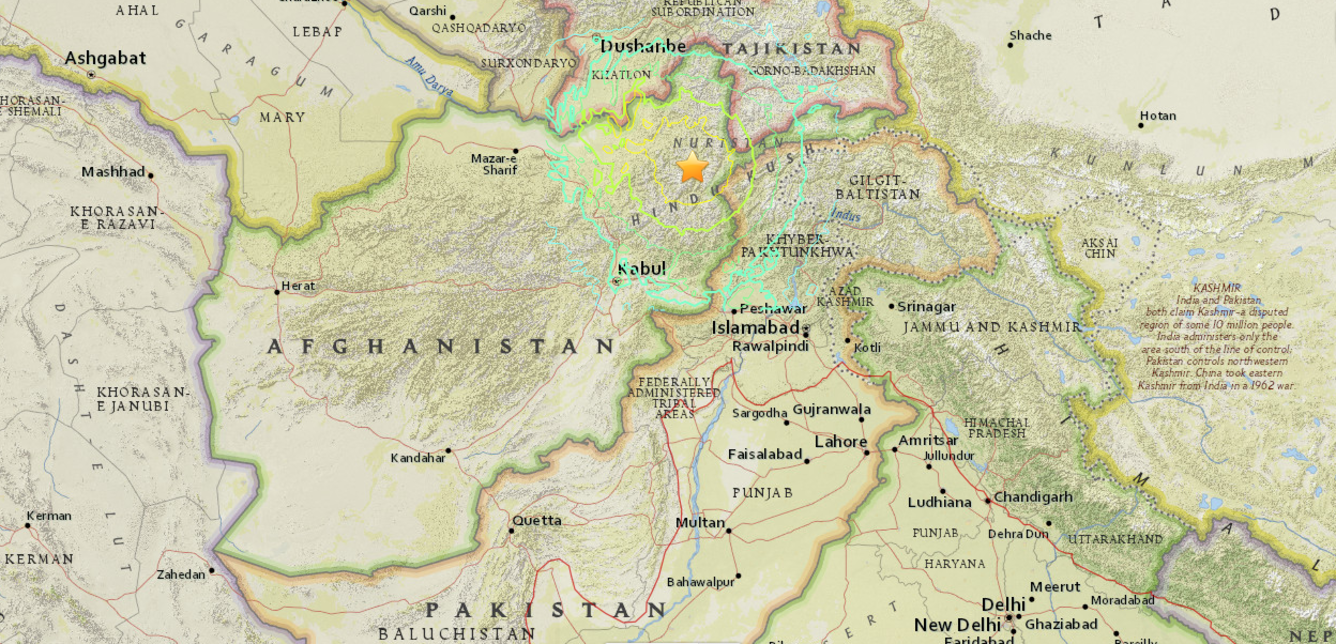
Context: Recent years have seen a series of minor and major earthquake in Afghanistan and adjoining areas. This tries to explain the reasons for the increased seismicity in Afghanistan region.

A map of asia with a location pin

What is Earthquake?

Earthquake, any sudden shaking of the ground caused by the passage of seismic waves through Earth’s rocks.

Earthquake waves or seismic waves are vibrations generated by an earthquake, explosion, or similar energetic source and propagated within Earth or along its surface. Earthquakes generate four principal types of elastic waves; two, known as body waves (P and S), travel within Earth, whereas the other two, called surface waves (Love and Rayleigh), travel along its surface.

P Waves: It causes the ground to compress and expand, that is, to move back and forth, in the direction of travel. 

  • They are called primary waves because they are the first type of wave to arrive at seismic recording stations. 
  • P waves can travel through solids, liquids, and even gases.

S Waves: It shakes the ground in a shearing, or crosswise, motion that is perpendicular to the direction of travel. 

  • These are the shake waves that move the ground up and down or from side to side. 
  • S waves are called secondary waves because they always arrive after P waves at seismic recording stations.
  •  Unlike P waves, S waves can travel only through solid materials.

L Waves: Love waves have a horizontal motion that moves the surface from side to side perpendicular to the direction the wave is traveling.

Rayleigh Waves: It travels along the free surface of an elastic solid such as the Earth. Their motion is a combination of longitudinal compression and dilation that results in an elliptical motion of points on the surface.

image 64

Causes of earthquake

Major causes of earthquake are natural and occur mostly around the plate boundaries due to continuous interaction of plates.

Natural causes

1.Tectonics: tectonic movements associated with plate boundaries are ruptures and faults along the constructive plate boundaries, folding and faulting along the destructive plate boundaries ,this sort of disequilibrium caused due to different types of plate movement and consequently earthquakes of varying degree are caused.

2.Volcanic: Explosive violent gases during process of vulcanicity try to escape upwards and hence they push the crustal surface from below with great force and thus is caused severe earth tremor of high magnitude. Example-Krakatoa volcano of Indonesia caused intense earthquakes.

Anthropogenic causes

Earthquakes are induced by human activities causes earth tremors of serious consequences.

  • Fracking: Injection of fluids into deep wells (Fracking)- can lubricate existing faults and crack rocks, triggering earthquakes.
  • Underground nuclear explosions: Detonation of large underground nuclear explosions-will accentuate the fault lines leads to earthquakes. Case study- North Korea’s 2017 nuclear bomb test set off aftershocks that lasted for about eight months after the explosion. The bomb was set off near a previously unmapped fault line, and a first produced a 6.3 earthquake, followed by a magnitude 4 quake just minutes later.
  • Mining: rocks and other materials are being removed from the Earth that instability in the ground is occurring, which is triggering earthquakes.
  • Reservoir induced earthquake: Earthquake triggered by the impoundment of water behind the dam of enormous  quantity causes isostatic disequilibrium of already adjusted rocks or further augment the already isostatically adjusted rocks below the reservoir or further augment the already fragile structures due to faults and fractures underneath. Examples Koyna dam in India, Hoover dam in USA.
image 63
DISTRIBUTION OF MAJOR EARTHQUAKE REGIONS ALONG THE PLATE BOUNDARIES

Impact of Earthquake

Geomorphological impact-slope instability and failures leading to landslides, mudflows, and changes river courses.

Structural impact-Failure of roads, bridges, dams, pipelines, railways and embankment, subsidence of lands.

Economic impact-Loss of life and property, cost in rehabilitation and disaster risk reduction.

Tsunami- earthquake on ocean floor leads to Tsunami.

Why Afghanistan and adjoining Himalayan regions witnessing frequent earthquakes.

image 12
  • Afghanistan is located over multiple fault lines in the region where the Indian and Eurasian tectonic plates meet and collides often causing tectonic activity like earthquakes, folding and faulting.
  • Afghanistan is located on Eurasian plate, towards its west, Arabian plate move northwards and subducts under Eurasian plate whereas towards its east, Indian plates move northward to subduct under Eurasian plate. In southern Afghanistan, Indian and Arabian plate adjoins and both subducts northward under Eurasian Plate. 
  • The collision and convergence of the Indian plate and the Eurasian plate result in the folding and faulting of the Earth’s crust.
  • The ongoing northward movement of the Indian plate towards the Eurasian plate results in compression, leading to uplift of Himalayas and the transmission of tectonic stress across the entire region, including Afghanistan.
  • These compression causes the crust to deform and creates faults and fractures that can slip and generate earthquakes.
  • Afghanistan is also crisscrossed by various active fault systems like the Chaman fault, and the main Pamir thrust. These faults are the source of many earthquakes in the region.

Dhordo is recognised as a Best Tourism Village

Context: Recently, United Nations World Tourism Organisation has included Dhordo village in the list of ‘Best Tourism Village’. 

image 62

About Dhordo

  • Dhordo, located in the Banni region within the Rann of Kutch, stands as a symbol of Gujarat's progress and increasing pride. 
  • The village's distinctive round houses, known as bhungas, have gained immense popularity among tourists. 
  • Dhordo is renowned for hosting the three-month-long Rann Utsav, a cultural celebration that highlights the traditional art, music, and crafts of the region.
  • The Best Tourism Village is awarded to villages that are at the forefront of both nurturing rural areas and preserving the region's landscapes, cultural diversity, and culinary traditions.
image 61

About Best Tourism Villages initiative

  • Introduced in 2021, the UNWTO's Best Tourism Villages initiative is an integral component of the UNWTO Tourism for Rural Development Programme.
  • This program is dedicated to fostering development and inclusivity in rural regions, countering depopulation, promoting innovation, enhancing value chain integration through tourism, and advocating sustainable practices.

Villages are assessed across nine essential areas

  • Cultural and Natural Resources
  • Promotion and Preservation of Cultural Resources
  • Economic Viability
  • Social Viability
  • Environmental Sustainability
  • Tourism Advancement and Integration of Value Chains
  • Governance and Prioritization of Tourism
  • Infrastructure and Connectivity
  • Health, Safety, and Security

Initiative encompasses three key pillars

  • Best Tourism Villages by UNWTO: Acknowledges exceptional rural tourism destinations featuring accredited cultural and natural assets, a dedication to preserving community-based values, and a clear commitment to innovation and sustainability across economic, social, and environmental aspects.
  • Best Tourism Villages by UNWTO Upgrade Programme: Provides support to villages in their journey towards meeting recognition criteria, offering assistance in areas identified as gaps during evaluation.
  • Best Tourism Villages Network: Serves as a platform for sharing experiences and best practices, learning opportunities, and engagement with members, welcoming contributions from experts and public and private sector partners involved in the promotion of tourism as a catalyst for rural development.

About UNWTO

  • The United Nations World Tourism Organization (UNWTO) is a specialized agency of the United Nations dedicated to promoting responsible, sustainable, and universally accessible tourism.
  • Headquarters: Madrid, Spain.
  • It takes the lead in shaping tourism policies and offers support while serving as a global platform for tourism policy discussions and a valuable source of tourism research and knowledge.
  • UNWTO encourages the adoption of various initiatives, including the Global Code of Ethics for Tourism Development, Competitiveness, Innovation & Digital Transformation, Ethics, Culture & Social Responsibility. 
  • Official languages: Arabic, Chinese, English, French, Russian, and Spanish.

Structure

  • General Assembly: It serves as the primary meeting of the World Tourism Organization, convening every two years to endorse the budget and work plan and to deliberate on significant issues pertaining to the tourism sector. It also elects a Secretary-General every four years. The World Committee on Tourism Ethics operates as a subsidiary body of the General Assembly.
  • Executive Council: UNWTO's governing board is the Executive Council, responsible for ensuring the Organization fulfills its mission and adheres to its financial plan. It convenes at least twice a year and consists of members chosen by the General Assembly
  • Committees: Specialized committees comprised of UNWTO members provide guidance on management and program content. These include the Committee on Budget and Finance, the Sustainable Development of Tourism Committee, and others.
  • Secretariat: The Secretariat is responsible for executing UNWTO's work program and meeting the requirements of members and affiliate members. The Secretary-General leads this group.

China to curb 'Graphite' exports

Context- China has recently announced that it will require export permits for certain graphite products in a bid to protect national security. This decision is seen as China's latest effort to regulate the supply of essential minerals, particularly in light of challenges to its global manufacturing dominance.

Graphite

Graphite is a naturally occurring form of crystalline carbon. It is a soft, black to grey, lustrous mineral that conducts electricity.

key properties and characteristics of graphite

  • Allotrope of Carbon: 
    • Graphite is one of the allotropes of carbon, the other well-known allotropes being diamond and amorphous carbon. 
    • While diamond has a tetrahedral structure where each carbon atom is bonded to four other carbon atoms, graphite has a planar hexagonal structure.
  • Structure: 
    • In graphite, each carbon atom is bonded to three other carbon atoms in a flat, 2-dimensional plane that resembles a honeycomb lattice. 
    • These planes are stacked on top of each other, and the weak van der Waals forces between the planes allow them to slide over each other easily. This gives graphite its slippery feel and makes it useful as a lubricant.
  • Conductivity: 
    • Graphite is a good conductor of electricity due to the presence of free electrons in its structure. 
    • This property is utilized in various applications, such as in the manufacture of electrodes.
  • Occurrence:
    • Graphite is found in metamorphic and igneous rocks and can be mined from natural deposits. It can also be produced synthetically.
  • Hardness:
    • On the Mohs scale of mineral hardness, graphite is relatively soft, with a hardness of 1-2.
  • Thermal Stability:
    • Graphite has a high melting point and is stable at high temperatures, making it suitable for high-temperature applications.

Type of Natural Graphite

image 58

Applications of Graphite

  • Lubrication: Effective in high-temperature and high-pressure conditions.
  • Electrodes: Used in batteries, fuel cells, and arc furnaces due to its electrical conductivity.
  • Pencil Leads: Graphite mixed with clay forms pencil "lead."
  • Refractory Materials: Utilized in high-temperature applications like furnaces.
  • Carbon Brushes: Transfer electrical current in motors and generators.
  • Graphene Production: Processed from graphite, graphene has various potential applications.
  • Nuclear Reactors: Serves as a neutron moderator.
  • Gasket and Sealing Material: Withstands high temperatures and corrosive chemicals.
  • Brake Linings: Used in vehicles for its heat dissipation properties.
  • Foundry Facing: Provides protective coating on molds and cores.
  • Peek Composites: Graphite fibers reinforce peek composites for structural applications.
  • Additive Manufacturing: Used in 3D printing due to its thermal and electrical conductivity.

Synthetic Graphite Vs Natural Graphite

Property/AspectSynthetic GraphiteNatural Graphite
OriginArtificially produced (typically from petroleum coke and pitch cokes).Mined from the earth (naturally occurring form of crystalline carbon).
PurityVery high (often 99% or more carbon) due to controlled production.Varies; requires more processing to achieve high purity levels.
Structure & PropertiesUniform structure and consistent properties. Particle size, shape, and distribution can be controlled.Varies based on type (flake, amorphous, vein) and source.
CostGenerally more expensive (energy-intensive production).Typically less expensive, but varies based on quality and source.
ApplicationsElectrodes for electric arc furnaces, lithium-ion batteries, aerospace, nuclear applications.Pencils, lubricants, brake linings, lithium-ion batteries, nuclear reactors.
Environmental ImpactEnergy-intensive production; relies on non-renewable resources.Mining impacts; potentially lower carbon footprint than synthetic graphite.
Supply ChainMore controlled (industrial production).Influenced by geopolitical factors, mining regulations, availability of deposits.

Carbon footprint of Graphite

image 59

Global status of Graphite producing countries

image 60

The global distribution of graphite is somewhat concentrated, with certain countries playing significant roles in its production and reserve holdings:

  • Production:
    • China is the leading producer of graphite, accounting for about 67% of the global supplies of natural graphite​.
    • China's dominance in graphite production was noted, with 65.5% of the total global production of graphite located in this country​​.
    • Other countries contributing to increased graphite production include Mozambique, Madagascar, and Brazil, especially with the commencement of the Montepuez Central Graphite project​​.
  • Reserves:
    • Turkey held the largest reserves of natural graphite, with approximately 90 million metric tons​​.
    • 27.3% of the global reserves of graphite were located in Turkey, followed by Brazil with the second-largest global graphite reserves​.

Graphite in India

  • Graphite Reserves Distribution:
    • Arunachal Pradesh: Holds the largest share of graphite reserves in India, with about 43% of the total graphite found in the country.
    • Jammu and Kashmir: Follows with a significant portion of graphite reserves, accounting for about 37% of the country's total.
    • Other states with notable graphite reserves include Jharkhand (6%), Tamil Nadu (5%), and Odisha (3%)​​.
  • Graphite Production Concentration:
    • Tamil Nadu (37%), Jharkhand (30%), and Odisha (29%) are the states where most of the graphite production is concentrated​​.
  • Active Mining Centers:
    • Jharkhand: Notable districts for graphite mining include Latehar & Palamu.
    • Odisha: Graphite mining is active in Bargarh, Nuapada, Rayagada & Balangir districts.
    • Tamil Nadu: The districts of Madurai & Sivagangai are known for graphite mining​.
image 11

Implications of China ban on Graphite

  • Increased Prices:
    • With China being a major supplier of graphite, a ban on exports could lead to a shortage in supply, thereby driving up prices globally. 
    • This could make graphite and graphite-based products more expensive in India.
  • Battery and Electric Vehicle (EV) Industry:
    • India's burgeoning EV industry could face challenges due to the higher costs and potential scarcity of graphite, which is a key component in lithium-ion batteries.
  • Sourcing Challenges:
    • Indian industries reliant on graphite may need to seek alternative sources or invest in domestic production to meet their needs, which could involve additional costs and time.
  • Potential for Domestic Production:
    • On a positive note, this situation might provide an impetus for India to develop its own graphite mining and processing industry further, leveraging its domestic reserves of graphite.
  • Trade Dynamics:
    • The export controls could also affect trade dynamics between India and China, potentially prompting discussions on trade agreements or policies to ensure the availability of critical materials.

What are Fast Radio Bursts?

Context: Researchers discovered a remote blast of cosmic radio waves that lasted less than a millisecond in June 2022. This “fast radio burst” is the most distant ever detected and its source is in a galaxy that took eight billion years to reach Earth. It is also one of the most energetic ones ever observed. In a fraction of a second, it released the equivalent of 30 years of emissions from our Sun.

Fast Radio Bursts

  • Fast radio bursts are sudden releases of powerful radio waves that last just milliseconds.
  • In that time, they discharge as much energy as 500 million Suns. Most of them flare just once, making them unpredictable and difficult to study.
  • Origin: The origin of FRBs is still mysterious. However, one leading theory is that they are caused by magnetars. 

Neutron Stars

  • Neutron stars are the incredibly dense remnants of supermassive stars (with masses around 1025 times the mass of the Sun) that have exploded as supernovae.
  • Neutron stars are about 12 miles (20 km) in diameter and have breathtakingly high rotation speeds – they have rotational periods that can be just 0.3 to 12.0 seconds.

Types of Neutron Stars

  • Pulsars: Pulsars are a type of neutron star that emits an electromagnetic beam from their poles The difference between pulsars and neutron stars is that other neutron stars do not shoot a pulse (beam) as strong as pulsars.
    • Pulsars rotate so fast (many times per second) that they generate an electric field that accelerates protons and electrons through their axis. These shoot out like a beam of electromagnetic radiation out of their poles.
    • Pulsars rotate so fast because even after the supernova, the momentum of the star remains, but since the resulting neutron star is many times smaller than the original massive star, it spins at a much faster rate. (In accordance with the principle of conservation of angular momentum)
different neutron star types- fast radio burst
  • Magnetars are types of neutron stars that have much more powerful magnetic fields than normal neutron stars. They are the most powerful known magnetic objects in the Universe.
    • Magnetars have magnetic fields in the range of 1015 gauss and they emit energy in the range given by luminosities of 1037 – 1040 joules per second.
    • The luminosity of the sun is in the order of 1026 joules per second.  

Recent findings

  • In 2020, for the first time, a fast radio burst was detected from inside the Milky Way – which enabled scientists to trace the very star that emitted it (that star was a magnetar). 
  • A possible explanation for these colossal eruptions could be that:
    • The magnetic field of magnetars is so powerful that it distorts the magnetar's shape, exerting an outward pull. 
    • Meanwhile, the density of the collapsed stellar core results in a powerful inward gravitational pull.
    • The tension between these two opposite forces causes the magnetar to rupture and quake, releasing powerful flares and large amounts of electromagnetic energy in the form of radio waves – fast radio bursts.
  • Plots that compare the energy and time distributions of fast radio bursts and quakes produce similar graphs. The results show notable similarities between FRBs and earthquakes and meanwhile, there was no notable similarity with solar flares.
stellar fireworks

Significance

  • Starquakes in neutron stars have opened up the possibility of gaining new insights into very high-density matter and the fundamental laws of nuclear physics.

Indian Sign Language

Context: Sarah Sunny becoming the first deaf advocate to use Indian Sign Language (ISL) to argue a case in the Supreme Court.

About Indian Sign Language

image 55
  • It is the primary sign language used by the deaf and hard of hearing community in India. It is a visual-gestural language that employs a combination of handshapes, facial expressions, and body movements to convey meaning. 
  • It is not only a means of communication for the hearing-impaired, but a is a symbol of their pride and identity. 
  • The Rights of Persons with Disabilities (RPwD) Act 2016 recognises sign language as a means of communication which is especially useful for communication with persons with hearing disability. 
  • The Act further mandates governments to promote use of sign language to enable persons with hearing disability to participate and contribute to their community and society.

Initiatives to promote sign language

  • UN's International Day of Sign Languages: Celebrated annually on September 23, this day is dedicated to raising awareness about the importance of sign languages and promoting their use in various spheres of society. To protect the linguistic identity and cultural diversity of all deaf people and other sign language users.
    • In 2018, as part of the International Week of the Deaf, the International Day of Sign Languages was observed for the first time.
    • September 23 was picked to celebrate the World Federation of the Deaf (WFD) established in 1951.
    • Theme of 2023: A World Where Deaf People Can Sign Anywhere.
  • The Billion Readers (BIRD) initiative: To ensure daily and lifelong reading practice for a billion people in India by adding Same Language Subtitling (SLS) on mainstream entertainment content on television and streaming platforms. 
    • SLS is the idea of subtitling audio-visual (AV) content in the ‘same’ language as the audio to serve one vision “Every Indian, a fluent reader”.
    • SLS was conceived for mass reading in 1996 at the Indian Institute of Management, Ahmedabad (IIMA). 
  • Indian Sign Language Dictionary: To remove communications barriers between the deaf and hearing communities as it is focused on providing more information in Indian sign language. 
    • Its aim is to give Deaf people the constitutional right as well as the opportunity of freedom of expression and also bringing them into the main stream of the society. 
    • Developed by Indian Sign Language Research & Training Centre (ISLR&TC).
    • The ISL dictionary consists of words of many categories like everyday terms, legal terms, academic terms, medical terms, and technical terms.
    • 1st edition of the ISL Dictionary programme launched in 2018, 2nd edition in 2019 and 3rd edition in 2021.

About ISLRTC

  • To promote the use of Indian Sign Language as educational mode for deaf students at primary, secondary and higher education levels.
    • To carry out research through collaboration with universities and other educational institution in India and abroad to promote, propagate and upgrade Indian Sign Language.
  • It was established under the 11th Five Year Plan (2007-2012). Earlier, it existed as an autonomous center of the Indira Gandhi National Open University (IGNOU), Delhi.
  • Later, in 2015, it became a society under the Department of Empowerment of Persons with Disabilities under Ministry of Social Justice and Empowerment.

In Kannauj, hope in a bottle (ATTAR)

Context: India is the world’s largest exporter of attar (perfume or fragrance), but the olfactory art and science inspired by Nur Jahan’s love for the damask rose has changed in its profile from a high-end personal indulgence to an industry additive.

About Attar and fragrance and flavor industry

  • It is distilled extract of flowers and herbs in a base of sandalwood oil.
  • Perfume produced in Kannauj received GI Tag.
  • Kannauj attar is of two types: (1) Pink damask rose -native to the region (2) Earthy petrichor -made for the occasion and presented in embellished glass bottles.
  • About 2000 varieties of rose grown in India out of which only two Rosa Damascena and centifolia are used in attar.
  • Zighrana: First perfumery and the only one so far from Kannauj to position the traditional product as a brand in the global market.
  • The Ministry of Micro, small and Medium Enterprises (MSME) pegs the worth of India’s fragrance and flavor industry at 10,000 crores annually.
  • India holds 10 % of global market in flavor and fragrance Industry, remains largest exporter of attar, sending it to 71 countries.

Historical background of Kannauj and fragrance industry.

  • Local lore’s talks about 7th century Kannauj as Kusumpura, the city of flowers.
  • Gangetic rivers aided the trade the trade since Harshavardhana’s empire.
  • During Mughal period, Jahangir patronized the art of perfume making (Attar). It is believed that Nur Jahan had fired the imagination of perfumers to create rose attar.
  • The Britishers were fascinated with it, hence it flourished during colonial era.

Challenges to Attar industry

  • Central government restricted the availability of sandalwood in the 1990’s which formed the base of perfume (about 95.98% of the product), causing shutting down of distilleries.
  • Attar faces competition from various rival perfume products like liquid paraffin, jojoba oil, low quality sandalwood grown in Australia and Egypt.