Social Justice

Need to reform current Social Justice policies

Context: With the ascent of neo-liberal economic development, the conventional support that Dalits and Adivasis received from state institutions has derailed. Therefore, there is a need to frame new social justice policies with an Ambedkar touch.

What is social justice and its need?

  • It is the equitable distribution of social, material and political resources to all citizens. It is the balancing wheel between the haves and the have not’s. 
  • It aims towards creating political, economic and social democracy, ending class and caste distinctions. 
  • It combines the principles of socialism with the personal freedom granted by democracy.
  • It involves measures taken for the advancement of the depressed and disadvantaged classes of society to balance the Indian society.
  • Backward communities and women have suffered for centuries because of denied equality, education and other opportunities, creates walls and barriers of exclusiveness, so social justice involves the creation of a just and fair social order.

B. R. Ambedkar view on social justice

  • According to him, social justice is a means to create an ideal or a just society. For him, caste was the principal axis of discrimination in Indian society. This was main reason for discrimination, poverty and ostracization of a large section of population, particularly the depressed classes.
  • He advocated for constitutional socialism, inter-caste marriages and conversion to Buddhism as a means to end the hold of caste on the mindset of Indians.
  • As a chairman of the Drafting Committee of the Constitution, he advocated for fundamental rights for all citizens with positive discrimination in favour of scheduled castes and positive obligation on the state in the form of Directive Principles of State Policy to ameliorate the conditions of the marginalised. 
  • For him, a just society is a casteless society, based on the principles of social justice and a combination of three components: liberty, equality and fraternity. 
  • Liberty: The essential conditions that make liberty real were: social equality, economic equality and access to knowledge. 
  • Equality: It means all men are of the same essence, all men are equal and everyone is entitled to the same fundamental rights and to equal liberty.
  • Fraternity: There are two forces prevalent in society such as Individualism and fraternity. Individualism produces anarchy. He believed that it is only fraternity which prevents anarchy and helps to sustain the moral order among men. 
  • Ideal society is based upon two fundamental principles
    • Individual: The aim and object of society is the growth of the individual and development of his personality. Society is not above the individual.
    • Terms of associated life between members of society: Must be regarded by consideration founded on liberty, equality and fraternity.
  • It provides moral sensibilities to institutions and makes it responsible towards the diverse population.

Steps taken related to social justice in India: 

Constitutional Provision: 

  • Preamble: The terms Justice,Liberty,Equality,Fratnerity were inserted in the Preamble.
  • Article 14: Right to Equality
  • Article 15: Prohibition of discrimination on grounds of religion, race, caste, sex, or place of birth.
  • Article 16: Equality of opportunity in matters of public employment.
  • Article 17: Abolition of Untouchability.
  • Article 46: Promotion of educational and economic interests of Scheduled Castes, Scheduled Tribes, and other weaker sections.
  • Article 335: Claims of Scheduled Castes and Scheduled Tribes to services and posts.
  • Article 340: Appointment of a Commission to investigate the conditions of backward classes
  • Article 341: Authorises the President to declare certain castes and classes as Scheduled Castes in a state or a union territory.

Government initiatives related to social justice in India: 

Social Empowerment

  • Protection of Civil Rights, 1955 : To prescribe punishment for the preaching and practice of Untouchability for the enforcement of any disability arising therefrom and for matters connected therewith.
  • Scheduled Castes and Scheduled Tribes (Prevention of Atrocities) Act, 1989: To prevent atrocities and hate crimes against the scheduled castes and scheduled tribes.
  • Prohibition of Employment as Manual Scavengers and their Rehabilitation Act, 2013: To eliminate unsanitary latrines, prohibit the employment of manual scavengers and the hazardous manual cleaning of sewer and septic tanks.

Education empowerment:

  • Beti Bachao Beti Padhao Scheme: To address the declining child sex ratio and promote the education and empowerment of girls in India.
  • Eklavya Model Residential School: To empower tribal communities through education and bridge the gap between tribal and non-tribal populations.
  • Scheme For Residential Education For Students in High Schools in Targeted Areas (SHRESHTA): To improve educational and socioeconomic conditions of the target group i.e. Scheduled Castes with a view to upgrade skill.
  • PM Young Achievers Scholarship Award Scheme for Vibrant India (PM YASASVI): To award scholarships to eligible candidates belonging to Other Backward Class (OBC), Economically Backward Class (EBC), and De-Notified, Nomadic & Semi Nomadic Tribes(DNT/SNT) categories.

Economic empowerment: 

  • Stand-Up India Scheme: To promote entrepreneurship among women and scheduled castes and tribes.
  • National Scheduled Castes Finance and Development Corporation (NSFDC): For financing, facilitating and mobilizing funds for the economic empowerment of persons belonging to the Scheduled Castes families living below double the Poverty Line.
  • Pradhan Mantri Dakshta Aur Kushalta Sampann Hitgrahi (PM-DAKSH) Yojana: National Action Plan for skilling of marginalized persons covering SCs, OBCs, EBCs, DNTs, Sanitation workers including waste pickers.

Why do we still need social justice policies despite having them in place for more than 70 years?

  • The dominance of social elites in implementing social justice policies results in socially marginalized groups having only a tokenistic presence in the realm of power and privileges.
  • Decline in traditional support for Dalits and Adivasis with the rise of neo-liberal economic development.
  • There is also an issues of societal norms, biases, and stereotypes that perpetuating social injustice. These biases are deeply ingrained in society and can manifest in various forms, including systemic racism, sexism, homophobia, and xenophobia.
  • The neglect by the neo-liberal market towards the aspirations and the demands of marginalized communities has made the market enterprise more exploitative and closer to a crony capitalist mode.

Issues in Social Justice policies:

  • Social justice policies in India have been reduced to only ameliorating caste. This has created following concerns:
    • In place of creating a casteless society, the grip of caste on consciousness of Indians has become even more pronounced. This has resulted into even middle castes to demand reservations on caste basis. For ex. Maratha, Jats etc.
    • Also, a small sections among the backward and Dalit population have appropriated and vast majority continue to lead a life of penury and marginalisation. This minor elite continue to reclaim and appropriate the social justice policies despite claiming the benefits of reservation over multiple generations. For ex. Meenas in Rajasthan.
    • Discrimination and marginalisation can also be on other axes. For ex. Based on location, gender, income, dress, food habits etc. Addressing these have not been a priority in our social justice policies.
    • Social Justice policies in India have been mostly a remit of the state. For ex. Reservation in public employment or educational institutions. However, for results to come, especially after the LPG reforms there is a need for a whole of society approach.
    • State address socially marginalised groups as the passive recipient of the state’s welfare packages.

Reform in Social Justice policy 

  • A one-size-fits-all approach might not address specific challenges faced by different groups. A balanced approach is required combining both targeted and universal strategies.
  • Need of social engineering technique which is an attempt to change society in order to deal with social problems, behavioural change, and attitudes for positive change.
  • It is required that the new social justice policies be expanded to the private economy, with a focus to democratise the working classes and to reduce poverty.
  • There is need for ethical corrective measures like investigation and analysis, accountability and disciplinary action to make institutions more democratic, representative and closer to the claims and the desires of marginalised social groups.
  • Need for a new framework of social justice along with more affirmative action and new policies against social discrimination and make sure that their equitable participation in the diverse spheres of development.
  • There is need for national, regional or micro level index to capture several of the dimensions of discrimination to preserve the social balance in various spheres of society.
  • Set up an equal opportunity commission to look into grievances groups like minorities (Sachar committee).
  • Diversity-based incentive system at micro level institutions and social spaces to meet the goal of increasing diversity are rewarded. Similarly, a system of disincentives should be devised such that institutions that do not make adequate effort to increase diversity are penalised. 
State government initiatives related to social justice:  

Ladli Behna scheme in Madhya Pradesh: Under it, Rs 1,250 per month was given to poor women beneficiaries.
Kalaignar Magalir Urimai Scheme in Tamil Nadu: Under which Rs 1,000 is transferred per month to women above the age of 21 with a household income of less than Rs 2.5 lakh.
Mahalakshmi scheme in Telangana: Which offers women and transgender persons free travel on state-run non-AC buses.
Gruha Lakshmi scheme in Karnataka: A monetary aid of Rs 2000 has been decided to provide to the head woman of the family on a monthly basis.  

Pradhan Mantri Awas Yojana (Urban)

Context: The Centre has advised States and Union territories to display the “standard logo” of Pradhan Mantri Awas Yojana- Urban (PMAY-U) in all houses constructed under the scheme.

About PMAY-U: 

  • Launched in: 2015
  • Nodal ministry: Ministry of Housing and Urban Affairs (MoHUA).
  • Objective: To provide all weather pucca houses to all eligible beneficiaries in the urban areas of the country through States/UTs/Central Nodal Agencies.
  • Eligible beneficiaries: Economically Weaker Section (EWS)/Low Income Group (LIG), Middle Income Group including the slum dwellers.
  • Coverage: Covers the entire urban area of the country, i.e., all statutory towns as per Census 2011 and towns notified subsequently, including Notified Planning/ Development Areas.
  • Components: Implemented through four verticals:
    • Beneficiary Led Construction/ Enhancement (BLC): 
    • Affordable Housing in Partnership (AHP)
    • In-situ Slum Redevelopment (ISSR): 
    • Credit Linked Subsidy Scheme (CLSS): 
image 19

Initiative of this scheme

  • Affordable Rental Housing Complexes (ARHCs) for Migrant Workers/ Urban Poor: A sub-scheme under PMAY-U to provide ease of living to urban migrants/ poor in Industrial Sector as well as in non-formal urban economy to get access to dignified affordable rental housing close to their workplace. 
  • CLSS Awas Portal (CLAP): A common platform where all stakeholders are integrated in real time environment. The portal facilitates processing of applications along with tracking of subsidy status by beneficiaries. CLSS tracker has also been incorporated in PMAY(U) mobile App and UMANG platform.
  • ANGIKAAR- A campaign for change management: Focuses on adopting best practices such as water & energy conservation, waste management, health, sanitation and hygiene for PMAY(U) beneficiaries.
  • Technology Sub Mission (TSM): It facilitates adoption of modern, innovative and green technologies and building materials for faster and quality construction of houses.
  • Global Housing Technology Challenge - India: To identify and mainstream a basket of innovative construction technologies from across the globe for housing construction sector that are sustainable, eco-friendly and disaster-resilient. 
  • Expected completion: December 2024 with all verticals, except CLSS.
  • Significance: The Mission promotes women empowerment by providing the ownership of houses in name of female member or in joint name.
  • Preference has also been given to differently abled persons, senior citizens, SCs, STs, OBCs, Minority, single women, transgender and other weaker & vulnerable sections of the society. 
  • All houses under PMAY-U have basic amenities like toilet, water supply, electricity and kitchen. 

Pompe disease

Context: India's first patient diagnosed with Pompe disease, a rare genetic disorder, has passed away.

About Pompe disease: 

Pompe disease
  • It is a rare and progressive genetic disorder in which a complex sugar called glycogen builds up in the lysosomes (a cellular structures that act as recycling center).
  • It is an autosomal recessive disorder, means when individuals with Pompe disease inherit two defective copies of the gene, one from each parent.
  • The disease occurs when individual, lack a specific digestive enzyme called acid alpha-glucosidase (GAA). The deficiency of GAA leads to the accumulation of glycogen in various tissues, particularly in muscles.
  • It is also known as glycogen storage disease type II (GSD II).

Symptoms of Pompe disease

  • Muscle weakness, difficulty breathing, respiratory insufficiency, enlarged heart (cardiomegaly), and problems with motor skills.

Diagnosis of Pompe disease

  • By genetic and enzyme test.

Cure of Pompe disease

  • There is no cure for the disease.

Treatment of Pompe disease

  • Involves enzyme replacement therapy (ERT), to replace the deficient GAA enzyme. The most commonly used enzyme in replacement therapy is alglucosidase alfa.

Cases in India: 

  • Although no cumulative government data is available, there are about 50 individuals in India who currently suffer from Pompe disease.

Embracing Diversity: Paving the Way for Transgender Inclusivity and Equality

Context: AIIMS, New Delhi, plans to launch a Centre of Excellence for transgender healthcare in 2024, addressing historical discrimination and marginalization. 

Transgender individuals have faced pathologization and mental health stigmatization, enduring practices like "conversion therapy." The community encounters healthcare barriers due to infrastructure exclusion and insufficient services. 

While AIIMS's initiative is positive, it should be viewed as a partial solution, focusing on specific needs rather than a comprehensive remedy for all challenges.

About Transgender: Transgender is a general term that describes people whose gender identity, or their internal sense of being male, female, or something else, does not match the sex they were assigned at birth. By contrast, the term cisgender describes people whose gender identity aligns with the sex they were assigned at birth. 

As per the Census of 2011, the total population of Transgender in India is 4.9lakh

Challenges Faced by Transgender Persons in India:

  • Social Stigma and Discrimination: Transgender individuals often encounter pervasive social stigma and discrimination, leading to their marginalization. This discrimination can manifest in various aspects of life, including familial rejection, exclusion from educational institutions, and workplace discrimination. The lack of societal acceptance contributes significantly to the challenges faced by transgender individuals.
    • Many transgender persons experience barriers to education, ranging from bullying and harassment in schools to exclusion from formal education systems. As a result, they may face challenges in skill development and securing employment opportunities. Many transgender children in India often face the necessity of leaving schools due to the lack of preparedness in educational institutions to accommodate individuals with diverse sexual identities.
    • Despite the fact that there are seats available in colleges and workplaces, transgender people do not occupy them because they are discriminated against.
    • Discrimination and lack of awareness in workplaces further hinder their professional growth. 
    • Access to inclusive and gender-affirming healthcare remains a critical challenge for transgender individuals. 
    • Transgender individuals encounter direct discrimination and denial when seeking housing, facing obstacles related to the unavailability of gender-neutral or separate transgender toilets. Additionally, they confront discrimination when accessing public toilets.
  • Violence and Harassment: Transgender individuals are disproportionately vulnerable to violence and harassment, both in public spaces and within their homes. 
  • Cultural Insensitivity: Cultural insensitivity and a lack of awareness about transgender issues perpetuate discrimination and bias. 
  • Economic Vulnerability: Transgender individuals often grapple with economic vulnerability due to discrimination in the job market and limited employment opportunities.
    • Economically marginalized, transgender individuals find themselves compelled to engage in professions such as prostitution and begging for survival, or turning to the exploitative entertainment industry.
    • When their parents refuse to accept them, many of them become like orphans. They scavenge for food in the slums. They aren’t given any work. As a result, they take up any job that comes their way.
  • Mental Health Concerns: The cumulative impact of societal pressures, discrimination, and lack of support can lead to mental health challenges within the transgender community. 
  • Identity Documentation: Obtaining accurate and gender-affirming identity documents is a persistent challenge for many transgender persons. Despite the government passing the Transgender Persons (Protection of Rights) Act, 2019, which grants the transgender community the right to self-perceived gender identity, they still face coercion to identify with a gender not associated with their true identity in the workplace.
    • Certain documents in India, such as the passport, still do not have the provision of transgender as a gender marker.

Steps taken by government

  • In a landmark judgment in 2014, the Supreme Court of India, in the case of the National Legal Services Authority versus Union of India, set the precedent for the rights of transgender individuals by officially acknowledging 'transgender' as a distinct 'third gender.' The ruling not only bestowed legal recognition on the transgender community but also outlined crucial measures to prevent discrimination against them and safeguard their rights.

Transgender Persons (Protection of Rights) Act, 2019

  • Definition of a transgender person: The act defines a transgender person as one whose gender does not match the gender assigned at birth. It includes trans-men and trans-women, persons with intersex variations, genderqueers, and persons with socio-cultural identities, such as kinnar and hijra.
  • Self-identification: A transgender person may make an application to District Magistrate for a certificate of identity, indicating gender as ‘transgender’. 
  • Prohibition against discrimination: Prohibits discrimination against a transgender person in
    • Education, employment and healthcare.Access to goods, facilities, and opportunities available to the public. Right to move, reside, rent, or otherwise occupy the property.
  • Opportunity to hold public or private office.
  • Welfare measures by the government: Mandated government to undertake measures to ensure full inclusion, and participation of transgender persons in society and steps for their rescue and rehabilitation, vocational training and self-employment, create schemes that are transgender sensitive and promote their participation in cultural activities.
  • Offences and penalties: Recognize offences against transgender persons like forced or bonded labour; denial of use of public places; physical, sexual, verbal, emotional or economic abuse. Penalties for these offences vary between 6 months & 2 years, and a fine.
  • National Council for Transgender Persons (NCT): consists of
    • Union Minister for Social Justice (Chairperson).
    • Minister of State for Social Justice (Vice-Chairperson)
    • A representative from ministries including Health, Home Affairs, and Human Resources Development. Other members include representatives of the NITI Aayog and the National Human Rights Commission.
    • Representatives from the transgender community and five experts from non-governmental organisations.

The Council will advise the central government as well as monitor the impact of policies, legislation and projects with respect to transgender persons. It will also redress the grievances of transgender persons.

SMILE SCHEME

  • SMILE stands for Support for Marginalised Individuals for Livelihood & Enterprise. It is an umbrella scheme to provide welfare measures to the Transgender community and people engaged in begging.
  • Two sub-schemes:
    • (1) Central Sector Scheme for Comprehensive Rehabilitation for Welfare of Transgender Persons
    • (2) Central Sector Scheme for Comprehensive Rehabilitation of Persons Engaged in the Act of Begging.

Components under Comprehensive Rehabilitation for Welfare of Transgender Persons Scheme:

  1. Scholarships for Transgender Students studying in IX and till post-graduation to enable them to complete their education. 
  2. Skill Development and Livelihood under the PM-DAKSH scheme of the Department.
  3. Composite Medical Health: A comprehensive package in convergence with PM-JAY supporting Gender-Reaffirmation surgeries through selected hospitals.
  4. Housing in the form of ‘GarimaGreh’: Shelter Homes ‘Garima Greh’ where food, clothing, recreational facilities, skill development opportunities, recreational activities, medical support etc. will be provided.
  5. Provision of Transgender Protection Cell: Setting up of Transgender Protection in each state to monitor cases of offences and to ensure timely registration, investigation and prosecution of offences.
  6. E-Services (National Portal & Helpline and Advertisement) and other Welfare Measures.

Components under Comprehensive Rehabilitation of persons engaged in the Act of Begging:

  1. Survey and identification: The Implementing Agencies shall conduct a Survey and Identification of beneficiaries.
  2. Mobilisation: Outreach work will be done to mobilise the persons engaged in begging to avail the services available in the Shelter Homes.
  3. Rescue/ Shelter Home: The shelter homes will facilitate education for children engaged in the act of Begging and children of persons engaged in the act of Begging.
  4. Comprehensive resettlement.

Reforming the transgender community requires a multi-faceted approach that addresses various aspects of their lives.

Here are steps to be taken:

  • Legal Protections: Ensure effective implementation of laws like the Transgender Persons (Protection of Rights) Act, 2019, and take steps to eliminate discrimination, ensuring equal rights and opportunities.
  • Education and Awareness: Implement educational programs to promote awareness and understanding of transgender issues, fostering acceptance and reducing stigma.
  • Employment Opportunities: Create policies and initiatives that promote inclusivity in the workplace, providing equal opportunities for transgender individuals and eliminating discrimination.
  • Healthcare Access: Develop transgender-friendly healthcare services, addressing specific health needs and ensuring access to gender-affirming treatments.
  • Gender-Neutral Facilities: Establish gender-neutral facilities, including toilets and changing rooms, to ensure that public spaces are inclusive and accessible to transgender individuals.
  • Skill Development: Provide skill development programs and vocational training to empower transgender individuals economically, facilitating their entry into various professions.
  • Media Representation: Promote positive and diverse representations of transgender individuals in media to challenge stereotypes and foster a more inclusive societal perception.
  • Cultural Sensitivity: Encourage cultural sensitivity training for various sectors, including law enforcement, healthcare, and educational institutions, to ensure respectful and unbiased interactions with the transgender community.

By taking these steps, society can work towards creating an environment that respects the rights, dignity, and well-being of transgender individuals, fostering an inclusive and equitable society.

South Asian University (SAU)

Context: The Delhi High Court stated that the South Asian University (SAU) holds the status of an international organisation with 'privileges and immunities,' and the Indian government does not exert any control over its functioning and administration.

About South Asian University (SAU)

  • It is an international university sponsored by the eight Member States of the South Asian Association for Regional Cooperation (SAARC). The eight countries are Afghanistan, Bangladesh, Bhutan, India, Maldives, Nepal, Pakistan, and Sri Lanka.
  • The university started admitting students in 2010 at a temporary campus at Akbar Bhawan, India. 
  • Since February 2023, the University is running on its permanent campus at Maidan Garhi in South Delhi. 
  • As of 2023, SAU offered Master's and MPhil/PhD programs in Applied Mathematics, Biotechnology, Computer Science, Economics, International Relations, Legal Studies and Sociology.
  • The degrees of the university are recognized by all the member nations of the SAARC according to an inter-governmental agreement signed by the foreign ministers of the eight SAARC member states.
  • It attracts students from the eight SAARC countries, although students from other continents also attend. 
  • There is a country quota system for the admission of students. SAU conducts admission tests annually at various centres in eight countries.
  • At the 13th SAARC Summit held in Dhaka in November 2005, India proposed the establishment of a South Asian University.
  • The Inter-governmental Agreement for the Establishment of the South Asian University" was signed at the 14th SAARC Summit. 
  • As per the agreement, India was to bear the entire expenses of building the permanent campus of the SAU with the member countries.

Pradhan Mantri Janjati Adivasi Nyaya Maha Abhiyan (PM-JANMAN)

Context: The Union Cabinet has approved Pradhan Mantri Janjati Adivasi Nyaya Maha Abhiyan (PM JANMAN) scheme.

About PM-JANMAN

PM janman scheme
  • Announced in: Budget 2023-24
  • Launched in: 2023
  • Outlay: 24,104-crore
    • Centre’s share: Rs 15,336 crore 
    • States share: Rs 8,768 crore.
  • Aim: To provide a number of facilities to Particularly Vulnerable Tribal Groups (PVTGs).
  • Features of the scheme: This scheme comprising Central Sector and Centrally Sponsored Schemes to focus on 11 critical interventions through 9 Ministries including Ministry of Tribal Affairs. 
  • Interventions are: provision of pucca houses, road and telecom connectivity, drinking water and sanitation, access to education and health, construction of Anganwadi Centers and Multipurpose Centers.
  • The Ministry of Ayush will set up Ayush Wellness Centre to PVTG habitations through mobile medical units.
  • The Ministry of Skill Development and Entrepreneurship will facilitate skill and vocational training in PVTG habitations, multi-purpose centres and hostels as per suitable skills of these communities.

About PVTG: 

  • It is a classification used in India to identify certain tribes or communities that are considered to be at a particularly high risk of extinction or facing extreme socio-economic marginalization
  • Tribal communities are often identified by some specific signs such as primitive traits, distinctive culture, geographical isolation, shyness to contact with the community at large and backwardness.
  • In 1973, the Dhebar Commission created Primitive Tribal Groups (PTGs) as a separate category, which are less developed among the tribal groups.
  • In 2006, the Government of India renamed the PTGs as Particularly Vulnerable Tribal Groups (PVTGs)

Criteria for identification of PVTGs

  • Pre-agricultural level of technology  
  • Low level of literacy 
  • Economic backwardness   
  • A declining or stagnant population accordingly.
  • India has ST population of 10.45 crore as per 2011 census, out of which 75 communities located in 18 States and the Union Territory of Andaman and Nicobar Islands have been categorized as PVTGs. 
  • Among the 75 listed PVTGs the highest number are found in Odisha (13), followed by Andhra Pradesh (12).

World Malaria Report 2023

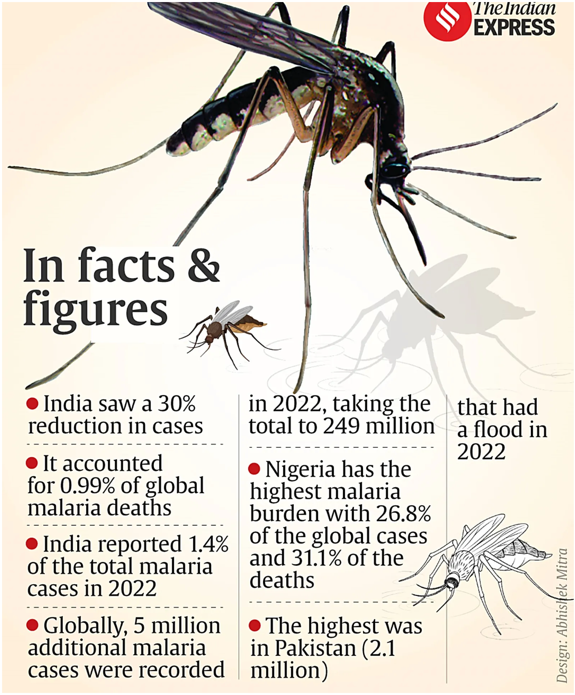
Context: In India there was an estimated 30 per cent decline in cases and 34 per cent decline in deaths compared to 2021 according to WHO’s World Malaria Report 2023.

i023F2D2Lwg4PpUEgHReCOOeM8t9LLNRknUL4LdHSHAO6tO ktlaINZPt05rlPDc WfT1ViL6H5ZdX7oiXhHRALkGWxZs2Sy1GDVq0njoRUkOVqTh0dJeQJMtkHy9n7WOB4

Key findings of the report:

  • Globally around 5 million additional cases were recorded in 2022 compared to the 249 million cases in 2021.
  • The number of malaria deaths globally also remained higher than the pre-pandemic levels 608,000 deaths were reported in 2022 compared to 576,000 cases in 2019. 
  • India accounted for 1.4 per cent of the global malaria cases and just 0.9 per cent of deaths.
  • Vivax malaria accounts for over 40 per cent of malaria cases in India.
  • Apart from India, Bangladesh, Bhutan, the Democratic People’s Republic of Korea, Nepal, Thailand and Timor-Leste also managed to reduce their malaria incidence by 55 per cent or more since 2015.
  • Africa was the worst-hit, with 94 per cent of all malaria cases and 95 per cent global malaria deaths in 2022.
  • Pakistan saw the largest increase, with about 2.6 million cases in 2022 compared to 500 000 in 2021. Significant increases were also observed in Ethiopia, Nigeria, Papua New Guinea and Uganda.
  • Climate change exaggerates the spread of malaria because the parasite is extremely sensitive to temperature, humidity, and rainfall.

About Malaria

  • About: It is a life-threatening disease caused by parasites that are transmitted to people through the bites of infected female Anopheles mosquitoes. It is preventable and curable.
  • Transmission: Through blood transfusion, organ transplant, or the shared use of needles or syringes contaminated with blood because the malaria parasite is found in red blood cells of an infected person.
  • Types: There are 5 parasite species that cause malaria in humans, and 2 of these species: Plasmodium falciparum and Plasmodium vivax pose the greatest threat. 
    • The vivax plasmodium is known to hide in the liver and cause recurrent infections.
  • Symptoms: Fever, chills, sweats, headaches, muscle aches, and fatigue. In severe cases, it can lead to complications such as organ failure and death.
  • Diagnosis: Through blood tests.
  • Antimalarial medications: Chloroquine, artemisinin-based combination therapies (ACTs), and others are commonly used, but drug resistance is a growing concern.
  • Prevention: To control the vector, insecticide-treated bed nets (ITNs) are used by endemic countries.
  • Vaccine: RTS,S/AS01 (brand name Mosquirix) and R21/Matrix M.
  • Path to malaria eradication: By WHO: Reducing case incidence and mortality rates by 75 per cent in 2025 and 90 per cent in 2030. 
    • By India: Malaria-free by 2027 and to eliminate the disease by 2030.

Occupational Safety & Health

Context: In the wake of the incident Silkyara Tunnel collapse , the Central Trade Unions have urged the Union government to ratify the labour conventions.

About Occupational Health & safety: 

  • It is also known as workplace health and safety (WHS) or occupational safety and health (OSH), is a multidisciplinary field concerned with the well-being, health, and safety of people at work. 
  • The primary goal of occupational health and safety is to create and maintain a safe and healthy work environment, preventing accidents, injuries, and illnesses related to work activities.

Key components of occupational health and safety: 

Provisions for ensuring occupational safety in India: 

Constitutional provision: 

  • Article 39(e): The health of men, women and children should be protected, and children should be given opportunity and facility for healthy development.
  • Article 42: States that humane conditions at work and maternity relief should be provided.

International Labour Organization (ILO):

  • Labour Inspection Convention, 1947: To promote and improve labour inspection in various countries.
  • Labour Statistics Convention, 1985: On the standardization and improvement of labour statistics to facilitate international comparisons and promote informed decision-making in the field of labour.
  • World Day for Safety and Health at Work: It observed annually on April 28th for promoting safe, healthy, and decent working environments and raising awareness.
  • Occupational Safety, Health and Working Conditions Code, 2020: To ensure that the workplace is free from hazards and provide free annual health examinations or tests, free of cost to certain classes of employees.
  • The Directorate General of Factory Advisory Services & Labour Institutes (DGFASLI): It serves as a technical arm of the ministry and assists in formulating national policies on occupational safety and health in factories and docks. It also advises factories on problems concerning safety, health, efficiency and well-being of every employee.

Challenges related to occupational health and safety: 

  1. Inadequate safety measures: Instances like Silkyara Tunnel collapse underscore the risks they face, including building collapses and industrial accidents due to inadequate safety measures.
  2. Lack of doctors: On the various occupational diseases and workplace hazards and risks.
  3. Data related to few sector: Labour Bureau compiles and publishes data on industrial injuries relating only to a few sectors, viz. factories, mines, railways, docks and ports.
  4. Lack of regulatory compliance : For registered factories nationwide decreased from 36.23% in the period of 2008-11 to 24.76% in the fiscal year 2019-20.
  5. Inadequate human resource: For effective monitoring like in Major States such as Maharashtra (38.93%), Gujarat (57.52%), Tamil Nadu (58.33%), and Bihar (47.62%) had poor employment rates of inspectors.

Way forward to strengthen occupational health and safety: 

  1. India should ratified ILO Occupational Safety and Health Convention to promote and ensure the safety and health of workers in the workplace.
  2. Setting up emergency standards for hazardous company in India under Occupational Safety, Health and Working Conditions Code.
  3. Establishment of Occupational Safety, Health (OSH)committees and involve workers for identifying hazards and improving OSH.
  4. The labour codes, especially the OSH Code, the inspection and the labour statistical systems need to be reviewed as the Government is in the process of framing theVision@2047 document for the Labour Ministry.

Key findings of ‘A Call for Safer and Healthier Working Environments’ report by the International Labour Organization (ILO): 

  • Over 63% of fatalities occur in the Asia-Pacific region, primarily attributed to the absence of a robust safety net.
  • Threats to workers: Long working hours, exposure to particulate matter, gases, and fumes, and occupational injuries are major causes. Mining, construction, and utilities are the most hazardous sectors.
  • The health of the workers has several determinants, including risk factors at the workplace leading to cancers, accidents, musculoskeletal diseases, respiratory diseases, hearing loss, circulatory diseases, stress related disorders, communicable diseases and others. 

Six years: Debate over minimum age for Class 1 admission

Context: Schools in Delhi this year will continue to admit students to Class 1 below the age of 6 years. There were 14 States and Union Territories, as of March 2022, that allow Class 1 admission for children who have not completed six years.

Minimum Age to admit students in Class 1

  • National Education Policy 2020: It say about the minimum age to admit students in Class 1. 
    • The new NEP pitches for a “5+3+3+4” design for formal schooling corresponding to:
      • the age groups 3-8 years (foundational stage),
      • 8-11 years (preparatory stage),
      • 11-14 years (middle stage), and
      • 14-18 years (secondary stage).
    • This brings early childhood education (also known as pre-school education for children of ages 3 to 5 years) under the ambit of formal schooling.
    • This effectively means that a child should be 6 years old to be eligible for admission into Class 1, after completing three years of early childhood education.
    • In 2022, Kendriya Vidyalaya increased the age of admission from five to six years for Class 1 in an effort to sync with the recommendations of the NEP 2020.
  • Right to Education (RTE) Act, 2009: The RTE Act guarantees education from the age of 6 years to 14 years. This means that a child is expected to begin elementary education (i.e., Class 1) at the age of 6 years.
    • The Act had to specify the entry age for enforcement of formal compulsory education.
    • The age 6, which the RTE says is the age to begin Class 1, is simply a reiteration of Constitution (Article 21A).
  • This was also the same in Gandhi’s idea of basic education, that 6 years of primary education,3 yrs. of lower secondary education and 3 years of upper secondary education.
  • Report of the Sargent Commission (on post-war education development in India), which goes back to the 1940s: It recommended the introduction of free and compulsory education for all Indian children in the 6-11 years age groups.

Global practice

  • Six is the standard age for starting primary school across East Asia, not just in Japan. This age is also common in most European countries. It is usual (though not compulsory) for younger children in these societies to attend some sort of preschool.
  • In the USA and the UK children generally start school at 5.

Potential benefits associated with this age requirement:

  • School environments involve a significant amount of social interaction. A child entering school at the age of six is likely to have had more opportunities for socialization in pre-school or informal settings, helping them adapt to the social dynamics of a classroom.
  • Ability to manage emotions, work collaboratively with peers, and follow instructions.
  • They may have early developed basic numeracy and literacy skills, as well as problem-solving abilities that are foundational for early learning.
  • Enrolling children in school when they are developmentally ready can help reduce stress and anxiety associated with the academic environment. This can contribute to a more positive attitude towards learning.

Potential challenges associated with this age requirement:

  • Children develop at different rates, and a strict age requirement may not account for individual differences in readiness for formal education. Some children may be developmentally advanced and ready for school before the age of six, while others may need more time.
  • A fixed minimum age for admission can lead to academic pressure for children who are not developmentally ready. 
  • The rigid age requirement may not consider late bloomers who might thrive with a slightly later start.
  • A fixed minimum age might lead to labelling children as "too young" or "not ready" based solely on their age, potentially affecting their self-esteem and confidence

Research on the entry age for formal education

  • The early introduction of formal learning approaches to literacy does not improve children’s reading development, and may be damaging.
  • By the age of 11, there was no difference in reading ability level between the two age groups.
  • But the children who started at 5 developed less positive attitudes to reading and showed poorer text comprehension than those children who had started later.
  • In a separate study of reading achievement in 15-year-olds across 55 countries, researchers showed that there was no significant association between reading achievement and school entry age.

Drones to women self-help groups

Context: Recently, Union Cabinet approved a scheme as part of PM Modi's 'lakhpati didi' initiative under which the central government will provide drones to as many as 15,000 Women's Self-Help Groups over the next four years. The scheme would have a financial outlay of ₹1,261 crore for two years beginning 2024-25.

image 62

Highlights of this scheme are:

  • Coordinated Approach: The scheme approves holistic interventions by converging the resources and efforts of Department of Agriculture & Farmers Welfare (DA&FW), Department of Rural development (DoRD) and Department of Fertilizers (DoF), Women SHGs and Lead Fertilizer Companies (LFCs).
  • Objective: It is envisaged that the approved initiatives under the scheme will provide sustainable business and livelihood support to 15,000 SHGs and they would be able to earn additional income of at least Rs.One lakh per annum.
  • Identification of SHGs: The self-help groups would be identified from the total 89 lakh SHGs formed under the Deendayal Antyodaya Yojana. The appropriate clusters where usage of drones is economically feasible will be identified following which the SHGs will be selected for providing drones. The SHGs would be able to provide those drones as rental services to farmers for agricultural uses.
  • Financial assistance : It will be provided by the Centre to each SHG at 80 per cent of the cost of drone, including accessories/ancillary charges but up to a maximum of ₹8 lakh. As one drone costs around ₹10 lakh, the government has allowed SHGs to take loan from banks under the Agriculture Infrastructure Fund (AIF) at lower interest rate since the Centre bears 3 per cent interest costs through subsidy.
  • Training of Human Resource: The representatives of women SHGs, qualified and elected by the State Rural Livelihood Mission (SRLM) and lead fertilizer companies (LFCs) will have to undertake a 15-day training that includes 5-day mandatory drone pilot training and 10 days on nutrient and pesticide application.

Members of the SHGs with inclination to take up repairs of electrical goods, fitting and mechanical works will be selected by the SRLM and LFC and will be trained as drone technician/assistant. The government guidelines have also made LFCs to act as a link between drone suppliers and SHGs in purchase of drones as well as their repair and maintenance.

Key Role Played by Drones:

  • The drone services are envisaged to be used by the farmers for Nano fertilizer and pesticide applications. Drones will improve efficiency in spraying fertilisers and pesticides which will help to improve agriculture efficiency, enhance crop yield and reduced cost of operation for the benefit of farmers.

Odisha govt allows ST people to sell their land to non-tribals

Context: The Odisha government has permitted Scheduled Tribe (ST) individuals to sell their land to non-tribals and mortgage it for non-agricultural purposes under the Odisha Scheduled Areas Transfer of Immovable Property (by STs) Regulation (OSATIP), 1956. However, the implementation of this legislation has currently been put on hold.

Other amended provision of the OSATIP

  • The ST people, will have to obtain written permission from the sub-collector to sell their land. If the sub-collector does not grant permission for transfer, sell or mortgage of such land, then the person can appeal to the respective district collector within six months, whose decision will be final in this regard.
  • The permission for transferring land from tribals to non-tribals was granted with a rider that after such a transfer, the tribal seller or mortgagor should not be landless or homestead-less.
  • The OSATIP includes strict provisions that not only prohibit the transfer of tribal lands but also criminalise any forced alienation. Additionally, it delineates mechanisms for eviction and the restoration of tribal land.

Tribal population in India

  • As per the Census 2011, the tribal population constitutes about 8.9% of the total population in India.
  • As of the 2011 Census, the tribal population in the Odisha comprising 22.85% of the total State population. Odisha is home to 62 distinct tribes, including 13 Particularly Vulnerable Tribal Groups. Some of the PVTGs such as Bonda, Dongria Kondh and Kutia Kondh.
    • It ranks as the third-largest concentration of tribal population, trailing behind Madhya Pradesh and Maharashtra

Advantages of this amendment:

  • Allowing the sale of land to non-tribals can foster social integration and harmony between different communities. It may break down traditional barriers and create a more inclusive and diverse society.
  • Selling land could provide tribal communities with immediate financial resources as significant economic disparities persist in Scheduled Areas, capital can be invested in income-generating activities, education, healthcare, and other avenues that contribute to economic empowerment.
  • Access to funds from land sales might enable tribal individuals to explore alternative livelihood options beyond agriculture, can contribute to economic resilience and reduce dependency on a single source of income.
  • Increased economic activity resulting from land sales could attract investments and contribute to the development of infrastructure in tribal areas, include roads, schools, healthcare facilities, and other essential social services.
  • The infusion of capital into tribal communities can lead to an improved standard of living.
  • In some cases, non-tribal buyers might bring advanced agricultural practices and technologies to tribal lands, potentially leading to increased productivity and improved farming methods.

Challenges posed by this amendment:

  • Land is often deeply tied to the cultural and social identity of tribal communities. Allowing the sale of tribal land to non-tribals may result in the erosion of traditional practices and ways of life.
  • The incursion of the market economy into tribal areas may lead to the risk of economic exploitation, wherein non-tribals with more resources could take advantage of the situation, potentially leading to the dispossession of tribal communities from their valuable lands.
  • If tribal communities sell their land and are unable to manage the funds effectively, there is a risk of displacement and migration, might lose their connection to their ancestral land.
  • Tribal communities often have a symbiotic relationship with their land, practicing sustainable and traditional methods of agriculture. If non-tribals exploit the land for commercial purposes, it could lead to environmental degradation.
  • Allowing the sale of tribal land to non-tribals might lead to social tensions and conflicts between different communities, could have broader implications for the social harmony of the region.
  • Tribal lands often contain valuable natural resources. If non-tribals exploit these resources without proper regulation, it could lead to depletion, affecting not only the tribal communities but also the overall ecosystem.
  • The proposed amendment could potentially altering the demographic landscape of Scheduled Areas. The Comptroller and Auditor General (CAG) of India, which carried out the random study, found that land held by tribals in Odisha had decreased by 12% in the decade between 2005-06 and 2015-16. 
  • The terms ‘landless’ or ‘homestead-less’ were not clearly defined. This lack of clarity could potentially allow a tribal individual to sell all of their land while retaining a small token piece, thus avoiding classification as landless.

Way forward

  • It is crucial to conduct a thorough social impact assessment such as such as displacement, cultural impact, to understand the potential consequences on the tribal communities.
  • The government should develop a comprehensive land use planning strategy like zoning regulations and restrictions on certain types of development  to ensure that the land sold by tribal communities is used in a manner that benefits both the tribal and non-tribal populations.
  • Engaging in meaningful consultation with tribal communities is essential. The government should involve tribal representatives in the decision-making process, ensuring that their perspectives, concerns, and aspirations are taken into account.
  • Conducting awareness campaigns access about alternative livelihood opportunities and educational programs like providing financial literacy programs, skill development initiatives, to ensure that tribal communities are well-informed about the implications of selling their land.
  • Formation of self-help groups, seed- banks, and various other institutions should be encouraged in the tribal areas to fulfil short term credit needs which in turn can be helpful for tribes to prevent mortgages and alienation of land.

Generic Medicines approved for Rare Diseases

Context: Health Ministry has made available generic drugs to support the care and treatment of four ailments: Tyrosinemia-Type 1, Gaucher’s Disease, Wilson’s Disease, and the Dravet-Lennox Gastaut Syndrome.

About Rare Diseases:

  • It is a debilitating lifelong disease or disorder that occurs infrequently in the human population. 
  • WHO defines rare disease with a prevalence of 1 or less, per 1000 population.
  • There is no universally accepted definition of rare diseases India accept that a disease prevalence of less than 100 patients per 100,000 people is categorized as a rare disease.
  • A rare disease, also referred to as an orphan disease, is a health condition that affects a small number of people compared to the general population. 
  • These diseases can be genetic or acquired.
  • Some examples of rare diseases include Huntington's disease, cystic fibrosis, amyotrophic lateral sclerosis (ALS), Haemophilia, Thalassemia, Sickle-cell Anaemia, Cystic Fibrosis, auto-immune diseases and others types of muscular dystrophy.
  • Due to the limited number of affected individuals, research and development for treatments may be insufficient, and patients may face difficulties in obtaining a timely and accurate diagnosis. The rarity of these diseases often makes it challenging to conduct clinical trials, gather data, and develop effective treatments. 

Tyrosinemia-Type 1:  It is a rare autosomal recessive genetic metabolic disorder characterized by lack of the enzyme fumarylacetoacetate hydrolase (FAH) which is needed for the final break down of the amino acid tyrosine

  • Failure to properly break down tyrosine leads to abnormal accumulation of tyrosine and its metabolites in the liver, potentially resulting in severe liver disease. 
  • Tyrosine may also accumulate in the kidneys and central nervous system.

Gaucher’s Disease: Characterized by the accumulation of a fatty substance called glucocerebroside in various organs, particularly the spleen, liver, and bone marrow. This accumulation occurs due to a deficiency of an enzyme called.

  • This causes these organs to enlarge and can affect their function. The fatty substances also can build up in bone tissue, weakening the bone and increasing the risk of fractures.

Wilson’s Disease:  Also known as hepatolenticular degeneration, is a rare genetic disorder characterized by the accumulation of copper in various organs of the body, particularly the liver, brain, and cornea.

Dravet-Lennox Gastaut Syndrome: These are two distinct types of epileptic syndromes.

  • Dravet syndrome, also known as severe myoclonic epilepsy of infancy (SMEI), is a rare and severe form of epilepsy that typically begins in the first year of life.
  • Lennox-Gastaut syndrome is a severe form of childhood-onset epilepsy characterized by multiple types of seizures and cognitive impairment.

Rare diseases in India

  • As per National Consortium for Research and Development on Therapeutic for Rare Diseases, approximately 450 rare diseases have been identified and reported in India however, 80% of all rare disease patients are affected by approximately 350 rare diseases. fjGrGO oJ n9eN8R2CrZzBtfwCvdOMvHW46t8RzR 4HqIdp VX9 M8r1VhrH7BVl m7s FI0Y3Ypnfed7qq603 v45N5obQO4qnSIR7MbmeKZxF5q3H8VXDcXUb0r6Xco tJN5 llNyUNOjcSYew
  • With an estimated burden of about 80 to 96 million cases reported annually in India.
  • Moreover, 70-80% of rare diseases are of genetic nature, and thus are asymptomatic, but will appear in the person’s lifetime.
  • In India, there are between 7000 - 8000 rare diseases, but less than 5% have therapies available to treat them.

Government Interventions

  • National Policy for Rare Diseases, 2021 aims at lowering the incidence and prevalence of rare diseases based on an integrated and comprehensive preventive strategy encompassing awareness generation, premarital, post-marital, pre-conception and post-conception screening and counselling programs.
  • Production Linked Incentive Scheme 2.0 for Pharmaceuticals, with an outlay of INR 15000 Crore providing financial stimulus to orphan drugs development under Category 1 of pharmaceutical goods in the Production Linked Incentive (PLI) Scheme. 
  • The Central Drugs Standard Control Organisation(CDSCO) has made provisions for fast-track processing of applications for rare diseases drugs for drug trials and experimental therapies and have exempted the application fee of potential drug candidates. 
  • Genomics for Understanding Rare Diseases: India Alliance Network (GUaRDIAN), a non-profit clinical genomics research network, has established a network of clinicians and scientists for largest clinical genomics research networks in India. 
  • Council of Scientific & Industrial Research (CSIR), established an Indian Genetic Disease Database (IGDD) for keeps track of mutations in the causal genes for genetic diseases common in India and provides valuable insights to physicians and researchers.