Prelims Nuggets

A Model for Quality and inclusive education

Context: Recently, the National Institutional Ranking Framework ranking of the top 100 colleges in India reveals the consistent success of Tamil Nadu in providing higher education that is both of good quality and inclusive.

image 138

Performance of Tamil Nadu

  • Share of colleges of the top 100 NIRF-ranked colleges in 2023, Tamil Nadu has the largest share (35).
  • Delhi (32) comes next, followed by Kerala (14) and West Bengal (8).
  • These four States collectively contribute to 89% of the top colleges, which speaks volumes about other regions.
  • Bigger States such as Uttar Pradesh, Bihar, Madhya Pradesh, Rajasthan, and Odisha do not have a single college in the top 100.
  • Even the share of the other southern States is abysmal: Karnataka has two colleges, Telangana has one, and Andhra Pradesh has none.
  • The share of Tamil Nadu (35%) is more than double the combined share of the other four southern States (17%).

Is the stellar performance of Tamil Nadu consistent or sporadic?

  • The NIRF ranking of colleges since 2017 reveals that Tamil Nadu has been consistent as the lead contributor of top-ranking colleges in India.
  • Even if we confine the focus to the last five years, when the number of colleges participating in the NIRF ranking grew rapidly, Tamil Nadu retained its top position (except in 2022, when Delhi was on par with Tamil Nadu).
  •  As the table shows, except in the categories of Colleges and Universities, the number of T.N. institutions bagging top ranks either stayed the same or declined marginally. The numbers in brackets indicate the total number of top-ranked institutions for the respective categories in the NIRF report

Concentrated or dispersed?

  • Chennai accounts for only nine (26%) colleges. Coimbatore, with an equal share, competes with Chennai quite consistently.
  • Tiruchirappalli, with five colleges (14%), is next. The remaining 12 (out of 35) colleges are widely spread across 11 places.
  •  This broad pattern was seen in other years too. The largest beneficiaries from Chennai, Coimbatore, and Tiruchirappalli will likely be urban dwellers.
  • Yet, the top-ranked 23 colleges from these three cities, which belong to three different regions, might be equally serving the poor and disadvantaged social groups both from these regions as well as those contiguous to them.

How Tamil Nadu Achieved This Inclusive Model of Education?

  • This is because Tamil Nadu not only has one of the highest reservation quotas but also has been quite effective in its implementation of the reservation policy.
  •  Additionally, since more than one-third of the top-ranked colleges are dispersed across places, they not only cater largely to the rural and under-served areas, but also provide an opportunity for quality education for students from poor and disadvantaged social groups who do not have the economic resources and social networks to study in colleges from Chennai, Coimbatore, and Tiruchirappalli.

Conclusion

Tamil Nadu’s impressive and consistent performance in higher education shows that quality and inclusion can be achieved together and consistently. This finding should prompt other southern States, which also have a reasonably inclusive and effective social welfare architecture, to introspect why they lag far behind and inspire them to take action to rectify issues.

National Workshop On Integrated Management Of Sediments In River Basins And Reservoirs For Sustainable Development

Context: The Central Water Commission under Ministry of Jal Shakti organized a one-day national workshop on ‘Integrated Management of Sediments in River Basins and Reservoirs for Sustainable Development” at India International Centre in New Delhi. It was largely agreed that short and long term action plans need to be prepared along with measures to control silt deposition in Reservoir which may be implemented in phases.

image 136

What are sediments?

  • Sediment is a naturally occurring material, organic and inorganic, that is moved and deposited in a new location by water, wind or ice. 
  • It is broken down and transported by processes of weathering and erosion. 
  • They can consist of rocks, minerals, remains of plants and animals. 
  • It can be as small as a grain of sand or as large as a boulder.
  • Sediment that is light enough to be carried by water without touching the stream bed is called suspended sediment.
  • Sediment created and deposited by glaciers is called moraine.

What is siltation and sedimentation?

  • Rivers flowing in the alluvial plains tend towards a stable flow condition. In other words, they try and maintain a balance between the silt load carried and the volume and velocities achieved by the flow. This is usually called a stable sediment regime for the river. 
  • When the core parameters of volume and velocities are disturbed, either due to a low gradient (while it enters the plains) or encroachment in flood plain, widening of the channel (braiding of river streams) suspended silt particles in the river water settle down. This is called siltation. 
  • This phenomenon is normally called sedimentation when it occurs in a reservoir.

Why sediments are important? 

  • Source of nutrients: Sediment is important because it usually enriches the soil with nutrients forming large fertile plains. Areas rich in sediments are often also rich in biodiversity. The rivers lacking in sediments (mostly downstream rivers of dams,) are known as ‘hungry waters’. 
  • Landform development: Sediment deposition create several landforms like natural levees, embankments, deltas and river banks, flood plains beaches, spits and sand bars etc.
  • Ecological functions: Sediment processes are an extremely important part of many ecosystems as well as of primary importance to particular species. For example, various organisms in both marine and freshwater environments rely on replenishment of sediment for their reproductive habitat. 
  • Natural water filtration: When water passes through soil, it is cleaned via physical, chemical and biological processes. In addition to soil's physical filtration capacity, soil contains important biota that helps transform and decompose certain chemicals and other contaminants from soil, thus helping filter them out of the water.
  • Disaster management: Sediment is one of the main tools in coastal zone management. Huge amounts of sediment are being used for flood protection (e.g. beach nourishment), and habitat and wetland protection.
  • Following chart can help us to analyse the role of sediments in various spheres;
What are sediments

What is the effect of sand mining on sedimentation in rivers?

Mining of sand, if done at an optimum level, removes excessive sediment deposit in rivers. 

  • Unscientific and excessive sand mining depletes the mineral at rates at which the river system cannot replenish it. 
  • Excessive mining creates high over banks with steep slopes, which are not stable due to the limited shear strength of the constituent soil materials. 
  • Continued collapse of such banks leads the river course to deviate towards developed lands and poses an ever-increasing threat to them.

What are the causes of reservoir sedimentation ? 

Generally, soil erosion is the major cause of reservoir sedimentation and subsequent sedimentation of reservoirs is a complex process dependent upon a number of natural and anthropogenic factors. 

The causes are classified into two with respect to the factors, namely; 

  1. Natural Causes 
    1. Geomorphology - configuration of the land surface including the location, size and shape of such physical features as hills, ridges, valleys, streams and lakes.
    2. Hydrology - To be successful, a dam and reservoir project must have an adequate and continuous supply of water. The annual rainfall, the ratio of watershed area to reservoir area, and the volume of stream of the year must be known.
    3. Hydrogeology - to determine whether groundwater would contribute to the reservoir or whether the reservoir would lose water to the groundwater system is also essential.
    4. Soil characteristics - The type of soil and its properties such as porosity and permeability can cause or lead to erosion within and around the reservoir.
  2. Anthropogenic Causes 
    1. Tillage practices: Wrong tillage practices can cause loose soil thereby leading to washing away of top soil. 
    2. Overgrazing: Too much grazing of vegetation by animals can lead to exposure of the soil in an area thereby causing erosion. 
    3. Mining and logging: Mining activities can lead to erosion due to wearing off of the surface through surveys and excavation as well. 

What are the problems with sedimentation in dams?

  • Reduction of storage capacity: When a river is put to halt behind a dam, the sediment it contains settles at the bottom of the reservoir. Reservoirs have become settling tanks for the sediment in most cases. This means the dam has less and less space for water, which it was supposed to hold. 
  • Impact on stability: Higher siltation of reservoirs exerts pressure on the reservoir thereby compromising the dam stability.
  • Reduced efficiency of power generation: The high rate of reservoir sedimentation pose a challenge to dam operators due to the abrasion of turbines and other dam components. The cracking of the tips of turbine blades by waterborne sand and silt considerably reduce their generating efficiency and needs costly repairs.
  • Reduced discharge capabilities: Sediments will often block low-level outlets designed to allow for reservoir drawdown. Reduction of spillway capacity can occur as a result of the loss of approach depth when the sediment front reaches the dam.
  • Environmental impacts: Plant and animal species are sensitive to alteration of both the sediment supply and flow regime. Increases in sediment concentration in upstream areas can create turbid waters with a smaller euphotic zone. This decreases plant productivity, negatively impacting fish and bird species and can also cause visual impairment for predatory fish, affecting their feeding habits. Finally, sediment is a primary carrier of suspended pollutants such as nitrogen, phosphorous and heavy metals. Sediments released as a result of sediment management or a dam breach may have environmental effects that can persist for decades.

In India, government statistics on 11 of the country’s reservoirs with capacities greater than one cubic kilometre show that all are filling with sediment faster than expected, with increases over assumed rates ranging from 130 percent (Bhakra) to 1,650 percent (Nizamsagar). A 1990 World Bank paper on watershed development concluded that in India, "erosion and reservoir sedimentation are not only severe and costly but accelerating. It is now obvious that the original project estimates of expected sedimentation rates were faulty, based on too few reliable data over too short a period”.

What steps can be taken in this regard?

  • Reducing sediment inflow: Sediment delivery to reservoir can be reduced by techniques such as erosion control and upstream sediment trapping.
  • Routing the sediments: Some or the entire inflowing sediment load may be hydraulically routed beyond the storage pool by techniques such as drawdown during sediment-laden floods, off stream reservoirs, sediment bypass etc
  • Sediment removal: Deposited sediments may be periodically removed by hydraulic flushing, hydraulic dredging or dry excavation.

Adopting Erosion Control and Soil Conservation Measures:This includes all those general methods which are adopted to reduce erosion of soil and to make it more and more stable. They may include: plantation, control grazing, terracing benching, cover cropping like grassing and contour binding, etc.

Radio telescopes: probing space

Context: Telescopes are essential tools in every astronomer’s repertoire. A radio telescope is a telescope that helps scientists ‘see’ the universe using radio waves (1 mm to more than 10,000 km in wavelength).

How Radio telescopes function?

  • These telescopes collect faint radio waves coming from deep space, and with the help of other equipment focus and amplify them for scientific study. Radio telescopes can detect radio waves from a number of celestial objects, such as stars, galaxies, and black holes. 

Where are they located and what is their shape?

  • They are ground based, and not in orbit, because they are usually quite large. This is because the size of the antenna – the dish like structure that detects the waves – is proportional to the wavelength being tracked. 
Where are they located and what is their shape?
  • In fact, the most common radio telescopes have a parabolic dish antenna. Due to its curved shape, the radio waves hitting the dish bounce to a point called the focus, where a receiver collects them. 
  • Dish antennas collect many different wavelengths at once, so scientists often use receivers picking up multiple wavelengths at once.

Significance of large size and amplifiers

  • Because of their large wavelength, radio waves can travel long distances without interruption, making them ideal to catch glimpses of stars behind dust clouds. But the longer they travel, the weaker they get. So telescopes often try to maximise their signal collection area and use amplifiers to increase their strength. 
Significance of large size and amplifiers

Significant radio telescope

  • One of the biggest radio telescopes in the world today is the FAST instrument in China, with a 500­metre­wide dish.
  • The Giant Metre wave Radio Telescope (GMRT), located near Narayangaon, Pune in India, is an array of thirty fully steerable parabolic radio telescopes of 45 metre diameter, observing at metre wavelengths. It is the largest and most sensitive radio telescope array in the world at low frequencies. It is operated by the National Centre for Radio Astrophysics (NCRA), a part of the Tata Institute of Fundamental Research, Mumbai.

SARAS (Shaped Antenna measurement of the background Radio Spectrum) is developed by Raman Research Institute and was deployed over Dandiganahalli Lake and Sharavati backwaters, located in Northern Karnataka, in early 2020.

US approved laboratory grown meat

Context: USA has given approval to cultivate laboratory grown meat (chicken meat). The official name given to this meat is ‘cell-cultivated chicken’. It will be cultivated for the human consumption.

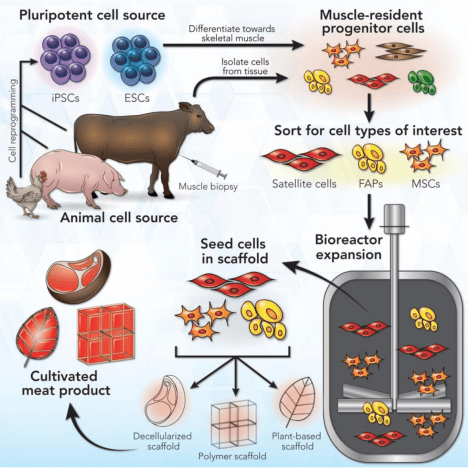
US approved laboratory grown meat

What is cell-cultivated chicken?

  • Cultivated meat refers to the in vitro production of meat from animal cells.
  • Under this the producer isolate the cells that make up the meat (the meat that we consume), and put them in a setting where they have all the resources they need to grow and make more copies of themselves. 
  • These resources are typically nutrients, fats, carbohydrates, amino acids, the right temperature, etc. 
  • The ‘setting’ in which this process transpires is often a bioreactor (also known as a ‘cultivator’), a sensor-fit device — like a container — that has been designed to support a particular biological environment. 
  • In practice, cells are seeded into a biocompatible tissue scaffold to provide structural support, and the necessary nutrients and small molecules are provided to the seeded cells to direct their growth and function.
  • Once there are enough of these cells, which takes around two to three weeks in the process, they resemble a mass of minced meat. They are collected and processed with additives to improve texture.

Benefits:

  • The FAO has estimated that global livestock is responsible for 14.5% (40% from Beef, 8% from Chicken) of all anthropogenic greenhouse-gas emissions. 
  • Similarly, the 2021 report estimated that lab-cultivated meat would use 63% less land in the case of chicken. 
  • Cultivated meat would consume 80% less water than conventional meat. 
  • Alternative meat’s proponents have advanced it as a way to meet the world’s nutritional security needs.
  • Ethical concerns: Prevention from cruelty on animals.
  • Susceptibility towards animal borne diseases would be least (e.g., Bird Flu) and anti-biotic overuse would be checked.

Which forms of cell-cultivated meat exist?

  • Currently only Chicken’s meat will be cultivated.
  • Beef having high levels of fat is hard to cultivate with the current technology. 
  • Researchers are also developing cell-cultivated versions of sea bass, tuna, and shrimp. 

What are the challenges?

1. Consumer acceptance: producer have to meet with the demand of original taste, texture and appearance. Current development is not meeting all the demands simultaneously. 

2. High cost of cultivation: 2020 FAO analysis shows that its cost of production will never be less in the near future. 

3. Resource availability: producer require high quality of cells every time they produce meat. 

4. Funding crunch: private players specially in developing nations like India are reluctant to provide funds for R&D in cell-cultivated meat. 

Way-forward:

Despite various challenges, research and development should continue to produce best quality of such meat. Various research agencies even in India can explore this segment of biotech. However, it would be too soon to conclude the mass production of such meat for human consumption.

Cord Blood

Context: A few days before her baby girl was born on June 20, 2023, Upasana Kamineni, wife of actor Ram Charan, announced on Twitter that she had chosen to preserve her baby’s cord blood. She’s not the first celebrity to have done so. A while ago, Aishwarya Rai Bachchan said she too, had saved cord blood.

What is Cord Blood

Umbilical cord blood is the blood that remains in the umbilical cord and placenta after a baby is born. It is rich in stem cells, which are the building blocks of the body's blood and immune system.

What is umbilical cord

The umbilical cord is the lifeline that connects the developing fetus to the placenta in the womb. Once the baby is born, the umbilical cord is clamped and cut, and the cord blood can be collected. This procedure is safe, painless, and non-invasive for both the mother and the baby.

How scientists want to use cord blood

image 129

Umbilical cord blood contains hematopoietic stem cells (HSCs) that have the ability to develop into different types of blood cells, such as red blood cells, white blood cells, and platelets. These stem cells are similar to those found in bone marrow, but cord blood is easier to collect and has a higher likelihood of being a suitable match for a patient in need.

Cord blood banking is the process of collecting and storing umbilical cord blood for future use. The collected cord blood can be frozen and stored in private or public cord blood banks. Private cord blood banking allows families to store their baby's cord blood exclusively for their own use, while public cord blood banks make it available to patients in need of a stem cell transplant.

Umbilical cord blood stem cells have been used in the treatment of various diseases, including certain cancers, blood disorders, and immune system disorders. They can be used for autologous transplantation, where the patient receives their own stored cord blood, or for allogeneic transplantation, where the cord blood is matched with a compatible donor.

It's worth noting that while cord blood is a valuable source of stem cells, its collection and storage may not be necessary for every family. The decision to bank cord blood should be made after considering the family's medical history, potential future need, and available options. Consulting with a healthcare provider can provide more specific information and guidance.

Benefits of Cord Blood

  • Stem Cell Transplantation: The hematopoietic stem cells (HSCs) present in cord blood can be used to treat various diseases and disorders of the blood and immune system, such as leukemia, lymphoma, and certain genetic disorders. The preserved cord blood can be used for autologous transplantation (the patient receives their own stored cord blood) or allogeneic transplantation (the cord blood is matched with a compatible donor).
  • Higher Chance of Match: This is because cord blood stem cells are more tolerant of HLA (human leukocyte antigen) mismatches, which are factors that determine compatibility between the donor and recipient. Preserving cord blood increases the chances of finding a matching unit for transplantation, especially for individuals from diverse ethnic backgrounds.
  • Future Medical Advances: Research on cord blood stem cells is ongoing, and there may be new therapies and treatments developed in the future that could utilize these cells. By preserving the cord blood, families can ensure that they have a valuable resource available if needed.
  • Family Benefits: If a sibling or close family member requires a stem cell transplant, there is a higher chance of a suitable match within the family if cord blood has been stored. Additionally, some research suggests that certain conditions, such as cerebral palsy and type 1 diabetes, may potentially be treated with cord blood stem cells in the future.

Read also: Insulin deficiency major trigger for Type 2 diabetes in Indians

Medicines Patent Pool

About Medicines Patent Pool

  • The Medicines Patent Pool (MPP) has signed sub-licence agreements with the India-based companies Eugia, Hetero, Dr Reddy’s Laboratories, and the Indonesian firm BrightGene.to make generic versions of the drug Nilotinib of the Switzerland-based pharmaceutical corporation Novartis.
  • The drug is used for the treatment of chronic myeloid leukaemia, a type of blood cancer.
  • These first sub-licence agreements that the MPP, a United Nations-backed group working towards increasing access to, and facilitating the development of, life-saving medicines for low- and middle-income countries, has signed for a cancer treatment drug are the result of a licence agreement signed between it and Novartis Pharma AG in October 2022 for their patented cancer medicine.
  • Nilotinib is sold under the brand name Tasigna and marketed worldwide by Novartis.
  • Information released by the MPP said the selected manufacturers can make generic versions of Nilotinib in India and seven middle-income countries.
  • They can also supply it in 44 territories included in the licence through a non-exclusive licence agreement, subject to local regulatory authorities.
  • The licence allows developing and supplying generic versions of Nilotinib in seven middle-income countries.

What is summer solstice and what causes it?

Context: The longest day of the year, for anyone living north of the Equator, is June 21. The day is referred to as the summer solstice, and it occurs when the sun is directly over the Tropic of Cancer, or more specifically right over 23.5 degrees north latitude.

image 128

Understanding solstice, equinoxes and seasons?

  • Earth’s axis is tilted at 23.5 degrees.
  • Earth makes a complete revolution around the sun once every 365 days, following an orbit that is elliptical in shape.  This means that the distance between the Earth and Sun varies throughout the year.
  • During the first week in January, the Earth is about 1.6 million miles closer to the sun. This is referred to as the perihelion.  The aphelion, or the point at which the Earth is about 1.6 million miles farther away from the sun, occurs during the first week in July.
  • Since Earth rotates on its axis, the Northern Hemisphere gets more direct sunlight between March and September over the course of a day, which also means people living in the Northern Hemisphere experience summer during this time. The rest of the year, the Southern Hemisphere gets more sunlight.
  • During the solstice, the Earth’s axis — around which the planet spins, completing one turn each day — is tilted in a way that the North Pole is tipped towards the Sun and the South Pole is away from it.
  • It should be noted that summer solstice for northern and southern hemisphere will be on different dates different.

Seasons are not caused due to this variation in distance rather they are caused due to tilted axis of Earth. 

jOQq6JOdbgN4u5qfCn2RapACf7QCglvnQsa8d9PNlAM1iIBiKL jV66grEd4szeMFjAmq IxLCqMD vuLORbJNGzXgBT34IcxAj1Zzq4h01NoT0tK4pcTXEQCi8Zbe w4QCDqGOCjiWyQ8kj pmZWQ

There are two times of the year when the Earth's axis is tilted neither toward nor away from the sun, resulting in an equal amount of daylight and darkness at all latitudes.  These events are referred to as equinoxes and occur near March 21st (Vernal Equinox) and near September 22nd (Autumnal Equinox).  At the equator, the sun is directly overhead at noon on the two equinoxes.

June 20th – 22nd   – summer solstice in northern hemisphere and winter solstice in southern hemisphere.

December 21st - 22nd – Winter solstice for Northern hemisphere and Summer solstice for Southern hemisphere.

March 20th  – 21st  – Vernal equinox

September 22nd – 23rd  – Autumnal equinox

Vn9SITLMxVZ5fhNBRHuuhzTwIcQ UqKkIFYjGzaykOK8Q0iSwL2dOr el51m70eCboUCgwbkFzAhz1yAhrYOP4bH15fHiFWRFsthY9jGgtmWc kuUa Ff54lfhZ3gMJjS1AQDglSDnrcsusvtOJ5Ww
  • The amount of light received by a specific area in the Northern Hemisphere during the summer solstice depends on the latitudinal location of the place. The further north one moves from the equator, the more light one receives during the summer solstice. At the Arctic Circle, the sun does not set during the solstice.
  • Summer solstice, however, does not necessarily mean the earliest sunrise or latest sunset. That depends on the latitudinal location of the country.

Climate breakdown: the Arctic Ocean could be ice-free by the 2030s

Context: The Arctic Ocean could be ice-free in summer by the 2030s, even if we do a good job of reducing emissions between now and then. That’s the worrying conclusion of a new study in Nature Communications.

Over the past 30 years, the Arctic has warmed at roughly twice the rate as the entire globe, a phenomenon known as Arctic amplification. Most scientists agree that this rapid warming is a signal of human-caused climate change.

Vzad55LiyzAltKfuLV9AE9HKCBdGln18eVtKNEGYBGBbIvD9UQq1xLgEo

This map shows trends in mean surface air temperature over the period 1960 to 2019. Notice that the Arctic is red, indicating that the trend over this 60-year period is for an increase in air temperature of nearly 4° C (7.2° F) across much of the Arctic, which is larger than for other parts of the globe.

Multiyear ice:

The ice which remains at the end of summer is called multiyear sea ice and is considerably thicker than its seasonal counterpart. It acts as barrier to the transfer of both moisture and heat between the ocean and atmosphere. Over the past 40 years this multiyear sea ice has shrunk from around 7 million sq. km to 4 million.

Blue ocean event:

“Blue ocean event” is defined as when the sea ice area drops below 1 million sq. km. This threshold is used mainly because older, thicker ice along parts of Canada and northern Greenland is expected to remain long after the rest of the Arctic Ocean is ice-free. We can’t put an exact date on the last blue ocean event, but one in the near future would likely mean open water at the North Pole for the first time in thousands of years.

Reasons behind Arctic Amplification: 

Change in Albedo:

  • When bright and reflective ice (with more albedo) melts, it gives way to a darker ocean (lowering albedo); this amplifies the warming trend because the ocean surface absorbs more heat from the Sun than the surface of snow and ice.

Changing Ocean currents:

  • Currents are changing because more melting ice is injecting the Arctic Ocean with freshwater. The missing ice also exposes the surface waters to more wind. This mixes up colder freshwater at the surface and warmer saltwater below, raising surface temperatures and further melting ice.

Changing Weather

  • Ocean currents drive the powerful polar jet stream, which moves hot and cold air masses around the Northern Hemisphere. This is a product of the temperature differences between the Arctic and the tropics.
  • But as the Arctic warms, the jet stream now undulates wildly north and south. This has been injecting the Arctic with warm air.
  • The abundance of thunderstorms in tropics creates a near-constant flow of heat away from the tropics towards the Arctic.

Change in nature of Ice Cover

  • Quality of ice cover in the Arctic region is changing. New ice is replacing old ice. 
  • Old ice is more resilient than new ice, which melts faster. New ice contains more salty water and is more subject to melting, whereas old ice has a higher share of water coming from snow precipitations and is a source of freshwater. 

Impacts of Arctic Melting:

oJr pfg46PxSEs0oxSUzs9WEaYboXRjKU9H2OYLjT99BxsFVmhMm9yUMJU869DVwc2R9jSXDykePOOdO0l2YzIpn7FEJBML3Wg2Ip14Ma87MmRXYjVkBQP KP9Xok11jV04KEErlUGdRzNwHbHy4Zw
  • Coastal erosion: Over the Arctic Ocean, sea ice absorbs the impacts of waves and limits shoreline wave erosion. As sea ice retreats farther away from surrounding landmasses, late-summer and autumn storms stir up strong waves that crash onto shore.
  • Increase in sea level: Increased wave action caused due to sea ice melt can bend the ice shelves increasing the possibility of glacial retreat. Glaciers that have lost their ice fronts tend to flow faster, and because this process introduces a body of ice into the ocean that was not there previously, it raises sea level which further can lead to coastal flooding. 
  • Global warming: Sea ice loss leads to increased permafrost thaw, which drives the release of carbon dioxide and methane—an even more potent greenhouse gas. The retreat of sea ice exposes greater expanses of darker ocean water, which absorbs more solar radiation than white sea ice, perpetuating the global warming effect.
  • Alteration of ocean current: Massive amounts of very cold glacial-melt water entering warmer ocean waters reduces the thermal contrast between cold and warm waters. It further alters the density differences also thereby leading to slowing down of ocean currents. 
  • Changes in weather systems: accelerating sea ice melt could be linked to the intensification of Central Pacific trade winds, the emergence of El Niño events, and a weakening of the North Pacific Aleutian Low Circulation — a semi-permanent low pressure system that drives post-tropical cyclones and generates strong storms.
  • Loss of biodiversity: Arctic melting is disrupting the behavior of marine mammals and ice-obligate species including polar bears, walruses, and bearded and ringed seals. Restructured food webs, changes in prey populations, the arrival of new marine mammal species (including new predators and competitors), and pathogens from more temperate seas will challenge Arctic species. 
  • Higher human interference: The loss of Arctic Sea ice could open up new regions to shipping, tourism, and oil extraction. More people living, working, and extracting resources in the Arctic will likely require more infrastructure, and may raise the risk of emergencies needing cleanup or rescue.

Childline 1098 is to be Merged with 112 lines in 9 States

Context: Recently, the Ministry of Women and Child Development (WCD) has decided to do away with NGOs collaborating to run the successful Childline emergency counselling and Distress Helpline for Children, established in 1995.

Issues with the existing system

  • Till now, the CIF has been rendering Childline services in 568 districts, 135 railway stations and 11 bus stands through its network of over 1,000 units.
  •  “CIF’s response time to children’s distress calls is about 60 minutes.
  • The current system, however, lacks interoperability with other services, including Police, Fire and Ambulance services, which leads to loss of precious time in distress situations,”.
  • Moreover, the CIF network covered only 568 districts, leaving almost 200 districts without Childline coverage.
  • Hence the Government is likely to stop funding trust linked to 1098 Earlier, the WCD Ministry, under the erstwhile Child Protection Services scheme, was supporting the 24x7 helpline through the Childline India Foundation (CIF) and its partner NGOs.

New Proposal

  • The merger is a part of the broader ‘One Nation One Helpline’ initiative.
  • In the first phase, the Ministry plans to merge the Childline 1098 service with the Emergency Response Support System (ERSS) number 112 by the end of June in nine States and Union Territories — Andhra Pradesh, Arunachal Pradesh, Bihar, Gujarat, Goa, Mizoram, Ladakh, Puducherry, and Dadra and Nagar Haveli and Daman and Diu. Other States and Union Territories will follow in a phased manner.
  • States have to ensure a dedicated 24x7 WCD (Women and Child Development) Control Room to be integrated with the ERSS 112.
  • At the district level, a Child Help Line (CHL) would be available round the clock at the District Child Protection Unit (DCPU) to link children in crises to emergency as well as long-term care and rehabilitation services.
  • Help desks or kiosks or booths will be maintained for children in distress at select railway stations and bus stands.
  • The Ministry has made the Kerala-based Centre for Development of Advanced Computing (C-DAC) the ‘total solution provider’ for the automation and integration of Childline 1098 with ERSS 112.
  •  “Incoming 1098 calls will be classified as ‘emergency calls’, ‘non-emergency calls’, and ‘information calls’.
  •  All emergency calls can be forwarded from 1098 to 112 or vice versa with the switch of a button,”.
  • ‘Non-emergency calls’ may be transferred to the respective CHL units at DCPUs, while ‘information calls’ could be handled at the WCD Control Room itself or transferred to DCPU CHL units for providing information to the caller.
  • All 1098 calls will land at the WCD Control Room in the respective States and Union Territories, and emergency calls would be forwarded to the ERSS 112.

India’s first mRNA vaccine against Omicron

GEMCOVAC-OM, India’s first indigenous mRNA vaccine for the Omicron variant of the novel coronavirus, was approved under emergency use guidelines by the Drug Controller General of India (DCGI). 

image 122

About GEMCOVAC-OM:

  • Developed by: Pune-based Gennova Biopharmaceuticals Ltd. 
  • GEMCOVAC-OM is touted to be stable in a 2-8 degrees Celsius range and hence could be stored in ordinary refrigerators. 
  • It could be administered into the skin via a “needle-free” PharmaJet system.

mRNA vaccines:

  • mRNA vaccines use a small piece of synthetic mRNA (messenger RNA) that encodes the instructions for making a viral protein.
    • The mRNA in the vaccine is a single-stranded RNA molecule that provides the blueprint for the production of a specific viral protein (spike protein in the case of COVID-19).
    • Once the mRNA is injected into the body, cells take up the mRNA and use it to produce the viral protein. This protein then triggers an immune response, leading to the production of antibodies and the activation of immune cells. 
  • The purpose of mRNA vaccines is to stimulate an immune response without causing the actual disease. 
What is mRNA? The messenger molecule that's been in every living cell for  billions of years is the key ingredient in some COVID-19 vaccines

Advantages:

  • As mRNA vaccines are not developed from an active pathogen or an inactivated pathogen, they are non-infectious. 
  • RNA vaccines can be produced faster and cheaper as compared to conventional/ traditional vaccines. 
  • Replication mechanism can amplify antigen translation, decreasing the amount of starting material needed. It can be produced with fewer error rates. 
  • According to preliminary trial results, these vaccines produce a reliable immune response and can be tolerated by healthy individuals with few side effects.

Risks of mRNA vaccine:

  • mRNA vaccines are new. Thus, there is the risk of unknown effects, both short and longer-term.
  • Some mRNA-based vaccines are associated not only with inflammation but also potentially with autoimmunity. 
  • The m-RNA molecule and lipid nanoparticle transport molecule is very fragile, and thus the vaccine must be kept at very low temperatures (minus 70-to-minus 80 degree Celsius) to avoid degrading.  

Comparison of mRNA and DNA vaccine:

Similarities:

  • Both vaccines deliver the message to cells to create desired protein so the immune system creates a response against this protein.
  • Both produce a specific portion of the virus - spike protein in the case of coronavirus.
  • Both are laboratory-made structures and not obtained from the actual virus.
  • Both are being touted for their cost-effectiveness and ability to be developed more quickly than traditional, protein vaccines.
    • Traditional vaccines often rely on actual viruses or viral proteins grown in eggs or cells and can take years and years to develop.
  • Both can theoretically be made more readily available because they rely on genetic code–not a live virus or bacteria. This also makes them cheaper to produce.

Differences:

  • DNA is much easy to prepare in the laboratory. The DNA-based vaccine will be around 10 times cheaper.
  • m-RNA based vaccine uses Ribosome in the cytoplasm to produce the spike protein. DNA must enter the nucleus of the cell to produce the spike protein. Since, in the case of DNA vaccine, entry into the nucleus is required, so, safety concerns are more. 

Bonn climate meet takeaways: Old conflicts, some forward movement

Context: The Bonn climate change conference that finished last week was built up as an opportunity for course correction. Bonn was expected to act as the springboard for accelerated action. But just like the more famous year-ending climate conferences, Bonn underperformed. Developed and developing countries bickered on issues old and new, and could not even agree on the agenda of one of the meetings till the penultimate day.

image 121

With current global efforts to keep rising temperatures in check abysmally inadequate, a massive and immediate scale-up in climate action is essential to keep alive any realistic chance of meeting the 1.5 degree or 2 degree Celsius targets.

Issues Discussed 

Global Stocktake

One thing that the countries did manage to wrap up, however, was the third and final round of technical discussions on global stocktake, or GST. 

The technical discussions just produced a short ‘framework’ on the elements to be included in the stocktake exercise. Even this saw repeated squabbling between the developed and developing countries, mainly over provisions related to finance and ‘historical responsibility’ of the rich countries.

GLOBAL STOCKTAKEMandated by the 2015 Paris Agreement, GST is an exercise aimed at assessing the progress in the fight against climate change, and deciding ways and means to enhance global action to bridge the adequacy gap (see box). The Paris Agreement says GST must be conducted every five years, starting in 2023.jezR9S643OI3Owp 18NZSbBF3wkn4d3Jczi3oG3WQSVuS C0EFi8W2LpCaVrCw9m0Uy0x6FM63arKOhNiX19J4Wa qvllUT9uO8XPihHi5EW 1LK SNbJ9nVdu7cztsR8ZMEqH3b1MKvqXzsDx w1A

Historical Responsibility 

Things riled the developing countries the most was a statement from Australia seeking to downplay the ‘historical responsibility’ of the developed countries in causing global warming. 

A bulk of the accumulated greenhouse gas emissions, the reason for global warming, have come from a group of about 40 rich and industrialised countries, usually referred to as Annex I countries because they were mentioned in Annexure I of the 1992 UN Framework Convention on Climate Change, or UNFCCC. This historical responsibility has been the basis for the differentiated burden-sharing on developed and developing countries in the climate change framework.

  • Australia argued that the historical emissions happened at a time “when there was no alternative to fossil fuel based energy sources”, and when there was little understanding or consensus on the harm caused by greenhouse gases.
  • It pointed out that since 1992, about 57% of the carbon dioxide emissions had come from non-Annex I countries. It said that 70% of the incremental warming since 1992 due to emissions from carbon dioxide, methane and sulphur dioxide had come from non-Annex I countries.
  • While maintaining that developed countries would take the lead in climate action, Australia said it did not believe there was “an unambiguous debt” owed by the developed countries for past actions.
  • The stand was similar to the one taken by the US at the start of the Bonn meeting, which said bridging the adequacy gap was not the sole responsibility of the developed nations and that it would not agree to references to pre-2020 commitments in the GST.
  • Erasure of historical responsibility is the most sensitive red line for developing countries. This issue would likely come back at COP28 and has the potential to result in major fireworks.

Money matters

  • Discussions at the Mitigation Work Programme (MWP) ran into trouble after developing countries complained that while they were being asked to strengthen their climate actions, developed countries were yet to offer the enabling finance and technology transfers. 

Mitigation Work Programme (MWP)

It is a temporary emergency exercise focused only on increasing emission cuts. It was set up at COP26 in Glasgow in 2021 for climate action.

The Intergovernmental Panel on Climate Change says global emissions have to come down by 43% from 2019 levels by 2030 to keep alive hopes of meeting the 1.5 degree target. As of now, emissions are still growing and, in 2021, were higher than 2019 levels.

  • Most developing countries, including India, have said they would be able to act more if international support in the form of money and technology transfer was made available.
  • According to one assessment, developing countries need as much as US$ 6 trillion between now and 2030 just to implement their climate action plans. The loss and damage needs of developing countries are assessed to be about US$ 400 billion every year. More funds are needed for all kinds of other purposes, the total estimated to be running in several trillions of dollars every year. Against this, even a minuscule-looking US$ 100 billion per year that the developed countries had committed to raise from 2020 is not fully available.

Gandhi Peace Prize

Context: Geeta Press Gorakhpur has been selected for the Gandhi Peace Prize for the year 2021. A jury headed by Prime Minister Narendra Modi unanimously selected Gita Press for the award.

image 120

About Gandhi Peace Prize

  • Gandhi Peace Prize Award for Social, Economic and Political Transformation through Non-violence
  • It was instituted in 1995.
  • The Award comprises an amount of Rs. one Crore and a Citation.
  • The Award may be divided between two persons/institutions who the Jury considers to be equally deserving of recognition in a given year.
  • Work by a person since deceased cannot be the subject of an Award.
  • However, if his death occurred after a proposal was submitted to the Jury in the manner stipulated in the Code of Procedure, then a Posthumous Award may be made.

Eligibility

  • This annual award will be given to individuals, associations, institutions or organizations who have worked selflessly for peace, non-violence and amelioration of human sufferings particularly of the less-privileged section of society contributing towards social justice and harmony.
  • The Award is open to all persons regardless of nationality, race, language, caste, creed or gender.
  • Normally, contributions made during the ten years immediately preceding the nomination are considered.
  • Older contributions may also be considered if their significance has not become apparent recently.