Context: Telecom Regulatory Authority of India (TRAI) is to repeal‘Regulation on Quality of Service of Dial-up and Leased Line Internet Access Service, 2001’. This is because the last dial-up Internet connection was switched off in India in March 2021 and India has no dial-up users now.
Dial-up Internet
Dial-up Internet access uses the facilities of the Public Switched Telephone Network (PSTN) to establish a connection to an Internet service provider (ISP) by dialling a telephone number on a conventional telephone line.
Dial-up Internet access operates through a standard telephone line.
By running the telephone line to a modem device in the computer and configuring it to dial a specific phone number, the computer can connect to the Internet.
Dial-up Internet speeds are theoretically capable of reaching a maximum speed of 56 kilobits per second.
This connection type is usually inexpensive, but slow and has less available bandwidth. They may not be adequate for users who use the web for multimedia and other high-bandwidth applications.
Context: Arctic scientists are set to start drilling to save samples of ancient ice for analysis before the frozen layers melt away due to climate change.
Major Highlights
Italian, French and Norwegian researchers have set up camp in Norway’s Svalbard archipelago to preserve crucial ice records for analysing past environmental conditions.
They will extract ice in a series of tubes from 125 metres below the surface, containing frozen geochemical traces dating back three centuries.
Key Facts
Human-caused carbon emissions have warmed the planet by 1.1 degrees Celsius since the 19th century.
The Arctic is warming between two and four times faster than the global average.
Context: World Health Organization (WHO) has recently published the ‘Global Report on Sodium Intake Reduction,’ which sheds light on the progress of its 194 member states towards reducing population sodium intake by 30% by 2025. Excessive sodium intake contributes to the rise of hypertension, heart disease, and stroke.
Major Highlights
The WHO devised a sodium score, ranging from 1 (least implementation) to 4 (highest implementation), for each member state based on factors such as the extent of implementation of sodium reduction and other related measures.
India has got a score of 2 which signifies the presence of at least one voluntary policy, emphasising the need for more rigorous efforts to address this health concern.
An average Indian’s sodium consumption is more than double the physiological need and dramatically exceeds WHO’s recommended daily intake of <5 g of salt for adults.
Government Initiatives
India has enacted voluntary measures to decrease sodium in the food supply and promote healthier food choices.
Food Safety and Standards Authority of India (FSSAI) has implemented the ‘Eat Right India’ movement, which strives to transform the nation’s food system to ensure secure, healthy, and sustainable nutrition for all citizens.
FSSAI launched a social media campaign called ‘Aaj Se Thoda Kam.’ However, the average Indian’s sodium intake remains alarmingly high (approximately 11 grams).
Context: In the recent meeting of the National Security Advisors of India and Russia, the possibility of joint development of the hypersonic version of BrahMos or BrahMos-II missile was discussed.
Hypersonic Weapon Systems (HWS)
Hypersonic weapon systems are advanced military technologies that can travel at extremely high speeds, typically defined as Mach 5 or higher (five times the speed of sound).
These weapons are designed to be extremely manoeuvrable, able to change course quickly during flight and evade enemy defence systems.
They are different from ballistic missiles, which can also travel at hypersonic speeds (of at least Mach 5) but have set trajectories and limited manoeuvrability.
There are two main categories of hypersonic weapons: hypersonic glide vehicles and hypersonic cruise missiles.
Hypersonic glide vehicles are launched from a rocket. The glide vehicle then separates from the rocket and “glides” at speeds of at least Mach 5 toward a target.
Hypersonic cruise missiles are powered by high-speed, air-breathing engines.
HWS are capable of carrying out launches from a variety of platforms, including ground-based systems, aircraft, and submarines.
They are typically designed to carry conventional or nuclear warheads and are seen as a potential game-changer in military operations, particularly in terms of their speed, range, and ability to penetrate enemy defences.
The United States, Russia and China are developing hypersonic weapons.
BrahMos-II Missile
BrahMos-II is a hypersonic cruise missile currently under joint development by India's Defence Research and Development Organisation and Russia's NPO Mashinostroyenia, which have together formed BrahMos Aerospace Private Limited.
BrahMos-II is expected to be capable of travelling at speeds of over Mach 7 (possibly reaching Mach 8) and has a range of around 620 miles (1000 kms).
It is being designed to be launched from multiple platforms, including land, air, and sea.
It is likely to have the same characteristics as Russia's Tsircon missile.
Key Facts
India is a party to the Missile Technology Control Regime (MTCR), which allows the country to develop a missile with a range of over 300 km and weighing more than 500 kg but not to export it to other countries.
The export version of BrahMos is capped at 290 km to comply with the MTCR restrictions of 300 km.
Context: Chile, the country endowed with most lithium reserves and home to SQM, the second largest global lithium producer, is keen to partner with India on tapping into the lithium value chain. This includes potentially extending technical expertise in exploiting the newly established “inferred” lithium resources of 5.9 million tonnes in Salal-Haimana area of Reasi district in Jammu and Kashmir.
More on news:
Currently we have an agreement on trade of goods. And of course, we want to improve our exchange by adding services and investment in a Comprehensive Economic Partnership Agreement.
There is a possibility of tapping the expertise of Chilean lithium mining specialists being on the cards, and that companies such as SQM (a private company with the experience in lithium extraction) are likely to be open to transfer of technology to help in the exploitation of the white alkali metal, a vital ingredient of the lithium-ion rechargeable batteries that power electric vehicles (EVs), laptops and mobile phones.
Even though the lithium found in India is of mineral type unlike salt pans in Chile, the Chilean company would have no problem in transferring technology to do other kinds of exploitations given that Australia, the country where it already has a joint venture, also holds lithium in mineral form.
Lithium reserve in the world
Lithium is a highly valuable and sought-after metal that is used in a variety of applications, including batteries, ceramics, and pharmaceuticals.
The majority of the world's lithium reserves are located in a few countries, with the top three accounting for the vast majority of the world's supply. Here is an overview of the distribution of lithium reserves in the world:
Country
Percentage of World Lithium Reserves
Chile
53.8%
Australia
16.9%
Argentina
13.8%
China
9.4%
United States
5.0%
Others
7.5%
Chile: Chile is by far the largest producer of lithium in the world, with approximately 8.6 million metric tons of lithium reserves. Most of Chile's lithium is found in the Atacama Desert, which is one of the driest regions on Earth.
Australia: Australia is the second-largest producer of lithium in the world, with approximately 2.7 million metric tons of lithium reserves. Most of Australia's lithium is found in Western Australia, where companies such as Pilbara Minerals and Galaxy Resources have large mining operations.
Argentina: Argentina is the third-largest producer of lithium in the world, with approximately 2.2 million metric tons of lithium reserves. Most of Argentina's lithium is found in the Salinas Grandes salt flats, which are located in the northwest of the country.
Other countries: While the top three countries account for the vast majority of the world's lithium reserves, there are several other countries that also have significant reserves. These include China, which has approximately 1.5 million metric tons of lithium reserves, and the United States, which has approximately 800,000 metric tons of lithium reserves.
Lithium reserves in India
The ancient igneous rock deposits in the Karnataka’s Mandya district holds the first traces of Lithium ever to be discovered in India. But it is merely 1,600 tonnes.
But in a big development, recently 5.9 million tonnes of lithium reserves found for the 1st time in Jammu and Kashmir.
India currently imports all of its lithium batteries.
India's steps
In March 2019, India signed a MoU with Bolivia to explore and extract Lithium.
India has also signed bilateral agreement with Argentina for securing strategic minerals, which will be operationalized via KABIL’s contract with three state-owned organizations in Argentina.
India and the US are also looking at setting up an alternative supply chain for lithium.
Lithium plant: India’s first Lithium plant has been set up at Gujarat in 2021, where a private company has planned investment of Rs 1000 crore to set up a refinery. The refinery will use Lithium ore to produce base battery material.
KABIL is also exploring the direct purchase of cobalt and lithium.
A PSU to ensure a consistent supply of critical and strategic minerals to Indian domestic market.
It would carry out identification, acquisition, exploration, development, mining and processing of strategic minerals overseas.
India has also signed Critical Mineral Investment Partnership with Australia primarily for supply of lithium and cobalt.
China's dominance
China contributes to 60% of global production of rare earth elements.
China’s share of refining is around 35% for nickel, 50-70% for lithium and cobalt, and nearly 90% for rare earth elements.
China has a huge head start on India in terms of securing lithium deposits.
Around 3/4th of battery cell manufacturing capacity is in China.
China has heavily invested in mines of both Australia and Latin America to ensure an overall command of lithium supply chain.
It also controls cobalt mines in the Democratic Republic of Congo, from where 70% of this mineral is sourced.
LITHIUM-ION BATTERY
PRINCIPLE
Lithium, as you can see in the table above, has the highest electrochemical potential.
It wants to lose electrons readily which makes it very reactive. That’s why you don’t get lithium in free form.
However, when mixed with metal oxide lithium sits very stably.
Thus, if we use this ability of lithium to be very unstable by itself to becoming very stable in metal oxide, we can derive electricity. This is what happens in a Li-ion battery.
WORKING OF A LI-ION BATTERY
Lithium is mixed in metal oxide (typically cobalt, nickel, or manganese)) is used as cathode.
Graphite is use as a place to hold Li-ions which becomes an anode.
As we have seen Lithium in metal oxide is very stable.
In Li-ion battery we separate Lithium from metal oxide by pulling out its constituent electrons and ion forcefully by applying energy.
The electrons and ions of Lithium are then given separate paths namely a metallic wire and an electrolyte.
This is called charging as it required external energy to separate electrons and Li-ions from Lithium metal oxide.
The li-ions moving through electrolyte and electrons moving through the wire then recombine at anode which is graphite.
Once all the electrons and ions are pulled out the battery is completely charged.
The lithium ions and electrons that is sitting between graphite sheets are unstable and wants to go back to metal oxide. If we again give separate paths to electrons and ions we can derive electricity.
Thus Li-ion battery is used to store energy by shuttling lithium ions back and forth between the anode(Li-ion in graphite) and cathode(Lithium in metal oxide).
Advantage Of Li-Ion Batteries
Light weight: Lithium being lightest metal.
High Energy Density
Lithium having highest electrochemical potential has very high energy density.
A typical automobile lead-acid battery weighs 6 kilograms more to store the same amount of energy than a lithium-ion battery.
In consumer electronics like mobile, laptops, camera etc I kilogram of Nickle cadmium batteries stores typically 60 to 70 watt-hours.
A typical lithium-ion battery can store 150 watt-hours of electricity in 1 kilogram of battery.
Minimum losses: A lithium-ion battery pack loses only about 5 percent of its charge per month, compared to a 20 percent loss per month for Ni-Cd batteries.
Low Maintenance: Lithium-ion batteries can handle hundreds of charge/discharge cycles.
disadvantages of li-ion batteries
Faster discharge: While quick discharge is an advantage in electric vehicle and consumer electronics applications, it is not suitable to store energy for longer than 4 hours.
Thus, it is not suitable for grid-level storage which is necessary for renewable energy like solar which suffer from intermittency problem.
Ageing: Li-ion batteries suffer from ageing at room temperature. Therefore, in a consumer electronic, batteries need to be partially charged for longer life.
Transportation: Another disadvantage of li-ion batteries is that there can be certain restrictions placed on their transportation, especially by air to protect against short circuits.
Cost: Lithium-ion batteries are around 40% more costly to manufacture than Nickel cadmium cells owing to high cost of lithium refining, cobalt and nickel.
Context: After several years of efforts to gather seeds from all over the city and other states, a "seed bank," which gathers and stores seeds of species of plants that are native to the Aravallis, is gradually taking shape at a nursery at the Asola Bhatti Wildlife Sanctuary.
More about news:
It began in 2015 to provide saplings that are native to the city and bring back species that are now difficult to find in the city.
The project being implemented jointly by the Forest Department and the Bombay Natural History Society (BNHS).
For this project, seeds have been drawn from parts of Delhi, Rajasthan, Madhya Pradesh, Uttar Pradesh, Uttarakhand, Haryana, and Bihar.
Species that are specific to the Aravallis are identified by studying model sites that have intact forests with very little disturbance, like Mangar Bani in Faridabad. Efforts are then made to replicate these old-growth forests.
Among the additions to the seed bank are seeds of trees like salai and phalsa- species that are difficult to find in Delhi. These seeds were brought from Rajasthan and Haryana.
About Asola Bhatti Wildlife Sanctuary
Location
It covers area on the Southern Delhi Ridge of Aravalli hill range on Delhi-Haryana border lies in Southern Delhi as well as northern parts of Faridabad and Gurugram districts of Haryana state.
It is the part of the Northern Aravalli leopard wildlife corridor, an important wildlife corridor which starts from the Sariska National Park in Rajasthan, passes through Faridabad and Gurugram districts of Haryana and ends at Delhi Ridge.
Fauna
This is an important habitat for the Indian leopard, blackbuck striped hyena, jungle cat, golden jackal, Indian hare, Indian boar, black buck, sambar deer, spotted deer and hog deer among others. Endangered species in the sanctuary include red-headed vulture and egyptian vulture. Near-threatened species include painted stork, white-faced ibis and european roller.
Indian Seed Vault
It is a secure seed bank located in a high-altitude mountain pass on the Chang La in Ladakh, India.
It was built in 2010 jointly by the Defence Institute of High-Altitude Research and the National Bureau of Plant Genetic Resources.
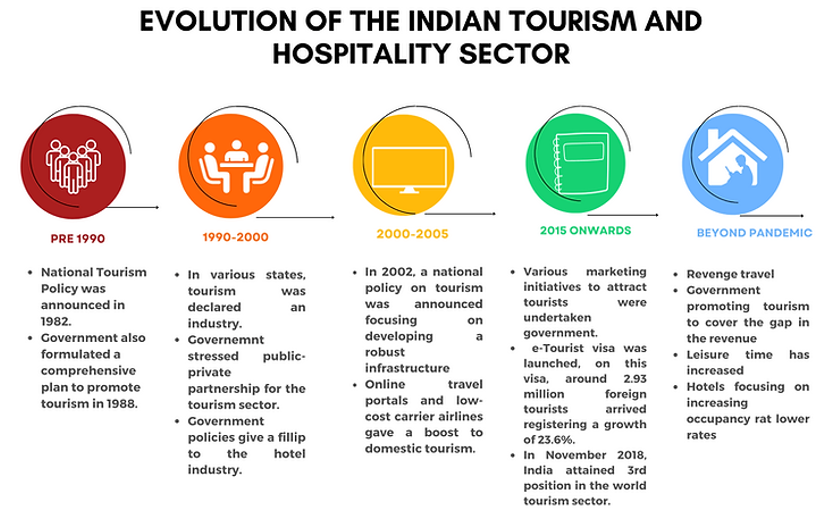
Context: Central Government at the second G-20 Tourism Working Group meeting in Siliguri, West Bengal has envisioned making India a $1 trillion tourism economy with 100 million international visitors by 2047.
The vision of the second G-20 TWG meeting was to project domestic tourism in a mission mode to maximise tourism potential in India.
Tourism Sector in India
The tourism industry in India accounts for roughly 5% of the country's gross domestic product (GDP).
in the financial year 2019-2020, the travel and tourism sector in India employed nearly 80 million people and accounted for about 15.3% of overall jobs in the country.
In 2021, India has ranked 54th in the World Economic Forum's (WEF) Travel and Tourism Development Index, down from 46th in 2019, but still, India remains at the top within South Asia.
Benefits of development of the Tourism Sector
Economic growth: Tourism can contribute significantly to the country's economic growth, as it generates earnings and creates employment opportunities for people in various sectors.
Increased foreign exchange earnings: Tourism can be a major source of foreign exchange earnings for India, as it attracts a large number of foreign tourists who spend money on accommodations, food, transportation, and other travel-related expenses.
Infrastructure development: Development of tourism sector can lead to the construction and improvement of infrastructure, such as roads, airports, and other transportation facilities, which can benefit other sectors as well.
Preservation of culture and heritage: Tourism can help preserve and promote the rich culture and heritage by encouraging the preservation of monuments, art, and traditions.
Improve standards of living: Lead to the development of local economies and improve the standard of living of the people. Also, it helps to renew the sense of pride and responsibility, especially among the local population.
Increased awareness and understanding: Help promote understanding and awareness of different cultures, traditions, and ways of life.
International recognition: Help raise India's international profile and reputation, which can initiate a cultural exchange, increases soft power, promote cultural diplomacy and have positive effects on various other sectors of the economy.
Types of Tourism in India
Religious and Cultural tourism: India offers a rich cultural heritage with religious and historical monuments. Prominent sites include-Ajanta & Ellora caves (Maharashtra), Mahabalipuram (TamilNadu), Hampi (Karnataka), Taj Mahal (Uttar Pradesh), Hawa Mahal (Rajasthan), Char Dham (Uttarakhand), Sanchi Stupa (Madhya Pradesh) etc.Various fairs and festivals include Pushkar fair (Rajasthan), Taj Mahotsav (Uttar Pradesh), and Suraj Kund mela (Haryana).
Adventure tourism: It offers opportunities for exploration of remote areas and exotic locales and engaging in various activities. The activities may include- trekking, Skiing facilities in the Himalayas, Paragliding, Ropeway, etc.
Beach Tourism: India’s vast coastline and islands provide ample opportunities for beach tourism. E.g., Blue flag beaches of Odisha, the backwaters of Kerala, Water sports in Goa, Scuba-diving in Andaman & Nicobar Islands and coral watching in Lakshadweep islands etc.
Eco-tourism: India has the potential to become a competitive ecotourism destination due to its abundant natural wealth (vast variety of flora & fauna) and wetlands. E.g., Thenamala (Kerala), Kaziranga National Park (Assam), Sundarbans.
This would ensure the socio-economic development of local communities while also entails the sustainable preservation of a naturally endowed area and its biodiversity.
Wildlife tourism: India has a rich forest cover and exotic species of wildlife which can boost wildlife tourism in India. E.g., Sariska Wildlife Sanctuary (Rajasthan), Corbett National Park (Uttarakhand).
Medical tourism: India avails cost-effective but superior-quality healthcare in terms of surgical procedures, general medication and Ayurvedic treatment and Yoga. E.g., Chennai (Tamil Nadu) attracts around 45% of medical tourists from foreign countries, Rishikesh (Yoga capital of World)
Rural Tourism: India offers a vast potential for rural tourism that focuses on exploring and experiencing the rural lifestyle and culture and participating in various activities such as farming, handicrafts, farm tourism and village walks etc.
Challenges of the Tourism Sector in India
Infrastructure: Inadequate infrastructure and connectivity in terms of transportation, accommodation, and tourist facilities is a major challenge for India's tourism industry, especially for remote destinations and hilly areas. E.g., Absence of basic amenities like clean drinking water, clean toilets, first aid and good public transport facilities.
Seasonality: India's tourism sector is highly seasonal, with most tourists visiting the country between October and March. This seasonal nature of tourism creates a challenge for the industry to maintain stable employment throughout the year.
Lack of skilled workforce: India's tourism sector faces a shortage of skilled workers, particularly in areas such as hospitality and tourism management which hampers quality service delivery to tourists.
Safety and security: Tourists may face risks of theft, harassment, and racial attacks in some parts of the country.
Environmental sustainability: Rapid growth of tourism in India has put significant pressure on the country's natural resources and environment. Lack of sustainable practices in the tourism industry has led to pollution (like plastic pollution in mountains), overuse of water resources, and damage to natural habitats.
Cultural sensitivity: India's diverse cultural heritage is one of its greatest attractions for tourists. However, the lack of sensitivity and understanding of cultural differences among tourists can lead to misunderstandings and conflicts.
Bureaucratic hurdles: Bureaucratic processes involved in obtaining permits, licenses, and other necessary paperwork can be time-consuming and challenging. E.g., Despite the introduction of the e-visa facility, visitors find the process for application cumbersome.
GOI has taken some critical steps to develop the Indian tourism industry
In the Union Budget 2023, for the promotion of tourism into mission mode, the Ministry of Tourism was allocated Rs 2,400 crore and a slew of measures were announced.
Focus on promoting domestic tourism: Initiatives like 'Dekho Apna Desh,' 'Swadesh Darshan Scheme,' and 'Vibrant Villages Programme - to encourage tourism in border villages' are launched to promote tourism within the country. These schemes focus on encouraging middle-class citizens to travel within the country instead of going overseas.
Also, under these schemes, the government aims to develop theme-based tourist circuits and better tourism infrastructure in remote parts of India.
Visit India Year 2023: The government has launched Visit India Year 2023 as India is heading G20 in 2023. It is a programme which invites the world to explore India and gives impetus to the tourism sector. Under the initiative, more than one lakh foreign delegates who will visit India in 2023 will be showcased the entire gamut of India's Culture, including monuments and festivals.
Boost to Adventure Tourism: To achieve the target of 1 trillion tourism economy, the focus is being put on various government-led initiatives under Public-Private Partnership (PPP) mode. Major push is being given to make India an ideal destination for sustainable adventure tourism.
Priority is given to green tourism, digitalisation, skilling, tourism MSMEs and destination management. The Ministry is working with States and industries for the development of the two mega-adventure tourism trails that would be launched in the Himalayas and the Ganga in 2023. These trails would be followed by others like the Narmada trail from Amarkantak in Madhya Pradesh to the Arabian sea, the Cauvery river trail, the West Coast trail from Kutch to Kanyakumari, and the East Coast trail from West Bengal to Kanyakumari.
Develop 50 new tourist destinations: Government would develop 50 new tourist destinations to attract more tourists across India. The new destinations will be selected through 'challenge mode' considering critical factors like connectivity to the destination, tourists' security, etc., and the focus will be on developing a complete package keeping in mind the needs of Indian and foreign tourists.
Promote eco-tourism: A new scheme, 'Amrit Dharohar,' has been announced to enhance biodiversity and support the optimum use of wetlands.
Starting Unity Malls: Apart from promoting domestic tourism, to promote local handicraft products, all the states are encouraged to build 'Unity Malls' at all prominent locations. These malls will act as a place to display and sell the state's local speciality products manufactured and made by local artisans.
Building new airports and improving railway connectivity: To promote and develop the Indian tourism industry further, Budget 2023 announced that India would develop 50 new airports, water aerodromes, and heliports to improve connectivity within the cities and smaller towns. Also, a budget has been allocated to develop railways in India.
Way Forward
Unlocking India’s immense tourism potential requires a comprehensive strategy that addresses the six key pillars of planning, place, people, policy, process, and promotion. The “6Ps” cover destination planning and management, infrastructure development, sustainability and safety, development of human capital, policy and process interventions to align the Centre and states as well as promoting the narrative of Indian tourism.
Presently, Tourism is a state subject. The central tourism department has been batting for it to be moved to the concurrent list, which can allow policy-making both at the Central and the State level.
Granting tourism infrastructure status will provide further impetus to the growth of the sector. Some Indian states have already provided industry status to tourism, a key demand of the sector for decades now.
Artificial Reality/Virtual Reality can help travellers explore destinations before they even arrive, providing virtual tours and simulations of famous landmarks, historical sites, and cultural experiences. AI-powered chatbots and digital assistants can help travellers plan their trips, recommend personalised activities, and offer real-time assistance while travelling.
Context: Union Budget 2023-24 announced a one-time new small savings scheme, Mahila Samman Savings Certificate which will be made available for a two-year period up to March 2025. This will offer deposit facility up to Rs 2 lakh in the name of women or girls for a tenor of 2 years at fixed interest rate of 7.5% with partial withdrawal option. To operationalise this scheme, Department of Economic Affairs has now notified the Mahila Samman Savings Certificate Scheme.
About Mahila Samman Savings Certificate
Application for opening an account: Application for opening an account under MSSC Scheme shall made by a woman for herself, or by the guardian on behalf of a minor girl on or before 31st March, 2025. The account will be single holder type account.
Deposits: A maximum limit of two lakh rupees can be deposited in an account or accounts held by an account holder. An individual may open any number of accounts subject to maximum limit for MSSC and time gap of three months shall be maintained between existing account and opening another account. Minimum amount for opening is an account is thousand rupees and any sum in multiples of one hundred rupees and no subsequent deposit shall be allowed in that account.
Interest: Deposits made under this scheme shall bear interest rate of 7.5% per annum compounded on quarterly basis.
Payment of maturity: Deposit shall mature on completion of two years from the date of deposit.
Withdrawal from account: Account holder shall be eligible to withdraw maximum up to 40% of Eligible Balance once after expiry of one year from the date of opening of account but before maturity of the account.
Premature closure of account: The account can be closed prematurely only after completion of 6 months since the opening of account in the following cases:
Death of account holder.
If post office or bank concerned is satisfied, in cases of extreme compassionate grounds such as medical support in life threatening diseases, death of guardian.
Administrative control of the scheme: Department of Economic Affairs under Ministry of Finance has notified Mahila Samman Savings Certificate Scheme, 2023 under the Government Savings Promotion Act, 1873.
Context: The Foreign Trade Policy (FTP) of 2023 allows exporters to get insurance coverage for losses caused by sudden trade barriers, and addresses grievances of exporters through a ministerial panel.
More on news
The new Foreign Trade Policy (FTP) for India in 2023 intends to broaden the scope of "political risk" covered under the export guarantee scheme, enabling exporters to receive insurance coverage for losses incurred due to the sudden imposition of non-tariff barriers by importing nations after the shipment has left India.
The policy also proposes the establishment of a ministerial panel to address the concerns of small exporters and an inter-ministerial committee to investigate trade-related grievances of micro, small, and medium enterprises (MSMEs).
This is expected to provide greater support to Indian exporters and improve their ability to navigate challenges posed by trade barriers.
Export Credit Guarantee Scheme
It is a scheme to provide enhanced export credit risk insurance cover to the extent of 90% to support small exporters under the Export Credit Insurance for Banks Whole Turnover Packaging Credit and Post Shipment (ECIB- WTPC & PS).
It is expected to benefit a number of small-scale exporters availing of export credit with banks which hold the ECGC WT-ECIB covers.
This will also enable the small exporters to explore new markets/new buyers and diversify their existing product portfolio competitively.
Enhanced Cover to Banks
The enhanced cover shall be available for manufacturer- exporters availing fund-based export credit working capital limit up to ₹ 20 crore (i.e., total Packaging Credit and Post Shipment limit per exporter/exporter-group) excluding the Gems, Jewellery & Diamond sector and merchant exporters/traders.
This new scheme will enable the banks holding ECGC’s WT-ECIB cover to explore the possibility of reducing interest rates further so that all the stakeholders are benefitted.
Export Credit Guarantee Corporation (ECGC)
Established in 1957 and fully owned by the government of India, the Export Credit Guarantee Corporation of India Ltd. (ECGC) was created to boost exports from the country by offering credit risk insurance and associated services for exports.
ECGC manages the National Export Insurance Account (NEIA) Trust, which caters to project exports of national and strategic importance.
ECGC provides (i) a range of insurance covers to Indian exporters against the risk of non-realization of export proceeds due to commercial or political risks (ii) different types of credit insurance covers to banks and other financial institutions to enable them to extend credit facilities to exporters and (iii) Export Factoring facility for MSME sector which is a package of financial products consisting of working capital financing, credit risk protection, maintenance of sales ledger and collection of export receivables from the buyer located in overseas country.
Context: The Indian Patent Office has recently denied Johnson & Johnson's (J&J) request to extend their patent on Bedaquiline, a tablet-form drug used for treating drug-resistant tuberculosis (TB), beyond July 2023. This decision paves the way for other drug manufacturers to produce generic versions of Bedaquiline, which is anticipated to be more economical and aid India in achieving its target of eradicating TB by 2025.
What is drug-resistant TB?
Drug-resistant tuberculosis (TB) occurs when the bacteria causing TB become resistant to the medications used to treat it. There are different types of drug-resistant TB, including multi-drug-resistant (MDR) TB and extensively-drug-resistant (XDR) TB, which are much harder to treat than regular TB.
MDR TB is resistant to at least two of the most commonly used drugs for TB treatment, while XDR TB is resistant to even more medications, making it much harder to treat. The incidence of drug-resistant TB is a major obstacle to eliminating TB in India and globally, and efforts are needed to strengthen TB prevention and control measures, increase awareness, and improve access to effective treatments.
Drug-resistant tuberculosis (TB) is a serious global health challenge that occurs when the bacteria causing TB become resistant to the medications used to treat it.
India has a high burden of drug-resistant TB, including MDR TB and XDR TB. According to the World Health Organization (WHO), India accounted for around a quarter of the world's cases of MDR TB and XDR TB in 2019.
How is drug-resistant TB treated?
Drug-resistant TB is a form of TB caused by bacteria that have become resistant to the medications used to treat it. Treatment for drug-resistant TB is more complex and longer than for regular TB.
TB is typically treated by following a strict schedule of drug doses and frequencies prescribed by a physician. Failure to adhere to this schedule can lead to drug-resistant TB. However, deviations from the schedule can occur due to drug side effects that decrease quality of life or inadequate access to necessary drugs.
One of the primary drugs used to treat pulmonary MDR TB is Bedaquiline. In 2018, the World Health Organization recommended an oral regimen that included Bedaquiline, replacing two injectable drugs for MDR TB.
Although Bedaquiline had not completed phase III trials, the recommendation was based on smaller trials, outcomes in TB elimination programs, and the difficulty of treating MDR TB. Patients receiving the drug were closely monitored.
How effective is Bedaquiline in treating drug-resistant TB?
Bedaquiline is typically prescribed for a period of six months, with a higher dose in the first two weeks followed by a lower dosage for 22 weeks. This is shorter than the treatment routines for pulmonary MDR TB, which can last between 9 to 24 months.
Results from a phase II clinical trial showed that Bedaquiline was effective in converting a patient's sputum culture from positive to negative, with durable results observed at 24 weeks and a high likelihood of response at 120 weeks.
Compared to other second-line treatment options that are injected and can have severe side effects like permanent hearing loss, Bedaquiline is available in tablet form and is less harmful. However, it has potential side effects of its own, such as toxicity to the heart and liver. As such, it is recommended only when other treatment options for MDR TB have failed.
In India, Bedaquiline use is governed by guidelines under the Programmatic Management of MDR TB as part of the National TB Elimination Program.
However, the WHO's decision to recommend Bedaquiline before it completed its phase III trials raised ethical questions about the safety threshold for pharmaceutical companies producing drugs for desperate patients and the use of insufficiently tested drugs on compassionate grounds.
Why was the patent application for Bedaquiline production rejected?
Johnson & Johnson (J&J) filed a patent application for the production of a fumarate salt compound to create Bedaquiline tablets, but it was opposed by two groups:
1) Network of Maharashtra people living with HIV and
2) TB survivors Nandita Venkatesan and Phumeza Tisile, supported by Médecins Sans Frontières.
The groups argued that J&J's method to produce a "solid pharmaceutical composition" of Bedaquiline was obvious and didn't require an inventive step. The Indian Patent Act 1970 requires an invention to be "not obvious to a person skilled in the art" to be granted a patent.
In addition, they claimed that J&J's application lacked information about foreign patent applications, their specifications, and priority dates, among other details required under Section 8 of the Act.
They also argued that the current application drew heavily from a previous patent, WO 2004/011436, which discussed a similar compound on which Bedaquiline is based, and whose priority date (2002) preceded the new application.
The Patent Office rejected the application on several grounds, including Sections 3d and 3e of the Act, which state that a "new form of a known substance which does not result in the enhancement of the known efficacy of that substance" and "a substance obtained by a mere admixture resulting only in the aggregation of the properties of the components thereof" are not patentable."
Why is the rejection notable?
The rejection of J&J’s patent application for the production of the fumarate salt of Bedaquiline tablets is notable for several reasons. India has the world's largest population of people living with drug-resistant TB, and J&J's patent enabled them to charge $400 (Rs 33,000) for the six-month treatment, in addition to the cost of other drugs. With the rejection of the patent, the cost of Bedaquiline is expected to drop by up to 80%.
The Indian government has directly procured and distributed the drug through state-level TB programs, and since 2016, India has also received free donations of Bedaquiline from J&J and the US Agency for International Development.
The rejection of the patent application is also significant as it addresses the issue of 'evergreening,' where patent owners continuously extend their rights and apply multiple patents for the same product.
The rejection of the patent application was due to various grounds, including the fact that J&J's method for producing the solid pharmaceutical composition of Bedaquiline was deemed "obvious" and did not require an "inventive step."
In addition, the application did not provide the necessary information about foreign patent applications and their specifications, and it was found to be significantly based on a previous patent, WO 2004/011436. Furthermore, the application violated Indian law, which disallows "evergreening." J&J's current patent is set to expire in July 2023.
Context: Ministry of Commerce has unveiled a New Trade Policy, 2023.
About Foreign Trade Policy (FTP):
It is a set of rules and procedures for facilitating imports into, augmenting exports from India and creating favourable balance of payment position.
Department of Commerce looks in formulation and monitoring of FTP.
Powers to formulate a FTP policy or EXIM policy lies under the Foreign Trade Development and Regulation Act, 1992.
Director General of Foreign Trade implements FTP
Foreign Trade Policy - 2015-2020:
Goals:
Increase India’s exports of merchandise and services to USD 900 billion by 2019-20
Raise India’s share in world exports from 2% to 3.5%.
Objectives:
Stable and sustainable policy environment
Export Promotion Mission for India;
Diversification of India’s export basket
Achieve global competitiveness
Better integration with major regions and countries,
Provide boost to Make in India initiative;
To rationalize imports
Reduce the trade imbalance.
Features:
FTP 2015-20 introduces two new schemes, namely ‘Merchandise Exports from India Scheme (MEIS)’ for export of specified goods to specified markets and ‘Services Exports from India Scheme (SEIS)’ for increasing exports of notified services.
Duty credit scrips issued under MEIS and SEIS and the goods imported against these scrips are fully transferable.
For grant of rewards under MEIS, the countries have been categorized into 3 Groups, whereas the rates of rewards under MEIS range from 2 per cent to 5 per cent. Under SEIS the selected Services would be rewarded at the rates of 3 per cent and 5 per cent.
Measures have been adopted to nudge procurement of capital goods from indigenous manufacturers under the EPCG scheme by reducing specific export obligation to 75per cent of the normal export obligation.
Measures have been taken to give a boost to exports of defense and hi-tech items.
E-Commerce exports of handloom products, books/periodicals, leather footwear, toys and customised fashion garments through courier or foreign post office would also be able to get benefit of MEIS (for values up to INR 25,000).
Manufacturers, who are also status holders, will now be able to self-certify their manufactured goods in phases, as originating from India with a view to qualifying for preferential treatment under various forms of bilateral and regional trade agreements. This ‘Approved Exporter System’ will help manufacturer exporters considerably in getting fast access to international markets.
A number of steps have been taken for encouraging manufacturing and exports under 100 per cent EOU/EHTP/STPI/BTP Schemes. The steps include a fast track clearance facility for these units, permitting them to share infrastructure facilities, permitting inter unit transfer of goods and services, permitting them to set up warehouses near the port of export and to use duty free equipment for training purposes.
108 MSME clusters have been identified for focused interventions to boost exports. Accordingly, ‘Niryat Bandhu Scheme’ has been galvanised and repositioned to achieve the objectives of ‘Skill India’.
Trade facilitation and enhancing the ease of doing business are the other major focus areas in this new FTP. One of the major objective of new FTP is to move towards paperless working in 24x7 environment.
Why do we need a new Trade policy?
Policy of 2015 is old now and has been on extension for two years.
New sectors are making their mark: E-commerce, IT, mobile apps etc.
India’s export growth has not been very promising (missed last targets)
India’s trade deficit is ever widening.
Poor diversification of exports with respect to destinations and composition.
New policies and schemes are not in line with Policy of 2015: Development of Enterprise and Service Hubs (DESH) Bill, One District One Product, etc.
Previous policy missed on the skill development with respect to external sector.
India needs to take advantage of Transition goods and network goods.
New Trade Policy 2023:
Target: to take India's exports to 2 trillion dollars by 2030.
4 pillars of FTP 2023: Incentive to Remission, Export promotion through collaboration, Ease of doing business and Emerging Areas.
Provisions:
1. Process Re-Engineering and Automation: The policy emphasizes export promotion and development, moving away from an incentive regime to a regime which is facilitating, based on technology interface and principles of collaboration.
2. Towns of Export Excellence: Four new towns, namely Faridabad, Mirzapur, Moradabad, and Varanasi, have been designated as Towns of Export Excellence (TEE) in addition to the existing 39 towns. The TEEs will have priority access to export promotion funds under the Market Access Initiative scheme and will be able to avail Common Service Provider (CSP) benefits for export fulfilment under the EPCG Scheme. This addition is expected to boost the exports of handlooms, handicrafts, and carpets.
3. Recognition of Exporters: Exporter firms recognized with 'status' based on export performance will now be partners in capacity-building initiatives on a best-endeavor basis. Similar to the 'each one teach one' initiative, 2-star and above status holders would be encouraged to provide trade-related training based on a model curriculum to interested individuals.
4. Promoting export from the districts: The FTP aims at building partnerships with State governments and taking forward the Districts as Export Hubs (DEH) initiative to promote exports at the district level and accelerate the development of grassroots trade ecosystem. Efforts to identify export worthy products & services and resolve concerns at the district level will be made through an institutional mechanism – State Export Promotion Committee and District Export Promotion Committee at the State and District level, respectively.
5. Streamlining SCOMET Policy: A robust export control system in India would provide access of dual-use High end goods and technologies to Indian exporters while facilitating exports of controlled items/technologies under SCOMET from India.
6. Facilitating E-Commerce Exports: FTP 2023 outlines the intent and roadmap for establishing e-commerce hubs and related elements such as payment reconciliation, book-keeping, returns policy, and export entitlements. As a starting point, the consignment wise cap on E-Commerce exports through courier has been raised from ₹5Lakh to ₹10 Lakh in the FTP 2023. Depending on the feedback of exporters, this cap will be further revised or eventually removed. Extensive outreach and training activities will be taken up to build capacity of artisans, weavers, garment manufacturers, gems and jewellery designers to onboard them on E-Commerce platforms and facilitate higher exports.
7. Facilitation under Advance authorization Scheme: Special Advance Authorisation Scheme extended to export of Apparel and Clothing sector under para 4.07 of HBP on self-declaration basis to facilitate prompt execution of export orders – Norms would be fixed within fixed timeframe. Benefits of Self-Ratification Scheme for fixation of Input-Output Norms extended to 2 star and above status holders in addition to Authorised Economic Operators at present.
8. Merchanting trade: FTP 2023 has introduced provisions for merchanting trade. Merchanting trade of restricted and prohibited items under export policy would now be possible. Merchanting trade involves shipment of goods from one foreign country to another foreign country without touching Indian ports, involving an Indian intermediary.
9. Amnesty Scheme: government is strongly committed to reducing litigation and fostering trust-based relationships to help alleviate the issues faced by exporters. In line with "Vivaad se Vishwaas" initiative, which sought to settle tax disputes amicably, the government is introducing a special one-time Amnesty Scheme under the FTP 2023 to address default on Export Obligations. All pending cases of the default in meeting Export Obligation (EO) of authorizations mentioned can be regularized on payment of all customs duties that were exempted in proportion to unfulfilled Export Obligation.
To watch in-depth analysis on New Foreign Trade Policy 2023, watch the Daily New Simplified dated 01, April 2023. Follow the link given below:
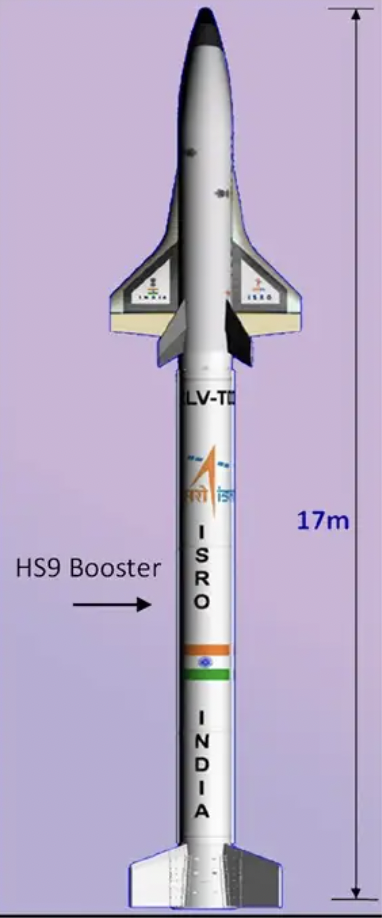
Context: Indian Space Research Organisation (ISRO) has successfully conducted landing experiment of Reusable Launch Vehicle – Technology Demonstration (RLV - TD) programme.
More on news
For the first time in the world, a winged body has been carried to an altitude of 4.5 km by a helicopter (Chinook) and released for carrying out an autonomous landing on a runway. The release of the RLV was autonomous, as it performed approach and landing manoeuvres using Integrated Navigation, Guidance and Control System and completed the landing on the airstrip.
RLV – TD
ISRO's RLV-TD is a technology demonstrator for a fully reusable launch vehicle, featuring hypersonic flight, autonomous landing, and powered cruise flight technologies. It has a winged aircraft-like configuration with a fuselage, double delta wings, twin vertical tails, and active control surfaces. It was boosted to Mach no: 5 by a solid booster and will be scaled up to become India's first stage of a reusable two-stage orbital launch vehicle.
Objectives of RLV – TD
Hypersonic aero thermodynamic characterisation of wing body
Evaluation of autonomous Navigation, Guidance and Control (NGC) schemes
Integrated flight management
Thermal Protection System Evaluation
Indian Space Research Organisation (ISRO)
It is the space agency of India which is involved in science, engineering and technology to harvest the benefits of outer space for India and the mankind.
ISRO was previously the Indian National Committee for Space Research (INCOSPAR), set up by the Government of India in 1962, as envisioned by Dr. Vikram Ambalal Sarabhai.
ISRO was formed on August 15, 1969 and superseded INCOSPAR with an expanded role to harness space technology.
Department of Space (DOS) was set up and ISRO was brought under DOS in 1972.
ISRO has its headquarters in Bengaluru.
The activities of ISRO are guided by its Chairman, who would also be the secretary of DOS and Chairman of Space commission – the apex body that formulates the policies and overseas the implementation of the Indian Space Programme.
Centres & Units of ISRO
Activities
Vikram Sarabhai Space Centre (VSSC), Thiruvananthapuram
Building of Launch Vehicles
U R Rao Satellite Centre (URSC), Bengaluru
Development and designing of Satellites
Satish Dhawan Space Centre (SDSC), Sriharikota
Integration and launching of satellites and launch vehicles
Liquid Propulsion Systems Centre (LPSC), Valiamala & Bengaluru
Development of liquid stages including cryogenic stage
Space Applications Centre (SAC), Ahmedabad
Sensors for Communication and Remote Sensing satellites and application aspects of the space technology
National Remote Sensing Centre (NRSC), Hyderabad.
Remote Sensing satellite data reception processing and dissemination
Chinook Helicopter
The Boeing CH-47 Chinook is a tandem rotor helicopter developed by American rotorcraft company Vertol and manufactured by Boeing Vertol.
The Chinook is a heavy-lift helicopter that is among the heaviest lifting Western helicopters.
It has a top speed of 310 km per hour and is one of the fastest helicopters in the world.
It is also very effective in rescue and relief missions during national disasters, due to capability to carry heavy loads.
The Indian Air Force operates a fleet of 15 Boeing made Chinook helicopters, which were acquired from the US in 2015 and were inducted into service in 2019.