GS Paper 3

FCRA regulation

Context: Recently the Supreme Court ordered 6,000 non-governmental organisations (NGOs) to go back to the government for the satisfaction of their grievances over the non-renewal of their Foreign Contribution Regulation Act (FCRA) registration. About 5,900 NGOs' FCRA registrations expired on December 31, 2021, either because the NGOs failed to apply for renewal before the deadline or because the MHA refused to renew them for suspected violations of the Act.

What is the FCRA? 

  • Foreign Contribution Regulation Act (FCRA) was enacted in 1976 to regulate foreign donations, which ensures that they do not jeopardise national security
  • It was updated in 2010 to include a raft of new regulations governing foreign donations. 

Who needs to comply with FCRA?

All associations, groups, and non-governmental organisations (NGOs) who want to receive foreign donations must comply with the FCRA.

Major provisions of FCRA

  • Registration under the FCRA is required of all such NGOs. 
  • The registration is valid for five years at first, after which it can be renewed if all requirements are met. 
  • Foreign contributions for social, educational, religious, economic, and cultural reasons are permitted for registered organisations. 
  • Annual returns, similar to those filed with the Internal Revenue Service, are required to be filed.

New guidelines under FCRA

In 2015, the Ministry of Home Affairs (MHA) issued new guidelines requiring NGOs 

  • To certify that accepting foreign funding will not jeopardise India's sovereignty and integrity, have a negative influence on friendly relations with other countries, or undermine communal harmony.
  • It further stated that all such NGOs would be required to have accounts in either nationalised or private banks with core banking services in order to provide security agencies with real-time access.

Who is ineligible to receive foreign donations? 

  • Originally Foreign contributions are illegal for members of the legislature and political parties, as well as government officials, judges, and journalists. 
  • However, the MHA in 2017 allowed political parties to receive contributions from a foreign firm's Indian affiliate or a foreign company in which an Indian owns 50% or more shares.

What other options are there for obtaining foreign funding? 

  • The alternative option is to request prior authorisation to receive foreign contributions. It is given in exchange for receiving a specified amount from a specific donor in order to carry out certain activities or initiatives. 
  • However, statutes such as the Societies Registration Act of 1860, the Indian Trusts Act of 1882, or Section 25 of the Companies Act of 1956 should be used to register the association. A letter of commitment from the overseas donor is also necessary, outlining the amount and purpose.

What happens if a registration is cancelled or suspended? 

  • The MHA can temporarily revoke an association's FCRA registration after inspecting its books and obtaining any negative feedback about its operations. Until a decision is made, the association is unable to accept new donations or use more than 25% of the funds in the designated bank account without approval from the MHA.
  • The MHA has the authority to cancel an organisation's registration, after which it will be ineligible for registration or granting of 'prior authorization' for three years. 
  • When an audit uncovers problems in an NGO's finances, such as misappropriation of foreign cash, registrations are also revoked. 
  • According to the FCRA, no certificate cancellation order can be granted until the person or NGO in question has had a reasonable opportunity to be heard. An NGO's registration is cancelled after three years, and it is not eligible for re-registration.
  • The government can also suspend an NGO's registration for 180 days while an investigation is conducted, as well as freeze its funds. 
  • The government's instructions can be overturned in the High Court. 
  • The majority of those whose registrations have been cancelled have been suspected of financial issues or "political activities." 
  • Following an inquiry into Amnesty's financial practices by the Enforcement Directorate in 2018, the organisation was forced to close its operations in India in 2020. 
PAHCHAN card to Handicraft artisans and Handloom Weavers

Context: Recently the Union Minister of State for Textiles, Smt. Darshana Jardosh in a written reply to a question in Lok Sabha today informed that the Ministry of Textiles has issued PAHCHAN cards to 30.53 lakhs handicrafts artisans and 30.90 lakhs handloom weavers across the country under the PAHCHAN initiative since its inception.

About PAHCHAN card

  • Pehchan’ cards scheme is a part of the initiative of the Union Textile Ministry to register and provide identity cards to handicraft artisans and link them to a national database. 
  • It is a newly upgraded ID card for artisans that will be linked with their Aadhaar numbers and bank accounts so that they can receive direct cash-transfer benefits.

Benefits of PAHCHAN card

  • All Insured Persons will be issued with two magnetic cards, one for Insured persons & the other for family members 
  • The central database will be created with demographic and biometric details of Insured persons and their families. 
  • Insured Persons and their family members can avail of treatment in any ESI Hospital or dispensary across India. 
  • Besides the ID card will enable the artisans to avail of easy loans at a four per cent interest rate and they get the benefit of life insurance and `1200 per year for their children studying between Class IX and Class XII. 
  • Biometric details (fingerprints) to verify and authenticate Insured Persons and their families through card swipes. 
  • Employers can submit their Return of Contribution online Employers can collect information on employees’ benefits availed by respective employees online. 
  • One-time registration. Employees will carry forward with the same set of cards every time they change employment to prevent duplication of enrolment can be avoided.

Coastal Vulnerability Index

Context: Indian National Centre for Ocean Information Services (INCOIS) has carried out coastal vulnerability assessment for entire Indian coast at states level to prepare a Coastal Vulnerability Index (CVI).

Coastal Ecosystem

  • The highly productive coastal zone, intermediate between land and sea, is very vulnerable to coastal hazards because of its dynamic nature.
  • The coastal ecosystem provides various ecosystem goods and services for human well-being and the livelihood of coastal communities. 
  • Due to their productivity, coastal zones are also crucial for long-term global sustainability and economic development. 

What is coastal vulnerability?

  • It is the identification of coastal resources at risk due to coastal hazards.
  • A coastal hazard is defined as the occurrence of a phenomenon (e.g., a tropical storm/Sea level rise/Tsunami etc.), which has the potential for causing damage to, or loss of, natural ecosystems, buildings, and infrastructures.
  • Climate change poses a serious threat to the physical, economic, and social systems of the coastal environment.
  • Unprecedented pressure from population growth and development activities has had a negative impact on natural coastal phenomena.
  • In tropical countries, the coastal zone is constantly affected by cyclonic activities and storm surges, resulting in coastal erosion, inundation, and seawater intrusion, which has greatly increased the vulnerability of the coastal environments.
  • Environmental degradation, loss of mangroves, land conversion for shrimp farming, and other developmental activities have also increased coastal vulnerability to natural and anthropogenic hazards. 
  • Short term vulnerability: Due to Cyclone / Storm surge/ Tsunami / Flash rain Flooding / Earthquake in the coastal area etc. 
  • Long term vulnerability: Due to Sea level rise (SLR) / Ocean acidification / Coastal land subsidence etc.

Vulnerability of the Indian coastline

  • India has a 7500-km-long coastline with nine states and four union territories are highly susceptible to climate change. 
  • About 35% of the Indian Population live within 100 km from the shoreline.
  • Most of the coastal areas are low lying and vulnerable to Oceanogenic disasters such as Tsunamis, Storm Surges, Sea-level rise.
  • Dec 26, 2004, Tsunami resulted in a loss of 18,045 deaths and 6,47,599 persons displaced.
  • Increased frequency and intensity of the disasters (Uttarakhand flood 2013, Phailin Cyclone 2013.

About Coastal Vulnerability Index

  • It is a quantitative tool that combines physical and socioeconomic indicators to evaluate how vulnerable coastal areas are to the effects of climate change, including but not limited to sea level rise, storm surges, and erosion. 
  • INCOIS has prepared the Coastal Vulnerability Index (CVI) maps for the entire coastline of India to assess the probable implications of sea-level rise along the Indian coast.
  • Parameters: shoreline change rate, sea-level change rate, coastal elevation, coastal slope, coastal geomorphology, significant wave height and tidal range. 

INCOIS

  • It was established as an autonomous body in 1999 under the Ministry of Earth Sciences (MoES) and is a unit of the Earth System Science Organisation (ESSO).
  • It is mandated to provide the best possible ocean information and advisory services to society, industry, government agencies and the scientific community through sustained ocean observations.
  • Its mission it to provide ocean data, information and advisory services to society, industry, the government and the scientific community through systematic and focused research in information management and ocean modelling.
  • Its headquarters is situated at Hyderabad.

MoD signs three contracts worth ₹5,400 crore

Context: Ministry of Defence (MoD) has signed three contracts worth ₹5,400 crores recently. All these projects are under Buy {Indian – IDMM (Indigenously Designed Developed and Manufactured)} category.

Major Highlights

  • Two contracts were signed with Bharat Electronics Limited (BEL) worth ₹2,400 crores for the procurement of:
    • Automated Air Defence Control and Reporting System ‘Project Akashteer’ for the Army
    • Sarang Electronic Support Measure (ESM) systems for the Navy.
  • Another ₹2,963 crore contract was signed with NewSpace India Limited (NSIL) for an advanced communication satellite, GSAT 7B, for the Army. 

Project Akashteer

  • ‘Project Akashteer’ worth ₹1,982 crores is an automated air defence control and reporting system that will allow the army’s air defence units to operate in an integrated manner.
  • It will enable monitoring of low-level airspace over the battle areas of the Indian Army and effectively control the ground-based air defence weapon systems.

Sarang Electronic Support Measure (ESM) systems

  • The second contract worth ₹412 crores with BEL is for Sarang Electronic Support Measure systems for Indian Navy helicopters. ‘Sarang’ is designed and developed indigenously by the Defence Electronics Research Laboratory, Hyderabad under the programme, Samudrika.
  • It will generate employment of approximately two lakh man-days over a period of three years.

GSAT 7B

  • The five-tonne geostationary satellite will be developed indigenously by Indian Space Research Organisation (ISRO).
  • The satellite will considerably enhance the communication capability of the Indian Army by providing mission-critical beyond-line-of-sight communication to troops and formations as well as weapon and airborne platforms.
  • The Army is likely to get the satellite in 2026. Unlike the Indian Air Force and the Navy, the Army currently does not have a dedicated satellite.

Many parts and sub-assemblies and systems of the satellite will be sourced from indigenous manufacturers, including micro, small and medium enterprises (MSMEs) and start-ups. The project will generate employment of around 300,000 man-days over the next three-and-a-half years.

Massive coronal hole found on sun, it's 20 times larger than Earth: Experts

Context: The sun has developed a massive “hole” 20 times larger than Earth, marking the second such occurrence in a week. The coronal hole is unleashing solar winds of 2.9 million km/h toward Earth. 

More on the news: Scientists are carefully monitoring the situation to assess if the winds will impact our planet’s magnetic field and satellites – with the potential for knock-on effects on the internet, mobile phone networks, and GPS. It is also noteworthy to scientists as it has appeared near the sun’s equator. NASA’s Solar Dynamics Observatory captured holes.

Coronal holes

  • Coronal holes are areas of the Sun's corona where the magnetic field is open and allows for the escape of high-speed solar wind particles. 
  • Coronal holes are usually harmless, experts say and are usually found near the sun’s poles.
  • These areas appear as dark regions in images of the Sun's corona taken in ultraviolet and X-ray wavelengths. 
  • Coronal holes are characterized by low magnetic field strength and low temperatures compared to the surrounding areas.
  • Coronal holes are thought to be related to the Sun's magnetic field and the Sun's 11-year solar cycle, with more coronal holes appearing during times of high solar activity.
  • They are cooler, less dense areas of the star and appear during the less active stage of the sun’s 11-year cycle.
  • Coronal holes are magnetically open areas that are one source of the high-speed solar wind.
  • At times, the solar wind can generate aurora at higher latitudes on Earth. That coronal hole produced auroras far further south than usual, with the skies over Arizona turning an electric purple and green.
  • The solar wind particles that escape from coronal holes can impact Earth's magnetic field, causing auroras and other geomagnetic disturbances. Scientists study coronal holes to better understand the Sun's magnetic field and its effects on the space environment around Earth.

SOLAR ENERGETIC PARTICLES (SEP), SOLAR WINDS AND FLARES, AND CORONAL MASS EJECTIONS (CMES)

Solar flares and Coronal Mass Ejections (CMEs)

  • CMEs and Solar flares are both explosions that occur on the sun. Sometimes they occur together, but they are not the same thing - they emit different things, they look and travel differently, and they have different effects near planets.
  • Both eruptions are created when the motion of the sun’s interior contorts its own magnetic fields. Both originate from corona. 
  • Solar flares are giant burst of X-rays and energy which travel at the speed of light in all directions. 
  • CME are giant cloud of particles (mostly protons and electrons and powerful magnetic fields) hurled into the space, in particular direction. CMEs take one to three days to reach the earth. Flares only takes eight minutes. 
  • Flares and CMEs have different effects at Earth as well. The energy from a flare can disrupt the area of the atmosphere through which radio waves travel. This can lead to degradation and, at worst, temporary blackouts in navigation and communications signals. On the other hand, CMEs can funnel particles into near-Earth space. A CME can jostle Earth’s magnetic fields creating currents that drive particles down toward Earth's poles. When these react with oxygen and nitrogen, they help create the aurora, also known as the Northern and Southern Lights.
  • A solar flare is a sudden flash of increased brightness on the Sun, usually observed near its surface and in close proximity to a sunspot group. Powerful flares are often, but not always, accompanied by a coronal mass ejection. 
  • Solar flares affect all layers of the solar atmosphere (photosphere, chromosphere, and corona).
  • Flares occur in active regions around sunspots, where intense magnetic fields penetrate the photosphere to link the corona to the solar interior.
  • Flares are powered by the sudden release of magnetic energy stored in the corona.

Solar winds constantly occur due to the corona of the sun continually expanding. The solar wind is a stream of charged particles consisting of electrons, protons and alpha particles with kinetic energy between 0.5 and 10 keV. The composition of the solar wind plasma also includes a mixture of materials found in the solar plasma: trace amounts of heavy ions and atomic nuclei C, N, O, Ne, Mg, Si, S, and Fe.

Solar energetic particles (SEP) 

  • They are high-energy particles coming from the Sun. 
  • They were first observed in the early 1940s. 
  • They consist of protons, electrons and high-energy nuclei with energy ranging from a few tens of keV to many GeV. 
  • They are of particular interest and importance because they can endanger life in outer space (especially particles above 40 MeV). But their onset is extraordinarily hard to predict, in part because we still don’t know exactly where on the Sun they come from.
  • The greatest mystery about gradual SEPs is not what speeds them up, but where they come from in the first place. For reasons still not fully understood, SEPs contain a different mix of particles than the other solar material streaming off the Sun in the solar wind – fewer carbon, sulfur, and phosphorous ions, for instance. 
  • Many scientists thought Solar Energetic Particles would be found at the edges of the active region where the magnetic field is already open and material can escape directly. But the fingerprint matched only in regions where the magnetic field is still closed.
  • The SEPs had somehow broken free from strong magnetic loops connected to the Sun at both ends. These loops trap material near the top of the chromosphere, one layer below where solar flares and coronal mass ejections erupt.

SEBI pushes norms to ensure better disclosures, boost transparency

Context: Security and Exchange Board of India has ordered the top 100 listed companies to improve disclosure norms and transparency by mandating that they confirm or deny price-sensitive market rumours, and in the case of material board decisions disclose them to exchanges within 30 minutes.. It also allowed Private Equity firms to own stakes in Asset Management Companies that operate mutual funds. 

About SEBI

  • The Securities and Exchange Board of India was constituted as a non-statutory body on April 12, 1988 through a resolution of the Government of India. The Securities and Exchange Board of India was established as a statutory body in the year 1992 and the provisions of the Securities and Exchange Board of India Act, 1992 (15 of 1992) came into force on January 30, 1992.
  • Basic function: to protect the interests of investors in securities and to promote the development of, and to regulate the securities market. 
  • It consists of one chairman, four whole time members and four part-time members. They together make up the board of SEBI.
  • Securities Appellate Tribunal is a statutory body established under the provisions of Section 15K of the Securities and Exchange Board of India Act, 1992 to hear and dispose of appeals against orders passed by the Securities and Exchange Board of India

Broad functions of SEBI

Development functions

  • Training of intermediaries
  • To promote trading in the security market. For example in permitted internet trading, made underwriting optional etc. 

Regulatory functions

  • Mandatory registration of brokers , sub brokers , share transfer agents , trustees, merchant bankers and others
  • Developed a code of conduct for intermediaries
  • Registration and regulating the working of mutual funds
  • Regulating takeover of companies
  • Audit of stock exchanges

For the discharge of its functions SEBI is given various powers.

Some of these powers are as follows:

1. To approve by- laws of stock exchanges

2. To ask stock exchanges to amend their by- laws

3. Inspect the books of accounts and call for periodical returns from recognised stock

4. Inspect books of accounts of financial intermediaries

5. Compel certain companies to list their shares in one or more stock exchanges

6. Registration of brokers

PROBLEMS AND EMERGING CHALLENGES

SEBI regulations are laws but the process through which regulations are drafted leaves a lot to be desired. Neither regulation making nor post-mortem analysis of regulations is shaped by evidence. 

Following are the problems and challenges ahead of SEBI:

Enforcement process

SEBI has made various regulations and issued orders as a civil court but only making regulations and giving orders is not enough if it is not able to enforce the same. SEBI need to strengthen its surveillance and enforcement functions.it needs to ensure that violations do not go unnoticed whether small or large.

Talent pool and market intelligence

In 2012 SEBI had 643 employees whereas the US security and exchange commission alone had 1000 people. As we all know, human resource is the most important resource for an organisation. SEBI needs to increase its human resource in both quality and quantity. It needs to significantly improve its market intelligence, technology and talent pool in order to improve its performance.

Deepening capital market

The number of participants in the capital market has not risen much. Still a large section of society does not deal in the security market. SEBI has done a lot to encourage people to participate in the capital market such as abolishing entry load on mutual funds, simplifying KYC norms but it needs to take some stronger steps to deepen participation in the capital market.

It should work deeper participation in equity by pension, superannuation and gratuity funds, developing a vibrant retail debt segment and reducing the cost of transaction.

Corporate debt and securitization market

Despite numerous attempts the debt market volume has increased but it has failed to attract sufficient liquidity. The regulator needs to develop a vibrant corporate debt market and securitization market but these largely remain part of the over the counter market.

Matching up to global standard

Capital markets are growing and the size of SEBI as compared to the security market is not sufficient to properly regulate the capital market. Like its peers (regulators of US and UK) it needs to establish self-regulatory organisations. They can focus on routine decisions and SEBI can work on more important issues.

Negatively charged

SEBI’s appointment process has always been criticized. Allegations of corruption by SEBI staff are frequently heard. The accountability mechanisms that envelope SEBI are quite poor. It is very important to make the recruitment process fair and transparent.

Reference: World wide journals

Committees constituted for the improvement of capital market regulations and development of corporate governance:

  1. Narayan Murthy Committee, 2002
  2. Uday Kotak Committee 2017
  3. Dr. D B Pathak Committee 2021
  4. Mahalingam Committee 2022

Various suggestions given by these committees have been incorporated to improve SEBI’s role in the capital market and investors’ protection. 

NCLAT upholds ₹1,338-crore penalty imposed on Google

Context:  The National Company Law Appellate Tribunal (NCLAT) upheld the ₹1,337-crore penalty imposed on Google by the Competition Commission of India (CCI) saying that the order did not violate the principles of natural justice.

Background: CCI imposed this fine on the charge that Google has misused its dominant position in the Android ecosystem showing the anti-competitive tendencies.

About the order:

However, NCLAT has restricted some directives of CCI where it called for allowing third party app stores on google play store. Google is also allowed by NCLAT to restrict uninstallation of its pre-installed apps.

About the NCLAT:

  • National Company Law Appellate Tribunal (NCLAT) was constituted under Section 410 of the Companies Act, 2013 for hearing appeals against the orders of National Company Law Tribunal(s) (NCLT), with effect from 1st June, 2016.
  • NCLAT is also the Appellate Tribunal for hearing appeals against the orders passed by NCLT(s) under Insolvency and Bankruptcy Code, 2016 (IBC), Competition Commission of India (CCI), and National Financial Reporting Authority.
  • Former judge of the Supreme Court, is the current chairperson of the tribunal.
  • Judgement given by the tribunal can be challenged in the supreme court on a point of law. For example, in the ArcelorMittal case, SC set aside the judgement of the tribunal.

About Competition Commission of India:

  • It is a statutory body created under the Competition Commission Act 2002 and its amendment in 2007. The Act prohibits anti-competitive agreements, abuse of dominant position by enterprises and regulates combinations (acquisition, acquiring of control and M&A), which causes or likely to cause an appreciable adverse effect on competition within India.
  • CCI consists of a Chairperson and 6 Members appointed by the Central Government.
  • It is the duty of the Commission to eliminate practices having adverse effects on competition, promote and sustain competition, protect the interests of consumers and ensure freedom of trade in the markets of India.
  • It ensures that two merging entities do not overtake the market. The Act prohibits abuse of dominant position by enterprises and regulates combinations (acquisition, acquiring of control and Merger and acquisition).
  • The Commission is also required to give opinion on competition issues on a reference received from a statutory authority established under any law and to undertake competition advocacy, create public awareness and impart training on competition issues.
  • It functions under the Ministry of Corporate Affairs.
  • It replaced the Monopolies and Restrictive Trade Practices Commission which was created under the Monopolies and Restrictive Trade Practices Act. 

How to manage India’s solar PV waste problem?

Context - In the last few years, there has been a concerted push from policymakers in India to transition to a circular economy and to, among other things, enable effective waste management. But waste management in the solar photovoltaic (PV) sector still lacks clear directives.

What is PV waste?

  • It is the electronic waste (e-waste) generated by discarded solar panels and Photo-voltaic (PV) devices.
  • Photovoltaic (PV) devices contain semiconducting materials that convert sunlight into electrical energy. 
  • A single PV device is known as a cell, and these cells are connected together in chains to form larger units known as modules or panels. 
  • Although up to 90% of the components are recyclable, many PV modules contain heavy metals such as cadmium, copper, lead, antimony or selenium, and when they are taken out of service or broken, they may be classified as hazardous waste.

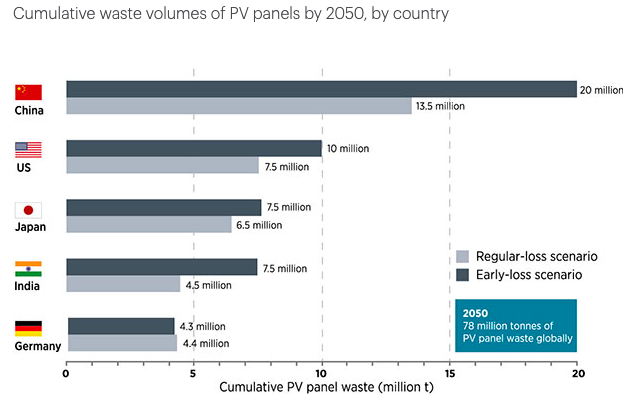
While photovoltaics generate only about 3 percent of global electricity, they consume 40 percent of the world’s tellurium, 15 percent of the world’s silver, a substantial chunk of semiconductor-grade quartz and lesser amounts of indium, zinc, tin and gallium. A report, prepared jointly by the International Renewable Energy Agency (IRENA) and the International Energy Agency Photovoltaic Power Systems Programme (IEA-PVPS) highlights that recycling or repurposing solar PV panels at the end of their roughly 30-year lifetime can unlock an estimated stock of 78 million tonnes of raw materials and other valuable components globally by 2050. If fully injected back into the economy, the value of the recovered material could exceed USD 15 billion by 2050.

Present status of Solar PV waste in India

  • According to a report prepared by the National Solar Energy Federation of India, India could generate over 34,600 tonnes of cumulative solar waste in India by 2030. 
  • India currently considers solar waste a part of electronic waste and does not account for it separately. Moreover, there is no commercial raw material recovery facility for solar e-waste operational in India.
  • A committee had been constituted under the chairmanship of the Ministry’s Secretary to propose an action plan to evolve a “circular economy” in solar panel, through reuse/recycling of waste generated.
Iyqd qWoT G5zyajf94X5OfuAE69RxAmgTMM9hbdlLADZLrjwRW9yRgl7cMEInfZi4rOcOx64bpmon724UwVxmhVG0fQ1Gu9dlaoheZ8Eh3YTl0tet6QP

Challenges in India

  • Informal handling - Only about 20% of the waste is recovered in general; the rest is treated informally. As a result, the waste often accumulates at landfills, which pollute the surroundings. Incinerating the encapsulant also releases sulphur dioxide, hydrogen fluoride, and hydrogen cyanide into the atmosphere.
  • No segregation – PV waste is clubbed with e-waste in India generally. 
  • High cost of recycling - Recycling a solar panel cost between $20 and $30, according to the National Renewable Energy Laboratory; sending it to a landfill costs $1-2.
  • Lack of incentives - The market to repurpose or reuse recycled PV waste is minuscule in India due to a lack of suitable incentives and schemes in which businesses can invest.

What can we do about them?

  • Promote recycling - According to a 2021 report, approximately 50% of the total materials can be recovered. The domestic development of PV waste recycling technologies must be promoted through appropriate infrastructure facilities and adequate funding. New business models, incentives or issues of green certificates to be provided to encourage the recycling industry to participate more.
  • Environmental disposal and recycling of solar waste could be part of the power purchase agreement SECI / DISCOMS / government signs with project developers.
  • Dedicated Policy formulation - India should formulate and implement provisions specific to PV waste treatment within the ambit of the e-waste guidelines. EPR for the manufacturer and developers to take responsibility for end-of-life the solar panel. 
  • Ban on Landfills: Solar panel waste is harmful to the environment as it contains toxic metals and minerals that may seep in the ground.
  • Central insurance or a regulatory body should be set up to protect against financial losses incurred in waste collection and treatment. 
  • Research and Development: Innovation in design may have an impact on the type of waste they generate; technology advancements will be significant in reducing the impact of renewable energy waste. New panels, for example, use less silicon and produce less waste during the manufacturing process.
  • Awareness drives - Pan India sensitisation drives and awareness programmes on PV waste management will be beneficial.

Global best practices

Europe - EU imposes responsibility for the disposal of waste on the manufacturers or distributors who introduce or install such equipment for the first time.UK - PV producers will need to register and submit data related to products used for the residential solar market (B2C) and non-residential market.

Australia - announced a $2 million grant as part of the National Product Stewardship Investment Fund to develop and implement an industry-led product stewardship scheme for PV systems.

ICAR-World Bank’s ‘Delhi declaration’ moots digitisation of Agri- Education

Context: Recently the three-day international conference on ‘Blended Learning Ecosystem for Higher Education in Agriculture 2023’, which was jointly hosted by the Indian Council of Agricultural Research (ICAR) and the World Bank, has come out with a ‘Delhi declaration’.

What is the Delhi declaration?

  • The declaration stresses the need to strengthen digital infrastructure, including e-learning content, and deployment of emerging immersive technologies across agricultural higher education institutions in India.
  • It emphasizes creating a renewed and resilient system for the gender-inclusive and sustainable agriculture education sector.
  • Multidisciplinary technology-facilitated education should be promoted and the policies on science, technology, engineering, agriculture and mathematics (STEAM) in agricultural higher education need to be transformed, the declaration said.

Captive employment initiative under Deen Dayal Upadhyaya Kaushalya Yojana

Context: Recently Union Ministry of Rural Development onboarded 19 Captive Employers, a unique initiative under the Deen Dayal Upadhyaya Grameen Kaushalya Yojana (DDU-GKY). 

What is Captive Employment?

  • ‘Captive Employment’, is a first-of-its-kind initiative aimed at addressing the vision of a dynamic and demand-based skilling ecosystem catering to the requirements of industry partners assuring sustainable placements for rural poor youth. 
  • The initiative is a shot in the arm for the DDU-GKY programme, assuring post-training placement of candidates for a minimum of six months with a minimum CTC of Rs 10,000/-. 
  • This program will be a big boon for the rural poor to augment their job needs and improve their standard of living. This program shall also contribute to sustainable development goals.
  • The selected CAPTIVE EMPLOYERS will be providing training to rural poor youth in their respective industries, namely, hospitality, apparel & textiles, manufacturing, IT/ITeS, telecom, retail, Power etc. 
  • During the event, Memorandums of Understanding (MoU) was signed with 19 Employers to engage as captive employers in the ambitious initiative by the Ministry of Rural Development (MoRD) for providing livelihoods to the rural youth under the DDU-GKY programme.

About DDU-GKY:

  • Deen Dayal Upadhyaya Grameen Kaushalya Yojana (DDU-GKY) is a placement-linked skilling program of the Ministry of Rural Development under the aegis of the National Rural Livelihood Mission (NRLM). 
  • This program caters to rural poor youth. 
  • The program is currently being implemented in 27 States and 4 UTs for rural poor youth with an emphasis on placements. 
  • More than 877 PIAs (Project Implementation Agencies) are training rural poor youth in about 616 job roles through more than 2,369 training centres. 
  • A total of 14.08 lakh candidates have been trained and 8.39 lakh candidates placed since inception under the programme.
  • With changing times and changing aspirations of rural youth, the programme is transforming its Guidelines and Standard Operating Procedures. 
  • DDU-GKY 2.0 Guidelines are in the advanced stage of finalisation in the ministry. This new version of the program aspires to improve by skilling the ecosystem and making it more job oriented.

Indian Biological Data Centre (IBDC)

Indian Biological Data Centre is India’s first national repository of life science data at Faridabad, Haryana at the Regional Centre of Biotechnology.

What is IBDC?

It will archive all life-science data generated from publicly funded research in India without any infringement on intellectual property. Intellectual property of the data remains solely with the owner of data.

  • IBDC has a data storage capacity of about 4-petabytes and houses the Brahm – High Performance Computing facility. 
  • The repository is being funded by Department of Biotechnology, under Ministry of Science & Technology.
  • Data on the nucleotide data, protein data, human genome, crop genome, RNA, medical imaging, disease and surveillance data would be stored in the unique facility. 
  • It has accumulated over 200 billion bases from over two lakh submissions from more than 50 research labs across India. 
  • IBDC is being developed in a modular fashion wherein different sections would typically deal with particular type/s of life science data.

indian biological data centre has started data submission services via two data portals:

  1. Indian Nucleotide Data Archive (INDA): Data shared with this portal is actively synced with International Nucleotide Sequence Database Collaboration and is simultaneously assigned IDs from both IBDC and INSDC repositories. 
  2. Indian Nucleotide Data Archive – Controlled Access (INDA-CA): Data shared with this is not shared with any international repositories and remains under ‘controlled access’ as per the user requirements. Users would decide who can access the data. 

Users are free to submit data to any of these repositories as their needs.

International Nucleotide Sequence Database Collaboration (INSDC)

  • INSDC is the core infrastructure for sharing nucleotide sequence data and their subsidiary information called metadata in the public domain. 
  • The collaboration is comprised of three nodes that keep the identical information through a daily data exchange process that has operated over 30 years. 
  • INSDC provides uniform policy of free & unrestricted access to all of data records their databases contain, with no restrictions on access, redistribution or republication of data. 

Members of INSDC

  1. DNA Data Bank of  Japan (DDBJ) at National Institute of Genetics in Mishima, Japan.
  2. European Nucleotide Archive (ENA) at the European Molecular Biology Laboratory’s European Bioinformatics Institute (EMBL-EBI) in UK. 
  3. GenBank at National Centre for Biotechnology Information (NCBI).

Quantum Communication

Context: At the first International Quantum Communications Conclave in New Delhi in March 2023, it was announced that India’s first quantum computing-based telecom network link is operational. 

  • The secure line is between Sanchar Bhawan and the National Informatics Centre at the Central Government Offices (CGO) complex in Delhi.

Quantum communication 

  • Quantum communication is an amalgamation of quantum mechanics and modern communication and Information Technology to study data transmission and processing. It takes advantage of the laws of quantum physics to protect data and securely transmit data.
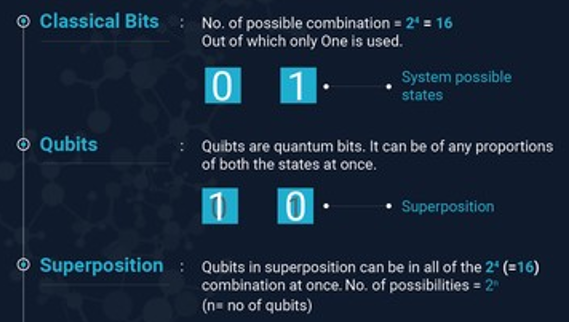
  • Conventionally, sensitive data is encrypted and sent through fibre optic cables with a digital “key” to decrypt the information. This data is transmitted in classical binary bits (0s and 1s), which makes it vulnerable to hackers who can read and copy it without a trace. Theoretically, this makes these networks ultrasecure. 
  • However, in a quantum communication network, data is transmitted via quantum bits or qubits. Qubits are particles, usually photons of light, in a superposition state, i.e., they can be in multiple states and represent numerous combinations of 0 and 1. If a hacker tries to read this data, the qubits would “collapse” from their fragile quantum state to either a 0 or 1, thereby leaving a clear trace of external activity. 
k o7Ij72w0o3wiY1NXNpYgNVZTZhRO3xhGN 5X3EyDo5x6nFBkKBue18iI7imgruNspg9YW8KpzNd8WxcO5BIzJF8Zy8VysTV EUxRpd6qEQ4uBXXQciQwadLx 15dLfiFLgIYVsVvEJpF3VkAsPfA

Data encryption in a quantum communication network

  • Companies have recognised the additional security offered by quantum communication networks and have taken to transmitting sensitive data through a process called quantum key distribution (QKD).
    • QKD involves the transmission of encrypted data as classical bits over networks while the decryption key is encoded and transmitted in a quantum state using qubits.
    • The most widely used scheme for this is the BB84, the world’s first quantum cryptography protocol.

Concerns

  • Theoretically, Quantum Communication networks are highly secure, with the built-in security of qubits and the simplified traceability of external interference in the signal. However, these are predicated on the assumption that the machines used in the data encryption and transmission are secure and perfect, which may not be the case.
  • The decay of the signal due to decoherence and the need for quantum repeaters for long-distance transmission is a systemic vulnerability that needs to be addressed.
    • Quantum repeaters are nodes where the quantum keys are decrypted into bits and re-encrypted in a fresh quantum state to avoid signal loss.