GS Paper 3

PhonePe forays into local commerce with Pincode app on ONDC network

Context: The Walmart-owned fintech company, PhonePe, has declared the launch of an e-commerce consumer application called 'Pincode,' which will be incorporated into India's Open Network for Digital Commerce (ONDC) framework. The Pincode app will initially be accessible in six major categories in Bengaluru (Karnataka), such as groceries, food, pharmaceuticals, electronics, home decor, and fashion. Once the app attains a transaction volume of roughly 10,000 per day, it will be made available in other cities.

Importance of ONDC and E-commerce 

  • ONDC aims to democratize e-commerce by connecting buyers and sellers across platforms. Discuss how it can boost competition, empower small sellers and expand the e-commerce market.
  • E-commerce has grown rapidly in India due to connectivity, consumer preferences and affordable offerings. Analyze policies and reforms needed to boost e-commerce potential.

Role of Digital Payments and UPI

  • UPI enables seamless interbank money transfers, boosting e-commerce and financial inclusion. Discuss how UPI formalizes the economy and aids the government's push for a less-cash society.
  • Transactions on PhonePe app grew from $5 billion in FY19 to $67 billion in FY21, highlighting popularity of UPI.

Importance for India's Economy

  • A thriving e-commerce market aided by UPI and ONDC can strengthen the economy by enabling small businesses, increasing jobs and improving tax compliance.
  • Fair e-commerce industry and robust digital infrastructure can boost manufacturing, services and self-reliance. India's e-commerce market is projected to reach $200 billion by 2026.

Opportunities and Challenges

  • Opportunities: Improving logistics, skilling workforce, protecting consumers, generating employment.
  • Challenges: Data privacy, security and consumer protection concerns that ONDC must address. Lack of internet connectivity and digital literacy in rural areas.

Data Security and Individual Privacy

  • While UPI and ONDC facilitate e-commerce, they raise concerns over data misuse. Regulations like data protection laws are important to build trust in digital platforms and protect people's information.
  • Issues around data localization, privacy rights, and corporate responsibilities India must consider.

Technologies like UPI and ONDC enabling accessibility and inclusion will drive India's progress. Policy and regulatory support around data security, competition and skilling can help realize e-commerce potential. With digital adoption, balancing innovation with consumer rights and privacy is key.

Open Network for Digital Commerce (ONDC)

Open Network for Digital Commerce or ONDC is an Indian government initiative to promote interoperability between e-commerce platforms. It aims to democratize e-commerce by enabling buyers and sellers on any platform to connect and transact.
Key highlights of ONDC:

  • ONDC is a private sector-led non-profit network based on an open protocol. It is not an e-commerce platform but a network of e-commerce platforms.
  • It was incorporated in 2021 by the Department for Promotion of Industry and Internal Trade (DPIIT) under the Ministry of Commerce.
  • ONDC will enable e-commerce transactions to happen across platforms through a standardized protocol. This means buyers on one app will be able to purchase from sellers on another app.
  • It seeks to create a low-barrier network for small retailers and merchants to participate in e-commerce. This can boost competition and market access.
  • ONDC will cover categories like groceries, food delivery, hotel booking, travel, mobility, etc. It aims to eventually cover all domains.
  • ONDC is likely to reduce the dominance of major e-commerce players like Amazon and Flipkart in the Indian market. It can create a more competitive and fair e-commerce ecosystem.
  • For consumers, ONDC may enable lower prices, more options and convenience of transacting across platforms using a single app. However, there are concerns around data privacy, consumer protection, grievance redressal, etc. that ONDC will need to address.ONDC can boost the digitization of small businesses, broaden India's tax base and create new opportunities for entrepreneurs, startups as well as employment in e-commerce.

ONDC aims to promote interoperability and competition in India's e-commerce market. If implemented effectively, it has the potential to empower small businesses, benefit consumers and boost the e-commerce industry.

However, regulatory oversight and safeguards will be critical to address key concerns around its functioning. ONDC signifies India's efforts to build a self-reliant digital economy with homegrown technology solutions.

Resumption of Oil Exports from Northern Iraq to Turkey after a Long-standing Dispute

Context: The article reports on the recent agreement between the Iraqi central government and officials from the semi-autonomous Kurdish region to resume oil exports from northern Iraq through a pipeline to Turkey. The dispute between Baghdad and Irbil over oil revenues has been a longstanding issue, and this deal marks a crucial step towards resolving the conflict.

The Importance of Oil for Iraq's Economy: 

  • Iraq is the second-largest oil producer in OPEC and one of the most oil-dependent economies in the world. 
  • Oil accounts for over 90% of the country's total exports and 60% of its GDP. 
  • While most of Iraq's oil reserves are located in the south, the Kurdish region heavily relies on exports from northern fields. 
  • Thus, halting oil exports from the region has been harming Iraq's revenues.

The Dispute over Oil Revenues: 

  • Iraq filed for arbitration against Turkey in 2014 after the Kurdish region began exporting crude oil through the neighbouring country, sidestepping Iraq's state-owned oil marketing company, SOMO (State Organization for Marketing of Oil (SOMO) is an Iraqi national company responsible for marketing Iraq's oil. It is headquartered in Baghdad, Iraq.).
  • Iraq claimed that all oil exports had to go through SOMO under a 1973 agreement with Turkey. 
  • The International Chamber of Commerce had ruled in favour of Iraq, leading to the halt of nearly half a million barrels of oil exports last month.

The Deal to Resume Oil Exports: 

  • The agreement reached will allow SOMO to market crude oil in coordination with Kurdish authorities. 
  • The Kurdish region will have full control over oil revenues, but the federal government can audit the account where the funds will be deposited. 
  • While the deal is temporary, it is a crucial step towards ending the long-standing dispute between Irbil and Baghdad and creating a positive and safe atmosphere to finally approve the national oil and gas law. 

Impact on India

  • Energy Security
    • As a major oil importer, India depends on a stable and affordable oil supply. Iraq accounts for over 10% of India's oil imports, so the deal allows for continued exports and supply security.
    • However, Iraq's overdependence on oil poses risks of supply shocks from geopolitical events. India should diversify oil sources and increase strategic reserves to hedge against disruptions.
  • Economic Impact
    • Fluctuating oil prices affect India's import bill, trade deficit and economy. The deal will support moderate oil prices and benefit India's economy.
    • However, Iraq's oil dependence makes its economy and government budget vulnerable to price changes which can weaken an important trade partner.
    • Diversifying Iraq's economy could benefit both countries.
    • According to OPEC, Iraq holds over 15% of the world's oil reserves. Oil comprises 65% of Iraq's GDP and over 90% of government revenue according to the IMF. Volatility can undermine Iraq's economic stability with ripple effects on India's interests.
  • Promoting the Rule of Law
    • The dispute resolution through arbitration showed Iraq's commitment to following due legal processes. This is important for India to expand trade and investments with partners like Iraq.
    • India should encourage Iraq to strengthen contract enforcement, independent judiciary and institutions to uphold rule of law. Reneging on contracts can discourage foreign companies from investing in Iraq's oil industry.
  • Geopolitical Stability
    • The Kurdish dispute highlights ethnic divisions that threaten Iraq's unity if mishandled. Resolving such issues through democratic processes is important for Iraq's stability.
    • A destabilized Iraq could undermine India's strategic and energy interests. India should support Iraq's federal government in maintaining stability by promoting inclusiveness and institution-building. 

In summary, while the oil deal benefits India and Iraq's economic interests, overreliance on oil and weak institutions threaten long-term stability and prosperity. Diversification, promoting rule of law, dialogue and democratic reforms are key to stability, growth and progress in India-Iraq relations. By cooperating with Iraq's knowledge exchanges in technology, governance and trade, India can advance its strategic priorities in the region.

The resumption of oil exports from northern Iraq through the pipeline to Turkey will benefit Iraq's economy and provide a source of revenue for the Kurdish region. The deal struck on Tuesday marks a crucial step towards resolving the conflict over oil revenues between Baghdad and Irbil.

International Chamber of Commerce

The International Chamber of Commerce or ICC is the world's largest business organization with over 45 million members in over 100 countries. It was founded in 1919 to promote international trade, responsible business conduct and a global approach to regulation.

Key roles and functions of ICC:

Rule Setting: ICC develops voluntary rules, standards and policy recommendations for global business. This includes Incoterms rules for global trade, the ICC Arbitration Rules, the ICC Guidelines for International Investment and the ICC Anti-corruption Compliance Toolkit.

Arbitration and Dispute Resolution: ICC administers over 25,000 international commercial arbitrations each year through the ICC International Court of Arbitration. ICC dispute resolution services aim to facilitate trade by providing appropriate tools for risk mitigation and dispute settlement.

Advocacy and Policy: ICC works with intergovernmental organizations like the UN, WTO and G20 to advocate business priorities and shape global trade policies. ICC also provides business input to governments and regulators on issues like trade facilitation, digital economy, sustainability, anti-corruption, etc.

Network and events: ICC organizes high-level events, forums and local network meetings around the world to enable business leaders and experts to exchange knowledge, strengthen relationships and promote cross-border trade.

Training and Certification: ICC offers online and in-person training in areas such as international arbitration, international commercial mediation, trade finance, and anti-corruption compliance. ICC also administers professional certifications to build expertise in international business regulation and policy.

Market intelligence: ICC provides research and analysis on policy developments, court rulings, and market trends on the environment, banking, digital economy, arbitration, trade, etc. through publications like the ICC Digital Economy Report, ICC Arbitration Bulletin, ICC Trade Register Report, etc.

ICC aims to facilitate cross-border trade and promote responsible international business policies and practices. It plays an important role in global governance by setting voluntary business standards, providing dispute resolution mechanisms, advocating priorities with policymakers and enabling business networks and knowledge exchange. ICC's activities and policy positions have implications for global trade, investments, regulation as well as sustainable development.

International Finance Corporation to stop funding new coal-related infra projects

Context: The International Finance Corporation will stop supporting investments in new coal projects as part of its alignment with the Paris Agreement. The decision comes after a 13-year campaign against IFC's support for a financial intermediary client backing coal in India, which affected communities' livelihoods.

About International Finance Corporation (IFC)

Text

Description automatically generated
  • IFC was founded in 1956 on an idea that the private sector has the potential to transform developing countries.
  • It is the largest global development institution focused on the private sector in developing countries. 
  • It is a member of World Bank Group.
  • It focuses on economic development and improving the lives of people by encouraging the growth of the private sector in developing countries. 

It helps private sector in variety of ways:

  • Investing in companies through loans, equity investments, debt securities and guarantees. 
  • Mobilizing capital from other lenders and investors through loan participations, parallel loans and other means. 
  • Advising businesses and governments to encourage private investment and improve the investment climate.

World Bank

Logo

Description automatically generated

Background: The Bretton Woods Conference of July 1944 established the framework for post – World War II international economic cooperation and reconstruction. It resulted in the formation of the International Monetary Fund (IMF) and the International Bank for Reconstruction and Development (World Bank). The World Bank provides loans and grants to low and middle-income countries for capital projects. World Bank comprises of the International Bank for Reconstruction and Development (IBRD) and International Development Association (IDA), two of five organizations in the World Bank Group.

Mission of World Bank 

The World Bank has two goals: end extreme poverty and promote shared prosperity in a sustainable way.

World Bank Group

The World Bank Group consists of five organizations:

  1. The International Bank for Reconstruction and Development (IBRD): is a global development cooperative owned by 189 member countries. It supports the World Bank Group’s mission by providing loans, guarantees, risk management products, and advisory services to middle-income and creditworthy low-income countries.
  2. The International Development Association (IDA): It was established in 1960 with an aim to reduce poverty by providing zero to low-interest loans (called “credits”) and grants for programs that boost economic growth, reduce inequalities, and improve people’s living conditions. It is the part of the World Bank that helps the world’s poorest countries. 
  3. The International Finance Corporation (IFC): is the largest global development institution focused exclusively on the private sector. It helps the developing countries to achieve sustainable growth by financing investment, mobilizing capital in international financial markets, and providing advisory services to businesses and governments.
  4. The Multilateral Investment Guarantee Agency (MIGA): it was created in 1988 to promote foreign direct investment into developing countries to support economic growth, reduce poverty, and improve people’s lives. MIGA fulfils this mandate by offering political risk insurance (guarantees) to investors and lenders.
  5. The International Centre for Settlement of Investment Disputes (ICSID): provides international facilities for conciliation and arbitration of investment disputes. 

Note: India is a member of all the organizations of World Bank Group except The International Centre for Settlement of Investment Disputes (ICSID).

What was discussed at the UN water conference?

Context: The United Nations held its first water conference in 46 years to address the urgent need for action to achieve the 2030 Sustainable Development Goal for water.

United Nations 2023 Water Conference

  • The first UN Water Conference in almost five decades held in New York on 22-24 March, co-hosted by the Netherlands and Tajikistan. 
  • It focused on the urgent need for action to meet the 2030 Sustainable Development Goal (SDG) for water, "Ensure availability and sustainable management of water and sanitation for all". 
  • The conference resulted in 713 voluntary commitments by philanthropic donors, governments, corporations, and NGOs, including a $50 billion commitment from India to improve rural drinking water services.
  • The conference showcased innovative technologies in wastewater treatment and proposed incubation platforms for water management.
uKLhMm2vx5Eq13AhookWYLlXJnp7PVfUjYNoeec3X66cMPQc1ilMTqzR4N6Uit03vY4xiPzerPBOSaFX0jAid0EITU1BrRfbz4tw QE 0ZeDuEOiqy2 TGBl sPDLvgWQGUcZ023RF2JtZBTsKJPFQ

The Conference has five themes that support the SDG 6 Global Acceleration Framework: 

1. Water for Health: Access to 'WASH' (Global Water, Sanitation, & Hygiene) including the Human Rights to Safe Drinking Water and Sanitation. 

2. Water for Sustainable Development: Valuing water, the water-energy-food nexus and sustainable economic and urban development. 

3. Water for Climate, Resilience and Environment: Source to sea, biodiversity, climate, resilience and disaster risk reduction. 

4. Water for Cooperation: Transboundary and international water cooperation, cross sectoral cooperation and water across the 2030 Agenda. 

5. Water Action Decade: Accelerating the implementation of the objectives of the Decade for Action, including through the UN Secretary-General’s Action Plan.

Why should we pay attention to the UN 2023 Water Conference?

6Yy1aU4uLAPmGSIB1ai JAXmdA9yTLbjZOhSMTbUdGpcOVnwQ12oZelUKhbbl lpkVvqhq2Qdwj9ezFHJBtesHEBWapttF9Nx3
  • Only 1% of the earth's surface water is accessible drinking water, while one in 10 people struggle to access it. 
  • According to the World Bank, climate change-related disasters could displace up to 216 million people from their countries by 2025. 
  • From India to Africa and beyond, girls and young women bear the burden of retrieving water for their families, hindering their educational development. 
  • Meanwhile, a lack of water hygiene has negative health implications – an issue prevalent in developing countries.
  • The risk of water insecurity poses a grave threat to human life and can cause mass migration across different regions.

About UN Water Conference

The first UN Water Conference was held in Argentina in 1977, was the most important water event in a generation. In particular, it resulted in the first global ‘Action Plan’ which acknowledged that the access to drinking water in sufficient quantities and of adequate quality is a fundamental human right, regardless of a person's developmental, social, or economic circumstances. It led to several decades of global funding and concerted effort to provide drinking water and sanitation for all. The first global 'Action Plan' 

Other International Efforts for Water Security

  • The W12+ Blueprint, a UNESCO platform, is a tool which hosts city profiles and, technologies, and programmes addressing common water security challenges. 
  • 'Making Rights Real' an initiative aimed to help marginalized communities and women exercise their rights.
  • 'Water for Women Fund' offered mechanisms for sustainable water, sanitation, and hygiene outcomes. 

Coalition for Disaster Resilient Infrastructure (CDRI)

Context: Fifth edition of International Conference on Disaster Resilient Infrastructure was organised under the aegis of Coalition for Disaster Resilient Infrastructure.

About Coalition for Disaster Resilient Infrastructure 

  • CDRI is a global partnership that aims to promote resilience of infrastructure systems to climate & disaster risks, thereby ensuring sustainable development.
  • Prime Minister of India launched CDRI during his speech at the UN Climate Action Summit on 23 September 2019.
  • Objectives of CDRI: CDRI seeks to rapidly expand the development & retrofit of resilient infrastructure towards expanding universal access to basic services, enabling prosperity and decent work.

Functions of CDRI

  • Raising awareness of the benefits of resilient infrastructure and building linkages with other relevant initiatives to achieve this.
  • Serving as a platform for knowledge generation and exchange on disaster & climate resilient infrastructure.
  • Enhancing national and regional standards, codes and guidelines for planning, design, operation & maintenance of infrastructure systems
  • Enhancing practices and capacities to reduce infrastructure damages and losses from disasters and climate change.
  • Enabling technological and institutional innovation for resilient infrastructure systems
  • Making available technical expertise to assist countries to develop resilient infrastructure
  • Advocating for financial arrangements, including risk transfer, supporting development of resilient infrastructure
  • Assisting countries to adopt appropriate risk governance arrangements & strategies for resilient infrastructure.
  • Governance of CDRI: Secretariat of CDRI is located in New Delhi and has three principal bodies: (i) Governing Council (ii) Executive Council (iii) Secretariat.
    • Governing Council: Governing Council is the highest policy-making body of CDRI and will have representation from all members of CDRI such that at least two-thirds of the members of the Governing Council represent national governments. Members of. Governing Council shall be co-chaired by representatives of two national governments with India being the permanent co-chair of Governing Council. The other co-chair shall be nominated by rotation by the members of Governing Council, every two years. 
    • Executive Committee: Managerial body of CDRI that oversees implementation of decisions of Governing Council. It is a 10 member body with Director General being one of the members.
    • Secretariat: Secretariat of the CDRI shall be headed by a Director-General appointed by the Governing Council.
  • Membership: Membership of CDRI is open to national governments, UN Agencies & multilateral banks, private sector, academic & knowledge institutions. Currently, there are 31 member countries of CDRI and 8 member organisations. 
  • Funding: A large share of the estimated fund requirements to cover the core costs over the first five years has been invested by India. There are no obligations on the part of members to make financial contributions to CDRI.

Initiatives under CDRI 

  • Infrastructure Resilience Accelerator Fund (IRAF):
    • A US $50 million multi-donor trust fund created by CDRI to support global action on disaster resilience of infrastructure systems, especially in developing countries and small island developing countries. 
    • IRAF will play a critical role in equipping the Coalition to deliver on improved infrastructure governance, inclusive infrastructure services and diversified knowledge and financing for resilient infrastructure globally. 
    • IRAF has been established with the support of UNDP & UNDRR and will be managed by UN Multi-Partner Trust Fund Office. IRAF was launched COP 27 of UNFCCC at Sharm El Sheikh, Egypt. 
    • One of the first initiatives to be supported by IRAF is the Infrastructure for Resilient Island States (IRIS).
  • Infrastructure for Resilient Island States (IRIS):
    • A dedicated initiative co-curated by Small Developing Island States (SIDS) and Coalition for Disaster Resilient Infrastructure (CDRI) partners to promote resilient, sustainable, and inclusive infrastructure development in SIDS. IRIS will cater to all SIDS. 
    • IRIS will design and implement projects considering the demands and absorptive capacities of SIDS and strive to foster SIDS ownership and leadership in the development of resilient, sustainable and inclusive infrastructure.
    • In the initial phase, IRIS will prioritize the needs of the most vulnerable SIDS.It was launched during COP 26 of UNFCCC at Glasgow. 
    • Focus areas of IRIS are:
      • Improved resilience of SIDS infrastructure to climate change & disaster risks.
      • Strengthened knowledge & partnerships for integrating resilience in SIDS infrastructure.
      • Gender equality and disability inclusion promoted through SIDS infrastructure.
  • Biennial Report on Global Infrastructure Resilience: Flagship report of CDRI focusing on critical challenges faced by infrastructure due to disaster and climate risks. The report will develop a Global Infrastructure Risk Model & Global Infrastructure Resilience Index (GIRI) and advocate pathways for nature based solutions for disaster resilient infrastructure, conduct review of global goals and targets for resilient infrastructure and finance for disaster & climate resilient infrastructure. 
  • International Conference on Disaster Resilient Infrastructure (ICDRI): Annual conference of CDRI bring together experts and participants from member countries, institutions and organisations to discuss challenges and identify good practices on disaster & climate resilient infrastructure.
  • DRI Connect: An online platform to connect, learn and collaborate towards improved practices, processes and policies for resilient infrastructure systems. 

Germany may offer sale of advanced submarines to India

Context: Germany is expected to present a proposal to India for the sale of advanced conventional submarines through the government-to-government route. The Navy, which is staring at a dwindling sub-surface fleet, is looking to procure six advanced diesel-electric submarines under Project-75I estimated to cost over ₹45,000 crore.

Background

In January 2020, the Defence Acquisition Council (DAC) shortlisted Mazgaon Docks Ltd. (MDL) and Larsen & Toubro (L&T) as the Indian partners for the P-75 deal, the first to be processed under the strategic partnership model of the procurement procedure.

The five foreign original equipment manufacturers (OEM) are Daewoo Shipbuilding & Marine Engineering (South Korea), Naval Group (France), Navantia (Spain), Rosoboronexport (Russia) and Thyssenkrupp Marine Systems (TKMS, Germany).

About Project 75I

  • In June 1999, the Cabinet Committee on Security approved a plan for the Indian Navy to induct indigenously build and induct submarines by 2030. It was broken down in two phases — the P-75 and P-75I.
  • Under the first phase of P-75, signed in 2005, India and France signed a $3.75 billion contract for building six Scorpene class submarines. The executing company on the Indian side was Mazgaon Docks Ltd, and on the French side, it was DCNS, which is now called Naval Group.
  • The first submarine under the project was commissioned in December 2017. Subsequently, the other five have been built and on 20 April, INS Vagsheer was launched and would be commissioned by 2023.
  • The P-75I phase envisages the construction of six conventional submarines with better sensors and weapons and the Air Independent Propulsion System (AIP).
  • The Nirmala Sitharaman-headed Defence Acquisition Council cleared the project in 2019 under the strategic partnership model.
  • As per the plan, an Indian shipyard was selected by the government, which would nominate the foreign original equipment manufacturer (OEM).
  • The Ministry of Defence then appointed a high-powered committee to assess the eight Indian shipyards and select the eligible ones for the project.
  • After much deliberation, it was decided that state-run Mazgaon Dockyard Limited and Larsen and Toubro would be the chosen 'Selected Partner'.
  • Besides the Naval Group, four companies were part of the bidding, including Russia’s Rosoboronexport, Germany’s Thyssenkrupp, Spain’s Navantia and South Korea’s Daewoo.

What is an Air Independent Propulsion system?

  • Simply put, AIP technology allows a conventional submarine to remain submerged for much longer than ordinary diesel-electric submarines.
  • Currently, all conventional submarines have to surface to recharge the batteries that allow the boat to function underwater. However, AIP permits a submarine to remain underwater for more than a fortnight, compared to two-three days for diesel-powered boats.
  • India wants the AIP technology, as none of its current ships has it while Both Pakistan and China have AIP-equipped submarines.

India’s submarine fleet

  • The Naval Group’s announcement could lead to further delays in India’s plan of having more submarines in its arsenal.
  • As of today, India has 16 conventional diesel-electric submarines. After the last two Kalvari Class subs are commissioned under P-75, this number will go up to 18. India also has two nuclear ballistic submarines, reports Indian Express.
  • On the other hand, Pakistan has nine diesel-electric submarines, as per Global Fire Index — a website that analyses the strength of the armies of countries around the world.
  • China, which is also posing a threat to India, boasts of being the largest navy in the world. In 2020, Beijing had six nuclear-powered ballistic missile submarines (SSBNs) that are armed with nuclear missiles, as well as around 40 attack submarines, of which six are nuclear-powered, according to Military Balance, the International Institute for Strategic Studies' annual assessment of military capacity around the world.

Old Pension Scheme & New Pension Scheme

Context: Some non-BJP-ruled states, including Himachal Pradesh, Rajasthan, Chhattisgarh, Jharkhand, and Punjab, have decided to return to OPS, while a few others have been said to be considering the move.

About Old Pension Scheme (OPS)

  • In OPS, the pension to government employees at the Centre as well as states was fixed at 50 per cent of the last drawn basic pay. This entire amount was paid by the Government.
  • The attraction of the OPS lay in its promise of an assured or ‘defined’ benefit to the retiree. It was hence described as a ‘Defined Benefit Scheme’.
  • In OPS, the pension constituted 50% of the last drawn salary of an employee.

Benefits of reverting back to OPS

  • Short-term gains for the state government: they save money since they will not have to put the 10 percent matching contribution towards employee pension funds.
    • For employees too, it will result in higher take-home salaries, since they too will not set aside 10 percent of their basic pay and dearness allowance towards pension funds.

Concerns with OPS

  • Pension liability remained unfunded: there was no corpus specifically for pension, which would grow continuously and could be dipped into for payments.
    • The Government of India budget provided for pensions every year; there was no clear plan on how to pay year after year in the future.
    • The government estimated payments to retirees ahead of the Budget every year, and the present generation of taxpayers paid for all pensioners as on date.
    • Overall, pension payments by states eat away a quarter of their own tax revenues. For some states, it is much higher. For Himachal, it is almost 80 per cent (pensions as a percentage of the state’s own tax revenues); for Punjab it is almost 35 per cent; for Chhattisgarh 24 per cent; and for Rajasthan 30 per cent.
    • The ‘pay-as-you-go’ scheme created inter-generational equity issues — meaning the present generation had to bear the continuously rising burden of pensioners. Today’s taxpayers paying for the ever-increasing pensions of retirees, with Pay Commission awards almost taking the pension of old retirees to current levels, means the pension of someone who retired in 1995 may well be the same as that for someone who retires in 2025.
  • Unsustainable:
    • Firstly, pension liabilities would keep climbing since pensioners’ benefits increased every year; like salaries of existing employees, pensioners gained from indexation.
  • Secondly, better health facilities would increase life expectancy, and increased longevity would mean extended payouts.
    • Over the last three decades, pension liabilities for the Centre and states have jumped manifold. In 1990-91, the Centre’s pension bill was Rs 3,272 crore, and the outgo for all states put together was Rs 3,131 crore. By 2020-21, the Centre’s bill had jumped 58 times to Rs 1,90,886 crore; for states, it had shot up 125 times to Rs 3,86,001 crore.
image 2

About New Pension Scheme (NPS)

  • The New Pension System proposed by the Project OASIS report became the basis for pension reforms - what was originally conceived for unorganised sector workers, was adopted by the government for its own employees.
  • The government thus replaced this PAYG system with the national pension scheme (NPS) or contributory pension scheme which was made mandatory for employees who joined on or after April 1st, 2004.
  • NPS is a tax-efficient fund which gets accumulated throughout the career of a person and acts as an income after their retirement.
  • Regulation: under the PFRDA (The Pension Fund Regulatory & Development Authority) Act, 2013

Who Can Join?

  • Any citizen of India (both resident and Non-resident) and Overseas Citizen of India (OCI) in the age group of 18-70 years. Earlier, the maximum age for entry was 65. In Aug 2021, PFRDA increased the maximum age limit to 70.
  • Different SectorsGovernment SectorCentral Government: Introduced with effect from January 1, 2004 (except for armed forces). State Government: Almost all the State Governments (except few such as West Bengal) have also adopted NPS through their own notifications.Private Sector (Non-Government Sector):CorporatesAll Citizens of India: Any individual not being covered by any of the above sectors has been allowed to join NPS 2009 onwards.
  • Contribution: Every government employee has to mandatorily contribute 10% of pay and dearness allowance to the pension fund, which is matched by the government. This money can then be invested by fund managers. After the latest amendment, in 2019, the government share of the contribution has been raised to 14% from 10%. The State Governments have also been given an option to increase their contribution to 14% through their own gazette notification.
  • What happens to the contribution?  Invested in certain pension funds which in turn invest in different asset classes such as G-secs, shares, bonds etc. to generate higher returns.
  • Returns:  NPS is designed on a Defined contribution basis wherein the subscriber contributes to his account. However, there is no defined benefit that would be available at the time of exit from the system. The accumulated wealth depends on the contributions made and the income generated from investment of such wealth.
  • Withdrawals:
    • Upon Normal Superannuation: At least 40% of the accumulated pension wealth of the Subscriber has to be utilised for purchase of annuity providing for monthly pension of the Subscriber and the balance is paid as lump sum to the subscriber.
    • Upon Death: The entire accumulated pension wealth (100%) would be paid to the nominee/legal heir of the Subscriber and there would not be any purchase of annuity/monthly pension.
    • Exit from NPS Before the age of Normal Superannuation – At least 80% of the accumulated pension wealth of the Subscriber should be utilised for purchase of an annuity providing the monthly pension of the Subscriber and the balance is paid as a lump sum to the Subscriber.
  • The basic difference is that the NPS is a contribution-based pension system. Under the old system, pension was fixed as 50% of the last basic salary drawn, along with other benefits. Hence, the benefit due was defined beforehand. However, in the case of the NPS, the pension benefit is determined by factors such as the amount of contribution made, the age of joining, type of investment, and the income drawn from that investment.
  • Over the last eight years, the NPS has built a robust subscriber base, and its assets under management have increased.
    • As on October 31, 2022, the Central government had 23,32,774 subscribers, and states had 58,99,162 subscribers.
    • The corporate sector had 15,92,134 subscribers, and the unorganised sector 25,45,771.
    • There were 41,77,978 subscribers under the NPS Swavalamban scheme. The total assets under management of all these subscribers stood at Rs 7,94,870 crore as on October 31, 2022.

Different Types of NPS Accounts

CriteriaTier-1 AccountTier-2 Account
PurposePension accountInvestment account
EligibilityAny citizen between 18-70 yearsNRI/OCIs are not eligible
NatureCompulsoryOptional: Person needs to have a tier-1 account to open a tier-2 account.
Min. contribution per yearRs.1000Rs.250
Tax Benefits availableYesNo
Withdrawals allowed?Restricted as per rules and regulations.Unrestricted withdrawals.

Difference between New Pension Scheme and Old Pension Scheme

CriteriaNew Pension System (NPS)Old Pension Scheme
Nature of SchemeDefined ContributionDefined benefit
ContributionBoth by Government and EmployeeOnly the Government
BenefitNo Defined benefit as the accumulated wealth depends upon the contribution made.Defined benefit. Pension of 50% of the last drawn salary.
Pension AmountDepends upon the number of years of service. Longer the years of service. Higher Contribution. Higher Pension.Depends upon the last drawn salary. Pension is equal to 50% of last drawn salary.

Poverty Estimates in India

About Poverty

  • Poverty refers to lack of enough resources to fulfil the necessities of life—food, clean water, shelter and clothing. The World Bank defines extreme poverty as living on less than US$1.90 per day

Poverty Estimates in India

  • Estimates of poverty and inequality in India have been deeply contested.
  • Differences exist among economists on data which forms the basis of their estimation & on trends over past decades.
  • In the absence of official data for recent years — the last consumption expenditure survey, which forms the basis of poverty and inequality estimates, was for 2011-12
  • There are sharp differences of opinion even on the extent to which the pandemic exacerbated poverty and inequality. In the absence of official data, several economists have put forth their estimates based on different data sources.
    • Arvind Panagariya and Vishal More used PLFS data - found that rural poverty “saw a modest rise” only during the strict lockdown period of April-June 2020, and then declined as sharply as in the pre-Covid period. And that while urban poverty also saw a “modest rise” in 2020-21, by April-June 2021 its decline had resumed.
    • While, as per the “State of working India 2021” report based on CMIE data - economists at Azim Premji University found that the pandemic led to a “sudden increase in poverty”. As per the report, over an eight month period (March to October 2020), average incomes of the bottom 10 percent of households were lower by Rs 15,700. This income shock caused an increase in the poverty rate (below the national minimum wage threshold) by 15 percentage points in rural areas and nearly 20 percentage points in urban areas.
    • Research by Arpit Gupta, Anup Malani and Bartosz Woda - also based on CMIE data - found that income poverty, applying the World Bank’s $1.9 cutoff, rose from 7.6 per cent in November 2019 to 50.5 per cent in April 2020. And that while poverty did fall subsequently, it did not recover to pre-pandemic levels.
    • Other indicators suggest that more workers fell back on agriculture indicating the absence of non-farm employment. More individuals worked under MGNREGA than in the pre-pandemic period. Regular real wages witnessed a decline. And, sales of two-wheelers remain subdued.
  • Other existing estimates:
    • Tendulkar committee (2011): 21.9% of the population under BPL.
    • Rangarajan committee (2014): 29.5% of the population under BPL.
    • Global Multidimensional Poverty Index, 2020: India is 62nd among 107 countries with an MPI score of 0.123. India is home to 228.9 million poor people.

Poverty alleviation programmes in India

  • Integrated Rural Development Program: Launched on 2 October 1980, aims to provide a self-employment program to poor rural families to help them increase their income and cross the poverty line
  • PM Gramin Awas Yojana: to provide housing for the rural poor in India. A similar scheme for urban poor was launched in 2015 as Housing for All by 2022. So far, 1.26 crore houses have already been built across the country under the scheme (June 2021)
  • National Rural Livelihood Mission: a poverty alleviation project to organise the poor into SHG (Self Help Groups) groups and make them capable of self-employment
  • National Urban Livelihood Mission: to reduce poverty and vulnerability of the urban poor households by enabling them to access gainful self-employment and skilled wage employment opportunities
  • MGNREGA: provides a legal guarantee for one hundred days of employment in every financial year to adult members of any rural household willing to do public work-related unskilled manual work at the statutory minimum wage
  • National Food Security Act, 2013: The Act legally entitled upto 75% of the rural population and 50% of the urban population to receive subsidised food grains under Targeted Public Distribution System
  • National Social Assistance Programme: To provide support to aged persons, widows, disabled persons and bereaved families on death of primary breadwinner, belonging to below poverty line households

Way Forward

  • In the absence of official consumption expenditure data, reliance on alternate data sources has only risen, giving rise to conflicting trends.
  • As understanding the trends in poverty and inequality, and their underlying reasons, is critical for designing government policies and programmes, the scenario of absence of relevant data is harmful for policy formulation.
  • The absence of timely and reliable data, especially during times of uncertainty, needs to be addressed.
  • While some steps have been taken — employment surveys are now carried out with greater regularity — more needs to be done. The country’s statistical system needs to be strengthened.

Antitrust law gets more teeth, mergers to win swifter clearances

Context: Parliament cleared the Competition (Amendment) Bill, 2023, paving the way for the government to enact some significant changes to the country’s antitrust regime, including swifter clearances for mergers and acquisitions (M&As).

The Competition (Amendment) Bill, 2023: Key Features

  • Regulation of combinations based on transaction value: The Act prohibits any person or enterprise from entering into a combination which may cause an appreciable adverse effect on competition.  Combinations imply mergers, acquisitions, or amalgamation of enterprises. The prohibition applies to transactions where parties involved have: (i) cumulative assets of more than Rs 1,000 crore, or (ii) cumulative turnover of more than Rs 3,000 crore, subject to certain other conditions. The Bill expands the definition of combinations to include transactions with a value above Rs 2,000 crore.
  • Time limit for approval of combinations: The Act requires the CCI to pass an order on an application for approval of combinations within 210 days.  The Bill reduces this time limit to 150 days.
  • Definition of control for classification of combinations: For classification of combinations, the Act defines control as control over the affairs or management by one or more enterprises over another enterprise or group.  The Bill modifies the definition of control as the ability to exercise material influence over the management, affairs, or strategic commercial decisions.
  • Anti-competitive agreements: Under the Act, anti-competitive agreements include any agreement related to production, supply, storage, or control of goods or services, which can cause an appreciable adverse effect on competition in India.  Any agreement between enterprises or persons, engaged in identical or similar businesses, will have such adverse effect on competition if it meets certain criteria.   These include: (i) directly or indirectly determining purchase or sale prices, (ii) controlling production, supply, markets, or provision of services, or (iii) directly or indirectly leading to collusive bidding.  The Bill adds that enterprises or persons not engaged in identical or similar businesses shall be presumed to be part of such agreements, if they actively participate in the furtherance of such agreements.
  • Settlement and Commitment in anti-competitive proceedings: Under the Act, CCI may initiate proceedings against enterprises on grounds of: (i) entering into anti-competitive agreements, or (ii) abuse of dominant position.  Abuse of dominant position includes: (i) discriminatory conditions in the purchase or sale of goods or services, (ii) restricting production of goods or services, or (iii) indulging in practices leading to the denial of market access.  The Bill permits CCI to close inquiry proceedings if the enterprise offers: (i) settlement (may involve payment), or (ii) commitments (may be structural or behavioural in nature).  The manner and implementation of the framework of settlement and commitment may be specified by CCI through regulations.
  • Decriminalisation of certain offences: The Bill changes the nature of punishment for certain offences from imposition of fine to penalty.  These offences include failure to comply with orders of CCI and directions of Director General with regard to anti-competitive agreements and abuse of dominant position.

Economic Rationale for Competition

  • Competition is the best means of ensuring that the common man has access to the broadest range of goods and services at the most competitive prices.
  • With increased competition, producers will have maximum incentive to innovate and specialise. This would result in reduced costs and wider choice to consumers.
  • Fair competition in the market is essential to achieve this objective. The goal is to create and sustain fair competition in the economy that will provide a ‘level playing field’ to the producers and make the markets work for the welfare of the consumers.

The Competition Act

  • The Competition Act, 2002, as amended by the Competition (Amendment) Act, 2007, follows the philosophy of modern competition laws.
  • The Act prohibits anti-competitive agreements, abuse of dominant position by enterprises and regulates combinations (acquisition, acquiring of control and M&A), which causes or likely to cause an appreciable adverse effect on competition within India.

Competition Commission of India

  • The objectives of the Competition Act are sought to be achieved through the Competition Commission of India, which has been established by the Central Government with effect from 14th October 2003.
  • CCI consists of a Chairperson and 6 Members appointed by the Central Government.
  • It is the duty of the Commission to eliminate practices having adverse effects on competition, promote and sustain competition, protect the interests of consumers and ensure freedom of trade in the markets of India.
  • The Commission is also required to give opinion on competition issues on a reference received from a statutory authority established under any law and to undertake competition advocacy, create public awareness and impart training on competition issues.

Purchasing Managers’ Index (PMI)

Context: The seasonally adjusted PMI reading moved up from 55.3 in February to 56.4 in March, signalling the strongest improvement in operating conditions in 2023 so far. A reading of over 50 on the PMI indicates an uptick in economic activity.

About PMI

  • PMI is an indicator of business activity -- both in the manufacturing and services sectors. It is calculated separately for the manufacturing and services sectors and then a composite index is constructed.
  • It is a survey-based measure that asks the respondents about changes in their perception of some key business variables from the month before.
  • The PMI is derived from a series of qualitative questions. Executives from a reasonably big sample, running into hundreds of firms, are asked whether key indicators such as output, new orders, business expectations and employment were stronger than the month before and are asked to rate them.
  • A figure above 50 denotes expansion in business activity. Anything below 50 denotes contraction. Higher the difference from this mid-point greater the expansion or contraction. The rate of expansion can also be judged by comparing the PMI with that of the previous month data. If the figure is higher than the previous month’s then the economy is expanding at a faster rate. If it is lower than the previous month then it is growing at a lower rate.

Significance

  • The PMI is usually released at the start of the month, much before most of the official data on industrial output, manufacturing and GDP growth becomes available. It is, therefore, considered a good leading indicator of economic activity. Economists consider the manufacturing growth measured by the PMI as a good indicator of industrial output, for which official statistics are released later. Central banks of many countries also use the index to help make decisions on interest rates.
  • The PMI also gives an indication of corporate earnings and is closely watched by investors as well as the bond markets. A good reading enhances the attractiveness of an economy vis-a-vis another competing economy.

Difference Between PMI and IIP

Purchasing Managers Index (PMI)Index of Industrial Production (IIP)
Published by NikkeiPublished by National Statistical Office
Does not track the actual ProductionTracks the actual Production
Covers only 500 private sector companiesCovers both Private Sector as well as PSUs
Covers both Manufacturing and ServicesCovers only the Manufacturing Sector
Less Comprehensive since it covers only private sector companiesMore Comprehensive
Not used for GDP calculationUsed for GDP Calculation to account for the unorganised sector

Net direct tax collections up 17.6%

Direct Tax Collections in 2022-23

  • India’s net direct tax collections have risen 17.6% in 2022-23 to touch ₹16.61 lakh crore (growth of 16.9% in the year), exceeding the Revised Estimates target for the year by 0.7%, as per provisional data released by the Finance Ministry on Monday.
  • The contribution of corporate tax collections in the gross direct tax kitty was ₹10.04 lakh crore, just a tad higher than the ₹9.61 lakh crore paid by taxpayers as personal income tax and Securities Transaction Tax (STT) ( personal income tax and STT yielded a growth of 24.2%).
  • At a gross level, the share of personal income tax and STT to the tax kitty has touched 48.9% in 2022-23 compared to around 47.4% in 2021-22, while corporate tax accounted for just 51.1% in the year gone by as opposed to 52.6% in 2021-22.
  • The Ministry said gross tax collections grew 20.33% to ₹19.68 lakh crore in 2022-23, compared to ₹16.36 lakh crore in the previous financial year.

Revenue Income: (Budget 2023-24)

image

Cool Roof Policy in Telangana

Context: Telangana has become the first state to notify a Cool Roof Policy to effectively address the issue of heat waves and urban heat island. IPCC reports have highlighted that incumbent climate change will intensify heat & humidity in India. Under the policy, Telangana plans to achieve around 300 sq. km of cool roof area by 2028.

Cool Roofs

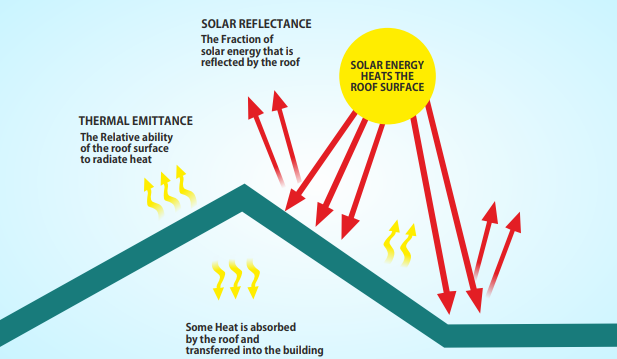
  • A Cool roof takes in less heat from sun than regular roofs. It stays relatively cool in the sun by reflecting (minimize solar absorption) and emitting thermal radiation (to help dissipate solar heat gain). 
  • Cool roofs reflect around 80% of sunlight while regular roofs reflect only about 20%, keeping buildings significantly cooler. 

Cool Roof techniques

  • Cool roof techniques can be broadly divided into three categories:
  • Coated Cool Roofs: These roofs involve the coating of a material or paint with high reflectivity on top of a conventional roof material to increase the roof surface's Solar Reflective Index (SRI). These are liquid applied coatings made of simple materials white in colour. Ex. Lime wash, Acrylic polymer, Plastic technology.
  • Membrane Cool Roofs: These roofs involve using pre-fabricated materials like membranes or sheeting to cover an existing roof to increase the roof surface's solar reflectance and thermal emittance. Ex. Polyvinyl chloride, bitumen based.
  • Tiled Cool Roofs: These roofs involve the application of high albedo, ceramic mosaic tiles or shingles on top of an existing roof or to a new roof. 
  • Green roofs and rooftop solar systems: Policy also supports application of Green Roofs and Rooftop Solar Systems. Green Roofs make use of vegetation to help the roof absorb less solar energy by providing a thermal mass layer to reduce flow of heat into a building. Vegetation is especially helpful in reflecting infrared radiation. 
  • Minimum Requirements Cool Roof Materials: For qualifying as a cool roof, roofs with slopes less than 20o shall have an initial solar reflectance of no less than 0.70 and initial emittance no less than 0.75. 
mfpJjGgckcG S5zqaBAZpsoUrGAxQ7KuY3nzw2JB49QsOx2wbyDN1ZT0jriFDJjKqch9JYnA6ZfMT kJwkI648x3ypnqYNtLiQi7w m87v0M9QEBORTMsdW4ZVuJpC02Ta9nGfnGZXaAkuYU I4row

Application of Policy

Mandatory cool roofing: Government, Non-residential & Commercial Buildings, Residential buildings with plot area more than 600 sq yards and Government assisted housing constructions.

Optional cool roofing: All other buildings

Benefits of Cool Roofs

  • Increased thermal comfort: Cool roofs can help keep indoor temperatures 2.1-4.3oC lower than households with traditional roofs. 
  • Climate freindly cooling solution: Cool roofs are estimated to reduce air conditioning costs by 20% of the building leading to saving of cost and electricity and lower greenhouse gas emissions. 
  • Limited maintenance and costs: Cool roofs need minimal maintenance and a cool protective coating can be reapplied periodically. Often initial material costs for cool roofs are comparable with traditional roofing materials and can also be applied on existing buildings. 
  • Longevity of roof: Application of cool roof increases the longevity of roof beneath it, by acting as a protective layer. 
  • Address Urban Heat Island Effect: City-wide installations of highly reflective roofs and pavements along with planting shade trees, has potential to reduce city’s ambient air temperature by 2oC in summer month. Thus, reducing urban heat island effect. 
  • Equitable solution to heat stress for poor and low-income households: Heats stress hits the poor the hardest due to lack of access to cooling and their houses are often made of heat-trapping materials such as tin sheets, asbestos, plastic or tarpaulin without sufficient ventilation leading to health hazards and reduced productivity. Cool roofs are especially relevant to provide thermal comfort to poor & low-income households. 

Other Initiatives for Cool Roofs

Million Cool Roofs Challenge: It is an initiative launched by Sustainable Energy for All (SEforAll) and NESTA Challenges in 2019 which awarded $125,000 in grants to 10 finalist teams based in South Africa, Bangladesh, Ivory Coast, Philippines, Indonesia, Kenya, Mexico, Niger, Rwanda & Senegal. In less than two years, collectevily the 10 countries managed to apply more than 1.1 million sq. m. of cool roofs.

Cool Roof Challenge: National Disaster Management Authority (NDMA) had launched inviting cities to announce targets and implement cool roofs in 2021.

Heat Wave Vulnerability In India

zdv37yOQDgvp XYNS 7gqB3pqKEf76NdQs4V70aP23IxS uRDRox qggtthkvJEecvOYtHIsRMSv00Ch0n7uVfQCVD6OWXvLob3j8E6hVL7RoyQjHUDvsdzNYcHVCiJUMNNXao2AMUXl54s ZWma3g

Heatwave

  • A heatwave is an extended period of hot weather relative to expected conditions of the area at that time of year. 
  • Heat wave has emerged as one of the deadliest natural hazards often causing more deaths than all other natural hazards. 
  • Heat waves have a slow onset and are silent killers unlike other disasters. 
  • Greenhouse has emissions led Climate change has increased Earth’s temperatures by close to 1.10oC. Each year earth’s temperature cross previous limits. 
  • Meteorological events like La Nina and El Nino also cause localised warming and cooling of planet. In the Indian context, El-Nino particularly increases chances of heat waves in the Indian subcontinent. 
  • Urban Heat Island effect: This is a phenomena under which urban and suburban areas experience elevated temperatures compared to their outlying rural surroundings. The annual mean air temperature of a city with one million or more people can be 1 to 3°C warmer than its surroundings, and on a clear, calm night, this temperature difference can be as much as 12°C. Heat Island effect leads to increased heat risk in cities. Reasons for Heat Island effect are: Air Pollution which traps heat, concretisation & blackening of surfaces which traps heat. 
  • Large and informal workforce of India makes India particularly vulnerable to heat waves who often work in less ventilated buildings or in the outdoors. 

IMD Criteria for Heatwaves: IMD declares a heatwave when:

  • Temperature of a place crosses 40oC in the plains, 37oC in coastal areas and 30oC in the hills.
  • Temperature of a place is 4.5-6.4oC more than the normal temperature for the region on that day.
  • Temperature of a place crosses 4.5oC.

Way forward for Heat Wave

  • All States to formulate & implement Heat Action Plans in line with NDMA’s guidelines on Heat Wave. 
  • Need to strengthen existing Early Warning Systems.
  • Need for understanding the local thresholds of Heat Wave.
  • Data on Heat: Automatic Weather Stations networks needs to be expanded in cities and states. 
  • Vulnerability analysis: A comprehensive, country-wide assessment of heat vulnerability and hyper-local heat action plans is required. 
  • Heat waves should be notified as disasters at the national level under existing disaster relief policies. Currently, several states have declared heat waves as a local disaster. Ex. Odisha, Maharashtra etc. 
  • Land use change: Promoting Urban forests/farms, community gardens, rejuvenation of wetlands and shading of areas with trees.
  • Building materials: Promoting Green roofs and other materials that increase albedo, LEED compliant green building architecture, Home insulation. These solutions should be made part of building codes and effectively enforced. 
  • Heat related work standards should be notified by Ministry of Labour and public health institutes to make workers work easily in high heat situations.
  • Provisions for Emergency: First Aid Kits, Drills for Heat Waves, Heat Wards in Hospitals etc. 
  • Long Term solutions: Green Transition, Limiting Emissions and controlling climate change.