Context: The Union Cabinet approved the scheme for viability gap funding (VGF) of ₹3,760 crore for the development of battery energy storage systems (BESS).
About Viability gap funding of battery energy storage systems
It aimed at enhancing the viability of infrastructure projects for battery energy storage systems (BESS), in a boost for the renewable energy sector that banks on storage when green power generation is low or down.
It also reduces the levelized cost of storage (LCoS) to ₹5.50-6.60 per kilowatt-hour (kWh), making storage a viable option to manage peak power demand. According to industry estimates, the LCoS currently stands at around ₹10-11 per kWh.
Under the scheme, the government will provide financial support of up to 40% of the capital cost of BESS projects totalling 4,000 megawatt-hours (MWh) till FY31.
About Viability gap funding
It provides financial support in the form of grants, one-time or deferred, to economically desirable but commercially unviable infrastructure projects undertaken through PPPs with a view to making them commercially viable.
It means a grant one-time or deferred, provided to support infrastructure projects that are economically justified but fall short of financial viability.
It was launched in 2004 to support projects that come under Public-Private Partnerships.
It is a Central Sector Scheme of the Government of India. The Scheme is administered by the Department of Economic Affairs, Ministry of Finance.
The revamped scheme (2020) includes higher VGF support of up to 60% of the Total Project Cost (maximum up to 30% by the Central and State Governments each) for the social sectors i.e. Water Supply, Waste Water Treatment, Solid Waste Management and Health, Education, and up to 80% of the Total Project Cost (maximum up to 40% by the Central and State Governments each) for Pilot/Demonstration Projects in Health and Education sectors.
For other sector projects, Viability Gap Funding up to 40% of the Total Project Cost (maximum up to 20% by the Central and State Governments each) is available.
Context: The University of Chicago has published the Air Quality Life Index (AQLI) report for 2023. AQLI data emphasises that ambient particulate pollution poses the world’s greatest external risk to human health.
Major Highlights:
Data shows that failure to meet the World Health Organisation's guidelines on reducing PM2.5 (particulate matter) pollution to 5 μg/m3 would cut global life expectancy by 2.3 years.
(Chart 1) South Asia is at the centre of the crisis.
According to AQLI data, from 2013 to 2021, particulate pollution in South Asia surged by 9.7%, which is estimated to reduce life expectancy in the region by an additional six months.
Bangladesh, India, Nepal, and Pakistan, where 22.9% of the global population lives, are the most polluted countries in the world.
(Chart 2) In India, the second-most polluted country (most polluted Bangladesh) in the world in 2021, particulate pollution is the greatest threat to human health.
Data reveal a further rise in PM2.5 pollution from 56.2 μg/m3 in 2020 to 58.7 μg/m3 in 2021, exceeding the WHO guidelines by more than 10 times. The average Indian resident is set to lose 5.3 years of life expectancy if WHO guidelines remain unmet.
Chart 3 shows the most polluted States in India and the potential life expectancy loss if pollution levels do not meet WHO guidelines. In Delhi, the world’s most polluted city, 18 million people could lose 11.9 years of life expectancy relative to the WHO guideline and 8.5 years of life expectancy relative to the national guideline if current pollution levels persist.
The northern plains, home to over half a billion people and 38.9% of India’s population is the most polluted region.
The northern plains include the States and Union Territories of Bihar, Chandigarh, Delhi, Haryana, Punjab, Uttar Pradesh, and West Bengal.
Chart 4 shows the annual average PM2.5 concentrations in India, the northern plains, and all other regions. Pollution, once concentrated in the northern region, has spread to other parts of the country over the last two decades. All of the 521.2 million people living in the Northern Plains — 38.9 per cent of India’s population — live in areas where the annual average particulate pollution level is 17.3 times higher than the WHO guideline.
Air Pollution:
Air pollution refers to the release of pollutants (a complex mixture of solid particles, liquid droplets, as well as gases) into the air which is detrimental to human health and the planet.
Major Pollutants:
Ozone (O3): Terrestrial O3 is created by the chemical reaction between oxides of nitrogen (NOx) and volatile organic compounds (when pollutants emitted by cars, power plants, refineries etc. chemically react in the presence of sunlight)
Nitrogen dioxide (NO2): emissions from motor vehicle exhaust, industrial facilities, and chemical solvents.
Carbon monoxide (CO): released on burning fuel containing carbon, such as wood, coal and petrol.
Sulfur dioxide (SO2): burning fossil fuels by power plants and other industrial facilities.
PM2.5 and PM10
Methane: landfills, waste, fossil fuel and agricultural industry.
Impacts of Air Pollution:
Air pollution is one of the biggest environmental threats to human health, alongside climate change.
Human Health:
Decreased life expectancydue to severe diseases induced by air pollution. Every year, exposure to air pollution is estimated to cause 7 million premature deaths. In children, effects include reduced lung growth and function, respiratory infections and aggravated asthma.
Developmental delay: New research has also shown an association between prenatal exposure to high levels of air pollution and developmental delay at age three, as well as psychological and behavioural problems later on, including symptoms of attention deficit hyperactivity disorder (ADHD), anxiety and depression.
Wildlife: Toxic chemicals present in the air can force wildlife species to move to new place and change their habitat.
Economy: Increasing healthcare costs, reducing productivity, environmental damage. As per World Air Quality Report 2022, Economic cost of air pollution to Indian economy is estimated to be more than US$150 billion per year.
Particulate Pollution:
Particulate pollutants are minute solid particles or liquid droplets in the air. These are present in Particulate Matter (PM 10, PM 2.5) is composed of a mixture of solids and liquids found in the air.
Particulates in the atmosphere may be viable or non-viable.
Viable: They are minute living organisms that are dispersed in the atmosphere (e.g., bacteria, fungi, moulds, algae etc.)
Non-Viable: They are small solid or liquid particles suspended in the air that are not capable of reproducing or growing.
Smoke particulates from burning of fossil fuel, garbage etc.
Dust, Sand, pulverized coal, cement and fly ash from factories etc.
Mists produced by particles of spray liquids and by condensation of vapours in air.
Fumes by the condensation of vapours during sublimation, distillation, boiling and several other chemical reactions. E.g., Organic solvents, metals and metallic oxides form fume particles.
Particulate Matter (PM) 2.5 and PM 10 refer to different size categories of airborne particles that can have various impacts on human health and the environment.
PM10 (particles with a diameter of 10 micrometres or less) are small enough to pass through the throat and nose and enter the lungs. Once inhaled, these particles can affect the heart and lungs and cause serious health effects. Particles with a diameter of 10 microns or less, (≤ PM10) can penetrate and lodge deep inside the lungs.
PM2.5: The particles with a diameter of 2.5 microns or less, (≤ PM2.5) can penetrate the lung barrier and further enter the body through the bloodstream, affecting all major organs.PM2.5 can cause diseases both to our cardiovascular and respiratory systems, provoking, for example, stroke, lung cancer and chronic obstructive pulmonary disease (COPD).
WHO’s Global Air Quality Guidelines:
The WHO Air quality guidelines are a set of evidence-based recommendations of limit values for specific air pollutants developed to help countries achieve air quality that protects public health.
In 2021, WHO released a revised Global Air Quality Guidelines announcing more stringent limits for six pollutant categories - particulate matter (PM), ozone (O3), nitrogen dioxide (NO2), sulfur dioxide (SO2) and carbon monoxide (CO).
Although the guidelines are neither standards nor legally binding criteria, they are designed to offer guidance in reducing the health impacts of air pollution based on expert evaluation of current scientific evidence.
The guidelines the stage for eventual shifts in policy in the government towards evolving newer stricter local and national air quality standards and will help countries in protecting health as well as mitigating global climate change.
PM2.5: The upper limit of annual PM2.5 as per the 2005 standards is 10 micrograms per cubic metre. It has been revised to 5 micrograms per cubic metre. The 24-hour ceiling used to be 25 micrograms but has now dropped to 15.
PM10: For PM10, the upper limit is 20 micrograms and has now been revised to 15 whereas the 24-hour value has been revised from 50 to 45 micrograms.
Impact of guidelines on India:
The move does not immediately impact India as the National Ambient Air Quality Standards (NAAQS) do not meet the WHO’s existing standards.
The government has a dedicated National Clean Air Programme that aims for a 20% to 30% reduction in particulate matter concentrations by 2024 in 122 cities, keeping 2017 as the base year for the comparison of concentration.
India’s NAAQs — last revised in 2009 — specify an annual limit of 60 micrograms per cubic metre for PM 10 and 100 for a 24-hour period. Similarly, it is 40 for PM 2.5 annually and 60 for a 24-hour period. There are also standards for a host of chemical pollutants including sulphur dioxide, lead and nitrogen dioxide.
India’s Initiatives:
The Air (Prevention And Control Of Pollution) Act, 1981: The Act aims to control and prevent air pollution in India, and some of its main objectives are:
Prevent, control, and reduce air pollution.
Central Pollution Control Board (CPCB) and State Pollution Control Board (SPCB) were given the responsibility.
National Clean Air Programme (NCAP): It was launched in 2019, now renamed National Clear Air Mission is a long-term, time-bound, national level strategy to tackle the air pollution across the country comprehensively.
NCAP targets to achieve 20% to 30% reduction in PM10 and PM2.5 concentrations by 2024 keeping 2017 as the base year for the comparison of concentration.
131non-attainment cities mostly in Indo-Gangetic Plains have been identified based on ambient air quality data for the period 2011 – 2015 and WHO report 2014/2018.
Commission for Air Quality Management: The Commission for Air Quality Management in the National Capital Region and adjoining areas 2020 — with a provision for a fine of Rs 1 crore and/or jail for 5 years for those violating air pollution norms.
Clean Air India Initiative to curb air pollution in Indian cities by promoting partnerships between Indian start-ups and build a network of entrepreneurs working on business solutions for cleaner air. Under it, an ‘INDUS impact’ project aims to halt the burning of paddy stubble by promoting businesses that “up cycle” it by using paddy straw as feedstock to make materials that would find use in construction and packaging.
Notification of National Ambient Air Quality Standards, National Air Quality Index and sector-specific emission and effluent standards for industries to reduce emission of PM 10, SO2 and oxide of nitrogen.
Air Quality Index (AQI):
AQI is an initiative of the Ministry of Environment Forest and Climate Change under Swachh Bharat Abhiyan.
National Air Quality Index was launched in 2014 as ‘One Number- One Color-One Description’ for the common man to judge the air quality within his vicinity.
The colour-coded index has six AQI categories, namely Good, Satisfactory, Moderately polluted, Poor, Very Poor, and Severe.
The index will measure eight major pollutants, namely, particulate matter (PM) 10, PM2.5, Ozone (O3), Sulphur dioxide (SO2), nitrogen dioxide (NO2), carbon monoxide (CO), lead (Pb) and ammonia (NH3).
National Ambient Air Quality Standards (NAAQS)
Central Pollution Control Board (CPCB) has notified these standards under powers given to it under the Air (Prevention and Control of Pollution) Act, 1981.
The initiative comes under the Ministry of Earth Sciences and Environment.
Air Quality Early Warning System for Delhi has been announced by the Central government that can alert, three days in advance, about the likelihood of extreme pollution events & dust storms.
The air pollution system has been developed jointly by Indian Institute of Tropical Meteorology (IITM), India Meteorological Department, National Centre for Medium Range Weather Forecasting (NCMRWF).
It intends for real time observations with 72-hour lead time of air quality over Delhi region.
It provides details about natural aerosols like dust from dust storms and particulate matter using different satellite data sets.
It will provide warning messages and Alerts to take necessary steps as per Graded Response Action Plan (GRAP).
Promotion of fuel standards: Leapfrogging from BS-I to BS-VI fuel and ban on pet coke and furnace oil.
Bharat Stage Norms (BS Norms) are rules that determine the maximum limit of pollutants vehicles (Including motor vehicles) can emit.
The standards, based on European regulations were first introduced in the year 2000.
2020 – BS-VI has been introduced directly bypassing BS-V.
BS VI is expected to be the same as that of the Euro VI norms and will be declared by CPCB (Central Pollution Control Board) under the Ministry of Environment & Forests and Climate Change.
BS VI norms will cut down the presence of sulphur (in comparison to BS IV) from 50 ppm to 10 ppm (80%)
Implementation of BS VI will ensure cutting down harmful NOx (nitrogen oxides) from diesel cars by nearly 70%. In the petrol cars, they can be reduced by 25%.
Particulate matter like PM 2.5 and PM 10 are the most harmful components and the BS VI will bring down the cancer-causing particulate matter in diesel cars by a phenomenal 80%.
Swachh Vayu Survekshan: It has been conducted since 2016 and is the world’s largest urban sanitation and cleanliness survey. The primary goal of Swachh Survekshans is to encourage large-scale citizen participation and create awareness amongst all sections of society about the importance of working together towards making towns and cities better places to reside in.
It is conducted under the ambit of the Swachh Bharat Mission (Urban). Nodal Ministry: Ministry of Housing and Urban Affairs (MoHUA).
‘Swachh Vayu Sarvekshan- Ranking of Cities’: The guidelines on ‘Swachh Vayu Sarvekshan- Ranking of Cities’ released under National Clean Air Program (NCAP).
Promotes ranking of 131 cities in the country for implementing City Action Plans prepared as part of NCAP for reducing air pollution up to 40% by 2025-26.
Subsidy to cooking fuel under Pradhan Mantri Ujjwala Yojana (PMUY) to dramatically expand access to clean energy, especially for rural households, to curb indoor pollution.
Encouraging Alternatives: Promotion of public transport and network of metro, e-rickshaws, promotion of car-pooling, smog towers, etc.
Way Forward:
Need for a stronger mandate: NCAP is not legally binding, it will continue to be an advising programme. Legal support is needed not just to give state and local governments more enforceable mandates, but also to ensure inter-ministerial collaboration.
Need for Higher ambitions: India’s air pollution standards are more relaxed in comparison to WHO’s prescribed guidelines. The current NCAP goal levels would not result in breathing air quality in the country, since pollution levels are so high over most of the country. Thus, efforts are needed to make the guidelines more stringent with revised targets.
Air-shed approach: Need to adopt an air-shed approach to take measures to deal with air pollution. Under this approach, the policymakers will have to plan actions keeping in view topographical, climatic, and other common elements that contribute to air pollution in the region.
Context: Last month, a Bench headed by Chief Justice of India D.Y. Chandrachud had suggested that an expert committee conduct a “complete and comprehensive” study on the carrying capacity of the Himalayan region.
What is the concept of “carrying capacity”?
Carrying capacity of a biological species in a particular habitat refers to the maximum number of individuals (of that species) that the environment can carry and sustain, considering its geography or physical features.
The physical features present in the environment act as limiting factors (e.g. food, water, competition, etc.). Thus, the population limit can be expected to depend on these factors.
In essence, food availability is an important variable as it affects the population size of the species.
It does so in such a way that if food demand is not met over a given period of time the population size will eventually decrease until the resources become adequate.
By contrast, when food supply exceeds demand then the population size will soon increase and will stop increasing when the source is consequently depleted.
A population may grow at a faster rate and follow a J-shaped curve. When the birth rate surpasses the death rate of the species, this results in exponential growth. However, this trend soon changes as resources become limited. The growth rate slows down.
Soon, it reaches a stable equilibrium where biomass in the given area seems unchanged over a certain period of time. At this point, the death rate appears to be compensated by the birth rate within a population. This means the per capita birth rate equals the per capita death rate.
By contrast, when deaths appear to outgrow births, this indicates that the carrying capacity has been exceeded. This is a case of overshoot. The population may go below the carrying capacity. This can occur, for instance, during disease and parasitic outbreaks.
Factors affecting the carrying capacity of an ecosystem:
Chemical factors (e.g. pH, mineral deficiency, etc.)
Anthropogenic factors.
Note - The sum of these factors that end up restricting the biotic potential of a species is referred to as environmental resistance.
Why Himalayan ecosystem is unique?
These systems, with their steep slopes and sharp gradients, are heterogeneous and exhibit sharp and most often systemic changes in climatic variables over very short distances.
These features consequently result into enhanced changes in hydrological processes, with accelerated direct runoff and erosion.
Major rivers of the region have their origin from these mountains and are the source of water for a large proportion of the human population within and outside the mountain region.
Many of the world’s crops originate in mountains, a crucial resource that should be conserved for sustaining modern agriculture.
Natural wealth in the region, including geological assets, forms an important part of the Himalayan eco-system.
All this has contributed to a whole range of diversity in indigenous human habitations, cultures and knowledge systems. The region is largely inhabited by indigenous societies.
Therefore, sustaining biodiversity in the region also means protecting the interests of the people. The region serves as a rich repository of plant and animal wealth in diverse ecological systems. These ecosystems reflect a mosaic of biotic communities at various spatial and organizational levels.
Recognition of the Himalaya as one among 34 global biodiversity hotspots aptly reflects its’ wide ranging ecological significance.
The vulnerability of the biological and physical features of the Himalayan Ecosystem towards natural and human induced disturbances is well recognized. Immediate actions are required to ensure sustenance of the ecosystem.
Infrastructure effect on Himalayan region:
Infrastructure like dams, roads, hotels, industries etc are increasing the vulnerability of the Himalayan ecosystem in multiple ways. Joshimath crisis is one such example.
Following are the various impacts:
Slope destabilization - Large scale construction of roads, hotels, powerhouses etc. involves blasting, quarrying, deforestation and muck disposal which loosens slopes and destabilizes them.
Landslides - By disrupting underground streams and aquifers, tunnels can weaken slope stability leading to landslides (Kinnaur, Himachal Pradesh 2022)
Earthquakes – Huge pressure is exerted by the large structures of the dams which in turn create fractures and faults in the rocks below generating earthquakes. For e.g – Koyna dam.
Erosion and desertification - Siltation in dams devoid the rivers of natural sediments. Soil downstream does not get enough nutrients and thus issues of soil erosion, desertification etc rises. Forced displacement - This destroys livelihood sources of indigenous communities further increasing their vulnerabilities.
How Climate Change is impacting Himalayas?
Variability in the volumetric flow of water in the rivers
Loss in biodiversity
Unsustainable changes in ecology
Glacier recession
Deforestation and degradation
Conditions for impending natural disasters
Dislocation of traditional societies dependent on the Himalayan ecosystem.
Proposed actions under National Mission for Sustaining Himalayan Ecosystem:
Continuous Monitoring of the Eco-system and Data Generation
Promoting research especially in Glacial areas
Ecological modelling and predicting climate change scenarios
Vulnerability assessment
Promoting sustainable forestry, sustainable agriculture and food security
Promoting regional cooperation involving domestic states as well as neighbouring countries.
Sustainable urbanization by waste management, traffic control, town planning and regulating tourism.
Building environmental awareness among the citizens
Context: Underlining the important role of the fintech industry in building a responsible financial ecosystem, the Finance Minister has said that fintechs in India are driving more inclusion and influencing India’s financial ecosystem.
Understanding Fintech
Fintech can be defined as designing and provisioning of financial services by using new technological innovations. Basically, fintech comprises technology-based businesses that compete against, enable and/or collaborate with financial institutions.
Examples: Paytm, MobiKwik, Policy Bazaar, Phonepe, GooglePay etc.
Growth Drivers: Rapid increase in the use of smartphones, internet connectivity, online shopping; Younger population; Advancements in technology such as Big data, AI etc; Improvement in Financial Inclusion; Launch of payment systems such as UPI; Regulatory support given by RBI etc.
Present Status: India is among the world’s fastest growing fintech market with 6,600 FinTech start-ups. The Indian FinTech industry’s market size is $30 Bn in 2021 and has the highest FinTech adoption rate at 87 per cent.
Examples of Innovative Products of the Fintech Companies
Crowdfunding is a way of raising debt or equity from multiple investors via an internet-based platform. Example: Kickstarter, FuelAdream etc.
Peer-to-peer (P2P) lenders connect lenders and borrowers via an internet-based platform. Example: Faircent, Lendenclub etc.
E-Aggregators to compare the prices and features of financial products. Example: Policy Bazaar Account Aggregators: An individual may have investments in fixed deposits with ABC Bank which comes under the purview of RBI, mutual fund investments with XYZ AMC which comes under the purview of SEBI and life insurance cover with DEF Insurance Corporation (which comes under the purview of IRDAI). Gathering and consolidating all the scattered data while applying for a loan may prove to be time-consuming. Hence, Individuals can authorise NBFC-aggregators to do this job and provide the information to Banks.
How Fintech Companies can Benefit the Indian Economy?
Increase in digital payments
Improvement in Lending and Investment through innovative tools such as Peer to Peer (P2P) lending, crowd funding etc.
Provide finances to the MSMEs for trading of their invoices Example: TReDS Platform.
Provide Insurance and advisory services
Improvement in Credit Creation through the Account aggregator services
Recommendations of Subhash Chandra Garg Committee on Fintech Sector (2019)
Virtual Banking: RBI should examine the suitability of ‘virtual banking system’ where banks do not need to set up branches and yet deliver the full scale banking services ranging from extending loans, savings accounts, issuing cards and offering payment services through their app or website.
Fintech for Cyber Security: The fintech firms specialising in the field of cyber security should be encouraged to set up their businesses in India and provided necessary regulatory approvals for expanding their services in the country.
Flow-based lending to MSMEs: The GSTN data integrated with TReDS exchanges should form the basis of a flow-based lending system for MSMEs by banks and NBFCs. In cash flow lending , a financial institution grants a loan that is backed by the recipient’s past and future cash flows.There is a need to develop fintech solutions to track the cash flows of the MSMEs.
Reforming P2P Markets: The credit needs of MSMEs, households and individuals can be taken care of by creating a marketplace model of debt financing where savers, non-banks and banks are all permitted to lend. The Ministry of Finance should develop a marketplace model of debt financing in India.
Remote Sensing and Drone Tech for Credit and Insurance: Insurance Companies and Lending agencies in the Agri sector should be encouraged to use drone and remote sensing technology for crop area, damage and location assessments to support risk reduction in insurance/lending business.
Digitisation of Land Records: The Government should take up modernisation and standardisation of land records in the country on a war footing and complete such an exercise within 3 years.
Legal Framework for Customer Protection: A legal framework for consumer protection should be put in place keeping in mind the rise of fintech and digital services.
Development of Regulation Technology (RegTech): Regtech is a new field within the financial technology industry that utilises information technology to enhance regulatory processes. It puts a particular emphasis on regulatory monitoring, reporting and compliance. The financial sector regulators (RBI, SEBI, IRDAI, and PFRDA) must develop standards for RegTech by financial sector service providers to make compliance with regulations easier, quicker and more automated for regulated entities.
Context: Mexico is the latest country to consider passing a law to make ecocide a crime.
About Ecocide
It is human impact on the environment causing mass destruction to the environment.
It is defined as “as unlawful or wanton acts committed with knowledge that there is a substantial likelihood of severe and either widespread or long-term damage to the environment being caused by those acts”.
It is also refer as killing one’s home or environment refers to acts like port expansion projects, deforestation, illegal sand mining, polluting rivers and releasing untreated sewage, etc., that destroy fragile natural ecosystems and local livelihoods.
Commonly cited examples of ecocide include; deforestation during the Vietnam War, the destruction of the environment during the Russian invasion of Ukraine, deforestation in Indonesia and the Amazon rainforest, oil pollution in the Niger Delta and the Chernobyl disaster.
The term was popularised by Olof Palme when he accused the United States of ecocide at the 1972 UN Conference on the Human Environment.
There is no international law against ecocide that applies in peacetime, but the Rome Statute makes it a crime.
The Rome Statute of the International Criminal Court (ICC) deals with four atrocities: genocide, crimes against humanity, war crimes, and the crime of aggression. The provision on war crimes is the only statute that can hold a perpetrator responsible for environmental damage, but only if it is intentional and in wartime.
Need for criminalising ecocide
Over a third of the earth’s animal and plant species could be extinct by 2050. Unprecedented heat waves have broken records worldwide. Changing rainfall schemes have disrupted flood and drought patterns.
Deforestation of the Amazon, deep-sea trawling or even the catastrophic 1984 Bhopal gas disaster could have been avoided with ecocide laws in place.
Ecocide laws could also double up as calls for justice for low- and middle-income countries disproportionately affected by climate change.
Global status of ecocide laws
It is a crime in 11 countries, with 27 others considering laws to criminalise environmental damage that is wilfully caused and harms humans, animals, and plants.
Countries that have criminalised ecocide include Vietnam, Ukraine, Russia etc.
The European Parliament penalise “mass destruction of flora and fauna”, “poisoning the atmosphere or water resources” or “deliberate actions capable of causing an ecological disaster.
India and Ecocide
Some Indian judgments have affirmed the legal personhood of nature by recognising rivers as legal entities with the right to maintain their spirit, identity, and integrity and some others have used the term ‘ecocide’ in passing but the concept hasn’t fully materialised in law. Environmental (Protection) Act 1986, the Wildlife (Protection) Act 1972, and the Compensatory Afforestation Fund Act (CAMPA) 2016, as well as separate Rules to prevent air and water pollution.
In Chandra CFS and Terminal Operators Pvt. Ltd. v. The Commissioner of Customs and Ors (2015), the Madras High Court noted: “the prohibitory activities of ecocide have been continuing unbridledly by certain section of people by removing the valuable and precious timbers”.
In an ongoing case, T.N. Godavarman Thirumulpad vs Union of India & Ors, the Supreme Court called attention to an “anthropogenic bias” and argued that “environmental justice could be achieved only if we drift away from the principle of anthropocentric to ecocentric”.
Challenges: The National Green Tribunal, India’s apex environmental statutory body, does not have the jurisdiction to hear matters related to the Wildlife (Protection) Act 1972, the Indian Forest Act 1927, and other State-enacted laws.
Forest Conservation (Amendment) Bill 2023 and Biodiversity (Amendment) Bill 2023, which experts have said will dilute current legal protections and will lead to the loss of 20-25% of forest area in the country and the attendant biodiversity and ecosystem issues.
One critical challenge is to tackle problems of liability and compensation an example of the friction between committing to environmental protection and actual action. For example, survivors of the Bhopal gas disaster are still fighting for compensation.
Context: The government has raised the subsidy amount for Pradhan Mantri Ujjwala Yojana beneficiaries from ₹200 to ₹300 per LPG cylinder.
About Pradhan Mantri Ujjwala Yojana
Launched in: 2016
Nodal Ministry: Ministry of Petroleum and Natural Gas
Objective: To make clean cooking fuel such as LPG available to the rural and deprived households (BPL) that were otherwise using traditional cooking fuels such as firewood, coal, cow-dung cakes, etc. Also, providing a healthy cooking fuel and prevents hazards health-related issues among the millions of rural populations due to the use of fossil fuel.
Target: 8 Crore LPG Connections to the deprived households by March 2020.
PMUY 2.0
Launched in: PMUY was replaced by PMUY 2.0 in 2021
Objective: To simplify procedures and reduce paperwork. Migrants are no longer required to submit ration cards or address proof; a self-declaration is now sufficient.
Target: Additional 75 lakh LPG connections over three years from the financial year 2023-24 to 2025-26.
Eligibility: An adult woman belonging to a poor household and not having an LPG connection in her household will be eligible under it. Eligible as per SECC 2011 list:
Belongs to SC/ST households, be a beneficiary of Pradhan Mantri Awas Yojana (PMAY), Antyodaya Anna Yojana (AAY), Forest dwellers, Most Backward Classes (MBC), Tea and Ex-Tea Garden Tribes, People residing in river islands.
Benefits: Beneficiaries receive cash assistance of Rs.1600, which covers the security deposit for the gas cylinder, pressure regulator, LPG hose, domestic gas consumer card, inspection, installation, and demonstration charges.
Additionally, they are provided with their first LPG refill and a stove free of charge, along with their deposit-free connection by the Oil Marketing Companies (OMCs).
Consumers have the option to purchase gas stoves and refills on EMI with zero interest, which is recovered through LPG subsidies.
Exclusions: Male members from a household cannot apply for the scheme.
Achievements: As of 1st March 2023, there are 9.59 crore PMUY beneficiaries.
Scheme Performance
The Comptroller and Auditor General (CAG) of India conducted a performance audit of PMUY in December 2019, revealing the following key findings:
Affordability Challenge: Between January 2018 and March 2023, the cost of subsidised LPG cylinders saw an 82% increase. This price hike has made LPG less affordable for PMUY households, and alternative solid fuels have become more cost-effective in many regions.
Leakage: The identification of BPL households is based on the Socio-Economic Caste Census (SECC) data, but there were discrepancies in beneficiary names between the PMUY consumer database and the SECC data. Moreover, some connections were issued to men, contrary to the program's objective.
Lack of Sustained Usage: Many PMUY beneficiaries did not purchase refill cylinders. Approximately 1.18 crore households did not buy any refill cylinders, and 1.51 crore beneficiaries bought only one refill cylinder in the previous year. The average annual refill consumption for PMUY beneficiaries remained low compared to non-PMUY consumers.
Reliable Access Challenge: Distributors face financial disincentives in areas with low demand and sporadic refills, leading to poor service quality in rural areas with significant PMUY beneficiaries. Additionally, India's bottling capacity is insufficient to cater to the sustained use of new PMUY consumers.
Behavior Change Challenge: Various factors, including traditional cooking preferences, gender roles, low valuation of women's labour, intra-household decision-making practices, and current cooking habits, hinder the adoption of LPG.
Other factors, such as using solid fuels for tasks like cattle feed preparation and water heating, also deter LPG use. Community-level factors also influence LPG uptake in different parts of the country.
Way Forward
To address these challenges and promote sustained LPG usage, several recommendations are proposed:
Phase out the loan scheme and provide double bottle connections with an increased subsidy to cover stove and first refill costs.
The government can clear pending dues against existing loans of PMUY consumers to encourage refill purchases.
Provide free double bottle connections at a subsidised price to PMUY consumers to ensure continued usage.
Implement a subsidy structure that starts at high levels to promote LPG adoption and gradually tapers off over time, as demonstrated successfully in Maharashtra.
Improve the efficiency of LPG stoves by introducing mandatory standards and labelling, which can reduce subsidy costs and benefit the environment.
Leverage digital technology to address cash flow challenges by making advance subsidy payments to Oil Marketing Companies based on sales estimates, enabling immediate transfer of subsidies to consumer accounts.
Encourage distributors with performance-based incentives for selling refills to poor and PMUY consumers in rural areas.
Define clear performance standards for distributors and oil marketing companies, with public access to data on their performance, penalties, and escalation mechanisms.
Refine subsidy targeting to reduce costs and redirect savings to support poor beneficiaries.
Conduct further research to understand behavioural barriers and develop context-specific strategies for promoting sustained LPG use.
Conclusion
While PMUY has made LPG accessible to poor households, there is a need to focus on sustaining its usage. This can be achieved by addressing affordability, leakage, sustained usage, reliable access, behaviour change, and other challenges through a combination of policy measures and targeted interventions.
Context: The Delhi Zoo has recently introduced a new animal species, the stump-tailed macaque, to its collection.
About The stump-tailed macaque
It is also called the bear macaque, is a species of macaque native to South Asia and Southeast Asia.
In India, it found in evergreen forests in South Asia, including parts of Northeast India in forests south of the Brahmaputra.
Its range in India extends from Assam and Meghalaya to eastern Arunachal Pradesh, Nagaland, Manipur, Mizoram and Tripura.
It is primarily frugivorous, but eats many types of vegetation, such as seeds, leaves and roots, but also hunts freshwater crabs, frogs, bird eggs and insects.
The stump-tailed macaque has long, thick, dark brown fur covering its body, but its face and its short tail, are hairless.
Infants are born white and darken as they mature. As they age, their bright pink or red faces darken to brown or nearly black and lose most of their hair.
Males are larger than females.
It is listed as vulnerable on the IUCN Red List of species.
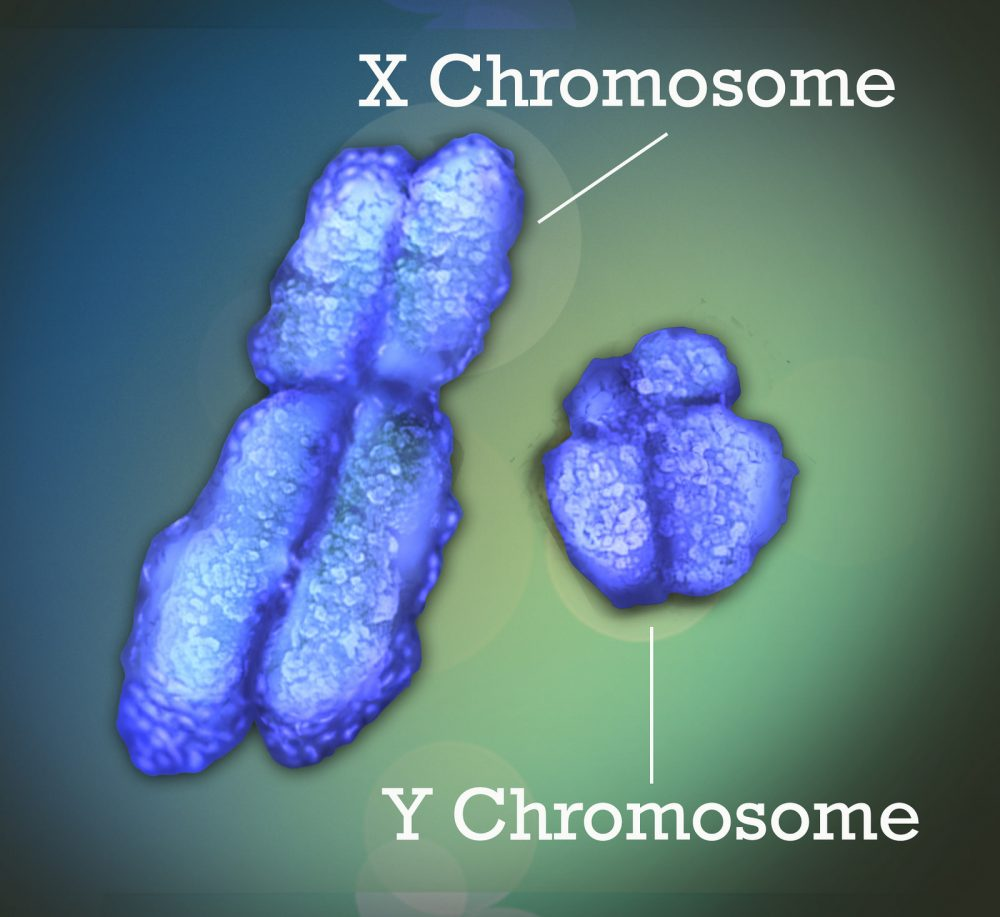
Context: Novel "long-read" techniques have enabled a comprehensive sequence spanning the entire Y chromosome. This landmark effort, featured in Nature, establishes a foundation for investigating sex and sperm genes, unraveling Y chromosome evolution, and exploring its potential disappearance in millions of years.
History of Y Chromosomes
The distinct attributes of the Y chromosome can be attributed to the forces of evolution.
Around 150 million years ago, the X and Y chromosomes were once a matched pair of typical chromosomes, as they still are in certain animals like birds and platypuses.
The emergence of the SRY gene on one of these chromosomes marked the transformation of a proto-Y chromosome that was exclusively confined to the realm of testis development.
The proto-Y underwent rapid degeneration, losing about 10 active genes per million years.
This process led to the reduction of its gene count from an initial 1,000 to the present 27.
A small region known as the "pseudoautosomal" region retains its original form and closely resembles its counterpart on the X chromosome.
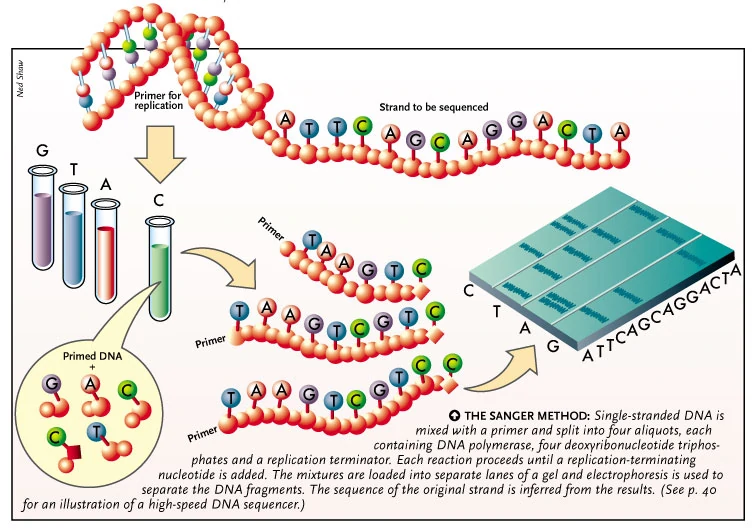
Short read Sequencing (SRS) to Read DNA
SRS is a widely used DNA sequencing method.
In this technique, the DNA molecule is broken down into smaller fragments, which are then sequenced in parallel.
Each fragment is only a few hundred bases long, and the sequencing machine reads these short fragments and assembles them into a complete sequence using complex computational algorithms.
This method is efficient and can generate a lot of data quickly, making it suitable for many applications. However, it has limitations when it comes to repetitive or complex DNA regions.
Challenges Faced by Short-read Technique while Sequencing the Y-chromosomes
Repetitive and Complex DNA: The Y chromosome contains regions with repetitive sequences, where the same sequences are repeated multiple times. SRS struggles to accurately piece together these repetitive sections because it's challenging to determine which sequence belongs where.
Structural Variations: The Y chromosome is structurally complex. It contains regions where the DNA sequence is inverted or duplicated. It also contains palindromes, and these variations can be difficult to resolve using short reads.
Junk DNA: The Y chromosome has a substantial amount of non-coding or "junk DNA." These repetitive sequences don't directly code for proteins or traits, but they can still affect the chromosome's structure and function. SRS struggles to handle these repetitive elements.
These techniques have allowed scientists to sequence the Y chromosome from one end to the other with unprecedented accuracy and reliability.
Differences between Short-read Sequencing (SRS) and Long Read Sequencing (LRS)
SRS
LRS
SRS typically produces reads that are a few hundred bases long
LRS can produce reads that are thousands to even tens of thousands of bases long
In SRS, because the reads are shorter, scientists must rely on computational algorithms to assemble these short fragments into a complete genome or transcriptome.
LRS, with its longer reads, simplifies assembly, spanning genes, structural variations, and chromosomes for better understanding.
SRS fails to study complex genomic features
LRS is particularly useful for studying complex genomic features such as repetitive regions, structural variations, gene isoforms, telomeres, and centromeres.
SRS has a relatively higher error rate.
LRS has a relatively higher error rate.
Terms
Chromosomes
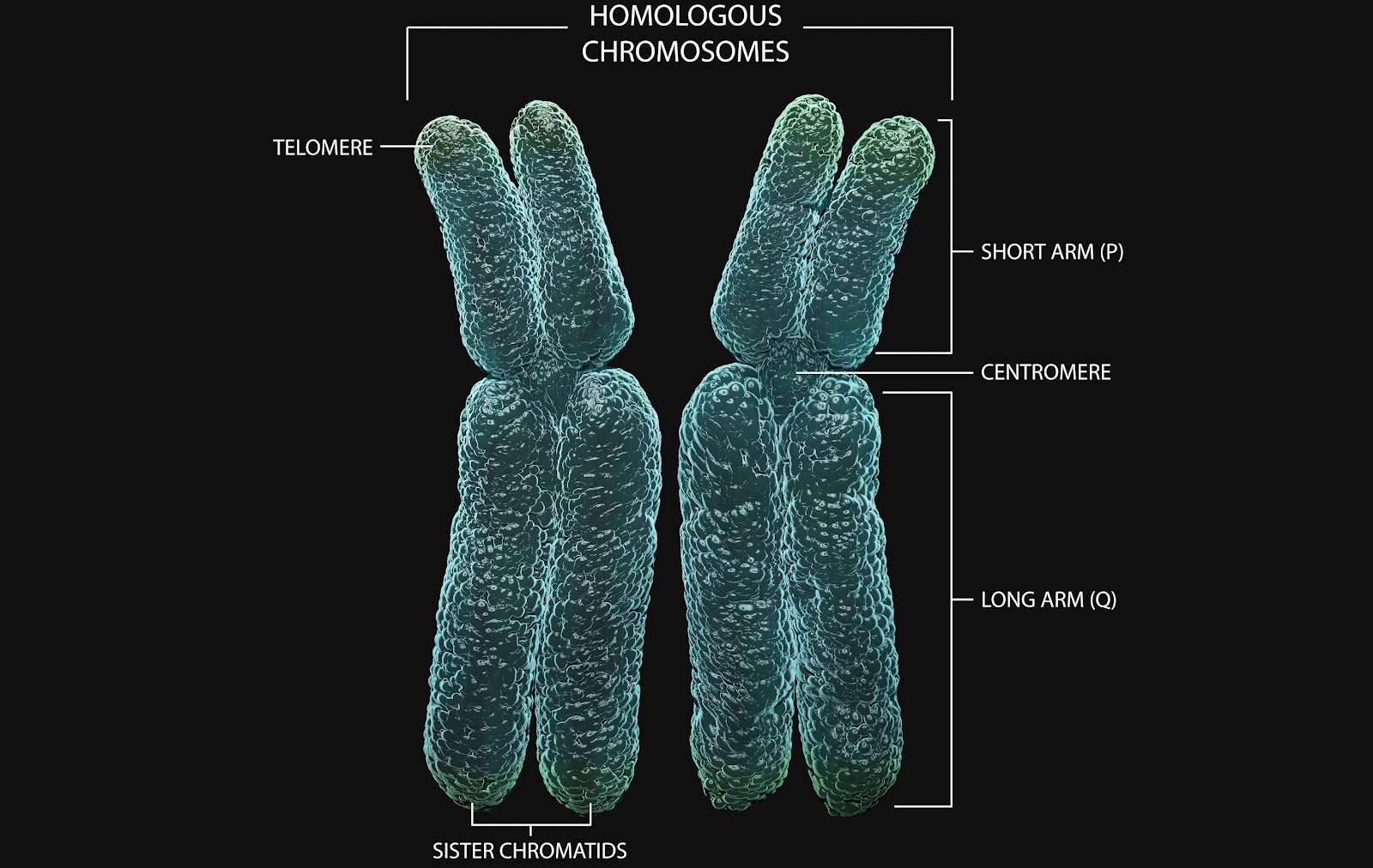
Thread-like structures in the cell nucleus that carry genes. Humans have 23 pairs, including one pair of sex chromosomes.
Y Chromosome
One of the two sex chromosomes in mammals. It determines maleness and carries genes related to male sexual development and function.Example: In humans, males have one X chromosome and one Y chromosome (XY), while females have two X chromosomes (XX).
Genes
Segments of DNA that encode instructions for building and maintaining the body. They determine various traits and characteristics.Example: The SRY gene on the Y chromosome directs the development of male characteristics during embryonic development.
Sex Determining Region Y
This gene is responsible for triggering the development of male characteristics in embryos.
Testis
The male reproductive organ that produces sperm and male hormones.
Ovary
The female reproductive organ that produces eggs and female hormones.
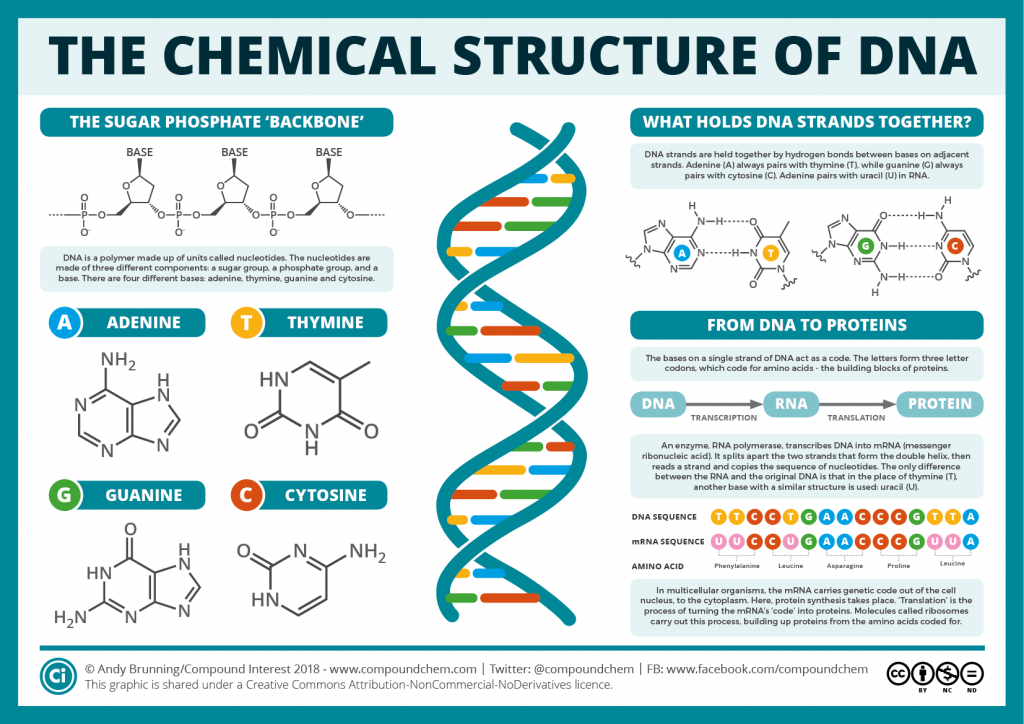
Deoxyribonucleic Acid
The molecule carrying genetic information. It is composed of sequences of nucleotides.
Junk DNA
Non-coding DNA sequences that do not directly encode proteins but may have other regulatory roles.Example: The Y chromosome contains a significant amount of junk DNA, including repetitive sequences with unclear functions.
Sequencing
Determining the order of nucleotides (A, T, C, G) in a DNA molecule.
Long-Read Sequencing
A technique that reads longer stretches of DNA, aiding in assembling complex sequences.
Proto-Genes
Proto-Y evolved from an ancestral ordinary chromosome. The SRY gene appeared on the proto-Y, initiating the development of male characteristics.
Degeneration
The gradual loss of genes or function in a chromosome over time due to various factors, including mutations.
Pseudo Autosomal Region
A small region on sex chromosomes where the X and Y chromosomes share genes. A region on the sex chromosomes (X and Y) that behaves like an autosomal chromosome (non-sex chromosome). It has shared genetic information between X and Y chromosomes.
Sequencing Ambiguity
Difficulty in assembling DNA sequences due to repetitive regions or other complex structures.
Centromere
A region of the chromosome important for cell division, as it helps separate chromosomes during the process.
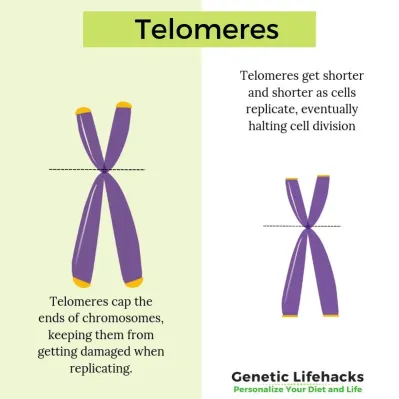
Telomere
Protective caps at the ends of chromosomes that help maintain chromosome stability during replication.
Gene Expression
The process by which information from a gene is used to synthesize a functional gene product, such as a protein.
Genetic Degeneration
The process of genes becoming non-functional or being lost due to mutations over generations.
Hormones
Chemical messengers that regulate various physiological processes in the body. In this context, male hormones promote the development of male features.
Sexual Dimorphism
Differences in appearance and behavior between males and females of the same species.
Context: The Government of India has given ‘In-Principle’ approval for Construction and Operation of Laser Interferometer Gravitational Wave Laboratory – India (LIGO) in India in collaboration with LIGO Laboratory, United States of America.
Gravitational Waves
A gravitational wave is an invisible (yet incredibly fast) ripple in space. Gravitational waves travel at the speed of light.
General Relativity proposed by Albert Einstein predicted that moving objects would generate gravitational waves in spacetime, just like a moving boat produces ripples in water.
Because these are ripples in spacetime itself, gravitational waves have the effect of causing a temporary deformation in a body when it comes in contact.
Since spacetime itself elongates or contracts during the propagation of the gravitational wave, everything lying in that spacetime also goes through the same experience.
For example,
This effect is like a ball being slightly squeezed along any of its diameters.
The ball flattens a bit in the direction of pressure that is applied, while it bulges out in the perpendicular direction.
When a gravitational wave passes the Earth, for example, the Earth gets similarly squeezed in one direction, and bulges in the perpendicular direction.
Because gravity is the weakest of all natural forces, the deforming effect of gravitational waves is extremely tiny, the reason why it could not be experimentally verified for 100 years.
There are many astrophysical phenomena that are either very dim or completely invisible in any form of light that astronomy has relied on for 400 years.
Gravitational waves are a powerful new probe of the Universe that uses gravity instead of light to take measure of dynamical astrophysical phenomena.
Gravitational Waves Tell Us About
Studying gravitational waves gives enormous potential for discovering the parts of the universe that are invisible by other means, such as black holes, the Big Bang, and other, as yet unknown, objects.
It provides experimental foundation to the general theory of relativity proposed by Einstein.
Gravitational waves allow us to directly observe some of the most cataclysmic events in the universe, such as black hole mergers and neutron star collisions.
Gravitational waves can potentially help us study the mysterious components of the universe, such as dark matter and dark energy.
Causes of the Gravitational Waves
The most powerful gravitational waves are created when objects move at very high speeds. Some examples of events that could cause a gravitational wave are:
When a star explodes asymmetrically (called a supernova).
When two big stars orbit each other.
When two black holes orbit each other.
It can be created by the mergers of neutron stars and black holes.
Continuous gravitational waves are expected to be produced by a single spinning massive object like a neutron star.
Compact binary inspiral gravitational waves are produced by orbiting pairs of massive and dense ("compact") objects like white dwarf stars, black holes, and neutron stars.
LIGO stands for "Laser Interferometer Gravitational-wave Observatory". LIGO exploits the physical properties of light and of space itself to detect and understand the origins of gravitational waves (GW).
Measurement of Gravitational Wave by LIGO
The observatory comprises two 4-km-long vacuum chambers, built perpendicular to each other. Highly reflective mirrors are placed at the end of the vacuum chambers.
Light rays are released simultaneously in both the vacuum chambers. They hit the mirrors, get reflected, and are captured back.
In normal circumstances, the light rays in both the chambers would return simultaneously.
But when a gravitational wave arrives, one of the chambers gets a little elongated, while the other one gets squished a bit.
In this case, light rays do not return simultaneously, and there is a phase difference (one returns after some time than the other).
The presence of a phase difference marks the detection of a gravitational wave.
Instrumental Accuracy in Measurement
The precision of the measurements required to detect gravitational waves is mind-boggling.
At a 4-km scale, the changes in distance that light must travel because of the gravitational wave are 10,000 times smaller than the width of the proton (approximately one-millionth of a nanometer), and LIGO instruments are designed to pick this up.
According to the LIGO website, this is like measuring the distance to a neighbouring star 4.2 light years away with an accuracy smaller than the width of human hair.
Unique Features of LIGO Observatory
LIGO is blind:
Unlike optical or radio telescopes, LIGO does not see electromagnetic radiation (e.g., visible light, radio waves, microwaves).
But it doesn't have to because gravitational waves are not part of the electromagnetic spectrum.
LIGO can't point to specific locations in space:
Since LIGO doesn’t need to collect light from stars (in fact, it can detect gravitational waves coming from below!), it doesn't need to be round or dish-shaped like optical telescope mirrors or radio telescope dishes.
Instead, each LIGO detector consists of two 4 km long, 1.2 m-wide steel vacuum tubes arranged in an "L" shape (LIGO's laser travels through these arms), and enclosed within a 10-foot wide, 12-foot-tall concrete structure that protects the tubes from the environment.
Limitation of LIGO
The longer the Better: the longer the interferometer's arms, the bigger the absolute changes that gravitational waves make to total arm length (i.e., total distance traveled by the lasers).
As a result, longer arms and greater laser travel amplify the impact of even small gravitational waves, increasing their detectability in the interferometer.
Need more power: Increasing laser power also enhances its performance.
In this case, the more laser photons that merge from each arm the sharper the fringes that are measured by the photodetector.
External Noises: It uses a seismic isolation system to protect the LIGO from unwanted vibration that can hamper the detection of Gravitational waves.
The instruments at these observatories are so sensitive that they can easily get influenced by events like earthquakes, landslides, or even the movement of trucks, and produce a false reading.
Multiplicity of Results: It is difficult for a single LIGO detector to confirm a gravitational wave signal on its own. Multiple instruments (ideally 3 or more) must be able to detect the signal to localize the source in the sky.
Availability of Land resources: The interferometry needs a very large tract of land which may result in conflict over transfer and compensation.
Benefits of LIGO India
Though LIGO's mission is to detect gravitational waves from some of the most violent and energetic processes in the Universe, the data LIGO collects may also contribute to other areas of physics such as gravitation, relativity, cosmology, astrophysics, particle physics, and nuclear physics.
Socio-Economic benefits: the construction of an observatory will provide employment opportunities in the adjoining areas such as jobs for guards, construction work, tourist guide etc.
International Collaboration: The LIGO provide an opportunity to the scientific community of India to integrate with world leading to adoption of best practices and can lead to effective utilisation of resources.
Terms
Space-Time Continuum
The space-time continuum consists of four dimensions, the three dimensions of space (length, width, and height…or up/down, left/right, and forward/backward, depending upon how you wish to think of them) plus the fourth dimension of time.
Interferometry
Interferometers measure the interaction of two or more beams of light, obtaining information from the patterns that form as a result.In simple terms, Interferometry uses the change in pattern formed by the interaction of light rays to get the measurement of some physical quality, in this case change in pattern attribute to the detection of the gravitational wave.
Context: ISRO's Aditya L1 mission was successfully launched from Satish Dhawan Space Centre on 2 September 2023.
About Aditya L1:
Aditya L1 is the first space-based observatory class to study the Sun.
It was launched to the low earth orbit using ISRO's reliable Polar Satellite Launch Vehicle (PSLV).
Aditya-L1 will undergo multiple apogee-raising orbital manoeuvres and is expected to exit the Earth’s orbit on the fifth day after launch.
After leaving Earth’s gravity, it will get into a heliocentric path. Later, getting into the orbit around L1 is the most crucial aspect. L1 is not an object, just a location in space, which also co-moves with Earth around the Sun.
Once launched, it will take 125 days to travel to its destination at L1.
Objectives:
Study of Solar upper atmospheric (chromosphere and corona) dynamics.
Study of chromospheric and coronal heating, physics of the partially ionized plasma, initiation of the coronal mass ejections, and flares
Observe the in-situ particle and plasma environment providing data for the study of particle dynamics from the Sun.
Physics of solar corona and its heating mechanism.
Diagnostics of the coronal and coronal loops plasma: Temperature, velocity and density.
Development, dynamics and origin of CMEs.
Identify the sequence of processes that occur at multiple layers (chromosphere, base and extended corona) which eventually leads to solar eruptive events.
Magnetic field topology and magnetic field measurements in the solar corona.
Drivers for space weather (origin, composition and dynamics of solar wind.
Payloads:
Weighing 1,475 kg, it will carry seven payloads. The payloads include-
Solar Ultraviolet Imaging Telescope (SUIT) is designed to image the Sun in the 200-400 nanometre (nm) of the ultraviolet band. SUIT’s imager will continuously record the entire disk of the Sun through 11 filters. The images of these layers could help improve our understanding of the Sun’s immediate atmosphere.
Visible Line Emission Coronagraph (VELC) is the Corona/Imaging and Spectroscopy payload that Aditya-L1 will use to focus on the Sun's Corona.
Solar Low Energy X-ray Spectrometer (SoLEXS) and High Energy L1 Orbiting X-ray Spectrometer (HEL1OS) payloads will study the X-ray flares emitted by the Sun over a wide range of X-ray energy range.
Aditya Solar wind Particle Experiment (ASPEX), during the cruise phase, will turn on and start performing in situ measurements of solar particles and ions.
Plasma Analyser Package for Aditya (PAPA) will study the solar wind and energetic ions.
Magnetometer (MAG) payload is meant to measure the low-intensity interplanetary magnetic field in space.
Significance of the mission:
Aditya-L1 would help in understanding the effect of the Sun on the Earth and its surroundings. The mission hopes to generate user-friendly informationto issue space weather alerts that can help safeguard a range of satellite-dependent operations such as telecommunications, mobile-based Internet services, navigation, power grids, etc.
Disturbances in the form of solar flares, Coronal Mass Ejection, or solar winds directed towards Earth, can adversely impact space weather; studying the Sun is, therefore, of paramount importance.
It would study solar upper atmospheric (chromosphere and corona) dynamics and understand the physics of the solar corona and its heating mechanism.
The difference between the Sun's upper atmosphere's temperature of 1-3 million degrees Celsius and its lower temperature of 5500 degree Celsius is one of the most significant unresolved problems in the study of solar physics.
To understand this issue, it will capture near-simultaneous photos of the many layers of the Sun's atmosphere, revealing how energy is routed and transported from one layer to the next.
Aditya-L1 can potentially pave the way for future Indian astronomy missions. After the launch, India entered into an elite group of nations that have sent probes to study the Sun.
Aditya-L1 is ISRO’s second astronomy observatory-class mission after AstroSat.
AstroSat, weighing 1,515 kg, lifted off with five in situ instruments, is India’s first dedicated astronomy mission aimed at studying celestial sources in X-ray, optical, and UV spectral bands simultaneously, and remains operational almost eight years after its launch in 2015.
Lagrange points:
Lagrange points, named after mathematician Josephy-Louis Lagrange who discovered them, are positions in a moving two-body system where forces acting on a third body of smaller mass cancel each other out.
At these special locations in space, the combined gravitational forces of two large bodies (such as the Sun and Earth or Earth and the Moon) equal the centrifugal force felt by a much smaller third body. The interaction of the forces creates a point of equilibrium (net of all forces is zero) where a spacecraft may be "parked" to make observations.
There are five Lagrangian points, denoted L1 to L5, which are located along the line connecting the two larger celestial bodies. Of these, three are unstable and two are stable.
Unstable Lagrange points are labelled L1, L2 and L3. Unstable means that if an object/satellite located at these points is nudged, it will break out from the orbit and drift off into interplanetary space.
Stable Lagrange points are labelled as L4 and L5. This means that if a small object at L4 or L5 is nudged, there would be an effective restoring force to bring a satellite back to the stable point.
L1 point: L1 is located roughly 1.5 million kilometres from Earth, where the Sun and Earth's combined gravitational pull permits a spacecraft to remain nearly stationary to the Sun. The L1 point provides an uninterrupted view of the Sun as the satellite can continuously view solar activities without eclipses.
L2 point: L2 point is used as a location for space-based observatories, as it provides an unobstructed view of the Universe and is stable enough to allow long-duration observations. James Webb Space Telescope is placed at the L2 Lagrange point.
L3 point: L3 point lies behind the Sun, opposite to Earth. Objects in L3 cannot be seen from Earth and offers the potential to observe the far side of the Sun. There is no known natural object at the L3 point, but it is sometimes discussed as a possible location for a future space-based observatory.
L4 and L5 point: L4 and L5 are good and stable locations, but are much farther from Earth compared to L1, which is directly between the Sun and the Earth.
Key Points:- The article discusses the progress of the National Mission for Clean Ganga (NMCG), a flagship program launched in 2015 to rejuvenate the Ganga river.- It highlights that 7 years since its launch, the NMCG has been able to install sewage treatment plants (STPs) to treat only 20% of the estimated sewage generation in the 5 main Ganga basin states.
This is expected to increase to 33% by 2024.- As per NMCG's projections, STPs will be able to treat 60% of sewage by 2026.
This is based on estimated sewage generation of 11,765 million litres per day (MLD) in the Ganga basin states.- NMCG plans to set up STPs to treat 7,000 MLD sewage by 2026.
Remaining capacity will be set up by states.- Till July 2022, STPs to treat 2,665 MLD sewage have been commissioned. Maximum plants set up in Uttarakhand, UP and West Bengal. - The pace of project implementation and commissioning has picked up recently.
Nearly 60% of the installed capacity was added in 2022-23.- Challenges like land acquisition, issues with Detailed Project Reports and lack of state involvement had earlier slowed implementation.- Signs of improved water quality - increased dolphin population and presence in new stretches, increased fish species tolerant to clean water.
About NMCG
National Mission for Clean Ganga (NMCG) was registered as a society on 2011 under the Societies Registration Act 1860.
It acted as implementation arm of National Ganga River Basin Authority(NGRBA) which was constituted under the provisions of the Environment (Protection) Act (EPA),1986.
NGRBA has since been dissolved with effect from the 2016, consequent to constitution of National Council for Rejuvenation, Protection and Management of River Ganga (referred as National Ganga Council) under EPA 1986.
The Act envisages five tier structure at national, state and district level to take measures for prevention, control and abatement of environmental pollution in river Ganga and to ensure continuous adequate flow of water so as to rejuvenate the river Ganga as below;
Empowered Task Force (ETF) on river Ganga under chairmanship of Hon’ble Union Minister of Jal Shakti (Department of Water Resources, River Development and Ganga Rejuvenation).
NMCG has a two tier management structure and comprises of Governing Council and Executive Committee.
Both of them are headed by Director General, NMCG. Executive Committee has been authorized to accord approval for all projects up to Rs.1000 crore.
Similar to structure at national level, State Programme Management Groups (SPMGs) acts as implementing arm of State Ganga Committees.
Thus the newly created structure attempts to bring all stakeholders on one platform to take a holistic approach towards the task of Ganga cleaning and rejuvenation.
The Director General(DG) of NMCG is a Additional Secretary in Government of India. For effective implementation of the projects under the overall supervision of NMCG, the State Level Program Management Groups (SPMGs) are, also headed by senior officers of the concerned States.
Aim & Objective of NMCG
The core objectives of the National Mission for Clean Ganga include a range of targets, which include
The proposed approach involves the reconstruction and improvement of the current Sewage Treatment Plants (STPs), with the implementation of prompt short-term measures aimed at mitigating pollution at the riverside departure points.
The primary objective is to effectively minimize the inflow of sewage into the river system.
In order to maintain a continuous flow of water while minimizing disruption to natural seasonal variations.
The objective is to effectively rehabilitate and sustain the levels of groundwater and surface flow.
The primary objective is to rehabilitate and maintain the indigenous flora within the region.
The primary objective is to save and restore the aquatic and riparian biodiversity within the river Ganga basin.
In order to facilitate public engagement in the protection, rehabilitation, and management of the river.
Initiatives Related to Ganga
NAMAMI GANGE PROGRAMME
The Namami Gange Programme is an Integrated Conservation Mission initiated by the Union Government in June 2014. It is regarded as a "Flagship Program" aimed at accomplishing two primary objectives: the efficient reduction of pollution and the preservation and rehabilitation of the National River Ganga.
The entity responsible for its operation is the Department of Water Resources, River Development, and Ganga Rejuvenation under the Ministry of Jal Shakti. The implementation of the project (SPMGs) is under the responsibility of the National Mission for Clean Ganga (NMCG) and its state equivalent organizations, known as State Initiative Management Groups.The National Mission for Clean Ganga (NMCG) serves as the operational entity of the National Ganga Council, assuming the responsibilities formerly held by the National Ganga River Basin Authority since 2016.
The organization has a capital of Rs 20,000 crore, which is centrally backed and non-lapsable. Additionally, it oversees a total of 288 projects.
The main components of the program are: Sewerage Treatment Infrastructure & Industrial Effluent Monitoring,Bio-Diversity & Tree plantations
Social Awareness River-Front Development & River-Surface Cleaning.
GANGA KNOWLEDGE CENTRE
The establishment of the Ganga Knowledge Centre (GKC) by the National Mission for Clean Ganga aims to enhance the execution of the National Ganga River Basin Authority (NGRBA) plan. The primary goals of the Ganga Knowledge Centre (GKC) encompass the establishment and administration of knowledge repositories, encompassing the analysis and modeling of various datasets pertinent to the Ganga River Basin. Additionally, the GKC aims to cultivate research innovation by identifying areas of knowledge deficiency, the necessity for novel concepts, and providing support for focused research endeavors. Furthermore, the GKC endeavors to promote discourse with stakeholders by engaging the general public and forging alliances with domestic and international universities, institutions, public and private entities, as well as non-governmental organizations (NGOs).
THE CENTRE FOR GANGA RIVER BASIN MANAGEMENT AND STUDIES (CGANGA)
Established in 2016, the Centre for Ganga River Basin Management and Studies (cGanga) is a data collection centre to ensure sustainable development of Ganga River Basin. cGanga acts as a think tank for the National Mission for Clean Ganga, Ministry of Water Resources, River Development and Ganga Rejuvenation (MoWR, RD & GR) and the Government of India.
National Ganga Council
The chairperson of the National Ganga Council is the Prime Minister.The establishment of the National Ganga Council is mandated under the Environment (Protection) Act (EPA) of 1986.The entity has been entrusted with the overarching duty of overseeing the prevention and restoration of pollution in the River Ganga Basin, including the Ganga River and its several tributaries.The National Mission for Clean Ganga (NMCG) serves as the operational entity responsible for executing the objectives of the National Ganga Council.The National Mission for Clean Ganga (NMCG) was created in 2011 as a recognized organisation.The organizational framework consists of a dual-level management system, which includes a Governing Council and an Executive Committee.The primary goals and objectives of the National Mission for Clean Ganga (NMCG) include the following: to guarantee the efficient regulation of pollution and restoration of the Ganga river via the implementation of a river basin strategy, with the purpose of fostering inter-sectoral collaboration to facilitate comprehensive planning and management.The objective is to sustainably develop the river Ganga by implementing measures that preserve the minimal ecological flows, therefore safeguarding water quality and promoting environmentally responsible practices.
Currently, the National Mission for Clean Ganga encompasses more than just the task of cleaning the river.
It also strives to enhance the river's ecosystem and preserve its biodiversity via measures such as maintaining ecological flow, safeguarding wetlands, and conserving springs.
Additionally, there is an emphasis on revitalizing lesser rivers. Furthermore, the National Mission for Clean Ganga is doing research on other rivers, namely Yamuna and Ramganga, with the objective of formulating an environmental flow analysis (e-flow) for the Yamuna River and its principal tributaries.
The mission will further prioritize the enhancement of grassroots institutions and the implementation of community-driven programs.
Context: In an interim order, the Delhi High Court allowed two children suffering from autism spectrum disorder (ASD) to undergo stem cell therapy for treatment of their condition.
Earlier, in December 2022, the Ethics & Medical Registration Board said that the use, promotion and advertisement of stem cell therapy shall amount to professional misconduct.
Experts from AIIMS have maintained that stem cell therapy is allowed as a mode of treatment only for blood cancer and its use for treating autism spectrum disorder is currently at an experimental stage. More research is required about the use of the therapy for ASD before it is prescribed as a treatment.
Stem Cells and Stem Cell Therapy:
Stem cells are unique cells with the potential to develop into specialised cell types in the body. They can self-renew which makes them valuable for therapeutic applications.
Stem cell therapy or treatment utilises stem cells to promote the repair, regeneration, or replacement of damaged or diseased tissues within the body.
Uses of Stem Cell Therapy:
Regenerative Medicine: The technology can replace or regenerate damaged or diseased tissues and organs. This could revolutionise treatments for conditions like spinal cord injuries, heart diseases, Parkinson's, and diabetes.
Cell-Based Therapies: Stem cells can be used to create specialised cells for transplantation. E.g., Hematopoietic stem cells are used in bone marrow transplants to treat blood-related disorders and cancers.
Personalised Medicine: Potential to create patient-specific therapies by using patient's own cells to generate replacement tissues, reducing the risk of immune rejection and the need for organ donation.
Drug Testing/Disease Modeling: Used to create disease-specific cell models, enabling researchers to better understand diseases and develop new drugs. This reduces the need for animal testing and enhances the accuracy of drug testing.
Status of Stem Cell treatment in India:
Stem Cell Treatment is still under research mode in India and the Government is supporting various basic pre-clinical and clinical research.
Indian Council of Medical Research has released the National Guidelines for Stem Cell Research (NGSCR) 2017, through which the government has supported the ethical and scientific conduct of stem cell research.
As per the NGSCR 2017, only bone marrow/hematopoietic stem cell transplantation for blood disorders (including blood cancers and thalassemia) is permitted use of stem cells. This is known as bone marrow transplant (BMT) or hematopoietic stem cell transplant (HSCT).
At present, stem cell therapy other than BMT/HSCT for conditions listed in the NGSCR 2017 is neither available nor permissible. For other diseases, studies are being conducted to find if stem cells can help cure these diseases.
Challenges:
Ethical Considerations: The use of embryonic stem cells raises ethical concerns, as their extraction from embryos results in destruction of the embryo.
Tumour Formation: In certain cases, stem cells can form tumours if they differentiate in an uncontrolled manner.
Immune Rejection: Even if the patient's own cells are used, there is some possibility of immune rejection.
Cost and Accessibility: Stem cell therapies can be expensive, limiting access for many patients.
Regulation: Through India has "National Guidelines for Stem Cell Research 2017”, however, as the field of stem cell research and therapy is rapidly evolving, challenges may arise regarding its oversight and regulation.
Way Forward:
Developing clear and appropriate regulations for stem cell research and product development.
Informed Consent for trials and potential risks arising out of it.
Developing affordable and accessible therapies.
International collaboration for sharing best practices and advancement of technology for responsible development.
Stem cell technology has the potential to revolutionise medicine and scientific understanding, however, its challenges must be addressed responsibly through rigorous research, ethical considerations, and effective regulatory oversight.