Context: Fossils of a plant-eating dinosaur Tharosaurus indicus from the Middle Jurassic period, found in the Thar desert near the Jaisalmer Basin by the Geological Survey of India.
About Tharosaurus indicus
The name “Tharosaurus indicus” reflects its origin, with “Thar” referring to the Thar Desert and “indicus” indicating its origin in India.
It is a long-necked, plant-eating dinosaur species.
It is characterised by vertebrae with deep, long depressions on the sides and under surface, and split neural spines (top-most parts of the backbone) resembling spikes.
Members of the Dicraeosauridae family of sauropods to which Tharasaurus belongs were not nearly as large. This family was unique: its members were smaller and had shorter necks and tails compared to the other long-necked sauropods.
The fossils of Tharosaurus indicus were found to be around 167 million years old, making them one of the oldest known dicraeosaurids and diplodocoids globally.
The dicraeosaurid dinosaur had previously been found in the North and South Americas, Africa, and China. This is the first instance of such fossils being discovered in India.
Context: Indian Railways' is making efforts to enhance the use of its valuable lands near railway stations, the decision has been made to replace ageing, sparsely distributed buildings with multi-story structures. This initiative is a crucial component of their mission to transform major railway stations and their surrounding areas into vibrant urban centres.
About Asset Monetisation
This approach, often referred to as asset or capital recycling, involves unlocking the untapped potential of public assets that have been previously underutilised or unused.
With a projected investment of ₹111 lakh crores from FY20 to FY25 as part of the National Infrastructure Pipeline (NIP), approximately 15-17% of this funding is expected to come from innovative strategies like asset monetization.
It's important to note that asset monetization is distinct from privatisation and asset slump sales. Instead, it represents a structured partnership with the private sector, governed by defined contractual frameworks.
Benefits
The benefits of asset monetization are manifold.
It allows for diversified resource mobilisation, providing long-term capital for substantial infrastructure development, which is especially critical in the post-Covid-19 economic recovery.
Furthermore, it enhances financial leverage and overall value for both companies and governments with significant stakes in these assets. For instance, Indian Railways possesses 0.51 lakh hectares of vacant land assets that could be put to more productive use.
Efficiency gains are another advantage, with the private sector often delivering superior operational efficiencies for underutilised infrastructure assets. This is exemplified by non-core assets like residential buildings and office spaces with BSNL and MTNL.
Other benefits include sustained economic growth through improved infrastructure, generating employment opportunities, and enhancing overall quality of life through investments in core assets and social infrastructure such as schools and hospitals.
Challenges
Financial challenges include the need for a sustained and robust asset pipeline to attract investors, as well as identifying revenue streams and revenue transfer mechanisms for different infrastructure assets. There is also the concern that leasing public utilities to private investors could lead to higher prices for consumers.
Regulatory challenges encompass the absence of independent sectoral regulators with domain expertise, structural issues like legal uncertainty, and the absence of a robust bond market hindering private investment in infrastructure. Inefficient dispute resolution mechanisms are also a hindrance.
Other challenges involve the reluctance of states to participate despite holding substantial assets, uncertainties posed by factors like Covid-19, climate-related disasters, and economic transformation during Industrial Revolution 4.0, as well as concerns about political influence and corruption.
Way Forward
The National Monetization Pipeline (NMP) with sector-specific plans has been introduced to assist the private sector in planning their fundraising for brownfield asset inventory with potential financing opportunities.
Additional steps include building the capacity and expertise of public authorities, ensuring systematic and transparent asset allocation, working closely with states to leverage assets for resource mobilisation, and developing robust brownfield models and frameworks.
Flexibility in contracts, strong dispute resolution mechanisms, and innovative regulatory frameworks such as InvITs and REITs are recommended to encourage participation from various investor classes, including global pension funds, sovereign wealth funds, and retail investors, similar to the successful model of POWERGRID Infrastructure Investment Trust (PGInvIT).
Context: The first batch of eight cheetahs from Namibia arrived on September 17, 2022, officially launching Project Cheetah, India’s cheetah introduction programme. An overview of the project as it completes one year.
What is Project Cheetah?
It is an ambitious project to re-establish the species within its historical range in India.
The project hopes to benefit global cheetah conservation efforts by providing up to 100 000 km2 of habitat in legally protected areas and an additional 600 000 km2 of habitable landscape for the species.
Cheetahs fulfil a unique ecological role within the carnivore hierarchy and their restoration is expected to enhance ecosystem health in India. As a charismatic species, the cheetah can also benefit India’s broader conservation goals by improving general protection and ecotourism in areas that have been previously neglected.
Present status:
In total, 20 adult African cheetahs have been imported so far.
So far, only 12 of the 20 cheetahs were ever released into the wild, with a few being brought back multiple times to the Kuno National Park (KNP).
Six of the cheetahs which came from Africa have died.
Why did the cheetahs die?
There have been a variety of reasons and causes attributed to the deaths of the six adults and three cubs. Radio collars are not the underlying reason for the deaths of any of these cats, at least that is the officially stated position.
One needs to determine if the African cheetahs are susceptible to certain insects and parasites in India, and if the collars provide a micro-environment conducive for these to thrive.
Context: An earthquake is caused when tectonic plates shift. But quakes themselves aren’t restricted to the earth. For example, small tremors have also been detected on the moon.
About moonquakes
It seismic tremors or vibrations that occur on the Moon's surface.
It is less intense than earthquakes on Earth. The strongest moonquakes can reach magnitudes of up to 5.5 on the Richter scale, but most are much weaker.
It is measured using seismometers placed on the Moon's surface by Apollo missions. These instruments recorded data from 1969 to 1977.
Between 1972 and 1977, 28 shallow moonquakes were observed.
It has helped scientists learn about the Moon's internal structure, composition, and history.
Causes and types of moonquakes:
Tidal forces: Gravitational interactions between the Moon and Earth can cause stress and strain on the Moon's surface, leading to moonquakes, known as deep moonquakes (~700 km below the surface).
Meteorite impacts: Craters on the moon can also form when meteors hit its surface, and since the moon doesn't have an atmosphere, even small impacts can make big craters. There are thousands of these craters on the moon's surface.
Thermal stress: The moon gets very hot and very cold, with temperatures ranging from 121 degrees Celsius to -133 degrees Celsius, a difference of 250 degrees Celsius,the expansion and contraction of the lunar surface can induce moonquakes.
Volcanic activity: Movement of magma or the collapse of lunar lava tubes.
The first three kinds of moonquakes mentioned above tend to be mild; however, shallow moonquakes caused by volcanic activity can register up to mB=5.5 on the body-wave magnitude scale.
Context: The Rubber Board, jointly with the Central government and the Automotive Tyre Manufacturers’ Association, is implementing a project to expand the area under natural rubber in the Northeastern States.
About the Rubber Board
The Rubber Board is a statutory body constituted by the Government of India, under theRubber Act 1947, for the overall development of the rubber industry in the country.
The Rubber Board functions under the Ministry of Commerce & Industry of the Government of India.
Head Office: Kottayam, Kerala
Composition: As per Section 4(3) of the Act, The Board shall consist of:
A Chairman to be appointed by the Central Government;
Two members to represent the State of Tamil Nadu, one of whom shall be a person representing the rubber producing interests;
Eight members to represent the State of Kerala, six of whom shall be persons representing the rubber producing interests, three of such six being persons representing the small growers;
Ten members to be nominated by the Central Government, of whom two shall represent the manufacturers and four labour; Three members to be nominated by the Central Government, of whom two shall be from the Department of Commerce and one from the Department of Agriculture and Cooperation;
Three members of Parliament, of whom two shall be elected by the House of People (Lok Sabha) and one by the Council of States ( Rajya Sabha);
The Executive Director, ex-officio; and
The Rubber Production Commissioner, ex-officio.
Functions
The functions of the Board as defined under the Act are:
To promote by such measures as it thinks fit the development of the rubber industry by:
undertaking, assisting or encouraging scientific, technological or economic research.
training students in improved methods of planting, cultivation, manuring and spraying.
the supply of technical advice to rubber growers.
improving the marketing of rubber.
the collection of statistics from owners of estates, dealers and manufacturers.
securing better working conditions and the provision and improvement of amenities and incentives to workers.
carrying out any other duties which may be vested with the Board as per rules made under this Act.
It shall also be the duty of the Board:
to advise the Central Government on all matters relating to the development of the rubber industry, including the import and export of rubber.
to advise the Central Government with regard to participation in any international conference or scheme relating to rubber.
to submit to the Central Government and such other authorities as may be prescribed, half yearly reports on its activities and the working of this Act, and
to prepare and furnish such other reports relating to the rubber industry as may be required by the Central Government from time to time.
Context: India has become a primary authority responsible for issuing globally recognized OIML certificates, enabling the sale of weights and measures worldwide. The Department of Consumer Affairs is now equipped to issue the essential OIML Pattern Approval certificates required for selling weights and measures in the international market.
India can now issue OIML certificates
India became a member of the OIML in 1956. In the same year, India signed the metric convention.
India applied to become an OIML certificate-issuing authority in March 2023.
The Legal Metrology Division, Department of Consumer Affairs, is now authorised to issue OIML certificates.
India now joins an exclusive group of nations, including Australia, Switzerland, China, Czech Republic, Germany, Denmark, France, UK, Japan, the Netherlands, Sweden and Slovakia authorised to issue OIML approval certificates.
How will this help the Indian Economy:
The move is poised to bring several benefits to the Indian economy, including:
Boosting Exports, Foreign Exchange Earnings, and Employment: This initiative is expected to drive up exports, increase foreign exchange earnings, and generate employment opportunities.
Attracting Neighbouring Countries and Manufacturers: Given that only 13 countries are currently authorized, neighbouring nations and manufacturers can now come to India for certification, which will contribute to foreign exchange earnings and job creation.
Establishing a Special Ministry Unit: There are plans to establish a dedicated unit within the ministry to facilitate this process, bolster foreign exchange earnings, and enhance India's international presence in this field. This move will also lead to resource savings and reduce redundancy.
Expansion of Testing Labs: Additional testing labs are in the pipeline, with one already operational in Ahmedabad. The Consumer Ministry has committed to establishing similar labs in other cities. Additionally, a dedicated cell will be set up for certificate issuance.
Cost Savings for Domestic Manufacturers: Domestic manufacturers can export their weighing and measuring instruments worldwide without incurring extra testing fees, resulting in substantial cost savings.
Influence on OIML Policies: India may now play a role in shaping OIML policies and contribute to the OIML Strategy. This system allows OIML Certificates issued by OIML Issuing Authorities in OIML Member States to serve as the basis for national or regional type approvals for measuring instruments by other participants.
Facilitating Other OIML Members: Other OIML Members can issue national type approval certificates without the need for costly test facilities by relying on these certificates as a foundation.
What is OIML?
Founded in 1955, the OIML, known as the International Organization of Legal Metrology, is an intergovernmental organization with global recognition.
Its certificates are universally accepted for the sale of weights and measures worldwide.
Headquartered in Paris, this international standard-setting body is responsible for developing model regulations, standards, and associated documents for use by legal metrology authorities and industries.
Its pivotal role lies in aligning national laws and regulations concerning the performance of measuring instruments, such as clinical thermometers, alcohol breath analysers, radar speed measuring instruments, ship tanks at ports, and petrol dispensing units.
The harmonization ensures that the certification of measuring devices in one country aligns with that in another, thereby facilitating the international trade of these devices and products reliant on them.
Throughout its existence, the OIML has developed numerous guidelines to assist its members, particularly those in developing nations, in crafting appropriate legislation related to metrology across various aspects of society.
It also offers guidance on certification and calibration requirements for new products, especially in cases where calibration carries legal implications, such as in trade, healthcare, and taxation.
The OIML collaborates closely with other international organizations like the International Bureau of Weights and Measures (BIPM) and the International Organization for Standardization (ISO) to ensure compatibility between their respective initiatives.
While the OIML lacks legal authority to enforce its recommendations on Member States, its recommendations are frequently incorporated into national legislation by these Member States.
Together, OIML Members represent 86% of the world's population and 96% of its economy.
Structure:
The OIML operates under a three-tier structure, funded primarily by its approximately 2 million-Euro Annual Budget, contributed through Member subscriptions.
International Conference: The highest authority within the OIML is the International Conference which convenes every four years. Delegations from Member States and non-voting Corresponding Members attend this Conference.
International Committee: Responsible for the day-to-day management of the OIML, the International Committee comprises one representative from each Member State. These members typically hold official positions in legal metrology in their respective countries. The Committee elects a President, who serves a non-salaried six-year term and chairs annual meetings.
BIML (Bureau International de Métrologie légale): The BIML serves as the OIML's headquarters. It's overseen by a salaried director who also acts as the secretary for both the International Conference and the International Committee.
Participants in the OIML fall into three categories:
OIML Issuing Authorities: These participants hail from Member States and are responsible for issuing OIML type evaluation reports and OIML Certificates under the OIML-CS.
Utilizers: Participants from OML Member States that accept and utilize OIML Certificates and/or OIML type evaluation reports issued by OIML Issuing Authorities.
Associates: Corresponding Members who also accept and utilize OIML Certificates and/or OIML type evaluation reports issued by OIML Issuing Authorities. Associates, however, do not possess voting rights in the Management Committee.
OIML Issuing Authorities must prove compliance with ISO/IEC 17065, while Test Laboratories must demonstrate compliance with ISO/IEC 17025.
For participation in Scheme B, it is sufficient to show compliance through "self-declaration" with additional supporting evidence.
However, for Scheme A participation, compliance must be demonstrated via peer evaluation, relying on either accreditation or peer assessment.
Objectives:
Collaborate with stakeholders to formulate standards and associated documents intended for adoption by both legal metrology authorities and industry. These standards, when put into practice, will align with the OIML's mission.
Establish systems for mutual recognition that effectively reduce trade barriers and expenses in a global market.
Advocate for the interests of the legal metrology community in international organizations and forums dedicated to metrology, standardization, testing, certification, and accreditation.
Foster and facilitate the exchange of knowledge and expertise among the worldwide legal metrology community.
In partnership with other metrology organizations, raise awareness about the valuable role a robust legal metrology framework plays in a modern economy.
Identify areas where the OIML can enhance its effectiveness and efficiency in fulfilling its objectives.
What is the OIML certificate?
The OIML Certification System (OIML-CS) is a structured framework for issuing, recording, and using OIML certificates, along with their associated OIML type evaluation and test reports.
These certificates apply to various measuring instruments, including items like digital balances and clinical thermometers.
With India now part of this system, there are now 13 countries authorized to issue these globally recognized OIML certificates.
These certificates hold universal acceptance.
To put it simply, let's imagine a manufacturer in Noida producing digital balances who wants to export them to the United States or any other country. Previously, they would have had to travel to one of the 12 other countries for certification. However, with India's inclusion in the system, these certificates can now be obtained in India, making the equipment exportable and accepted across the world.
The primary objectives of the OIML-CS are as follows:
Reduce the need for redundant testing when seeking national type evaluations and approvals, while also supporting the recognition of measuring instruments and/or modules subject to legal metrological control.
Establish rules and procedures to foster mutual trust among participating OIML Member States and Corresponding Members regarding the results of type evaluations, indicating conformity of measuring instruments and/or modules to the metrological and technical requirements outlined in applicable OIML Recommendations.
Definition of Legal Metrology:
The concept of "legal metrology" can vary across different jurisdictions, reflecting the degree to which metrology is integrated into each jurisdiction's legal and regulatory framework.
In their publication titled the "International Vocabulary of Terms in Legal Metrology," the OIML has defined "legal metrology" as encompassing regulatory measures related to measurements and measuring instruments.
These measures are designed to safeguard aspects such as public health, safety, environmental protection, taxation, consumer protection, and fair trade.
The primary goal is to ensure the precision and dependability of measurements, particularly in cases where measured values can impact health, safety, or financial transparency, such as in the context of weights and measures.
The linkage between these two statements is established through the terms "regulatory," "accuracy," and "reliability."
The term "regulatory" encompasses the "legal" dimensions of the concept, which pertain to the roles played by governments, national metrology institutes, and standards organizations in creating a framework that instils confidence in the accuracy and reliability of measurements.
The OIML has identified four primary activities that serve the objectives of legal metrology:
Establishing legal requirements.
Conducting control and conformity assessments of regulated products and activities.
Overseeing regulated products and activities.
Providing the essential infrastructure to facilitate accurate measurements.
Context:In 2020, Government of India came up with Pradhan Mantri Matsya Sampada Yojana (PMMSY) to bring about ecologically healthy, economically viable, and socially inclusive development of the Fisheries sector of India.
Status of India’s Fisheries Sector
(Data from Economic Survey 2022-23)
The fishing sector in the country continues to be among the most important and fastest growing agriculture allied sector in this country.
The sector provides livelihood to more than 2.8 crores fishers and fish farmers at the primary level and several more along the fisheries value chain.
The annual average growth rate of the fisheries sector has been about 7 per cent since 2016-17 and has a share of about 6.7 per cent in total agriculture GVA.
About 17% of agricultural exports of our country are fish and fish products.
India is now among top three countries in fish and aquaculture production.
India has become the one of the biggest shrimp exporter in world.
About Pradhan Mantri Matsya Sampada Yojana (PMMSY)
PMMSY is designed to address critical gaps in the fisheries value chain from fish production, productivity and quality to technology, post-harvest infrastructure and marketing.
It aims to modernize and strengthen the value chain, enhance traceability and establish a robust fisheries management framework while simultaneously ensuring the socio-economic welfare of fishersand fish farmers.
The scheme focuses on the doubling of fishers’ income through a variety of interventions like by generating meaningful employment.
It also focusses on enhancing the contribution of the fisheries sector to Agricultural GVAand exports.
Build a robust fisheries management and regulatory framework for better management of the sector.
Benefits of PMMSY
The scheme provides financial assistance to develop fishing infrastructure like fishing harbors, fish landing centers, fish markets, fish feed plants, fish seed farms, and fish processing units.
Assistance for marketing and export of fish products: It provides assistance for the development of cold chains, fish processing units, and packaging facilities to promote the export of fish products. It will enhance India's competitiveness in the global seafood market. E.g.,Aquapreneurs in Nellore have become successful exporters with the help of biofloc cultivated shrimps.
Employment Generation: It aims to generate employment opportunities, particularly in rural and coastal areas. It provides livelihoods to fishermen and fisherwomen, as well as opportunities in related sectors such as processing, marketing, and transportation.
It promotes the use of modern technology and equipment in fishing and aquaculture. This includes providing support for the adoption of advanced fishing vessels, fish-finding technology, and fish processing machinery.
Diversification in Fisheriesby promoting activities such as ornamental fish farming, seaweed cultivation, and mariculture, expanding the scope of the sector.
Empowerment of women: The scheme emphasizes the participation of women in the fisheries sector, providing them with training and financial support for their active involvement in various activities. E.g., Women entrepreneurs from Kashmir Valley are efficiently rearing cold water rainbow trout using a recirculatory aquaculture system.
PMMSY has indeed opened a world of opportunities, and its successful implementation will play a pivotal role in shaping the destiny of India's fisheries and aquaculture industry for generations to come.
Context: A new study co-authored by a climate scientist Johan Rockstrom said that Earth is exceeding its safe operating space for humanity in six of nine key measurements of its health, and two of the remaining three are headed in the wrong direction.
The Study on Planetary Boundaries
The study evaluates the health of the Earth using nine key measurements or boundaries that are critical for the well-being of humanity and the planet.
It proposes a new approach to global sustainability by defining planetary boundaries within which humanity can operate safely.
Transgressing one or more planetary boundaries may be deleterious or even catastrophic due to the risk of crossing thresholds that will trigger non-linear, abrupt environmental change within continental- to planetary-scale systems.
Nine Planetary Boundaries
The study identified nine planetary boundaries and, drawing upon current scientific understanding, it proposes quantifications for seven of them.
Earth System Process
Limit
Implication of Crossing the limit
Climate Change
CO2 concentration in the atmosphere <350 ppm and/or a maximum change of +1 W m-2 in radiative forcing
Loss of polar ice sheets. Regional climate disruptions. Loss of glacial freshwater supplies.Weakening of carbon sinks.
Mean surface seawater saturation state with respect to aragonite ≥ 80% of pre-industrial levels
Conversion of coral reefs to algal-dominated systems. Regional elimination of some aragonite- and high- magnesium calcite-forming marine biota.Slow variable affecting marine carbon sink.
Stratospheric Ozone Depletion
<5% reduction in O3 concentration from pre-industrial level of 290 Dobson Units
Severe and irreversible UV- B radiation affects human health and ecosystems.
Biogeo-Chemical Flows: interference with P and N cycles
Limit industrial and agricultural fixation of N2 to 35 Tg N yr-1 Annual P inflow to oceans not to exceed 10 times the natural background weathering of P
P: avoid a major oceanic anoxic event (including regional), with impacts on marine ecosystems. N: slow variable affecting overall resilience of ecosystems via acidification of terrestrial ecosystems and eutrophication of coastal and freshwater systems.
Global Freshwater Use
<4000 km3 yr-1 of consumptive use of runoff resources
Could affect regional climate patterns (e.g., monsoon behavior).Primarily slow variable affecting moisture feedback, biomass production, carbon uptake by terrestrial systems and reducing biodiversity
Land System Change
<15% of the ice-free land surface under cropland
Trigger of irreversible and widespread conversion of biomes to undesired states.Primarily acts as a slow variable affecting carbon storage and resilience via changes in biodiversity and landscape heterogeneity
Rate of Biodiversity Loss
Annual rate of <10 extinctions per million species
Slow variable affecting ecosystem functioning at continental and ocean basin scales.Impact on many other boundaries—C storage, freshwater, N and P cycles, land systems.Massive loss of biodiversity unacceptable for ethical reasons.
Thresholds leading to unacceptable impacts on human health and ecosystem functioning possible but largely unknown.May act as a slow variable undermining resilience and increase risk of crossing other thresholds
Atmospheric Aerosol Loading
To be determined
Disruption of monsoon systems. Human-health effects. Interacts with climate change and freshwater boundaries.
Properties of Proposed Planetary Boundaries
Planetary boundaries are interdependent, because transgressing one may both shift the position of other boundaries or cause them to be transgressed.
The social impacts of transgressing boundaries will be a function of the social–ecological resilience of the affected societies.
The proposed concept of “planetary boundaries” aimed at minimizing negative externalities, toward the estimation of the safe space for human development.
Planetary boundaries define, as it were, the boundaries of the “planetary playing field” for humanity if we want to be sure of avoiding major human-induced environmental change on a global scale.
New Findings on the Planetary Boundaries
Unsafe in Six Areas: According to the study, Earth is exceeding its "safe operating space for humanity" in six out of these nine measurements.
These areas include climate, biodiversity, land use, freshwater resources, nutrient pollution, and the presence of "novel" chemicals (human-made compounds like microplastics and nuclear waste).
Safe in Three Areas (for now): Only three of the nine measurements are currently within the boundaries considered safe.
These areas are the acidity of the oceans, the health of the air, and the state of the ozone layer.
Negative Trends:
The study also indicates that even in the areas considered "safe," namely the oceans and air quality, there are negative trends.
Ocean and air pollution are on the rise, which is a cause for concern.
Updating the Boundaries:
The study is an update from 2015 and introduced a new factor - water quality - to the list of unsafe measurements.
This change was based on worsening river run-off and improved measurements and understanding of the issue.
Global Significance:
The researchers emphasize that these nine factors are critical determinants of the planet's fate.
Their findings underscore the urgent need for global action to address environmental and ecological challenges.
Expert Consensus: The boundaries used in the study are described as "scientifically well established" and have been supported by various outside studies and research.
Context: The National Green Tribunal (NGT) criticized the Madhya Pradesh government for the significant damage to water bodies and issued an order to cease the operation of cruise vessels and other motor-powered boats in the Bhoj wetland. This directive was issued by the Central Zone Bench of the environmental court in response to an application filed last year expressing concern about the deterioration of the wetland, encompassing the Upper Lake and Lower Lake.
About Bhoj wetland:
Location in Bhopal, Madhya Pradesh: The Bhoj wetland is a vital ecological site nestled in the heart of Bhopal district in Madhya Pradesh, India.
Historical Origins of the Lakes: This remarkable wetland comprises two interconnected man-made lakes: the Upper Lake and the Lower Lake. The Upper Lake, one of the oldest and most expansive man-made lakes in central India, was ingeniously crafted by King Bhoj during the 11th century. The king achieved this feat by constructing an earthen dam across the Kolans River.
International Recognition under the Ramsar Convention: In 2002, the Bhoj wetland garnered international recognition when it was designated a wetland of global importance under the Ramsar Convention of 1971.
Conservation Efforts and Financing:In 1995, the Madhya Pradesh government undertook a significant conservation project for the wetland, securing funding of Rs 2.5 billion from the Japanese Bank for International Cooperation (JBIC).
Critical Significance of Bhoj Wetland:
Water Supply: The Bhoj wetland plays a pivotal role in supplying drinking water to approximately 1.2 million people in the region, underscoring its immense significance for the local populace.
Biodiversity Haven: The Upper Lake, also known as Bhojtal, is home to a diverse ecosystem, hosting 15 different fish species and various turtle species. Furthermore, it serves as a vital habitat for approximately 2,500 migratory bird species, making it a crucial breeding and nesting ground for these international avian visitors.
Accessibility: The Bhoj wetland stands out as one of the most accessible Ramsar sites, boasting a road encircling the twin lakes for ease of exploration.
Current Challenges facing Bhoj Wetland:
According to a study conducted by the Environmental Planning and Coordination organization, the Bhoj wetland confronts a dual challenge of deteriorating water quality and reduced storage capacity.
On the urban front, water quality degradation results from the inflow of sewage, nutrients, and toxins originating from the catchment areas. The Upper Lake, in particular, contends with a daily influx of approximately 9.82 million gallons (44 MLD) of sewage.
The majority of the catchment area is rural, primarily devoted to agriculture, where intensive chemical farming practices are commonplace. This leads to the utilization of chemical fertilizers and pesticides, which subsequently seep into the lake via streams.
The southwest region bears the brunt of this agricultural runoff, adversely affecting water quality and posing a long-term threat to the wetland's health.
Furthermore, a significant volume of silt flows into the lake from the rural catchment area, exacerbating the conservation challenges faced by the Bhoj wetland.
WWF-India reports that among all ecosystems in India, wetlands face some of the most severe threats. These critical habitats are grappling with a range of challenges, including the loss of vegetation, salinization, excessive inundation, water pollution, invasive species, and unchecked development and road construction.
Wetlands:
Wetland ecosystems hold a unique position as transitional zones, bridging the divide between terrestrial and aquatic environments. They are often referred to as "ecotones," highlighting their role in connecting these two distinct ecological realms.
Understanding Wetlands through Ramsar Convention Definitions:
The Ramsar Convention on Wetlands offers a comprehensive definition of wetlands, encompassing various key characteristics:
Marshes, Fens, and Peatlands: Wetlands encompass a diverse range of landscapes, including marshes, fens, and peatlands. These areas may occur naturally or result from artificial interventions.
Temporary or Permanent Nature: Wetlands can exhibit either temporary or permanent characteristics, further illustrating their ecological diversity.
Natural or Artificial Formation: They can arise through natural processes or as a result of human-made alterations to the landscape.
Inclusive of Water Types: Wetlands span a spectrum of water types, embracing freshwater, brackish water, and saltwater environments.
Depth Limits: The depth of marine water within wetlands, at low tide, does not surpass a height of six meters, distinguishing them from deeper aquatic ecosystems.
About Ramsar Convention
‘Promoting the Conservation and Wise Use of Wetlands’:
The Ramsar Convention, a notable international agreement, stands as a staunch advocate for the conservation and prudent utilization of wetlands worldwide. Remarkably, it is the sole global treaty exclusively dedicated to the preservation of a single ecosystem – wetlands.
Inception: This pivotal convention was established on February 2nd, 1971, initiated by UNESCO (the United Nations Educational, Scientific and Cultural Organization).
Enactment: It officially came into effect in 1975, with countries around the world recognizing the significance of safeguarding their wetland ecosystems.
India's Commitment: India signed the Ramsar Convention on February 1, 1982, solidifying its dedication to this global cause. There are 75 Ramsar sites in India
World Wetlands Day: An important date in the calendar is February 2nd, celebrated annually as World Wetlands Day to raise awareness about the importance of wetlands.
Three Pillars of Ramsar Convention:
Wise Use: Central to the Ramsar Convention is the concept of "wise use." It advocates for the sustainable utilization of wetlands, balancing human needs with the preservation of ecological integrity.
List of Wetlands of International Importance: Governments commit to this list, designating specific wetlands for international recognition and protection. Inclusion signifies a government's pledge to take measures to uphold the ecological character of these sites.
International Cooperation: Collaboration between nations is a fundamental aspect, emphasizing the importance of working together to conserve wetlands on a global scale.
The Montreux Record
Monitoring Change in Wetlands:
The Montreux Record serves as a register of wetland sites within the List of Wetlands of International Importance.
These sites have either undergone, are undergoing, or are anticipated to experience changes in their ecological character due to factors like technological advancements, pollution, or human interference.
Adopted in Brisbane during the Conference of the Contracting Parties in 1996, the Montreux Record operates as an adjunct to the Montreux Record Operating Guidelines.
This database plays a pivotal role within the Ramsar Convention by continuously monitoring and documenting changes in designated wetland sites, ensuring their protection.
Two prominent Montreux Record sites in India include Loktak Lake in Manipur and Keoladeo National Park in Rajasthan.
Chilika Lake, another significant Indian wetland, was added to the Montreux Record in 1993 but later removed from the list in 2002, showcasing the dynamic nature of these designations.
Partners in Conservation
The Ramsar Convention collaborates closely with six distinguished organizations known as International Organization Partners (IOPs), which are:
Birdlife International
IUCN (International Union for Conservation of Nature)
International Water Management Institute (IWMI)
Wetlands International
WWF (World Wide Fund for Nature)
International Wildfowl & Wetlands Trust (WWT)
Criteria for Identifying Wetlands of International Importance:
One of the nine criteria must be fulfilled to be the Ramsar Site.
Introduction to the Wetlands (Conservation and Management) Rules, 2017:
The Wetlands (Conservation and Management) Rules, 2017, have been officially promulgated by the Ministry of Environment, Forests, and Climate Change (MoEF&CC), in accordance with the provisions of the Environment (Protection) Act, 1986.
Defining the Wetlands (Conservation and Management) Rules, 2017:
Effective Conservation and Management: These rules are designed to ensure the effective conservation and management of wetlands within India. They represent a substantial update, supplanting the earlier Wetlands (Conservation and Management) Rules from 2010.
Regulatory Framework: The Wetlands (Conservation and Management) Rules, 2017, serve as the principal regulatory framework governing the conservation and management of wetlands within the country. Notably, they usher in a shift in wetland management, deviating from a centralized approach towards increased involvement of state-level organizations.
Key Responsibilities: The rules stipulate the advisory role of the National Wetland Committee in overseeing the integrated management of Ramsar Convention areas and providing guidance to state agencies on the concept of "wise use" concerning wetlands.
Guidelines Development: To aid State Governments and Union Territory (UT) Administrations in implementing these rules, comprehensive guidelines have been developed. These guidelines encompass various aspects, including the identification and delineation of wetlands, the creation of lists of regulated and permitted activities, and the structure and operational matters concerning the Wetlands Authority.
Salient Features of the Wetlands (Conservation and Management) Rules, 2017:
State Wetland Authority (SWA): These rules mandate the establishment of a State Wetland Authority in each state and union territory, presided over by the state's environment minister. The authority comprises diverse government representatives with expertise in fields such as hydrology, socioeconomics, landscape design, fisheries, and wetland ecology.
Principles of Sustainable Use: The rules introduce the concept of "smart use" as the guiding principle for wetland management. This shift towards sustainable use, acceptable to conservation objectives, is termed "wise use," marking a decentralization of powers.
Comprehensive List of Activities: SWAs are tasked with creating exhaustive lists of activities to be regulated and permitted within notified wetlands and their zones of influence. They are also authorized to add activities that should be prohibited in specific wetlands and develop plans for more efficient wetland utilization.
National Wetland Committee (NWC): Replacing the Central Wetlands Regulatory Authority, the NWC is established, with the MoEFCC secretary leading it.
Prohibited Activities: The rules categorically forbid activities such as encroachment, industrial establishment, waste disposal, and untreated effluent discharge in wetlands.
Inventory Creation: State authorities are required to compile lists of all wetlands and those that need notification within a stipulated timeframe. These lists serve as the basis for the creation of a comprehensive digital inventory of all wetlands, updated every decade.
Centre for Wetland Conservation and Management (CWCM):
Establishment: The CWCM, inaugurated on World Wetland Day in 2021 (February 2, 2021), is an integral component of the National Centre for Sustainable Coastal Management (NCSCM), based in Chennai, under the purview of the Ministry of Environment, Forestry, and Climate Change.
Primary Objective: The centre is dedicated to the management, restoration, and conservation of India's wetlands. It aims to address knowledge gaps and specific research needs in this field.
Knowledge Sharing:The CWCM facilitates knowledge exchange among State/UT Wetland Authorities, wetland users, managers, academics, policymakers, and practitioners through its knowledge portal.
Networking: It fosters alliances and networks with relevant regional, national, and international organizations and promotes integrated approaches for wetland protection, management, and sustainable utilization.
Support for Government: The CWCM assists governments at various levels in the development and implementation of legislative and policy frameworks, management planning, monitoring, and focused wetlands conservation research.
Context: The use of food crops to generate bio-fuels can put burden on the resources of India, which demands for change in the definition of bio-fuels.
Biofuels are alternative fuels produced from biomass and used for transportation.
There are two major biofuel sectors:
Bio-gasoline from sugar-based bioethanol.
Biodiesel from vegetable oils or fatty acid methyl esters (FAME).
Global transportation sector is facing three major challenges, namely
Depletion of fossil fuels.
Volatility in crude oil prices.
Stringent environmental regulations.
Alternative fuels specific to geographies can address these issues. Ethanol is considered to be one of most suitable alternative blending, transportation fuel due to its better fuel quality (ethanol has a higher octane number) and environmental benefits.
Defnition of Biofule and Global Regulation
Since 2008, European regulations (such as the RED II directive) while differntiating provide for two kinds of biofuels:
Conventional biofuels: First generation biofuels from agricultural raw materials that can threaten food security or have a negative impact on land use changes
Advanced biofuels:
Second Generartion: These fuels are derived from non-edible vegetal resources.
Third Generartion: These fuels are derived from micro-organisms such as algae or yeasts.
Biofuel consumption mainly depends on legal constraints on blending and on the fuel demand trends. They were mainly used in road transport in 2020, but new applications in the maritime and air sector are being developed.
Data
According to the International Energy Agency, to achieve net-zero emissions by 2050 globally, sustainable biofuel production needs to triple by 2030 to fuel modes that have few other mitigation options.
Biofuels vs. Electric Vehicles (EVs)
Transitioning to EVs requires replacing existing internal combustion engine (ICE) vehicles and infrastructure, which is capital-intensive and can have environmental concerns related to the mining of critical minerals for batteries.
Case of India
High Import Dependence: India’s import dependence on crude oil and products stood at an all-time high of 87.3% in FY2023, and 25.8% of the country’s import bill was spent on it.
High Demand of Crude and its Product: India has the third-largest crude and product demand in the world with significant room for consumption growth.
Demand of Transportation Sector for Petrol
Nearly 60 per cent of our petrol demand comes from two-wheelers, which cater to the mobility needs of citizens across the economic spectrum.
The remaining 40 per cent demand is from four-wheelers and this share is likely to increase.
Government Programme: India launched its ethanol blending programme in 2003 and in 2022, India’s blending programme achieved the significant milestone of 10 per cent ethanol blending in petrol.
Ethanol Supply:
Ethanol producers supplied nearly 430 crore liters of ethanol in 2022.
Much of India’s supply of ethanol for the blending programme comes from first-generation production using food crops, mostly sugarcane (84 per cent) and grain (16 per cent).
Prospect of Second-generation (2G) technologies
Investments in second-generation (2G) technologies for ethanol production have been slow.
Indian Oil’s state-of-the-art facility will only produce 3 crore liters of 2G ethanol.
There are 12 such facilities in various stages of planning and construction.
International Energy Agency suggested that in the last decade, up to 20% of our total primary energy supply was met by biomass, and a large portion of it was used by households.
Biofuel Targets of India
The government aims to achieve a 20% ethanol blending with petrol (E20) by 2025-26.
In India, biofuels are primarily associated with first-generation (1G) ethanol, which is sourced from food crops like sugarcane and foodgrains.
Factors that Derive production of ethanol in India
Demand Enrichment: Governments’ mandate for blending a minimum percentage (%) of ethanol with gasoline fuel & production of ethanol compatible vehicles.
Supply Enrichment: Schemes for ethanol production from different feedstocks and encouragement to augment bio-refineries and their capacities.
Incentives: Promoting the use of higher ethanol blends through price incentives (tax relief at the retail level) and tax incentives for vehicles compatible with E20 and E85.
Prospects of Biofuel in India
The demand for 20 per cent blending is set to increase India’s ethanol demand to nearly 1,100 crore liters by 2025.
Achieving the 2025 target will require investments, and the ability to provide and divert the necessary feedstock for the domestic production of ethanol.
A NITI Aayog report also indicated a growth in petrol demand by over 45 per cent by 2030, compared to 2021.
The share of four-wheeler is going to increase Nearly 55 per cent of respondents in a 2021 study focused on urban India by the Council on Energy, Environment and Water.
Challenges to Bio-fuels in India
1G Ethanol Dominance: India primarily relies on first-generation (1G) ethanol, sourced from food crops, particularly sugar cane and foodgrains, to meet its ethanol blending targets.
Resource Depletion and Food Security:
Growing sugar cane and using foodgrains for ethanol production have significant implications for groundwater depletion and food security.
These practices may not be sustainable, given stagnant crop yields, climate change impacts, and limited resources.
Groundwater Issue:
Groundwater depletion from sugarcane cultivation and diverting food crops for ethanol production can have negative consequences, especially given stagnant crop yields and the need to feed a growing population.
According to the study by University of Michigan rates of groundwater depletion could triple during 2040-81 compared with the current rate.
Agriculture's GHG Emissions: Diverting crops towards fuel production increases greenhouse gas (GHG) emissions from the agriculture sector, counteracting the goal of reducing emissions in the transport sector.
Greenhouse Gas Emissions: The agriculture sector is noted for its direct greenhouse gas (GHG) emissions, and using it to produce motor fuel may lead to a net increase in emissions, counteracting efforts to reduce emissions from the transport sector.
Challenge of Scaling up: Balancing economies of scale with energy needs and costs for biomass collection and transport remains a challenge.
Way Forward
Clarity in Definition: The term 'biofuel' encompasses both sustainable and unsustainable fuels. Distinguishing between them is crucial for effective decarbonization efforts.
Sustainable Biofuels:
Sustainable biofuels, produced from crop residues and other low-impact sources, have a lower water and GHG footprint.
Global Biofuels Alliance initiative aim to develop these sustainable alternatives and promote ethanol use.
Biomass Use: The Energy Transitions Commission recommends prioritizing biomass use in sectors where low-carbon alternatives are limited, such as long-haul aviation and road freight, where electrification is challenging.
Alternative Strategies: Alternative strategies can be formulated to reduce negative consequences, such as reducing surplus sugarcane cultivation, could be explored to address the issue of surplus sugar production and prioritize food production.
Diversification of Fuel Base: Diversifying our fuel base, the primary focus of policy must be to slow down the overall consumption of petrol in the economy and address the private demand for fuel.
Achieving true sustainability in biofuels is a complex task. Any strategy must be carefully assessed within the larger ecosystem to avoid unintended negative consequences.
Context: Union home minister visited Harami Nala (rogue or treacherous channel) in the Sir Creek sector of Kutch region of Gujarat, near the India-Pakistan border.
About Harami Nala
It is a natural water body, approximately 25 kilometers long, flowing from west to east from Pakistan into Kutch, just south of Vighakot sector. It is flanked by vast marshy mud flats affected by low and high tides.
About 22 kilometers of the channel lie on the Indian side of "vertical line" of the International Boundary (IB) between India and Pakistan, which itself is not contested. A portion of Rajasthan's Barmar district also touches this area.
It is extremely rich in fishing, especially prawns.
The formidable marshy terrain through which it runs makes it impossible to approach or patrol on foot, even during low tide.
There are dangerous tides, muddy areas, and mirages, and it also gets extremely hot in the summer, with temperatures exceeding 50 degrees Celsius.
It is one of the most inhospitable places along the border and has also been at the center of cross-border mischief and exploitation by infiltrators.
The water body has some unique characteristics. Tidal waters surge from the Pakistani side, and over the years, the channel has extended further on the Indian side.
On the Pakistani side, there's a wall called Chini-Bandh, built with assistance from China, to prevent ocean water from flooding their side. On the Indian side, there is a significant distance from the IB where factories have emerged to produce salt, bromide, and other chemicals carried by mineral-rich waters.
The channel's proximity to the coast and urban centers like Gujarat and Mumbai has made it an attractive route for potential infiltrators.
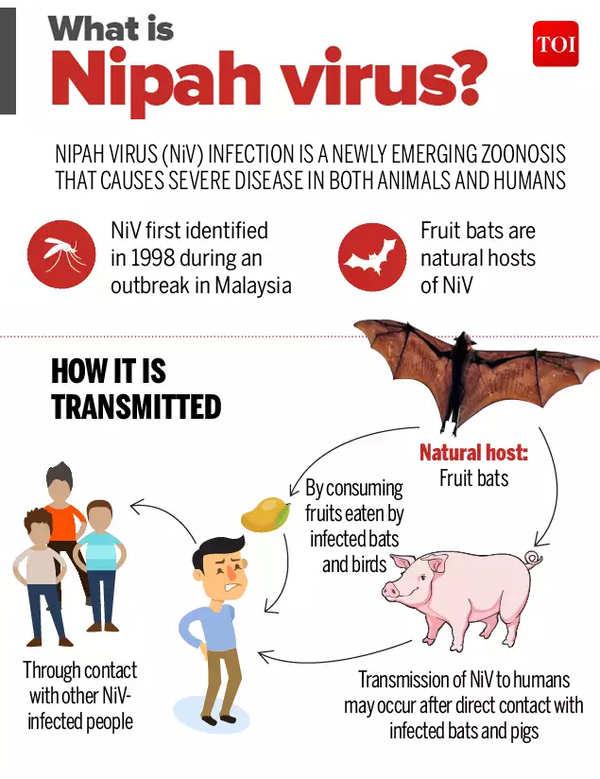
Context: Instances of Nipah virus have been reported from Kerala recently. The virus is capable of causing different clinical manifestations with potential human to human spread in some cases. With the Nipah virus cases a regular occurrence in Kerala now, there is a need for a thorough genetic study of the virus in humans and fruit bats.
Relevance of the Topic: Prelims: Key facts about Nipah virus
About Nipha Virus (NiV):
About: Nipah virus (NiV) is a single-stranded RNA virus. The genetic material of Nipah virus is composed of RNA rather than DNA.
Transmission: Nipah virus is a zoonotic disease that can be transmitted to humans through direct contact with infected animals, especially bats and pigs. Nipah virus infection can be transmitted through contaminated food or directly from person to person.
Natural Reservoir: Fruit Bats (also known as flying foxes) are believed to be the natural reservoir/primary carriers of the Nipah virus.
Symptoms range from:
Mild illness: Fever, headache, muscle pain, and respiratory problems (similar to that of influenza).
Asymptomatic infection (no symptoms)
Fatal Encephalitis (Inflammation of the brain)- can lead to coma or death.
Severe acute respiratory symptoms.
The case fatality rate is between 40% and 75%.
Treatment: NiV is on the top-10 priority list of pathogens identified by the World Health Organization. Currently, there are no approved vaccines available against NiV.