Context: In line with the Kartarpur Corridor, the government intends to establish a corridor to Sharda Peeth in Pakistan-occupied Kashmir (POK).
About Sharda Peeth
Location: Mount Harmukh, Neelum Valley in Jammu and Kashmir's Kupwara District.
As a centre of education
It was one of the most prestigious temple-educational institutions on the India-n subcontinent between the sixth and the twelfth century CE.
Scholars travelled great distances for the texts since it was well renowned for its library.
It was crucial to the growth of the Sharada script in North India.
As a pilgrimage site
It is one of the Maha Shakti Peethas.
Together with the Martand Sun Temple and the Amarnath Temple, it is one of the three holiest locations for Hindu pilgrims.
It is also known for rise of Shaktism.
Lalitaditya Muktapida (724 CE–760 CE) of the Karkota dynasty most likely commissioned it.
Historical traces of the temple
Al-Biruni first described the location as a venerated shrine with a wooden picture of Sharda, but this description is based only on hearsay as he had never visited Kashmir.
Both the intellectual and spiritual components of Sharada Peeth are described by the Kashmiri poet Bilhana, who lived in the 11th century. He says that Sharada Peeth is the place that gave Kashmir its status as a centre of education.
Sharada Peeth is also mentioned in Kalhana's epic Rajatarangini (12th century).
Abu'l-Fazl has also described Sharada Peeth as a stone temple in the 16th century.
Architecture
The red sandstone temple was constructed in the Kashmiri architectural style. The compound is perched on a hill and is accessed from the west by a grand stone stairway. The temple is erected upon a plinth.
The temple is covered with a low single roof, even though Kashmiri architecture is most often characterised by a pyramidal stone roof.
Two Ancient Linga could be observed in a tiny opening on the north side of the wall.
Sharda Script
Almost 1200 years ago, it developed from the Western branch of Brahmi.
Between the 8th and 12th centuries, the script was widely used to write Kashmiri and Sanskrit in Kashmir and the surrounding territories of the Indian Subcontinent.
Its name comes from the goddess Sarada or Saraswati, the patron goddess of learning. It is a native script of Kashmir.
An early version of the Sharada script is used in the Bakhshali manuscript.
Regional variations in the Sharada script emerged in 10th century in Kashmir, the Hill States (which included parts of Himachal Pradesh), and Punjab.
Context: Writer has called for the due respect that should be given to all the unsung freedom fighters of modern Indian History.
Here is the list of four important freedom fighters that were mentioned in the editorial.
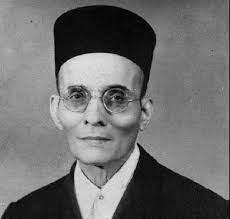
1. V D SAVARKAR
Born in 1883 at Nashik in Maharashtra.
Founded Abhinav Bharat Society (initially as Mitra Mela, 1899) along with brother G D Damodar in 1904. It was a secret society which also had connections with London.
He was involved with India House (founded by Shyamji Krishna Varma in London to promote nationalist ideas among youth).
Savarkar went to London in 1906. He soon founded the Free India Society, along with Madam Bhikaji Cama based on the thoughts of the Italian nationalist Giuseppe Mazzini
Functioned as president of Hindu Mahasabha from 1937 to 1943. He called against Quit India Movement.
Savarkar was convicted and sentenced to 50-years imprisonment also known as Kala Pani and transported in 1911 to the Cellular Jail in the Andaman and Nicobar Islands. Released in 1924.
He later joined Tilak’s Swaraj Party.
He advocated for the use of Hindi as a national language. He also fought against untouchability and caste-based discrimination.
Literary works of Savarkar
The History of the War of Indian Independence (on revolt of 1857)
‘Hindutva: who is Hindu?’
2. Dr. Chembakaraman Pillai
Born in Thiruvananthapuram in 15 September 1891.
He started his struggle for freedom by protesting the Partition of Bengal in 1905.
He joined with Bala Gangadhara Tilak in his resistance against the Partition of Bengal. When the British police tried to arrest him because of his revolutionary speeches against the Travancore State government, he escaped to Germany in 1908 with the help of his friend Sir Walter Williams Strickland.
At Berlin University, he formed International Pro-Indian Committee to gather the support of the German people for India’s freedom struggle.
He came in touch with many revolutionary Indian leaders in Germany like Hardayal, Raja Mahendra Pratap, Dr. Prabhakar, and A. C. Nambiar.
He started a newspaper called Pro-India to spread the message of the Indian freedom movement.
He participated in the First World War on the German side to defeat the British.
Armed with an engineering degree he joined the German navy as an officer in the cruiser Emden which attacked British ships and shelled several places in India.
Madras was shelled on 22 September 1914 after a fierce sea battle with British ships.
He met Mahatma Gandhi in South Africa. He was the Foreign Minister when a temporary Free Government of India was established in Afghanistan on 1 December 1915.
He met Subhash Chandra Bose in Vienna in 1919. Though he joined in the German army, he criticized even Adolf Hitler, when he humiliated India in his speech.
Dr. Chidambaram Pillai died on 26 May 1934 in Germany under mysterious circumstances.
3. Vanchinathan Iyer
Vanchinatha Iyer or Vanchinathan was born in Shenkottai. Vanchinathan alias Sankara Iyer was the son of Shri Raghupathy Iyer.
He had studied upto primary standard and joined the Forest Department thereafter.
He participated in revolutionary activities against the Britsh.
On 17 June 1911, Vanchi who was 25, assassinated Robert Ashe, the district collector of Tirunelveli, who was also known as Collector Dorai.
He shot Ashe at point-blank range when Ashe's train had stopped at the Maniyachi Station, enroute to Madras. He committed suicide thereafter. The railway station has since been renamed Vanchi Maniyachi.
The mastermind behind the assassination was Nilakanta Brahmachari who went around the Madras presidency in 1910 recruiting cadres and hatching plots against the British. In this venture, he was accompanied by Shankar Krishna Iyer, Vanchinathan's brother-in-law, who introduced the men to each other.
Along with a few other men, Nilakanta Bramhachari, Vaanchinathan, and Shankar Krishna Aiyar found an organisation called Bharatha Matha Sangam which plots the assassination of influential British men.
4. Thillaiaadi Valliammai
She was a South African Tamil girl who worked with Mahatma Gandhi in her early years when she developed her nonviolent methods in South Africa fighting its apartheid regime.
She joined her mother in the march by women from Transvaal to Natal – which was not legally permitted without passes.
They were protesting against the judgement given by Justice Searle which made all marriages invalid if not registered under the registrar office or not performed according to the Christian rituals.
She was imprisoned for the protest against the South African government. She was imprisoned for three months, but due to severe illness she died at the age of 16 soon after the release.
Context: The 23rd of March is commemorated as Martyrs Day in honour of Bhagat Singh and his comrades Rajguru and Sukhdev. The day is also known as Shaheed diwas.
Early life of Bhagat Singh
Born on September 27, 1907, in the Lyallpur area of the Punjab, now in Pakistan.
Bhagat Singh's uncle Ajit Singh was prominent in politics. Ajit Singh led the establishment of the radical Anjuman-i-Mohisban-i-Watan in Lahore and oversaw the publication of its newspaper, Bharat Mata.
Ajit Singh also participated in the protests against the Canal Colonization Bill in 1907 and the Ghadar Movement in 1914–1915. His uncle Ajit Singh had an impact on Bhagat Singh.
He also contributed to pamphlets issued by the Naujawan Bharat Sabha and wrote for publications in Punjabi and Urdu. He also contributed to Kirti, the publication of the Kirti Kisan Party.
Affiliation with Hindustan Republican Association Army or HRA/ Hindustan Socialist Republican Association (HSRA):
The organisation operated throughout the Bihar, Punjab, and United Provinces region.
It was founded in October 1924 in Kanpur.
Founded by: Ramprasad Bismil, Jogesh Chandra Chatterjee, and Sachin Sanyal.
Objective: Plan an armed uprising to depose the colonial administration and install a federal government based on the basis of adult franchise in India.
During a meeting held in Delhi's Ferozshah Kotla ruins in September 1928, the younger revolutionaries reorganised the group under the new name Hindustan Socialist Republican Association (HSRA), with socialism as its stated objective.
Cause: The death of Sher-i-Punjab Lala Lajpat Rai as a result of blows from a lathi charge during a procession against the Simon Commission.
Saunders, the police officer in command of the lathi charge in Lahore, was shot dead by Bhagat Singh, Azad, and Rajguru.
Defended the murder by stating that it was "an dishonour to the country" that a leader who was revered by millions of people was killed by an unqualified police officer.
Bomb in the Central Legislative Assembly (April 1929)
On April 8, 1929, Bhagat Singh and Batukeshwar Dutt threw a bomb in the Central Legislative Assembly to protest against the adoption of the Public Safety Bill and the Trade Disputes Bill.
Objective: To get arrested using the trial court as a platform for propaganda.
The Lahore Conspiracy Trial, which took place in 1929, saw the trial of Bhagat Singh, Sukhdev, and Rajguru.
Gandhi-Irwin Pact: On February 14, 1931, Viceroy Irwin and Gandhi agreed to a pact in Delhi. Gandhi's requests for a public investigation into police abuses and a life sentence instead of the death penalty for Bhagat Singh and his companions were both rejected by the viceroy.
The Congress's Karachi session: Bhagat Singh, Sukhdev, and Rajguru were executed six days prior to the session on March 23 (the session actually took place on March 29).
The Punjab Naujawan Bharat Sabha demonstrated with black flag protests throughout Gandhi’s trip to Karachi in retaliation for his failure to achieve the commuted death sentence for Bhagat and his companions.
Rethinking in Bhagat Singh's ideologies
Bhagat Singh transitioned his belief from violence and individual heroic action to Marxism and a popular broad-based movement.
This is why Bhagat Singh helped found the Punjab Naujawan Bharat Sabha (1926) as an open wing of revolutionaries to conduct political work among the youth, peasants, and workers.
For students to engage in open, legal work, Bhagat and Sukhdev jointly established the Lahore Students' Union.
He also understood that organising a mass movement of the exploited was necessary for a revolution to be successful.
The aim of the revolution was not just to end imperialism but also to stop "exploitation of man by man," and to establish a new socialist system.
He was a secular. The members of Punjab Naujawan Bharat Sabha were not allowed to be associated with sectarian organisations and were to promote tolerance in society.
Books by Bhagat Singh: Why I am an Atheist and Ideas of a Nation.
Context: “The Prime Minister is working for national awakening, a concept originally based on the philosophy and teachings of Maharishi Dayanand Saraswati,” said Union Home Minister Amit Shah at the 148th Foundation Day celebrations of Arya Samaj.
Basic information about Dayanand Saraswati
Bornin 1824 at Tankara, Gujarat.
Associated Movement: Arya Samaj, Shuddhi Movement, Back to the Vedas
As a Brahmin, he was taught religious rituals, piety and purity, importance of fasting from a very early age.
Spiritual Indoctrination
After his sister’s death, he began asking questions about life, death and the afterlife to his parents, to which they had no answers.
On being asked to get married following societal traditions, Mool Shankar ran away from home. He wandered all over the country for the next 20 years.
At last he arrived at Mathura where he met Swami Virajananda. Mool Shankar became his disciple and Swami Virajananda directed him to learn directly from the Vedas. He found all his questions regarding life, death and afterlife answered during his study of Vedas.
His belief system
He was a believer in Hinduism just as the Vedas have outlined, devoid of any corruption and embellishments.
Preserving the purity of the faith was of utmost important to him.
He advocated the concepts of Dharma which he believed to be free from any partiality and as an embodiment of truthfulness.
To him Adharma was anything that did not hold true, was not just or fair and was opposed to the teachings of the Vedas.
He believed in reverence of human life irrespective of anything and condoned the practice of Ahimsa or non-violence. He advised people to direct their energy towards betterment of mankind as a whole and not waste away in unnecessary rituals.
He revoked the practice of idol worship and considered them a contamination introduced by the priests.
He was against other social evils like superstitions and caste segregation.
He advocated the concept of Swarajya, meaning a country free of foreign influence, resplendent in the glory of fair and just participants.
Arya Samaj
When: On 7 April 1875 at Bombay.
What: A Hindu reforms movement, meaning "society of the nobles".
Objective: To move the Hindu religion away from fictitious beliefs.
Moto of Samaj: 'Krinvan to Vishvam Aryam" meaning "Make this world noble".
Views of Arya Samaj:
God is the efficient cause of all true knowledge.
God is existent, intelligent, blissful, formless, omniscient, just, merciful, unborn, endless, unchangeable, beginning-less, unequalled, the support of all, the master of all, omnipresent, immanent, un-aging, immortal, fearless, eternal and holy, and the maker of all. He alone is worthy of being worshiped.
The Vedas are the scriptures of all true knowledge.
One should always accept truth and renounce untruth.
Every action should be based on Dharma.
Promote the physical, spiritual and social good of everyone.
Conduct should be guided by love, righteousness and justice.
We should dispel Avidya (ignorance) and promote Vidya (knowledge).
Condemn ritualistic practices like idol worship, pilgrimage and bathing in holy rivers, animal sacrifice, offering in temples, sponsoring priesthood etc.
Launched programs to support widow remarriage in the 1880s.
Maharishi Dayanand also underlined the importance of educating the girl child and opposed child marriage.
Shuddhi Movement
By: Maharishi Dayanand Saraswati
Meaning: Purification
Objective: to bring back the individuals to Hinduism who were either voluntarily or involuntarily converted to other religions like Islam or Christianity.
Educational Reforms
Maharishi Dayanand set up a number of Gurukuls to teach his followers the knowledge of the Vedas and for them to spread the knowledge further.
His disciples established the Dayanand Anglo Vedic College Trust and Management Society, after his death in 1883.
The first DAV High School was established at Lahore on June 1, 1886 with Lala Hans Raj as its headmaster.
Context: The entrance of Thomas Roe in the Mughal Court is discussed by Nandini Das in her book ‘Courting India: England, Mughal India, and the Origins of English’. As the English ambassador to the court of the Mughal Emperor Jahangir, Thomas Roe arrived in India in 1615.
In the Mughal Court: Sir Thomas Roe
Sir Thomas Roe was a merchant diplomat with the East India Company and England's first appointed ambassador to India.
In September 1615, he arrived at the port of Surat carrying a letter from King James I requesting a commercial deal with the Mughal Emperor, Jahangir. Roe's arrival revealed that his mission's dual goals were to enhance Britain's standing abroad and secure trade and privileges for the Company.
On August 17th, 1616, Jahangir presented Sir Thomas Roe with a "medal of gold as huge as sixpence" to symbolise his status as the emperor's client.
He was identified as belonging to the noble class in the Mughal Court.
Despite not being "a great general, a great organiser, or a great builder" like his predecessors, Thomas Roe wrote in one of his memoirs that the emperor Jahangir who governed from 1605, was "a great lover of the arts, particularly painting and architecture."
Roe's memoirs from his time spent in the Mughal court is a crucial source not only for the factual information it contains but also for the cultural presumptions it exposes. Historians like Michael Brown and Colin Mitchell have shown that Roe did not write with imperialist goals in mind.
Roe's journal, on the other hand, reveals aspects of the society he belonged to, including attitudes on English supremacy and the inferiority of foreign strangers, which later in the nineteenth and twentieth centuries became fundamental elements of English Imperialist culture.
1613: Surat became the location of the company's first factory.
Sir Thomas Roe, King James I's envoy, came in 1615. The Emperor Jahangir and Prince Khurram both gave Farmans. Free commerce was made available to the Company with no inland tariffs.
1616: At Masulipatnam, the First Factory in the South was founded.
1633: EIC's first factory in Eastern India was founded in Hariharpur, Balasore (Odisha)
1667: English were awarded farman by Emperor Aurangzeb to trade in Bengal.
In 1717, Emperor Farrukhsiyar issued the Golden Farman, popularly known as the Magna Carta. Many trade concessions were given.
Mughal Paintings:
During the Mughals, the emphasis of paintings moved from representing the god to exalting the emperor and illustrating his life. They concentrated on paintings depicting hunting scenes, historical events, and other courtly subjects.
Indian painters were influenced by the masters of miniature painting, Abdu's Samad and Mir Sayyid Ali, who had travelled to India with Humayun from Central Asia.
The fundamental goal of painting was to provide visuals for textual works. Paintings created by different painters used as illustrations for the Persian texts Akbar-Namah and the Mahabharata.
In Akbar's court, two well-known painters were Daswant and Basawan.Portuguese introduced European painting to Akbar's court.
Rembrandt, a famous Dutch painter, was influenced by Mughal miniatures.
While Shah Jahan carried on the tradition of painting, Aurangzeb's disregard for it resulted in the scattering of the painters to other regions, which in turn promoted painting in the provinces.
During Jahangir’s reign
The Mughal paintings reached its pinnacle under the reign of Jahangir (1605–1627). By nature, he was a naturalist and favoured depictions of flora and wildlife, such as birds, animals, trees, and flowers.
Portrait painting and animal paintingshad advanced under Jahangir's reign. He placed a strong emphasis on reviving naturalism in portraiture.
Decorated margins surrounding the paintings that were occasionally as elaborate as the paintings themselves became one of the distinctive themes that emerged during this time.
Ustad Mansoor, who was a master in rendering the features of even the most complex faces, was one of the most well-known artists of his day.
During his rule, illustrations for the animal fable Ayar-i-Danish (Touchstone of Wisdom) were produced.
Union Minister of Ports, Shipping & Waterways visited the auspicious “Matua Dharma Maha Mela” at the Shreedham Thakurnagar, Thakurbari, in West Bengal.
The reason behind the event:
Mela is being organised to celebrate the 212th Birth Anniversary of Shri Shri Harichand Thakur ji.
Mela showcases the vibrant culture of Matua Community. It is organised by the All India Matua Mahasangha.
Matua Mahasangha:
Matua Mahasangha is a religious reformation movement that originated, around 1860 AD, in modern-day Bangladesh, with a considerable number of adherents both in Bangladesh and in West Bengal of India.
Matua is a sect of depressed class AVARNA Hindus who are Namasudras, a Scheduled Caste group.
The movement was launched as a reformation by the followers of Harichand Thakur.
Harichand Thakur:
He worked among the untouchable people of Bengal Presidency. He formed the Matua sect of Hindus.
He belongs to a Namashudra (or avarna) peasant family from Bangladesh.
After experiencing atma darshan or self-revelation, he began to preach his own religious realization which is only based on Bhakti. According to his doctrine, all traditional rituals, except devotion to God, faith in mankind, and love for living beings, are meaningless and distortions from the real aim of attaining God.
He organized downtrodden peoples of his own community under the banner of his new religious doctrine (known as Matua religion) and established Matua Mahasangha. They started considering him as God (Param Brahma) Harichand and as an avatar (incarnation) of Vishnu or Krishna. Thus, he became known as Sri Sri Harichand Thakur.
His newly founded Matua religion is based on only three basic principles - Truth, Love, and Sanity.
He gave twelve instructions to his followers.
These twelve instructions are:
Always speak the truth
Treat the woman as your mother-being; Respect the woman
Always respect your parents
Treat your neighbors and all earthly living beings with love, pity, and kindness
Never discriminate on racial grounds
Bring all the six passions of the mind under your control. These six passions of mind are - Lust, Anger, Greed, Infatuation, Pride, and Jealousy.
Remain liberal to all other religions and creeds
Become honest in mind and activities and avoid saintly dress to adorn yourself with
Perform your duties devotedly and utter the sacred Haribol and pray to God simultaneously
Build a temple of pure thoughts in your heart and soul and a temple of Shree Hariparameshwar at your dwelling place
Context: Ex-chairman of the National Monument Authority claims that the declaration of the monument of national importance should be based on more rational and logical parameters.
What is a Monuments of National Importance?
A "Monument of National Importance" is designated by the Archaeological Survey of India and includes the following:
The remains of an ancient monument
The site of an ancient monument
The land on which there are fences or protective covering structures for preserving the monument
Land by means of which people can freely access the monument
The largest number of such sites are in Uttar Pradesh, followed by Karnataka and Tamil Nadu.
National Monuments Authority (NMA) is a statutory body under the Ministry of Culture, Govt. of India has been setup as per provisions of The Ancient Monuments and Archaeological Sites and Remains or AMASR Act, 1958 (amended in 2010).
Functions of NMA:
Protection and preservation of monuments and sites through management of the prohibited and regulated area around the centrally protected monuments.
To consider grant of permissions to applicants for construction-related activity in the prohibited and regulated area.
To categorize all the protected monuments and protected areas declared as of National importance as per AMASR act 1958.
To balance the needs of individuals and growth and development on the one hand and the requirements of preservation and protection of these monuments on the other.
Make recommendations to the Central Government for grading and classifying protected monuments and protected areas.
The pass connects the Kashmir Valley to its west with the Dras and Suru valleys to its northeast and the Indus valley further east.
It is the second-highest pass after Fotu La.
History: At the time of the Indo-Pakistani War in 1947, this pass was seized by the Pakistani raiders in 1948 while they were in the wake of capturing Ladakh. On 1st November, the pass was captured by Indian forces under Operation Bison.
The Beacon Force unit and the Vijayak Force unit of the BRO are responsible for the clearing and maintenance of the road during winter.
Note: Zoji La tunnel- The project was approved by the government in 2018. Construction was inaugurated by Prime Minister in May 2018. When completed, it will be the longest bidirectional tunnel in Asia.
Border Roads Organisation
The BRO was constituted in 1960.
To secure India's borders and develop infrastructure in remote areas of the north and north-east states of the country.
It is a road construction executive force in India that provides support to the Indian Armed Forces. It is an integral part of Army.
Motto: “Shramena Sarvam Sadhyam” (Everything is achievable through hardwork)
In order to ensure coordination and expeditious execution of projects, the Government of India set up the Border Roads Development Board (BRDB) with the Prime Minister as Chairman of the board and with the Defence Minister as Deputy chairman.
Brought under the Ministry of Defence in 2015.
Officers are selected through the Indian Engineering Services (IES) Examination conducted by the Union Public Service Commission (UPSC).
Role of the BRO
In Peace: Develop & Maintain the Operational Road Infrastructure of General Staff in the Border Areas. Contribute to the Socio-Economic Development of the Border States.
In War: To Develop & Maintain Roads to Keep Line of Control through in Original Sectors and Re-Deployed Sectors. To Execute additional Tasks as laid down by the Govt Contributing to the War Effort.
Project Beacon and Vijayak- To ensure connectivity for strategic requirements of Defence forces and also local people and management of road infrastructure.
The Movie Elephant Whisperers tells the story of a couple (Bomman & Bellie) who adopts two orphan elephant babies and rears them. The mother of the elephant babies died after being electrocuted.
The couple live in the Tamil Nadu's Mudumalai Tiger Reserve and National Park.
Theppakadu Elephant Camp in Mudumalai Tiger Reserve is the oldest elephant camp in Asia and was established 105 years back.
Situated on the banks of river Moyar, it presently has 28 elephants. A dedicated bunch of Mahouts is providing training and care to these elephants.
Both Bomman and Bellie come from Kattunayakan tribe, the traditional forest dwellers of Mudumalai forests.
About Kattunayakan Tribe
Kattunayakan tribe also known as Jennu Kurumbas are scheduled tribes found in south Indian states of Tamil Nadu, Karnataka, Kerala & Andhra Pradesh.
Kattunayakan means king of jungles in Tamil and Malayalam.
They are considered to be one of the earliest inhabitants of Western Ghats and are engaged in the collection and gathering of forest produce, mainly wild honey and wax.
They are classified as Particularly Vulnerable Tribal Groups in Tamil Nadu & Kerala.
About Mudumalai Tiger Reserve
Mudumalai National Park is a national park and tiger reserve located in Nilgiri Mountains in Tamil Nadu. This national park is part of Nilgiri Biosphere Reserve.
Moyar river passes through this national park.
The Reserve has tall grasses, commonly referred to as “Elephant Grass”, Bamboo of the giant variety, valuable timber species like Teak, Rosewood, etc,.
There are several species of endemic flora. Such a varied habitat is inhabited by a variety of animals which include Tiger, Elephant, Indian Gaur, Panther, Sambar, Spotted Deer, Barking Deer, Mouse Deer, Common Langur, Malabar Giant Squirrel, Wild Dog, Mangoose, Jungle Cat, Hyena, among others.
In recent times, there has been increasing demand for delisting of tribal communities, from the list of Scheduled tribes under Article 342 of Constitution, who have converted to other religions, primarily Christianity. This has raised debate over the criteria followed by the government to designate a community as a scheduled tribe.
Union Ministry of Tribal Affairs established a task force under the leadership of erstwhile Tribal Affairs secretary Hrushikesh Panda in 2014. Panda committee compiled a list of over 40 communities from India that should be included in Scheduled Tribe List on a priority basis. (26 Tea-tribes, 9 from Odisha, 8 from Chhattisgarh, few from Andhra Pradesh and Tamil Nadu).
Salient features of Tribes
An amalgam of the various traits ascribed to tribal groups include:
Tribes have a segmentary but egalitarian system.
They are not mutually inter-dependent, as are castes in a system of organic solidarity.
Absence of complex political structures
Endogamy
Strong and functional kinship bonds, cooperation
Territorial integrity
Cultural and linguistic distinctiveness
Lower levels of technology
Sustained by relatively primitive subsistence technology such as shifting cultivation, hunting, and gathering
Many tribes follow Animism as a form of religion
TRIBE
CASTE
Egalitarian
Hierarchy
Segmentary
Organic
Communal ownership of resources
Individual ownership
Endogamy to preserve tribal identity
Endogamy based on the purity-pollution principle
EXISTING CRITERIA AND PROCESS
Existing criteria followed by the government for the specification of a community a scheduled tribe as defined by the Lokur committee (1965) are:
Indications of primitive traits,
Distinctive culture,
Geographical isolation,
Shyness of contact with the community at large, and
Backwardness.
These are not mentioned in the Constitution.
PROCEDURE FOR LISTING COMMUNITIES AS SCHEDULED TRIBES
STEP-1:Representations are received by State Governments or Union Ministry of Tribal Affairs for inclusion/exclusion of any community in/from the list of Scheduled Tribes of a State/UT under Article 342 of Constitution.
STEP-2: State government or UT administration needs to first recommend and forward the proposal to the Union Ministry of Tribal Affairs. If the State Government or UT Administration does not recommend the community’s case for inclusion will die down.
STEP-3:After State government/UT administration has recommended for inclusion of the community in ST list, Union Ministry of Tribal Affairs forwards the proposal to Registrar General of India (RGI). If the RGI is not satisfied, the case for inclusion ends.
STEP-5: After the consent of the NCST recommendation, the proposal is taken to Union Cabinet for its consent.
STEP-6: After the consent of the NCST, the matter is taken up by the Parliament in the form of a bill to amend the Presidential Order issued under Article 342 of the Constitution, which lists the scheduled tribes in each State and UT.
ISSUES WITH PRESENT CRITERIA FOR SCHEDULING
Transition and Acculturation: Over the period, tribal communities have been undergoing the processes of transition & acculturation due to impacts of planned change, modernization & globalization. Tribes do show some distinctness in their culture but the regional variations cannot be ruled out due to acculturation influence of adjoining populations. Most tribes got converted to mainstream religions like Hinduism and Christianity.
Issues with Isolation: Migrations in India were frequent for political, economic and ecological reasons. Even the most isolated groups were part of a wider network of economic relations. There are only a few tribes, which are isolated like the Jarawa and the Sentinelese in Andaman and Nicobar Islands.
Problematic Idea of ‘Primitiveness’: The term "primitive" has been challenged as a value-loaded term indicating a condescending attitude by outsiders. Besides, the so-called primitivity is a stage in evolution of a community through which all communities have passed or passing. The tribals themselves resent being called primitive.
Reasons identified by Panda Committee why some communities are not included as STs:
Some existing communities who form sub-sets among the existing Scheduled Tribe have not got benefit of Scheduled Tribes.
Phonetic Variations: Some communities are known by names which have little phonetic or spelling differences with existing ST tribes.
Bifurcation of States: Few communities were left out when States were bifurcated i.e., they were included as ST in one state and left out of ST list in other state.
Due to forced migration: There are communities who were denied inclusion in ST list, as they were forcibly taken away from their homelands as indentured labour to other states or were displaced due to industrialisation, where they were left out of the ST list. Thus, there is a need to differentiate between voluntary migration and forced displacement and thus, these communities should be included in ST List. Ex. Tea Tribes of Assam who were forcibly taken as indentured labourers from Bihar, Jharkhand, Odisha to Assam. Tribes who have had to be resettled from one state to another due to hydropower and irrigation projects on Narmada River affected STs in Madhya Pradesh.
If these outdated criteria are still going to be adopted, there may be hardly few communities to qualify for ST status and many of the existing ST communities will lose their ST status. Hence, there emerges the need to revisit the existing criteria so that apparent historical injustice can be addressed practically and contextually. A more flexible criterion should be adopted for this purpose, rather than following a rigid and dogmatic approach.
ISSUES WITH CURRENT PROCUEDURE FOR SCHEDULING
Procedure for inclusion of communities defeats Constitution agenda for affirmative action and inclusion is cumbersome and time consuming.
The proposal must get consent of States government/UT administration, Registrar General of India, National Commission for Scheduled Tribes, Union Cabinet and Parliament. If the proposal is defeated at any one spot it is rejected.
Office of Registrar General of India lacks expertise of Anthropologists and sociologists to comment on proposals for exclusion and inclusion of community into ST list.
Registrar General of India has not created a databank on tribes/castes based on ethnographic study/surveys. This limits the ability to do justice to identifying communities as STs.
RGI’s decision is based on census records. However, there are inconsistencies in the census records. For ex. Census 1891 listed tribes as ‘Tribal religion’, 1901 and 1911 census described them as ‘Tribal animists’, 1921 census included them under ‘Hill and forest tribes’, 1931 census described them as ‘primitive tribes’ and 1941 census as ‘tribes’. After Census 1951, they are under the constitutional category of Scheduled Tribes.
PROPOSED CRITERIA FOR INCLUSION OF NEW COMMUNITIES IN ST LIST
The following criteria points are proposed for consideration by National Commission for Scheduled Tribe and must be looked at from a holistic perspective, rather than as an isolated criterion. These criteria have been suggested by Hrushikesh Panda Committee. All the following criteria should be looked at holistically and none should take precedence over another.
Common Community Names for Group Identityor may have different names such as sub-tribes/sections, synonyms/ phonetic variations or the name/names by which they identify themselves and the names by which their neighbours call them.
Distinct Language/Dialect which may or may not exist today. The community may be bilingual speaking own language among themselves and local/regional language to communicate with others.
Presence of a Core Culture relating to life cycle, songs, dances, paintings, folklore.
Endogamy or marital relationship primarily within their community & with other Scheduled Tribes.
Autonomous Religious Beliefs and Practices where traditional magico-religious functionaries are from the community, though practicing Hindu 'way of life' would not be a bar.
Traditional Institutions of Social Control relatively intact.
Low Level of Techno-Economy: Simple, less diversified, simple exchange of goods and services, mutual interdependence.
Relative Socio-Economic & Educational backwardness when compared to rest of population of the State.
Historical geographical isolationwhich may or may not exist today.
Reforming the procedure for inclusion:Office of RGI should merely be required to provide information available with it.
Reformed procedure: Panda Committee suggested a reformed procedure suggesting that once a proposal is received from a State government, it should be circulated simultaneously to NCST, RGI and Anthropological Survey of India (AnSI), each of which needs to give their opinions in 6 months. After opinions of the above institutions should then be considered by a special committee on Scheduling of Communities which will be headed by Tribal Affairs Secretary, and representatives from NCST, RGI, AnSI, State Governments and State Tribal Research Institute.
Recent investigation by the Indian Express and the International Consortium of Investigative Journalists highlights that the Archaeological Survey of India needs to be equipped with resources to protect objects within its mandate.
The Government is trying to bring the lost heritage and artefacts of the country back and therefore, has also signed agreements with the Museums in the UK, US and Australia to repatriate Indian Antiquities.
Challenges faced to bring back historical artefacts:
The major challenge is to find out the background detail of the objects that have been moved out of India.
There are also large gaps between what have been reported as missing and the number of objects and artefacts that are being found in the foreign museums.
The Law enforcement agencies involved in the process lack the resources. For example: CAG report has brought to the light that the Archaeological Survey of India (ASI) has no vigilance or the monitoring cell that would deter the crimes of theft relating to antiquities.
To attract the best talent/domain experts the ASI will need more autonomy from the Union Ministry of Culture.
Parliamentary Standing Committee Reports on Transport, Tourism and Culture:
2005: Access to the latest technology: Archaeologists in the ASI are dependent on laboratories in the developed/first world countries for the analysis of pottery.
2021: Lack of resources in the Museums in India.
Way forward:
Mirdha Committee, 1984: It recommended that the ASI needs to be given the status of a ‘scientific and technical institution’ and to be made more autonomous for better functioning.
The Agencies need to be equipped with latest technologies and adequate resources. For example: Goa’s Advanced Antiquities Management System (AAMS) launched by the state’s Directorate of Archives and Archaeology.
Also, there is a need to bring expertise so as to preserve the antiquities and heritage of India in an ambitious manner.
About 5.9 Million Tonnes of Lithium Reserves have been discovered in the Union Territory of Jammu and Kashmir (First in India). It is discovered in the Salal-Haimana area of Reasi District.
Lithium Distribution:
Although lithium is widely distributed on Earth, it does not naturally occur in elemental form due to its high reactivity.
According to the US Geological Survey (USGS), there are around 80 million tonnes of identified reserves globally as of 2019.
Argentina, Bolivia, and Chile make up the “lithium triangle.” The three countries, along with Peru, contain about 67% of proven lithium reserves and produce about half of the global supply, according to the U.S. Geological Survey.
The Salar de Uyuni salt flat in Bolivia is the world's single-largest lithium resource, and is visible from space
Physical and Chemical properties of Lithium (atomic number 3)
It belongs to an alkali metal group, lightest of the solid elements (can float on water). It is soft, white and lustrous.
It has the lowest density of any metal.
It has high specific heat which is the calorific capacity. Other properties are its enormous temperature interval in the liquid state, high thermal conductivity.
It is also found in brine deposits and as salts in mineral springs.
It constitutes about 0.002 percent of Earth’s crust.
It is produced by electrolysis of a fused mixture of lithium and potassium chlorides.
Uses and application of Lithium:
Among minerals, lithium offers one of the highest energy-to-weight performance—a lithium-ion battery’s energy density is 260-270 Wh/kg, compared to a lead-acid battery’s 50-100 Wh/kg.
Used as a scavenger (remover of impurities) in the refining of such metals as iron, nickel, copper, and zinc and their alloys.
Used as an initiator of polymerization in the production of synthetic rubber.
It is also extensively used in the production of other organic chemicals, especially pharmaceuticals
Lightweight lithium-magnesium alloys and tough lithium-aluminium alloys, harder than aluminium alone, have structural applications in the aerospace and other industries.
Most extensive use of Lithium is in rechargeable batteries (cell phones, laptops, e-mobility etc).
Note: lithium-ion batteries are rechargeable while lithium batteries are single-use.
Benefits of such discovery to India;
Decrease imports: As of now, India is importing all its lithium requirements (95% coming from Hong Kong > China > Indonesia > Singapore > Korea).
Save foreign exchange: In the near future imports would fall further (saving foreign exchange).In last three years, imports of Lithium and Lithium ion has reduced by 8-10%.
Employment: Mining and exploration would further enhance the job creation in the reserve areas.
Industrial hub: It would developed battery industry (a sunrise sector) in India.
Exports: With development of battery industry, India could enter the global supply of lithium ion batteries (export promotion). It would help India in gaining faster momentum in the electronics and digital devices market globally.
Reduce production cost: Replacing expensive imports of lithium with domestic cheaper alternatives would reduce the cost of production in battery industry and make it more competitive.
Potential of Lithium in India:
Expected reserves in: Union Territory of Jammu and Kashmir, Mandya and Yadgir districts of Karnataka, Bihar, Chhattisgarh, Himachal Pradesh, Jharkhand, Madhya Pradesh, Arunachal Pradesh, Meghalaya and Rajasthan.
India has emerged as one of the largest producer, consumer and exporter of mobiles phones (second largest producer in 2021). Lithium ion batteries are the backbone of mobile phone industries. Domestic lithium would push India further ahead in this race.
Government in 2021 approved the Production Linked Incentive (PLI) Scheme for manufacturing of Advance Chemistry Cell (ACC) in the country. The scheme envisages establishing a competitive ACC battery manufacturing set-up in the country (50 Giga Watt hour-GWh). This PLI scheme will facilitate reduction of import dependence of ACC battery.
Vikram Sarabhai Space Centre (VSSC) has decided to transfer its own in-house lithium ion (Li ion) cell technology to successful Indian industries and start-ups.
The government has allowed 100 percent foreign direct investment (FDI) in electric mobility and encouraged domestic manufacturing of battery packs. Due to this measure, LiB technology has overtaken lead-acid batteries in mobile and stationary applications.
Why is India lagging behind in Lithium?
Natural availability of Lithium in India is the least (almost insignificant)
Research and exploration in the lithium is at nascent stage.
India has very limited participation in the exploration of lithium. Most of the current exploration of Lithium is conducted as per the Geological survey of India.
Till 2021, i.e. rolling out of production linked incentive, there was no dedicated policy for lithium battery development in India.
Way-forward:
Creation of additional demand in the automobile sector.
Opening the exploration and mining for the private sector under regulatory framework.