Context: The University Grants Commission (UGC) has been issuing many regulations, guidelines and directives. One such guideline is Mulya Pravah 2.0, a modified version of Mulya Pravah, which was notified in 2019. It seeks to inculcate human values and professional ethics in higher education institutions. The stated intention is to build value-based institutions by orienting individuals and institutions towards developing a deep respect for fundamental duties and constitutional values and bonding with the country.
Problems Associated with Higher Education System:
Unethical Practices: The prevalence of unethical practices in organizations, including favoritism in hiring, sexual harassment, gender discrimination, inconsistent disciplinary views, confidentiality breaches, compensation inequality, overlooking non-performance in appraisals, and corrupt vendor arrangements.
Lack of Accountability: There is a need for higher education institutions to ensure that operations are free from corruption and malpractices, especially in admissions, examinations, and hiring processes.
Bias in Decision-Making: Decisions in higher education often suffer from biases and may not always be made in the best institutional or public interest.
Discriminatory Privileges: Certain officials may enjoy discriminatory privileges that need to be abolished.
Culture of Silence: There is a silence on the role of teachers' associations and how they should operate within the education system.
Transparency Issues: The article highlights a contradiction where confidentiality is emphasised, yet it may counter the right to information which is crucial for accountability.
Stakeholder Engagement: There is concern about the active participation and influence of staff and student unions in protecting their rights and interests versus their relationship with the administration.
How Mulya Pravah 2.0 Will Solve Them:
Inculcating Values and Ethics: Mulya Pravah 2.0 aims to build value-based institutions by promoting fundamental duties, constitutional values, and a deep respect for the country, aiming to curb unethical practices.
Enforcing Accountability and Transparency: The guidelines call for utmost transparency in administration and decision-making processes and stress the importance of making decisions that are not vitiated by biases.
Promoting Fair Practices: It seeks to abolish discriminatory privileges and emphasizes punishing corrupt practices to promote fairness.
Encouraging Free Thought and Integrity: Higher education institutions are encouraged to allow individuals at all levels to think and give advice freely, ensuring integrity and trusteeship.
Mandating Information Disclosure: The guideline suggests that institutions should voluntarily disclose critical information and subject themselves to public scrutiny to deter malpractices.
Role Modeling by Teachers: Teachers are asked to act as role models in conduct, dress, speech, and behaviour, setting standards for students to emulate.
Dignified Union Participation: Staff and student unions are expected to support administration in a dignified manner, raising issues constructively rather than being adversarial.
Mulya Pravah 2.0's success will depend on its sincere implementation and the commitment of all stakeholders to adhere to its principles in letter and spirit.
Mulya Pravah 2.0· As part of its Quality Mandate initiative in 2019, the UGC developed guidelines on “Mulya Pravah — Inculcation of Human Values and Professionals Ethics in Higher Educational Institutions”.·
These guidelines have now been revised to include the key recommendations of the National Education Policy, 2020 (NEP-2020).
Revised guidelines, Mulya Pravah 2.0 - Inculcation of Human Values and Professional Ethics in Higher Education Institutions proposes the curriculum and pedagogy of Higher Education Institutions (HEIs) to develop o Deep respect towards Fundamental Duties and Constitutional Values among the students o Bonding with one’s country, and conscious awareness of the roles and responsibilities in a changing world o Including universal human values of - Truth (satya) - Righteous conduct (dharma) - Peace (shanti) - love (prema) - Non-violence (ahimsa) - Scientific temper - Citizenship values - Life-skills.
Context: A recent study on child marriage in India, published in The Lancet, has highlighted a positive trend of decreasing child marriages across the country. However, the study also pointed out that four states, namely Bihar (16.7%), West Bengal (15.2%), Uttar Pradesh (12.5%), and Maharashtra (8.2%), still account for more than half of the total number of child marriages among girls in India.
The study titled ‘Prevalence of girl and boy child marriage across States and Union Territories in India, 1993–2021’ reveals significant findings about the state of child marriage in India.
High Prevalence of Child Marriage in Girls: one in five girls in India is still married before reaching the legal age.
Regional Variations: While some Indian states have successfully reduced the prevalence and headcount of child marriages among girls, others like West Bengal have struggled significantly.
National Figures: Nationally, the percentage of women aged 20-24 years who were married before 18 is 23.3%.
These findings underscore the ongoing challenge of addressing child marriage in India, particularly in regions like West Bengal, and highlight the need for targeted policies and interventions.
What is child Marriage?
Child marriage, a practice found in certain societies, particularly in India, typically involves two distinct forms. The first form is where a young child, often a girl under eighteen, is married off to an adult man. This form is more direct and immediate in its execution. The second form is more of a future arrangement: parents of a young girl and boy agree to marry their children to each other when they both reach a more suitable age. In this latter case, the boy and girl usually do not meet until the time of their wedding ceremony.
This practice, deeply rooted in cultural and social norms, often raises significant concerns regarding the rights and welfare of the children involved.
Laws for minimum age for Marriage
Hindu marriage act (1955), Indian Christian marriages act (1872) and Special Marriage Act (1954) prescribed minimum age of marriage as 18 years for bride and 21 years for groom.
Prohibition of Child Marriage Act, 2006 prohibits marriage below 18 years for women & 21 years for men.
Despite legal age of marriage for women being set at 18 years, it was found that in almost all States, women continued to get married before they turned 18. For ex.
**Given facts published by UNICEF- Ending child Marriage -A profile of progress in India (2023)
Reasons for child Marriage:
Socio-cultural reasons
Traditions and cultural mandates: The concept of "honour" is deeply entrenched in many societies, where a girl’s chastity is closely tied to family honour. Families may marry off girls early to ensure they remain virgins until marriage, thus upholding the family’s reputation.
Demand for dowry : The illegal yet persistent practice of dowry puts pressure on families to marry daughters early, as the dowry amount tends to increase with a girl’s age and education level. As Girl children are sometimes viewed as an economic burden, and marrying them off can be seen as a way to alleviate financial stress through the system of dowry.
Caste, community and ethnic pressure : If the children are married at an early age, they will not exercise deviant behaviour of searching of their partners on their own, which can be out of the caste or community groups.
Economic and Educational backwardness: The prevalence of child marriage is higher among poorer households. Financial constraints often lead to earlier marriages for girls. Because of this Child marriage is more common in rural areas and amongst certain social groups like Scheduled Castes and Scheduled Tribes. Education level greatly affects the likelihood of child marriage, with a higher incidence among women with no or primary education.
Safety and security problems of girls:
Where schools are far from home, the journey to and from school can be dangerous for girls. Risks include abduction, trafficking, or assault.
Poverty in rural areas makes families believe that they do not need to go for family planning as more children will lead to more hands to work. Families think that boy will remain with them and girls will be married off to other families. So, they wish to marry them at an early age.
Historical reasons: There was a belief that girls should get married before the onset of puberty.
Trafficking: Child marriage can intersect with human trafficking, where impoverished families may be coerced into selling their daughters into marriage or prostitution for financial gain, often to support their sons, thereby subjecting the girls to harm and exploitation.
Legal and policy related measures:
The current act does not annul such marriages. It only gives the power to the bride to call off the marriage once she is an adult.
Ineffective enforcement of legislation and laws
Absence of females from the process of law-making.
Awareness and Limitations of Social Protection Programs: Families at risk of child marriage often lack awareness of available social protection programs, which tend to focus on cash transfers without addressing the complex issues surrounding child marriage.
Impact of child Marriage
Low levels of educational attainment: Child brides in India face significant hurdles in continuing their education. Statistics show that fewer than 2 in 10 married girls remain in school, which highlights the disruption of education due to early marriage.
Violence, Exploitation, and Abuse: Child marriage violates children's rights and places them at high risk of various forms of violence, exploitation, and abuse. While it affects both girls and boys, girls are disproportionately impacted.
Economic Consequences: child marriage can initiate an intergenerational cycle of poverty, where those married as children are more likely to lack the skills and knowledge needed to secure employment that would enable them to lift their families out of poverty.
Early pregnancy results in adverse health outcomes for both mother and child: Incidence of early marriage and childbearing are important causes of undernutrition in India. Children born to teenage mothers are more likely to be undernourished than children of adult mothers. India is home to more stunted children than any other country and is one of the ten countries with the largest burden of teenage pregnancy. ((Example- Recently, 10 infants died at Murshidabad Medical College and Hospital in a span of 24 hours. The hospital authorities said the majority of the children were born with extremely low birth weight. Murshidabad, one of the economically poorer districts of the State, has one of the highest numbers of child marriages in West Bengal. The NFHS 5 points out that 55.4% of women aged 2024 years are married before the age of 18 years in the district.))
population growth: Child marriage often leads to earlier and more frequent childbearing, contributing to population growth due to limited access to education and family planning resources.
Restricted Mobility: Child marriage can restrict the mobility of young brides and reduce their access to mass media such as TV, newspapers, and the internet compared to their unmarried counterparts. This restriction can further limit their exposure to information, education, and opportunities for personal development.
Limited or even absent peer networks: as their social interactions are often restricted to their spouse's family and household. This can isolate them from their peers and limit their opportunities for social development and support.
Govt Measures:
The Child Marriage Restraint Act, 1929: known as the Sarda Act, was a law enacted to prohibit the solemnization of child marriages in India. It set the minimum age of marriage at 14 years for girls and 18 years for boys. It extends to the whole of India except the State of Jammu and Kashmir and it applies also to all citizens of India within and beyond India.
Prohibition of Child Marriage Act, 2006:
It was implemented in India to address the shortcomings of the Child Marriage Restraint Act of 1929.
This updated law increased the legal age of marriage to 18 years for girls and 21 years for boys and established harsher punishments for those who perform, permit, or promote child marriages.
It envisages preventing child marriage with punishments of rigorous imprisonment for two years and/ or fine of Rs. 1 lakh.
The Act also provides for the appointment of Child Marriage Prohibition Officer whose duties are to prevent child marriages and spread awareness regarding the same.
In addition, several national flagship programmes, including the Beti Bachao Beti Padhao (BBBP) scheme, the Scheme for Adolescent Girls (SAG) (previously known as SABLA), the Rashtriya Kishor Swasthya Karyakram (RKSK) (adolescent health) programme, various national- and state level conditional cash transfer (CCT) programmes for girls have been implemented to prevent child marriage like- Kanyashree Prakalpa(West Bengal) is a conditional cash transfer scheme aimed at incentivising the schooling of all teenage girls between the ages of 13 and 18, and simultaneously discouraging child marriage.
Steps may eventually reduce the age of marriage
Plugging the legal loopholes & Progressively the minimum age for marriage for girl child should be increased from 18 to 21. (Government had introduced the Prohibition of Child Marriage (Amendment) Bill, 2021 in Parliament in December 2021 for raising the age of marriage of women to 21 years to bring it on par with the men and the Bill has been referred to a Parliamentary Standing Committee.)
Enforcement of Right to Education Act, provisions should be made for free education of girl child till the university level.
Conditional cash transfer schemes to improve attendance of girls in schools and skill training.
Ensuring a safe environment to women free from constant threat of rape and sexual assault which is why girls are married off early.
Creating awareness among females, families and communities at large about need to educate females and marriage at an appropriate age.
Focused attention at locations where there is more prevalence of child marriages.
Civil Society organisations and NGOs should be encouraged to tackle the issue.
Child marriage is now firmly on the global development agenda, most prominently through its inclusion in Sustainable Development Goal (SDG) target 5.3, which aims to eliminate the practice by 2030.
Although indicator 5.3.1 measures child marriage among girls, the practice occurs among boys as well. Regardless of gender, marriage before adulthood is a breach of children’s rights.
Context: Structured negotiation is a collaborative and solution-driven dispute resolution technique which is increasingly being used as an alternative to litigation. It typically involves inviting the defaulting service provider to the negotiation table and impressing upon them the benefits of complying with social welfare legislations. While its utility pervades sectors, structured negotiation has been most effective in settling disability rights cases in the United States, a development that one of us, Ms. Feingold, has played no small part in ensuring.
First, what is a disability?
Right of Persons with Disabilities Act 2016
Defines "Person with disability" means a person with long term physical, mental, intellectual or sensory impairments which, in interaction with barriers, hinders his full and effective participation in society equally with others.
Let us look at the disabled population in our country
Disabled Population in India as per census 2011 (2016 updated) – In India out of the 121 Cr population, 2.68 Cr persons are disabled which is 2.21% of the total population.
Among the disabled population 56% (1.5 Cr) are males and 44% (1.18 Cr ) are females. In the total population, the male and female population are 51% and 49% respectively.
Majority (69%) of the disabled population resided in rural areas (1.86 Cr disabled persons in rural areas and 0.81 Cr in urban areas). In the case of total population also, 69% are from rural areas while the remaining 31% resided in urban areas.
Issues
Let us begin the discussion with a very good quote: which summarizes the overall issues faced by the disabled:
Unavailability of data and statistics:
And the reason for that is:
Difficult to define disability
Coverage: Different purposes require different disability data
Reluctance in reporting disability as disability is considered to be a stigma in many places/societies
Health
There is lack of affordable access to proper health care, aids and appliances
Healthcare facilities and poorly trained health-workers in rehabilitation centres is another concern
Education:
The education system is not inclusive.
Inclusion of children with mild to moderate disabilities in regular schools has remained a major challenge.
There are various issues such as availability special schools, access to schools, trained teachers, and availability of educational materials for the disabled.
Further, reservations for the disabled in higher educational institutions has not been fulfilled in many instances
Employment:
Even though many disabled adults are capable of productive work, disabled adults have far lower employment rates than the general population.
The situation is even worse in the private sector, where much less disabled are employed
Accessibility:
Physical accessibility in buildings, transportation, access to services etc still remain a major challenge.
Discrimination/Social Exclusion:
Negative attitudes held by the families of the disabled, and often the disabled themselves, hinder disabled persons from taking an active part in the family, community or workforce.
Differently-abled people face discrimination in everyday life. People suffering from mental illness or mental retardation face the worst stigma and are subject to severe social exclusion.
Hence these issues create a vicious cycle:
Right of Persons with Disabilities Act 2016
Defines "Person with disability" means a person with long term physical, mental, intellectual or sensory impairments which, in interaction with barriers, hinders his full and effective participation in society equally with others.
Accessible India Campaign : Creation of Accessible Environment for PwDs:
A nation-wide flagship campaign for achieving universal accessibility that will enable persons with disabilities to gain access for equal opportunity and live independently and participate fully in all aspects of life in an inclusive society.
DeenDayal Disabled Rehabilitation Scheme:
Under the scheme financial assistance is provided to NGOs for providing various services to Persons with Disabilities, like special schools, vocational training centres, community based rehabilitation, pre-school and early intervention etc
Assistance to Disabled Persons for Purchase / fitting of Aids and Appliances (ADIP):
The Scheme aims at helping the disabled persons by bringing suitable, durable, scientifically-manufactured, modern, standard aids and appliances within their reach.
But Poor implementation of policies and schemes hinders the inclusion of disabled persons. Though various acts and schemes have been laid down with an aim to empower the disabled, their enforcement face many challenges.
So in essence we can say that the disabled people have to go through everyday pain of being excluded from a whole host of normal life activities.
Not only that, they have to constantly find ways of living with equal productivity and dignity as others which the able-bodied often simply do not have to think about.
Because of which there exists a massive gap between what people with disabilities, when provided appropriate tools and resources, are capable of achieving and what they are allowed to achieve, on account of the multiple impediments placed in their path.
Way Forward
Prevention
A lot of disabilities are preventable: (Example wasting of muscles due to Polio)
large number of disabilities are preventable, including those arising from medical issues during birth, maternal conditions, malnutrition, as well as accidents and injuries.
However, the health sector especially in rural India has failed to react proactively to disability
Preventive health programs need to be strengthened and all children need to be screened at a young age.
Case Study: Kerala has already started an early prevention programme. Comprehensive Newborn Screening (CNS) programme seeks early identification of deficits in infants and reduce the state's burden of disability.
Awareness:
People with disabilities need to be better integrated into society by overcoming stigma
There should be awareness campaigns to educate and aware people about different kinds of disability
Success stories of people with disabilities can be showcased to inculcate positive attitude among people
Employment:
Disabled adults need to be empowered with employable skills o The private sector needs to be encouraged to employ them.
Better measurement:
The scale of disability in India needs to be better understood by improving the measurement of disability.
Education:
State-wise strategies on education for children with special needs need to be devised.There should be proper teacher training to address the needs of differently abled children and facilitate their inclusion in regular schools.
Safety measures like road safety, safety in residential areas, public transport system etc, should be taken up Further, it should be made legally binding to make buildings disabled-friendly
Policy Interventions:
More budgetary allocation for welfare of the disabled. There should be a disability budgeting on line of gender budget.
Proper implementation of schemes should be ensured. There should be proper monitoring mechanisms and accountability of public funds.
Context: The recent floods in Telangana's Mulugu district have unveiled a significant discovery of Paleolithic quartzite tools, specifically hand axes. The find, dating back approximately 30 lakh years to the Lower Paleolithic period, challenges existing knowledge about human habitation in Telangana and central India.
Findings at Mulugu district of Telangana
The identified tools were characterized by their chipping style, material, and size, consistent with the methods of Paleolithic hunter-gatherers.
These stone tools belong to the Lower Palaeolithic period about 30 lakh years ago. The Lower Palaeolithic Age is also known as the Old Stone Age or Early Stone Age. The Lower Palaeolithic Age lasted about 10,000 years.
The tools have been identified with the Lower Palaeolithic Age based on their chipping style, material and size of tools. Palaeolithic hunter gatherers used heavy quartzite and large tools. These tools were used cutting wood and killing animals for food. These tools are similar to the tools discovered at other Lower Palaeolithic Period sites across the world.
The historical context includes the 1863 discovery by the East India Company's Geological Survey team at Attirampakkam near Madras (present-day Chennai), revealing bifacial hand-axes dating back 15 lakh years. This Paleolithic culture has been termed the Madras Hand-Axe Industry or Madrasian Culture, contributing to our understanding of early human activities.
Stone tools:
Stone tools serve as the primary archaeological evidence that allows us to gain insights into the lifeways of prehistoric peoples.
When a sizable rock is intentionally fractured into two or more pieces, the largest fragment is termed the core, and the resulting tool is referred to as a core tool.
The smaller fragments detached from the original rock are known as flakes, and tools crafted from these flakes are termed flake tools.
Prehistory:
In 1859, primitive stone implements were discovered alongside fossilized bones of extinct wild cattle and other large mammals in northern Europe.
This revelation indicated that humans had inhabited northern Europe long before its landscape assumed its current configuration, leading to an extended period preceding recorded human history.
Sir John Lubbock, in his 1865 book ‘Prehistoric Times,’ formally announced the birth of a new scientific discipline known as Prehistory. He categorized the Stone Age into the Palaeolithic (Old Stone Age) and Neolithic (New Stone Age).
By the late 19th century, an intermediate stage, Mesolithic, was introduced between the Palaeolithic and the Neolithic.
Additionally, the cultural sequence derived from cave and open-air sites in France led to the recognition of three phases within the Palaeolithic phase: Lower, Middle, and Upper.
Geographical settings in Indian subcontinent:
The Indian landscape possessed all the essential conditions for a successful hunting-gathering lifestyle:
diverse landforms facilitating the movement of such groups,
Presence of various basic rocks and siliceous stones suitable for toolmaking,
Perennial water bodies in the form of streams and springs, and a rich variety of wild plant and animal foods.
Except for the Himalayan tract and the Indo-Gangetic alluvial tracts, Stone Age groups occupied the entire Indian landmass.
Paleolithic phase in India:
Indian Paleolithic is categorized into three distinct developmental stages:
Lower Paleolithic: 600,000 years BP to 150,000 years BP
Middle Paleolithic: 165,000 BP to 31,000 years BP
Upper Paleolithic: 40,000 years BP to 12,000 years BP
Lower Paleolithic practices involve the utilization of large pebbles or flakes for crafting tools such as choppers, chopping tools, hand-axes, cleavers, knives, and more.
Middle Paleolithic:the focus shifted to the use of a diverse range of flakes struck from cores to create tools like scrapers, points, borers, and others.
Upper Paleolithic stage introduced further advancements, with implement types like blunted and pen knife blades, blades featuring serrated edges, and arrow points crafted on long parallel-sided blades struck in a series from cylindrical cores using the punch technique.
Lower Paleolithic phase
Comprises two primary tool-making or cultural traditions
1. Soanian tradition:
Part of the East and Southeast Asian chopper-chopping tool tradition.
Through field studies, they identified a series of five terraces on the Soan River, part of the Indus drainage system.
Tools from this tradition include pebbles with working edges on their sides or ends, obtained by flaking from one or both surfaces, producing choppers or chopping tools.
Pebble tool assemblages were found on the Indian side of the border in Sirsa and Ghaggar valleys of Haryana, Beas and Banganga valleys of Himachal Pradesh, and the Hoshiarpur-Chandigarh sector of the Siwalik Frontal Range.
2.Acheulian Cultural tradition:
Hand-axes and cleavers, represented advanced and increasingly symmetrical shapes.
Quartzite was the preferred rock for tool-making, but in areas where it was not naturally available, Acheulian groups utilized other rocks such as limestone in the Bhima basin,dolerite and basalt in Maharashtra, and fossil wood in Bihar and Bengal.
Techniques like stone hammer, soft hammer, and prepared core methods were employed to detach flakes and shape them into implements.
Key Lower Paleolithic sites
Singi Talav in western Rajasthan
Rock shelter III F-23 at Bhimbetka in Madhya Pradesh, providing Acheulian, Middle and Upper Palaeolithic, and Mesolithic levels.
Adamgarh in Madhya Pradesh
Paisra in Munger district, Bihar: The excavation exposed hut-like dwelling structures and a circular arrangement of stone blocks.
Chirki-Nevasa in Maharashtra, yielding dolerite artifacts along with fossil bones of wild cattle and other animals.
Morgaon, a site in the Deccan basalt landscape in the Bhima drainage basin
Hunsgi in north Karnataka.
Attirampakkam in Tamil Nadu, an in situ Acheulian site recently dated to 1.5 million years BP by advanced scientific techniques.
Middle Paleolithic phase:
Middle Paleolithic culture encompasses a diverse array of tools crafted from flakes, produced through specialized techniques, earning it the designation of a flake tool industry.
In Africa, Europe, South-West Asia and Russia, this culture is associated with the extinct Homo neanderthalensis, commonly known as Neanderthal man, who lived during the Upper Pleistocene period.
Middle Paleolithic tools in India are fashioned from flakes and flake-blades.
Tool types include various scrapers, awls, borers, unilateral or bilateral points, miniature handaxes and cleavers, and utilized flakes.
Stone types employed: Fine grained rocks like chert, jasper, chalcedony, agate etc.
Technique of making stone tools: Levallois technique, retouching etc.
Manufacturing sites also reveal the presence of hammers.
Middle Paleolithic Culture in India was first recorded in Pravara at Nevasa (Maharashtra) and then later in Godavari Valley in Karnataka by H. D. Sankalia. Sankalia named this culture Nevasian.
Middle Paleolithic sites are distributed across the Indian subcontinent.
Notable sites include: Didwana in Rajasthan, Hiran valley in Gujarat, Potwar Plateau between the Indus and Jhelum rivers, Budha Pushkar in Rajasthan, Luni river system (indicating tool industries west of the Aravallis), Chirki Nevasa in Maharashtra, and Kalpi in Uttar Pradesh.
Upper Palaeolithic phase:
Upper Palaeolithic marks the final phase of Palaeolithic era and stands out as a period of significant human achievements.
Upper Palaeolithic cultures flourished in Europe, South-West Asia, Africa, South Asia and Southeast Asia during the later stages of Upper Pleistocene, often referred to as Late Pleistocene falling between 40,000 to 10,000 years ago.
The Anatomically Modern Homo sapiens (AMHS), the only surviving human species, is associated with this cultural phase, encompassing our own species.
Technologically, the Upper Palaeolithic is characterized by advancements in stone tool manufacture, particularly the production of parallel-sided blades.
These blades, refined and elongated in shape with parallel sides, are created through the prismatic-core technique or fluted-core technique.
Blades are produced by striking along the circumference of the core, resulting in a series of blades removed by indirect percussion.
Subsequently, these blades are further worked and finished through a process known as backing, resulting in tools termed backed blade tools.
In the Indian context, Upper Palaeolithic cultural relics are primarily stone tools based on blade-tool technology.
As most of these sites are open-air occupations, tools made of organic materials like bone are scarce due to disintegration in open-air conditions.
Bone tools, however, were discovered in the Kurnool caves (Andhra Pradesh), where favourable preservation conditions existed.
Bone tool industries of the Upper Palaeolithic phase:
These are known from the Kurnool cave sites in Andhra Pradesh, revealing a variety of tools such as awls, barbed and un-barbed arrowheads, daggers, scraper-knives, scrapers, chisels, gouges, wedges, axe heads, and sockets
These bone tools exhibit crude technology, reflecting the short-term nature of cave occupations.
Subsequent excavations in the Muchchatla Chintamanu Gavi cave have revealed blade tools and bone tools, showcasing the technological diversity of this cultural phase.
Prominent Upper Palaeolithic sites in the Indian subcontinent include Chopani Mando in Belan valley, Baghor in Madhya Pradesh, Paisra in Munger district of Bihar, Haora and Khowai river valleys in western Tripura, Kurnool in Andhra Pradesh, Muchchatla Chintamanu Gavi in Andhra Pradesh, and Renugunta in Chittoor district of Andhra Pradesh.
Context: Supreme Court of India found that prison manuals in more than 10 States, including Uttar Pradesh, West Bengal, Odisha, Maharashtra, Tamil Nadu and Kerala, continue to have provisions which sanction discrimination and forced labour on the ground of caste in prisons.
About caste system:
It is a form of social stratification that involves a system of hierarchically ranked, closed endogamous strata, the membership of which is ascribed and between which contact is restricted and mobility theoretically impossible.
Prison statistics in India
Of the total 4,78,600 prison inmates in the country, 3,15,409 or 65.90% belong to the Scheduled Castes, Scheduled Tribes and the Other Backward Class categories in 2020 (NCRB).
Reason for continuity of caste based discrimination in prisons:
However, despite all modern forces of change, the caste system continued to exist in Indian society.
Idea of purity and impurity: The Prisons Act, 1894 contain specific provisions concerning prisons’ functioning and the regulation of prisoners’ actions. Since prisons are a State list subject, the Prisons Act guides respective state governments to formulate their respective prison manual rules. E.g:
Accordingly, the Rajasthan Prison Manual prescribed that hospital attendants must belong to a “good caste”.
Similar provisions continue in several states like, West Bengal, Uttar Pradesh, and Punjab. The “Mehtar” and “Chandal” castes, communities historically associated with manual scavenging and cleaning, have been explicitly allocated tasks of sweeping and cleaning work.
Prison manuals safeguard the privileged position of Savarna Hindus (Brahmins) by guaranteeing their exclusive rights to prepare and transport food for all inmates.
Institutionalised bias: The prison system reflect and perpetuate societal biases. Discrimination based on caste may be ingrained in the attitudes and practices of prison staff, affecting the treatment of inmates. E.g:Dalits even have a separate ward in prisons.
Deep-rooted social structures: The caste system has historically dictated social interactions, leading to hierarchies and inequalities. E.g: Treatment of inmates from the denotified tribes as “habitual offenders.
Gaps in laws: The Prohibition of Employment as Manual Scavengers and their Rehabilitation Act, 2013, does not encompass prison administration, thereby rendering it ineffective in prohibiting manual scavenging within Indian prisons.
Scheduled Castes and Scheduled Tribes (Prevention of Atrocities) Act, 1989 : The act ignore of the casteist allocation of jobs in prison and unable the protect the core dignity of human beings (Article 21).
Initiative taken to deal with caste based discrimination in prison:
Constitutional Provision:
Article 15: Prohibition of discrimination on grounds of religion, race, caste, sex or place of birth.
Article 17: Untouchability is abolished and its practice in any form is forbidden.
Article 21: No person shall be deprived of his life or personal liberty.
International initiative:
Nelson Mandela Rules: To treat prisoners with inherent dignity and to prohibit torture and other ill-treatment and state that there should be no discrimination amongst the inmates on the grounds of status.
Government Initiative:
Model Prison Manual of 2016: Based on Nelson Mandel Rules, aims at bringing in basic uniformity in laws, rules and regulations governing the administration of prisons and the management of prisoners all over the country.
Judiciary intervention:
Rama Murthy Judgment (1997): SC identified nine issues concerning prisons, such as overcrowding, trials being delayed, the torture and ill-treatment of prisoners, neglect of health and hygiene, insubstantial food and inadequate clothing.
Shatrughan Chauhan v. Union of India: SC said the legal procedure adopted to deprive a person of his life or liberty must be fair, just and reasonable and the protection of Article 21 of the Constitution of India inheres in every person, even death-row prisoners, till the very last breath of their lives.
Measure to be adopted to bring equality amongst the prisoners:
Recommendations given by Mulla Committee:
Setting up an All India Service called the Indian Prisons & Correctional Service for fostering a more inclusive and equitable approach within the prison system.
National Commission for Prisons to function as a specialized advisory body for all prison and allied matters.
Independent and regular inspection of prisons: Can be a very effective tool in improving conditions of prisons
All state governments should amend outdated prison manuals and adopt the Model Prison Manual of 2016.
Sensitization policies that prohibit discrimination and harassment within the prison environment.
Context: India plans to form a consortium of state-owned companies to facilitate coking coal imports to help domestic steel companies tide over shortages.
Coking Coal
Coking coal (or metallurgical coal) is a bituminous coal with a suitable quality that allows the production of metallurgical coke, or simply named coke.
Coking coal has a higher carbon content than steam coal, as well as a lower level of sulphur, phosphorous and alkalis (World Coal Institute 2009).
Coke is the main product of the high-temperature carbonisation of coking coal.
Coke is an essential input material in steelmaking as it is used to produce pig iron in blast furnaces acting as the reducing agent of iron ore and as the support of the furnace charge.
By-products of coke production such as tar, benzole, ammonia sulphate and sulphur are used for the manufacture of chemicals, as well as coke oven gas used for heat and power generation.
70% of the steel produced today uses coal.
Around 0.6 tonnes (600 kg) of coke produces 1 tonne (1000 kg) of steel, which means that around 770 kg of coal are used to produce 1 tonne of steel through this production route.
Coking Coal Mission
The Coal Ministry launched Mission Coking Coal to address the growing domestic demand for coking coal as projected in the National Steel Policy 2017.
The mission envisions significantly reducing coking coal imports through a transformative measure under the Aatmnirbhar Bharat initiative.
These measures encompass exploration, enhanced production, technological adoption, private sector involvement in coking coal blocks, the establishment of new washeries, increased research and development activities, and quality enhancement.
The mission has been launched to enhance production of coking coal with the following objectives:
Enhancing coking coal production from 52 million Tonne (MT) in FY 2022 to 140 MT in FY 2030.
Enhancing coking coal washing capacity from 23 MT in FY 2022 to 61 MT in FY 2023.
Imports of Coking Coal
The import of coking coal rose 5.44 per cent to 54.46 MT over 51.65 MT in FY22.
Australia remains the leading coking coal supplier to India.
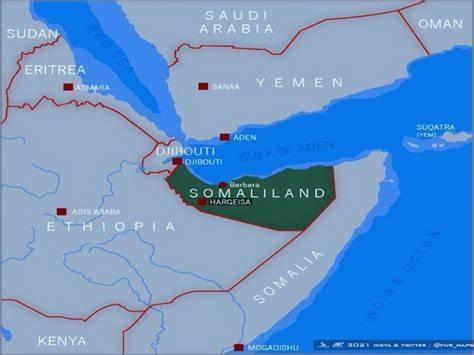
Context: Ethiopia has struck a historic deal to use Somaliland’s Berbera port in the breakaway region of Somaliland for shipping.
About Berbera Port
Berbera Port is located in the Gulf of Aden. Berbera is considered to be the commercial capital of Somaliland.
The deal will give Ethiopia access to the Red Sea, Gulf of Aden and the Suez Canal. Ethiopia is Africa’s second largest populated country and is landlocked. Ethiopia lost its access to the sea when Eritrea seceded from Ethiopia and declared independence in 1993.
About Somaliland
Somaliland, officially the Republic of Somaliland, is an unrecognized state in the Horn of Africa, recognized internationally as de jure part of Somalia.
It is located in the southern coast of the Gulf of Aden and bordered by Djibouti to the northwest, Ethiopia to the south and west, and Somalia to the east.
The capital and largest city is Hargeisa.
Since 1991, the territory has been governed by democratically elected governments that seek international recognition as the government of the Republic of Somaliland.
The central government maintains informal ties with some foreign governments, who have sent delegations to Hargeisa.
Somaliland is currently recognized by the Republic of China (Taiwan) and hosts representative offices from several other countries, most notably Ethiopia.
However, Somaliland's self-proclaimed independence has not been officially recognized by any UN member state or international organization.
It is a member of the Unrepresented Nations and Peoples Organization, an advocacy group whose members consist of indigenous peoples, minorities and unrecognized or occupied territories.
Context - Delhi witnessed this winter’s densest fog cover on Monday with visibility dropping to 0 metres at the Indira Gandhi International Airport and affecting flight operations.
Fog is formed when air at or near the earth's surface becomes saturated by any of the three processes - cooling, addition of moisture, or mixing with another air parcel. Generally, fog forms in a stable air mass environment. Fog does not generally form with an unstable atmosphere because vertical mixing results in convective or layered cloudiness.
Types of fog:
Radiation Fog: This fog forms when all solar energy exits the earth and allows the temperature to meet up with the dew point. The best condition to have radiation fog is when it had rained the previous night. This help to moisten up the soil and create higher dew points. This makes it easier for the air to become saturated and form fog. However, the winds must be light less than 15 mph to prevent moist and dry from mixing.
Precipitation Fog: This is fog that forms when rain is falling through cold air. This is common with a warm fronts but it can occur with cold fronts as well only if it's not moving too fast. Cold air, dry at the surface while rain is falling through it evaporates and causes the dew point to rise. This saturation forms fog.
Advection Fog: This type of fog forms from surface contact of horizontal winds. This fog can occur with windy conditions. Warm air, moist air blows in from the south and if there is snow or cool moisture on the ground it will come in contact with the warm, moist winds. This contact between the air and ground will cause the air blowing in to become cool. Then dew point rises and creates high humidity and forms fog.
Steam Fog: This type of fog is commonly seen in the Great Lakes but can be seen on any lake. This forms during the fall season. As summer ends, water temperatures don't cool right away but air temperature does. As a mass of dry, cold air moves over a warmer lake the warm lake conducts warm, moist air into the air mass above. This transport between the lake and air evens out. This corresponds to the second law of thermodynamics and this law state "any two bodies that come into contact, the system will become equilibrium state." Steam fog does not become very deep but enough to block some of the sunlight.
Upslope Fog: This fog forms adiabatically. Adiabatically is the process that causes sinking air to warm and rising air to cool. As moist winds blow toward a mountain, it up glides and this causes the air to rise and cool. The cooling of the air from rising causes to meet up with the dew point temperature. Fog forms on top of the mountains.
Valley Fog: Valley fog forms in the valley when the soil is moist from previous rainfall. As the skies clear solar energy exits earth and allow the temperature to cool near or at the dew point. This form deep fog, so dense it's sometimes called tule fog.
Freezing Fog: Freezing fog occurs when the temperature falls at 32°F (0°C) or below. This fog produces drizzle and these tiny droplets freeze when they come into contact with an object. But at the same time there is sublimation going on.
Ice Fog: This type of fog is only seen in the polar and artic regions. Temperatures at 14 F (-10°C) is too cold for the air to contain super-cooled water droplets so it forms small tiny ice crystals.
Related basic concepts: The Difference Between Mist, Fog, Smog, Haze And Vog:
Mist and fog are caused by water droplets in the air, and the only difference is how far you can see. Fog is denser than mist. By international agreements Fog is when you can see less than 1,000 metres away, and if you can see further than 1,000 metres, call it mist. However, in forecasts for the public, fog generally refers to a situation when the visibility is less than 180 metres. On the other hand, the term ‘mist’ is used when the droplets do not reduce horizontal visibility to less than 1 kilometre. Because of this reason, the mist is considered synonymous with ‘light fog’. Mist and fog occur when water droplets hang in the air.
Haze is the reflection of sunlight off air pollution. Haze happens when the particles in the air are dry pollutants. Most of the time, haze occurs in areas far from the original source of the pollutants, which are carried by wind currents to where they ultimately gather. Haze forms when light reflects off airborne pollution particles and interferes with visibility.
Smog is the stuff that will make you cough and burn your eyes—that’s because it’s majorly made up of ozone. When certain pollutants enter the air— like nitrogen oxides—they react with the sunlight to form ozone. Most of the smog that we see nowadays is called photochemical smog. When sunlight reacts with nitrogen oxides and at least one volatile organic compound (VOC) in the atmosphere, smog occurs. Nitrogen oxides originate from car exhaust, coal power plants, and factory emissions, whereas, gasoline, paints, and many cleaning solvents release the VOC. When sunlight hits these chemicals, they form airborne particles and ground-level ozone, or smog.
Vog is a specific type of air pollution that comes only from volcanic activity. When a volcano erupts—or begins to erupt—it releases sulfur dioxide which then reacts with the other gases that are already in the air. When lava reaches the sea, it also reacts with the water to produce other chemicals like hydrogen sulfide. The resulting “fog” is called vog.
Context: A fissure eruption started on the Reykjanes Peninsula. This marks the fourth eruption on the Reykjanes Peninsula in three years.
Iceland Volcanic eruption
On average, a volcano erupts in Iceland erupts every five years.
Since 2021, however, the frequency has been closer to every 12 months! The area broadly known as Fagradalsfjall, some 35km from the capital Reykjavík, flared to life after a series of earthquakes on the Reykjanes Peninsula.
The three eruptions - some consider one single eruption with months-long pauses - mark the beginning of a new geological era on the southwestern peninsula, which has been dormant for the past 800 years.
Unlike most volcanic eruptions -- occurring on the interior highlands, the lava hidden under ice and/or with lethal volumes of volcanic gases -- Fagradalsfjall was the ideal 'tourist volcano': Small in relative terms and accessible for all levels of fitness.
The last eruption ended in August 2023, but the site still remains a major attraction. The thick, black crust of lava paves the landscape with crumbling craters and steam.
Of Iceland’s 32 active volcanoes, none is watched more closely than Katla.
One of the nation’s largest and most feared, Katla lies under glacial ice hundreds of meters (yards) thick, meaning that any eruption is likely to melt the ice and cause widespread flooding.
Nature and Reason
The nature of eruptions in Iceland is diverse, from small effusive eruptions where lava flows quietly from fissures and crater rows to significant explosive eruptions in ice-covered central volcanos that produce large ash plumes.
In Iceland, volcanic vents, which can be long fissures, often open parallel to the rift zones where the Eurasian and the North American lithospheric plates are diverging, a system which is part of the Mid-Atlantic Ridge.
The reason for Iceland's intense volcanic activity is the country's geological position, where dynamic geological forces are at work between the spreading plate boundary on the Mid-Atlantic Ocean ridge and a powerful mantle plume creating a hot spot on the surface.
Together, they produce large amounts of magma, filling the gaps in the crust made by the spreading plates, resulting in frequent eruptions along the rift zone.
Fissure eruption: A fissure vent, also known as a volcanic fissure, eruption fissure or simply a fissure, is a linear volcanic vent through which lava erupts, usually without any explosive activity. The vent is often a few metres wide and maybe many kilometres long. Fissure vents can cause large flood basalts which run first in lava channels and later in lava tubes.
Mantle plume: It is a buoyant mass of material in the mantle, which rises because of its buoyancy. The existence of mantle plumes in Earth was first suggested by J. Tuzo Wilson (1963) as an explanation of oceanic island chains, such as the Hawaiian-Emperor chain, which change progressively in age along the chain.
Geysers: Geyser, hot spring that intermittently spouts jets of steam and hot water. The term is derived from the Icelandic word geyser, meaning “to gush.” Geysers result from the heating of groundwater by shallow bodies of magma. They are generally associated with areas that have seen past volcanic activity.
Fumaroles are vents or openings at the surface where volcanic gases and vapors are emitted. Fumaroles are common features on active volcanoes and are an important sign that a volcano is active in that fumaroles indicate the presence of heat from volcanic sources.
Context: Parliamentary Standing Committee on Transport, Tourism & Culture has recommended the government to allow worship at monuments protected by ASI having religious significance. Monuments are classified by ASI as living monuments and non-living monuments. Prayers are currently allowed at monuments which are living places of worship. Last year, a puja was performed at the Martand Sun Temple of Kashmir, which resulted into a controversy.
About Martand Sun Temple
Martand Sun Temple is an 8th century AD Hindu Temple. The temple has been dedicated to Martand, the Sun God.
Located in Anantnag district of Jammu & Kashmir.
This temple has been constructed during the reign of Lalitaditya Muktapida of the Karkota dynasty.
Martand Temple has three distinct chambers - Mandapa, Garbhagriha and Antralaya - probably the only three chambered temples in Kashmir.
Rajatarangini, written by Kalhana, decribes the grandeur of Martand Temple.
Despite the temple being in ruins, it is the most striking example of Hindu temple architecture in Kashmir.
Some walls of the temple have carvings of deities and temple is ringed by a row of pillars, which is a sub-style of Kashmiri temple architecture.
The temple is believed to be architecture synthesis mixture of Hindu and Graeco-Roman styles of architectures.
The temple is believed to be destroyed by Sikandar Shah Miri in the 14th century.
Nearby town of Mattan is named after the Martand Sun Temple.
About Laliaditya Muktapida
Lalitaditya Muktapida ruled Kashmir from 725 AD to 753 AD.
Lalitaditya belonged to the Karkota dynasty.
He built the capital of his kingdom at Parihaspora, the ruins of which survive to this day.
Lalitaditya defeated central Indian king Yashovarman.
He has been given the title of 'World Conqueror' by Kalhana as he ruled over a vast geography from Central Asia to Bengal.
Context:During its 18th session held in Kasane, Botswana, in 2023, the Intergovernmental Committee for the Safeguarding of Intangible Cultural Heritage added the 'Garba of Gujarat' to the Representative List of the Intangible Cultural Heritage of Humanity. This inclusion marks India's 15th inscription on the list, with Kolkata's Durga Puja being the most recent addition two years ago.
About Garba:
Garba, a form of dance originating from the state of Gujarat, India, derives its name from the Sanskrit term "Garbha." This traditional dance is often performed around a centrally lit lamp or an image of the Hindu goddess Shakti.
Typically associated with the nine-day Hindu festival Navratri, the dance features concentric rings with a lamp (Garba Deep).
The term "garba" is rooted in the Sanskrit word for womb, symbolizing gestation or pregnancy and the essence of life.
This ritualistic dance pays homage to Durga, the feminine manifestation of divinity. The circular formation of the dance symbolizes the Hindu perception of time as cyclical, reflecting the cycles of birth, life, death, and rebirth.
The dance is often accompanied by the rhythmic clashing of wooden dandiya sticks.
Typically, performances feature singing alongside musical accompaniment, traditionally provided by instruments like the dhol (double-headed drum) and its smaller counterpart, the dholak, as well as hand clapping and various metallic idiophones such as cymbals.
In the past, the shehnai, a double-reed instrument, played a guiding role for the singers.
About UNESCO Intangible Cultural Heritage List:
UNESCO initiated the compilation of its Intangible Cultural Heritage lists with the objective of enhancing the protection of significant intangible cultural heritages globally and fostering awareness of their importance.
In 2003, the Convention for Safeguarding of the Intangible Cultural Heritage took places and the list was established in 2008.
The Intergovernmental Committee for the Safeguarding of Intangible Cultural Heritage, publishes this list.
Intangible Cultural Heritage refers to the practices, representations, expressions, knowledge, skills, as well as the tools, objects, and artifacts associated with them, recognized by communities, groups, and, in some instances, individuals as integral components of their cultural heritage.
The programme compiles three lists:
List of Intangible Cultural Heritage of Humanity comprises of cultural practices and expressions which helps to demonstrate the diversity of heritage and raise awareness.
List of Intangible Cultural Heritage in Need of Urgent Safeguarding is composed of those cultural elements that concerned communities and countries consider to require urgent measures to keep them alive.
The third list is the Register of Good Safeguarding Practices.
List of Cultural Items from India on UNESCO’s Representative list of the Intangible Cultural Heritage of Humanity:
Koodiyattam (Sanskrit theatre), included in 2008- Kerala
Ramlila, included in 2008- Uttar Pradesh
The Tradition in Vedic chanting, included in 2008
Ramman, included in 2009, Uttarakhand
Mudiyettu, included in 2010, Kerala
Kalbelia, included in 2010, Rajasthan
Chhau, included in 2010, Odisha, Jharkhand and West Bengal
Buddhist Chanting of Ladakh, included in 2012
Sankirtana, included in 2013, Manipur
Traditional Brass and Copper craft of Utensil making among the Thatheras of Jandiala Guru in Punjab, included in 2014
Context – For the first time ever at COP 28, the impacts climate change on health has been discussed.
Recently IPCC report for the first time ever has noted that climate change has adversely affected the physical and mental health of people globally.
Climate change has harmful impacts on human health, ranging from mortality from extreme events, morbidity from increasing temperatures and heat waves, malnutrition and disease susceptibility.
World Health Organization predicts an estimated 250,000 additional deaths per year from heat stress, malnutrition, dengue, malaria, and other vector-borne diseases between 2030 and 2050.
Floods in Pakistan last year, for example, led to a 400%increase in malaria cases in the country, the report said. The disease has also spread into the highlands of Africa that previously had been cold for mosquitoes.
In 2022, 44 countries reported cholera cases, a 25% increase over 2021, according to the WHO, which noted the role played by cyclones, floods, and drought in cutting off access to clean water and helping bacteria to thrive.
Similarly, people are losing their homes and loved ones as conflicts flare over scarce resources in places like the Lake Chad Basin, and they are redlining on stress as we deal with the prolonged impacts of COVID-19 and the spectre of other zoonotic pathogens that will rise as heat and environmental damage push animals out of their traditional zones.
What can we do?
Develop treatments for climate-sensitive diseases like vector-borne diseases, including leishmaniasis, sleeping sickness, Chagas and dengue.
Increase sustainable R&D and manufacturing to explore more sustainable manufacturing processes that lower waste and the use or generation of hazardous substances, with the goal of reducing the negative impact of drug discovery, development, and production on human health and the environment.
More focus on the neglected patients like poor and marginalized people living in low- and middle-income countries. These are the same communities being disproportionately impacted by climate change.
Reduce our carbon emissions and environmental footprint.