Current Affairs

Biotransformation Technology

Context: A U.K.-based startup, based at Imperial College in London, claims to have developed a technology that could alter the state of plastics and make them biodegradable. The company calls the process “biotransformation”. 

About Biotransformation technology:

  • Biotransformation technology is a novel approach to ensure plastics that escape refuse streams are processed efficiently and broken down.
  • Plastics made using this technology are given a pre-programmed time during which the manufactured material looks and feels like conventional plastics without compromising on quality. 
  • Once the product expires and is exposed to the external environment, it self-destructs and biotransforms into bioavailable wax. This wax is then consumed by microorganisms, converting waste into water, CO2, and biomass.
  • The technology is the world’s first that ensures polyolefins fully biodegrade in an open environment causing no microplastics.
Biotransformation Bags from Polybags

Need for the technology:

  • As per the latest estimates, India is generating 3.5 billion kgs of plastic waste annually and the per capita plastic waste generation has doubled in the past five years. Of this, a third comes from packaging waste.
  • In 2019, plastic packaging waste from e-commerce firms was estimated at over a billion kilograms worldwide.
    • E-commerce giant Amazon generated an estimated 321 million kgs of plastic from packaging waste in 2021 alone. 
    • Up to 10 million kgs of Amazon’s plastic packaging ended up in the world’s freshwater and marine ecosystems as pollution in 2019 alone.

Uses of the technology:

  • Food packaging and healthcare industries could greatly benefit from such an innovation.
    • Within healthcare and pharma industries, this technology provides biodegradable solutions for non-woven hygiene products like diapers, sanitary napkins, facial pads, etc.
  • The increase in the cost of integrating this technology is relatively small compared to conventional plastic which does not contain this technology.

Government Initiatives in this regard:

The Indian government has launched multiple initiatives to move the country towards sustainability, including- 

  • In 2022, the Central government imposed a ban on single-use plastics to bring a stop to their use in the country.
  • Introduction of a plastic waste management gazette to help tackle the ever-growing plastic pollution caused by single-use plastics. 
  • National Dashboard on Elimination of Single-Use Plastic and Plastic Waste Management brings all stakeholders together to track the progress made in eliminating single-use plastic and effectively managing such waste.
  • Extended Producer Responsibility (EPR) portal helps in improving accountability traceability and facilitating ease of compliance reporting concerning EPR obligations of the producers, importers and brand-owners.
  • India has also developed a mobile app to report single-use plastics grievances to check the sale, usage or manufacturing of single-use plastics in their area.

Alternatives to reducing plastic waste:

  • The alternatives to single-use plastics could be made using jute, coir, bagasse, rice and wheat bran, plant and agricultural residue, banana and areca leaves, jute and cloth. 
ISRO puts 36 satellites into orbit

Context: Indian Space Research Organisation's Launch Vehicle Mark-3 (LVM3) placed 36 OneWeb satellites in a low earth orbit (LEO) following a successful launch from the Satish Dhawan Space Centre at Sriharikota.

OneWeb satellites:

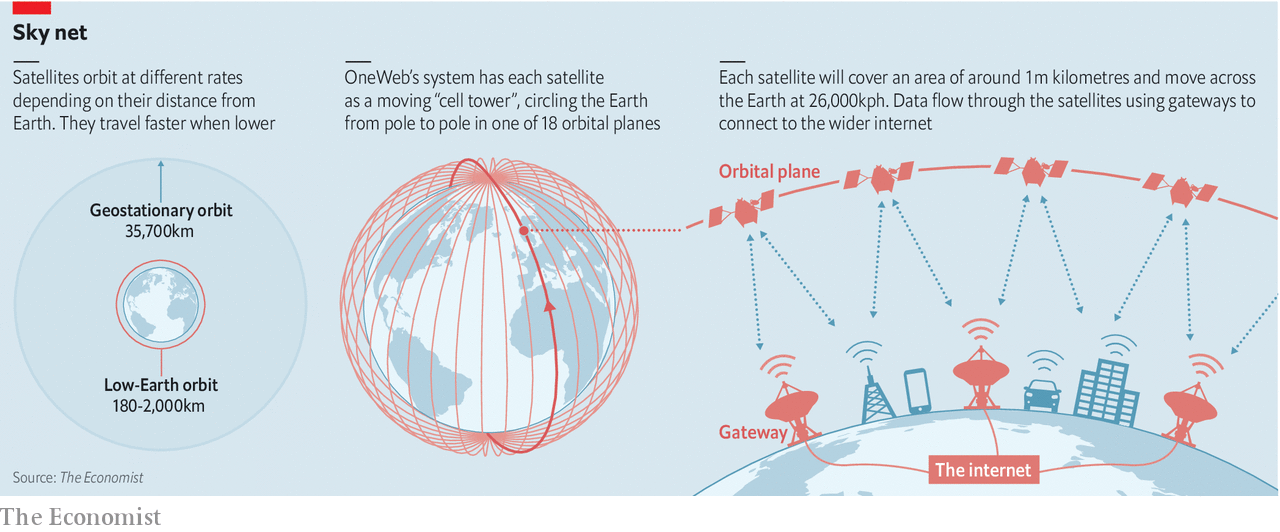
  • OneWeb is a United Kingdom-based company, backed by the UK government and India’s Bharti Enterprises, which is implementing a constellation of LEO satellites.
    • The global communication network powered from space plans to enable connectivity for governments, businesses, and communities.
  • This is OneWeb’s 18th launch (second launch from India) which completed OneWeb’s constellation of 618 low earth orbit satellites that would allow it to offer high-speed, low-latency broadband internet services from space in every corner of the world.
  • The first set of 36 satellites was launched by the LVM3/OneWeb India-1 mission by ISRO on October 23, 2022.
Satellites may connect the entire world to the internet | The Economist

Significance:

  • OneWeb uses a constellation of LEO satellites to provide broadband internet access instead of the traditional method of using satellites placed in geostationary orbits (GEO) 36,000 km above the equator.
  • LEO satellites placed in orbits ranging from 200 km to 1,500 km from earth – compared to 36,000km for GEO satellites – significantly increase bandwidth and reduce latency in space to around 50-70 milliseconds (ms).
    • Latency refers to the time taken by a data packet to be transmitted from a user to the internet service provider through the satellite network.
    • The latency for GEO satellite networks is in the range of 500-700 ms, which limits their use to 2G and 3G communications. 

G20 push: Over 30 big cities on list to tap municipal bond market

Context: The Centre has identified more than 30 cities with good ratings in the Municipal (Muni) bond market. Surat and Visakhapatnam are likely to issue Muni bonds soon and Chennai could be the first of the megacities to do so this year.

Previously: Indore Municipal Corporation has become the first in India to issue the Green Bonds on the National Stock Exchange.

Also, recently (February 2023), NSE’s Index services subsidiary, NSE Indices limited has launched India’s first ever Municipal Bond Index, Nifty India Municipal Bond Index. It would tracks the performance of municipal bonds issued by Indian municipal corporations across maturities and having investment grade credit rating. 

Background

  • In 2023 Union Budget, Finance Minister announced steps for cities to issue Muni bonds.
  • Centre has been holding workshops with states on side-lines of G20 infra groups meetings. The selected cities are rationalising property tax rates,  cleaning up their  books, and planning revenue-generating projects.
  • Government is also conducting regular workshops with states and municipal authorities on the side-lines of the G20 Infrastructure working group meetings
  • The annual Muni bond market size in India is not even $1 billion against $386 billion in USA.

These 30-plus cities rated ‘A’ are the ones that have done the most work, in rationalising property tax rates, cleaning up their books, planning revenue-generating projects, etc. 

About Muni Bonds

Municipal bonds (also known as Muni Bonds) are the bonds issued by Urban Local Bodies (ULB) to raise money for the development of various capital-intensive infrastructure projects. In India, the Bengaluru Municipal Corporation issued municipal bonds for the first time in 1997.

Types

  • General obligation bonds: Can be used for creation and upgradation of any infrastructure. The money raised through such Bonds is repaid from the overall revenues earned by the ULBs.
  • Revenue Bonds: The money raised through these Bonds can be used for a specific infrastructure project such as Construction of new Road. The money raised through such Bonds is repaid only through the revenue earned from such as specific infrastructure project.

G20 Infrastructure Working Group meeting

  • First such meeting was organised in Pune this year in January where 18 nations participated. 
  • It discussed the 2023 Infrastructure Agenda under the Indian G20 Presidency.
  • Theme of the meeting was “Financing Cities of Tomorrow- Inclusive, Resilient and Sustainable”. 
  • The meeting included discussions on various facets of making cities economic centres of growth, financing urban infrastructure, building future-ready urban infrastructure, the role of cities in meeting sustainability targets, directing fiscal investments for unlocking private financing for energy-efficient and environmentally sustainable infrastructure and mitigating social imbalances.
  • The second meeting of the Infrastructure Working Group is scheduled to be held in Vishakhapatnam, Andhra Pradesh, on 28th and 29th of March, 2023.

Understanding IMF bailouts

Context: The International Monetary Fund (IMF) last week confirmed a $3 billion bailout plan for Sri Lanka’s struggling economy. IMF officials are also in negotiations with Pakistan for a $1.1 billion bailout plan as the country faces a severe economic crisis marked by a falling currency and price rise.

Why do nations seek an IMF bailout?

  • Countries seek help from the IMF usually when their economies face a major macroeconomic risk, mostly in the form of a currency crisis. For instance in the case of Sri Lanka and Pakistan, both countries have witnessed domestic prices rise rapidly and the exchange value of their currencies drop steeply against the U.S. dollar
  • Such currency crises are generally the result of gross mismanagement of the nation’s currency by its central bank, often under the covert influence of the ruling government. 
  • Central banks may be forced by governments to create fresh money out of thin air to fund populist spending. 
  • Such spending eventually results in a rapid rise of the overall money supply, which in turn causes prices to rise across the economy and the exchange value of the currency to drop
  • A rapid, unpredictable fall in the value of a currency can destroy confidence in said currency and affect economic activity as people may turn hesitant to accept the currency in exchange for goods and services. 
  • Foreigners may also be unwilling to invest in an economy where the value of its currency gyrates in an unpredictable manner. 
  • In such a scenario, many countries are forced to seek help from the IMF to meet their external debt and other obligations, to purchase essential imports, and also to prop up the exchange value of their currencies. 
  • Bad luck can also contribute to a crisis. In the case of Sri Lanka, a decrease in foreign tourists visiting the country led to a steep fall in the flow of U.S. dollars into the nation.

How does the IMF help countries?

The IMF basically lends money, often in the form of special drawing rights (SDRs), to troubled economies that seek the lender’s assistance. 

SDRs simply represent a basket of five currencies, namely the U.S. dollar, the euro, the Chinese yuan, the Japanese yen, and the British pound. The IMF carries out its lending to troubled economies through a number of lending programs such as the extended credit facility, the flexible credit line, the stand-by agreement, etc. 

Countries receiving the bailout can use the SDRs for various purposes depending on their individual circumstances. 

Currently, both Sri Lanka and Pakistan are in urgent need for U.S. dollars to import essential items and also to pay their foreign debt. So any money that they receive from the IMF is likely to go towards addressing these urgent issues.

Are there any strings attached to an IMF bailout?

  • On giving loans to countries, the IMF makes the loan conditional on the implementation of certain economic policies. These policies tend to involve:
  1. Reducing government borrowing – Higher taxes and lower spending
  2. Higher interest rates to stabilise the currency.
  3. Allow failing firms to go bankrupt.
  4. Structural adjustment. Privatisation, deregulation, reducing corruption and bureaucracy.
  • The problem is that these policies of structural adjustment and macroeconomic intervention can make difficult economic situations worse.
  • For example, in the Asian crisis of 1997, many countries such as Indonesia, Malaysia and Thailand were required by the IMF to pursue tight monetary policy (higher interest rates) and tight fiscal policy to reduce the budget deficit and strengthen exchange rates. However, these policies caused a minor slowdown to turn into a serious recession with very high levels of unemployment.

What is the International Monetary Fund?

  • Its headquarters is in Washington DC.
  • Membership: 190 countries
  • The International Monetary Fund (IMF) is an international organization that:
  1. Promotes global economic growth and
  2. Promotes global financial stability, 
  3. Encourages international trade, and 
  4. Reduces poverty.
  • Origin: The IMF was originally created in 1945 as part of the Bretton Woods agreement, which attempted to encourage international financial cooperation by introducing a system of convertible currencies at fixed exchange rates.
  • Change in its role: Since the Bretton Woods system collapsed in the 1970s, the IMF has promoted the system of floating exchange rates, meaning that market forces determine the value of currencies relative to one another. This system remains in place today.

Functions of IMF: 

  1. The IMF collects massive amounts of data on national economies, international trade, and the global economy in aggregate and provides economic forecasts.
  2. One of the IMF's most important functions is to make loans to countries that are experiencing economic distress to prevent or mitigate financial crises.
  3. The IMF provides technical assistance, training, and policy advice to member countries through its capacity-building programs. These programs include training in data collection and analysis, which feed into the IMF's project of monitoring national and global economies.
  • The IMF gets its money through quotas and subscriptions from its member countries. These contributions are based on the size of the country's economy, making the U.S., with the world's largest economy, the largest contributor.
  • Quotas are a key determinant of the voting power in IMF decisions. Votes comprise one vote per SDR 100,000 of quota plus basic votes (same for all members). 
  • IMF Grants: These are given to charities in Washington D.C. and member countries. The grants are meant to foster economic independence through education and economic development." The average grant size is $15,000. 
  • Note: Membership of the IMF is compulsory to be part of the International Bank for Reconstruction and Development (IBRD or World Bank). 

What’s the Missing Block in Building Institute of Excellence?

Context: Times of India dated 27 march 2023 has a news article highlighting the issues associated with the Institute of excellence.

What is the institute of Excellence?

Institutions of Eminence scheme has been to help higher education institutions to become world-class teaching and research institutions. Ten public and ten private institutions are to be identified to emerge as world-class Teaching and Research Institutions. This will enhance affordable access to high-quality education for ordinary Indians.

Objectives of the scheme – institutions of eminence

  • To provide for higher education leading to excellence and innovations in such branches of knowledge as may be deemed fit at post-graduate, graduate and research degree levels and award degrees, diplomas and other academic distinctions; 
  • To provide for high-quality teaching and research and the advancement of knowledge and its dissemination through various research programmes undertaken in-house by a substantial number of full-time faculty and research scholars in diverse disciplines etc.

Expectations from the institutions of eminence

  • Highly qualified faculty, with the freedom to hire from across the world; 
  • Existence of academic, administrative and financial autonomy; 
  • Excellence in research; 
  • High Quality of teaching etc.

 Challenges

  • The multiplicity of regulatory agencies and the lack of coordination among them is a major challenge in the emergence of institutes of eminence in India.
  • The multiplicity of regulatory agencies and the lack of coordination among them is a major challenge in the emergence of institutes of eminence in India.
  • Limited Funding compared to other countries like China which have provided more extensive funding to their elite universities.
  • Limited coverage of universities in the IOE scheme, as only three public-funded and three private-funded universities have been selected, and the selection has excluded some notable institutions.
  • Limited financial autonomy in fund utilization, with strict compliance with Government Financial Rules (GFR) and the fear of the Comptroller and Auditor General of India audit. Delays in receiving funds from sponsoring organizations.
  • Challenging procurement procedures such as purchase and procurement through Government e-Marketplace portal.
  • Delays in the purchase period for equipment having foreign components due to too many clearances.
  • The current Public Financial Management System hampers the purchase where a commitment is made without completing the final transaction.
  • Difficulty in compliance with laws relating to visa, registration, opening a bank account, residence permit, exit permit, etc., for foreign students.
  • Existing high fees in IITs with little scope for raising the fees to attract more foreign students, as higher fees contradict the equity objective of a public-funded university.
  • Difficulty in recruiting international faculty due to various bottlenecks, such as political clearances, complex taxation laws, and other bureaucratic hurdles.

What is the way forward?

  • The proposed HECI should set its priorities right and bring out regulations based on evidence-based inputs.
  • HECI should refrain from bringing out regulations in areas requiring no regulation.
  • HECI should asses how the regulations will impact the functioning of higher education institutes.
  • A stakeholder-based approach should be adopted to formulate regulations so that the inputs and feedback of all stakeholders can be incorporated.
  • There is a need to create an interconnected web of regulatory functions.

ICMR releases ethical guidelines for AI usage in healthcare

Context: The Indian Council of Medical Research (ICMR) has released the country’s first ‘Ethical Guidelines for Application of Artificial Intelligence in Biomedical Research and Healthcare’, aimed at creating “an ethics framework which can assist in the development, deployment, and adoption of AI-based solutions” in the fields specified.

Ethical Principles for AI Technology in Healthcare

The implementation and advancement of AI technology in healthcare should be guided by ethical values and principles followed by all relevant stakeholders.

AI technology employs diverse data sets and algorithms including supervised, semi-supervised, and unsupervised learning. Although AI holds promise in healthcare, its complex and machine-driven analytical processes warrant vigilance among healthcare professionals and researchers.

Unlike other AI fields, AI for Health has a direct impact on human life and may have significant implications on patients' well-being.

Thus, an ethical and prudent approach is essential before integrating these algorithms into routine healthcare practices. Additionally, safety and confidentiality issues pertaining to patients' health data must be cautiously addressed during all phases of AI for Health development and deployment.

MVAggM7SP0IEnzTF lCkGp1pcZEfJjaUEexdYRqbgDYno7X2Y SnlSNeFEpWlyAgFYRCEuBeMxXhbYE9kMVOS8A5L8DO17ezESyA4

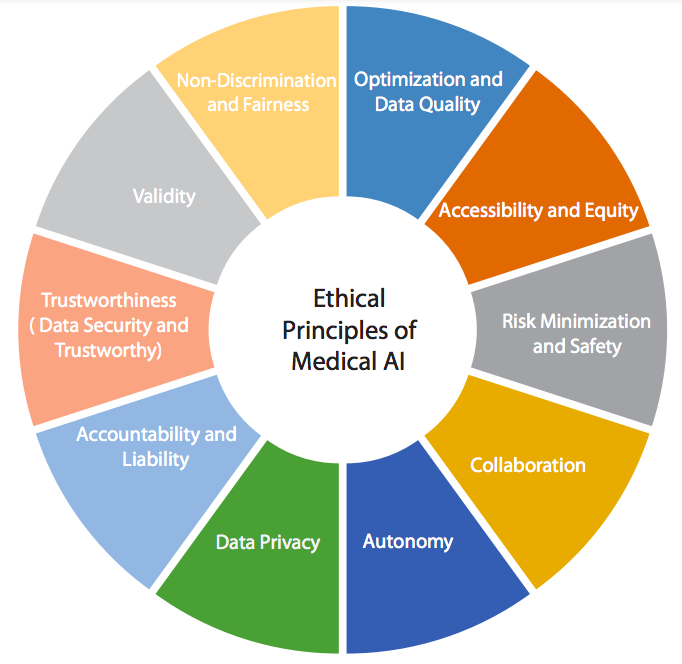
The ten ethical principles in the above figure addresses issues specific to AI for health. These principles are patient-centric and are expected to guide all the stakeholders in the development and deployment of responsible and reliable AI for health. These principles are as follows –

  1. Autonomy – The use of AI in healthcare raises concerns about the potential for the system to operate independently and compromise human autonomy. Incorporating AI into healthcare may result in machines taking over the responsibility of decision-making. It is essential that humans maintain full control over AI-based healthcare systems and medical decision-making. Under no circumstances should AI technology interfere with patient autonomy.
  1. Safety and Risk Minimization – Before widespread implementation, it is necessary to ensure that any AI technology-based system will operate safely and reliably. All stakeholders involved in the development and deployment of the technology bear the responsibility of ensuring participant safety. Patient dignity, rights, safety, and well-being must be the highest priority. Risk levels associated with deploying AI technology in clinical research or patient care depend on the use case and deployment methodology. For instance, unsupervised models run the risk of being more hazardous than those supervised by AI researchers and healthcare professionals. Similarly, the deployment of AI-enabled tools in high-risk patient care areas is riskier than their deployment in other areas.
  1. Trustworthiness Trustworthiness is the most desirable quality of any diagnostic or prognostic tool to be used in AI healthcare. Clinicians need to build confidence in the tools that they use and the same applies to AI technologies. In order to effectively use AI, clinicians and healthcare providers need to have a simple, systematic and trustworthy way to test the validity and reliability of AI technologies.
  1. Data Privacy AI-based technology should ensure privacy and personal data protection at all stages of development and deployment. Maintaining the trust of all the stakeholders including the recipient of healthcare over the safe and secure Ethical Guidelines for Application of Artificial Intelligence in Biomedical Research and Healthcare 19 use of their data is of prime importance to the successful and widespread deployment of AI. Data privacy must aim to prevent unauthorized access, modification, and/ or loss of personal data. The application of AI to personal data must not unreasonably curtail people’s real or perceived liberty.
  1. Accountability and Liability – The concept of accountability entails that an individual or organization is responsible for their actions and should be transparent about their activities. When it comes to AI technologies for healthcare, it is crucial that they are subject to scrutiny by relevant authorities at any given time. Regular internal and external audits must be conducted to ensure that the AI technologies are functioning effectively. The results of these audits should be made available to the public.
  1. Optimization of Data Quality – The performance of AI technology heavily relies on the data utilized for training and testing purposes, making it a data-driven technology. In the healthcare sector, the quality and size of the dataset are critical as a skewed or insufficient dataset can result in issues such as data bias, errors, and discrimination. Data bias is regarded as the most significant risk to data-driven technologies like AI in healthcare. It is crucial to exercise due diligence to ensure that the training data is unbiased and represents a substantial portion of the target population.
  1. Accessibility, Equity and Inclusiveness – The use of computers for development as well as the deployment of AI technologies in healthcare presupposes wider availability of infrastructure. The digital divide is known to exist in almost all countries and is more prominent in low- and middle-income countries (LMICs). The heavy reliance on technology may therefore interfere with the wider application of promising tools in areas where it is expected to make a greater difference. 
  1. Collaboration –  In the field of AI for health, having a large and well-curated dataset is crucial for effective utilization of AI. This can only be achieved through fostering collaboration at all levels. With the rapidly changing landscape of AI technology, it is essential to collaborate among AI experts during research and development to ensure the most appropriate techniques and algorithms are used to address healthcare issues. Collaboration between AI researchers and healthcare professionals throughout the development and adoption of AI-based solutions is expected to enhance the benefits of this promising technology.
  1. Non Discrimination and Fairness Principles: In order to refrain from biases and inaccuracies in the algorithms and ensure quality, the following principles should be followed:
    • The data set used for the training algorithm must be accurate and representative of the population in which it is used. The researcher has the responsibility to ensure data quality.
    • Inaccuracy and biases can cause suboptimal or malfunctioning of AI technologies external independent algorithmic audits and continuous end-user feedback analysis should be performed to minimize inaccuracies and biases. The AI developers/researchers must acknowledge any biases involved and should take the necessary steps to rectify it.
    • AI should never be used as a tool for exclusion. Special attention must be given to under-represented and vulnerable groups like children, ethnic minorities, persons with disabilities, etc. The AI developers should promote the active inclusion of women and minority groups.
    • Developers should give special attention to promoting and protecting the equality of individuals. Freedom, rights and dignity, should be treated with equality and justice.
    • AI technologies should be designed for universal usage. Discrimination of individuals or groups on the grounds of race, age, caste, religion, social status is unethical.
    • The reversibility of decisions made by the AI technology should be considered; if harm has occurred to any patient/ participant. Before implementing the technology, the option for reversibility of decision must be integrated with the AI design.
    • In case of any unfortunate events arise from the malfunctioning of the AI technology occurs, then there should be an appropriate redressal mechanism for the victim. The manufacturer must ensure that there is a provision for proper grievance redressal.
    • There must be a safe mechanism to raise concerns pertaining to the AI technology the issues can be technical, functional, ethical, or misuse of technology. There should be a proper mechanism for protecting the whistleblower.
  1. Validity – AI technology applied in healthcare must undergo rigorous validation in both clinical and field settings to ensure its safety and efficacy for patients or participants. Differences in datasets used for training AI algorithms can amplify the divergence of AI-based algorithms. This discordance in diagnostic abilities among different AI solutions may cause confusion for end-users, including health professionals and patients. It is essential to have an internal mechanism to monitor such issues and provide appropriate feedback to developers while considering the clinical context. An efficient feedback mechanism is also crucial for necessary updates when AI technology affects individuals or healthcare systems. The application of AI-based decisions in clinical settings can lead to potential health hazards or mismanagement.

50 years of Project Tiger & Tiger translocation

Context:

  • Project Tiger is in its 50th year since its launch in 1973, in India. 
  • In its 50th year, India has signed an MOU with Cambodia for reintroducing tigers (species: Panthera tigris) there through translocation. 
  • In Cambodia the species have become extinct.
  • So far, India has only translocated tigers within the country, not internationally. This will be the first time India will do so.
  • In 2022, African Cheetahs were successfully translocated from Namibia to India. It was the first wild to wild intercontinental translocation.

About Project Tiger

Background

  • It was launched in 1973 from Jim Corbett National Park, Uttarakhand to save the declining tigers population. It is a major wildlife conservation project in India.
  • At that time, Project Tiger included 9 tiger reserves spread over 18,278 sq km. 
  • It is governed by the Wildlife Act of 1972.
  • The initiative is funded by the Union Govt. of India and administrated under the Ministry of Environment, Forests and Climate Change.
  • National Tiger Conservation Authority (NTCA) is the immediate supervising agency.

Objectives

  • To identify factors causing a reduction in tiger habitats and mitigate them through suitable management practices. 
  • To maintain a viable tiger population for their economic, ecological, cultural, and aesthetic significance. 

Present Status

  • Currently, there are 53 tiger reserves covering more than 75,000 sq km (approximately 2.4% of the country’s geographical area) across India. 
  • With the current population of about 3,000 tigers, India harbours more than 70% of global wild tiger population, which is increasing at an annual rate of 6%.
  • India has the largest number of CAT-accredited tiger reserves in the world at 17.
  • Compensation for voluntary village relocation has also been enhanced from Rs 10 lakh per family to Rs 15 lakh in order to aid tiger conservation.

Conservation Status

  • Indian Wildlife (Protection) Act, 1972 - Schedule 1
  • International Union for Conservation of Nature (IUCN) Red List: Endangered.
  • Convention on International Trade in Endangered Species of Wild Fauna and Flora (CITES): Appendix I.

India failed to create positive impression among businesses moving away from China

Context: Parliamentary committee on Commerce has submitted a report on the status of India’s positive business impression. 

Highlights of the report

  • India has not been able to take advantage of the “China Plus One Strategy,” through which multinationals shifted manufacturing and production away from China.
  • Southeast Asian countries such as Vietnam, Thailand, Cambodia, and Malaysia have become bigger beneficiaries of the strategy.
  • India’s competitive position in the pharmaceutical sector is undermined by its high import dependence for bulk drugs or active pharmaceutical ingredients (APIs), especially from China. 
  • In fiscal year 2022-23, till November 30, the value of total import of APIs stood at ₹27,209 crore, out of which imports from China stood at ₹18,973 crore, nearly 70% of the total share.

What is the China Plus 1 strategy: China Plus One or C+1 is the term ascribed to businesses avoiding investing solely in China and diversifying their business into other countries.

Who introduced the China Plus One strategy: The earliest use of the term “China Plus One” can be traced to 2013, but there is no individual to whom the concept has been credited.

What is the Europe Plus One strategy: Similar to the China strategy, Europe Plus One describes European industrialists who are exploring options to relocate their production outside of Europe.

Government’s reply

  • Government has replied that Production Linked Incentive (PLI) schemes have the capability to make India a more attractive location for companies looking to diversify their supply chains away from China. 
  • It added that more than 3,500 provisions have been decriminalised by the Ministries and the States. 
  • The Jan Vishwas Bill to amend 42 Central Acts has been introduced to enhance trust-based governance.

Committee’s suggestion

  • Rationalisation of direct taxes and indirect taxes must be done in sync with the international norms and laws to increase the competitiveness of domestic industries in the global markets.
  • It asked the government to pursue Free or Preferential Trade Agreements with countries that seek to invest in India under the ‘China Plus One Strategy’. 

RBI asked to monitor card spending under LRS for tax purposes

Context: As per the Union budget declarations this year, union government is going to impose 20 per cent tax at source on foreign remittances. For this, Reserve Bank of India is going to monitor credit card usage for foreign travel purpose. 

Background

  • Liberalized Remittance Scheme do not cover payments for foreign tours through credit card and such payments escape tax collection at source. 
  • The Union Budget 2023 proposed a TCS for foreign outward remittance under LRS other than for Education and medical purposes of 20 per cent applicable from July 1, 2023. Before this proposal, the TCS of 5 per cent was applicable on foreign outward remittances above ₹ 7 lakh.
  • Tax Collected at Source (TCS) is an income tax, collected by the seller of specified goods, from the buyer. TCS is a concept where a person selling specific items is liable to collect tax from a buyer at a prescribed rate and deposit the same with the government.

What is the Liberalised Remittance Scheme (LRS) 

  • Under the Liberalised Remittance Scheme, all resident individuals, including minors, are allowed to freely remit up to USD 2,50,000 per financial year (April – March) for any permissible current or capital account transaction or a combination of both. 
  • Further, resident individuals can avail of foreign exchange facility for various purposes ( such as private, gift, donation, employment, travel, studies) within the limit of USD 2,50,000 only.
  • The Scheme was introduced on February 4, 2004, with a limit of USD 25,000 (extended regularly).
  • In case of remitter being a minor, the LRS declaration form must be countersigned by the minor’s natural guardian. 
  • Remittances under the LRS facility can be consolidated (clubbed together) in respect of close family members subject to the individual family members complying with the terms and conditions of the Scheme.
  • There is no restrictions on the number of transactions but cumulative amount should not exceed 2.5 lakh dollar.
  • The remittances can be made in any freely convertible foreign currency (apart from dollars).
  • Only certain capital account transactions are allowed under LRS rules such as opening a bank account abroad i.e. a Foreign Currency Account, purchasing real estate property overseas, for making investments overseas which includes investing in shares, mutual funds, and debt instruments amongst others.
  • The Scheme is not available to corporates, partnership firms, HUF, Trusts etc.

Following are not permitted under the scheme

  1. Remittance for any purpose specifically prohibited under Schedule-I (like purchase of lottery tickets/sweep stakes, proscribed magazines, etc.) or any item restricted under Schedule II of Foreign Exchange Management (Current Account Transactions) Rules, 2000.
  2. Remittance from India for margins or margin calls to overseas exchanges / overseas counterparty.
  3. Remittances for purchase of FCCBs issued by Indian companies in the overseas secondary market.
  4. Remittance for trading in foreign exchange abroad.
  5. Capital account remittances, directly or indirectly, to countries identified by the Financial Action Task Force (FATF) as “non- cooperative countries and territories”, from time to time.
  6. Remittances directly or indirectly to those individuals and entities identified as posing significant risk of committing acts of terrorism as advised separately by the Reserve Bank to the banks.

Old vs New hotting up, government forms panel to relook at pension

Context: Union Finance minister announced the formation of a committee to look into improving the system of pension for government employees. The committee will be headed by Finance Secretary T V Somanathan

Details about National Pension System (NPS)

What is it? Pension cum investment scheme to provide old age security to Citizens of India. Regulated by Pension Fund Regulatory and Development Authority (PFRDA)

Who can Join? Any citizen of India (both resident and Non-resident) and Overseas Citizen of India (OCI) in the age group of 18-70 years. Earlier, the maximum age for entry was 65. In Aug 2021, PFRDA has increased the maximum age limit to 70.

Different Sectors

  1. Government Sector
    • Central Government: Introduced with effect from January 1, 2004 (except for armed forces). 
    • State Government: Almost all the State Governments (except few such as West Bengal) have also adopted NPS through their own notifications.
  2. Private Sector (Non-Government Sector):
    • Corporates
    • All Citizens of India: Any individual not being covered by any of the above sectors has been allowed to join NPS 2009 onwards.

Contribution: Govt. employees make a monthly contribution at the rate of 10% of their salary and Dearness allowance and a matching contribution is paid by the Govt. For central Govt. employees, the employer’s contribution rate has been enhanced to 14% from 1 April 2019. The State Governments have also been given an option to increase their contribution to 14% through their own gazette notification.

Different Types of NPS Account

CriteriaTier-1 AccountTier-2 Account
PurposePension accountinvestment account
Eligibilityany citizen between 18-70 yearsNRI/OCIs are not eligible
NatureCompulsoryoptional, Person needs to have tier-1 account to open tier-2 account.
Min. contribution per yearRs.1000Rs.250
Tax Benefits availableYesNo
Withdrawals allowed?Restricted as per rules and regulation.Unrestricted withdrawals.

What happens to the contribution? Invested in certain pension funds which in turn invest in different asset classes such as G-secs, shares, bonds etc. to generate higher returns.

Returns:  NPS is designed on Defined contribution basis wherein the subscriber contributes to his account. However, there is no defined benefit that would be available at the time of exit from the system. The accumulated wealth depends on the contributions made and the income generated from investment of such wealth.

Withdrawals

  • Upon Normal Superannuation – At least 40% of the accumulated pension wealth of the Subscriber has to be utilized for purchase of annuity providing for monthly pension of the Subscriber and the balance is paid as lump sum to the subscriber.
  • Upon Death – The entire accumulated pension wealth (100%) would be paid to the nominee/legal heir of the Subscriber and there would not be any purchase of annuity/monthly pension.
  • Exit from NPS Before the age of Normal Superannuation – At least 80% of the accumulated pension wealth of the Subscriber should be utilized for purchase of an annuity providing the monthly pension of the Subscriber and the balance is paid as a lump sum to the Subscriber.

Difference between New Pension Scheme and Old Pension Scheme

CriteriaNew Pension System (NPS)Old Pension Scheme
Nature of SchemeDefined Contribution Defined benefit
ContributionBoth by Government and EmployeeOnly the Government
BenefitNo Defined benefit as the accumulated wealth depends upon the contribution made.Defined benefit.
Pension of 50% of the last drawn salary.
Pension AmountDepends upon number of years of service.
Longer the years of service.
Higher Contribution.
Higher Pension.
Depends upon the last drawn salary.
Pension is equal to 50% of last drawn salary.

Blow for bond markets as Long-term tax benefit scrapped for debt Mutual Funds

Context: The government has proposed changes in taxation of debt mutual funds under which no benefit of indexation for calculation of long-term capital gains (LTCG) on debt mutual funds will be available for investments made on or after April 1, 2023.

From April 1, 2023, such debt mutual funds will be taxed at income tax rates as per an individual’s income. The move will remove the tax advantage a debt mutual fund has compared to bank deposits. 

Consequences

  • As a result, bank fixed deposits will become more attractive. 
  • This may have a negative impact on all debt funds, particularly in the retail category, as ultra-high net worth and high net worth individuals may choose to invest in safe havens like bank fixed deposits.
  • There will be a loss to the bond market which is already struggling for the liquidity. 

What is a mutual funds?

  • A mutual fund is a pool of money managed by a professional Fund Manager. 
  • It is a trust that collects money from a number of investors who share a common investment objective and invests the same in equities, bonds, money market instruments and/or other securities. And the income / gains generated from this collective investment is distributed proportionately amongst the investors after deducting applicable expenses and levies, by calculating a scheme’s “Net Asset Value” or NAV. Simply put, the money pooled in by a large number of investors is what makes up a Mutual Fund.

What is indexation?

  • Indexation is a process by which the cost of acquisition of an asset (mutual fund in this case) can be indexed (adjusted or inflated) over a period of time in order to bring it to current prices after taking inflation into consideration. 
  • Indexation is done through a mechanism using a Price Index which is adjusted for inflation. The Price Index adjusts for inflation at the time of purchase of an asset as well as at the time of its sale. 
  • It is a well-known fact that inflation erodes an asset’s value over a period of time. 
  • Indexation gives the investor an option to inflate (increase) the price of purchase of the asset. This helps in lowering the adverse cost impact due to inflation.

Indexation In Mutual Funds

  • Mutual fund investments generate Capital gains (Capital gain is a gain or profit realized by way of selling a property or other such asset/investment). These gains can either be Short Term or Long Term in nature, depending on the period for which these assets are held. 
  • However, indexation benefit is available only for capital gains realized in Debt mutual funds
  • A holding period of 36 months or more is considered as long term for Debt Funds. (For Equity mutual funds, long term means a holding period of 12 months or more)
  • Any holding period which is less than 36 months for Debt funds is treated as short term and the gains are added to the income of investor for tax calculation.

Why transgender female athletes can’t compete in female events

Context: Transgender women have been barred from competing in the female category by World Athletics (WA), the international governing body for track and field, following a vote on Thursday. WA has followed the path of FINA, the international swimming federation, which enforced a similar ban in June last year.

What does the ban mean?

Transgender women who have experienced male puberty will not be able to compete in the female competition after March 31 this year. However, the World Athletics Council has set up a working group to conduct research “to further consider the issue of transgender inclusion”. We are not saying ‘no’ forever,” WA president Sebastian Coe said.  

The former double Olympic gold medallist in the 1,500 metres emphasised “fair and meaningful” female competition. “Decisions are always difficult when they involve conflicting needs and rights between different groups, but we continue to take the view that we must maintain fairness for female athletes above all other considerations,” Coe said.

Why have transgender women been barred?

In its ‘Eligibility Regulations for Transgender Athletes’, WA focuses on the physical advantages men have over women post-puberty. “The substantial sex difference in sports performance that emerges from puberty onwards means that the only way to achieve the objectives set out…is to maintain separate classifications (competition categories) for male and female athletes,” WA states.

The debate has raged since New Zealand weightlifter Laurel Hubbard competed in the women’s 87-kg class at the Tokyo Olympics, although she had participated in the men’s category earlier.

NCAA swimmer Lia Thomas used hormone replacement therapy and moved from the men’s category to the women’s category. She started breaking records in the IVY League competition before FINA stepped in.

What were the rules for transgender women before WA’s ban?

Under the previous rules, there was no blanket ban, but transgender women had to reduce the amount of blood testosterone to 5 nanomoles per litre (nmol/L) and maintain this level for 12 months to participate.

What had WA initially proposed?

In January, WA had come up with the ‘preferred option’ for transgender women. Instead of a complete ban, WA said it would allow transgender women to compete in the female category but would reduce the blood testosterone limit to below 2.5nmol/L for two years —cutting it down by half, and doubling the period before they become eligible to compete

So how did WA justify the change to a ban?

On Thursday, after its council meeting, WA said that the ‘preferred option’ did not have any takers. During January and February, WA said, it had consulted member federations, Global Athletics Coaches Academy, the Athletes’ Commission, the International Olympic Council, “as well as representative transgender and human rights groups”.

“It became apparent that there was little support within the sport for the option that was first presented to stakeholders,” WA said in its statement.

Which other sports have banned transgender female athletes?

The International Olympic Committee’s Framework on Fairness released in November 2021 stated that “athletes are not excluded solely based on their transgender identity or sex variations”.

But the IOC had put the onus on sports federations to put in place rules. FINA implemented a ban last year.

However, it was World Rugby in 2020 which became the first international sports federation to bar transgender women from female competition. Following this, Rugby Football League and Rugby Football Union also banned transgender women from female competition.

Last year, British Triathlon implemented a similar ban.

Have any famous sporting names weighed in?

Tennis great and gay rights activist Martina Navratilova took FINA’s side in an interview with The Australian. “It’s been such a topsy-turvy situation…with the momentum totally on the side of the transgender athletes. When it comes to sports, biology is the biggest divider… So, FINA, it’s the first big organisation that has gone all in for fairness and maybe it will try to include as many people as possible, as is fair. But fairness has to be first,” Navratilova had said.

She also criticised the IOC for leaving the decision-making on the eligibility of transgender athletes to sports federations.

Did WA also change other rules?

DSD (Differences in Sex Development) athletes — those who have genes that are generally associated with one sex but whose reproductive organs may not be atypical — will now have to keep their testosterone below 2.5 nmol/L for 24 months to participate in the female category across events.

Earlier, DSD athletes were not required to maintain a testosterone limit unless they wanted to participate in restricted events — 400 metres to a mile. For restricted events, DSD athletes had to keep their testosterone below 5 nmol/L for six months before being eligible to participate.