The Hindu

Global Space Missions in News

Context: The year 2023 marked a significant period for space exploration, with achievements such as NASA's OSIRIS-REx mission successfully retrieving a sample from an asteroid and India's Chandrayaan-3 mission exploring the lunar south pole area.

National Aeronautics and Space Administration (NASA)’s Mission 

OSIRIS-REx (Origins, Spectral Interpretation, Resource Identification, and Security-Regolith Explorer) Mission 

image 8

This Spacecraft travelled to a near-Earth asteroid named Bennu (formerly 1999 RQ36) and collected a sample of rocks and dust from the surface.

Benefit of the Mission

This mission will help scientists investigate how planets formed and how life began, as well as improve our understanding of asteroids that could impact Earth.

Artemis Plan

  1. In The Artemis mission, NASA wants to land the first woman and first person of colour on the Moon.
  2. It will send humans to the moon for the first time since 1972
  3. This will be achieved by collaborating with commercial and international partners and establishing the first long-term presence on the Moon.

Artemis-I 

In this NASA sent an uncrewed capsule into orbit around the moon in 2022.

Artemis-II 

  1. Artemis II is the first crewed step in this plan. 
  2. In this four astronauts are planned to be on board during the 10-day mission.
  3. It will put the astronauts into orbit around the Moon before returning them home.

CLPS (Commercial Lunar Payload Services) Initiative 

Under this initiative NASA is working with many companies to deliver science and technology to the lunar surface.

  1. These companies, ranging in size, bid on delivering payloads for NASA. 
  2. This includes everything from payload integration and operations, to launching from Earth and landing on the surface of the Moon.

Europa Clipper

image 9

This mission will explore one of Jupiter’s largest moons, Europa.

About Europa

  1. Europa is slightly smaller than Earth’s moon and has a surface made of ice. 
  2. Beneath this icy surface, Europa likely harbours a saltwater ocean that scientists expect contains over twice as much water as all the Earth's oceans combined.

Objective of the Mission: To investigate whether Europa’s ocean could be a suitable habitat for extraterrestrial life. 

Working: By flying past Europa nearly 50 times to study the moon’s icy shell, its surface’s geology and its subsurface ocean. 

VIPER (Volatiles Investigating Polar Exploration Rover)

It is a robot the size of a golf cart that NASA will use to explore the moon’s south pole.

This robotic mission is designed to search for volatiles, which are molecules that easily vaporise, like water and carbon dioxide, at lunar temperatures. 

Benefit of the Mission 

These materials that will be collected  in the mission could provide resources for future human exploration on the moon.

image 10

About the Robot 

  1. The VIPER robot will rely on batteries, heat pipes and radiators throughout its 100-day mission.
  2. It will handle lunar conditions ranging from scorching 224°F (107°C) in daylight to freezing -240°C in shadowed regions.

SIMPLEx (Small, Innovative Missions for PLanetary Exploration)

The objective of these missions is to save costs by tagging along on other launches as what is called a rideshare, or secondary payload.

Few Examples under SIMPLEx

Lunar Trailblazer

image 11
  1. Like VIPER, Lunar Trailblazer will look for water on the moon.
  2. VIPER will explore the moon's south pole, studying a specific area, while Lunar Trailblazer will orbit, mapping water molecules and measuring surface temperature.

Prime-1 Mission 

image 3
  1. The PRIME-1 mission is Lunar Trailblazer’s ride.
  2. PRIME-1 will drill into the moon. 
  3. It's a test run for the kind of drill that VIPER will use. 

DART (Double Asteroid Redirection Test)

image 12
  1. In this mission the Didymos-Dimorphous asteroid system was used to test a planetary defence technique called 'kinetic impact’.
  2. The kinetic impact technique involves smashing something into an object to alter its path. 
  3. The force of the impact was so significant that it actually changed Dimorphos's orbit. 

This technique could prove useful if humanity ever discovers a potentially hazardous object on a collision course with Earth and needs to redirect it.

Japanese Exploration Agency (JAXA)’s Mission 

MMX (Martian Moon eXploration)

KlCscJvyFpIuCiegVU0bqj QRSgWbkz g2lGMu3724eqZFp70QYZpTFiXk vKDDpSQt 4f6Zqj7L0VB 328G8kkXT9gLOB dfRYzq24tLjo0p7M
  1. The objective of the mission is to study Mars' moons, Phobos and Deimos. 
  2. The primary aim is to identify the origin of Mars' moons, Phobos and Deimos. 
  3. Scientists are uncertain if they are captured asteroids or formed from existing debris in Martian orbit.
  4. MMX will also land on Phobos' surface and collect a sample before returning to Earth.

European Space Agency’s Mission 

Hera

image 13
  1. Hera is a mission by the European Space Agency to visit the Didymos-Dimorphous asteroid system that NASA’s DART mission visited in 2022.
  2. It will study the physical properties of the asteroids.

Caste based discrimination in prisons

Context: Supreme Court of India found that prison manuals in more than 10 States, including Uttar Pradesh, West Bengal, Odisha, Maharashtra, Tamil Nadu and Kerala, continue to have provisions which sanction discrimination and forced labour on the ground of caste in prisons.

About caste system: 

  • It is a form of social stratification that involves a system of hierarchically ranked, closed endogamous strata, the membership of which is ascribed and between which contact is restricted and mobility theoretically impossible.

Prison statistics in India

  • Of the total 4,78,600 prison inmates in the country, 3,15,409 or 65.90% belong to the Scheduled Castes, Scheduled Tribes and the Other Backward Class categories in 2020 (NCRB).

Reason for continuity of caste based discrimination in prisons: 

However, despite all modern forces of change, the caste system continued to exist in Indian society.

  • Idea of purity and impurity: The Prisons Act, 1894 contain specific provisions concerning prisons’ functioning and the regulation of prisoners’ actions. Since prisons are a State list subject, the Prisons Act guides respective state governments to formulate their respective prison manual rules. E.g:
    • Accordingly, the Rajasthan Prison Manual prescribed that hospital attendants must belong to a “good caste”.
    • Similar provisions continue in several states like, West Bengal, Uttar Pradesh, and Punjab. The “Mehtar” and “Chandal” castes, communities historically associated with manual scavenging and cleaning, have been explicitly allocated tasks of sweeping and cleaning work.
    • Prison manuals safeguard the privileged position of Savarna Hindus (Brahmins) by guaranteeing their exclusive rights to prepare and transport food for all inmates.
  • Institutionalised bias: The prison system reflect and perpetuate societal biases. Discrimination based on caste may be ingrained in the attitudes and practices of prison staff, affecting the treatment of inmates. E.g:Dalits even have a separate ward in prisons.
  • Deep-rooted social structures: The caste system has historically dictated social interactions, leading to hierarchies and inequalities. E.g: Treatment of inmates from the denotified tribes as “habitual offenders.
  • Gaps in laws: The Prohibition of Employment as Manual Scavengers and their Rehabilitation Act, 2013, does not encompass prison administration, thereby rendering it ineffective in prohibiting manual scavenging within Indian prisons.
  • Scheduled Castes and Scheduled Tribes (Prevention of Atrocities) Act, 1989 : The act ignore of the casteist allocation of jobs in prison and unable the protect the core dignity of human beings (Article 21).

Initiative taken to deal with caste based discrimination in prison: 

Constitutional Provision: 

  • Article 15: Prohibition of discrimination on grounds of religion, race, caste, sex or place of birth.
  • Article 17: Untouchability is abolished and its practice in any form is forbidden.
  • Article 21: No person shall be deprived of his life or personal liberty.

International initiative:

  • Nelson Mandela Rules: To treat prisoners with inherent dignity and to prohibit torture and other ill-treatment and state that there should be no discrimination amongst the inmates on the grounds of status.

Government Initiative: 

  • Model Prison Manual of 2016: Based on Nelson Mandel Rules, aims at bringing in basic uniformity in laws, rules and regulations governing the administration of prisons and the management of prisoners all over the country. 

Judiciary intervention: 

  • Rama Murthy Judgment (1997): SC identified nine issues concerning prisons, such as overcrowding, trials being delayed, the torture and ill-treatment of prisoners, neglect of health and hygiene, insubstantial food and inadequate clothing.
  • Shatrughan Chauhan v. Union of India: SC said the legal procedure adopted to deprive a person of his life or liberty must be fair, just and reasonable and the protection of Article 21 of the Constitution of India inheres in every person, even death-row prisoners, till the very last breath of their lives.

Measure to be adopted to bring equality amongst the prisoners

  • Recommendations given by Mulla Committee: 
    • Setting up an All India Service called the Indian Prisons & Correctional Service for fostering a more inclusive and equitable approach within the prison system.
    • National Commission for Prisons to function as a specialized advisory body for all prison and allied matters.
  • Independent and regular inspection of prisons: Can  be a very effective tool in improving conditions of prisons
  • All state governments should amend outdated prison manuals and adopt the Model Prison Manual of 2016.
  • Sensitization policies that prohibit discrimination and harassment within the prison environment.

Coking Coal: Explained

Context: India plans to form a consortium of state-owned companies to facilitate coking coal imports to help domestic steel companies tide over shortages.

Coking Coal

  • Coking coal (or metallurgical coal) is a bituminous coal with a suitable quality that allows the production of metallurgical coke, or simply named coke. 
  • Coking coal has a higher carbon content than steam coal, as well as a lower level of sulphur, phosphorous and alkalis (World Coal Institute 2009). 
  • Coke is the main product of the high-temperature carbonisation of coking coal. 
  • Coke is an essential input material in steelmaking as it is used to produce pig iron in blast furnaces acting as the reducing agent of iron ore and as the support of the furnace charge. 
  • By-products of coke production such as tar, benzole, ammonia sulphate and sulphur are used for the manufacture of chemicals, as well as coke oven gas used for heat and power generation.
  • 70% of the steel produced today uses coal.
  •  Around 0.6 tonnes (600 kg) of coke produces 1 tonne (1000 kg) of steel, which means that around 770 kg of coal are used to produce 1 tonne of steel through this production route.

Coking Coal Mission

  • The Coal Ministry launched Mission Coking Coal to address the growing domestic demand for coking coal as projected in the National Steel Policy 2017.
  •  The mission envisions significantly reducing coking coal imports through a transformative measure under the Aatmnirbhar Bharat initiative. 
  • These measures encompass exploration, enhanced production, technological adoption, private sector involvement in coking coal blocks, the establishment of new washeries, increased research and development activities, and quality enhancement.

The mission has been launched to enhance production of coking coal with the following objectives:

  • Enhancing coking coal production from 52 million Tonne (MT) in FY 2022 to 140 MT in FY 2030.
  • Enhancing coking coal washing capacity from 23 MT in FY 2022 to 61 MT in FY 2023.

Imports of Coking Coal

  • The import of coking coal rose 5.44 per cent to 54.46 MT over 51.65 MT in FY22.
  • Australia remains the leading coking coal supplier to India.

Production of Coking Coal

image 7

Human Trafficking: Explained

Context: A case study about trafficked women of Sundarban, West Bengal. As children, these women were trafficked. Their panicked parents went to the police for help, but once they were rescued, they were no longer accepted into the communities they left.

Human Trafficking 

As per the United Nations Office on Drugs and Crime (UNODC)

  • Human Trafficking is the recruitment, transportation, transfer, harbouring or receipt of people through force, fraud or deception, with the aim of exploiting them for profit. 
  • Men, women and children of all ages and from all backgrounds can become victims of this crime, which occurs in every region of the world. 
  • The traffickers often use violence or fraudulent employment agencies and fake promises of education and job opportunities to trick and coerce their victims.

Status (World and India)

As per the A Global Report on Trafficking in Persons (UNODC)

  • The most common form of human trafficking (79%) is sexual exploitation. The victims of sexual exploitation are predominantly women and girls.
  • The second most common form of human trafficking is forced labour (18%)
  • Worldwide, almost 20% of all trafficking victims are children. However, in some parts of Africa and the Mekong region, children are the majority (up to 100% in parts of West Africa).

As per NCRB (2022)

  • As many as 6,036 victims were trafficked. This involved 2,878 children and 3,158 adults.

Challenges pertaining to curbing the Human trafficking

  • Poverty and Unemployment: Economic hardships and lack of employment opportunities contribute to vulnerability. Lack of opportunity and better life prospect make them susceptible to fall for lure of money.
  • Lack of Awareness: Limited awareness among the general public, especially in rural areas, about the issue of human trafficking results in many people (including potential victims) failing in recognizing the signs or understand the risks, thus falling prey.
  • Poor Implementation of Provisions and laws: While India has laws in place to combat human trafficking, there are challenges in the effective implementation and enforcement of these laws. Legal loopholes and delays in the judicial process can hinder the prosecution of traffickers which leads to traffickers evading justice. Thus these provisions fail to act as deterrents.
  • Cross-Border Trafficking: India shares borders with several countries, and cross-border trafficking is a significant challenge. Lack of Coordination and cooperation between neighbouring countries affect the efforts of combating trafficking networks that operate across borders.
  • Cyber Trafficking: The increasing use of technology has led to the emergence of cyber trafficking, where traffickers exploit online platforms to lure and exploit victims. 
  • Gender disparity: Gender-based discrimination and inequality contribute to the vulnerability of women and girls to trafficking.
  • Victim Stigmatization: Victims of human trafficking often face social stigma and discrimination, making it difficult for them to reintegrate into society. This can result in underreporting of cases and a lack of cooperation from victims in legal proceedings.
  • Data Collection and Reporting: Incomplete or unreliable data on human trafficking makes it challenging to assess the full extent of the problem and implement targeted interventions. 
  • Demand for cheap labour and Services: Persistent demand from various sections of society for cheap and exploitative services acts a fuel for sustenance of such practices.

Relation between Human Trafficking and organised crime 

  • Human trafficking and organized crime share a symbiotic relationship, as criminal networks frequently exploit individuals for profit. These networks engage in diverse criminal activities, such as drug trafficking, arms smuggling, and money laundering, leveraging human trafficking as a lucrative enterprise. 
  • Traffickers often operate within sophisticated, transnational structures that facilitate the recruitment, transportation, and exploitation of victims. 
  • The organized nature of these operations enables traffickers to evade law enforcement, navigate international borders, and adapt to changing circumstances.
  • The profitability and relatively low risk associated with human trafficking make it an attractive component of organized crime portfolios, perpetuating a cycle of criminality and exploitation.

Constitutional & Legislative Provisions Related to Trafficking in India

  • Trafficking in Human Beings or Persons is prohibited under the Constitution of India under Article 23 (1)
  • The Immoral Traffic (Prevention) Act, 1956 (ITPA) is the premier legislation for prevention of trafficking for commercial sexual exploitation.
  • Criminal Law (amendment) Act 2013 provide for comprehensive measures to counter the menace of human trafficking including trafficking of children for exploitation in any form including physical exploitation or any form of sexual exploitation, slavery, servitude, or the forced removal of organs.
  • Protection of Children from Sexual offences (POCSO) Act, 2012, is a special law to protect children from sexual abuse and exploitation. 
  • There are other specific legislations enacted relating to trafficking in women and children like Prohibition of Child Marriage Act, 2006, Bonded Labour System (Abolition) Act, 1976, Child Labour (Prohibition and Regulation) Act, 1986, Transplantation of Human Organs Act, 1994, apart from specific Sections in the IPC, e.g. Sections 372 and 373 deal with selling and buying of girls for the purpose of prostitution.

Administrative measures and interventions

  • Anti-Trafficking Cell (ATC): Anti-Trafficking Nodal Cell was set up in the Ministry of Home Affairs (MHA), to act as a focal point for communicating various decisions and follow up on action taken by the State Governments to combat the crime of Human Trafficking. MHA conducts coordination meetings with the Nodal Officers of Anti Human Trafficking Units nominated in all States/UTs periodically.

International Conventions on Trafficking

  • UN Convention: India has ratified the United Nations Convention on Transnational Organized Crime (UNCTOC) which has as one of its Protocols Prevention, Suppression and Punishment of Trafficking in Persons, particularly Women and Children. 
  • Various actions have been taken to implement the convention and as per Protocol, The Criminal Law Amendment Act, 2013 has been enacted wherein human trafficking has specifically been defined.
  • SAARC Convention: India has ratified the SAARC Convention on Preventing and Combating Trafficking in Women and Children for Prostitution. 
  • Bilateral mechanism: For dealing with cross border trafficking and to address the various issues relating to prevention of Trafficking, a Task Force of India and Bangladesh was constituted. 

Way forward

Roles of State

  • There should be a mandatory high-quality schooling, income generation and job opportunities. 
  • Members of law enforcement agencies must be sensitized to ensure effective and efficient implementations of laws and regulations. 
  • The judiciary must act proactively to expedite the decisions on cases so that prosecution can act as a deterrent. 
  • A prevention mechanism should be implemented between various nations to help the two countries deter trafficking.

Inclusion of civil society and NGOs

  • The community ought to track the movement of children victims in the trafficker region with vigilance. They should take active step in educating parents to ensure that they are aware about the safe migration practice.

Role of Media

  • Media has a very important role in transmitting the appropriate message to the victim to ensure that they have a backup and are not alone. 
  • They should release programmes to enable citizens to take help of places and institutions to seek help in case if they are victimized. 
  • Media should take responsibility for spreading education and awareness that human trafficking is unlawful and inappropriate and that it has serious consequences

See also: Current Affairs for UPSC

Regulation of Antibiotics in India

Context: Recently, the National Centre for Disease Control (NCDC) has released a survey mapping the patients treated for one to five days each at 20 tertiary-care institutes across 15 States and two Union Territories between November 2021 and April 2022.

Major Highlights of the survey: 

  • The key reason for antimicrobial resistance is the excessive and inappropriate use of antibiotics.
  • Over half of the almost 10,000 patients surveyed recently were given antibiotics to prevent infection, rather than to treat it, amid growing concerns about the rise in resistance to antibiotics.
    • 94% of patients were prescribed antibiotics even before a definitive diagnosis of the infection; only 6% were given antibiotics after confirmed diagnosis. 

Antimicrobial resistance (AMR):

  • Antimicrobial resistance is the resistance acquired by any microorganism (bacteria, viruses, fungi, parasite, etc.) against antimicrobial drugs (such as antibiotics, antifungals, antivirals, antimalarials) that are used to treat infections.
  • As a result, standard treatments become ineffective, infections persist and may spread to others. Microorganisms that develop antimicrobial resistance are sometimes referred to as “superbugs”.
  • The World Health Organization (WHO) has identified antimicrobial resistance (AMR) as one of the top threats to public health. 
image 2

Regulation of Antibiotics in India: 

1. Prevent counter-sale: 

  •  Antibiotics are included in Schedule H and H1 of the Drugs Rules, 1945. These drugs have specific caution labelling requirements and are sold by retail only under the prescription of a Registered Medical Practitioner.
    • The supply of a drug specified in Schedule H1 is recorded in a separate register at the time of the supply and such records are maintained for three years and are open for inspection. 
    • Central Drugs Standard Control Organisation (CDSCO) has placed 24 hi-end antimicrobials under schedule H1 by issuing notification.

2. National Action Plan for containment of Antimicrobial Resistance: 

  • National Action Plan on containment of Antimicrobial Resistance (NAP-AMR) focusing on One Health Approach was launched on 19th April 2017 involving various stakeholder ministries/departments. 
  • Delhi Declaration on AMR– an inter-ministerial consensus was signed by the ministers of the concerned ministries pledging their support in AMR containment.

3. Red Line Campaign:  

  • The Red Line Campaign was launched in February 2016 by the Ministry of Health and Family Welfare aiming to tackle the crucial issue of antibiotic misuse in India. This campaign was to create awareness among the public to avoid self-medication and follow medical practitioner’s advice.
  • A red line is put on the packaging of two dozen antibiotics and antimicrobials which are identified by the Ministry. The purpose is that these antibiotics should not be sold over the counter without prescription of a medical practitioner. 

National Centre for Disease Control (NCDC):

  • The National Centre for Disease Control acts as the national nodal agency for disease surveillance, i.e., it closely monitors the spread of infectious diseases throughout India. 
  • It collects data from various sources, including hospitals, laboratories, and health officials, to track disease outbreaks in real-time. This data is then analysed to identify trends, predict future outbreaks, and implement effective control measures.
  • The NCDC is the nodal agency for India’s national programme on antimicrobial resistance (AMR) containment, of which one of the key components is the surveillance of antibiotic usage. 
  • To achieve this goal, NCDC has established the National Antibiotic Consumption Network (NAC-NET) through which network sites compile data on antibiotic consumption in their respective health facilities and send it to the NCDC.
  • It was established in 2005 under the Ministry of Health and Family Welfare.
  • Headquarters: Delhi 

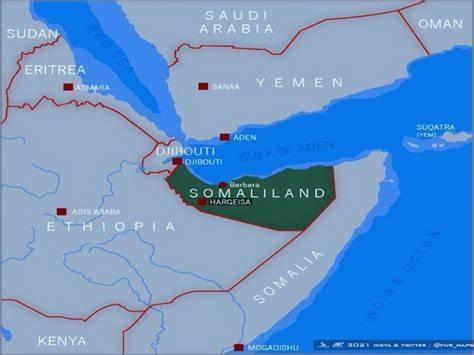
Agreement over Berbera port between Somaliland and Ethiopia

Context: Ethiopia has struck a historic deal to use Somaliland’s Berbera port in the breakaway region of Somaliland for shipping.

A map of the middle east

Description automatically generated

About Berbera Port

  • Berbera Port is located in the Gulf of Aden. Berbera is considered to be the commercial capital of Somaliland. 
  • The deal will give Ethiopia access to the Red Sea, Gulf of Aden and the Suez Canal. Ethiopia is Africa’s second largest populated country and is landlocked. Ethiopia lost its access to the sea when Eritrea seceded from Ethiopia and declared independence in 1993. 

About Somaliland

  • Somaliland, officially the Republic of Somaliland, is an unrecognized state in the Horn of Africa, recognized internationally as de jure part of Somalia.
  • It is located in the southern coast of the Gulf of Aden and bordered by Djibouti to the northwest, Ethiopia to the south and west, and Somalia to the east.
  • The capital and largest city is Hargeisa.
  • Since 1991, the territory has been governed by democratically elected governments that seek international recognition as the government of the Republic of Somaliland.
  •  The central government maintains informal ties with some foreign governments, who have sent delegations to Hargeisa. 
  • Somaliland is currently recognized by the Republic of China (Taiwan) and hosts representative offices from several other countries, most notably Ethiopia.
  •  However, Somaliland's self-proclaimed independence has not been officially recognized by any UN member state or international organization.
  • It is a member of the Unrepresented Nations and Peoples Organization, an advocacy group whose members consist of indigenous peoples, minorities and unrecognized or occupied territories.

Maulana Azad National Fellowship

Context: Researchers and doctoral students from about 30 universities across the country have written separate letters to the Union Minority Affairs Minister to increase the scholarships under Maulana Azad National Fellowship (MANF).

About Maulana Azad National Fellowship:

  • Launched in: 2009
  • Nodal ministry: Ministry of Minority Affairs 
  • Implementing agency: University Grants Commission (UGC).
  • Aim: For educational empowerment of students belonging to minority communities.
  • Beneficiaries: Six notified minority communities viz. Buddhist, Christian, Jain, Muslim, Parsi and Sikh.
  • Scope: The Fellowship will cater to the minority community students pursuing regular and full time research studies leading to award of M.Phil/Ph.D degree within India only. 
  • Mode of selection: On the basis of UGC-NET and CSIR-NET merit list.
  • Fellowship: A monthly fellowship amount of INR 31,000 for initial two years to Junior Research Fellowship (JRF). A fellowship amount of INR 35,000 per month for remaining tenure to Senior Research Fellowship(SRF).
  • Duration of fellowship: The fellowship is usually provided for a duration of two years for M.Phil. students and five years for Ph.D. students, with certain relaxations available.
  • Objective: To provide five year fellowships in the form of financial assistance to students from six notified minority communities, notified by the Central Government, to pursue M. Phil and Ph.D.
Maulana Azad National Fellowship

It covers all Universities/Institutions recognized by the University Grants Commission (UGC) as under :

  1. Central/State Universities (including constituent and affiliated institutions).
  2. Deemed Universities.
  3. Institution fully funded by State / Central Government and empowered to award degrees.
  4. Institutions of National Importance as notified by Ministry of Human Resource Development.

Aadhaar-Based Payment System (ABPS) Mandatory for NREGS

Context: Central government has notified that from January 01, 2024, all wages under the Mahatma Gandhi National Rural Employment Guarantee Act (MGNREGA) scheme must be paid through an Aadhaar-based payment system (ABPS). However, some state governments have opposed this move.

About NREGA Aadhaar-based payment system (ABPS):

  • It is a method of disbursing payments to MGNREGA workers using their unique 12-digit Aadhaar number as their financial address.
  • Under this system, workers’ Aadhaar numbers are linked with their job cards as well as their bank accounts, this account must be connected to the National Payments Corporation of India (NPCI) mapper.
  • Under Mahatma Gandhi NREGS, APBS is in use since 2017.
  • The system was initially made mandatory from February 1, 2023. However, through several extensions, the Centre allowed this requirement to persist until December 31, 2023. As no further extensions were granted to states beyond December 31, the ABPS became mandatory from January 1, 2024.
  • The government grant exemptions on a "case-by-case basis" if any gram panchayat experiences "technical issues" or Aadhaar-related problems until the resolution of the underlying issue.
  • Aim is to streamline wage payments and ensure transparency, reducing the chances of fraud.

Benefits of ABPS:

  • Ensuring that payments are made to the rightful beneficiaries, reducing the chances of fraud and corruption and eliminating intermediaries.
  • Reduces paperwork, minimizes delays, and ensures a faster and more streamlined disbursement of wages.
  • Encourages financial inclusion by promoting the use of bank accounts.
  • Digital records make it easier to track and audit payments.

Challenges associated with ABPS:

  • Deletion of job cards: 7.6 crore job cards deleted since April 2022 due to discrepancies between the two documents, the Aadhaar and the job card, such as different spellings of workers’ names.
  • Right to work (Article 41): Compelling the use of ABPS with more than one-third of the total MNREGA registered workers rendered ineligible will inevitably lead to the denial of the right to work.
  • Exclusion of workers: Till December 2023, 12.7% of these active workers are still not eligible due to technological adeptness or a lack of proper documentation.
  • Active workers are those who have worked for at least one day over the last three financial years.
  • Privacy concerns: Mandatory linking of Aadhaar to NREGS payments raises privacy concerns, as it involves collecting and storing biometric and personal information.

Climate Milestones of 2023

Context: From registering the hottest summer on record to some significant steps at the yearly United Nations climate summit, 2023 was a year of extremes. Here are some climate-related milestones from this time.

Hottest year

  • The global mean near-surface temperature in 2023 (to October) was around 1.40 (± 0.12) °C above the 1850–1900 average. Based on the data to October, it is virtually certain that 2023 will be the warmest year in the 174-year observational record, surpassing the previous joint warmest years, 2016 at 1.29 (± 0.12) °C above the 1850–1900 average and 2020 at 1.27 (±0.13) °C.
image 168

Highest sea surface temperature ever: 

Marine heat waves - periods when ocean temperatures are warmer than 90% of prior observations for a given time of year - were widespread in 2023. 

  • According to the U.S. National Ocean and Atmospheric Administration (NOAA), 48% of global oceans experienced them in August 2023.

Global sea surface temperatures (SST) are usually highest in March. But as per data, global average SSTs remained at record highs throughout April, May, June, and July 2023.

image 169

Sea level rise

In 2023, global mean sea level reached a record high in the satellite record (since 1993), reflecting continued ocean warming as well as the melting of glaciers and ice sheets. The rate of global mean sea level rise in the past ten years (2013–2022) is more than twice the rate of sea level rise in the first decade of the satellite record (1993–2002).

A graph showing the number of satellites.

image 170

Lowest Antarctic Sea ice extent: Sea-ice extent is the area of ice covering the Antarctic Ocean at a given time. In 2023, Antarctic Sea ice had record low ice growth from April. 

  • According to NOAA, sea ice in the Antarctic reached an annual maximum extent of 16.96 million sq. km on September 10, 2023, the lowest since 1979. This year’s maximum was 1.03 million sq. km, below the previous record low set in 1986.

Record carbon dioxide levels: Global carbon dioxide emissions are expected to have hit a new high in 2023, up 1.1% from 2022. The Global Carbon Budget Report, published in December 2023, said overall CO2 emissions, which climbed to a record last year, had plateaued in 2023 due to a slight drop in deforestation.

image 171

Ocean Acidification:

The ocean absorbs around one quarter of the annual emissions of anthropogenic CO2 to the atmosphere. CO2 reacts with seawater and alters the carbonate chemistry, resulting in a decrease in pH referred to as ‘ocean acidification’. 

  • Ocean acidification affects organisms and ecosystem services, including food security, by reducing biodiversity, degrading habitats, and endangering fisheries and aquaculture. 
  • The IPCC AR6 concluded that “There is very high confidence that open ocean surface pH is now the lowest it has been for at least [thousand years] and current rates of pH change are unprecedented since at least that time”.
image 172

Loss and damage fund: The world’s first loss and damage fund for the impacts of climate change was created in 2023, at the start of the COP28 climate talks in the U.A.E. in early December. This money is meant to help countries trying to recover from climate induced disasters.

The fund will be based at the World Bank but managed by an independent secretariat.

  • According to a senior U.N. official, it has received pledges of $792 million from governments, which is a lot but still well short of the billions required to fulfill its purpose.

Impact of food systems: For the first time in the history of climate summits, 134 countries at COP28 pledged to tackle the climate impact of the food industry. 

  • These countries represent over 5.7 billion people, 70% of the food we eat, nearly 500 million farmers, and 76% of total emissions from the global food system. But observers noted the declaration doesn’t include quantitative targets.

High Fat Sugar Salt (HFSS) foods

Context: In India, unhealthy eating habits are rapidly growing, and there is a need for higher taxes on High Fat Sugar Salt (HFSS) foods to help reduce their consumption.

About HFSS foods: 

  • It may be defined as foods (any food or drink, packaged or non- packaged) which contain low amounts of proteins, vitamins, phytochemicals, minerals and dietary fiber but are rich in fat (saturated fatty acids), salt and sugar and high in energy (calories) that are known to have negative impact on health if consumed regularly or in high amounts (Ministry of Women and Child Development).

Need to tax HFSS foods:

  • Public health concerns: According to a World Bank report of 2019, worldwide, 70% of all overweight and obese people live in Low- and Middle-Income Countries.
  • Economic burden: Obesity’s cost in India was $23 billion in 2017, potentially rising to $480 billion by 2060. This highlights the economic impact of unhealthy diets.
  • Revenue generation: Can generate revenue for governments, which can be allocated to development of social sector.
  • Growing consumption: India, the world’s largest sugar consumer, has seen snack and soft drink sales triple, exceeding $30 billion. This indicates a worrying rise in HFSS food consumption.

Initiative taken to reduce consumption of HFSS foods: 

  • Eat Right Movement, 2018 : Launched by FSSAI, to improve public health in India and combat negative nutritional trends to fight lifestyle diseases.
  • GST rates on ultra-processed foods: Tax on sugar-sweetened beverages (SSBs) with a 28% GST rate and 12% compensation cess.
  • Kerala’s Fat Tax: In 2016, Kerala introduced a ‘fat tax’, which later merged into India’s Goods and Services Tax in 2017, which later got subsumed into India’s Goods and Services Tax in 2017.

Global Initiative: 

  • Colombia’s “junk food law” on ultra-processed foods, providing a model for other nations. 
  • Over 60 countries have implemented taxes on sugary drinks.
  • Countries like Denmark, France, Hungary, Mexico, South Africa, the UK, and the US have specific HFSS food taxes.

Way forward:

  • HFSS taxation in India should prioritize enhancing public health rather than being perceived solely as an economic or fiscal policy.
  • The promotion of nutrition literacy and effective food labelling is crucial.
  • There is a need for a nutrient-based tax model, involving higher taxes on products high in fat, sugar, and salt.
  • HFSS food tax can be both non-regressive and fiscally neutral.

Global Coal Demand likely to decline: IEA

Context: Despite production of coal reaching a record in 2023, global demand is expected to decline by 2026.

Coal Consumption and decline

image 149

International Energy Agency report released recently has pointed out that,

  •  Global demand for coal rising by 1.4%in 2023, surpassing 8.5 billion tons for the first time. 
  • Demand in the European Union and United States is expected to drop by 20% each, India and China are expected to rise by 8% and 5% respectively, due to increased demand for electricity and diminished generation of hydroelectric power.

IEA expectation of a decline in coal demand is premised on following consideration:

  • The current El Nino conditions, usually linked with drier monsoon in Asia, are expected to turn to La Nina which is generally linked to better rainfall from 2024 to 2026.
  • This will presumably translate to greater hydroelectric power output.
  • A steep upward trend in low-cost solar photovoltaic deployment is expected to aid renewable power generation.
  • Nuclear generation is set to see moderate increase, especially in China, India, and the European Union.
  • A little over half the world’s coal demand comes from China. With a major expansion of renewable energy expected coal demand in the country is expected to fall in 2024, and plateau in 2026.
  • The decline is more structural, driven by the formidable and sustained expansion of clean energy technologies.
  • Overall, this will result in a 2.3% fall in global coal demand by 2026.

Global Demand to remain well.

  • Coal, the most important energy source for electricity generation, steelmaking, and cement production, is also the largest source of carbon dioxide (CO2) emissions from human activity. 
  • Despite forecasts of a fall, global consumption is expected to remain well over 8 billion tonnes through 2026, the market report says.
  • China, India, and Indonesia — the three largest coal producers globally — are expected to break output records in 2023, pushing global production to a new high in 2023. 
  • These three countries now account for more than 70% of the world’s coal production.

A turning point for coal is clearly on the horizon — though the pace at which renewables expand in key Asian economies will dictate what happens next, and much greater efforts are needed to meet international climate targets.

Iceland Volcanic Eruption

Context: A fissure eruption started on the Reykjanes Peninsula. This marks the fourth eruption on the Reykjanes Peninsula in three years.

Iceland Volcanic eruption

  • On average, a volcano erupts in Iceland erupts every five years.
  •  Since 2021, however, the frequency has been closer to every 12 months! The area broadly known as Fagradalsfjall, some 35km from the capital Reykjavík, flared to life after a series of earthquakes on the Reykjanes Peninsula. 
  • The three eruptions - some consider one single eruption with months-long pauses - mark the beginning of a new geological era on the southwestern peninsula, which has been dormant for the past 800 years.
  • Unlike most volcanic eruptions -- occurring on the interior highlands, the lava hidden under ice and/or with lethal volumes of volcanic gases -- Fagradalsfjall was the ideal 'tourist volcano': Small in relative terms and accessible for all levels of fitness.
  • The last eruption ended in August 2023, but the site still remains a major attraction. The thick, black crust of lava paves the landscape with crumbling craters and steam. 
  • Of Iceland’s 32 active volcanoes, none is watched more closely than Katla. 
  • One of the nation’s largest and most feared, Katla lies under glacial ice hundreds of meters (yards) thick, meaning that any eruption is likely to melt the ice and cause widespread flooding. 

Nature and Reason

  • The nature of eruptions in Iceland is diverse, from small effusive eruptions where lava flows quietly from fissures and crater rows to significant explosive eruptions in ice-covered central volcanos that produce large ash plumes.
  • In Iceland, volcanic vents, which can be long fissures, often open parallel to the rift zones where the Eurasian and the North American lithospheric plates are diverging, a system which is part of the Mid-Atlantic Ridge.
  • The reason for Iceland's intense volcanic activity is the country's geological position, where dynamic geological forces are at work between the spreading plate boundary on the Mid-Atlantic Ocean ridge and a powerful mantle plume creating a hot spot on the surface.
  •  Together, they produce large amounts of magma, filling the gaps in the crust made by the spreading plates, resulting in frequent eruptions along the rift zone.
image 138
image 49
image 50

Fissure eruption: A fissure vent, also known as a volcanic fissure, eruption fissure or simply a fissure, is a linear volcanic vent through which lava erupts, usually without any explosive activity. The vent is often a few metres wide and maybe many kilometres long. Fissure vents can cause large flood basalts which run first in lava channels and later in lava tubes.

Mantle plume: It is a buoyant mass of material in the mantle, which rises because of its buoyancy. The existence of mantle plumes in Earth was first suggested by J. Tuzo Wilson (1963) as an explanation of oceanic island chains, such as the Hawaiian-Emperor chain, which change progressively in age along the chain.

Geysers: Geyser, hot spring that intermittently spouts jets of steam and hot water. The term is derived from the Icelandic word geyser, meaning “to gush.” Geysers result from the heating of groundwater by shallow bodies of magma. They are generally associated with areas that have seen past volcanic activity.

Fumaroles are vents or openings at the surface where volcanic gases and vapors are emitted. Fumaroles are common features on active volcanoes and are an important sign that a volcano is active in that fumaroles indicate the presence of heat from volcanic sources.