Auroras are a natural light display in the sky, predominantly seen in the high-latitude regions (around the Arctic and Antarctic).
It is called aurora borealis or northern lights near the North Pole.
It is called aurora australis or southern lights near the South Pole.
Cause: It is caused by the interaction of charged particles from the sun with the Earth's atmosphere.
Aurora borealis is typically seen as a faint glow in the sky, but it can sometimes be very bright and colourful.
What makes this happen?
Apart from heat and light, the Sun also releases energetic charged particles. The protective magnetic field around Earth shields us from most of the energy and particles.
However, the Sun does not send the same amount of energy all the time. There is a constant streaming solar wind and there are also solar storms.
During one kind of solar storm called a coronal mass ejection, the Sun ejects a huge bubble of electrified gas that can travel through space at high speeds.
When a solar storm comes toward Earth, some of the energy and small particles can travel down the magnetic field lines at the north and south poles and enter into the Earth's atmosphere.
There, the particles interact with gases in Earth’s atmosphere andresult in beautiful displays of light in the sky.
Oxygen gives off green and red light.
Nitrogen glows blue and purple.
Do other planets get auroras?
Auroras do not just happen on Earth. If a planet has an atmosphere and magnetic field, they probably have auroras.
Incredible images of auroras have also been captured on Jupiter, Saturn, Uranus and Neptune.
Context: Climate talks often revolve around reducing the most dangerous greenhouse gas, carbon dioxide (CO2). In the CoP28 meeting to be held in Dubai next week, along with CO2, the likely attention will be diverted to powerful heat-trapping emissions by Methane.
About Methane:
Methane (CH4) is a colourless, odourless, flammable gas that is the main component of natural gas. Atmospheric methane (CH4) occurs abundantly in nature as the primary component of natural gas.
It is a powerful greenhouse gas i.e., it traps heat in the atmosphere and contributes to global warming. It is the second largest contributor to climate change, accounting for around 16% of the warming effect.
Methane remains in the atmosphere for only about 12 years, but has a much more powerful warming impact than CO2.
Methane is about 21 times more potent than carbon dioxide (CO2) at trapping heat in the atmosphere over a 100 year timescale. This means that one tonne of methane emitted into the atmosphere has the same warming effect as 21 tonnes of CO2.
Sources:
There has been a steady increase of methane in the atmosphere, with concentrations currently over two-and-a-half times greater than pre-industrial levels.
Around 60% of methane emissions are linked to human activity, while most of the remainder is from wetlands.
Agriculture is the biggest emitter, responsible for roughly a quarter of emissions. Most of that is from livestock (cows and sheep release methane during digestion and in their manure) and rice cultivation, where flooded fields create ideal conditions for methane-emitting bacteria.
Energy sector - coal, oil, and gas - is the second largest source of human caused methane emissions. Methane leaks from energy infrastructure, such as gas pipelines, and from deliberate releases during maintenance.
Discarded household waste also releases large quantities of methane when it decomposes, if left to rot in landfills.
Way Forward:
A recent International Energy Agency report estimates that rapid cuts in methane emissions linked to the fossil fuel sector could prevent up to 0.1 degrees Celsius of warming by mid-century.
It could be achieved by repairing leaky infrastructure and eliminating routine flaring and venting during maintenance.
For rice fields, changes to water management are the “most promising” way to reduce emissions.
Context: The Ministry of Education (MoE) asks all States to encourage aspirants to utilise the newly launched portal for JEE and NEETexam preparation SATHEE (Self-Assessment Test and Help for Entrance Exams).
About SATHEE
Launched by: The Ministry of Education (MoE) and IIT-Kanpur.
Launched in: 2023
Spearheaded by: Ministry of Education .
Aim: To help students gain access to training and coaching for competitive examinations for free.
Features: It has launched a 45-day crash course for aspirants to test their level of preparation.
It hosts live and recorded lectures, expertly designed curriculum, and doubt-clearing sessions [for students] to brush up their knowledge.
The interactive programme is currently open for coaching help for JEE and NEET but intends to provide lectures and live courses on all National Council of Educational Research and Training (NCERT) syllabus topics.
It uses of an indigenously-developed AI programme called Prutor, which was developed through IIT-Kanpur.
The initiative is in line with the National Education Policy, with the goal to provide inclusive, high quality education even to remote parts of the country.
Currently, digital learning material is available in four languages English, Hindi, Odia, and Telugu, plan to extend it to other regional languages of India.
SATHEE mitras(friends) to increase rural coverage of students appearing for entrance tests, including the JEE and NEET.
Also provide parents reports to measure what students know and are able to do in relation to the NCERT XI and XII and also JEE standards.
Context: Eclipses, the celestial body phenomenon with socio-cultural significance, have a wide influence on human activities. In this article, we are going to explore the different types of eclipses that occur in the Sun's solar system.
Solar Eclipses:
Solar Eclipse happens when the Moon gets in the way of the Sun’s light and casts its shadow on Earth. That means during the day, the Moon moves over the Sun, and it gets dark. A solar eclipse happens at a new moon when the moon passes between the sun and Earth.
This can happen in two ways:
A total eclipse, when the Moon completely covers the Sun.
A partial eclipse, when the Moon does not completely cover the Sun.
Lunar Eclipses:
Lunar Eclipse happens at full moon, when the Earth, Sun and Moon align in space, with Earth between the Sun and Moon.
During a lunar eclipse, Earth gets in the way of the Sun’s light hitting the Moon. That means that during the night, a full moon fades away as Earth’s shadow covers it up.
The Moon can also look reddish because Earth’s atmosphere absorbs the other colours while it bends some sunlight toward the Moon.
Sunlight bending through the atmosphere and absorbing other colours is also why sunsets are orange and red.
Phases of the Moon:
The day on which the whole disc of the moon is visible is known as the full moon day.
Thereafter, every night the size of the bright part of the moon appears to become thinner and thinner.
On the fifteenth day the moon is not visible. This day is known as the ‘new moon day’.
The next day, only a small portion of the moon appears in the sky. This is known as the crescent moon.
Then again, the moon grows larger every day. On the fifteenth day once again, we get a full view of the moon.
Blood Moon
This is not a new phenomenon; it is an informal term used in the case of a full lunar eclipse. When the Earth comes between the Sun and the Moon, light bends. While passing through the Earth's atmosphere, it scatters because the high-wavelength red component of light deflects the least, giving the illusion of the Moon being red, as happens with the Sun during sunrises and sunsets.
Lunar Eclipse not occurring on every new moon and full moon day: The Reason
For an eclipse to happen the moon should be at one of the nodes made by the ecliptic plane, which does not happen on every new moon and full moon days as shown in the figure. So, we do not have a Lunar eclipse on every new moon and full moon.
Key Terms:
Eclipse
In simple terms, an eclipse happens when a planet or a moon gets in the way of the Sun’s light. Here on Earth, we can experience two kinds of eclipses: solar eclipses and lunar eclipses.
Ecliptic Plane
The ecliptic plane is defined as the imaginary plane containing the Earth’s orbit around the sun. ·In the course of a year, the sun’s apparent path through the sky lies in this plane. ·The planetary bodies of our solar system all tend to lie near this plane.
Line of Nodes
·The plane of the Moon's orbit is inclined at a mean angle of 5.145° to the plane of Earth's orbit around the Sun. ·The intersection of these planes defines two points or nodes on the celestial sphere. ·The node where the Moon's path crosses the ecliptic from south to north is the ascending node, while the node where the Moon's path crosses the ecliptic from north to south is the descending node.
Stars
Star, any massive self-luminous celestial body of gas that shines by radiation derived from its internal energy sources.
Satellites
Natural SatellitesA satellite is anything that orbits around a larger object. A natural satellite is any celestial body in space that orbits around a larger body. Moons are called natural satellites because they orbit planets. Artificial SatellitesAn artificial satellite is an object that people have made and launched into orbit using rockets. There are currently over 3,000 active satellites orbiting the Earth. The size, altitude and design of a satellite depend on its purpose.
Orbit
In celestial mechanics, an orbit is the curved trajectory of an object such as the trajectory of a planet around a star, or of a natural satellite around a planet, or of an artificial satellite around an object or position in space such as a planet, moon, asteroid, or Lagrange point. Normally, orbit refers to a regularly repeating trajectory, although it may also refer to a non-repeating trajectory.
Gamma-ray Bursts (GRBs) are extremely energetic explosions that produce intense flashes of gamma rays lasting from a few seconds to several minutes.
Based on their duration, there are two kinds - Short GRBs that last 2 seconds or less and long GRBs that go on for more than 2 seconds.
Long GRBs originate from supernovas that mark the deaths of massive stars (>30 solar masses) and produce narrow beams of radiation as the star collapses.
Short GRBs are believed to result from the merger of compact stellar remnants such as neutron stars or black holes.
Initial explosion creates an ultra-relativistic jet of particles moving close to the speed of light, which in turn creates the burst of gamma rays as the particles interact with surrounding interstellar gas.
GRBs are detected approximately once per day from random directions in space by specialised satellites that monitor the cosmos for such intense bursts of gamma radiation.
GRBs can release more energy in 10 seconds than what our Sun will emit over its 10 billion year lifetime! Making them the most luminous and energetic events in the Universe.
Impact on Earth's Ionosphere:
Enhanced Ionisation: GRBs increase ionisation levels in the ionosphere, creating more ionised particles.
Radio Communication Disruption: This ionisation can affect long-range radio communications by changing the ionosphere's density, which alters radio wave paths.
GPS Inaccuracies: Changes in ionospheric density can also lead to GPS positioning errors.
Atmospheric Chemistry Changes: The burst can alter atmospheric chemistry, leading to new compound formations or destruction of existing ones.
Transient Luminous Events: GRBs may cause short-lived light phenomena in the upper atmosphere.
Satellite Damage Risk: Satellites in the ionosphere during a GRB face increased radiation exposure, potentially damaging their instrumentation.
Detection of Gamma-ray:
Fermi Gamma-ray Space Telescope: Equipped with two primary instruments - the Large Area Telescope (LAT) and the Gamma-ray Burst Monitor (GBM). LAT is used for observing gamma rays in the energy range from 20 MeV to over 300 GeV, while GBM detects lower-energy gamma rays.
Neil Gehrels Swift Observatory: This observatory carries three instruments: the Burst Alert Telescope (BAT), which detects gamma-ray bursts and computes their coordinates; the X-ray Telescope (XRT); and the Ultraviolet/Optical Telescope (UVOT). The XRT and UVOT are used for observing the afterglows of GRBs.
Hubble Space Telescope: While not a gamma-ray observatory, Hubble can observe the afterglows of GRBs in optical and ultraviolet light, providing valuable data on the distance and environment of the burst.
Chandra X-ray Observatory: This telescope, designed to detect X-rays from high-energy regions of the universe, can be used to observe the X-ray afterglows of GRBs.
Very Large Array (VLA): A radio astronomy observatory that can be used to observe the radio afterglows of gamma-ray bursts.
High Energy Transient Explorer (HETE): Previously used for detecting GRBs and providing rapid notification to ground-based observatories for follow-up observations.
Integral (International Gamma-Ray Astrophysics Laboratory): A European Space Agency satellite equipped with gamma-ray and X-ray monitors, useful in the study of GRBs.
Effect of Gamma-ray burst:
Intense Energy Release: GRBs emit vast amounts of gamma rays, the most energetic form of light.
Affecting Nearby Matter: This radiation can ionise gas, disrupt molecular clouds, and potentially trigger star formation nearby.
Altering Interstellar Medium: GRBs heat and ionise the space between stars and galaxies, impacting its evolution.
Cosmic Distance Measurement: GRBs help measure vast distances in the universe, aiding in cosmic mapping.
Risk to Planetary Life: A nearby GRB could harm a planet's atmosphere and life, but such events are extremely rare due to their distance and rarity.
Insights into Extreme Processes: They provide data on massive star deaths, black hole formation, and matter under extreme conditions.
Gravitational Wave Research: GRBs from neutron star mergers are important for studying gravitational waves.
Context:An animated masterpiece, titled ‘Lachit: The Warrior,’ chronicling the heroic exploits of the iconic Ahom general Lachit Barphukan, has earned a prestigious spot in the Indian Panorama section of the International Film Festival of India (IFFI) 2023, set to unfold in Goa. Crafted over 19 minutes, the film, directed and written by Partha Sarathi Mahanta, an Indian Police Service officer in Assam, is poised to captivate a global audience with its screening.
About Lachit Borphukan:
Lachit Barphukan was born on 24 November 1622 in Charaideo, Assam. He was the son of Momai Tamuli Borbarua and Kunti Moran.
His father Momai Tamuli Barbarua served as the commander-in-chief of the Ahom army and held the prestigious position of the last Barbarua (Phu-Ke-Lung) of upper-Assam under Prataap Singha.
Lachit Barphukan's journey in the service of the Ahom state began with his appointment as the commander of 'Hanstidhara Tamuli' by the state minister.
Battles against the Mughals:
The invasion by Mir Jumla, acting on the orders of Mughal ruler Aurangzeb, marked a dark chapter for Assam.
The Mughals captured Garhgaon, the capital of the Ahom Dynasty, leading to the signing of the treaty of Ghilajharighat in 1663.
This treaty imposed territorial concessions, war indemnities, an annual tribute, and the distressing demand to send the Ahom king's daughter to the imperial harem in Delhi, deeply denting Assamese nationalist pride.
Chakradhwaj Singha, determined to reclaim Assam, initiated extensive preparations by training soldiers, bolstering the armament industry, and constructing boats.
In 1667, Lachit, was entrusted with leading the Ahom army, holding the rank of Barphukan.
Launching a swift and aggressive campaign, the Ahom army, under Lachit's command, destroyed Mughal outposts until reaching the pivotal target of Guwahati.
The subsequent siege culminated in a frontal attack on November 4, 1667, resulting in a victory for the Ahoms and the expulsion of Mughal forces beyond the river Manas.
In 1669, Mughal troops, led by Ram Singh (Battle of Alaboi), arrived to launch an attack.
Despite the Ahom army not being fully prepared, Lachit Barphukan, with wisdom and readiness, faced the potential threat.
The Ahom forces suffered losses, but Lachit, though momentarily upset, remained undeterred and resolute in his commitment to duty and bravery.
Utilizing the natural advantage of hillocks along the Brahmaputra, earthen ramparts were erected to create a protective ring around the city.
The subsequent period saw sporadic engagements until the famous Battle of Saraighat in March 1671.
In the final stages of the Battle of Saraighat, as Mughals attacked from the river.
Lachit, aboard seven boats, confronted the Mughal fleet, urging his soldiers to fight. His inspiring words reignited their spirit, leading to a desperate battle on the Brahmaputra.
Lachit's courageous leadership proved triumphant. The Mughals were forced to retreat from Guwahati.
Following a strategic decision, the Borphukan instructed his men not to attack the retreating Mughal army.
Legacy:
The courage and foresight displayed by Lachit in the Battle of Saraighat continue to resonate in the hearts and minds of the Assamese people, underscoring his indispensable role in shaping their nation.
In recognition of his leadership and valour, the Lachit Barphukan gold medal was instituted in 1999, awarded to the best cadet from the National Defence Academy.
Context: In a recent study, scientists have reported successful generation of a live chimaera in non-human primates – species evolutionarily close to humans. This is the first time scientists have succeeded in producing a live infant chimeric monkey.
Genetic Chimaera
A genetic chimaera is a single organism composed of cells of more than one distinct genotype (or genetic makeup). E.g.,
In animals:
Half-sider budgerigar, a type of common parakeet, has different colours on either side of its body due to chimerism.
Anglerfish displays an extreme degree of symbiotic chimerism in which the male fish fuses with and is eventually absorbed into the female fish, mixing their genetic makeups into a single animal.
Marine sponges are known to have up to four distinct genotypes in a single organism.
Natural Chimaerasamong Humans:
It can occur when the genetic material in one cell changes and gives rise to a clonal population of cells different from all the other cells.
Fusion of two fertilised zygotes early in the embryonic stage can also lead to a condition in which two genetic makeups coexist in a single individual.
Chimerism can also result from twin or multiple pregnancies evolving into a single foetus or a twin foetus being absorbed into a singleton.
Individuals living with two blood types have been documented. Pregnant women have been known to harbour genetic material of her foetus in the bloodstream during pregnancy.
Such foetal DNA can be used to screen for genetic defects and congenital abnormalities using non-invasive prenatal testing.
A phenomenon called microchimerism exists in which traces of the foetus’s genetic material are observed in mothers’ tissues many years after childbirth, resulting in two different genetic materials in a single person.
Solid organ transplants in humans are bound to produce individuals with two unique genetic makeups as well.
The makeup of the donor’s organs is significantly different from that of the recipient’s other tissues, resulting in chimerism.
Bone marrow transplants result in chimeric individuals.
Individuals undergoing treatments like bone marrow transplants usually have their bone marrow destroyed and replaced by that from a suitable donor.
Since the donor’s bone marrow contains stem cells, they will produce blood cells that will subsequently repopulate the recipient’s blood-cell repertoire.
Eventually, the recipient will have blood cells that resemble the donor’s and will be different from the genetic makeup of the recipient’s other tissues – resulting in a chimeric individual.
Chimaeras in Non-human Primates:
Previously, chimaeras have been induced in laboratory settings, of rat-mouse, human-pig, and human-cow in order to ‘generate’ human organs.
While rat-mouse chimerics had a near-normal lifespan, human-pig chimaeras had to be terminated in three to four weeks.
Though such studies have shown promise for growing organs for transplantation, they are limited by the fact that rats, mice, pigs and cows are evolutionarily distant from humans, and will pose biological and technical challenges when being used to grow human organs.
In a recent landmark study, scientists reported the successful generation of a live chimaera in non-human primates – species that are actually evolutionarily close to humans. This is the first time scientists have succeeded in producing a live infant chimeric monkey.
The study opens new doors for scientists to use non-human primates to create chimaeras that could become models for basic and translational biomedical applications in the near future.
Applications:
Human-pig chimaeras have been induced in laboratory settings in a bid to develop model systems that could ‘produce’ human organs of a suitable size, anatomy, and physiology.
Successful application of animal insulin and the more recent use of animal heart valves in human surgeries have saved human lives.
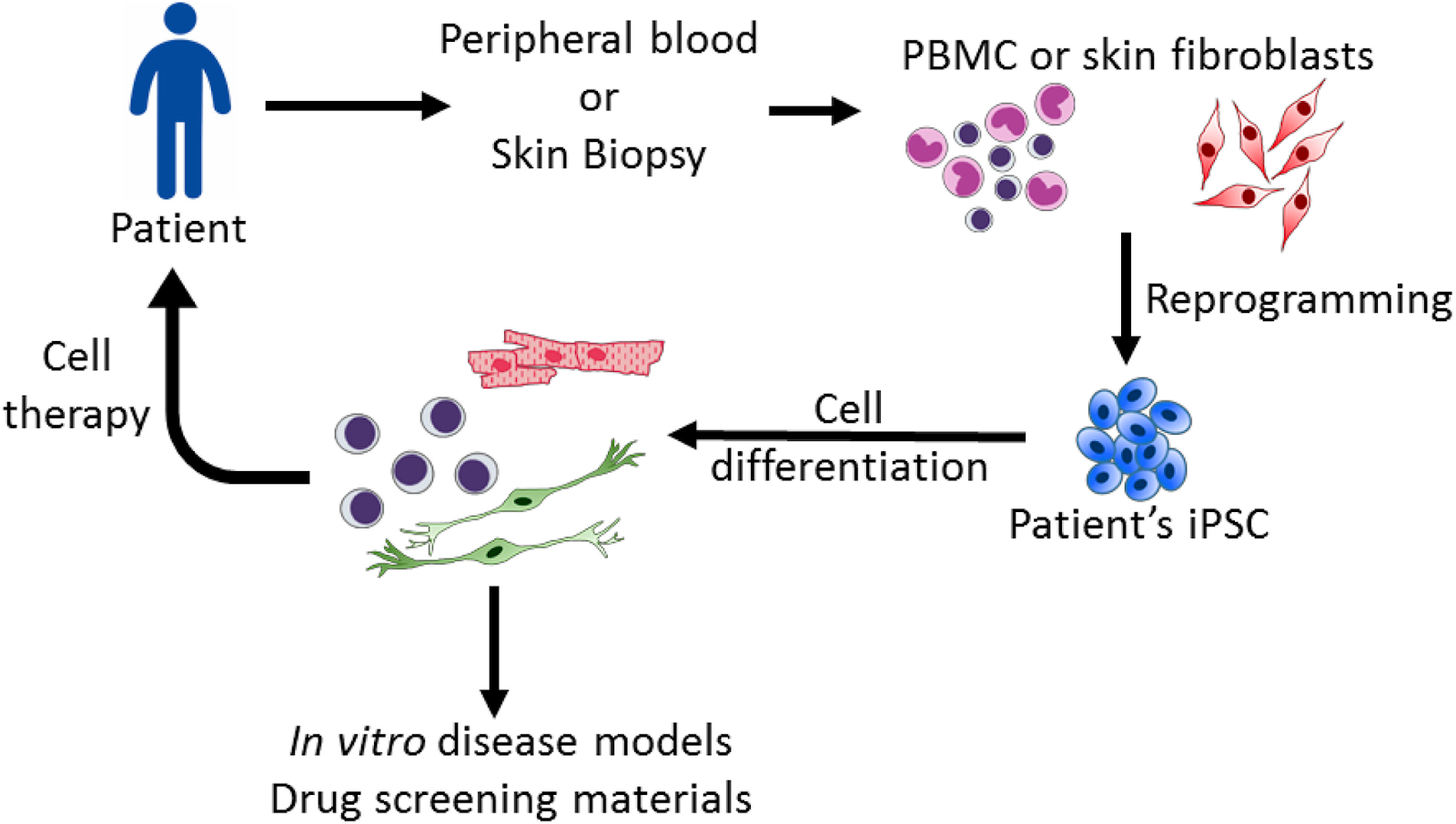
Researchers have made attempts to grow full human organs inside the bodies of animals using advancements in induced pluripotent stem cells (iPSCs) technology.
Pluripotent stem cells:
Pluripotent stem cells hold promise in the field of regenerative medicine. Because they can propagate indefinitely, as well as give rise to every other cell type in the body (such as neurons, heart, pancreatic, and liver cells).
The most well-known type of pluripotent stem cell is the embryonic stem cell. However, since the generation of embryonic stem cells involves destruction (or at least manipulation) of the pre-implantation stage embryo, there has been much controversy/ethical concerns surrounding their use.
Induced pluripotent stem cells (iPSCs):
Induced pluripotent stem cells (iPS cells or iPSCs) are a type of pluripotent stem cell that can be generated directly from a somatic cell.
The iPSC technology was pioneered by Shinya Yamanaka and Kazutoshi Takahashi in Kyoto, Japan, who together showed in 2006 that the introduction of four specific genes, collectively known as Yamanaka factors, could convert somatic cells into pluripotent stem cells.
Shinya Yamanaka was awarded the 2012 Nobel Prize along with Sir John Gurdon for the discovery that mature cells can be reprogrammed to become pluripotent.
iPSCs can be differentiated into various cell types, such as neurons, heart cells, and liver cells, allowing researchers to study diseases at the cellular level and develop potential treatments.
The advantage of iPSCs is that they can be derived directly from a patient's own cells, eliminating the need for embryonic cells and avoiding issues related to immune rejection.
While the iPSC technology has not yet advanced to a stage where therapeutic transplants have been deemed safe, iPSCs are readily being used in personalised drug discovery efforts and understand the patient-specific basis of disease.
Context: The Klyuchevskoy volcano, one of the highest active volcanoes in the world, erupts in Russia’s northern Kamchatka Peninsula.
About The Klyuchevskoy volcano
Klyuchevskaya Volcano, is an active volcano on the Kamchatka Peninsula, in far eastern Russia.
Klyuchevskoy is one of the most active stratovolcanoes in Russia.
It is one of the highest active volcanoes (tallest active volcano in Eurasia) in the world, rising to a height of 15,584 feet (4,750 meters), the highest point on the peninsula.
Stratovolcano
Stratovolcanoes have relatively steep sides and are more cone-shaped than shield volcanoes ( Shield Volcanoes - Where a volcano produces low viscosity, runny lava, it spreads far from the source and forms a volcano with gentle slopes) They are formed from viscous, sticky lava that does not flow easily. The lava therefore builds up around the vent forming a volcano with steep sides.
Stratovolcanoes are more likely to produce explosive eruptions due to gas building up in the viscous magma. Andesite (named after the Andes Mountains), is the most common rock type of stratovolcanoes, but stratovolcanoes also erupt a wide range of different rocks in different tectonic settings.
Kamchatka Peninsula
Location: It is located in far eastern Russia. It is bordered by the Sea of Okhotsk on the west and the Pacific Ocean and Bering Sea on the east.
Mountain ranges: Two mountain ranges, the Sredinny (“Central”) and Vostochny (“Eastern”) extend along the peninsula.
River: The trough between these mountain chains is occupied for much of its length by the Kamchatka River.
Climate: The climate of the Kamchatka Peninsula is severe, with prolonged, cold, and snowy winters and wet, cool summers.Most of Kamchatka is tundra supporting mosses and lichens.
Economic Activity: Fishing is the only important economic activity, especially crabbing, around the coasts. There is limited agricultural activity and some cattle and reindeer are kept. The main centre is the city and port of Petropavlovsk-Kamchatsky, which is located on the southeastern coast of the peninsula.
Inhabitants: Most of the inhabitants are Russian, with indigenous Koryak, Chukchi, and Kamchadal.
Pacific Ring of Fire: The Kamchatka Peninsula is the northern link in the 2000 km Kuril-Kamchatka island arc. This region contains 68 active volcanoes, over 10 percent of the total found on land anywhere on Earth. This arc is part of the "Ring of Fire," a string of volcanoes that encircles the Pacific Ocean.
Context: India will explore building large language models says Principal Scientific Advisor of India.
Natural Language Processing (NLP):
NLPdeals with giving computers the ability to understand text and spoken words in much the same way human beings can.
NLP combines human language with statistical, machine learning, and deep learning models. Together, these technologies enable computers to process human language in the form of text or voice data and to ‘understand’ its full meaning, complete with the speaker or writer’s intent and sentiment.
NLP drives computer programs that translate text from one language to another, respond to spoken commands, and summarize large volumes of text rapidly even in real-time. For example, voice-operated GPS systems, digital assistants, speech-to-text dictation software, customer service chatbots etc.
Understanding Large Language Model:
Humans perceive the text as a collection of words. Sentences are sequences of words. Documents are sequences of chapters, sections, and paragraphs. But computers process one word or character at a time and provide an output once the entire input text has been consumed.
LLM model works, but sometimes, it forgets what happened at the beginning of the sequence when the end is reached. So, computer scientists have found a transformer model to provide a better approach.
Transformer Model:
Process of Tokenisation
To process a text input in a transformer model, the computer first tokenises the text input into a sequence of words.
These tokens are then encoded as numbers and converted into embeddings, which are vector-space representations of the tokens that preserve their meaning.
Next, the encoder in the transformer transforms the embeddings of all the tokens into a context vector, which is like the essence of the entire text input. Using this vector, the transformer decoder generates output based on clues.
Then, you can reuse the same decoder, but this time the clue will be the previously produced next word.
This process can be repeated to create an entire paragraph, starting from a leading sentence. This process is known as auto-regression.
In this model, the grammar of the output may not be correct as in reality, the transformer model doesn’t explicitly store grammar rules, instead, it acquires them implicitly through examples.
Large Language Model (LLM):
A large language model is a transformer model on a mass scale.
It is so large that it usually cannot be run on a single computer.
Such a large model is learned from a vast amount of text before it can remember the patterns and structures of language.
Because of this reason, it is naturally a service provided over API or a web interface.
For example, the GPT-3 model which backs the ChatGPT service was trained on massive amounts of data from the internet including books, articles, websites etc. In this training it learned the statistical relationships between words, phrases, and sentences, allowing it to generate contextually relevant responses.
Other notable examples of this technology are Google's PaLM used in Bard, and Meta's LLaMa, as well as BLOOM, Ernie 3.0 Titan, and Anthropic's Claude 2.
LLM Use Cases:
Linguistic diversity and inclusion: India is a linguistically diverse country, with over 22 official languages and hundreds of dialects spoken. LLM can enable people to access information and services in their own language, reducing the digital divide and fostering greater inclusivity.
Economic growth and innovation: It can transform industries in India such as healthcare, education, and manufacturing. For example, LLMs can be used to develop new educational tools, improve consultation, and automate customer service tasks.
Personalisation and training: It can generate training data, modules etc. and develop educational and similar tools that are personalised to each person’s needs making education and delivery of services effective.
Use in Research and Development (R&D): LLMs can be used to analyse large datasets of scientific data to identify patterns and trends that would be difficult or impossible for humans to find on their own. E.g., IIT-D is using LLM to find Malaria drugs.
Use in Intelligence: By analysing large social media datasets, satellite imagery, financial transaction data and human intelligence data and finding patterns through LLM intelligence agencies can identify potential threats, extremist propaganda etc. E.g., the US National Security Agency is using LLMs to analyse large amounts of social media data to identify potential terrorist threats. Hence, LLMs can be used to develop new tools for disseminating Early warnings, cybersecurity, social media monitoring etc.
Context:Defence Minister of India will participate in the 10th Association of Southeast Asian Nations (ASEAN) Defence Ministers' Meeting Plus (ADMM Plus) to be held in Jakarta, Indonesia.
More about the news:
Alongside the ADMM Plus meetings, Indian defence minister will engage in bilateral discussions with the defence ministers of participating nations to address defence cooperation and enhance mutually beneficial partnerships.
ADMM Plus, involving ASEAN member-states: Brunei, Cambodia, Indonesia, Laos, Malaysia, Myanmar, the Philippines, Singapore, Thailand, and Vietnam and eight dialogue partners.
India initiated formal involvement with ASEAN in 1992, as a ‘Sectoral Dialogue Partner’ involving Secretary-level interactions. This engagement progressed, and by 1995, India attained the status of a ‘Dialogue Partner.’
About ADMM Plus:
The ASEAN Security Community (ASC) Plan of Action, endorsed during the 10th ASEAN Summit, outlines the commitment to establish an annual ASEAN Defence Ministers' Meeting (ADMM).
In line with this, the inaugural ADMM took place in Kuala Lumpur in 2006, becoming the preeminent defence consultative and cooperative mechanism within ASEAN.
The ADMM-Plus serves as a pivotal platform for ASEAN and its eight Dialogue Partners-Australia, China, India, Japan, New Zealand, Republic of Korea, Russia, and the United States (referred to collectively as the ‘Plus Countries’).
This collaborative effort is aimed at strengthening security and defence cooperation to contribute to peace, stability, and development in the region.
The inaugural ADMM-Plus convened in Hanoi, Vietnam in 2010.
Since 2017, the ADMM-Plus holds annual meetings, providing a forum for intensified dialogue and cooperation among ASEAN and the Plus Countries, particularly in the face of a progressively challenging regional security landscape.
Objectives:
Foster the development of capabilities among ASEAN Member States to collectively address shared security challenges, recognizing the diverse capacities of each member.
Promote mutual trust and confidence among defence establishments through increased dialogue and transparency, fostering a cooperative and open atmosphere.
Collaborate in defence and security initiatives to enhance regional peace and stability, particularly in response to the transnational security challenges prevalent in the region.
Contribute to the realization of an ASEAN Security Community, aligning with the principles outlined in the Bali Concord II.
This includes striving for peace, stability, democracy, and prosperity within the region, with ASEAN Member States coexisting harmoniously with each other and the broader global community.
Facilitate the implementation of the Vientiane Action Programme, which outlines ASEAN's commitment to building a peaceful, secure, and prosperous ASEAN.
This involves adopting outward-looking external relations strategies with Dialogue Partners in line with shared objectives.
Achievements:
ADMM Plus concentrates on seven key areas of practical collaboration, namely maritime security (MS), counter-terrorism (CT), humanitarian assistance and disaster management (HADR), peacekeeping operations (PKO), military medicine (MM), humanitarian mine action (HMA), and cyber security (CS).
To facilitate cooperation in these domains, Experts' Working Groups (EWGs) have been established.
Operating on a three-year cycle, each EWG is co-chaired by one ASEAN Member State and one Plus Country.
Membership:
Principles for Membership, delineates the criteria for participating in the ADMM-Plus process as follows:
The Plus country must hold the status of a full-fledged Dialogue Partner of ASEAN.
The Plus country should have substantial interactions and relations with the defence establishment of ASEAN.
The Plus country must demonstrate its ability to collaborate with the ADMM in building capacity, contributing significantly to regional security, and actively promoting capacity-building initiatives in the realms of defence and security within the region.
Context: The European Space Agency (ESA) has unveiled the first images captured by the Euclid space telescope designed to unlock the secrets of dark matter and dark energy. The primary objective of the telescope is to create the largest cosmic 3D map of the universe to better understand the distribution of dark matter and influence of dark energy in the early universe.
Dark Matter and Dark Energy:
Dark matter and dark energy together make up 95% of the universe. Around 68% of the Universe is made of dark energy while dark matter makes up 27%.
Only the remainder (5%) is composed of fermionic matter, i.e., things on the Earth, planets, stars, etc.
Dark Matter:
Dark matter is completely invisible and has not yet been observed directly. It does not interact with matter, emits no light or energy and thus cannot be detected directly by conventional sensors and detectors.
Scientists are confident it exists because of the gravitational effects it has on galaxies and galaxy clusters.
Dark Energy:
The existence of dark energy was theorised 25 years ago, when a team of researchers found that the expansion of the Universe was speeding up or accelerating, instead of slowing down due to gravity (inwards pulling force). Scientists have hypothesised that this is happening due to a mysterious form of energy called dark energy.
Characteristics of dark energy:
Dark energy has been hypothesised as a repulsive force or anti-gravity, i.e. while gravity tends to make objects attract, dark energy would pull them apart by increasing the space between them. Thus, dark energy has an expansionary effect. As our universe is expanding, it indicates that dark energy has a greater abundance than dark matter.
Dark energy is a property of space, so it does not get diluted as space expands.
Normally, as the universe expands the density of mass and radiation in it decreases.
However, the density of dark energy remains constant throughout. This means the dark energy in the universe is ever increasing, in order to keep the energy-density constant. Thus, dark energy should be energy inherent in the fabric of space itself.
Context: In 2018, the Council of Scientific and Industrial Research launched less noxious and less noisy ‘green’ crackers, whose use is mandated by various statutory bodies.
Green Cracker
Green crackers are defined by the CSIR-National Environmental Engineering Research Institute (CSIR NEERI) as firecrackers with a smaller shell, no ash and/or additives such as dust suppressants to reduce emissions, especially particulate matter.
These crackers do not contain the barium compounds that give them their distinctive green colour.
Barium is a metal oxide that pollutes the air and causes noise.
Burning green crackers produces water vapour, which reduces the amount of dust emitted.
It reduces PM emissions by 30% as compared to conventional firecrackers.
Green firecrackers produce sounds between 110 and 125 decibels, while conventional firecrackers produce sounds of around 160 decibels, making them almost 30 per cent less noisy than conventional firecrackers.
Identification of Green Cracker
Green crackers can be identified by the distinctive green colour logo of CSIR-NEERI and PESO and a Quick Response (QR) code.
Types of Green Cracker
SWAS (Safe Water Releaser): It releases water vapour into the atmosphere to reduce dust. It emits 30% less particulate matter and does not contain Sulphur or potassium nitrate.
STAR (Safe Thermite Cracker): Contains no potassium nitrate or Sulphur, emits less particulate matter, and reduces sound intensity.
SAFAL: It has minimal use of aluminum and more magnesium. It produces less noise than traditional firecrackers.
Supreme court judgement
In 2021, the Supreme Court had passed a slew of directions to ensure that banned chemicals are not used in crackers ahead of Diwali.
The bench had also clarified that there is no total ban on firecrackers and that only those firecrackers were banned that contained barium salts.
Green crackers are permissible following the directions issued by the Supreme Court in 2018.
In 2023, The Supreme Court clarified that its firecracker restrictions are applicable not only to Delhi-NCR but to all states.
It directed state governments to control air and noise pollution, addressing petitions seeking a nationwide ban on firecracker sale and use.