Current Affairs

Sant Mirabai Janmotsav

Context: 'Sant Mirabai Janmotsav,' an event dedicated to celebrating the 525th birth anniversary of Sant Mirabai is scheduled to take place in Mathura, Uttar Pradesh. During the event, the Prime Minister will unveil a commemorative stamp and coin as a tribute to Mirabai. This event will signify the commencement of a year-long series of programs in honour of Mirabai.

Mirabai (1498-1546):

pexels a vasan 13770653 655efe4fd6e14
  • Mirabai (Meera), was born into the Rathore Rajput royal family in Kudki, located in the present-day Pali district of Rajasthan.
  • She spent her formative years in Merta and was the great-granddaughter of Rana Jodhaji, the founder of Jodhpur.
  • In 1516, she was unwillingly married to Bhoj Raj, the crown prince of Mewar, and faced various challenges in her marital life.
  • Mirabai's life took a transformative turn when she became a devoted follower of Lord Krishna. Her unwavering devotion led her to abandon the royal palace and embark on a spiritual journey. She saw Krishna as the beloved and is considered to be high example of Premabhakti.
  • After the death of her husband, she left the kingdom of Mewar and embarked on pilgrimages.
  • In her later years, she is said to have lived in Dwarka or Vrindavan. 
  • Mirabai advocated for the inclusion of all, irrespective of factors like birth, poverty, age, and sex, in receiving divine grace.
  • Mirabai's contribution to the Bhakti movement is manifested in her devotional songs and lyrics, constituting a rich cultural heritage and her bhajans continue to be sung across India.
  • Mirabai's legacy endures through the continued singing of her compositions, especially the popular ‘Payoji Maine Naam Ratan Dhan Payo.’ 
  • She is mentioned in Bhaktamal written by Nabha Dass. 

About Bhaktamal (Bhaktamaal)

  • Bhaktamal (written in early 17th century) is a poem written in Braj Language by Nabha Dass. 
  • Bhaktamal compiles life history of more 200 bhaktas from Puranic times to Bhakti movement.
  • Though written as hagiography, the book recounts no miraculous events and is widely believed to be an unbiased account of bhaktas across all sectarian paths. 
  • Nabha Dass belonged to the sect of Ramananda Sampradaya, the sect following the teachings of Saint Ramananda.

Bhakti movement in India

  • It originated in the Tamil region during the 6th-7th centuries AD and gained prominence through the poetic expressions of the Alvars and Nayanars, representing Vaishnavite and Shaivite perspectives, respectively. 
  • In the 12th century, Basavanna initiated a significant phase of the Bhakti movement in the Kannada region.
    • Despite posing a threat to the caste hierarchy and societal fabric, Basavanna (a minister of King Bijjala from Kalachuri Dynasty) and his disciples, including Akkamahadevi, Allama Prabhu, and Devara Dasimayya, produced a rich literary tradition known as Vachana sahitya.
    • These Vachanas conveyed profound observations on spiritual and social aspects.
  • In Maharashtra, the Bhakti movement gained momentum in the late 13th century, led by the Varkaris. Influential figures like Jnanadev, Namdev, and Tukaram played a pivotal role, leaving behind verses that encapsulated the essence of Bhakti.
    • Tukaram, a Shudra by caste, rebelled against societal norms by becoming a merchant and defying Brahminical injunctions against writing on religious matters. 
    • Writing in Marathi rather than Sanskrit, Tukaram faced opposition from the orthodoxy. 

Expansion of Bhakti movement to the North:

  • As the Bhakti movement gained traction in South India, Vaishnava scholars and saints played a pivotal role in elucidating its philosophical teachings. 
  • Ramanuja, for instance, introduced the doctrine of Vishistadvaita, also known as qualified monism, which stood in contrast to the absolute monism advocated by Adi Sankara.
  • The Bhakti movement originating in Kerala and Tamil Nadu, subsequently spread to Karnataka, Maharashtra, and eventually reached North India in the 15th century.
  • It reached its pinnacle during the 15th and 17th centuries.

Causes for the origin of Bhakti movement:

Social evils and dissatisfaction

  • The genesis of the Bhakti movement can be traced to the prevalent social evils in Hindu society.
  • The rigid caste system, irrelevant rituals, blind faiths, and economic disparities due to casteism created discontent among common people.
  • The monopolization of religion by Brahmins further fuelled dissatisfaction, prompting a need for a more liberal form of religion.

Challenge from Islam

  • The emergence of Islam in India posed a significant challenge to Hinduism.
  • Unlike Buddhism and Jainism, which lost vitality over time due to the tolerant outlook of Hinduism, Islam presented a formidable challenge.
  • With Muslims becoming rulers by the 13th century AD, their religion, characterized by universal brotherhood, equality, absence of caste system, and monotheism, attracted Hindus, especially the oppressed Sudras.

Influence of Sufism

  • Sufism, a reform movement within Islam, played a crucial role in the origin of the Bhakti movement.
  • Prominent Sufi saints like Hazrat Khwaja Moinuddin Chisti and Hazrat Khwaja Nizamuddin Auliya fostered a spirit of reconciliation between Hindus and Muslims. 
  • The liberal approach of Sufism influenced Hindu saints, contributing to the development of Bhakti ideals. 

Appeal of simple devotion

  • The complexity of Vedic and Upanishadic philosophy led common people to seek a simpler form of worship and religious practices.
  • The paths of Gnana marga and Karma marga were perceived as difficult, making Bhakti marga, a simple way of devotion, an appealing alternative for salvation from worldly life.

Role of religious reformers

  • Hindu religious reformers responded to the egalitarian message of Islam, especially appealing to the lower classes of Hindu society.
  • The medieval period witnessed various revivalist movements in Hinduism under different sages and saints, all rooted in the Bhakti philosophy. 

Salient features of Bhakti movement:

  • Bhakti reformers championed the principle of monotheism, advocating the belief in the oneness of God. This foundational concept sought to unify spiritual practices and direct devotion towards a singular divine entity.
  • The Bhakti movement underscored the significance of self-surrender as a means to attain divine bliss and grace. Devotees were encouraged to submit themselves entirely to the will of God in their spiritual journey.
  • Recognizing the need for guidance, Bhakti reformers acknowledged the role of gurus as mentors and preceptors. These spiritual leaders played a crucial part in guiding individuals on their path to salvation.
  • A key principle of the Bhakti movement was the promotion of universal brotherhood. Bhakti leaders rejected societal divisions based on birth, emphasizing the idea that all living beings, including humans, were children of God.
  • Bhakti reformers were vocal critics of idol worship, challenging the prevalent practice of revering physical representations of deities. They argued for a more direct and personal connection with the divine.
  • A distinctive feature of the Bhakti movement was the stress on singing hymns with profound devotion. Devotees expressed their love and devotion to God through the composition and recitation of devotional songs.
  • Bhakti leaders vehemently condemned the caste system, emphasizing that all individuals, regardless of their birth, were considered as God's children. This stance aimed at breaking down social barriers and fostering equality.
  • The Bhakti movement rejected the significance of ritualistic practices, pilgrimages, and fasting as a means of achieving spiritual growth. Instead, emphasis was placed on the purity of heart and devotion.
  • A notable aspect of the Bhakti movement was its disregard for the sanctity of any particular language. Bhakti leaders composed poems and hymns in the language of the common people, making spirituality accessible to a wider audience.

Some of the important proponents of the Bhakti movement:

  • Kabir
    • Despite limited historical evidence on his life, he is believed to have been a weaver and a disciple of Ramananda.
    • Kabir's poetry emphasized on the universality of God, attracting a wide following.
    • A religious radical, Kabir denounced the narrowness of both Hindu and Islamic sectarianism. 
    • His message resonated strongly with the lower classes of Hindu society.
    • Denunciated polytheism, idolatry, and caste divisions, seeking to break barriers between Hindus and Muslims.
  • Ravidas
    • Ravidas, a poet saint of the 15th to 16th century Bhakti movement, is venerated as a guru in regions like Punjab, Rajasthan, Maharashtra, and Madhya Pradesh.
    • Spoke against caste and gender divisions, advocating unity in the pursuit of personal spiritual freedoms.
  • Guru Nanak
    • Guru Nanak, born in 1469, founded Sikhism, emphasizing monotheism and strict morality. Over two centuries, Sikhism expanded under the leadership of its ten gurus.
    • Sikhism stressed the oneness of God and adherence to strict moral principles.
    • Sikh teachings fostered a strong sense of community among adherents.
    • Gurus faced conflicts with the Mughal empire, leading to persecution and martyrdom. 
    • Guru Govind Singh was the last guru, after whom the Granth Sahib became the religious authority.
  • Chaitanya Mahaprabhu (1485–1533)
    • Chaitanya of Bengal presented a distinctive aspect of the Bhakti movement, focusing on the exaltation of Krishna over other deities.
    • Unlike Kabir, Chaitanya's movement was revivalist and centred on the worship of Vishnu, particularly in the form of Krishna.
    • Bengal Vaishnavites, under Chaitanya's influence, did not seek to reform Hinduism but stressed devotion to Krishna.
    • Chaitanya made disciples from all classes, popularizing group devotional singing accompanied by ecstatic dancing.

Significance of the Bhakti movement:

The Bhakti movement played a pivotal role in redefining the accessibility of salvation. Previously confined to the first three social orders, salvation became inclusive, offering a path to spiritual redemption for everyone. Women and individuals from the lower strata of society found an all-encompassing route to salvation through the Bhakti movement.

Impact on Medieval Indian society:

  • Social impact of Bhakti movement:
    • One of the most significant social impacts was the rejection of caste distinctions by followers of the Bhakti movement. They mingled based on equality, sharing meals from a common kitchen, and aimed to loosen the bonds of caste.
    • The movement fostered harmony among different societal sections and elevated the status of women.
    • The practice of 'Sati' faced resistance, and the Bhakti saints emerged as social reformers condemning various social evils.
  • Religious impact:
    • The Bhakti movement awakened Hindus and Muslims to the futility of ritualism and superstitions.
    • The movement encouraged religious toleration, exemplified by the inclusion of messages from different sects in the Guru Granth Sahib, the holy book of the Sikhs.
  • Promotion of regional languages:
    • The Bhakti saints communicated their teachings through local languages, making spirituality accessible to the common people.
    • This shift from Sanskrit, Arabic, and Persian contributed to the promotion of regional languages.
    • Saints like Kabir, Surdas, and Tulsidas expressed their devotion in languages like a mixture of Hindi, Braj Bhasha, and Awadhi.
    • The use of regional languages made religious knowledge more inclusive, allowing people from all walks of life to actively participate in and understand the spiritual discourse.
  • Moral values:
    • The movement instilled a spirit of piety in daily life, promoting hard work, honest means of earning wealth, and social service to the poor. It emphasized humanitarian values, contentment, and self-control. 

While the Bhakti movement had a profound impact on society, its two-fold objective—reforming Hinduism and fostering harmonious relations between Hindus and Muslims—was only partially realized. The movement gave rise to Sikhism and contributed to the broad outlook of rulers like Akbar. However, it also led to further divisions within the Hindu society, exemplified by the emergence of distinct groups like the followers of Kabir known as Kabir Panthis.

SATHEE (Self-Assessment Test and Help for Entrance Exams)

Context: The Ministry of Education (MoE) asks all States to encourage aspirants to utilise the newly launched portal for JEE and NEET exam preparation SATHEE (Self-Assessment Test and Help for Entrance Exams).

About SATHEE

  • Launched by: The Ministry of Education (MoE) and IIT-Kanpur.
  • Launched in: 2023
  • Spearheaded by: Ministry of Education .
  • Aim: To help students gain access to training and coaching for competitive examinations for free.
  • Features: It has launched a 45-day crash course for aspirants to test their level of preparation.
    • It hosts live and recorded lectures, expertly designed curriculum, and doubt-clearing sessions [for students] to brush up their knowledge.
    • The interactive programme is currently open for coaching help for JEE and NEET but intends to provide lectures and live courses on all National Council of Educational Research and Training (NCERT) syllabus topics.
    • It uses of an indigenously-developed AI programme called Prutor, which was developed through IIT-Kanpur.
    • The initiative is in line with the National Education Policy, with the goal to provide inclusive, high quality education even to remote parts of the country.
    • Currently, digital learning material is available in four languages English, Hindi, Odia, and Telugu, plan to extend it to other regional languages of India.
    • SATHEE mitras(friends) to increase rural coverage of students appearing for entrance tests, including the JEE and NEET. 
    • Also provide parents reports to measure what students know and are able to do in relation to the NCERT XI and XII and also JEE standards. 

JustIS APP

Context: Department of Justice under Ministry of Law & Justice has launched JustIS App, which is a digital tool for efficient court management.

About JustIS App

Department of Justice under Ministry of Law & Justice has JustIS App which is a Electronic Case Management Tool available for judicial officers.

JustIS App allows judicial officers to

  • Access laws, regulations and case law.
  • Automatically generate a hearing schedule for all cases on their docket
  • Send notifications to lawyers
  • Track the status of a case on their docket
  • View & manage case document
  • Assist in judgement writing
  • Semi-automatic generation of court orders
  • View court orders and judgements in a particular case.

What are Eclipses?

Context: Eclipses, the celestial body phenomenon with socio-cultural significance, have a wide influence on human activities. In this article, we are going to explore the different types of eclipses that occur in the Sun's solar system.

Solar Eclipses:

  • Solar Eclipse happens when the Moon gets in the way of the Sun’s light and casts its shadow on Earth. That means during the day, the Moon moves over the Sun, and it gets dark. A solar eclipse happens at a new moon when the moon passes between the sun and Earth.
  • This can happen in two ways:
    • A total eclipse, when the Moon completely covers the Sun. 
    • A partial eclipse, when the Moon does not completely cover the Sun.
image 35

Lunar Eclipses: 

  • Lunar Eclipse happens at full moon, when the Earth, Sun and Moon align in space, with Earth between the Sun and Moon.
  • During a lunar eclipse, Earth gets in the way of the Sun’s light hitting the Moon. That means that during the night, a full moon fades away as Earth’s shadow covers it up.
  • The Moon can also look reddish because Earth’s atmosphere absorbs the other colours while it bends some sunlight toward the Moon.
    • Sunlight bending through the atmosphere and absorbing other colours is also why sunsets are orange and red.
image 34

Phases of the Moon: 

  • The day on which the whole disc of the moon is visible is known as the full moon day. 
  • Thereafter, every night the size of the bright part of the moon appears to become thinner and thinner. 
  • On the fifteenth day the moon is not visible. This day is known as the ‘new moon day’. 
  • The next day, only a small portion of the moon appears in the sky. This is known as the crescent moon. 
  • Then again, the moon grows larger every day. On the fifteenth day once again, we get a full view of the moon.
image 8

Blood Moon

  • This is not a new phenomenon; it is an informal term used in the case of a full lunar eclipse. When the Earth comes between the Sun and the Moon, light bends. While passing through the Earth's atmosphere, it scatters because the high-wavelength red component of light deflects the least, giving the illusion of the Moon being red, as happens with the Sun during sunrises and sunsets.
image 33

Lunar Eclipse not occurring on every new moon and full moon day: The Reason

  • For an eclipse to happen the moon should be at one of the nodes made by the ecliptic plane, which does not happen on every new moon and full moon days as shown in the figure. So, we do not have a Lunar eclipse on every new moon and full moon.
image 32

Key Terms:

Eclipse In simple terms, an eclipse happens when a planet or a moon gets in the way of the Sun’s light. Here on Earth, we can experience two kinds of eclipses: solar eclipses and lunar eclipses.
rFRVpJFUZ4eDtwWfDvLSFOTtfL7H51ee2iLG5vh1pIEWC dDVnoVdrVic
Ecliptic Plane The ecliptic plane is defined as the imaginary plane containing the Earth’s orbit around the sun. 
·In the course of a year, the sun’s apparent path through the sky lies in this plane. 
·The planetary bodies of our solar system all tend to lie near this plane.
931cRX9BoERc0OcxHDiFdNAX16COALDg kAC cY428MeTtBIfaOZMIGCsErq0eHJ KrPXu2rn nX0Pd 4fV5QOAlpURrUOqmLSzP6gCU2duKLlBWLyaLduhNFAhALkAum9a7wLNlDvuUe8xNsAaOwP2qAu13v3N wCGg0hZEUReBQDTiV81ONyuSi2swGbtap0CvtNUg 
Line of Nodes  ·The plane of the Moon's orbit is inclined at a mean angle of 5.145° to the plane of Earth's orbit around the Sun. 
·The intersection of these planes defines two points or nodes on the celestial sphere. 
·The node where the Moon's path crosses the ecliptic from south to north is the ascending node, while the node where the Moon's path crosses the ecliptic from north to south is the descending node.

rohnnrIDXNVDLHAMgZpkLRfqzQEL7cCtG191LUif4H0Jud 6mjvHg5 iHSIaRJrDkHJcGB3UPMp9TMtJZ4NnFcy40quwMD1CBLbPnJ57N04WETkZljoLyeHik65zON1uYc7hb0q9Hj 2B1fklnlcgrTlXhlkTyUKl6X7wsDWNI58M0GA3f0ZhSSMZ0PVcQE7CsIyFljzuQ 
StarsStar, any massive self-luminous celestial body of gas that shines by radiation derived from its internal energy sources.
t7CP8IMhzsVMhvpFe5pCM3P2932bwwLQ rMMwRdIjmgCCQTMO7MkrnFwSCjY4 gEftkWFDGY1Ha3ksjMDdlbUKswvkjsXScPHnlYsuUlXjwS6I0Y2EvaPUy5VwPBrUX4FG0HRLWQQCXI5qgxshkMTaz71VClxuBd3NqETLH ojpxs KXM9FIlj9YoL3vpGEM7upShLItoQ 
SatellitesNatural SatellitesA satellite is anything that orbits around a larger object. A natural satellite is any celestial body in space that orbits around a larger body. Moons are called natural satellites because they orbit planets.  Artificial SatellitesAn artificial satellite is an object that people have made and launched into orbit using rockets. There are currently over 3,000 active satellites orbiting the Earth. The size, altitude and design of a satellite depend on its purpose.  
Orbit  In celestial mechanics, an orbit is the curved trajectory of an object such as the trajectory of a planet around a star, or of a natural satellite around a planet, or of an artificial satellite around an object or position in space such as a planet, moon, asteroid, or Lagrange point. Normally, orbit refers to a regularly repeating trajectory, although it may also refer to a non-repeating trajectory.
ZNybn0u35K4pltDA7p0WBlrmXv8GamwCUKyKiHuG4mcsbt6AouPNiNGjqJhrP1 u6PrMIrupvwozod2yWV0xYikjql1Pjn SHeGDdFNB4xbh7JgAUGHImkeDzGZpXJO2RY7zSC0J13UradzvKfKio bLiZ3OsIjFs2N7jSWMAjB9vPm0bWbnx ljbzMrMa

AGNI Initiative of CCRAS

Context: CCRAS under Ministry of Ayush has launched AGNI Initiative to promote innovations by Ayurveda Practitioners.

About AGNI Initiative

  • AGNI stands for Ayurveda Gyan Naipunya Initiative (AGNI).
  • It has been launched by Central Council for Research in Ayurveda Sciences (CCRAS) under Ministry of Ayush.
  • This initiative aims to promote research for mainstreaming the pragmatic Ayurveda practices through scientific validation and evidence based appraisal.
  • Under the initiative, CCRAS will document and publish the reported medical practices and therapeutic regimens for education and academic purposes in consultation with NCISM (National Commission for Indian System of Medicine).
  • Objective of AGNI Scheme:
    • Provide a platform for Ayurveda practitioners to report their innovative practices and experiences in various disease conditions along with promoting the culture of evidence based practice among Ayurveda Practitioners.
    • Promote culture of reporting evidence based practice among Ayurveda Practitioners.
    • Undertake research for mainstreaming pragmatic through scientific validation and evidence based appraisal.
    • Research studies may be taken up by CCRAS on the reported medical practices for mainstreaming and scientific validation by developing research proposals in collaboration with Ayurveda Practitioners and other relevant institutes/organisations.

About CCRAS

  • Central Council for Research in Ayurveda Sciences (CCRAS) is an apex research organisation body committed to undertaking, coordinating, formulating, development and promotion of research on scientific lines in Ayurveda.
  • It is under the Ministry of Ayush.
  • To boost scientific research through Ayurveda colleges and hospitals, CCRAS has initiated:
    • SPARK Program: Studentship Program for Ayurveda Research Ken (SPARK) for undergraduate scholars
    • PG-STAR Program: Scheme for Training in Ayurveda Research for PG Scholars
    • SMART Program: Scope for Mainstreaming Ayurveda in Training Professionals (SMART) Program for teachers.

Gamma-Ray Bursts: Explained

What are Gamma-ray Bursts?

Gamma-ray Bursts (GRBs) are extremely energetic explosions that produce intense flashes of gamma rays lasting from a few seconds to several minutes.

Based on their duration, there are two kinds - Short GRBs that last 2 seconds or less and long GRBs that go on for more than 2 seconds.

  • Long GRBs originate from supernovas that mark the deaths of massive stars (>30 solar masses) and produce narrow beams of radiation as the star collapses.
  • Short GRBs are believed to result from the merger of compact stellar remnants such as neutron stars or black holes.

Initial explosion creates an ultra-relativistic jet of particles moving close to the speed of light, which in turn creates the burst of gamma rays as the particles interact with surrounding interstellar gas. 

GRBs are detected approximately once per day from random directions in space by specialised satellites that monitor the cosmos for such intense bursts of gamma radiation.

GRBs can release more energy in 10 seconds than what our Sun will emit over its 10 billion year lifetime! Making them the most luminous and energetic events in the Universe.

image 31

 Impact on Earth's Ionosphere:

  • Enhanced Ionisation: GRBs increase ionisation levels in the ionosphere, creating more ionised particles.
  • Radio Communication Disruption: This ionisation can affect long-range radio communications by changing the ionosphere's density, which alters radio wave paths.
  • GPS Inaccuracies: Changes in ionospheric density can also lead to GPS positioning errors.
  • Atmospheric Chemistry Changes: The burst can alter atmospheric chemistry, leading to new compound formations or destruction of existing ones.
  • Transient Luminous Events: GRBs may cause short-lived light phenomena in the upper atmosphere. 
  • Satellite Damage Risk: Satellites in the ionosphere during a GRB face increased radiation exposure, potentially damaging their instrumentation.

Detection of Gamma-ray: 

  • Fermi Gamma-ray Space Telescope: Equipped with two primary instruments - the Large Area Telescope (LAT) and the Gamma-ray Burst Monitor (GBM). LAT is used for observing gamma rays in the energy range from 20 MeV to over 300 GeV, while GBM detects lower-energy gamma rays. 
  • Neil Gehrels Swift Observatory: This observatory carries three instruments: the Burst Alert Telescope (BAT), which detects gamma-ray bursts and computes their coordinates; the X-ray Telescope (XRT); and the Ultraviolet/Optical Telescope (UVOT). The XRT and UVOT are used for observing the afterglows of GRBs. 
  • Hubble Space Telescope: While not a gamma-ray observatory, Hubble can observe the afterglows of GRBs in optical and ultraviolet light, providing valuable data on the distance and environment of the burst. 
  • Chandra X-ray Observatory: This telescope, designed to detect X-rays from high-energy regions of the universe, can be used to observe the X-ray afterglows of GRBs.
  • Very Large Array (VLA): A radio astronomy observatory that can be used to observe the radio afterglows of gamma-ray bursts.
  • High Energy Transient Explorer (HETE): Previously used for detecting GRBs and providing rapid notification to ground-based observatories for follow-up observations.
  • Integral (International Gamma-Ray Astrophysics Laboratory): A European Space Agency satellite equipped with gamma-ray and X-ray monitors, useful in the study of GRBs.

Effect of Gamma-ray burst:

  • Intense Energy Release: GRBs emit vast amounts of gamma rays, the most energetic form of light. 
  • Affecting Nearby Matter: This radiation can ionise gas, disrupt molecular clouds, and potentially trigger star formation nearby.
  • Altering Interstellar Medium: GRBs heat and ionise the space between stars and galaxies, impacting its evolution.
  • Cosmic Distance Measurement: GRBs help measure vast distances in the universe, aiding in cosmic mapping.
  • Risk to Planetary Life: A nearby GRB could harm a planet's atmosphere and life, but such events are extremely rare due to their distance and rarity.
  • Insights into Extreme Processes: They provide data on massive star deaths, black hole formation, and matter under extreme conditions.
  • Gravitational Wave Research: GRBs from neutron star mergers are important for studying gravitational waves.

Demand side strategies to boost Employment

Context: Recently, Narayana Murthy, founder of leading Information Technology firm Infosys, argued for Indian workers to work for 70 hours a week for boosting India's economic growth.

He based this on the experience of Germany and Japan during the 1950s, these two countries experienced sharp economic uptick after the World War II due to a dedicated workforce. Long working hours is expected to boost the productivity of Indian economy and the workforce, leading to economic growth.

However, there is a competing opinion among a section of economists that merely boosting working hours will not boost the Indian economy.

These group of competing economists argue that supply-side strategies such as more production, more working hours are not sufficient to life the Indian economy, as the main issue with the Indian economy is the lack of demand.

Thus, the key to lift the Indian economy is employing demand side strategies which will increase demand for goods and services and therefore demand for more production.

What is Demand-Side Economics?

According to Keynesian economics, total output is determined by aggregate demand, which is demand for the total volume of goods and services produced in the economy. The demand for labour is a function for this demand.

Firms are guided by profit motive and will employ more labour only if there is increased demand for their products and services. Firms that employ more labour while aggregate demand has not increased will find themselves with unsold goods. Thus, there is a need for demand side interventions to boost employment in India. 

Reasons for low or fall in demand in Indian economy

  • Structural issues: Agriculture which employs around 45% of India's workforce, only accounts for 16% of India's GDP. While the services sector which accounts for around 65% of India's output only employs a smaller labour force. This means that vast majority of India's labour force employed in the agricultural sector is left with small disposable incomes to buy goods and services. (Note: According to Situation Assessment Survey of Agricultural Households in rural areas conducted by NSO conducted in 2018-2019, average monthly income of an agricultural household stands at Rs 10,218).
  • Informalisation of workforce: Majority of Indian workers are employed in the informal sector with low wages and low social security. (Note: According to PLFS survey, close to 90% of workers are employed in the informal sector). The situation is made worse by the fact that minimum wages are currently not applied on much of informal sector and the informal sector is characterized by low wages, which is even more pronounced for casual workers in the agricultural sector. All these factors reduce the buying power of vast majority of Indian population and hence low demand for goods and services.
  • Widespread income inequality: According World Inequality Database, the share of top 1% income earners in India's pre-tax national income increased from 10% in 1983 to more than 21% in 2013. However, the share of bottom 50% declined drastically from around 22% to 15% in the same period. 
  • Rising global inflation and food inflation: Rising inflation has led to reduced disposable incomes with vast majority of the low- and middle-income households. The inflation has been particularly high in food commodities. Since, expenditure on food is necessary, it has meant that less is left with households to expend on further goods and services leading to reduced aggregate demand. 
  • 'Just in time' supply chain strategy which allows manufacturing firms to hold low or minimal levels of inventory of materials. This has been employed by companies to maximize efficiency and cost savings. This has allowed companies to produce less and in the face of rising global inflation and slowing global demand further reduce output. 
  • Low labour productivity in India: In today's globalized economy, all inputs into the production of goods and services are available to all countries via trade. Thus, the competitiveness of an economy is ultimately determined by productivity of its workforce and the physical infrastructure that complements the labour force. Productivity of labour force is determined by the health and skill base of the labour force. Indian workers are at a disadvantage when compared to most successful Asian economies in both the above categories.
  • Marginalisation of women: India’s female labour force participation rate is way below to the comparable economies of India. Currently, this stands at about 17%. Thus, a vast majority of females lack regular incomes to procure goods and services leading to low demand as 50% of Indian population does not have the disposable incomes to buy goods and services.

What can be done about this?

Thus, economists have argued to employ following strategies to boost demand in the Indian economy, thus boosting India’s economic growth. Some strategies are:

  • Tap the global markets or world demand: Indian economy should expand exports to meet the global demand which will mean investing in infrastructure and competitiveness of Indian exports.  
  • Controlling food inflation: For boosting domestic demand, it is essential that food inflation is controlled by reducing food wastage and raising productivity of labour and other inputs in agricultural sector by infusion of capital and technology. This will allow households to spend on non-agricultural goods and services. Thus, generating demand needed to boost production and create employment.
  • Increasing incomes of those at the bottom of pyramid: People at the bottom of the pyramid have a high marginal propensity of consume. Hence, increasing their incomes will lead to multiplier gains in the demand situation. This can be done by:
    • Increasing and widening the ambit of minimum wages for those at the lowest levels of employment for a decent living. Minimum wages can index to the consumption expenditure of a relatively better-off group of workers. 
    • Greater formalization of the economy. 
    • Linking MGNREGA wages to minimum wages will enhance the floor for casual workers in rural and urban areas, thus expanding their incomes and thus ultimately demand. 
    • Greater participation of women and provision of transfers like pensions and universal basic incomes can be deployed to boost demand.
  • Stepping up public investment and government expenditure: If other actors of economy i.e., firms and households are not willing to consume, enhanced government spending can generate demand for goods and services. Government expenditure can crowd-in and put more money in the pockets of middle and lower classes. This along with lowering the overall levels of taxation can put more money in the hands of people to spend. These strategies will boost demand for goods and services in an economy and lead to employment creation.
  • In the monetary policy: For increasing demand in the economy, an expansionary monetary policy should be followed by Central Banks. This means reducing interest rates which will increase the demand for goods and services in the economy and create employment opportunities. 

Ideally, a mix of demand and supply side strategies need to be employed to for a sustainable growth of the Indian economy.

However, the preponderance of market-economics has forced countries like India to overtly focus on supply side strategies. However, there is a need to bring balance by employing supply side policies.

Lachit Borphukan

Context: An animated masterpiece, titled ‘Lachit: The Warrior,’ chronicling the heroic exploits of the iconic Ahom general Lachit Barphukan, has earned a prestigious spot in the Indian Panorama section of the International Film Festival of India (IFFI) 2023, set to unfold in Goa. Crafted over 19 minutes, the film, directed and written by Partha Sarathi Mahanta, an Indian Police Service officer in Assam, is poised to captivate a global audience with its screening.

About Lachit Borphukan:

Lachit Barphukan image
  • Lachit Barphukan was born on 24 November 1622 in Charaideo, Assam. He was the son of Momai Tamuli Borbarua and Kunti Moran.
  • His father Momai Tamuli Barbarua served as the commander-in-chief of the Ahom army and held the prestigious position of the last Barbarua (Phu-Ke-Lung) of upper-Assam under Prataap Singha.
  • Lachit Barphukan's journey in the service of the Ahom state began with his appointment as the commander of 'Hanstidhara Tamuli' by the state minister.

Battles against the Mughals: 

  • The invasion by Mir Jumla, acting on the orders of Mughal ruler Aurangzeb, marked a dark chapter for Assam.
  • The Mughals captured Garhgaon, the capital of the Ahom Dynasty, leading to the signing of the treaty of Ghilajharighat in 1663.
  • This treaty imposed territorial concessions, war indemnities, an annual tribute, and the distressing demand to send the Ahom king's daughter to the imperial harem in Delhi, deeply denting Assamese nationalist pride.
  • Chakradhwaj Singha, determined to reclaim Assam, initiated extensive preparations by training soldiers, bolstering the armament industry, and constructing boats. 
  • In 1667, Lachit, was entrusted with leading the Ahom army, holding the rank of Barphukan.
  • Launching a swift and aggressive campaign, the Ahom army, under Lachit's command, destroyed Mughal outposts until reaching the pivotal target of Guwahati.
  • The subsequent siege culminated in a frontal attack on November 4, 1667, resulting in a victory for the Ahoms and the expulsion of Mughal forces beyond the river Manas.
  • In 1669, Mughal troops, led by Ram Singh (Battle of Alaboi), arrived to launch an attack.
    • Despite the Ahom army not being fully prepared, Lachit Barphukan, with wisdom and readiness, faced the potential threat.
    • The Ahom forces suffered losses, but Lachit, though momentarily upset, remained undeterred and resolute in his commitment to duty and bravery.
  • Utilizing the natural advantage of hillocks along the Brahmaputra, earthen ramparts were erected to create a protective ring around the city.
  • The subsequent period saw sporadic engagements until the famous Battle of Saraighat in March 1671.
    • In the final stages of the Battle of Saraighat, as Mughals attacked from the river. 
    • Lachit, aboard seven boats, confronted the Mughal fleet, urging his soldiers to fight. His inspiring words reignited their spirit, leading to a desperate battle on the Brahmaputra.
    • Lachit's courageous leadership proved triumphant. The Mughals were forced to retreat from Guwahati.
    • Following a strategic decision, the Borphukan instructed his men not to attack the retreating Mughal army.

Legacy:

  • The courage and foresight displayed by Lachit in the Battle of Saraighat continue to resonate in the hearts and minds of the Assamese people, underscoring his indispensable role in shaping their nation.
  • In recognition of his leadership and valour, the Lachit Barphukan gold medal was instituted in 1999, awarded to the best cadet from the National Defence Academy.

Robotics: Types, Applications and Challenges 

Context: While Amazon continues to develop and deploy robotic systems in some of its warehouses in different parts of the world, the company has not tested robots in any of its facilities in India, raising questions about the capability of India's robotic ecosystems.

The Bureau of Indian Standards (BIS) defines Robotics as the science and practice of designing, manufacturing, and applying robots. Robotic technology encompasses the design, construction, operation, and use of robots.

Working Principle of Robot:

  • A robot operates by sensing its environment, carrying out computations for decision-making, and performing actions. 
  • Sensors in the robot collect and feed measurements to a controller or computer, which processes them and subsequently sends control signals to motors and actuators which allows the robot to interact with its environment. 
  • Combining the above features with artificial intelligence (AI) and machine learning (ML) have led to the development of more advanced robots that can perform tasks, such as visual perception, speech recognition, and decision-making.

Types of Robots:

As such there is no strict classification of robots and their types but according to as per the Bureau of Indian Standard’s standards for robots, they can be classified as: 

  1. Industrial Robots: They are used in manufacturing and assembly line operations, and handle specific automation applications such as picking and placing objects; assembling and packaging; ironing, cutting, or welding; and product inspection, among others.
  2. Services Robots: They are robots for personal use or professional use that perform useful tasks for humans or equipment. They are used in non-industrial environments, such as homes, hospitals, and offices.
  3. Medical Robots: They are used as medical electrical equipment or medical electrical systems and are not regarded as an industrial robot or service robot.

World Robotics Report 2022

According to the report, five major markets for industrial robots are China, Japan, the United States, the Republic of Korea, and Germany. These countries accounted for 78% of global robot installations. China ranked first in terms of annual installations of industrial robots followed by Japan and USA. China now instals more industrial robots per year than the rest of the world combined.

India and Robotics:

  •  Since 2016, the operational stock of industrial robots has more than doubled in India to reach 33,220 units in 2021, averaging at an annual growth rate of 16%.
  •  In terms of annual industrial installations, India ranks 10th globally as per the World Robotics Report, 2022.

Application of Robotics in India:

1. Applications in Manufacturing 

  • Production Automation: These kinds of robots become part of the production unit, they come in various types and configurations, each designed to perform specific tasks in the production chain. E.g., Articulated and SCARA robots etc. 
  • Process Optimization: Through eliminating mundane tasks, streamlining workflows, reducing costs, ensuring continuity, and improving operational efficiency robots helps in process optimisation.
  • Logistics and Warehousing automation: To help in reducing errors, speed up order fulfilment, reduce overhead and running costs, and facilitate better inventory management. E.g., Autonomous Mobile Robot

2. Applications in Healthcare: 

  • Cleaning and Disinfecting: 
    • Disinfecting robots utilise ultraviolet-C (UV-C) light or hydrogen peroxide vapour (HPV) for cleaning identified areas. 
  • Safety and Monitoring Robots: 
    • Telepresence systems use computer vision technology to monitor the patient’s vitals and voice recognition to communicate with the patient. 
  • Surgical Robots: Allows surgery to be performed using small tools attached to a robotic arm. The surgeon uses a computer system to control the robotic arm to which small surgical tools are attached.

3. Applications in Agriculture: 

  • Precision farming: By using the big data and surrounding awareness they help in precision farming. 
  • Animal husbandry: Through optimal use of grass areas, improving nutritional value of grass, using tools to milk cows, they help optimise the dairy businesses. 
  • Crop and Soil health monitoring by crop surveillance, doing weed control etc. 
  • Crop harvesting: They use sensors and cameras to detect when the crops are ready to be picked, then use robotic arms or other tools to carefully harvest them without damaging the produce. 
  • Use in crop scouting: These robots traverse large fields and collect real-time information on pest type, concentration, and infestation level. Also, they would assist in collecting information on soil moisture, nutrient deficiency, and disease severity during crop growth stages.
  • Use in spot-spraying: They detect and treat weeds, diseases, pests and nutrient requirements, in real time, in growing crops.

National Security 

  • Mine Detection: 
    • Image processing technique is employed to find the accurate position of the robot.
    • Metal detector is the sensor used to detect landmines. 
    • The graphical user interface for the remote terminal computer provides the effective control for the robot. 
  • In Surveillance, they can be used in different activities, such as, mobile robots for ground, aerial, surface water, and underwater applications.
  • Remotely operated vehicles: These robots allow us to explore a space without actually being in that space. They send back data, including live video, of its surroundings.
  • Combat robots: They are designed for military applications, from transport to search & rescue and attack. 

Challenges to Indian Robotics Ecosystem in India:

  • Limited skilled human resources pose a significant challenge in robot design, development, and maintenance. E.g., shortage of technicians and specialised maintenance personnel.
  •  Lack of multidisciplinary collaboration among government stakeholders, industry, academia, start-ups, and other relevant stakeholders.
  • High import dependence makes it vulnerable to supply chain disruptions impacting local availability. E.g., Magnets (crucial for motors), batteries, etc.
  • Capital intensive nature of robotics development limits scaling up robot production due to the need of software, manufacturing processes and production units.
  • Lack of a comprehensive regulatory framework addressing intellectual property protection and cybersecurity for robotic systems which may lead to intellectual property disputes, cybersecurity vulnerabilities.  
  • Lack of reliable energy and internet connectivity and other critical infrastructures affecting their performance, reliability, and real-time communication capabilities.
  •  Limited awareness about robotic technologies limits their adoption leading to high operational inefficiency and cost.
  •  Ethical concerns such as privacy infringements, biased decision-making, and intrusive surveillance by use of robotics.

Way Forward:

  • Create Robotic Innovation Unit (RIU) which builds a dynamic robotics ecosystem by collaborating with industry start-ups, to make Robotics future ready. 
  • Create a “Research and Development (R&D) Centre of Excellence for robotics” to promote cutting-edge discoveries driving technological advancements in robotics.
  • Regulatory Steps:
    • Create Demonstration Centres to showcase robotics innovations and innovation test beds to refine them.
    • Create Regulatory sandboxes to promote experimentation with new robotics technology.
    • Form standard mechanism to ensure safety and quality, driving progress in robotics.
    • Create a Fund for innovation and provide start-up support, and fiscal incentives to boost technological progress.
    • Form a technical training module to ensure a skilled workforce, creating an ecosystem for robotics advancement.

The rise of robotics is reshaping a wide range of human activities, and early interventions in these ecosystems can help India harness the full potential of robotics, driving multi-sectoral economic growth and technological advancement.

To achieve this, the Government of India has formulated a draft National Strategy for Robotics, aiming to position India as a global leader in the research, design, development, and manufacturing of robotics. 

BDS Movement

Context: Indian poet and curator Ranjit Hoskote resigned after being accused of sympathetic to the BDS (Boycott, Divestment, Sanctions) movement.

image 30

About BDS Movement:

  • It was launched in 2005 by Palestinian people to garner international support for their rights. 
  • It calls for withdrawal of support to Israeli government and end Israeli apartheid.
  • It is inspired from the South African anti-apartheid movement.

Key demands under the movement are:

  1. End Israeli occupation of the West Bank, East Jerusalem, Gaza and Syrian Golan Heights.
  2. Recognize the full fundamental rights of the Arab Palestinian citizens of Israel.
  3. Allow Palestinian refugees to return to their homes.

Genetic Chimaeras

Context: In a recent study, scientists have reported successful generation of a live chimaera in non-human primates – species evolutionarily close to humans. This is the first time scientists have succeeded in producing a live infant chimeric monkey. 

Genetic Chimaera

  • A genetic chimaera is a single organism composed of cells of more than one distinct genotype (or genetic makeup). E.g., 
  • In animals: 
    • Half-sider budgerigar, a type of common parakeet, has different colours on either side of its body due to chimerism. 
    • Anglerfish displays an extreme degree of symbiotic chimerism in which the male fish fuses with and is eventually absorbed into the female fish, mixing their genetic makeups into a single animal. 
    • Marine sponges are known to have up to four distinct genotypes in a single organism.
image 28

Natural Chimaeras among Humans:

  • It can occur when the genetic material in one cell changes and gives rise to a clonal population of cells different from all the other cells.
  • Fusion of two fertilised zygotes early in the embryonic stage can also lead to a condition in which two genetic makeups coexist in a single individual.
  • Chimerism can also result from twin or multiple pregnancies evolving into a single foetus or a twin foetus being absorbed into a singleton.
  • Individuals living with two blood types have been documented. Pregnant women have been known to harbour genetic material of her foetus in the bloodstream during pregnancy.
    • Such foetal DNA can be used to screen for genetic defects and congenital abnormalities using non-invasive prenatal testing.
  • A phenomenon called microchimerism exists in which traces of the foetus’s genetic material are observed in mothers’ tissues many years after childbirth, resulting in two different genetic materials in a single person.
  • Solid organ transplants in humans are bound to produce individuals with two unique genetic makeups as well.
    • The makeup of the donor’s organs is significantly different from that of the recipient’s other tissues, resulting in chimerism.
  • Bone marrow transplants result in chimeric individuals.
    • Individuals undergoing treatments like bone marrow transplants usually have their bone marrow destroyed and replaced by that from a suitable donor
    • Since the donor’s bone marrow contains stem cells, they will produce blood cells that will subsequently repopulate the recipient’s blood-cell repertoire. 
    • Eventually, the recipient will have blood cells that resemble the donor’s and will be different from the genetic makeup of the recipient’s other tissues – resulting in a chimeric individual.

Chimaeras in Non-human Primates:

  • Previously, chimaeras have been induced in laboratory settings, of rat-mouse, human-pig, and human-cow in order to ‘generate’ human organs.
    • While rat-mouse chimerics had a near-normal lifespan, human-pig chimaeras had to be terminated in three to four weeks
    • Though such studies have shown promise for growing organs for transplantation, they are limited by the fact that rats, mice, pigs and cows are evolutionarily distant from humans, and will pose biological and technical challenges when being used to grow human organs.
  • In a recent landmark study, scientists reported the successful generation of a live chimaera in non-human primates – species that are actually evolutionarily close to humans. This is the first time scientists have succeeded in producing a live infant chimeric monkey.
    • The study opens new doors for scientists to use non-human primates to create chimaeras that could become models for basic and translational biomedical applications in the near future. 
image 29

Applications: 

  • Human-pig chimaeras have been induced in laboratory settings in a bid to develop model systems that could ‘produce’ human organs of a suitable size, anatomy, and physiology. 
  • Successful application of animal insulin and the more recent use of animal heart valves in human surgeries have saved human lives. 
  • Researchers have made attempts to grow full human organs inside the bodies of animals using advancements in induced pluripotent stem cells (iPSCs) technology. 

Pluripotent stem cells: 

  • Pluripotent stem cells hold promise in the field of regenerative medicine. Because they can propagate indefinitely, as well as give rise to every other cell type in the body (such as neurons, heart, pancreatic, and liver cells). 
  • The most well-known type of pluripotent stem cell is the embryonic stem cell. However, since the generation of embryonic stem cells involves destruction (or at least manipulation) of the pre-implantation stage embryo, there has been much controversy/ethical concerns surrounding their use. 

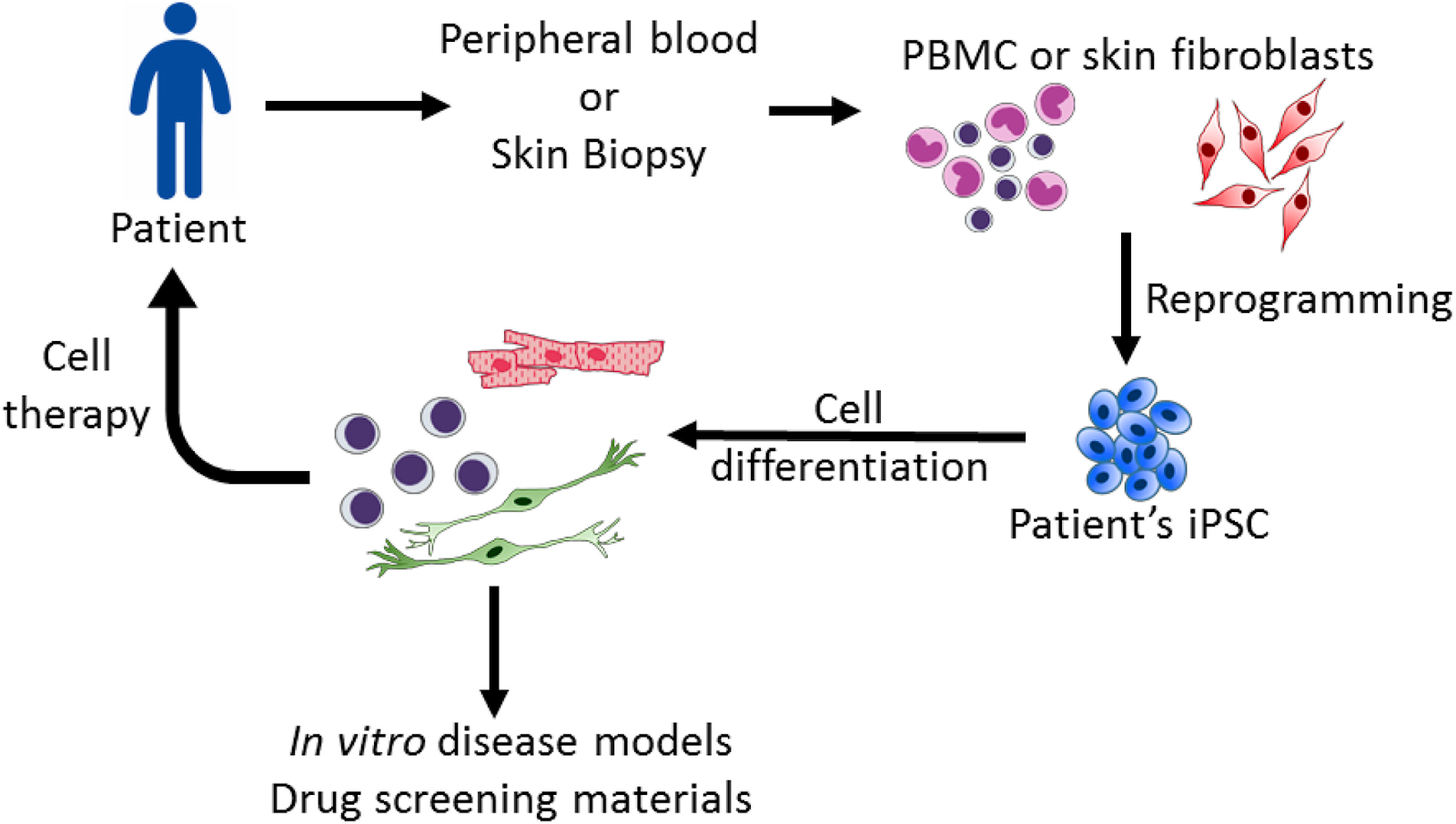
Induced pluripotent stem cells (iPSCs):

  • Induced pluripotent stem cells (iPS cells or iPSCs) are a type of pluripotent stem cell that can be generated directly from a somatic cell
    • The iPSC technology was pioneered by Shinya Yamanaka and Kazutoshi Takahashi in Kyoto, Japan, who together showed in 2006 that the introduction of four specific genes, collectively known as Yamanaka factors, could convert somatic cells into pluripotent stem cells.
    • Shinya Yamanaka was awarded the 2012 Nobel Prize along with Sir John Gurdon for the discovery that mature cells can be reprogrammed to become pluripotent.
  • iPSCs can be differentiated into various cell types, such as neurons, heart cells, and liver cells, allowing researchers to study diseases at the cellular level and develop potential treatments.
  • The advantage of iPSCs is that they can be derived directly from a patient's own cells, eliminating the need for embryonic cells and avoiding issues related to immune rejection
  • While the iPSC technology has not yet advanced to a stage where therapeutic transplants have been deemed safe, iPSCs are readily being used in personalised drug discovery efforts and understand the patient-specific basis of disease.

PZ3KFb PaN JKkIfp4kWxXr NPIvo731weZ4aMMOi J z4g2LKkUKeSueRtvSQwHBZ Scfri44ts9UwdsVsuomaNioi18YkoyoTcEeqhkRQ0pvPGXjVQ82xnT 5SRFtl4spnP0BS5AMi wR8F4Bjww

Refugee influx from Myanmar into Mizoram

Context: Around 2,000 refugees from Myanmar have crossed into Mizoram, following an intense battle between Chin Defence forces and Myanmar Army close to India-Myanmar border.

Location of Refugees influx in Myanmar

  • The influx of Myanmarese refugees took place in the India's border town of Zokhawthar (located in the Champhai district of Mizoram).
  • Zokhawthar is located few kilometers away from the Myanmar town of Rikhawdar, where the fighting is taking place between Chin Defence Forces and Myanmar Army.
  • Zokhawthar and Rikhawdar are separated by Tiau River. 
  • Prior to this influx, Mizoram has already been sheltering about 30,000 Chin refugees from Myanmar, who escaped the civilian strife in Myanmar following the 2021 military coup.

About Tiau River

  • Tiau is a 159 km long river which forms the boundary between India and Myanmar. It later merges with the Kaladan river.