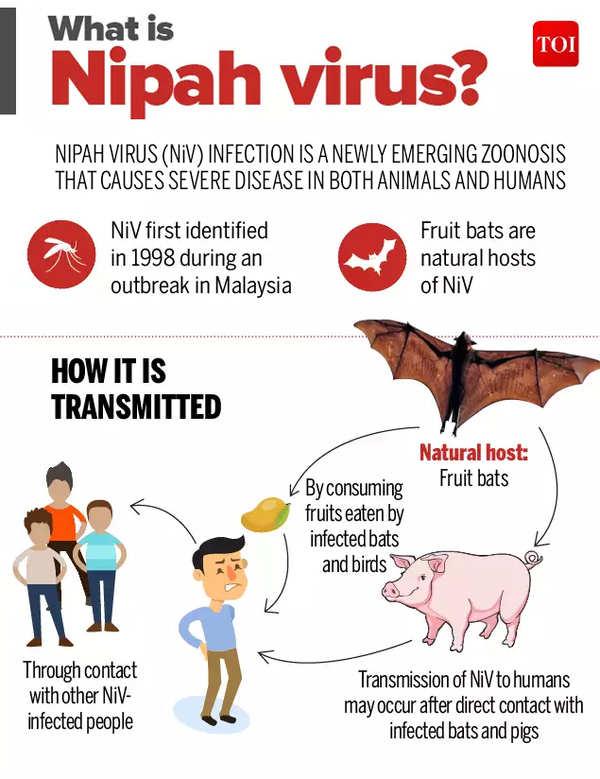
Context: Instances of Nipah virus have been reported from Kerala recently. The virus is capable of causing different clinical manifestations with potential human to human spread in some cases. With the Nipah virus cases a regular occurrence in Kerala now, there is a need for a thorough genetic study of the virus in humans and fruit bats.
Relevance of the Topic: Prelims: Key facts about Nipah virus
About Nipha Virus (NiV):
- About: Nipah virus (NiV) is a single-stranded RNA virus. The genetic material of Nipah virus is composed of RNA rather than DNA.
- Transmission: Nipah virus is a zoonotic disease that can be transmitted to humans through direct contact with infected animals, especially bats and pigs. Nipah virus infection can be transmitted through contaminated food or directly from person to person.
- Natural Reservoir: Fruit Bats (also known as flying foxes) are believed to be the natural reservoir/primary carriers of the Nipah virus.
- Symptoms range from:
- Mild illness: Fever, headache, muscle pain, and respiratory problems (similar to that of influenza).
- Asymptomatic infection (no symptoms)
- Fatal Encephalitis (Inflammation of the brain)- can lead to coma or death.
- Severe acute respiratory symptoms.
- The case fatality rate is between 40% and 75%.
- Treatment: NiV is on the top-10 priority list of pathogens identified by the World Health Organization. Currently, there are no approved vaccines available against NiV.