International Relations & Security

Israel – Palestine Relations

Context: Palestinian group Hamas has launched an attack on Israel, leading to an outbreak of new war in West Asia.

Background of Israel Palestine Relations:

  • Following the defeat of the Ottoman Empire in World War – I, Britain assumed control of the region referred to as Palestine. Within this land, there was a Jewish minority and an Arab majority coexisting. Tensions between the two communities grew when the international community gave Britain the task of establishing a "national home" in Palestine for Jewish people. 
  • The relationship between these two communities became increasingly strained in 1947, when United Nations introduced Resolution 181, commonly known as the Partition Plan, which aimed to divide the British Mandate of Palestine into separate Arab and Jewish states. While the Jewish population considered this their historic homeland, Palestinian Arabs also asserted their right to the territory and resisted this development.
  • In 1948, the State of Israel was officially established, leading to the first Arab Israeli War. While Israel emerged victorious in 1949, the conflict resulted in the displacement of 750,000 Palestinians and the division of the territory into three parts: the State of Israel, the West Bank (Jordan River), and the Gaza Strip. 
  • In 1956, after the Suez Crisis and Israel's invasion of the Sinai Peninsula, Egypt, Jordan, and Syria signed defense pacts in anticipation of potential Israeli mobilization. In 1967, the Six-Day War erupted when Israel preemptively attacked Egyptian and Syrian air forces. After the war, Israel gained control over the Sinai Peninsula and Gaza Strip from Egypt, the West Bank and East Jerusalem from Jordan, and the Golan Heights from Syria. 
Israel – Palestine

Two Intifadas (Uprisings)

  • In 1987, the first intifada (revolt/uprising) erupted when Palestinians in the West Bank and Gaza Strip protested against Israeli rule, as the issue of Palestinian self-determination and self-governance remained unresolved.
  • In 2000, the second intifada began, partly due to Palestinian grievances, a stagnant peace process, and political events. In response, Israel constructed a barrier wall around the West Bank in 2002. 
Dimensions of ConflictExplanation
BordersThere is no clear demarcation of boundaries between the two states.
Question of JerusalemBoth Israel and Palestinians claim Jerusalem as their capital and call it central to their religion and culture. Israel has declared Jerusalem its 'undivided capital', effectively annexing its eastern half, and has built up construction that entrenches Israeli control of the city.
RefugeesA large number of Palestinians had to flee in the 1948 War. The survivors and their descendants, mostly living in Jordan, Lebanon, and Syria, claim the right to return to Israel, as supported by a 1948 UN General Assembly resolution. Israel sees the right to return as a threat to its existence as a Jewish state, and believes the refugees should go to the Palestinian state that would be created as part of a two-state solution.
Militant OrganizationsIsrael perceives Palestinian militant organizations, such as Hamas, the Islamic group in control of Gaza, as posing existential threats. Hamas has openly declared its objective to dismantle Israel and often directs suicide bombings and rocket attacks towards Israeli civilians. 
Jewish SettlementsConsistent efforts in West Bank undermines the prospects of any comprehensive peace deal with Palestinians based on two state solution. 

Peace efforts

  • The two-state solution was proposed by the Peel Commission, which was formed by Britishers in 1937. It refers to an arrangement where Israeli and Palestinian states co-exist in the region. #Prelims 2018.
  • The 1993 Oslo I Accords attempted to mediate the conflict by establishing a framework for Palestinian self-governance and mutual recognition between the Palestinian Authority and Israel. 
  • In 1995, the Oslo II Accords expanded on the initial agreement, requiring Israel's withdrawal from six cities and 450 towns in the West Bank.
  • In 2000, Camp David summit convened by U.S. President Bill Clinton to discuss borders, settlements, refugees, and Jerusalem, but talks end without an agreement. Clinton announces parameters for an independent Palestinian state living in peace with Israel.
  • In 2002, The Arab Peace Initiative was drawn up by Saudi Arabia which proposed normalization of ties between Israel and Arab nations. IT calls for a statehood deal Palestine and full Israeli withdrawal from territory captured in 1967.#Prelims 2023 
  • The Abraham Accords (2020) represent bilateral agreements for the normalization of relations between Israel and two Arab nations, the United Arab Emirates and Bahrain. It marked significant diplomatic milestones, as both the United Arab Emirates and Bahrain formally acknowledged Israel's sovereignty, paving the way for the establishment of full diplomatic relations.

India’s Relations with Israel and Palestine

  • India’s policy on the longest running conflict in the world has gone from being unequivocally pro-Palestine for the first four decades, to a balancing act with its three-decade-old friendly ties with Israel. 
  • In recent years, India’s position has also been perceived as pro-Israel. 
  • India was the only non-Arab state among 13 countries that voted against the UN partition plan (in 1948) of Palestine in the General Assembly that led to the creation of Israel. 
  • India’s own Partition along religious lines, its principled stand against Colonialism and its effects, solidarity with  Palestinian people, to ward of Pakistan’s plan to isolate India over Kashmir and India’s energy dependency on Arab countries. 
  • However, India formally recognised Israel in September 1950. Full diplomatic relations were established as late as 1992.
  • In 1975, India became first non-Arab country to recognise Palestine Liberation Organization (PLO) as sole representative of Palestinian people.
  • In 1988, when PLO declared an independent state of Palestine with its capital in East Jerusalem, India granted recognition immediately. 
  • India voted for Palestine to become a full member of UNESCO in 2011, and a year later, co-sponsored UN General Assembly resolution that enabled Palestine to become a “non-member” observer state at UN without voting rights. 

The Policy of De-hyphenation

  • India abstained from voting at UN Human Rights Council on a resolution which claimed to highlight evidence of alleged war crimes committed by Israeli forces and Hamas during the 2014 airstrikes against Gaza that killed over 2000. 
  • In 2016, India abstained again from a UNHRC resolution against Israel. 
  • In 2017, during the visit of PLO chief Mahmoud Abbas, reference to East Jerusalem was missing in the statement issued by Indian PM. 
  • Historically, India supported Palestinian state with Jerusalem as its Capital. 
  • In 2018, PM Modi became first ever Indian PM to visit Israel. At this visit, PM skipped visit to Palestinian de facto capital Ramallah. This move was seen as India pursuing a policy of de-hyphenation wherein it would deal with Israel and Palestine separately. 
  • De-hyphenation is a careful balancing act, with India shifting from one side to another as the situation demands. This was clearly visible when India had voted in favor of a resolution in the UN General Assembly opposing Trump administration’s recognition of Jerusalem as Israeli capital. 
  • At UNHRC, India voted against Israel in three resolutions – one on the right of self-determination of Palestinian people, a second on Israeli settlement policy, and a third on human rights situation in Golan Heights. 
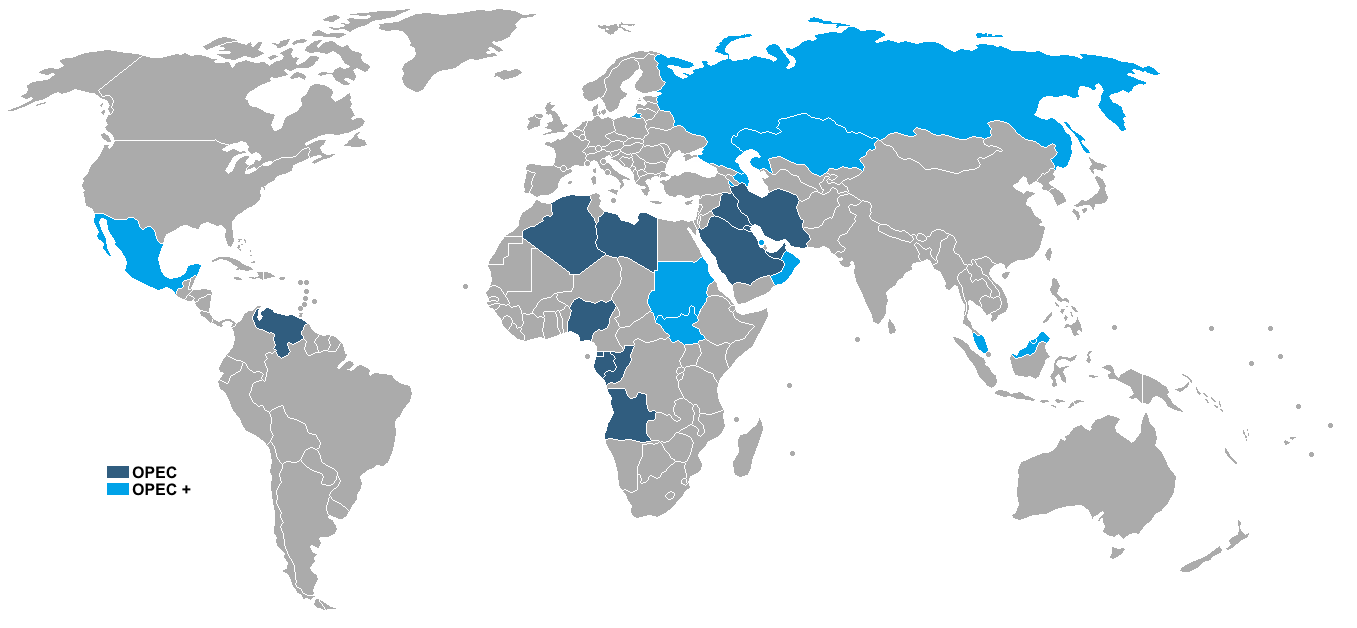
Organisation of the Petroleum Exporting Countries (OPEC)

Context: Recently, production cuts by major oil producers’ cartel OPEC (Organisation of the Petroleum has led to the rise in crude oil price. The Petroleum Minister of India, has highlighted its adverse impact on major consuming nations and urged OPEC to bring balance and affordability in the oil markets. 

More about the news: 

  • India ranks as the third-largest consumer of crude oil globally, with a substantial 85% of its oil needs being supplied by imports.
  • Heavy reliance on imports exposes the Indian economy to significant fluctuations in oil prices. 
  • For instance: Price volatility can trigger inflationary pressures, disrupt the trade balance, deplete foreign exchange reserves, and pose threats to the post-pandemic recovery. 

m2OnNXbMGXWeDoUEDdZTsLvZxXNv3M9ve 2nFDwYfCmvJIThQ2B0zmWJ8q0L2XlZag7qvomF cPnpm6vS91c1TOOhSQv7MzNZ0wjF

About OPEC

  • Organization of the Petroleum Exporting Countries (OPEC) is a coalition of major oil-producing nations that collaborate to collectively influence the global oil market. 
  • Establishment: 1960 in Baghdad.
  • Five Founding members: Iran, Iraq, Kuwait, Saudi Arabia, and Venezuela.
  • Present Member Countries: Islamic Republic of Iran, Iraq, Kuwait, Saudi Arabia, Venezuela, Algeria, Angola, Congo, Equatorial Guinea, Gabon, Libya, Nigeria, United Arab Emirates. 
  • According to the U.S. Energy Information Administration (EIA), OPEC's combined oil production rate (including gas condensate) represented 44% of the world's total in 2016, and OPEC held 81.5% of the world's "proven" oil reserves.
  • During the 1960s and 1970s, OPEC underwent a series of restructuring steps that shifting global oil production landscape in favour of oil-producing countries, diminishing the dominance of Anglo-American oil corporations known as the "Seven Sisters."
  • The admission of a new member nation necessitates the agreement of three-quarters of OPEC's existing members, including all five of the founding countries. Sudan submitted an application to join in October 2015, it has not yet become a member.

Organisation and Structure

  • Before OPEC's formation, individual oil-producing states faced punitive measures when attempting to alter the governance of oil production within their borders.
  • The fundamental principle underlying OPEC is that its members collectively benefit from limiting global oil supply to drive up prices.
  • Decision-making within OPEC follows these principles:
    • OPEC Conference, led by delegations, headed by member countries' oil ministers, serves as the organization's highest authority.
    • OPEC secretary general functions as the organization's chief executive.
    • Conference typically convenes at the Vienna headquarters at least twice a year. 
    • It generally operates on the basis of unanimity and "one member, one vote," with each country contributing an equal membership fee to the annual budget.
    • Given, Saudi Arabia's status as the world's largest and most profitable oil exporter, capable of acting as the traditional swing producer to balance the global market, it effectively serves as the de facto leader of OPEC.

OPEC+

  • In response to the steep drop in oil prices, primarily driven by substantial increases in U.S. shale oil production, OPEC entered into an agreement with ten other oil-producing nations in 2016, forming what is now recognized as OPEC+.
  • This informal coalition of nations, collectively referred to as OPEC+, comprises Azerbaijan, Bahrain, Brunei, Kazakhstan, Malaysia, Mexico, Oman, Russia, South Sudan, and Sudan.
  • Among these ten nations was Russia, the world's third-largest oil producer as of 2022, responsible for 13% of the global oil output.

Publications and Reports

  • The OPEC Secretariat produces a wide range of publications with the aim of keeping the public informed about the Organization's activities and disseminating data and insights related to OPEC Member Countries and the global oil industry.
  • Monthly Oil Market Report, which delves into critical issues confronting the worldwide oil market.
  • World Oil Outlook, known as WOO, presents OPEC's medium- to long-term perspective on the global oil market.

Bangladesh gets its first batch of uranium

Context: The first shipment of Russian uranium was officially delivered to Bangladesh to fuel the nation's only nuclear power plant, Rooppur.

Rooppur Nuclear Power Plant

  • It is being build on the eastern bank of the river Ganges, 160 km from Dhaka.
  • It is Bangladesh’s first nuclear power plant.
  • The Rooppur project is the first initiative under an Indo-Russian deal to undertake atomic energy projects in third countries.
  • International Atomic Energy Agency is supporting the South Asian country in the safe, secure and sustainable introduction of nuclear power.
image 9

International Atomic Energy Agency (IAEA)

  • It is the intergovernmental forum for scientific and technical cooperation in the nuclear field. 
  • It was created in 1957 in response to the deep fears and expectations generated by the discoveries and diverse uses of nuclear technology.
  • It works for the safe, secure and peaceful uses of nuclear science and technology, contributing to international peace and security and the United Nations' Sustainable Development Goals.
  • The IAEA’s Milestones Approach enables a sound development process for a nuclear power programme. It is a phased comprehensive method to assist countries that are considering or planning their first nuclear power plant.
  • Headquarters: Vienna, Austria.

Shutdown of the Afghan embassy in India

Context: Islamic Republic of Afghanistan announced the closure of its Embassy in Delhi.

More about the news: 

  • The embassy was representing the Islamic Republic of Afghanistan which had been deposed by the Taliban in August 2021. 
  • After the displacement of the Islamic Republic of Afghanistan, the embassy was working as a “stateless mission” as it did not represent the current Taliban regime, with whom India has no diplomatic relationship.
  • India has maintained a “technical team”, which provides visas to Afghan traders and travellers to India. India is also sending humanitarian assistance to the Afghan people.  

India’s Informal engagement with Taliban regime in Afghanistan

  • Currently, no country has formally recognised the Taliban regime in Afghanistan. However, China has a full-fledged ambassador in Afghanistan. Other countries like Iran, Pakistan, Russia, UAE, Qatar and China also have deeper relations with the Afghan regime. This puts pressure on India to have relations with the Taliban regime in Afghanistan. 
  • India has not formally recognised the current Taliban regime in Afghanistan (Known as the Islamic Emirate of Afghanistan) due to the poor human rights record of the Taliban government especially their treatment of women and the Taliban government being non-inclusive.
  • Despite the closure of the embassy and non-recognition of the Taliban regime by India, India has continued to engage with the Taliban regime in Afghanistan using a ‘technical team’ in Kabul. This technical team provides visas to Afghan traders and travellers to India. 
  • Currently, two weekly flights carry Afghan citizens and goods to India. India uses these flights to send humanitarian assistance to the Afghan people. 
  • Indian goods are also sent to Afghanistan through other countries like Iran and UAE.
  • Indian diplomats have met the Taliban’s representative in multiple locations under multilateral initiatives like the recently concluded Moscow Format in September 2023.
  • The Taliban regime is also urging India to support it with its economic revitalisation through projects like electricity generation, and road construction. 

India’s concerns with Taliban ruled Afghanistan

  • Support for Terrorism by Taliban regime
  • Support for poppy cultivation and promotion of narco-terrorism by Taliban
  • Close relations between Taliban and Pakistan army which can be harnessed by Pakistan to use Taliban as a safe haven for anti-Indian activity.
  • Poor human rights record especially regressive treatment of women.
  • Non-inclusive nature of Taliban regime which is dominated by certain Pashtun tribes and does not represent the entire Afghan community.

Importance of cultivating relations with Taliban regime 

  • Safeguard India’s interests with Taliban regime
  • Location of Afghanistan as a crossroad for India’s engagement with Central Asian Republics
  • Ensuring India’s energy security as India can import gas through TAPI Pipeline via Afghanistan.
  • Controlling terrorism in India and the wider neighbourhood.
  • Good image of India among the common Afghan citizens can help India build quick relations with the Taliban.
  • Limiting Pakistan’s control over Afghanistan necessitates India to have engagement and closer relations with the Taliban.

Conclusion: 

  • India is considering realpolitik to initiate any engagement with the Taliban, however, the deep-seated principles and relations with the region’s countries, bring ambiguity in its policy towards the new regime in Afghanistan, which is also impacting India’s interests. 
  • A major challenge remains the Taliban’s adherence to Sharia law and severe restrictions around the movement of women.
  • Two factors can influence the Indian government’s future approach. 
    • Strong people-to-people ties: India has benefited from its ties with Afghan elites and there exists considerable goodwill towards India among Afghan citizens.
    • Humanitarian assistance: Given the Taliban’s appeal for better ties, the Indian government can leverage its position through aid and assistance. 

Armenia's Parliament votes to join the International Criminal Court

Context: Armenia's Parliament has voted to join the International Criminal Court. 

Analysis of Armenia's decision to join International Criminal Court

  • Key reason behind Armenia's decision to join the International Criminal Court is Azerbaijan's offensive against the Nagorno-Karabakh region.
  • Armenia's decision to become a party to the International Criminal Court is expected to strain relations with Russia as International Criminal Court has issued arrest warrants against President Putin of Russia for committing human rights abuses during Russia's aggression against Ukraine.
  • Armenia being a state party to ICC will be under obligation to arrest Putin. Thus, this will constrain Russia-Armenia relations. 

About Armenia

image
  • Armenia is a landlocked country, part of the Caucasus region.
  • Neighbouring countries of Armenia: Turkey on the West, Georgia on North, Azerbaijan on east, Iran and Azerbaijan's enclave of Nakhchivan on South. 
  • Yerevan is the capital and largest city of Armenia.

About Nagorno-Karabakh Region

  • It is a landlocked mountainous region, encircled by Azerbaijan. 
  • The region is majorly inhabited by ethnic Armenians.
  • The region has been subject of territorial dispute between Armenia and Azerbaijan.
  • Nagorno-Karabakh region has been under the self-declared Republic of Artsakh.
  • Recently, in September 2023, Azerbaijan attacked the Nagorno-Karabakh region. The attack resulted in the removal of institutions of Republic of Artsakh. 
  • Nagorno-Karabakh was connected to Armenia by a small corridor known as Lachin Corridor.
  • More than half the population of Nagorno-Karabakh region has fled to Armenia. Armenia has accused Azerbaijan of committing ethnic cleansing in the region.  
image 6

About International Criminal Court

Origin of International Criminal Court

  • ICC came into being and is government by the Rome Statute. Rome Statute entered into force on 1 July 2002 after ratification by 60 countries.
  • It is the first permanent, treaty-based, international criminal court established to help end impunity for the perpetrators of the most serious crimes of concern to the international community.
  • ICC is an independent international organisation and is not part of United Nations.
  • ICC has 18 judges who are elected by Assembly of State Parties and serve 9-year, non-renewable terms.
  • Seat of International Criminal Court: is in The Hague in the Netherlands

Jurisdiction of International Criminal Court

  • International Criminal Court investigates and tries individuals charged with the gravest crimes of concern:
    1. Genocide
    2. War crimes
    3. Crimes against humanity
    4. Crime of aggression
  • ICC may exercise jurisdiction over international crimes only if they were committed on the territory of a State Party or by one of its nationals.
  • However, ICC may exercise jurisdiction if a situation is referred to ICC Prosecutor by the UNSC or if a State makes a declaration accepting the jurisdiction of ICC.
  • Under the Rome Statute, ICC can only investigate and prosecute the above four international crimes in situations where states and unable or unwilling to do so themselves. Thus, ICC acts as a court of last resort and seeks to complement, not replace, national courts.

Parties of International Criminal Court

  • Currently, 123 countries are state parties to the International Criminal Court.
  • However, countries such as India, China, USA, Russia etc are not a party to it.

Maldives elects Mohamed Muizzu as President

Context: Maldives has elected Mohamed Muizzu as President of Maldives. He will replace Ibrahim Solih as the President of Maldives. Mohamed Muizzu is seen as pro-China and has promised to remove Indian military personnel stationed in the country.

About Mohamed Muizzu

  • Mohamed Muizzu belongs to Progressive Party of Maldives (PPM), the same party to which Abdulla Yameen belonged. He was earlier the Housing and Urban Development minister under the Presidency of Abdulla Yameen. 
  • Abdulla Yameen had close ties with China. President Muizzu is seen as a proxy for Abdulla Gayoom who pursued a pro-China tilt in his foreign policy and launched an ‘India-Out’ campaign. 
  • Mohamed Muizzu has indicated to continue with the India-Out campaign of Gayoom, calling for removal of India’s military personnel stationed in Maldives.
  • The incumbent President Ibrahim Solih pursued an India-First Policy resulting in greater cooperation between India and Maldives over projects like Greater Male Connectivity Project, Security Cooperation and India’s assistance to Maldives during COVID-19 pandemic. 

Concerns over the election of Pro-China President Muizzu of Maldives

  • Concerns over India’s defence and security partnership: The stance taken by President Muizzu to remove the presence of military personnel from Maldives. These moves seem to be a continuation of earlier policies pursued by President Yameen when Indian Navy helicopters and personnel were requested to be removed from Maldives.
  • Increasing China's influence in Indian Ocean Region: The strategic location of Maldives near the International Sea lanes makes Maldives critical for China’s economic and energy security. To gain an increasing influence in Maldives, China has been courting Maldives as part of its Maritime Silk Route project of the larger Belt & Road Initiative.
    • China’s infrastructure projects in Maldives: China has been heavily investing in physical and social infrastructure in Maldives by financing important projects like China-Maldives Friendship Bridge, Housing units and expansion of Velana International Airport. 
    • Free-Trade Agreement with China: President Abdulla Yameen signed the Free Trade Agreement with Maldives in 2017 to enhance trade and Maldivian marine exports to China. However, this agreement was not ratified by President Ibrahim Solih feared China will leverage its economic power to commercially dominate Maldives and pursue its geopolitical objectives. Ex. Hambantota Port in Sri Lanka. President Muizzu is expected to ratify the FTA with China.
    • China’s weaponisation of economic relations: China debt to Maldives accounts for one-fifth of Maldivian GDP and China has become a critical source of tourists to Maldives, which is critical for Maldivian economy. 

Way forward for India

  • Leveraging India’s strengths: India enjoys proximity, convergent security interests and deep cultural ties with Maldives. India has been the first responder to any crises in Maldives. Chinese has no diaspora or no military presence in Maldives as compared to India. Thus, the geographic and cultural connect that India enjoys with Maldives is hard for China to overcome. 
  • Prompt delivery of infrastructure projects: Slow progress on India backed India projects such as Greater Male Connectivity Project, this has increased attractiveness of China’s projects in Maldives. India needs to build on prompt delivery of India’s infrastructure projects to make it attractive for countries to have deeper relations with India.
  • Highlight China’s policies: India should highlight Chinese designs of using its commercial and business ties to pursue its geopolitical agenda. Chinese debt trap diplomacy and designs to accommodate Maldives in its ‘Strings of Pearls’ strategy for countering India. Thus, India should continue to assist Maldives to make its economy more resilient.
  • Pursue multiparty democratic engagement: India must not take sides in the domestic politics of neighbouring countries and pursue broader ties with all voices 

‘Five Eyes’ intelligence alliance

Context: Canadian Prime Minister Justin Trudeau's recent allegations, connecting the assassination of Khalistani leader Hardeep Singh Nijjar on Canadian soil to the Indian government, have brought attention to the intelligence-sharing alliance known as the 'Five Eyes.' It is suggested that this alliance may have played a role in providing information that assisted Canada in this matter.

Who are the ‘Five Eyes’?

  • The ‘Five Eyes’ is a multilateral intelligence sharing network of five countries, Australia, Canada, New Zealand, the U.K. and the U.S. 
  • It is both surveillance based and tracks signals intelligence (SIGINT).
  • The alliance between the U.S. and the U.K. evolved around the Second World War to counter the Cold War Soviet threat. The two countries, which had successfully deciphered German and Japanese codes during the war, forged a collaboration to share intelligence related to signals such as radio, satellite and internet communications. 
  • In 1946, the alliance was formalised through an agreement for cooperation in signals intelligence. 
  • The arrangement was later extended to ‘second party’ countries – Canada joined in 1948, while Australia and New Zealand became part of the alliance in 1956. 
  • The Five Eyes have become involved in ocean and maritime surveillance, scientific and defence intelligence analysis, medical intelligence, geospatial intelligence, counterintelligence, counterterrorism, and the continuous sharing of intelligence products via a secret collective database known as ‘Stone Ghost’.

The intelligence alliance has faced numerous issues related to its transparency, data security, and operational procedures, which had been concealed from public scrutiny for an extended period.

Its most significant controversy emerged in 2013 when Edward Snowden, a former contractor for the National Security Agency (NSA), revealed classified documents. Snowden characterized this network as a "supranational (having power or influence that transcends national boundaries or governments) intelligence organization that operates independently of its member countries' legal frameworks."

Read Also:

India Middle East Europe Corridor (IMEC)

Context: At the recent 18th G20 Summit, which was hosted by India, countries unanimously agreed to establish the India Middle East Europe Corridor (IMEC).

Corridor to a new world

image 63
  • India, EU, Saudi Arabia, UAE, Germany, France, Italy and USA have agreed to establish India-Middle East-Europe Economic Corridor (IMEC). 
  • IMEC is expected to stimulate economic development through enhanced connectivity and economic integration between Asia, Arabian Peninsula and Europe.
  • IMEC will comprise of two separate corridors. (i) Eastern Corridor connecting India and Arabian Gulf. (ii) Northern Corridor connecting Arabian Gulf to Europe.
  • It will include a railway line that will provide a reliable and cost-effective cross-border ship to rail transit network to supplement existing maritime and road transport routes – enabling goods and services to transit to, from and between India, UAE, Saudi Arabia, Jordan, Israel and Europe.
  • Along the railway route, IMEC will enable laying of cable for electricity and digital connectivity and pipe for clean hydrogen export. 
  • This corridor will secure regional supply chains, increased trade accessibility, improve trade facilitation and support an increased emphasis on ESG impacts.

Harami Nala: The rogue or treacherous channel Between India and Pakistan

Context: Union home minister visited Harami Nala (rogue or treacherous channel) in the Sir Creek sector of Kutch region of Gujarat, near the India-Pakistan border.

About Harami Nala

  • It is a natural water body, approximately 25 kilometers long, flowing from west to east from Pakistan into Kutch, just south of Vighakot sector. It is flanked by vast marshy mud flats affected by low and high tides.
  • About 22 kilometers of the channel lie on the Indian side of "vertical line" of the International Boundary (IB) between India and Pakistan, which itself is not contested. A portion of Rajasthan's Barmar district also touches this area.
  • It is extremely rich in fishing, especially prawns.
  • The formidable marshy terrain through which it runs makes it impossible to approach or patrol on foot, even during low tide.
  • There are dangerous tides, muddy areas, and mirages, and it also gets extremely hot in the summer, with temperatures exceeding 50 degrees Celsius.
  • It is one of the most inhospitable places along the border and has also been at the center of cross-border mischief and exploitation by infiltrators.
  • The water body has some unique characteristics. Tidal waters surge from the Pakistani side, and over the years, the channel has extended further on the Indian side.
  • On the Pakistani side, there's a wall called Chini-Bandh, built with assistance from China, to prevent ocean water from flooding their side. On the Indian side, there is a significant distance from the IB where factories have emerged to produce salt, bromide, and other chemicals carried by mineral-rich waters.
  • The channel's proximity to the coast and urban centers like Gujarat and Mumbai has made it an attractive route for potential infiltrators.

Golden Visa

Context: OpenAI CEO Sam Altman became the first person to receive a “golden visa” from Indonesia.

About Golden Visa

A Golden Visa refers to the immigration program which allows wealthy individuals to get a residence permit or even citizenship in another country simply by purchasing a house there or making a relatively large investment or donation.

  • The Golden Visa system essentially offers long-term residency (5 and 10 years) to people belonging to the following groups:
    • Investors.
    • Entrepreneurs.
    • Individuals with outstanding talents the likes of researchers.
    • Medical professionals and those within the scientific and knowledge fields.
    • Remarkable students.
  • Different countries have different options to have a golden visa.
  • In certain countries after getting a Golden Visa, people become legal residents of that country, they can live there, go to school, and get access to healthcare.
  • Residency by investment is a way many countries use to lure foreign investments usually in property or by creating a business that employs a set minimum number of locals.

Eligibility for Golden VISA

Different countries demand different requirement for golden Visa scheme, but most demand:  

  • You have no criminal record. 
  • Evidence of investment funds. 
  • Keeping an investment for the requisite period. 
  • A minimum net worth or a certain amount of cash in the bank.
  • Make a capital investment in a company’s shares/stocks. 
  • Make a capital investment in the country’s public debt or government bonds
  • Create employment opportunities.
  • Contribute to a country’s scientific or technological innovation.

Three Type of Golden Visa Programme

There are three main types of golden visas:  

  • Citizenship by investment e.g., Malta, Montenero.
  • Residence by investment e.g., Canada, Switzerland. 
  • Immigration by investment 

Benefits of Golden VISA

  • Travel to a broad range of countries visa-free.
  • Fast application processing, with some permits issued in just one month. 
  • Opportunities to invest in fast-growing markets. 
  • Whole family Visa or passport eligibility. 
  • Flexible options to progress to full citizenship following a residence by investment application.

India- Middle East- Europe Economic Corridor

Context: Days after the launch of the India-Middle East-Europe Economic Corridor, Prime Minister Narendra Modi on Monday described Saudi Arabia as “one of the most important strategic partners of India”.

The exchange between the two sides took place during the state visit of Crown Prince Mohammed Bin Salman of Saudi Arabia when they agreed to set up a joint task force to fast-track the West Coast refinery project.

  • Further PM Modi and Prince Bin Salman also co-chaired the first meeting of the India-Saudi Strategic Partnership Council (SPC)
  • The discussion focused on defence, energy, security, education, technology, transportation, healthcare, tourism and culture, space, and semiconductors as areas of possible cooperation.
  • The new thing that has come up is that the two sides agreed to set up a joint task force to help in identifying and channelising the $100 billion investment which was actually promised by the Saudi side. Earlier Crown Prince Bin Salman had visited India in February 2019 when Saudi Arabia had pledged to invest $100 billion and the investment into the energy project.
  • Delhi and Riyadh would upgrade energy ties to “comprehensive energy partnership”

About India-Middle East- Europe Corridor:

  • The project includes India, the UAE, Saudi Arabia, the European Union, France, Italy, Germany and the US.
  • It will be a major medium of economic integration between India, West Asia and Europe and  will give a new direction to connectivity and sustainable development of entire world.
image 49

What is the project?

  • The rail and shipping corridor is part of the Partnership for Global Infrastructure Investment (PGII) — a collaborative effort by G7 nations to fund infrastructure projects in developing nations. PGII is considered to be the bloc’s counter to China’s Belt and Road Initiative.
  • The corridor will include a rail link as well as an electricity cable, a hydrogen pipeline and a high-speed data cable
  • The project is thus duped as “a green and digital bridge across continents and civilizations.”

Why is the project being proposed?

  • First, it would increase prosperity among the countries involved through an increased flow of energy and digital communications. 
  • Second, the project would help deal with the lack of infrastructure needed for growth in lower- and middle-income nations. 
  • Third, it could help “turn the temperature down” on “turbulence and insecurity” coming out of the Middle East
  • Lastly, the project could be seen as Biden’s attempt to further strengthen the G20 group to counter the dominance of China’s Xi Jinping and Russia’s Vladimir Putin.

G20 New Delhi Leaders’ Declaration: Health Priorities of the world

The Three Priority Areas 

These three areas were kept in mind by India for the declaration:   

  • Social disruption caused by Covid-19.
  • Economic disruption caused by Covid-19. 
  • What could be done to prevent such losses in the future.

New Delhi Leaders’ Declaration on Health  

  • To continue progress towards polio eradication and ending ongoing epidemics including AIDS, Tuberculosis, Malaria, Hepatitis and Water-borne and other communicable diseases.
  • To focus on strengthening primary health care and health workforce.
  • To focus on improving essential health services and health systems to better than pre-pandemic levels, ideally within the next 2-3 years.
  • To promote the One Health-based approach driven by the Quadripartite’s One Health Joint Plan of Action (2022-2026).
  • To enhance the resilience of health systems and support development of climate resilient and low-carbon health systems in collaboration with Multilateral Development Banks (MDBs).
  • To support the work of the WHO-led Alliance for Transformative Action on Climate and Health (ATACH).
  • To prioritise tackling Antimicrobial Resistance (AMR), including through research and development, infection prevention and control efforts within respective national action plans. 
  • To facilitate equitable access to safe, quality-assured, and affordable vaccines, therapeutics, diagnostics, and other medical countermeasures, especially in Low-and Middle-income Countries (LMICs), Low Development Countries and Small Island Developing States.
  • To recognize the potential role of evidence-based Traditional and Complementary Medicine (TCM) in health.
  • To take note of international efforts in TCM, including WHO’s global and collaborating centres, and clinical trial registries.
  • To Support the WHO-led inclusive consultative process for the development of an interim medical countermeasures coordination mechanism, which may be adapted in alignment with the WHO CA+, to:
    • Have effective participation of LMICs and other developing countries. 
    • Consider a network of networks approach.
    • Leverage local and regional R&D and manufacturing capacities and strengthen last mile delivery.
    • Committees agreed to develop an interim platform to promote an end-to-end network for research and manufacturing them till a legally binding pandemic treaty.
  • To Promote and improve access to mental health services and psychosocial support in an inclusive manner.
  • To Call for strong international counter-narcotics cooperation, free of unnecessary restrictions, including information sharing and capacity building to disrupt production and proliferation of illicit drugs, including synthetic drugs, and precursor chemicals at their origin, in transit and at destination points.
  • To remain committed to strengthening the global health architecture for pandemic prevention, preparedness and response (PPR) through enhanced collaboration between Finance and Health Ministries under the Joint Finance and Health Task Force (JFHTF).
    • Under the JFHTF, the participation of invited key regional organisations in the Task Force meetings is welcomed as they enhance the voice of low-income countries. 
    • The discussion on the Framework on Economic Vulnerabilities and Risks (FEVR) and the initial Report for Economic Vulnerabilities and Risks arising from pandemics, created through collaboration between World Health Organisation (WHO), World Bank, IMF, and European Investment Bank (EIB). 
    • The Task Force to continue refining this Framework over its multi-year work plan to regularly assess economic vulnerabilities and risks due to evolving pandemic threats, considering country-specific circumstances. 
    • It highlights the importance of securing new donors and co-investment and ask the Task Force to report back to Finance and Health Ministers in 2024 on its progress.
  • It welcomes the establishment of the Global Initiative on Digital Health (GIDH) within a WHO-managed framework
    • To build a comprehensive digital health ecosystem in compliance with respective data protection regulations.

Issues raised with the Declaration 

Opposition to Interim Platform 

  • Although the document specifically mentions LMICs having a voice in the platform, critics said that it is likely to replicate the failures of the ACT accelerator which gave more say to the G7 countries.
  • Critics pointed that Covid-19 is no longer a public health emergency of international concern, those agreements no longer stand, and poorer countries have to keep paying high prices to maintain the level of vaccination.
  • Critics argued that an interim measure would be used as an excuse by the G7 countries to keep delaying a legally binding pandemic treaty.

Terms 

Long CovidLong COVID or long-haul COVID is a series of health problems persisting or developing after an initial COVID-19 infection. Symptoms can last weeks, months or years and are often debilitating.
One-Health Approach One Health is an integrated, unifying approach that aims to sustainably balance and optimize the health of people, animals and ecosystems. It recognizes that the health of humans, domestic and wild animals, plants, and the wider environment (including ecosystems) are closely linked and interdependent.
7JF2vNh638LTgxdLq1bm0KUXA1vdsH66YC35frTZsvf uuUGsVm0vDSIX9Tx TBfdgPi09UfKRsErmhzRqrTweFdT4rypvLDTVc1UD9Yh0TemBtfyhXHteOo2tf Z53Lu 7Lb1t6UiK6Cr2BBEgWTA
Epidemic of pilots In this several similar initiatives are launched in different countries but aren’t scaled up.

Initiatives of WHO

Quadripartite’s One Health Joint Plan of Action (OH-JPA)

image 39
  • The OH JPA shapes a systems approach while identifying and addressing the deeper causes that have led to past critical risks to global health. 
  • It outlines a set of activities to drive the change and transformation required to mitigate the impact of current and future health challenges at global, regional and country levels.
image 40

Alliance for Transformative Action on Climate and Health (ATACH)

ATACH is a WHO initiative, an informal voluntary network for Participants to exchange views, share information, and enhance technical and political co-operation. 

It is not a distinct legal entity, and it derives its legal status from WHO. Thus, it shall be administered by WHO, which provides its Secretariat.

WHO CA+

The WHO CA+ aims for a world where pandemics are effectively controlled to protect present and future generations from pandemics and their devastating consequences. 

  • It aims to advance the enjoyment of the highest attainable standard of health for all peoples, based on equity, human rights and solidarity, with a view to achieving universal health coverage, while recognizing the sovereign rights of countries.
  • While acknowledging the differences in levels of development among countries, respecting their national context and recognizing existing relevant international instruments.

Access to COVID-19 Tools (ACT) Accelerator 

The Access to COVID-19 Tools (ACT) Accelerator is the world’s most comprehensive end-to-end solution to ending the acute phase of the devastating COVID-19 pandemic. 

  • It brings together governments, health organizations, scientists, businesses, civil society, and philanthropists to accelerate the development, production, and equitable access to COVID-19 tests, treatments, and vaccines. 
  • The ACT Accelerator is a framework for collaboration. It is not a decision-making body or a new organization. 
  • It was set up in response to a call from G20 Leaders in March 2020 and launched by the WHO, European Commission, France and The Bill & Melinda Gates Foundation in April 2020.