International Relations & Security

ASEAN-India Summit

Context: Prime Minister Narendra Modi's recent visit to Jakarta, the capital of Indonesia, had a primary focus on strengthening India's engagement with the significant group of ten Southeast Asian nations. This visit occurred just before India was set to host the G-20 summit in New Delhi, where India held the presidency.

More about the news:

  • Mr. Modi's presence at the annual ASEAN-India summit aimed to solidify traditional ties with neighbouring Asian economies, especially during a period marked by increased uncertainty in global trade.
  • The United Nations Conference on Trade and Development (UNCTAD) pointed out in its June 21 'Global Trade Update' that the outlook for global trade in the second half of 2023 was pessimistic due to various negative factors, including downgraded global economic forecasts, persistent inflation, financial vulnerabilities, and geopolitical tensions.
  • Against this backdrop, the joint leaders' statement at the ASEAN-India summit on 'Strengthening Food Security and Nutrition in Response to Crises' highlighted the shared concerns in the region regarding heightened global food insecurity.
    • This insecurity had been exacerbated by factors such as the conflict in Ukraine, climate change, and national policies responding to inflationary pressures.
    • India's recent restrictions on rice exports had raised concerns, as the prices of this regional staple were reportedly nearing a 15-year high.
    • Additionally, the looming threat of El Nino, historically associated with disruptive weather events, added to the region's worries, making ASEAN leaders understandably cautious.
  • Mr. Modi's emphasis on the necessity for a rules-based post-COVID-19 world order and a free and open Indo-Pacific was clearly targeted at certain members within the Asian bloc who had been increasingly uneasy about China's recent assertiveness and territorial claims in the South China Sea.
  • The Prime Minister's implicit message to ASEAN members was that India was a more reliable, long-term strategic and economic partner, with no territorial ambitions that might cause discomfort.
  • India also aimed to position itself as a voice to amplify the concerns of the Global South, emphasizing that such cooperation would be mutually beneficial.
  • For India, dealing with an underwhelming free trade agreement (FTA) with the 10-nation ASEAN grouping posed challenges.
    • While trade volume with Eastern economies had increased, it was largely skewed, with imports far exceeding India's exports.
    • The widening trade deficit, coupled with concerns that Chinese products were taking advantage of lower tariffs under the FTA to enter the Indian market, led to a review of the agreement, expected to be completed in 2025.
  • In the interim, India needed to maintain close engagement with ASEAN members, both as a trade hedge against the slowdown in its primary Western markets and to underscore its significance as a steadfast ally.
image 36

About ASEAN: 

  • ASEAN, short for the Association of Southeast Asian Nations, is a regional alliance with the primary goal of fostering economic and security collaboration among its ten member states: Brunei, Cambodia, Indonesia, Laos, Malaysia, Myanmar, the Philippines, Singapore, Thailand, and Vietnam.
  • ASEAN came into existence in 1967, in Bangkok, Thailand, following the signing of the ASEAN Declaration (also known as the Bangkok Declaration) by the founding nations of ASEAN, including Indonesia, Malaysia, the Philippines, Singapore, and Thailand.
  • ASEAN's motto is "One Vision, One Identity, One Community."
  • The ASEAN Secretariat is headquartered in Jakarta, Indonesia.
  • The institutional mechanisms: 
    • ASEAN Summit: The member states convene annually to discuss regional issues and set policy directions.
    • ASEAN Coordinating Council (ACC): The ACC oversees the implementation of ASEAN agreements and decisions.
    • ASEAN Secretariat: Based in Jakarta, Indonesia, this body supports and facilitates ASEAN's activities and initiatives.
    • ASEAN Regional Forum (ARF): ARF serves as a platform for dialogue and cooperation on political and security matters among ASEAN member countries and their partners.
    • Decision Making: Decision-making within ASEAN is achieved through consultation and consensus among member states.

The fundamental principles of ASEAN are as follows:

  • Mutual Respect: Member states must mutually respect the independence, sovereignty, equality, territorial integrity, and national identity of all nations.
  • Non-Interference: ASEAN adheres to the principle of non-interference in the internal affairs of its member states.
  • Peaceful Dispute Resolution: Differences or disputes are to be settled in a peaceful manner.
  • Renunciation of Force: Member states renounce the threat or use of force.
  • Cooperation: Effective cooperation among member states is a fundamental principle to achieve ASEAN's objectives.

The origin and evolution of ASEAN can be summarized as follows:

  • Association of Southeast Asia (ASA), 1961: ASA was established by Indonesia, Malaysia, the Philippines, Singapore, and Thailand to promote economic, cultural, and social cooperation.
  • Bangkok Declaration, 1967: The formal establishment of ASEAN occurred through the signing of the Bangkok Declaration.
  • First ASEAN Summit, 1976: Member countries pledged to work toward regional peace and stability.
  • Treaty of Amity and Cooperation (TAC), 1976: TAC laid the groundwork for peaceful relations and cooperation among member states.
  • ASEAN Free Trade Area (AFTA), 1992: AFTA aimed to create a free trade area among member countries.
  • ASEAN Charter, 2008: The ASEAN Charter provided a legal framework for the organization and strengthened its institutional structure.
  • ASEAN Economic Community (AEC), 2015: AEC sought to integrate the economies of member countries and promote regional economic growth.
  • ASEAN joins Regional Comprehensive Economic Partnership (RCEP), 2020: ASEAN member states became part of RCEP, a free trade agreement.

ASEAN possesses several notable strengths as a collective of nations:

  • Regional Stability: ASEAN has played a pivotal role in advancing peace and stability in its region, exemplified by the signing of the Treaty of Amity and Cooperation (TAC) and the ASEAN Regional Forum (ARF).
  • Economic Growth: With a combined population exceeding 630 million people in 2021, ASEAN represents a dynamic and rapidly expanding market for trade and investment. It has also emerged as a major centre for manufacturing and trade, ranking as the world's fourth-largest exporter.
  • Cultural Diversity: ASEAN's rich diversity in terms of cultures, languages, and religions fosters opportunities for cross-cultural exchange and cooperation.
  • Strategic Location: ASEAN's strategic position at the intersection of major trade routes, particularly the vital Strait of Malacca, underscores its significance as a hub for trade and commerce.

India and ASEAN share cooperation in various domains: 

  • Annual Summits: India and ASEAN hold annual summits to strengthen their partnership.
  • Trade and Investment: A free trade agreement (FTA) between India and ASEAN has boosted trade and investment. ASEAN is India's fourth-largest trading partner.
  • Regional Connectivity: India is actively involved in enhancing connectivity with ASEAN through projects like the India-Myanmar-Thailand Trilateral Highway and the Kaladan Multimodal Transit Transport Project.
  • Defence and Security: Both sides have increased defence cooperation through joint military exercises and forums like the ASEAN Defence Ministers' Meeting Plus (ADMM+).
  • Education and Research: The ASEAN-India Centre at the Research and Information System for Developing Countries (RIS) facilitates research and studies on ASEAN-India relations.
  • Delhi Dialogue: An annual forum for discussing politico-security, economic, and socio-cultural issues between ASEAN and India.
  • Funding: Financial assistance is provided through the ASEAN-India Cooperation Fund, ASEAN-India S&T Development Fund, and ASEAN-India Green Fund.

Despite progress, several issues and challenges persist in India-ASEAN relations:

  • Trade Imbalances: India faces a growing trade deficit with ASEAN, raising concerns about the benefits of the ASEAN-India Free Trade Agreement.
  • Bilateral Focus: India tends to engage with ASEAN countries more on a bilateral basis, missing opportunities for multilateral cooperation.
  • Competing Agreements: Participation in other regional agreements, like RCEP and CPTPP, diverts attention and resources from ASEAN-India relations.
  • Chinese Presence: The presence of China in the region limits ASEAN's ability to fully harness India's potential for regional stability.
  • Limited Connectivity: Despite efforts, physical and digital connectivity between India and ASEAN countries remains constrained, affecting trade, investment, and people-to-people ties.

Way forward: 

Strengthening India's role in maritime security in the Indo-Pacific can address regional concerns and contribute to stability. Also, expanding the QUAD (Quadrilateral Security Dialogue) concept to include ASEAN countries as part of a QUAD+ arrangement can bolster regional security and cooperation. There is also need of measures to address the trade deficit to ensure mutual benefit from trade agreements.

India-China LAC | Buffer zones to Depsang to Demchok: Spotlight on pullback plan, the extent

Context: Prime Minister Narendra Modi and Chinese President Xi Jinping agreed to intensify efforts for expeditious disengagement and de-escalation along the Line of Actual Control (LAC) in eastern Ladakh, the spotlight is now on the exact contours of plans being drawn up by military commanders on the ground to pull back troops. 

About the Depsang Plains issue

  • The Depsang Plains issue began in 2013 when China carried out an 18-km incursion in the area. 
  • The Depsang Plains are located close to the strategically important Daulat Beg Oldie. 
  • At the Depsang Plains, Chinese troops have been blocking Indian access to PPs 10 to 13 from a bottleneck known as the Y-junction as well as the 972 sq km tract of land there. 
  • In Demchok, which is in the southern part of eastern Ladakh, the problem is mainly at the Charding Ninglung Nullah (CNN) junction. 
  • Despite the two countries agreeing to go back from their positions, the PLA troops did not vacate the area completely.
  • In multiple instances, the PLA also stopped Indian graziers at the Saddle Pass at the CNN junction, well within India’s perception of the LAC.
  • India has since deployed a separate brigade to look after the area. 
image 116

Efforts for disengagement

  • Since 2020, Corps Commanders of India and China have been discussing the resolution of the flashpoints along the LAC, including those that emerged after the standoff began.
  • Sources said while clear orders are awaited, various modalities have been prepared for possible limited disengagement in phases.
  • Commanders on the ground have been discussing possible scenarios for limited disengagement at certain mutually-accepted points along the boundary after the 19th round of India-China military talks earlier in the month of August 2023.
  • The talks led to some forward movement with both sides deciding to pull back troops – and dismantle temporary structures – from the Galwan Valley, the north and south banks of Pangong Tso and Patrolling Points in the Gogra and Hot Springs area. 
  • The last such movement was in September 2023 when both armies disengaged from PP-15 in the Gogra-Hot Springs area after multiple rounds of talks. 
  • Disengagement in most of these areas led to the creation of buffer zones – this stops troops of both sides from accessing areas that they patrolled earlier.
  • Following the 19th round of talks this month, Major General-level talks were held to decide the finer details of resolving the existing issues, including the legacy issues along the LAC, as well as gaining access to all pre-2020 patrolling points along the LAC.
  • The commanders discussed several issues such as mutually ensuring that no new posts are constructed in close proximity to the LAC, and identifying specific limits of patrolling.

BRICS Grouping

Context: Increasing its membership from five to eleven, the BRICS alliance has significantly bolstered its status as a noteworthy global coalition.

More about the news:

  • The selection of countries to join the BRICS coalition has notable significance, as it introduces four major Western Asian players—Egypt, Iran, Saudi Arabia, and the UAE—alongside Ethiopia and Argentina from Africa and South America.
  • This marks a shift in the foundational principles of this non-Western economic alliance, aiming to transform it into a more politically pertinent bloc.
  • The fact that the summit and the expansion of BRICS proceeded despite efforts by the U.S. and Europe to isolate Russia due to its Ukraine invasion, holds substantial implications for the Western bloc.
  • Although India might not have been enthusiastic about such swift expansion, the inclusion of Iran in BRICS conveys a clear message against U.S. sanctions, mirroring Iran's recent entry into the SCO.
  • The admission of both Iran and Saudi Arabia, as well as the UAE, into the same grouping has primarily been facilitated by Beijing's mediation in a peace agreement.
  • India's endeavours for UN reform, increased representation from the Global South, and the expansion of the UN Security Council continue to remain important factors.
image 114

What is 'BRICS'? 

  • Initially termed BRIC in 2001, the acronym BRICS was coined by Jim O’Neill, a Goldman Sachs economist, to encompass Brazil, China, India, and Russia.
  • The BRIC grouping's first formal summit was held in Yekaterinburg, Russia, commenced in 2009. During this summit, BRIC Leaders issued a Joint Statement elucidating the objectives of the BRIC collaboration. This comprehensive document also provided a detailed framework for addressing the global financial and economic crisis.
  • South Africa officially became a member nation in 2010. The group was renamed BRICS – with the "S" standing for South Africa – to reflect the group's expanded membership. 
  • It was anticipated by Goldman Sachs that the four BRIC economies—China, India, Brazil, Russia—alongside South Africa, would dominate the global economy by 2050. 
  • The foundation for this assertion lay in the sustained presence of China, India, Brazil, Russia, and South Africa among the world's swiftest expanding and emerging market economies. 
  • These nations possessed a notable competitive advantage owing to their economical labor costs, advantageous demographics, and copious natural resources, particularly during the era of the global commodities upswing.
  • By the year 2013, the BRICS collective accounted for approximately 27% of the global GDP in terms of purchasing power parity.
  • These five nations constituted around 42% of the global populace. In geographical terms, the BRICS countries spanned 26% of the Earth's total land area.
Objective of BRICS

Role of the BRICS

  • From 2009 to 2014, the BRICS member countries reached a consensus on matters concerning economics and finance, which encompassed reforms within institutions such as the World Bank and IMF.
  • A collective commitment was made to implement strategies aimed at mobilizing adequate resources to enhance the IMF's capacity to effectively manage various forms of crises. 
  • Additionally, during this period, they established the BRICS Interbank Cooperation Mechanism, facilitating the provision of credit facilities denominated in local currencies, along with the formation of the BRICS Exchanges Alliance.
  • Furthermore, their attention extended to regional challenges, encompassing issues related to countries like Libya, Syria, Afghanistan, and Iran.  
  • BRICS also coordinated together in resolving:
    • Conflicts
    • IMF reform
    • The struggle against illicit drug trafficking
    • The need, use, and development of technologies in information and communication
    • The BRICS countries also sought to create favourable conditions for barrier-free trade.

Operation of BRICS:

  • On the basis of UN Charter, BRICS partners’ relations are built.
  • They follow the recognized principles as well as international law’s norms.
  • All the member countries agreed to the following principles during 2011 Summit.
  • Principles
    • Solidarity
    • Openness
    • Pragmatism
    • Neutrality (regarding third parties)
    • Non-bloc nature

New Development Bank:

  • A multilateral development institution formerly known as the BRICS Development Bank, was founded by the collaborative efforts of the BRICS member nations: Brazil, Russia, India, China, and South Africa.
  • The bank's inception involved an initial authorized capital of $100 billion. 
  • The distribution of this subscribed capital was executed equitably among the founding members—Brazil, Russia, India, China, and South Africa.
  • The NDB Agreement assures uniform voting rights for all member countries and excludes the presence of veto powers.
  • Shanghai, China, is the bank's headquarters and it stands as principal operational hub.
  • To supplement this, regional offices were set up, commencing with Johannesburg, South Africa, and subsequently expanded to São Paulo, Brazil, GIFT City, India, and Moscow, Russia.
  • The origin of this bank traces back to a proposal by India during the 4th BRICS summit held in Delhi in 2012, where the focus revolved around conceptualizing a new development bank. 
  • A formal consensus on this initiative was solidified at the 5th BRICS summit in Durban, South Africa, in 2013.
  • The pivotal Agreement establishing the New Development Bank was officially signed in 2014, during the 6th BRICS summit in Fortaleza, Brazil.

Key Agendas of recently held 15th BRICS summit in Johannesburg: 

1.Active Engagement in Dialogues:

  • BRICS-Africa Outreach Conversations
  • BRICS Plus Dialogue Interactions

2.Cultivating Partnerships:

  • Enabling an equitable and just transition, which addresses the risks posed by climate change.
  • Facilitating the transformation of education and skill development for the evolving future.
  • Strengthening post-pandemic socioeconomic recovery measures.
  • Achieving the goals outlined in the 2030 Agenda for Sustainable Development.

3.Addressing Political Issues:

  • Deliberation on the Russia-Ukraine conflict.
  • Examination of the post-coup situation in Niger.
  • Assessment of heightened tensions between the Western bloc and Russia.

4.Advancing Economic Reforms:

  • Fostering increased participation and influence of Emerging Markets and Developing Countries (EMDCs) within international economic decision-making.
  • Advocating for reforms within Multilateral Development Banks (MDBs) and measures to alleviate debt-related stress.
  • Exploring potential opportunities through the African Continental Free Trade Area.

5.Enlarging the Scope of BRICS:

  • Emerging as an appealing alternative to the developed countries' "club" of the G-7 nations.
  • Witnessing interest from over 40 countries in joining BRICS, with at least 19 countries formally applying for membership.

6.Broadened Participation:

  • South Africa has extended invitations to leaders representing the Global South and the African Union (AU) for parallel sessions on the sidelines of the summit.

Significance of 15th BRICS summit for India:

  • Multi-dimensional Alignment: Entails a strategy of alignment based on specific issues, wherein India simultaneously participates in and pursues its interests within various strategic and economic coalitions, such as the Quad and BRICS.
  • Poly directional Foreign Policy: Bolsters economic growth, technological advancements, research and innovation, norm-setting influence, and security enhancement.
  • Diplomatic Advantages: Enables a diplomacy centred around developmental engagement, with a goal of expanding BRICS membership.
  • Comprehensive Agenda:
    • Ensuring Energy Security
    • Combating Terrorism
    • Financing Efforts for Climate Change Mitigation
  • Geopolitical Influence: Within the BRICS framework, emphasis is placed on addressing non-traditional security threats and enhancing economic security.
  • Political Assertion: Serves as a political countermeasure against unjust coercive practices, including instances such as the European Union's Carbon Border Tax, unilateral sanctions, and biased economic transactions.
  • Strategic Consideration: Marks a significant milestone as it is the first in-person meeting following the military standoff with China along the Line of Actual Control in 2020.
  • Positive Developments: Ahead of the summit, the 19th round of the India-China Corps Commander Level Meeting resulted in a joint statement, signifying a favourable step forward.

India-ASEAN Trade

Context: India and the ASEAN countries reached an agreement to review their free trade pact for goods and set a 2025 goalpost for concluding the review aimed at addressing the “asymmetry” in bilateral trade.

About

  • ASEAN-India trade took over a decade to double the value of trade. The bilateral trade was $57 billion in 2010-11, when the FTA came into effect, and rose to $131 billion only in 2022-23. 
  • While India’s exports to Asean increased from $ 25.63 billion in 2010-11 to $ 43.51 billion in 2022-23, its imports also increased from $ 30.61 billion to $ 87.59 billion in the same period. 
  • India’s trade balance with ASEAN has deteriorated after the implementation of the FTA.
    • With Vietnam, the surplus in trade balance in 2010 changed to a deficit in 2020, standing at $ 1068.6 million. 
    • After the implementation of the Asean-India FTA, surplus in trade balance has been recorded with Cambodia, Lao PDR, the Philippines and Myanmar. T
  • This indicates that Asean has gained a trade surplus on the current account, and India has witnessed a trade deficit. 
  • As evident from the below graph, India- ASEAN trade strengthened post the FTA in 2010 however the degree of increase in imports has been much higher than exports to ASEAN. The wedge between import and export from and to ASEAN has increased post the FTA which was intertwined till 2005.
image 103
  • India maintains a trade deficit with the world which has remained the biggest cause of concern for the country. Approximately more than 10% of the trade deficit that India has with the World is contributed by ASEAN.
  • However the trade deficit trend of India-ASEAN has largely remained disintegrated with India’s total deficit trend which shows that India's trade basket with ASEAN is diversified/distinct as compared to India’s major import commodities such as petroleum products, gems and jewellery from the world.

Economic Survey 2016-17 opines that India’s increased trade with FTA countries is not due to diversion of imports from more efficient non-FTA countries. The three major observations are

  • Rise in imports of electronic products: As evident from trade figures, imports of electronic products have continued to be at high levels over the years. The electronics industry of ASEAN is the biggest gainer of India-ASEAN FTA.
image 104
  • Rise in import of minerals and metals: FTA between India and ASEAN has led to a sudden spike in import of copper wire and Bituminous coal from ASEAN especially Malaysia and Indonesia respectively. 
  • Trade concentration of top 10 products imported by India from ASEAN: 61% of light vessels that ASEAN exports to the world are destined to India, over 40% of copper wire exported to world by ASEAN is imported by India, coal imports too are over 35%. 

Conclusion

It can be concluded that the premise that FTA has not led to diversion of imports from more efficient non-FTA countries to inefficient FTA countries might not hold true. Export diversification by destination country is a widely accepted indicator of trade competitiveness of a country in a particular commodity.

The BRICS test for India’s multipolarity rhetoric

Context: The upcoming BRICS summit in South Africa marks a crucial test for Indian diplomacy amid global geopolitical complexities. While BRICS past influence is debated, its potential to reshape world politics emerges, given its global representation exceeding the UN Security Council and G7, though less than G20. 

About BRICS

  • The term BRIC was first introduced in the 2001 by Jim O'Neill, who was the chairman of Goldman Sachs. It comprised of Brazil, Russia, India and China.
  • The BRIC country leaders held their first format summit in 2009 at Yekaterinburg, Russia.
  • South Africa was added in 2010.
  • BRICS grouping has 42% of the global population, 23% of the global GDP, 18% of the global trade.
15th BRICS summit

The Present scenario of Global Governance

  • The failure and undemocratic nature of global governance are widely acknowledged. The ineffective and unrepresentative global governance institutions such as UNSC, G - 7 have led to their downfall. 
  • Despite their shortcomings, forums like BRICS are stepping in to fill this void, even if inadequately. In a time of global uncertainty and shifting geopolitical dynamics, countries are looking to platforms like BRICS to navigate these challenges and exert influence. 
  • Recent events like the Ukraine conflict and China's rise have revitalized BRICS. While BRICS and similar groups like SCO, won't create fully democratic global governance, they can spark conversations about inclusivity. 
  • These forums may not be perfect due to competing interests i.e., Countries like India - China, but they can promote dialogue on more representative global governance. Imperfect institutions that reflect current realities are preferable to a single, outdated structure. 
  • International politics should embrace democratic imperfections over hegemonic perfection.

New Delhi’s Dilemma

  • India's current geopolitical decisions are complex and not straightforward. The question of where India fits in the global geopolitical landscape is challenging. 
  • Western perspectives often interpret India's involvement in groups like BRICS and SCO in the context of the Ukraine conflict and tensions between the West and Russia. 
  • India's participation in non-western forums like BRICS, SCO, and the global South is a response to the undemocratic structures of institutions like the IMF, World Bank, and UNSC created after World War II. India doesn't aim to form an anti-US/West bloc either.
  • Geographically, historically, and developmentally, India belongs to BRICS, SCO, and the global South. However, India's collaboration with China within these groups poses difficulties, given that China's objectives diverge from those of other developing nations, and it aims to establish its own hegemony.
  • Structurally and aspirationally, India is moving towards groups like the G20, G7, and Quad, but gaining significant influence in these forums is a distant goal. India is situated amidst an emerging geopolitical faultline, with interests on both sides, without full allegiance to either. This positioning might make India a bridge between divides or expose it to emerging geopolitical conflicts. 
  • One danger in current global geopolitics is the rise of competing blocs. China and Russia are aligning their interests, potentially creating opposition to the US - led status quo. 
  • India historically opposes bloc formation, favoring equitable global governance and multipolarity. Yet, India might inevitably become entangled in these dynamics, even if it opposes them.

The China Question

  • Amidst its pursuit of a multipolar world and alternative global governance, New Delhi faces a pivotal question: does each step taken contribute to the global ascent of China?
  • The need for robust, non-western forums and potential dedollarisation is acknowledged, yet these very mechanisms might inadvertently fuel China's rise and bolster the yuan.
  • The notion that dedollarisation would directly strengthen India's rupee is a misconception, as is the belief in substantial shared geopolitical interests between China and India. Their aims may intersect instrumentally in non-western institutions, but their ultimate objectives diverge fundamentally. 
  • China's size, economic sway, Belt and Road Initiative, and diplomatic reach assure its impact on an expanded BRICS, overshadowing India's relatively constrained resources. Paradoxically, as India works to fortify non-western frameworks, thus weakening the post-World War II order, it inadvertently aids China's revisionist pursuits. 
  • India is confronted with a choice: endorse a China-centric or West-centric world order or navigate the delicate balance between the two. 
  • While advocating for a more inclusive global governance and protecting its national interests, India must temper China's influence in non-western forums. This must be done while avoiding alienation of other global South nations attracted to China's expansion efforts. 
  • Navigating this geopolitical complexity involves asserting India's position in forums like BRICS and SCO, curbing China's growing influence, addressing western expectations, and securing a role in Eurocentric platforms such as the UNSC and G7 - all concurrently. 

India must tread thoughtfully, ensuring its actions align with its goals while skillfully managing the tensions of a multifaceted global landscape.

List of Important International Boundaries

International boundaries define the territorial limits of a country, separating sovereign states, and play a crucial role in maintaining geopolitical order. They are instrumental in issues related to trade, security, diplomacy, and international law.

For aspirants preparing for competitive exams like the UPSC Civil Services Exam, knowledge about significant international boundaries is indispensable.

Major Important International Boundaries

This article will highlight some of the key international boundaries around the world.

Durand Line

The Durand Line is a 2,640-kilometer boundary line between Afghanistan and Pakistan, established in 1893 by Sir Mortimer Durand, a British diplomat, and Amir Abdur Rahman Khan, the Afghan Amir.

The Durand Line has been a contentious border with disputes primarily due to Afghanistan's non-recognition of the boundary.

Durand Line map

Radcliffe Line

Named after Sir Cyril Radcliffe, the boundary demarcation line separates India from Pakistan and was drawn in 1947 during the partition of India.

The line resulted in the division of the provinces of Punjab and Bengal and has been the cause of several conflicts between India and Pakistan, including the Kashmir issue.

Radcliffe Line map

McMahon Line

The McMahon Line, named after British colonial administrator Sir Henry McMahon, is the boundary line between India and Tibet, agreed upon in the Shimla Convention of 1914.

However, it is a disputed boundary with China not recognizing it and claiming part of Arunachal Pradesh as its territory.

McMahon Line map

38th Parallel North

The 38th Parallel North is a circle of latitude that cuts across the Korean Peninsula, dividing North Korea and South Korea. This boundary was established after World War II in 1945, and it was the site of severe conflicts during the Korean War (1950-1953).

38th Parallel North map

Siegfried Line

Also known as the West Wall, the Siegfried Line is a defensive line built by Germany along its western border, facing France.

It was constructed in the 1930s, during the reign of Adolf Hitler, to defend against any potential invasion from the Western Front.

Siegfried Line map

Green Line

The Green Line is the demarcation line set out in the 1949 Armistice Agreements between Israel and its neighbours (Egypt, Jordan, Lebanon and Syria) after the 1948 Arab-Israeli War.

It also refers to the boundary between Israel and the territories it occupied during the 1967 Six-Day War, including the West Bank, Gaza Strip, Golan Heights, and Sinai Peninsula.

Green Line map

The Maginot Line

Named after the French Minister of War André Maginot, the Maginot Line is a line of concrete fortifications, obstacles, and weapon installations that France constructed along its borders with Germany and Italy following World War I.

The Maginot Line map

Conclusion

Understanding the geopolitical implications of these international boundaries can provide insights into the historical, political, and cultural factors that shape the world we live in today.

For UPSC aspirants and other competitive exam candidates, a clear understanding of these boundaries is important not only for geography but also for international relations, modern history, and current affairs.

Read also:

Evolution of ties INDIA – CHINAEvolution of ties INDIA – NEPAL
Evolution of ties INDIA – PAKISTANEvolution of ties INDIA – USA

Unlawful Activities Prevention Act (UAPA)

Context: The UAPA grants State agencies extensive powers, reducing judicial oversight effectiveness and undermining personal liberty within its broad scope as an "anti-terrorism law".

Unlawful Activities Prevention Act

The act was enacted to make powers available for dealing with activities directed against the integrity and sovereignty of India and to protect India from anti-social, radical elements. This law has been amended seven times 1969, 1972, 1986, 2004, 2008, 2013 and 2019.

Provisions

Unlawful AssociationIf the Central Government is of the opinion that any association is, or has become, an unlawful association, it may, by notification in the Official Gazette, declare such association to be unlawful subject to the confirmation by the tribunal constituted under the act.
MembershipA person, who associates himself, or professes to be associated, with a terrorist organisation with intention to further its activities, commits an offence relating to membership of a terrorist organisation.
Unlawful activity (Section 2)if an individual commits an act that is against the unity, integrity and sovereignty of the nation through words whether these words are spoken or written or even through pictorial representation.
Terrorist Activity (Section 15)if an individual is acting against the unity, integrity and sovereignty of the nation through firearms or through ammunition or through weapons or through landmines and because of these acts it is leading to deaths of individuals or it is leading to injuries to individuals or it is leading to the destruction of any property.
Section 38 of UAPADefines Offence relating to membership of a terrorist organisation like gaining membership or professing the principle of banned organistation etc.
Section 39 of UAPADefine Offence relating to support given to a terrorist organisation such as further the activity of a terrorist organisation etc.
Section 16It provides punishment of 5 years to life-imprisonment for unlawful or terrorist activities, in case it results in causing death it shall be punishable with death or imprisonment for life and shall also be liable to fine.

Amendments of 2019

UAPAAmendment made in 2019
Only an organization could have been declared as an unlawful or a terrorist organization.An individual can also be declared as a terrorist.
There was no such provision. if the central government believes that an individual a is a terrorist such individual's name will be added to the fourth schedule to UAPA and ultimately this person shall be designated as a terrorist.
An officer of National Investigation Agency (NIA), a principal investigating agency which deals with terrorist activities and acts of crime related to terrorism have to conduct a raid in any state such officer has to take the permission of the Director-General of Police of that particular state.  An investigating officer of NIA in matter of conducting a raid must seek the permission of the Director-General of NIA.
All the cases of terrorism shall be investigated by an officer of the rank of Deputy Superintendent of Police. Even an inspector of NIA is authorized to investigate in any terror-related case which is investigated by NIA.

Issue

  • Increasing ambit: In addition to the categorisation of organisations or groups as terrorist organisations, it extends the power to include an individual as terrorists within its extent.
  • Lack of substantive and procedural process
    • A member can be designated as a terrorist just by the addition of his name by the central government without following any due process.
    • The problem of excessive breadth to “membership clauses”, in which even possession of the material related to the banned organistaion is resulting in establishing membership.
  • Violation of Principle of Equality 
    • Reasonable classification of a person on suspicion or central government’s subjective interpretation violates the principle non-arbitrariness. 
  • Violation of freedom of speech 
    • Central Government has been given unparallel powers which can result in curbing dissent. 
    • Fear of getting arrested resulting in Chilling effect. 

Court Cases

The People’s Union for Civil Liberties v. Union of India (2004)

The Court had decreed that if human rights are violated in combating terrorism, it will be self-defeating.

Union of India v. K A Najeeb (2021) 

Supreme Court said that notwithstanding restrictions on bail under the UAPA, constitutional courts can still allow bail if they perceive that the accused’s fundamental rights have been violated.

Bail Issue of UAPA 

  • Section 43(D)(5) of this Act, prevents the release of any accused person on bail if, on a perusal of the case diary, or the report made under Section 173 of the Code of Criminal Procedure, the court is of the opinion that “there are reasonable grounds for believing that the accusation against such person is prima facie true”.
  • Section 43D (5) of UAPA highlights that person accused under Chapter IV (Punishment for Terrorist Activities) or under Chapter VI (Terrorist Organisations and Individuals) of UAPA – SHALL NOT BE RELEASED ON BAIL – If the Court after going through the investigation report or case diary prepared by the Police - is of the opinion that there are reasonable grounds for believing that the accusation against such person is prima facie true.    

Inconsistencies in Judicial Pronouncements on Granting Bail under UAPA

Supreme Court in National Investigation Agency vs Zahoor Ahmad Shah Watali (2019) has provided a narrow and strict interpretation of Section 43(D)(5) of UAPA which made it difficult to get bail for accused charged under UAPA.

Later in the case of Thwaha Fasal vs Union of India court made it easier to get bail for accused charged under sections of UAPA. 

CaseJudgement Impact of judgement 
National Investigation Agency vs Zahoor Ahmad Shah Watali (2019)Burden is on the accused to show that the charges framed by the state under UAPA are not prima facie true.

Courts were prohibited a thorough and deeper examination or investigation into materials and evidence - as per Section 43(D)(5)  
Due to such a narrow interpretation of Section 43(D)(5) by Courts - bail pleas were rejected even when evidence was short.
Many people including Sudha Bharadwaj, Siddique Kappan and even Stan Swamy were denied bail based on a narrow interpretation of the bail provision as done in Zahoor Ahmad Shah Watali judgment.
Thwaha Fasal vs Union of IndiaSC said that mere association with a terrorist organisation is not sufficient to attract the offences alleged.
Unless and until the association and the support were “with intention of furthering the activities of a terrorist organisation”, offence under Section 38 or Section 39 is not made out.
Mere possession of documents or books by the accused at a formative young age, or even their fascination for an ideology, does not ipso facto or ipso jure make out an offence.
The Court held that even the stringent provisions under Section 43D (5) do not curtail the power of the constitutional court to grant bail on the ground of violation of fundamental rights.
Thwaha Fasal judgment has asserted the primacy of judicial process over the text of the enactment, by way of interpretation by also keeping the aspects of human rights in mind.   

MANDATORY BAIL OR STATUTORY BAIL

  • Under Section 167, magistrate can either allow for police custody or judicial custody.
  • Magistrate may allow for police custody for a period of 15 days.
  • However, the accused can also be sent to judicial custody for a period of 90 days or 60 days.
    • Crime for which an accused can be sent to judicial custody of 90 days - crime which entails a punishment of death, life imprisonment or period of imprisonment exceeding 10 years and 60 days. 
    • Crime for which an accused can be sent to judicial custody of 60 days - all other crimes.
  • Section 167(2) further provides that if at the end of the period (60 or 90 days) of judicial custody, if the investigation is not completed by the police, the court shall release the person “if he fulfill bail conditions”.
  • According to law or a statute (section 167 of CRPC) a magistrate cannot authorise a person’s judicial remand beyond the 60-or 90-day limit.   
  • The stipulated period within which the charge sheet must be filed begins from the day the accused is remanded for the first time. It includes days undergone in both police and judicial custody, but not days spent in house-arrest.    

Way Forward 

Applying the utilitarianism principle, the greater good is securing national security by combating terrorism, at the cost of the liberty of individuals. 

  • But in the case of UAPA, as criticisms indicate that prevention of terrorism is not effectively achieved, the act instead is being misused to a huge extent to suppress political dissent. 
  • If liberty is sacrificed to some extent for the greater good, then it is acceptable because almost all rights come with reasonable restriction mainly for the greater good, that is social interest.
  • But if liberties are sacrificed not for national security but for political security, then such liberty becomes the greater good that must be protected at the cost of political security.

Cocos (Keeling) Islands

Context: Indian Navy Dornier maritime patrol aircraft and an Indian Air Force (IAF) C-130 transport aircraft visited Australia’s Cocos (Keeling) Islands (CKI) in the Southern Indian Ocean.

Cocos (Keeling) Islands (CKI) (red circled)
D8iokMjqaTbB hjb5Z1UXZeL9q2Athw58np7bcLLlagN3H X3A3Vz3BRflWK0n8g1eUu2TcsAYF4xYXNWDLK0PS7sO SW9xbtZRDPwEwN znucU7C6hgts6pL959IQv7MUMu0qGuTfN5GgFnDZ48GQ

About Coco Islands 

  • CKI is an Australian external territory located in the Indian Ocean, approximately 3,000 km north-west of Perth in western Australia.
  • It comprises two coral atolls made up of 27 smaller islands of which only two – West Island and Home Island – are inhabited.
  • It is a small archipelago approximately midway between Australia and Sri Lanka and relatively close to the Indonesian island of Sumatra.
  • The territory's Malay name is Pulu Kokos (Keeling).
  • The Cocos Islands are strategically important because of their proximity to shipping lanes in the Indian and Pacific oceans.
  • It can be an important base for refuelling and Operational Turnaround for the Indian military, especially once the runway there is expanded to accommodate large aircraft like the P-8 long range maritime patrol aircraft.

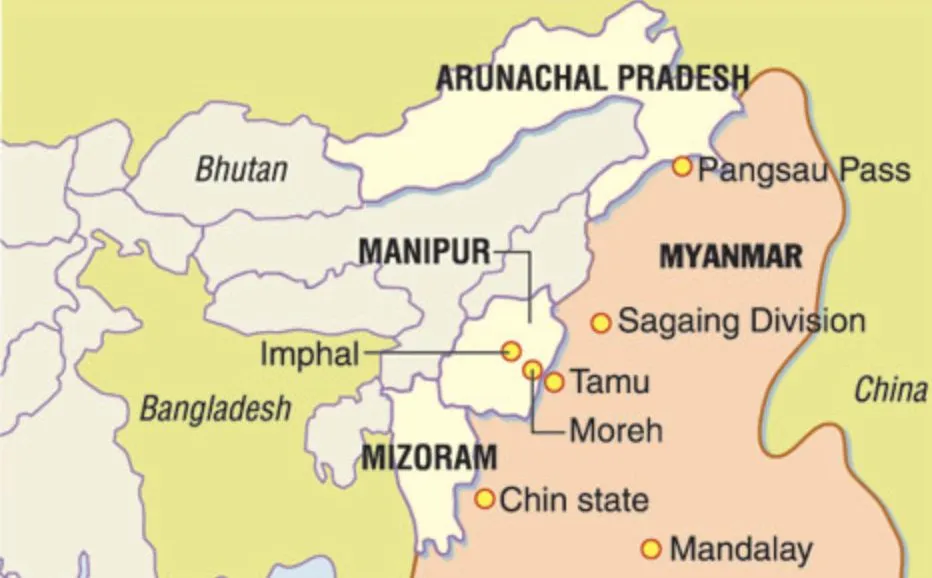
Free Movement Regime - Manipur Border Issue

Context: A mob set on fire at least 30 houses and shops and engaged in a shootout with security forces in Manipur’s Moreh district.

Free Border Regime on India-Myanmar Border (IMB)

YQVYyPAO26b3aq8t54YsvGdz5t1b9pcoll16d4lQsydCTKUt Q6e76XbpoutzP a1Gb0SWer4xXC3NVoMHs1KBmJGiVEO tLRAftNhX5vq rUMtET3clCmkZ7LOsIcKIo8Ns6Bm8drQYYaN3sZMIqw

Free movement Regime 

Free Movement Regime (FMR) allows residents of India and Myanmar border to go up to 16 kilometers into the other side and stay there up to 14 days without visas.

Need of FMR 

  • It was implemented in 2018 as a part of Indian government’s Act East policy.
  • People in the region have strong ethnic and familial ties across the border. 
    • In the Moreh region of Manipur, there are villages where some homes are in Myanmar. 
    • In Nagaland’s Mon district, the border passes through the house of the chief of Longwa village, splitting his very home into two.
  • People on both sides of the border have cultural ties FMR gives them a needed space for cultural exchanges.
  • The livelihood and sustenance of people in this region depends upon their regular exchange and FMR gives an impetus to local trade and business.
    • The region has a long history of trans-border trade through customs and border haats.
  • The border peoples have access to business, education, and healthcare through these exchanges which are allowed by FMR. 

Associated issues with FMR

  • Problem of illegal migrants:
    • Rohingya refugee crisis in 2017 led to people fleeing from Myanmar.
    • The ruling junta in Myanmar has launched a campaign of persecution against the Kuki-Chin peoples.
    • Illegally settling of migrants from Myanmar in new villages in the hills, leading to deforestation.
  • Cause of Insurgency: It promotes insurgency across and inside the border.
  • Trafficking: It is leading to illicit and informal trade drug trafficking, importing arms and weapons originating from China to the Indian side.
    • Drug lords or drug mafias instigate the locals who wish to earn easy money and thereafter use them to carry out illegal activities across the borders.
  • Difficulty of Monitoring: The border is almost entirely unfenced, runs through forested and undulating terrain.

Status of FMR

As the crisis in Myanmar escalated and the influx of refugees increased, India suspended the FMR in September 2022.

Way forward 

  • Rather than removing it completely FMR should be better regulated. 
  • India and Myanmar should execute a crystal-clear plan regarding the FMR which incorporate aspiration of the people into India's Myanmar strategy. 
  • An accommodative and participatory approach that includes tribes of the region like Meities and locals in Moreh etc. and governments of both sides should be adopted to come up with a solution.

India is not a signatory to the 1951 Refugee Convention or its 1967 Protocol, thereby, India is under no international legal obligation to provide legal status, proper livelihood, education, or healthcare to any illegal migrant. 

Indian Myanmar Border (IMB)

  • The border between India and Myanmar runs for 1,643 km in the four states of Mizoram, Manipur, Nagaland, and Arunachal Pradesh.
  • IMB is not just a porous or an unfenced boundary, rather, it reflects physical, ethnic, linguistic, cultural and fraternal linkages among the transborder villages.
  • Managing and administering the border areas effectively is pertinent for reducing drug trafficking and illegal cross-border movement via unfenced borders.
  • Assam Rifles (AR) have been deployed along this border to monitor and check infiltration across the border.

History of IMB

  • The border between India and Myanmar was demarcated by the British in 1826, without seeking the opinion of the people living in the region. 
  • The border effectively split people of the same ethnicity and culture into two nations without their consent. The current IMB reflects the line drawn by the British.

Collaboration over Indus Water Treaty

Context: The Indus Waters Treaty (1960), or IWT, that regulates the Indus water courses between the two riparian states of India and Pakistan, is cited by many as an example of cooperation between two unfriendly neighbours for many reasons.

image 59

Recent Development:

  • In the recent times exercising judicial recourse to settle the competing claims and objections arising out of the construction and design elements of the run-of-river hydroelectric projects that India is permitted under the IWT to construct on the tributaries of the Indus, Jhelum and Chenab before these rivers flow into Pakistan, has increased.
  • Pakistan initiated arbitration at the Hague-based Permanent Court of Arbitration to address the interpretation and application of the IWT to certain design elements of two run-of-river hydroelectric projects — on the Kishanganga (a tributary of the Jhelum) and Ratle, a hydro-electric project on the Chenab.
  • India raised objections as it views that the Court of Arbitration is not competent to consider the questions put to it by Pakistan and that such questions should instead be decided through the neutral expert process.
  • The court unanimously passed a decision (which is binding on both parties without appeal) rejecting each of India’s objections. The court determined that it is competent to consider and determine the disputes set forth in Pakistan’s request for arbitration.

Issues in Indus Water Treaty

  1. Prevents Storage: It prevents storage projects by India that was even highlighted by Parliamentary committee.
  2. Technical: The treaty is highly technical in nature which leads to different interpretations among the countries.
  3. Political Mistrust: There is high-level of political mistrust between India and Pakistan which has historical underpinnings.
  4. Underutilization: The parliamentary committee has also opined that India has underutilized water of western rivers for irrigation purpose though being legally permissible under the treaty
  5. Data Sharing: There is absence of data sharing mechanism within the treaty.
  6. Emerging issues: The treaty was signed in 1960 and is limited to river management and usage and thus does not incorporate contemporary issues like climate change, global warming and Environmental Impact assessment under its ambit.
  7. Limited role of World bank: World Bank though a guarantor relies on the reports that are submitted by respective countries and thus has no independent way to ensure what actually is the issue.

Way Forward:

  1. Internationalizing India’s position: India has only utilized 93% of the storage capacity under the treaty and 25% of water generation capacity which highlights India’s credential as generous upper riparian state.
  2. Renegotiation of Treaty: To accommodate for climate challenges and other emerging issues.
  3. Seeking Cooperation: The provisions of the treaty provides scope for joint studies and joint research and this can be utilized to ensure cooperation between countries.
  4. Relationality over rationality: The focus should be on relationality i.e. benefit sharing rather than just restricting the goals to water sharing as it will give due importance to minor issues like soil erosion, water quality etc.
  5. Changing approach: There is a need to change approach from and focus on sub-basin level, which will not only make use of existing hydrology mechanism but also the socio-economic impact of the same.
  6. Contemporary laws: Both India and Pakistan can make active use of contemporary laws like “Helsinki Rule”, which provides for the International guideline asserting rights for all bordering nations to have equitable share in water resource.
  7. Reconciling this divergent approach: Which can be sought with the help of two cardinal principles of international water courses law accompanying binding obligations, i.e., equitable and reasonable utilisation (ERU) and the principle not to cause significant harm or no harm rule (NHR). In order to ensure rapid development, the state’s (India and Pakistan) needs prioritise the ERU over the NHR.

Artemis Accords

Context: On June 21, India became the 27th signatory to the Artemis Accords, a set of non-binding guidelines that underpin the Artemis programme, a U.S.-led project to return humans to the moon permanently.

image 58

About the Artemis Accords

  • It was announced by NASA (National Aeronautics and Space Administration), the U.S. civil space agency, in 2020. 
  • It is a set of guidelines surrounding the Artemis Program for crewed exploration of the Moon. This agreement is for lunar exploration and beyond, with participation of both international partners and commercial players.
  • The accords describe a shared vision for principles, grounded in the Outer Space Treaty of 1967 to create a safe and transparent environment. The Outer Space Treaty 1967 laid down the foundational principles for human space exploration which facilitates exploration, science, and commercial activities for all of humanity to enjoy. India ratified the treaty in 1982. 
  • Signatories: 27 countries including India
  • Non-Signatories: Major space players like Russia, China, The European Space Agency (ESA) as an organisation have not signed on to the accords either, but a number of ESA member states have.

Key Principles

The Accords are a single document, signed by each country that commits to the Accords' principles. Bilateral agreements between space agencies for specific operations on the Moon and beyond are expected to reference the Accords and implement them in particular projects.

The provisions:

  • Cooperative activities under these Accords should be exclusively for peaceful purposes and in accordance with relevant international law.
  • Commitment to transparency and to share scientific information, consistent with Article XI of the Outer Space Treaty.
  • Utilising current interoperability standards for space-based infrastructure, and to establish standards when they do not exist or are inadequate.
  • Take all reasonable efforts to render necessary assistance to personnel in outer space who are in distress.
  • Specify responsibility for the registration of objects in space.
  • Publicly share information on their activities and to the open sharing of scientific data. 
  • Preserve outer space heritage, which comprise historically significant human or robotic landing sites, artefacts and spacecraft.
  • Extraction and utilisation of space resources should be conducted in a manner that is safe and sustainable. 
  • Commit to respect the principle of free access to all areas of celestial bodies by others.
  • Mitigate space debris and to limit the generation of new, harmful space debris in the normal operations, break-up in operational or post-mission phases, and accidents.

Benefits for India

  • Enhanced space cooperation among Quad countries: The US, Japan and Australia are already signatories of the accords. Thus, accords could be considered as a natural extension of the Quad’s Critical and Emerging Technologies Working Group. India’s addition to the accords would provide a framework for space cooperation among these Quad countries. India is also  collaborating with Japan on a future lunar mission, called LUPEX, to the Moon’s surface.
  • Attracting more investments: By being a part of the accords, India’s space companies could become part of a global supply chain. This would also help attract investment capital towards Indian space startups.
  • Opportunities to learn about interplanetary missions and human spaceflight: In the 1960s and 1970s, India took help from western countries such as the US and the UK to better understand sounding-rocket and satellite technologies. The Artemis Accords provide a similar opportunity to learn about interplanetary missions and human spaceflight.
  • Harbinger of change in space governance: The accords are bilateral agreements and not binding instruments of international law. But, by establishing practice in the area, they could have a significant influence on any subsequent governance framework for human settlements on Mars and beyond.

Challenges that India faces in signing the Artemis Accords

  • Reinforcing US Hegemony: The US promotion of the accords outside of the “normal” channels of international space law is a cause of consternation for some Countries.
  • Diplomatic challenges: India has had a traditional partnership with Russia, which recently partnered with China in its International Lunar Research Station (ILRS) initiative. Russia might invite India to join, but on the other hand, growing assertiveness of China is likely to prevent any meaningful association of India with ILRS. 
  • Focus on indigenous programmes may be compromised

Way Ahead 

India’s decision to sign the Artemis accords, or for that matter any other bilateral space agreements, should completely be based on the merits of the proposal i.e. whether proposals meet India’s expectations or not. All such decisions could be complemented with following initiatives 

  • Confidence building with the US: Working together on the Chandrayaan-1 and NASA-ISRO Synthetic Aperture Radar (NISAR) missions have helped to build confidence in each other. These could be the stepping stones for India to sign the accords themselves.
  • Strategic balance with Russia: India’s signing up for the accords must not be equated to severing ties with Russia. India has maintained a balanced relationship with the US as well as Russia in other strategic areas and the same could apply for space after India signs the accords  as well.
  • Pursuing Indigenous programmes: India should encourage the involvement of the private sector in communications and Earth-observation satellites construction and launch and should also outline its priorities for interplanetary and human spaceflight missions and actively pursue them.

Dispute Settlement between India and USA

Context: One of the significant outcomes of Prime Minister Narendra Modi’s official state visit to the U.S. was the decision of the two countries to end six long-standing trade disputes at the World Trade Organization (WTO). In view of the continuing impasse in the appointment of ‘judges’ to hear appeals at the Appellate Body, a meaningful resolution of these disputes was almost out of sight. Three cases settled as part of the deal are before the defunct Appellate Body, while the rest could have potentially been ‘appealed into the void’.

image 53

Major Points of Dispute Settlement between India and the USA

  • The settled disputes involved a challenge of the domestic content requirements under India’s National Solar Mission. India too challenged certain sub-federal programmes implemented in the U.S. in the renewable energy sector and won the case.
  • India and US also settled disputes involving some of its foreign trade policy schemes, including the special economic zone (SEZ) and export-oriented unit schemes. In particular, certain corporate tax deductions provided under the SEZ scheme faced an uncertain future
  • The most major of the dispute that was stelled involved a challenge by India against the controversial Section 232 tariffs imposed under the U.S. Trade Expansion Act, 1962. The U.S. had imposed an additional duty of 25% on steel and 10% on aluminium, triggering a series of WTO challenges and unilateral trade responses. India considered these as safeguard measures and imposed retaliatory measures.
  • Against that backdrop, settling disputes in all six cases shows a pragmatic approach on the part of two strong trading partners. They have accepted each other’s domestic challenges in dispute compliance and realised the importance of burying differences.

Dispute Settlement Mechanism:

Resolving trade disputes is one of the core activities of the WTO. A dispute arises when a member government believes another member government is violating an agreement or a commitment that it has made in the WTO.

  • Settling disputes is the responsibility of the Dispute Settlement Body (the General Council in another guise), which consists of all WTO members. 
  • The Dispute Settlement Body has the sole authority to establish “panels” of experts to consider the case, and to accept or reject the panels’ findings or the results of an appeal. 
  • It monitors the implementation of the rulings and recommendations, and has the power to authorize retaliation when a country does not comply with a ruling.

First stage: Consultation (up to 60 days). Before taking any other actions the countries in dispute have to talk to each other to see if they can settle their differences by themselves. If that fails, they can also ask the WTO director-general to mediate or try to help in any other way.

Second stage: The panel (up to 45 days for a panel to be appointed, plus 6 months for the panel to conclude). If consultations fail, the complaining country can ask for a panel to be appointed

Appeals

  • Either side can appeal a panel’s ruling. Sometimes both sides do so. Appeals have to be based on points of law such as legal interpretation — they cannot re-examine existing evidence or examine new issues.
  • Each appeal is heard by three members of a permanent seven-member Appellate Body set up by the Dispute Settlement Body and broadly representing the range of WTO membership. 
  • The appeal can uphold, modify or reverse the panel’s legal findings and conclusions. Normally appeals should not last more than 60 days, with an absolute maximum of 90 days.
  • The Dispute Settlement Body has to accept or reject the appeals report within 30 days and rejection is only possible by consensus.

Read in: Hindi