Prelims Nuggets

SEBI pushes norms to ensure better disclosures, boost transparency

Context: Security and Exchange Board of India has ordered the top 100 listed companies to improve disclosure norms and transparency by mandating that they confirm or deny price-sensitive market rumours, and in the case of material board decisions disclose them to exchanges within 30 minutes.. It also allowed Private Equity firms to own stakes in Asset Management Companies that operate mutual funds. 

About SEBI

  • The Securities and Exchange Board of India was constituted as a non-statutory body on April 12, 1988 through a resolution of the Government of India. The Securities and Exchange Board of India was established as a statutory body in the year 1992 and the provisions of the Securities and Exchange Board of India Act, 1992 (15 of 1992) came into force on January 30, 1992.
  • Basic function: to protect the interests of investors in securities and to promote the development of, and to regulate the securities market. 
  • It consists of one chairman, four whole time members and four part-time members. They together make up the board of SEBI.
  • Securities Appellate Tribunal is a statutory body established under the provisions of Section 15K of the Securities and Exchange Board of India Act, 1992 to hear and dispose of appeals against orders passed by the Securities and Exchange Board of India

Broad functions of SEBI

Development functions

  • Training of intermediaries
  • To promote trading in the security market. For example in permitted internet trading, made underwriting optional etc. 

Regulatory functions

  • Mandatory registration of brokers , sub brokers , share transfer agents , trustees, merchant bankers and others
  • Developed a code of conduct for intermediaries
  • Registration and regulating the working of mutual funds
  • Regulating takeover of companies
  • Audit of stock exchanges

For the discharge of its functions SEBI is given various powers.

Some of these powers are as follows:

1. To approve by- laws of stock exchanges

2. To ask stock exchanges to amend their by- laws

3. Inspect the books of accounts and call for periodical returns from recognised stock

4. Inspect books of accounts of financial intermediaries

5. Compel certain companies to list their shares in one or more stock exchanges

6. Registration of brokers

PROBLEMS AND EMERGING CHALLENGES

SEBI regulations are laws but the process through which regulations are drafted leaves a lot to be desired. Neither regulation making nor post-mortem analysis of regulations is shaped by evidence. 

Following are the problems and challenges ahead of SEBI:

Enforcement process

SEBI has made various regulations and issued orders as a civil court but only making regulations and giving orders is not enough if it is not able to enforce the same. SEBI need to strengthen its surveillance and enforcement functions.it needs to ensure that violations do not go unnoticed whether small or large.

Talent pool and market intelligence

In 2012 SEBI had 643 employees whereas the US security and exchange commission alone had 1000 people. As we all know, human resource is the most important resource for an organisation. SEBI needs to increase its human resource in both quality and quantity. It needs to significantly improve its market intelligence, technology and talent pool in order to improve its performance.

Deepening capital market

The number of participants in the capital market has not risen much. Still a large section of society does not deal in the security market. SEBI has done a lot to encourage people to participate in the capital market such as abolishing entry load on mutual funds, simplifying KYC norms but it needs to take some stronger steps to deepen participation in the capital market.

It should work deeper participation in equity by pension, superannuation and gratuity funds, developing a vibrant retail debt segment and reducing the cost of transaction.

Corporate debt and securitization market

Despite numerous attempts the debt market volume has increased but it has failed to attract sufficient liquidity. The regulator needs to develop a vibrant corporate debt market and securitization market but these largely remain part of the over the counter market.

Matching up to global standard

Capital markets are growing and the size of SEBI as compared to the security market is not sufficient to properly regulate the capital market. Like its peers (regulators of US and UK) it needs to establish self-regulatory organisations. They can focus on routine decisions and SEBI can work on more important issues.

Negatively charged

SEBI’s appointment process has always been criticized. Allegations of corruption by SEBI staff are frequently heard. The accountability mechanisms that envelope SEBI are quite poor. It is very important to make the recruitment process fair and transparent.

Reference: World wide journals

Committees constituted for the improvement of capital market regulations and development of corporate governance:

  1. Narayan Murthy Committee, 2002
  2. Uday Kotak Committee 2017
  3. Dr. D B Pathak Committee 2021
  4. Mahalingam Committee 2022

Various suggestions given by these committees have been incorporated to improve SEBI’s role in the capital market and investors’ protection. 
NCLAT upholds ₹1,338-crore penalty imposed on Google

Context:  The National Company Law Appellate Tribunal (NCLAT) upheld the ₹1,337-crore penalty imposed on Google by the Competition Commission of India (CCI) saying that the order did not violate the principles of natural justice.

Background: CCI imposed this fine on the charge that Google has misused its dominant position in the Android ecosystem showing the anti-competitive tendencies.

About the order:

However, NCLAT has restricted some directives of CCI where it called for allowing third party app stores on google play store. Google is also allowed by NCLAT to restrict uninstallation of its pre-installed apps.

About the NCLAT:

  • National Company Law Appellate Tribunal (NCLAT) was constituted under Section 410 of the Companies Act, 2013 for hearing appeals against the orders of National Company Law Tribunal(s) (NCLT), with effect from 1st June, 2016.
  • NCLAT is also the Appellate Tribunal for hearing appeals against the orders passed by NCLT(s) under Insolvency and Bankruptcy Code, 2016 (IBC), Competition Commission of India (CCI), and National Financial Reporting Authority.
  • Former judge of the Supreme Court, is the current chairperson of the tribunal.
  • Judgement given by the tribunal can be challenged in the supreme court on a point of law. For example, in the ArcelorMittal case, SC set aside the judgement of the tribunal.

About Competition Commission of India:

  • It is a statutory body created under the Competition Commission Act 2002 and its amendment in 2007. The Act prohibits anti-competitive agreements, abuse of dominant position by enterprises and regulates combinations (acquisition, acquiring of control and M&A), which causes or likely to cause an appreciable adverse effect on competition within India.
  • CCI consists of a Chairperson and 6 Members appointed by the Central Government.
  • It is the duty of the Commission to eliminate practices having adverse effects on competition, promote and sustain competition, protect the interests of consumers and ensure freedom of trade in the markets of India.
  • It ensures that two merging entities do not overtake the market. The Act prohibits abuse of dominant position by enterprises and regulates combinations (acquisition, acquiring of control and Merger and acquisition).
  • The Commission is also required to give opinion on competition issues on a reference received from a statutory authority established under any law and to undertake competition advocacy, create public awareness and impart training on competition issues.
  • It functions under the Ministry of Corporate Affairs.
  • It replaced the Monopolies and Restrictive Trade Practices Commission which was created under the Monopolies and Restrictive Trade Practices Act. 

ICAR-World Bank’s ‘Delhi declaration’ moots digitisation of Agri- Education

Context: Recently the three-day international conference on ‘Blended Learning Ecosystem for Higher Education in Agriculture 2023’, which was jointly hosted by the Indian Council of Agricultural Research (ICAR) and the World Bank, has come out with a ‘Delhi declaration’.

What is the Delhi declaration?

  • The declaration stresses the need to strengthen digital infrastructure, including e-learning content, and deployment of emerging immersive technologies across agricultural higher education institutions in India.
  • It emphasizes creating a renewed and resilient system for the gender-inclusive and sustainable agriculture education sector.
  • Multidisciplinary technology-facilitated education should be promoted and the policies on science, technology, engineering, agriculture and mathematics (STEAM) in agricultural higher education need to be transformed, the declaration said.

Captive employment initiative under Deen Dayal Upadhyaya Kaushalya Yojana

Context: Recently Union Ministry of Rural Development onboarded 19 Captive Employers, a unique initiative under the Deen Dayal Upadhyaya Grameen Kaushalya Yojana (DDU-GKY). 

What is Captive Employment?

  • ‘Captive Employment’, is a first-of-its-kind initiative aimed at addressing the vision of a dynamic and demand-based skilling ecosystem catering to the requirements of industry partners assuring sustainable placements for rural poor youth. 
  • The initiative is a shot in the arm for the DDU-GKY programme, assuring post-training placement of candidates for a minimum of six months with a minimum CTC of Rs 10,000/-. 
  • This program will be a big boon for the rural poor to augment their job needs and improve their standard of living. This program shall also contribute to sustainable development goals.
  • The selected CAPTIVE EMPLOYERS will be providing training to rural poor youth in their respective industries, namely, hospitality, apparel & textiles, manufacturing, IT/ITeS, telecom, retail, Power etc. 
  • During the event, Memorandums of Understanding (MoU) was signed with 19 Employers to engage as captive employers in the ambitious initiative by the Ministry of Rural Development (MoRD) for providing livelihoods to the rural youth under the DDU-GKY programme.

About DDU-GKY:

  • Deen Dayal Upadhyaya Grameen Kaushalya Yojana (DDU-GKY) is a placement-linked skilling program of the Ministry of Rural Development under the aegis of the National Rural Livelihood Mission (NRLM). 
  • This program caters to rural poor youth. 
  • The program is currently being implemented in 27 States and 4 UTs for rural poor youth with an emphasis on placements. 
  • More than 877 PIAs (Project Implementation Agencies) are training rural poor youth in about 616 job roles through more than 2,369 training centres. 
  • A total of 14.08 lakh candidates have been trained and 8.39 lakh candidates placed since inception under the programme.
  • With changing times and changing aspirations of rural youth, the programme is transforming its Guidelines and Standard Operating Procedures. 
  • DDU-GKY 2.0 Guidelines are in the advanced stage of finalisation in the ministry. This new version of the program aspires to improve by skilling the ecosystem and making it more job oriented.

Quantum Communication

Context: At the first International Quantum Communications Conclave in New Delhi in March 2023, it was announced that India’s first quantum computing-based telecom network link is operational. 

  • The secure line is between Sanchar Bhawan and the National Informatics Centre at the Central Government Offices (CGO) complex in Delhi.

Quantum communication 

  • Quantum communication is an amalgamation of quantum mechanics and modern communication and Information Technology to study data transmission and processing. It takes advantage of the laws of quantum physics to protect data and securely transmit data.
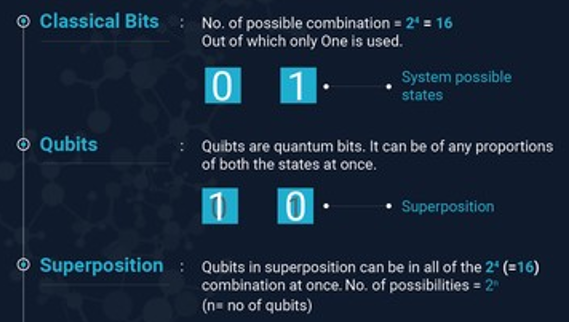
  • Conventionally, sensitive data is encrypted and sent through fibre optic cables with a digital “key” to decrypt the information. This data is transmitted in classical binary bits (0s and 1s), which makes it vulnerable to hackers who can read and copy it without a trace. Theoretically, this makes these networks ultrasecure. 
  • However, in a quantum communication network, data is transmitted via quantum bits or qubits. Qubits are particles, usually photons of light, in a superposition state, i.e., they can be in multiple states and represent numerous combinations of 0 and 1. If a hacker tries to read this data, the qubits would “collapse” from their fragile quantum state to either a 0 or 1, thereby leaving a clear trace of external activity. 
k o7Ij72w0o3wiY1NXNpYgNVZTZhRO3xhGN 5X3EyDo5x6nFBkKBue18iI7imgruNspg9YW8KpzNd8WxcO5BIzJF8Zy8VysTV EUxRpd6qEQ4uBXXQciQwadLx 15dLfiFLgIYVsVvEJpF3VkAsPfA

Data encryption in a quantum communication network

  • Companies have recognised the additional security offered by quantum communication networks and have taken to transmitting sensitive data through a process called quantum key distribution (QKD).
    • QKD involves the transmission of encrypted data as classical bits over networks while the decryption key is encoded and transmitted in a quantum state using qubits.
    • The most widely used scheme for this is the BB84, the world’s first quantum cryptography protocol.

Concerns

  • Theoretically, Quantum Communication networks are highly secure, with the built-in security of qubits and the simplified traceability of external interference in the signal. However, these are predicated on the assumption that the machines used in the data encryption and transmission are secure and perfect, which may not be the case.
  • The decay of the signal due to decoherence and the need for quantum repeaters for long-distance transmission is a systemic vulnerability that needs to be addressed.
    • Quantum repeaters are nodes where the quantum keys are decrypted into bits and re-encrypted in a fresh quantum state to avoid signal loss. 

Bio-Bitumen

Context: As per the Ministry of Road and Highways, making bitumen from agricultural waste such as rice husk can help save up to ₹30,000 crores annually in import bills.

Major Highlights

  • India requires around 80 lakh tonnes of bitumen annually for roads. Of this, around 50 lakh tonnes are provided by domestic refineries for processing crude oil, and around 25-30 lakh tonnes are imported costing around 25,000-30,000 crore.  
  • Recently, the Council of Scientific and Industrial Research (CSIR) and the Central Road Research Institute (CRRI) have developed technology to make bitumen from rice husk, which is supposed to be better than bitumen extracted from crude oil.
    • This makes 70% bitumen and the rest is biochar or organic carbon. Organic char can enhance farm productivity. 
  • The Ministry envisions opening up to 1,000 such units in rural India to produce bio-bitumen and completely do away with the burning of husk or agri-waste which leads to pollution. It would benefit the farmers in states such as Delhi, Punjab, Haryana and Uttar Pradesh.
SeEcGrM1Hxl0YeGTJQPh6DqaOJPpqelH32rAsQTBCBn1Pk

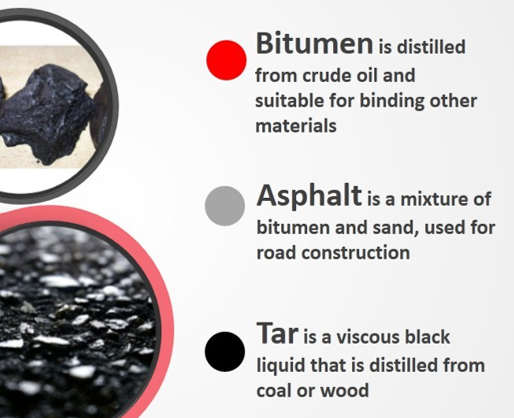
Bitumen

  • Bitumen is a dense, highly viscous, petroleum-based hydrocarbon produced during the refining process or distillation of crude oil. Bitumen is known for its waterproofing and adhesive properties and is commonly used in the construction industry, notably for making roads and highways. 

Bio-bitumen would play a significant role as a road construction material to replace the fossil-based version while curbing CO2 emissions and boosting the bio-economy.

CEC in Assam: Delimitation, NRC can be simultaneous processes

Context: Various political parties in Assam had submitted to Election commission of India (ECI) to hold the delimitation exercise, till the conclusion of National Register of Citizen (NRC) process. In response to this chief election commissioner said that delimitation and NRC are “different issues” and there is no legal bar on carrying them out separately.

Delimitation Commission

The Delimitation Commission is established by Parliament under Article 82 to determine allocation of seats in the House of the People to the States based on 1971 Census and divide states into territorial constituencies based 2001 Census.

Delimitation means the act or process of fixing limits or boundaries of territorial constituencies in a country or a province having a legislative body. In India, the job of delimitation has been assigned to a high power body known as Delimitation Commission or Boundary Commission.

Four Delimitation Commission have been constituted since independence

1952 – under Delimitation Commission Act, 1952

1963 -  under Delimitation Commission Act, 1962

1973 - under Delimitation Commission Act, 1972

2002 - under Delimitation Commission Act, 2002

Orders of Delimitation Commission cannot be called in question before any Court of law. 

The copies of its orders are laid before the House of People and the State Legislative Assembly concerned, but no modifications are permissible therein by them. 

The Central Government shall constitute a Commission to be called the Delimitation Commission which shall consist of three members as follows: 

(a) one member, who shall be a person who is or has been a Judge of the Supreme Court, to be appointed by the Central Government who shall be the Chairperson of the Commission; 

(b) the Chief Election Commissioner or an Election Commissioner nominated by the Chief Election Commissioner, ex officio: 

(c) the State Election Commissioner of concerned State, ex officio. 

The Commission shall determine its own procedure and shall, in the performance of its functions, have all the powers of a civil court under the Code of Civil Procedure. 

Role played by delimitation commission 

  • Balance of representation to achieve the ideals of ‘One Vote One Value’ 
  • Ensure adequate representation to vulnerable sections including SC/ST. 
  • Fair division of geographical areas for adequate representation of diverse communities. 

Challenges 

  • Delimitation exercise is restricted by Constitution 84th and 87th Amendment. 
  • This has frozen the seats in Lok Sabha and State Assemblies till 2026. 
  • Seats reserved for SC and ST population also remains frozen and increasing population of vulnerable section is not accounted for. 

Thus the need of the hour is to develop a National consensus exercise for undertaking delimitation along with 2031 census to ensure adequate representation of states and vulnerable sections of India. 

National Register of Population (NRC)

  • The National Register of Citizens (NRC) is the register containing names of Indian citizens. The only time that a National Register of Citizens (NRC) was prepared was in 1951 when after conduct of the Census of 1951, the NRC was prepared by recording particulars of all the persons enumerated during that Census.
  • It was only done by the state of Assam , though it was mandated for all the states. However, recently Home Ministry has expressed, that it is planning to do this process for entire country.
  • Citizenship being a subject of the Union List, policy decisions, guidelines and funds for NRC updation are provided by the Central Government but its implementation is done through the State Government machinery under the guidance of the Registrar General of India who functions as the Registrar General of Citizen Registration under Rule 15 of Citizenship Rules, 2003 as amended in 2009 and 2010.
  • The provisions governing NRC updation are The Citizenship Act, 1955, and The Citizenship (Registration of Citizens and Issue of National Identity cards) Rules, 2003 (prepared under The Citizenship Act, 1955).

Gravity Based Batteries in Kolar Gold Field

Context - An Australian renewable energy company’s unique Scheme to generate electricity may resuscitate the fortunes of one of India’s iconic but defunct gold mines, namely the Kolar Gold Fields (KGF), in Karnataka.

How do Gravity Batteries work?

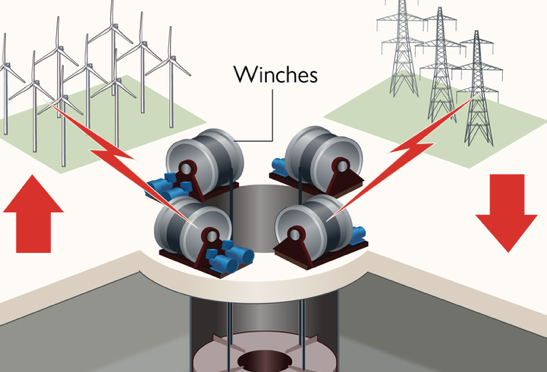
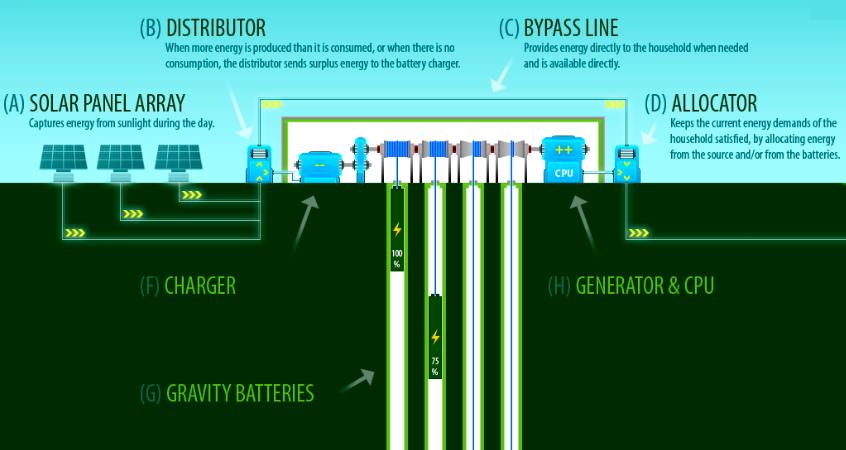
  • When there is plenty of green energy, the batteries use the power to lift a heavy weight either high into the air or to the top of a deep shaft.
  • Then when the renewables are limited, winches gradually lower the weight, release the load, powering a generator with the downward gravitational pull from the movement of the cables.
  • This would mean you could store power captured by a solar farm during the day when the sun is shining, and then release that electricity to the grid in the evening when demand rises because people are at home using electricity to watch TV, cook and heat their homes.
Diagram

Description automatically generated
Diagram

Description automatically generated with low confidence

Gravity batteries vs Lithium-ion

Gravity batteries are not the only way renewable energy can be stored, lithium-ion batteries dominate the market, and some experts favour green hydrogen. But gravity is free, clean and easily accessible, without the complications of producing hydrogen or the environmental and human rights concerns linked to some lithium mining.

Storing power in mineshafts

Full-scale energy stores in former mines can make good use of existing infrastructure and create jobs in exactly those areas where they’re most needed. The emotional aspect of this is also important. Whole communities once worked in the mines - and generally, they’re very happy to see them used for storing renewable energy.”

Note - The World Economic Forum founded the Global Battery Alliance (GBA) in 2017 to establish a sustainable battery supply chain by 2030. The body of over 100 leading international organizations, NGOs, industry actors, academics and multiple governments became independent in 2021 and its membership is collectively working towards the goals set out in the GBA 2030 Vision. The GBA 2030 Vision is to foster a circular, responsible and just battery value chain.

The GBA hosts Action Partnerships to achieve its vision of a sustainable battery value chain by 2030, including:

The Battery Passport Action Partnership: to establish global criteria, data and benchmarks for a sustainable and transparent battery market;

Critical Materials: to ensure critical materials are sourced, processed, manufactured and recycled in a manner that minimizes environmental impacts, protects human rights and creates benefits for stakeholders along the value chain.  

Energy Access & Circularity: to ensure energy access in emerging economies, reduce lead poisoning and promote circularity.

G20 expert group constituted for strengthening MDBs

Context: Under the aegis of India’s G20 Presidency, a 11-member expert group has been set up to explore measures to strengthen multilateral development banks (MDBs).

Professor Lawrence Summers, President Emeritus, Harvard University and N K Singh, former Chairperson of the 15th Finance Commission of India, are co-convenors of the G20 Expert Group.

Objectives for the panel

  • Making a road map for an updated MDB ecosystem for the 21st century, 
  • Touching upon all aspects of MDB evolution, and mechanisms for coordination among these banks to address and finance global development.
  • Looking into how can the World Bank contribute towards climate finance, critical for developing and LDCs to make a smooth transition to lower carbon emissions without compromising on growth. 

What is a Multilateral Development Bank?

  • It is an international financial institution chartered by two or more countries for the purpose of encouraging economic development in poorer nations. 
  • MDBs provide loans and grants to member nations to fund projects that support social and economic development, such as the building of new roads or providing clean water to communities.
  • They originated in the aftermath of World War II to rebuild war-ravaged nations and stabilize the global financial system.
  • Today, MDBs fund infrastructure, energy, education, and environmental sustainability in developing countries.
  • Examples: World Bank, Asian Development Bank, Asian Infrastructure Investment Bank. 

About G20

Group of Twenty is the premier forum of international economic cooperation. It plays an important role in shaping and strengthening global architecture on all major international economic issues.

  • Members of G20: 19 Countries and EU. Countries include Argentina, Australia, Brazil, Canada, China, France, Germany, India, Italy, Japan, South Korea, Mexico, Russia, Saudi Arabia, Turkey, UK and USA. G20 members represent around 85% of global GDP and 75% of global trade and 2/3rd of global population.
  • G20 does not have a permanent secretariat or staff.
  • G20 presidency rotates among the members and is selected from a different regional grouping of  countries. G20 member countries are divided into 5 groups comprising a maximum of four countries each.
  • Most groups are formed on a regional basis. However, Group 1 includes Australia, Canada, Saudi Arabia and USA) and Group 2 includes India, Russia, South Africa and Turkey do not follow the regional pattern. Group 3 includes Argentina, Brazil and Mexico; Group 4 includes France, Germany, Italy and UK and Group 5 includes China, Indonesia, Japan & South Korea. EU is a not a member of any of these regional groups.
  • Each year another country from a different group assumes G20 Presidency. The countries in a group are each equally entitled to take Presidency when it is their group’s turn.
  • G20 Summit is held annually, under the leadership of rotating presidency. G20 initially focused largely on economic and macroeconomic issues, but it has since expanded its agenda to include trade, sustainable development, health, agriculture, energy, environment, climate change and anti-corruption.
  • G20 Presidency is responsible for bringing together the G20 agenda in consultation with other members. The Presidency is supported by the Troika – previous, current and incoming Presidency of G20. During India’s Presidency, the troika will consist of Indonesia, India and Brazil respectively.
  • The theme of India’s G20 presidency is Vasudhaiv Kutumbakam or ‘One Earth, One Family, One Future’. The Sanskrit phrase in drawn from Maha Upanishad.
  • India holds the presidency of G20 from 1st December 2022 to 30th November 2022.
  • Inception of G20: G20 was founded in 1999 after the Asian Financial Crisis as a forum for Finance Ministers and Central Bank Governors to discuss global economic and financial issues.
  • Elevation to Leader’s Level: In 2008, G20 was upgraded to Heads of State/Government level in the wake of Global Financial crisis of 2007. In 2009, G20 was designated as the premier forum for international economic cooperation. First G20 Summit took place in 2008 in Washington.

Structure of G20

  • G20 consists of two parallel tracks: Finance Track & Sherpa Track.
  • SHERPA TRACK: Headed by Sherpa who is representative of the Leader. Focuses on socioeconomic issues such as agriculture, anti-corruption, climate, digital economy, education, employment, energy, environment, health, tourism, trade & investment.
  • FINANCE TRACK: Headed by Finance Ministers and Central Bank Governors, who generally meet four times a year, with two meetings being held on the sidelines of World Bank/IMF meetings. Focuses on Fiscal & Monetary Policy, International Financial Architecture, Infrastructure, financial regulation, international taxation etc.
  • The Sherpas oversee negotiations over the course of the year, discussing agenda items for the Summit and coordinating the substantive work of the G20.
  • ENGAGEMENT GROUPS: As part of G20 members’ commitment to consult relevant stakeholders communities, dialogue is facilitated through engagement groups, comprising non-government participants from each G20 member. These groups often draft recommendations to G20 Leaders that contribute to the policy making process. Some engagement groups are: Business20, Civil20, Labour20, Parliament20, Science20, SAI20, Startup20, Think20, Urban20, Women20, Youth20.

Other G20 Initiatives

  • Research & Innovation Initiative Gathering (RIIG): Aims to enhance, intensify and strengthen research & innovation collaboration among G20 member countries. RIIG is further the work of Academic Forum held during the Italian Presidency in 2021, by bringing together science, technology and innovation experts of G20 member countries.
  • G20 EMPOWER: G20 Alliance for Empowerment & Progression of Women’s Economic Representation (G20 EMPOWER) was launched during G20 Osaka Summit in 2019. It aims to accelerate women’s leadership and empowerment in private sector by leveraging its unique alliance among business leaders and governments across G20 countries.
  • Space Economy Leaders Meeting: Under India’s G20 Presidency, ISRO is organising fourth edition of Space Economy Leaders Meeting (SELM) to continue deliberations on significance of space in shaping the global economy.

About WORLD BANK GROUP

Set up along with the IMF in 1945 following the Bretton Woods agreements. Institutions under World Bank: 

  • International Bank for Reconstruction and Development (IBRD): Loans to middle-income & creditworthy low-income countries.
  • International Development Association (IDA): Interest-free loans & grants to governments of poorest countries.
  • International Finance Corporation (IFC): Lends money to private sector companies of its member countries thereby promoting economic development
  • Note: IFC has enabled investments into India through launch of Masala Bonds.
  • Multilateral Investment Guarantee Agency (MIGA): Promotes FDI into developing countries by offering political risk insurance (guarantees) to investors & lenders. 
  • International Centre for Settlement of Investment Disputes (ICSID): Provides international facilities for conciliation and arbitration of investment disputes.

Note: India is a member of all these institutions except ICSID.

World Bank: IBRD + IDA.

World Bank Group: IBRD+ IDA+ IFC+ ICSID+ MIGA.

Structure of World Bank

Board of Governors: Comprises of 189 member countries represented by their Minister for Finance; Highest decision-making body.

Board of Executive Directors: 25 Executive Directors responsible for day-to-day management. Five largest shareholders of World Bank appoint an executive director, while other member countries are represented by elected executive directors.

World Bank President: Selected by Board of Executive Directors for a five-year. As per the convention followed so far, World Bank President has been an American Citizen, while IMF President has been a European. 

Reports published by World Bank: Human Capital Index (HCI); World Development Report; Global Economic Prospects; Logistics Performance Index; Women, Business and Law; Global Financial Development Report

Union Home Minister unveiled the statues of Lord Basaveshwara and Nadaprabhu Kempegowda in Bengaluru, Karnataka

Context: The statues of two legendary figures from Karnataka, Basavanna and Kempegowda, have been unveiled. The messages of social justice, democracy, sound governance, and progress shall be promoted.

Life History of Basaveshwara [ 1105-1167]

  • Born in Bijapur district, Karnataka in 1105 CE.
  • He was an Indian statesman, poet in the Kannada language, and social reformer who lived in Karnataka during the time of King Bijjala I of the Kalachuri dynasty.
  • As the Kalachuri kingdom's chief minister, he established new public institutions including the Anubhava Mantapa, also known as the "hall of spiritual experience," which attracted people from all socio-economic classes. 
  • He launched social reforms and a religious movement centred on resurrecting Shaivism using the public treasury, recognising and promoting ascetics known as Jangamas.
  • The Basavarajadevara Ragale, written by the Kannada poet Harihara (about 1180), is the earliest account of the social reformer's life. It is significant since the author was a near contemporary of the Basavanna.
  • The Vachana Sahitya in Kannada is one of the literary works of the Basavanna. 
  • Basava is credited as the founder of Lingayats' tradition in hagiographic writings. However, modern scholars, based on Kalachuri inscriptions assert that Basava revived and improved a previously existent tradition. 

Philosophy

  • He developed a new devotional movement named Veerashaivism. 
  • In his poetry, Basava discussed about gender equality, community spirit and refraining from wars for any cause.
  • He said that the true god is "one with himself, self-born," challenging rituals, dualism, and externalisation of god. 
  • Basava opposed rituals, but he supported icons and symbols such as wearing an Istalinga (necklace with a personal linga) and applying Vibhuti (sacred ash on the forehead) as a constant reminder of one's devotion and religious principles.
  • In order to eliminate the need for elite translation and interpretation of spiritual concepts and to ensure that everyone can grasp them, he advocated for the use of the vernacular language, Kannada, in all spiritual conversations. 
  • His holy trinity included a guru (teacher), a linga (a lingam that belonged to Shiva), and jangama (constantly moving and learning).
  • In the 12th century, Basava built the Anubhava Mantapa, a place where anyone from either gender might assemble and debate spiritual concepts. Here, ardent followers of Shiva would share their accomplishments and spiritual poems written in the vernacular language.

Social Reforms

  • Basava believed that all people were created equal, regardless of caste, and that all manual effort had an equal value. According to the Basava, a true saint and Shaiva bhakta was determined by behaviour rather than by birth.
  • Anti-caste movement: In the 12th century A.D.  Basaveshwara started one of the earliest known anti-caste campaigns in Karnataka. 
  • In order to replace patriarchy, caste, and the brahmanic religion with an equitable system, they were carefully scrutinised, painstakingly rejected, and replaced. 
  • Saints from the untouchable caste like Channiah and Kakkaih, as well as famous figures like Akkamahadevi and Allama Prabhu, participated in the collaborative effort known as the Anubhava Mantapa. 
  • He organised an inter-caste marriage between an untouchable groom and a Brahmin bride as one of his extreme actions. The inter-caste marriage arranged by Basavanna is still regarded as a notable accomplishment in the history of the social reform movement.
  • He stayed away from wearing the sacred thread, which is a sign of caste superiority, in order to distance himself from his caste.

As compared to other Bhakti movements, the social reform movement by Basava stands out as unique. The movement had a political as well as a social impact on society. He promoted the idea of political representation for the voiceless. The followers of Basavanna currently identify as Lingayats and are one of the most powerful castes in Karnataka.

Lingayatism

  • Lingayatism emphasizes qualified monism (Vishishtadvaita), with philosophical foundations similar to those of the 11th–12th-century South Indian philosopher Ramanuja.
  • Lingayatism rejects any form of social discrimination including the caste system and authority of Vedas and Puranas.
  • According to a tradition which developed after Basava’s time, Lingayatism was transmitted by five Panchacharyas, namely Renukacharya, Darukacharya, Ekorama, Panditharadhya, and Vishweswara. 
  • The scripture of Lingayatism Basava Purana was completed in 1369 during the reign of Vijayanagara ruler Bukka Raya I.

About Nadaprabhu Kempegowda (Also mentioned in news)

He was 16th century chieftain of Vijayanagar Empire.He is credited to have built around 1000 lakes throughout the city.
He belonged to the dominant agriculture Vokkaliga community. ContributionFoundation of Bengaluru city: In 1526, Kempe Gowda conquered the Sivaganga principality and later Domlur.With imperial permission of the Vijayanagar Emperor Achyutharaya (an inscription at Dasarahalli records the decree date as 1532), he built Bangalore Fort and the town in 1537, and moved his capital from Yelahanka to the new Bengaluru Pete, the foundation of present-day Bangalore city.

Source: PIB

9k applicants for upgrade of schools under PM-SHRI eligible: Govt

Context: The centre government has received around 9000 applications for upgrade of schools from several states eligible to be consider under the PM Schools for Rising India or PM SHRI scheme.

About PM SHRI

  • It is a Centrally Sponsored Scheme with a total project cost of Rs. 27360 crores for five years from 2022-23 to 2026-27.
  • Aim: To develop more than 14500 schools across India as PM SHRI Schools by strengthening select existing schools being managed by Central Government/ State/ UT Government/ local bodies.

Key Features

  • PM SHRI Schools will showcase all components of the National Education Policy 2020, act as exemplar schools and will offer mentorship to other schools in their vicinity.
  • Pedagogy: More experiential, holistic, integrated, play/toy-based, inquiry-driven, discovery-oriented, learner-centred, discussion-based, flexible and enjoyable.
  • Focus: On achieving proficiency in learning outcomes for every child in every grade.
  • Assessment: At all levels based on conceptual understanding and application of knowledge to real- life situations and competency based.
  • Equipped with modern infrastructure including labs, smart classrooms, libraries, sports equipment, art room etc. which is inclusive and accessible.

Source: The Indian Express & Ministry of Education website

This helicopter programme cannot go into a tailspin

Context: The chequered history of India’s indigenous Advanced Light Helicopter (ALH-Dhruv) touched a low when a Dhruv (IN-709) in the Indian Navy’s newly-acquired flee was on a routine flight, reportedly experienced a “sudden loss of power and rapid loss of height” close to the coast of Mumbai. 

About ALH Dhruv:

Dhruv Advanced Light Helicopter
  • It is a twin engine, multi-role, multi-mission new generation helicopter in the 5.5 ton weight class.
  • The basic Helicopter is produced in skid version and wheeled version. 
  • Dhruv is “type –Certified” for Military operations by the Centre for Military Airworthiness Certification (CEMILAC) and civil operations by the Directorate General of Civil Aviation (DGCA).
  • Certification of the utility military variant was completed in 2002 and that of the civil variant was completed in 2004. 
  • The major variants of Dhruv are classified as Dhruv Mk-I, Mk-II, Mk-III & Mk-IV.
  • Dhruv has also been supplied to Nepal Army & Mauritius Police, Maldives.

Roles of Dhruv

  • Passenger / Commuter Role
  • VIP Travel
  • Causality Evacuation
  • Under Slung Load
  • Rapid Deployment of Forces
  • Logistic Air Support
  • Search and Rescue
  • Training

Source: The Hindu & HAL Official website