Prelims Nuggets

International Big Cat Alliance(IBCA)

Context: Prime Minister Narendra Modi recently launched the International Big Cats Alliance (IBCA) during his visit to Karnataka.

Objective:

  • The alliance aims to reach out to 97 range countries covering the natural habitats of Tiger, Lion, Snow Leopard, Puma, Jaguar, and Cheetah. 
  • It aims to provide a platform for “dissemination of information on benchmarked practices, capacity building, resources repository, research and development, awareness creation”, etc., on the protection and conservation of big cats.

Significance:

  • The alliance will strengthen global efforts and partnerships on big cat conservation while creating a platform for sharing knowledge and best practices. 
  • It will support existing species-specific inter-governmental platforms and provide direct support to recovery efforts in potential range habitats.
  • The alliance aims to strengthen global efforts and partnerships to preserve the natural habitats of big cats, secure ecosystems, and provide food security, livelihood, and sustenance to forest communities. 
  • Big cats will now serve as mascots for sustainable development, leading to environmental resilience and climate change mitigation. 

Governance structure:

  • The IBCA’s governance structure will comprise a General Assembly consisting of all member countries, a council of at least seven but not more than 15 member countries elected by the General Assembly for a term of 5 years, and a Secretariat. 
  • Upon the recommendation of the Council, the General Assembly will appoint the IBCA Secretary General for a specific term.

Funding:

  • After the first five years, which will be supported by India’s “total grant assistance” of $100 million, the IBCA is expected to sustain itself through membership fees, and contributions from bilateral and multilateral institutions and the private sector.

National Party in India

Context: Election commission using its power under The Election Symbols (Reservation And Allotment) Order, 1968 withdrew the National Party Status of Trinamool congress (TMC), Nationalist congress party (NCP) and Communist party of India (CPI). However, It also accorded the status of national party to the Aam Admi Party (APP).

The Election Symbols (Reservation And Allotment) Order, 1968

  • Para 6A deals with Conditions for recognition as a State Party ; 
  • Para 6B deals with the Conditions for recognition as a National Party 
  • Para 6C delas with Conditions for continued recognition as a National or State party.

As per the Election Commission of India’s latest review, at present, there are Six political parties which are the status of recognised National Parties. 

  1. Bahujan Samaj Party (BSP)
  2. Bharatiya Janata Party (BJP)
  3. Communist Party of India (Marxist) (CPI-M)
  4. Indian National Congress (INC)
  5. National People’s Party (NPP)
  6. Aam Admi Party (AAP)

Conditions for recognition as a State Party (6A)

A political party shall be eligible for recognition as a State party in a State, if, and only if, any of the following conditions is fulfilled 

  1. At the last general election to the Legislative Assembly of the State, the candidates set up by the party have secured not less than six percent of the total valid votes polled in the State; and, in addition, the party has returned at least two members to the Legislative Assembly of that State at such general election; or 
  2. At the last general election to the House of the People from that State, the candidates set up by the party have secured not less than six percent of the total valid votes polled in the State; and, in addition, the party has returned at least one member to the House of the People from that State at such general election; or 
  3. At the last general election to the Legislative Assembly of the State, the party has won at least three percent of the total number of seats in the Legislative Assembly, or at least three seats in the Assembly, whichever is more; or 
  4. At the last general election to the House of the People from the State, the party has returned at least one member to the House of the People for every 25 members or any fraction thereof allotted to that State;] or 
  5. At the last general election to the House of the People from the State, or at the last general election to the Legislative Assembly of the State, the candidates set up by the Party have secured not less than eight percent of the total valid votes polled in the State.

Conditions for recognition as a National Party (6B)

A political party shall be eligible to be recognized as National party, if, and only if, any of the following conditions is fulfilled 

  1. The candidates set up by the party, in any four or more States, at the last general election to the House of the People, or to the Legislative Assembly of the State concerned, have secured not less than six percent of the total valid votes polled in each of those States at that general election; and, in addition, it has returned at least four members to the House of the People at the aforesaid last general election from any State or States; or 
  2. At the last general election to the House of the People, the party has won at least two percent of the total number of seats in the House of the People, and the party’s candidates have been elected to that House from not less than three States; or 
  3. The party is recognized as State party in at least four States.
  • Conditions for continued recognition as a National or State party (6C)  

If a political party is recognised as a State party under paragraph 6A, or as a National party under paragraph 6B, the question whether it shall continue to be so recognised after any subsequent general election to the House of the People or, as the case may be, to the Legislative Assembly of the State concerned, shall be dependent upon the fulfilment by it of the conditions specified in the said paragraphs on the results of that general election.

Significance of being recognised as National or State Parties

  • Apart from those recognised as state or national party , the other parties are simply declared as registered-unrecognised parties.
  • RPA allows political parties to accept contributions voluntarily offered to it by any person or company other than a government company.
  • Candidates of registered parties get preference in allotment of election symbols. Other Candidates are identified as independents and do not get preference in symbol allocation.
  • If a party is recognised as a State Party’, it is entitled for exclusive allotment of its reserved symbol to the candidates set up by it in the State in which it is so recognised.
  • If a party is recognised as a `National Party’ it is entitled for exclusive allotment of its reserved symbol to the candidates set up by it throughout India.
  • Recognised `State’ and `National’ parties need only one proposer for filing the nomination and are also entitled for two sets of electoral rolls free of cost at the time of revision of rolls and their candidates get one copy of electoral roll free of cost during General Elections.
  • They get broadcast/telecast facilities over Akashvani/Doordarshan during general elections. 
  • A recognized National or State party can have a maximum of 40 “Star campaigners” and a registered un-recognised party can nominate a maximum of 20 ‘Star Campaigners”. The travel expenses of star campaigners are not to be accounted for in the election expense accounts of candidates of their party.

‘PRAVAAH’ (Platform for Regulatory Application, Validation And Authorisation)

Need of PRAVAAH Portal

  • Various entities are required to obtain licence / authorization to carry out activities regulated by RBI. Further, regulated entities are required to seek certain regulatory approvals from RBI under various statutes / regulations periodically. 
  • Currently, the application and approval processes for the same take place in varied on-line and off-line modes. 
  • The Union Budget for 2023-24 has announced the need to simplify, ease and reduce cost of compliance by financial sector regulators within laid down time limits to decide the applications under various regulations. 
  • It has been decided to develop a secured web based centralised portal named as ‘PRAVAAH’ which will gradually extend to all types of applications made to RBI across all functions.

Over half of the heavy industry eyeing Low Carbon hydrogen

Context: As many as 62% of heavy industrial organisations across sectors are considering using low-carbon hydrogen to replace carbon-intensive systems, according to a recent report from the Capgemini Research Institute titled "Low Carbon Hydrogen - A Path to a Greener Future." According to the report, Energy and Utilities (E&U) companies anticipate Low-Carbon hydrogen to account for 18% of all energy use by 2050, and demand from more than half of organisations has increased by more than 10% in France, India, the United Kingdom, Japan, the United States, Germany, and Sweden.

Hydrogen as a fuel for the future

  • According to the International Energy Agency (IEA), hydrogen has the potential to be a key component of our transition to a clean energy future. 
  • However, for hydrogen to truly contribute to the energy transition, it must be used in industries where it is currently almost non-existent, such as transportation, construction, and power generation.
  • To identify ways to accelerate its adoption, the World Economic Forum developed the Accelerated Clean Hydrogen Initiative as part of its Climate Action Platform, Shaping the Future of Energy, Materials, and Infrastructure. 
  • Generating electricity from hydrogen does not produce pollution because the by-product is only heat and water.

Types of Hydrogen

When burned, hydrogen emits only water, although its production can be carbon intensive. As a result, several methods for reducing this impact have been devised, and depending on production methods, hydrogen can be grey, blue, or green, and sometimes pink, yellow, or turquoise, however naming practises vary across countries and over time.

iffrZk4QXZ9cizRJw2LI0Zgm x0rIuvAxDJ ZpgoQpR9rDOC4Wbp6BAJF0 QnNjPNe ijnvvcv44FHlZLYJB9DB2p83Sk6QIq hlRyNY65ixWnjwI6XsvBvtaxZGoldrKutYrxIDxfKR3 uT03oLjw

Green Hydrogen: 

  • The only variety that is created in a climate-neutral manner. It could be vital in the worldwide effort to achieve net-zero emissions by 2050. 
  • Also referred to as 'Clean hydrogen' is produced by splitting water into two hydrogen atoms and one oxygen (electrolysis process) atom using clean energy from surplus renewable energy sources such as solar or wind power. 
  • It presently accounts for roughly 0.1% of total hydrogen production, but this figure is likely to climb as renewable energy costs continue to fall. 
  • Ideal method to balance the Intermittency of Renewables: Storing excess energy during periods of low demand to be fed back into the grid when need increases, while de-carbonizing the chemical, industrial, and transportation sectors.

Grey hydrogen

  • It is the most prevalent type and is produced from natural gas, or methane, by a process known as "steam reforming". This technology emits far fewer emissions than black or brown hydrogen, which employ black (bituminous) or brown (lignite) coal in the hydrogen-production process. It produces carbon dioxide as a by-product.

Black/Brown Hydrogen

  • The main issue with black/ brown hydrogen is that they still produce a significant amount of greenhouse gases, and there is no Carbon Capture and Storage (CCS) as part of the process to mitigate this. Black and brown hydrogen are produced using fossil fuels. The process involves converting coal into gas.

Blue hydrogen

  • It is produced from hydrocarbons where the emissions generated from the process can be captured and stored. They are stored underground by industrial carbon capture storage (CSS). Therefore, sometimes referred to as being carbon neutral.
  • It is a better alternative compared to grey hydrogen.
  • There are arguments that it should be labelled as “low carbon”, as a more accurate description since 10 to 20% of the generated carbon cannot be captured.

Pink hydrogen

  • Nuclear produced hydrogen, often referred to as pink (or sometimes purple or red) is generated through electrolysis. The very high temperatures from nuclear reactors could also be used in other hydrogen productions by producing steam for more efficient electrolysis or fossil gas-based steam methane reforming.

Yellow hydrogen

  • It is the term used for hydrogen made through electrolysis of water using solar power, although some use it to mean hydrogen generated through electrolysis of water using mixed sources depending on what is available. 

Turquoise hydrogen

  • Its production is still in the experimental phase. It sits between blue and green hydrogen and uses methane pyrolysis as a production method. The outputs of this process are the hydrogen and carbon, however unlike steam reformation the carbon is solid.  This means there’s no requirement for CCS, the solid carbon can be used in other applications such as a soil improver or the manufacturing of goods like tyres.

Challenges

  • Economic Sustainability: One of the major obstacles that the industry faces in commercialising hydrogen is the economic sustainability of harvesting green or blue hydrogen. 
  • The electrolysis process, which is used to make green hydrogen, takes a considerable quantity of electricity, and renewable electricity is quite expensive. 
  • Nascent stage technology: Carbon capture and storage (CCS) and hydrogen fuel cell technologies are in their early stages and are expensive, which raises the cost of hydrogen production.
  • In India, there is currently a scarcity of infrastructure for the generation, storage, and transport of green hydrogen. This includes a scarcity of hydrogen refuelling stations and pipes for hydrogen transport.
  • Limited Adoption: Despite the potential benefits of green hydrogen, adoption of this technology in currently restricted. 
  • This is owing to a lack of public awareness and comprehension of green hydrogen, as well as a lack of incentives for businesses to use this technology.
  • Cost competitiveness: One of the main issues facing the industry in commercialising hydrogen, is the extraction of green hydrogen. 
  • On a per-mile basis, hydrogen must be cost-competitive with conventional fuels and technology for transportation fuel cells.

Way Forward

  • Increasing the use of renewable energy sources, so as to minimise the cost of green hydrogen generation.
  • Improve in infrastructure for its production, storage, and delivery: Construction of hydrogen refuelling stations as well as pipes, for transporting hydrogen and make green hydrogen more accessible. 
  • Role of Governments: By implementing regulatory incentives such as tax credits and subsidies to encourage the production and use of green hydrogen, the government can play a critical role in boosting its acceptance.

National Mission in Interdisciplinary Cyber-Physical Systems

Context: Experts deliberated on ways to strengthen the National Mission in Interdisciplinary Cyber-Physical Systems (NM-ICPS) at the National Workshop on Technology Innovation in Cyber-Physical Systems.

About National Mission on Interdisciplinary Cyber-Physical System

  • The Union Cabinet approved the National Mission on Interdisciplinary Cyber-Physical System (NM-ICPS) in December 2018 at a total outlay of Rs. 3660 Crores for a period of five years.
  • Implemented by: Department of Science and Technology (DST)
  • The Mission aims at technology development, translational research and commercialization in Cyber-Physical Systems (CPS) and associated technologies, adoption of CPS technologies to address India-specific National and regional issues, production of next-generation skilled manpower, and accelerating entrepreneurship and start-up ecosystem development in CPS technologies. 
  • As part of the Mission implementation, 25 Technology Innovation Hubs (TIHs) have been established in advanced technologies in reputed institutes across the country.
    • These Technology Innovation Hubs focus on technology development and translation, human resource and skill development, entrepreneurship and start-ups development, and international collaborative research. 

Cyber-Physical Systems 

  • Cyber-Physical Systems are complex engineered systems that link cyberspace with the physical world through a network of interconnected computational elements, such as sensors, computational processing units etc. These systems are highly automated, intelligent, and collaborative.
  • Applications of cyber-physical systems include energy-neutral buildings, zero-fatality highways, personalized medical devices, smart cities, and smart manufacturing.

Cyber Surakshit Bharat Initiative

Context: National e-Governance Division, under its Capacity Building scheme of MeitY, recently organised the 35th Chief Information Security Officers (CISO) Deep-Dive training programme under the Cyber Surakshit Bharat Initiative. 

About Cyber Surakshit Bharat Initiative

  • Cyber Surakshit Bharat was launched in 2018 with the mission to spread awareness about cybercrime.
  • Initiative of: Ministry of Electronics and Information Technology
  • It envisions building capacities of Chief Information Security Officers (CISOs) and frontline IT officials, across all government departments to ensure adequate safety measures to combat cyber-security threats. 
  • The CISO training is the first-of-its-kind partnership between the Government and industry consortium under Public Private Partnership (PPP) model.
  • The training specifically aims at educating and enabling CISOs to understand cyber-attacks comprehensively and get necessary exposure to the latest technologies for safeguarding against attacks.  

PM-DeVINE (Prime Minister’s Development Initiative for North East)

Context: Recently, the Ministry of Development of the North Eastern Region (MDoNER) provided the details of developmental projects in the North East region under the PM DevINE scheme to the Rajya Sabha.

About PM-DeVINE Scheme

  • Launched in Union Budget 2022-23  
  • It is a central sector scheme means fully funded by Union Government
  • It is to be implemented for 4 years between 2022-23 to 2025-26
  • PM-DevINE will enable livelihood activities for youth and women by filling the gaps in various sectors, but it will not be a substitute for existing Central or State schemes.

The objectives of PM-DevINE

  • Fund infrastructure convergently, in the spirit of PM Gati Shakti;
  • Support social development projects based on the felt needs of the NER;
  • Enable livelihood activities for youth and women; and
  • Fill the development gaps in various sectors.

 Initiatives under the scheme

  • Establishment of Dedicated Services for the Management of Paediatric and Adult Haematolymphoid Cancers in North East India, at Dr B. Borooah Cancer Institute (BBCI), Guwahati
  • NECTAR Livelihood Improvement Project (Multi-State): Value Chain on Utilization of Banana Pseudo Stem for Value-Added Products.
  • Promoting Scientific Organic Agriculture in North East India, using Improved Farming Techniques & Digital Data Management through Capacity Building of Farmers and Facilitating Certification. (Multi-State)
  • Construction of Aizawl By-pass on the Western Side of Mizoram
  • Construction and upgradation of Bamboo Link Roads- from Tuirial Airfield to North Chaltlang (18 km) and from Lengpui to Saiphal Bamboo Plantation (41 km) in Mizoram
  • Gap funding for Passenger Ropeway System from Pelling to Sanga-Choeling in West Sikkim
  • Gap funding for Passenger Ropeway from Dhapper to Bhaleydunga in South Sikkim
  • Transformation of 20 schools as Centre of Excellence in the Kamrup District of Assam by Public Works Department, Government of Assam
  • Construction of a new four-lane road and conversion of an existing two-lane road into a four-lane with cycling tracks, utility ducts, footpaths, etc. at New Shillong Township by Directorate of Urban Affairs, Government of Meghalaya
  • Livelihood projects relating to Special Development of Eastern Nagaland by the Department of Under Developed Areas (DUDA), Government of Nagaland
  • Establishment of Solar Micro Grid for the supply of reliable power to Remote Habitations in Tripura by the Department of Power, Government of Tripura

Chidambaram says 83% of MUDRA loans too small for business

Context: Recently Prime Minister MUDRA (Micro Units Development Refinance Agency) Yojana completed 8 years.  Reports say that 83% of loans given under the scheme were under Rs. 50000.

About PM MUDRA Yojana

  • The scheme aimed to provide loans up to 10 lacks to non-corporate, non-farm small/micro enterprises.
  • Under the aegis of PMMY, MUDRA has created three products namely '

1. ‘Shishu' covers loans upto Rs. 50000

2. 'Kishore' covers loans above Rs. 50000 and upto Rs. 5 lakhs

3. 'Tarun’ Covers loans Above 5 lakhs and upto 10 lakhs

  • These loans are given by Commercial Banks, RRBs, Small Finance Banks, MFIs and NBFCs.
  • MUDRA Bank is nodal agency to implement the scheme

What is MUDRA Bank? 

  • It is a refinancing institution and regulator  for micro-finance institutions.
  • It would be in charge of developing and refinancing the micro-enterprise sector by assisting finance institutions that lend to micro/small business entities engaged in manufacturing, trading, and service activities. 
  • It would collaborate with banks, microfinance institutions, and other lending institutions at the state and regional levels to provide microfinance support to the country's microenterprise sector. 

Achievements under PM MUDRA Yojana

  • A total of 60827414 beneficiaries have taken the loan up to the financial year 2022-23
  • A total of Rs. 442296.46 Crore have been disbursed upto the financial house 2022-23

Limitations of MUDRA Yojana

  • There are a number of already existing refinancing agencies
  • There is a potential conflict of interest due to the nature of the roles and responsibilities of Mudra Bank.
  • Mudra Bank seems to promote shadow banking.
  • There is a better solution to finance micro and small businesses in the form of Microfinance institutions
  • It will lead to an increase in the number of regulators for MFIs

Drugmakers get more time to join the ‘Track and Trace system (DAVA) for exports

Context: Drugmakers have got another extension up to August 1, to implement the Track and Trace system for the export of pharmaceutical consignments.

Background:

  • The Indian pharmaceutical industry is the third largest in the world in terms of volume, accounting for 10 per cent of the world’s production.
  • With exports to more than 200 countries, India is the world leader in the production of generic drugs and vaccines.
  • Every third dose of vaccine administered anywhere in the world comes from an Indian manufacturing facility.

About the track and trace system

It is a system based on GS1 standards that

  • gave the ability to accurately identify pharmaceuticals at various packaging levels
  • provides the ability to collect and store product information on a real-time basis

This system is named DAVA (Drug Authentication and Verification Application)

What is GS1 standards?

GS1 is a not-for-profit organization that develops and maintains global standards for business communication.

How DAVA works?

  • Manufacturers and exporters directly upload data to DAVA after production and before the consignment leaves their manufacturing facilities.
  • The accuracy, completeness and timely upload of the data is their responsibility.
XpWU1yjwA8Yy7VLzf0iJJNuZLqZhXmbdcdWTJWCFXQAs9FfkELJwTeUhOz7FbMb9z1heKb1boyzqykrfty gVqtqZN

Advantages of Track and trace system

  • Pharmaceutical consignments are expected to move through customs both in India and at the importing country much faster than it does today because consignments can be quickly inspected by scanning barcodes and validating them against the data available in DAVA.
  • Indian pharmaceutical manufacturers will be able to improve the accuracy of their dispatch processes and enable efficient and automated FIFO (first in, first out) management.
  • Indian pharmaceutical manufacturers will have a competitive edge in international markets by being able to comply with various global and national regulations and buyers’ requirements.
  • Global confidence in India’s brand image as a safe producer of pharmaceuticals will be protected.
  • Indian regulators will be able to fight any false counterfeit allegations, if and when required.
  • Consumers will be empowered to authenticate and be protected against health and safety risks associated with counterfeits

Himachal considering legalising cultivation of cannabis says CM

Context: Himachal Pradesh Chief Minister Sukhvinder Singh Sukhu announced that the State government is considering legalising the cultivation of cannabis. The announcement was made during the Budget Session of the State Assembly in Shimla. The State government is cautious about the potential increase in drug use and has formed a five-member committee of MLAs to conduct a thorough study of each and every aspect related to cannabis cultivation in the State.

Background:

  • India banned the cultivation of the cannabis plant under the Narcotic Drugs and Psychotropic Substances (NDPS) Act in 1985. 
  • However, the act allows state governments to allow controlled and regulated cultivation of hemp for obtaining its fibre and seed for industrial or horticultural purposes. 
  • In 2018, Uttarakhand became the first state in the country to legalise the cultivation of only those strains of the cannabis plant which have a low concentration of tetrahydrocannabinol (THC), the primary psychoactive constituent of cannabis that produces a high sensation.
  • Uttar Pradesh followed a similar policy, while Madhya Pradesh and Manipur are also considering it.

Uses and Benefits of Hemp

  • Traditionally in Himachal, hemp is used for footwear, ropes, mats, and food. Kept people warm, and energetic in the snow. CM said seeds are used for paint, ink, and biofuel; quality is among the world's best.   
  • Globally, hemp is used for health, medicines, and building material. Can generate employment, the economy in Himachal given limits on the industry, and tourism (hit by Covid-19). Seeking to attract the hemp industry to meet debt (higher than budget), and fund dependence. 

Concerns Around Legalization

  • Hemp source of psychoactive intoxicants like charas (hashish), and ganja (bhang in Himachal). Smoked, in food/drinks. Banned under NDPS Act regardless of hemp legalization.
  • Risk of diversion to recreational use. Strict regulation and monitoring are required. Limits on THC, licensed cultivators can address concerns. Awareness of the difference between recreational cannabis is needed.

Argument For and Against Legalization 

  • For: Tradition of use; regulated medicinal/commercial use allowed; economy, jobs; tax source. 
  • Against: Risk of misuse, addiction, social problems; challenges for law enforcement.

Global Experience: Lessons for India

  • Facts: Canada and the US legalized recreational cannabis. Medicinals are allowed in many nations. India is not ready for recreational use given social factors.
  • Learn from Uruguay (govt controlled cannabis market), and Colorado (the first state to legalize recreational use; $1.5bn in cannabis sales in 2019). Strict regulations on cultivation, sale, and use.
  • Alternative to the illegal black market if regulated. But risks of over-commercialization, corporate cannabis. Balanced policy approach for society's well-being.

Hemp cultivation is reasonable for the economy, and regulated medicinal/commercial uses given tradition, and potential. But risks around illicit narcotics require close oversight and control. Policies must ensure benefits outweigh the costs to society and the environment.

Awareness, and responsibility key to gain public trust. With guidelines, hemp can drive the rural economy, and livelihoods sustainably. The policy intervention requires nuanced thinking considering both pros and cons. With strict oversight and responsibility, regulated hemp cultivation may benefit livelihoods and the state economy. But it calls for a cautious, balanced approach given social and health factors.

Tetrahydrocannabinol

  • Tetrahydrocannabinol or THC is the main psychoactive compound found in cannabis plants like marijuana and hemp. 
  • THC acts on specific receptors in the brain called cannabinoid receptors. It produces a high sense of euphoria by influencing the release of dopamine in the brain.
  • The amount of THC determines how strong the psychoactive effects of cannabis will be. Cannabis plants are often bred to have high THC content to produce greater highs. Products with higher THC can cause more mind-altering effects.
  • THC in large amounts can lead to negative health effects like memory and cognition problems, risk of addiction, anxiety, and psychosis. However, in controlled amounts, THC may have certain medical benefits like relieving chronic pain, nausea from chemotherapy, appetite loss, etc.
  • THC acts much faster when cannabis is smoked compared to when it is eaten. Smoking delivers THC to the brain within seconds. Edibles take 30 minutes to 2 hours as THC is absorbed through the digestive tract. This can often lead to the overconsumption of edibles.
  • THC is fat-soluble, meaning it binds to fatty molecules in the body. So, it can accumulate in the body's fatty tissues and organs over multiple uses. It may remain detectable in urine for 3 to 7 days after use. In hair, it can be detected for months.
  • The legal status of THC depends on its source and concentration. Marijuana and marijuana-derived products with high THC content are illegal under federal law in most countries. However, some countries and states have legalized the recreational or medical use of marijuana with limits on THC. Hemp and its derivatives with very low THC (less than 0.3%) are legal in many places.
  • Synthetic THC compounds like SPICE or K2 act on the same cannabinoid receptors as THC but often have more potent and undesired side effects. They are illegal for recreational use in most countries.

Narcotic Drugs and Psychotropic Substances Act, 1985

The Narcotic Drugs and Psychotropic Substances Act, 1985 or NDPS Act is an act of the Parliament of India which prohibits persons from producing/manufacturing, possessing, selling, purchasing, transporting, storing, and/or consuming any narcotic drug or psychotropic substance.

Key provisions of the NDPS Act:

  • It consolidates and amends the law relating to narcotic drugs, psychotropic substances, controlled substances and precursor chemicals and provides stringent punishments for violations.
  • It aims to fulfil India's obligations under various international conventions on narcotic drugs and psychotropic substances. India is a party to the Single Convention on Narcotic Drugs 1961, the Convention on Psychotropic Substances 1971 and United Nations Convention Against Illicit Traffic in Narcotic Drugs and Psychotropic Substances 1988.
  • It prohibits cultivation, possession, sale, purchase, transport, storage, or consumption of narcotic drugs and psychotropic substances except for medical and scientific purposes.
  • It includes control over precursor chemicals, essential chemicals that are used in the production of narcotic drugs and psychotropic substances, to prevent their diversion.
  • It provides for the forfeiture of properties and assets derived from or involved in illicit traffic and also includes provisions for the treatment and rehabilitation of addicts.
  • Offences under the Act are cognizable and non-bailable. Stringent punishments including imprisonment up to 20 years or even life imprisonment, and fines up to Rs.2 lakh or more have been prescribed under the Act for violations.
  • Enforcement is carried out by narcotics control authorities under the Department of Revenue, Government of India coordinated by the Narcotics Control Bureau. Preventive detention is allowed under the Act.
  • It also includes provisions for mutual legal assistance with other countries in cases related to narcotic drugs and psychotropic substances.

Amendments to NDPS act

  • NDPS (Amendment) Act, 1988: It enhanced penalties for certain offences under the Act and also included additional substances under its purview.
  • NDPS (Amendment) Act, 1989: It further enhanced penalties and included more substances. It amended Section 9 of the Act to authorize officers of DRI and above the rank of Inspector to investigate offences under NDPS Act.
  • NDPS (Amendment) Act, 2001: It provided for precursors of narcotic drugs or psychotropic substances to be regulated and controlled. It also included forfeiture of illegally acquired property under the Act.
  • NDPS (Amendment) Act, 2014: Some key changes were:
    • Only officers of gazetted rank can investigate cases.
    • Punishment for financing illicit trafficking and harbouring offenders was prescribed.
    • Period of limitation to file an appeal increased from 30 to 60 days.
    • Power to freeze or seize illegally acquired properties provided.
    • Fast track courts for speedy trials were constituted.
    • Punishment for repeat offenders was enhanced.
    • Officers not below Deputy SP rank can investigate offences.
  • NDPS (Amendment) Bill, 2019: It aims to amend NDPS Act 1985 to improve India’s compliance with international conventions on narcotic drugs and make offences under the Act more stringent. Key proposals:
    • List of drugs/narcotics is proposed to be updated. New psychotropic substances are intended to be added.
    • Definitions of certain terms like ‘narcotic drug’ and 'psychotropic substance' are proposed to be expanded. 
    • Punishments proposed to be made stricter for cultivating, producing, manufacturing, possessing, selling, purchasing, transporting, importing or exporting narcotic drugs.  
    • Prosecution of directors/partners/proprietors of companies/ partnerships/ proprietorship proposed for offences by company/partnership/proprietorship.
    • Control of precursor chemicals used to produce narcotic drugs proposed to be strengthened. 

The NDPS Bill 2019 is still pending. The amendments over the years have aimed at tightening the NDPS Act provisions and increasing compliance with India's international obligations.

Major Criticisms of the Narcotic Drugs and Psychotropic Substances Act 1985

  • Harsh and disproportionate punishments: The NDPS Act provides for stringent punishments like a minimum of 10 years of imprisonment for possession of small quantities of drugs for personal consumption. Critics argue that this is disproportionate and harsh. It leads to overcrowding in prisons and hampers the rehabilitation of offenders.
  • Ambiguous definitions: Definitions of certain terms like 'narcotic drug' and 'psychotropic substance' under the Act are very broad. This gives wide discretion to law enforcement agencies and can lead to misuse. The Act also does not clearly distinguish between drug users/addicts and traffickers.
  • Lack of focus on harm reduction: The NDPS Act focuses more on deterrence through harsh punishments rather than harm reduction. It does not have adequate provisions for the rehabilitation of drug dependents. The Act takes a punitive approach rather than seeing drug addiction as a public health issue.
  • Encourages corruption: The NDPS Act encourages corruption among law enforcers as they have been given wide powers with little accountability. Harsh punishments also incentivize bribery to escape imprisonment.
  • Disproportionate impact on marginalized groups: The NDPS Act has a disproportionate impact on marginalized groups like the poor, minorities and youth. They are more prone to drug abuse due to disadvantaged backgrounds but the criminal justice system is more likely to target them.
  • Undermines right to privacy: Wide powers given to law enforcers under NDPS Act in conducting raids, searches and seizures can violate the right to privacy of individuals. Powers of arrest and detention also undermine civil liberties.
  • Does not curb drug problem: Despite the stringent provisions, the NDPS Act has failed to effectively curb the drug menace in India. Drug trafficking and abuse continue to rise. So, there is a need to rethink the punitive approach in tackling this issue.

These are some of the major criticisms of the NDPS Act that point to the need for reforms in India's anti-narcotics legal framework and policies. The NDPS Act needs to take a balanced approach focusing on harm reduction and decriminalization of certain offenses.

India's LIGO Project to be built by 2030

Context: The Union Cabinet has approved a gravitational-wave detector project in Maharashtra costing Rs 2,600 crores, estimated to be built by 2030.

Laser Interferometer Gravitational-wave Observatory

  • LIGO, or Laser Interferometer Gravitational-Wave Observatory, is an international network of laboratories meant to detect gravitational waves — ripples in space-time produced by the movement of large celestial bodies such as stars and planets.
  • LIGO comprises two enormous laser interferometers located 3000 kilometres apart in Hanford, Washington and Livingston, Louisiana, the United States.
    • The gravitational waves were first discovered in 2015 by two LIGOs based in the United States. 

LIGO India Project

  • A third gravitational-wave detection facility is being built in India as part of the LIGO-India collaboration to:
    • increase the chances of detecting gravitational waves from anywhere in the observable universe.
    • improve the detectors’ collective ability to pinpoint sources of gravitational waves in the sky. 
  • To be located in the Hingoli district of Maharashtra, LIGO-India is scheduled to begin its scientific runs in 2030. 
  • The Department of Atomic Energy and the Department of Science and Technology are building LIGO-India in partnership with the U.S. National Science Foundation and various national and international research institutions.

Mechanism

  • The L-shaped LIGO instrument has two arms, each measuring 4 km long that constitute the most sensitive interferometers in the world. Laser pulses are fired simultaneously through both arms, bouncing off the mirrors at the ends to return to the vertex. A detector analyses whether the pulses coincide upon return. Detecting gravitational waves involves recording and analysing the slightly out-of-time pulses in the detector produced by their passage.
LIGO

Need for the project

  • While two LIGOs can detect gravitational waves, a third observatory is required for better triangulation of the location of a source of gravitational waves in the sky. A more ideal setup requires four observatories to record the same wave. To this end, researchers are setting up and upgrading detectors in Italy and Japan.
    • Triangulation refers to analysing the results of the same study using different methods of data collection to enhance the validity, reliability, and comprehensiveness of research findings.

Significance

  • The observatory will help in better understanding astronomical objects like neutron stars and black holes and for the in-depth study of gravitational waves.
  • The project would have several spin-off benefits to Indian science, apart from making India an integral part of one of the most prestigious international scientific experiments.
  • India could become a global site of gravitational physics research, aiding training and the handling of precision technologies and sophisticated control systems, ultimately, cementing a reputation for successfully running an experimental Big Science project.
    • The starting requirement here is the timely release of funds for construction, followed by issuing the allocated resources without delay.

Gravitational Waves

  • Gravitational waves are ripples in space-time caused when massive objects move with extreme accelerations (similar to ripples in a water pond). 
  • The waves are invisible, travel at the speed of light and squeeze and stretch anything in their path as they pass by. 
  • Gravitational radiation is exceedingly difficult to detect because gravity by nature is much weaker than electromagnetic radiation.
    • Gravity is the weakest of the four fundamental forces of nature i.e., electromagnetic force, strong nuclear force and weak nuclear force. 
    • Due to the extremely low strength of gravitational waves, a high-precision instrument like LIGO is required for their detection. 
  • The most powerful gravitational waves are created when objects move at very high speeds. Some examples of events that could cause a gravitational wave are:
    • when a star explodes asymmetrically (called a supernova)
    • when two big stars orbit each other
    • when two black holes orbit each other and merge. 

How ASBA-like facility for secondary market trading benefits customers

Context: The capital markets regulator, Securities and Exchange Board of India (SEBI), last week approved a framework for Application Supported by Blocked Amount (ASBA)-like facility for trading in the secondary market.

The facility will be optional for investors and stock brokers. To facilitate smooth transition in the market, the framework will be implemented in a phased manner.

About Application Supported by Blocked Amount

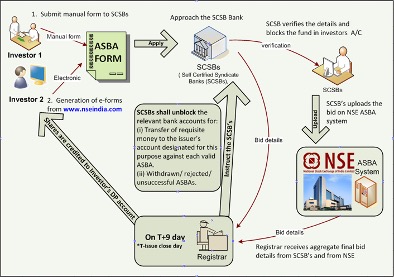
  • ASBA, which was first introduced by SEBI in 2008, is an application by an investor that contains an authorisation to a Self-Certified Syndicate Bank (SCSB) to block in the bank account the application money for subscribing to an issue.
  • Simply put, ASBA provides an alternative mode of payment in issues whereby the application money remains in the investor's account till finalization of basis of allotment in the issue (shares).
  • An SCSB is a recognised bank (e.g. HDFC or ICICI) capable of providing ASBA services to its customers.
  • The application money of an investor applying through ASBA shall be debited from the bank account only if her application is selected for allotment after the basis of allotment has been finalised. In public issues and rights issues, all investors have to mandatorily apply through ASBA.
1olMsbczIQofRqukbJd3ixFJT hDR22aBTWCo0a8K2ziocstr8nmWFmcHF8qNN8SRL8QCHdQUb0ytEbdA5okUWIPfXYVyUMrsZD6ovbkbFWikZBAeGOHYscq fm46MC8nglMZeNEkLieHOXINhM5AsM

What SEBI has done?

  • It gave its nod for an ASBA-like facility for secondary market trading. The facility is based on the blocking of funds for trading in the secondary market through UPI (Unified Payments Interface).
  • At present, ASBA is available for the primary market, wherein the initial public offering (IPO) funds only are blocked on application, and are debited only on allotment.
  • Extension of ASBA to secondary markets means brokers will no longer collect margins from clients; only a block will be placed on the bank account.

How will the ASBA facility benefit retail investors in the secondary market?

  • ASBA in secondary market trading will ensure that clients will continue to earn interest on the blocked funds in their savings account till the debit takes place.
  • There will be direct settlement with Clearing Corporation (CC), without passing through the pool accounts of the intermediaries. Hence, it will provide client-level settlement visibility to CC, and help avoid the risk of co-mingling of clients’ funds and securities.
  • It will eliminate the custody risk of client collateral, which is currently retained by the members, and is not transferred to the CC. There will be hassle-free and immediate unblocking of client’s funds and/ or return of securities in case of member default.
  • The markets regulator said the facility will bring efficiency in the secondary market ecosystem by allowing usage of the same blocked amount towards margin and settlement obligations. It will result in lower working capital requirements for members.
  • Under the proposed framework, stock brokers will be allowed to either directly settle the brokerage with the UPI clients or opt for CC’s facility to deduct standard rate of brokerage from the UPI block of the clients.

Will this impact the markets?

  • Market participants feel that the ASBA-like system for the secondary market would impact volumes. While client volumes may not be impacted, the proprietary volumes can be negatively impacted.
  • Much of these funds are client funds and that could take a hit. This is also likely to reduce the leverage provided by brokers to the clients.
  • So, there will certainly be a short-term volume impact, although it is expected to be value accretive in the long run.