Context: The World Health Organisation (WHO), after the recommendation of the organisation’s emergency committee, has announced that Mpox is no longer a global health emergency.
About Monkeypox:
Mpox (monkeypox) is a viral zoonotic disease caused by the mpox virus, a member of the Orthopoxvirus genus.
Mpox is characterized by rash or skin lesions that are usually concentrated on the face, palms of the hands, and soles of the feet.
It is mainly spread to people from animals, primarily rodents and monkeys, and human-to-human transmission can occur through contact with bodily fluids, respiratory droplets, or contaminated objects.
There is currently no specific treatment for mpox, it may be treated with some antiviral drugs used to treat smallpox. Also, monkeypox is self-limiting, which means it can get better without treatment.
Context: Indigenous development of supercomputers touches new highs in India but the country still greatly lags behind global peers.
Development of supercomputers in India:
The indigenous development of supercomputers in India began in 1980 with the involvement of organisations such as BARC, C-DAC and C-DOT, among others.
The launch of the National Supercomputing Mission (NSM) in 2015 has accelerated the efforts.
Under the NSM scheme, C-DAC is aiming to install 70 supercomputers pan India.
Presently, India has 23 supercomputers — powerful computers that are primarily used for scientific and engineering work that demands ultra-high-speed computations.
The Indian government has initiated efforts to develop indigenous exascale computing capabilities through NSM by 2024.
Param-Shankh, India’s new indigenous exascale supercomputing monster from C-DAC, is set to launch in 2024.
India has developed an indigenous server, Rudra, which can meet the high-performance computing needs of government bodies and public sector undertakings.
Challenges:
In terms of supercomputing capacity, India has made commendable progress, though it still lags behind other leading nations.
As of June 2022, China boasted a staggering 173 of the world’s 500 most powerful supercomputers, while the US had 128. From India, only three systems — Param Siddhi AI (ranked 111), Pratyush (132), and Mihir (249) — made it to the list.
While exascale computing is evolving rapidly, India has no exascale supercomputers yet. India is still looking at petaflops, while India should be looking at exaflops.
Petaflops is a unit of measurement used to quantify the computational speed of a computer system. It represents the number of floating-point operations (flop) a computer can perform in one second.
One petaflop is equal to one quadrillion (10^15) floating-point operations per second.
One exaflop represents one quintillion (10^18) floating-point operations per second.
The use of supercomputers in India is currently limited to research institutions. Beyond research and academia, supercomputers have found limited adoption in the industry.
India currently lacks the infrastructure to produce the semiconductor devices required for the development of supercomputers.
Context: The United Kingdom will provide long-range Storm Shadow cruise missiles to Ukraine which could bolster the country’s counter-offensive capabilities.
Storm Shadow Cruise missile:
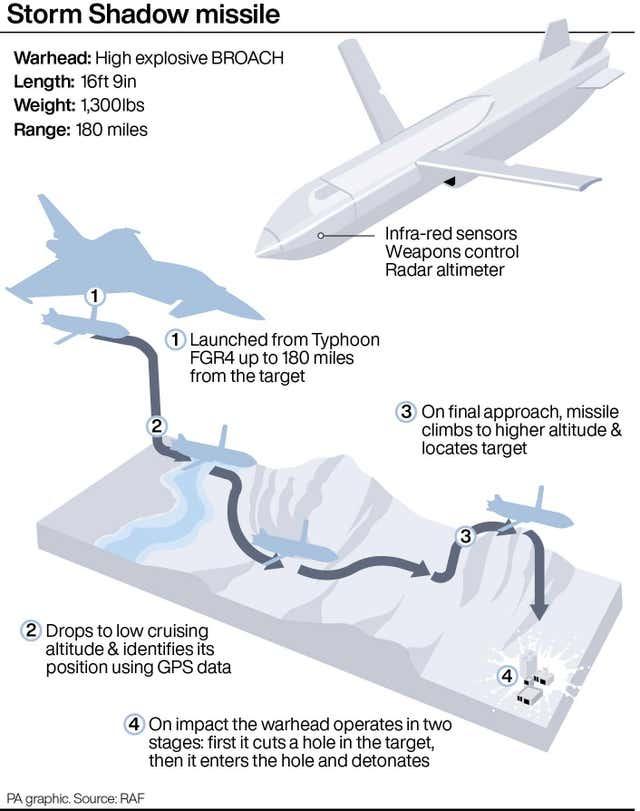
Storm Shadow is a long-ranged, air-launched, conventionally armed, deep-strike supersonic missile, which is manufactured by the France-based MBDA Missile Systems.
Range: More than 250 km
It is capable of being operated day and night in all weathers and is designed to destroy high-valued stationary targets such as airbases, radar installations, communications hubs and port facilities.
It is equipped with fire-and-forget technology and offers high-precision deep strike capability as it features a sophisticated navigation system that includes inertial navigation (INS), a global positioning system (GPS) and terrain reference navigation for better control over the path.
The missile features the BROACH (Bomb Royal Ordnance Augmented CHarge) warhead — a high-technology warhead, which first cuts the surface of the target, penetrates into it and then explodes.
Context: The Central Equipment Identity Register (CEIR) system is scheduled for a pan-India launch on May 17. The Centre for Department of Telematics (CDoT) has been running the pilot project of the CEIR system in some of the telecom circles, including Delhi, Maharashtra, Karnataka, and the Northeast region.
Central Equipment Identity Register system:
CEIR is the citizen-centric portal of the Department of Telecommunications for tracing lost/stolen mobile devices.
This also facilitates for blocking of lost/stolen mobile devices in the network of all telecom operators so that lost/stolen devices can not be used in India. If anyone tries to use the blocked mobile phone, its traceability is generated. Once a mobile phone is found it may be unblocked on the portal for its normal use by the citizens.
Significance: Mobile users will be able to block and track their lost or stolen cell phones across India with the rollout of the tracking system.
Context: A baby was born in the U.K. using three persons’ DNA through a process called Mitochondrial donation treatment.
The baby, technically, has three parents- genetic material (DNA) from two biological parents and mitochondria from one donor parent (female donor). The technology was used to prevent the child from inheriting the mother’s mitochondrial disease.
What is Mitochondria?
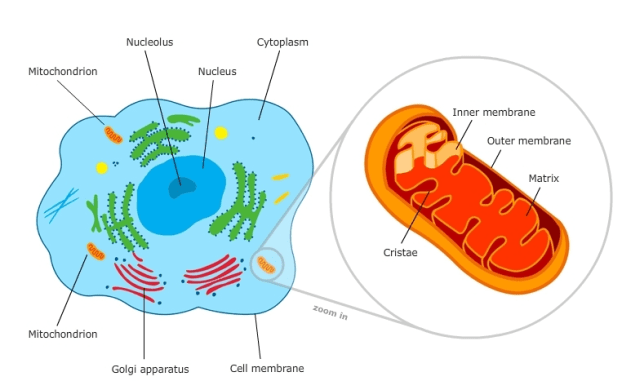
Mitochondria are tiny organelles inside cells that are often referred to as the powerhouses of the cell.
Mitochondria occur in large numbers in most of our cells, except for red blood cells.
It converts the energy molecules which we get from food to usable energy molecules called ATP (Adenosine triphosphate) through a process known as cellular respiration.
Mitochondrial disease:
Mitochondria generate energy and thus are responsible for cell function in the human body. However, when the mitochondria are impaired they do not produce sufficient energy which affects how organs function.
Faulty mitochondria can cause inherited conditions such as fatal heart problems, liver failure, brain disorders, blindness and muscular dystrophy. The diseases that arise out of such mitochondrial mutations are called mitochondrial diseases.
Mitochondrial diseases are only passed on by the mother.
The symptoms get more pronounced as a child grows, and there is no cure for mitochondrial DNA disease at present.
Some estimates put the incidence of mitochondrial diseases as one in 5,000 people.
Mitochondrial Donation Treatment:
Mitochondrial donation involves replacing unhealthy mitochondria in the mother with healthy mitochondria from a donor during the in vitro fertilisation (IVF) process.
Mitochondria have their own DNA, distinct from that in a cell's nucleus. It does not influence appearance, personality or other human characteristics.
The process:
Through the IVF technique, the baby’s biological father’s sperm was used to fertilise the eggs from the biological mother, who has mitochondrial disease, and a third, female donor with clear mitochondria, separately.
Then, the nuclear genetic material from the donor’s egg was removed and replaced with the genetic material from the biological parents.
The final product — the egg — which has the genetic material (DNA) from the parents, and the mitochondria from the female donor, is implanted in the uterus and carried to full term to yield a baby who will be free from the mother’s mitochondrial disease. This process is termed Mitochondrial Donation Treatment (MDT).
With this process, the final cytoplasm (which holds the genetic material and mitochondria) has healthy mitochondria while the genetic material belongs to the biological parents.
Side effects: While largely helpful, the procedure has some minimal risks that sometimes a small amount of the maternal mitochondria with errors may get passed on during the procedure.
Context: Heatwave conditions have been declared by the India Meteorological Department (IMD) in various regions of Maharashtra, including Mumbai, Palghar, Thane, Konkan, central Maharashtra, and Vidarbha. This is the fourth heatwave alert for the Konkan region and the first for the month of May, according to the IMD.
Heat Wave
A Heat Wave is a period of abnormally high temperatures, more than the normal maximum temperature that occurs during the summer season in the North-Western parts of India.
Heat Waves typically occur between March and June, and in some rare cases even extend till July.
Extreme temperatures and resultant atmospheric conditions adversely affect people living in these regions as they cause physiological stress, sometimes resulting in death.
Criteria for Heat Wave
IMD has given the following criteria for Heat Waves:
Two conditions which need to be satisfied:
Heat wave is considered if maximum temperature of a station reaches at least 40°C or more for Plains, 37°C or more for coastal stations and at least 30°C or more for Hilly regions. Following criteria are used to declare heat wave:
Based on Departure from Normal
Heat Wave: Departure from normal is 4.5°C to 6.4°C
Severe Heat Wave: Departure from normal is 6.4°C
Based on Actual Maximum Temperature (for plains only)
Heat Wave: When actual maximum temperature 45°C
Severe Heat Wave: When actual maximum temperature 47°C
Declare heat wave, above criteria should be met at least in 2 stations in a Meteorological subdivision for at least two consecutive days.
Favourable Conditions for Heat Wave
Transportation/Prevalence of hot dry air over a region (There should be a region of warm dry air and appropriate flow pattern for transporting hot air over the region).
Absence of moisture in upper atmosphere (As presence of moisture restricts the temperature rise).
Sky should be cloudless (To allow maximum insulation over the region).
Large amplitude anti-cyclonic flow over the area.
Heat waves develop over Northwest India and spread gradually eastwards & southwards but not westwards (since the prevailing winds during the season are westerly to north westerly).
But on some occasions, heat wave may also develop over any region in situ under the favourable conditions.
What are the heat wave prone states over India?
Heat wave generally occurs over plains of northwest India, Central, East & north Peninsular India during March to June. It covers Punjab, Haryana, Delhi, Uttar Pradesh, Bihar, Jharkhand, West Bengal, Odisha, Madhya Pradesh, Rajasthan, Gujarat, parts of Maharashtra & Karnataka, Andhra Pradesh and Telengana. Sometimes it occurs over Tamilnadu & Kerala also. Heat waves adversely affect human and animal lives. However, maximum temperatures more than 45°C observed mainly over Rajasthan and Vidarbha region in month of May.
Impacts of Heat waves:
Heat waves affect each and every aspect of life. Following picture shows its multiple impacts in various dimensions:
Health Impacts of Heat Waves?
The health impacts of Heat Waves typically involve dehydration, heat cramps, heat exhaustion and/or heat stroke. The signs and symptoms are as follows:
♣ Heat Cramps: Ederna (swelling) and Syncope (Fainting) generally accompanied by fever below 39 degree C
♣ Heat Stoke: Body temperatures of 40 degree C or more along with delirium, seizures or coma. This is a potential fatal condition
To cope up with heat waves, IMD issues colour based warnings as follow:
Resilience Strategies For Extreme Heat
Identifying vulnerable populations and creating heat preparedness plans with all residents in mind, which may include steps like opening cooling centers during periods of extreme heat and adopting workplace heat stress standards.
Installing cool and green roofs and cool pavement to reduce the urban heat island effect.
Planting trees to provide shade and to cool the air through evapotranspiration.
Pursuing energy efficiency to reduce demand on the electricity grid, especially during heat waves.
Reducing concretisation in urban areas.
Adopting architectural designs to reduce heat load on built structures.
Emergency Measures: Democratization of access to public cool spaces in adverse heat waves. Ex. Metro Stations with air-cooled atmosphere should be made accessible to poor.
IMD should start measuring Heat Index and Wet Bulb Temperatures, which is a better indicator of heat.
Context: A cyclone, which is most likely to swerve away from the Indian coast, is all set to develop over the southeast Bay of Bengal by Wednesday, the India Meteorological Department (IMD) said Tuesday.
Key facts about Mocha Cyclone
Once intensified, it is to be identified as Cyclone Mocha (pronounced as Mokha), a name suggested by Yemen.
India has dual cyclone seasons – pre-monsoon (April-June) and post-monsoon (October-December). Of these, the most cyclone-prone months are May and November.
In the IMD’s possible cyclone track released Monday, the storm is expected to move north-northwestwards, that is, away from India’s east coast.
How the naming of tropical cyclones are done?
In general, tropical cyclones are named according to the rules at regional level.
Northern Indian Ocean Names - Arabian Sea and the Bay of Bengal
The WMO/ESCAP Panel on Tropical Cyclones at its twenty-seventh Session held in 2000 in Muscat, Sultanate of Oman, agreed in principal to assign names to the tropical cyclones in the Bay of Bengal and Arabian Sea. The naming of the tropical cyclones over north Indian Ocean commenced from September 2004, with names provided by eight Members. Since then, five countries have joined the Panel.
The Panel Member’s names are listed alphabetically country wise.
The names will be used sequentially column wise.
The first name will start from the first row of column one and continue sequentially to the last row in the column thirteen.
The names of tropical cyclones over the north Indian Ocean will not be repeated, once used it will cease to be used again. The name should be new. It should not be there in the already existing list of any of the RSMCs worldwide including RSMC New Delhi.
The name of a tropical cyclone from south China Sea which crosses Thailand and emerge into the Bay of Bengal as a Tropical cyclone will not be changed.
The RSMC New Delhi Tropical Cyclone Center is responsible to name the tropical cyclones that have formed over the Bay of Bengal and the Arabian Sea when they have reached the relevant intensity.
Context: Hyderabad-based Grene Robotics has completed the successful acquisition of the C4ISRT platform from Apogee C4I LLP.
C4ISRT platform:
C4ISRT stands for Command, Control, Communications, Computers, Intelligence, Surveillance, Reconnaissance, and Targeting.
C4ISRT platform is typically equipped with advanced sensors and communication systems that enables it to gather and process large amounts of data from various sources, such as satellites, radar systems, and ground-based sensors.
This data is then analysed to provide situational awareness and decision-making support to military commanders to make informed decisions in real-time.
Indrajaal:
Indrajaal is India’s first indigenous drone defence dome designed and developed by Hyderabad-based technology R&D firm Grene Robotics.
The drone defence dome has the capability to autonomously protect vast areas of up to 4000 sq. km per system against aerial threats by assessing and acting on aerial threats such as Unmanned Aerial Vehicles (UAVs), loitering munitions, and Low- Radar Cross Section (RCS) targets, smart bombs, rocket showers, nano and micro drones, swarm drones etc.
ANTI-UAV systems will not only provide protection to defence bases but will be beneficial for linear infrastructures like international borders against advanced weaponry.
Salient features of Indrajaal:
Real-time situational awareness
Integrated and Intelligent meshed network
Integrated all current weapons suite and infrastructure
Honeycombed cell structure for seamlessly built
Synergic combination of 9-10 technologies
24×7 persistent and autonomous monitoring, action and tracking.
Significance:
By leveraging C4I’s deep-tech capabilities, Indrajaal will be able to detect and classify drones in real-time, provide unparalleled situational awareness and enable proactive air defence measures.
Context: India's Centre for Military Airworthiness and Certification (CEMILAC) has called for a design review of a "safety-critical system" on the Dhruv advanced light helicopter, which has been involved in several accidents.
About Dhruv ALH:
The Dhruv Advanced Light Helicopter (ALH) is a multi-role helicopter in the 5.5-tonne class.
It is designed to meet both military and civilian requirements and has been in service since 2002. The helicopter is operated by the Army, air force, navy, and coast guard.
It is a twin-engine helicopter that can carry up to 14 passengers, including two pilots. It is equipped with a range of advanced avionics and sensors, including a glass cockpit, digital autopilot, and weather radar.
Utility: Dhruv ALH has been used in a variety of roles, including:
Search and rescue, medical evacuation, troop transport, and cargo transport
Disaster relief and humanitarian aid missions.
The helicopter has been exported to several countries, including Nepal, Mauritius, and Ecuador.
Designed and developed by: Hindustan Aeronautics Limited.
Need for the review:
The regulatory body has ordered an expert panel to review the system to improve its airworthiness. The call for the design review comes on the back of the ALH’s troubling safety record (In the past five years, it has been involved in 12 accidents).
The design review is critical as the Indian armed forces operate more than 300 multi-role ALHs.
Centre for Military Airworthiness and Certification:
CEMILAC is a regulatory body under the Defence Research and Development Organisation (DRDO), vested with the responsibility of Airworthiness certification of military Aircraft, Helicopter, Unmanned Aerial Systems (UAS), Aero-engines, Air launched weapons and other Airborne stores.
CEMILAC also works closely with the Indian aerospace industry to promote indigenous development and manufacture of military aircraft and systems.
Context: The Union government have pledged to roll out a national missionto eradicate thalassemia from the country over the next 25 years, beginning with a country-wide screening exercise.
Screening can safely tackle the disease and spread awareness about getting tested before having children.
Thalassemia:
Thalassemia is a group of inherited blood disorders characterised by abnormal haemoglobin production. The patient cannot make enough haemoglobin which leads to Anaemia, thus the patients require blood transfusions every two to three weeks to survive.
Haemoglobin is the protein in red blood cells that carries oxygen throughout the body.
Thalassemia results from a mutation in one or more of the genes that make haemoglobin and is passed down from one or both parents through their genes.
Types of Thalassemia:
1. Thalassemia Minor:
The haemoglobin genes are inherited during conception, one from the mother and one from the father.
People with a Thalassemia trait in one gene are known as carriers or are said to have thalassemia minor. Thalassemia minor is not a disease and they have only mild anaemia.
2. Thalassemia Major:
This is the most severe form of Thalassemia which occurs when a child inherits two mutated genes, one from each parent.
Patients Children with thalassemia major develop the symptoms of severe Anaemia within the first year of life.
India has the largest number of children with Thalassemiamajor in the world (about 1 to 1.5 lakhs). The only cure available is bone marrow transplantation (BMT), which is difficult and not affordable.
Hence, the mainstay of treatment is repeated blood transfusions, followed by regular iron chelation therapy to remove the excessive iron overload, consequent to the multiple blood transfusions.
Context:Buddhist stupas have been found in the ongoing excavation in the Bandhavgarh Tiger reserve in Madhya Pradesh. Many dynasties have ruled this region, including the Gupta, Pratiharas and Kalachuris.
Stupa
The stupa serves as the most fundamental of Buddhist architectural monuments. It symbolises a sacred space for the community as it represents Buddha’s burial mound.
Great Stupa at Sanchi, Madhya Pradesh, which was originally commissioned by the emperor Ashoka of the Mauryan Empire in 3rd century BCE, served as an architectural prototype for all others that followed. This historical site is a UNESCO World Heritage site.
Stupa Architecture
The most basic stupa, as an architectural representation of a sacred burial site, has three fundamental features:
A hemispherical mound (Anda): Domed shape recalls a mound of dirt that was used to cover the Buddha’s remains.
A square railing (Harmika): It is inspired by a square railing or fence that surrounded the mound of dirt, marking it as a sacred burial site.
A central pillar supporting a triple-umbrella form (Chattra): The central pillar represents the pivot of the universe, the axis mundi along which the divine descends from heaven and becomes accessible to humanity. The three circular umbrella-like disks represent the Triratnas of Buddhism: (a) Buddha; (b) dharma (Buddhist teachings or religious law); and (c) sangha (monastic community).
Secondary Features:
Toranas (gateways): Enclosure wall with decorated gateways at the cardinal directions.
A circular terrace (Medhi): It likely served as a platform for ritual circumambulation.
Building material: Unburnt bricks were used at the core and burnt bricks were used on the outer face that was covered in a thick coating of plaster.
Decorations: To embellish Medhi and Toran, wooden sculptors were used.
Pradakshinapatha (Circumambulatory pathway): As a form of worship, devotees walk around the pradakshina patha, or open ambulatory pathway. Wooden railing that capped the stupa also encircled the Pradakshinapatha.
The earliest stupas contained actual relics of the Buddha. Over time, it has taken a grander symbolic association, “the mountain home of the gods at the centre of the universe”.
Kalachuri Dynasty
Two branches of the Kalachuri dynasty were:
The earlier rulers were called the Kalachuri Dynasty of Mahishmati. They ruled in Central-Indian region between the 6th-7th centuries AD.
The Later Kalachuri dynasty ruler was known as the Kalachuri dynasty of Tripuri that ruled between the 7th-13th centuries AD.
Kalachuri Dynasty of Mahishmati
The Mahishmati Kalachuri rulers are known as the Haihayas.
The inscriptions also mentioned about the three important rulers of the dynasty: Krishna Raj, Shankargana, and Buddharaj.
Literary references have suggested their capital was situated at Mahishmati in the Malwa region.
Territories controlled:
The Kalachuri inscriptions mentioned that the Kalachuri dynasty ruled over the Ujjayni, Vidisha, Anandapura, and parts of Vidarbha.
The dynasty controlled Vidarbha, where they succeeded the Vakataka and the Vishnukundina dynasties.
In addition, the Kalachuris conquered northern Konkan (around Elephanta) by the mid-6th century. Here, they succeeded the Traikutaka dynasty.
Krishnaraj (c.550-575)
He is the earliest known ruler of the dynasty.
Coins: Featured Brahmi script legends, imitated the designs of earlier coins issued by the Gupta Kings. For example, coins featuring a bull are based on the coins issued by Skandagupta. These coins have described him as ‘Parama-Maheshvara’ (Devotee of Shiva).
Shankaragana’s inscription described Krishnaraja as the devotee of Pashupati (Shiva).
He commissioned, the Shaivite monuments at the Elephanta Caves and the earliest of the Brahmanical caves at Ellora.
Shankaragana (c.575-600)
He is the earliest ruler of the dynasty to be attested by his own inscriptions, which were issued from Ujjain, which is regarded as the earliest epigraphic record of the dynasty.
He adopted titles similar to the Gupta emperor Skandagupta, which suggests he conquered western Malwa (formerly under the Gupta authority).
He probably extended control over the parts of the present-day Gujarat.
Buddharaja
Shankaragana was succeeded by Buddharaja, the last known ruler of the early Kalachuri dynasty.
Chalukyan Invasion:
The first Chalukyan invasion was undertaken by king Mangalesha, somewhere around 600 CE.
However, the invasion did not result in a complete conquest, as evident by the Vidisha and Anandapura grants of Buddharaja.
During the second invasion by Mangalesha, Buddharaja lost his sovereignty.
Cultural contributions of Kalachuri Dynasty
Elephanta Caves, Mumbai
These contain Shaivite monuments, along the Konkan coast.
Historical evidences suggest Krishnaraja was associated with these monuments. For example: Silver and copper coins of Krishnaraja have been here, suggesting he was the patron of the main cave temple on the island.
Ellora Caves
The earliest of the Hindu caves at Ellora have been built during the reign of Kalachuris. For example, earliest coin found at Ellora, in front of Cave No. 21 (Rameshvara), was issued by Krishnaraja.
About Bandhavgarh National Park and Tiger Reserve
Location: It is situated on the Eastern Satpura hill, between two other major protected areas of Madhya Pradesh, Kanha Tiger Reserve on the southern side and Sanjay National Park on the north eastern side.
The National Park was included in the Project Tiger network in 1993. The Panpatha Sanctuary was merged into the core area of Tiger Reserve, there-by increasing its core area.
Weather: According to Koppen’s Scheme, it lies in Monsoon type with Dry Winter Climate.
Historical significance: Famous Bandhavgarh fort, ancient Caves, rock paintings and carvings are found inside the Protected Area.
Fauna and Flora:
It is best known for ever-green Sal forests.
Some of the wildlife in the region, prominently figure in the IUCN red list of Endangered species: Tiger, Leopard, Dhole (Indian Wild Dog), Bengal or Indian Fox, Sloth Bear, Smooth-coated Otter, Rusty Spotted Cat, Fishing Cat, Gaur and Wild Elephant.
Context: A Cham Lama performance on the auspicious occasion of Buddha Jayanti at Tupchiling Gompa was observed in Lahaul region of Himachal Pradesh.
About the Cham Lama Dance:
A traditional Cham Lama dance is an event held by Tibetan monasteries during special Buddhist festivals.
Monks in colourful costumes wear masks and they dance to the music played from traditional instruments (such as the ritual drum), also performed by monks. The longer it goes on, the more they seem to get in a trance.
The dancers have to be both well-trained and strong as the ritual dance must be performed very precisely and the masks are very heavy.
Cham was introduced in the eight Century by Padmasambhava (who introduced Tantric Buddhism to Tibet), to subjugate the local demons that were obstructing the building of the first monastery in Tibet, Samye.
Many of the figures performing the dance are animal characters. The pictures are made at the annual Buddhist Festival at Trongsa Dzong, the largest dzong fortress in Bhutan, located in Trongsa (formerly Tongsa), in the centre of the country.
This five-day festival known as the Trongsa Tsechu is held in the courtyard of the temple every year in December or January. The festival celebrates the arrival of Guru Rinpoche (Padmasambhava) to Bhutan in the 8th century, a mark of triumph of Buddhism over evil.
By attending a Tsechu, visitors gain the Buddha’s blessing or and experience spiritual release through the tantric deities.