Modern Indian History

Malerkotla

Context: Begum Munawwar-ul-Nisa, the wife of the last ruler of Malerkotla, Nawab Iftikhar Ali Khan, recently passed away. Malerkotla, a town in Punjab, is home to the renowned 19th-century Mubarak Manzil Palace. This historic palace is not only architecturally significant but also holds deep emotional connections for both Sikhs and Muslims.

image 9

History:

  • Malerkotla, governed by a Muslim family until 1982, has its roots tracing back to Sadruddin, also known as Sheikh Sadar-i-Jahan, a Sawani Afghan from Daraband in Khurasan.
  • Initially, Sadruddin settled in Bhumsi, a location situated along a tributary of the river Sutlej. 
  • In 1450, Bahlol Khan Lodhi, who was the governor of Lahore and Sirhind at the time, pledged that when he assumed the role of the ruler of Delhi, he would marry his daughter to Sadruddin.
  • Bahlol Lodhi became the first Afghan ruler of Delhi in 1451, and in 1454, his daughter Taj Murassa Begum was wedded to Sadruddin.
  • Furthermore, Bahlol Lodhi granted Sadruddin a piece of land comprising 12 large villages and 56 smaller ones, including the village of Maler.
  • The population of Bhumsi swiftly expanded, leading to the establishment of the town of Maler in 1466, which, in due course, encompassed Bhumsi and later, Kotla.
  • Sadruddin became a prominent spiritual leader and at the symbolic centre of Malerkotla lies the mazar of Sheikh Haidar, as he came to be known.

Guru Gobind Singh and Nawab Sher Mohammad Khan:

  • A descendant of Sadruddin, Nawab Sher Mohammed Khan, was a loyal vassal of Emperor Aurangzeb.
  • He actively supported Mughal forces in the Battle of Chamkaur Sahib, where they faced Guru Gobind Singh's army.
  • However, his principles and sense of justice led him to vehemently oppose the cruel treatment inflicted upon the Guru's two sons, Zorawar Singh and Fateh Singh, by the Viceroy of Sirhind.
  • The Nawab passionately argued that such crimes against children were entirely against the noble teachings of the Quran and the principles of Islam.
  • Guru Gobind Singh, despite the tragic outcome, expressed his gratitude to the Nawab of Malerkotla for his courageous intervention.
  • As a token of his appreciation, the Guru bestowed upon him a Hukamnama and a Kirpan, both of which remain cherished possessions of the Malerkotla household.

During and after the Colonial Rule:

  • Malerkotla served as the seat of princely state under the British Raj.
  • An uprising led by the Namdharis was suppressed, and the colonial government sanctioned the execution of both the captured rebels and individuals suspected of involvement in the rebellion.
  • Throughout the tumultuous partition of India, there was a remarkable absence of riots or bloodshed within any part of Maler Kotla State.
  • This period of peace and harmony can be largely attributed to the actions of the last Nawab, Iftikhar Ali Khan of Malerkotla, who chose to remain in India and played a pivotal role in maintaining tranquility during this challenging time.
  • In 1947, this state joined the Union of India and later amalgamated with neighbouring princely states to form the Patiala and East Punjab States Union (PEPSU).
  • In a subsequent reorganization in 1956, the territories once belonging to the state of Malerkotla were incorporated into the state of Punjab.

Contributions of Sir Syed Ahmad Khan

Context: The passing of the Women’s Reservation Bill coincided with the 125th birth (October 17) anniversary of Sir Syed Ahmad Khan, known for propagating social reforms among the Muslim community. 

The evolution of Muslim political thought unfolded in a multifaceted historical context marked by interactions with colonial rule and the complexities of social, cultural, and political life among the Muslim communities in India. The relative backwardness of the Muslim population gave rise to competitive tendencies, intensifying the debate about accommodating diverse social groups within existing and future power structures and institutions.

Syed Ahmad Khan (1817-1898)

sir syed 1 652f989d4297d

1. Educational and Political engagement

  • Syed Ahmad Khan, a prominent figure of the 19th century, received education in both religious Scripture, the Quran, and Western sciences. 
  • His booklet, "Asbab-e-Baghawat-e-Hind" (Reasons for the Indian Revolt of 1857), highlighted British ignorance, their aggressive expansionary policies, and the exclusion of Indians from the Legislative Council of India as major causes for growing antagonism. 
  • Interestingly, non-official Indian members were included in the Viceroy's Council from 1861, and Syed Ahmad Khan was nominated to the Viceroy's Legislative Council in 1878.
  • He supported the efforts of Dadabhai Naoroji and Surendra Nath Banerjee in securing Indian representation in the government and civil services.

2. Educational and Socio-religious reforms

  • Syed Ahmad Khan emphasized interfaith understanding, exemplified by his work, "Commentary on the Holy Bible."
  • He advocated modern scientific education for Muslims, criticizing the prevailing superstitions and regressive customs of society.
  • He founded the Scientific Society of Aligarh in 1863, modelling it after the Royal Society of England. This society organized annual conferences and disseminated scientific material in English and Urdu. 
  • He established various educational institutes to promote education, most notably the Muhammadan Anglo-Oriental College (MAOC) in 1875, later evolving into Aligarh Muslim University.
  • The MAOC played a pivotal role in the Aligarh Movement of the 19th century, fostering a renaissance among Indian Muslims. While founded primarily for Muslims, MAOC's doors were open to all, emphasizing inclusivity.
  • Mohammedan Anglo-Oriental (MAO) College, aimed  to provide modern education while preserving cultural heritage. 
  • The Aligarh Institute Gazette, initiated by him, campaigned against practices such as female infanticide, polygamy, child marriage, sati, segregation of widows, and poverty-induced marriages of young girls to older men.
  • His progressive social ideas were disseminated through his magazine, "Tahdhib-ul-Akhlaq" (Improvement of Manners and Morals).

Views of Syed Ahmad Khan on Women Education

  • Despite showing inclination for liberal values and rationality, his views on education to be imparted to women had been controversial. 
  • Syed Ahmad Khan, believed the ultimate goal for women is marriage and therefore, training for them should focus on familial duties. For women’s education he believed in a “Disorganised home-based tutor education”.
  • However, later he was convinced that the “rejection of women’s education by Muslims played a big role in the decline of the community” in comparison to others. 

Muhammadan Educational Conference: 

  • To propagate the ideas of Anglo-oriental College across India, Syed Khan established the All-India Muhammadan Educational Congress in Aligarh, U.P.
  • The first session of the congress was held in 1886 in Aligarh and was presided by Maulvi Samiullah Khan.
  • The organisation aimed to promote educational development among Muslims through conferences and also to gain University status for the Anglo-Oriental College.  

3. Aligarh movement

  • The Aligarh Movement, the first national awakening among Muslims, began at Aligarh under the leadership of Syed Ahmad Khan.
  • It was furthered by individuals like Khwaja Altaf Hussain Ali, Maulvi Wazir Ahmed, and Maulvi Shibli Numani.
  • It sought to introduce social reforms within the Indian Muslim community, challenging practices such as polygamy and the ban on widow remarriage.
  • The Aligarh Movement was rooted in a liberal interpretation of the Quran and aimed to harmonize Islam with modern, liberal culture.

4. Evolution of Syed Ahmad Khan's political thought

(a) First Phase (Up to 1887)

  • Syed Ahmad Khan advocated for Hindu-Muslim unity, emphasizing their shared history and common interests.
  • He advocated for the separation of religious and political matters, believing that religious and spiritual issues should not impede nationalist objectives.
  • In his role on the Viceroy's Legislative Council, he actively worked for the welfare of both Hindus and Muslims.
  • Cooperation between the two communities was evident in the scientific society and the Aligarh British India Association.
  • Syed Ahmad Khan even supported the ban on cow slaughter within the MAOC. 

(b) Second Phase (After 1887)

  • His perspective on the applicability of Western democracy and nationalism in India underwent a significant shift.
  • He argued that the complex, diverse nature of Indian society, with its diverse castes, religions, and races, made representative government impractical and could lead to Hindu dominance over Muslims.
  • This argument laid the foundation for the two-nation theory, which claimed that Hindus and Muslims were separate nations with distinct interests.
  • He aimed to establish an Anglo-Muslim alliance to counter the influence of the Congress, influenced by British officials and the need for their support for his college.

Syed Ahmad Khan's influence initiated social and educational reforms among certain sections of Muslims, reflecting the dynamism of India's diverse religious communities and their multifaceted options. It is essential to note that his major concerns were to advance the interests of the Muslim community, especially the established groups, rather than promoting hatred or division among communities.

Baba Banda Singh Bahadur

Context: Prime Minister of India paid tribute to Sikh warrior Baba Banda Singh Bahadur on 350th birth anniversary

About Baba Banda Singh Bahadur

About Baba Banda Singh Bahadur

Early Life

  • Baba Banda Singh Bahadur, originally known as Lachman Dev, emerged as a prominent Sikh warrior and the commander of the Khalsa army.
  • His journey into Sikhism was a transformative one, as he became a devout disciple of Guru Gobind Singh, who bestowed upon him the name Gurbaksh Singh.
  • Banda Singh Bahadur's life took a significant turn when he arrived in Khanda, Sonipat, where he assembled a military force and started a struggle against the Mughal Empire.

Establishment of Khalsa Rule

  • Upon consolidating his authority in Punjab, Banda Singh Bahadur initiated a series of reforms.
  • He abolished the oppressive Zamindari system, an exploitative land revenue system, and ensured that property rights were granted to the tillers of the land.
  • In addition to his land reforms, Banda Singh Bahadur introduced the Nanak Shahi coins, showing his commitment to Sikh values and principles.

Early Conquests

  • His early conquests demonstrated his commitment to the Sikh cause.
  • His first major confrontation took place at the Battle of Sonipat, where he led the Sikh army and clashed against the Mughals.
  • In 1709, he achieved victory in the Battle of Samana, leading to the capture of the Mughal city of Samana.
  • These victories set the stage for the Sikhs to expand their influence into the Cis-Sutlej areas of Punjab.
  • Banda Singh Bahadur even established his capital in Mukhlisgarh, renaming it as Lohgarh, which translates to ‘fortress of steel,’ and issued his own currency.

Mughal response and the Persecution

  • The rise of Banda Singh Bahadur and the Sikhs in Punjab caused great concern for the Mughal Emperor Bahadur Shah, as it disrupted communication between Delhi and Lahore, the capital of Punjab.
  • In response, the Mughal Empire organized a formidable force to subdue and eliminate Banda Singh Bahadur.
  • The Sikhs, under Banda Bahadur’s leadership, made a strategic move to Lohgarh to prepare for the battle and despite successfully defeating the initial Mughal forces, the Sikhs found themselves besieged by an overwhelming Mughal army of 60,000 troops.
  • Banda Singh Bahadur tried to recoup and reorganise and therefore, issued Hukamnamas (decrees) to the Sikhs, urging them to join him. In 1712, the Sikhs gathered near Kiratpur Sahib.
  • As the Mughal Empire was facing succession wars for the throne, Banda Singh Bahadur managed to recapture Sadhaura and Lohgarh in 1712.
  • In 1715, the Mughal governor of Lahore, Abd al-Samad Khan, led an army to besiege Banda Singh Bahadur and his Sikh forces in a village.
  • The Sikhs defended their position, however, but the Mughal assault eventually led to the capture of Banda Singh.
  • Subsequently, in 1716, during the reign of Mughal Emperor Farrukhsiyar, Banda Singh Bahadur, along with 700 of his followers, were executed in Delhi.
  • This event was witnessed by a European visitor, an East India Company diplomat, who sent a letter to the governor of Fort William in Calcutta. 

Bhagat Singh’s Vasudhaiva Kutumbakam

Context: On the occasion of Bhagat Singh's birth anniversary on September 28th, it is pertinent to delve into his perspective on the theme of India's G20 presidency, "Vasudhaiva Kutumbakam." This theme reflects the idea that the world is one family, and it carries significant relevance in the context of India's global leadership role within the G20.

More about the news: 

  • The success of India in garnering consensus in the joint declaration of the G20 was seen as a pivotal moment in the country's ascendancy on the global stage.
  • Prime Minister Narendra Modi celebrated this achievement, emphasizing that India's vision was not merely a slogan but a comprehensive philosophy deeply rooted in its cultural heritage.
  • He highlighted that the world was taking note of India's human-centric model of development, one that prioritizes inclusivity both domestically and internationally.
  • The G20 declaration explicitly expressed concern about religious hatred and called for an end to the trust deficit, advocating for an era of cooperation.
Vasudhaiva Kutumbakam

Bhagat Singh's views on the concept of ‘Vasudhaiva Kutumbakam’:

  • In his early years, Bhagat Singh was captivated by the concept of Vasudhaiva Kutumbakam, envisioning a world united as one family bound by love and mutual respect.
  • His essay 'Vishwa Prem,' published in the Hindi weekly ‘Matwala’ in 1924, reflects his contemplation on the social and political hurdles obstructing the realization of this dream.
  • Bhagat Singh posed a thought-provoking question and grappled with various complex issues, including communalism, hatred, violence, oppression, poverty, untouchability, and casteism.
  • He highlighted the disturbing reality that mere religious affiliation had become a sufficient reason for enmity between religious groups.
  • Bhagat Singh firmly advocated for the elimination of divisive elements, such as the distinction between the touchable and untouchable communities.
  • In his influential essay 'Why I am an Atheist,' Bhagat Singh showcased his rational and critical thinking.
  • He suspected that some self-proclaimed social reformers held superficial political stances.
  • He didn't hesitate to criticise prominent figures like Madan Mohan Malviya, questioning their sincerity in eradicating untouchability.
  • He asked whether those who loudly proclaimed universal brotherhood genuinely aimed to bring about such a transformation.

About Bhagat Singh:

Bhagat Singh, a prominent figure in India's struggle for independence, played a crucial role in the fight against British colonial rule. His early life, evolution as a revolutionary, and lasting legacy are all integral parts of his story.

Bhagat Singh's Birth and Education:

  • Born on September 28, 1907, in Lyallpur, which is now in Pakistan, Bhagat Singh's upbringing was steeped in the atmosphere of patriotic fervour.
  • He received his education at the Dayanand Anglo Vedic High School and National College in Lahore.
  • These institutions were closely associated with Arya Samaj and the freedom movement, exposing Bhagat Singh to the ideals of Indian independence from a young age.

Family Influence on His Ideals:

  • Bhagat Singh's family played a pivotal role in shaping his political consciousness.
  • His father and uncle, Ajit Singh, were actively involved in progressive politics, participating in significant events like the Canal Colonization Bill agitation in 1907 and the Ghadar Movement of 1914–1915.

Entry into National College and Ideological Shift:

  • In 1923, Bhagat Singh enrolled at the National College in Lahore, which had been established as a response to Mahatma Gandhi's non-cooperation movement.
  • Gandhi had urged Indian students to boycott educational institutions subsidized by the British government.
  • Bhagat Singh's journey into the freedom movement began to take a more radical turn during this time.

Bhagat Singh's contributions to the Freedom Movement: 

Initial Support for Non-Cooperation:

  • Initially, Bhagat Singh aligned himself with Mahatma Gandhi and the Non-Cooperation Movement.
  • However, his perspective shifted when Gandhi withdrew the movement following the Chauri Chaura incident.
  • This incident led Bhagat Singh to embrace revolutionary nationalism as a means to achieve India's independence.

Influence of Tragic Events:

  • Tragic events such as the Jallianwala Bagh massacre in 1919 and the violence against unarmed Akali protestors at Nankana Sahib in 1921 deeply affected Bhagat Singh's worldview, fuelling his determination to free India from British rule.

Association with Revolutionary Groups:

  • In 1924, Bhagat Singh became a member of the Hindustan Republican Association, founded by Sachindranath Sanyal.
  • He formed a close bond with Chandra Shekhar Azad, the main organizer of the association. 
  • Bhagat Singh's commitment to the cause led him to establish the Naujawan Bharat Sabha in 1926, aiming to mobilize peasants and workers against British rule.

Role in "Kirti" and HSRA:

  • Bhagat Singh also contributed to the monthly magazine "Kirti" published by the 'Workers and Peasants Party.' For a year, he served on the editorial board of "Kirti."
  • In 1928, he, along with Sukhdev, Chandrashekhar Azad, and others, founded the Hindustan Socialist Republican Association (HSRA).

Bhagat Singh's Revolutionary Activities:

Bhagat Singhs Revolutionary Activities
Bhagat Singh 4th from from the right

Shift Towards Armed Revolution:

  • Bhagat Singh's association with HSRA introduced him to the philosophy of armed revolution. 
  • His commitment to the cause led to his arrest in 1927, initially for his association with the Kakori Case and an article published under the pseudonym Vidrohi.

Involvement in the Saunders Case:

  • The tragic death of Lala Lajpat Rai during a protest against the Simon Commission in 1928 marked a turning point.
  • In an unfortunate case of mistaken identity, Bhagat Singh and his associates assassinated J.P. Saunders, leading to the Lahore Conspiracy Case.

Central Assembly Bombing:

  • In 1929, Bhagat Singh and Batukeshwar Dutt threw a bomb in the Central Assembly at Delhi, accompanied by pro-revolutionary slogans.
  • Their intention was not to cause harm but to make the ‘deaf hear’. Both were arrested without resistance, using the trial as a platform for their revolutionary message.

The Trial and Death of Bhagat Singh:

Hunger Strike for Political Prisoners:

  • During their trial in 1929, Bhagat Singh and his comrades initiated a hunger strike in Lahore prison to demand better conditions for political prisoners.
  • Their strike garnered widespread support from leaders, including Jawaharlal Nehru.

Sentencing and Execution:

  • Despite widespread appeals, Bhagat Singh, Sukhdev, and Rajguru were sentenced to death. 
  • The execution was carried out on March 23, 1931, a day ahead of the scheduled date, at Lahore Jail.
  • March 23 is observed as Martyrs' Day, paying tribute to him and fellow freedom fighters.

Individual Heroism vs. Mass Movement

  • Bhagat Singh initially believed in individual heroism but later realized the need for a broad-based mass movement to effectively challenge the British Empire.

Renowned quotes by Bhagat Singh: 

  • Bombs and pistols do not make a revolution. The sword of revolution is sharpened on the whetting stone of ideas.
  • But mere faith and blind faith is dangerous: it dulls the brain and makes a man reactionary.
  • Revolution is an inalienable right of mankind. Freedom is an imperishable birthright of all. Labour is the real sustainer of society.

Works of Bhagat Singh: ‘Why I Am an Atheist’; ‘Ideas on freedom, liberty and revolution: Jail notes of a revolutionary’; ‘Ideas of a Nation’; ‘To Young Political Workers.

Nawab Wajid Ali Shah 

Context: Several events have been scheduled to commemorate the 200th anniversary of Nawab Wajid Ali Shah, the final ruler of Awadh, who possessed a remarkable appreciation for the arts. These activities comprise an exhibition, a heritage walk, and informative discussions.

Nawab Wajid Ali Shah 

About Nawab Wajid Ali Shah

About Nawab Wajid Ali Shah
  • Mirza Wajid Ali Shah, the final ruler of Awadh, held the position from 1847 to 1856.
  • His second wife Begum Hazrat Mahal, played a significant role in the Indian Rebellion of 1857 against the British East India Company, acting as the regent of Awadh.
  • Although his kingdom had been safeguarded by the East India Company under a treaty, it was annexed by the company in 1856.
  • Following the annexation, the Nawab was exiled to Metiabruz, a suburb of Kolkata, where he spent the rest of his life receiving a generous pension.

Wajid Ali Shah was not only a ruler but also a poet, playwright, dancer, and avid patron of the arts. He introduced Kathak, a significant form of classical Indian dance, as a court dance during a period when the Mughal influence was diminishing, primarily for recreational purposes.

As a Ruler of Awadh

  • The British East India Company had already annexed a significant portion of Awadh through a treaty signed with the Nawabs in 1801. 
  • The company's actions had severely impacted the Awadh economy by burdening it with the costs of maintaining the Bengal Army and repeatedly demanding loans. 
  • Wajid Ali Shah became the ruler of Awadh when the East India Company was determined to annex the prosperous kingdom, which was regarded as "the garden, granary, and queen-province of India." 
  • Upon ascending the throne, he actively participated in the administration of justice, implemented reforms, and reorganized the military.
  • The British Resident of Lucknow, General William Sleeman, submitted a report highlighting alleged "maladministration" and "lawlessness" in Awadh. This report conveniently provided the British with the justification they needed for the annexation under the Doctrine of Lapse by Governor-General Lord Dalhousie. 

Patronage to Music 

  • Wajid Ali Shah patronized music, dance, drama, and poetry, but he was also a gifted composer himself.
  • Bahadur Hussain Khan, was one of Wajid Ali Shah's favorite musicians. The Nawab honored him with the title Zia-ud-Daulah. 
  • He adopted the pseudonym ‘Akhtarpiya’ for his musical compositions. Under this name, he wrote poems, prose, and thumris.
  • His collections, Diwan-i-Akhtar and Husn-i-Akhtar, contain his ghazals.
  • Much of the knowledge about music in Nawabi Lucknow comes from the text Madanul Moosiqui ('The Mine of Music')
  • During his reign, complex ragas like hori and dhrupad were less emphasized, while easier raginis like tilak, pilu, sendura, khammach, bhairvi, and jhanjhauti gained popularity.
  • These raginis were favored by the king and easily understood by all sections of society, making them beloved by the common people.
  • There is a popular belief that Wajid Ali Shah was the creator of the light classical form known as thumri.
  • Wajid Ali Shah's innovative ideas and experiments in ghazals played a significant role in shaping the modern-day style of ghazals. 

Patronage to dance

  • In ancient times, Kathak was originally performed as part of temple rituals. 
  • It was under the artistic guidance and patronage of Nawab Wajid Ali Shah that Kathak reached new heights.
  • During this period, Kathak was also extensively performed by courtesans, who developed the art form alongside its refinement in the court.
  • Their style of Kathak differed from the court style, often incorporating playfulness known as nakhra.
  • Wajid Ali Shah introduced two distinct forms of Kathak: Rahas and Raas.
  • Rahas was a choreographed dance form that incorporated acting, dancing, and music. It encompassed dramatic elements and portrayed different scenes, often with changing settings and locales.
  • On the other hand, Raas was a religious form of Kathak. Dhrupad, a form of classical music, was primarily sung during Raas performances, which began with its singing.
  • It was during Wajid Ali Shah's reign that the Lucknow Gharana of Kathak emerged. The Lucknow style of Kathak is characterized by graceful movements, elegance, natural poise, and a focus on abhinaya (expressions). 
  • Wajid Ali Shah made Kathak the official court dance and also popularized it among the people. 

Contributions to literature

  • The famous poet Mirza Ghalib received gracious patronage from Wajid Ali Shah. 
  • Wajid Ali Shah himself was a prolific writer, utilizing a simple language that conveyed meaning to all, often incorporating Awadhi, the local dialect.
  • His most significant work, Sawat-ul-Qalub, comprises a collection of 44,562 couplets.
  • Among his notable works, the autobiographical Huzn-i-Akhtar holds great importance. It portrays the unfavorable and unceremonious treatment he faced at the hands of British authorities.
  • Another significant work by Wajid Ali Shah is Bani. It serves as a treatise on Music and Dance, offering insights into the mushairas (poetic gatherings) held at Matiya Burj (Calcutta). 

Alluri Sitarama Raju and Rampa Rebellion

Context: The President of India Droupadi Murmu paid tribute to Alluri Sitarama Raju, the freedom fighter at the closing ceremony of his 125th birth anniversary celebrations in Hyderabad.

About Alluri Sitaram Raju

  • Alluri Sitaram Raju was an influential Indian revolutionary who played a significant role in the country's struggle for independence.
  • Born on July 4, 1897, in a modest middle-class family near the Coastal city of Visakhapatnam, Raju developed a strong sense of patriotism from an early age.
  • His dedication to the freedom movement and his efforts to improve the lives of the Adivasi communities left a lasting impact on Indian history.

Advocating for Adivasi Rights and the Freedom Struggle

  • Inspired by Mahatma Gandhi's Non-cooperation movement, Raju initially encouraged the tribals to seek justice in local panchayat courts and boycott colonial courts.
  • However, these measures failed to alleviate their suffering. Determined to make a difference, Raju decided to reside in the Adivasi areas of the Eastern Ghats, specifically the forest region along Visakhapatnam and Godavari districts.
  • He dedicated himself to the Adivasis, who were living in dire poverty and facing exploitation by the police, forest officials, and revenue authorities. Raju provided much-needed support to the Adivasis through education and medical assistance, utilizing the knowledge he acquired during his extensive travels.
  • This region became the epicentre of his fight against the British rule. Raju learned from the Adivasis and combined their time-tested war methods with his own tactics, creating a formidable resistance against the British.
  • In August 1922, he launched the Rampa Rebellion, gaining substantial local support and successfully evading British authorities for an extended period. 

British Response

  • Raju's armed struggle against the British frustrated the authorities to such an extent that they offered a reward for his capture, dead or alive.
  • Meanwhile, the British continued to inflict misery on the Adivasis. Seeking justice and fairness, Raju eventually surrendered, hoping for a fair trial in return.
  • However, on May 7, 1924, he was treacherously trapped and shot dead. 

Legacy

  • Recognizing his courage and indomitable spirit, he was bestowed with the title "Manyam Veerudu" (Hero of the Jungle).
  • Every year, on July 4th, the Government of Andhra Pradesh commemorates his birth date as a state festival, honoring his contributions to the nation's freedom struggle.

The Rampa Rebellion:

The Rampa Rebellion
  • The Rampa Rebellion, also known as the Manyam Rebellion, was a significant tribal uprising led by Alluri Sitarama Raju in the Godavari Agency of Madras Presidency, British India.
  • Spanning from August 1922 to May 1924, this rebellion marked a critical chapter in the fight against British colonial rule.

Read also: Tribal Rebellions: Reason & Weakness

Causes of Unrest

  • The Rampa administrative area, encompassing approximately 700 square miles, was home to around 28,000 tribal inhabitants. These tribes relied on the ‘podu system’, where they burned sections of the forest each year for cultivation, ensuring their food requirements were met.
  • However, the British authorities sought to exploit the lands of the Godavari Agency for commercial purposes, disregarding the needs of the tribal communities.
  • With the implementation of the Madras Forest Act in 1882, the Adivasis' free movement in their forest habitats was restricted, preventing them from practicing their traditional podu agricultural methods.
  • The tribal people faced starvation as their economic situation deteriorated, exacerbated by forced labor demands for road construction and perceived biases in the legal system.

Convergence of Discontent

  • Simultaneously, the muttadars, who had been hereditary tax collectors and rulers in the hills, experienced discontent due to their loss of power and status under British rule.
  • Previously acting on behalf of the rajas, the rulers of the plains, the muttadars found themselves marginalized and controlled by the colonial administration.
  • Their shared grievances with the tribal hill people created a common ground for resistance against the British.

Alluri Sitarama Raju's Leadership

  • He harnessed the discontent of the tribal communities, combining anti-colonial zeal with accommodation for sympathetic muttadars.
  • Raju's followers comprised primarily tribal members, but he also garnered support from influential individuals within the muttadar class.
  • While some muttadars remained ambivalent, Raju's overarching vision of liberation from colonial rule united these disparate groups.

The Rebellion

  • The rebellion commenced in August 1922, taking the form of guerrilla warfare.
  • The tribal fighters, adept at navigating the challenging terrain, proved resilient against British suppression efforts.
  • The prevalence of diseases in the region, to which the tribal people had developed immunity, further hindered the colonial authorities' attempts to quell the rebellion. 

Read also: List of Tribal Rebellions

Conclusion

The Rampa Rebellion, led by Alluri Sitarama Raju, stands as a testament to the determination of tribal communities and their fight against British colonial rule. This uprising highlighted the grievances caused by the imposition of laws that restricted traditional practices and disrupted the economic stability of the Adivasis. Although the rebellion ultimately faced suppression, it left a lasting impact on the collective memory of the struggle for independence in India.

Reinterpreting the Santhal rebellion

Context: Australian historian Peter Stanley, in his book "Hul! Hul! The Suppression of the Santhal Rebellion in Bengal, 1855," sheds light on Santhal rebellion and provides a comprehensive account that challenges existing narratives.

Reinterpreting the Santhal rebellion
  • Unveils unexplored perspectives: Stanley has examined British military records that have been underutilized in previous historical accounts and highlighted the lack of comprehensive studies on the Santhal rebellions. 
  • Provides a comprehensive exploration: The research has provided a detailed account of the Santhal uprising, surpassing traditional histories that often overlook specific experiences and presents a more holistic view of the rebellion, giving voice to the Santhal people and their struggles against oppression.
  • Origins of Santhals and Motivations: Traces the origin of the Santhal people, migratory history, thus, establishing the context in which the rebellion occurred. The pivotal role of Sidhu and Kanhu has been highlighted, who claimed divine inspiration to fight against the zamindars and seek a resolution to their plight.
  • Oppressive zamindars: The writer has highlighted that the Santhals' primary adversaries were the oppressive zamindars who held economic control over the land. The rebellion began with the destruction of indigo factories, a powerful symbol of foreign landlords.
  • Visibility of victims: Stanley's account goes beyond the traditional focus on military engagements to shed light on the often-forgotten victims of the rebellion: Santhal women. By recounting instances of potential sexual harassment and assault by soldiers, the author highlights the vulnerabilities faced by Santhal women and the absence of justice for their suffering.
  • Rediscovering Santhal Poetry: The author has incorporated Santhal poetry throughout the book. These verses capture the essence of the rebellion and the struggles endured by the Santhal communities. They provide a glimpse into the emotional and cultural landscape of the Santhals during and after the ‘Hul’.

Santhal Rebellion (1855-1856)

  • Following the Battles of Plassey (1757) and Buxar (1764), the British East India Company gained control over Indian provinces, including Bengal, Bihar, and Odisha. 
  • In 1793, Governor-General Lord Cornwallis implemented the Permanent Settlement System in Bengal and Bihar. 
  • Permanent Settlement granted hereditary and lifelong rights to zamindars, who paid a fixed amount to the British government annually. 
  • It resulted in widespread dissatisfaction among the local population and the exploitation of peasants. 

Factors responsible

The uprising was fuelled by a multitude of factors that pushed the Santhals to their breaking point. 

  • Forced relocation and exploitation:
    • The Santhals, an agrarian tribal community dependent on forests for their livelihood, were encouraged to settle in the Damin-i-Koh region (now part of Jharkhand) established by the East India Company in 1832.
    • They soon discovered that the area was ruled by zamindars, who were tax-collection agents with significant economic power.
    • The motive behind this relocation was to meet the demand for agricultural labor in areas where the population had significantly declined due to the devastating Bengal Famine of 1770. 
  • Exploitation by merchants and moneylenders:
    • Exploitative practices such as false measurements, usury, and fraudulent lawsuits perpetuated their subjugation and kept them trapped in cycles of debt bondage.
    • The exploitative systems of bonded labor, known as "kamioti" and "harwahi," made it practically impossible for the Santhals to repay their debts. 
  • Tyranny of zamindars and capitalist agriculture: 
    • Extraction of exorbitant rents from their meagre earnings.
    • Those employed in indigo plantations faced gruelling labour for meagre wages. 
    • The oppressive economic conditions disrupted their traditional way of life and further plunged them into poverty.
  • Ineffectual redress and neglect by British administration: 
    • The Santhals sought redressal through petitions to the British government and recourse to the courts, hoping for relief from their dire circumstances.
  • However, they were met with disappointment and indifference at every turn. 
  • Eruption of Social Banditry and Popular Uprising: 
    • As a result of extreme oppression and neglect, social banditry emerged in 1854.
    • Led by figures such as Bir Singh Manjhi, a group of Santhals targeted moneylenders and zamindars, redistributing their spoils among the impoverished Santhals.

The Santhal Rebellion Unfolds

  • The 'Hul,' as this momentous insurrection was known, was led by four brothers from Bhagnadihi village: Sidhu, Kanhu, Chand, and Bhairav Murmu. 
  • Under their leadership, around 60,000 Santhals mobilized with traditional weapons. 
  • Despite the rebellion primarily being associated with opposition against the British, it actually originated as a revolt against the exploitation perpetrated by Indian 'upper' caste zamindars, moneylenders, merchants, and darogas (police officials), collectively referred to as 'diku,' who had established dominance over the economic aspects of Santhal life.

Impact of the Santhal Rebellion

  • The uprising prompted the British government to pass the Santhal Parganas Tenancy Act in 1876, providing some protection to tribal members against exploitation.
  • The region between Bhagalpur and the Rajmahal hills in Singhbhum district was separated and designated as Santhal Pargana which was declared a non-regulation district.
  • The Santhal Rebellion shed light on the harshness of the zamindari system imposed by the British East India Company on the local indigenous populations.
  • It also exposed the exploitative practices of moneylenders, who took advantage of the Santhals' unfamiliarity with monetary systems and charged exorbitant interest rates on loans.
  • The rebellion had a profound impact on the Santhali identity and resistance against persecution, contributing to the establishment of the state of Jharkhand in 2000.

The Santhal community 

  • Origin and Migration: The Santhals are believed to have originated from the Champa Kingdom in northern Cambodia. They led a nomadic life in the past but eventually settled in the Chhotanagpur Plateau. Towards the late 18th century, they migrated to the Santhal Parganas of Bihar and later expanded into Odisha.
  • The third largest Scheduled Tribe in India after the Gond and Bhil and primarily consists of agricultural people. They are predominantly located in Odisha, Jharkhand, Bihar, and West Bengal.
  • Compared to other tribal groups in these states, the Santhal population has a relatively high literacy rate. They speak the Santhali language, which has its own script called Ol Chiki, recognized in the Eighth Schedule of the constitution.

SAVITRIBAI PHULE

Context: Maharashtra Chief Minister directed to initiate a probe into a website that allegedly posted derogatory content against pioneering 19th-century educationists.

Savitribai Phule

  • She was from the Mali community and was born on January 3, 1831, in Maharashtra’s Naigaon village. 
  • At the tender age of 10, she was married to 12-year-old Jyotirao Phule, a man of social reform himself, who believed that women must be educated. He began to home-school Savitribai. Later, Jyotirao admitted Savitribai to a teacher’s training institution in Pune.
  • She was an exponent of female education, equality, and justice who took on the caste system with her revolutionary ideals and strived to dismantle the elite-controlled education system.

Contributions of Savitribai Phule in Education:

  • In 1848, Savitibai and Jyotiba established the first-ever school for girls in Bhidewada of which Savitribai was the headmistress. 
  • In 1853, they established an education society that opened more schools for girls and women from all classes, in surrounding villages.
  • Savitribai and Jyotirao broke social barriers, paving the way for women's emancipation in a time when female education was unheard of.
  • Known as modern India’s first female teacher and in 1852, she was declared the best teacher in the state by the British government.

Role as Social Reformer

  • Savitribai started the Balhatya Pratibandhak Griha (‘Home for the Prevention of Infanticide’), a childcare centre for sexually exploited, pregnant widows, and rape victims facing discrimination. 
  • She also adopted a child of a widow, Yashwantrao.
  • In 1852, she started the Mahila Seva Mandal to fight for the rights of women
  • She organized a strike against barbers in Pune and Mumbai, putting pressure on them to stop shaving the heads of Brahmin widows.
  • She is often referred to as the mother of Indian feminism.
  • In 1873, Savitibai and Jyotiba started ‘Satyashodhak Marriage’, a rejection of Brahmanical rituals where the marrying couple takes a pledge to promote education and equality.
  • In 1868, she along with her husband set up a well in their backyard to allow people from the oppressed classes to drink water.
  • In 1897, following the Bubonic plague, Savitribai set up a clinic in Hadapsar to attend to the victims of the plague. 

 Literary works

  • She published two collections of poems - Kavya Phule(Poetry’s Blossoms) was published in 1854 and Bhavan Kashi Subodh Ratnakar (The Ocean of Pure Gems), in 1892.

Her most iconic poem is titled 'Go, Get Education' and was intended to encourage women to educate themselves as the best means of fighting inequality.

Cracks found on the Gateway of India but structure fine: Govt.

Context: Context: According to a recent observation, there were some cracks which were found on the Gateway of India.

About Gateway of India

  • Gateway of India is located in Mumbai’s southern coast and does not fall under the purview of the Archaeological Survey of India.
  • It is a Triumphal Arch structure that showcases the Indo-Islamic architecture of Gujarat and the Indo-Saracenic style.
  • Its architect is George Wittet.
  • It was erected to commemorate the landing of King-Emperor George V, the first British monarch to visit India, in December 1911 at Strand Road near Wellington Fountain.
  • The Gateway is also the monument from where the last British troops left India in 1948.
  • It does not fall under the purview of the Archaeological Survey of India. It is not a centrally protected monument. Its preservation and restoration come under the control of the Archaeological Department of the Maharashtra Government.

What is a Centrally protected monument?

  • The centrally protected monuments are sites which have been declared so under the provisions of the Ancient Monuments and Archaeological Sites and Remains Act, 1958 (AMASR Act).
  • All archaeological sites and remains which have been declared by the Ancient and Historical Monuments and Archaeological Sites and Remains (Declaration of National Importance) Act, 1951, or by section 126 of the States Reorganization Act, 1956 to be of national importance shall also be deemed to be protected areas for the purposes of this Act. AHMAR act is different from the Ancient Monuments and Archaeological Sites and Remains Act, 1958 as the latter one provides preservation while the previous one recognises a site.
  • All functions related to conservation, preservation, and environmental development of centrally protected areas come under the Archaeological Survey of India.·   Any construction activity around such monuments is guided and regulated by the National Monument Authority.

The Ancient Monuments and Archaeological Sites and Remains Act, 1958

Why:

  • Preservation of historical monuments and archaeological sites and remains of national importance (over 100 years old).
  • Protection of sculptures, carvings, and other similar objects.
  • Regulation of archaeological excavations.

Authorization:

The Archaeological Survey of India (ASI) functions under this act.

Amendments in 2010:

  • It strengthens its penal provisions, to prevent encroachments and illegal construction close to the monuments – which was happening on a large scale.
  • Defines Prohibited area: 100 metres around every national monument where no construction, public or private is permitted.
  • Defines Regulated area:  200 metres beyond the prohibited area, where any construction requires the permission of a newly constituted National Monuments Authority.

New proposed amendments:

  • An Expert committee will decide on the extent of the prohibited and regulated areas around each monument and the activities permitted herein.
  • The ASI would be given enforcement powers such as in the Forest Act which would empower it to act against those encroaching at protested sites.

About the Archaeological Survey of India

  • The first systematic research into the subcontinent’s history was conducted by the Asiatic Society, which was founded by the British Indologist William Jones in January 1784. 
  • The most important of the society’s achievements was the decipherment of the Brahmi script by James Prinsep in 1837. 
  • The Archaeological Survey of India was eventually formed in 1861 by a statute passed into law by Lord Canning with Alexander Cunningham as the first Archaeological Surveyor. 

Present Status:

  • The Archaeological Survey of India is an attached office of the Ministry of Culture. Under the provisions of the AMASR Act of 1958, the ASI administers more than 3650 ancient monuments, archaeological sites and remains of national importance.
  • These can include everything from temples, mosques, churches, tombs, and cemeteries to palaces, forts, stepwells, and rock-cut caves.
  • The Survey also maintains ancient mounds and other similar sites which represent the remains of ancient habitation.
  • The ASI is headed by a Director General who is assisted by an Additional Director General, two Joint Directors General, and 17 Directors.

About National Monument Authority

·   National Monuments Authority (NMA) is a statutory body under the Ministry of Culture, Govt. of India has been set up as per provisions of The Ancient Monuments and Archaeological Sites and Remains or AMASR Act, 1958 (amended in 2010).

Functions of NMA:

  • Protection and preservation of monuments and sites through management of the prohibited and regulated area around the centrally protected monuments.
  • To consider grant of permissions to applicants for construction-related activity in the prohibited and regulated area.
  • To categorize all the protected monuments and protected areas declared as of National importance as per AMASR act 1958.

FAQs

What is an ancient monument?

In the AMASR Act, ancient monument means any structure, erection or monument, or any tumulus or place of interment, or any cave, rock sculpture, inscription or monolith, which is of historical, archaeological or artistic interest provided it has been in existence for not less than one hundred years. Other inclusions are remains or the site of an ancient monument, and means of access to the monument are also termed ancient monuments.

How is a monument declared protected?

Where the Central Government is of opinion that any ancient monument is of national importance it issues a notification (preliminary) in the Official Gazette, of its intention to declare such ancient monument to be of national importance. A notification published under section 4 (3) makes the ancient monument to be of national importance for the purposes of this Act.

What is the difference between a protected area and a protected monument?

When any archaeological site and remains is declared to be of national importance it is called a protected area whereas an ancient monument when declared to be of national importance is called a protected monument. The government may acquire the protected monument under the provisions of the Land Acquisition Act, of 1894.

Why Tipu Sultan must be killed, again

Context: As elections in Karnataka approach, the 18th-century king Tipu Sultan is once more at the centre of a debate. By supporting claims that Tipu Sultan was assassinated by two Vokkaliga leaders rather than the British and Maratha army, an effort is being made to appeal to the politically influential Vokkaliga population.

About Mysore Kingdom

  • An Independent state that was created as a result of the Mughal Empire's fall. The destabilisation of the Mughal power over the provinces was a major factor in the emergence of these states.
  • A significant state that emerged in the eighteenth century was Mysore. The Wodeyars were in charge of this region, which was situated near the meeting point of the Eastern and Western Ghats
  • The region became a never-ending battleground as a result of several powers' interest in this land. In the end, Haider Ali gained control over the state.

Haider Ali

Haider Ali
  • Nanjaraj (the sarvadhikari) and Devaraj (the Dulwai), had reduced Chikka Krishnaraja Wodeyar to the status of a puppet in the early eighteenth century. Under the leadership of the ministers Nanjaraj and Devaraj, Haidar Ali began his career in the Mysore army.
  • In addition to introducing Western training techniques for his army, Haidar Ali enlisted the assistance of the French to establish a weapons factory in Dindigul (now in Tamil Nadu).
  • Due to his involvement in the First and Second Carnatic Wars in South India, Haider Ali witnessed the military superiority of European troops. Mysore sided with the French in the Carnatic Wars.
  • The Nizam of Hyderabad, the Marathas, and the English formed an alliance against Haider Ali, the king of Mysore, in the first Anglo-Mysore war (1767–69). In the end the English had to sign the humiliating Treaty of Madras in 1769.
  • The Treaty of Mangalore, which was signed in 1784, brought an end to the Second Anglo-Mysore War (1780–1784). Tipu Sultan succeeded his father Haider Ali after his death.

Tipu Sultan

Tipu Sultan
  • Tipu Sultan was the last Muslim ruler of the Kingdom of Mysore, before the taking over by Wodeyar Dynasty. 
  • Navy: Defeat in Third Anglo-Mysore War convinced Tipu to take measures to build a navy. He issued a Hukmnanah (ordinance) in 1796 for a strong naval force with 40 ships to be built at speed. The navy was put under command of 11 Mir Yam (Lords of Admiralty), with headquarters at Seringapatam. The naval divisions or Kachehris at Jamalabad (Mangalore), Wajidabad and Majidabad. Timber for ships was to be procured from state forests. 
  • Ammunitions: Established munitions industry in Nagar, which were regarded as equal in quality to those produced in Europe.
  • Rocket technology: Pioneer of rocket technology and expanded iron cased Mysorean rockets and commissioned a military manual Fathul Mujahidin
  • Economy:  Attempted to revive commerce and forged commercial linkages with other parts of India and West Asia and build a public sector company with state finance. Introduced sericulture and an was a member of the Jacobin club. He also planted a liberty tree at Seringapatam.
  • Agriculture and Revenue Settlement: 
    • Tipu modified land revenue management. 
    • Rules were laid down for distribution of arable land among old and new ryots, preference was given to hereditary ownership of land and rent was fixed. 
    • Tipu’s measures were the basis for Ryotwari Settlement introduced by East India Company in South India. 
    • Captain Alexander Read first introduced Ryotwari Settlement in Baramahal district surrendered by Tipu after his defeat in 1792.
    • Calendar: Introduced a new calendar in 1784. This calendar was known as Mauludi Era and had 354 days. It counted its first year from the year of birth of Prophet Muhammad. The calendar’s name was derived from Arabic phrase ‘Maulud-i-Muhammad’, Birth of Muhammad.
    • Introduced several administrative innovations such as a new coinage system.
  • Deployed rockets against advances of British forces and their allies during Anglo-Mysore Wars, including the Battle of Pollilur and Siege of Srirangapatnam.
  • Third Anglo Mysore war (1790-92): Tipu Sultan was defeated by EIC and the Treaty of Seringapatam was concluded. Under this treaty, Tipu lost half of Mysore’s territory.
  • Fourth Anglo-Mysore war (1799): This conclusive war led to falling of Seringapatam. English chose a Hindu boy from the earlier ruling royal family i.e., Wodeyars, as the Maharaja and imposed subsidiary alliance on him.

Government will attempt to open corridor to Sharda Peeth in PoK for devotees: Shah

Context: In line with the Kartarpur Corridor, the government intends to establish a corridor to Sharda Peeth in Pakistan-occupied Kashmir (POK).

About Sharda Peeth

  • Location: Mount Harmukh, Neelum Valley in Jammu and Kashmir's Kupwara District.
  • As a centre of education
    • It was one of the most prestigious temple-educational institutions on the India-n subcontinent between the sixth and the twelfth century CE.  
    • Scholars travelled great distances for the texts since it was well renowned for its library.
    • It was crucial to the growth of the Sharada script in North India.
  • As a pilgrimage site
    • It is one of the Maha Shakti Peethas. 
    • Together with the Martand Sun Temple and the Amarnath Temple, it is one of the three holiest locations for Hindu pilgrims. 
    • It is also known for rise of Shaktism. 
  • Lalitaditya Muktapida (724 CE–760 CE) of the Karkota dynasty most likely commissioned it.
  • Historical traces of the temple
    • Al-Biruni first described the location as a venerated shrine with a wooden picture of Sharda, but this description is based only on hearsay as he had never visited Kashmir. 
    • Both the intellectual and spiritual components of Sharada Peeth are described by the Kashmiri poet Bilhana, who lived in the 11th century. He says that Sharada Peeth is the place that gave Kashmir its status as a centre of education.
    • Sharada Peeth is also mentioned in Kalhana's epic Rajatarangini (12th century).
    • Abu'l-Fazl has also described Sharada Peeth as a stone temple in the 16th century.
  • Architecture
    • The red sandstone temple was constructed in the Kashmiri architectural style. The compound is perched on a hill and is accessed from the west by a grand stone stairway. The temple is erected upon a plinth.
    • The temple is covered with a low single roof, even though Kashmiri architecture is most often characterised by a pyramidal stone roof.
    • Two Ancient Linga could be observed in a tiny opening on the north side of the wall.

Sharda Script

  • Almost 1200 years ago, it developed from the Western branch of Brahmi.
  • Between the 8th and 12th centuries, the script was widely used to write Kashmiri and Sanskrit in Kashmir and the surrounding territories of the Indian Subcontinent.
  • Its name comes from the goddess Sarada or Saraswati, the patron goddess of learning. It is a native script of Kashmir.
  • An early version of the Sharada script is used in the Bakhshali manuscript.
  • Regional variations in the Sharada script emerged in 10th century in Kashmir, the Hill States (which included parts of Himachal Pradesh), and Punjab.

No slander please, they are our freedom fighters first

Context: Writer has called for the due respect that should be given to all the unsung freedom fighters of modern Indian History.

Here is the list of four important freedom fighters that were mentioned in the editorial. 

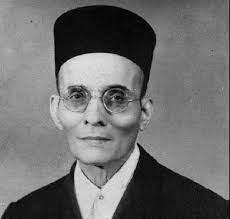
1. V D SAVARKAR

x80NBdbbAqqZobIYfMBfBhYB1RSoffrSSupFNsxATcKvtxtoj1VUTgQOrTIZdGgVg9o DPWaDWarKp61zOvYHisrsGQhtZybhyXrRIT6 6F9UGE2Mui 9CZf7ORISQHiZVJLEFPacAi34M0o6RpDBw
  • Born in 1883 at Nashik in Maharashtra.
  • Founded Abhinav Bharat Society (initially as Mitra Mela, 1899) along with brother G D Damodar in 1904. It was a secret society which also had connections with London.  
  • He was involved with India House (founded by Shyamji Krishna Varma in London to promote nationalist ideas among youth).
  • Savarkar went to London in 1906. He soon founded the Free India Society, along with Madam Bhikaji Cama based on the thoughts of the Italian nationalist Giuseppe Mazzini 
  • Functioned as president of Hindu Mahasabha from 1937 to 1943. He called against Quit India Movement.
  • Savarkar was convicted and sentenced to 50-years imprisonment also known as Kala Pani and transported in 1911 to the Cellular Jail in the Andaman and Nicobar Islands. Released in 1924.
  • He later joined Tilak’s Swaraj Party.
  • He advocated for the use of Hindi as a national language. He also fought against untouchability and caste-based discrimination.

Literary works of Savarkar

  • The History of the War of Indian Independence (on revolt of 1857)
  • ‘Hindutva: who is Hindu?’

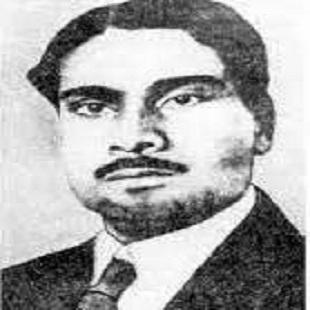
2. Dr. Chembakaraman Pillai

q0sFakTvJRFZJp6iaqEgnJQiPE vM7gEAiZX7n4
  • Born in Thiruvananthapuram in 15 September 1891. 
  • He started his struggle for freedom by protesting the Partition of Bengal in 1905. 
  • He joined with Bala Gangadhara Tilak in his resistance against the Partition of Bengal. When the British police tried to arrest him because of his revolutionary speeches against the Travancore State government, he escaped to Germany in 1908 with the help of his friend Sir Walter Williams Strickland.
  • At Berlin University, he formed International Pro-Indian Committee to gather the support of the German people for India’s freedom struggle.
  • He came in touch with many revolutionary Indian leaders in Germany like Hardayal, Raja Mahendra Pratap, Dr. Prabhakar, and A. C. Nambiar. 
  • He started a newspaper called Pro-India to spread the message of the Indian freedom movement. 
  • He participated in the First World War on the German side to defeat the British.
  • Armed with an engineering degree he joined the German navy as an officer in the cruiser Emden which attacked British ships and shelled several places in India.
  • Madras was shelled on 22 September 1914 after a fierce sea battle with British ships.
  • He met Mahatma Gandhi in South Africa. He was the Foreign Minister when a temporary Free Government of India was established in Afghanistan on 1 December 1915.
  • He met Subhash Chandra Bose in Vienna in 1919. Though he joined in the German army, he criticized even Adolf Hitler, when he humiliated India in his speech. 
  • Dr. Chidambaram Pillai died on 26 May 1934 in Germany under mysterious circumstances.

3. Vanchinathan Iyer

  • Vanchinatha Iyer or Vanchinathan was born in Shenkottai. Vanchinathan alias Sankara Iyer was the son of Shri Raghupathy Iyer. 
  • He had studied upto primary standard and joined the Forest Department thereafter. 
  • He participated in revolutionary activities against the Britsh.
  • On 17 June 1911, Vanchi who was 25, assassinated Robert Ashe, the district collector of Tirunelveli, who was also known as Collector Dorai.
  • He shot Ashe at point-blank range when Ashe's train had stopped at the Maniyachi Station, enroute to Madras. He committed suicide thereafter. The railway station has since been renamed Vanchi Maniyachi.
  • The mastermind behind the assassination was Nilakanta Brahmachari who went around the Madras presidency in 1910 recruiting cadres and hatching plots against the British. In this venture, he was accompanied by Shankar Krishna Iyer, Vanchinathan's brother-in-law, who introduced the men to each other. 
  • Along with a few other men, Nilakanta Bramhachari, Vaanchinathan, and Shankar Krishna Aiyar found an organisation called Bharatha Matha Sangam which plots the assassination of influential British men.

4. Thillaiaadi Valliammai

akjSf6brESvjSPd Gp KDQ6Oqr1cpIF YAkS1VaBUFKJk0rw0ygTwQQrjoiCoPcTitHLfynKZN fnqhpWw bg80DN89HSyD 0qpk0b P3Q9Px74x0ougN02K
  • She was a South African Tamil girl who worked with Mahatma Gandhi in her early years when she developed her nonviolent methods in South Africa fighting its apartheid regime.
  • She joined her mother in the march by women from Transvaal to Natal – which was not legally permitted without passes.
  • They were protesting against the judgement given by Justice Searle which made all marriages invalid if not registered under the registrar office or not performed according to the Christian rituals. 
  • She was imprisoned for the protest against the South African government. She was imprisoned for three months, but due to severe illness she died at the age of 16 soon after the release.