Environment

Cool Roof Policy in Telangana

Context: Telangana has become the first state to notify a Cool Roof Policy to effectively address the issue of heat waves and urban heat island. IPCC reports have highlighted that incumbent climate change will intensify heat & humidity in India. Under the policy, Telangana plans to achieve around 300 sq. km of cool roof area by 2028.

Cool Roofs

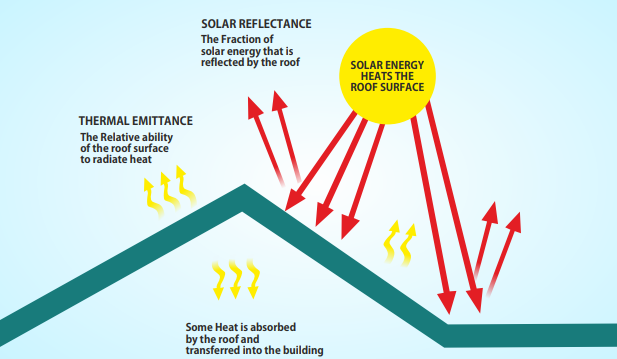
  • A Cool roof takes in less heat from sun than regular roofs. It stays relatively cool in the sun by reflecting (minimize solar absorption) and emitting thermal radiation (to help dissipate solar heat gain). 
  • Cool roofs reflect around 80% of sunlight while regular roofs reflect only about 20%, keeping buildings significantly cooler. 

Cool Roof techniques

  • Cool roof techniques can be broadly divided into three categories:
  • Coated Cool Roofs: These roofs involve the coating of a material or paint with high reflectivity on top of a conventional roof material to increase the roof surface's Solar Reflective Index (SRI). These are liquid applied coatings made of simple materials white in colour. Ex. Lime wash, Acrylic polymer, Plastic technology.
  • Membrane Cool Roofs: These roofs involve using pre-fabricated materials like membranes or sheeting to cover an existing roof to increase the roof surface's solar reflectance and thermal emittance. Ex. Polyvinyl chloride, bitumen based.
  • Tiled Cool Roofs: These roofs involve the application of high albedo, ceramic mosaic tiles or shingles on top of an existing roof or to a new roof. 
  • Green roofs and rooftop solar systems: Policy also supports application of Green Roofs and Rooftop Solar Systems. Green Roofs make use of vegetation to help the roof absorb less solar energy by providing a thermal mass layer to reduce flow of heat into a building. Vegetation is especially helpful in reflecting infrared radiation. 
  • Minimum Requirements Cool Roof Materials: For qualifying as a cool roof, roofs with slopes less than 20o shall have an initial solar reflectance of no less than 0.70 and initial emittance no less than 0.75. 
mfpJjGgckcG S5zqaBAZpsoUrGAxQ7KuY3nzw2JB49QsOx2wbyDN1ZT0jriFDJjKqch9JYnA6ZfMT kJwkI648x3ypnqYNtLiQi7w m87v0M9QEBORTMsdW4ZVuJpC02Ta9nGfnGZXaAkuYU I4row

Application of Policy

Mandatory cool roofing: Government, Non-residential & Commercial Buildings, Residential buildings with plot area more than 600 sq yards and Government assisted housing constructions.

Optional cool roofing: All other buildings

Benefits of Cool Roofs

  • Increased thermal comfort: Cool roofs can help keep indoor temperatures 2.1-4.3oC lower than households with traditional roofs. 
  • Climate freindly cooling solution: Cool roofs are estimated to reduce air conditioning costs by 20% of the building leading to saving of cost and electricity and lower greenhouse gas emissions. 
  • Limited maintenance and costs: Cool roofs need minimal maintenance and a cool protective coating can be reapplied periodically. Often initial material costs for cool roofs are comparable with traditional roofing materials and can also be applied on existing buildings. 
  • Longevity of roof: Application of cool roof increases the longevity of roof beneath it, by acting as a protective layer. 
  • Address Urban Heat Island Effect: City-wide installations of highly reflective roofs and pavements along with planting shade trees, has potential to reduce city’s ambient air temperature by 2oC in summer month. Thus, reducing urban heat island effect. 
  • Equitable solution to heat stress for poor and low-income households: Heats stress hits the poor the hardest due to lack of access to cooling and their houses are often made of heat-trapping materials such as tin sheets, asbestos, plastic or tarpaulin without sufficient ventilation leading to health hazards and reduced productivity. Cool roofs are especially relevant to provide thermal comfort to poor & low-income households. 

Other Initiatives for Cool Roofs

Million Cool Roofs Challenge: It is an initiative launched by Sustainable Energy for All (SEforAll) and NESTA Challenges in 2019 which awarded $125,000 in grants to 10 finalist teams based in South Africa, Bangladesh, Ivory Coast, Philippines, Indonesia, Kenya, Mexico, Niger, Rwanda & Senegal. In less than two years, collectevily the 10 countries managed to apply more than 1.1 million sq. m. of cool roofs.

Cool Roof Challenge: National Disaster Management Authority (NDMA) had launched inviting cities to announce targets and implement cool roofs in 2021.

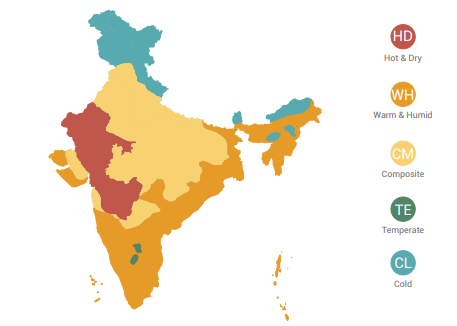
Heat Wave Vulnerability In India
zdv37yOQDgvp XYNS 7gqB3pqKEf76NdQs4V70aP23IxS uRDRox qggtthkvJEecvOYtHIsRMSv00Ch0n7uVfQCVD6OWXvLob3j8E6hVL7RoyQjHUDvsdzNYcHVCiJUMNNXao2AMUXl54s ZWma3g

Heatwave

  • A heatwave is an extended period of hot weather relative to expected conditions of the area at that time of year. 
  • Heat wave has emerged as one of the deadliest natural hazards often causing more deaths than all other natural hazards. 
  • Heat waves have a slow onset and are silent killers unlike other disasters. 
  • Greenhouse has emissions led Climate change has increased Earth’s temperatures by close to 1.10oC. Each year earth’s temperature cross previous limits. 
  • Meteorological events like La Nina and El Nino also cause localised warming and cooling of planet. In the Indian context, El-Nino particularly increases chances of heat waves in the Indian subcontinent. 
  • Urban Heat Island effect: This is a phenomena under which urban and suburban areas experience elevated temperatures compared to their outlying rural surroundings. The annual mean air temperature of a city with one million or more people can be 1 to 3°C warmer than its surroundings, and on a clear, calm night, this temperature difference can be as much as 12°C. Heat Island effect leads to increased heat risk in cities. Reasons for Heat Island effect are: Air Pollution which traps heat, concretisation & blackening of surfaces which traps heat. 
  • Large and informal workforce of India makes India particularly vulnerable to heat waves who often work in less ventilated buildings or in the outdoors. 

IMD Criteria for Heatwaves: IMD declares a heatwave when:

  • Temperature of a place crosses 40oC in the plains, 37oC in coastal areas and 30oC in the hills.
  • Temperature of a place is 4.5-6.4oC more than the normal temperature for the region on that day.
  • Temperature of a place crosses 4.5oC.

Way forward for Heat Wave

  • All States to formulate & implement Heat Action Plans in line with NDMA’s guidelines on Heat Wave. 
  • Need to strengthen existing Early Warning Systems.
  • Need for understanding the local thresholds of Heat Wave.
  • Data on Heat: Automatic Weather Stations networks needs to be expanded in cities and states. 
  • Vulnerability analysis: A comprehensive, country-wide assessment of heat vulnerability and hyper-local heat action plans is required. 
  • Heat waves should be notified as disasters at the national level under existing disaster relief policies. Currently, several states have declared heat waves as a local disaster. Ex. Odisha, Maharashtra etc. 
  • Land use change: Promoting Urban forests/farms, community gardens, rejuvenation of wetlands and shading of areas with trees.
  • Building materials: Promoting Green roofs and other materials that increase albedo, LEED compliant green building architecture, Home insulation. These solutions should be made part of building codes and effectively enforced. 
  • Heat related work standards should be notified by Ministry of Labour and public health institutes to make workers work easily in high heat situations.
  • Provisions for Emergency: First Aid Kits, Drills for Heat Waves, Heat Wards in Hospitals etc. 
  • Long Term solutions: Green Transition, Limiting Emissions and controlling climate change. 

A "seed bank" of Aravallis-native plants is located at the Asola Bhatti sanctuary

Context:  After several years of efforts to gather seeds from all over the city and other states, a "seed bank," which gathers and stores seeds of species of plants that are native to the Aravallis, is gradually taking shape at a nursery at the Asola Bhatti Wildlife Sanctuary.

More about news:

  • It began in 2015 to provide saplings that are native to the city and bring back species that are now difficult to find in the city.
  • The project being implemented jointly by the Forest Department and the Bombay Natural History Society (BNHS).
  • For this project, seeds have been drawn from parts of Delhi, Rajasthan, Madhya Pradesh, Uttar Pradesh, Uttarakhand, Haryana, and Bihar.
  • Species that are specific to the Aravallis are identified by studying model sites that have intact forests with very little disturbance, like Mangar Bani in Faridabad. Efforts are then made to replicate these old-growth forests.
  • Among the additions to the seed bank are seeds of trees like salai and phalsa- species that are difficult to find in Delhi. These seeds were brought from Rajasthan and Haryana.

About Asola Bhatti Wildlife Sanctuary

Location

  • It covers area on the Southern Delhi Ridge of Aravalli hill range on Delhi-Haryana border lies in Southern Delhi as well as northern parts of Faridabad and Gurugram districts of Haryana state.
  • It is the part of the Northern Aravalli leopard wildlife corridor, an important wildlife corridor which starts from the Sariska National Park in Rajasthan, passes through Faridabad and Gurugram districts of Haryana and ends at Delhi Ridge.

Fauna

  • This is an important habitat for the Indian leopard, blackbuck striped hyena, jungle cat, golden jackal, Indian hare, Indian boar, black buck, sambar deer, spotted deer and hog deer among others. Endangered species in the sanctuary include red-headed vulture and egyptian vulture. Near-threatened species include painted stork, white-faced ibis and european roller. 

Indian Seed Vault

  • It is a secure seed bank located in a high-altitude mountain pass on the Chang La in Ladakh, India. 
  • It was built in 2010 jointly by the Defence Institute of High-Altitude Research and the National Bureau of Plant Genetic Resources.
  • It is the second largest seed bank in the world.

Rising Antarctic ice melt will dramatically slow global ocean flows study says

Context: New research published in the journal Nature, has found that rapidly melting Antarctic ice is dramatically slowing down the flow of water through the world’s oceans, and could have a disastrous impact on global climate, the marine food chain and even the stability of ice shelves.

What is overturning circulation?

  • The “overturning circulation” of the oceans, driven by the movement of denser water towards the sea floor, helps deliver heat, carbon, oxygen and vital nutrients around the globe.
  • Ocean overturning allows nutrients to rise up from the bottom.

What the study found

  • As temperatures rise, freshwater from Antarctica’s melting ice enters the ocean, reducing the salinity and density of the surface water and diminishing that downward flow to the sea’s bottom.
  • According to a study, deep ocean water flows from the Antarctic could decline by 40% by 2050.
  • Disrupting the base of the food chain: The slow flow of water near Antarctica will slow down the whole circulation and will reduce the number of nutrients that get returned from the deep ocean back up to the surface.
  • Leaving more CO2 in the atmosphere: The ocean would not be able to absorb as much carbon dioxide as its upper layers become more stratified, leaving more CO2 in the atmosphere. 
  • The study showed that warm water intrusions in the western Antarctican ice shelf would increase.

About Antarctica

Definition of Antarctica: All the Land and ice shelves to the south of 60-degree latitude.

Antarctica Treaty

  • It was signed in Washington on 1 December 1959 by the twelve countries whose scientists had been active in and around Antarctica during the International Geophysical Year (IGY) of 1957-58. 
  • It entered into force in 1961 and has since been acceded to by many other nations. 
  • The total number of Parties to the Treaty is now 56 (Including India).

Provisions:

  • Antarctica should be used only for peaceful purposes.  No country should build military bases.
  • Freedom of scientific investigation in Antarctica.
  • No country should claim sovereignty over Antarctica based on setting up of Research stations.
  • No Nuclear explosions or disposal of radioactive wastes
  • Countries to take appropriate efforts to abide by the provisions of the treaty.

India and Antarctica:

  • India signed the Antarctic Treaty in 1983.
  • India ratified the Convention on the Conservation of Antarctic Marine Living Resources in 1985.
  • India signed Protocol on Environmental Protection to the Antarctic Treaty in 1998. (Madrid Protocol)
  • India's research stations in Antarctica: Dakshin Gangotri (De-commissioned now); Maitri and Bharati. Managed by National Centre for Polar and Ocean
  • Research (NCPOR), Goa under the Ministry of Earth Sciences.
  • Nov 2021: India launched its 41st Scientific Expedition to Antarctica.

Proposed FCA changes to offset SC's forest order

Context: The Forest (Conservation) Amendment Bill, introduced in the Indian Parliament, proposes changes that will undermine the landmark Godavarman judgment of 1996, which has provided the basis for forest conservation in India for over 27 years.

Proposed changes to Forest Conservation Act

  • The proposed amendments seek to limit the applicability of the Forest Conservation Act, potentially allowing non-forest activities on over one-third of Aravalis in Gurgaon and Faridabad districts. 
  • It would also exempt certain land parcels from prior approval requirements for non-forest use, including linear rail and road networks and land parcels not recorded as forest in government records.
  • The proposal suggests exempting specific types of lands from the Act in order to expedite the implementation of national strategic and security-related projects.
  • It also empowers the central government to specify, by order, the terms and conditions subject to which any survey, such as, reconnaissance, prospecting, investigation or exploration including seismic survey, shall not be treated as non-forest purpose.

Godavarman Judgement 1996

  • Supreme Court passed an interim order directing that tree-felling and non-forestry activity in forests across the country be stopped. 
  • The path-breaking order re-defined the meaning of forests and extended protection to all areas with natural forests irrespective of their ownership. 
  • It laid down that ‘forests’ will be understood by its dictionary meaning, and the provisions of the Forest (Conservation) Act 1980, shall apply to all thickly wooded areas. 
  • States were directed to form expert committees to identify forests as defined and file reports. 

Forest Conservation Act 1980

  • It was passed in India in 1980 to protect forests and wildlife. 
  • The act regulates the use of forest land for non-forestry purposes, such as mining, industry, and construction. 
  • Any diversion of forest land for non-forestry purposes requires prior approval from the central government. 
  • The act establishes a National Committee for the Protection of Forests and Wildlife to advise the government on forest conservation and wildlife protection. 
  • The act provides guidelines for compensatory afforestation, meaning that if any forest land is diverted for non-forestry purposes, an equivalent area of land should be reforested. 

Forest in India

  • Forest Survey of India (FSI), Dehradun, an organization under the Ministry carries out the assessment of forest cover of the country biennially since 1987 and the findings are published in India State of Forest Report (ISFR). 
  • The forest cover assessment is a wall – to – wall  mapping exercise based on remote sensing supported by intensive ground verification and field data from National Forest Inventory. 
  • As per latest ISFR 2021, the total forest cover of the country is 7,13,789 square kilometre which is 21.71% of the geographical area of the country. 
  • The current assessment shows that the total forest cover of the country has increased by 1540 square kilometre, tree cover has increased by 721 square kilometre and total forest and tree cover has increased by 2261 square kilometre at the national level as compared to the previous assessment i.e. ISFR 2019.

Efforts to increase forest cover

National Mission for Green India (GIM)

  • To increase the forest cover in the country, afforestation programmes are taken up under various Centrally Sponsored Schemes of the Ministry such as National Mission for a Green India (GIM).
  • It is one of the eight Missions outlined under the National Action Plan on Climate Change. 
  • It aims at protecting, restoring and enhancing India’s forest cover and responding to Climate Change by undertaking plantation activities in the forest and non- forest areas. 

Nagar Van Yojana (NVY) 

  • The Ministry of Environment, Forests & Climate Change is implementing NVY since the year 2020 which envisages developing 400 Nagar Vans and 200 Nagar Vatika in the country during the period of 2020-21 to 2024-25. 
  • Its objective is to significantly enhance the tree outside forests and green cover, enhancement of biodiversity and ecological benefits to the urban and peri-urban areas apart from improving quality of life of city dwellers with the funds under the National Fund of the Compensatory Afforestation Fund Management and Planning Authority (CAMPA).

Afforestation activities are also taken up under various programmes/funding sources such as Mahatma Gandhi National Rural Employment Guarantee Scheme, Compensatory Afforestation Funds under Compensatory Afforestation Fund Management and Planning Authority (CAMPA). In addition, plantations are also done by various departments, Non-Government Organizations, Civil Society, Corporate bodies etc.

Chinese Sky Lantern festival in Goa

Context - An event in Goa aimed at recreating “the traditional Chinese sky lantern festival” by releasing candle-lit paper lanterns into the sky has sparked outrage among environmentalists and wildlife conservationists because it was due to be held at a beach near a nesting site of the endangered Olive Ridley turtles.

Olive Ridley

  • The Olive ridley turtles are the smallest and most abundant of all sea turtles found in the world, inhabiting warm waters of the Pacific, Atlantic and Indian oceans.
  • These turtles are carnivores and get their name from their olive coloured carapace.
  • They are best known for their unique mass nesting called Arribada, where thousands of females come together on the same beach to lay eggs.
    • The olive ridley turtles turn up in millions for mass nesting along the Odisha coast every year namely at three river mouths: Dhamara, Devi and Rushikulya. 
    • Gahirmatha beach off Bay of Bengal coast in Kendrapara district is acclaimed as the world’s largest nesting ground of these turtles.
    • It extends from Dhamra River mouth in the north to Brahmani river mouth in the south. 
    • The wetland is represented by 3 Protected Areas, the Bhitarkanika National Park, the Bhitarkanika Wildlife Sanctuary and the Gahirmatha Marine Sanctuary.
Diagram, map

Description automatically generated
  • The species is listed as Vulnerable in the IUCN Red List, Appendix 1 in CITES, and Schedule 1 in Wildlife Protection Act, 1972.
  • They are extensively poached for their meat, shell and leather, and their eggs.
  • However, the most severe threat they face is the accidental killing through entanglement in trawl nets and gill nets due to uncontrolled fishing during their mating season around nesting beaches. In recent times, plastic pollution has also emerged as one of the greates threats to these creatures. 
  • To reduce accidental killing in India, the Odisha government has made it mandatory for trawls to use Turtle Excluder Devices (TEDs), a net specially designed with an exit cover which allows the turtles to escape while retaining the catch.

Brahmani – Baitarni Delta

The basin consisting of Brahmani and Baitarni extends over states of Odisha, Jharkhand and Chhattisgarh having an area of 51,822 Sq.km. The basin is bounded by the Chhotanagpur Plateau on the north, by the ridge separating it from Mahanadi basin on the west and the south and by the Bay of Bengal on the east. The lower reaches of this basin near the deltaic area are subject to floods. Since Mahanadi, Brahmani and Baitarani are interconnected near their delta, worst flood occur when there is simultaneous heavy rains in all the three catchments. Prolonged submergence and breaching of embankments are common occurrences during floods. Floods are also caused from cyclonic storms since the coastal areas of the basin are cyclone prone.

Bhitarkanika national park is situated at the mouth of Brahmani, Baitarni and Dhamra rivers which is famous for saltwater crocodiles. Dense mangrove forests are found here. There also lies Gahirmatha beach and Gahirmatha wildlife sanctuary which is world’s largest ground for Olive Ridley Turtles. 

Marine Turtles

Five species of sea turtles are known to inhabit Indian coastal waters and islands.

  1. Olive Ridley turtle 
  2. Green turtle
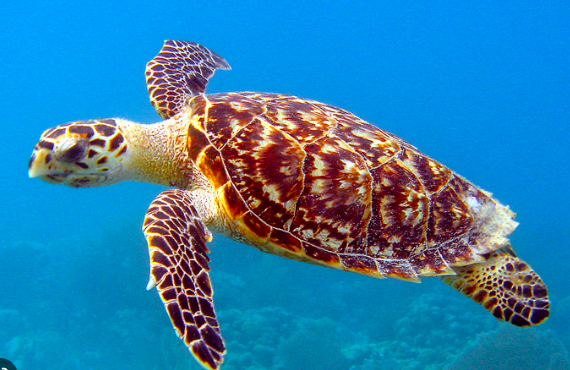
  3. Hawksbill turtle
  4. Loggerhead turtle
  5. Leatherback turtle

Except the Loggerhead, the remaining four species nest along the Indian coast.

Difference between Tortoise and Turtle

All tortoises are in fact turtles—that is, they belong to the order Testudines or Chelonia, reptiles having bodies encased in a bony shell—but not all turtles are tortoises.

TurtleTortoise
CaRxSzKmpRfPTjmSIPamm9uh7R7 SiBZxzu dAvTjL8N8 Ckk7pzs7HNAY7iEXhf xxlBWZPRax7KeacMBJ6cfYw3JzPMVkZsjhAgVaS4VG obzn4B98SG1ugORBPjVfByctm5azt6mOyMk0XAOMZGo0PRPCaDrOOndP7kh9TjvvhwlG aO87nP6YMYM9szH0IuKN rEp9FlJrY7NHqXTkimxvMjnV4 ZgWJ7qzTXcTbDATnzCo RY2mYGhHkw
It is aquatic and marine formThey are exclusively on land
Comparatively smaller in sizeLarger
Some turtles are fish eatersThey are herbivorous and feed entirely on vegetation
Their head is partially withdrawn into the shellIt can be completely withdrawn into the shell
Turtles have thinner, more water-dynamic shells.  Turtle shells are more streamlined to aid in swimming.Tortoises have more rounded and domed shells
Turtles will have more flipper like legs, or webbed feet to make it easier to cruise through the water.Tortoises have club-like forelegs and 'elephantine' hind legs. Because tortoise are often larger and heavier, their elephantine hind legs help them move around and carry the extra weight

Coastal Vulnerability Index

Context: Indian National Centre for Ocean Information Services (INCOIS) has carried out coastal vulnerability assessment for entire Indian coast at states level to prepare a Coastal Vulnerability Index (CVI).

Coastal Ecosystem

  • The highly productive coastal zone, intermediate between land and sea, is very vulnerable to coastal hazards because of its dynamic nature.
  • The coastal ecosystem provides various ecosystem goods and services for human well-being and the livelihood of coastal communities. 
  • Due to their productivity, coastal zones are also crucial for long-term global sustainability and economic development. 

What is coastal vulnerability?

  • It is the identification of coastal resources at risk due to coastal hazards.
  • A coastal hazard is defined as the occurrence of a phenomenon (e.g., a tropical storm/Sea level rise/Tsunami etc.), which has the potential for causing damage to, or loss of, natural ecosystems, buildings, and infrastructures.
  • Climate change poses a serious threat to the physical, economic, and social systems of the coastal environment.
  • Unprecedented pressure from population growth and development activities has had a negative impact on natural coastal phenomena.
  • In tropical countries, the coastal zone is constantly affected by cyclonic activities and storm surges, resulting in coastal erosion, inundation, and seawater intrusion, which has greatly increased the vulnerability of the coastal environments.
  • Environmental degradation, loss of mangroves, land conversion for shrimp farming, and other developmental activities have also increased coastal vulnerability to natural and anthropogenic hazards. 
  • Short term vulnerability: Due to Cyclone / Storm surge/ Tsunami / Flash rain Flooding / Earthquake in the coastal area etc. 
  • Long term vulnerability: Due to Sea level rise (SLR) / Ocean acidification / Coastal land subsidence etc.

Vulnerability of the Indian coastline

  • India has a 7500-km-long coastline with nine states and four union territories are highly susceptible to climate change. 
  • About 35% of the Indian Population live within 100 km from the shoreline.
  • Most of the coastal areas are low lying and vulnerable to Oceanogenic disasters such as Tsunamis, Storm Surges, Sea-level rise.
  • Dec 26, 2004, Tsunami resulted in a loss of 18,045 deaths and 6,47,599 persons displaced.
  • Increased frequency and intensity of the disasters (Uttarakhand flood 2013, Phailin Cyclone 2013.

About Coastal Vulnerability Index

  • It is a quantitative tool that combines physical and socioeconomic indicators to evaluate how vulnerable coastal areas are to the effects of climate change, including but not limited to sea level rise, storm surges, and erosion. 
  • INCOIS has prepared the Coastal Vulnerability Index (CVI) maps for the entire coastline of India to assess the probable implications of sea-level rise along the Indian coast.
  • Parameters: shoreline change rate, sea-level change rate, coastal elevation, coastal slope, coastal geomorphology, significant wave height and tidal range. 

INCOIS

  • It was established as an autonomous body in 1999 under the Ministry of Earth Sciences (MoES) and is a unit of the Earth System Science Organisation (ESSO).
  • It is mandated to provide the best possible ocean information and advisory services to society, industry, government agencies and the scientific community through sustained ocean observations.
  • Its mission it to provide ocean data, information and advisory services to society, industry, the government and the scientific community through systematic and focused research in information management and ocean modelling.
  • Its headquarters is situated at Hyderabad.

How to manage India’s solar PV waste problem?

Context - In the last few years, there has been a concerted push from policymakers in India to transition to a circular economy and to, among other things, enable effective waste management. But waste management in the solar photovoltaic (PV) sector still lacks clear directives.

What is PV waste?

  • It is the electronic waste (e-waste) generated by discarded solar panels and Photo-voltaic (PV) devices.
  • Photovoltaic (PV) devices contain semiconducting materials that convert sunlight into electrical energy. 
  • A single PV device is known as a cell, and these cells are connected together in chains to form larger units known as modules or panels. 
  • Although up to 90% of the components are recyclable, many PV modules contain heavy metals such as cadmium, copper, lead, antimony or selenium, and when they are taken out of service or broken, they may be classified as hazardous waste.

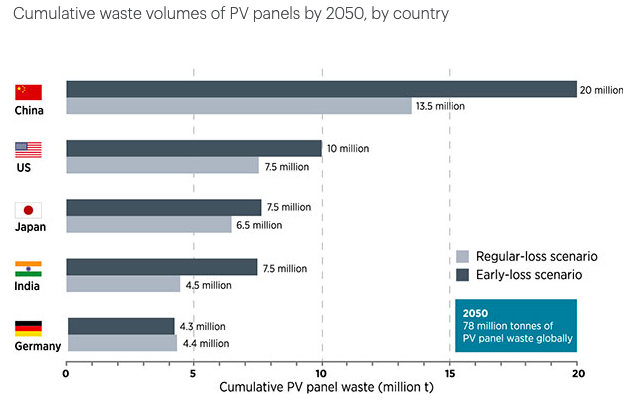
While photovoltaics generate only about 3 percent of global electricity, they consume 40 percent of the world’s tellurium, 15 percent of the world’s silver, a substantial chunk of semiconductor-grade quartz and lesser amounts of indium, zinc, tin and gallium. A report, prepared jointly by the International Renewable Energy Agency (IRENA) and the International Energy Agency Photovoltaic Power Systems Programme (IEA-PVPS) highlights that recycling or repurposing solar PV panels at the end of their roughly 30-year lifetime can unlock an estimated stock of 78 million tonnes of raw materials and other valuable components globally by 2050. If fully injected back into the economy, the value of the recovered material could exceed USD 15 billion by 2050.

Present status of Solar PV waste in India

  • According to a report prepared by the National Solar Energy Federation of India, India could generate over 34,600 tonnes of cumulative solar waste in India by 2030. 
  • India currently considers solar waste a part of electronic waste and does not account for it separately. Moreover, there is no commercial raw material recovery facility for solar e-waste operational in India.
  • A committee had been constituted under the chairmanship of the Ministry’s Secretary to propose an action plan to evolve a “circular economy” in solar panel, through reuse/recycling of waste generated.
Iyqd qWoT G5zyajf94X5OfuAE69RxAmgTMM9hbdlLADZLrjwRW9yRgl7cMEInfZi4rOcOx64bpmon724UwVxmhVG0fQ1Gu9dlaoheZ8Eh3YTl0tet6QP

Challenges in India

  • Informal handling - Only about 20% of the waste is recovered in general; the rest is treated informally. As a result, the waste often accumulates at landfills, which pollute the surroundings. Incinerating the encapsulant also releases sulphur dioxide, hydrogen fluoride, and hydrogen cyanide into the atmosphere.
  • No segregation – PV waste is clubbed with e-waste in India generally. 
  • High cost of recycling - Recycling a solar panel cost between $20 and $30, according to the National Renewable Energy Laboratory; sending it to a landfill costs $1-2.
  • Lack of incentives - The market to repurpose or reuse recycled PV waste is minuscule in India due to a lack of suitable incentives and schemes in which businesses can invest.

What can we do about them?

  • Promote recycling - According to a 2021 report, approximately 50% of the total materials can be recovered. The domestic development of PV waste recycling technologies must be promoted through appropriate infrastructure facilities and adequate funding. New business models, incentives or issues of green certificates to be provided to encourage the recycling industry to participate more.
  • Environmental disposal and recycling of solar waste could be part of the power purchase agreement SECI / DISCOMS / government signs with project developers.
  • Dedicated Policy formulation - India should formulate and implement provisions specific to PV waste treatment within the ambit of the e-waste guidelines. EPR for the manufacturer and developers to take responsibility for end-of-life the solar panel. 
  • Ban on Landfills: Solar panel waste is harmful to the environment as it contains toxic metals and minerals that may seep in the ground.
  • Central insurance or a regulatory body should be set up to protect against financial losses incurred in waste collection and treatment. 
  • Research and Development: Innovation in design may have an impact on the type of waste they generate; technology advancements will be significant in reducing the impact of renewable energy waste. New panels, for example, use less silicon and produce less waste during the manufacturing process.
  • Awareness drives - Pan India sensitisation drives and awareness programmes on PV waste management will be beneficial.

Global best practices

Europe - EU imposes responsibility for the disposal of waste on the manufacturers or distributors who introduce or install such equipment for the first time.UK - PV producers will need to register and submit data related to products used for the residential solar market (B2C) and non-residential market.

Australia - announced a $2 million grant as part of the National Product Stewardship Investment Fund to develop and implement an industry-led product stewardship scheme for PV systems.

Gravity Based Batteries in Kolar Gold Field

Context - An Australian renewable energy company’s unique Scheme to generate electricity may resuscitate the fortunes of one of India’s iconic but defunct gold mines, namely the Kolar Gold Fields (KGF), in Karnataka.

How do Gravity Batteries work?

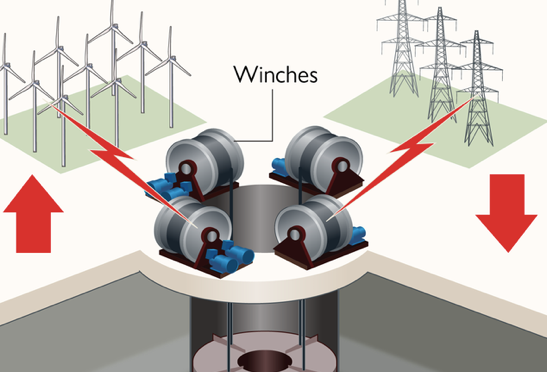
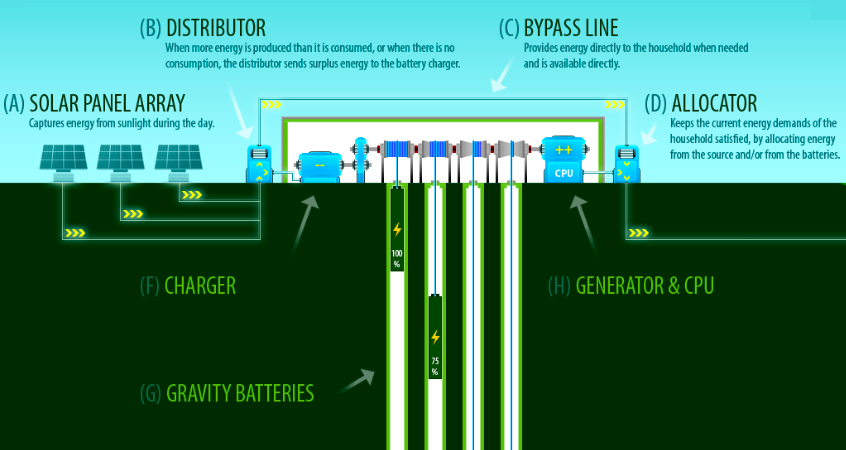
  • When there is plenty of green energy, the batteries use the power to lift a heavy weight either high into the air or to the top of a deep shaft.
  • Then when the renewables are limited, winches gradually lower the weight, release the load, powering a generator with the downward gravitational pull from the movement of the cables.
  • This would mean you could store power captured by a solar farm during the day when the sun is shining, and then release that electricity to the grid in the evening when demand rises because people are at home using electricity to watch TV, cook and heat their homes.
Diagram

Description automatically generated
Diagram

Description automatically generated with low confidence

Gravity batteries vs Lithium-ion

Gravity batteries are not the only way renewable energy can be stored, lithium-ion batteries dominate the market, and some experts favour green hydrogen. But gravity is free, clean and easily accessible, without the complications of producing hydrogen or the environmental and human rights concerns linked to some lithium mining.

Storing power in mineshafts

Full-scale energy stores in former mines can make good use of existing infrastructure and create jobs in exactly those areas where they’re most needed. The emotional aspect of this is also important. Whole communities once worked in the mines - and generally, they’re very happy to see them used for storing renewable energy.”

Note - The World Economic Forum founded the Global Battery Alliance (GBA) in 2017 to establish a sustainable battery supply chain by 2030. The body of over 100 leading international organizations, NGOs, industry actors, academics and multiple governments became independent in 2021 and its membership is collectively working towards the goals set out in the GBA 2030 Vision. The GBA 2030 Vision is to foster a circular, responsible and just battery value chain.

The GBA hosts Action Partnerships to achieve its vision of a sustainable battery value chain by 2030, including:

The Battery Passport Action Partnership: to establish global criteria, data and benchmarks for a sustainable and transparent battery market;

Critical Materials: to ensure critical materials are sourced, processed, manufactured and recycled in a manner that minimizes environmental impacts, protects human rights and creates benefits for stakeholders along the value chain.  

Energy Access & Circularity: to ensure energy access in emerging economies, reduce lead poisoning and promote circularity.

Govt to re-examine plan to shift Gir lions to Kuno

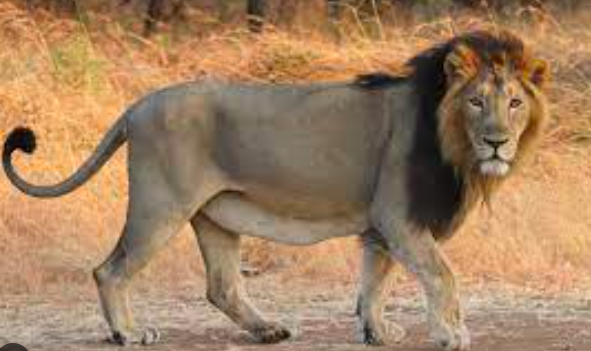
Context: The Union Enviornment Ministry and National Tiger Conservation Authority(NTCA) have recently decided to re-examine the entire aspect of translocation of Asiatic lions from Gir to Kuno from an expert’s perspective”.

About Asiatic Lion

TqPf5TouAsI7
  • The Asiatic lion, also known as the Indian lion or Persian lion, is a population of Panthera leo leo that currently survives in the wild only in India.
  • Habitat: They live in a compact tract of dry deciduous forest and open grassy scrublands.
  • Distribution (subheading)
    • Historically, it inhabited much of the Middle East to northern India.
    • Since the turn of the 20th century, its range has been restricted to Gir National Park and the surrounding areas in the Indian state of Gujarat. 

Characteristics

  • They are slightly smaller than African lions.
  • The most striking morphological character is a longitudinal fold of skin running along the belly.
  • The colour of their fur varies from buffish-grey with occasional silvery tones, to ruddy-tawny, covered with black spots.

Conservation Status

  • IUCN Red List: Endangered 
  • CITES: Appendix I
  • Wildlife (Protection) Act 1972: Schedule I
  • State Animal of Gujarat

About Gir National Park

  • Location: Gir is a dry deciduous forest ecosystem in the Saurashtra region of Gujarat. It is the abode of the last surviving population of the free ranging Asiatic Lion 
  • Flora: It consists of teak with an admixture of deciduous trees, including sal, dhak, and thorn forests.
  • Fauna: Asiatic lions, leopards, wild pigs, spotted deer, nilgai, four-horned antelope, and chinkaras.

Arif and his Saras: The special bond between crane and Indian farmer

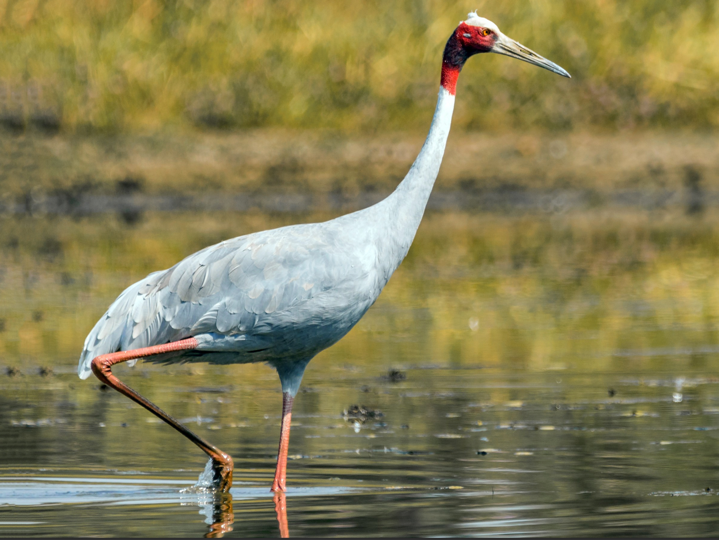
Saras Crane

6jGOvuVu5 udKatQBA9rw2fIMX6vo2sq7d7JDSYAw7j jE8wmydxSE6DZITaVT9yx2MxayWGgHYadi7OX
  • It is the tallest flying bird in the world standing 152-156 cm tall with a wingspan of 240cm. It is a large nonmigratory crane.
  • Scientific name: Grus Antigone
  • It is a social creature, found mostly in pairs or small groups of three or four.
  • Known to mate for life with a single partner, its breeding season coincides with heavy rainfall in monsoon.
  • It has three disjunct populations in the Indian sub-continent, south-east Asia, and northern Australia with an estimated global population of 25,000-37,000 individuals. 
  • In the Indian subcontinent, it is found in northern and central India, Terai Nepal, and Pakistan. 
  • It was once a common site in the paddy fields of Uttar Pradesh, Bihar, Rajasthan, West Bengal, Gujarat, Madhya Pradesh, and Assam. 
  • The Sarus crane is known for its ability to live in association with humans, inhabiting open, cultivated, well-watered plains, marshlands and jheels. 
  • IUCN status: Vulnerable
  • It is listed under schedule IV of Wildlife Protection Act, 1972.

Major Threats

  • Loss and degradation of wetlands, as a result of drainage and conversion to agriculture. 
  • Ingestion of pesticides. 
  • The hunting of adults and collection of eggs and chicks for trade, food, medicinal purposes and, in certain areas, to help prevent damage to crops. 
  • Collision with power lines poses a significant threat in parts of its range.

50 years of Project Tiger & Tiger translocation

Context:

  • Project Tiger is in its 50th year since its launch in 1973, in India. 
  • In its 50th year, India has signed an MOU with Cambodia for reintroducing tigers (species: Panthera tigris) there through translocation. 
  • In Cambodia the species have become extinct.
  • So far, India has only translocated tigers within the country, not internationally. This will be the first time India will do so.
  • In 2022, African Cheetahs were successfully translocated from Namibia to India. It was the first wild to wild intercontinental translocation.

About Project Tiger

Background

  • It was launched in 1973 from Jim Corbett National Park, Uttarakhand to save the declining tigers population. It is a major wildlife conservation project in India.
  • At that time, Project Tiger included 9 tiger reserves spread over 18,278 sq km. 
  • It is governed by the Wildlife Act of 1972.
  • The initiative is funded by the Union Govt. of India and administrated under the Ministry of Environment, Forests and Climate Change.
  • National Tiger Conservation Authority (NTCA) is the immediate supervising agency.

Objectives

  • To identify factors causing a reduction in tiger habitats and mitigate them through suitable management practices. 
  • To maintain a viable tiger population for their economic, ecological, cultural, and aesthetic significance. 

Present Status

  • Currently, there are 53 tiger reserves covering more than 75,000 sq km (approximately 2.4% of the country’s geographical area) across India. 
  • With the current population of about 3,000 tigers, India harbours more than 70% of global wild tiger population, which is increasing at an annual rate of 6%.
  • India has the largest number of CAT-accredited tiger reserves in the world at 17.
  • Compensation for voluntary village relocation has also been enhanced from Rs 10 lakh per family to Rs 15 lakh in order to aid tiger conservation.

Conservation Status

  • Indian Wildlife (Protection) Act, 1972 - Schedule 1
  • International Union for Conservation of Nature (IUCN) Red List: Endangered.
  • Convention on International Trade in Endangered Species of Wild Fauna and Flora (CITES): Appendix I.

Why is India’s CAMPA at odds with new IPCC report?

Context - Synthesis Report of the Intergovernmental Panel on Climate Change (IPCC), a U.N. expert body, states that not degrading existing ecosystems in the first place will do more to lower the impact of the climate crisis than restoring ecosystems that have been destroyed — a finding that speaks to an increasingly contested policy in India that has allowed forests in one part of the country to be cut down and ‘replaced’ with those elsewhere.

Background - To compensate the loss of forest area and to maintain the sustainability, the Government of India came up with a well-defined Act, known as CAMPA (Compensatory Afforestation Fund Management and Planning Authority).

Key features of the CAMPA Act

  1. To compensate the loss of forest area and to maintain the sustainability, the Government of India came up with a well-defined Act, known as CAMPA (Compensatory Afforestation Fund Management and Planning Authority).
  2. The law establishes the National Compensatory Afforestation Fund under the Public Account of India, and a State Compensatory Afforestation Fund under the Public Account of each state.
  3. These Funds will receive payments for: (i) compensatory afforestation, (ii) net present value of forest (NPV), and (iii) other project specific payments. 
  4. The National Fund will receive 10% of these funds, and the State Funds will receive the remaining 90%.
  5. According to the Act’s provision, a company diverting forest land must provide alternative land to take up compensatory afforestation.
  6. For afforestation, the company should pay to plant new trees in the alternative land provided to the state.
In 2002, the Supreme Court had observed that collected funds for afforestation were under-utilised by the states and it ordered for centrally pooling of funds under ad hoc Compensatory Afforestation Fund.
The court had set up the ad hoc National Compensatory Afforestation Fund Management and Planning Authority (CAMPA) to manage the fund. In 2009, states had also set up state CAMPAs that received 10 per cent of funds from the national CAMPA to use for afforestation and forest conservation.

NET PRESENT VALUE- ANALYSIS

Under the Forest Conservation Act, 1980 (FCA), developers who use forest land for their projects are required to pay a one-time monetary valuation, called Net Present Value (NPV), to the government in lieu of cutting down forests.

It depends on factors such as the quality and type of forests. Since 2009, the government has been charging between Rs. 438,000 and Rs. 1.04 million as the NPV for diverting every hectare of forest.According to a 2008 Supreme Court order, the NPV was supposed to be revised by the Indian government in three years.

But it failed to do so despite recommendations from several committees.In January 2021, the Union Ministry of Environment, Forest and Climate Change (MoEFCC) proposed to hike the NPV by 1.51 times which was based on the Wholesale Price Index (WPI).

However, while doing so, it set aside the recommendation of a four-time increase in the NPV by another expert group the ministry had constituted earlier in 2014.

Existing Issues

  • Against Ecological principles – The act allows afforestation activities to be taken place in some other areas. New forests cannot replace the age old natural forests. For e.g. Creating single species plantations in, say, Haryana does not really come close to a natural sal forest lost to a development project in, say, Central Indian forests in terms of biodiversity, local livelihoods, hydrological services, and sequestered carbon,
  • Methodology – Experts feel that the NPV is miscalculated and is undervalued as it does not take ecosystem services into account while calculating the value. 
  • Non revision - According to a 2008 Supreme Court order, the NPV was supposed to be revised by the Indian government in three years. But it failed to do so despite recommendations from several committees.
  • Underutilization of funds - The FSI collected data on total money allocated by the central government to the state government and forest cover in India between 2009-10 and 2016-17Its analysis showed that funding by the central government increased at a rate of 84.67 per cent in the period, but the forest cover increased by only 2.42 per cent. So, increase in CAMPA funding by the central government has clearly not resulted in significant increase in forest cover.
  • Misutilization of funds - Several state governments are not utilising it properly. An amount of Rs 86 lakh from CAMPA funds meant for afforestation was reportedly spent on litigation work in Punjab.
  • Lack of focus on species specific plantation - At several places, the loss of natural species is compensated with plantation of non-native species in the name of the artificial plantation. It serves as a threat to even the existing ecosystem.

Way ahead?

The central government should adopt the concept of outcome budgeting for allocation of funds to the state government in which funding will be done on instalment basis by checking the outcome of previous funds. Then, state governments should restore the existing forests rather than creating new ones.