Context: Germany is expected to present a proposal to India for the sale of advanced conventional submarines through the government-to-government route. The Navy, which is staring at a dwindling sub-surface fleet, is looking to procure six advanced diesel-electric submarines under Project-75I estimated to cost over ₹45,000 crore.
Background
In January 2020, the Defence Acquisition Council (DAC) shortlisted Mazgaon Docks Ltd. (MDL) and Larsen & Toubro (L&T) as the Indian partners for the P-75 deal, the first to be processed under the strategic partnership model of the procurement procedure.
The five foreign original equipment manufacturers (OEM) are Daewoo Shipbuilding & Marine Engineering (South Korea), Naval Group (France), Navantia (Spain), Rosoboronexport (Russia) and Thyssenkrupp Marine Systems (TKMS, Germany).
About Project 75I
In June 1999, the Cabinet Committee on Security approved a plan for the Indian Navy to induct indigenously build and induct submarines by 2030. It was broken down in two phases — the P-75 and P-75I.
Under the first phase of P-75, signed in 2005, India and France signed a $3.75 billion contract for building six Scorpene class submarines. The executing company on the Indian side was Mazgaon Docks Ltd, and on the French side, it was DCNS, which is now called Naval Group.
The first submarine under the project was commissioned in December 2017. Subsequently, the other five have been built and on 20 April, INS Vagsheer was launched and would be commissioned by 2023.
The P-75I phase envisages the construction of six conventional submarines with better sensors and weapons and the Air Independent Propulsion System (AIP).
The Nirmala Sitharaman-headed Defence Acquisition Council cleared the project in 2019 under the strategic partnership model.
As per the plan, an Indian shipyard was selected by the government, which would nominate the foreign original equipment manufacturer (OEM).
The Ministry of Defence then appointed a high-powered committee to assess the eight Indian shipyards and select the eligible ones for the project.
After much deliberation, it was decided that state-run Mazgaon Dockyard Limited and Larsen and Toubro would be the chosen 'Selected Partner'.
Besides the Naval Group, four companies were part of the bidding, including Russia’s Rosoboronexport, Germany’s Thyssenkrupp, Spain’s Navantia and South Korea’s Daewoo.
What is an Air Independent Propulsion system?
Simply put, AIP technology allows a conventional submarine to remain submerged for much longer than ordinary diesel-electric submarines.
Currently, all conventional submarines have to surface to recharge the batteries that allow the boat to function underwater. However, AIP permits a submarine to remain underwater for more than a fortnight, compared to two-three days for diesel-powered boats.
India wants the AIP technology, as none of its current ships has it while Both Pakistan and China have AIP-equipped submarines.
India’s submarine fleet
The Naval Group’s announcement could lead to further delays in India’s plan of having more submarines in its arsenal.
As of today, India has 16 conventional diesel-electric submarines. After the last two Kalvari Class subs are commissioned under P-75, this number will go up to 18. India also has two nuclear ballistic submarines, reports Indian Express.
On the other hand, Pakistan has nine diesel-electric submarines, as per Global Fire Index — a website that analyses the strength of the armies of countries around the world.
China, which is also posing a threat to India, boasts of being the largest navy in the world. In 2020, Beijing had six nuclear-powered ballistic missile submarines (SSBNs) that are armed with nuclear missiles, as well as around 40 attack submarines, of which six are nuclear-powered, according to Military Balance, the International Institute for Strategic Studies' annual assessment of military capacity around the world.
Context: Some non-BJP-ruled states, including Himachal Pradesh, Rajasthan, Chhattisgarh, Jharkhand, and Punjab, have decided to return to OPS, while a few others have been said to be considering the move.
About Old Pension Scheme (OPS)
In OPS, the pension to government employees at the Centre as well as states was fixed at 50 per cent of the last drawn basic pay. This entire amount was paid by the Government.
The attraction of the OPS lay in its promise of an assured or ‘defined’ benefit to the retiree. It was hence described as a ‘Defined Benefit Scheme’.
In OPS, the pension constituted 50% of the last drawn salary of an employee.
Benefits of reverting back to OPS
Short-term gains for the state government: they save money since they will not have to put the 10 percent matching contribution towards employee pension funds.
For employees too, it will result in higher take-home salaries, since they too will not set aside 10 percent of their basic pay and dearness allowance towards pension funds.
Concerns with OPS
Pension liability remained unfunded: there was no corpus specifically for pension, which would grow continuously and could be dipped into for payments.
The Government of India budget provided for pensions every year; there was no clear plan on how to pay year after year in the future.
The government estimated payments to retirees ahead of the Budget every year, and the present generation of taxpayers paid for all pensioners as on date.
Overall, pension payments by states eat away a quarter of their own tax revenues. For some states, it is much higher. For Himachal, it is almost 80 per cent (pensions as a percentage of the state’s own tax revenues); for Punjab it is almost 35 per cent; for Chhattisgarh 24 per cent; and for Rajasthan 30 per cent.
The ‘pay-as-you-go’ scheme created inter-generational equity issues — meaning the present generation had to bear the continuously rising burden of pensioners. Today’s taxpayers paying for the ever-increasing pensions of retirees, with Pay Commission awards almost taking the pension of old retirees to current levels, means the pension of someone who retired in 1995 may well be the same as that for someone who retires in 2025.
Unsustainable:
Firstly, pension liabilities would keep climbing since pensioners’ benefits increased every year; like salaries of existing employees, pensioners gained from indexation.
Secondly, better health facilities would increase life expectancy, and increased longevity would mean extended payouts.
Over the last three decades, pension liabilities for the Centre and states have jumped manifold. In 1990-91, the Centre’s pension bill was Rs 3,272 crore, and the outgo for all states put together was Rs 3,131 crore. By 2020-21, the Centre’s bill had jumped 58 times to Rs 1,90,886 crore; for states, it had shot up 125 times to Rs 3,86,001 crore.
About New Pension Scheme (NPS)
The New Pension System proposed by the Project OASIS report became the basis for pension reforms - what was originally conceived for unorganised sector workers, was adopted by the government for its own employees.
The government thus replaced this PAYG system with the national pension scheme (NPS) or contributory pension scheme which was made mandatory for employees who joined on or after April 1st, 2004.
NPS is a tax-efficient fund which gets accumulated throughout the career of a person and acts as an income after their retirement.
Regulation: under the PFRDA (The Pension Fund Regulatory & Development Authority) Act, 2013
Who Can Join?
Any citizen of India (both resident and Non-resident) and Overseas Citizen of India (OCI) in the age group of 18-70 years. Earlier, the maximum age for entry was 65. In Aug 2021, PFRDA increased the maximum age limit to 70.
Different SectorsGovernment SectorCentral Government: Introduced with effect from January 1, 2004 (except for armed forces). State Government: Almost all the State Governments (except few such as West Bengal) have also adopted NPS through their own notifications.Private Sector (Non-Government Sector):CorporatesAll Citizens of India: Any individual not being covered by any of the above sectors has been allowed to join NPS 2009 onwards.
Contribution: Every government employee has to mandatorily contribute 10% of pay and dearness allowance to the pension fund, which is matched by the government. This money can then be invested by fund managers. After the latest amendment, in 2019, the government share of the contribution has been raised to 14% from 10%. The State Governments have also been given an option to increase their contribution to 14% through their own gazette notification.
What happens to the contribution? Invested in certain pension funds which in turn invest in different asset classes such as G-secs, shares, bonds etc. to generate higher returns.
Returns: NPS is designed on a Defined contribution basis wherein the subscriber contributes to his account. However, there is no defined benefit that would be available at the time of exit from the system. The accumulated wealth depends on the contributions made and the income generated from investment of such wealth.
Withdrawals:
Upon Normal Superannuation: At least 40% of the accumulated pension wealth of the Subscriber has to be utilised for purchase of annuity providing for monthly pension of the Subscriber and the balance is paid as lump sum to the subscriber.
Upon Death: The entire accumulated pension wealth (100%) would be paid to the nominee/legal heir of the Subscriber and there would not be any purchase of annuity/monthly pension.
Exit from NPS Before the age of Normal Superannuation – At least 80% of the accumulated pension wealth of the Subscriber should be utilised for purchase of an annuity providing the monthly pension of the Subscriber and the balance is paid as a lump sum to the Subscriber.
The basic difference is that the NPS is a contribution-based pension system. Under the old system, pension was fixed as 50% of the last basic salary drawn, along with other benefits. Hence, the benefit due was defined beforehand. However, in the case of the NPS, the pension benefit is determined by factors such as the amount of contribution made, the age of joining, type of investment, and the income drawn from that investment.
Over the last eight years, the NPS has built a robust subscriber base, and its assets under management have increased.
As on October 31, 2022, the Central government had 23,32,774 subscribers, and states had 58,99,162 subscribers.
The corporate sector had 15,92,134 subscribers, and the unorganised sector 25,45,771.
There were 41,77,978 subscribers under the NPS Swavalamban scheme. The total assets under management of all these subscribers stood at Rs 7,94,870 crore as on October 31, 2022.
Different Types of NPS Accounts
Criteria
Tier-1 Account
Tier-2 Account
Purpose
Pension account
Investment account
Eligibility
Any citizen between 18-70 years
NRI/OCIs are not eligible
Nature
Compulsory
Optional: Person needs to have a tier-1 account to open a tier-2 account.
Min. contribution per year
Rs.1000
Rs.250
Tax Benefits available
Yes
No
Withdrawals allowed?
Restricted as per rules and regulations.
Unrestricted withdrawals.
Difference between New Pension Scheme and Old Pension Scheme
Criteria
New Pension System (NPS)
Old Pension Scheme
Nature of Scheme
Defined Contribution
Defined benefit
Contribution
Both by Government and Employee
Only the Government
Benefit
No Defined benefit as the accumulated wealth depends upon the contribution made.
Defined benefit. Pension of 50% of the last drawn salary.
Pension Amount
Depends upon the number of years of service. Longer the years of service. Higher Contribution. Higher Pension.
Depends upon the last drawn salary. Pension is equal to 50% of last drawn salary.
Poverty refers to lack of enough resources to fulfil the necessities of life—food, clean water, shelter and clothing. The World Bank defines extreme poverty as living on less than US$1.90 per day
Poverty Estimates in India
Estimates of poverty and inequality in India have been deeply contested.
Differences exist among economists on data which forms the basis of their estimation & on trends over past decades.
In the absence of official data for recent years — the last consumption expenditure survey, which forms the basis of poverty and inequality estimates, was for 2011-12
There are sharp differences of opinion even on the extent to which the pandemic exacerbated poverty and inequality. In the absence of official data, several economists have put forth their estimates based on different data sources.
Arvind Panagariya and Vishal More used PLFS data - found that rural poverty “saw a modest rise” only during the strict lockdown period of April-June 2020, and then declined as sharply as in the pre-Covid period. And that while urban poverty also saw a “modest rise” in 2020-21, by April-June 2021 its decline had resumed.
While, as per the “State of working India 2021” report based on CMIE data - economists at Azim Premji University found that the pandemic led to a “sudden increase in poverty”. As per the report, over an eight month period (March to October 2020), average incomes of the bottom 10 percent of households were lower by Rs 15,700. This income shock caused an increase in the poverty rate (below the national minimum wage threshold) by 15 percentage points in rural areas and nearly 20 percentage points in urban areas.
Research by Arpit Gupta, Anup Malani and Bartosz Woda - also based on CMIE data - found that income poverty, applying the World Bank’s $1.9 cutoff, rose from 7.6 per cent in November 2019 to 50.5 per cent in April 2020. And that while poverty did fall subsequently, it did not recover to pre-pandemic levels.
Other indicators suggest that more workers fell back on agriculture indicating the absence of non-farm employment. More individuals worked under MGNREGA than in the pre-pandemic period. Regular real wages witnessed a decline. And, sales of two-wheelers remain subdued.
Other existing estimates:
Tendulkar committee (2011): 21.9% of the population under BPL.
Rangarajan committee (2014): 29.5% of the population under BPL.
Global Multidimensional Poverty Index, 2020: India is 62nd among 107 countries with an MPI score of 0.123. India is home to 228.9 million poor people.
Poverty alleviation programmes in India
Integrated Rural Development Program: Launched on 2 October 1980, aims to provide a self-employment program to poor rural families to help them increase their income and cross the poverty line
PM Gramin Awas Yojana: to provide housing for the rural poor in India. A similar scheme for urban poor was launched in 2015 as Housing for All by 2022. So far, 1.26 crore houses have already been built across the country under the scheme (June 2021)
National Rural Livelihood Mission: a poverty alleviation project to organise the poor into SHG (Self Help Groups) groups and make them capable of self-employment
National Urban Livelihood Mission: to reduce poverty and vulnerability of the urban poor households by enabling them to access gainful self-employment and skilled wage employment opportunities
MGNREGA: provides a legal guarantee for one hundred days of employment in every financial year to adult members of any rural household willing to do public work-related unskilled manual work at the statutory minimum wage
National Food Security Act, 2013: The Act legally entitled upto 75% of the rural population and 50% of the urban population to receive subsidised food grains under Targeted Public Distribution System
National Social Assistance Programme: To provide support to aged persons, widows, disabled persons and bereaved families on death of primary breadwinner, belonging to below poverty line households
Way Forward
In the absence of official consumption expenditure data, reliance on alternate data sources has only risen, giving rise to conflicting trends.
As understanding the trends in poverty and inequality, and their underlying reasons, is critical for designing government policies and programmes, the scenario of absence of relevant data is harmful for policy formulation.
The absence of timely and reliable data, especially during times of uncertainty, needs to be addressed.
While some steps have been taken — employment surveys are now carried out with greater regularity — more needs to be done. The country’s statistical system needs to be strengthened.
Context: Recently, Subansiri Lower Dam project on the Assam-Arunachal border (at Gerukamukh in Assam’s Dhemaji district) was hit by a landslide during pre-monsoon rain in the region.
The Subansiri river
The Subansiri river has its origin in Tibet and it is an antecedent river.
It enters India near the town of Taksing (Arunachal Pradesh) and flows east and southeast through Miri Hills, then south to the Assam Valley at Dulangmukh in Dhemaji district, where it joins the Brahmaputra River at Jamurighat in Lakhimpur district.
Small tributaries of the Subansiri include Rangandi, Dikrong and Kamala.
The Subansiri lends its name to two districts in Arunachal Pradesh: Upper Subansiri and Lower Subansiri.
The high topographic variation makes this river a potential zone for harnessing it for hydropower. The districts situated on the bank of the Subansiri River are flood prone during monsoon season.
The Subansiri River is the largest tributary of Brahmaputra River.
The Brahmaputra river
The Brahmaputra has its origin in the Chemayungdung glacier of the Kailash range near the Mansarovar Lake. From here, it traverses eastward longitudinally in a dry and flat region of southern Tibet, where it is known as the Tsangpo.
The Rango Tsangpo is the major right-bank tributary of this river in Tibet. It emerges as a turbulent and dynamic river after carving out a deep gorge in the Central Himalayas near Namcha Barwa.
The river emerges from the foothills under the name of Siang or Dihang.
It enters India west of Sadiya town in Arunachal Pradesh. Flowing southwest, it receives its main left bank tributaries, viz., Dibang or Sikang and Lohit; thereafter, it is known as the Brahmaputra.
The Brahmaputra receives numerous tributaries in its long journey through the Assam valley. Its major left bank tributaries are the Burhi Dihing and Dhansari whereas the important right bank tributaries are the Subansiri, Kameng, Manas and Sankosh.
The Brahmaputra enters Bangladesh near Dhubri and flows southward.
In Bangladesh, the Tista joins it on its right bank from where the river is known as the Jamuna. It finally merges with the river Padma, which falls in the Bay of Bengal. The Brahmaputra is well-known for floods, channel shifting and bank erosion.
Context: Recently seven people were killed while 20 others have been rescued after five or six vehicles along with 20-30 tourists were hit by an avalanche near Nathu La.
About Nathu La:
Nathu La is a mountain pass in the Himalayan peaks that co-joins Sikkim and China.
It is one of the highest motorable roads in the world situated on the Indo-Tibetan border 14450 ft. above sea level.
Nathu means 'listening ears', and La means 'pass'. Nathu La is one of the three open trading border posts between India and China.
The temperature here remains low for most parts Located on the Old Silk Route, Nathu La Pass connects Sikkim to China’s Tibet Autonomous Region.
It was sealed for almost 4 decades after the People’s Republic of China suppressed a Tibetan uprising in 1959.
However, when the former Prime Minister of India, Atal Bihari Vajpayee visited China in 2003, talks to open the strategic route were resumed in 2006 and since then, it has served as an official Border Personnel Meeting (BPM) Point.
Since it is one of the three open trading border posts between India and China, Nathu La Pass has played a key role in the Sino-Indian Trade.
It has also shortened the distance between the important Buddhist and Hindu pilgrimage sites, thus strengthening the economy and improving border relations with China.
A valid permit to visit Nathu La Pass is given to only Indian Nationals.
Context:Context: According to a recent observation, there were some cracks which were found on the Gateway of India.
About Gateway of India
Gateway of India is located in Mumbai’s southern coast and does not fall under the purview of the Archaeological Survey of India.
It is a Triumphal Arch structure that showcases the Indo-Islamic architecture of Gujarat and the Indo-Saracenic style.
Its architect is George Wittet.
It was erected to commemorate the landing of King-Emperor George V, the first British monarch to visit India, in December 1911 at Strand Road near Wellington Fountain.
The Gateway is also the monument from where the last British troops left India in 1948.
It does not fall under the purview of the Archaeological Survey of India. It is not a centrally protected monument. Its preservation and restoration come under the control of the Archaeological Department of the Maharashtra Government.
What is a Centrally protected monument?
The centrally protected monuments are sites which have been declared so under the provisions of the Ancient Monuments and Archaeological Sites and Remains Act, 1958 (AMASR Act).
All archaeological sites and remains which have been declared by the Ancient and Historical Monuments and Archaeological Sites and Remains (Declaration of National Importance) Act, 1951, or by section 126 of the States Reorganization Act, 1956 to be of national importance shall also be deemed to be protected areas for the purposes of this Act. AHMAR act is different from the Ancient Monuments and Archaeological Sites and Remains Act, 1958 as the latter one provides preservation while the previous one recognises a site.
All functions related to conservation, preservation, and environmental development of centrally protected areas come under the Archaeological Survey of India.· Any construction activity around such monuments is guided and regulated by the National Monument Authority.
The Ancient Monuments and Archaeological Sites and Remains Act, 1958
Why:
Preservation of historical monuments and archaeological sites and remains of national importance (over 100 years old).
Protection of sculptures, carvings, and other similar objects.
Regulation of archaeological excavations.
Authorization:
The Archaeological Survey of India (ASI) functions under this act.
Amendments in 2010:
It strengthens its penal provisions, to prevent encroachments and illegal construction close to the monuments – which was happening on a large scale.
Defines Prohibited area: 100 metres around every national monument where no construction, public or private is permitted.
Defines Regulated area: 200 metres beyond the prohibited area, where any construction requires the permission of a newly constituted National Monuments Authority.
New proposed amendments:
An Expert committee will decide on the extent of the prohibited and regulated areas around each monument and the activities permitted herein.
The ASI would be given enforcement powers such as in the Forest Act which would empower it to act against those encroaching at protested sites.
About the Archaeological Survey of India
The first systematic research into the subcontinent’s history was conducted by the Asiatic Society, which was founded by the British Indologist William Jones in January 1784.
The most important of the society’s achievements was the decipherment of the Brahmi script by James Prinsep in 1837.
The Archaeological Survey of India was eventually formed in 1861 by a statute passed into law by Lord Canning with Alexander Cunningham as the first Archaeological Surveyor.
Present Status:
The Archaeological Survey of India is an attached office of the Ministry of Culture. Under the provisions of the AMASR Act of 1958, the ASI administers more than 3650 ancient monuments, archaeological sites and remains of national importance.
These can include everything from temples, mosques, churches, tombs, and cemeteries to palaces, forts, stepwells, and rock-cut caves.
The Survey also maintains ancient mounds and other similar sites which represent the remains of ancient habitation.
The ASI is headed by a Director General who is assisted by an Additional Director General, two Joint Directors General, and 17 Directors.
About National Monument Authority
· National Monuments Authority (NMA) is a statutory body under the Ministry of Culture, Govt. of India has been set up as per provisions of The Ancient Monuments and Archaeological Sites and Remains or AMASR Act, 1958 (amended in 2010).
Functions of NMA:
Protection and preservation of monuments and sites through management of the prohibited and regulated area around the centrally protected monuments.
To consider grant of permissions to applicants for construction-related activity in the prohibited and regulated area.
To categorize all the protected monuments and protected areas declared as of National importance as per AMASR act 1958.
FAQs
What is an ancient monument?
In the AMASR Act, ancient monument means any structure, erection or monument, or any tumulus or place of interment, or any cave, rock sculpture, inscription or monolith, which is of historical, archaeological or artistic interest provided it has been in existence for not less than one hundred years. Other inclusions are remains or the site of an ancient monument, and means of access to the monument are also termed ancient monuments.
How is a monument declared protected?
Where the Central Government is of opinion that any ancient monument is of national importance it issues a notification (preliminary) in the Official Gazette, of its intention to declare such ancient monument to be of national importance. A notification published under section 4 (3) makes the ancient monument to be of national importance for the purposes of this Act.
What is the difference between a protected area and a protected monument?
When any archaeological site and remains is declared to be of national importance it is called a protected area whereas an ancient monument when declared to be of national importance is called a protected monument. The government may acquire the protected monument under the provisions of the Land Acquisition Act, of 1894.
Corruption refers to the abuse of power or position for personal gain, typically involving bribery or dishonest behaviour. It involves the use of one's public or private office for personal benefit or the benefit of a group to which one belongs, rather than for the public interest or common good. Corruption can take many forms, including accepting or offering bribes, embezzlement, nepotism, fraud, and other illegal or unethical activities. Corruption undermines democratic processes, weakens the rule of law, and harms economic and social development.
Much evidence indicates that corruption has been around for thousands of years, but in recent years it has attracted increasing attention. Does the attention reflect an increasing awareness or an increasing scope of the problem? Probably, corruption has increased in recent decades. Actions can be taken to reduce corruption, but the fight against it cannot be seen independently from the need to reform the role of the state. The reason is that a certain role of the state almost inevitably creates a fertile ground for corruption.
Defining Corruption
Corruption is a term of many meanings, but at the broadest level, corruption is the misuse of office for unofficial ends. Office is a position of duty, or should be; the office-holder is supposed to put the interests of the institution and the people first.
Corruption can go beyond bribery to include nepotism, neglect of duty and favouritism. Corrupt acts can involve third parties outside the organisation (in transactions with clients and citizens, such as extortion and bribery) or be internal to an organisation (theft, embezzlement, some types of fraud). Corruption can occur in government, business, civil society organisations and international agencies. Each of these varieties has the dimension of scale, from episodic to systemic.
V.S. Naipaul, the Trinidad-born Nobel Prize winner, once noted that underdevelopment is characterised by a duplicitous emphasis on honorific titles and simultaneously the abuse of those titles: judges who love to be called “your honour” even as they accept bribes, civil servants who are uncivil and serve themselves.
Categories of corruption
Bribery: The act of dishonestly persuading someone to act in one’s favour by a payment or other inducement. Inducements can take the form of gifts, loans, fees, rewards or other advantages (taxes, services, donations, etc.). The use of bribes can lead to collusion (e.g. inspectors under-reporting offences in exchange for bribes) and/or extortion (e.g. bribes extracted against the threat of over-reporting).
Embezzlement: To steal, misdirect or misappropriate funds or assets placed in one’s trust or under one’s control. From a legal point of view, embezzlement need not necessarily be or involve corruption. Facilitation payment A small payment, also called a “speed” or “grease” payment, made to secure or expedite the performance of a routine or necessary action to which the payer has legal or other entitlement.
Fraud: The act of intentionally and dishonestly deceiving someone in order to gain an unfair or illegal advantage (financial, political or otherwise).
Collusion: An arrangement between two or more parties designed to achieve an improper purpose, including influencing improperly the actions of another party.
Extortion: The act of impairing or harming, or threatening to impair or harm, directly or indirectly, any party or the property of the party to influence improperly the actions of a party.
Patronage, clientelism and nepotism: Patronage at its core means the support given by a patron. In government, it refers to the practice of appointing people directly.
What are the major causes of corruption?
Corruption is a phenomenon with many faces. It is characterised by a range of economic, political, administrative, social and cultural factors, both domestic and international in nature. Corruption is not an innate form of behaviour, but rather a symptom of wider dynamics. It results from interactions, opportunities, strengths and weaknesses in socio-political systems. It opens up and closes down spaces for individuals, groups, organisations and institutions that populate civil society, the state, the public sector and the private sector. It is, above all, the result of dynamic relationships between multiple actors.
Principal-agent
A principal-agent problem exists when one party to a relationship (the principal) requires a service of another party (the agent) but the principal lacks the necessary information to monitor the agent’s performance in an effective way.
The “information asymmetry” that arises because the agent has more or better information than the principal creates a power imbalance between the two and makes it difficult for the principal to ensure the agent’s compliance.
So, for instance, public servants or elected officials (who in this case would both be the agents) may be able to abuse their public office to secure private rents in exchange for public services because members of the public (the “principals” in this case) cannot hold them to account.
States and markets
Economic systems where the state is heavily interventionist(India before 1991) are also more prone to corruption.
The logic is that large involvement of the state in the economy, especially where checks and balances and wider accountability mechanisms are lacking, allows individual politicians and bureaucrats to manipulate markets as a means of generating profits through non-competitive mechanisms.
They use such mechanisms not only to enrich themselves but also to build a basis of patronage and political support.
Weak institutions
Weak governance is one of the fundamental causes of corruption. The political and economic opportunities available in different political systems, as well as the strength and effectiveness of state, social and economic, shape the conditions in which corruption can thrive.
In particular, the centralisation of power in the executive and in accountability mechanisms that are deficient gives actors (especially elites) too much discretion.
Much of the literature on institutions and corruption argues that corruption tends to be especially prevalent in so-called (neo-)patrimonial systems, where:
There is weak separation of the public and private spheres, which results in the widespread private appropriation of public resources;
Vertical (e.g. patron–client) and identity-based (e.g. kinship, ethnicity, religion) relationships have primacy over horizontal and rights-based relationships;
Politics are organised around personalism or “big man” syndrome, reflected in the high centralisation of power and patron–client relations replicated throughout society.
Neopatrimonialism is a system of social hierarchy where patrons use state resources to secure the loyalty of clients in the general population. It is an informal patron–client relationship that can reach from very high up in state structures down to individuals in small villages.
More generally, it is countries undergoing processes of political and economic transition (because of struggles over sources of accumulation, distribution of access, cost of buying legitimacy, etc.) that are particularly susceptible to corruption.
Corruption and democracy/electoral competition in Plurality Systems:
Overall plurality systems (Like in India) are more candidate-centred, which tends to provide greater incentives for politics based on the allocation of patronage, especially if the systems encourage internal (i.e. within-party) competition among candidates.
Are less likely to produce desirable public goods. This is because so-called “pork barrel politics” (or the appropriation of government spending for localised projects secured to benefit a narrow group of citizens often in the politician’s home district) are more prevalent where the electoral system is based on candidate-centred electoral competition and candidates need to differentiate themselves from other candidates.
Are more prone to electoral malpractice. This is because, by contrast, parties operating in PR systems parties have a greater incentive to enforce compliance with electoral rules to protect party reputation than in plurality systems, which gives individual candidates greater leeway to manipulate the rules.
In addition, under plurality, in a close contest only a small number of votes needs to be manipulated to alter electoral outcomes, whereas a far greater number of votes would need to be altered in PR systems to achieve the same result.
Corruption and natural wealth: the resource curse
Ample evidence from across the developing world shows countries rich in natural resources also tend to be highly corrupt and poorly governed, in part because of the dynamics and incentives extractive resources tend to generate for the ruling elites.
Corruption as embedded in social relations
First, there is evidence that the public sector in some Sub-Saharan African countries is undergoing a process of “informal privatisation”. Rather than signifying an absence of rules, this process is characterised by an excess of complex de facto norms that are at odds with formal rules and blur the boundaries between licit and illicit practices.
Second, the boundaries between corrupt practices and other behaviour or actions are often difficult to define because corruption is situated within wider everyday practices that are not corrupt but often facilitate and legitimise corruption.
What are the major impacts of corruption?
Macroeconomic costs of corruption
Corruption need not have deleterious effects on growth, with countries that vary considerably in terms of their governance environments equally able to achieve high levels of sustained growth over time.
As governance quality increases, corruption becomes more damaging to economic growth.
Improved governance quality may be able to mitigate the effects of corruption
Microeconomic costs of corruption: firms, efficiency and domestic investments
There is a substantial body of evidence assessing the impact of corruption on firm profitability, and on the commercial behaviour and choices of individuals and businesses. The evidence overwhelmingly suggests corruption has negative impacts on productivity, on investment and, overall, on profitability and growth.
Corruption, trade and foreign direct investment
Just as domestic investors are likely to make decisions about production and investment affected by corrupt business environments, so importers, exporters and foreign investors are likely to amend their commercial calculations based on such factors.
Typically, they will have to weigh up the costs of engaging in corrupt activities against the benefits of short-term efficiency and/or longer-term profitability.
Corruption and inequality
Lower income households and businesses pay a higher proportion of their income in bribes than do middle- or upper-income households: as such, bribes are like a regressive tax, since they must allocate a greater amount of their income than the rich to bribes.
Corruption and public services
Perceptions of a government as corrupt may reduce tax revenues, in turn affecting the delivery of public services.
Corruption reduces not just the total level of public investment but also the quality of services procured.
The effects of corruption in public service delivery may have gender-specific effects: where women are unable to generate income, they are particularly vulnerable to shortfalls in public service provision.
Corruption, trust and legitimacy
Trust in public institutions
There is a large and statistically significant negative correlation between corruption and levels of confidence in public institutions.
Corruption drives down levels of confidence in public institutions; others suggest lower public confidence increases corrupt practices
Corruption and social trust
Increased levels of corruption undermine social trust
Corruption, fragility and conflict
Corruption and political instability is positively correlated.
Corruption “has doubly pernicious impacts on the risks of violence, by fuelling grievances and by undermining the effectiveness of national institutions and social norms”.
Deeper analysis explores some of the circumstances in which corruption may 1) mitigate for or 2) exacerbate conflict
Corruption and the environment
Corruption leads to worsened environmental outcomes, such as increased polluting emissions, higher rates of deforestation, increased depletion of natural resources and trafficking in illegal or highly regulated environmental products like wildlife and wood.
What are the measures which can act against corruption?
Public financial management
Public expenditure tracking: Budget tracking reduces leakage (a proxy indicator for corruption).
Procurement: reforms can be effective at reducing corruption.
Central budget planning and management: has positive effects on reducing corruption.
Supreme audit institutions (SAIs)
SAIs carry out audits on government accounts to ensure the proper and effective use of public funds, the proper execution of administrative activities, the development of sound financial management and the satisfactory sharing of information with public authorities and the general public.
Anti-corruption authorities (ACAs): are ineffective in curbing corruption, but these are often constrained by a poor data foundation and lack of a systematic approach to evaluating performance.
National anti-corruption strategies: Design and implementation are critical to the success of NACSs and warns against a one-size fits-all approach. There is currently no evidence to suggest a NACS adds value above and beyond the constituent reforms and initiatives it aims to pull together and coordinate.
Social accountability
Social accountability mechanisms are intended to enable citizens to hold public institutions accountable in ways other than the traditional vertical channels (e.g. elections) and horizontal channels (e.g. legislatures, courts and institutional checks and balances) of formal political accountability.
It includes a broad range of mechanisms: participatory budgeting; public expenditure tracking (PETS); citizen monitoring of service delivery; information dissemination; and public complaints mechanisms, among others.
Transparency, and, linked to this, Access To Information, is generally expected to have a positive impact on corruption control.
Freedom of the press can reduce corruption and that the media plays a role in the effectiveness of other social accountability mechanisms.
Mobilisation and involvement of civil society organisations (CSOs) helps constrain corruption, although the impact is not always direct and is highly dependent on the conditions within which they operate.
Civil service reform
Factors accentuating corruption include proliferation of opportunities for corruption linked to economic growth; lack of focus on integrity in recruiting, training, appraising and promoting civil servants; failure to establish a merit-based civil service; and macro-level factors such as general accountability and transparency in the public service.
E-government initiatives may help reduce corruption and increase accountability in the civil service.
Overall, the evidence on the conditions under which different types of anti-corruption interventions help effectively reduce corrupt practices (or fail to do so) is mixed, and causal effects are hard to prove. The evidence on contextual factors influencing the effectiveness of anti-corruption reforms is still sparse, although its importance is increasingly being recognised, in particular for social accountability mechanisms. The difficulty of separating contextual factors from reforms, and the complexity of identifying the direction of causality, remains a challenge to clearly identifying contextual factors and their effects on reforms.
"Corruption is like a ball of snow, once it's set a rolling it must increase.
The quote by Charles Caleb Colton suggests that corruption can be a self-perpetuating phenomenon, much like a snowball that grows in size as it rolls downhill. Once corruption starts, it can be difficult to stop or reverse, and it may even become more widespread over time.
This analogy highlights the potential danger of corruption and emphasizes the importance of preventing it from taking root in the first place. By addressing the root causes of corruption and taking steps to promote transparency and accountability, individuals and institutions can help prevent corruption from gaining momentum and becoming a more significant problem.
Context: Parliament cleared the Competition (Amendment) Bill, 2023, paving the way for the government to enact some significant changes to the country’s antitrust regime, including swifter clearances for mergers and acquisitions (M&As).
The Competition (Amendment) Bill, 2023: Key Features
Regulation of combinations based on transaction value: The Act prohibits any person or enterprise from entering into a combination which may cause an appreciable adverse effect on competition. Combinations imply mergers, acquisitions, or amalgamation of enterprises. The prohibition applies to transactions where parties involved have: (i) cumulative assets of more than Rs 1,000 crore, or (ii) cumulative turnover of more than Rs 3,000 crore, subject to certain other conditions. The Bill expands the definition of combinations to include transactions with a value above Rs 2,000 crore.
Time limit for approval of combinations: The Act requires the CCI to pass an order on an application for approval of combinations within 210 days. The Bill reduces this time limit to 150 days.
Definition of control for classification of combinations: For classification of combinations, the Act defines control as control over the affairs or management by one or more enterprises over another enterprise or group. The Bill modifies the definition of control as the ability to exercise material influence over the management, affairs, or strategic commercial decisions.
Anti-competitive agreements: Under the Act, anti-competitive agreements include any agreement related to production, supply, storage, or control of goods or services, which can cause an appreciable adverse effect on competition in India. Any agreement between enterprises or persons, engaged in identical or similar businesses, will have such adverse effect on competition if it meets certain criteria. These include: (i) directly or indirectly determining purchase or sale prices, (ii) controlling production, supply, markets, or provision of services, or (iii) directly or indirectly leading to collusive bidding. The Bill adds that enterprises or persons not engaged in identical or similar businesses shall be presumed to be part of such agreements, if they actively participate in the furtherance of such agreements.
Settlement and Commitment in anti-competitive proceedings: Under the Act, CCI may initiate proceedings against enterprises on grounds of: (i) entering into anti-competitive agreements, or (ii) abuse of dominant position. Abuse of dominant position includes: (i) discriminatory conditions in the purchase or sale of goods or services, (ii) restricting production of goods or services, or (iii) indulging in practices leading to the denial of market access. The Bill permits CCI to close inquiry proceedings if the enterprise offers: (i) settlement (may involve payment), or (ii) commitments (may be structural or behavioural in nature). The manner and implementation of the framework of settlement and commitment may be specified by CCI through regulations.
Decriminalisation of certain offences: The Bill changes the nature of punishment for certain offences from imposition of fine to penalty. These offences include failure to comply with orders of CCI and directions of Director General with regard to anti-competitive agreements and abuse of dominant position.
Economic Rationale for Competition
Competition is the best means of ensuring that the common man has access to the broadest range of goods and services at the most competitive prices.
With increased competition, producers will have maximum incentive to innovate and specialise. This would result in reduced costs and wider choice to consumers.
Fair competition in the market is essential to achieve this objective. The goal is to create and sustain fair competition in the economy that will provide a ‘level playing field’ to the producers and make the markets work for the welfare of the consumers.
The Competition Act
The Competition Act, 2002, as amended by the Competition (Amendment) Act, 2007, follows the philosophy of modern competition laws.
The Act prohibits anti-competitive agreements, abuse of dominant position by enterprises and regulates combinations (acquisition, acquiring of control and M&A), which causes or likely to cause an appreciable adverse effect on competition within India.
Competition Commission of India
The objectives of the Competition Act are sought to be achieved through the Competition Commission of India, which has been established by the Central Government with effect from 14th October 2003.
CCI consists of a Chairperson and 6 Members appointed by the Central Government.
It is the duty of the Commission to eliminate practices having adverse effects on competition, promote and sustain competition, protect the interests of consumers and ensure freedom of trade in the markets of India.
The Commission is also required to give opinion on competition issues on a reference received from a statutory authority established under any law and to undertake competition advocacy, create public awareness and impart training on competition issues.
Context: The seasonally adjusted PMI reading moved up from 55.3 in February to 56.4 in March, signalling the strongest improvement in operating conditions in 2023 so far. A reading of over 50 on the PMI indicates an uptick in economic activity.
About PMI
PMI is an indicator of business activity -- both in the manufacturing and services sectors. It is calculated separately for the manufacturing and services sectors and then a composite index is constructed.
It is a survey-based measure that asks the respondents about changes in their perception of some key business variables from the month before.
The PMI is derived from a series of qualitative questions. Executives from a reasonably big sample, running into hundreds of firms, are asked whether key indicators such as output, new orders, business expectations and employment were stronger than the month before and are asked to rate them.
A figure above 50 denotes expansion in business activity. Anything below 50 denotes contraction. Higher the difference from this mid-point greater the expansion or contraction. The rate of expansion can also be judged by comparing the PMI with that of the previous month data. If the figure is higher than the previous month’s then the economy is expanding at a faster rate. If it is lower than the previous month then it is growing at a lower rate.
Significance
The PMI is usually released at the start of the month, much before most of the official data on industrial output, manufacturing and GDP growth becomes available. It is, therefore, considered a good leading indicator of economic activity. Economists consider the manufacturing growth measured by the PMI as a good indicator of industrial output, for which official statistics are released later. Central banks of many countries also use the index to help make decisions on interest rates.
The PMI also gives an indication of corporate earnings and is closely watched by investors as well as the bond markets. A good reading enhances the attractiveness of an economy vis-a-vis another competing economy.
India’s net direct tax collections have risen 17.6% in 2022-23 to touch ₹16.61 lakh crore (growth of 16.9% in the year), exceeding the Revised Estimates target for the year by 0.7%, as per provisional data released by the Finance Ministry on Monday.
The contribution of corporate tax collections in the gross direct tax kitty was ₹10.04 lakh crore, just a tad higher than the ₹9.61 lakh crore paid by taxpayers as personal income tax and Securities Transaction Tax (STT) ( personal income tax and STT yielded a growth of 24.2%).
At a gross level, the share of personal income tax and STT to the tax kitty has touched 48.9% in 2022-23 compared to around 47.4% in 2021-22, while corporate tax accounted for just 51.1% in the year gone by as opposed to 52.6% in 2021-22.
The Ministry said gross tax collections grew 20.33% to ₹19.68 lakh crore in 2022-23, compared to ₹16.36 lakh crore in the previous financial year.
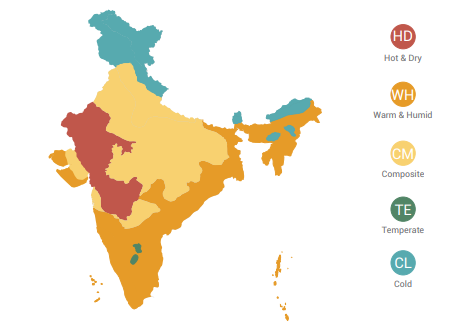
Context: Telangana has become the first state to notify a Cool Roof Policy to effectively address the issue of heat waves and urban heat island. IPCC reports have highlighted that incumbent climate change will intensify heat & humidity in India. Under the policy, Telangana plans to achieve around 300 sq. km of cool roof area by 2028.
Cool Roofs
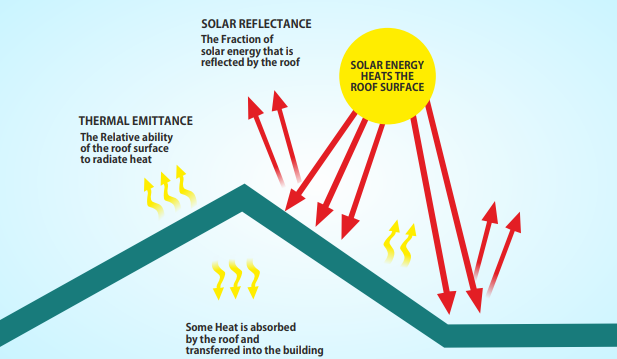
A Cool roof takes in less heat from sun than regular roofs. It stays relatively cool in the sun by reflecting (minimize solar absorption) and emitting thermal radiation (to help dissipate solar heat gain).
Cool roofs reflect around 80% of sunlight while regular roofs reflect only about 20%, keeping buildings significantly cooler.
Cool Roof techniques
Cool roof techniques can be broadly divided into three categories:
Coated Cool Roofs: These roofs involve the coating of a material or paint with high reflectivity on top of a conventional roof material to increase the roof surface's Solar Reflective Index (SRI). These are liquid applied coatings made of simple materials white in colour. Ex. Lime wash, Acrylic polymer, Plastic technology.
Membrane Cool Roofs: These roofs involve using pre-fabricated materials like membranes or sheeting to cover an existing roof to increase the roof surface's solar reflectance and thermal emittance. Ex. Polyvinyl chloride, bitumen based.
Tiled Cool Roofs: These roofs involve the application of high albedo, ceramic mosaic tiles or shingles on top of an existing roof or to a new roof.
Green roofs and rooftop solar systems: Policy also supports application of Green Roofs and Rooftop Solar Systems. Green Roofs make use of vegetation to help the roof absorb less solar energy by providing a thermal mass layer to reduce flow of heat into a building. Vegetation is especially helpful in reflecting infrared radiation.
Minimum Requirements Cool Roof Materials: For qualifying as a cool roof, roofs with slopes less than 20o shall have an initial solar reflectance of no less than 0.70 and initial emittance no less than 0.75.
Application of Policy
Mandatory cool roofing: Government, Non-residential & Commercial Buildings, Residential buildings with plot area more than 600 sq yards and Government assisted housing constructions.
Optional cool roofing: All other buildings
Benefits of Cool Roofs
Increased thermal comfort: Cool roofs can help keep indoor temperatures 2.1-4.3oC lower than households with traditional roofs.
Climate freindly cooling solution: Cool roofs are estimated to reduce air conditioning costs by 20% of the building leading to saving of cost and electricity and lower greenhouse gas emissions.
Limited maintenance and costs: Cool roofs need minimal maintenance and a cool protective coating can be reapplied periodically. Often initial material costs for cool roofs are comparable with traditional roofing materials and can also be applied on existing buildings.
Longevity of roof: Application of cool roof increases the longevity of roof beneath it, by acting as a protective layer.
Address Urban Heat Island Effect:City-wide installations of highly reflective roofs and pavements along with planting shade trees, has potential to reduce city’s ambient air temperature by 2oC in summer month. Thus, reducing urban heat island effect.
Equitable solution to heat stress for poor and low-income households: Heats stress hits the poor the hardest due to lack of access to cooling and their houses are often made of heat-trapping materials such as tin sheets, asbestos, plastic or tarpaulin without sufficient ventilation leading to health hazards and reduced productivity. Cool roofs are especially relevant to provide thermal comfort to poor & low-income households.
Other Initiatives for Cool Roofs
Million Cool Roofs Challenge:It is an initiative launched by Sustainable Energy for All (SEforAll) and NESTA Challenges in 2019 which awarded $125,000 in grants to 10 finalist teams based in South Africa, Bangladesh, Ivory Coast, Philippines, Indonesia, Kenya, Mexico, Niger, Rwanda & Senegal. In less than two years, collectevily the 10 countries managed to apply more than 1.1 million sq. m. of cool roofs.
Cool Roof Challenge: National Disaster Management Authority (NDMA) had launched inviting cities to announce targets and implement cool roofs in 2021.
Heat Wave Vulnerability In India
Heatwave
A heatwave is an extended period of hot weather relative to expected conditions of the area at that time of year.
Heat wave has emerged as one of the deadliest natural hazards often causing more deaths than all other natural hazards.
Heat waves have a slow onset and are silent killers unlike other disasters.
Greenhouse has emissions led Climate change has increased Earth’s temperatures by close to 1.10oC. Each year earth’s temperature cross previous limits.
Meteorological events like La Nina and El Nino also cause localised warming and cooling of planet. In the Indian context, El-Nino particularly increases chances of heat waves in the Indian subcontinent.
Urban Heat Island effect: This is a phenomena under which urban and suburban areas experience elevated temperatures compared to their outlying rural surroundings. The annual mean air temperature of a city with one million or more people can be 1 to 3°C warmer than its surroundings, and on a clear, calm night, this temperature difference can be as much as 12°C. Heat Island effect leads to increased heat risk in cities. Reasons for Heat Island effect are: Air Pollution which traps heat, concretisation & blackening of surfaces which traps heat.
Large and informal workforce of India makes India particularly vulnerable to heat waves who often work in less ventilated buildings or in the outdoors.
IMD Criteria for Heatwaves:IMD declares a heatwave when:
Temperature of a place crosses 40oC in the plains, 37oC in coastal areas and 30oC in the hills.
Temperature of a place is 4.5-6.4oC more than the normal temperature for the region on that day.
Temperature of a place crosses 4.5oC.
Way forward for Heat Wave
All States to formulate & implement Heat Action Plans in line with NDMA’s guidelines on Heat Wave.
Need to strengthen existing Early Warning Systems.
Need for understanding the local thresholds of Heat Wave.
Data on Heat: Automatic Weather Stations networks needs to be expanded in cities and states.
Vulnerability analysis: A comprehensive, country-wide assessment of heat vulnerability and hyper-local heat action plans is required.
Heat waves should be notified as disasters at the national level under existing disaster relief policies. Currently, several states have declared heat waves as a local disaster. Ex. Odisha, Maharashtra etc.
Land use change: Promoting Urban forests/farms, community gardens, rejuvenation of wetlands and shading of areas with trees.
Building materials: Promoting Green roofs and other materials that increase albedo, LEED compliant green building architecture, Home insulation. These solutions should be made part of building codes and effectively enforced.
Heat related work standards should be notified by Ministry of Labour and public health institutes to make workers work easily in high heat situations.
Provisions for Emergency: First Aid Kits, Drills for Heat Waves, Heat Wards in Hospitals etc.
Long Term solutions: Green Transition, Limiting Emissions and controlling climate change.
Context: The Jain community celebrates Mahavir Jayanti, one of their most important festivals, throughout India. The celebration honours the birth of Lord Mahavira, the 24th Tirthankara of Jainism.
History Of Mahavir Jayanti
Lord Mahavira was born in Kundalgrama, Bihar, in the Chaitra month, according to Jain traditions and religious writings.
The cleansing of the Mahavir effigy with fragrant oil by the people symbolises the purity of the Lord.
People go to pilgrimage locations that are associated with the Jain community.
Gomateshwara is a well-known place to visit during the festival.
Emergence of Heterodox Thinkers
In the sixth and fifth centuries BCE, North India had a remarkable awakening as a result of a number of heterodox philosophies challenging the pre-existing philosophy.
In order to reflect on the social and cultural climate of their times, philosophers like Gosala, Gautama Buddha, Mahavira, Ajita Kesakambalin, and others renounced the world and wandered across the Gangetic plains.
Causes of Intellectual Awakening
The rigidity of the Vedic religion and state creation limited people's freedom of thinking and behaviour.
In heterodox sects, a revolt against the practise of accepting dogmas as truthwas articulated.
The process of socio-political and economic change was expedited by the creation of territorial identities.
Disenchanted with the existing order, the wealthy class (thriving in Magadha or the mid-gangetic plains) started to act in opposition to the Orthodox faiths.
Since the Vedic religion was not yet fully organised, its influence on society was limited, making it easy for individuals to adhere to the newly forming religious sects.
New classes of merchants and bankers like sethis sought higher social status in line with their economic standing as a result of urbanisation and the rise of trade.
Kshatriyas were upset because the Vedic writings only allowed Brahmins to live a staged life in ashramas.
Jainism
Vardhamana Mahavira's sect, which Buddhist writings refer to as Nigantha Nataputta
grew into the religion known as Jainism.
Before, it was known as Nirgranthas (free from bonds).
Risabha is credited as the sect's founder in Jaina mythology.
He is regarded as the original Tirthankara.
Three of the Tirthankaras: Risabha, Ajitanatha, and Aristanemi, are mentioned in the Yajur veda.
Mahavira, also known as Jina, the conqueror of the soul, organised his followers into secular and monastic groups.
Life of Mahavira
About 540 BCE, Mahavir was born in Vajji, a democratic kingdom (Ganarajya)
where the ruler was chosen through popular vote.
He was son of the King Siddharth of Kundagrama and Queen Trishala belonging to the Ikshvaku dynasty.
Mahavir was given the name Vardhaman, which means "One who grows."
His mother was a princess of the Lichchavi and Chetaka's (chief of Lichchavi) sister.
Mahavira was closely related to the rulers of Magadha, Anga, and Videha through his mother.
At the age of 30, he left his home and spent 12 years wandering as a mendicant in search of the truth.
He abandoned his clothes and engaged in strict penance.
He met Gosala while wandering, but they later parted ways because of their differences.
Vardhamana gained Nirvana, or enlightenment, in the thirteenth year of his wandering, when he was 42 years old. He attained Tirthankara status and came to be known as Jina or Mahavira (the Great Conqueror).
He passed away at the age of 72 in Pavapuri, close to Rajgriha, around 468 BCE. He fasted unto death (Sallekhana) according to Jaina ideals.
Sects of Jainism
A split in Jainism happened roughly 500 years after Mahavira's departure, in or around 79 or 82 CE.
Because of the severe famine in Magadha.
some of Jaina monks under Bhadrabahu left for south to maintain their rigorous discipline.
They remained without garments and were known as ‘Digambaras’ (space-clad or naked).
Others who remained behind under Sthulabhadra's leadership, chose a white clothing, and came to be known as ‘Svetambaras’ (white-clad).
Jainism was weakened in Magadha as a result of the schism, but it flourished in Gujarat, Rajasthan, Madhya Pradesh, Orissa, and Karnataka.
Jaina Councils
Jaina Council
Year
Venue
Chairman
Patron
Result
First
300 BC
Patliputra
Sthulabhadra
Chandragupta Maurya
Compilation of 12 Angas
Second
512 AD
Vallabhi
Devardhi-Kshmasramana
---
Final Compilation of 12 Angas and 12 Upangas
Tenets of Jainism
Jainism places a strong emphasis on nonviolence.
Jainism rejects the idea of a creator. Jainism did not initially worship any deities.
Mahavira disapproved of Vedic rule.
It holds that there is no beginning or end to the world.
Jainism promoted dualism:
According to which the universe is composed of everlasting souls (jivas) and substance (ajivas).
When jiva and ajiva combine, karma (action) is produced, which causes a never-ending cycle of birth and reincarnation.
Severe penance and austerity must be practised in order to release oneself from karma.
As a result, only monks in Jainism were able to break free from the cycle of rebirth and birth.
It does not support any form of inequality based on birth.
Birth does not determine one's social standing; rather, one's actions do.
Birth-based status is regarded as a sin.
The monastic order accepted women.
Nevertheless, a woman to find salvation need to be reborn as a man and then pursue redemption by accruing merit through good deeds.
Three Gems
Jains are required to follow three principles called Triratnas
(1) Right faith (samyag-darshana/samyak-shadha);
(2) Right knowledge (samyag-jnana);
(3) Right conduct (samyag-mahavrata/ samyak-karma/samyak-acharana)
Five Great Vows/Pancha Mahavratas
The monks have to undertake the five great vows
(1) Not to kill or injure (ahimsa);
(2) Not to steal (asteya);
(3) Not to lie (satya);
(4) Celibacy (brahmacharya);
(5) Not to possess property (aparigraha)
The first four vows were laid down by Parshwanath and the fifth one was added by Mahavira.
Types of Knowledge
There are five types of Knowledge:
(1) Mati jnana: Perception through activity of sense organs, including mind
(2) Shruta jnana: Knowledge revealed by scriptures
(3) Avadhi jnana: Clairvoyant perception
(4) Manahparyaya jnana: Telepathic knowledge
(5) Keval jnana: Temporal knowledge
Syadvada theory in Jainism
The "theory of perhaps" holds that all of our judgements must necessarily be conditional and relative.
Seven different types of prediction are conceivable, according to Syadvada (Saptabhangi Nayavad).
Both absolute affirmation and negation are incorrect.
Anekantvada, or the philosophy of plurality, is another name for Syadvada.
Jaina Literature
The sacred literature of the Svetambaras is written in a type of Prakrit called Ardhamagadhi Prakrit (language of the common people) and can be classified as follows: 12 Angas, 12 upangas, 10 parikarnas, Chhedasutras, Mulasutras and Sutra-Granthas.
14 purvas/parvas- It is the part of 12 Angas and the oldest text of Mahavira’s preachings.
Besides this, the important Jain texts are:
Kalpasutra (Sanskrit)- Bhadrabahu
Parishishta Parvan (an appendix of Trishashthishalaka Purusha)- Hemachandra.