Economy

Economic Advisory Council to the Prime Minister (EAC-PM)

Context: The Economic Advisory Council to the Prime Minister (EAC-PM) has recently published a working paper on the share of religious minorities in 167 countries, including India.

What is the Economic Advisory Council to the Prime Minister (EAC-PM)?

  • EAC-PM is a body constituted to give advice on economic and related issues to the Government of India, specifically to the Prime Minister (PM). 
  • Nature of the Body: Non-constitutional, non-statutory, non-permanent and independent body.
  • Membership: It consists of a chairperson, and several full-time and part-time members.
  • Term of Reference of the EAC-PM: 
    • Analyse any issue, economic or otherwise, referred to it by the PM and advising him thereon.
    • Addressing issues of macroeconomic importance and presenting views thereon to the PM. This could be either suo-motu or on reference from the PM or anyone else.
    • Attending any other task as may be desired by the Prime Minister from time to time.

Tobacco

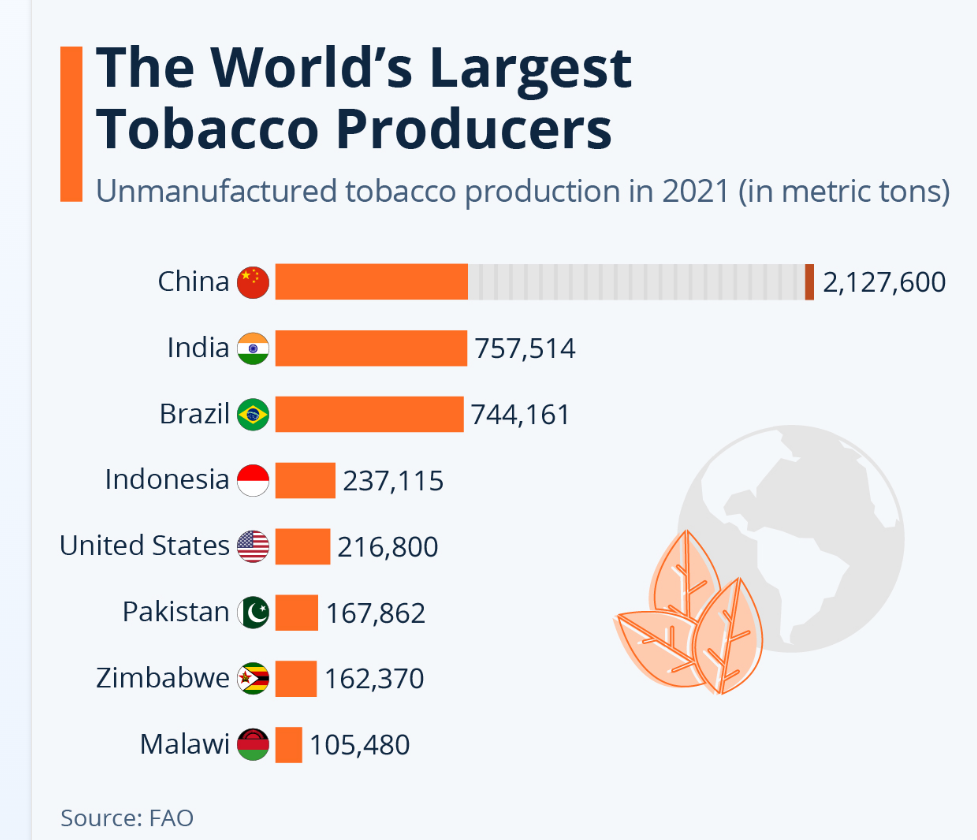
Context: With top global tobacco producers such as China, Brazil and Zimbabwe reporting issues relating to production output, the demand for Indian tobacco has increased significantly. Tobacco farmers in Andhra Pradesh and Karnataka, who reaped a good harvest in the 2023-24 season, have reported record prices for the produce.

Tobacco crop

  • Tobacco refers to several plants in the genus Nicotiana, primarily N. tabacum, which is the chief commercial crop used for various products

Etymology:

  • The English word “tobacco” originates from the Spanish word “tabaco.”
  • Its precise origin is disputed, but it likely derives from the Taíno language of the Caribbean. In Taíno, it meant either a roll of tobacco leaves or an L-shaped pipe used for sniffing tobacco smoke.

History:

  • Tobacco has been used in the Americas for centuries. Cultivation sites in Mexico date back to 1400–1000 BC.
  • Traditional use includes smoking, chewing, snuffing, and extraction of nicotine.
  • Iroquois mythology attributes tobacco’s origin to Earth Woman’s head after she died giving birth to her twin sons, Sapling and Flint.

Health Impact:

  • Tobacco use is associated with many deadly diseases, including heart, liver, and lung conditions, as well as various cancers.
  • In 2008, the World Health Organization named tobacco use as the world’s single greatest preventable cause of death.

Global Impact:

  • Tobacco kills up to half of its users who don’t quit and causes over 8 million deaths worldwide.
  • WHO provides resources to reduce tobacco demand and its health and economic consequences, including measures like pictorial health warnings, taxes, and advertising bans.

Tobacco Cultivation and Climate:

Origin: Tobacco is tropical in origin, but it is grown successfully under tropical, sub-tropical, and temperate climates.

Ideal Conditions:

  • Frost-Free Climate: Tobacco requires about 100 to 120 days of frost-free climate to mature.
  • Temperature: An average temperature of around 80°F (27°C) is ideal for tobacco growth.
  • Rainfall: A well-distributed rainfall of 88 to 125 mm per month is essential for tobacco crops.
  • Soil: Tobacco is grown in warm climates with rich, well-drained soil.

Global scenario of Tobacco

  • In India, Gujrat is the largest producer followed by Andhra Pradesh which is 41% and 22% respectively.

Tobacco Board of India

  • The Tobacco Board was constituted as a statutory body on 1st January 1976 under Section (4) of the Tobacco Board Act, 1975. 
  • The Board is headed by a chairman with its headquarters at Guntur, Andhra Pradesh and is responsible for the development of the tobacco industry. 
  • While the primary function of the Board is export promotion of all varieties of tobacco and its allied products, its functions extend to production, distribution (for domestic consumption and exports) and regulation of Flue Cured Virginia (FCV) tobacco.

Read also: World No Tobacco Day

Practically every state in India cultivates some type of tobacco, and the country ranks second in global tobacco production after China.

Anti-Dumping Duty

Context: Out of the 46 anti-dumping duties levied by the finance ministry in the last three years 60 per cent targeted goods originating only in China.

What is Dumping?

  • Dumping is an unfair trade practice that occurs when goods are exported from one country to another at a price lower than the normal value in their domestic market.
  • Directorate General of Trade Remedies (DGTR) under Ministry of commerce and Industry investigates cases of anti-dumping brought forward by industry players and recommends an Anti-Dumping Duty in case of a consequential serious injury to domestic industry.
  • Central Board of Indirect taxes and Customs (CBIC) under finance ministry must accept or refuse DGTR’s ADD recommendation within three months from the date of the final hearing. The imposition of anti-dumping duties is a legitimate trade remedial measure under the WTO’s General Agreement on Trade and Tariffs 1994.
Anti-dumping duty is a tax imposed on imported goods that are believed to be sold at a price lower than their fair market value in the exporting country. This is done to protect domestic businesses in the importing country from what is considered unfair competition.  Countervailing Duties (CVDs) are tariffs levied on imported goods to offset subsidies made to producers of these goods in the exporting country. CVDs are meant to level the playing field between domestic producers of a product and foreign producers of the same product who can afford to sell it at a lower price because of the subsidy they receive from their government. 

Why are Indian spices facing the heat?

Context: At least five countries, including Singapore, Hong Kong and the U.S., have announced an investigation into possible contamination of spice mixes sold by top Indian brands, MDH and Everest.

More information:

  • The complaints cite the presence of ethylene oxide, a toxic chemical used as a food stabiliser, beyond permissible limits.
  • The Spices Board of India in response has initiated mandatory testing of products shipped abroad and is reportedly working with exporters to identify the root cause of contamination.
image 9

Countries flagging concerns: 

  • Hong Kong suspended the sale of three MDH spice blends and Everest spice. 
    • The spice mixes contained high levels of ethylene oxide, advising consumers against purchasing these products.
  • Singapore too ordered a recall of the Everest spice mix, highlighting concerns against presence of ‘Ethylene oxide’ which is a pesticide that is not authorised for use in food, posing a cancer risk if exposed for too long.
  • The U.S. Food and Drug Administration (FDA), which has previously rejected food and spice imports from India.
    • A scrutiny of FDA’s import refusal report (2023), cites at least 30 instances wherein entry was refused because the products appeared to contain Salmonella. 
    • These are agents known to cause salmonellosis, a common bacterial foodborne illness.
    • Also, there have been at least 11 products being rejected because of misbranding, adulteration, artificial colouring or incorrect labelling.
    • The U.S. Dept of Agriculture stated India and Mexico were top sources of pathogen-based food import refusals. 
  • Regulatory bodies in Maldives, Australia and Bangladesh have announced similar plans. 
  • The top three importers of India’s curry powders and mixtures, in the fiscal year 2022-23, include the U.S. (₹196.2 crore), U.A.E (₹170.6 crore) and U.K. (₹124.9 crore); followed by Saudi Arabia, Australia, Bangladesh, Oman, Canada, Qatar and Nigeria (Data: Indian Spices Board).
  • Overall, China, U.S. U.A.E, Bangladesh and Thailand are the top importers of all spices and spice mixes originating from India.
  • Everest and MDH are major players in India’s spice export industry. 

Health concerns: 

  • MDH and Everest’s spice mixes allegedly contain high levels of a prohibited pesticide called ethylene oxide (ETO).
    • ETO is a colourless, flammable gas that was originally intended for sterilising medical devices.
    • It is used as a chemical in industrial settings, agriculture, and as a sterilising agent in food products, including spices, dried vegetables and other commodities.
    • The chemical lends life to the spice industry: it reduces microbial contamination, and extends products’ shelf life and makes their storage safe.
  • However, the improper and excessive use of ETO may leave behind residues, causing toxic and even carcinogenic compounds to form, thus contaminating the product.
    • One such product is Ethylene glycol, an ingredient found in Indian-made cough syrups which were linked to the deaths of more than 300 children in Cameroon, Gambia, Indonesia and Uzbekistan. 
    • Long-term exposure to ethylene oxide is associated with cancers including lymphoma and leukaemia, some evidence shows.
  • A recent European Food Safety Authority (EFSA) showed carcinogenic chemicals were found in 527 products (including herbs and spices) linked to India between 2020 and 2024. 
  • Reasons for ETO traces found in excess:
    • Use of non-approved pesticides and processing techniques aimed to reduce microbiological contamination
  • Response by the alleged players: 
    • MDH has called allegations over ETO contamination ‘baseless and unsubstantiated’.
    • It has also added that neither the Spices Board nor the FSSAI have received communication or test reports from Singapore or Hong Kong authorities.

Response by India: 

  • The Spices Board, tasked with developing, promoting and regulating the export of spices and spice products, operates under the Ministry of Commerce and Industry.
    • It announced corrective measures, including initiating mandatory testing of consignments shipped to Singapore and Hong Kong and gathering technical details and analytical reports from the relevant food and drug agencies. 
    • Thorough inspections at exporter facilities are also underway to ensure adherence with regulatory standards. 
    • A circular containing guidelines to exporters on preventing ETO contamination is prepared after detailed discussions with the Indian spice industry.
      • Measures include voluntary testing of ETO during raw and final stages. 
      • ETO treated products to be stored separately, to identify ETO as a hazard and incorporate critical control points in hazard analysis. 
      • Exporters are encouraged to use alternate methods such as steam sterilization or irradiation.
  • The FSSAI has directed state regulators to collect samples of major spice brands, including MDH and Everest, to test for the presence of ETO.
  • FSSAI is also planning to carry out a nationwide surveillance in 2024-25: for fruit and vegetables, salmonella in fish products, spice and culinary herbs, fortified rice and milk and milk products.

Concerns about food safety in India: 

Despite stringent food laws, the recent controversies collectively underscore the persistent nature of food safety challenges across various sectors of the food industry. 

image 10

Concerns about trade and overall spices market: 

  • With nearly $700 million worth of exports to critical markets at stake, and potential losses increasing to over half of India’s total spice exports due to cascading regulatory actions in many countries, the future of India’s spice is in delicate balance. 
  • The credibility crisis could also spiral out into losses for the masala makers, both smaller and larger players.
  • In the event of potential losses, farmers of such crops too could find themselves at the receiving end.
    • There are already cases where certain companies have not paid appropriate prices to farmers even when they were making profits.
    • Now, if the companies make losses, it could be used as a pretext to reduce the prices further, thus, burdening the farmer.
  • If regulators in China too take actions, Indian exports could see a ‘dramatic downturn’. 
    • This could affect exports, about 51.1% of the country’s global spice exports.

Way forward: 

  • As the mistrust thickens around FSSAI, there is a need for stricter regulatory measures and transparency in food production and safety industry standards.
  • There should be a commitment to proactive monitoring and enforcement, rather than reactive responses to individual incidents.
  • Regulations must align with the global rules and that is why the food authority must regularly update standards, and handhold exporters.
  • Consumers can advocate safer products by staying informed about food safety issues, supporting companies that prioritise safety and transparency and actively engaging with policymakers to demand stronger regulatory measures.
  • Awareness needs to be generated among consumers about labels and certifications indicating product safety and quality.
  • Government should run campaigns to educate customers on how the food brands use smart marketing techniques to mislead them. 

A country with a growing food market and an aspiration to increase its footprint in the global market needs more proactive regulations and standardisations. 

Meat & Poultry Industry

Context - The current outbreak of H5N1 was a disaster waiting to happen, as experts have been sounding alarm bells on the unsafe conditions at industrial livestock production for more than 10 years now.

Present status:

  • Poultry is one of the fastest-growing segments of the agricultural sector in India today.
  • India ranks 3rd in the world in terms of total Egg production (Source: FAO).
  • According to EMR market research, the India poultry market, currently valued at USD $28.18 billion, is expected to grow at a CAGR of 8.1% in the forecast period of 2024-2032 to reach a value of approximately USD $44.97 billion by 2032.
  • During the 2022-23, India exported poultry and poultry products to 64 countries, generating revenue of USD $134 million.
image 5

Potential of Poultry sector in India

  • Growth in per capita income and rise in middle class have changed the dietary patterns in favour of protein rich food.
  • Growing urban population have further increased the demand and made India one of the largest consumers.
  • Falling real poultry prices due to automation and government support.
  • Largest producer of several agri commodities creates a strong pull factor 
  • Significant investments in world class ports and increase in logistics & supply chain infrastructure.
  • Government policies like 100% FDI permitted through automatic route in
  • food processing sector, mega food park scheme etc

In India, poultry sector growth is being driven by rising incomes and a rapidly expanding middle class, together with the emergence of vertically integrated poultry producers that have reduced consumer prices by lowering production and marketing costs. Integrated production, the market transition from live birds to chilled and frozen products, and policies that ensure supplies of competitively priced corn and soybeans are keys to future poultry industry growth in India. There are several small poultry dressing plants in the country. These plants are producing dressed chickens. These plants also manufacture egg powder and frozen egg yolk for export.

Existing challenges:

  • Outbreak of diseases like Avian Influenza (Bird Flu) causes culling of poultry, scrapping of orders and price rise which hits the industry hard.
  • Shortage of raw material is another issue. Price of soybean meal, has increased, which has forced the feed manufacturers to compromise in terms of diet given to birds.
  • Shortage of human resources is another problem because of the absence of veterinarians, researchers, in areas where expertise knowledge is required.
  • Indian poultry sector is still unable to tap the benefit of international market. Lack of adequate cold storage, warehouses is the major factor affecting poultry sector in India.
  •  Majority of the production is by unorganized sector as backyard poultry for additional income. Of the total processed poultry products only about 1% undergoes processing into value added products (ready-to-eat/ready-to-cook).
  • Increasing antibiotics level in poultry products are creating long lasting harmful effects like drug resistance in people.
  • Lack of comprehensive regulating authority to maintain hygiene, and granting of licenses to businesses.
  • The proximity of the birds to their waste and other birds increases risk of agents such as salmonella for consumers.

What can be a way ahead?

  • “Social Awareness Campaigns” which could sensitize the communities and population at a large on major aspects related to poultry including, Hygienic rearing, slaughtering and storage of poultry to ensure food safety and quality.
  • Central government should frame user support policy to encourage bio plants for poultry and to move organic mass of the country.
  • There is a requirement of national geographical zoning to avoid adverse effects on the overall economy in the case of an outbreak of bird influenza in any part of the country.
  • Infrastructure development is key for viability and sustained growth of poultry sector especially the cold chain and processing units as there are fluctuations in poultry consumption round the year owing to religious and cultural factors.
  • Encourage brand development for certain indigenous poultry like Kadaknath or other birds with some specific attributes.

Analyzing labour on a warming planet

Context - The International Labour Organization (ILO) has come up with its latest report, ‘Ensuring safety and health at work in a changing climate’.

How workers are impacted on account of climate change?

  • Agriculture workers are the worst impacted. They face regular losses because of extreme weather events like floods and droughts. Pest attacks are increasing and thereby hampering the productivity. High exposure to agro chemical has a lot of damaging effect on their health. 
  • Industrial workers are exposed to huge indoor air pollution. Weather extremities are increasing industrial disasters. E.g. Damage of Biogas plant due to high snow load in Germany. Excessive heat stress leads to wear and tear of machines, further increasing the risks. Overwhelming informalisation of the sector has meant little to no oversight of worker conditions.
  • Construction workers are exposed to urban heat island effect, as construction is a highly urban-centric economy, with rising growth in cities. Construction workers are also the most prone to physical injuries and air pollution related health hazards, like asthma. 
  • Rag pickers have their own challenges. Huge amount of waste are the sources of Greenhouse gasses (GHG). Landfills catch fires due to rising temperatures. Floods carry toxic chemicals to large distance. Groundwater gets polluted in those areas. 

All such things impact the worker’s health, lower down their productivity, impact their income levels.

image 3

What are the present laws & issues in India dealing with worker’s safety in this regard?

  • Occupational Safety, Health and Working Conditions Code, 2020 was laid down combining 13 central laws like, Factories Act, 1948, the Workmen Compensation Act, 1923, the Building and Other Construction Workers Act, 1996, the Plantations Labour Act, 1951, the Mines Act, 1952 and the Inter-State Migrant Workmen Act, 1979 etc. However, Union government is yet to officially notify its enforcement.
  • Factories act defines a factory as an enterprise with “10 or more” workers, but those registered under this law are less than a quarter of a million. Majority of India’s 64 million MSMEs are not registered under this law and are therefore outside the purview of governmental inspections.
  • There are no optimal standards of temperature and ventilation laid down under the acts. Air conditioning and cooling methods are not listed and whatever standards are there, they are age old. Global temperatures and weather extremity levels have changed a lot since then. 
  • Fertilizer subsidies and agricultural policies are designed in such manner that they incentivise excessive and irrational use of chemicals. 
  • Lack of regulatory authorities and real time data further adds upto the vows of workers.

What needs to be done in this regard?

  • Certain model standards regarding ventilation, temperature and air conditioning must be laid down.
  • Region specific amendments should be made as every region is impacted by climate change in different manners.
  • Amendments must also be made for effective handling of effluents and by products. 
  • Weather monitoring systems must be upgraded especially for agricultural workers so that they can plan their harvest accordingly. 
  • Waste removal technologies must be deployed in the workplaces. For e.g. silica removal technologies at stone quarries or mines.
  • Regular inspection must be there in factories. For this, the existing vacancies at inspector and clerical levels must be filled.
  • Last but not the least, training and sensitization programs must run in order to prevent/ reduce such losses. 
  • Few researchers have also considered potential adaptations to mitigate the impact of climate change on agricultural workers, such as switching to night-time or shaded work to reduce direct solar radiation.

REER & NEER: Effective Exchange Rate

Context: The rupee has depreciated by 27.6% against the US dollar between April-end 2014 and now, from Rs 60.34 to Rs 83.38. This is marginally higher than the 26.5% from April-end 2004 to April-end 2014, where the rupee had fallen from 44.37 to 60.34. 

How Do We Measure a Currency’s Strength?

  • India trades not only with the US. It exports goods and services to other countries as well, while also importing from them. 
  • The strength or weakness of the rupee is, hence, a function of its exchange rate with not just the US dollar, but also with other global currencies. 
  • In this case, it would be against a basket of currencies of the country’s most important trading partners – what’s called the rupee’s “effective exchange rate” or EER.
  • The EER is measured by an index similar to the consumer price index (CPI).
    • The CPI is the weighted average retail price of a representative consumer basket of goods and services for a given month or year, relative to a fixed base period. 
    • The EER is an index of the weighted average of the rupee’s exchange rates vis-à-vis the currencies of India’s major trading partners. 
    • The currency weights are derived from the share of the individual countries to India’s total foreign trade, just as the weights for each commodity in the CPI are based on their relative importance in the overall consumption basket.

Nominal Effective Exchange Rate (NEER)

  • The Reserve Bank of India has constructed NEER indices of the rupee against a basket of 6 and also of 40 currencies.
  • The former is a trade-weighted average rate at which the rupee is exchangeable with a basic currency basket, comprising the US dollar, the euro, the Chinese yuan, the British pound, the Japanese yen and the Hong Kong dollar. 
  • The latter index covers a bigger basket of 40 currencies of countries that account for about 88% of India’s annual trade flows.
  • The NEER indices are with reference to a base year value of 100 for 2015-16: Increases indicate the rupee’s effective appreciation against these currencies and decreases point to overall exchange rate depreciation.
  • The NEER is a summary index that captures movements in the external value of the rupee against a basket of global currencies. However, the NEER does not factor in inflation, which reflects changes in the internal value of the rupee.

Real Effective Exchange Rate (REER)

  • The REER is basically the NEER that is adjusted for the inflation differentials between the home country and its trading partners. If a country’s nominal exchange rate falls less than its domestic inflation rate – as with India – the currency has actually appreciated in “real” terms.
    • A decrease in REER denotes depreciation in rupee’s value, whereas an increase reflects appreciation.
    • REER above 100 denotes that the home currency is overvalued and more expensive compared to its competitors.
  • Implications:
    • The rupee is overvalued today in terms of its REER.
    • Any increase in REER means that the costs of products being exported from India are rising more than the prices of imports into the country. That translates into a loss of trade competitiveness – which may not be quite a good thing in the long run.

Bank for International Settlements (BIS)

Context: The Bank for International Settlements (BIS) released a document ‘Core Principles for Effective Banking Supervision, crucial for global banking supervision. This document will serve as a guiding framework for central banks supervising banks in over 90 jurisdictions. 

About Bank for International Settlements (BIS): 

  • Established in 1930
  • Headquartered in Basel, Switzerland
  • The BIS was created out of the Hague Agreements of 1930 and took over the job of the Agent General for Repatriation in Berlin.
  • The goal is to foster international monetary and financial cooperation while serving as a bank for central banks.
  • It aids central banks in their pursuit of monetary and financial stability through international cooperation.
  • It provides a platform for responsible innovation and knowledge-sharing in-depth analysis and insights on core policy issues sound and competitive financial services.
  • This organisation is owned by 63 central banks, including the Reserve Bank of India (RBI) representing countries from around the world that together account for about 95% of world GDP. 

125 Years of Kodaikanal Solar Observatory

Context: Kodaikanal Solar Observatory (KSO) celebrated its 125th anniversary on 1 April 2024. KSO is managed by the Indian Institute of Astrophysics (IIA), an autonomous institute under the Department of Science and Technology (DST). The anniversary celebrations aimed to highlight KSO's rich history, diverse achievements, and ongoing research.

Kodaikanal Solar Observatory (KSO)

  • Establishment and Location: Established on 1 April 1899. Located in Kodaikanal, Tamil Nadu in the Palani range of hills.
  • Telescopes at Kodaikanal Solar Observatory:
  • Unique Features and Contributions
    • Houses a digital repository of 1.48 lakh digitised solar images and thousands of other images of the Sun recorded every day since the start of the 20th century.
    • One of the longest continuous daily records of the Sun in the world.
    • Unique database digitised and publicly available for astronomers globally.
    • Contributions include chasing eclipses, discovering Helium in 1868, and understanding plasma processes in the Sun and the production of prominences and flares.
    • Instrumental force in advancing understanding of solar physics and ionospheric phenomena.
    • Testament to more than a century and half of scientists deciphering the Sun from Indian soil.

Indian Institute of Astrophysics (IIA)

  • Autonomous institute of the Department of Science and Technology (DST).
  • Constituted as an institution under the DST on 1st April 1971.
  • Premier institute devoted to research in astronomy, astrophysics, and related physics.
  • Traces origins back to the Madras Observatory established in 1786.
  • Leadership and Vision
    • Director: Prof. Annapurni Subramaniam
    • Emphasised the legacy of KSO and the importance of continuous innovation and transfer of skills through generations of scientists.

Key Scientific Discoveries and Contributions

  • Evershed Effect
    • Discovered in 1909 at the Kodaikanal Solar Observatory by John Evershed.
    • Observed in sunspots due to radial flow of gas.
    • Significant contribution to understanding the dynamics of sunspots and the solar atmosphere by Prof. Siraj Hasan, former Director of IIA.
  • International Collaboration and Impact
    • KSO's publicly available solar data fosters international collaboration among astronomers worldwide.
    • KSO's contributions have helped advance global understanding of the Sun and its impact on Earth.

Technological Advancements and Interdisciplinary Research

  • Technological Advancements
    • Solar observation techniques and instruments have evolved significantly over the 125 years of KSO's existence.
    • Advancements have enabled more precise and detailed observations of solar phenomena.
  • Interdisciplinary Research
    • Solar physics data and findings from KSO can contribute to research in space weather and other related fields.
    • Potential for practical applications in fields such as telecommunications, satellite operations, and power grid management.

Kodaikanal Solar Observatory's Legacy and Future

  • Continuation of Legacy
    • Visible Emission Line Coronagraph onboard Aditya-L1 assembled at CREST, IIA.
    • Proposed National Large Solar Telescope in Ladakh led by IIA.
  • Future Research Prospects
    • Potential research opportunities and challenges in solar physics and astrophysics in the coming years.
    • KSO and IIA can contribute to addressing these challenges and advancing our understanding of the Sun and the universe.

KSO's 125th anniversary celebrates its significant contributions to solar research and astrophysics. IIA's commitment to advancing astronomical research, promoting awareness about KSO's legacy, and engaging the public. The Indian Space Program's progress and future plans, building upon the foundation laid by institutions like KSO and IIA.

The importance of technological advancements, interdisciplinary collaboration, and public outreach in driving scientific progress. KSO and IIA's role in inspiring future generations to pursue careers in astronomy and space science, and their potential to contribute to groundbreaking discoveries in the years to come.

Small Finance Banks   

Context: The Reserve Bank of India (RBI) on April 26th  invited applications from small finance banks meeting specified criteria for becoming regular or universal banks.

Small Finance Banks:

AimProvision of savings vehicles primarily to unserved and  underserved sections of the population.
Supply of credit to small business units; small and marginal  farmers; micro and small industries; and other unorganized sector entities, through high technology-low cost operations. 
Minimum Paid-up capital100 crores
RegulationsSubject to all prudential norms and regulations of RBI as  applicable to other SCBs(CRR, SLR and CRAR etc.). 
Priority Sector Lending targets75%
Conditions on Loans· At least 50% of its loan portfolio should constitute loans  and advances of up to Rs.25 lakh E.g.,  Suryodaya small finance bank, Utkarsh SFB etc.
SFBs are required to open at least 25% of their total branches in unbanked rural areas. 

The eligibility criteria for an SFB to transition into a Universal bank will now be as follows:

  • scheduled status with a satisfactory track record of performance for a minimum period of five years;
  • shares of the bank should have been listed on a recognized stock exchange;
  • having a minimum net worth of ₹1,000 crore as at the end of the previous quarter (audited);
  • meeting the prescribed CRAR requirements for SFBs;
  • having a net profit in the last two financial years; and
  • having GNPA and NNPA of less than or equal to 3 percent and 1 percent respectively in the last two financial years.

India needs a long-term integrated energy policy

Context: India's energy security challenges may escalate in future, particularly, due to the recent geopolitical tensions in the Middle East, which may cause volatility in crude oil prices and pose a risk of supply-chain disruption. 

India’s Crude oil dependence: 

  • India is the world's third-largest importer of crude oil, and the third-largest consumer of oil overall, behind the US and China.
  • According to the Petroleum Planning and Analysis Cell (PPAC) of the Ministry of Petroleum & Natural Gas, India imported 232.5 million tonnes of crude oil in the financial year 2023-24. 
  • India's crude oil import dependence increased to 87.7% in 2023–2024, up from 87.4% in the previous year. This is due to a combination of high demand and stagnant domestic production.
  • Russia is India's top oil supplier, accounting for more than 30% of India's imports in 2023. Before the Ukraine conflict, Iraq was India's top supplier of crude oil, followed by Saudi Arabia and the United Arab Emirates. However, after the invasion, Russia climbed to the top, driven by substantial discounts on oil prices. 
  • Nevertheless, over 40% of India’s oil at present is sourced from the Middle East region, and the recent geopolitical tensions in the region may pose supply disruptions.

India’s present options:

  • Increasing supply from Russia: India is exploring options to increase purchase from Russia through the Chennai-Vladivostok route (which passes through the Sea of Japan, the South China Sea and Malacca Strait), in case the traditional route through the Red Sea cannot be used.
  • Importing Liquefied Natural Gas (LNG): India, the world's fourth-largest LNG importer, seeks to diversify its LNG import options to ensure stable and secure gas supplies. India imported a total 19.85 million tonnes of LNG in FY 2022-2023, of which 10.74 million tonnes, or 54%, came from Qatar. 
  • Buildingtransnational pipelines: Transnational pipelines could have been an alternative for India, but certain political reasons have hindered their success.
    • Myanmar-Bangladesh-India gas pipeline did not fructify because the Bangladesh side, due to domestic political compulsions, wanted certain bilateral matters to be included in the tripartite gas agreement which were not acceptable to the Indian side.
    • Iran-Pakistan-India gas pipeline project, despite agreement on several technical and commercial issues, did not progress due to political instability in Pakistan.
    • Turkmenistan-Afghanistan-Pakistan- India (TAPI) gas pipeline project had problems due to civil conflict in Afghanistan.

Need for a Long-term integrated energy policy:

  • Energy Security Concerns: Over 40% of India's oil comes from the volatile Middle East. Geopolitical tensions and sanctions can disrupt supplies, impacting prices and economic stability.
  • Meeting Growing Demand: India's energy demand is projected to surge by 1.8% annually until 2040. A comprehensive policy ensures sufficient and reliable energy supplies to fuel this growth.
  • Domestic Resource Potential: India has an immense potential for renewable energy sources like solar and wind. A well-integrated policy can unlock this potential, reducing dependence on imports and fostering energy independence.
  • Environmental Sustainability: India is the world's third-largest emitter of greenhouse gases. An integrated policy that prioritises renewable energy and energy efficiency is vital to meet climate change commitments and ensure a sustainable future.

Way Forward:

The Indian government drafted a National Energy Policy (NEP) in 2017, which aimed to achieve goals like universal energy access, energy security, environmental sustainability, and economic growth through a diversified energy mix. However, India still has not finalised the draft NEP. India’s integrated energy policy should focus on: 

  • Energy Mix Diversification: Overreliance on any single source of energy can pose risks to energy security. A diversified energy mix can enhance resilience and mitigate supply disruptions. India needs a balanced approach that optimises fossil fuel use, promotes renewable energy integration, and explores cleaner options like Nuclear Energy and Hydrogen.
  • Renewable Energy Promotion: India has made significant progress in renewable energy, particularly in solar and wind power. A long-term energy policy should prioritise the promotion and expansion of renewable energy sources. This can be achieved through incentives, subsidies, and supportive regulations to encourage investments in renewable energy projects.
  • Infrastructure Development: India needs to upgrade the power grid infrastructure for integration and management of renewable energy sources. The policy should prioritise investments in grid modernisation, including the development of smart grids and energy storage systems.
  • Energy Conservation:  Promoting energy conservation across sectors (industries, buildings, and transportation) can significantly reduce India's overall energy demand.
  • Research and Development: Encouraging research and development in clean energy technologies can ensure long-term sustainability, reduce reliance on imported technologies and foster innovations that reduce energy cost. 

Conclusion:

India needs a long-term and integrated energy policy that projects the country's energy requirements over the next 25 years, while taking into account domestic production, import requirements of fossil fuels, and our commitments to transition towards clean energy.

US puts India back on IPR Priority Watch List

Context: The US has placed India on the ‘priority watch list’ of the US Trade Representative. The annual Special 301 Report states that India remains one of the world’s most challenging major economies with respect to protection and enforcement of intellectual property rights.

Special 301 Report of United States Trade Representative

  • Each year, the Office of the United States Trade Representative (USTR) conducts a review to identify countries that:
    • deny adequate and effective protection of intellectual property (IP) rights.
    • deny fair and equitable market access to the U.S.  
  • Based on this review, USTR, identifies countries as Priority Foreign Countries or places them on the Priority Watch List. 
    • Priority Foreign Countries: Countries whose acts, policies, or practices have the greatest adverse impact (actual or potential) on relevant U.S. products.
    • Priority Watch List indicates that problems exist in that country with respect to IP protection, enforcement, or market access for U.S. persons relying on IP. 

Reasons for placing India on the Priority Watch List

  • High customs duties directed to IP-intensive products such as information and communications technology (ICT) products, solar energy equipment, medical devices, pharmaceuticals, and capital goods. This is viewed as denying fair and equitable market access to the US.  
  • Delay in granting patents: Lengthy patent examination process in India can lead to long waiting periods to receive patent grants and have excessive reporting requirements. This discourages innovation and investment, particularly for technology-driven industries. 
  • Weak enforcement of IPR: Despite having a Copyright Act, there is widespread piracy of copyrighted materials. Stakeholders have reported continuing problems with unauthorised file sharing of video games, signal theft by cable operators, commercial-scale photocopying and unauthorised reprints of academic books, and circumvention of technological protection measures etc.
  • Threat of patent revocations and the procedural and discretionary invocation of patentability criteria under the Indian Patents Act impact companies across different sectors. 
  • Insufficient legal means to protect Trade Secrets in India. 

Other Issues highlighted by the US

  • Compulsory Licensing: 
    • Provision under the Indian Patent Act, 1970, that allows the government to grant licenses to third parties to produce, use, or sell a patented invention without the consent of the patent holder. E.g., In 2012, India granted its first compulsory license to Natco Pharma to produce a generic version of a cancer drug, Sorafenib, which was patented by Bayer. The decision aimed to increase access and affordability to the cancer drug in the country.  
    • However, compulsory licensing is viewed by the US and other countries as against the interest of their companies. 
  • Evergreening of Patents:
    • Section 3(d) of the Patents Act, 1970 states that the mere discovery of a new form of a known substance that does not result in increased efficacy or the use of a known process with insignificant changes, may not be considered patentable. It aims to ensure that patents are granted only for genuinely innovative and significant inventions.
    • However, determining whether a modification or improvement qualifies as a substantial enhancement of efficacy can be subjective and prone to legal disputes. 

While steps to improve IP Office operations and procedures have shown some progress, India’s overall IP enforcement remains inadequate. 

Also Read: Revamping India’s Intellectual Property Rights Ecosystem