Context:During the recent visit of PM Modi to France a variety of agreements chief among the agreements was the strategic road map for the next 25 years “Horizon 2047” which includes cooperation in defence, space, nuclear energy, climate change and green transitions as well as education and people-to-people ties.
The document Horizon 2047, reflects a vision of the two leaders, of Prime Minister Modi and President Macron, on where the relationship should be in 2047 when India would celebrate 100th year of its independence and we will be celebrating 50 years of our Strategic Partnership. It has 63 specific outcomes that are divided among multiple pillars.
Major pointers of document Horizon 2047
Partnership for Security and Sovereignty: A comprehensive approach to security and sovereignty cooperation between the two countries.
India-France Partnership in the Indo-Pacific: Focused on providing solutions for security, strategic, and economic challenges.
Cooperation in the Fight Against Terrorism: Joint efforts to combat terrorism and ensure global security.
Renewed and Effective Multilateralism: Shared commitment to promoting multilateral cooperation.
Science, Technology, and Academic Cooperation: Collaboration between research institutions in scientific, critical technologies, health, cyber, digital regulatory frameworks, and digital technologies.
People-to-People Ties: Enhancing mobility partnership and skill-set cooperation to foster academic collaboration and meet the needs of skill development.
Defence Cooperation: Roadmap for further cooperation in the Indo-Pacific, including military and naval exchanges and a trilateral development fund.
Defence Procurement: Approval for the purchase of 26 Rafale-M fighter jets for the Indian Navy, three additional Scorpene submarines, and an agreement for helicopter engines.
The France-India strategic relationship is built on respect for each other's strategic autonomy, with France refraining from commenting on India's internal affairs or foreign policy choices.
Context: The conservation status of India’s only ape (hoolock gibbon) was a cause for concern at a global event on gibbons held a week ago in China.
More about the news:
Gibbons, the smallest and fastest of all apes, live in tropical and subtropical forests in the south eastern part of Asia.
The hoolock gibbon, unique to India’s northeast, is one of 20 species of gibbons on Earth.
Over the decades, zoologists thought the northeast housed two species of the ape — the eastern hoolock gibbon (Hoolock leuconedys) found in a specific region of Arunachal Pradesh and the western hoolock gibbon (Hoolock hoolock) distributed elsewhere in the northeast.
A study led by Hyderabad-based Centre for Cellular and Molecular Biology (CCMB) in 2021 proved through genetic analysis that there is only one species of ape in India. It debunked earlier research that the eastern hoolock gibbon was a separate species based on the colour of its coat.
The CCMB study concluded that two populations of the western hoolock gibbon and the assumed eastern hoolock gibbon split 1.48 million years ago. It also estimated that the gibbon divergence from a common ancestor occurred 8.38 million years ago.
The Western Hoolock Gibbon
Description
It is an ape found in the tropical forest canopy in India, Bangladesh and Myanmar.
Tailless like other apes, they are nonetheless set apart by their long arms and dense hair.
The loud and musical calls of Western Hoolock Gibbons can be heard from far away in the forest. Males and females often sing in unison, a series of duet calls that helps the pair to mark their territory.
Behaviour
These gibbons are arboreal and only come to the ground in exceptional circumstances.
They are omnivorous, consuming over 100 species of plants and some invertebrates and birds’ eggs, with a diet that can greatly vary based on location.
Western Hoolock Gibbons form small, monogamous family groups and usually give birth to a single offspring. Babies typically spend their first months of life tightly clung around the mother’s waist, followed by gradual weaning over two years. The young gibbon will then stay with his parents until sexual maturity.
Threats and Conservation
They are one of Asia’s most endangered primates(ER), with populations expected by the IUCN to at least halve over three generations (2001-2015, 2016-2030 and 2031-2045).
Threats such as hunting for food and medicine and habitat loss have put this species at risk, and habitat protection is critical for their survival.
The Eastern Hoolock Gibbon
It is one of two species of Hoolock Gibbon.
This species is found particularly east of the Chindwin River in Myanmar and in southwest Yunnan (China).
Indian records of the species likely to actually represent the Western Hoolock.
Difference between Eastern and Western Hoolock
Both Hoolock Gibbon species are separated by the Chindwin River in western Myanmar, which flows into the Irrawaddy
The two species differ in their fur coloration and DNA sequences, and may have diverged about 1.42 million years ago.
The Red List maintained by the International Union for Conservation of Nature categorises the eastern hoolock gibbon as vulnerable.
Context:Several events have been scheduled to commemorate the 200th anniversary of Nawab Wajid Ali Shah, the final ruler of Awadh, who possessed a remarkable appreciation for the arts. These activities comprise an exhibition, a heritage walk, and informative discussions.
About Nawab Wajid Ali Shah
Mirza Wajid Ali Shah, the final ruler of Awadh, held the position from 1847 to 1856.
His second wife Begum Hazrat Mahal, played a significant role in the Indian Rebellion of 1857 against the British East India Company, acting as the regent of Awadh.
Although his kingdom had been safeguarded by the East India Company under a treaty, it was annexed by the company in 1856.
Following the annexation, the Nawab was exiled to Metiabruz, a suburb of Kolkata, where he spent the rest of his life receiving a generous pension.
Wajid Ali Shah was not only a ruler but also a poet, playwright, dancer, and avid patron of the arts. He introduced Kathak, a significant form of classical Indian dance, as a court dance during a period when the Mughal influence was diminishing, primarily for recreational purposes.
As a Ruler of Awadh
The British East India Company had already annexed a significant portion of Awadh through a treaty signed with the Nawabs in 1801.
The company's actions had severely impacted the Awadh economy by burdening it with the costs of maintaining the Bengal Army and repeatedly demanding loans.
Wajid Ali Shah became the ruler of Awadh when the East India Company was determined to annex the prosperous kingdom, which was regarded as "the garden, granary, and queen-province of India."
Upon ascending the throne, he actively participated in the administration of justice, implemented reforms, and reorganized the military.
The British Resident of Lucknow, General William Sleeman, submitted a report highlighting alleged "maladministration" and "lawlessness" in Awadh. This report conveniently provided the British with the justification they needed for the annexation under the Doctrine of Lapse by Governor-General Lord Dalhousie.
Patronage to Music
Wajid Ali Shah patronized music, dance, drama, and poetry, but he was also a gifted composer himself.
Bahadur Hussain Khan, was one of Wajid Ali Shah's favorite musicians. The Nawab honored him with the title Zia-ud-Daulah.
He adopted the pseudonym ‘Akhtarpiya’ for his musical compositions. Under this name, he wrote poems, prose, and thumris.
His collections, Diwan-i-Akhtar and Husn-i-Akhtar, contain his ghazals.
Much of the knowledge about music in Nawabi Lucknow comes from the text Madanul Moosiqui ('The Mine of Music').
During his reign, complex ragas like hori and dhrupad were less emphasized, while easier raginis like tilak, pilu, sendura, khammach, bhairvi, and jhanjhauti gained popularity.
These raginis were favored by the king and easily understood by all sections of society, making them beloved by the common people.
There is a popular belief that Wajid Ali Shah was the creator of the light classical form known as thumri.
Wajid Ali Shah's innovative ideas and experiments in ghazals played a significant role in shaping the modern-day style of ghazals.
Patronage to dance
In ancient times, Kathak was originally performed as part of temple rituals.
It was under the artistic guidance and patronage of Nawab Wajid Ali Shah that Kathak reached new heights.
During this period, Kathak was also extensively performed by courtesans, who developed the art form alongside its refinement in the court.
Their style of Kathak differed from the court style, often incorporating playfulness known as nakhra.
Wajid Ali Shah introduced two distinct forms of Kathak: Rahas and Raas.
Rahas was a choreographed dance form that incorporated acting, dancing, and music. It encompassed dramatic elements and portrayed different scenes, often with changing settings and locales.
On the other hand, Raas was a religious form of Kathak.Dhrupad, a form of classical music, was primarily sung during Raas performances, which began with its singing.
It was during Wajid Ali Shah's reign that the Lucknow Gharana of Kathak emerged. The Lucknow style of Kathak is characterized by graceful movements, elegance, natural poise, and a focus on abhinaya (expressions).
Wajid Ali Shah made Kathak the official court dance and also popularized it among the people.
Contributions to literature
The famous poet Mirza Ghalib received gracious patronage from Wajid Ali Shah.
Wajid Ali Shah himself was a prolific writer, utilizing a simple language that conveyed meaning to all, often incorporating Awadhi, the local dialect.
His most significant work, Sawat-ul-Qalub, comprises a collection of 44,562 couplets.
Among his notable works, the autobiographical Huzn-i-Akhtar holds great importance. It portrays the unfavorable and unceremonious treatment he faced at the hands of British authorities.
Another significant work by Wajid Ali Shah is Bani. It serves as a treatise on Music and Dance, offering insights into the mushairas (poetic gatherings) held at Matiya Burj (Calcutta).
Context: The Rajasthan government stated intent of enacting a Minimum Income Guarantee Law in the next few days.
Minimum Income Guarantee Bill
The Rajasthan government while introducing the bill, said “According to the basic spirit of the Constitution, every person has the right to live with dignity.”
Provision of the bill
Minimum Income Guarantee Scheme will include a provision for giving pension of at least Rs 1000 per month to elderly, widow, single women, with a guaranteed annual increment of 15 per cent per year. After the law is made, “giving pension will become a legal obligation.”
Families who complete 100 days in Mahatma Gandhi National Rural Employment Guarantee Act (MGNREGA) will get 25 days extra employment on a permanent basis. Kathodi, Sahariya and Specially abled people will get employment for 200 days instead of 100 days.
MGNREGA as a Right based approach of entitlement
The Mahatma Gandhi National Rural Employment Guarantee Act (MGNREGA), 2005 made 100 days unskilled work a legal right for a rural resident. Which makes it a rights-based approach for providing social protection.
It is a public employment guarantee scheme designed to provide employment and basic income security to the rural working-age population in India, as well as improve their livelihoods through the development of durable assets.
MGNREGA combines rights-based entitlements with demand-driven employment and citizen-centred planning and monitoring in its design.
Benefits of MGNREGA over Cash transfer
MGNREGA solved the hitherto difficulty of selecting recipients under a cash transfer scheme by making it a universal right for all rural residents who could self-select based on their need for employment.
The “targeted” safety net approach of using BPL lists to identify beneficiaries for cash transfer is plagued by the misuse of power by the rural elite and bureaucracy, resulting in the benefits reaching people who were not supposed to receive them.
MGNREGA provides wage income as a legal entitlement for labour done and replaces doles with salaries that are quantified.
MGNREGA combined development rights with citizenship rights thereby giving citizens the platform to mobilise and assert their rights to plan works, earn a minimum wage and evaluate the outcomes of the programme through social audits.
MGNREGA contributed to the resolution of market problems by increasing the negotiating power of MGNREGA workers in the open labour market.
The inability to address authentication errors, inaccessible banking systems and lack of proactive facilitation to the most marginalised make cash transfer less effective in comparison to MGNREGA.
Global Cases of social welfare programme
Brazil
Bolsa Família is the current social welfare program of the Government of Brazil, part of the Fome Zero network of federal assistance programs. Bolsa Família provided financial aid to poor Brazilian families.
Mexico
Oportunidades was the first national conditional cash transfer program targeting poor and extremely poor households and that integrated three basic social rights –health, education and nutrition.
Way Forward
The most logical and effective method by which delivery systems, even within a rights-based framework, can be made to respond to people’s needs is to make sure that the state agencies are accountable. Officials are accountable not just to their administrative superiors, but also to the people.
For any mass scale delivery of rights, a strong people-centric accountability mechanism needs to be in place — the mechanism must be codified by law. The failure to deliver should be dealt with in a given time frame and in a decentralised manner. Accountability should be fixed on individual officials.
Context: In response to a consultation paper by the Telecom Regulatory Authority of India (TRAI), telcos argued that there was no need to change the definition of ‘international traffic,’ a key term that determines what an international SMS is, and by extension, what it should cost.
Unified License Agreement
A Unified License implies that a customer can get all types of telecom services, from a Unified License Operator. The operator can use wireline or wireless media.
National Telecom Policy - 2012 recognizes that the evolution from analog to digital technology has facilitated the conversion of voice, data and video to digital form. Increasingly, these are now being rendered through single networks bringing about a convergence in networks, services and also devices.
Hence, it is now imperative to move towards convergence between various services, networks, platforms, technologies and overcome the existing segregation of licensing, registration and regulatory mechanisms in these areas to enhance affordability, increase access, delivery of multiple services and reduce cost.
Current, Unified Licensing Agreement Framework in India only regulates domestic traffic and not international traffic, a key term that determines what an international SMS is, and by extension, what it should cost.
Definition of Traffic
The load carried on a telecommunication network is called traffic, or more specifically ‘telecommunication traffic’. Telecommunication traffic comprises many things such as voice call, SMS, etc.
Types of Traffics
Looking from the standpoint of a country, telecommunication traffic comprises
Domestic traffic (i.e., traffic within the country)
International traffic
Further, in the Indian context, where the country has been divided into 22 telecom circles/ Metro areas for the purpose of granting licenses/ authorization for access services, domestic traffic comprises intra-circle traffic, and inter-circle traffic.
INTER – CIRCLE TRAFFIC means Long-Distance traffic originating in one Telecom Circle/Metro Area and terminating in another Telecom Circle/Metro Area. E.g., Delhi Circle to Mumbai Circle.
INTRA- CIRCLE TRAFFIC means the traffic originating and terminating within boundaries of the same Telecom Circle/Metro Area. E.g., within Delhi Circle.
Definition of International Traffic
There is no definition of international traffic in the unified license of the TRAI.
As ‘international SMS’ is a type of ‘international traffic’, the Authority is of the view that instead of defining international SMS in the Unified License Agreement, it would be appropriate to define the term ‘international traffic’.
In case the term ‘international traffic’ is also defined in the Unified License, all types of telecommunication traffic, domestic as well as international, would have been defined in the Unified License Agreement.
This definition bears importance because, under the current regulation system, termination charges on domestic SMS are regulated whereas telecom operators are free to decide the termination charges on international SMS which is highly profitable.
International termination charge is the rate payable by an Indian International Long-Distance Operator (ILDO), who carries the call from outside the country to access provider in the country in whose network the call terminates.
Telecom Regulatory Authority of India (TRAI)
Telecom Regulatory Authority of India (TRAI), a statutory body, was established under Telecom Regulatory Authority of India Act, 1997.
One of the main objectives of TRAI is to provide a fair and transparent policy environment which promotes a level playing field and facilitates fair competition.
Function of TRAI
To regulate telecom services, including fixation/revision of tariffs for telecom services which were earlier vested in the Central Government.
TRAI has issued from time to time a large number of regulations, orders and directives to deal with issues coming before it and
The directions, orders and regulations issued cover a wide range of subjects including tariff, interconnection and quality of service as well as governance of the Authority.
Context: India’s ISRO is launching Chandrayaan-3 mission to moon. However, along with ISRO other space faring nations are also planning mission towards moon. This article explores the reasons behind the same.
Moon
Moon is the only satellite of Earth.
It is devoid of atmosphere and rotates.
Moon revolves around the Earth in around the same time as Earth rotates on its axis.
Tidal locking is a phenomenon by which a body has the same rotational period as its orbital period around a partner. Since, moon rotates the Earth at the same time as it takes to orbit Earth. Thus, we can see only one side of the moon.
Recent missions planned or executed for Moon
Chandrayaan-3 by India's ISRO which is equipped with lander and rover.
Luna 25: Russia's moon lander mission scheduled in 2023.
Artemis Program of NASA (USA): Aims to send a manned mission to Moon by 2025.
China plans to send a manned mission to Moon by 2030.
SLIM Mission: It is small scale exploration mission by JAXA (Japan) designed for pinpoint landings on the Moon's surface, reduction in size and weight of equipment used in Moon landings and investigation into Moon's origins.
Ispace: It is a Japanese startup aiming to have a lander on Moon in 2023.
Private American aerospace companies Intuitive Machines and Astrobotic Technology each aim to place a lander on moon.
India has ratified the Artemis Accords which establishes a framework for cooperation in civil exploration and peaceful use of Moon, Mars and other astronomical objects.
Reasons behind increased focus on Moon
Moon is being seen as a vital stepping-stone for interplanetary exploration.
Moon has presence of rare minerals and elements including titanium and helium-3 that could be used to build nuclear fusion plants.
Moon has presence of frozen water which can be harnessed for sustaining a population and agriculture.
There is a race among nations to figure out how to get these precious resources and transport them to Earth.
Recent findings about Moon
Characteristics of far side of moon:
Far side of the moon has a dramatically different landscape as compared to the face of moon visible from Earth. Far side has a thicker crust by almost 20 km.
The far side of the moon is also more densely pockmarked, with millions of more asteroids and comets having crashed into this half.
Far side of moon has almost no characteristic dark spots which are less reflective volcanic basalt plains.
Water on Moon
Chandrayan-1 (India's first lunar mission) carried two instruments provided by NASA for surveying the poles of moon for possible traces of water ice.
The instruments were (i) Moon Mineralogical Mapper - An infrared spectrometer & (ii) MiniSAR - Miniature Synthetic Aperture Radar.
These instruments gave a definitive proof of presence of water ice in more than 40 craters on the poles of moon indicating potential for life, for research stations or settlements, perhaps even crops.
Scientists believe that water is concentrated in the craters at the poles of moon because they don't receive any sunlight. On other parts of moon, a combination of low pressure and daytime temperatures of 120 degree celsius vaporises water.
However, in 2020 NASA's SOFIA Observatory found the first evidence of water on moon in a sunlit spot, indicating presence of water on the Moon was widely distributed.
Moon's soil
Lunar soil, also known as regolith, contains a number of familiar elements such as iron, silicon, potassium, manganese and magnesium. However, it does not contain organic matter such as microbes and insects.
Lunar soil is hydrophobic i.e., it repels rather than absorbs water.
Lunar soil has been exposed to extremely unhealthy amounts of solar radiation.
Last year, scientists on Earth succesfully grew plants in lunar soil brought back to Earth by NASA's Apollo missions in the 1970s. However, scientists found that plants in lunar soil were growing slower, had stunted roots and leaves and developed red spots. This was due to much higher exposure to salt or heavy metals. However, drought tolerant plants fared better in lunar soil.
An international currency is used and held beyond the borders of the issuing country for transactions between residents and non-residents, and between residents of two countries other than the issuing country.
An international currency is supposed to perform three international functions:
Store of value: The governments can use them in their international reserves.
Medium of exchange: International currency is used for invoicing of trade and in financial transactions.
Unit of account: They are used as an anchor for pegging local currency or for denominating trade and financial transactions.
In the current international monetary system, the US dollar is the most important international reserve currency. While the US dollar’s 50-year long dominance remains unchallenged for now, it has started to erode slowly, and the economic order will have to evolve to look beyond the US dollar in the future.
Meanwhile, the international monetary and financial system has moved towards being multipolar. This is apparent as the share of USD in foreign exchange reserves of countries is steadily decreasing. On the other hand, we can see the increasing usage of other currencies in trade invoicing and settlement, and the emergence of various bilateral and regional economic cooperation agreements.
This, along with recent geopolitical developments, has set the stage for the emergence of various other currencies, including the Indian National Rupee (INR), as prospective currencies for use in international transactions.
Benefits Associated with Internationalisation of Rupee
Limits Exchange Rate Risk: As the internationalisation of a country’s currency broadens and deepens its financial market, domestic firms may be able to invoice and settle their exports/imports in their currency, thus shifting exchange rate risk to their foreign counterparts. It also permits domestic firms and financial institutions to access international financial markets without assuming exchange rate risk.
Reduces the Cost of Capital and widens the set of financial institutions that are willing and able to provide capital. This would boost capital formation in the economy thereby increasing growth and reducing unemployment.
Financing Deficits in Domestic Currency: It allows a country’s government to finance part of its budget deficit by issuing domestic currency debt in international markets rather than issuing foreign currency instruments. It may, likewise, allow a government to finance its current account deficit without drawing down its official reserves.
Reduces the Requirement for Maintaining Large Forex Reserves: The authorities maintain and depend on large foreign exchange reserves in convertible currencies to manage external vulnerabilities.
Lowers the Impact of Capital Outflows: At the macroeconomic level, internationalisation of a currency results in lowering the impact of sudden stops and reversals of capital flows and enhances the ability to repay external sovereign debt.
Past and Current Initiatives Towards the Internationalisation of Rupee
Bilateral Swap Arrangements (BSA): India currently has a BSA with Japan for an amount up to USD 75 billion as a backstop line of support in case of any balance of payments issue. RBI also provides liquidity to South Asian Association for Regional Cooperation (SAARC) countries under the SAARC swap framework. Under the SAARC swap agreement, the requesting central bank can make withdrawals in USD, Euro and also in INR.
Developments in the GIFT City: Gujarat International Finance Tec-City (GIFT City), Gandhinagar was set up as India’s first International Financial Service Centre (IFSC) with a vision to bring to the Indian shores, those financial services/markets and transactions, relating to India, that are currently done outside India. GIFT IFSC has the potential to develop as a competitor to international financial centres for Rupee products. It also provides an opportunity for Indian entities to raise foreign capital through masala bonds and list the same on the exchanges in the IFSC.
Indo-Iran Agreement: An agreement was signed between India and Iran for undertaking eligible trade transactions using INR. In terms of the existing Arrangement for Bilateral Trade Payments between India and Iran (2018), it was decided that Indian Rupee vostro accounts may be opened by designated Iranian banks. Under the arrangement, the Indian Rupee vostro accounts of Iranian banks are credited 100 per cent in INR by Indian importers, against invoices payable for the supply of goods and services from entities in Iran, without the requirement of any additional certification or authorization.
Asian Clearing Union (ACU): The idea of initiating the use of domestic currencies within the ACU mechanism is to facilitate the process of internationalisation of INR on a pilot basis in a closed environment where the framework can be tested, and various operational glitches and roadblocks could be addressed. Accordingly, RBI had proposed the use of local currencies of members for settlement of ACU transactions thus mooting the idea of INR also being included as one of the settlement currencies under the ACU.
INR as a Designated Foreign Currency in Sri Lanka: An arrangement for payment and settlement of exports/imports in INR has been put in place. This has been done to promote the growth of Indian trade with partner countries with an emphasis on export promotion and to support the increasing interest of the global trading community in INR. In 2022, Sri Lanka also made Rupee a designated foreign currency. These steps have paved the way for INR-based bilateral trade between Sri Lanka and India.
Use of Indian Payment Infrastructure: RBI in collaboration with the GoI and National Payments Corporation of India (NPCI) is reaching out to jurisdictions to increase the global outreach of the UPI system to facilitate cross-border transactions, including remittances. The linkages between fast payment systems across jurisdictions can enhance cross-border payment arrangements and ensure faster remittances.
Challenges Associated with Internationalisation of a Currency
Volatility of Exchange Rate: It may result in the potential increase in volatility of its exchange rate in the initial stages.
Monetary Policy Implication: This would further have monetary policy implications as the obligation of a country to supply its currency to meet the global demand may come in conflict with its domestic monetary policies objectives. This is popularly known as the Triffin dilemma (impossible trinity) - meaning no country can simultaneously reach the policy goals of free capital movement, exchange rate stability, and independent monetary policy.
Accentuate External Shocks: The internationalisation of a currency may accentuate an external shock, given the open channel of the flow of funds into and out of the country and from one currency to another.
Uncertainty in Estimation of Foreign Demands: The costs also emanate from the additional demand for money and also an increase in the volatility of the foreign demand for domestic currency in the international market. Despite advances in statistical reporting, there remains an uncertainty associated with demand estimation.
Way Forward
Internationalisation of Rupee has significant benefits but to achieve it successfully, would require some prerequisites:
Capital Account Convertibility: Internationalisation of rupee would require continued efforts to improve macroeconomic fundamentals and financial market infrastructure with an enhanced risk management framework. Hence, it is essential to continue on a calibrated path towards current account convertibility.
Liquidity in Indian National Currency: Encouraging the international usage of rupee requires that sufficient rupee liquidity is available at the government and central bank levels (both domestic and foreign). This will provide the requisite confidence to all stakeholders, economic agents and market participants for settling cross-border transactions in Indian Rupee.
Cross-border Payment Infrastructure: Availability of a robust INR-denominated payment mechanism for cross-border transactions and providing timely inter-bank transfers and settlement is an important step towards the internationalisation of INR. This ensures a seamless flow of cross-border transactions in local currencies. It may also reduce our dependence on international payment systems based on the SWIFT messaging system.
Easing Regulatory Hurdles: Easing of Foreign Exchange Management Act, 1999; revisiting regulatory guidelines to remove frictions in the current Financial Action Task Force (FATF) and Prevention of Money Laundering Act (PMLA) provisions would be very important in this regard. Further, procedural and documentation roadblocks faced by foreign portfolio investors need to be reviewed. These roadblocks not only add to transaction and compliance costs but also affect the overall ease of doing business in India.
Deepening Indian Financial Markets: Well developed and sophisticated domestic financial markets give confidence to foreign investors to take exposure in the underlying currency.
Making Rupee the “Vehicle Currency”: As we progress and achieve a higher level of trade linkages with other countries, along with greater capital account convertibility, deep and liquid financial markets and strong macroeconomic indicators, it is expected that Rupee would be used by other economies for pegging their currencies, which will fulfil the requirement of Rupee being used as a “vehicle currency” by other jurisdictions in their forex intervention to maintain the value of their currency. Inclusion of Rupee in the International Monetary Fund’s (IMF) SDR basket will further help in attaining the objective of INR as a “vehicle currency”.
ConclusionAs the internationalisation of a currency is a long-drawn process involving continuous change and incremental progress, it would enable timely redressal of the associated concerns and challenges as we move forward.
Context: A team of doctors from Tamil Nadu along with scientists from Japan have developed a disease-modifying treatment for Duchenne Muscular Dystrophy (DMD), a rare genetic disease, using a food additive - a beta-glucan produced by the N-163 strain of a yeast Aureobasidium pullulans.
About Duchenne Muscular Dystrophy (DMD)
DMD is a rare genetic disease that affects only male children.
There are approximately 5,000 patients in Japan and 80,000 in India.
Muscles need lubricant. Dystrophin, an enzyme secreted in the muscles, helps in wear and tear and regeneration of muscles.
Because of the genetic disorder, muscles cannot produce dystrophin.
This damages and weakens the muscles, and patients become wheelchair-bound in their early teens and die prematurely.
Boys born before 1970 had a median lifespan of around 18 years.
After anti-inflammatory medications and steroids, longevity increased.
Disease-modifying treatments have prolonged the lifespan but despite that, patients die when they are aged 28 to 30 years.
Currently, available treatments are gene therapy, Exon-skipping and disease-modifying agents (anti-inflammatory medicines such as steroids).
There was no adverse reaction in the participants and it potentially delayed the progress of the disease without side effects to the liver and kidneys.
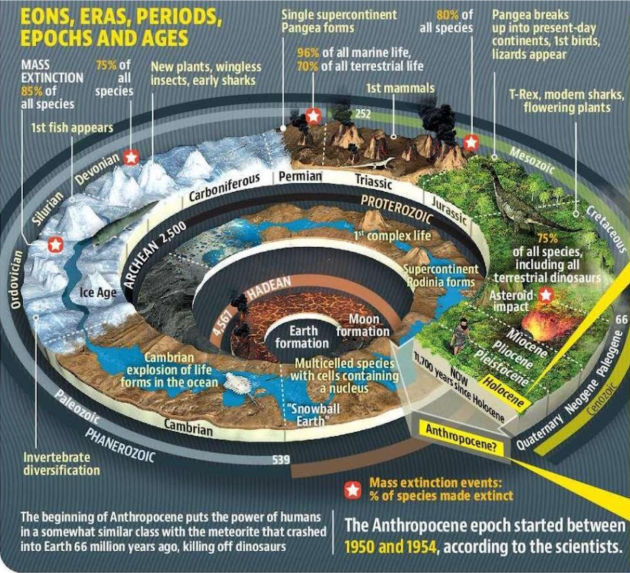
Context:A group of scientists have identified a small lake in Canada as the ground zero for ‘Anthropocene’.
What is Anthropocene?
It is an unofficial unit of geologic time which is used to denote the most recent period in Earth’s history when human activity started to have a significant impact on the planet’s climate and ecosystems, especially since the onset of the Industrial Revolution.
Neither the International Commission on Stratigraphy (ICS) nor the International Union of Geological Sciences (IUGS) has officially approved the term as a recognised subdivision of geologic time.
This term was first coined by Nobel Prize – winning chemist Paul Crutzen and biology professor Eugene Stoermer.
The phenomena’s which are associated with this geological time are global warming, sea-level rise, ocean acidification, mass-scale soil erosion, heat waves, deterioration of the biosphere and other detrimental changes in the environment.
Context: In a recent development, the Supreme Court has asked Sanjay Kumar Mishra, the Director of the Enforcement Directorate (ED), to resign four months before his third extension, which was originally scheduled to end in November.
Alongside this decision, the court upheld certain statutory amendments that allow for the prolongation of the tenures of Directors of the Central Bureau of Investigation (CBI) and the ED in a gradual manner.
Previously, the CBI and ED chiefs held fixed tenures of two years, but the amendments introduced in 2021 to the Central Vigilance Commission Act, the Delhi Special Police Establishment Act, and the Fundamental Rules now permit them to receive three annual extensions.
Directorate of Enforcement:
The Directorate of Enforcement or the ED is a multi-disciplinary organization mandated with investigation of economic crimes and violations of foreign exchange laws.
The origin of this Directorate goes back to 1956, when an ‘Enforcement Unit’ was formed in the Department of Economic Affairs for handling Exchange Control Laws violations under Foreign Exchange Regulation Act, 1947.
It was headed by a Legal Service Officer, as Director of Enforcement, assisted by an Officer drawn on deputation from Reserve Bank of India (RBI).
In 1960, the administrative control of the Directorate was transferred from the Department of Economic Affairs to the Department of Revenue.
With the passage of time, FERA, in 1947 was repealed and replaced by FERA, in 1973. Presently, the Directorate is under the administrative control of the Department of Revenue, Ministry of Finance, Government of India.
With the onset of the process of economic liberalization, FERA, 1973, which was a regulatory law, was repealed and in its place, a new law viz. the Foreign Exchange Management Act, 1999 (FEMA) was enacted in 2000.
Further, in tune with the International Anti Money Laundering regime, the Prevention of Money Laundering Act, 2002 (PMLA) was enacted and ED was entrusted with its enforcement in 2005.
Recently, with the increase in number of cases relating to economic offenders taking shelter in foreign countries, the Government has passed the Fugitive Economic Offenders Act, 2018 (FEOA) and ED is entrusted with its enforcement in 2018.
Statutory Functions:
Its functions include enforcing acts such as the Conservation of Foreign Exchange and Prevention of Smuggling Activities Act, 1974 (COFEPOSA), the Foreign Exchange Management Act, 1999 (FEMA), the Prevention of Money Laundering Act, 2002 (PMLA), and the Fugitive Economic Offenders Act, 2018 (FEOA).
The Prevention of Money Laundering Act, 2002 (PMLA): It is a criminal law enacted to prevent money laundering and to provide for confiscation of property derived from, or involved in, money-laundering and for matters connected therewith or incidental thereto. Under the PMLA, the ED carries out searches and seizures of properties, money, and documents deemed to be involved in money laundering offenses. It has the power to arrest individuals if necessary. The ED can also directly carry out search and seizure operations without prior summons under Section 50 of the PMLA. The agency has jurisdiction over individuals, legal entities, and public servants involved in offenses related to money laundering. However, the ED cannot initiate action on its own and requires a complaint from another agency or the police to begin an investigation
The Foreign Exchange Management Act, 1999 (FEMA): It is a civil law enacted to consolidate and amend the laws relating to facilitating external trade and payments and to promote the orderly development and maintenance of foreign exchange market in India. ED has been given the responsibility to conduct investigation into suspected contraventions of foreign exchange laws and regulations, to adjudicate and impose penalties on those adjudged to have contravened the law.
The Fugitive Economic Offenders Act, 2018 (FEOA): This law was enacted to deter economic offenders from evading the process of Indian law by remaining outside the jurisdiction of Indian courts. It is a law whereby Directorate is mandated to attach the properties of the fugitive economic offenders who have escaped from the India warranting arrest and provide for the confiscation of their properties to the Central Government.
Sponsoring agency under COFEPOSA: Under the Conservation of Foreign Exchange and Prevention of Smuggling Activities Act, 1974 (COFEPOSA), the Directorate is empowered to sponsor cases of preventive detention with regard to contraventions of FEMA.
Recent criticism of the ED
Allegations of misuse of the PMLA by the government and the agency itself.
Concerns have been raised about the inclusion of "ordinary" crimes under the PMLA and the attachment of assets belonging to innocent individuals.
Transparency and clarity regarding the selection of cases to investigate have also been questioned.
The Enforcement Case Information Report (ECIR) - an equivalent of the FIR - is considered an “internal document” and not given to the accused.
The initiation of an investigation by the ED has consequences that have the potential of curtailing the liberty of an individual.
Additionally, the efficiency and low conviction rates of the ED under the PMLA have been a subject of controversy.
Amendments in DSPE act: Provided that the period for which the Director of CBI holds the office on his initial appointment may, in public interest, on the recommendation of the Committee (the committee led by the Prime Minister and leader of Opposition and CJI as members) and for the reasons to be recorded in writing, be extended up to one year at a time. It also provided that no such extension shall be granted after the completion of a period of five years in total including the period mentioned in the initial appointment.
Amendments in CVC act: Provided that the period for which the Director of Enforcement holds the office on his initial appointment may, in public interest, on the recommendation of the Committee (comprising of CVC chief, Revenue and Home Secretaries among others) and for the reasons to be recorded in writing, be extended up to one year at a time. It provided further that no such extension shall be granted after the completion of a period of five years in total including the period mentioned in the initial appointment.
Criticisms of the amendments:
The government could exploit the possibility of service extensions as a means to manipulate the CBI and ED Directors into aligning with its interests.
It was argued that this dynamic would exert pressure on the Directors, leading them to comply with the government's wishes in order to secure further extensions.
The amendments contradicted the fundamental objective of safeguarding the Central investigative agencies from government influence.
Way forward:
Consensus between the adjudicating authority and the ED officers should be reached to ensure compliance with the constitutional provisions of the PMLA, making investigations more transparent.
The ED's expanded powers should be accompanied by a commitment to resolve cases expeditiously, allowing for speedy trials and convictions.
Regular scrutiny of the agency's operations and ongoing evaluation can lead to improvements in the conviction rate.
Any gaps or deficiencies can be addressed through suitable legislation, executive action, or revised orders from the apex court.
Context: In a study called “Generative AI at Work” (involving over 5,000 customer support agents in the Philippines), Massachusetts Institute of Technology (MIT) economists showed that AI tools boosted worker productivity by 14% and improved consumer satisfaction, leading to better treatment of customer service agents and increased employee retention.
Artificial Intelligence (AI)
Artificial intelligence (AI) refers to the simulation of human intelligence in machines and is concerned with developing computer-operated machines that can complete tasks that typically require human intelligence.
Generative AI Generative artificial intelligence (AI) is a form of AI that can autonomously generate new content, such as text, images, audio, and video.
Benefits of AI
AI through automated decision-making by can reduce error in decision making.
AI can automate repetitive tasks and with generative AI, even creative tasks can be done efficiently and fast.
In health sector with the help of AI patient monitoring including elderly patient monitoring, early diagnosis and process simplification can be done efficiently.
AI will "augment" the productivity of the labour force with the help of technologies and by automating some tasks and roles.
We can solve complex problems by leveraging AI's ability to analyse massive volumes of data quickly and spot patterns that we wouldn't otherwise be able to.
Intelligent automation (AI) can help by establishing a new virtual workforce that is capable of problem-solving and self-learning while increasing labour productivity.
Personalization enabled by AI will improve customer satisfaction and experience, which in turn will boost engagement and assist businesses in better consumer targeting and economic growth.
AI can assist early warning systems and disaster management by analysing historical data, patterns, and trends and monitoring real-time data to identify potential dangers.
Through assistive-personalised technology, monitoring of environmental changes, etc., AI can enhance people's quality of life.
Challenges of AI
Labour replacement by AI technologies. E.g., Chatbot replaced human assisted consumer support
A research paper titled “Robots and Jobs: Evidence from US Labor Markets” of MIT and Boston University found that robot adoption has a negative effect on workers, on average — it reduces the labour share, employment and wages.
The adverse effects of AI primarily affect blue-collar workers and individuals with lower levels of education as they lack the required skill in AI driven economy.
“Tasks, Automation, and the Rise in U.S. Wage Inequality”, report document that between 50% and 70% of changes in the U.S. wage structure over the last four decades can be attributed to relative wage declines of worker groups specialised in routine tasks in industries experiencing rapid automation
Automation by AI may reduce labour share and wages, especially when productivity gains from automation are small.
There are distributional concerns of over automation due to AI which may cause inequality among workers and possible serious negative impacts on social welfare. E.g., tax challenge in AI
McKinsey Global Institute’s research suggests that AI may intensify competition and deepen the technological divide among firms.
Early adopters of AI may gain significant advantages, leading to a winner-takes-all scenario.
AI could be highly disruptive as it is more likely to displace middle-class, white-collared jobs which constitute the major proportion of Indian population; in comparison to earlier technological advancements displaced people from lower-paid farm jobs to higher-paid factory floor jobs.
AI could create deep challenges for society, including in the labour market, politics, data privacy, crime and warfare; these challenges are difficult to anticipate and plan for.
Opportunities for India
The PwC report suggests that the greatest economic gains from AI will come from China, with a projected 26% boost to GDP by 2030. Thus, India should focus more on education and training in AI to take advantage of the demographic dividend and new opportunities that emanate from it.
Governments should step up their cyber regulations with respect to the new challenges posed by AI and may also need tax capital to balance the returns from capital and labour to reduce the displacement and distributional effects.
Artificial intelligence (AI) can transform the productivity and GDP potential of the Indian economy. Strategic investment in different types of AI technology is needed to make that happen.
Way Forward
Regulation on the use of AI should be balanced and provide ample opportunities for the required investments in AI.
With ever-growing advancements in AI are now a reality and equipping ourselves with the latest tools will help us forge ahead along with everyone else.
Context: The UN report noted that deprivation in all indicators declined in India and “the poorest States and groups, including children and people in disadvantaged caste groups, had the fastest absolute progress.”
Different types of Poverty
Absolute Poverty
Absolute poverty means poverty defined using a universal baseline with no reference to other people’s income or access to goods. The failure of meeting this baseline thus means that the individual is poor.
It incorporates the deficiency of basic food, clean water, prosperity, refuge, guidance and information and puts a money value on them to calculate a baseline.
Relative Poverty
Relative poverty is the level of poverty which changes depending on the context–it’s relative to the economic context in which it exists. Relative poverty is present when a household income is lower than the median income in a particular country.
For example, if the disposable income of a household is less than 50% of the median income of the country the household is relatively poor.
Situational Poverty
Situational poverty occurs when “a family temporarily experiences financial constraints due to an illness, job loss, or other temporary event”.
Generational Poverty
Generational poverty is a condition in which poverty has become a familial pattern for at least two generations, although it typically affects multiple generations. Sometimes, situational poverty may lead to Generational poverty.
Subjective Poverty
Subjective poverty is an individual’s perception on his or her financial/material situation. This kind of Poverty is defined on the basis of individual feeling, i.e., those who say that they feel poor represent subjective poverty.
Different Methods of measuring Poverty
Head Count Ratio or Poverty Ratio
Absolute poverty may be measured by the number or ‘head count’ of those whose incomes fall below the ‘poverty line’. Head Count Ratio is the percentage of that population in the total population.
Multi-dimensional Poverty
Multidimensional poverty encompasses the many deprivations that people can experience across different areas of their lives. This could include a lack of education or employment, inadequate housing, poor health and nutrition, low personal security, or social isolation.
In 2005/2006, about 645 million people were in multidimensional poverty in India, with this number declining to about 370 million in 2015/2016 and 230 million in 2019/2021.
Multidimensional Poverty Index (MPI) is released by the United Nations Development Programme (UNDP) and the Oxford Poverty and Human Development Initiative (OPHI).
The MPI as a poverty index can be pictured as a stacked tower of the interlinked deprivations experienced by poor individuals, with the aim of eliminating these deprivations.
Source UNDP
Causes of improvement
During the last two decades, India has implemented several social protection programmes with the aim to improve living standards, and these have helped the Indian government in poverty reduction.
Implementation of the Mahatma Gandhi National Rural Employment Guarantee Act (MGNREGA) since 2006 has significantly increased household consumption and accumulated more nonfinancial assets.
Minimum Support Price (MSP), Public Distribution Systems (PDS), PM-POSHAN and other programmes have addressed the problem of food security.
Code on social security, Code on wages etc. have increased labour earnings and security of job which played significant roles in poverty reduction.
PM- Jan Dhan Yojana and biometric identity cards under Aadhar have also transformed the anti-poverty programmes by replacing the current cumbersome and leaky distribution of benefits under various schemes using the Direct Benefit Transfers (DBT) programme.
Saubhagya scheme, PM-Sahaj Har Ghar Bijali Yojana etc. helped in improving the standard of living.
Swachh Bharat mission, National Rural Drinking Water Programme, Total Sanitation Campaign, Jalmani Programme etc. have helped in improving the sanitation outcomes.
Current status of MPI in India
India was among the 19 countries that halved their global Multidimensional Poverty Index (MPI) value during one period - for India it was 2005/2006–2015/2016.
According to the report, people who are multidimensionally poor and deprived under the nutrition indicator in India declined from 44.3% in 2005/2006 to 11.8% in 2019/2021, Child mortality fell from 4.5% to 1.5%.
Those who are poor and deprived of cooking fuel fell from 52.9% to 13.9% and those deprived of sanitation fell from 50.4% in 2005/2006 to 11.3% in 2019/2021.
In the drinking water indicator, the percentage of people who are multidimensionally poor and deprived fell from 16.4 to 2.7 during the period, electricity (from 29% to 2.1%) and housing from 44.9% to 13.6%.
Way Forward
Government may focus on the implementation of programmes which faces the problem of rigidity, non-adaptability to local conditions, late disbursement of funds, reallocation of funds to unrelated recurring expenditure, and wide-ranging rent-seeking practices.
DBT, technological improvement Programmes and sanitation programmes has been criticised because of digital divide and urban biasness in their implementation. Through initiatives for education and awareness, the Indian government could enhance the implementation its policies.