Daily Current Affairs

September 2023

Current Affairs

Bio-Fuel: Explained

Context: The use of food crops to generate bio-fuels can put burden on the resources of India, which demands for change in the definition of bio-fuels.

Biofuels are alternative fuels produced from biomass and used for transportation. 

There are two major biofuel sectors: 

  • Bio-gasoline from sugar-based bioethanol.
  • Biodiesel from vegetable oils or fatty acid methyl esters (FAME).  
Biomass to liquified

Need for Alternative Fuel Options 

Global transportation sector is facing three major challenges, namely 

  • Depletion of fossil fuels.
  • Volatility in crude oil prices.
  • Stringent environmental regulations. 

Alternative fuels specific to geographies can address these issues. Ethanol is considered to be one of most suitable alternative blending, transportation fuel due to its better fuel quality (ethanol has a higher octane number) and environmental benefits.

Defnition of Biofule and Global Regulation 

Since 2008, European regulations (such as the RED II directive) while differntiating provide for two kinds of biofuels:

  • Conventional biofuels: First generation biofuels from agricultural raw materials that can threaten food security or have a negative impact on land use changes
  • Advanced biofuels:
    • Second Generartion: These fuels are derived from non-edible vegetal resources.
    • Third Generartion: These fuels are derived from micro-organisms such as algae or yeasts.
Biofuel Feedstocks

Biofuel consumption mainly depends on legal constraints on blending and on the fuel demand trends. They were mainly used in road transport in 2020, but new applications in the maritime and air sector are being developed. 

Data 

According to the International Energy Agency, to achieve net-zero emissions by 2050 globally, sustainable biofuel production needs to triple by 2030 to fuel modes that have few other mitigation options.

Biofuels vs. Electric Vehicles (EVs)

Transitioning to EVs requires replacing existing internal combustion engine (ICE) vehicles and infrastructure, which is capital-intensive and can have environmental concerns related to the mining of critical minerals for batteries.

Case of India  

  • High Import Dependence: India’s import dependence on crude oil and products stood at an all-time high of 87.3% in FY2023, and 25.8% of the country’s import bill was spent on it. 
  • High Demand of Crude and its Product: India has the third-largest crude and product demand in the world with significant room for consumption growth. 
  • Demand of Transportation Sector for Petrol  
    • Nearly 60 per cent of our petrol demand comes from two-wheelers, which cater to the mobility needs of citizens across the economic spectrum.  
    • The remaining 40 per cent demand is from four-wheelers and this share is likely to increase. 
  • Government Programme: India launched its ethanol blending programme in 2003 and in 2022, India’s blending programme achieved the significant milestone of 10 per cent ethanol blending in petrol. 
  • Ethanol Supply:  
    • Ethanol producers supplied nearly 430 crore liters of ethanol in 2022. 
    • Much of India’s supply of ethanol for the blending programme comes from first-generation production using food crops, mostly sugarcane (84 per cent) and grain (16 per cent). 
  • Prospect of Second-generation (2G) technologies 
    • Investments in second-generation (2G) technologies for ethanol production have been slow. 
    • Indian Oil’s state-of-the-art facility will only produce 3 crore liters of 2G ethanol.  
    • There are 12 such facilities in various stages of planning and construction. 
  • International Energy Agency suggested that in the last decade, up to 20% of our total primary energy supply was met by biomass, and a large portion of it was used by households. 

Biofuel Targets of India 

  • The government aims to achieve a 20% ethanol blending with petrol (E20) by 2025-26.
  • In India, biofuels are primarily associated with first-generation (1G) ethanol, which is sourced from food crops like sugarcane and foodgrains. 
What is Ethanol-blanded Gasoline

Factors that Derive production of ethanol in India 

  • Demand Enrichment: Governments’ mandate for blending a minimum percentage (%) of ethanol with gasoline fuel & production of ethanol compatible vehicles.
  • Supply Enrichment: Schemes for ethanol production from different feedstocks and encouragement to augment bio-refineries and their capacities.
  • Incentives: Promoting the use of higher ethanol blends through price incentives (tax relief at the retail level) and tax incentives for vehicles compatible with E20 and E85.

Prospects of Biofuel in India 

  • The demand for 20 per cent blending is set to increase India’s ethanol demand to nearly 1,100 crore liters by 2025. 
  • Achieving the 2025 target will require investments, and the ability to provide and divert the necessary feedstock for the domestic production of ethanol. 
  • A NITI Aayog report also indicated a growth in petrol demand by over 45 per cent by 2030, compared to 2021. 
  • The share of four-wheeler is going to increase Nearly 55 per cent of respondents in a 2021 study focused on urban India by the Council on Energy, Environment and Water. 

Challenges to Bio-fuels in India

  • 1G Ethanol Dominance: India primarily relies on first-generation (1G) ethanol, sourced from food crops, particularly sugar cane and foodgrains, to meet its ethanol blending targets.
  • Resource Depletion and Food Security:
    • Growing sugar cane and using foodgrains for ethanol production have significant implications for groundwater depletion and food security.
    • These practices may not be sustainable, given stagnant crop yields, climate change impacts, and limited resources.
  • Groundwater Issue: 
    • Groundwater depletion from sugarcane cultivation and diverting food crops for ethanol production can have negative consequences, especially given stagnant crop yields and the need to feed a growing population.
    • According to the study by University of Michigan rates of groundwater depletion could triple during 2040-81 compared with the current rate.
  • Agriculture's GHG Emissions: Diverting crops towards fuel production increases greenhouse gas (GHG) emissions from the agriculture sector, counteracting the goal of reducing emissions in the transport sector.
  • Greenhouse Gas Emissions: The agriculture sector is noted for its direct greenhouse gas (GHG) emissions, and using it to produce motor fuel may lead to a net increase in emissions, counteracting efforts to reduce emissions from the transport sector.
  • Challenge of Scaling up: Balancing economies of scale with energy needs and costs for biomass collection and transport remains a challenge.

Way Forward

  • Clarity in Definition: The term 'biofuel' encompasses both sustainable and unsustainable fuels. Distinguishing between them is crucial for effective decarbonization efforts.
  • Sustainable Biofuels:
    • Sustainable biofuels, produced from crop residues and other low-impact sources, have a lower water and GHG footprint. 
    • Global Biofuels Alliance initiative aim to develop these sustainable alternatives and promote ethanol use.
  • Biomass Use: The Energy Transitions Commission recommends prioritizing biomass use in sectors where low-carbon alternatives are limited, such as long-haul aviation and road freight, where electrification is challenging.
  • Alternative Strategies: Alternative strategies can be formulated to reduce negative consequences, such as reducing surplus sugarcane cultivation, could be explored to address the issue of surplus sugar production and prioritize food production.
  • Diversification of Fuel Base: Diversifying our fuel base, the primary focus of policy must be to slow down the overall consumption of petrol in the economy and address the private demand for fuel. 

Achieving true sustainability in biofuels is a complex task. Any strategy must be carefully assessed within the larger ecosystem to avoid unintended negative consequences.
Harami Nala: The rogue or treacherous channel Between India and Pakistan

Context: Union home minister visited Harami Nala (rogue or treacherous channel) in the Sir Creek sector of Kutch region of Gujarat, near the India-Pakistan border.

About Harami Nala

  • It is a natural water body, approximately 25 kilometers long, flowing from west to east from Pakistan into Kutch, just south of Vighakot sector. It is flanked by vast marshy mud flats affected by low and high tides.
  • About 22 kilometers of the channel lie on the Indian side of "vertical line" of the International Boundary (IB) between India and Pakistan, which itself is not contested. A portion of Rajasthan's Barmar district also touches this area.
  • It is extremely rich in fishing, especially prawns.
  • The formidable marshy terrain through which it runs makes it impossible to approach or patrol on foot, even during low tide.
  • There are dangerous tides, muddy areas, and mirages, and it also gets extremely hot in the summer, with temperatures exceeding 50 degrees Celsius.
  • It is one of the most inhospitable places along the border and has also been at the center of cross-border mischief and exploitation by infiltrators.
  • The water body has some unique characteristics. Tidal waters surge from the Pakistani side, and over the years, the channel has extended further on the Indian side.
  • On the Pakistani side, there's a wall called Chini-Bandh, built with assistance from China, to prevent ocean water from flooding their side. On the Indian side, there is a significant distance from the IB where factories have emerged to produce salt, bromide, and other chemicals carried by mineral-rich waters.
  • The channel's proximity to the coast and urban centers like Gujarat and Mumbai has made it an attractive route for potential infiltrators.

Golden Visa

Context: OpenAI CEO Sam Altman became the first person to receive a “golden visa” from Indonesia.

About Golden Visa

A Golden Visa refers to the immigration program which allows wealthy individuals to get a residence permit or even citizenship in another country simply by purchasing a house there or making a relatively large investment or donation.

  • The Golden Visa system essentially offers long-term residency (5 and 10 years) to people belonging to the following groups:
    • Investors.
    • Entrepreneurs.
    • Individuals with outstanding talents the likes of researchers.
    • Medical professionals and those within the scientific and knowledge fields.
    • Remarkable students.
  • Different countries have different options to have a golden visa.
  • In certain countries after getting a Golden Visa, people become legal residents of that country, they can live there, go to school, and get access to healthcare.
  • Residency by investment is a way many countries use to lure foreign investments usually in property or by creating a business that employs a set minimum number of locals.

Eligibility for Golden VISA

Different countries demand different requirement for golden Visa scheme, but most demand:  

  • You have no criminal record. 
  • Evidence of investment funds. 
  • Keeping an investment for the requisite period. 
  • A minimum net worth or a certain amount of cash in the bank.
  • Make a capital investment in a company’s shares/stocks. 
  • Make a capital investment in the country’s public debt or government bonds
  • Create employment opportunities.
  • Contribute to a country’s scientific or technological innovation.

Three Type of Golden Visa Programme

There are three main types of golden visas:  

  • Citizenship by investment e.g., Malta, Montenero.
  • Residence by investment e.g., Canada, Switzerland. 
  • Immigration by investment 

Benefits of Golden VISA

  • Travel to a broad range of countries visa-free.
  • Fast application processing, with some permits issued in just one month. 
  • Opportunities to invest in fast-growing markets. 
  • Whole family Visa or passport eligibility. 
  • Flexible options to progress to full citizenship following a residence by investment application.

Nipah Virus (NiV)

Context: Instances of Nipah virus have been reported from Kerala recently. The virus is capable of causing different clinical manifestations with potential human to human spread in some cases. With the Nipah virus cases a regular occurrence in Kerala now, there is a need for a thorough genetic study of the virus in humans and fruit bats.

Relevance of the Topic: Prelims: Key facts about Nipah virus

About Nipha Virus (NiV):

  • About: Nipah virus (NiV) is a single-stranded RNA virus. The genetic material of Nipah virus is composed of RNA rather than DNA.
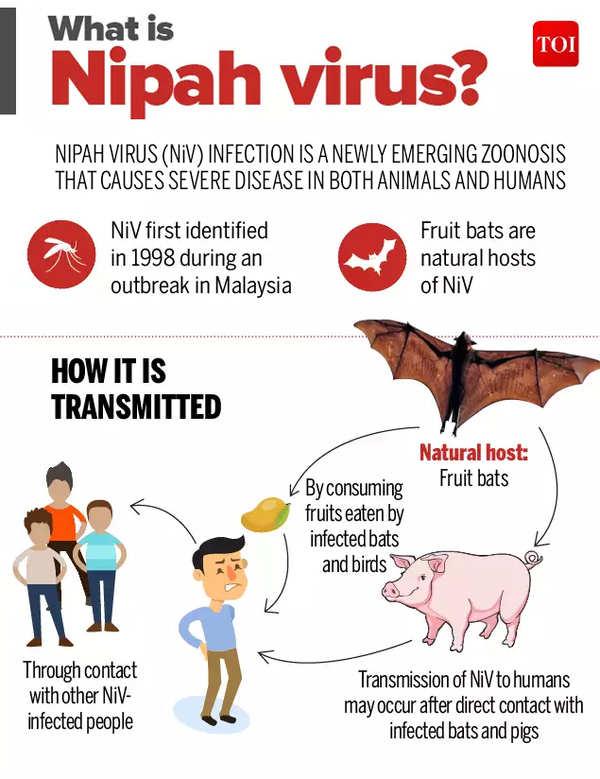
  • Transmission: Nipah virus is a zoonotic disease that can be transmitted to humans through direct contact with infected animals, especially bats and pigs. Nipah virus infection can be transmitted through contaminated food or directly from person to person.
  • Natural Reservoir: Fruit Bats (also known as flying foxes) are believed to be the natural reservoir/primary carriers of the Nipah virus.
  • Symptoms range from: 
    • Mild illness: Fever, headache, muscle pain, and respiratory problems (similar to that of influenza).
    • Asymptomatic infection (no symptoms) 
    • Fatal Encephalitis (Inflammation of the brain)- can lead to coma or death. 
    • Severe acute respiratory symptoms.  
    • The case fatality rate is between 40% and 75%.
  • Treatment: NiV is on the top-10 priority list of pathogens identified by the World Health Organization. Currently, there are no approved vaccines available against NiV.
image 6
Source: Times of India

Malaviya Mission: Teacher Training Programme

Context: The Ministry for Education and Skill Development & Entrepreneurship has launched the Malaviya Mission for the training of teachers in higher educational institutes. 

image 48

About Malaviya Mission

  • It is a teacher training programme that aims to provide tailored training programmes for teachers. This programme will work for the capacity building of faculty members in higher educational institutions.
  • Organised by University Grants Commission, in association with the Ministry of Education.
  • Aims to improve the quality of teachers’ training, build leadership skills in teachers and help realise the goals of the National Education Policy (NEP).
  • The capacity building under this Mission will be mapped to the credit framework to ensure career progression pathways for educators.
  • There are the theme-wise training sessions. 

The 8 themes include 

  1. Holistic and Multidisciplinary Education
  2. Indian Knowledge Systems (IKS), 
  3. Academic Leadership, Governance and Management, 
  4. Higher Education and Society, 
  5. Research and Development, 
  6. Skill Development, 
  7. Student Diversity and Inclusive Education and 
  8. Information and Communication Technology. 
  • Human Resource Development Centres to be revamped and known as Madan Mohan Malaviya Teachers Training Centres.
  • Monitoring and quality assurance of the Malaviya Mission Teacher Training Programme would be undertaken by the UGC Committee after conducting one round of training programme.

Objectives of the Scheme: 

Salient objectives of the scheme in alignment with NEP 2020 are:

  1. Improving the quality of Education at all levels by infusing quality and excellence in our teachers and teaching.
  2. To develop innovative teaching method and high-level institutional facilities in all the constituent areas of higher education. 
  3. To impart pedagogy-related training and improve faculties’ soft and practical skills.
  4. To ensure holistic development of the teachers and learners with inculcation of ethics and human values as enshrined in Indian culture.
  5. To develop multidisciplinary and critical thinking ability.
  6. To familiarize the faculty with the Indian Knowledge Systems.
  7. To build respect for the eco-balance and biodiversity existing in the nature. University Grants Commission 7
  8. To undertake quality research in line with the local, national, and global needs.
  9. To make it known that higher education is for social upliftment and inclusiveness.
  10. To develop the know-how to prepare transformative pedagogy with ICT intervention.
  11. To build life skills and global citizenship values.
  12. To ensure the role of faculty as active participants in institution building.
  13. Improve the quality of teaching and empower Faculty members through training, induction, refresher and short term programs and ensure their continuous professional development.

Significance of Malaviya Mission

  • Improve the quality of education at all levels by infusing quality and excellence in teachers and teaching methods. 
  • Ensure continuous professional development and help in building capacities of 15 lakh teachers of the Higher Education Institutions (HEIs) through 111 Malaviya Mission centres across India in a time-bound manner.
  • Theme-wise training sessions will help enthuse “Samagrata” in the participants. 

Extinction Alert for Vaquita Porpoise

Context: The scientific committee of International Whaling Commission (IWC) has issued its first ever Extinction Alert for Vaquita Porpoise. 

About Vaquita Porpoise

  • Vaquita is a small porpoise found only in the northern Gulf of California around Mexico in the shallow waters bordering the Colorado estuary. 
  • Vaquita is a toothed whale like dolphins and sperm whales and different from baleen whales such as blue whale.
  • Currently, only about 10 Vaquita Porpoise are believed to be surviving in the world. 
  • Vaquita Porpoise are the smallest species of cetacean order which also includes marine mammals like whales, dolphins and porpoises. 
  • IUCN Status: Critically Endangered.
image 5

About Gulf of California

  • Gulf of California  is a large body of water that separates Baja California Peninsula from the Mexican mainland. 
  • It is semi-closed waterbody and its water is protected from cold current of the Pacific.
  • Gulf of Mexico is listed as one of the 66 Large Marine Ecosystems of the World with high endemism.
  • Unique fish species found in Gulf of California are Totoaba (Critically Endangered) and Vaquita Porpoise (Critically Endangered).

Reasons for decline in the population of Vaquita Porpoise

  • Main cause for the decline of population of Vaquita Porpoise is their incidental mortality in gillnets as bycatch. 
  • They are mainly entangled in shrimp gillnets and nets set for totoaba.
  • Totoaba is a fish similar in size to Vaquita. Value of Totoaba has skyrocketed due to demand in black market for totoaba swim bladers in Hong Kong and China. 
  • Vaquita Porpoise has low reproductive rate and limited geographical distribution which makes it high vulnerable to human disturbances.
  • Other reasons include increased urbanisation around Gulf of California and increased pollution

India- Middle East- Europe Economic Corridor

Context: Days after the launch of the India-Middle East-Europe Economic Corridor, Prime Minister Narendra Modi on Monday described Saudi Arabia as “one of the most important strategic partners of India”.

The exchange between the two sides took place during the state visit of Crown Prince Mohammed Bin Salman of Saudi Arabia when they agreed to set up a joint task force to fast-track the West Coast refinery project.

  • Further PM Modi and Prince Bin Salman also co-chaired the first meeting of the India-Saudi Strategic Partnership Council (SPC)
  • The discussion focused on defence, energy, security, education, technology, transportation, healthcare, tourism and culture, space, and semiconductors as areas of possible cooperation.
  • The new thing that has come up is that the two sides agreed to set up a joint task force to help in identifying and channelising the $100 billion investment which was actually promised by the Saudi side. Earlier Crown Prince Bin Salman had visited India in February 2019 when Saudi Arabia had pledged to invest $100 billion and the investment into the energy project.
  • Delhi and Riyadh would upgrade energy ties to “comprehensive energy partnership”

About India-Middle East- Europe Corridor:

  • The project includes India, the UAE, Saudi Arabia, the European Union, France, Italy, Germany and the US.
  • It will be a major medium of economic integration between India, West Asia and Europe and  will give a new direction to connectivity and sustainable development of entire world.
image 49

What is the project?

  • The rail and shipping corridor is part of the Partnership for Global Infrastructure Investment (PGII) — a collaborative effort by G7 nations to fund infrastructure projects in developing nations. PGII is considered to be the bloc’s counter to China’s Belt and Road Initiative.
  • The corridor will include a rail link as well as an electricity cable, a hydrogen pipeline and a high-speed data cable
  • The project is thus duped as “a green and digital bridge across continents and civilizations.”

Why is the project being proposed?

  • First, it would increase prosperity among the countries involved through an increased flow of energy and digital communications. 
  • Second, the project would help deal with the lack of infrastructure needed for growth in lower- and middle-income nations. 
  • Third, it could help “turn the temperature down” on “turbulence and insecurity” coming out of the Middle East
  • Lastly, the project could be seen as Biden’s attempt to further strengthen the G20 group to counter the dominance of China’s Xi Jinping and Russia’s Vladimir Putin.

Miniaturisation: The Future of Space and Nuclear Technology

Context: The Small Nuclear Reactors and Small Satelite Vehicles have increased the presence of private sector in these sectors, which may lead to cost efficient, environmentally sustainable and competitive future technologies.

Nuclear Fusion and Energy 

Nuclear fission is a reaction where the nucleus of an atom splits into two or more smaller nuclei, while releasing energy.

Nuclear Fusion and Energy 
  • For instance, when hit by a neutron, the nucleus of an atom of uranium-235 splits into two smaller nuclei, for example a barium nucleus and a krypton nucleus and two or three neutrons. 
  • These extra neutrons will hit other surrounding uranium-235 atoms, which will also split and generate additional neutrons in a multiplying effect, thus generating a chain reaction in a fraction of a second.
  • Each time the reaction occurs, there is a release of energy in the form of heat and radiation. 
  • The heat can be converted into electricity in a nuclear power plant, similarly to how heat from fossil fuels such as coal, gas and oil is used to generate electricity.

Nuclear Power Plant Working 

  • In a nuclear reactor heat is produced through the chain reaction happening through the fission.
  • The heat warms the reactor’s cooling agent, typically water, to produce steam. 
  • The steam is then channelled to spin turbines, activating an electric generator to create low-carbon electricity.

Small modular reactors (SMRs)

SMRs are advanced nuclear reactors that have a power capacity of up to 300 MW(e) per unit, which is about one-third of the generating capacity of traditional nuclear power reactors. SMRs, which can produce a large amount of low-carbon electricity, are:

  • Small – physically a fraction of the size of a conventional nuclear power reactor. 
  • Modular – making it possible for systems and components to be factory-assembled and transported as a unit to a location for installation. 
  • Reactors – harnessing nuclear fission to generate heat to produce energy.

Advantages of SMR 

  • Given their smaller footprint, SMRs can be sited on locations not suitable for larger nuclear power plants.
  • refabricated units of SMRs can be manufactured and then shipped and installed on site, making them more affordable to build than large power reactors, which are often custom designed for a particular location, sometimes leading to construction delays.
  • SMRs offer savings in cost and construction time, and they can be deployed incrementally to match increasing energy demand.
  • In areas lacking sufficient lines of transmission and grid capacity such as rural areas, SMRs can be installed into an existing grid or remotely off-grid, as a function of its smaller electrical output, providing low-carbon power for industry and the population.
  • SMRs have reduced fuel requirements. Power plants based on SMRs may require less frequent refuelling, every 3 to 7 years, in comparison to between 1 and 2 years for conventional plants
  • In comparison to existing reactors, proposed SMR designs are generally simpler, and the safety concept for SMRs often relies more on passive systems and inherent safety characteristics of the reactor, such as low power and operating pressure.

Moore’s Law

Moore’s Law is a reductive title for the idea, first postulated by American engineer Gordon Moore in the 1960s, that approximately every two years, technology doubles the total number of transistors that manufacturers can squeeze into an integrated circuit. In general terms, it implies that computing power increases exponentially over time.
A simplified definition of Moore’s Law indicates that the speed of individual microchips as well as the overall amount of computing power available doubles around every two years.  

Small Satellite Launch Vehicle

  • Small Satellite Launch Vehicle (SSLV) is the new launch vehicle of ISRO capable of launching Mini, Micro or Nano satellites (10 to 500 kg mass) to 500 km planar orbit. 
  • SSLV is a three-stage vehicle with all solid propulsion stages. 
  • The satellite insertion into the intended orbit is achieved through a liquid propulsion-based Velocity Trimming Module (VTM).
Small Satellite Launch Vehicle
Image Source: ISRO
PSLV vs SSLV difference
Image source: India Today

Advantages:

  • Its has low production cost.
  • It has a low turnaround time.
  • It has high flexibility in accommodating multiple satellites.
  • It has launch-on-demand feasibility.
  • It needs minimal launch infrastructure requirements.
  • The advantage of SSLVs is that each rocket can be integrated within as short a span of time as 72 hours, against more than a month taken for other launch vehicles.

What are Picoflare jets?

Context: Researchers studying the findings of the Solar Orbiter Aircraft, a joint mission by the European Space Agency and the U.S. space agency NASA, recently announced that they have detected picoflare jets from the sun’s outer atmosphere.

About Picoflare jets:

  • It is a tiny jet (plasma ejections) of charged particles emanating from the Sun's outer atmosphere.
  • According to the researchers, these charged small particle jets, which are ejected intermittently are a source of the solar wind. This flow is not actually uniform, the ubiquity of the jets suggests that the solar wind from coronal holes might originate as a highly intermittent outflow.
  • These widespread yet faint jets, only a few hundred kilometers across, were seen to last between 20 to 100 seconds, achieving speeds of approximately 100 kilometers per second. Their energy appears to be derived from magnetic reconnection. 
At the Sun's Poles - Picoflare Jets

Significance of Picoflare jets:

  • Due to their relatively low kinetic energies, researchers named these structures picoflare jets. Based on their calculations, they suggest that plasma outflows from these numerous, frequent picoflare jets, channeled along the open magnetic field lines of coronal holes, might supply a considerable amount of mass and energy to the solar wind throughout the solar cycle.
  • It has significant effects on the large-scale solar system as well as on Earth's magnetic field and poses risks to satellite electronics. 

Solar Orbiter Aircraft

  • It is a next-generation solar-observing satellite developed by a collaboration between the European Space Agency (ESA) and NASA.
  • It was launched in 2020.
  • It will provide unprecedented details about the solar system and the images of the sun’s poles while investigating the heliosphere.
  • It is equipped with a suite of scientific instruments to observe the Sun up close and provide new insights into its behaviour, including its magnetic fields, solar wind, and how it influences the solar system.

Solar winds

  • The outermost layer of the Sun's atmosphere, known as the corona, is composed of extremely hot plasma. Some of this plasma escapes the Sun's gravitational pull and flows outward into space, creating the solar wind. 
  • The solar wind is a stream of charged particles, primarily electrons and protons, that constantly blows away from the Sun and interacts with objects in the solar system, including the Earth.

Corona

  • It is the outermost layer of the Sun's atmosphere, extending millions of kilometers into space
  • It is composed of extremely hot and tenuous plasma (ionized gas). 
  • It is visible during a total solar eclipse as a pearly-white halo of light surrounding the dark disk of the Moon. 
  • It is much hotter than the Sun's surface, with temperatures reaching millions of degrees Celsius. 

Nataraja - Lord of Dance and Imperial Cholas

Context: The Nataraja sculpture now on display at Bharat Mandapam, where the G20 Leaders' Summit took place, depicts Lord Shiva in a manner that originated in the fifth century AD but gained iconic status during the reign of the Great Cholas.

More about the news:

  • The 27-foot Nataraja is the world's tallest statue of Lord Shiva in his dancing form.
  • The remarkable sculpture is crafted from an ashtadhatu, an eight-metal alloy, skillfully fashioned by artisans from Swamimalai in the Thanjavur district of Tamil Nadu.
  • Srikanda Sthapathy collaborated with his brothers to create this masterpiece and the design of the statue draws its inspiration from three esteemed Nataraja idols:
    • Thillai Nataraja Temple in Chidambaram
    • Uma Maheswarar Temple in Konerirajapuram
    • Brihadeeswara Temple, an UNESCO World Heritage Site, located in Thanjavur.

The Cholas and the Nataraja Sculpture

  • The Cholas, a prominent dynasty that thrived during the 9th-11th centuries AD, ruled over a significant portion of peninsular India and are closely associated with the development of Nataraja art.
  • The Cholas, devout followers of Shaivism, constructed elaborate Shiva temples throughout their territories, including the iconic one in Thanjavur.
  • K A Nilakanta Sastri, a pioneering historian of South India, highlighted the prevalence of Shaiva figures in Chola sculpture in his book 'The Colas' (1937), stating that while Vaishnava and Jain images were present, Shaiva figures held the most significance.
  • Although the depiction of Shiva as Nataraja dates back to the fifth century AD, it was under the Cholas that this form achieved its present iconic status.
  • Sastri has also noted that Nataraja images, particularly in bronze, were highly regarded among Chola sculptures, and they continue to hold cultural significance to this day.
Nataraja Sculpture

Shiva as the Lord of Dance

  • The worship of Shiva has evolved from the Vedic deity Rudra. Shiva is a multifaceted deity within the Puranic pantheon, characterized by complexity and depth.
  • A L Basham, a prominent Indologist, described Shiva as ‘death and time (Mahakala),’ a deity who both destroys all things and serves as a patron of ascetics in his work 'The Wonder that was India' (1954).
  • Shiva also embodies the persona of the 'Lord of Dance' or Nataraja, credited with inventing a diverse range of dances, from serene and gentle to fierce, orgiastic, and formidable.
    • In the classic portrayal of Nataraja, he is encircled by a flaming aureole or halo, symbolizing the circle of the world that he both encompasses and transcends.
    • His long dreadlocks flow outward, animated by the energy of his dance, and he strikes a rhythmic pose with his four arms.
    • In his upper right hand, he holds a damru (a hand drum), the sound of which draws all beings into his rhythmic motion.
    • In his upper left arm, he holds agni (fire), which he can wield to bring about the destruction of the universe.
    • Beneath one of Nataraja's feet, a dwarf-like figure lies crushed, symbolizing illusion, which misleads humanity.
    • However, amidst the symbolism of destruction, Nataraja also offers reassurance, depicting Shiva as the Protector.
    • With his front right hand, he makes the 'abhayamudra' (a gesture that allays fear), and with his raised feet, he points to his feet, urging his devotees to seek refuge there.
    • Remarkably, Nataraja is often depicted with a broad smile, signifying his simultaneous embrace of both life and death, joy and pain.

The Lost Wax Method (Cire-Perdue)

The ancient technique can be traced back at least 6,000 years, with evidence of its use found in a copper amulet from a neolithic site in Mehrgarh, Balochistan (present-day Pakistan), dating back to circa 4,000 BC.The famous Dancing Girl of Mohenjo Daro was also created using this method. For millennia, the lost-wax method stood as the foremost technique for producing intricate metallic sculptures, and the Cholas elevated this skill to its zenith.A molten metal is poured into a Mold that has been created by means of a wax model. Once the mold is made, the wax model is melted and drained away. A hollow core can be effected by the introduction of a heat-proof core that prevents the molten metal from totally filling the mold. 

Bronze Sculptures during the Chola Period:

  • During the 10th century, evolving religious beliefs required Hindu deities to participate in various public roles akin to human monarchs.
  • Consequently, large bronze sculptures were crafted to be carried outside temples for daily rituals, processions, and festivals.
  • The iconic dancing depiction of Shiva as Nataraja was conceived and fully refined during the Chola Period, leading to the creation of numerous variations of this intricate bronze image. 
  • The region of Thanjavur (Tanjore) in Tamil Nadu played a pivotal role in the evolution of a diverse range of Shiva iconography.
  • An exceptional example from the ninth century is the depiction of the Kalyanasundara murti, which ingeniously portrays the marriage ceremony through two separate statuettes.
    • Shiva, extending his right hand, symbolically accepts Parvati's right hand in this representation, with Parvati displaying a bashful expression as she takes a step forward.
  • The union of Shiva and Parvati is brilliantly captured in a single image through the Ardhanarisvara Murti, where the two halves merge to form a harmonious whole. 
  • Independent figurines of Parvati have also been sculpted with grace, portraying her in the elegant tribhanga posture.
  • Bronze sculptures during the Chola period were meticulously crafted using the artistic technique known as Cire Perdue or Madhu Uchchishtta Vidhana, also called lost-wax casting.
    • The method involved mixing beeswax, a type of camphor called kungilium, and a small amount of oil, kneading this mixture, and using it to sculpt the figure and its intricate details.
    • The wax model was then coated with clay, dried, and placed in an oven to melt or evaporate the wax.
    • Subsequently, Pancha Loham, a bronze alloy, was melted and poured into the clay mold, filling every crevice and detail.
    • After cooling and solidifying, the clay mold was broken, leaving only the bronze sculpture.
    • The final steps included adding finer details, cleaning, removing any blemishes, and smoothing and polishing the sculpture before it was displayed, typically within a temple.
Brihadishvara Temple
(Brihadishvara Temple)

Monumental Temples and Architectural Wonders

  • Throughout the Chola Dynasty, monumental temples and splendid works of art influenced by Hinduism were constructed across the empire.
  • These structures were not only immense but also carved from hard rock and granite, featuring intricate carvings and architectural designs that seemed to defy the capabilities of their time. 
  • The architects of the Chola Dynasty drew inspiration from the preceding Pallava dynasty's style, refining it and elevating Chola art and architecture.
  • King Rajaraja Chola, during the Chola Dynasty, also constructed the grand Brihadishvara temple in Gangaikonda Cholapuram, renowned as the Tanjore temple, dedicated to Shiva.
    • It stands as one of the largest Hindu temples of its time and continues to astound engineers with its construction and architecture.
  • Chola architecture extended beyond religious temples to encompass hospitals, public utility buildings, and palaces.
  • Prince Aditya Karikala built the golden palace for his father, King Sundara Chola.
  • Many of these buildings, constructed using timber and bricks, have not withstood the test of time. 
Map showing the greatest extent of the Chola empire c.1030 under Rajendra Chola I
(Map showing the greatest extent of the Chola empire c.1030 under Rajendra Chola I)

About Imperial Cholas:

The rich history of the Chola dynasty is illuminated by a plethora of diverse sources, providing insights into their governance, culture, and achievements. These sources can be categorized into inscriptions, literary works, and historical records.

  • Inscriptions:
    • Copper and Stone Engravings: Over 10,000 inscriptions etched on copper and stone surfaces constitute the primary sources for studying Chola history.
    • Temple Endowments: These inscriptions predominantly document the generous endowments and donations made by Chola rulers and individuals to temples.
    • Land Transactions and Taxes: Vital components of these inscriptions include land transactions and details about taxes, both collections and exemptions.
    • Copper Plates: Copper plates contain the official commands and decrees of Chola monarchs, offering a glimpse into their administrative authority. Alongside orders, these plates divulge information about genealogy, wars, conquests, administrative divisions, local governance, land rights, and various taxes imposed. 
    • Uttaramerur Inscription: The ‘Uttaramerur Inscription’ issued by Prantaka Chola offers detailed information about the election processes of local self-governance bodies, shedding light on the political structure of the time.
  • Literary Sources:
    • The era saw a flourishing of Tamil literature, with the rise of bhakti saints and the compilation of hymns that reflect the socio-cultural features of the period. 
    • Literary works like ‘Muvarula’ and ‘Kamba Ramayanam,’ the great epic, belong to this era, providing valuable cultural insights

Political History of the Cholas

  • Emergence under Vijayalaya (850–871 CE):
    • Conquest of Kaveri Delta: Vijayalaya's conquest of the Kaveri delta from the Muttaraiyar marked the re-emergence of the Chola dynasty.
    • Foundation of Thanjavur: He founded the city of Thanjavur and established the Chola kingdom in 850 CE.
  • Parantaka I (907–955 CE):
    • Parantaka Chola initiated territorial expansion and governance reforms, laying the foundation for future Chola glory.
    • Battle of Takkolam: He suffered a defeat at the hands of the Rashtrakutas in the famous Battle of Takkolam.
  • Rajaraja I (985 – 1014 A.D.):
    • Rajaraja I's reign witnessed significant military achievements and cultural contributions.
    • Naval Expeditions: Victorious naval expeditions along the West Coast, Sri Lanka, and the Maldives.
    • Northern Sri Lanka: His conquest led to the Chola authority's control over northern and eastern Sri Lanka.
    • Battle of Kandanur Salai: Defeat of the Cheras in this notable battle.
    • Construction of Rajarajeswara Temple: Completed the iconic Rajarajeswara temple in Tanjore in 1010 A.D.
    • Religious Devotion: A devout follower of Saivism, he earned titles like Mummidi Chola and Sivapadasekara.
    • Abdicated the throne in favor of his son Rajendra Chola I.
  • Rajendra Chola I (1012-1044 A.D.): 
    • Military Exploits: Conducted remarkable military expeditions, including defeating Mahipala I of Bengal.
    • Gangaikondacholapuram: Established the city of Gangaikondacholapuram and constructed the renowned Rajesvaram temple.
    • Naval Expedition to Kadaram: Launched a naval expedition to Kadaram (Sri Vijaya, Indonesia), annexing Sri Lanka in the process.
    • Established educational institutions, earning the title ‘Pandita Chola’.
  • Legacy and Decline:
    • Kulathunga Chola I: Grandson of Rajendra Chola, he upheld the Chola legacy by abolishing taxes, fostering trade with China, and uniting the Vengi kingdom with the Chola Empire.
    • Rajendra III: The last Chola king, defeated by Jatavarman Sundarapandya II, marked the decline of the Chola empire.

With the fall of the Cholas, the Pandya and Hoysala kingdoms emerged on the stage of South Indian history, marking the end of an illustrious era.

Read also: Wheel of Konark Temple

Hybrid Nanoparticles to target Cancer cells

Context: Scientists at the Indian Institute of Science (IISc) have developed a new approach using hybrid nanoparticles to potentially detect and kill cancer cells, especially those which form a solid tumour mass. The researchers have tested the nanoparticles on lung cancer and cervical cancer cell lines in the lab. They now plan to take the results forward for clinical development.

About Hybrid nanoparticles:

  • The IISc team created hybrid nanoparticles by combining gold and copper sulphide nanoparticles. They used a novel reduction method to deposit tiny seeds of gold onto the copper sulphide surface. The resulting hybrid nanoparticles are less than 8 nm in size.
    • Copper sulphide nanoparticles have previously received attention for their application in cancer diagnosis.
    • Gold nanoparticles can be chemically modified to target cancer cells and have shown anticancer effects.
  • These particles have photothermal, oxidative stress, and photoacoustic properties, the properties can be utilised to kill cancer cells using heat and enable their detection using sound waves.
    • Photothermal property: When light is shined on these hybrid nanoparticles, they absorb the light and generate heat, which can kill cancer cells.
    • Oxidative stress: These nanoparticles produce singlet oxygen atoms that are toxic to the cancer cells.
    • Photoacoustic property: The photoacoustic property of the nanoparticles allows them to absorb light and generate ultrasound waves, which can be used to detect cancer cells with high contrast once the particles reach them.
      • Ultrasound waves generated from the particles allow for a more accurate image resolution as sound waves scatter less when they pass through tissues compared to light.
      • Scans created from the generated ultrasound waves can also provide better clarity and can be used to measure the oxygen saturation in the tumour, boosting their detection.
image 41

Advantages:

  • The small hybrid nanoparticles can potentially travel inside tissues easily and reach tumours. Further, it is believed that their small size would also allow them to leave the human body naturally without accumulating.
  • The hybrid nanoparticle system can be integrated with existing systems of detection or treatment. For example, the nanoparticles can be triggered to produce heat by shining a light on them using an endoscope that is typically used for cancer screening.

Rising issues in the Functioning of Parliament

Context: Speaker of Lok Sabha Om Birla writes about the Function of Parliament, Responsibilities of Member of Parliament and increasing Role of Technology in a democracy.

Parliament of India 

India's democratic legacy can be traced back to ancient times, with references to institutions that facilitated deliberation and debate. This deep-rooted democratic ethos has persisted through history. Which reflection can be seen in Parliament.

Indian Parliament is the supreme legislative body of India. 

  • It comprises of the President and the two Houses - Rajya Sabha (Council of States) and Lok Sabha (House of the People). 
  • The President has the power to summon and prorogue either House of Parliament or to dissolve Lok Sabha

Functions of Parliament 

  • Legislative Function: The primary function of Parliament is to make laws for the effective governance of the country.
    • It can enact laws on subjects listed in the Union List and Concurrent List. 
    • Additionally, it can legislate on State List subjects under specific circumstances, as outlined in the Constitution.
  • Executive Function: Parliament exercises oversight over the executive branch of the government through mechanisms like question hour, zero hours, and various committees.
    • It can also express a lack of confidence in the government through specific parliamentary procedures e.g., non-confidence motion, refusing motion of thanks.
  • Financial Function: It reviews and approves the budget, ensuring that government funds are allocated for approved purposes.
    • No fund can be taken out of the consolidated fund of India without its approval.
  • Constitutional Amendment: Parliament has the power to amend the Constitution, subject to basic structure doctrine.
    • Constitutional amendments can be made through different procedures under Article 368 of the Constitution.
  • Judicial Function: The Parliament has a role in the judicial process, including the power to impeach the President, remove the Vice-President, and recommend the removal of judges, Chief Election Commissioner, and Comptroller and Auditor General for violations of constitutional norms.
  • Electoral Function: Parliament participates in the election of the President and Vice President of India. The Lok Sabha and Rajya Sabha also elect their respective speakers and deputy speakers.
  • Emergency Powers: The Parliament approves all three types of emergencies (National Emergency, State Emergency, and Financial Emergency) declared by the President of India.
  • Administrative Function: Parliament has authority over various administrative matters, such as creating or dissolving state legislative councils, altering state boundaries, and regulating the jurisdiction and organization of the High Courts and Supreme Court.
  • Information Gathering: Parliament serves as a reliable source of information about the government's performance and actions. Ministers are obligated to provide information when requested by members.
  • Promoting Diversity and Inclusion: Parliament respects and promotes diversity in all its dimensions and is committed to reaching out to weaker sections of society. It strives to make society more inclusive and fairer through legislation and debates.
  • Parliamentary Committees: Parliamentary committees complement the work of Parliament by scrutinizing bills, budgetary proposals, and government ministries in detail. They play a crucial role in oversight and ensuring the efficiency of government operations.

Role of Member of Parliament (MP) 

  • Legal Obligation: MPs in India seek endorsement every 5 years for their plans and programs from their constituents through free, fair, and open elections. This underscores the democratic principle that MPs derive their authority from the people they represent.
  • Constitutional and Moral Authority: MPs are bestowed with both constitutional and moral authority. They have the authority to enact laws, set political goals, allocate resources, and hold the executive accountable for its actions.
  • Voice of the Common Citizens: MPs serve as the voice of the common citizens, bridging the gap between the government and the people.
    • They are responsible for bringing the concerns, issues, and difficulties of their constituents to the attention of the government and the nation.
  • Executive Accountability: MPs play a crucial role in securing accountability of the executive branch of government.
    • They have instruments at their disposal, such as the Constitution, Rules of Procedure, and precedents, to hold the government accountable for its acts and decisions.
  • Parliamentary Privileges: The Constitution grants MPs certain rights, privileges, and immunities to enable them to discharge their responsibilities efficiently and effectively.
    • These privileges protect the autonomy, authority, and dignity of Parliament from interference by other branches of the state.
  • Responsibility to Uphold Dignity: MPs are morally bound to speak responsibly in Parliament and adhere to the highest parliamentary norms. Their dignified and decorous behavior is expected as they are looked upon as role models.
  • Respect for Democratic Values: MPs collectively contribute to creating a vibrant and living embodiment of the will of the people.
    • They respect and uphold constitutional values, the unity of the nation, and the common good while accommodating all shades of opinion.

Issues in the Functioning of Indian Parliament 

  • Disruptions and Unruly Behavior: The disruptions have become increasingly common and have resulted in lower productivity of the House which hinders meaningful deliberation and debate on national issues.
  • Decline in Parliamentary Norms: Members are morally bound to speak responsibly, but there have been instances of frivolous, baseless, and defamatory allegations resulting in a decline in parliamentary norms.
  • Lack of Informed Debate: Disruptions have led to the passing of important legislation without detailed debates.
    • This means that critical issues may not receive the thorough discussion they deserve, which is essential for well-informed decision-making.
  • Obstructionism: While the right to question and dissent is integral to democracy, obstructionism has become a problem. Some members use disruption to express disapproval rather than engaging in informed debate, wit, and humor.

Use of technology in Parliament  

  • Digital Sansad App: The Digital Sansad app has been developed and continuously improved to enhance communication and engagement between members of Parliament, legislative bodies, and citizens.
    • This app provides access to parliamentary proceedings, documents, and updates.
  • Social Media Presence: The Parliament of India has upgraded its social media coverage to effectively engage with the youth and the public. This includes sharing information, resources, and updates on social media platforms.
  • Green Building Norms: The new Parliament building incorporates top-rated green building norms and modern technology to reduce its carbon footprint and improve energy efficiency. This reflects a commitment to sustainability and environmental consciousness.
  • Efficiency Enhancement: The integration of technology is aimed at enhancing the efficiency of parliamentary processes, including document management, communication, and access to information.
  • Connectivity: The use of technology helps connect members of Parliament, legislative bodies, and citizens more effectively, enabling better communication, transparency, and awareness of parliamentary activities.
  • Archival Resources: Technology is likely used to digitize and archive parliamentary resources, making historical records and documents more accessible to the public.
  • Remote Participation: Technology may enable remote participation in parliamentary sessions and committee meetings, allowing members to engage in their duties even when not physically present in Parliament.
  • Transparency and Accountability: The use of technology can enhance transparency in parliamentary proceedings, making it easier for citizens to monitor the actions and decisions of their representatives.
  • Constitutional and Legal Compliance: The integration of technology likely adheres to constitutional and legal requirements to ensure the proper functioning of the Parliament.

Way Forward

  • Restoring Pre-eminence of Parliament: MPs should not miss the opportunities to demand answers from the government and to raise important constituency-related issues rather than causing disruption.
  • Need for Technological Integration: The 21st century demands that Parliament embrace technology to enhance efficiency, transparency, and accessibility. While efforts have been made to introduce information technology, there is still room for improvement in fully harnessing technology's potential.
  • E-Sansad: The Parliament of India should move towards becoming a "e-Sansad," signifying its commitment to utilising technology for more effective governance and communication.

Despite the challenges, the Indian Parliament is described as a vibrant and living embodiment of the will of the people. It has successfully navigated various discordant notes and upheld constitutional values, national interest, unity, and the common good.