Science & Technology

Understanding a human pangenome map

Context: Human Pangenome Reference Consortium has released a pangenome reference map built using genomes from 47 anonymous individuals (19 men and 28 women), mainly from Africa but also from the Caribbean, Americas, East Asia, and Europe.

What is a genome?

  • The genome is the blueprint of life, a collection of all the genes and the regions between the genes contained in our 23 pairs of chromosomes.
  • Each chromosome is a contiguous stretch of DNA string, i.e., the human genome consists of 23 different strings, each composed of millions of individual building blocks called nucleotides or bases [adenine (A), cytosine (C), guanine (G), and thymine (T)]. These bases or building blocks (A, T, G and C) are arranged and repeated millions of times in different combinations to make all of our 23 chromosomes.
  • Genome sequencing is the method used to determine the precise order of the four bases and how they are arranged in chromosomes. Sequencing individual genomes helps us understand human diversity at the genetic level and how prone we are to certain diseases. 
image 358

What is a reference genome?

  • Human reference map or reference genome, represents a single, representative genome sequence for a given species or individual. The reference map is typically derived from the genome of an individual that is chosen as a representative of the species or a reference panel of individuals from the same population. 
  • When genomes are newly sequenced, they are compared to a reference genome, i.e., it serves as a standard or reference against which other genomes can be compared and aligned. This helps us to understand the regions of differences between the newly sequenced genome and the reference genome.
  • One of this century’s scientific breakthroughs was the making of the first reference genome in 2001. It helped scientists discover thousands of genes linked to various diseases; better understand diseases like cancer at the genetic level; and design novel diagnostic tests.
    • The reference genome of 2001 was 92% complete and contained many gaps and errors. Additionally, it was not representative of all human beings as it was built using mostly the genome of a single individual of mixed African and European ancestry.
    • Since then, the reference genome map has been refined and improved to have complete end-to-end sequences of all 23 human chromosomes and is still continuously evolving to fill the gaps.

What is a pangenome? 

  • The pangenome refers to the entire set of genes present in a species, including both the core genome (genes present in all individuals) and the accessory genome (genes present in only some individuals or strains).
  • A pangenome map typically involves the identification and annotation of genes and their genomic locations within a species. It provides insights into the genetic diversity and variability within a species, as well as the presence of specific genes or gene variants in different individuals or populations.
  • By comparing the genomes, researchers can identify shared genes and gene clusters as well as unique genes present in specific individuals. 

Importance of pangenome map:

  • Humans are more than 99% similar in their DNA, there is still about a 0.4% difference between any two individuals. This may be a small percentage, but considering that the human genome consists of 3.2 billion individual nucleotides, the difference between any two individuals is a whopping 12.8 million nucleotides.
  • A complete and error-free human pangenome map will help us understand those differences and explain human diversity better. 
  • It will also help us understand genetic variants in some populations, which result in underlying health conditions. E.g., The pangenome reference map has added nearly 119 million new letters to the existing genome map and has already aided the discovery of 150 new genes linked to autism.

Limitations: 

  • The genomes from many populations are still not a part of it. E.g., In the current version of the pangenome map, genomes from people from the Indian sub-continent, indigenous groups in Asia and Oceania, and West Asian regions are not represented.     

To read more about ‘Genome Sequencing and the Genome India Project’, kindly click on the link given below: https://compass.rauias.com/current-affairs/genome-sequencing-and-the-genome-india-project/   

How carbon dating works

Context: Radiocarbon dating is currently under the spotlight as the Supreme Court deferred the implementation of a direction given by the Allahabad High Court to conduct carbon dating and scientific survey of the ‘Shivling’ allegedly found on the Gyanvapi mosque premises in Varanasi.

Radiocarbon dating:

  • Radiocarbon dating is a technique developed to determine the age of certain archaeological artefactsof a biological origin (bone, cloth, wood and plant fibres).
    • It was developed in the late 1940s by University of Chicago professor Willard Libby (who won the Nobel Prize for Chemistry in 1960). 
  • The method utilises the properties of radiocarbon (carbon 14) which is an isotope of carbon that is unstable and weakly radioactive. The method is designed to measure residual radioactivity

The process: 

  • It is based on the amount of radioactive carbon and non-radioactive carbon measured in an organic sample. These amounts exist in a fixed ratio in all living organisms, but the ratio changes over time after death. 
  • Plants absorb carbon from the atmosphere as part of carbon dioxide and pass it on to other organisms across the food chain. The proportion between radioactive and non-radioactive carbon in all these organisms, therefore, is the same as their proportion in the atmosphere.
  • This ratio does not change throughout an organism’s lifetime. Although radioactive carbon decays over time, it gets replenished continuously as the organism regenerates tissue. After the organism dies, however, radioactive carbon decays without being replenished.
image 319
  • For dating an organic sample, researchers measure both radioactive carbon (called C14) and the commonest form of non-radioactive carbon (C12). They calculate the ratio between the two amounts and compare this with the known ratio in living organisms. This tells them how much C14 has decayed.
  • Since, the rate at which C14 decays is already known. Having worked out how much has decayed in the sample, researchers can calculate the time it would have taken for that amount of decay – in effect, the age of the sample.
  • Radiocarbon dating does not, however, work with samples older than 55,000 years. By then, so much C14 would have decayed that it would no longer be possible to measure whatever remains.

Uses:

  • Radiocarbon dating works only onorganic samples from the past, or something that was once alive and is now dead. That puts certain materials – such as rock – beyond its scope.
    • If the structure is made of rock, radiometric dating of various isotopes can determine the rock’s geological age – but not when it was sculpted, carved, or otherwise worked on by human hands
  • It may work on cement or mortar if there is an organic material trapped inside it, based on measuring the decay in the organic material. 
  • It can also be done on paint, which contains a mix of organic and inorganic pigments. 

Even limited Arsenic exposure can mar cognitive ability

Context: As per a latest study, even low levels of Arsenic consumption may impact cognitive function in children, adolescents, and young adults.

Those exposed to Arsenic had reduced grey matter (brain tissue that is vital to cognitive functions) and weaker connections within key regions of the brain that enable concentration, switching between tasks, and temporary storage of information.

Arsenic contamination of water:

  • Arsenic is a natural component of the earth’s crust and is widely distributed throughout the environment in the air, water and land. Highly toxic in its inorganic form, it is introduced into soil and groundwater during weathering of rocks and minerals followed by subsequent leaching and runoff. 
  • People are also exposed to elevated levels of inorganic Arsenic through:
    • Drinking or using contaminated water in food preparation and irrigation of food crops
    • Industrial processes (Arsenic is used industrially as an alloying agent, and in the processing of glass, pigments, textiles, paper, metal adhesives, wood preservatives and ammunition)
    • Smoking tobacco (tobacco plants can take up Arsenic naturally present in the soil).
image 318

Impacts:

  • Long-term exposure can lead to mortality due to chronic Arsenic poisoning, multiple cancers (skin lesions and skin cancer), lung disease, heart attacks, kidney failure and diseases of the skin (colour changes, and hard patches on palms and soles). 
  • Negative impacts of Arsenic exposure on cognitive development, intelligence and memory.
  • Adverse pregnancy outcomes, infant mortality and impacts on child health.
image 317

Management of Arsenic contamination:

  • A common strategy employed is to encourage piped water access rather than groundwater extraction, adopting rainwater harvesting/ watershed management practices and installing Arsenic removal plants. 

Central Drugs Standard Control Organisation (CDSCO)

Context: Recently, the Central Drugs Standard Control Organisation (CDSCO) put out a list of over 50 medicines that were either found to be spurious or ‘not of standard quality’, raising a furore.

What is CDSCO

  • India takes pride in its pharmaceutical industry, being the largest global producer of generic medicines that benefit the global poor.
  • However, the industry has faced challenges, including struggles to achieve scale and defamatory claims about the ineffectiveness and harm caused by Indian drugs. 
  • Quality concerns persist, with numerous drugs failing to meet standards, leading to substandard drugs in routine use and adverse events. 
  • Global regulators have raised issues with compliance, potentially damaging India's reputation. Recommendations include amending regulations, centralizing the drug regulatory system, enhancing transparency, and focusing on producing quality generics and innovative drugs.

About Central Drugs Standard Control Organisation (CDSCO)

  • It functions as India's national regulatory body overseeing cosmetics, pharmaceuticals, and medical devices. 
  • The CDSCO is organized with the Drug Controller General of India (DCGI) overseeing pharmaceuticals and medical devices. 
  • It is assigned duties under Drugs and Cosmetics Act, 1940.
  • The DCGI is situated within the Ministry of Health and Family Welfare and receives guidance from the Drug Technical Advisory Board (DTAB) and the Drug Consultative Committee (DCC). 
  • The CDSCO operates through zonal offices that conduct inspections prior to licensing, post-licensing inspections, post-market surveillance, and, if necessary, initiates drug recalls. 
image 297

Defence Ministry’s iDEX reaches milestone

Context: Innovations for Defence Excellence (iDEX), the Ministry of Defence's flagship initiative, achieved a significant milestone with the signing of its 250th contract.

What is iDEX?

  • The Union Government introduced the Innovations for Defence Excellence (iDEX) framework to stimulate innovation and technological advancements in the Defence and Aerospace Sector. 
  • This initiative engages various stakeholders, including Industries, MSMEs, start-ups, individual innovators, R&D institutes, and academia, with the goal of promoting self-reliance. 
  • The scheme's primary objective is to offer financial assistance to approximately 300 Start-ups/MSMEs/individual innovators and approximately 20 Partner Incubators through the Defence Innovation Organisation (DIO). 
  • In order to encourage the participation of start-ups, the Government provides substantial grants and facilitates their contributions to the defence sector. 
  • Additionally, start-ups are granted easier and faster access to test facilities and infrastructure available with various Government agencies. 
  • The framework promotes co-creation and co-innovation, streamlining operating procedures and reducing the need for extensive documentation. 
  • Furthermore, the Government facilitates procurement processes, creating a conducive environment for start-ups to develop the aerospace sector within the country.

India moves closer to getting its first indigenous vaccine against dengue

Context: Moving a step closer to developing India’s first vaccine against dengue, drug-makers Serum Institute of India and Panacea Biotec have submitted their responses to the call by the Indian Council of Medical Research (ICMR) for an Expression of Interest for collaborative Phase 3 clinical trials for indigenous manufacturers.

Major Highlights:

  • The Phase 3 trial is being done for evaluation of efficacy, along with safety and immunogenicity of tetravalent dengue vaccine candidate developed by Indian manufacturers. Trials could start close to August 2023 for the adult vaccine.
    • Serum Institute of India’s vaccine initiated one/two studies in the paediatric population and the plan for Panacea’s vaccine is to conduct Phase 3 randomised, double-blind, placebo-controlled trial in 10,335 healthy adults (aged 18-80) in 20 sites (ICMR-funded).
  • The desirable characteristics of a dengue vaccine include:
    • Acceptable short- and long-term safety profile (no antibody-dependent enhancement), inducing protection against all four serotypes of dengue, reducing the risk of severe diseases and deaths. 
    • Inducing a sustained immune response and effectiveness irrespective of the earlier serostatus and age of the individual.
image 289

Dengue:

  • Dengue fever is a viral illness caused by the dengue virus, which is transmitted to humans through the bite of infected Aedes mosquitoes, primarily Aedes aegypti. Dengue cannot spread directly from person to person.
  • Dengue is commonly found in tropical and subtropical regions around the world, especially in urban and semi-urban areas.
  • Symptoms: Dengue fever typically presents with flu-like symptoms, including high fever, severe headache, joint and muscle pain, and rash. In severe cases, dengue can lead to dengue hemorrhagic fever (DHF) which can be life-threatening.
  • Treatment: There is no specific antiviral treatment for dengue fever and early detection and access to proper medical care greatly lower fatality rates of severe dengue. Prevention and control of dengue depend on vector control. 

Dengue causes significant morbidity and mortality across the globe and in India, 2 to 2.5 lakh cases are reported annually. In 2019, the World Health Organization (WHO) identified dengue to be one of the top 10 global health threats.

Flow Battery Technology

Context: Researchers at IIT-Madras have developed an improved flow battery technology using a new type of organic electrolyte, pyrylium.

About Flow Batteries

  • Flow batteries are a type of rechargeable electrochemical batteries in which electrolyte flows through one or more electrochemical cells from one or more tanks. 
  • Simply speaking, energy is stored in two liquid electrolytes in separate tanks in flow batteries.
  • Mechanism: When we charge, the energy supplied urges electrons from the electron poor side to move to the electron rich side, creating a potential difference. During discharge, the reverse happens i.e., electrons flow from the electron rich side to the electron poor side. 
  • Conversion of energy from chemical to electrical energy happens in a cell, which is split into two-halves by a membrane. 
  • Electrolytes used: 
    • Vanadium is used as an electrolyte as it is capable of existing in four ionic species – with two, three, four or five (positively charged) protons.
    • Zinc-bromine (ZNBR): they use zinc and bromine ions to store electrical energy.
    • Iron-Chromium electrolytes
    • Proton exchange membrane (PEM): Use a proton-conducting membrane to separate positive cathode and negative anode electrodes. 
    • Organic electrolytes
image 263

Advantages of flow batteries

  • Long-lasting: Do not show performance degradation for 25-30 years. 
  • Modular & scalable: Capable of being sized according to energy storage needs with limited investment. Energy storage capacity can be increased by simply raising the volume of electrolyte tanks. Also, if we want to store more power, one can just add more cells in the cell stack. 
  • Low cost: Battery can be constructed using low cost & readily available materials such as thermoplastics and carbon-based materials. 
  • Suitable for grid-scale storage: Flow batteries can come handy in large storage applications, especially in maintaining grid stability and can come handy in increasing renewable energy penetration. 
  • Slow discharge: Flow batteries can store power for long durations. This is significant for storing seasonal renewable energy such as wind. 
  • Safety: Low flammability and low environmental impact.
  • Robust: Overcharging & fully discharging does not usually cause permanent damage to the electrode or electrolytes.
  • Electrolytes can be used as a heat management strategy for the battery which reduces the need for complex heating or cooling of battery system. 
  • Full recycling of electrolytes.

Challenges associated with flow batteries

  1. High cost of vanadium
  2. Low-energy density
  3. Low charge and discharge rates
  4. Lower energy efficiency
  5. Cross-over: This is a phenomenon when a positive electrolyte travels through the membrane separator and travels into the negative electrolyte. This leads to automatic discharge. 

Improved Flow Battery Technology Developed by IIT-Madras

  • Researchers at Indian Institute of Technology Madras have developed a ‘non-aqueous all-organic redox flow battery (NORFB)’ which leads to improved performance by flow batteries.
  • Conventional flow batteries employ aqueous (water-based) electrolytes like hydrochloric acid, sulphuric acid and alkali metal hydroxides.
  • Water based electrolytes leads to following issues:
    • Water interferes with undergoing electrolysis reducing operating voltage limit and energy density (amount of energy per unit volume or gram).
    • Water based electrolytes corrode battery components.
  • Pyrylium electrolytes: To address the situation scientists have been looking for non-aqueous and organic electrolytes. In this respect, researchers at IIT-Madras have developed a new-type of electrolyte using ‘pyrylium salts’ (a class of organic compounds). Pyrylium allows high-voltage operations allowing more flow batteries to store more energy and more current density. 

AYUSH collaboration with ICMR for scientific validation

Context: A Memorandum of Agreement (MoA) was signed between the Indian Council of Medical Research (ICMR) and the Ministry of AYUSH for collaboration and cooperation in health research in the field of Integrated Medicine.

Integrated Medicine:

  • Integrated medicine in India refers to the practice of combining traditional Indian medicine systems, such as Ayurveda, Yoga, Unani, Siddha, and Homeopathy (AYUSH), with modern medicine. 
  • The aim is to provide patients with a holistic approach to healthcare that takes into account physical, mental, emotional, and spiritual aspects of health. By combining different therapies, healthcare providers can tailor treatment plans to individual patients and provide more effective care.
  • In India, the government has established the Department of Ayurveda, Yoga and Naturopathy, Unani, Siddha, and Homoeopathy (AYUSH) to promote the integration of traditional Indian medicine with modern medicine. 

Major Highlights: 

  • Ministry of AYUSH and ICMR have joined hands to undertake quality human clinical trials to generate evidence on the benefits of using ayurveda along with modern medicine (evidence-based medicine) in treating certain disease conditions of national importance. 
  • ICMR will design and conduct these trials as it holds decades of experience in conducting human clinical trials.
  • In the initial phase, the collaboration will be restricted to Ayurveda. The other systems of AYUSH — Yoga, Unani, Siddha and Homoeopathy — may be included in future, and each system will be tested together with modern medicine when the central councils of the respective AYUSH systems are ready to work with the ICMR.
  • An expert committee will soon decide the area/disease conditions to be included for detailed clinical testing using both Ayurveda and modern medicine. 

Significance:

  • Scientific validation of superior outcomes of combined therapy using Ayurveda and modern medicine and aid the development of integrated medicine. 
  • The initiative may right away not provide scientific validation of Ayurveda interventions in treating disease conditions, but it is the first major step in an evidence-based approach to validate medical interventions.
    • Encouraging trial outcomes might probably serve as a starting point to undertake further trials using Ayurveda interventions alone to evaluate their effectiveness and understand the mechanism of action. 
  • Strengthen the country's health infrastructure by integrating and mainstreaming AYUSH. 

Reasons for non-development of alternate medicine in India:

  • Lack of scientific validation: Alternative medicine is often not based on scientific evidence or rigorous testing. Without proper scientific validation, it can be difficult for alternative medicine to gain acceptance in the medical community and among the general public. 
  • Limited government support: While India has a rich tradition of alternative medicine, government support for research and development in this field, in the past has been limited, which has hindered the growth of alternative medicine.
    • E.g., Lack of dedicated funding mechanism for research and development of alternative medicine. 
  • Competition from conventional medicine: Conventional medicine, including modern pharmaceuticals, is highly developed and widely accepted in India. This has made it difficult for alternative medicine to gain a foothold and compete in the marketplace.
  • Lack of standardization: Unlike conventional medicine, which is highly standardized and regulated, alternative medicine often lacks standardization. This can lead to inconsistencies in the quality and efficacy of alternative treatments, which can undermine public confidence in these therapies.
  • Skepticism among medical professionals: Some medical professionals remain skeptical about the efficacy of alternative medicine, particularly when it comes to treating serious or life-threatening conditions. 

Significance of revival and fusion of traditional Indian medicine system with modern medicine: 

The collaboration with the ICMR is, therefore, a step in the right direction. The recent COVID-19 Pandemic has underscored the importance of AYUSH thus calling for its revival and fusion with modern medicine for building a holistic health system, which can: 

  • Holistic approach: Traditional Indian medicine, such as Ayurveda, focuses on a holistic approach to health and wellness. This means that it considers the individual as a whole, including physical, mental, and emotional factors. By combining this approach with modern medicine, patients can receive more comprehensive and personalized care.
  • Accessibility: Traditional Indian medicine is often more accessible and affordable than modern medicine. By incorporating these therapies into modern healthcare systems, it reduces out-of-pocket expenditure. 
  • Innovation: By combining traditional Indian medicine with modern medicine, new and innovative treatments can be developed, which can lead to better healthcare outcomes for patients and advances in medical research.
  • Overcome the challenge of doctors’ shortage: The existing doctor-patient ratio in India is 1:1700 and the ratio improves to around 1:800 (below the WHO’s mandate of 1:1000) with the integration of the AYUSH practitioners.
  • Help tackle multidrug-resistant diseases such as tuberculosis, lifestyle disorders and long-term diseases. It can reduce the growing burden of non-communicable diseases such as cardiovascular diseases- WHO Report highlights that non-communicable diseases account for 63% of deaths in India. 
  • Reduces the pollution in the manufacturing and waste management of allopathic medicine. 

Steps to build a holistic health system:

  • Co-locate AYUSH facilities in hospitals and primary health centres.
  • Introduce bridge courses for AYUSH practitioners and health professionals for interdisciplinary learning.
  • Invest in research and development of AYUSH for integration with modern medicine.
  • Update curriculum in medical courses to integrate traditional Indian medicine system with modern medicine.
  • Build awareness in the Public about the benefits and limitations of integrated medicine through public health campaigns, community outreach programs, and partnerships with traditional healers and practitioners. 

Mpox no longer a global health emergency: WHO

Context: The World Health Organisation (WHO), after the recommendation of the organisation’s emergency committee, has announced that Mpox is no longer a global health emergency.

About Monkeypox:

  • Mpox (monkeypox) is a viral zoonotic disease caused by the mpox virus, a member of the Orthopoxvirus genus.
  • Mpox is characterized by rash or skin lesions that are usually concentrated on the face, palms of the hands, and soles of the feet.
  • It is mainly spread to people from animals, primarily rodents and monkeys, and human-to-human transmission can occur through contact with bodily fluids, respiratory droplets, or contaminated objects.
  • There is currently no specific treatment for mpox, it may be treated with some antiviral drugs used to treat smallpox. Also, monkeypox is self-limiting, which means it can get better without treatment. 
image 255

Powering up India’s supercomputing ambitions

Context: Indigenous development of supercomputers touches new highs in India but the country still greatly lags behind global peers.

Development of supercomputers in India:

  • The indigenous development of supercomputers in India began in 1980 with the involvement of organisations such as BARC, C-DAC and C-DOT, among others.
  • The launch of the National Supercomputing Mission (NSM) in 2015 has accelerated the efforts.
    • Under the NSM scheme, C-DAC is aiming to install 70 supercomputers pan India.
  • Presently, India has 23 supercomputers — powerful computers that are primarily used for scientific and engineering work that demands ultra-high-speed computations.
  • The Indian government has initiated efforts to develop indigenous exascale computing capabilities through NSM by 2024.
    • Param-Shankh, India’s new indigenous exascale supercomputing monster from C-DAC, is set to launch in 2024.
  • India has developed an indigenous server, Rudra, which can meet the high-performance computing needs of government bodies and public sector undertakings.

Challenges: 

  • In terms of supercomputing capacity, India has made commendable progress, though it still lags behind other leading nations. 
  • As of June 2022, China boasted a staggering 173 of the world’s 500 most powerful supercomputers, while the US had 128. From India, only three systems — Param Siddhi AI (ranked 111), Pratyush (132), and Mihir (249) — made it to the list.
  • While exascale computing is evolving rapidly, India has no exascale supercomputers yet. India is still looking at petaflops, while India should be looking at exaflops.
    • Petaflops is a unit of measurement used to quantify the computational speed of a computer system. It represents the number of floating-point operations (flop) a computer can perform in one second.
      • One petaflop is equal to one quadrillion (10^15) floating-point operations per second.
      • One exaflop represents one quintillion (10^18) floating-point operations per second.
  • The use of supercomputers in India is currently limited to research institutions. Beyond research and academia, supercomputers have found limited adoption in the industry.

India currently lacks the infrastructure to produce the semiconductor devices required for the development of supercomputers.

Storm Shadow Cruise Missile

Context: The United Kingdom will provide long-range Storm Shadow cruise missiles to Ukraine which could bolster the country’s counter-offensive capabilities.

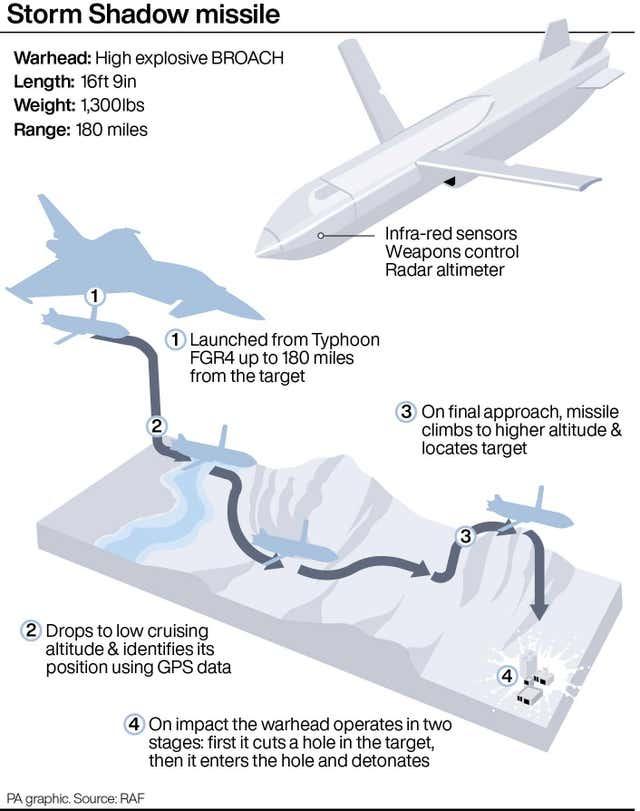
What is a Storm Shadow cruise missile? | Shropshire Star

Storm Shadow Cruise missile:

  • Storm Shadow is a long-ranged, air-launched, conventionally armed, deep-strike supersonic missile, which is manufactured by the France-based MBDA Missile Systems.
  • Range: More than 250 km
  • It is capable of being operated day and night in all weathers and is designed to destroy high-valued stationary targets such as airbases, radar installations, communications hubs and port facilities.
  • It is equipped with fire-and-forget technology and offers high-precision deep strike capability as it features a sophisticated navigation system that includes inertial navigation (INS), a global positioning system (GPS) and terrain reference navigation for better control over the path. 

The missile features the BROACH (Bomb Royal Ordnance Augmented CHarge) warhead — a high-technology warhead, which first cuts the surface of the target, penetrates into it and then explodes.

Central Equipment Identity Register system

Context: The Central Equipment Identity Register (CEIR) system is scheduled for a pan-India launch on May 17. The Centre for Department of Telematics (CDoT) has been running the pilot project of the CEIR system in some of the telecom circles, including Delhi, Maharashtra, Karnataka, and the Northeast region.

Central Equipment Identity Register system:

  • CEIR is the citizen-centric portal of the Department of Telecommunications for tracing lost/stolen mobile devices. 
  • This also facilitates for blocking of lost/stolen mobile devices in the network of all telecom operators so that lost/stolen devices can not be used in India. If anyone tries to use the blocked mobile phone, its traceability is generated. Once a mobile phone is found it may be unblocked on the portal for its normal use by the citizens.

Significance: Mobile users will be able to block and track their lost or stolen cell phones across India with the rollout of the tracking system.