GS Paper 2

Multilateralism

What is multilateralism?

Multilateralism refers to the coming together of three or more states, in formal or informal institutional settings, to discuss issues of mutual interest and coordinate their policies.

An example of multilateral institution is United Nations (UN) since it has universal membership. All countries, irrespective of their size and power, enjoy equal status in the form of one-country, one vote.

If such a grouping is small in size, it is best referred to as a mini-lateral or plurilateral forum. 

One example of a plurilateral forum is BRICS, of which India is a member along with Brazil, Russia, China and South Africa. Another example is G20, a grouping of top 20 economies of the world based on their GDPs (at PPP). Both these are cross-regional forums. Examples of regional multilateral forums are South Asian Association for Regional Cooperation (SAARC), Gulf Cooperation Council (GCC), etc

Difference from Multi-alignment

Multi-alignment, on the other hand, refers to the policy of formation of several alliances, not necessarily military, to fulfil national interests ranging from the more tangible security and development related ones to the more intangible ideational ones.

Multi-alignment conveys a sense of engagement and participation and a strong pragmatic outlook aimed not only at a better India but also a better world.

But multilateralism cannot be completely isolated from power politics. The Bretton Woods institutions, for instance, with their contribution-based quotas and weighted voting are standing edifices of realpolitik. Normatively, multilateralism is a counter to unilateralism.

Challenges to Multilateralism

  • Dominance of West: The postcolonial backlash against the predominance of the West and the rising tide of populism have been profoundly eroding the liberal values underpinning the multilateral system
  • Crisis in UN: The UN and its manifold agencies have been losing their lustre, criticised for their lack of efficiency, institutional sclerosis and ideological infighting.
  • Trade Talks: The WTO has failed to conclude the negotiations of the Doha Agenda started in 2001, as bilateralism and protectionism are resurging worldwide, and its dispute settlement system has stalled
  • Climate: Multilateral efforts to address climate change have made symbolic progress at best.
  • Digital Space: The governance of the internet is forfeiting its initial aspiration of a borderless knowledge society as a few private companies are hoarding data exponentially and authoritarian states are misusing it as a tool of surveillance and repression.
  • Rise of Nationalistic politics: Seen in global as well emerging powers. Example: BREXIT or withdrawal of UK from the EU marks a dent to the spirit of multilateralism. The powerful nations are challenging the multilateral world order. 
  • Changing Geopolitics: Rise of China, concretization of Russia China axis, SCO etc. has made West conscious of preserving its hegemony. West sees China as a challenger to US led world order and does not seem to cooperate with China and Russia. At the same time, China and Russia try to counter the west. This competition has led to erosion of spirit of cooperation and collaboration, hurting multilateralism. 

Why is it difficult to Reform

  1. Multilateralism is deeply entrenched in global power politics. As a result, any action in reforming multilateral institutions and frameworks automatically transforms into a move that seeks changes in the current distribution of power.
  2. The status quo powers see multilateral reforms as a zero-sum game. For instance, in the context of the Bretton Woods system, the U.S. and Europe believed reform would reduce their influence and dominance. This makes decisions about reform in these institutions, by consensus or voting, hard.
  3.  Multilateralism appears at odds with the realities of the emerging multiplex global order. The emerging order seems more multipolar and multi-centred. Such a situation facilitates the formation of new clubs, concerts and coalitions of the like-minded, which makes the reform of older institutions and frameworks more challenging.

What G20 and India can do

  • G-20 should first focus on setting proper narratives of multilateral reform. G-20 may constitute an engagement group dedicated to bring the narrative to the forefront of global discourse. India should also urge the upcoming chairs of the grouping, Brazil and South Africa, to place multilateral reforms as their presidential priorities
  • It should be acknowledged that limitations of multilateral cooperation. Competing interests and the dominance of powerful states are there to stay in multilateral platforms. Therefore, while supporting multilateral cooperation, G-20 should continue encouraging mini lateral groupings as a new form of multilateralism and try to transform them into multi-stakeholder partnerships
  • Creating networks of issue-based mini laterals, particularly in areas related to the governance of the global commons will be helpful in preventing competitive coalitions where other actors play the same game to their advantage, leading to a more fragmented world order.
  • The group needs to be more inclusive without sacrificing efficiency. For example, including the African Union as a permanent member and the UN Secretary-General and General Assembly President as permanent invitees would be helpful to enhance its legitimacy.
  • G-20 should put all its efforts into solving one or two pressing global issues and showcase it as the model of new multilateralism. Food, fuel and fertilizer security can be one such issue. On the one hand, it falls under the ‘low politics’ of world politics, so cooperation is more achievable.

INDIA’s STRATEGY OF REFORMING MULTILATERALISM

India’s strategy for reformed multilateralism rests on 5S pillars which includes

1. Samman (Respect)

2. Samvad (Dialogue)

3. Sahyog (Cooperation)

4. Shanti (Peace)

5. Samriddhi (Prosperity)

  • Moreover, India has to engage with regional groupings in stronger ways though China has a pre-eminent position in the architecture of these organisations. Interdependence in the economy cannot be overlooked, especially for an emerging state like India.
  • India must continue to pursue institutionalisation of multilateral frameworks irrespective of regional conflicts. On such occasions, one has to look at the possibility of strengthening neighbourhood multilateral frameworks (such as SARRC
  • India needs to build multilateral trade blocs/economic groupings involving its South Asian neighbours along with Indian Ocean neighbours, while rejuvenating organisations such as BIMSTEC and IOR-ARC.

Thus India should not allow a “recession for multilateralism” in its diplomatic vision as  it can be concluded that the multilateral system is merely undergoing a profound mutation and one that might even end up making it more effective and better adapted to the realities of the 21st century. 

Indo-Pacific Economic Framework for Prosperity (IPEF)

CONTEXT: An Inter-Ministerial delegation from India led by Department of Commerce   participated in the second Indo-Pacific Economic Framework for Prosperity (IPEF) negotiating round in Bali, Indonesia

Key Developments Summit

During the Bali Round, discussions covered all the four pillars of the IPEF i.e. Trade, Supply Chain resilience, Clean Energy and decarbonisation and Fair Economy (Taxation & Anticorruption) 

However India participated in the discussions related to Supply Chain resilience and Fair Economy (Taxation & Anticorruption) 

The pillar which deals primarily with trade was not joined by India because the contours of the framework - particularly on commitments required on environment, labour, digital trade and public procurement — are still emerging. 

  • India reiterated its belief that IPEF will deepen the economic engagement and promote inclusive development through enhancement in trade and investment in the region. 
  • On the side-lines of the negotiating round, the Chief Negotiator and the Pillar Leads also held bilateral meetings with IPEF countries and other concerned stakeholders.
  • Further a representative from National Payments Corporation of India (NPCI) also gave a detailed presentation at the Business Forum on Unified Payment Interface (UPI),  a successful example of Digital Public infrastructure in India.

ABOUT IPEF (Indo-Pacific Economic Framework for Prosperity)

In the backdrop of US withdrawal from the Trans- Pacific Partnership under Donald Trump, there has been concern over the absence of a credible US economic and trade strategy to counter China’s economic influence in the region. 

The US President first talked about it at the at the October 2021 East Asia Summit. It has been launched at present Quad summit 2022. 

Objective

To “advance resilience, sustainability, inclusiveness, economic growth, fairness, and competitiveness” in these economies. 

Members and Membership

Australia, Brunei, India, Indonesia, Japan, South Korea, Malaysia, New Zealand, Philippines, Singapore, Thailand and Vietnam. Together, these countries account for 40% of global GDP. 

Countries are free to join (or not join) initiatives under any of the stipulated pillars but are expected to adhere to all commitments once they enrol. 

Leadership

  • U.S. Trade Representative (USTR) will be spearheading the trade pillar, 
  • Supply chain resilience, clean energy and decarbonisation, and taxes and anti-corruption measures will fall under the purview of the U.S. Department of Commerce. 

Areas of cooperation

1. Trade Pillar: To establish “high- standard, inclusive, free, and fair-trade commitments” to fuel economic activity and investments benefitting both workers and consumers. 

2. Digital Trade Pillar: Incorporates not just the purchase and sale of goods online but also data flows that enable the operation of global value chains and services, like smart manufacturing, platforms and applications 

3. Supply chain resilience Pillar: The framework aspires to secure access to key raw and processed materials, semiconductors, critical minerals and clean energy, tech, particularly for crisis response measures and ensuring business continuity 

4. Clean energy, decarbonisation and infrastructure Pillar: In line with the Paris Agreement, provide technical assistance and help mobilize finance, including concessional finance, to improve competitiveness and enhance connectivity by supporting countries in the development of sustainable and durable infrastructure for adopting renewable energy

5. Tax and anti-corruption Pillar: Aimed at promoting fair competition by enforcing robust tax, anti-money laundering and anti-bribery regimes in line with existing multilateral obligations, standards and agreements to curb tax evasion and corruption in the region. 

Benefits

  • A new US vehicle for economic re- engagement with East Asia and Southeast Asia. 
  • It would help in countering China dominated Regional Comprehensive Economic Partnership (RCEP) and other regional trade initiatives like Comprehensive and Progressive Agreement for Trans-Pacific Partnership (CPTPP) and the Digital Economic Partnership (DEPA) (A new type of trade agreement to facilitate digital trade and creating a framework for the digital economy, was born out of the common interest of Chile, New Zealand and Singapore) of which US and India are not a party. 
  • Would help U.S. companies that are looking to move away from manufacturing in China. 
  • It is significant that 7 of 10 ASEAN countries and 11 out of 15 of countries that form RCEP took part in the launch. 
  • Signifies first multilateral attempt to boost supply chain resilience to ease global inflationary pressures and mitigate effects of future disruptions, particularly key raw materials, critical minerals, and semiconductors. 

Challenges

  • IPEF is not a traditional trade agreement. 
  • It would include different modules covering “fair and resilient trade, supply chain resilience, infrastructure and decarbonization, and tax and anticorruption.” 
  • Countries would have to sign up to all the components within a module, but do not have to participate in all modules. 
  • The “fair and resilient trade” module will be led by the US Trade Representative and include digital, labour, and environment issues, with some binding commitments. 
  • IPEF will not include market access commitments such as lowering tariff barriers, as the agreement is “more of an administrative arrangement,” and Congressional approval, which is a must for trade agreements, is not mandatory for this. 
  • Critics suggest it would be security, and not economics, which will drive U.S. trade engagement in the region. 
  • Exclusion of U.S. ally Taiwan from the arrangement, despite its willingness to join, exhibits USA’s geopolitical caution to call out China and despite Taiwan being eligible on economic merit. 

Concerns for India

  • US’ preference to allow free and open data flows under digital economy pillar will constrict India’s ability to regulate data for domestic purposes. 
  • India might be reluctant to sync its tax policies with the push for a global tax standard amongst US partners to mitigate tax avoidance and evasion. 
  • Labour Standards and non-Tariff barriers will remain a bone of contention for India. 

The forecast after a fake news campaign in Tamil Nadu

Recently India witnessed an incidence of spread of fake news and subsequent law and order situation in the state of Tamilnadu. As most of the information in India is consumed through social media sources , fake news and its propagation poses biggest threat to democracy as well as internal security of India. 

Regulations abroad

  • The European Union (EU) – It has come up with the Code of Practice on Disinformation 2022. Some of the strengthened initiatives of the EU Code include transparency in political advertising, empowerment of fact­checkers and researchers, tools to flag disinformation, and measures to reduce manipulative behaviour. 
  • The United Kingdom - It has proposed enacting an Online Safety Bill which will expect social media platforms (intermediaries) to actively monitor problematic content. 
  • China - China has some of the strictest laws in the world when it comes to misinformation.
  • France – It passed a legislation in November 2018; this legislation provides for definition of “Fake News”. The legislation gives authorities the power to remove fake content spread via social media and even block the sites that publish it.
  • Germany - It Has a law, titled  (NetzDG), which forces online platforms to remove “obviously illegal” posts within 24 hours or risk fines of up to €50 million.

Regulations in India

  • India does not have a robust and exclusive framework for curbing the menace of the fake news.
  • However government by the use of Section 69A of the Information technology Act, 2000, has granted itself greater power to strike down any unpalatable content. 
  • Government has come up with the Information Technology (Intermediary Guidelines and Digital Media Ethics Code) Rules, 2021 , or IT Rules, 2021 to regulate content by online publishers of news and social media intermediaries.
  • The recent draft amendments to the IT Rules, 2021, empowers the Press Information Bureau, which functions under the Union Ministry of Information and Broadcasting to ‘flag inaccurate and fake news related to government bodies on social media platforms’ amounts to disinformation.

Supreme Court judgement
In Tehseen S. Poonawalla vs Union of India (2018)  case, Supreme Court held that it is duty of central and state governments to take steps for curbing the dissemination of fake/ objectionable content.

INFORMATION TECHNOLOGY (INTERMEDIARY GUIDELINES AND DIGITAL MEDIA ETHICS) RULES, 2021

Ministry of Electronics and Information Technology (MEITY) has notified the Information Technology (Intermediary Guidelines and Digital Media Ethics) Rules, 2021 to regulate IT intermediaries such as Twitter, Facebook and digital media outlets. While many IT intermediaries have complied to these rules Twitter has failed to comply with them.

NEED FOR REGULATING IT INTERMEDIARIES

  • IT intermediaries and social media sites have come to play a prominent role in the globalised era as it provides a forum for citizens across the globe to share information and ideas in real time.
  • IT intermediaries contend that the information posted by users on them is by citizens and they do not have any liability as the information posted is so large pool of people and from across the globe.
  • Communications Decency Act of USA gives immunity to social media platforms for content posted on them. In India, the IT (Intermediary Guidelines) Rules, 2011 gave this immunity to social media platforms.
  • The present rules update the earlier rules and introduce a soft touch self-regulatory mechanism for use of the social media.

This is justified since:

(a) Similar protection is not available for newspapers, magazines or websites. Social media companies have argued that they do not have editorial control to regulate control. However, social media companies have increasingly carrying out interventions to regulate content. E.g., Banning posts of President Trump of USA.

(b) Freedom of speech under the constitution is subject to reasonable restriction Article 19(2). Thus, social media platforms too can be regulated under the Constitutional scheme.

(c) Due to growing importance of social media platforms, they can be considered as a public utility serving a public function. Hence, some sort RIGHTS & RESERVATIONS of regulation is necessary from security point of view.

(d) To check the misuse and protection of citizens.

(e) Right of the sovereign to regulate communications.

CONCERNS HIGHLIGHTED ON IT RULES

  • Privacy versus National Security - The rules only make superficial attempts at balancing privacy and security interests as security interests are being given primacy over both civil liberty interests as well as economic interests.
  • Breaking End-to-end Encryption - The traceability obligation in the new rules is problematic as it would amount to breaking end-to-end encryption provided for all users on platforms such as WhatsApp. This will give greater powers of surveillance to state over personal affairs of citizens and tantamount to interference in right to privacy.
  • Data Theft & Hacking - Breaking of end-to-end encryption will increase chances of data theft and hacking.
  • Traceability clause capable of misuse - The rule as it’s currently drafted is vague and this allows the government to use traceability power in a broad way and therefore open to misuse. Thus, to use traceability powers, court must clarify the grounds and circumstances for its use by state authorities.
  • Guidelines against law on Subordinate Legislation - Ability to issue rules under a statute or law, to frame subordinate legislation, is by its nature a limited and constrained power. The current rules go beyond the realm of Information Technology Act, and thus in the garb of rulemaking, government has rather come up with primary set of legislation.
  • Rules have created new term in the Parent Act: Executive has created new term “significant social media intermediaries” which has not been defined in the Information Technology Act, 2000.
  • Limited Purview of IT Act - Regarding digital news and media portals, the purview of the Information Technology Act, 2000, is limited. It only extends to the blocking of websites and intermediary liabilities framework but does not extend to content authors and creators.
  • Rules have added New Chapter on Registration of Digital News Sites before the Ministry of Information and Broadcasting. Such provisions are absent in the parent Act.Pressure on Tech Companies - Platforms can also be arm-twisted into building in what’s called weakness by design into their product.

National party tag: Election Commission holds hearings with NCP, CPI, TMC

Context: Election commission is reviewing the status of National parties , which has been accorded to various political partis under the exercise of powers described under The Election Symbols (Reservation And Allotment) Order, 1968.

The Election Symbols (Reservation And Allotment) Order, 1968

  • Para 6A deals with Conditions for recognition as a State Party
  • Para 6B deals with the Conditions for recognition as a National Party 
  • Para 6C delas with Conditions for continued recognition as a National or State party.

Conditions for recognition as a State Party (6A)

A political party shall be eligible for recognition as a State party in a State, if, and only if, any of the following conditions is fulfilled 

  1. At the last general election to the Legislative Assembly of the State, the candidates set up by the party have secured not less than six percent of the total valid votes polled in the State; and, in addition, the party has returned at least two members to the Legislative Assembly of that State at such general election; or 
  2. At the last general election to the House of the People from that State, the candidates set up by the party have secured not less than six percent of the total valid votes polled in the State; and, in addition, the party has returned at least one member to the House of the People from that State at such general election; or 
  3. At the last general election to the Legislative Assembly of the State, the party has won at least three percent of the total number of seats in the Legislative Assembly, or at least three seats in the Assembly, whichever is more; or 
  4. At the last general election to the House of the People from the State, the party has returned at least one member to the House of the People for every 25 members or any fraction thereof allotted to that State;] or 
  5. At the last general election to the House of the People from the State, or at the last general election to the Legislative Assembly of the State, the candidates set up by the Party have secured not less than eight percent of the total valid votes polled in the State.

Conditions for recognition as a National Party (6B)

A political party shall be eligible to be recognized as National party, if, and only if, any of the following conditions is fulfilled 

  1. The candidates set up by the party, in any four or more States, at the last general election to the House of the People, or to the Legislative Assembly of the State concerned, have secured not less than six percent of the total valid votes polled in each of those States at that general election; and, in addition, it has returned at least four members to the House of the People at the aforesaid last general election from any State or States; or 
  2. At the last general election to the House of the People, the party has won at least two percent of the total number of seats in the House of the People, and the party’s candidates have been elected to that House from not less than three States; or 
  3. The party is recognized as State party in at least four States.

Conditions for continued recognition as a National or State party (6C)  

If a political party is recognised as a State party under paragraph 6A, or as a National party under paragraph 6B, the question whether it shall continue to be so recognised after any subsequent general election to the House of the People or, as the case may be, to the Legislative Assembly of the State concerned, shall be dependent upon the fulfilment by it of the conditions specified in the said paragraphs on the results of that general election.

As per the Election Commission of India at present there are seven political parties which are the status of recognised National Parties. 

  1. All India Trinamool Congress
  2. Bahujan Samaj Party
  3. Bharatiya Janata Party
  4. Communist Party of India
  5. Communist Party of India (Marxist)
  6. Indian National Congress
  7. Nationalist Congress Party

Significance of being recognised as National or State Parties

  • Apart from those recognised as state or national party , the other parties are simply declared as registered-unrecognised parties.
  • RPA allows political parties to accept contributions voluntarily offered to it by any person or company other than a government company.
  • Candidates of registered parties get preference in allotment of election symbols. Other Candidates are identified as independents and do not get preference in symbol allocation.
  • If a party is recognised as a State Party’, it is entitled for exclusive allotment of its reserved symbol to the candidates set up by it in the State in which it is so recognised.
  • If a party is recognised as a `National Party’ it is entitled for exclusive allotment of its reserved symbol to the candidates set up by it throughout India.
  • Recognised `State’ and `National’ parties need only one proposer for filing the nomination and are also entitled for two sets of electoral rolls free of cost at the time of revision of rolls and their candidates get one copy of electoral roll free of cost during General Elections.
  • They get broadcast/telecast facilities over Akashvani/Doordarshan during general elections. 
  • A recognized National or State party can have a maximum of 40 “Star campaigners” and a registered un-recognised party can nominate a maximum of 20 ‘Star Campaigners”. The travel expenses of star campaigners are not to be accounted for in the election expense accounts of candidates of their party.

Commission for Control of Interpol’s Files (CCF)

CONTEXT: The Central Bureau of Investigation (CBI) on Tuesday said that it had taken up, with the Commission for Control of Interpol’s Files (CCF), the serious shortcomings and mistakes committed in reaching the “unfounded and perfunctory” decision to remove the Red Notice against fugitive Mehul Choksi. It has initiated measures to get the Interpol notice restored.

About Commission for Control of Interpol’s

The CCF is an independent body that ensures that all personal data processed through INTERPOL’s channels conforms to the rules of the Organization. It is not under the control of the Interpol Secretariat.

Role of the CCF

The Commission has three functions, as defined in Interpol’s Constitution

A supervisory role -  under which it monitors the application of the Organization's data protection rules to personal data processed by Interpol

An Advisory role - under it advises the Organization with regard to any operations or projects concerning the processing of personal information 

A Processing role - It processes requests for access and deletion to files and applications for revision.

Structure

The CCF comprises seven members appointed for a five-year term, renewable once for an additional term of three years. 

Members are appointed because of their expertise, and in such a way as to allow the CCF to carry out its mission completely independently. They are generally lawyers with experience and/or expertise in the following fields:

  • Data-protection;
  • International police matters, in particular international police cooperation;
  • International criminal law;
  • Human rights;
  • Senior judicial or prosecutorial role, preferably in international judicial cooperation.

To perform its functions, the Commission directly consults the INTERPOL General Secretariat, National Central Bureaus and other relevant entities.

What are the main principles in INTERPOL’s rules that are applicable to the CCF?

The main principles set out in INTERPOL’s rules are the following:

  • Respect of fundamental human rights.
  • Neutrality. 
  • National sovereignty.
  • Respect of data protection principles - primarily lawfulness and fairness, purpose, accuracy, access, proportionality, security, supervision and sanction, and non-discrimination.

About INTERPOL

Interpol stands for International Criminal Police Organization, an inter-governmental organization. It has 194 member countries and helps police in all of them to work together to make the world a safer place. 

  • In each country, an INTERPOL National Central Bureau (NCB) provides a central point of contact for General Secretariat and other NCBs. An NCB is run by national police officials and usually sits in the government ministry responsible for policing.
  • Central Bureau of Investigation (CBI) is designated as the National Central Bureau of India. INTERPOL Notices are international requests for cooperation or alerts allowing police in member countries to share critical crime-related information.
  • Notices are published by the General Secretariat at the request of a National Central Bureau and are made available to all our member countries.
  • Headquarters - LYON, FRANCE

Decision Making: General Assembly takes decisions. Each member country represented has one vote. Decision-making process is made by either a simple or two-thirds majority, depending on the subject matter. 

Funding :

There are two main sources of income: 

  • Statutory contributions from our membership: Each of our member countries pays a statutory contribution to INTERPOL each year; it is an obligatory payment. This contribution is based on economic weight. 
  • Voluntary funding for our activities: Most of the voluntary funding comes from government agencies, notably those responsible for policing, but there were also smaller contributions from international and non- governmental organizations, foundations and private entities. 

Global Complex for Innovation

Based in Singapore since 2015, the INTERPOL Global Complex for Innovation is the centre of our activities in cybercrime, research and development, and capacity building. It also provides an Asian base for the Organization in several crime areas. 

Interpol Metaverse

Interpol has developed its own virtual reality space to help users train and attend virtual meetings. This new virtual reality space can be only accessed through secure servers. It helps police officers to experience Metaverse, offering them an idea of what crimes could take place and how they could be handled in future. 

India’s Performance as the Non-permanent member of UNSC

CONTEXT:India concluded its eighth stint in the United Nations Security Council (UNSC) at the end of December 2022. And, by any yardstick, its two-year stint has been unprecedented.

India focused inter alia on maritime security, terrorism, UN peacekeeping, reformed multilateralism and the Global South. India was elected Chair of three important UNSC Committees: the Taliban Sanctions Committee, Libyan Sanctions Committee and Counter-terrorism Committee.

Following were the achievements of India at the end of two year tenure.

On Maritime security

As the head of UNSC meeting on maritime security the presidential Statement issued was the first holistic document on this issue which, for the first time, had a direct reference to UN Convention on the Law of the Sea as international law setting out the legal framework in the context of maritime activities. The statement also called for freedom of navigation, anti-piracy and combating terror and transnational crime at sea.

On Myanmar

In Myanmar the military coup took place. The Permanent-5 (P-5) were pulling in opposing directions while the Association of Southeast Asian Nations (ASEAN) counselled caution. India shares a nearly 1,700 kilometre-long border with Myanmar and it was vital to stop violence, bring in stability and ensure democratic processes went forward. India ensured balanced and comprehensive Council pronouncements, which finally culminated in a resolution on Myanmar 

On Afghanistan

In Afghanistan Taliban took over the control. India was able to steer the negotiations which resulted in UNSC Resolution 2593 laying down benchmarks: on stopping cross-border terrorism from Afghan soil, including from proscribed UN terrorist entities in Pakistan; protecting the rights of women, minorities and children; ensuring an inclusive government, and providing humanitarian assistance.

On Terrorism

As Chair of the UNSC Counter-terrorism Committee (CTC), India brought the CTC meeting to India in October 2022. Though India’s attempt to list terrorists under UNSC Resolution 1267 sanctions (along with the U.S.) was thwarted, in a significant development, the proposal to list Abdul Rehman Makki, Deputy Amir/Chief of the Lashkar-e-Taiba was approved by the UNSC. 

On Peacekeeping

India launched the UNITE Aware technology platform to strengthen real-time protection of peacekeepers. 

India introduced UNSC resolution, calling for accountability for crimes against peacekeepers.

India also gifted two lakh vaccines to all UN peacekeepers.

On Global South

India thwarted a move by the West to wrest climate change from the UN Framework Convention on Climate Change-led process and bring it under the ambit of the UNSC, where the P-5 are also major historical polluters. The draft resolution was defeated in the Council when India and Russia voted against. A change in the climate change architecture would have shut out the voice of the Global South, especially Small Island Developing States.

The conclusion under the India’s Presidency was the need for immediate reform of the Council. India’s performance over two years is testimony to why India needs to be at the horseshoe table permanently.

PRELIMS POINTER 

About Unite Aware

India, in collaboration with the UN, launched a technology platform to ensure the safety and security of peacekeepers who are operating in an increasingly complex and risky environments across the world. For the project India contributed USD 1.64 million.

  • It is a situational awareness software programme that will utilise modern surveillance technology for real time threat assessments to peacekeepers and help them enhance their security. 
  • This will access live video and satellite imagery, and in very volatile circumstances can also deliver early warnings to peacekeepers. It can also record data on critical incidents and events and follow daily operational activities.
  • Using the platform, the entire peacekeeping operation can be visualised, coordinated, and monitored on a real time basis.
  • India has developed the technology platform in partnership with the UN Department of Peacekeeping Operations and the Department of Operational Support.

Initial roll out

India has partnered with the UN to roll out the UNITE Aware platform initially in four UN Peacekeeping Missions: MINUSMA (Mali), UNMISS (South Sudan), UNFICYP (Cyprus) and AMISOM (Somalia).

About UNSC

United Nations Security Council

  • Security Council has primary responsibility, under the UN Charter, for maintenance of international peace and security. 
  • It has 15 Members (5 permanent and 10 non- permanent members). Each Member has one vote. 
  • Elections of Non-Permanent Members of UNSC: Each year the UN General Assembly elects 5 non- permanent members (out of total 10 non-permanent members) for a two-year term. The 10 non-permanent seats are distributed on a regional basis: Five for African & Asian States; One for Eastern European States; Two for Latin American & Caribbean States; Two for Western European and other States. 

A retiring member is not eligible for immediate re-election. 

  • The election is held by a secret ballot and there are no nominations. Non-permanent members of the UNSC are elected by two-thirds majority in UNGA. (India was elected as the non-permanent member of the UN Security Council on January 1, 2021. Term of India as non-permanent member ended on December 31, 2022. India has earlier been a non-permanent member of the Security Council in 1950-51, 1967-68, 1972-73, 1977-78, 1984-85, 1991-92 and 2011-12.) 
  •  UN Security Council is organised to be able to function as continuous body. Meetings of UNSC are held at the call of the President of UNSC at any time he deems necessary, but that interval between meetings shall not exceed 14 days. 
  • Under the Charter, all Member States are obligated to comply with Council decisions. 
  • PEACEKEEPING OPERATIONS: Consist of military, police and civilian personnel, who work to deliver security, political and early peacebuilding support. They are usually led by the Department of Peacekeeping Operations (DPKO) and many although not all – peacekeeping operations have a Chapter VII mandate. 

In addition, peacekeeping operations, as opposed to other missions, have a military or international police presence in the field. 

China’s Global Security Initiative and the dichotomy

Context: Recently China introduced the Global Security Initiative (GSI) Concept Paper. The GSI is as a China-led framework that seeks to restore stability and security, particularly in Asia. The paper has outlined five major pillars to effectively implement the GSI, i.e., mutual respect; openness and inclusion; multilateralism; mutual benefit, and a holistic approach.

GSI is tailored more to be an empty narrative to compete with United States leadership and dominant U.S.-led concepts. As the war in Ukraine intensified and diverging perceptions among developing countries vis-à-vis the West and the unfolding war, China is seeking to leverage these fault lines by promoting its vision as a capable alternative leader.

Understanding the concept paper and dichotomy

  • The GSI’s first principle centres on the need for countries to adhere to the United Nations Charter and international law based on mutual trust and cooperation.

However China has consistently demonstrated the exact opposite in terms of its relations with its neighbours. Along its southwestern border, China continues to ensure that its relations with India are provocative by constantly undermining India’s territorial integrity and sovereignty. 

China is also increasing its assertive manoeuvres in the South China Sea by greatly militarising the disputed maritime territory at the expense of the sovereignty and the sovereign rights of its Southeast Asian neighbours. 

Further, in its complete rejection of international law, particularly the United Nations Convention on the Law of the Sea (UNCLOS), China continues to assertively intrude and block the access of its neighbours within their respective Exclusive Economic Zones.

  • The second principle of the GSI lies in its openness to spearhead inclusive international engagements

However China at the same time continues to engage in exclusionary policies in the East and South China Seas. This an outright rejection of freedom of navigation enshrined in international law and also a display of narrowly defined interests to consolidate its sphere of influence in the region.

  • The third principle focuses on bilateral and multilateral security cooperation and consultations to address issues of concern with the parties involved.

However analysing the Chinese understanding of consultation can be seen through the prism of asymmetric power relations such as constraining members of the ASEAN from pursuing collective actions against Beijing’s assertion. 

Moreover, China continues to delay the establishment of a crucial Code of Conduct for the South China Sea as it continues to bolster its military power projection in the disputed territory and indulge in various grey zone strategies.

  • The fourth principle highlights the GSI’s prioritisation of positive-sum cooperation, where parties involved can equally benefit

However if we look at China’s Belt and Road which seems to address the significant infrastructure deficit in the developing world, but the initiatives disregard for international macroeconomic stability by funding unsustainable projects for countries with low or non-existing credit ratings that creates more debt burdens for these countries. 

Further China has also shown disregard for its neighbour’s sovereignty and sovereign rights, as China has insisted on receiving a larger share in its bid for a joint exploration of resources with Manila in Philippine waters

  • The fifth and the last principle that GSI advocates a holistic approach towards traditional and non-traditional security threats, with an equal emphasis on eliminating any “breeding ground for insecurity”.

Rather than being holistic, China’s engagements with the powers indicate a more narrowly defined goal for its power interests. 

China also continues to be a catalyst for insecurity in the non-traditional security realm, starting from its alleged lack of accountability regarding the COVID-19 pandemic to arming terror groups, such as in Myanmar.
Therefore it can be concluded that China’s GSI is far from being a sustainable, equitable, and transparent solution to the growing insecurity that the world is facing, given an objective understanding of its track record in fulfilling its own principle requirements. Rather, the GSI indicates Beijing’s attempt to counter U.S. leadership through narratives, regardless of whether it can effectively operationalise such initiatives on the ground.

India and the USA

Context: After signing all the four foundational agreements to take forward strategic partnership, India and the U.S. are now working to finalise an “air information sharing agreement”.

  • The two countries are exploring  opportunities under the Defence Technology and Trade Initiative (DTTI) for co-development and co-production of high tech weapons.
  • The pact is expected to facilitate sharing of information between the Indian and the US forces apart from cooperation in specific areas.
  • Further the two countries announced an initiative on Critical and Emerging Technologies (iCET).
  • In addition, the U.S. is considering an application from engine manufacturer General Electric to jointly produce the GE-414 jet engines in India to power the indigenous Light Combat Aircraft (LCA)-Mk2 and the fifth generation Advanced Medium Combat Aircraft (AMCA).

India has now signed all four foundational agreements with the U.S.

The logistics agreement in 2016, Communications Compatibility and Security Agreement (COMCASA) in 2018 and Basic Exchange and Cooperation Agreement for Geo-Spatial cooperation (BECA) in 2020. While the General Security of Military Information Agreement (GSOMIA) was signed a long time ago, an extension to it, the Industrial Security Annex (ISA), was signed in 2019.

FOUNDATIONAL AGREEMENTS

BECA Finalising the agreement helped India get real-time access to American geospatial intelligence that will enhance the accuracy of automated systems and weapons like missiles and armed drones. Through the sharing of information on maps and satellite images, it will help India access topographical and aeronautical data, and advanced products that will aid in navigation and targeting. This was key to Air Force-to-Air Force cooperation between India and the US. In simpler terms just as your radio cab (or the GPS in your smartphone) helps you zero in on the path to your destination and helps you reach it quickly and efficiently, BECA will provide Indian military systems with a high-quality GPS to navigate missiles with real-time intelligence to precisely target the adversary.

LEMOA (first agreement to be signed in 2016) allows the militaries of the US and India to replenish from each other’s bases, and access supplies, spare parts and services from each other’s land facilities, air bases, and ports, which can then be reimbursed. It is extremely useful for India-US Navy-to-Navy cooperation, since the two countries are cooperating closely in the Indo-Pacific. In simple terms, it is like being able to stop at a friend’s garage or workshop to refuel your car or get it repaired when you are far away from your own home or workshop.

COMCASA (signed in September 2018, after the first 2+2 dialogue) it allows the US to provide India with its encrypted communications equipment and systems so that Indian and US military commanders, and the aircraft and ships of the two countries, can communicate through secure networks during times of both peace and war. In simpler terms it’s like being able to exchange messages or communicate with a friend on WhatsApp, Signal, or Telegram in real time and in a secure manner.

GSOMIA (signed in 2002) allows the militaries to share the intelligence gathered by them but the information was exchanged between the Government authorities of the two countries but not between private partiesIndustrial Security Annex (ISA) (signed at 2+2 dialogue in 2019) The Industrial Security Annex (ISA) to the India-U.S. General Security of Military Information Agreement (GSOMIA) will provide a framework for exchange and protection of classified military information between the U.S. and Indian defence industries. 
It will enable greater industry-to-industry collaboration for co-production and co-development in the defence sector, in line with the Indian objective of promoting Make in India in the defence sector.

SC Bench seeks data on alternatives to hanging

  • The Supreme Court on March 21 asked the Centre to provide data which may point to a more dignified, less painful and socially acceptable method of executing prisoners other than death by hanging.
  • A Bench of Chief Justice of India D.Y. Chandrachud and Justice P.S. Narasimha even mooted the setting up of an expert committee to relook at India's method of putting to death its criminals.
  • The Chief Justice said such a committee would have experts from the national law universities, professors of law, doctors and scientific persons.
  • The Court indicated to the Centre, represented by Attorney General R. Venkataramani, that it needed some underlying data based on which it could examine if there was a more "humane" method of execution which would render death by hanging unconstitutional.

    Death penalty has been one of the most contentious issues of India’s constitutional debate. Every time a death penalty has to be executed, it leads to a fierce public debate.

    Hence, we have to understand the following dimensions of this issue:

    • What is Death Penalty?
    • What is the method to be adopted while executing the death sentence in India? 
    • Issues involved in Death penalty. 
    • Important Supreme Court Judgments
    • Death penalty methods and failure rates
    • Alternatives to the death penalty
    • Global Trends

    What is Death Penalty?

    • Capital Punishment, also known as the death penalty, is the act of the state executing an individual as punishment for a crime. It has been a part of India's judicial system since the British era and is still a legally recognized form of punishment. 
    • While 109 countries have abolished the death penalty, 55 countries, including India, Pakistan, China, the USA, and Japan, continue to retain it for certain crimes.
    • Some countries do not practice the death penalty but still have provisions for it in their legal systems.
    • In India, under the Code of Criminal Procedure of 1898, the punishment for murder was the death penalty. Despite ongoing debates about its validity, the 35th Law Commission recommended in 1967 that the death penalty should be retained because it acts as a deterrent and creates fear among criminals.
    • The Constitutional validity of Death Penalty has been challenged from time to time and after the re-enactment of the Code of Civil Procedure in 1973, there have been certain changes in the concept of Death Penalty.
      • Under the 1973 Act, under section 354(3) special reasons have to be given for awarding the death penalty not life imprisonment.

    What is the method to be adopted while executing the death sentence in India? 

    • Art. 21 of the Constitution, which guarantees to every citizen the fundamental right to life, also expressly states, “no person shall be deprived of his life or personal liberty except according to procedure established by law." This means that under no circumstances your right to live will be taken away from you except by the due procedure established by law, that is the state can take away your life through the given process of law if it deems fit. Not all offences are punishable by death, in fact, most of the agencies do not elicit capital punishment; instead, it is only reserved for the most heinous of crimes.

    Hanging

    • Section 354(5) of the CrPC specifies that hanging is the method of execution in the civilian court system and that it is the only method permitted in India for the execution of a civilian person.
    Text

Description automatically generated

    Shooting

    • Another execution method used in India is shooting. A firing squad member may execute a convict who has been given the death penalty. The only organisations capable of executing the death penalty in this manner are the Army, Air Force, and Navy. According to the Army Act of 1950, the army court-martial system recognises both hanging and shooting as legitimate methods of execution.

    But as all of us can understand that death penalty is a highly controversial and divisive topic. While some argue that it is a justifiable form of punishment for heinous crimes, others believe that it is ethically and morally wrong. Here are some of the main ethical issues associated with the death penalty:

    1. Human rights violations: Many argue that the death penalty violates the basic human right to life. The state taking a person's life, even if they have committed a serious crime, is seen as a violation of their human dignity.
    2. Possibility of wrongful convictions: There have been numerous cases where innocent people have been sentenced to death. This raises serious concerns about the reliability of the justice system and the risk of executing an innocent person.
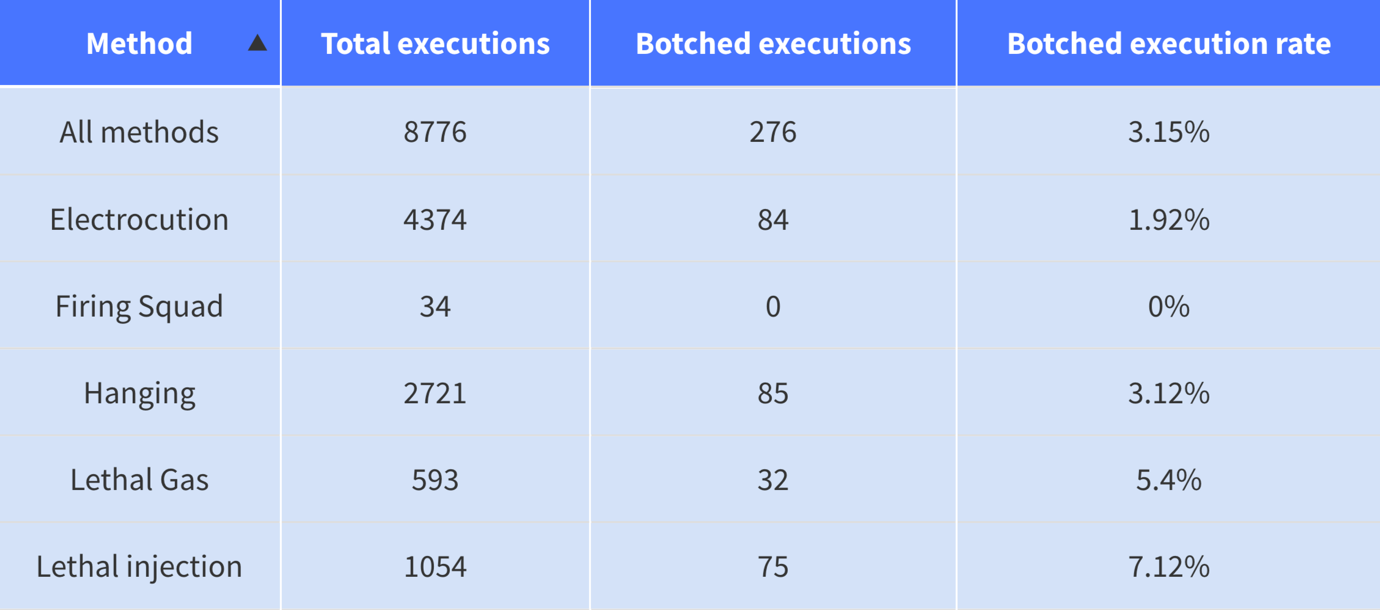
    3. Botched executions: 'Botched executions' are those that did not go as planned, resulting in unnecessary pain for the person charged with death penalty.
    4. Inequities in application: The application of the death penalty is not uniform and can be influenced by factors such as race, gender, and socioeconomic status. This raises concerns about the fairness and impartiality of the justice system.
    5. Retribution vs. rehabilitation: The death penalty is often seen as a form of retribution rather than rehabilitation. This raises ethical questions about whether the state should be seeking revenge or working towards the rehabilitation of offenders.
    6. Cost: The death penalty is often more expensive than life imprisonment. This raises ethical questions about the allocation of resources and whether society should be spending money on a form of punishment that is not proven to be more effective than alternatives.

    Overall, the ethical issues associated with the death penalty are complex and multifaceted. While some argue that it is necessary for justice to be served, others believe that it is a violation of human rights and that alternative forms of punishment should be explored.

    Important Supreme Court Judgments

    • Bachan Singh v. State of Punjab, 1980: Consider aggravating and mitigating factors of crime and the accused. Use Death Penalty only in 'rarest of rare cases'.
    • Machhi Singh v. State of Punjab, 1983: Identify the way the crime was committed, motive, the anti-social nature of the crime, the magnitude of the crime, and the personality of the victim.
    • Shatrughan Chauhan v. Union of India, 2014: Undue, inordinate and unreasonable delay in death penalty execution amounts to torture and a ground for commutation of sentence. 

    Death penalty methods and failure rates

    • The table shows the proportion of botched executions for each method. Data includes only executions in the U.S. from 1890 to 2010.
    ZWq4D12c iGP0rGv9WraJRMW6yVTpypEKhmzR0W jf wJe0DqNOvbUq9Q Lgykj98sArumpARSc0SiBDnggi47L7zFfdyHDrbNYmvApk2HvhOeJsmKrJBcWxu20t LngDQZIp5DF

    There are several alternatives to the death penalty that are used by various countries and jurisdictions around the world.

    Here are a few examples:

    • Life imprisonment without the possibility of parole: This is a sentence in which the offender is kept in prison for the rest of their life, with no chance of release. This is a common alternative to the death penalty in many countries.
    • Restorative justice: This is a process in which the offender is required to make amends for their crime, usually through community service or financial restitution to the victim. This approach focuses on repairing harm rather than punishment.
    • Rehabilitation programs: This involves providing offenders with education, job training, counseling, and other services that can help them reintegrate into society and avoid future criminal behavior.
    • Community service: This is a sentence in which the offender is required to perform a certain amount of community service as a form of punishment.
    • Fines and other monetary penalties: This involve imposing a financial penalty on the offender, which can range from a small fine to a substantial sum of money.
    • Suspended sentence: This is a sentence in which the offender is found guilty but not actually sent to prison. Instead, the sentence is "suspended," which means that the offender is released but must adhere to certain conditions, such as regular check-ins with a probation officer or avoiding further criminal activity.
    • Capital punishment moratorium: This is a temporary or indefinite suspension of the death penalty, which allows time for review and reform of the justice system.

    Overall, there are many alternatives to the death penalty that can be effective in deterring crime, protecting society, and rehabilitating offenders.

    Global Trends

    The use of the death penalty varies greatly around the world. While some countries have abolished it entirely, others continue to use it as a form of punishment for certain crimes. Here are some global practices with regard to the death penalty:

    • Abolitionist countries: As of 2021, 109 countries have completely abolished the death penalty. These countries include Canada, most of Europe, Australia, New Zealand, and many Latin American and African countries.
    • There are still 55 countries that retain the death penalty in law and/or in practice, including the United States, China, Iran, Saudi Arabia, and Vietnam.
    • Some countries that have not abolished the death penalty have imposed a moratorium on executions. This means that while the death penalty is still legal, no executions are being carried out. For example, India has not executed anyone since 2015.
    • The methods used to carry out the death penalty also vary around the world. In some countries, such as the United States, lethal injection is the most common method, while in others, such as Saudi Arabia, beheading is used.
    • The crimes that can result in the death penalty also vary by country. In some countries, such as Iran and Saudi Arabia, crimes such as drug trafficking and apostasy can result in the death penalty, while in others, such as the United States, only certain types of murder can result in the death penalty.

    The ethical implementation of the death penalty requires adherence to certain principles, such as ensuring that the justice system is free of flaws and that laws are properly enforced. To avoid any failures or miscarriages of justice, the criminal justice system must be improved.

    In addition, the judiciary must maintain a consistent approach that takes into account the restorative and rehabilitative aspects of justice in order to avoid any negative consequences that could arise from imposing the death penalty.

    Furthermore, there must be compelling justifications for the imposition of the death penalty in order to avoid excessive punishment and maintain respect for the value of life.

    Finally, the mercy petition must be treated as the final bulwark against any miscarriage of justice, with a time-bound disposal of such petitions to ensure that justice is served.

    PM to inaugurate ITU Area Office

    Context: Prime Minister of India will inaugurate the new International Telecommunication Union (ITU) Area Office and Innovation Centre in India.

    About International Telecommunication Union (ITU):

    • It is a specialized agency of the United Nations that focuses on information and communication technologies (ICTs). 
    • ITU was established in 1865 to enhance global connectivity in communication networks. 
    • The organization is responsible for managing the allocation of global radio spectrum and satellite orbits, as well as developing technical standards that enable seamless interconnectivity among networks and technologies. 
    • Membership of ITU is open to all member states of the United Nations. 
    • There are currently 193 member states of the ITU, including all UN member states except the Republic of Palau
    • Its headquarters is based in Geneva, Switzerland. 

    Reports/Publications of ITU:

    • ICT Development Index
    • Global ICT Regulatory Outlook 2020
    • Global Cyber Security Index
    • Global e - Waste Monitor (along with United Nations University & International Solid Waste Association (ISWA)

    India & ITU:

    • India has been an active member of the ITU since 1869, earnestly supporting the development and propagation of telecom in the global community of nations.  
    • The country has been a regular member of the ITU Council since 1952, and has played an important role in harmonizing the contributions of member States from the region, always respecting the principles of equality and consensus-building.  
    • India had been elected as a Member of the International Telecommunications Union (ITU) Council for 4-year term (2019-2022). 
    • India signed Host Country Agreement with the International Telecommunication Union for establishment of Area Office & Innovation Centre at New Delhi (March 2022). The Host Country Agreement provides the legal and financial framework for establishment and operations of the Area Office.
    • The Area Office and Innovation Centre of ITU at New Delhi is expected to serve South Asian  countries namely Afghanistan, Bangladesh, Bhutan, Iran, Maldives, Nepal, Sri Lanka and India.  

    Ladakh Autonomous Hill Development Council

    Context: Amidst sub-zero temperatures, people are protesting to bring attention to Ladakh's susceptibility to climate change and its connection to the Sixth Schedule rights. With the looming threat of climate change, the ongoing demonstrations aimed at preserving Ladakh's identity under the Sixth Schedule take on even greater significance and urgency.

    More on the news:

    The Ladakh region is highly vulnerable to climate change, with retreating glaciers and villages forced to relocate due to lack of water.

    People in Ladakh has been protesting in freezing temperatures to highlight this vulnerability and advocate for the implementation of the Sixth Schedule of the Constitution, which empowers autonomous councils to administer rights over land, forest, sanitation, and employment to safeguard cultural and indigenous identities. 

    About Ladakh Autonomous Hill Development Council:

    The Ladakh Autonomous Hill Development Council Act 1995 was enacted in response to the demands of the Ladakhi people who sought to create a separate Indian Union Territory due to their distinct religious and cultural identity, which differed from the rest of Jammu and Kashmir.

    The creation of the Autonomous Hill Councils in Ladakh represented an important step towards recognizing the unique identity and aspirations of the region's people.

    The council provided a platform for participatory democracy, enabling the people to take charge of their own development and governance while also ensuring that their distinctive cultural and religious identity is preserved.

    Composition of council:

    The total number of seats, in the Council to be filled by persons chosen by direct election on the basis of adult suffrage from territorial constituencies shall be twenty-six.

    The Governor may nominate not more than four persons from amongst the principal religious minorities and women in the district to be members of the Council.

    The members of the Council shall at its first meeting after a general election elect from amongst the elected members one member to be the Chairman.

    The Executive council:

    There shall be an Executive Council consisting of – (a) the Chairman who shall be the Chief Executive Councillor; and (b) four members to be nominated by the Chief Executive Councillor from amongst the members of the Council: Provided that at least one member shall be nominated from amongst the principal religious minorities in the district. The Executive Council shall be collectively responsible to the Council.

    Powers and Functions of Council:

    Subject to the provisions of 1995 Act the Council shall have executive powers in the district in relation to:

    1. Allotment, use and occupation of land vested in the Council by the Government under this Act.
    2. Formulation of development programme for the district in respect of District Component Schemes as notified by the Government and Centrally Sponsored Schemes and indicate priorities for various schemes and consider issues relating to the speedy development and economic upliftment of the district.
    3. Laying down guidelines for implementation of schemes at gross root level and Promotion of co-operative institutions.
    4. Special measures for employment generation and the alleviation of poverty and Management of undemarcated forests.
    5. Supervision and constitution of notified area committees and Formulation of periodical and annual plans for the district.
    6. Promotion of languages and culture of the area, Tourism, Vocational training, Education, Fisheries.
    7. Public health and sanitation, hospitals and dispensaries and Construction and maintenance of roads except highways.
    8. Preservation, protection and improvement of livestock and prevention of animal diseases.
    9. To collect within the district such taxes payable under any law as may be prescribed by the Government and credit the same to the Consolidated Fund.

    What is the Sixth Schedule?

    The Sixth Schedule, outlined in Article 244, allows for the establishment of self-governing administrative entities known as Autonomous District Councils (ADCs) within a state.

    These councils possess some legislative, judicial, and administrative powers and can operate autonomously in certain areas. ADCs consist of up to 30 members who serve a five-year term and have the authority to create laws, regulations, and policies concerning various matters, such as land, forest, water, agriculture, village councils, health, sanitation, policing at the village and town level, inheritance, marriage and divorce, social customs, and mining.

    The Sixth Schedule is applicable to the north-eastern states of Assam, Meghalaya, Mizoram (with three councils each), and Tripura (with one council).

    Why Ladakh is demanding sixth schedule?

    The creation of the Union Territory of Ladakh, which had initially been met with enthusiasm in the Buddhist-dominated region, has soured due to the absence of a legislative assembly and concerns over changes in the domicile policy in Jammu and Kashmir. While there are two Hill councils in Leh and Kargil, their powers are limited and the administration of the region is completely in the hands of bureaucrats. Due to the limited powers conferred on the councils, there is growing demand for inclusion into the sixth schedule. Ladakh's inclusion under the Sixth Schedule, which would enable the preservation of its distinct culture and the restriction of land acquisition by outsiders, has been recommended by the National Commission for Scheduled Tribes.

    Government’s response to Ladakh’s demand for sixth schedule:

    Home Ministry official has stated that the Constitution only permits the Sixth Schedule for the Northeast, and the Fifth Schedule applies to tribal areas in the rest of the country. The government has the option to amend the Constitution to allow for Ladakh's inclusion.

    Benefits of inclusion into sixth schedule:

    1. The district and regional councils have jurisdiction over specific areas and can create laws regarding topics such as land, forests, canal water, village administration, inheritance of property, marriage and divorce, social customs, and shifting cultivation. 
    2. Within their territories, the district and regional councils can establish village councils or courts to adjudicate disputes between tribes and hear appeals. 
    3. The district council can manage primary schools, dispensaries, markets, ferries, fisheries, and roads within its district. It can also regulate money lending and trading by non-tribals. 
    4. The district and regional councils have the authority to collect land revenue and impose specified taxes. 
    5. Acts of Parliament or state legislature do not apply to autonomous districts and regions, or they may apply with modifications and exceptions. 
    6. The Governor has the power to appoint a commission to investigate matters related to the administration of autonomous districts or regions. He can also dissolve a district or regional council based on the commission's recommendation.

    Way Forward:

    It is essential to engage in constructive dialogue with people of Ladakh and take into account the interests and aspirations of all stakeholders, while also ensuring the region's sustainable and equitable development.

    World Happiness Report 2023

    About World Happiness Report

    • World Happiness Report is annually published by Sustainable Development Solutions Network. 
    • The report uses data from Gallup World Poll Data based on Self-Reported levels of Happiness. 
    • The first edition of the World Happiness Report was published in 2012. 
    • UN General Assembly adopted a resolution in 2012 proclaiming March 20 to be observed as annually as International Day of Happiness. 

    The Report ranks countries on six parameters to explain variation in self-reported levels of happiness across the world:

    • Social Support: Provides having someone to count on in times of trouble.
    • Income measured by GDP per capita: Provides information about the size of the economy and how the economy is performing.
    • Healthy Life Expectancy: Also focuses on Mental Health which is a key component of subjective well-being and a risk factor for future physical health and longevity. 
    • Freedom to make life choices: This also includes human rights. Human Rights include the right to life and liberty, freedom from slavery and torture, freedom of opinion and expression, right to work and education etc. Everyone is entitled to these 
    • Generosity: Measured by donation of money to a charity in the past month. Generosity is a clear marker for a sense of positive community engagement and a central way that humans connect. In all cultures, people are drawn to behaviours which benefit other people.

    Absence of corruption measures if people trust their governments and have trust in the benevolence of others.

    Rankings:

    • Happiest countries: Finland remains the happiest sixth year in a row. 
    • Least Happy countries: War-torn Afghanistan is the least happy country just below Lebanon. 
    • India is ranked 125 on World Happiness Rankings.

    About Sustainable Development Solutions Network (SDSN)

    • UN Sustainable Development Solutions Network was launched under the auspices of the UN Secretary-General. 
    • SDSN started with 10 thematic working groups focusing on a range of environmental, social and economic topics, which contributed to the debate and ultimately the adoption of SDGs.
    • SDSN has now grown and founded its global networks program which is a membership-based alliance of top-tier knowledge-generating institutions focused on sustainable development, organised in national and regional clusters. In 2022, SDSN has over 1700 members in 50 networks across 144 countries.
    • SDG Academy: In 2016, SDSN expanded its mission and created the SDG Academy which creates and curates free, open educational resources on sustainable development and offers them as a global public good.
    • Six Transformations Framework: In 2019, introduced six SDG Transformations as modular building blocks for SDG achievement. The six transformations provide a shared understanding of how the 17 SDGs can be operationalised.
      • Education, Gender and Inequality
      • Health, Wellbeing and Demography
      • Energy Decarbonisation and Sustainable Industry
      • Sustainable Food, Land, Water and Oceans 
      • Sustainable Cities and Communities
      • Digital Revolution for Sustainable Development 
    • Reports by SDSN: SDSN synthesises knowledge for sustainable development and produces renowned annual reports:
      • Sustainable Development Report (SDR)
      • World Happiness Report (WHR)