Governance

Need for Jan Vishwas 2.0

Jan Vishwas Act, 2023:  

  • One of the key legislations passed by Parliament in 2023, was the Jan Vishwas Act, 2023 that amended 42 legislations and decriminalised around 180 offences governing environment, agriculture, media, industry and trade, publication, and other domains that create barriers to the ease of doing business in the country. 
  • The aim of the legislation was to decriminalise “minor offences” to improve the “ease of doing business” in the country.

Need for decriminalisation:

Too much regulation: 

  • The Indian Penal Code makes the Indian state very powerful. At present, there are 25,000+ employer jail provisions even for minor offences, of which 5,000+ arise from central legislation. 
  • For Example: 
    • The Factories Act, 1948, read with 58 rules, contains more than 8,682 imprisonment clauses.
    • The Legal Metrology Act, 2009, read with 29 rules, has 391 imprisonment clauses.
    • The Electricity Act, 2003, read with 35 rules, has 558.
    • The Motor Vehicles Act, 1988, read with nine rules has 134.
  • The Jan Vishwas Act, only removes 2 percent of 5,239 jail provisions in central legislation. (only the tip of the iceberg) 

Concerns with excessive criminalization laws: (Criminalization is the god that has failed)

  • Corruption, Bureaucratic red tapism in granting compliance, excessive regulation of industries.
    • selectively using imprisonment clauses in vaguely drafted laws.
    • creating transmission losses between how those laws are written, interpreted, practised and enforced.
  • Against the maxim - “Minimum Government, Maximum Governance”.

Benefits of decriminalisation: 

  • Cuts corruption, red tapism and facilitates Ease of doing business and creates job and economic growth. 
  • Decriminalisation reduces the load on the judicial system. 

Jan Vishwas 2.0: 

  • The government has already announced that it is working on a second version of the Jan Vishwas Act to decriminalise even more offences. It will be instrumental to deliver lower corruption, higher wages and productive enterprises.

Way Forward:

  • The government needs to comply with the Pre-Legislative Consultative Policy so that the general public can also participate in the process of law making.  
  • A government committee with cognitive diversity should identify proper criteria for decriminalisation, by working on the limitations of Jan Vishwas Act. Subsequently, every central ministry must work towards removing all the 5,000+ jail provisions that do not meet the committee’s criteria. 

SC upholds SEBI probe in Adani-Hindenburg case

Context: Writ petition was filed in SC because of concerns raised over the decline in investor wealth and volatility in share market due to fall in share prices of Adani group.

.GxNy3qpycZBvrpj9sAUDV8z4yNhrePlQ1WdLPvylE8taGWcZ HTJCB9Hk5pvuzgAlqgBwJE9aV76heYSbEzz5Hj4WnAAzR9P9yPqbaRn4Mx VX862f

Background: The situation was caused by a report published by Hindenburg research about the financial transactions of the group.

  • The report alleged that the Adani group manipulated its share prices and failed to disclose transactions with related parties and other relevant information in violation of the regulations framed by SEBI and provisions of securities’ legislation.
  • Subsequently, Hindenburg Research took a short position in the Adani group through US-traded bonds and non- Indian traded derivative instruments. 

Outcome of judgement:

  • SC has said that the Investigation conducted by the SEBI into the Adani Group “inspires confidence” and was prima facie comprehensive. The market regulator had already completed 22 out of the 24 investigations into the group.
  • The court has further ordered the SEBI to expeditiously complete the pending investigations, within three months, and said the regulator could not leave the probe “open-ended and indeterminate in time”.
  • The judgment refused the allegation that SEBI’s amendments in the Foreign Portfolio Investors Regulations and Listing Obligations and Disclosure Requirements (LODR) Regulations had been conducted as an exercise in “first opening a loophole and then plugging the loophole with deferred effect” and has now hindered the regulator’s investigation.

About Securities and Exchange Board of India:

  • The Securities and Exchange Board of India was constituted as a non-statutory body on April 12, 1988 through a resolution of the Government of India.
  • The Securities and Exchange Board of India was established as a statutory body in the year 1992 and the provisions of the Securities and Exchange Board of India Act, 1992.

Objectives of SEBI

  • SEBI is entrusted with regulating the functioning of the Indian capital market. The objectives of SEBI as a regulatory body are to monitor and regulate India's securities market to safeguard investors' interests.
  • It aims to inculcate a safe investment environment by implementing several rules and regulations and formulating investment-related guidelines.
  • One of the main objectives is to avoid malpractices in the Indian stock market.

Caste based discrimination in prisons

Context: Supreme Court of India found that prison manuals in more than 10 States, including Uttar Pradesh, West Bengal, Odisha, Maharashtra, Tamil Nadu and Kerala, continue to have provisions which sanction discrimination and forced labour on the ground of caste in prisons.

About caste system: 

  • It is a form of social stratification that involves a system of hierarchically ranked, closed endogamous strata, the membership of which is ascribed and between which contact is restricted and mobility theoretically impossible.

Prison statistics in India

  • Of the total 4,78,600 prison inmates in the country, 3,15,409 or 65.90% belong to the Scheduled Castes, Scheduled Tribes and the Other Backward Class categories in 2020 (NCRB).

Reason for continuity of caste based discrimination in prisons: 

However, despite all modern forces of change, the caste system continued to exist in Indian society.

  • Idea of purity and impurity: The Prisons Act, 1894 contain specific provisions concerning prisons’ functioning and the regulation of prisoners’ actions. Since prisons are a State list subject, the Prisons Act guides respective state governments to formulate their respective prison manual rules. E.g:
    • Accordingly, the Rajasthan Prison Manual prescribed that hospital attendants must belong to a “good caste”.
    • Similar provisions continue in several states like, West Bengal, Uttar Pradesh, and Punjab. The “Mehtar” and “Chandal” castes, communities historically associated with manual scavenging and cleaning, have been explicitly allocated tasks of sweeping and cleaning work.
    • Prison manuals safeguard the privileged position of Savarna Hindus (Brahmins) by guaranteeing their exclusive rights to prepare and transport food for all inmates.
  • Institutionalised bias: The prison system reflect and perpetuate societal biases. Discrimination based on caste may be ingrained in the attitudes and practices of prison staff, affecting the treatment of inmates. E.g:Dalits even have a separate ward in prisons.
  • Deep-rooted social structures: The caste system has historically dictated social interactions, leading to hierarchies and inequalities. E.g: Treatment of inmates from the denotified tribes as “habitual offenders.
  • Gaps in laws: The Prohibition of Employment as Manual Scavengers and their Rehabilitation Act, 2013, does not encompass prison administration, thereby rendering it ineffective in prohibiting manual scavenging within Indian prisons.
  • Scheduled Castes and Scheduled Tribes (Prevention of Atrocities) Act, 1989 : The act ignore of the casteist allocation of jobs in prison and unable the protect the core dignity of human beings (Article 21).

Initiative taken to deal with caste based discrimination in prison: 

Constitutional Provision: 

  • Article 15: Prohibition of discrimination on grounds of religion, race, caste, sex or place of birth.
  • Article 17: Untouchability is abolished and its practice in any form is forbidden.
  • Article 21: No person shall be deprived of his life or personal liberty.

International initiative:

  • Nelson Mandela Rules: To treat prisoners with inherent dignity and to prohibit torture and other ill-treatment and state that there should be no discrimination amongst the inmates on the grounds of status.

Government Initiative: 

  • Model Prison Manual of 2016: Based on Nelson Mandel Rules, aims at bringing in basic uniformity in laws, rules and regulations governing the administration of prisons and the management of prisoners all over the country. 

Judiciary intervention: 

  • Rama Murthy Judgment (1997): SC identified nine issues concerning prisons, such as overcrowding, trials being delayed, the torture and ill-treatment of prisoners, neglect of health and hygiene, insubstantial food and inadequate clothing.
  • Shatrughan Chauhan v. Union of India: SC said the legal procedure adopted to deprive a person of his life or liberty must be fair, just and reasonable and the protection of Article 21 of the Constitution of India inheres in every person, even death-row prisoners, till the very last breath of their lives.

Measure to be adopted to bring equality amongst the prisoners: 

  • Recommendations given by Mulla Committee: 
    • Setting up an All India Service called the Indian Prisons & Correctional Service for fostering a more inclusive and equitable approach within the prison system.
    • National Commission for Prisons to function as a specialized advisory body for all prison and allied matters.
  • Independent and regular inspection of prisons: Can  be a very effective tool in improving conditions of prisons
  • All state governments should amend outdated prison manuals and adopt the Model Prison Manual of 2016.
  • Sensitization policies that prohibit discrimination and harassment within the prison environment.

National Human Rights Commission: An Analysis

Context: The National Human Rights Commission accreditation status under Global Alliance of National Human Rights Institutions (GHNRI) is about to be reviewed by the Global Alliance of National Human Rights Institutions (GANHRI).

About Global Alliance of National Human Rights Institutions (GANHRI):

  • GANHRI is a global network of 114 NHRCs which coordinates the relationship between NHRIs and United Nations.
  • It was conceived at the International conference held in Tunis in 1993. Participating NHRIs established the International Coordinating Committee of NHRIs (ICC) with the goal of coordinate the activities of the NHRI network. 
  • In 2016, the ICC changed its name into Global Alliance of National Human Rights Institutions (GANHRI).
  • GANHRI is incorporated as a legal entity under the Swiss law and has a Bureau consisting of 16 “A status” NHRIs representing the four regions of GANHRI. General annual meetings of GANHRI are held in cooperation with UN Human Rights in its capacity as the GANHRI secretariat.

The Subcommittee on accreditation: It conducts a peer reviewed process for initial accreditation and re-accreditation in every five years. Presently, India’s Human Rights body NHRC has A rating.

ciaHMiFdjTGwD8JUK Vma9bzPfU918TlDTeCmiRA0qbmPeTIxIGD3YkEBFEmG8UsZMrd7JVKe HIzxUTWrlyqMViGiBLmigJfmhXrdtkwDCvRemerN1Q8VsUAJ8fV

About National Human Rights Commission (NHRC)

  • It is a Statutory body established in 1993 under the Protection of Human Rights Act, 1993.
  • It is considered as a watchdog of human rights in the country, i.e. rights related to life, liberty equality and dignity of individuals.

Composition of NHRC

  • It consists of Chairman and 5 members.
    • Chairman: Should be retired Chief Justice of India or a judge of Supreme Court.
    • Members: Serving or retired Judge of Supreme Court, serving or retired chief justice of High court and 3 members having knowledge or practical experience with respect to human rights (out of which at least one should be a woman.)
    • Ex-officio Members: Chairpersons of following bodies are ex officio members.
      • National Commission for Minorities.
      • National Commission for SCs
      • National Commission for STs
      • National Commission for Women
      • National Commission for Backward Classes
      • National Commission for Protection of Child Rights
      • Chief commissioner for Persons with Disabilities

Functions of NHRC

  • To enquire into violation of Human Rights or Negligence the prevention of such violation by a public servant.
  • To intervene into any proceeding involving allegation of violation of Human Rights.
  • Visiting jails and detention centers to study the living conditions of inmates.
  • Reviewing constitutional and other legal safeguards for the protection of human rights and recommend measures for their effective implementation.
  • Reviewing factors like terrorism, naxalism, militancy that inhibit the enjoyment of human rights and recommend remedial measures.
  • Study international treaties and instruments on human rights and make recommendations for their effective implementation.
  • To undertake and promote research in the field of human rights.

Achievements of NHRC

  • Intervention in mega projects: Intervention in individual cases of displacement on account of mega projects, disasters, and conflicts.
    • Outcome: Commission examined the provisions of the Land Acquisition (Amendment) Bill, 2007 and the Rehabilitation and Resettlement Bill, 2007 and recommended relief measures to the displaced.
  • Issues related to excessive use of police force: At various instances, commission has taken cognizance of killing of Adivasis and excessive use of force on Adivasis protesting Narmada Project and called for a report from the State DGP.
    • Outcome: Based on the reports, the commission recommended relief measures such as dropping of charges and implementation of adequate rehabilitation measures.
  • Intervention against high Suicide rates: The Commission took Suo motu cognizance of the reports about suicide by farmers of Maharashtra and sought reports from Government.
    • Outcome: The Government of Maharashtra in its report informed the Commission that it had appointed a Committee at District level under the Chairmanship of District Collector to monitor and supervise the implementation of various schemes, to assist farmers and to curb, dissuade them from committing suicide.
    • Families of farmers who had committed suicide were being provided financial assistance as per norms laid down by the State Government. The Government of Andhra Pradesh had also constituted a Farmers Welfare Commission to go into the causes of suicide. The Commission has set up a committee to study the problem and suggest solutions.
  • Violence against Adivasis: Violence by Maoists and Salwa Judum in Dantewada, Chhattisgarh was brought to the notice of the Commission.
    • Outcome: The Commission called for a report from the State Government. While the matter was under consideration of the Commission, the Supreme Court based on a writ petition filed before it, directed the Commission to examine/verify allegations relating to violation of human rights by Naxalites and Salwa Judum and the living conditions in the refugee settlement colonies.
  • Ratification of International conventions: India is not a signatory to UN Convention against torture, the commission is constantly advocating for its early ratification.

Issues or concerns with NHRC

  • Recommendatory nature: Functions of the commission are merely recommendatory; it has no power to punish the violation of Human rights.
    • The recommendations are also not binding upon the concerned government or body.
  • Limited powers concerning armed forces: Limited role, power, and jurisdiction with respect to violation of human rights by armed forces.
  • Administrative constraints: Being a Paris principle compliant institution, it must have functionaries and infrastructure suited for its smooth functioning, which is lacking at present.
  • Financial constraints: Presently, the commission receives grants in aid from MHA to function, for the effective functioning, it must have financial autonomy.
  • Manpower Constraints: Commission has rarely functioned at the sanctioned strength, due to increasing workload, it is compelled to hire retired government officials as consultant on contract basis.
    • Lack of legal manpower: The law division of commission lacks adequate resources to deal with cases because of shortage of trained manpower in field of human rights.
  • Lack of Suo moto uptake: Activists have alleged that arrests are made under UAPA law for exercising rights to freedom of expression and peaceful assembly, NHRC has maintained silence on these issues.
  • Lack of diversity: Critics argue that since the Chairman and members are mostly drawn from judicial fraternity, it restricts the diversity and plurality of the board. There is no mandatory representation of minority, SCs and STs in the commission.
  • Political Interference: The composition of the selection committee is highly skewed in favour of the party in power. This may result in political interference in the working of the NHRC.
  • Narrow Jurisdictions: NHRC can only investigate complaints of Human right violations which are registered within 1 year of the incident. This reduced the Jurisdiction of NHRC.
  • Control of Home Ministry: Most instances of human rights violations that the NHRC investigates are against the police and, it raises concerns as the commission comes under the Home Ministry. 

Suggestions to Make NHRC more effective:

  • Constitutional body: NHRC can be made a constitutional body on the similar lines of South African Human Rights Commission.
  • Report to be presented in parliament: It is suggested that the report of NHRC should be tabled in parliament, and based on the NHRC report, an action taken report on the recommendation should be presented by the government.
  • Mandatory time frame for action taken: Act should be amended to include a time frame for action taken and response formulation on NHRC recommendations.
  • Independent cadre: NHRCneeds to develop an independent cadre of staff including legal and human rights expert.
  • Financial independence: Commission must be provided financial autonomy to function because of the increasing workload and responsibilities.
  • Jurisdiction: Period of jurisdiction must be expanded; commission should be allowed to investigate the matters which are older than 1 year.
  • Contempt powers: NHRC should be accorded with power of contempt to ensure effective implementation of the recommendations.

About Paris Principles

The Paris Principles were defined at the first International Workshop on National Institutions for the Promotion and Protection of Human Rights held in Paris on 7–9 October 1991. They were adopted by the United Nations Human Rights Commission by Resolution 1992/54 of 1992, and by the UN General Assembly in its Resolution 48/134 of 1993.

The Paris Principles set out six main criteria that NHRIs require to meet. These are: 

  • Mandate and competence.
  • Autonomy from Government
  • Independence guaranteed by a Statute or Constitution
  •  Pluralism
  • Adequate resources
  • Adequate powers of investigation.

Draft National Pharmacy Commission Bill

Context: The Union Ministry of Health welcomed public and stakeholder input regarding the National Pharmacy Commission Bill 2023. The ministry put up the draft bill on its website on November 14 seeking comments from the public.

About National Pharmacy Commission Bill 2023

Salient Provisions of the National Pharmacy Commission Bill 2023

  • New Body: It seeks to establish the National Pharmacy Commission by replacing the Pharmacy Act, 1948, and the Pharmacy Council of India (PCI). PCI will be regulating both the profession and practise of pharmacy.
  • Accessibility of pharma professionals: It seeks to ensure the availability of quality pharmacists across the country. For this, the focus is on increasing access to high-quality, reasonably priced pharmacy education.
  • National Pharmacy Commission: The bill aims to establish the National Pharmacy Commission (HQ-New Delhi). The Commission will have 14 part-time members, 13 ex-officio members, and a chairperson.
  • New boards: The central government will establish three boards which will function under the Commission. These are the Pharmacy Education Board, the Pharmacy Assessment and Rating Board, and the Pharmacy Ethics and Registration Board.
  • New pharmacy institution: The bill prohibits the creation of new pharmacy schools or programmes without first obtaining approval from the Pharmacy Assessment and Rating Board.
    • The board will review and assess pharmacy schools and post evaluation reports on its website.
    • Minimum standard violations could lead to fines ranging from warnings to revocation of recognition. 
  • National Pharmacy Register: To ensure openness, a National Pharmacy Register will be maintained under the Pharmacy Ethics and Registration Board with information on pharmacy professionals.
  • Implementation: States are required to create a state pharmacy chapter within a year of the passage of the Act.
    • This will facilitate the exercise of any authority and the performance of any obligations outlined in the Act.
  • Periodic and open evaluation: The bill also calls for transparent and periodic evaluation of pharmacy schools.
  • Additional provisions: The Bill also pushes professionals to maintain high ethical standards, participate in research, and incorporate the most recent findings into their work.
    • It is an efficient grievance redressal procedure.
    • The draft bill aims to establish an efficient grievance redressal system and suggests flexibility to adjust to changing needs.

Concerns Associated with the Bill 

  • The threat of bureaucratisation: It is feared by Pharma bodies and organisations that the move will bureaucratise pharmaceutical regulation. 
  • Decline in Standard of Regulation: Pharma bodies allege that the new National Pharmacy Commission will take away the control of pharmacists over the Pharma body thereby impacting the technical guidance provided by the PCI. 

Way-Forward

  • Proper Consultation: Since the bill is still in the draft stage, a proper consultation among key stakeholders is necessary, and the bill intends to bring about a significant change in the pharma sector of India, which is still largely governed by the 1948 Act. 
  • Expansion of Scope:  Since the draft bill seeks to replace an archaic law of 1948, it should include emerging challenges in the sector, especially the rise of unethical practices such as a gift culture between a doctor and an MR. 
  • Integration with NEP: Changes in pharma education must not be limited to the curriculum alone; they should be integrated with the innovative pedagogy of the New Education Policy. 

Net Neutrality

Context: Net neutrality in India has been a subject of discussion, regulatory action, and public concern for several years. Content and service providers in India, including major technology companies, have been vocal supporters of net neutrality. On the other hand, Telecom Companies have been very vocal regarding the implementation of network usage fees depending on the consumption of bandwidth. 

Stakeholders in the Internet Space

  • There are four different kinds of stakeholders in the Internet space which include:
    • Consumers of any Internet service. 
    • Telecom Service Providers (TSPs/Telcos) or Internet Service Providers (ISPs), which provide connectivity to the Internet and charge subscribers for it.
    • Over-The-Top (OTT) service providers are streaming services that distribute content over the internet.
    • Government, which may regulate and define relationships between these players. Telecom Regulatory Authority of India (TRAI) is an independent regulator in the telecom sector, which mainly regulates TSPs and their licensing conditions, etc.

What is the demand of the Telecom companies (Telcos)?

  • Cost compensation:
    • Telcos have seen revenue from traditional streams such as voice calls and Short Message Service (SMS) come under pressure, as competing OTT services are often free.
    • Telcos have had to invest heavily in upgrading their infrastructure to handle increased data traffic, without necessarily seeing an equivalent rise in revenue.
  • OTT services are not subject to the same level of taxation and licensing fees, leading to an uneven playing field.
  • The Telecom companies have demanded that OTT content providers such as Netflix, Amazon Prime, and Disney+ Hotstar share in the costs of bandwidth. They argue that streaming platforms are free riders, benefiting from the infrastructure built and maintained by the telecom companies. 

However, this argument is fundamentally flawed and sets a dangerous precedent that undermines the principle of net neutrality.

What is Net Neutrality?

  • Net Neutrality is the principle that Internet access providers (ISPs) must treat all traffic originating from and terminating to the Internet equally without discrimination.
    • The modern articulation of the idea may be largely credited to Columbia Law School professor Tim Wu, who coined the term “net neutrality” in 2003 to promote an even playing field on the Internet.

Key principles and concepts of net neutrality:

  • Equal Access: All Internet users should have equal access to all lawful content, applications, and services on the Internet without any blocking or throttling of specific websites or services.
  • Non-Discrimination: ISPs should not discriminate against or favour particular internet traffic, services, or content based on factors like their source, ownership, or the type of data being transmitted. This means that ISPs should not give preferential treatment to their own services or those of affiliated companies.
  • No Paid Prioritization: Net neutrality opposes the practice of paid prioritisation, where ISPs would charge content providers or consumers for faster or better access to certain websites or online services. All internet traffic should be treated equally, regardless of whether extra fees are paid.
  • Open Internet: The concept of an open Internet is closely tied to net neutrality. An open internet is one where users can access and communicate with any lawful content or service, and where innovation and competition can thrive without artificial barriers.

Flawed arguments of Telcos that affect Net Neutrality: 

  • Telecom companies do not own the Internet; rather, they provide access to it. Consumers pay the telcos for access services by purchasing data plans. 
  • By offering services that consumers desire, OTT platforms generate demand for Internet access. The use of OTT services has led to a surge in data consumption, which is a growing revenue stream for telecom companies.
  • In the marketplace for Internet access, consumers are free to choose the provider that offers them the highest bandwidth, data volume, and reliability at an affordable price.
    • Telecom companies are at liberty to increase their prices which should go towards maintaining and upgrading their infrastructure. 
    • These are distinct markets because services from one are not substitutable for services in the other. Therefore, it is logical to maintain a separation of costs between these two markets.

Hence, the attempt of telcos to double dip by charging both consumers and content providers undermines net neutrality.

How Internet would be in the absence of Net Neutrality?

  • Monopolize Internet: In the absence of net neutrality, ISPs could exert greater control over internet traffic, allowing them to monetize specific online services. This would enable them to charge companies like YouTube and Netflix extra fees for their data-intensive content, in contrast to ordinary websites.
  • Cost passed on to consumers: If OTT platforms subscribe to the demands of the telcos, the incurred costs would trickle down to subscribers, either through increased subscription fees or degraded service quality for those platforms unwilling or unable to pay the charge. This outcome can only be detrimental to consumers who have come to rely on OTT services for entertainment, education, and professional pursuits.
  • Stifle Innovation: The absence of net neutrality could stifle web innovation. Startups would face a significant disadvantage compared to well-established corporations with the financial means to secure faster internet access. This might lead to a web dominated by a select few major players, hindering the development of an open and diverse online ecosystem.

Is there a law which enforces Net Neutrality in India? 

  • There are no laws enforcing net neutrality in India. Although TRAI guidelines for the Unified Access Service License promote net neutrality, it does not enforce it.
    • Indian telcos are bound by their license conditions to ensure net neutrality. 
  • The Information Technology Act 2000 also does not prohibit companies from throttling their service. 
  • In 2016, TRAI released a set of regulations known as the "Prohibition of Discriminatory Tariffs for Data Services Regulations" to uphold the principles of net neutrality.
    • Net neutrality formed the basis of TRAI’s regulation on the prohibition of discriminatory tariffs for data services brought out on February 8, 2016. The regulator’s action forced the withdrawal of Facebook’s Free Basics platform and some other offerings in India. 
    • Later, on November 28, 2017, TRAI released its comprehensive recommendations, which have largely guided the adoption of this principle in India.
  • The Body of European Regulators for Electronic Communications (BEREC) and TRAI adopted a Joint Statement for an Open Internet on June 14, 2018, later reaffirmed in 2020. The two organisations agreed through this memorandum of understanding to cooperate in developing technological and policy initiatives for net neutrality.

Way Forward

  • Increase prices of services by telcos if needed: Telcos may consider adjusting their pricing models to accommodate increased operational costs while still offering competitive services to consumers.
  • Advocate towards Open Internet: Upholding the principles of net neutrality is not merely about preserving the ethos of an open internet but is also intrinsic to fostering a conducive environment for innovation, competition, and consumer welfare, especially in countries such as India where the internet is going to be the carrier of all Digital Public Infrastructure (DPI). Promoting an open internet is essential for ensuring that everyone, including marginalised communities, has equal access to the benefits of the digital age. 
  • Devise a legal framework: Establishing a legal framework for net neutrality is crucial to provide a clear set of rules and guidelines that govern how ISPs and telcos should treat internet traffic. Legislation can help prevent discrimination, blocking, or throttling of certain content or services while allowing for reasonable network management practices. This framework should also outline penalties and enforcement mechanisms to deter violations.
  • Proactive approach by consumers: Consumers can play an active role in safeguarding net neutrality. They should be encouraged to report any instances of net neutrality violations, such as the blocking or throttling of specific websites or services by their ISPs. Consumer complaints and feedback can help regulatory authorities take action against violators and ensure compliance with net neutrality principles.

Fill vacancies in CIC SICs, top court tells Centre, States

Context: The Supreme Court has directed the Centre and State governments to take immediate steps to fill up vacancies in CIC and SICs before the commissions become “defunct” and render the citizen’s right to know a dead letter.

About RTI Act 2005

  • The RTI Act provides for setting up of the practical regime of Right to Information for citizens to secure the right to access to information held by or under the control of public authorities.
  • RTI act was brought with an intent to foster transparency and accountability in the functioning of public authority.
  • Every citizen has the right to information subject to the provisions of RTI act.
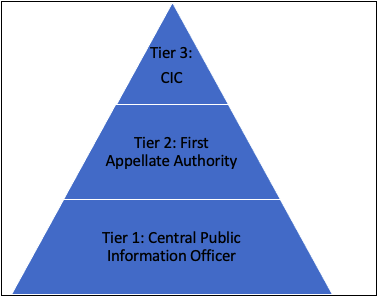
  • Organizational structure is as follows:
  • Tier 1: The Public information officer is responsible for providing information to an RTI applicant within 30 days of receipt of request.
  • Tier 2: It is designated as First Appellate Authority, the applicant who does not receive the required information or is aggrieved by the decision of CPIO can file an appeal within 30 days.
  • Tier 3: At third tier, Central Information Commissioner has been appointed as the apex body under RTI Act 2005. If the applicant is not satisfied or does not receive any order from First Appellate Authority, he/she can file Second appeal within 90 days.

WXWL12UDo05RAUK1pLMFVPiQDRGCoCErxUEL0YuufsrTKbxnTmtTa jTJ5VNVeatIS TypVLpUzAkyLyZvQ51D2Qu8bYQqSwsYBtBgfA5zNoDsjDJWG8mwYInlRu5yt fQiKiuoP1f5

Benefits of RTI Act

  • Accountability: Empowers Citizens to hold government accountable for non- performance of their duties by providing citizens access to government files and records.
  • Participative Decision Making: Allows citizens to participate in decision making process and shape public opinion through access to important information.
  • Accessible to marginalized: Helps marginalized and vulnerable sections in demanding their basic rights and access to important government services and welfare schemes.
  • Proactive governance: Discloses steps taken by governments in times of crisis – e.g.: food, medicines, healthcare facilities provided during pandemic or disasters, steps taken during COVID, natural disasters.
  • Empowers citizens: Citizens and NGOs in the past have used information to file writ petitions in Courts against instances of misgovernance, non- implementation of various rules or laws or even schemes, lack of access to government services etc.
  • Clean Governance: Expose extent of criminalization of politics and helped in de-criminalizing Indian politics through important SC judgments.
  • Exposes corruption and scandals:  Adarsh Housing Society Case, 2G case, Commonwealth Games Case etc.
  • Universalized regime of rights: RTI Act has ensured application of Article 19 of Universal Declaration of Human Rights.
  • Bridges the gap between information seeker and information provider.

Issues arising in the functioning of RTI Act

  • Amendment in 2019: Amendment in 2019 have considerably diluted the powers of CIC/SICs with respect to appointment, tenure, and service conditions. (Earlier CICs conditions of service were similar to the Election Commissioners).
  • Pendency: There is a pendency of more than 19,000 complaints with CIC as per the recent data, which account for average waiting period of 2 years for disposal of cases.
  • Vacancy: Vacancy of seats against the sanctioned strength of 10 (CIC), at state level, 25% of the posts of information commissioners are vacant.
  • Recruitment of retired bureaucrats: Commissions have become parking lot of retired bureaucrats considered as close to ruling party. Since most bureaucrats are accultured in secrecy, they tend to favour non-disclosure of information.
  • Low disposal rates and opaque functioning: SICs have been accused of low disposal rates in the appeal matters.
  • Defunct offices: The offices of SIC Jharkhand, Tripura and Telangana have been defunct of over three years.
  • Lack of digital infrastructure: Only 11 information commissions out of 29 provide e-filing facility for RTI applications or appeals, but only five are functional. 
  • No imposition of penalties: A study on penalties imposed found that the commissions didn’t impose penalties in 95% of the cases where penalties were potentially imposable.
  • Improper file management: Ineffective record management system particularly in state field offices/departments.
  • Conflict of interest of PIOs: PIO is a functionary of the office from which the information is sought. This often prevents him to divulge critical information affecting his colleagues.
  • Conflict with OSA: Legislations such as OSA restrict the free flow of information.
  • Suo moto disclosure: Reluctance of authorities, especially at state level for Suo moto disclosure, maintenance of records which is duly catalogued and accessible.
  • Intimidation and threat by the person in power and by political parties

Suggestions:

  • Open data regime: Government should follow Open data policy and proactive disclosure to increase transparency at maximum possible instances.
  • Capacity building: through continuous training and issuance of guidelines to CPIOs to dispose of information at the first stage itself.
  • E-courts and video conferencing: for early hearing of second appeals/complaints.
  • Digitization of records: electronic receipt of cases to enhance efficient delivery of information.
  • Social audits can be carried out with respect to the functioning of CIC/SICs.
  • Public Spirited individuals as Information Commissioners: The need is for the commission to have public spirited individuals as information commissioners.

Master of Roster; Chief Justice of India

Context: Supreme Court while underlining the importance of the roster has said that Judges have to follow discipline and ought not to take up any case unless it is specifically assigned by the Chief Justice.

Chief Justice of India as Master of Roster   

Chief Justice of India (CJI) is the master of roster, and in this role he alone has the power to allocate cases.   

  • Registrar General of Supreme Court prepares the roster as per the orders of CJI and CJI alone has the prerogative to constitute Benches.
  • Roster contains general or specific instructions regarding assignment or allocation of case to a particular Bench, allocation of work of a Bench, on account of non-availability of Judges.
  • CJI may instruct the Registrar to re-allocate judicial work to some other Bench in case of emergency.
  • Forming Constitution Bench by CJI as per Article 145(3) to adjudicate matters involving substantial question of law or for interpretation of the Constitution or under Article 143 pertaining to Presidential reference.  
  • Supreme Court Rules, 2013 framed under Article 145 with the approval of the President to regulate general practice and procedure of Supreme Court.
  • In Shanti Bhushan vs Supreme Court of India through its Registrar and another case (Master of Roster case) Supreme Court clarify the administrative authority of CJI as the Master of Roster and laid down the procedure and principles preparing the Roster.

Chief Justice of High Courts as Master of Roster

In State of Rajasthan vs. Prakash Raj (1998), the Supreme Court concluded:

  • That the administrative control of the High Court vests in the Chief Justice alone. On the judicial side, however, he is only the first amongst the equals.
  • That the Chief Justice is the master of the roster in this role he alone has the prerogative to constitute benches of the court and allocated cases to the benches so constituted.
  • That the puisne Judges can only do that work as is allotted to them by the Chief Justice or under his directions.
  • That the puisne Judges cannot “pick and choose” any case pending in the High Court and assign the same to himself or themselves for disposal without appropriate orders of the Chief Justice.
  • That no Judge or Judges can give directions to the Registry for listing any case before him or them which runs counter to the directions given by the Chief Justice.

Forum Shopping

When litigants or lawyers attempt to deliberately move their case to a particular judge or Court where they think the judgment could be more favourable, they are said to be “forum shopping.”

Ethics committee of Lok Sabha and Rajya Sabha

Context: Recently, Mahua Moitra’s (MP, Lok Sabha) matter has been referred to Lok Sabha Ethics committee. She has been accused of accepting money to ask questions in the house.

Background: 

  • Rajya Sabha: Origin of ethics committee in Rajya Sabha can be traced to NN Vohra Committee in 1996, based on suggestions of Vohra Committee, the General-Purpose Committee in 1997 proposed for a Committee regarding the conduct of members of Rajya Sabha. Accordingly, a 9 member Ethics committee of Rajya Sabha was constituted by Chairman in 1997.
  • Lok Sabha: Origin of ethics committee in Lok Sabha can be traced to a resolution adopted at Presiding Officers conference in 1996. However, the first Ethics committee in Lok Sabha was constituted by the then Speaker Shri G.M.C. Balayogi in 2000.

Purpose behind setting up of Ethics committees

  • To oversee the moral and ethical conduct of the Members; and
  • To examine the cases referred to it with reference to ethical and other misconduct of the Members.

Comparison between Ethics committee of Rajya Sabha and Lok Sabha

CriteriaEthics committee of Rajya SabhaEthics committee of Lok Sabha
Composition and tenureCommittee consists of ten members.Committee holds office until a new committee is appointed, the casual vacancies arising are filled by Chairman from time to time.Committee consists of not more than 15 members which are nominated by speaker.Committee holds office for a term not exceeding one year.
Functions(a) To oversee the moral and ethical conduct of members.
(b) To prepare a Code of Conduct for members and to suggest amendments or additions to the Code from time to time in the form of reports to the Council.
(c) To examine cases concerning the alleged breach of the Code of Conduct by members as also cases concerning allegations of any other ethical misconduct of members.
(d) To tender advice to members from time to time on questions involving ethical standards either Suo Moto or on receiving specific requests.
(a) To examine every complaint relating to unethical conduct of a member of Lok Sabha referred to it by the Speaker and make such recommendations as it may deem fit.
(b) To formulate a Code of Conduct for members and suggest amendments or additions to the Code of Conduct from time to time.
PowersCode of conduct to regulate the conduct of members has been brought out for members of Rajya Sabha. Ethics Committee examines the moral and ethical conduct of members of Rajya Sabha based on this code.Rajya Sabha maintains a register of interests of its members which allows the Ethics Committee of Rajya Sabha to check for possible conflict of interest of members of Rajya Sabha.Code of conduct for members of Lok Sabha is not present.
No such record is maintained by Lok Sabha, member has to state their own interests to Chairman.
Since, the Code of Conduct and Register of interests is not present. The Ethics Committee of Lok Sabha is relatively less effective in maintaining the moral and ethical conduct of the members of Lok Sabha.

Cannot legalise same-sex marriage: SC

Context: A five-judge Constitution Bench of the Supreme Court headed by Chief Justice of India (CJI) refused to grant legal status to same-sex marriages. 

Four key issues: 

The judgement revolved around the four key questions: 

  1. Whether there is a fundamental right to marriage in India?
  2. Whether the words in the Special Marriage Act 1954 could be given a gender-neutral meaning?
  3. The question over queer couples’ right to adopt a child. 
  4. Whether a civil union be realised under Indian law?

Evolution of Rights for Homo-sexuals:

Some key milestones:

  • 2014: National Legal Services Authority vs. Union of India: A significant development occurred with the Supreme Court of India recognizing transgender people as a third gender. This landmark judgment acknowledged their rights and provided legal recognition and protection to the transgender community.
  • 2017: Justice K. S. Puttaswamy vs. Union Of India: Another important step was taken in 2017 when the Supreme Court of India ruled that privacy is a fundamental right. This decision had far-reaching implications for the LGBTQ+ community as it paved the way for greater recognition and protection of their rights to privacy and personal autonomy.
  • 2018: Navtej Singh Johar vs. Union of India: In a historic verdict, the Supreme Court of India struck down the colonial-era law known as Section 377 of the Indian Penal Code. This law criminalized consensual same-sex relationships, and its decriminalization was a crucial step towards ensuring equality and dignity for homosexual individuals. The judgment emphasized that sexual orientation is an inherent aspect of an individual's identity and discrimination based on it is a violation of fundamental rights.
  • 2022: Supreme Court noted that all types of atypical family units (single parents, transgenders, same-sex couples) are also entitled to legal recognition and protection under various social welfare legislation like typical heterosexual family units.

Key issues

1. Right to Marry:

  • Petition: The petitioners had argued that there exists a fundamental right to marry a person of one’s own choice under the Constitution and that the court must address the denial of that right. If the court recognised this as a fundamental right (like it did in the case of privacy in the 2017 Aadhaar ruling), then it would cast an obligation on the state to protect this right.
  • The majority view upheld that the right to marriage is not a fundamental right. SC has underlined that the issue of same-sex marriage can only be resolved through the legislative route. However, the right to enter into a union/relationship is unrelated to sexual orientation and is a feature of fundamental rights in Articles 19 and 21.
    • Present status: Govt. has already acknowledged the right to love, the right to cohabit, the right to choose one’s partner, right to one’s sexual orientation as fundamental rights under Artice 21.

2. Interpretation of Special Marriage Act 1954:

  • Petition: The SMA was enacted in 1954 to enable marriage between inter-faith or inter-caste couples without them giving up their religious identity or resorting to conversion. The petitioners had asked the SC to recognise same-sex marriage by allowing a gender-neutral interpretation of the legislation that governs a civil marriage, in which the state rather than religion, sanctions the marriage. The petitioners had asked the SC to interpret the word marriage as between “spouses” instead of “man and woman”. Alternatively, the petitioners had asked for striking down provisions of the SMA that are gender-restrictive.
  • The majority ruling stated that the court could not interpret the SMA to include same-sex couples since the objective of the legislation is not to include same-sex couples within the realm of marriage. The provisions and the objects of the SMA clearly point to the circumstance that Parliament intended only one kind of couples, i.e., heterosexual couples belonging to different faiths, to be given the facility of a civil marriage.
image 53

3. Queer couples’ right to adopt a child:

  • Petition: The petitioners had argued that the guidelines of the Central Adoption Resource Authority (CARA), which does not allow unmarried couples to jointly adopt children, are discriminatory against queer couples who cannot legally marry.
    • The guidelines allow only a couple who have been in at least two years of a stable marital relationship to be eligible to adopt.
    • Individually, queer persons can adopt as single people. However, a single male is not eligible to adopt a girl child — even though a single female is eligible to adopt a child of any gender.
  • The majority view largely agreed with the discriminatory aspects of preventing queer couples from adopting children, and that couples tied together in marriage are not a ‘morally superior choice’, or per se make better parents. But the majority view said that this change cannot be “achieved by the judicial pen”, rather the remedy is to be provided by legislature. 
    • The fact that Parliament has made the legislative choice of including only ‘married’ couples for joint adoption (i.e., where two parents are legally responsible), arises from the reality of all other laws wherein protections and entitlements flow from the institution of marriage. 

4. Civil unions for queer couples:

  • Petition: Before full marriage rights were recognised for same-sex couples by the US Supreme Court, several states had allowed civil unions. However, the petitioners argued that civil unions are not an equal alternative to the legal and social institution of marriage, and relegating non-heterosexual relationships to civil unions would send the queer community a message that their relationships were inferior to those of heterosexual couples.
  • The majority view disagreed that the court can prescribe a choice of civil unions to queer people. It is difficult to create the right to civil union through a judicial diktat. 

Positives of the judgement:

The Supreme Court of India has issued directives to both the Union government and state governments to prevent discrimination against the queer community based on their sexual orientation. Here are the key directives:

  1. Non-Discrimination: The government must ensure that there is no discrimination against the queer community in terms of access to goods and services.
  2. Public Awareness: Efforts should be made to sensitize the public about the rights of the queer community. (including that it is natural and not a mental disorder)
  3. Helpline for Queer Community: A dedicated helpline should be established to provide support and assistance to the queer community which they can contact when they face harassment and violence in any form.
  4. Safe Houses: Safe houses (Garima grehs) should be created in each district to offer protection/shelter to queer couples who may face threats or harassment.
  5. Forced operations of Inter-Sex Children: Treatments offered by doctors or other persons, which aim to change gender identity or sexual orientation, cease with immediate effect. Inter-sex children are not forced to undergo operations with regard only to their sex, especially at an age at which they are unable to fully comprehend and consent to such operations.
  6. Formation of Committee: The SC recorded the statement of the Solicitor General that the Union government will constitute a committee to decide the rights and entitlements of persons in queer unions. The issues before the committee will be mentioning queer couples as family in ration cards, allowing queer couples to nominate for joint bank account, allowing them all the rights that from from pension, gratuity, etc.

The Supreme Court has also issued specific directions to the police:

  1. No Harassment: Police should not harass queer couples by summoning them to police stations or visiting their residences solely to inquire about their gender identity or sexual orientation.
  2. Freedom of Choice: Queer individuals should not be forced to return to their families if they do not wish to do so.
  3. Protection of Freedom: When queer individuals file complaints alleging that their family is inhibiting their freedom of movement, the police should verify the genuineness of the complaint and ensure their freedom is not curtailed.
  4. Protection against Violence: If a complaint is filed apprehending violence from the family due to the complainant's queer identity or relationship, the police should verify the genuineness of the complaint and provide appropriate protection.
  5. Preliminary Enquiry: Before registering an FIR against a queer couple or an individual in a queer relationship, the police should conduct a preliminary enquiry to determine if the complaint discloses a cognizable offence, following the guidelines set in the Lalita Kumari vs Government of UP case.

India needs a separate anti-discrimination law which inter alia prohibits discrimination based on sexual orientation. Presently, several laws have an anti-discrimination aspect to them but they are fragmented and may fail to capture the multitudinous forms of discrimination.  

Proposed Digital India Act, 2023 by Ministry of Electronics and Information Technology (MeitY) 

Context: Ministry of Electronics and Information Technology (MeitY) suggested enactment of a Digital India Act 2023 to replace Information Technology Act 2000. 

Reason For Introduction of Proposed Digital India Act, 2023 (DIA) 

Information Technology (IT) Act 2000 is a 22-year-old law crafted during a time of internet infancy that has struggled to keep pace with the rapid changes in technology and user behaviour. 

Internet in 2000 Internet Now 
55 Lakhs Indians on Internet 85 Crores Indians on Internet making it world’s largest digitally connected democracy 
One type of intermediary Multiple types of intermediaries -eCommerce, digital media, social media, AI, OTT, Gaming etc. 
Space for good, allowing citizens to interact  Space for criminalities and illegalities 
 Traditional forms of User Harms: Cybercrime, Cyber-security, Hacking, etc. New Complex forms of User Harms: Catfishing, Doxing, Cyber stalking, Cyber trolling, Gaslighting, Phishing, etc. 
Source of Information and News Proliferation of Hate Speech, Disinformation and Fake news 

Limitation of IT Act 2000 

  • Lack of comprehensive provisions on user rights, trust & safety. 
  • Limited recognition of harm and new forms of cybercrimes, without any institutional mechanism for awareness creation. 
  • Lack of distinct regulatory approaches for harmful and illegal content. 
  • Lack of adequate principles for data or privacy protection. 
  • Lack of coordinated cyber security incident response mechanisms. 

Objective of Proposed Digital India Act, 2023 

  • To replace the two-decade-old Information Technology Act of 2000 (IT Act) and bring India’s regulatory landscape in sync with the digital revolution of the 21st century. 
  • To address the challenges and opportunities presented by the dramatic growth of the internet and emerging technologies. 
  • To provide a comprehensive legal framework to address the challenges like user harm, fake news, unfair trade practices etc.  

Key Component of Proposed Digital India Act, 2023  

image 20

Key Provisions of Proposed Digital India Act, 2023  

  • Classification of Intermediaries: DIA categorise them into various groups based on their risk and size. E.g., E-commerce, AI, OTT platform etc. 
  • Risk Assessment for Intermediaries: DIA mandates intermediaries to perform risk assessments, which are then utilized to classify them based on their respective levels of risk. 
  • Dedicated Internet Regulatory Authority: DIA provides for the establishment of a dedicated internet regulator like Telecom Regulatory Authority of India (TRAI) or the Securities and Exchange Board of India (SEBI). 
  • Designating Punishable Offences: Under DIA, MeitY is empowered to designate certain activities as punishable offences. Which enables MeitY to prevent and penalize individuals or entities involved in these harmful activities. 
  • Penalties for Violations and Emerging Technologies: Provide for any potential misuse, breaches of regulations, or negative consequences that may occur in the context of technologies like AI platforms. 
  • Modifications to Existing Internet Platform Rules: To adapt the existing rules to the evolving digital landscape and address emerging challenges it provides for revision of safe harbour norms. 
  • Ensuring Platform Accountability: DIA empower the government to ensure that platforms are held accountable for hosting prohibited content 
image 21

Benefits of Proposed Digital India Act 2023 

  • Addressing Current Challenges: The DIA seeks to address contemporary challenges by providing a more comprehensive and up-to-date legal framework. 
  • Proactive Regulation: It regulates online content, establishes mechanisms for content takedown, and contemplates reviewing the "safe harbor" principle reflecting a more proactive stance towards regulating online platforms compared to the IT Act. 
  • Balancing Act: By safeguarding fundamental rights, including freedom of expression and privacy and regulating the digital ecosystem effectively. 
  • Protection of Minors: The DIA's provisions for age-gating, regulation of addictive technologies, and mandatory "do not track" requirements for advertising targeting children will create a safer digital environment for the young generation. 
  • Digital Innovation: By providing a conducive environment for emerging technologies like AI, robotics, and virtual reality, the DIA can support the development of cutting-edge solutions and boost the digital economy. 
  • E-commerce Growth: Regulation of dominant platforms and ensuring non-discriminatory access to digital services can promote a healthy e-commerce ecosystem. 
  • Cybersecurity: DIA's emphasis on enhancing cybersecurity measures is crucial to protect individuals, businesses, and critical infrastructure from cyberattacks and data breaches. 
  • Data Protection: DIA provides for establishing clear guidelines for data protection and privacy that can enhance user trust and confidence in digital services. 
  • Responsive Digital Ecosystem: Establishing dedicated inquiry agencies and dispute resolution frameworks, it emphasise the importance of an accountable and responsive digital ecosystem. 
  • Global Alignment: The DIA seeks to align India's digital regulations with international standards this alignment can facilitate international cooperation, cross-border data flows, and cybersecurity efforts, reflecting a global perspective absent in the IT Act. 

Challenges Associated with Proposed Digital India Act 2023 

  • Balancing Innovation and Regulation: Stricter regulations have the potential to stifle innovation and deter foreign investments. 
  • Safe Harbor Review: The review of the "safe harbor" principle is significant, as it can impact online platforms' liability for user-generated content.  
  • Enforcement Challenges: Effective enforcement of digital regulations is a complex task, which requires substantial resources, expertise, and infrastructure that depend on the government's ability to enforce its provisions effectively. 
  • Balancing Stakeholders’ Interest: Balancing the interests of various stakeholders, including tech giants, while ensuring the protection of citizen rights, poses a significant challenge.   

Way Forward 

  • Promotion of Digital Awareness: Digital literacy and awareness are essential for ensuring that all segments of society can participate in the digital age. Measures to promote digital literacy will empower individuals to make informed choices and use digital technologies effectively. 
  • Balancing Act: Striking the right balance between free expression of individual and accountability of intermediaries is a delicate task and should involve careful consideration of its implications through debate, discussion and deliberation. 
  • Effective Implementation: The implementation and potential repercussions of DIA warrant vigilant monitoring and adaptability to avoid unintended consequences.  

The DIA is a crucial step towards ensuring a secure, accountable, and innovative digital future for India representing a forward-looking approach to regulation in an age of constant change and has the potential to shape the country’s digital landscape for generations to come.  

CDSCO Report Uncovers Alarming Levels of Contaminants in Indian Cough Syrups

Context: According to a report released by the Central Drugs Standard Control Organisation (CDSCO), the nation's top drug regulator, at least five batches of cough and allergic rhinitis syrups from two Indian manufacturers have been found to contain higher than permissible levels of contaminants - diethylene glycol and ethylene glycol.

About Ethylene glycol and Di Ethylene Glycol (DEG)

Ethylene glycol and Di Ethylene Glycol (DEG) are colourless, odourless, sweetish-tasting substances that are mostly used for industrial purposes ranging from antifreeze formulations to brake fluids, paints, plastics etc. The pharmaceutical grade can be used for medicines and consumer products in the quantity that is recommended.

Note: According to the WHO, the accepted safety level for ethylene glycol and diethylene glycol is no more than 0.10%.
** The two contaminants are known to be toxic in humans and can cause abdominal pain, vomiting, diarrhoea, inability to pass urine, and acute kidney injury that may result in death especially in children.

About Central Drugs Standard Control Organisation(CDSCO)

Established: 2005

Work under: Directorate General of Health Services, Ministry of Health & Family Welfare, Government of India.

Headquarter:  New Delhi

Functions:

  • It is assigned duties under Drugs and Cosmetics Act, 1940.
  • Under the Drugs and Cosmetics Act, CDSCO is responsible for approval of Drugs, Conduct of Clinical Trials, laying down the standards for Drugs, control over the quality of imported Drugs in the country and coordination of the activities of State Drug Control Organizations by providing expert advice with a view of bring about the uniformity in the enforcement of the Drugs and Cosmetics Act.
  • Further CDSCO along with state regulators, is jointly responsible for grant of licenses of certain specialized categories of critical Drugs such as blood and blood products, I. V. Fluids, Vaccine and Sera.

Note: The National Pharmaceutical Pricing Authority (NPPA) is a government regulatory agency that controls the prices of pharmaceutical drugs in India.