
Context: Foxnuts (makhana) are in demand as a ‘super snack’, with its prices soaring in domestic and international markets since 2019.
About foxnuts (Makhana)
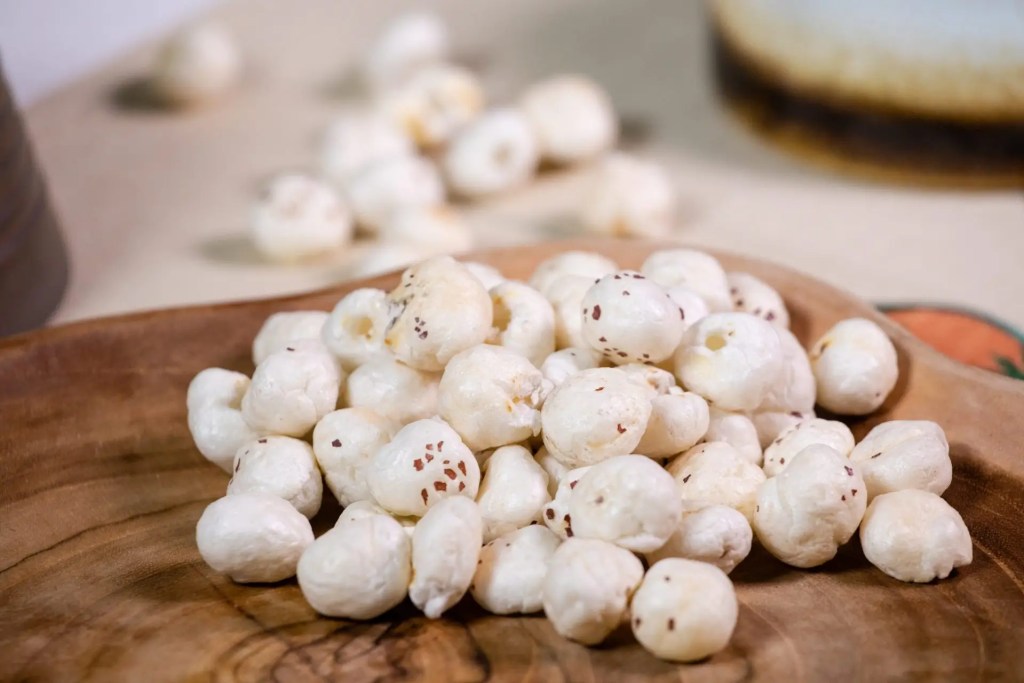
- It is commonly known as prickly waterlily, makhana, or Gorgon plant, and is the only extant member of the genus Euryale.
- It is an aquatic plant, requiring ponds, shallow lakes, or waterlogged fields for cultivation.
- Fox nut fruit is a berry, large, round, spongy tree consisting of 20-25 small black seeds which are processed into the final edible product i.e. makhana.
- It is a labour-intensive crop.
Climatic conditions:
- Grows well in humid to sub-humid conditions with an air temperature of 20°C-35°C, relative humidity of 50-90%, and annual rainfall of 100-250 cm.
- It is an obligate self-pollinated, seed-propagated plant.
Traditional cultivation practices:
- Cultivation, collection, and puffing are hereditary traditional practices of the Mallah community in Bihar.
- These practices are passed down through generations and performed by experienced workers.
Cultivation cycle:
- Sown during the Kharif season, which coincides with the onset of the monsoon in India, typically from June to July. The monsoon rains provide the necessary water levels for the aquatic environment in which Makhana grows.
- Flowering and fruiting occur from May and continue up to October-November.
- Collection of seeds from the pond bottom starts from August onwards.
Production:
- Found in southern and eastern Asia. India contributes to 80% of the world’s demand.
- Bihar produces about 90% of the country’s total production.
- Commercial cultivation in India is mainly limited to the northeastern part, particularly in the northeast of Bihar.
Benefits:
- Seeds are low in saturated fats, calories, sodium, and cholesterol, and high in minerals like magnesium.
- It has a low glycemic index compared to other carbohydrate foods like rice, bread, etc., at around 55, making it beneficial for people with heart diseases and diabetes.
- Possesses excellent antioxidant properties.
- Believed to possess aphrodisiac properties. Leaves contain an alkaloid ‘drummine’ responsible for anti-rheumatism activity.
- All plant parts are reported to have tonic, astringent, and de-obstruent properties.
- Considered a wonder crop that can ensure food and economic security for poor and marginal farmers.
- Along with aquaculture, it can increase the productivity of marginal wetlands in Bihar.
Government support:
- Approved under the Union government’s One District One Product scheme. Subsidies are provided to food processors for branding, marketing, and developing infrastructure.
- In 2022, Bihar's Mithila Makhana was awarded the Geographical Indication (GI) Tag by the union government.